TJ THELEN'S COLLECTION
The Thelen Reserve
← Previous: Stage 3 · Cooking & conversion

A CONNECTED CHAPTER · FERMENTER TO BARREL

Follow the transformation.

Begin with fermented mash. Look inside the still. Follow clear spirit into oak.
Six connected stops show where each material comes from and where it goes next.

Begin the walk-through ↓About 2 minutes · or scroll at your own pace
FULL JOURNEYGrain → Milling → Cooking → Fermentation → Distillation → Barrel filling → Aging → Bottling → Glass
Explore at your own pace
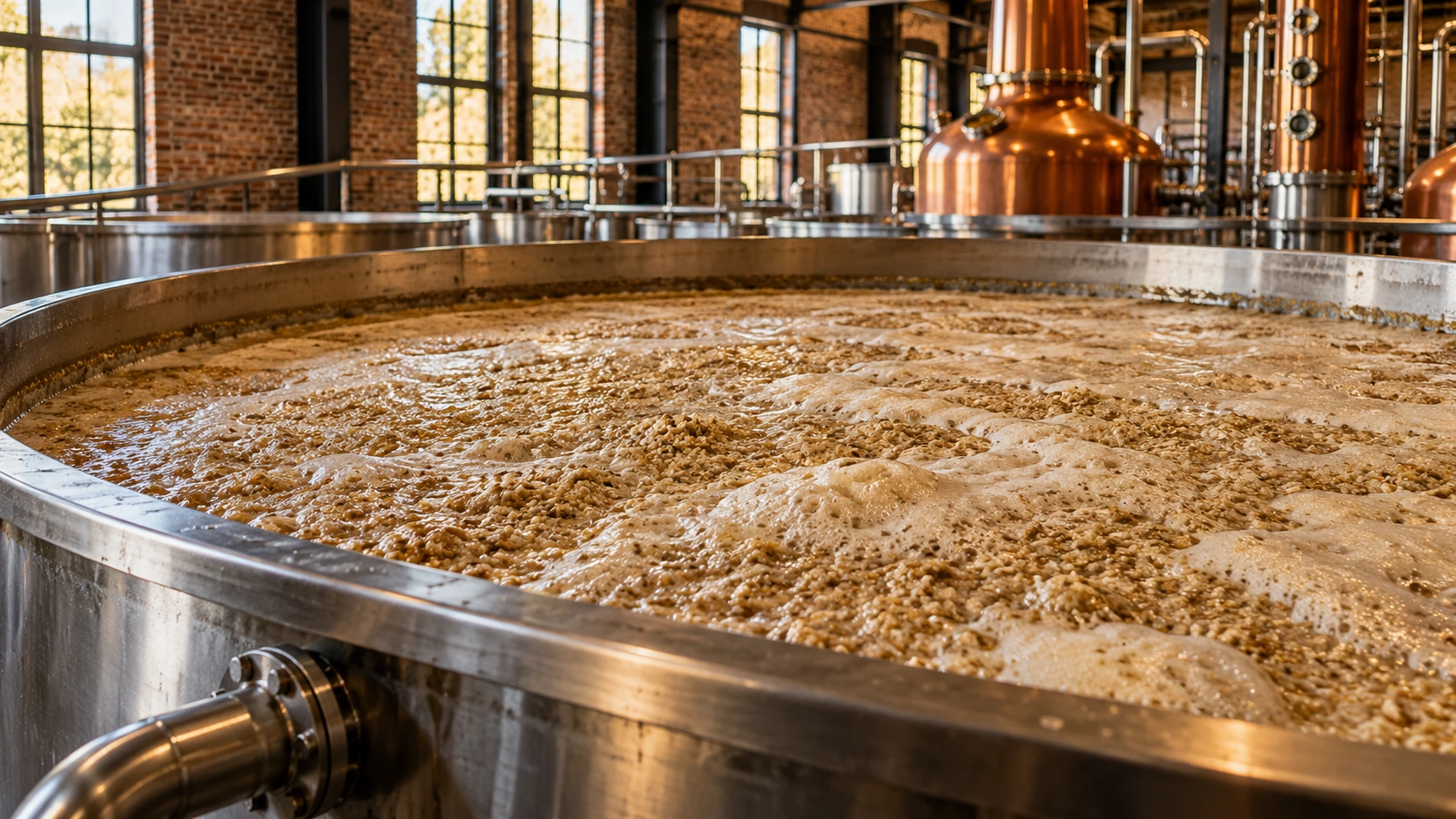
Foamy grain mash in an open stainless fermentation tank.

ARRIVING FROM FERMENTATION

Alcohol already exists before the still.

Yeast has converted fermentable sugars into alcohol and carbon dioxide. The result is distiller’s beer: a mixture of water, alcohol, grain material and flavor compounds. This is what enters distillation.

ENTERSCooked, cooled mash + yeast
↓
WHAT CHANGESFermentation creates alcohol
↓
LEAVESFermented mash
Follow the material

The foam belongs to fermentation. Distillation comes next and concentrates alcohol that is already here.
Follow the mash into the still →
LEAVING THIS STOPFermented mashCONTINUING INTO THE NEXT ↓
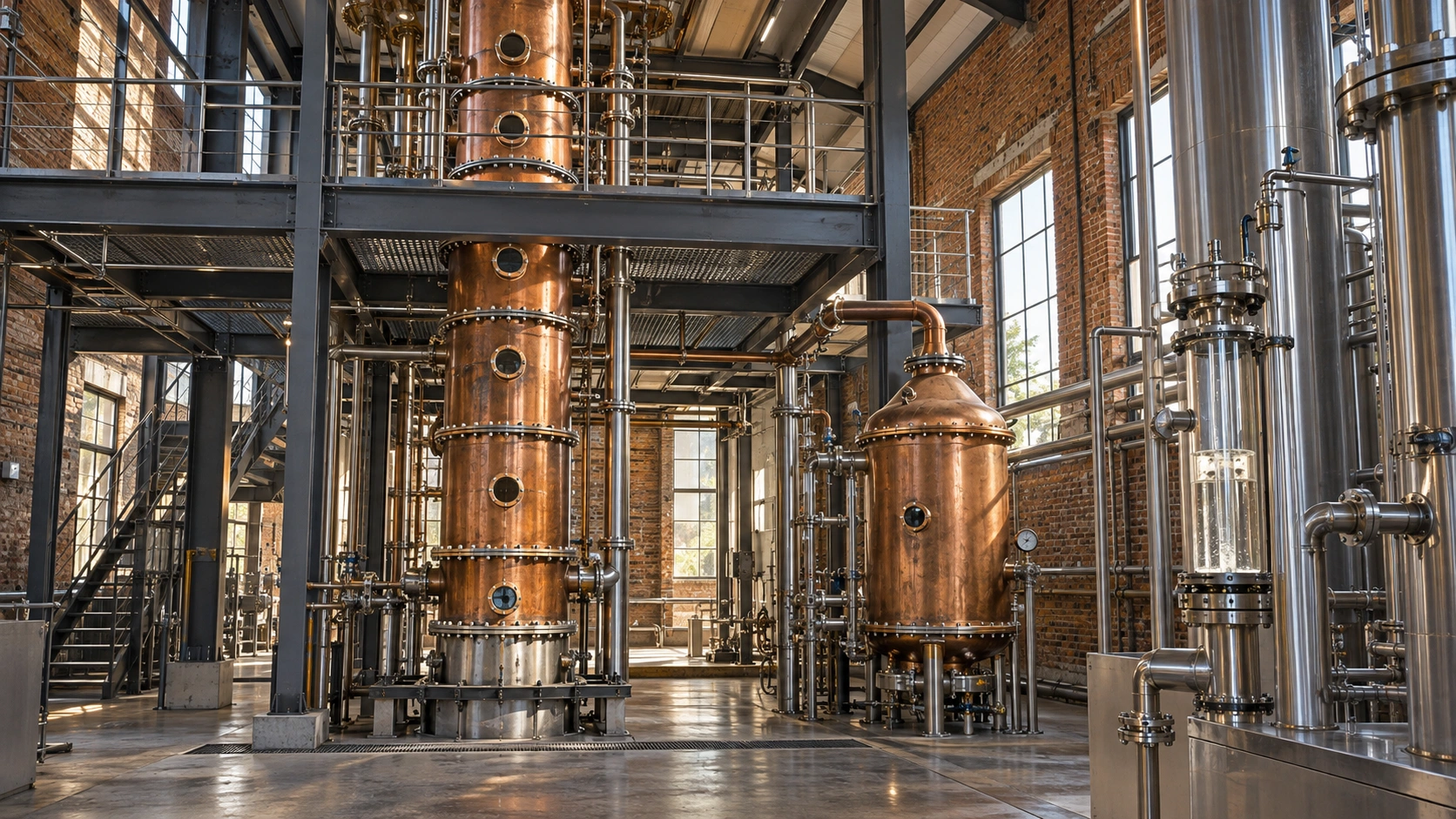
Copper column still in a realistic industrial distillery.COLUMN STILL

ENTERING DISTILLATION

The mash enters a different kind of separator.

In a common bourbon setup, fermented mash is pumped into a column still. Heat supplied by steam drives separation inside the column. The copper exterior hides most of the action, so let’s look behind it.

ENTERSFermented mash
↓
WHAT CHANGESSteam supplies heat
↓
LEAVESVapor and liquid begin separating
Find the tall copper column

The smaller copper vessel is part of our next stop. Equipment varies across distilleries; this tour follows a common column-and-second-still arrangement.

Open the column cutaway →
LEAVING THIS STOPVapor and liquid begin separatingCONTINUING INTO THE NEXT ↓
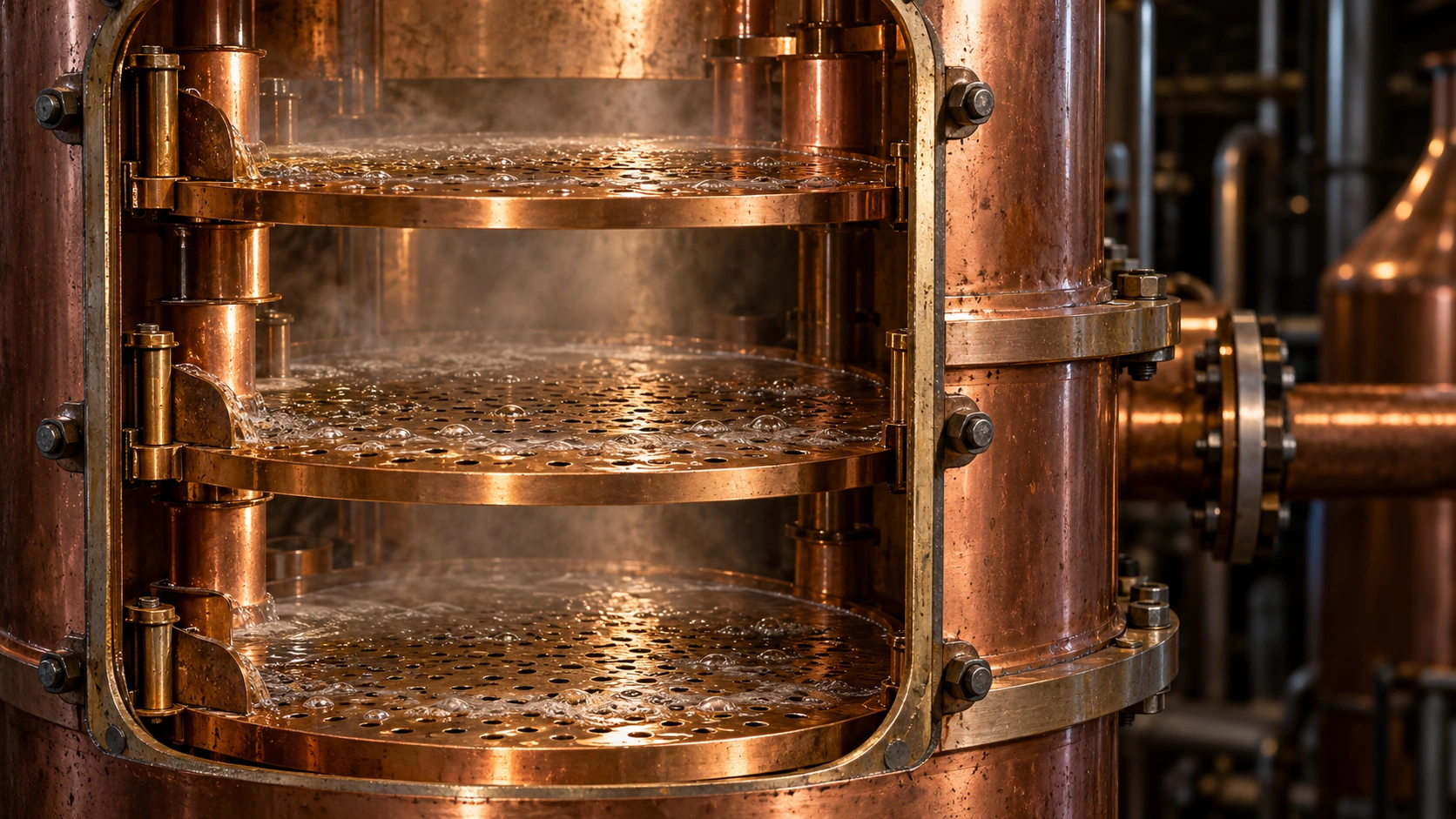
Conceptual realistic cutaway showing copper trays and shallow liquid inside a column.
↑ VAPOR RISES
↓ LIQUID DESCENDS
CONCEPTUAL CUTAWAY · DIRECTION GUIDES

THE TRANSFORMATION INSIDE

Vapor rises. Liquid moves down.

Rising vapor contacts liquid on internal stages. Alcohol and other volatile compounds transfer into the vapor. Much of the water and grain residue leaves below as spent stillage. The separation changes both strength and flavor.

ENTERSFermented mash + heat
↓
WHAT CHANGESRepeated vapor–liquid contact
↓
LEAVESAlcohol-rich vapor + spent stillage
An explanatory cutaway

The animated guides show opposing flow directions, not literal glowing streams. This generated section illustrates the principle; tray geometry and flow paths vary by still.

Follow the spirit to the second pass →
LEAVING THIS STOPAlcohol-rich vapor + spent stillageCONTINUING INTO THE NEXT ↓
Stillhouse view with a smaller copper second-distillation vessel to the right of the column.SECOND DISTILLATION

A COMMON SECOND DISTILLATION

Another pass shapes the spirit.

Many bourbon producers use a doubler or thumper after the column. A doubler redistills condensed first-pass spirit; a thumper receives vapor. These are different arrangements with the same broad purpose: further distillation.

ENTERSFirst-pass distillate
↓
WHAT CHANGESAdditional distillation
↓
LEAVESMore concentrated spirit vapor
Two routes, not identical equipment

This tour follows a representative sequence, not one producer’s pipework. For bourbon, distillation cannot exceed 160 proof (80% ABV).

Watch what cooling changes →
LEAVING THIS STOPMore concentrated spirit vaporCONTINUING INTO THE NEXT ↓
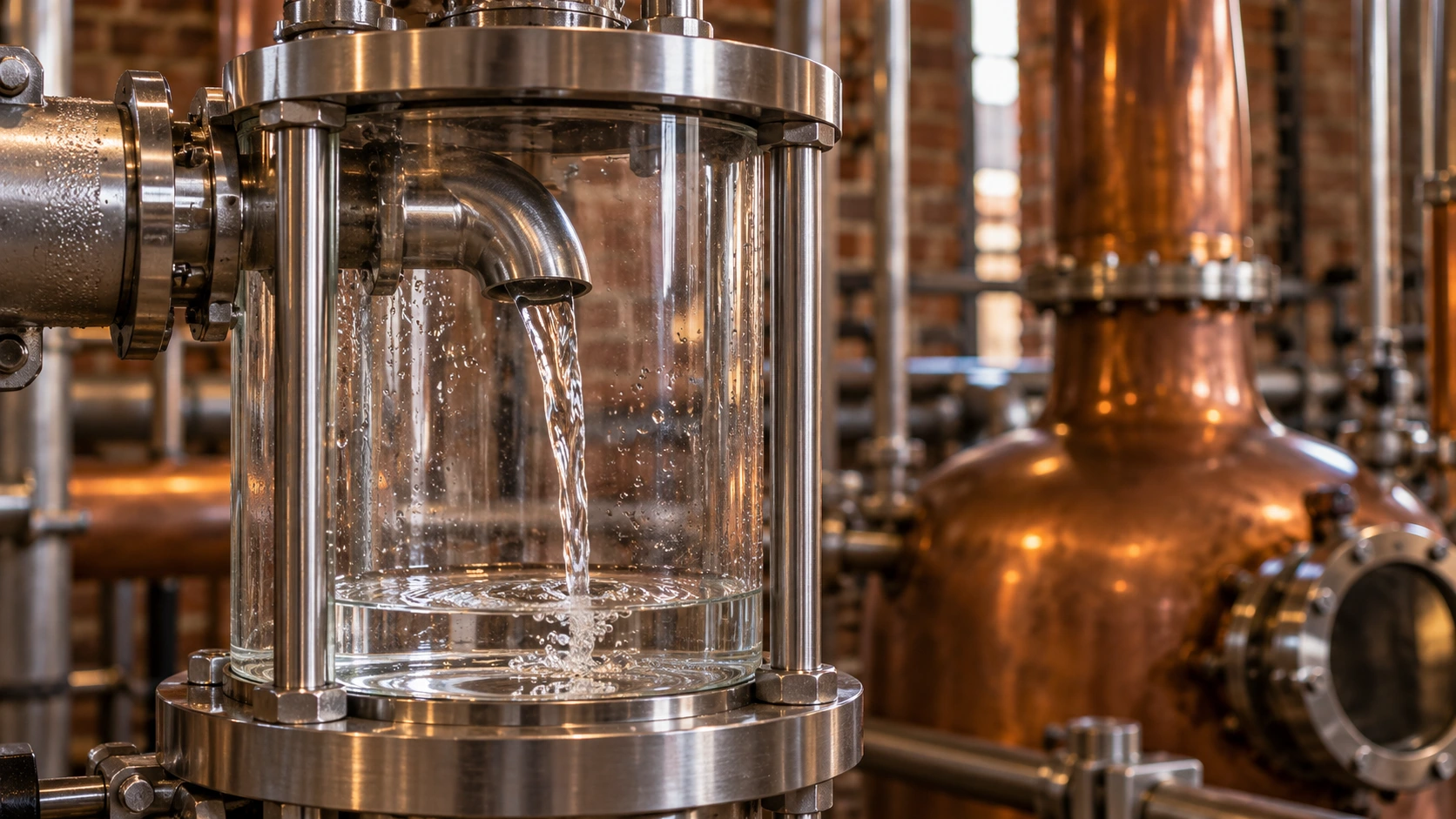
Clear spirit flowing inside a glass inspection receiver.

VAPOR BECOMES LIQUID AGAIN

The first spirit is clear.

A condenser removes heat from the vapor. It returns to liquid as clear new-make spirit. The inspection receiver pictured here is downstream: it lets us see the result of condensation, not the cooling happening inside the condenser.

ENTERSSpirit vapor
↓
WHAT CHANGESCooling removes heat
↓
LEAVESClear liquid new make
Look at the liquid

The amber color is still ahead. Distillation creates a clear spirit; oak maturation contributes the familiar color and additional flavors.

Continue to Stage 7 · Building the barrel →
LEAVING THIS STOPClear liquid new makeCONTINUING INTO THE NEXT ↓
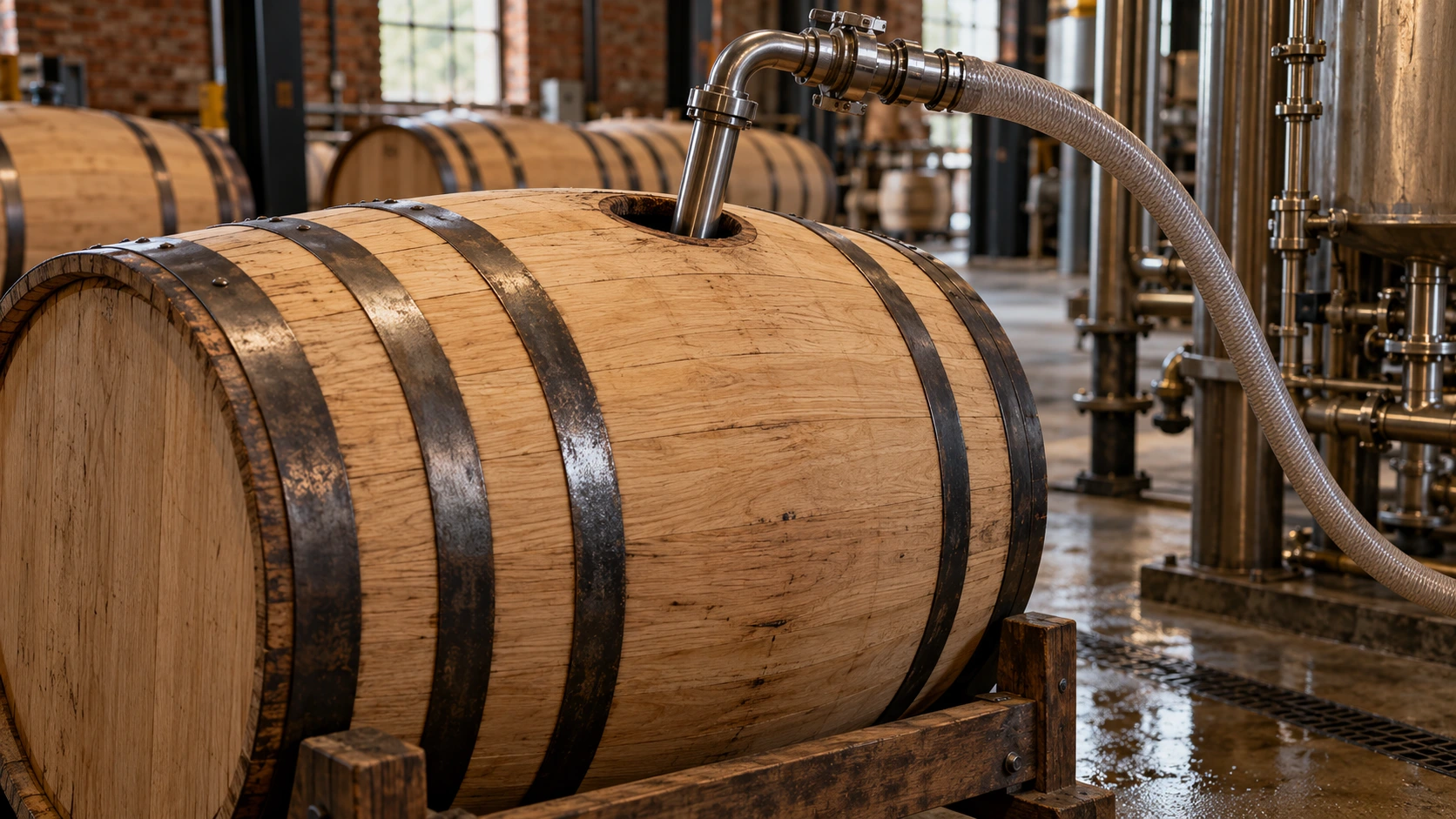
A new oak barrel being filled through its bung hole with a stainless filling lance.

HANDOFF TO MATURATION

Now the barrel takes over.

The distiller checks the entry strength and may add water before filling. Bourbon enters new charred oak at no more than 125 proof (62.5% ABV). The barrel is filled, closed and moved into storage. Time and wood begin the next transformation.

ENTERSClear spirit, adjusted if needed
↓
WHAT CHANGESFill new charred oak
↓
LEAVESSpirit beginning maturation
What comes next

In the full experience, the next chapter follows wood extraction, chemical reactions and evaporation over time. Continue into the Stage 9 chapter to explore that transformation.

See how this fits the full journey →

ONE CHAPTER IN A LARGER STORY

This is how the whole experience connects.

Each chapter hands its result to the next. The same visual structure carries visitors all the way from grain to glass.

BEFORE THIS SAMPLE

Grain → Mash

Select grains, mill them, cook the mash and convert starch into fermentable sugars.

YOU JUST FOLLOWED

Mash → Clear spirit → Oak

Fermentation creates alcohol. Distillation concentrates and shapes it. Barrel filling begins maturation.

AFTER THIS SAMPLE

Oak → Bottle → Glass

Maturation develops the whiskey, followed by selection, bottling and tasting.

Continue to Stage 9 · Warehouse maturation →↻ Walk through againBrowse all 12 stages