TJ THELEN'S COLLECTION
The Thelen Reserve

STAGE 07 OF 12 · BARREL CONSTRUCTION & CHARRING

Before the spirit,
the wood meets fire.

Step into the cooperage. Follow seasoned oak into a new barrel,
see what heat changes, and meet the surface that will shape the whiskey.

Enter the cooperage ↓Three views within Stage 7 · About one minute · Cooperage happens in parallel with spirit production
STAGE 07 OF 1206 · New-make spirit → 07 · Barrel construction & charring → 08 · Barrel filling
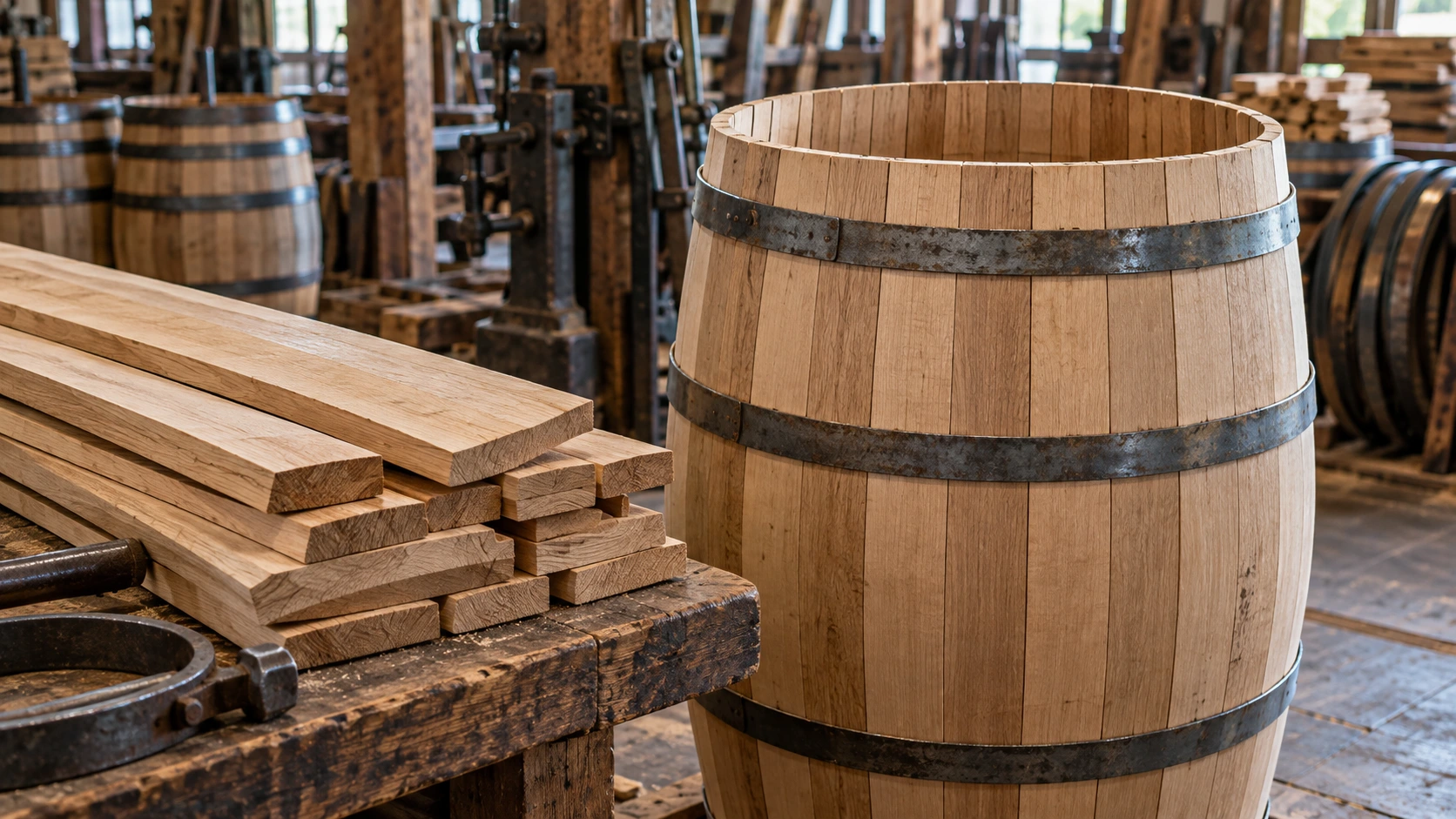
New oak barrel shell and seasoned staves inside a cooperage.

FROM STAVES TO A VESSEL

A barrel is built from fitted wood.

Oak is seasoned, then shaped into staves. The cooper assembles the shell, bends the staves into its familiar curve and uses hoops to hold the structure together. Heat and moisture assist bending; methods differ between cooperages.

ENTERSSeasoned, shaped oak staves
↓
WHAT CHANGESFit, raise and bend the shell
↓
LEAVESAn assembled barrel shell
Why start with oak?

Wood is both a structural material and a source of compounds that interact with spirit. Oak species, seasoning and heat treatment all influence the barrel. American white oak is common; bourbon’s legal standard specifies oak, not a single species.
Follow the barrel to charring →
FOLLOWING THE WOODAn assembled barrel shellNEXT VIEW ↓
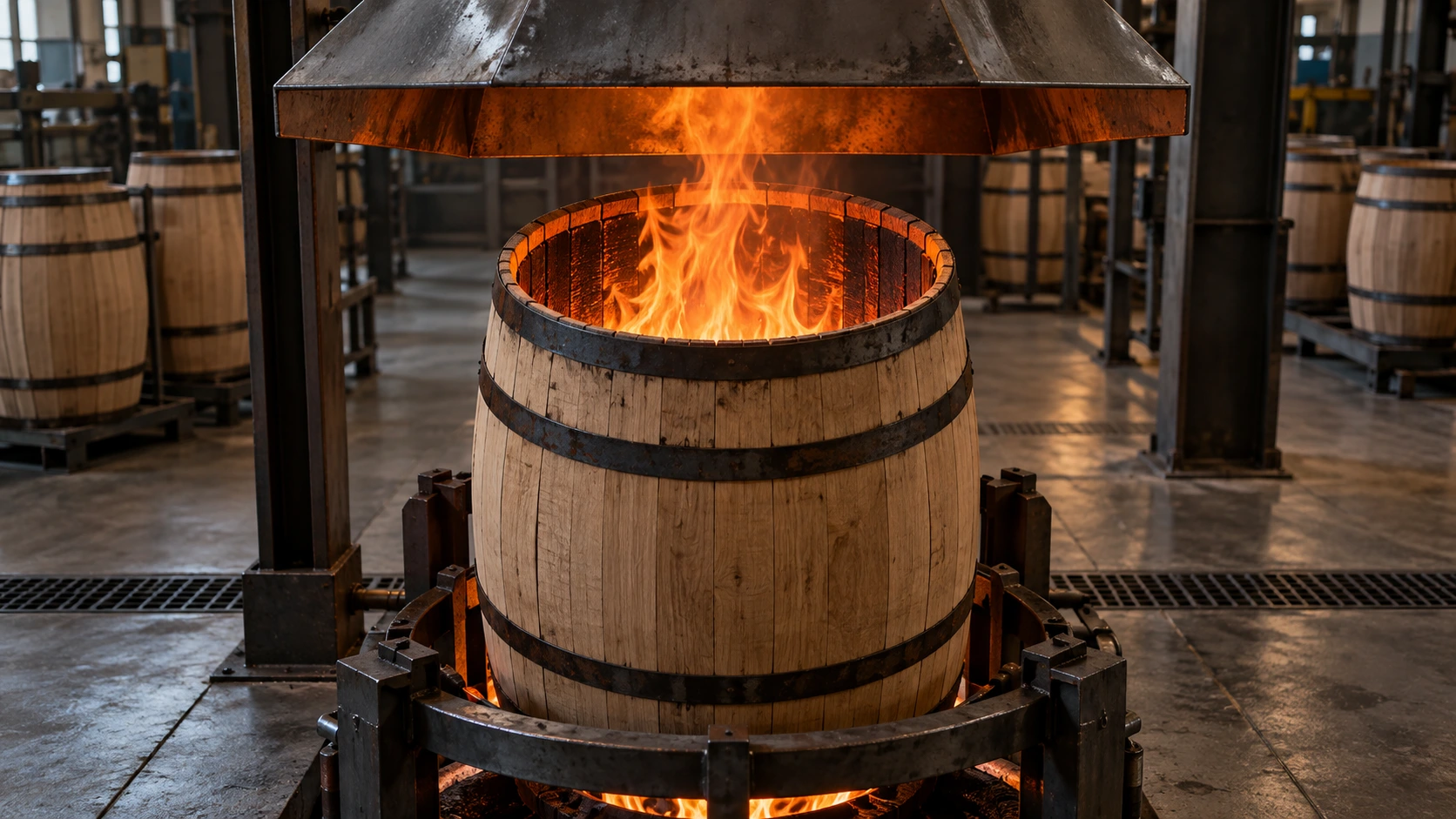
An empty new oak barrel undergoing controlled charring beneath an industrial hood.

A THERMAL TRANSFORMATION

The empty barrel meets flame.

Charring burns the inner surface, forming a carbon-rich layer and changing wood beneath it. A separate toasting treatment may precede charring. Toasting and charring are related heat treatments with different effects.

CHARRING · THE IMAGE SHOWN

Direct flame carbonizes the inner surface. The barrel is empty during this treatment.

ENTERSAn empty oak barrel shell
↓
WHAT CHANGESHeat changes the inner wood
↓
LEAVESChar and heat-affected oak
What does a char number tell you?

Char designations describe a treatment specification, not a whiskey quality score. A higher number does not reliably predict a better or smokier whiskey. Cooperage practices and the rest of production matter.

Look at the finished inner surface →
FOLLOWING THE WOODChar and heat-affected oakNEXT VIEW ↓
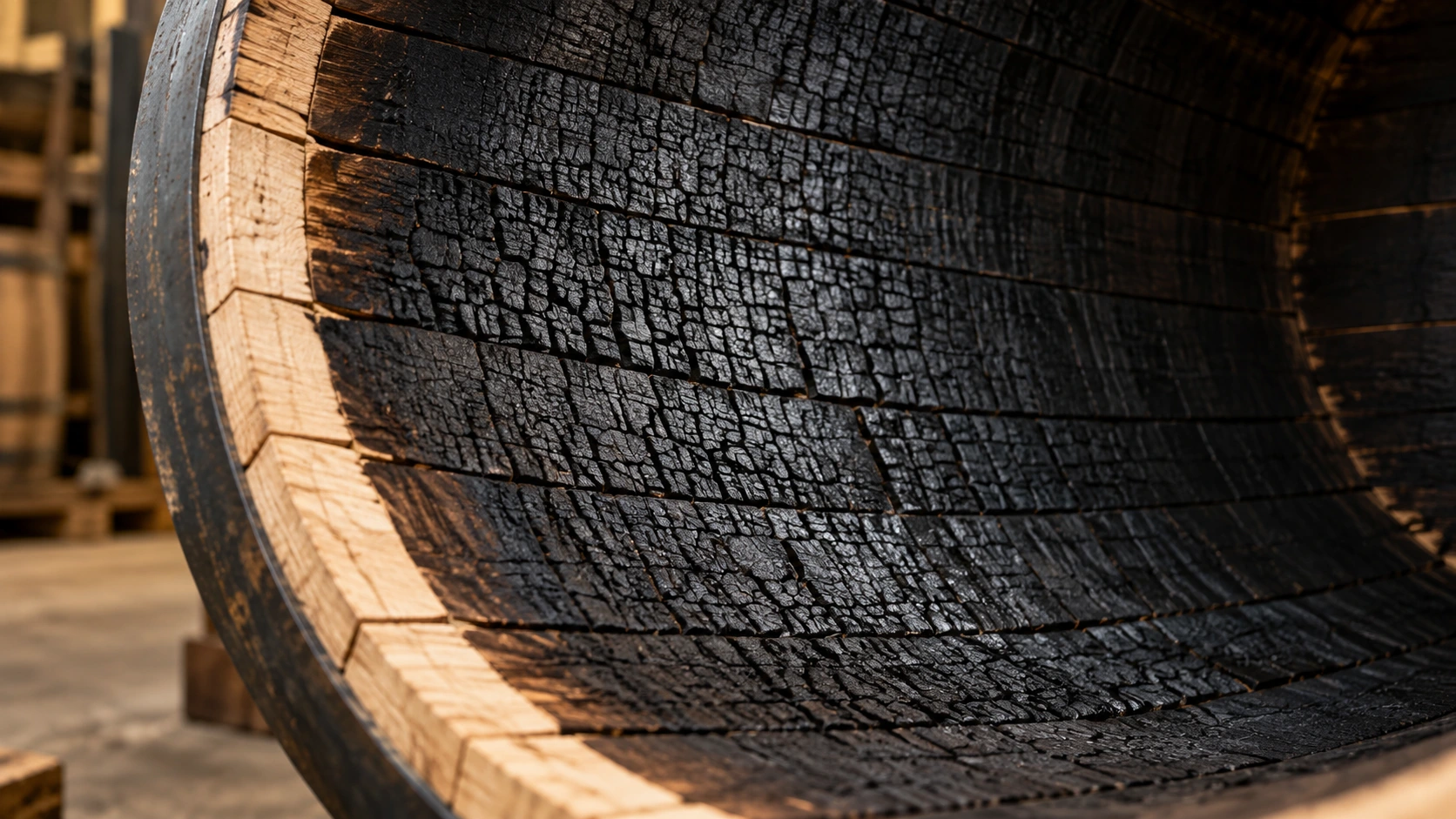
Close view of cracked black char on the inner staves of an empty barrel.

THE SURFACE THAT MEETS THE SPIRIT

Now the barrel has a new interior.

After heat treatment, the barrel is completed with heads and hoops and checked before filling. Its dark inner surface and heat-altered wood will interact with spirit during maturation. No whiskey has gone into it yet.

ENTERSHeat-treated barrel components
↓
WHAT CHANGESComplete and inspect the vessel
↓
LEAVESA new charred oak barrel ready to fill
Why does this matter later?

During maturation, spirit extracts compounds from oak while other chemical changes occur. The char can adsorb some compounds. Barrel preparation creates possibilities; the eventual flavor also depends on the spirit and storage conditions.

Bring the spirit and barrel together →

STAGE 07 COMPLETE

The spirit and the barrel
are ready to meet.

The cooperage supplies the vessel. Distillation supplies the clear spirit. Stage 8 brings the two together at the selected entry strength, followed by Stage 9’s warehouse maturation.

Continue to Stage 8 · Barrel filling →Explore all 12 stages

Barrel construction is shown here for clarity in the tour. It can happen elsewhere, well before the spirit is distilled.