TJ THELEN'S COLLECTION
The Thelen Reserve

STAGES 01–03 · THE BEGINNING OF THE JOURNEY

Before a drop,
a grain of possibility.

Choose the grain. Open the kernel. Make its starch available as sugar.
Follow three distinct transformations before fermentation begins.

Start with the grain ↓Three individually selectable stages · About 90 seconds · Explore the comparisons at your own pace
THE FULL JOURNEY01 · Grain → 02 · Milling → 03 · Cooking & conversion → 04 · Fermentation
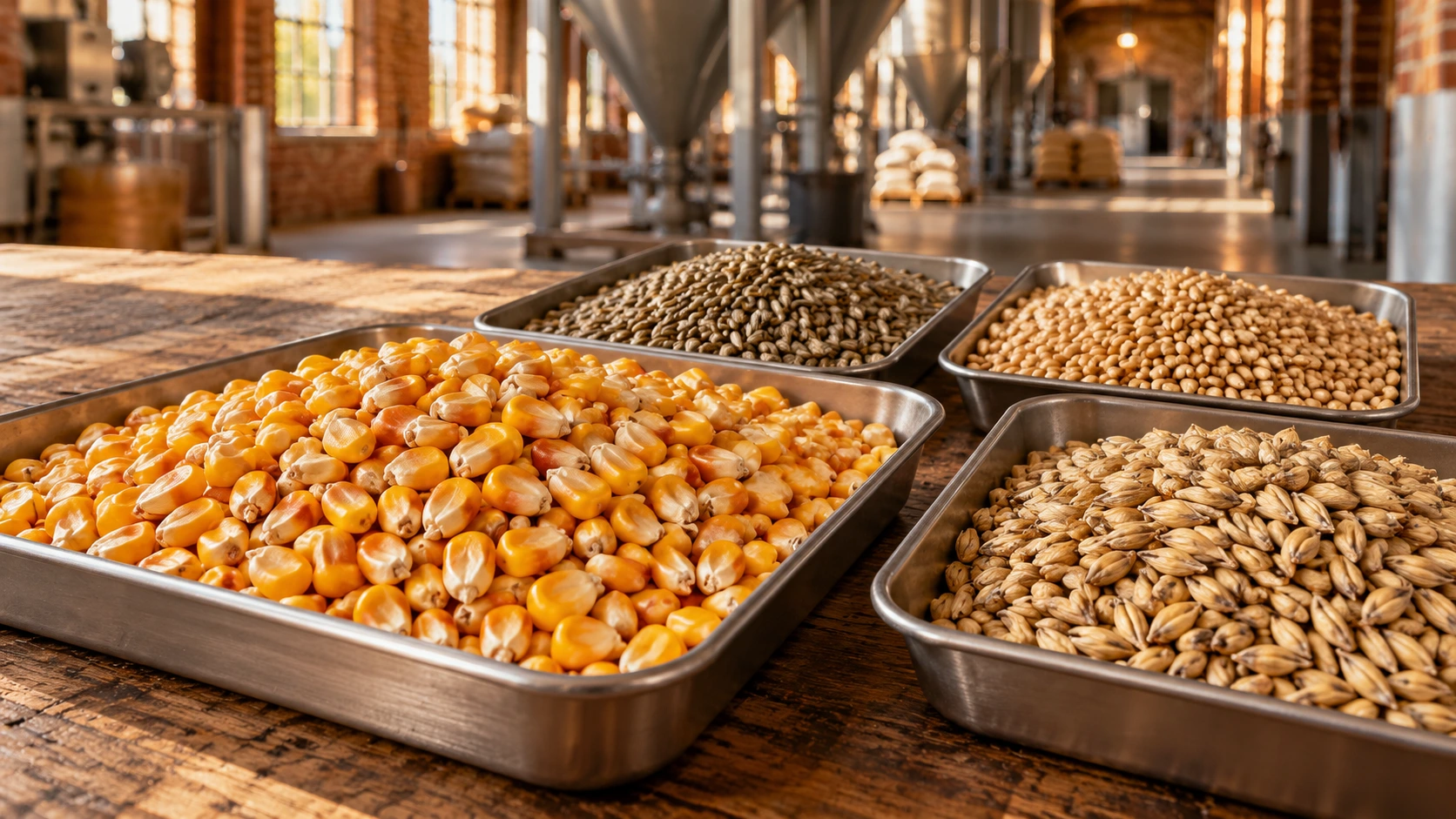
Separate trays of corn, rye, wheat and malted barley in a distillery grain room.

STAGE 01 OF 12 · GRAIN SELECTION & MASH BILL

The recipe begins with grain.

The mash bill describes the grain proportions. Bourbon starts with at least 51% corn; the remaining grains are a producer’s choice. Rye, wheat and malted barley are common partners. This recipe influences the spirit, but it does not predict the finished flavor on its own.

ILLUSTRATIVE RECIPES · NOT A NAMED RELEASE

70% corn · 20% rye · 10% malted barley

Rye is the secondary grain in this example. The corn share meets bourbon’s grain requirement; the complete whiskey must also meet its other production standards.

ENTERSSelected whole grains
↓
WHAT CHANGESMeasure the grain recipe
↓
LEAVESA defined mash bill
What do the different grains contribute?

All of these grains supply starch. Rye and wheat create different recipe possibilities. Malted barley can contribute enzymes as well as flavor precursors; added enzymes may also be used. Yeast, distillation, barrel and aging decisions still shape the result.
Follow the grain to the mill →
FOLLOW THE MATERIALA defined mash billNEXT STAGE ↓
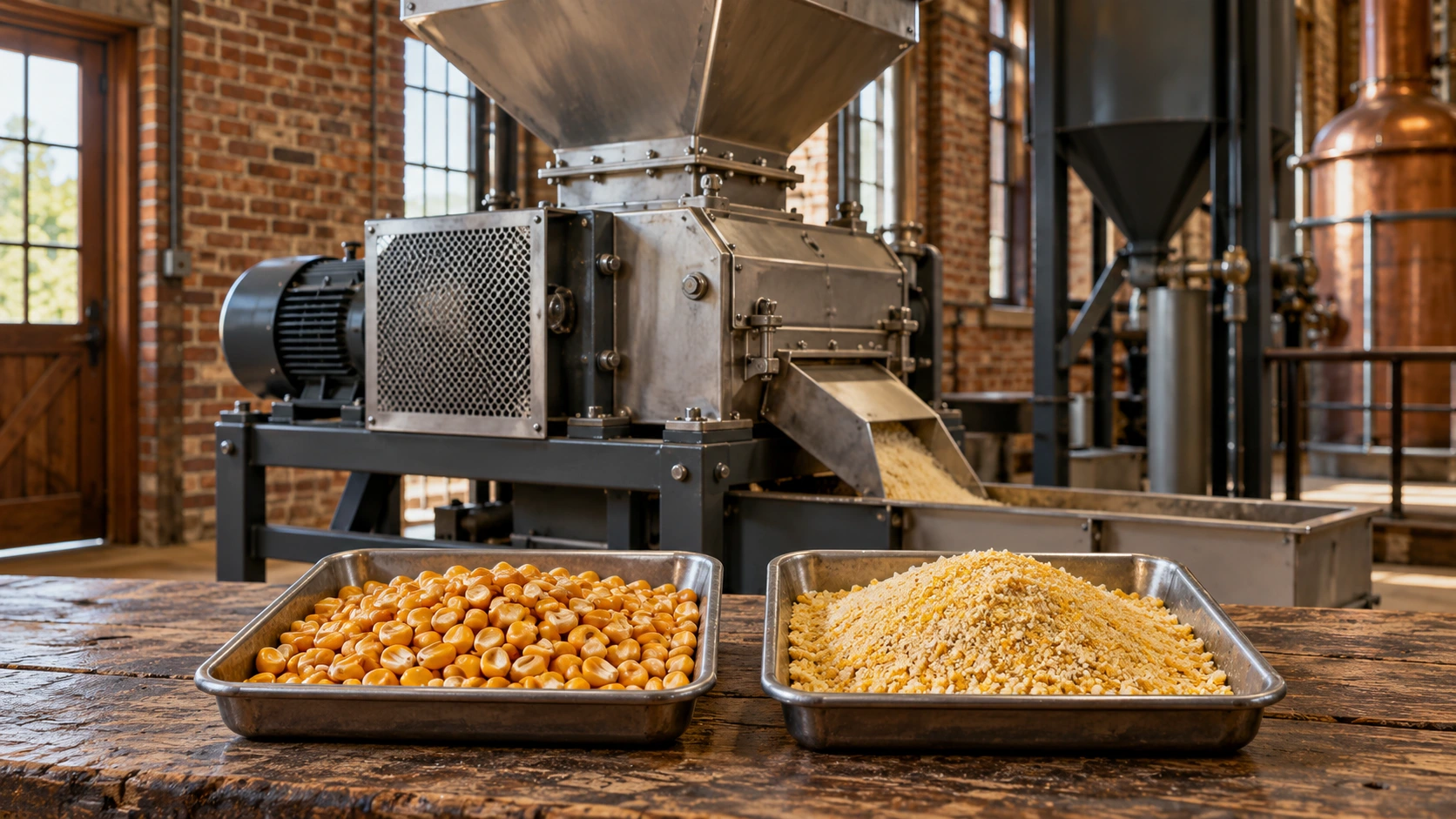
Whole corn and milled corn meal shown beside an enclosed industrial grain mill.

STAGE 02 OF 12 · MILLING

Open the kernel. Keep the starch.

A mill breaks the grain into smaller particles, exposing material inside the kernel. This helps water and enzymes reach the starch during the next stage. Milling is a physical change: the grain has become meal, but the mill has not made alcohol.

LEFT PAN · WHOLE CORN

The kernel still encloses much of its starchy interior. The mill will break it into smaller particles.

ENTERSMeasured whole grains
↓
WHAT CHANGESReduce particle size
↓
LEAVESMilled grain, or grist
Why not grind everything as fine as possible?

The useful particle size depends on the grain, mill and downstream equipment. Finer is not automatically better. Producers balance starch access with handling and processing requirements.

Take the meal to the cooker →
FOLLOW THE MATERIALMilled grain, or gristNEXT STAGE ↓
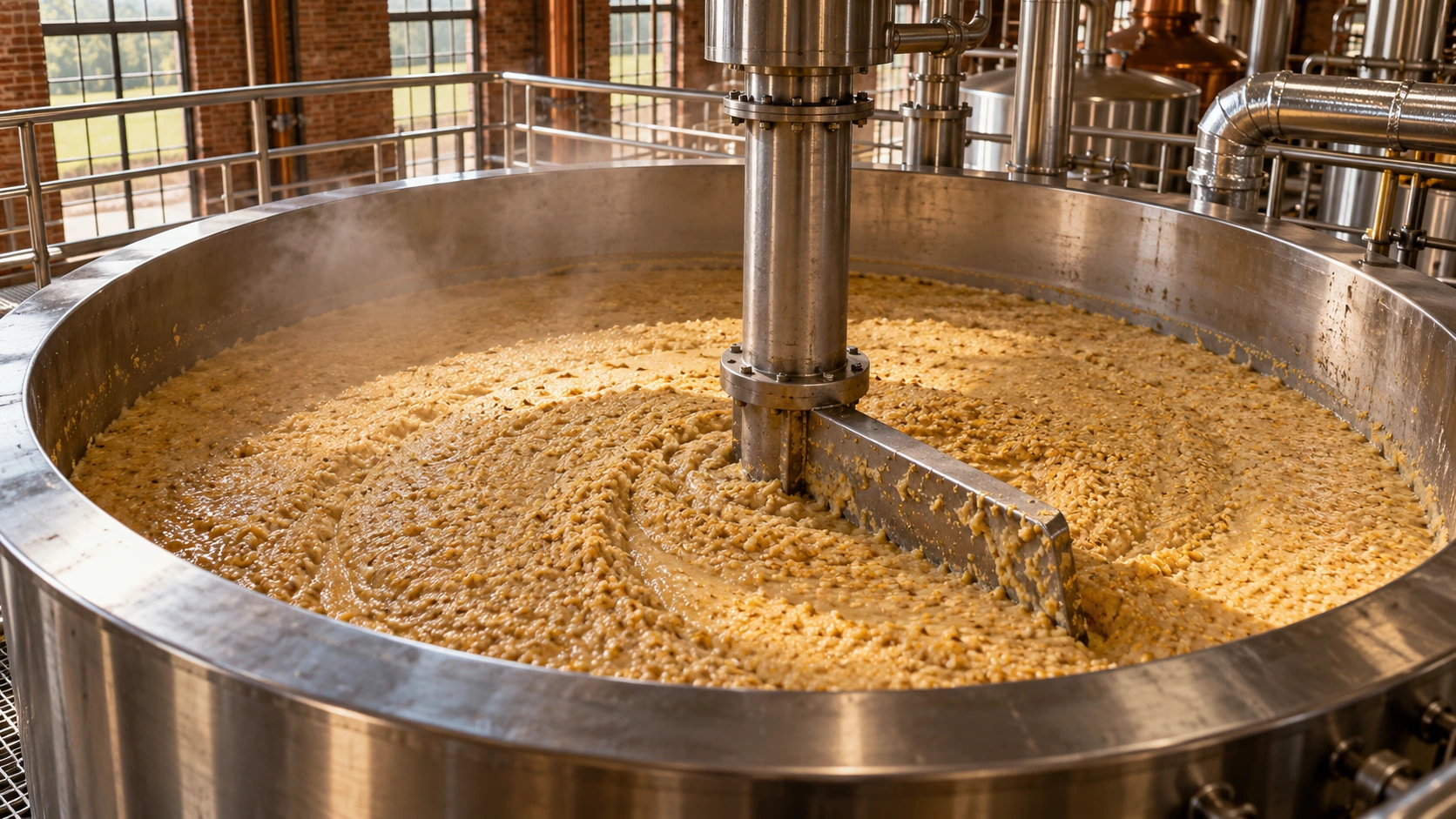
A stainless mash cooker containing thick pale cooked grain mash.

STAGE 03 OF 12 · COOKING & STARCH CONVERSION

Make the grain’s energy available.

Milled grain meets water and controlled heat. Cooking helps make starch accessible. Enzymes then break starch chains into smaller carbohydrates, including sugars that yeast can ferment. Temperature and grain additions are managed to suit the recipe and enzyme system.

MAKE STARCH ACCESSIBLE

Heat and water disrupt starch granule structure, a process called gelatinization. This improves access for enzymes.

The steps explain different jobs within the process. Their timing and overlap vary by distillery.

ENTERSMilled grain + water
↓
WHAT CHANGESHeat prepares starch; enzymes break it down
↓
LEAVESMash containing fermentable sugars
Where do the enzymes come from?

Malted grain and added enzyme preparations can supply the enzymes. They work under suitable conditions; heating alone is not the same as complete starch conversion. Producers use different cooking schedules and enzyme systems.

Meet the next transformation →

STAGES 01–03 COMPLETE · NEXT IS STAGE 04

The sugars are ready.
Now it is yeast’s turn.

The grain has been selected, milled and processed into mash. Once conditions are suitable for yeast, fermentation converts sugars into alcohol, carbon dioxide and a range of aroma compounds.

Continue to Stage 4 · Fermentation →Explore all 12 stages