TJ THELEN'S COLLECTION
The Thelen Reserve

SCOTCH · STAGES 07–09

A clear spirit. A vessel with a history.

Explore distillation, spirit selection and the oak that receives the new make.

Begin this chapter ↓Three selectable stages · Guided scrolling, 30 seconds per stage · Pause to explore at your own pace
THE FULL JOURNEYStill, spirit & cask · Scotch, Grain to Glass
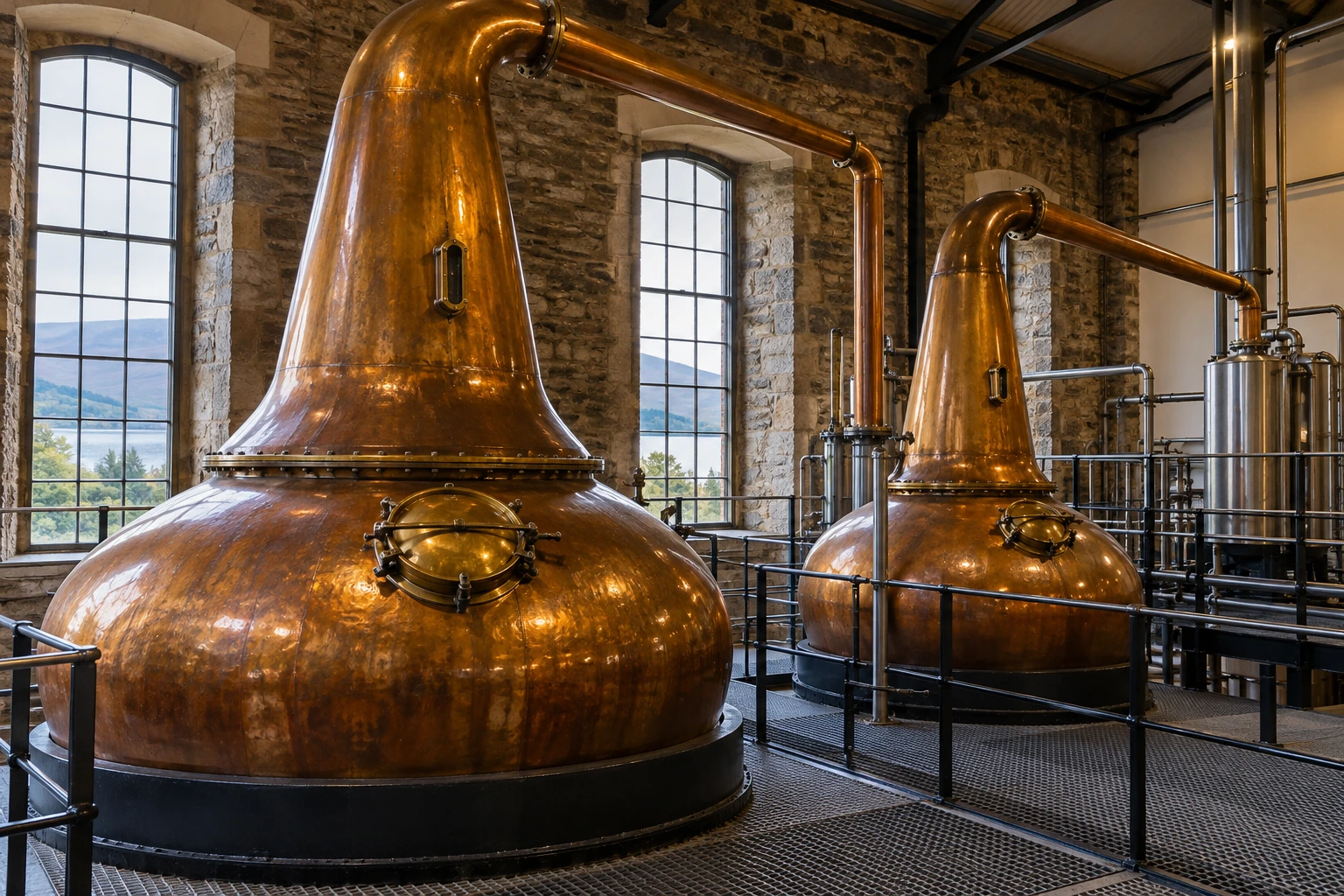
Distillation: malt & grain routes: conceptual Scottish distillery scene

STAGE 07 · Distillation: malt & grain routes

Concentrate the spirit. Shape its character.

In the common malt route, a wash still produces low wines, followed by a spirit still. Heat generates vapour enriched in more volatile components; condensation turns it back into liquid. Most malt Scotch is distilled twice, but some uses three distillations or other arrangements.

Still shape, reflux, copper contact and operating choices influence the separation. Grain Scotch commonly uses continuous columns. Both routes must retain character from the materials and process; Scotch is distilled below 94.8% ABV.

Malt · pot stills

Common sequence: wash → wash still → low wines → spirit still → selected spirit. Batch pot distillation is required for Single Malt Scotch. Double distillation is common, not universal.

ENTERSFermented wash
WHAT CHANGESVaporisation, contact and condensation
LEAVESDistillate moving toward collection
Is taller always lighter or better?

Still dimensions are one part of a working system. Reflux, heating, condenser design and operating choices interact. A silhouette cannot predict flavour on its own, and neither pot nor column distillation is a quality ranking.
Follow the next transformation →
FOLLOW THE MATERIALDistillate moving toward collectionNEXT STAGE ↓
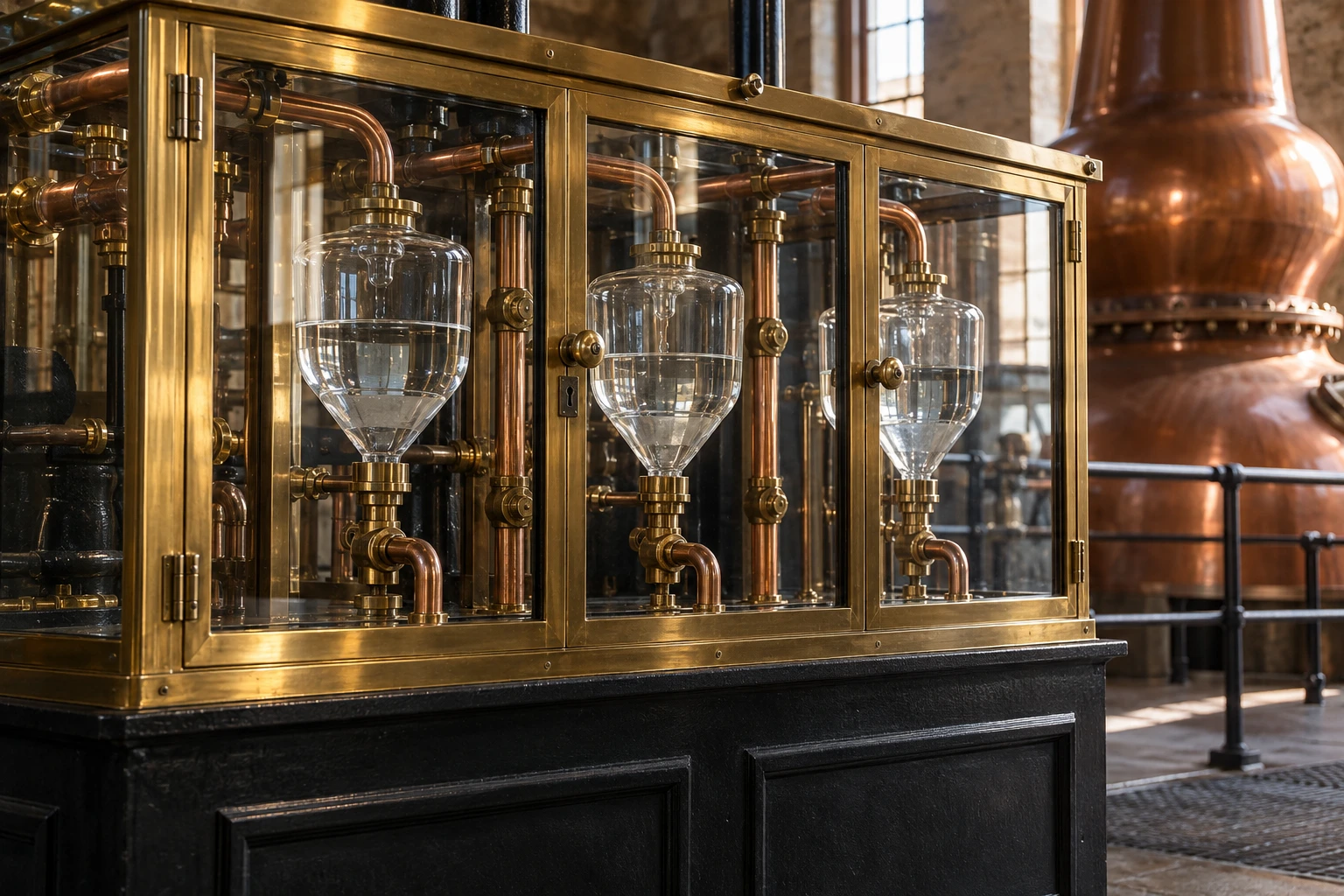
Spirit selection & new make: conceptual Scottish distillery scene

STAGE 08 · Spirit selection & new make

The distiller chooses what goes forward.

On the malt route, the changing distillate is monitored and directed through the collection system. The middle portion selected for maturation is often called the heart. Earlier and later portions are commonly returned for redistillation.

The spirit safe lets the operator observe and route spirit in an enclosed system. It is downstream of condensation. The collected new make is clear: the familiar amber appearance develops mainly during wood maturation.

Earlier portion

The early-running fraction has a different balance of volatile components. It is commonly routed for redistillation.

ENTERSChanging condensed distillate
WHAT CHANGESSelect the desired spirit fraction
LEAVESClear new make intended for cask filling
Are heads and tails simply “bad alcohol”?

These fractions contain overlapping mixtures, not perfectly separated substances. Collection decisions help shape spirit character and production efficiency. This tour explains the idea of selection; it is not a recipe for operating a still.

Follow the next transformation →
FOLLOW THE MATERIALClear new make intended for cask fillingNEXT STAGE ↓
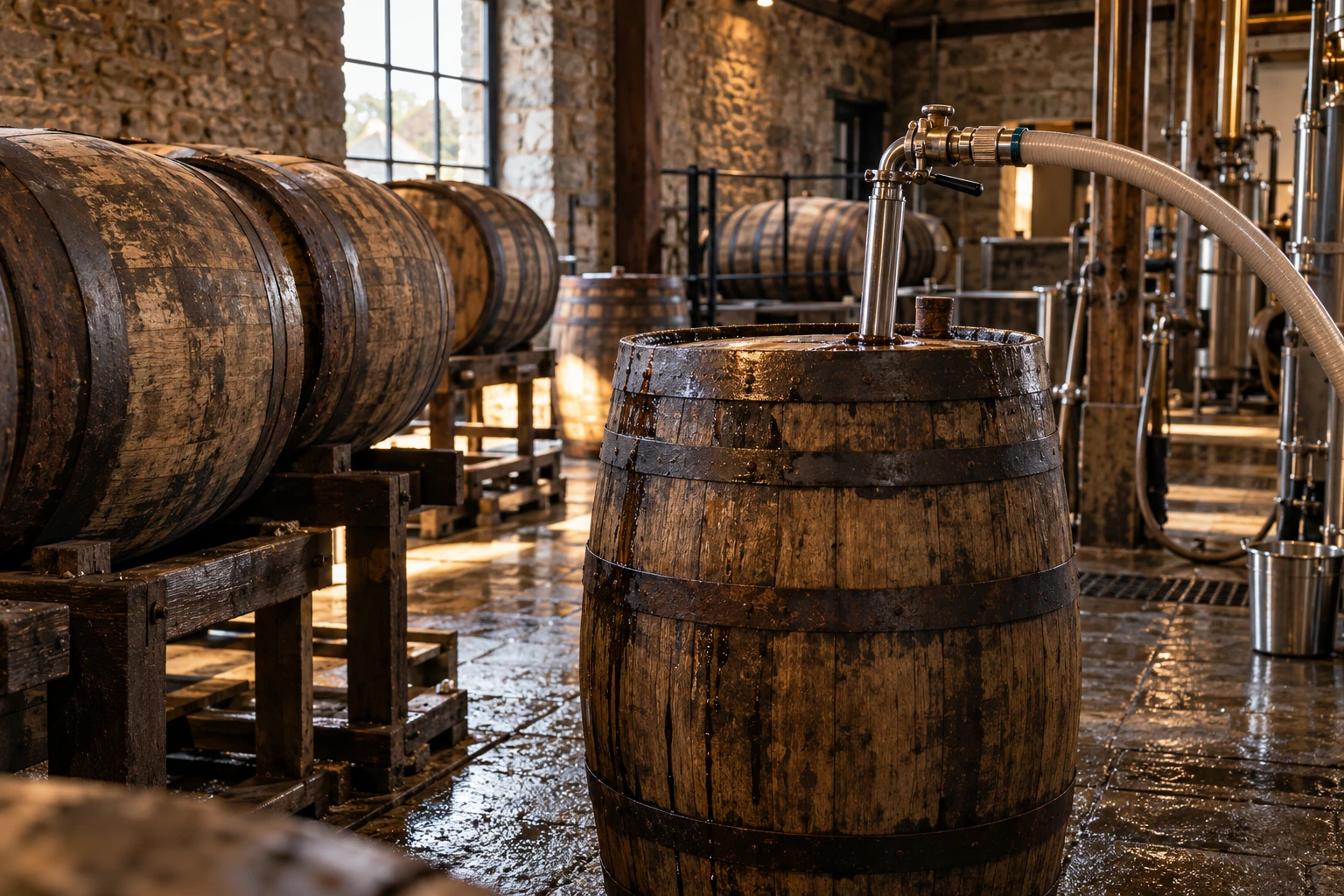
Cask selection & filling: conceptual Scottish distillery scene

STAGE 09 · Cask selection & filling

Give the spirit a vessel with a history.

Scotch matures in oak casks. Unlike bourbon’s new-charred-oak requirement, Scotch often uses casks previously associated with bourbon or sherry. Distillers choose the oak, previous use and fill history to suit the spirit.

The selected new make is measured, may be adjusted with water, and is filled into prepared casks. Scotch casks cannot exceed 700 litres. Refill casks have already held Scotch; “first fill” commonly means their first Scotch filling after another drink.

Ex-bourbon

Previously held bourbon. Oak species, previous treatment, condition and fill history affect what it contributes to Scotch.

ENTERSNew make + selected oak cask
WHAT CHANGESPrepare, measure and fill
LEAVESSpirit in a cask ready for maturation
Does “sherry cask” mean sherry is added to Scotch?

No. The cask’s history affects its wood and the compounds available during maturation. Scotch cannot be made by flavouring it with a pour of sherry. Cask eligibility is governed by the product specification; not every previously used oak vessel is acceptable.

Follow the next transformation →

CHAPTER COMPLETE

The cask is only the beginning of the wait.

Follow maturation, understand the five categories and discover the choices made before bottling.

Continue to Stage 10 →Explore all 12 stages