TJ THELEN'S COLLECTION
The Thelen Reserve

SCOTCH · STAGES 10–12

The cask is only the beginning of the wait.

Follow maturation, understand the five categories and discover the choices made before bottling.

Begin this chapter ↓Three selectable stages · Guided scrolling, 30 seconds per stage · Pause to explore at your own pace
THE FULL JOURNEYTime, selection & the glass · Scotch, Grain to Glass
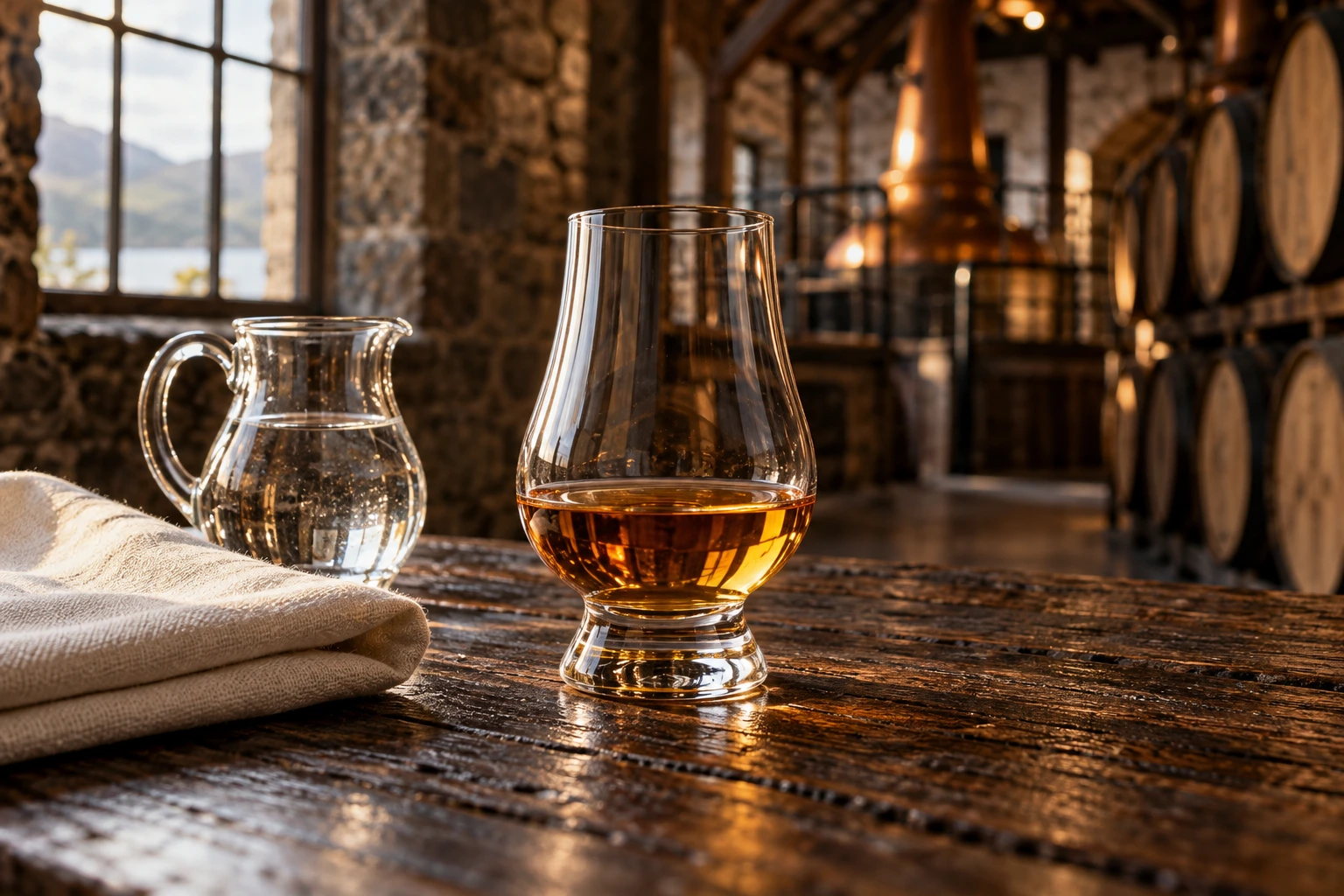
Maturation & finishing: conceptual Scottish distillery scene

STAGE 10 · Maturation & finishing

Time works through wood, air and spirit.

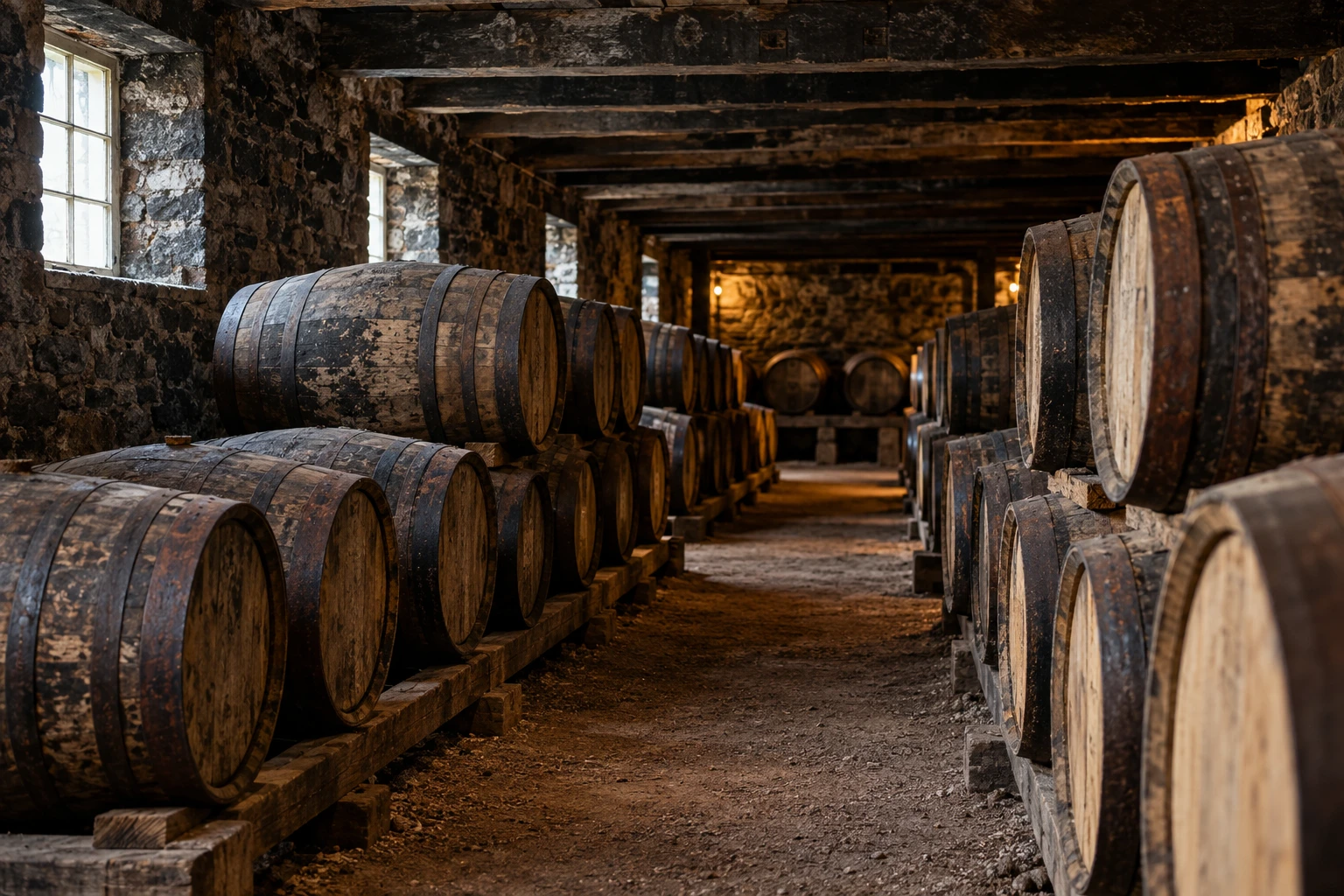
All Scotch maturation takes place in Scotland, in oak, for at least three years. During that time the spirit extracts wood compounds, reacts chemically and loses water and alcohol through evaporation. Warehouse conditions and individual casks affect the result.

Some releases move into a different eligible oak cask for an additional finishing period. Finishing is optional and remains maturation. This traditional dunnage warehouse is one storage style; racked and palletised warehouses are also used.

TRY THE YOUNGEST-WHISKY RULE

Combine it with illustrative 15-year-old and 18-year-old components.

The age statement can be 8 years.

Changing the proportions does not turn the statement into an average. Every component must qualify as Scotch.

ENTERSSpirit resting in oak
WHAT CHANGESExtraction, reactions and evaporation over time
LEAVESMature whisky ready for assessment
Does darker mean older?

No. Cask history, wood activity, dilution and permitted plain caramel colouring complicate the relationship. An age statement describes the youngest whisky in the bottle, not its average age. Time in a bottle does not add to its maturation age.
Follow the next transformation →
FOLLOW THE MATERIALMature whisky ready for assessmentNEXT STAGE ↓
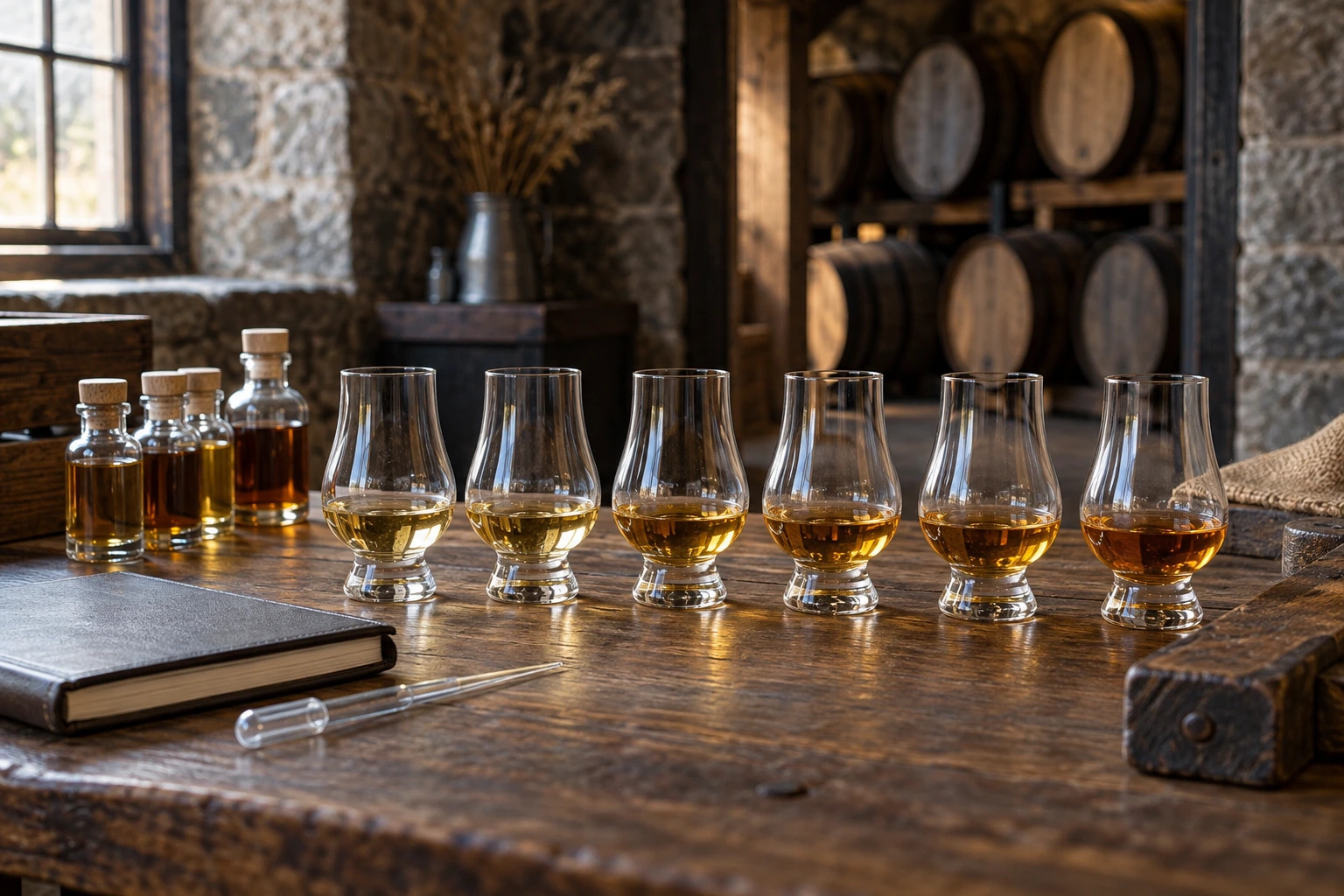
Selection, marrying & blending: conceptual Scottish distillery scene

STAGE 11 · Selection, marrying & blending

Choose the release, then understand its name.

Mature casks are sampled and selected. Whiskies can be brought together to reach an intended profile, then allowed to integrate before bottling. A single malt release can combine many casks from the same distillery.

A blended malt combines malt whiskies from different distilleries. A blended grain combines grain whiskies from different distilleries. Blended Scotch combines malt and grain Scotch. These categories describe composition and origin, not a ladder of quality.

Single malt

Malted barley only, batch pot distilled, at one Scottish distillery. Many casks may be combined. Must be bottled in Scotland.

ENTERSAssessed mature casks
WHAT CHANGESSelect and combine for the intended expression
LEAVESA release with a defined Scotch category
What about a single cask?

A single-cask release comes from one cask. That is a different claim from single malt. Neither single malt nor single cask automatically means cask strength, and the youngest component governs an age statement when casks are combined.

Follow the next transformation →
FOLLOW THE MATERIALA release with a defined Scotch categoryNEXT STAGE ↓
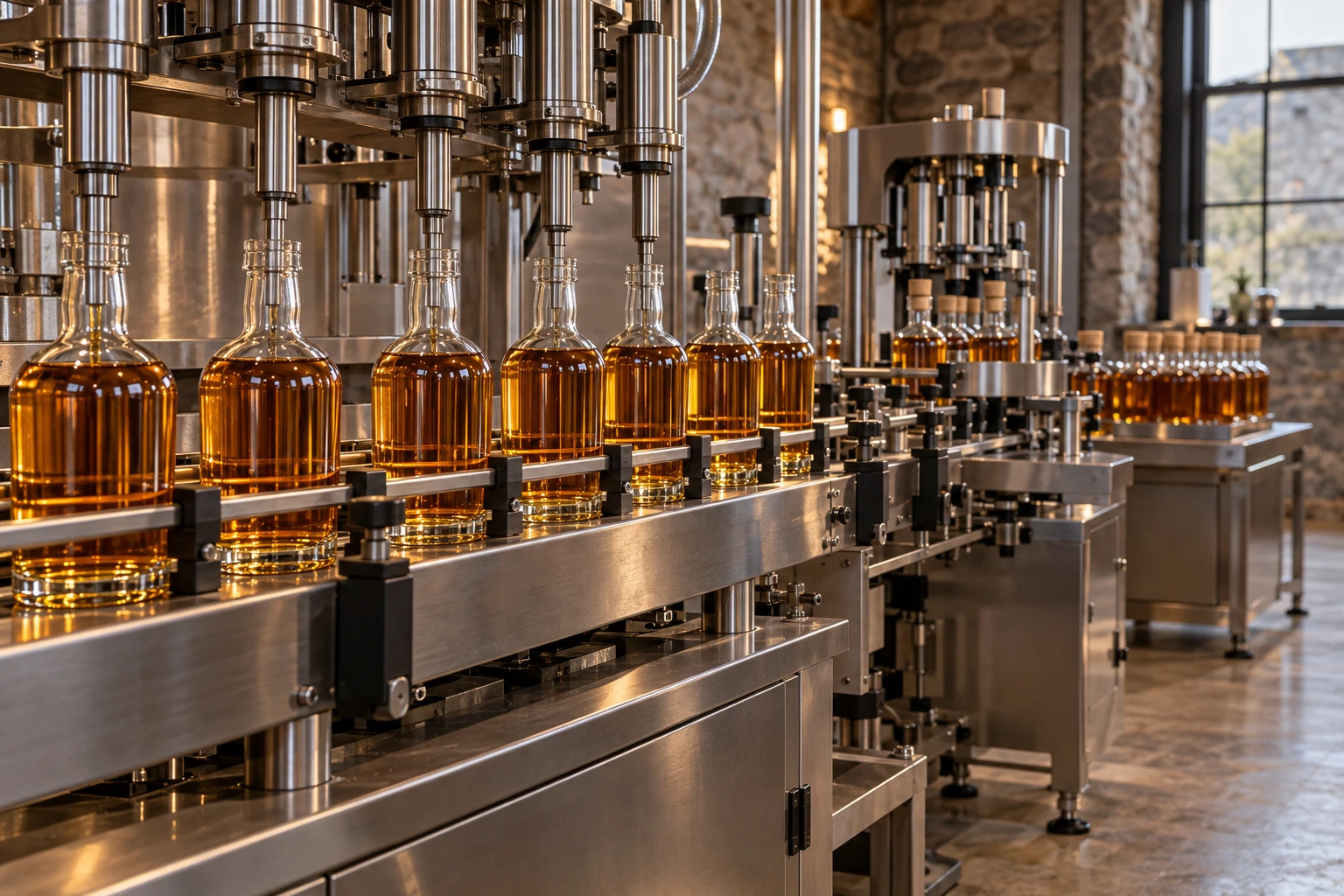
Bottling & the finished dram: conceptual Scottish distillery scene

STAGE 12 · Bottling & the finished dram

The final decisions arrive in the glass.

Before bottling, the producer chooses strength and filtration. Water may reduce the spirit to a target ABV; Scotch must be bottled at no less than 40% ABV. Chill filtration can reduce haze-forming material, while non-chill-filtered releases may haze when cooled or diluted.

Bottles are filled, closed, labelled and checked. Single Malt Scotch must be bottled in Scotland. At the glass, explore aroma, palate and finish. The grain, fermentation, distillation and cask decisions contribute together; no single stage explains the whole flavour. Follow a dram from colour to finish with Whisky Tasting Steps.

EXPLORE BOTTLING STRENGTH

46% ABV = 92 US proof

ABV is the percentage of alcohol by volume. US proof is twice ABV. This educational range is not a legal upper limit or a quality scale.

Chill-filtered or non-chill-filtered?

Chill filtration removes some material that can form haze. Haze in an unfiltered whisky is not, by itself, a fault. These are presentation choices that do not determine the entire drinking experience.

ENTERSSelected mature whisky
WHAT CHANGESStrength, filtration, filling and presentation
LEAVESBottled Scotch and the finished dram
Is natural colour mandatory?

No. Plain caramel colouring is permitted, though many releases choose natural colour. It does not permit arbitrary flavourings or sweeteners. Colour, strength and filtration claims should be read independently rather than treated as a simple quality ranking.

Follow the next transformation →

CHAPTER COMPLETE

A finished dram in a tulip-shaped tasting glass

One glass.
Twelve connected transformations.

Nose gently, take a small sip and notice the finish. A little water can change what you perceive. Describe what you find rather than hunting for a prescribed answer.

Grain and yeast establish possibilities. Distillation selects and concentrates. Oak, time and the final assembly complete the story.

Explore the illustrated companions →
Explore all 12 stages