TJ THELEN'S COLLECTION
The Thelen Reserve

SCOTCH · STAGES 04–06

Prepare the sugars. Let yeast transform them.

From the mill to the washback, follow the material through three different transformations.

Begin this chapter ↓Three selectable stages · Guided scrolling, 30 seconds per stage · Pause to explore at your own pace
THE FULL JOURNEYGrist, wort & wash · Scotch, Grain to Glass
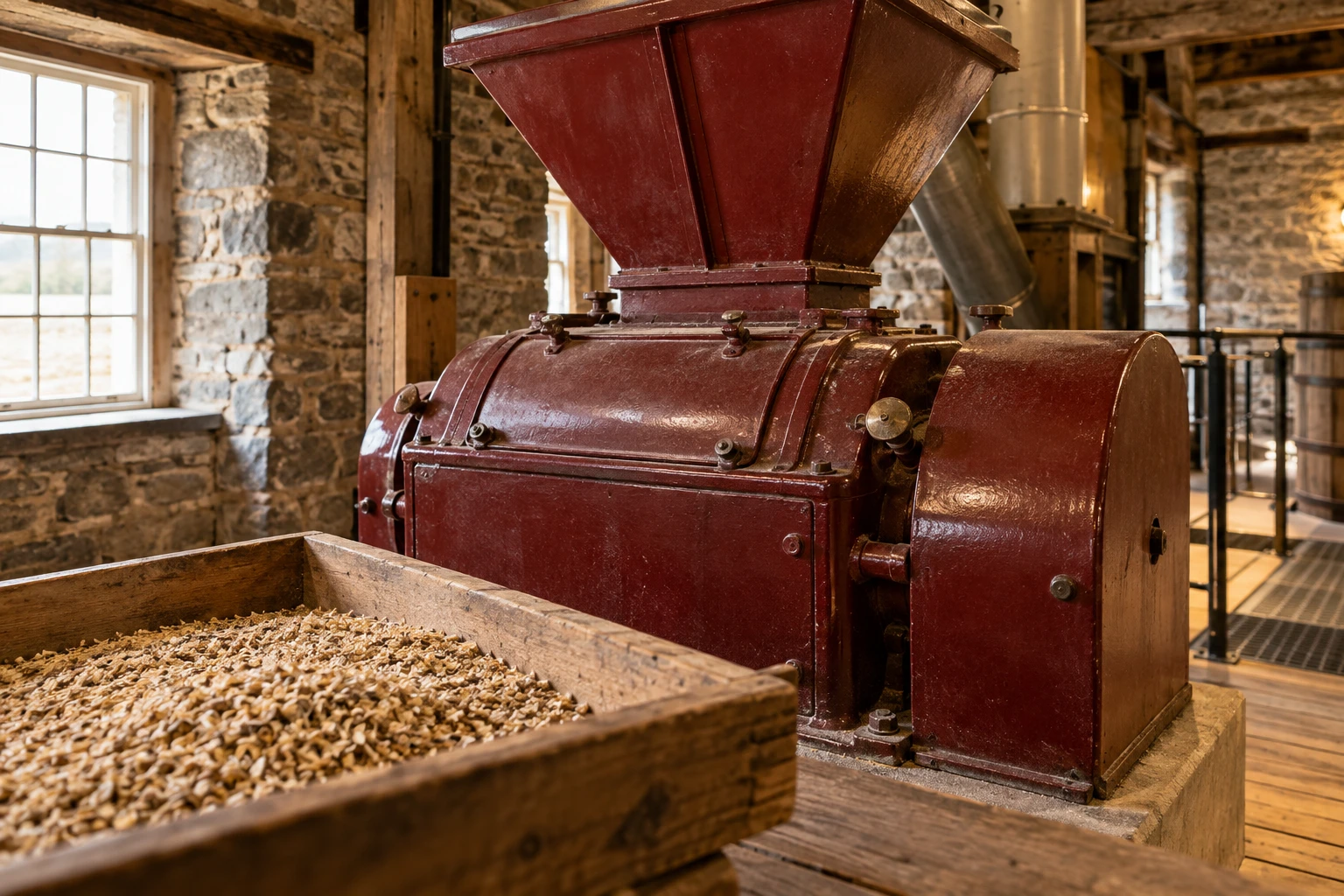
Milling the malt: conceptual Scottish distillery scene

STAGE 04 · Milling the malt

Open the grain without losing the filter bed.

The dried malt passes through a mill and becomes grist: a mixture of husk, coarse particles and flour. Breaking the grain exposes its interior so hot water can reach the material needed in the mash.

The balance matters. Fine material offers surface area, while husk structure helps liquid drain through the grain bed. Distillers monitor the grind for their equipment rather than pursuing one universal particle recipe.

Husk

Larger husk pieces help form a permeable grain bed in conventional mash-tun systems.

ENTERSDried malt
WHAT CHANGESCrush and separate the particle sizes
LEAVESGrist ready for the mash tun
Why not grind everything into flour?

Very fine grist can make drainage more difficult in a conventional mash tun. The aim is effective conversion and extraction with workable flow, not simply the smallest possible particles. Mash filters and other systems can require different settings.
Follow the next transformation →
FOLLOW THE MATERIALGrist ready for the mash tunNEXT STAGE ↓
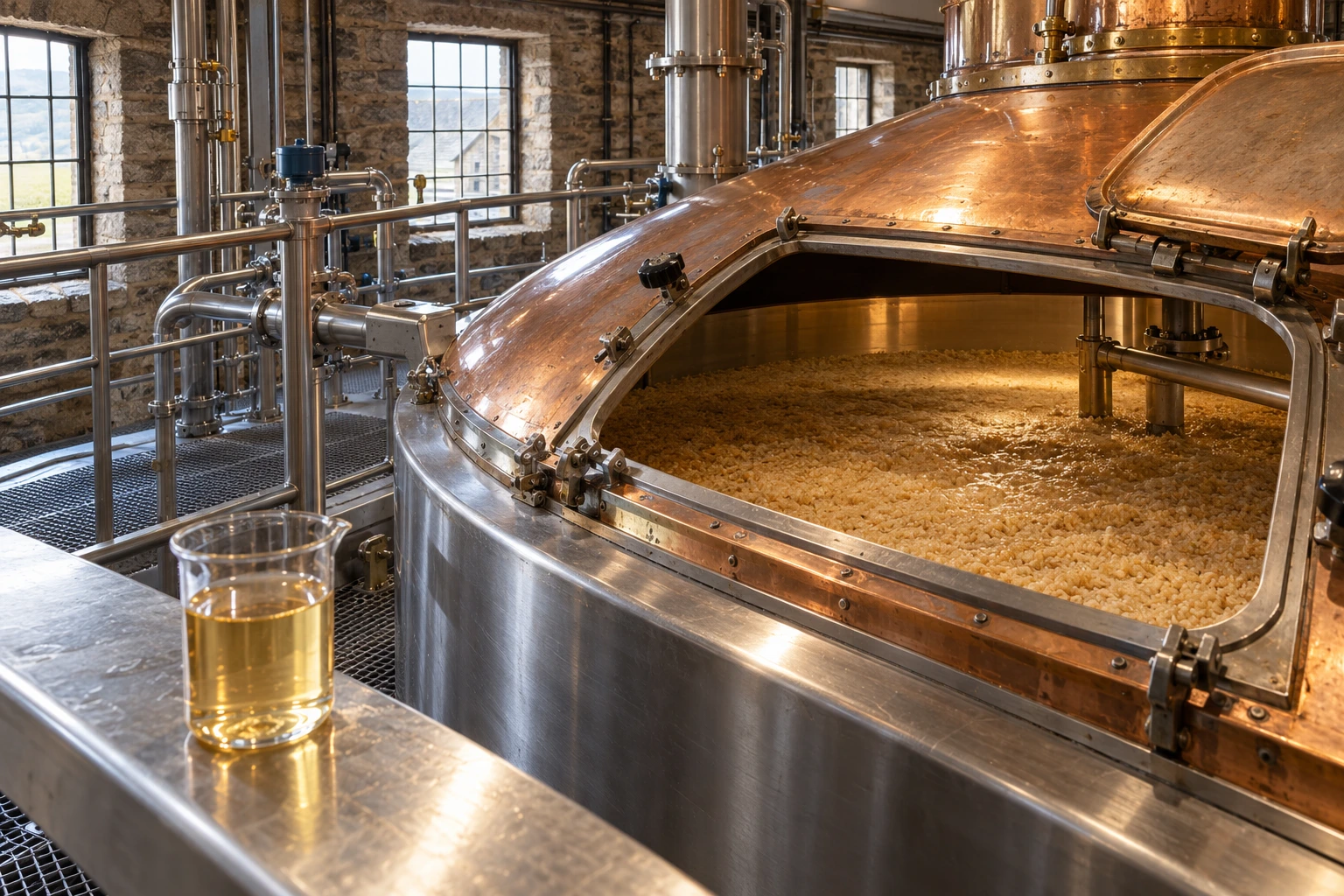
Mashing & wort separation: conceptual Scottish distillery scene

STAGE 05 · Mashing & wort separation

Turn the grain’s reserves into a liquid yeast can use.

Grist meets hot water in the mash tun. Cereal enzymes act on accessible starch, and soluble material moves into the liquid. The sweet liquid is called wort. It is separated from the spent grain, known as draff, then cooled for fermentation.

Malt distilleries commonly use successive waters to recover extract. Some later water may be retained for another mash. Grain-whisky production can include a separate cereal-cooking step before conversion with malt enzymes.

Follow the wort

The extracted liquid contains fermentable sugars. Once cooled, it goes forward to fermentation in the washbacks.

ENTERSGrist + hot water
WHAT CHANGESEnzyme conversion and liquid separation
LEAVESSweet wort + separated draff
What is different from the bourbon mash?

This malt route separates wort from the grain before fermentation. Many bourbon processes ferment with grain solids still present. Scotch conversion relies on the cereals’ own enzyme systems; the rules do not permit added commercial enzymes.

Follow the next transformation →
FOLLOW THE MATERIALSweet wort + separated draffNEXT STAGE ↓
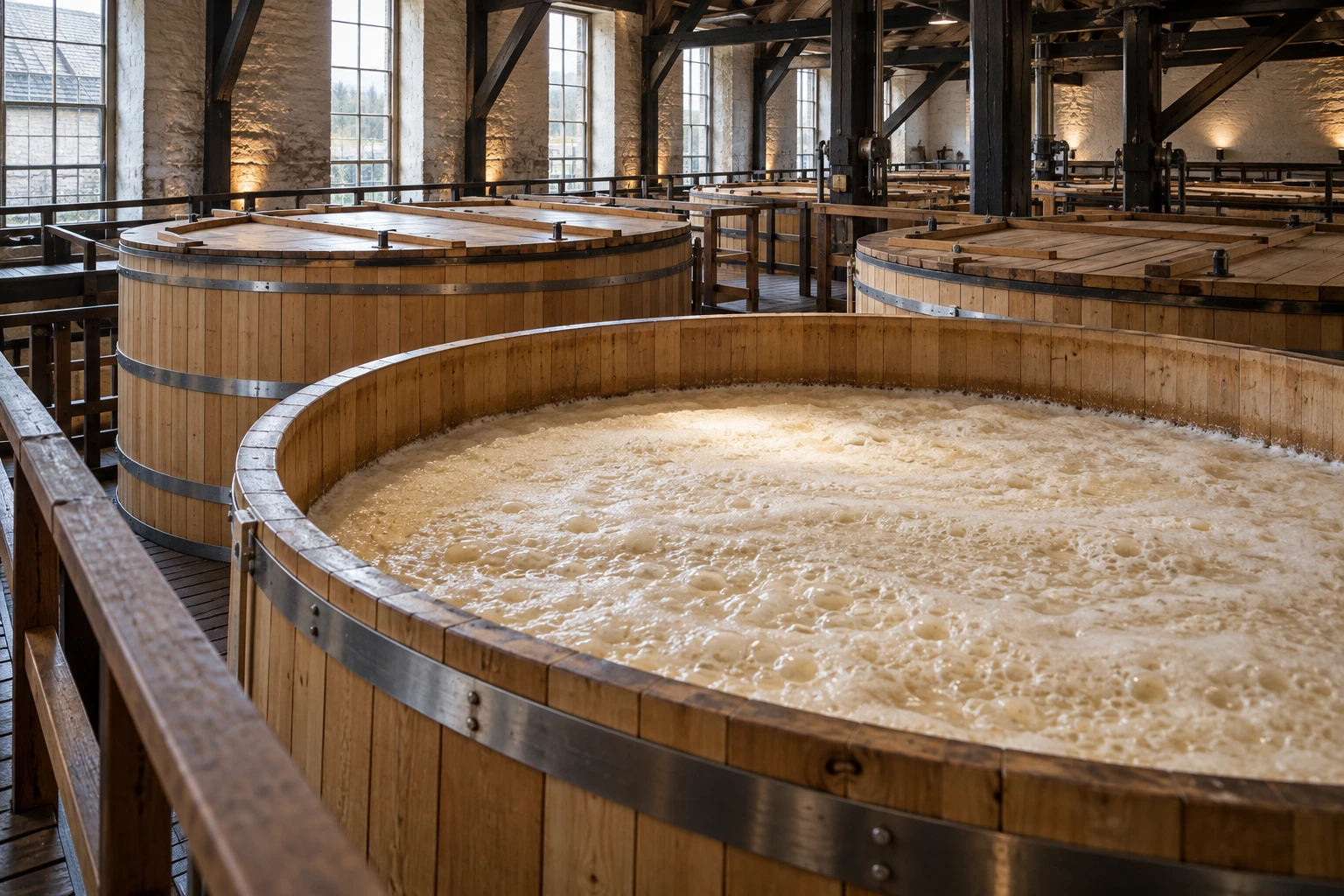
Fermentation in washbacks: conceptual Scottish distillery scene

STAGE 06 · Fermentation in washbacks

Yeast creates the alcohol and begins the flavour.

Cooled wort enters washbacks, made from wood or stainless steel, and yeast is added. Fermentation produces alcohol, carbon dioxide and aroma-active compounds. The result is a low-strength alcoholic liquid called wash.

Yeast strain, temperature, wort composition and fermentation duration all affect the developing spirit. Microbial activity can also influence longer fermentations. A longer fermentation is a process choice, not an automatic guarantee of better whisky.

Alcohol

Yeast metabolises fermentable sugars and produces ethanol. Alcohol starts here, not in the still.

ENTERSCooled wort + yeast
WHAT CHANGESSugars are metabolised; alcohol and congeners form
LEAVESWash ready for distillation
Why does fermentation matter if it is distilled later?

Distillation carries forward and redistributes some compounds formed during fermentation. It does not erase everything that happened in the washback. Peer-reviewed work has tracked differences between fermentations through low wines and into new make.

Follow the next transformation →

CHAPTER COMPLETE

A clear spirit. A vessel with a history.

Explore distillation, spirit selection and the oak that receives the new make.

Continue to Stage 7 →Explore all 12 stages