TJ THELEN'S COLLECTION
The Thelen Reserve

SCOTCH · STAGES 01–03

Before the still, the grain becomes malt.

Follow the barley through selection, germination and drying. Discover why peat is a choice, not a requirement.

Begin this chapter ↓Three selectable stages · Guided scrolling, 30 seconds per stage · Pause to explore at your own pace
THE FULL JOURNEYGrain, malt & smoke · Scotch, Grain to Glass
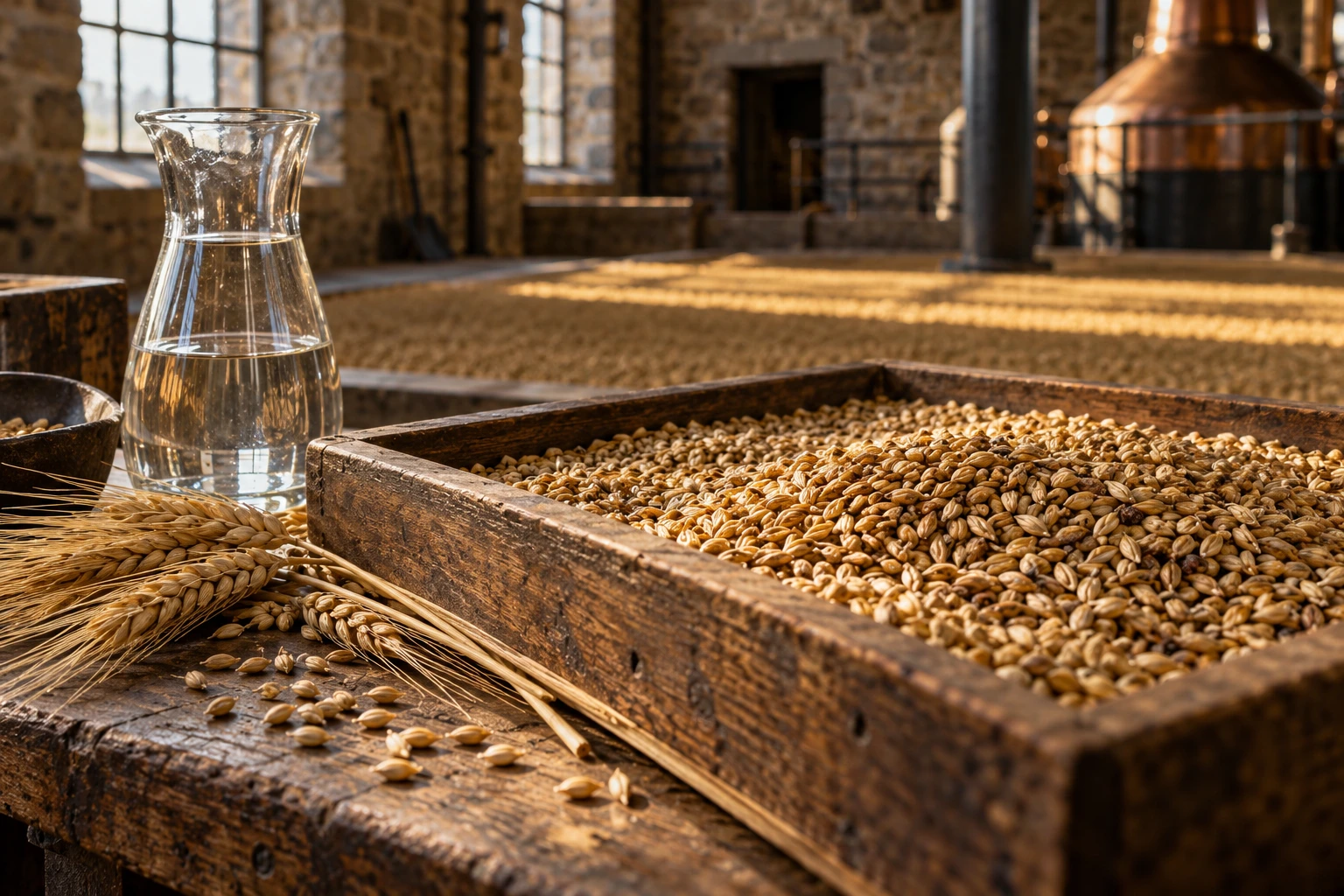
Grain & water: conceptual Scottish distillery scene

STAGE 01 · Grain & water

Before a dram, a grain of possibility.

Barley supplies the starting material for malt Scotch. The distiller chooses malt to suit production and the intended spirit character. Water enters at several points, from processing grain to adjusting the finished strength.

Single malt uses malted barley without other cereals. Grain Scotch may also use whole grains such as wheat or maize. Those grains require preparation suited to their starches; they do not simply follow every malt-whisky step unchanged.

Malt Scotch

Malted barley is the only cereal for Single Malt Scotch. Its malt enzymes also prepare fermentable sugars during mashing.

ENTERSSelected cereal grain + water
WHAT CHANGESChoose the raw materials and production route
LEAVESBarley ready for malting, or a grain-whisky recipe
Does “single grain” mean one kind of grain?

No. “Single” refers to one distillery. It does not promise a single cereal, a single cask or a single vintage. Grain Scotch is its own category, not an ingredient added after distillation.
Follow the next transformation →
FOLLOW THE MATERIALBarley ready for malting, or a grain-whisky recipeNEXT STAGE ↓
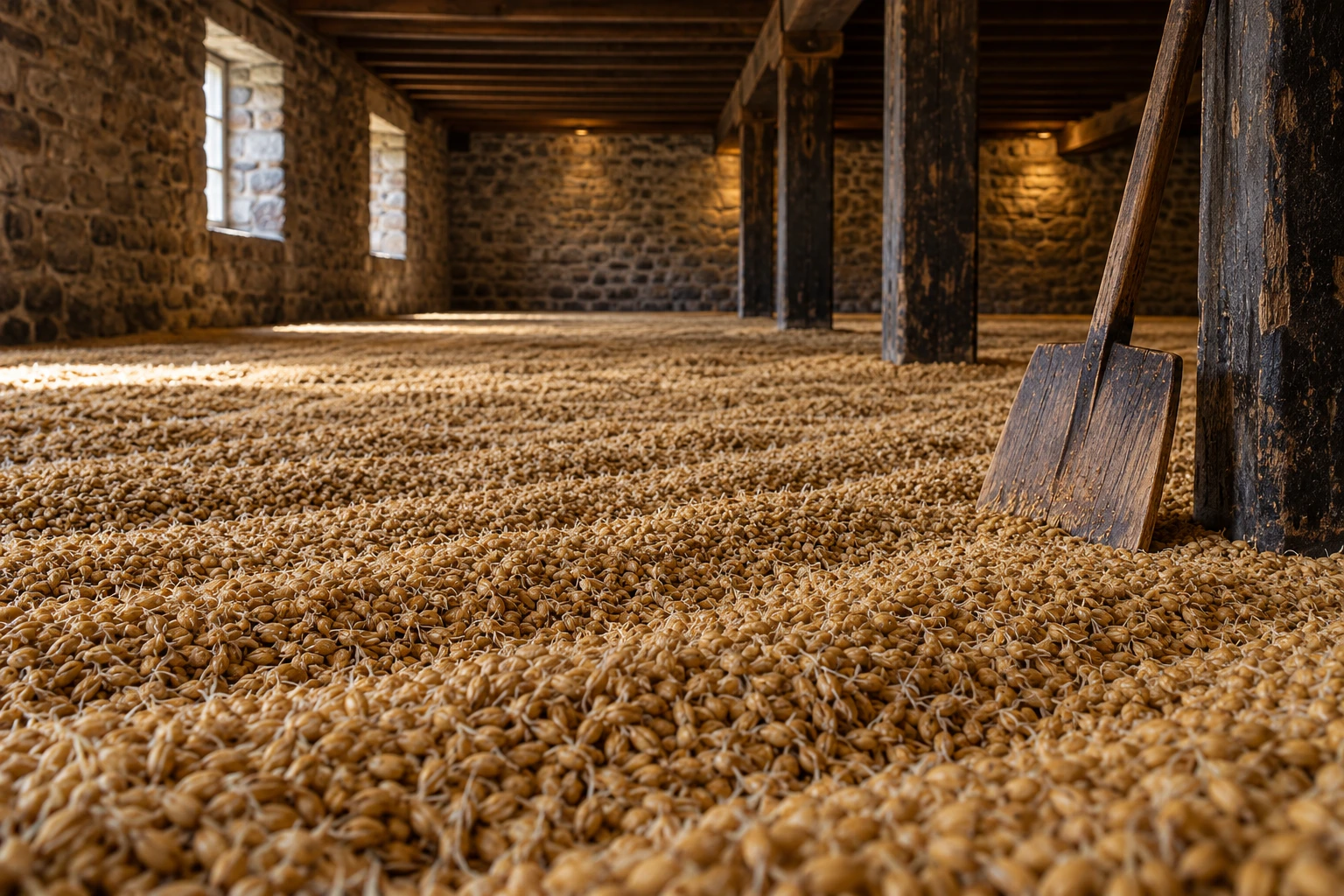
Steeping & germination: conceptual Scottish distillery scene

STAGE 02 · Steeping & germination

Wake the grain. Prepare the starch.

Barley is steeped in water, with air rests, then allowed to germinate under controlled conditions. Enzymes develop and the internal structure of the grain changes, making its starch more accessible for later processing.

The grain is turned and managed to control heat and keep growth even. This scene shows traditional floor malting. Many distilleries buy malt from specialist maltsters using larger mechanised systems; floor malting is not required.

1 · Steep

Water uptake, with air rests, prepares the barley to germinate.

ENTERSRaw barley + water + air
WHAT CHANGESControlled germination modifies the grain
LEAVESGreen malt ready for drying
Is malting the same as making all the sugar?

No. Malting prepares the grain and its enzyme system. Much of the conversion of accessible starch into fermentable sugars takes place later, during mashing. The process needs to stop growth before the seed consumes too much of its reserves.

Follow the next transformation →
FOLLOW THE MATERIALGreen malt ready for dryingNEXT STAGE ↓
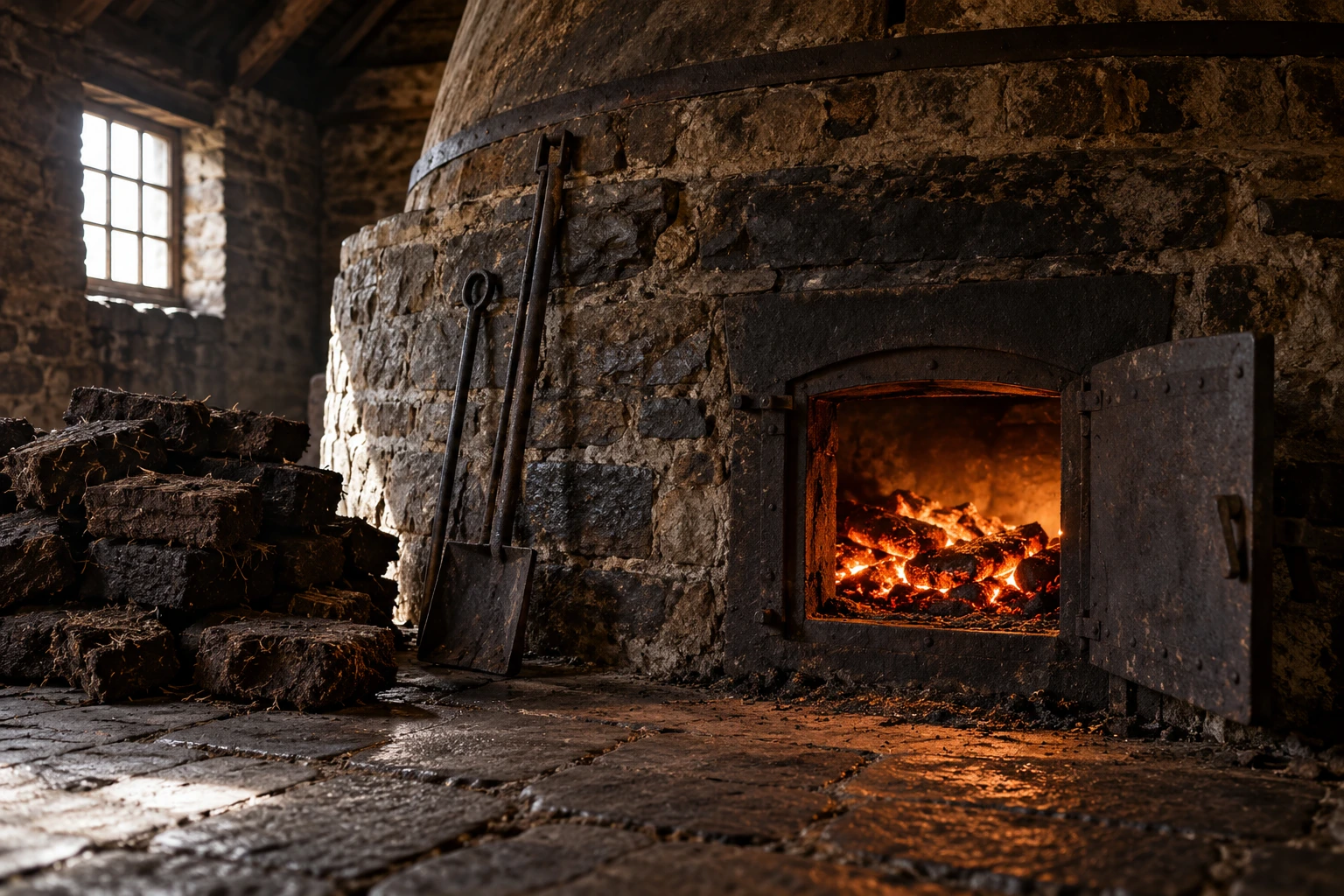
Kilning & optional peat: conceptual Scottish distillery scene

STAGE 03 · Kilning & optional peat

Dry the malt. Decide whether smoke belongs.

Kilning dries green malt and stops germination. Heat and airflow are managed to make stable malt while preserving useful enzyme activity. Some producers expose the malt to peat smoke during drying to create a smoky style.

Peat smoke contributes compounds that can survive the later process and influence aroma. Many Scotches use unpeated malt. The kiln pictured represents the peated option, not a compulsory step or a universal distillery design.

Unpeated malt

Drying with no deliberate peat-smoke exposure preserves a different flavour starting point. Unpeated Scotch is still Scotch.

ENTERSGreen malt
WHAT CHANGESDrying stops growth; optional smoke adds compounds
LEAVESDried malt, peated or unpeated
Does peat in the water make Scotch smoky?

The characteristic peat-smoke influence is principally associated with smoke exposure during malt drying. Water colour is not a reliable explanation of a whisky’s smokiness. Malt phenol measurements also do not translate directly into a guaranteed intensity in the finished glass.

Follow the next transformation →

CHAPTER COMPLETE

Prepare the sugars. Let yeast transform them.

From the mill to the washback, follow the material through three different transformations.

Continue to Stage 4 →Explore all 12 stages