TJ THELEN'S COLLECTION
The Thelen Reserve

STAGES 10–12 · BARREL TO GLASS

The final decisions.
The first pour.

Leave the warehouse and follow the whiskey through selection,
proofing and bottling. See how a mature barrel becomes a finished release.

Enter the blending room ↓Four views across three stages · About two minutes · Scroll at your own pace
THE FINAL CHAPTERS09 · Maturation → 10 · Selection → 11 · Proofing → 12 · Bottle & glass
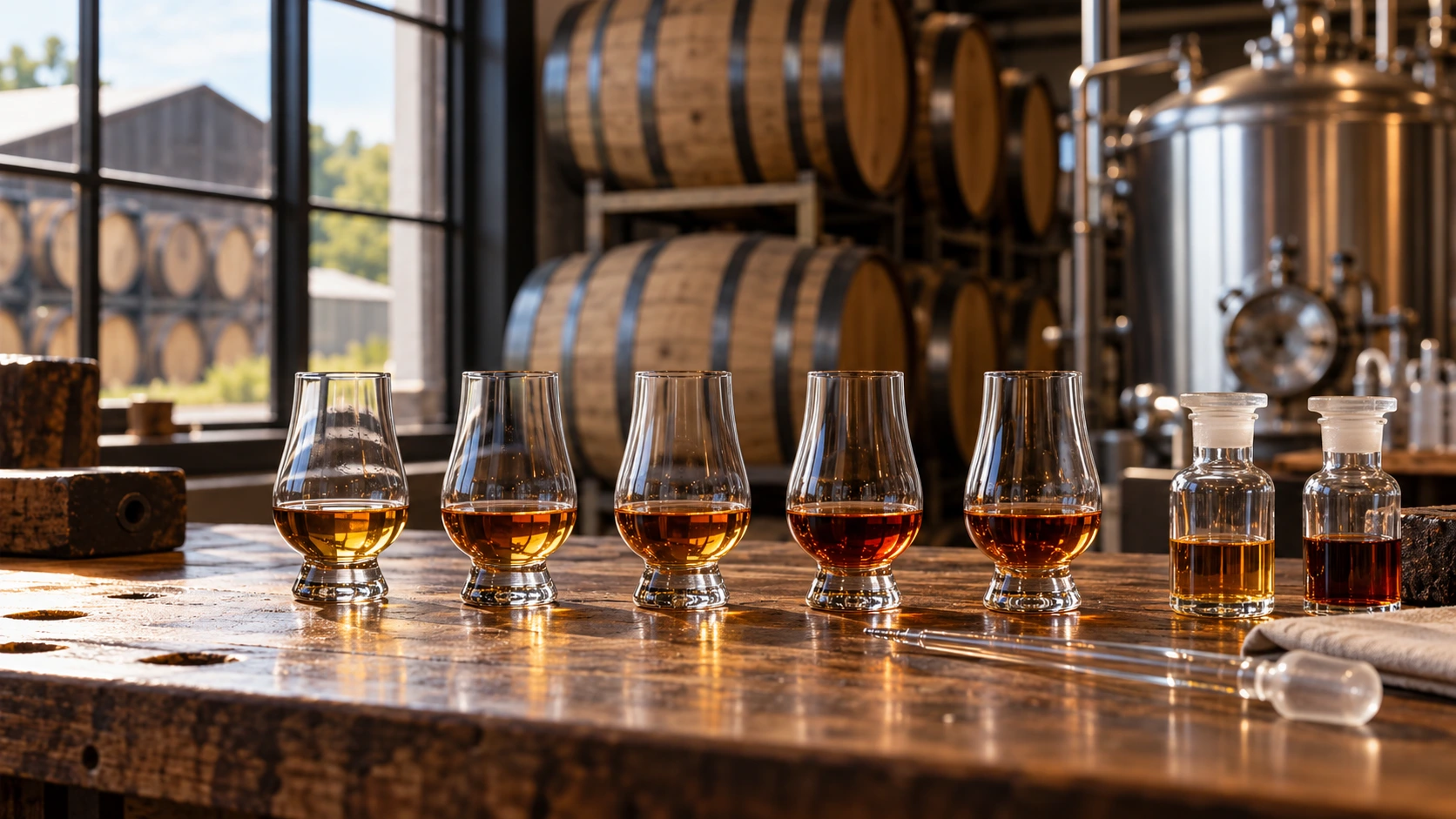
Glasses of barrel samples on a distillery blending bench.

THE RELEASE STARTS WITH A CHOICE

Individual barrels become a release.

After maturation, the team evaluates samples for aroma, flavor and balance, alongside production records and strength measurements. Selected barrels may be bottled individually or combined. Age alone does not decide readiness.

MANY BARRELS · ONE INTENDED PROFILE

Selected barrels are combined in a tank. Trial blends help the team choose proportions that suit the intended release. Batching can emphasize consistency or create a distinctive one-off expression.

ENTERSMature whiskey in individual barrels
↓
WHAT CHANGESSample, select and combine if desired
↓
LEAVESWhiskey chosen for a specific release
Is batching the same as “blended whiskey”?

Combining eligible bourbon barrels can produce a bourbon release. “Blended whiskey” is a separate U.S. legal designation; it is not a synonym for every act of combining barrels. Single-barrel whiskey can still be proofed down before bottling.
Follow the selected whiskey →
FOLLOWING THE WHISKEY NEXT VIEW ↓
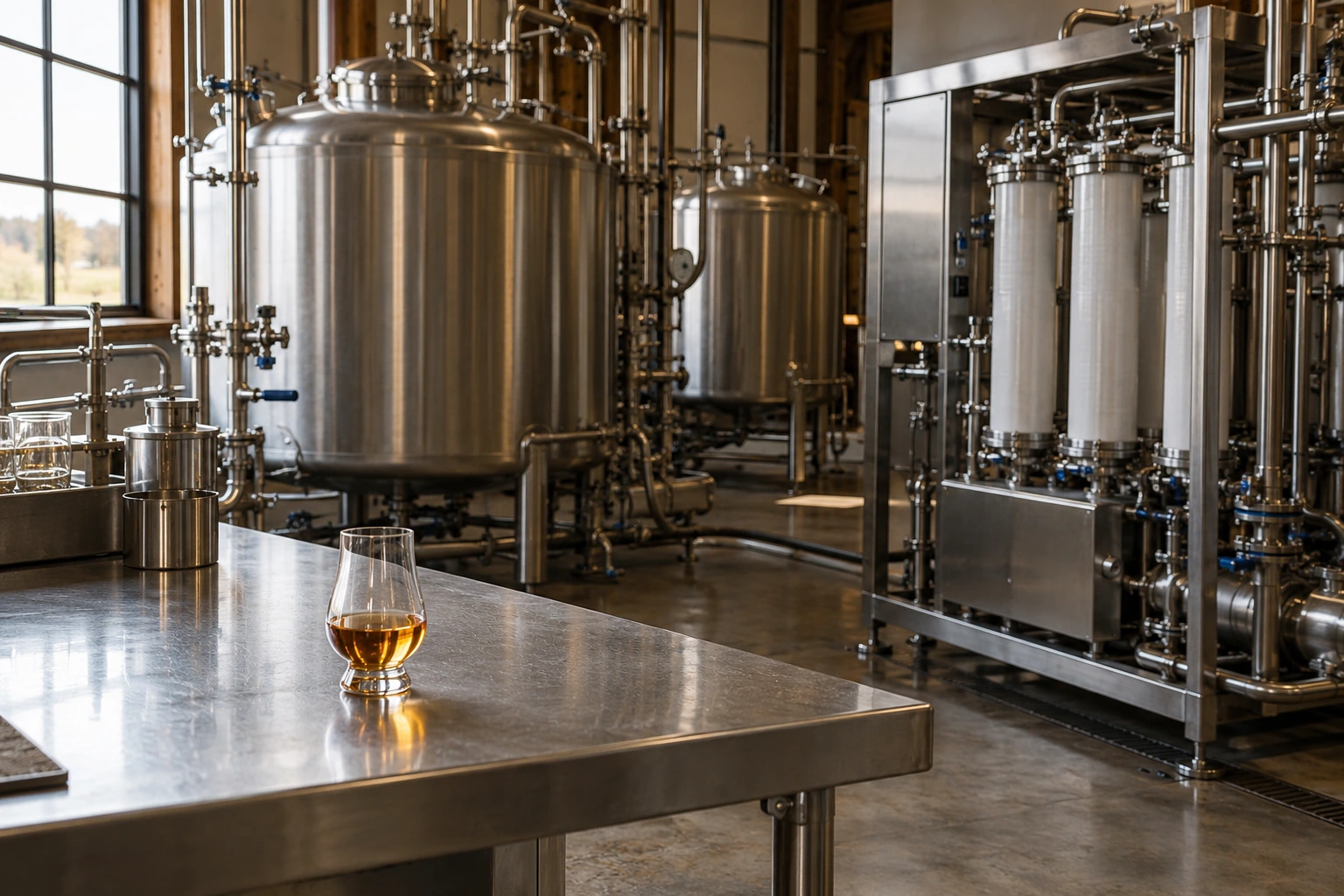
Stainless proofing tanks and enclosed filtration equipment in a distillery.

THE FINAL LIQUID DECISIONS

Set the strength. Choose the clarity.

For a target-proof release, measured water lowers alcohol concentration before final verification. Some releases retain barrel strength. Filtration choices vary by producer and product; proofing and filtration may be sequenced differently.

100 proof · 50% ABV

Illustrative range, not a recommended strength or dilution recipe. U.S. proof is twice ABV. Higher proof does not mean greater age or quality.

REMOVE VISIBLE SOLIDS

Screening or filtration can remove char fragments and other particles picked up during barrel emptying. This is distinct from chilling whiskey to reduce haze-forming material.

ENTERSSelected mature whiskey
↓
WHAT CHANGESAdjust strength if needed; choose filtration
↓
LEAVESWhiskey prepared for bottling
Why can whiskey turn cloudy?

Cooling or adding water can make some compounds, including long-chain fatty acid esters, less soluble. Chill filtration removes some haze-forming material after cooling. Non-chill-filtered whiskey may develop haze; this alone is not evidence of a defect. Bourbon must be bottled at at least 80 proof (40% ABV).

Follow the whiskey to the bottling line →
FOLLOWING THE WHISKEYyNEXT VIEW ↓
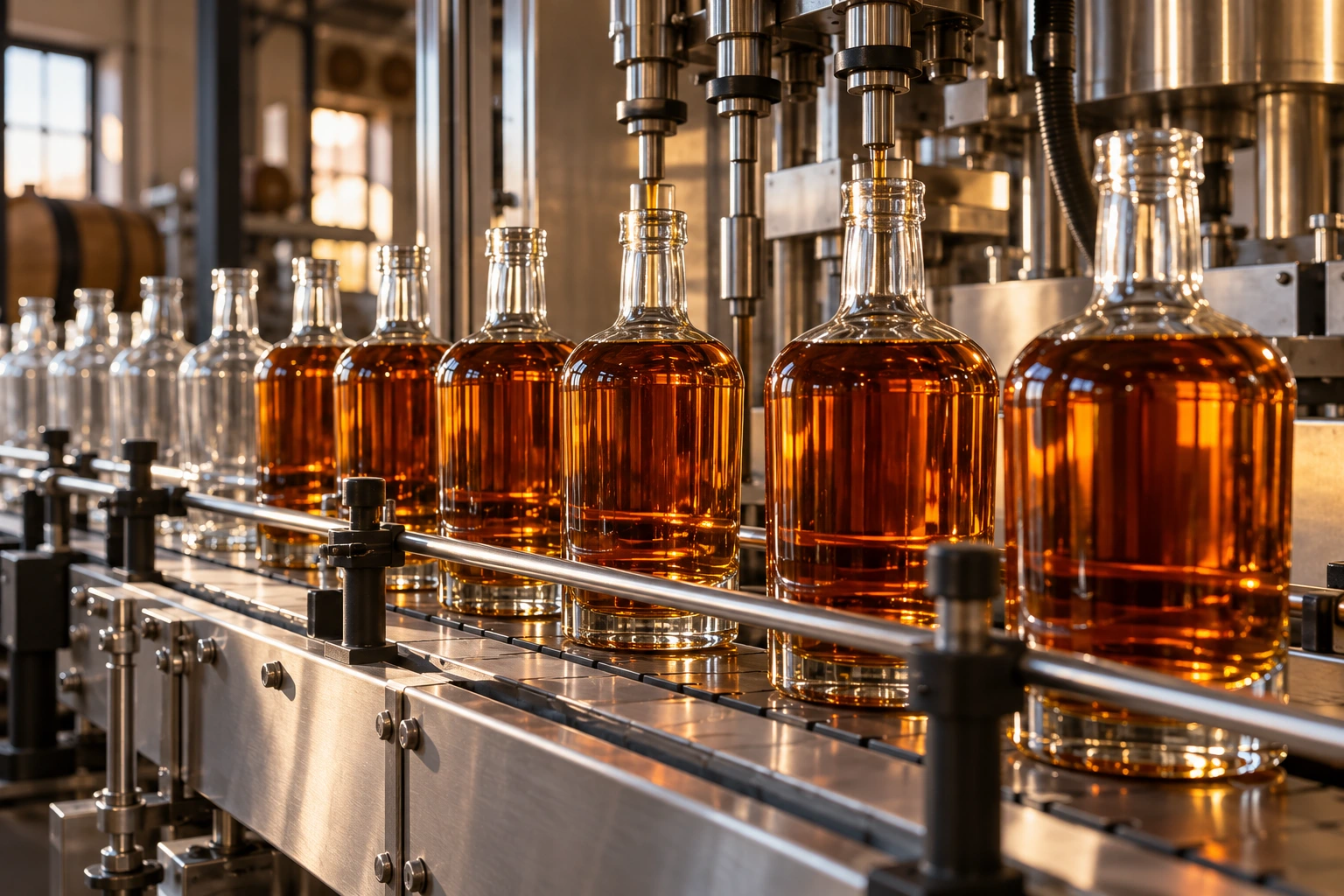
Amber bourbon in clear bottles on a stainless bottling line.

STAGE 12 · FROM TANK TO BOTTLE

The recipe becomes a finished bottle.

Prepared whiskey is filled into clean bottles, closed and labelled. The team checks fill, closure, appearance and release information, with lot records connecting the bottle to its production history. Equipment and the order of packaging operations vary.

ENTERSPrepared whiskey + packaging
↓
WHAT CHANGESFill, close, label and check
↓
LEAVESA traceable finished bottle
Does whiskey keep aging in the bottle?

A bottle does not continue oak maturation. Storage and oxygen exposure can still affect the contents, especially after opening, but time in glass does not add years to its barrel age.

Arrive at the finished glass →
FOLLOWING THE WHISKEYeNEXT VIEW ↓
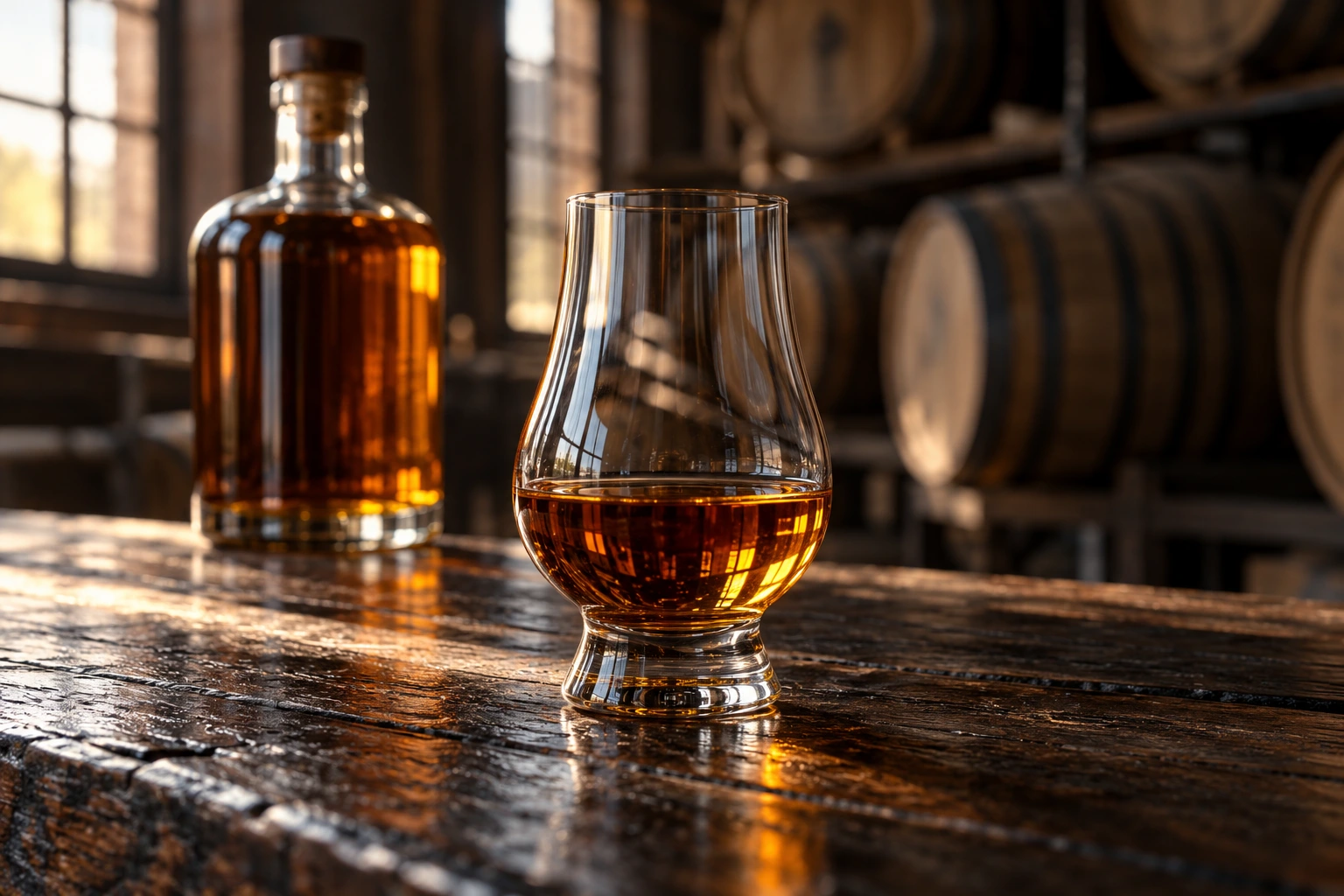
A tulip-shaped glass with a small pour of bourbon on an oak distillery bench.

STAGE 12 · THE JOURNEY IN YOUR GLASS

Every earlier decision arrives here.

The glass brings the process back together: the grain recipe, fermentation, distillation, new charred oak and the final release decisions. Explore the aromas first, then a small sip if you choose. Descriptions are observations, not a test with one correct answer. Take the six-step tasting guide to your glass.

AROMA

What do you notice before tasting?

PALATE

How do flavor, texture and intensity develop?

FINISH

What remains, and how does it change?

ENTERSA finished bourbon
↓
WHAT CHANGESObserve aroma, palate and finish
↓
LEAVESA personal understanding of the process
Can I read age from the color?

Color reflects several factors, including barrel conditions and dilution. It cannot reliably tell you age, strength or quality on its own. Compare what you observe with the bottle’s actual release information.

Return to the full journey →

TWELVE STAGES · ONE CONNECTED JOURNEY

From a grain of possibility
to the glass in front of you.

You have reached the final chapter. Revisit any stage to connect a production decision with what you notice in the finished whiskey.

Explore all 12 stages →Start again with the grainOpen the infographic library