TJ THELEN'S COLLECTION
The Thelen Reserve

AMERICAN WHISKEY · STAGES 04–06

Make the alcohol. Shape the spirit.

Watch the material change from sweet mash to clear new make.

Begin this chapter ↓Three selectable stages · Guided scrolling, 30 seconds per stage · Pause to explore at your own pace
THE FULL JOURNEYFermentation, still & spirit · American Whiskey, Grain to Glass
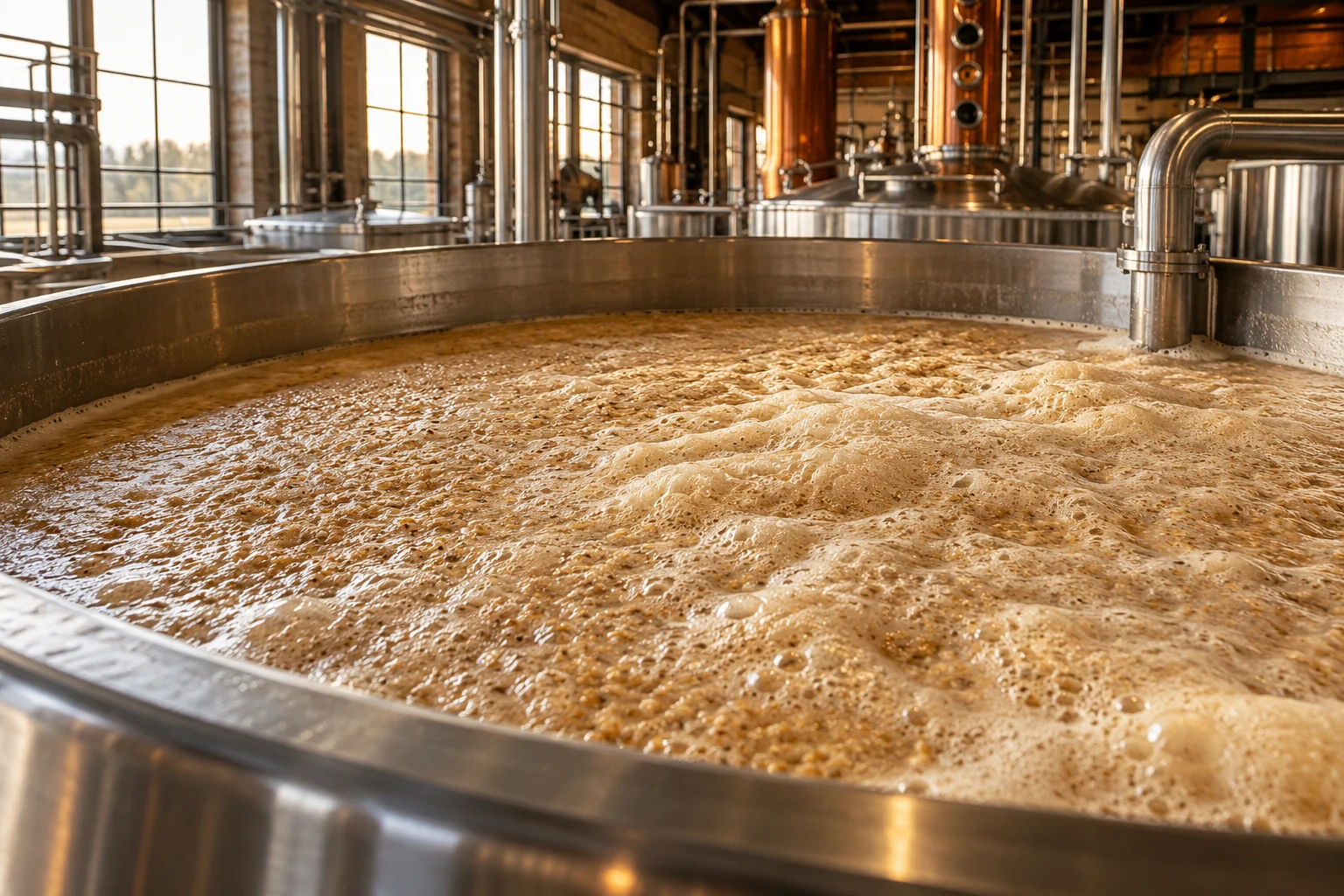
Fermentation: conceptual American distillery scene

STAGE 04 · Fermentation

The first alcohol appears here.

Yeast is added to the cooled mash or wort. As it consumes sugars, the fermenting material becomes alcoholic and releases carbon dioxide. Foam and bubbles are visible signs of activity, but their appearance alone does not establish completion.

The resulting distiller’s beer is ready for the still. Yeast choice and fermentation conditions also influence aroma compounds and the character carried into distillation. Grain solids may remain in the beer, depending on the process.

Alcohol

Yeast transforms fermentable sugars into ethanol. This is where the alcohol begins.

ENTERSCooled sweet mash or wort + yeast
WHAT CHANGESFermentation produces alcohol and other compounds
LEAVESDistiller’s beer ready for the still
Does sour mash mean sour-tasting whiskey?

No. Sour-mash practice reuses some liquid residue from a previous distillation, commonly called backset, in a later mash. It helps manage acidity and consistency. It is a process choice, not a promise of sour flavor and not a requirement for all American whiskey.
Follow the next transformation →
FOLLOW THE MATERIALDistiller’s beer ready for the stillNEXT STAGE ↓
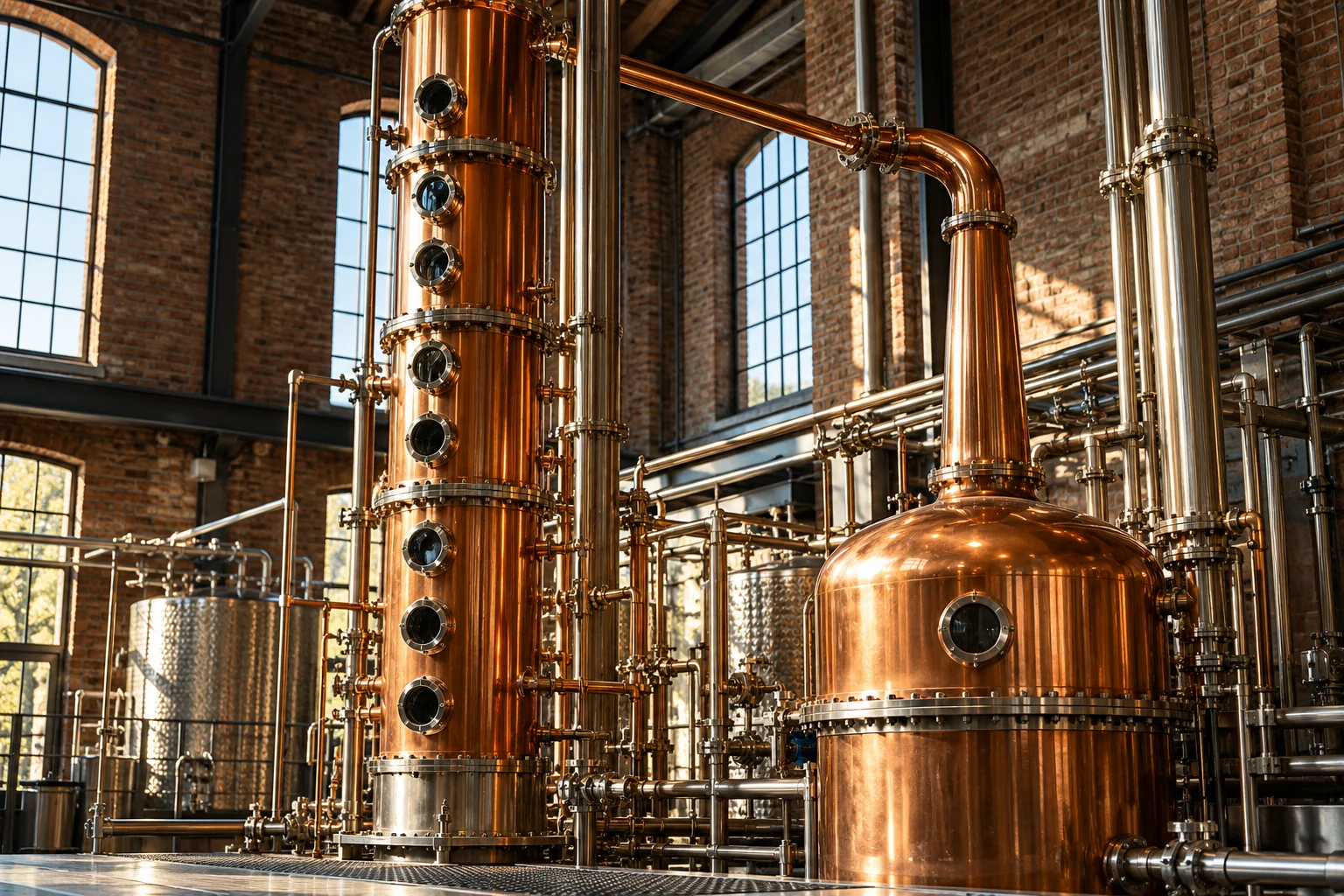
Distillation: conceptual American distillery scene

STAGE 05 · Distillation

Concentrate the alcohol. Shape the character.

Heating fermented beer produces vapor enriched in volatile components. Contact within the still and subsequent condensation separate and concentrate the spirit. Distillation does not create the original alcohol; fermentation did that.

American distilleries use column, pot and hybrid equipment. Bourbon, rye, wheat, malt, rye malt, corn whiskey and American single malt are distilled at no more than 160 proof (80% ABV). Light whiskey follows a different distillation range.

Column & doubler

A common American arrangement uses continuous column distillation followed by further distillation in a doubler or thumper. Equipment and collection practices vary.

ENTERSFermented distiller’s beer
WHAT CHANGESVaporization, separation and condensation
LEAVESConcentrated distillate
Is a pot still required for American single malt?

No. Its federal standard specifies the grain, place of production, single distillery, strength and oak requirements, but does not require pot stills. Do not import the Scotch single malt equipment rule into the American category.

Follow the next transformation →
FOLLOW THE MATERIALConcentrated distillateNEXT STAGE ↓
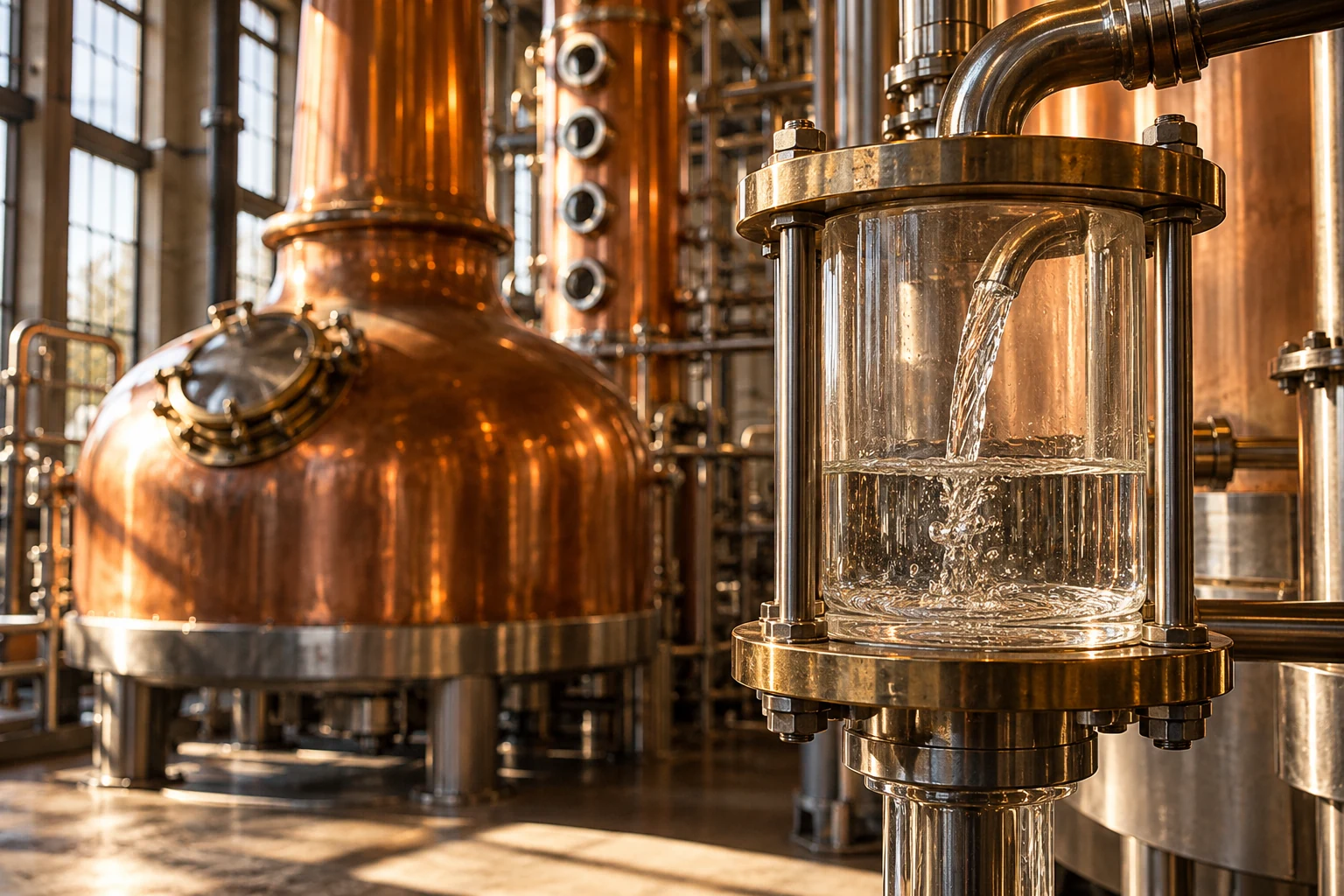
New make & selection: conceptual American distillery scene

STAGE 06 · New make & selection

Clear spirit. Already full of decisions.

The producer collects spirit with the intended character. In a batch pot process, the changing run can be divided into earlier, middle and later fractions. A continuous system manages separation and collection differently.

Fresh distillate is colorless. Its aromas reflect the grain, fermentation and distillation choices already made. For the aged route, the next decisions concern the oak vessel and filling strength.

Batch selection

The composition of the run changes over time. Producers select the desired portion and may recycle other fractions.

ENTERSCondensed distillate
WHAT CHANGESSelect the desired composition and character
LEAVESClear new make ready for its next route
Is every clear corn spirit automatically corn whiskey?

No. The product must satisfy the applicable identity rules. Corn whiskey requires at least 80% corn and can be unaged. “Moonshine” is not a substitute for those type requirements. The unaged corn route can bypass the maturation stages below.

Follow the next transformation →

CHAPTER COMPLETE

Choose the barrel path. Understand the wait.

Different American whiskey types follow different oak and strength rules.

Continue to Stage 7 →Explore all 12 stages