TJ THELEN'S COLLECTION
The Thelen Reserve

AMERICAN WHISKEY · STAGES 07–09

Choose the barrel path. Understand the wait.

Different American whiskey types follow different oak and strength rules.

Begin this chapter ↓Three selectable stages · Guided scrolling, 30 seconds per stage · Pause to explore at your own pace
THE FULL JOURNEYOak, entry & time · American Whiskey, Grain to Glass
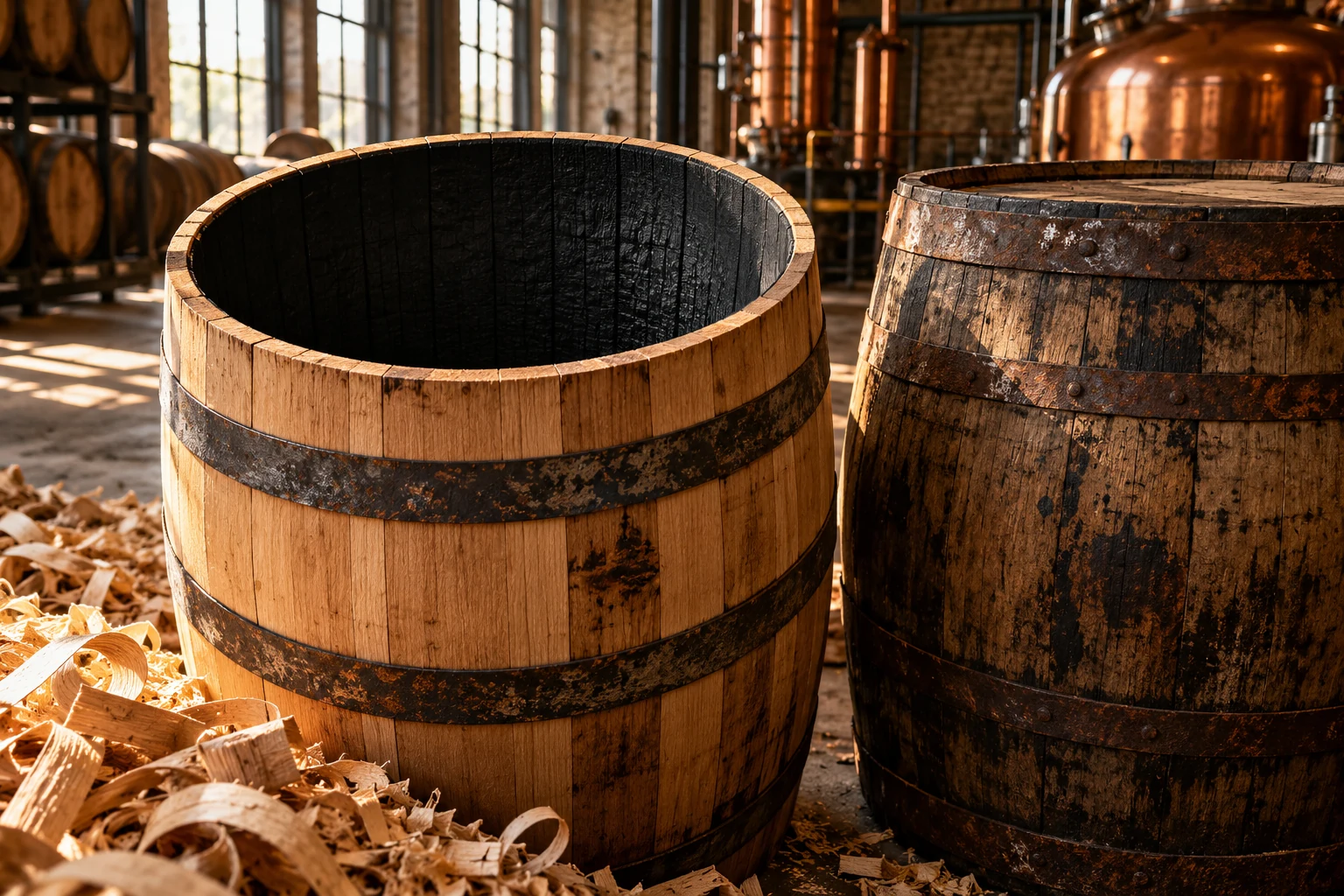
Choosing the oak: conceptual American distillery scene

STAGE 07 · Choosing the oak

The barrel rule depends on the whiskey.

Bourbon, rye, wheat, malt and rye malt whiskey use new charred oak barrels. Charring changes the inside surface and creates a different environment for extraction and reactions during aging.

Corn whiskey does not require storage. If stored, it uses used or new uncharred oak. American single malt can use used, new charred or new uncharred oak barrels of no more than 700 liters. One barrel rule cannot describe the whole family.

New charred

Required for bourbon, rye, wheat, malt and rye malt whiskey.

ENTERSClear spirit + selected oak vessel
WHAT CHANGESMatch wood treatment and history to the type
LEAVESA qualifying barrel ready to fill
Are char and toast the same thing?

No. Toasting and charring are different heat treatments. A charred surface has a carbonized layer; heat also changes wood beneath it. Char level, seasoning, oak and previous use all matter. A darker char is not a simple scale of whiskey quality.
Follow the next transformation →
FOLLOW THE MATERIALA qualifying barrel ready to fillNEXT STAGE ↓
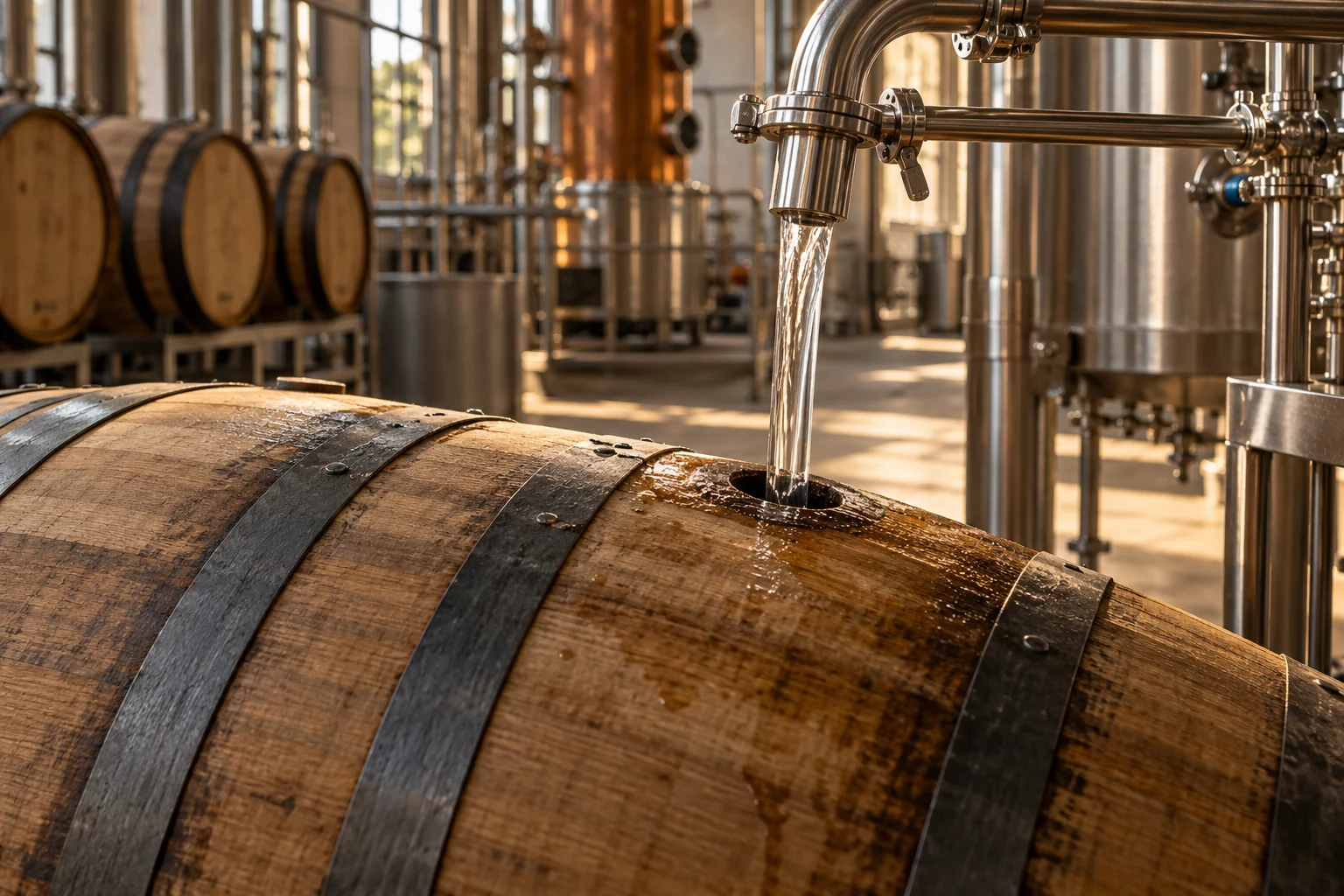
Barrel entry: conceptual American distillery scene

STAGE 08 · Barrel entry

Set the strength before the wait.

The producer measures spirit strength and may add water before filling. For bourbon, rye, wheat, malt and rye malt, barrel entry cannot exceed 125 proof (62.5% ABV). Corn whiskey follows that cap if it is stored.

American single malt has no separate 125-proof entry cap in its federal type standard. The distillation limit still applies. Filling strength and bottling strength describe different moments in the journey.

125-proof cap

Applies to bourbon, rye, wheat, malt and rye malt barrel entry, and corn whiskey if stored.

ENTERSNew make + water if needed + barrel
WHAT CHANGESMeasure strength, fill and record
LEAVESSpirit beginning its time in oak
Why does entry strength matter?

Water and ethanol interact differently with wood compounds. Entry strength is one of several choices affecting extraction and subsequent development. It does not by itself predict the final flavor, maturity or strength in the bottle.

Follow the next transformation →
FOLLOW THE MATERIALSpirit beginning its time in oakNEXT STAGE ↓
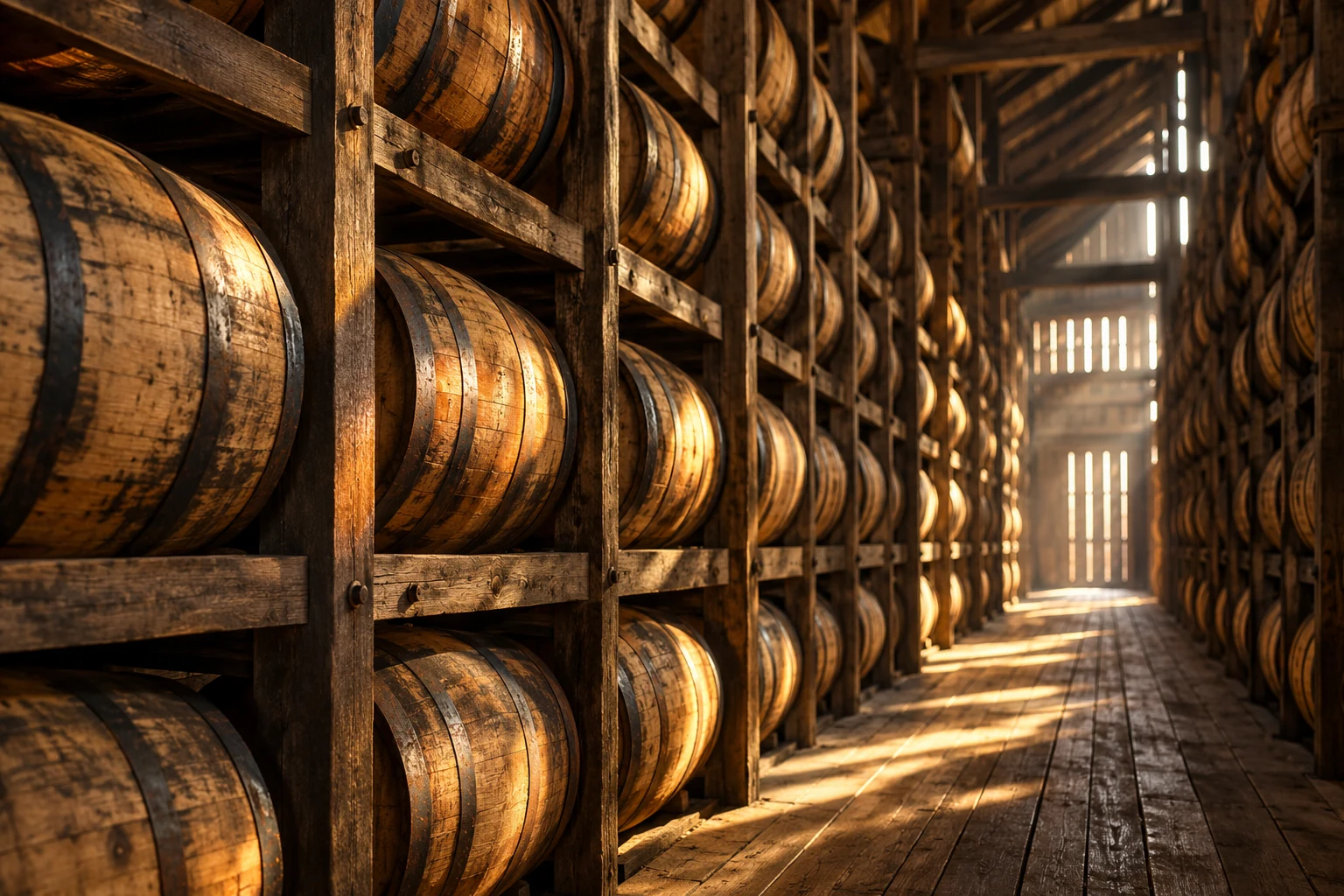
Maturation: conceptual American distillery scene

STAGE 09 · Maturation

Time changes more than the color.

Inside the barrel, the spirit extracts wood compounds, undergoes chemical changes and loses liquid through evaporation. Warehouse temperature, humidity, barrel position and the vessel itself affect how the spirit develops.

There is no single minimum age for every American whiskey. The straight designations covered here require at least two years in the prescribed oak. Color alone cannot reveal age, and more years do not automatically make a better whiskey.

Under two years

A whiskey may qualify for its base type while not qualifying as straight. Corn whiskey can be unaged.

ENTERSSpirit resting in oak
WHAT CHANGESExtraction, reactions and evaporation
LEAVESWhiskey ready for assessment
Does barrel strength always rise?

No. Relative water and alcohol loss depends on conditions; strength can rise or fall. The experience uses conceptual scenes, not a universal maturation clock. Corn whiskey may follow an unaged route instead.

Follow the next transformation →

CHAPTER COMPLETE

Bring the decisions together in one glass.

Explore the release, its bottling choices and the finished pour.

Continue to Stage 10 →Explore all 12 stages