TJ THELEN'S COLLECTION
The Thelen Reserve

AMERICAN WHISKEY · STAGES 10–12

Bring the decisions together in one glass.

Explore the release, its bottling choices and the finished pour.

Begin this chapter ↓Three selectable stages · Guided scrolling, 30 seconds per stage · Pause to explore at your own pace
THE FULL JOURNEYSelection, strength & tasting · American Whiskey, Grain to Glass
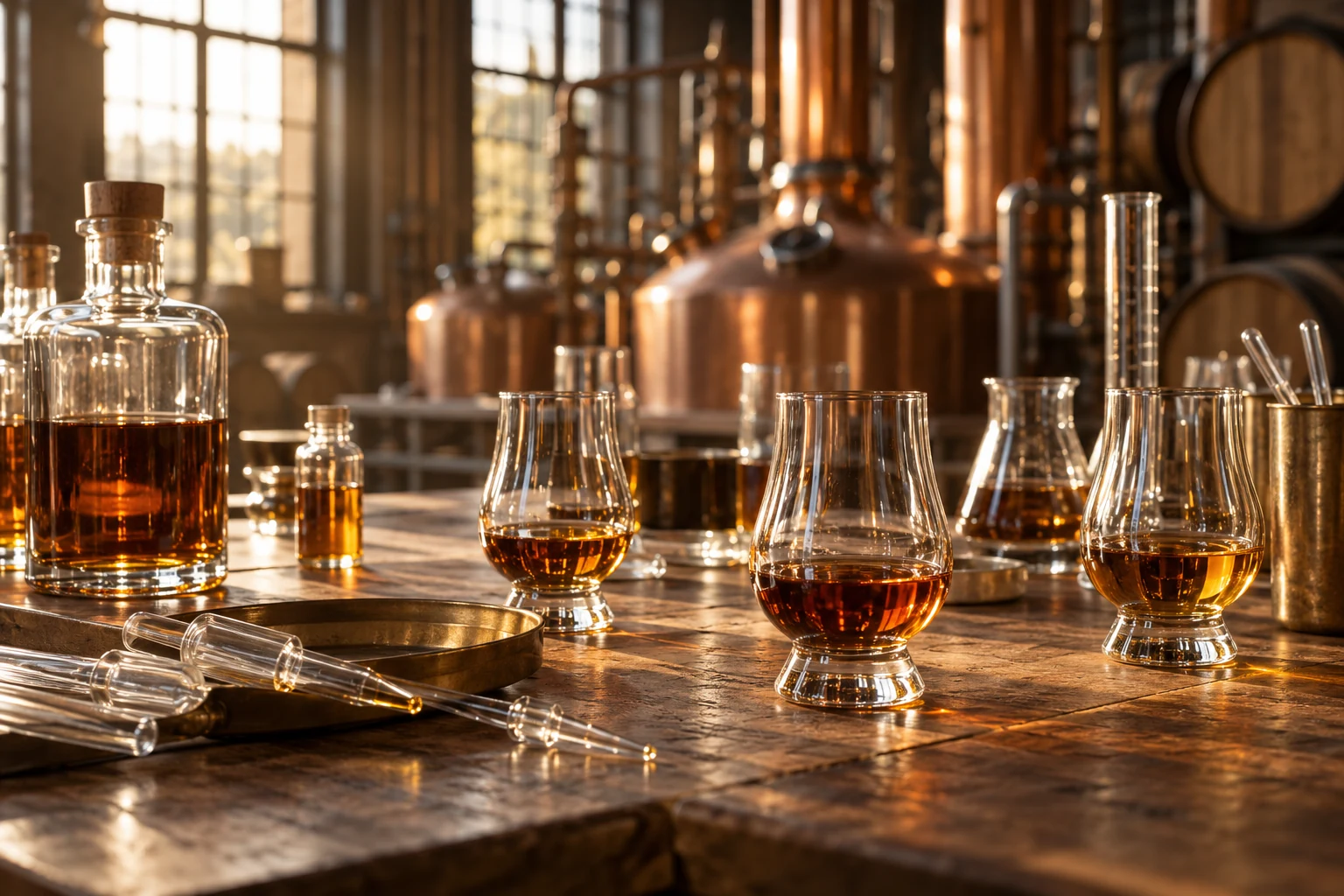
Selection & assembly: conceptual American distillery scene

STAGE 10 · Selection & assembly

Choose the barrels. Define the release.

Barrels are sampled and assessed against the intended profile. A release may come from one barrel or from a batch assembled from several. Combining barrels of the same qualifying whiskey does not automatically make the legal type “blended whiskey.”

American single malt can combine many barrels, provided its single-distillery and other requirements are met. Blended whiskey and blends of straight whiskies have their own standards. The label describes the product’s identity, not a simple quality ranking.

Single barrel

A release from one barrel. This is different from “single” in American single malt.

ENTERSAssessed whiskey barrels
WHAT CHANGESSelect and assemble the intended profile
LEAVESA release with a defined identity
What does “single” actually promise?

In American single malt, it refers to one U.S. distillery, with 100% malted barley. It does not promise a single barrel, single vintage or one specific still design. Read “single barrel” as a separate claim.
Follow the next transformation →
FOLLOW THE MATERIALA release with a defined identityNEXT STAGE ↓
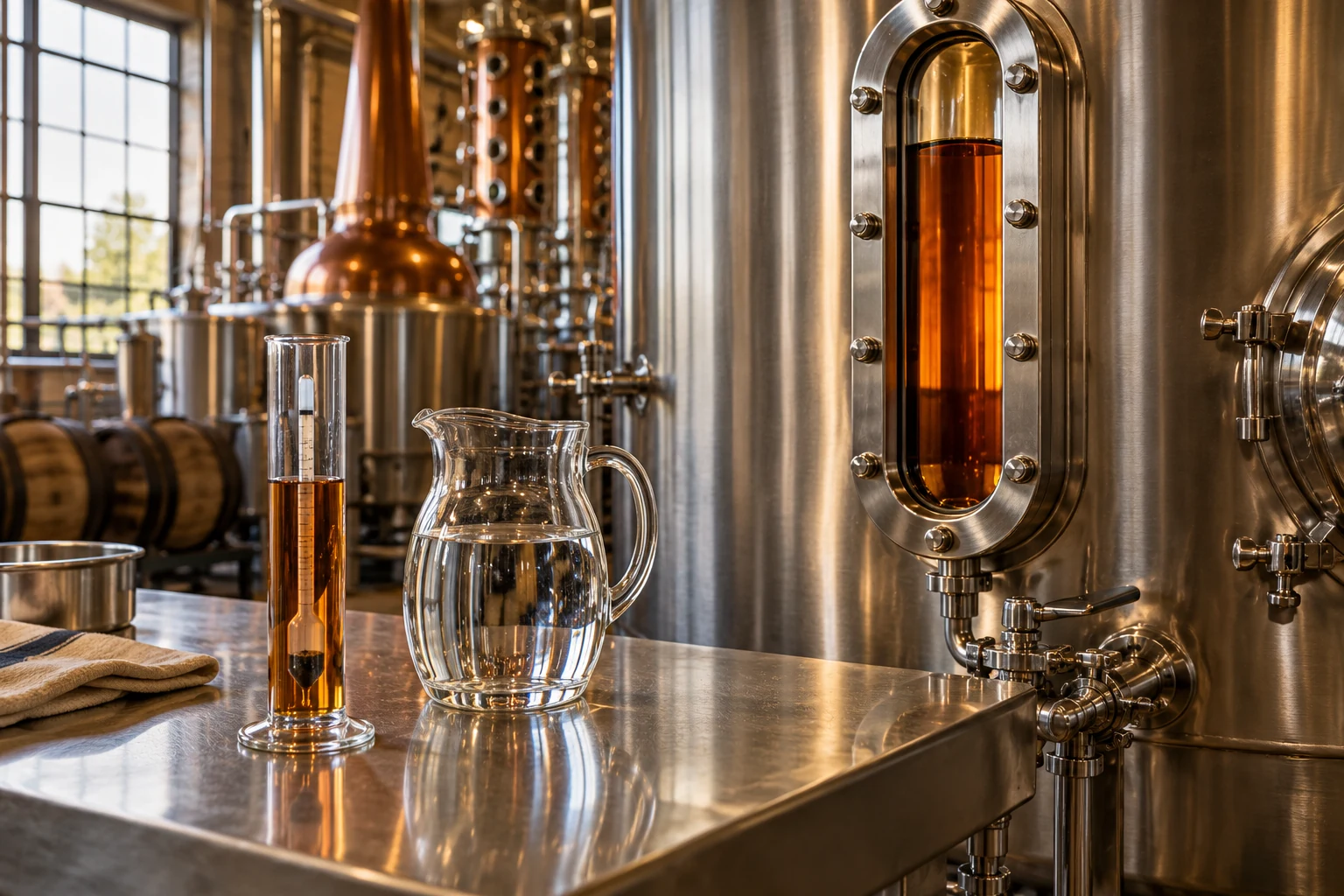
Proofing & filtration: conceptual American distillery scene

STAGE 11 · Proofing & filtration

Prepare the whiskey for its bottle.

Water may be added to reach the intended bottling strength. American whiskey must be bottled at no less than 40% alcohol by volume, equivalent to 80 U.S. proof. A cask-strength release is not inherently better than a carefully chosen lower-strength bottling.

Filtration can remove particles or reduce material that may form haze when cooled or diluted. Producers choose the treatment to suit the release. Haze in an unfiltered whiskey is not, by itself, a quality fault.

EXPLORE BOTTLING STRENGTH

46% ABV = 92 US proof

ABV is the percentage of alcohol by volume. US proof is twice ABV. This educational range is not a legal upper limit or a quality scale.

Chill-filtered or non-chill-filtered?

Chill filtration removes some material that can form haze. Haze in an unfiltered whisky is not, by itself, a fault. These are presentation choices that do not determine the entire drinking experience.

ENTERSSelected whiskey + water if needed
WHAT CHANGESAdjust strength and choose filtration
LEAVESWhiskey ready for bottling
Are coloring rules the same for every type?

No. Bourbon prohibits added coloring and flavoring. Straight rye, wheat, malt, rye malt and corn also exclude coloring, flavoring and blending materials. American single malt, including straight, permits caramel coloring if declared on the label. Other whiskey types have their own allowances.

Follow the next transformation →
FOLLOW THE MATERIALWhiskey ready for bottlingNEXT STAGE ↓
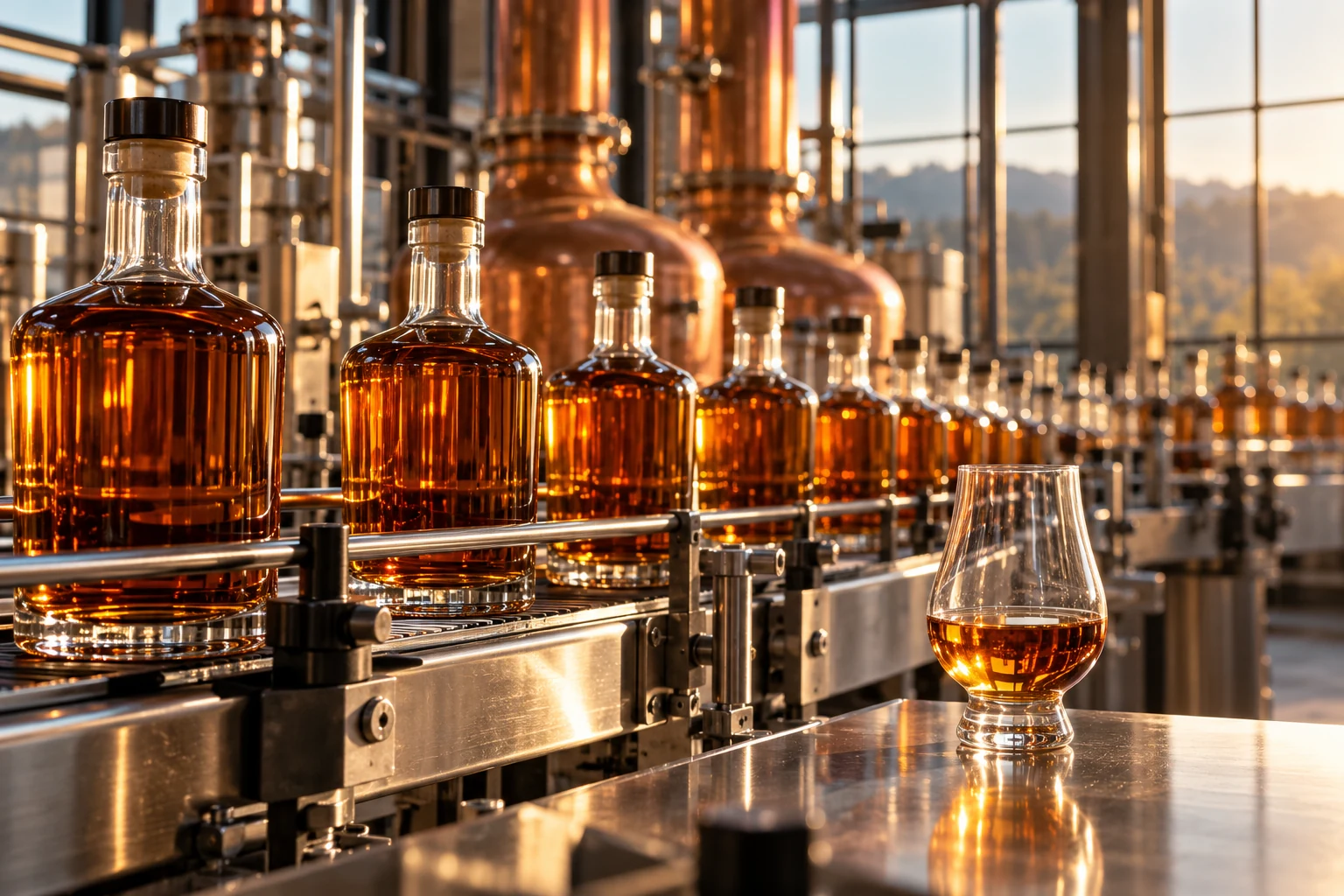
Bottling & tasting: conceptual American distillery scene

STAGE 12 · Bottling & tasting

Read the label. Follow the flavor.

The finished whiskey is filled into bottles and labeled with its identity and strength, along with applicable origin, age and other information. Compare those claims with what you learned about its grain and barrel path.

Nose gently, take a small sip and notice how the flavor changes into the finish. A little water can change perception. Describe your own impressions: a grain recipe or tasting note is a starting point, not an answer you must find. Use the Whisky Tasting Steps flavour wheel to put a name to what you notice.

Nose

Approach gently and note the first aromas. Try broad families such as fruit, grain, wood or spice.

ENTERSFinished whiskey + bottle + label
WHAT CHANGESFill, identify and present the release
LEAVESA glass with a traceable production story
How is this different from the Bourbon journey?

Bourbon is one American whiskey type. Its dedicated journey follows that specific corn-led, new-charred-oak route in more depth. This family journey places it alongside rye, wheat, malt, rye malt, corn and American single malt, with light and blended whiskey explained as distinct categories.

Follow the next transformation →

CHAPTER COMPLETE

A finished dram in a tulip-shaped tasting glass

One glass.
Twelve connected transformations.

Nose gently, take a small sip and notice the finish. A little water can change what you perceive. Describe what you find rather than hunting for a prescribed answer.

Grain and yeast establish possibilities. Distillation selects and concentrates. Oak, time and the final assembly complete the story.

Explore the illustrated companions →
Explore all 12 stages