TJ THELEN'S COLLECTION
The Thelen Reserve

AMERICAN WHISKEY · STAGES 01–03

Begin with the grain. Unlock its sugars.

Follow the recipe through milling, cooking and conversion.

Begin this chapter ↓Three selectable stages · Guided scrolling, 30 seconds per stage · Pause to explore at your own pace
THE FULL JOURNEYGrain, meal & sugar · American Whiskey, Grain to Glass
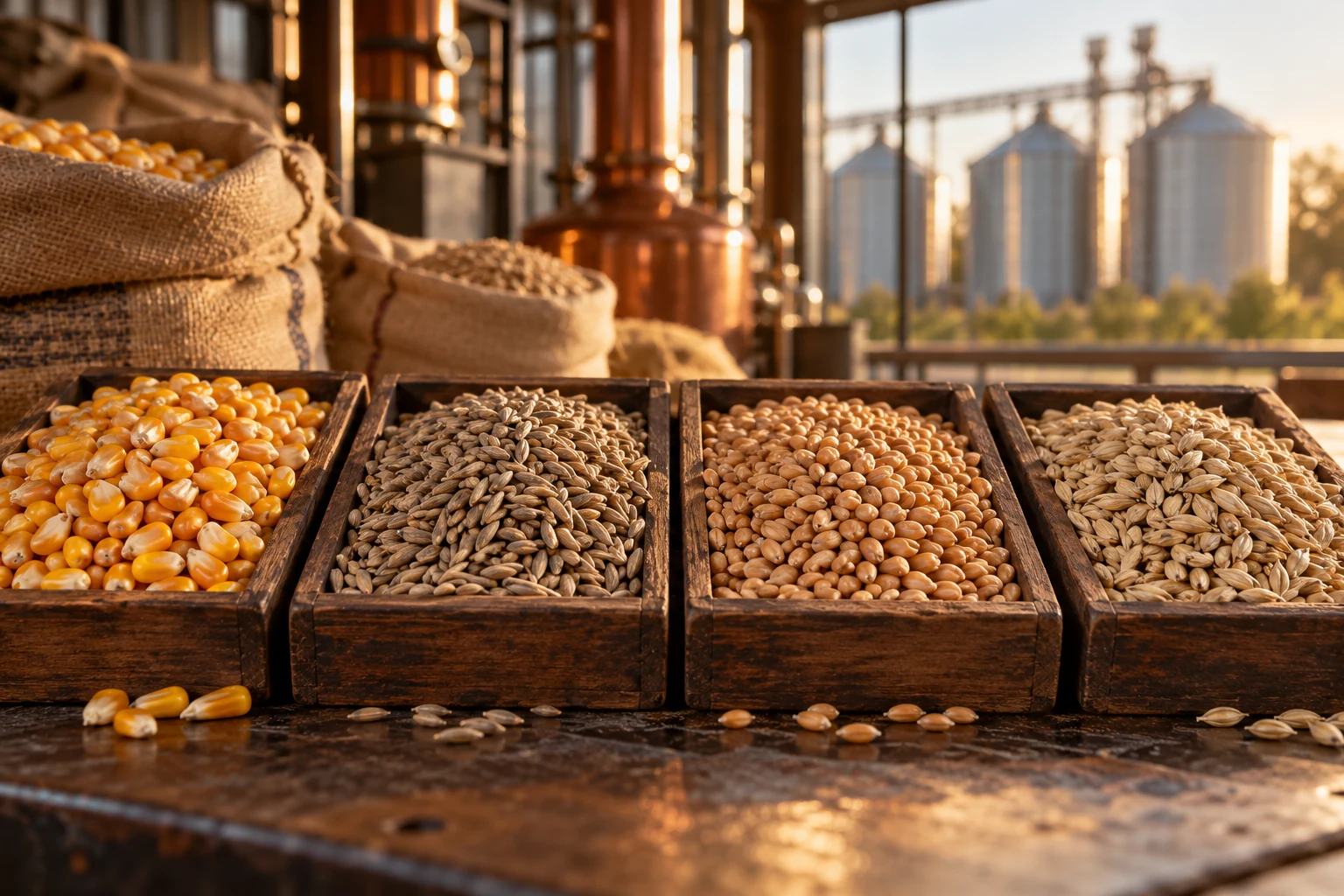
Grain & recipe: conceptual American distillery scene

STAGE 01 · Grain & recipe

One family. Many starting points.

The mash bill is the grain recipe before fermentation. Corn, rye, wheat and malted grains bring different starting materials. Grain selection establishes possibilities; yeast, equipment, oak and time also shape the finished flavor.

Bourbon belongs to this family. This journey widens the view to rye, wheat, malt, rye malt, corn whiskey and American single malt. The stages show a common production sequence, with the important forks identified along the way.

Bourbon

At least 51% corn. New charred oak. Explore the existing Bourbon journey for the dedicated route.

ENTERSSelected grain + water
WHAT CHANGESChoose a recipe and its whiskey type
LEAVESGrain ready for preparation
Is wheated bourbon the same as wheat whiskey?

No. Wheated bourbon still has at least 51% corn; wheat is part of the remaining recipe. Wheat whiskey uses at least 51% wheat. A flavor description such as “spicy” cannot establish a legal type.
Follow the next transformation →
FOLLOW THE MATERIALGrain ready for preparationNEXT STAGE ↓
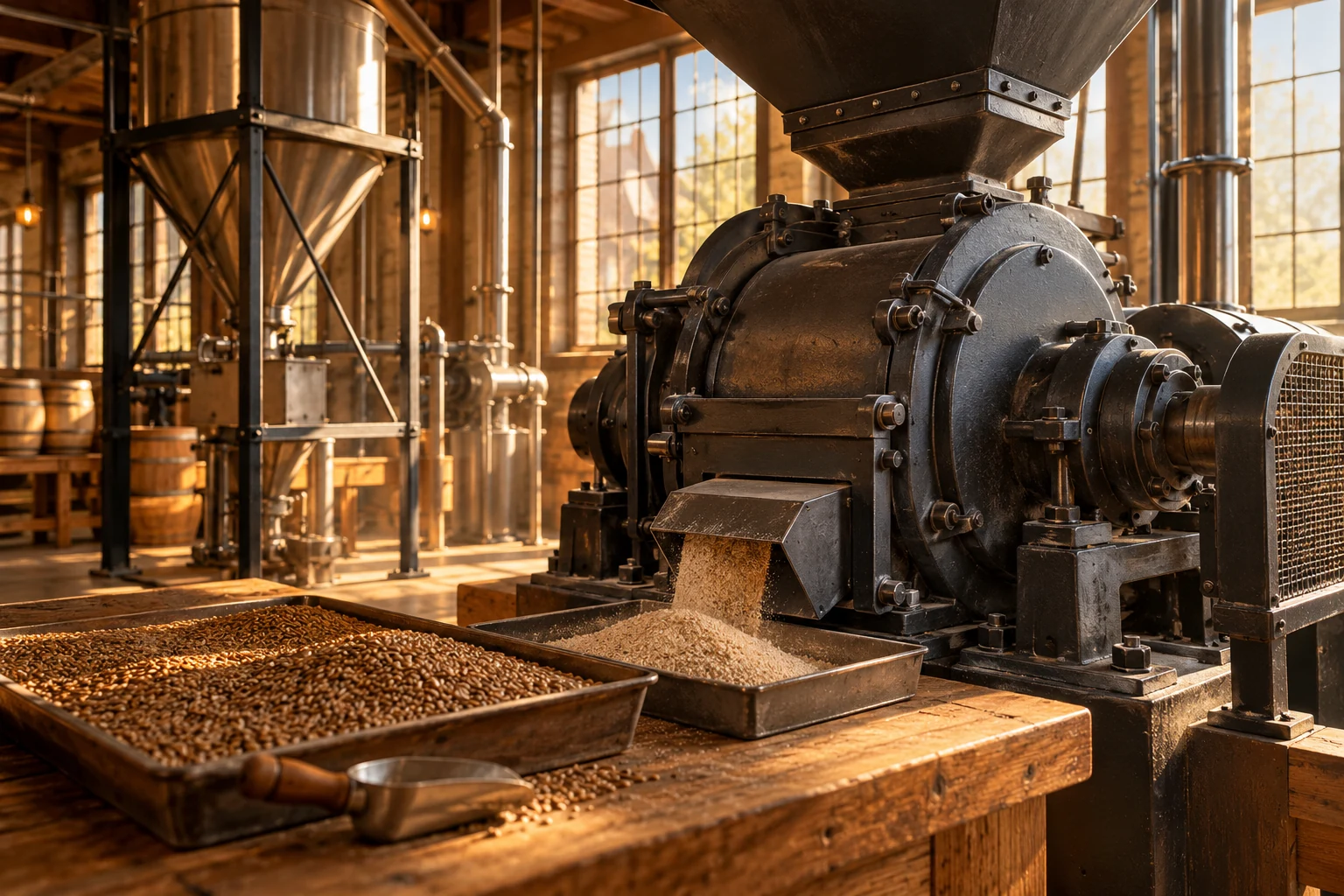
Milling the grain: conceptual American distillery scene

STAGE 02 · Milling the grain

Open the grain. Expose the starch.

A mill breaks grain into smaller particles. This exposes its interior to water and prepares it for cooking and conversion. The useful grind depends on both the grain and the equipment that follows.

Many American producers ferment and distill a mash containing grain solids. Other routes separate a sweet liquid, or wort, before fermentation. A mash intended for drainage needs a different balance of particles from a mash that moves forward with the grain.

On-grain route

Grain solids can remain through fermentation and distillation. Milling must suit the equipment and mash handling.

ENTERSWhole grain or prepared malt
WHAT CHANGESMechanical size reduction
LEAVESMeal or grist ready for mashing
Where does malting fit?

Malting happens before milling: grain is steeped, germinated and dried. It modifies the grain and develops enzymes. A producer may buy malt from a specialist. American single malt uses entirely malted barley; the other grain recipes need not be entirely malted.

Follow the next transformation →
FOLLOW THE MATERIALMeal or grist ready for mashingNEXT STAGE ↓
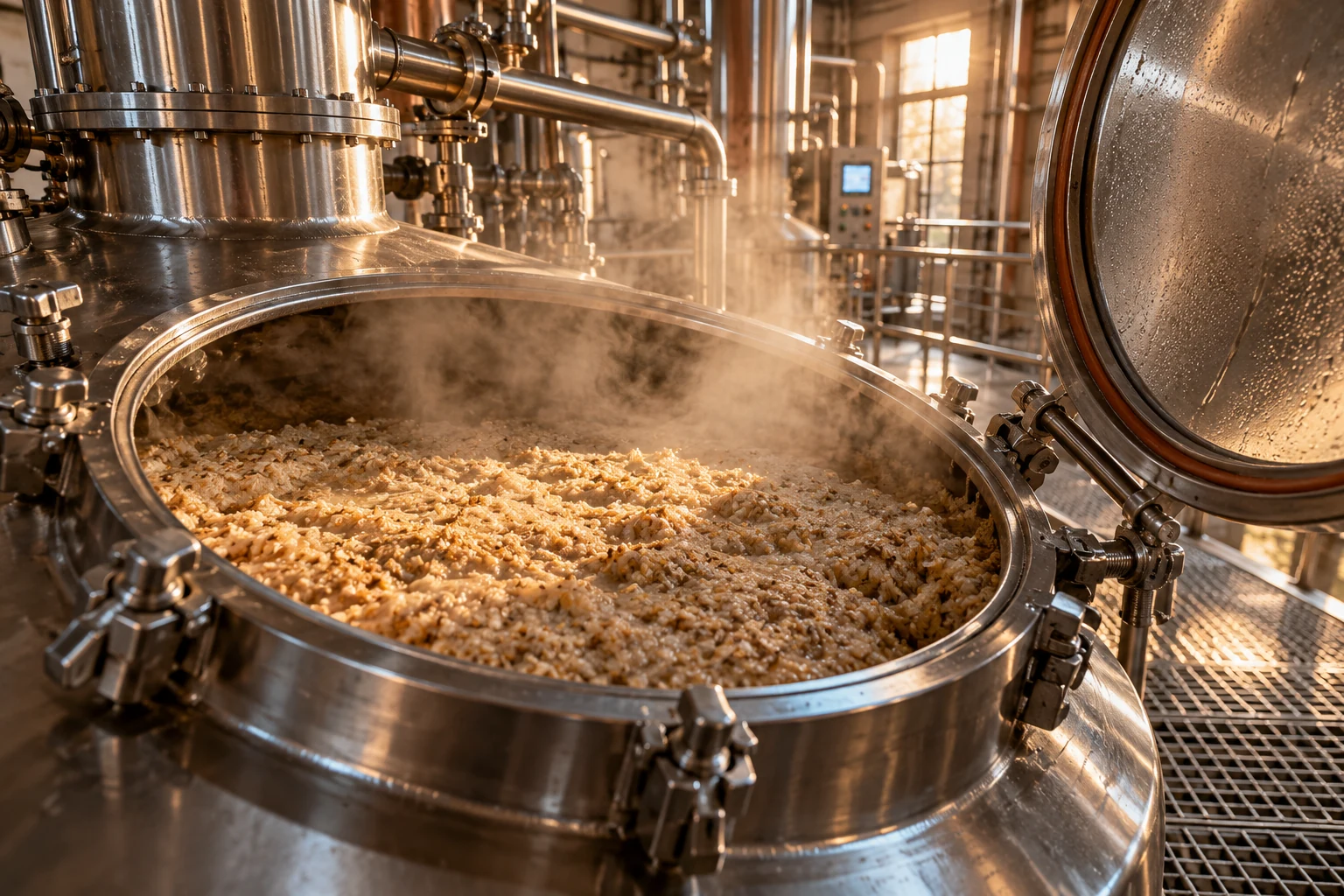
Cooking & conversion: conceptual American distillery scene

STAGE 03 · Cooking & conversion

Turn stored starch into usable sugar.

Grain meets water and heat. Cooking makes starch more accessible; enzymes break starch into smaller sugars that yeast can use. The order and conditions depend on the cereals and production system.

Malted grain and permitted enzyme preparations can supply conversion activity. The mash is cooled before yeast is added. In a separated-wort route, the liquid moves forward without most of the spent grain.

Heat

Cooking helps make starch accessible. Different cereals require different preparation.

ENTERSMeal or grist + water
WHAT CHANGESHeat prepares starch; enzymes convert it
LEAVESSweet mash or wort, cooled for yeast
Does cooking create the alcohol?

No. This stage prepares sugars. Yeast produces the alcohol during fermentation. Conversion and fermentation can overlap in some systems, so these learning stages are not always separate vessels.

Follow the next transformation →

CHAPTER COMPLETE

Make the alcohol. Shape the spirit.

Watch the material change from sweet mash to clear new make.

Continue to Stage 4 →Explore all 12 stages