Behind the Bottles / American whiskey / Bardstown, Kentucky
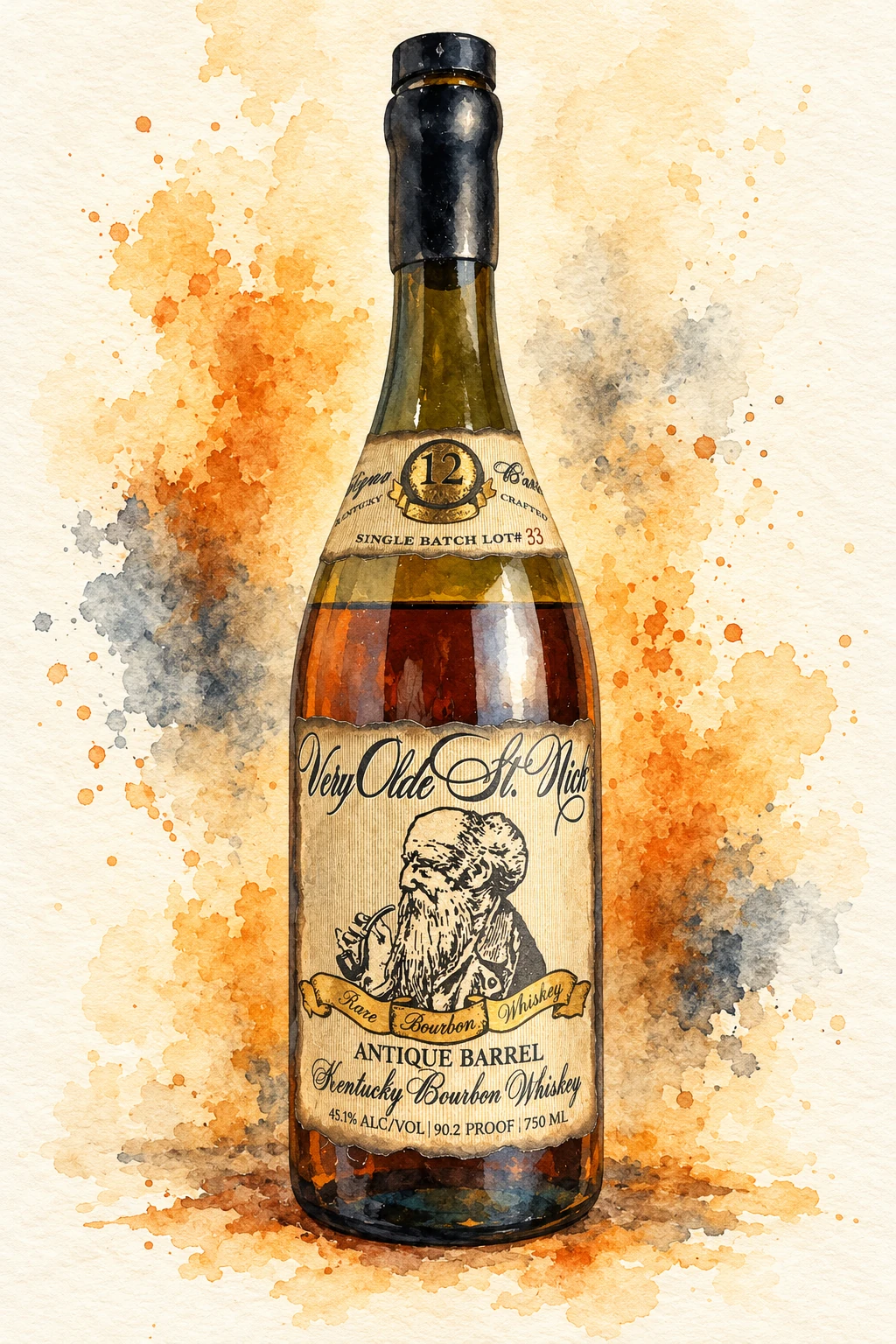
Very Olde St. Nick
Last updated Last researched
An export legacy. A farm of its own.
Small lots. Long memories. A new generation of whiskey.
Very Olde St. Nick rewards close reading. Its irregular bottles and tiny lots carry a whiskey story that began well before the modern Preservation farm. Today the brand brings bourbon, rye and other whiskey into the same conversation, while each release keeps its own age, strength and provenance. The pleasure is in those differences: a name can be familiar even when the whiskey inside changes.[1]
In her own account, Marci Palatella entered the wine and spirits trade during the Eighties, when older brown spirits could be difficult to sell. She found customers overseas, then created whiskey labels for buyers in Europe and Asia, including Japan. That export perspective helps explain a brand built around unusual parcels rather than a single permanent recipe.[2]
A holiday name that outgrew the season
The legacy Olde St. Nick site describes a holiday special that developed a collector following over decades. Odd bottle lots and eclectic labels became part of the identity. It is a useful origin story, but the undated page also looks forward to a distillery opening. Its future tense belongs to that earlier moment.[5]
From selecting stocks to making spirit
Preservation grew from dissatisfaction with finding the depth of older whiskey in available barrels. The farm offered a way to make new spirit deliberately and give it time. The resulting business has two connected resources: mature whiskeys acquired over years and pot distillate made at its own Bardstown home. They should never be treated as interchangeable.[4]
Marci Palatella
The founder and proprietor connects the brand’s long commercial history with the farm’s patient production ambitions. Her public account describes building demand for unfamiliar whiskeys, rather than inheriting an established American audience.[2]
Kyle Lloyd and the production team
The current micro-batch account identifies Kyle Lloyd as general manager. His team samples and sorts barrels, then tests small combinations with Palatella. The process makes sensory selection a recurring decision rather than a one-time recipe.[3]
02 / The illustrated history
From rare parcels to a farm of its own.
Follow the export legacy, preservation of old stocks, the Bardstown farm and new estate whiskey. Brand, company and property milestones retain their own meaning.
1980s
An export-minded beginning
Palatella’s recollection places her early spirits work in the Eighties, followed by her own labels for overseas buyers. The exact first commercial date of Very Olde St. Nick is left open.[2]
1998
A vintage moves out of oak
The limited-editions archive describes a seventeen-year whiskey distilled in 1981 and moved to stainless steel in 1998. That is the history of a particular stock, not the founding date of the brand.[6]
2014
A farm changes the plan
The association’s later announcement recalls a 2014 visit when Palatella found the Bardstown farm that would become Preservation. Site discovery precedes both ownership and the operating distillery.[7]
2015
The property becomes a project
The same account places the purchase in the following year. The former farm and tobacco barn were transformed into a whiskey-making and visitor setting. A property transaction is a distinct milestone from a first production run.[7]
February 2, 2016
The company is organized
Kentucky’s business register records Preservation Distillery LLC’s organization on February 2. This precise corporate date does not settle the earlier brand launch or the first day spirit flowed.[8]
April 2018
The craft community welcomes Preservation
An April association statement names Preservation its thirty-eighth member and a craft-level producer. The older whiskey brands and the newer Bardstown operation now have an institutional connection to Kentucky’s distilling community.[7]
June 25, 2019
A place on the Craft Tour
The KDA’s June expansion announcement lists Preservation among the Central Region’s stops. It establishes participation by this date, without inventing an exact first tour day.[9]
2020
Recognition for rye
The producer’s Summer Rye page records a Double Gold at the 2020 San Francisco World Spirits Competition. The recognition is reported for that expression, without transferring its recipe or proof to every later seasonal bottling.[10]
September 2026
The estate rye becomes explicit
September’s festival announcement identifies Pirate Booty as Preservation-distilled rye, drawn from early rye barrels with varied toast and char profiles. It provides concrete evidence of house-made spirit appearing under the older VOSN banner.[16]
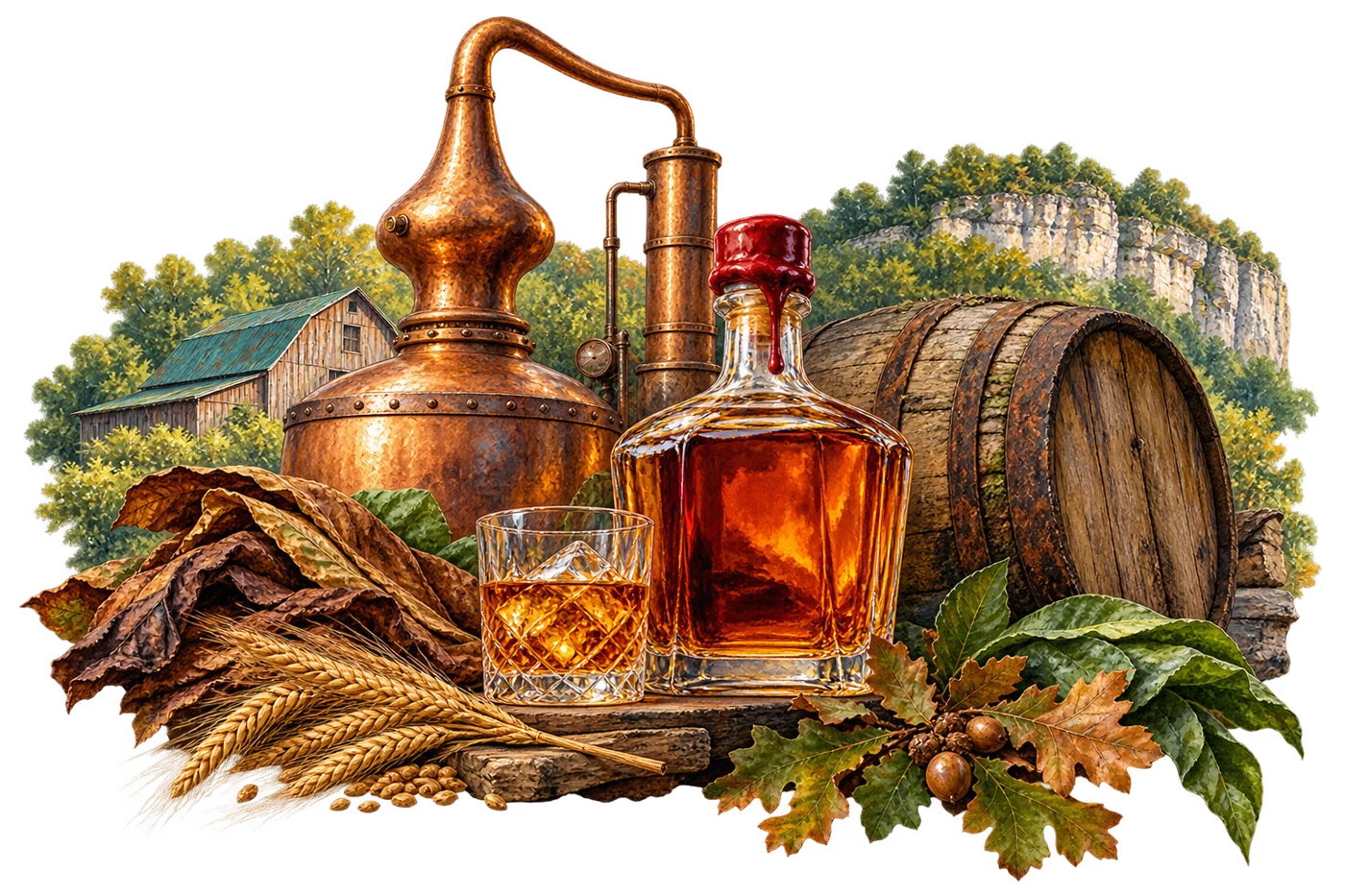
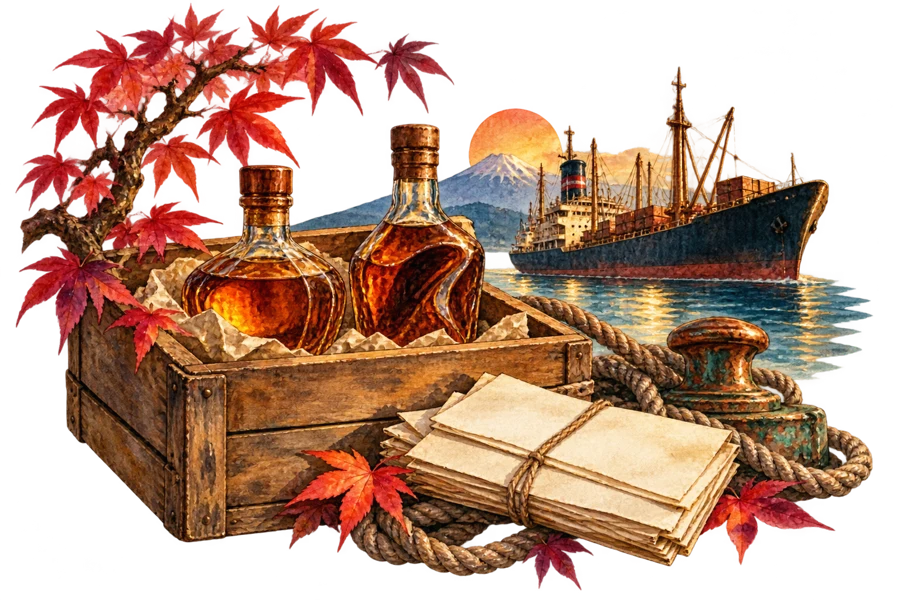
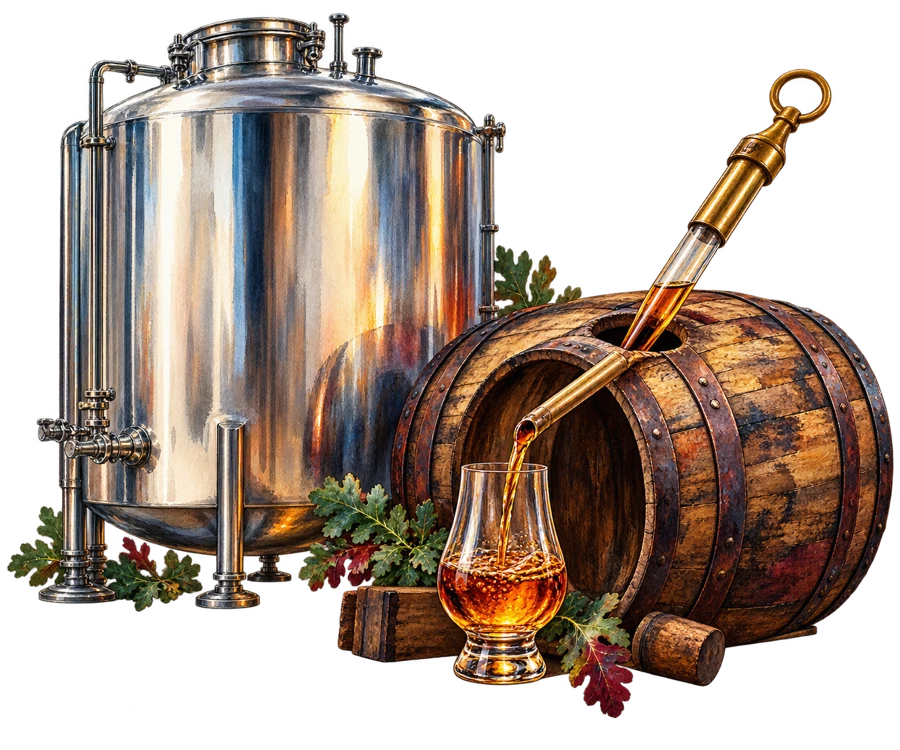
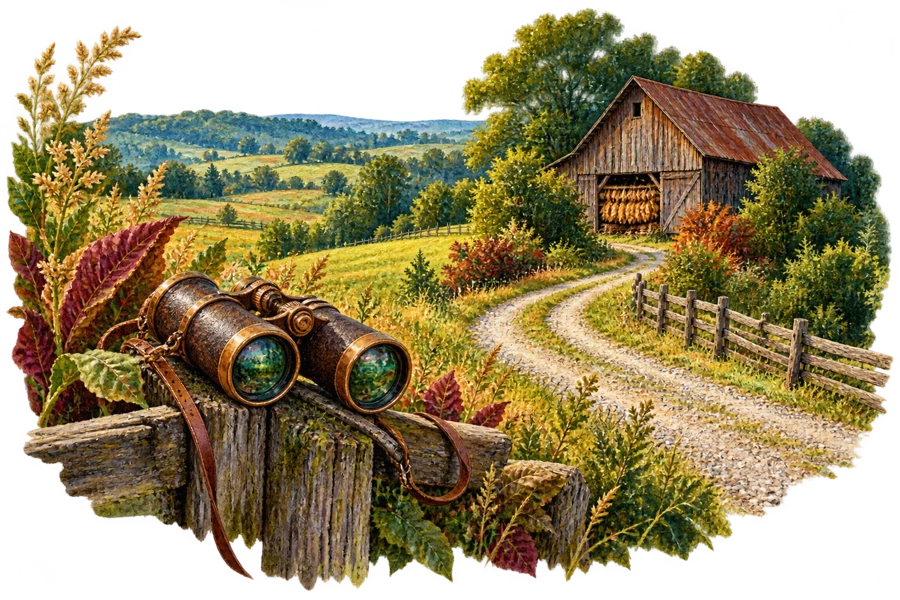
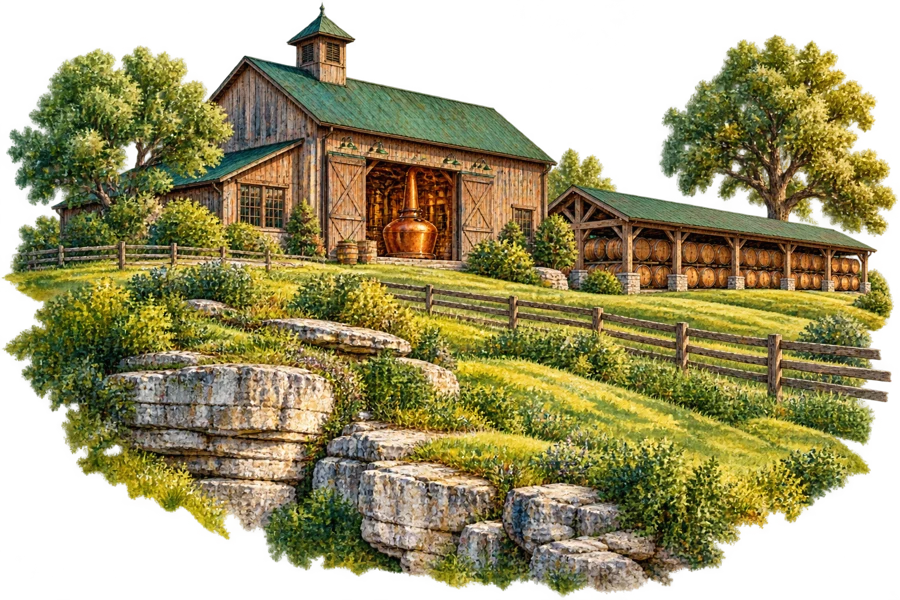
Original watercolor interpretations accompany the history. Buildings, objects and scenes are symbolic, not documentary reconstructions.
03 / Geography & roles
One name. Several places that matter.
Bardstown: the present-day home
The visitor address is 426 Sutherland Road in Bardstown. It is the physical place to encounter the Preservation operation and its wider whiskey family. A brand’s current home is useful context, but it does not disclose the original still behind every older bottle.[17]
The farm and maturation setting
Preservation describes limestone beneath the property, grains on the farm and a warehouse positioned on a rise. Those details form its account of place and maturation. They are producer observations, not an independently demonstrated claim that one county necessarily makes better whiskey than another.[14]
Kentucky and Indiana: release-specific origins
The Immaculata technical sheet names Kentucky and Indiana. That combination belongs to the documented blend; it does not reveal the source of every VOSN bourbon, nor identify a particular distillery merely from the state. The label and edition remain the correct unit of inquiry.[13]
Kentucky and Tennessee: another rye story
The Summer Rye sheet lists Kentucky and Tennessee distillation. That is a different provenance statement from Immaculata’s bourbon origins. Following individual documents makes the family more interesting and prevents a general brand story from flattening distinct whiskeys into one source.[11]
04 / The whiskey family
Understand the name on the label.
Follow Very Olde St. Nick and selected related Preservation labels while keeping estate distillation and acquired stocks distinct.
Very Olde St. Nick
Brand
The focal brand encompasses several bourbon and rye lines, including Immaculata, Straight Outta Bardstown and seasonal ryes. Shared branding does not promise a shared recipe, age statement or distiller.[1]
Preservation estate bourbon
Related estate label
A separately named seven-year wheated Kentucky bourbon demonstrates the farm’s own pot-distilling work. Its batch-one listing is 119.7 proof. Those specifications do not apply automatically to older VOSN stocks.[15]
Old Man Winter
Related blended bourbon
This related label explicitly combines Preservation pot-distilled bourbon with older casks. It shows how new house production and acquired whiskey can meet in a blend without erasing either part of the story.[18]
Wattie Boone
Related brand
The current page presents a six-year bourbon associated with the farm’s pot-distilling approach. Its older web address still contains a ten-year reference, a reminder to read displayed product details rather than infer identity from a URL.[19]
Pure Antique
Related vintage label
The producer describes a twenty-year vintage bourbon made with a low barrel-entry proof. It is a separate label in the same wider portfolio, useful for understanding the long-standing interest in mature stocks.[20]
Rare Perfection
Related brand
Another related range emphasizes selected barrels and age-stated editions. Its presence alongside VOSN illustrates a broader curatorial business. It does not establish a single common production origin across the labels.[21]
05 / Making & choosing
The choices behind the label.
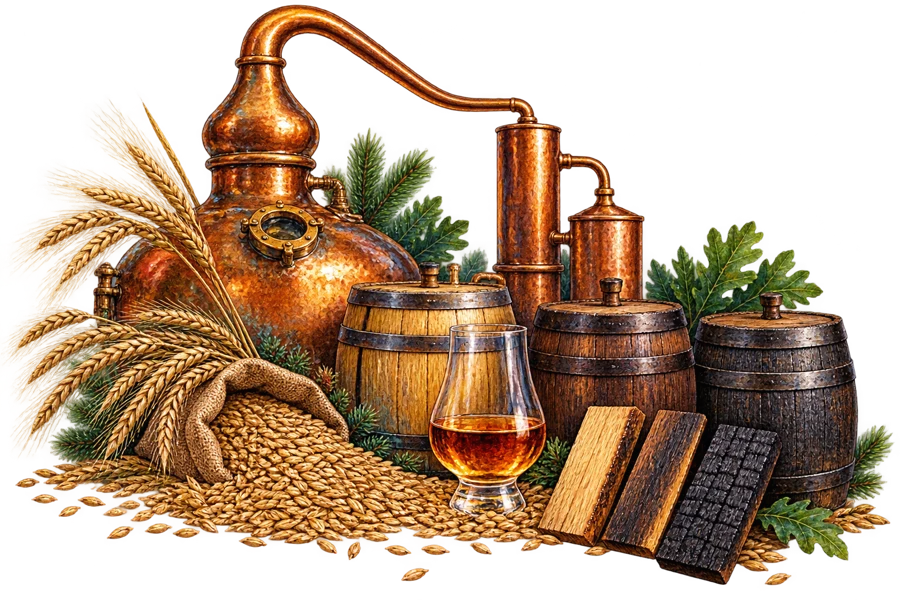
Grain, fermentation, distillation and oak shape the whiskey. Follow each production choice and keep specifications tied to the expression named.
Two inventories, two histories
The micro-batch account explicitly distinguishes proprietary pot distillate from exceptional barrels acquired over time. Selection and production are complementary activities. Knowing which one supplied an edition is more useful than assuming every bottle was made beside the visitor center.[3]
Pot distillation at the farm
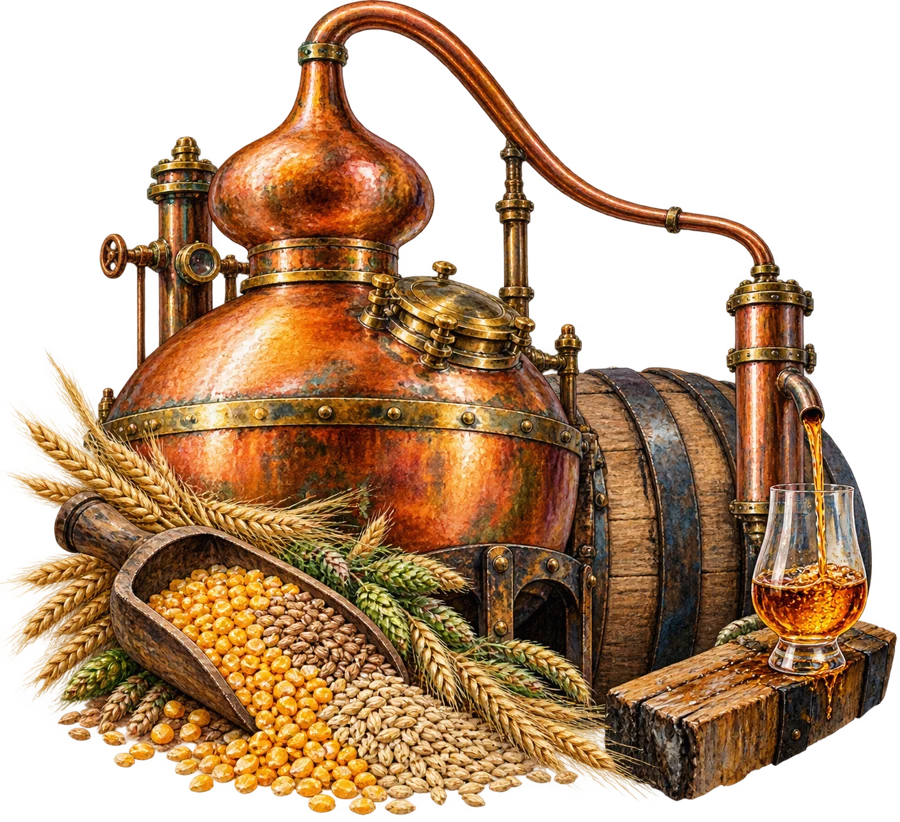
Preservation describes low-volume copper pot distillation as central to its own production. The slower approach is its stated choice for developing rich spirit. This explains the estate program; it is not a technical specification for a decades-old sourced bourbon.[14]
Maturation before a timetable
The estate story describes waiting more than seven years before releasing its own bourbon and rye. The point is a producer’s maturation philosophy. It should not become a universal seven-year age statement for every product sold under every related brand.[4]
Immaculata: the blend matters
The product page describes casks from eight to fifteen years old and a 118.1-proof listing. Different component ages are a blending description. The oldest component is not the age of the complete whiskey, and the numbers are tied to that documented edition.[12]
Seasonal rye, variable strength
The linked Summer Rye sheet gives a seven-to-nine-year range and 114–122 proof. The product page gives a narrower proof range. Preserve that difference as edition uncertainty, and let a particular bottle’s label settle its strength rather than averaging the two sources.[11]
Toast and char as blending tools
The 2026 Pirate Booty account describes rye casks laid down with several toast and char treatments. Their combination makes barrel treatment part of the final composition. This is specific evidence for that estate rye release, rather than a universal recipe for the brand.[16]
06 / The details worth knowing
The stories behind the familiar name.
The container tells part of the story
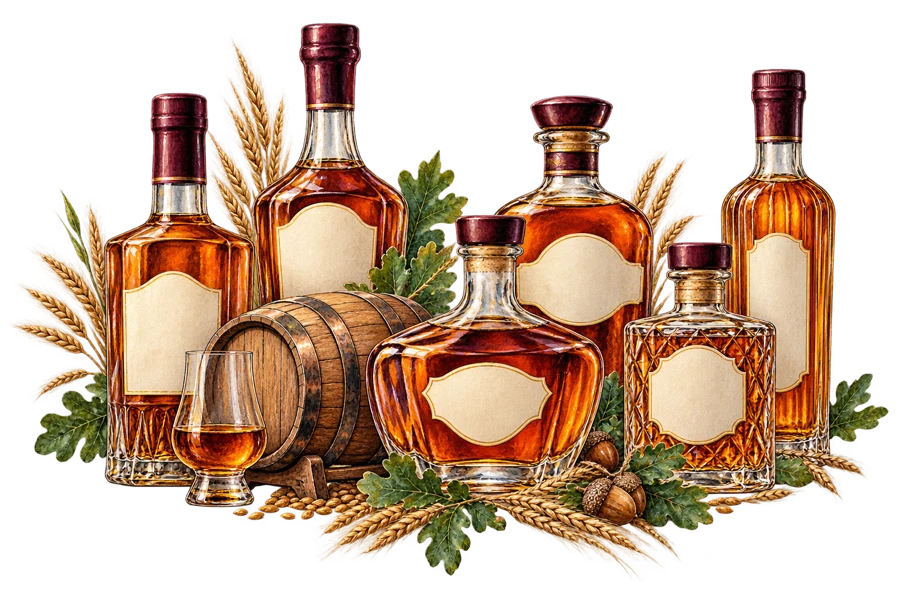
The legacy site embraces irregular bottles and small lots. That visual inconsistency can be evidence of a small producer working with limited parcels, rather than a mistake to tidy away. It also makes exact edition identification especially valuable.[5]
A steel vat is a different chapter
The archive’s 1981-to-1998 example separates time in oak from later storage. Its seventeen-year description tracks the stated maturation history; the calendar’s continued movement does not turn it into an ever-older barrel-aged whiskey.[6]
A familiar name can contain new work
Pirate Booty’s explicit estate origin adds a new production chapter under the older brand. The practical lesson is to follow the release. Neither a famous old label nor its present address can answer every sourcing question alone.[16]
Low entry proof, another experiment
Pure Antique’s description connects an approximately fifty-percent barrel-entry strength with an older vintage bourbon. Entry strength and bottling strength describe different moments. This related release illustrates the wider family’s interest in production choices as well as impressive ages.[20]
The farm has a visitor-facing life
The current visit page puts the whiskey’s home in an ordinary, findable place: Sutherland Road. It is possible to explore the contemporary maker while keeping the earlier export and sourcing history intact. They are connected chapters, not competing identities.[17]
Old and new can share a batch
Old Man Winter gives a clear example of estate bourbon meeting older casks. The interesting question becomes what each part contributes to the chosen whiskey, rather than whether a producer must fit permanently into just one category.[18]
07 / Selected expressions
Different expressions. Distinct production stories.
A curated reading of the whiskey family, selected for its role in the story. This is not an exhaustive current catalog.
Immaculata Ancient Cask Bourbon
The documented 118.1-proof edition brings together eight-to-fifteen-year casks. It is a useful introduction to the brand’s blending identity, with component ages that should be read as components rather than a fifteen-year age statement.[12]
Summer Rye
Seasonal rye shows that VOSN is more than a bourbon label. The page describes Kentucky pot-distilled rye combined with vintage rye and reports floral and baking-spice notes. These are producer tasting descriptions, not a claim of an independent tasting here.[10]
Seventeen-year vintage bourbon
The archive describes a 108.51-proof bourbon distilled in 1981 and transferred to steel in 1998. It connects the modern business to stocks whose histories began long before the farm. No original distillery is inferred from that chronology.[6]
Preservation estate wheated bourbon
This related seven-year release provides a counterpoint to the vintage selections. It is explicitly the farm’s pot-distilled Kentucky bourbon, with batch-one proof given separately from the broader portfolio. It belongs here as context, not as a VOSN expression.[15]
Wattie Boone six-year bourbon
The related estate-style bourbon offers another view of the farm’s pot-distilling program. The current listing gives 101.8 proof and also a broader 101–103 range. Read those as product-page details, not specifications for unrelated Wattie Boone editions.[19]
Rare Perfection selections
The separate range presents eight-, fourteen- and fifteen-year bourbon headings on its current page. It extends the portfolio’s emphasis on selected parcels. The headings alone do not establish batch specifications or a common distiller for the whole range.[21]
08 / The Reserve connection
Continue from the story to the bottles.
Very Olde St. Nick in The Thelen Reserve
1 physical bottle record connects this story to the collection. Each keeps its own proof, barrel, batch, pick and release details.
Approved watercolor artwork is shown wherever an exact physical record or confirmed release match is available. Each physical bottle keeps its own verified details.
The illustrated companion
Very Olde St. Nick, in three pages.
Origins and people, history and places, whiskey and stories. A concise companion to this complete profile, with linked research sources.
Researched October 20, 2026. Official brand and company pages, dated announcements and clearly identified supporting sources are distinguished in the research. Product specifications are release- and market-specific.
Research qualifications
Brand origin is placed broadly in the Eighties. Conflicting exact-year claims are not resolved by an undated marketing page.
2014 discovery, 2015 purchase, February 2016 LLC organization and April 2018 membership are different events. No exact first-distillation or first-tour date is asserted.
The legacy limited-editions page has adjacent descriptions and image names that conflict. It is not sufficient evidence for a particular twelve-year bottle’s proof, components or distiller.
Summer Rye proof ranges differ between page and technical sheet; Immaculata specifications describe the cited edition, not every later release.
The 2026 festival announcement explicitly identifies Pirate Booty as estate rye. That does not retroactively establish the origin of older VOSN bourbon.
Illustrations are symbolic interpretations. No building, historical individual or vintage label is presented as a documentary reconstruction.
Full sources
Preservation: Very Olde St. NickBrand identity, small lots and current expression names. Note: Release details apply only to the cited edition.
Marci Palatella: an export businessFounder recollection of overseas markets in the Eighties. Note: Personal recollections are attributed, not independently dated.
Preservation: micro-batch practiceKyle Lloyd, selection, blending and house-made versus acquired stocks. Note: Claim to invent the term is producer history, not independently established priority.
Preservation: farm and founderFounder, pot distillation and patient estate maturation. Note: Comparative superlatives and regional origin legends are not adopted as fact.
Olde St. Nick: legacy storyHoliday origins, eclectic packaging and plans for a new distillery. Note: Undated legacy page describes plans, not current opening evidence.
Preservation: limited editions archive1981 vintage, 1998 steel storage and historical age-stated releases. Note: Page adjacency is inconsistent; the twelve-year description is not applied to a physical bottle.
KDA announcement, reproduced by NKyTribune2014 farm discovery, 2015 purchase and April 2018 KDA membership. Note: Republished association statement; article date April 28 differs from April 25 syndication.
Kentucky Secretary of State: Preservation LLCOrganization date February 2, 2016 and Bardstown office. Note: Corporate organization is not a brand founding or first-distillation date.
KDA: expanded Craft Tour, 2019Preservation listed in the Central Region on June 25, 2019. Note: Membership listing establishes participation by that date, not an exact first visitor day.
Preservation: Summer Rye pageSeasonal release and producer-reported 2020 Double Gold. Note: Page proof range differs from linked sheet; no universal proof is assigned.
Preservation: Immaculata pageEight-to-fifteen-year components and 118.1-proof listing. Note: Release details apply only to the cited edition.
Preservation: Immaculata technical sheetKentucky/Indiana origins and fifteen-year Kentucky base. Note: Component descriptions do not make the blend fifteen years old.
Preservation: effects of terroirFarm limestone, warehouse position and low-volume pot distillation. Note: Producer explanation of place, not proof of superior regional quality.
Preservation: estate bourbonSeven-year wheated pot-distilled bourbon; batch-one proof 119.7. Note: URL and stray template text are not release identity.
Preservation: September 2026 festival releasesDated VOSN editions and explicit Preservation-distilled Pirate Booty rye. Note: Specifications are festival-release snapshots; availability is not promised.
Preservation: visitor home426 Sutherland Road, Bardstown and visitor contact. Note: Check operator information for current booking arrangements.
Preservation: Old Man WinterRelated brand combines pot distillate and older casks. Note: Page combines proofing language with a cask-strength heading; that ambiguity is not resolved here.
Preservation: Wattie Boone bourbonCurrent six-year pot-distilled bourbon listing. Note: Historical ten-year URL is not the current displayed product age.
Preservation: Pure AntiqueTwenty-year vintage bourbon and low entry proof. Note: Separate brand, not a Very Olde St. Nick expression.
Preservation: Rare PerfectionRelated brand and varied age-stated releases. Note: No common distilling source is inferred across the portfolio.