TJ THELEN'S COLLECTION
The Thelen Reserve
Behind the Bottles / A Speyside whisky story

The Macallan

Last updated Last researched

Speyside, Scotland / Small stills & sherry-seasoned oak

A Speyside spirit. A story written in oak.

The Macallan begins beside the River Spey, but its character travels far beyond Scotland. Copper stills make a rich new spirit; oak, sherry and years of selection turn it into whisky. Behind the familiar name lies a succession of farmers, merchants, family stewards, craftspeople and whisky makers. The modern distillery gives that long story a striking new home, while the cask remains its most revealing thread.[1][7][12]

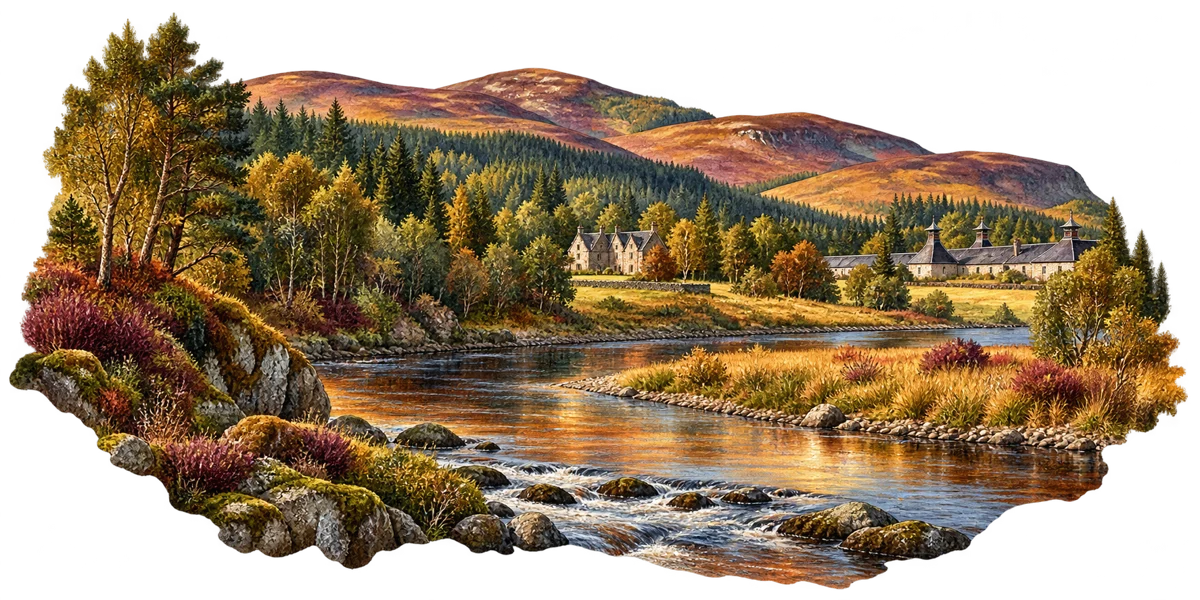
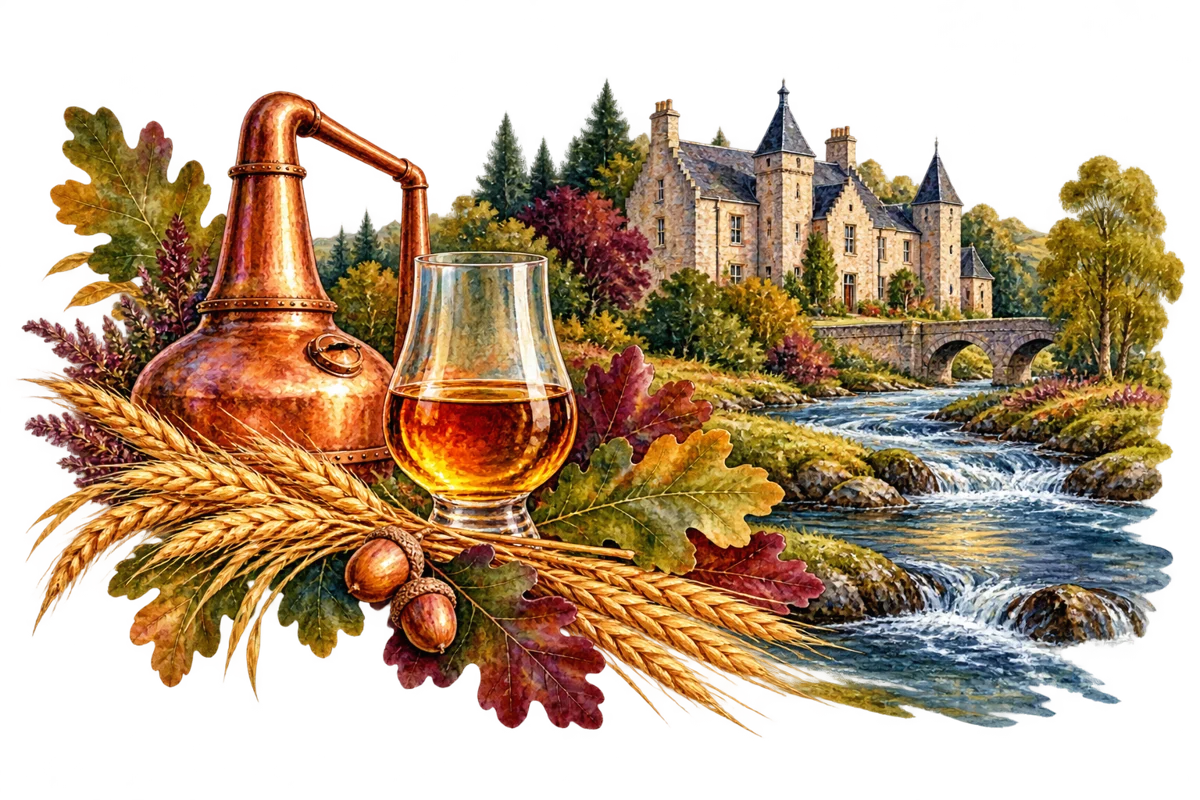
Symbolic Speyside manor, copper still, barley and oak
Home
Speyside, Scotland[16]
Licensed origins
1824[1]
Parent company
Edrington[6]
New distillery
2018[16]
01 / Origins & people

People who carried the spirit forward.

A farm becomes a distillery

Alexander Reid was both a farmer and a teacher. The business he established in 1824 grew from a rural world where barley and whisky were closely connected. The licensed founding belongs to that year; the surrounding estate and its house have a much older history.[1]

A name rooted in place

The producer traces Macallan to Maghellan, combining a Gaelic reference to fertile land with an association with St Fillan. This is the company’s explanation of the name, rather than a separate founding event. It gives the brand a local identity even as its whisky reaches a global audience.[1]

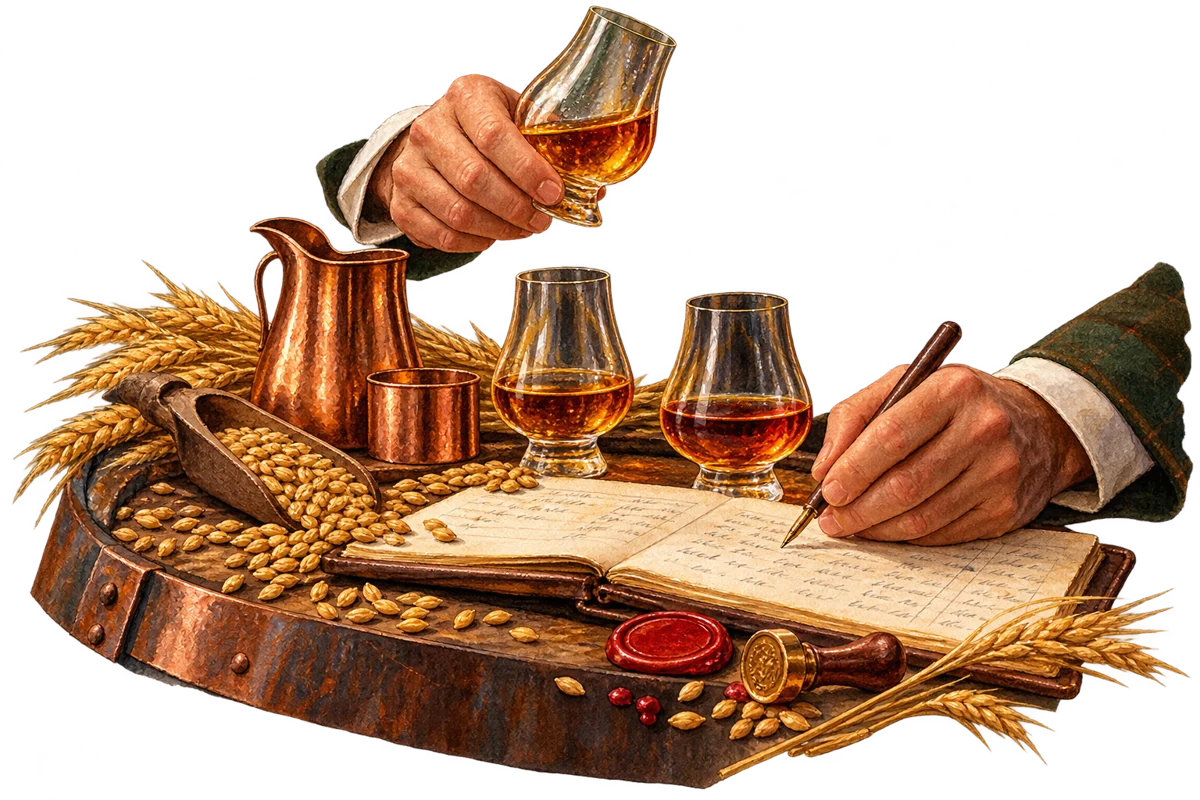
Whisky samples and archival ledger, symbolic of generations of whisky makers

Alexander Reid

Farmer, teacher and founder

Reid connects the beginning of the licensed business with the agricultural setting of Easter Elchies. His later portrayal as an emblem of craft belongs to the company’s interpretation of its founder.[3]

Roderick Kemp

Merchant and proprietor

Kemp owned The Macallan from 1892 to 1909. The company’s archive-based account presents a wine-minded merchant who differentiated his whisky through selection, age and presentation. The red lettering of his Choice Old whisky became a lasting visual reference.[3]

Janet “Nettie” Harbinson

Managing partner from 1918

Harbinson became managing partner in 1918 after her husband’s death. The producer’s history describes cautious investment and concern for workers and their families through a difficult interwar period. Her stewardship deserves attention beyond the later fame of one cask.[4]

Allan Shiach

Business leadership and creative storytelling

A member of the family behind the business and a screenwriter known as Allan Scott, Shiach links whisky stewardship with an unusually creative approach to presentation. The company’s records place notable vintage releases under his management in 1980.[3][5]

Kirsteen Campbell and the mastery team

Whisky making and selection

Campbell became The Macallan’s first female Master Whisky Maker in 2019. Her team follows maturing casks, selects whisky and builds releases. This is a collective craft: production, wood expertise and sensory judgment all contribute to what reaches the glass.[18]

02 / The illustrated history

Two centuries, told one chapter at a time.

Founding, cask filling, bottling and the opening of a new facility belong to different moments. Follow the connections without merging their dates.
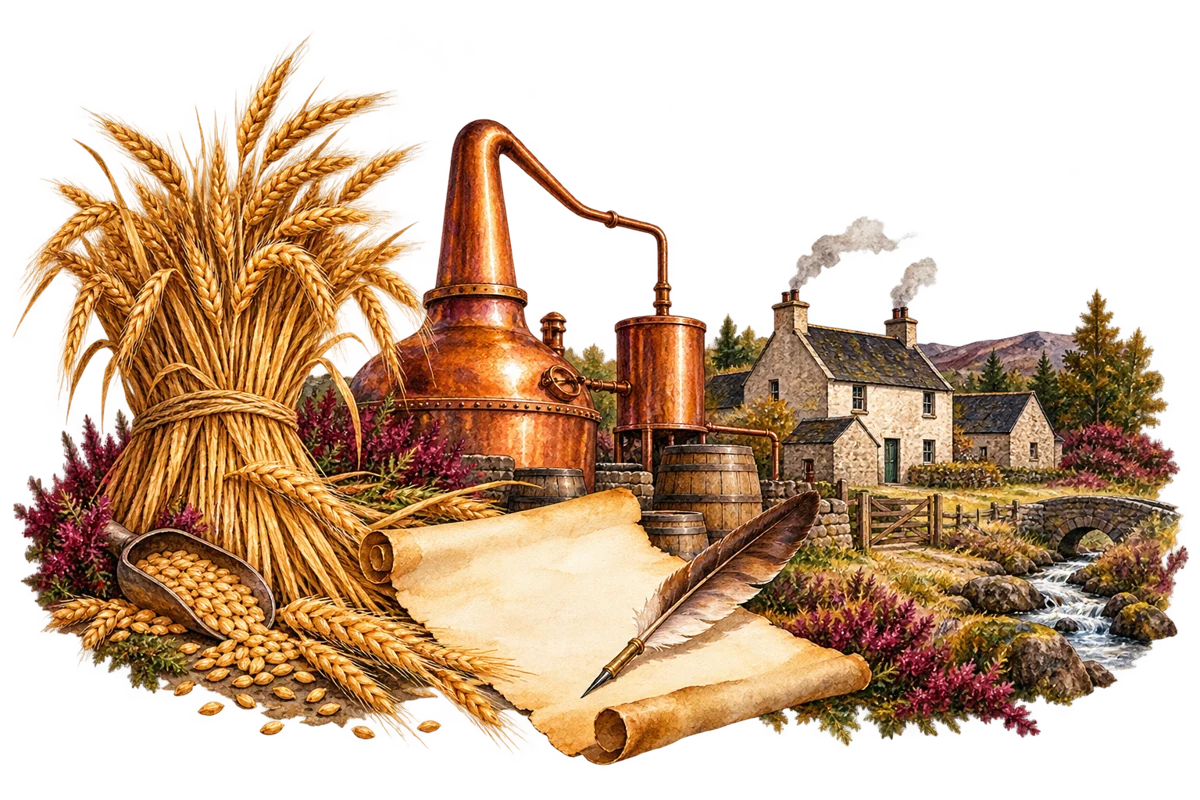
Symbolic interpretation: A licensed beginning
1824

A licensed beginning

Alexander Reid establishes the distillery. The date marks the whisky business, rather than the origin of Easter Elchies House.[1]
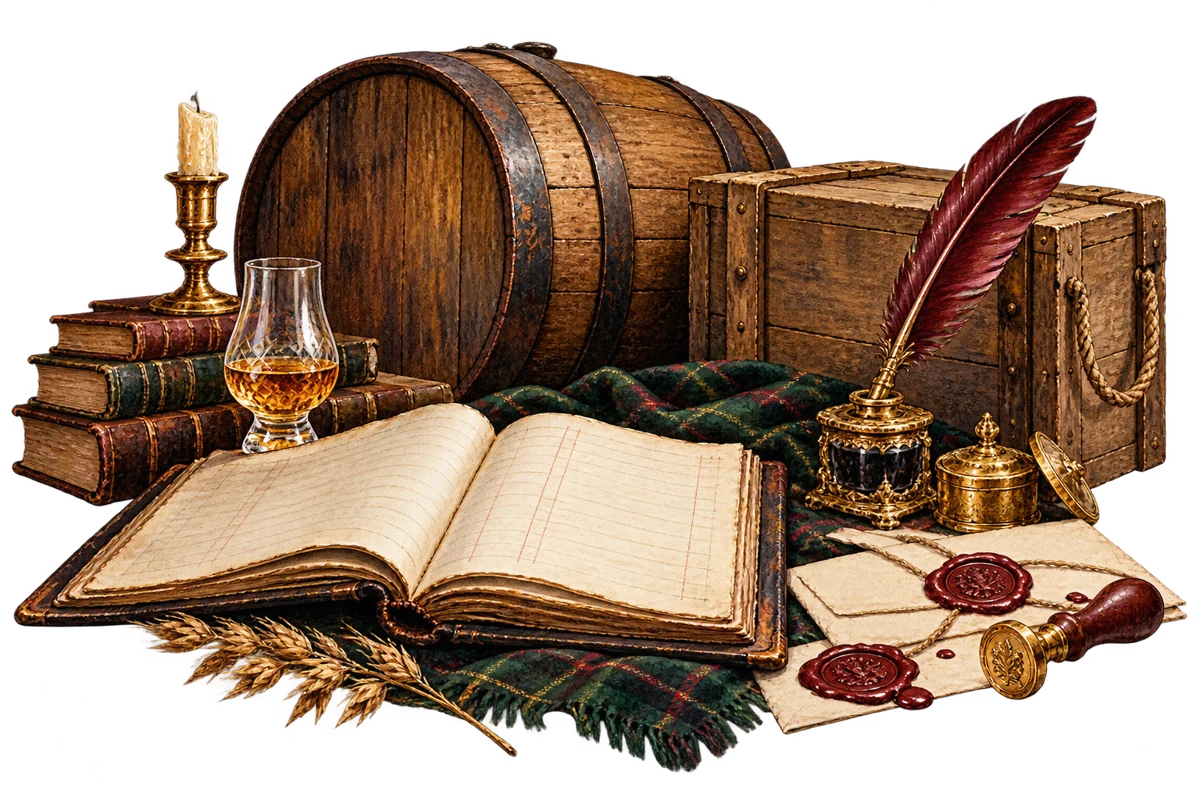
Symbolic interpretation: Roderick Kemp takes ownership
1892

Roderick Kemp takes ownership

Kemp begins the proprietorship that will continue until 1909. The company’s historical account associates his era with trading ambition and differentiated whisky presentation.[3]
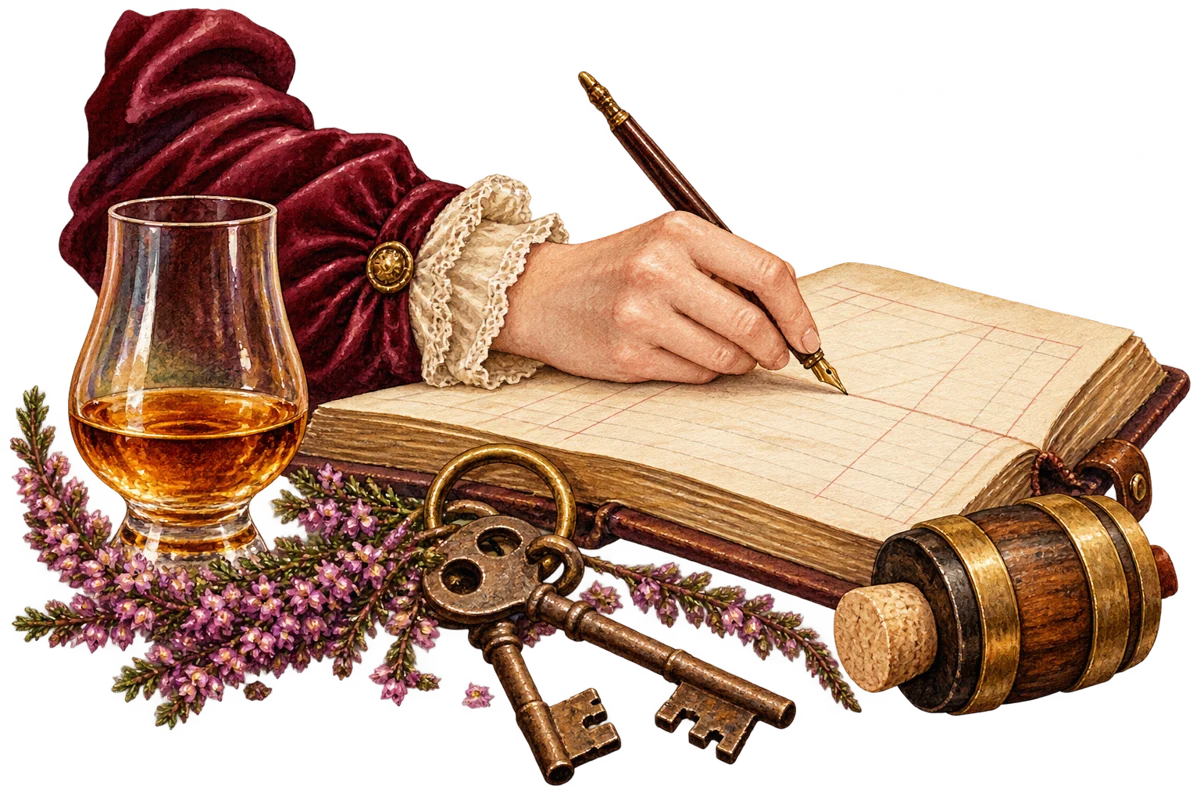
Symbolic interpretation: Nettie takes the helm
1918

Nettie takes the helm

Janet Harbinson becomes managing partner. Her stewardship bridges a family business, its workers and the difficult years after the First World War.[4]
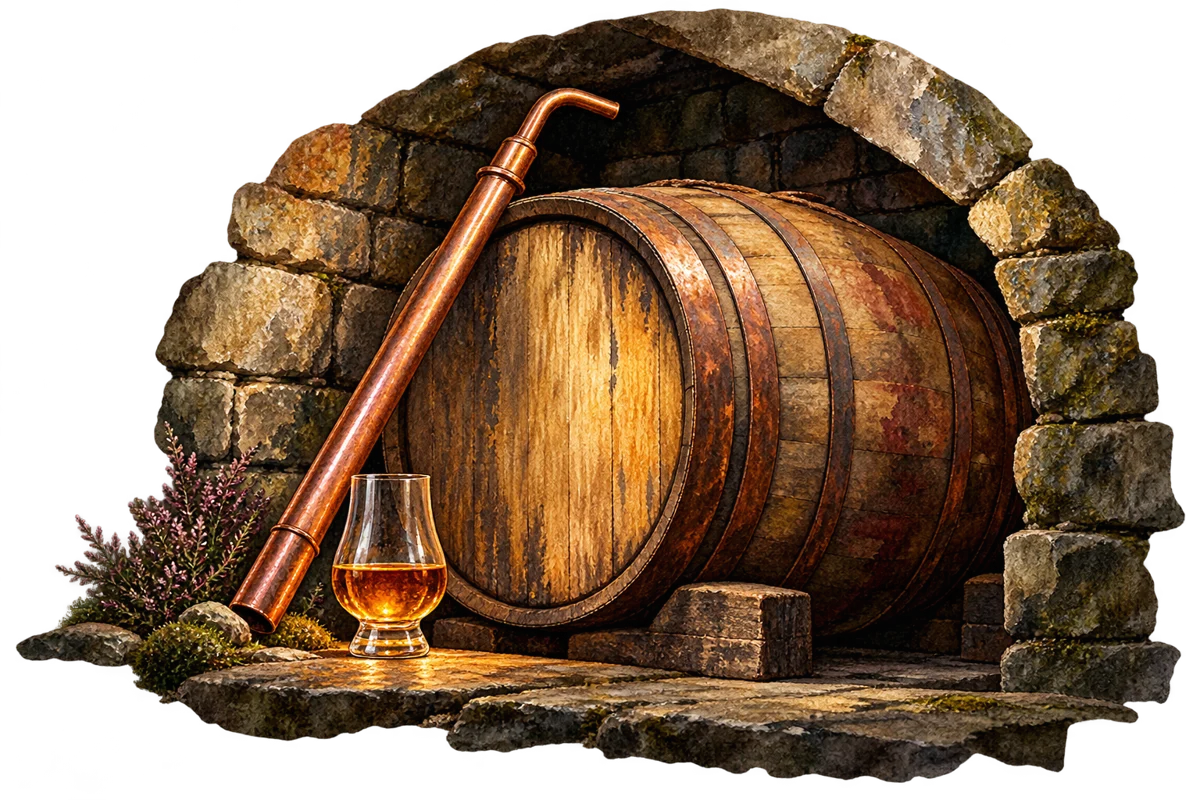
Symbolic interpretation: A cask begins a long journey
1926

A cask begins a long journey

Spirit enters cask 263 under Harbinson’s stewardship. Its later reputation is retrospective; the filling date is distinct from its 1986 bottling.[5]
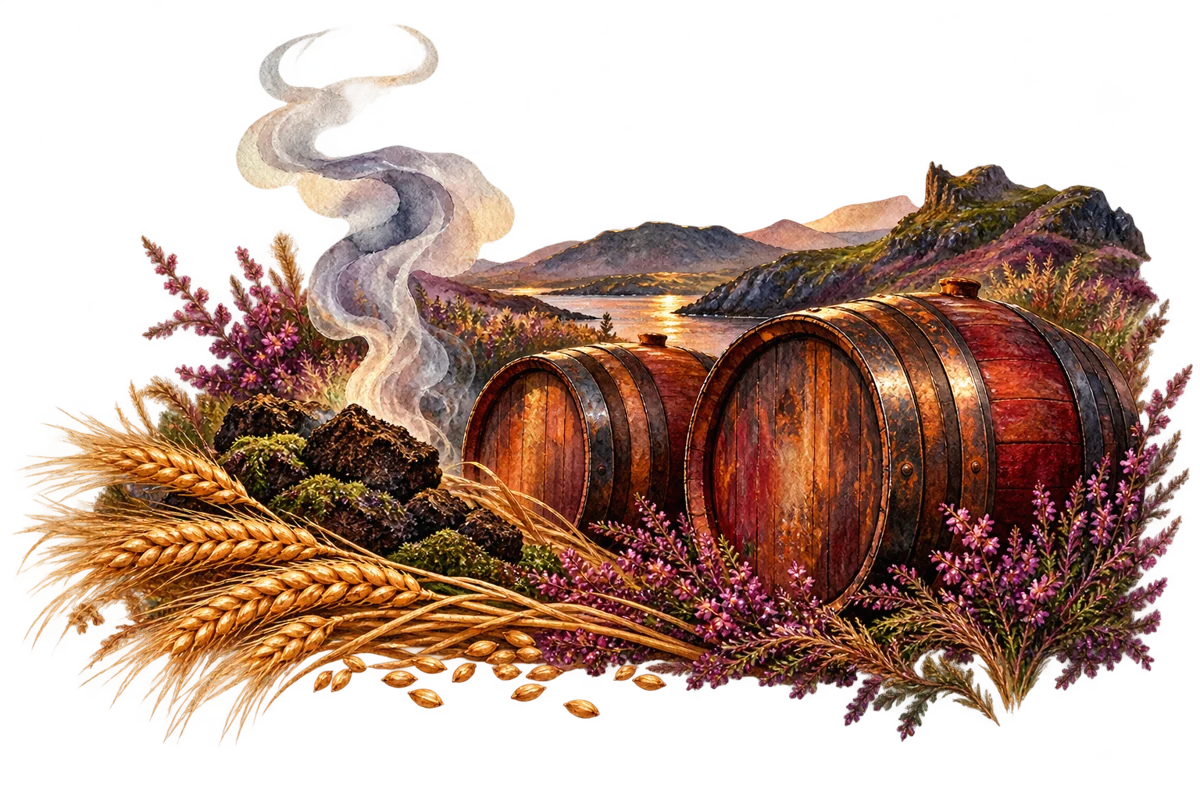
Symbolic interpretation: Whisky for a distant future
January 1, 1940

Whisky for a distant future

Two casks later selected for the 2024 TIME : SPACE release begin their maturation. The producer identifies peated malt in this particular wartime whisky.[11]
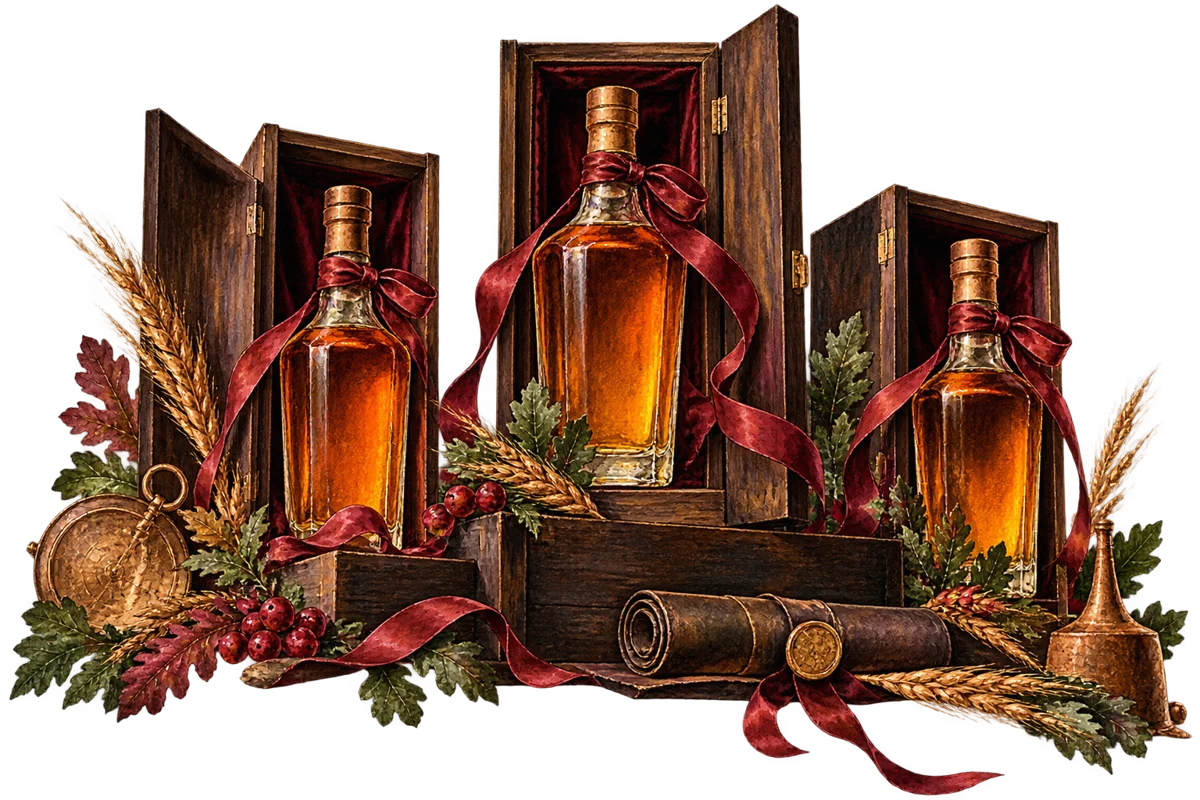
Symbolic interpretation: Vintage whisky finds a new stage
October 1980

Vintage whisky finds a new stage

Three vintage-dated whiskies are presented in wooden boxes with red ribbons. The company’s archival account ties this release to Shiach’s management.[3]
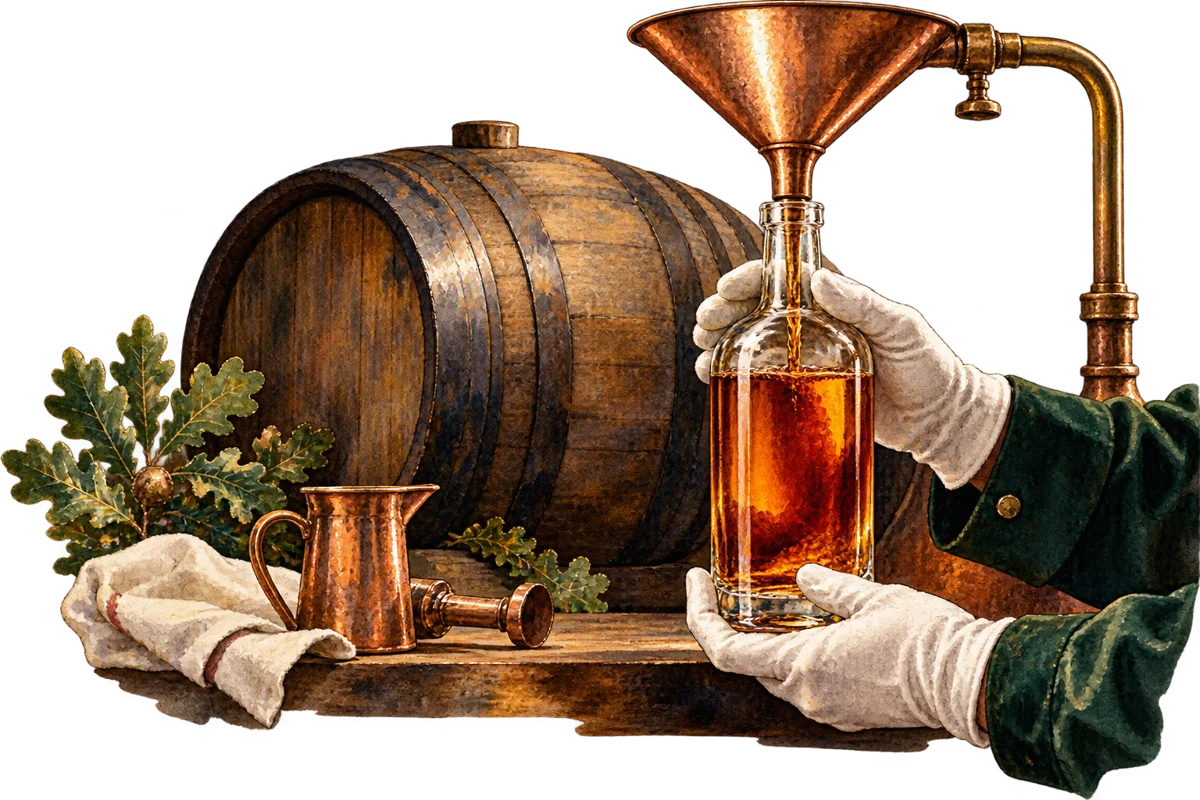
Symbolic interpretation: The 1926 cask is bottled
1986

The 1926 cask is bottled

After sixty years, cask 263 yields forty bottles. Its filling, maturation and bottling are separate chapters in the same whisky’s history.[5]
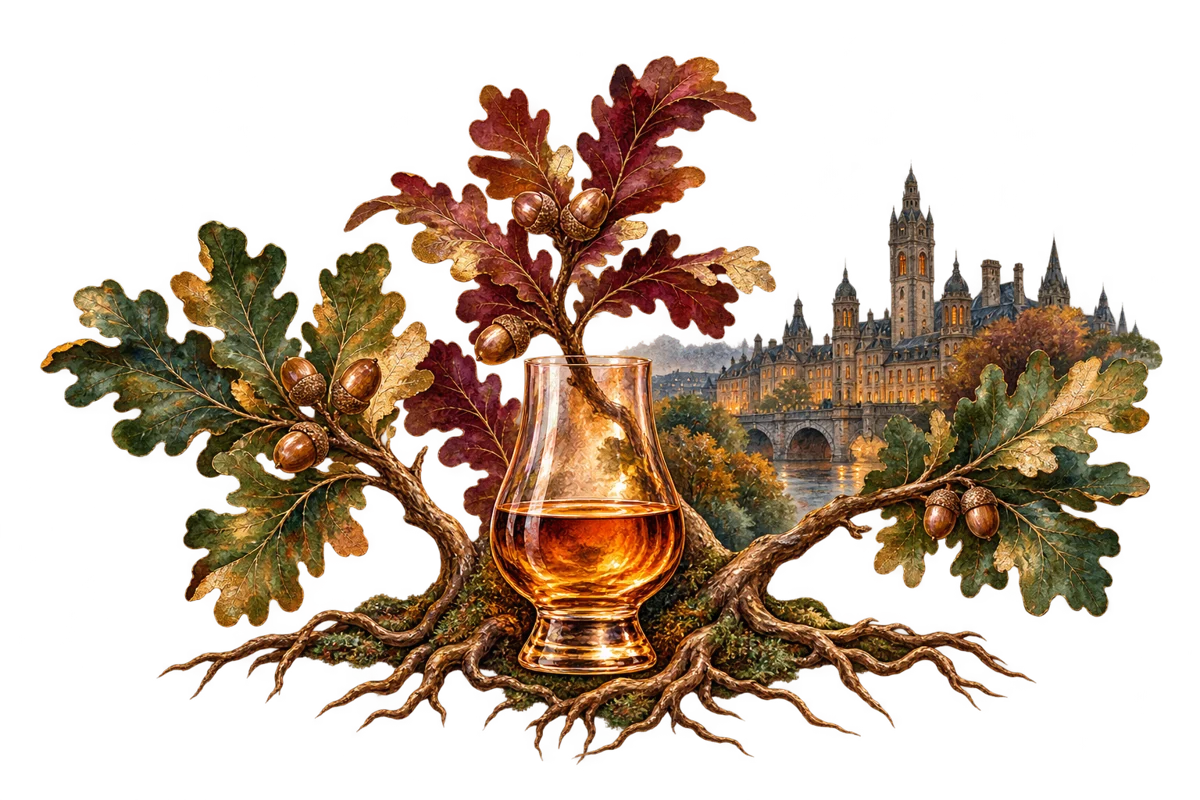
Symbolic interpretation: The Edrington chapter
1999

The Edrington chapter

Edrington acquires Highland Distillers, bringing The Macallan and Highland Park into its portfolio. The parent company’s own earlier origins remain a separate history.[6]
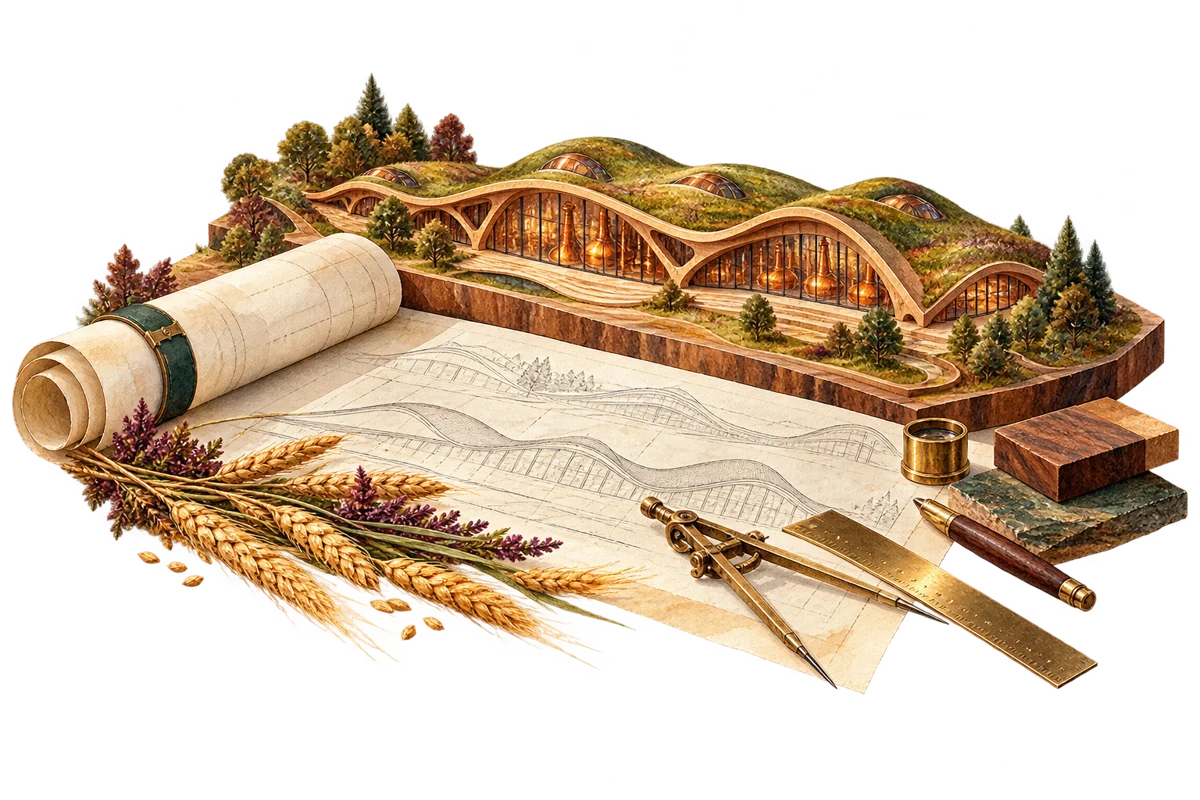
Symbolic interpretation: A new distillery is announced
2012

A new distillery is announced

Plans for a replacement distillery and visitor experience are announced. This is the planning milestone, not the opening.[8]
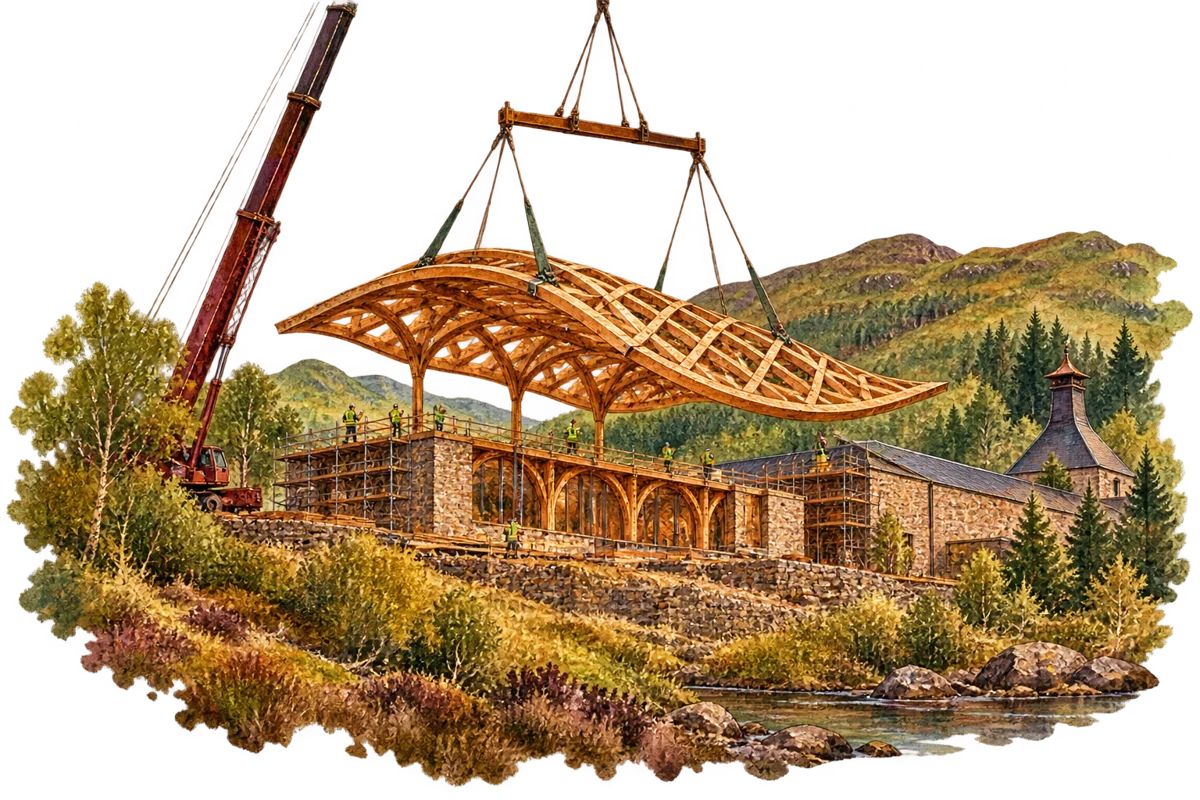
Symbolic interpretation: Construction begins
December 2014

Construction begins

Work starts on the new estate facility. Rogers Stirk Harbour + Partners, Robertson Construction and Forsyths contribute distinct design, building and still-making roles.[8]
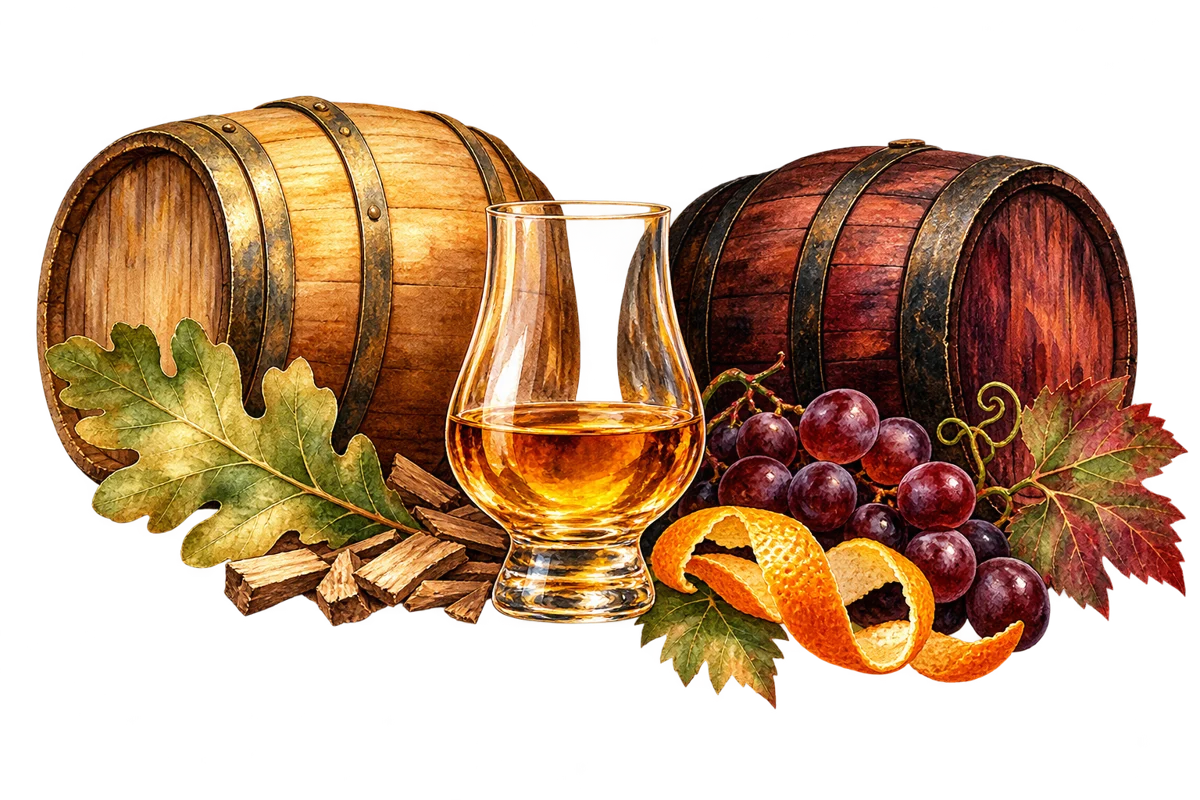
Symbolic interpretation: Double Cask joins the family
2016

Double Cask joins the family

The Double Cask collection launches, developing a dialogue between sherry-seasoned American and European oak. The name refers to a cask approach, not a count of individual barrels.[9]
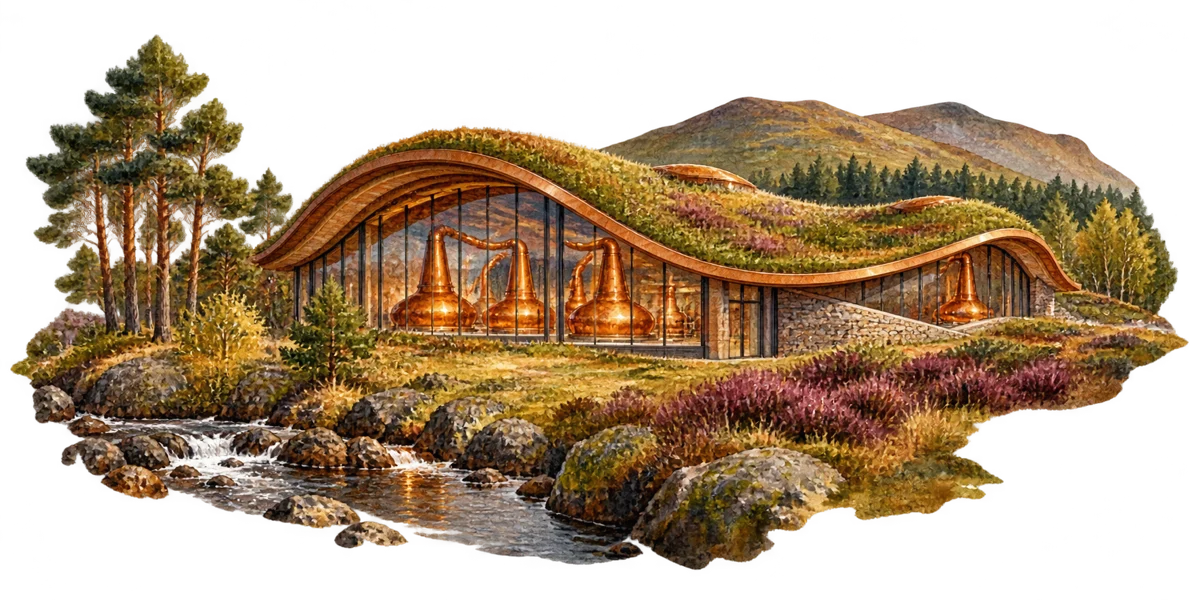
Symbolic interpretation: A new home for the same spirit
2018

A new home for the same spirit

The new distillery and visitor experience open on the estate. The change in architecture is paired with a deliberate effort to maintain the established new-make character.[6][7]
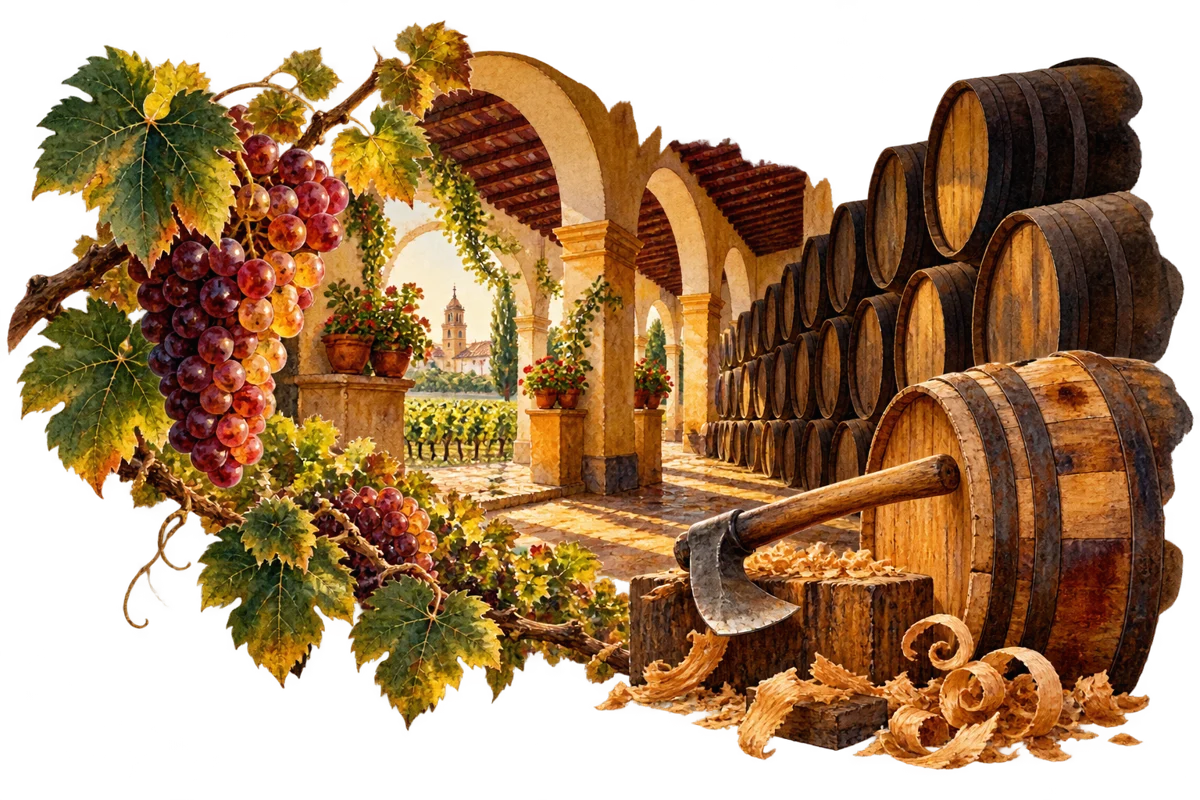
Symbolic interpretation: The cask journey becomes more integrated
2023–2025

The cask journey becomes more integrated

Edrington completes a sequence of investments in forestry, sawmills, cooperages, vineyards and bodegas. The company describes these as protection for long-term sherry-cask quality.[13]
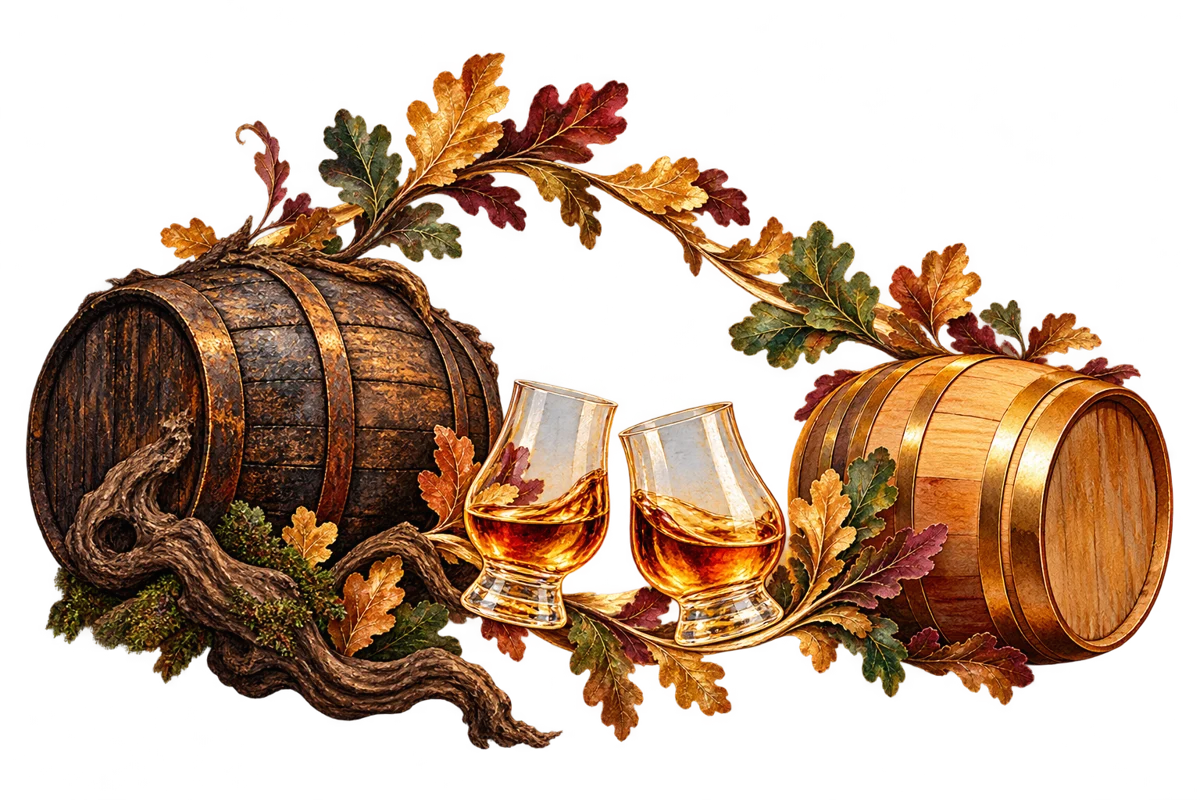
Symbolic interpretation: Two centuries, two distillery generations
2024

Two centuries, two distillery generations

TIME : SPACE pairs an 84-year-old 1940 whisky with a five-year-old 2018 vintage from the new distillery. It makes the difference between brand history and facility history tangible.[11]
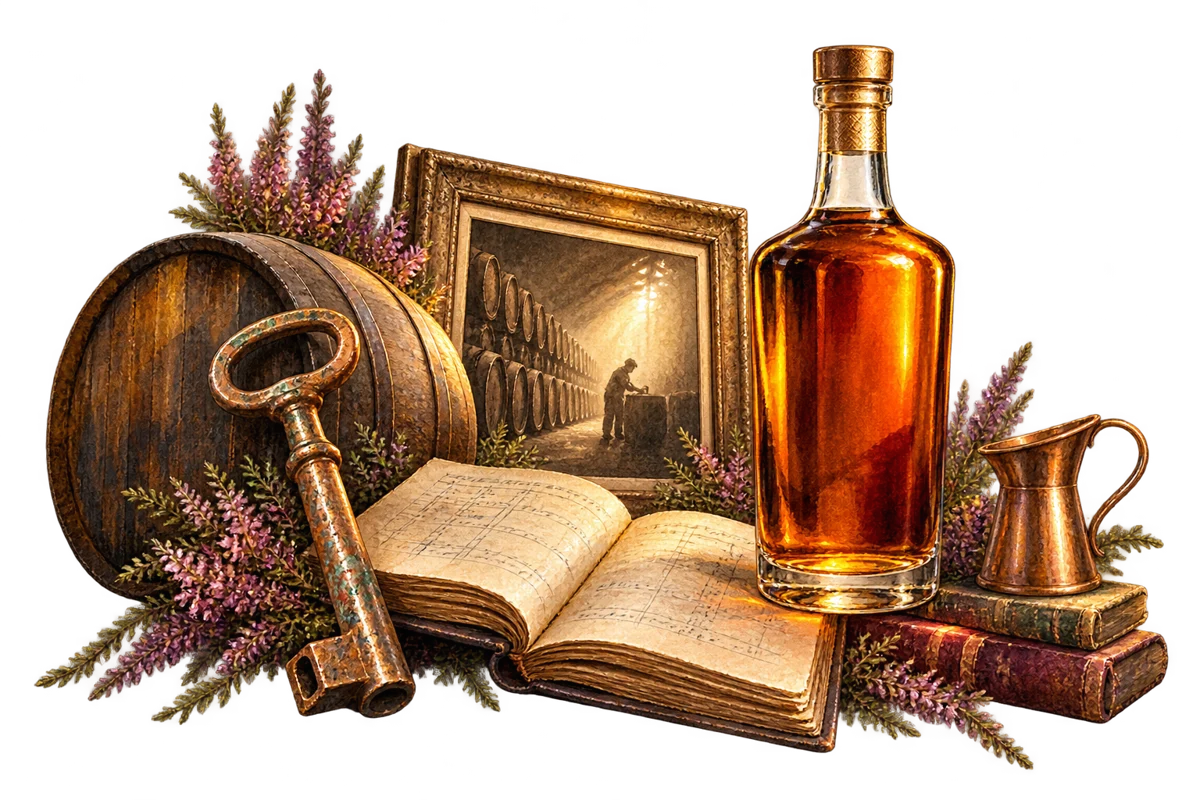
Symbolic interpretation: A century of the 1926 story
2026

A century of the 1926 story

The estate marks one hundred years since cask 263 was filled with an archive-based exhibition. The anniversary celebrates a specific whisky, not the distillery’s founding.[5]

Each watercolor is a fresh symbolic interpretation, not an exact building, documentary portrait or reconstruction.
03 / Geography & roles

Speyside at the heart. A wider craft around it.

Symbolic Macallan places illustration

Easter Elchies House

Historic house and brand emblem

The stone house is the estate’s symbolic home, familiar from the brand’s presentation. Official accounts associate its historic form with 1700, before licensed distilling began. It is an architectural and cultural landmark within the working estate, rather than the date at which the whisky business began.[19][20]

The working estate

Production, maturation and hospitality

The Macallan’s home is Easter Elchies near Craigellachie in Speyside. The present distillery, warehouses and visitor experience belong to this wider landscape. A river setting and a historic house help explain place; they are not substitutes for identifying where production occurs.[16]

The 2018 distillery

Modern production facility and visitor setting

The low, planted roof interprets the surrounding hills. Timber, glass and copper make production part of the visitor experience. The architects designed the facility, Robertson Construction delivered it and Forsyths supplied stills. These roles should not be merged into one building credit.[8]

Jerez de la Frontera

Cask making and sherry seasoning

Cooperages, vineyards and bodegas in southern Spain prepare the sherry-seasoned casks. This is a vital part of the whisky’s material history, while the spirit itself is distilled and matured in Scotland.[12]

TimeSpirit

Culinary collaboration on the estate

The estate’s dining experience was developed with El Celler de Can Roca. It extends the visitor story through food and flavour. Dining, shopping and a distillery tour are different experiences; check the producer’s current reservations before planning a visit.[17]

04 / The whiskey family

One whisky house, many specialist relationships.

Symbolic Macallan family illustration

Edrington

Parent company

The Macallan is part of Edrington’s single malt portfolio. Highland Park and The Glenrothes are sibling brands, not Macallan expressions or evidence of shared distillation. Edrington’s 2026 report continues to identify The Macallan as a central business.[6][14]

The Robertson Trust

Edrington ownership context

The charitable trust is Edrington’s principal owner. Its relationship sits at parent-company level. It should not be confused with a separate distilling company or a claim that whisky production is itself a charity.[6]

Forsyths

Still-making partner

The nearby coppersmith has worked with The Macallan since the 1950s. The producer describes commissioning stills for the new facility that retain the earlier shape, size and lyne-arm orientation.[7]

The oak and sherry businesses

Material supply and craft relationships

The current ownership-from-origin account names Coopers Oak, Tevasa, Vasyma and Grupo Estévez/Valdespino in different stages of the cask journey. Forestry, cooperage and wine production are distinct skills brought closer to the whisky business.[12]

Sherry Oak and Double Cask

Core whisky families

These are Macallan whisky collections. Sherry Oak emphasizes European-oak-led maturation; Double Cask combines sherry-seasoned American and European oak. They are related approaches within one producer’s range, not interchangeable editions.[9][10]

El Celler de Can Roca

Food and flavour collaboration

The culinary partnership supports TimeSpirit on the estate. It offers another way to explore the producer’s flavours without becoming a separate distilling source.[17]

05 / Making & choosing

A rich spirit meets a carefully prepared cask.

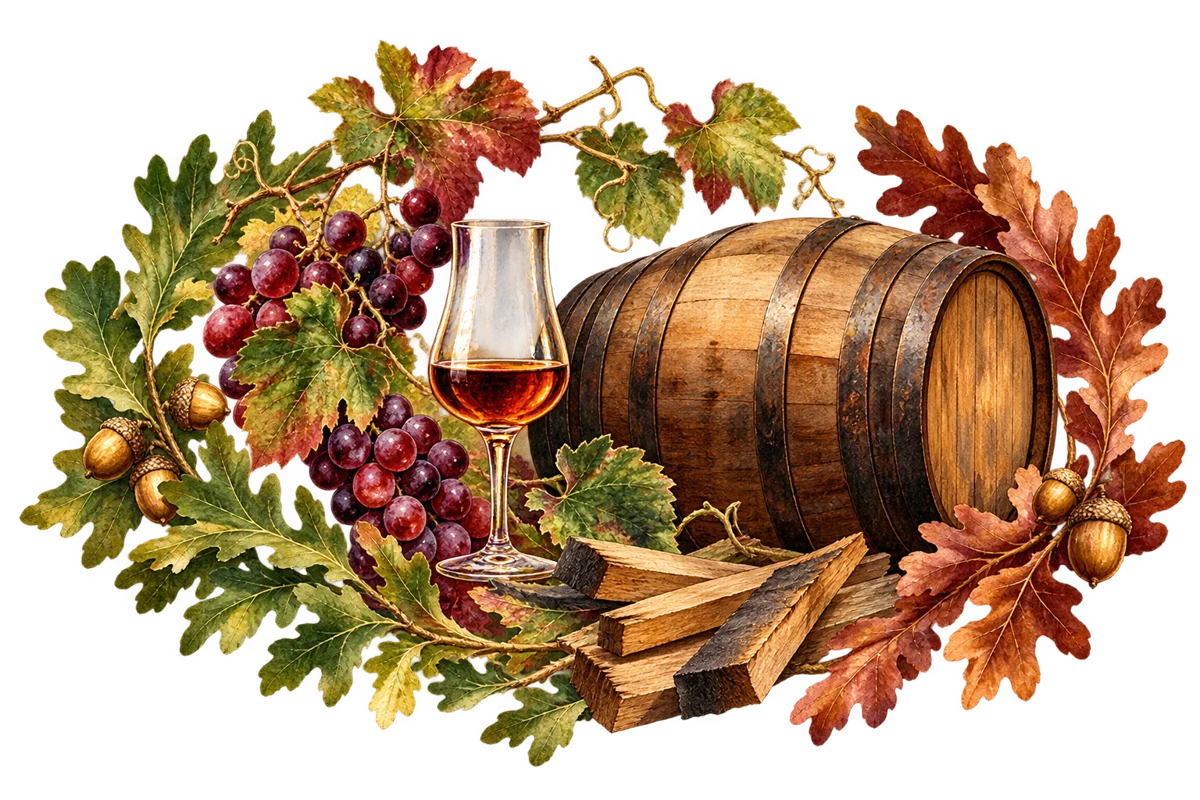
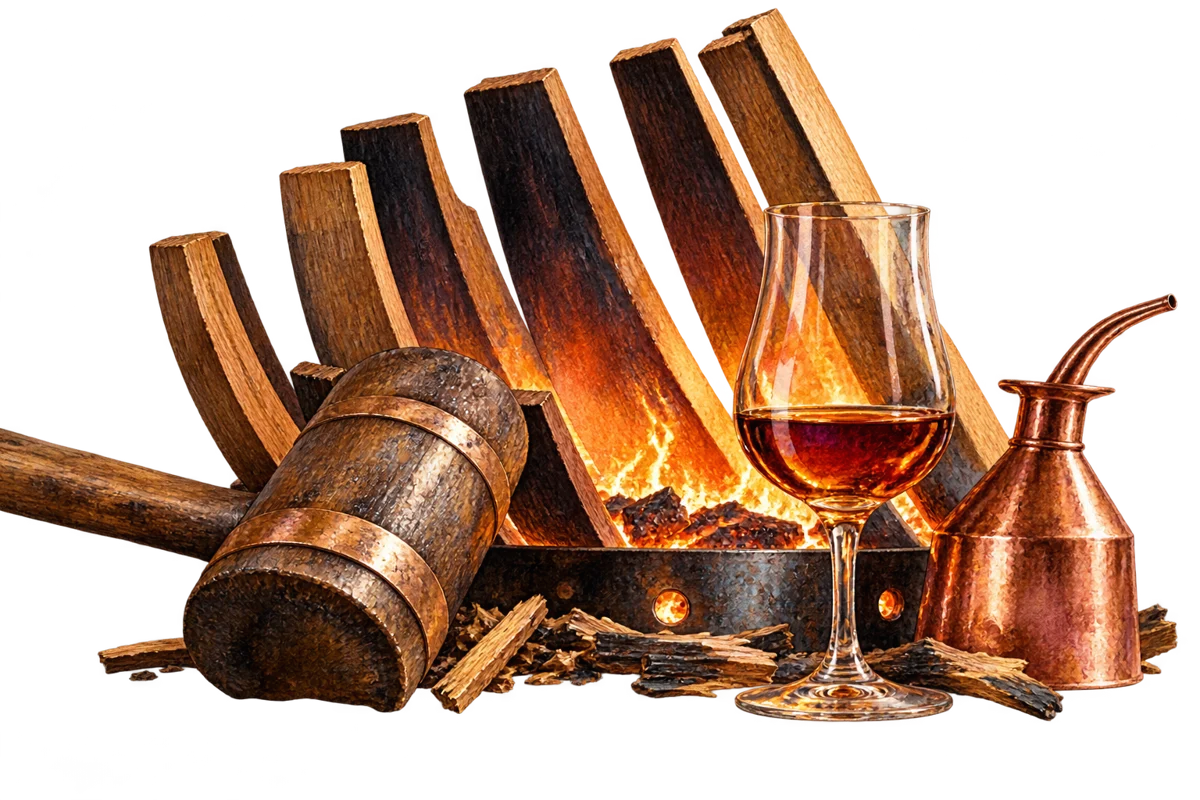
Symbolic Macallan craft illustration

A rich spirit from small stills

The producer links its squat copper stills to the weight and fruit character of its new spirit. Its account distinguishes twenty-four spirit stills within the new facility. That figure is not presented here as the total number of all still types.[7]

Wood is a planned ingredient

A cask’s history begins before whisky enters it. Oak is selected and dried, staves are shaped into a vessel, and sherry prepares the wood. Whisky then matures in Scotland. The people who make that vessel influence the eventual liquid.[12]

Two oak origins, one sherry connection

American oak does not automatically mean an ex-bourbon barrel. In Double Cask, both American and European oak casks are seasoned with sherry before whisky maturation. Reading oak origin separately from previous contents makes the collection easier to understand.[9]

Natural colour as a house principle

The Macallan says its whisky colour comes from the casks. Its makers select across a range of wood-derived shades while building a consistent release. Colour contributes to the house identity, but it is not an independent measure of age or a promise that darker always tastes better.[2]

Selection continues through maturation

The Whisky Mastery Team evaluates casks at different stages. A release can bring together casks with different histories to achieve a particular balance. The age on an age-stated bottle is only one part of that composition.[18]

Sustainability needs a dated account

Edrington’s 2026 reporting describes estate biodiversity accreditation and increased renewable generation. It also reports interruptions to biomass steam supply that affected emissions progress. The useful story includes both investment and operational setbacks, rather than an unsupported claim of impact-free production.[15]

06 / The details worth knowing

The details behind the familiar name.

The estate is older than the licence

A house date, an estate story and a distillery founding answer different questions. Easter Elchies helps give The Macallan its visual identity; 1824 identifies the licensed whisky business. Keeping them separate makes the long history more meaningful.[20][1]

Nettie’s achievement was stewardship

The 1926 whisky draws attention, but Harbinson’s business record is broader. The producer describes her care for workers’ families and her resolve to maintain the business in uncertain times. The company’s later film is an interpretation of that life, not a documentary record of every scene.[4][5]

A building can change without rewriting a whisky

The new facility’s roof is dramatic, yet preserving spirit character was a stated design priority. Retaining still geometry gave the project a technical thread of continuity. The public opening and the first release made there are different milestones.[8][7][11]

A cask connects three countries

An American or European oak tree may become a cask in Spain, receive sherry seasoning there and finally hold Scotch in Speyside. Country of wood origin, place of seasoning and place of whisky production are separate layers of provenance.[12]

The familiar range still matters

Edrington’s 2026 review gives the core range a prominent role, reporting strong interest in the twelve-year-old while highlighting new packaging and creative releases. The collector-facing stories sit beside an everyday identity built through familiar age-stated whiskies.[14]

A record bottle is one historical object

The Macallan’s 2026 account identifies a 1926 bottle’s 2023 auction record. Its cultural significance belongs to that specific edition and sale. It does not make every old bottle equivalent or turn the distillery story into a prediction of future value.[5]

07 / Selected expressions

Different ways into the whiskey.

A curated historical and current selection. Specifications belong to the cited edition.

Sherry Oak 12 Years Old

An established entry into the house’s sherry-cask identity. The producer describes dried fruit and wood spice, with European oak leading the presentation. Historical bottles and current packaging can differ; use the exact edition’s label for strength and release details.[10]

Double Cask 12 Years Old

This collection pairs sherry-seasoned American and European oak. The producer emphasizes a softer balance of vanilla, fruit and spice. Double Cask describes a relationship between cask types, not a requirement that each bottle comes from only two casks.[9]

TIME : SPACE, 2024

The anniversary presentation holds two separate whiskies: an 84-year-old from 1940 and a five-year-old from 2018. They are not blended into one age statement. Its significance is the bridge between the former production era and the new facility.[11]

The Macallan 1926, bottled 1986

A sixty-year maturation and forty-bottle yield made cask 263 an exceptional historical release. The 2026 exhibition returns attention to the people, records and circumstances behind its fame.[5]

Beyond the core collections

The 2026 parent-company report names A Night on Earth, James Bond and Distil Your World releases alongside the core range. This is a selected view of a changing portfolio, not an exhaustive catalog or an assertion that every edition is currently available.[14]

08 / The Reserve connection

Continue from the story to the bottles.

The Macallan in The Thelen Reserve

One physical bottle connects this Speyside story to the Reserve. Its recorded 86-proof identity remains distinct from other editions.

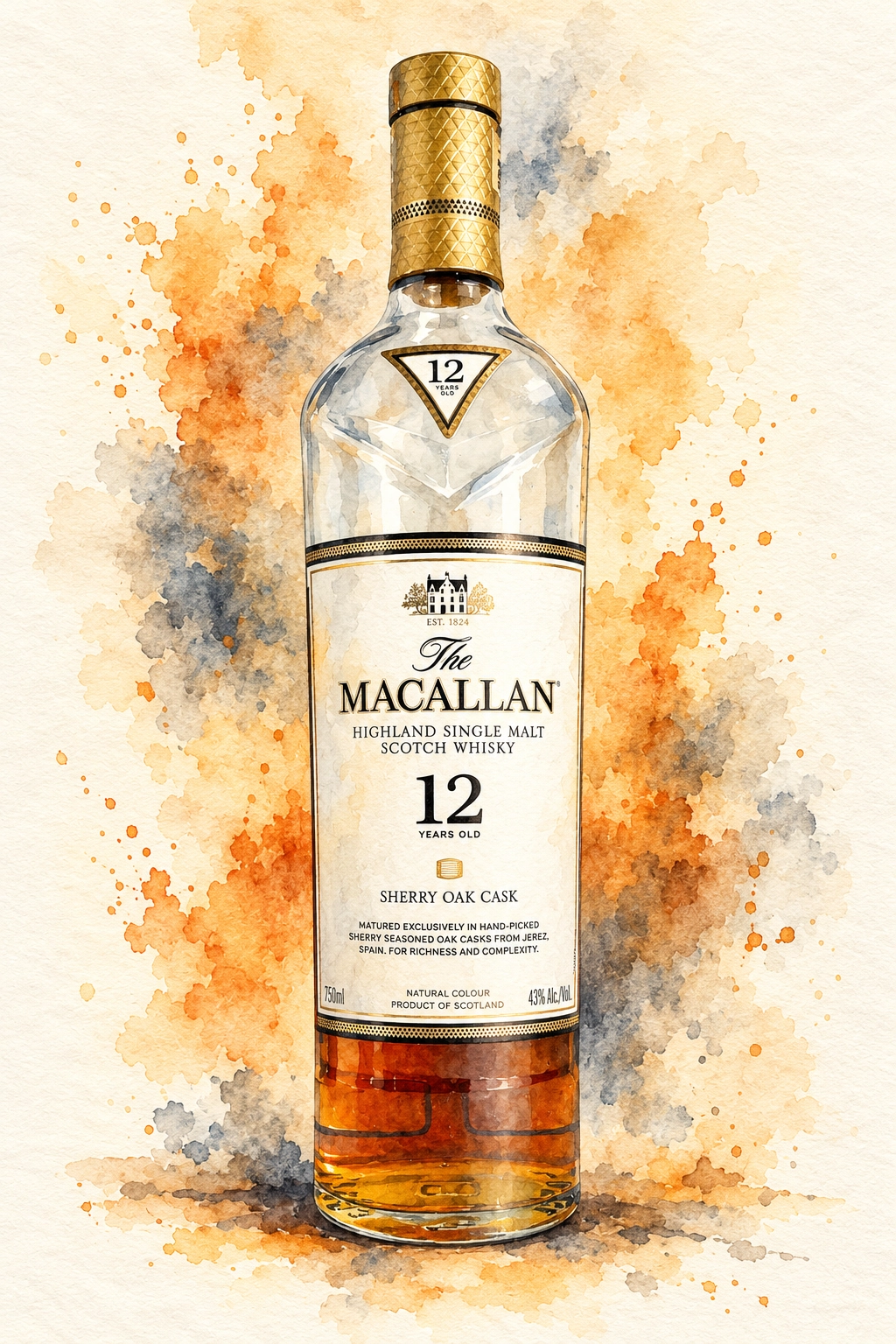
Approved watercolor of The Macallan 12 Year Sherry Oak Cask Single Malt Scotch Whisky

The Macallan Sherry Oak 12 Years Old

W0306 · 86 proof

Recorded twelve-year Sherry Oak at 86 proof. Batch, barrel, bottling date and edition remain unverified; no current catalog specification is substituted.

Collection snapshot: October 26, 2026. Bottle-specific status and original media remain attached to its inventory record.

The Macallan three-page illustrated guide cover
The illustrated companion

The Macallan, in three pages.

Origins and people, history and places, whiskey and stories. A separate educational companion with linked research sources.

Sources & research notes

Researched October 20, 2026. Official producer, estate and parent-company sources. Detailed notes and sources are retained here.

Research qualifications

  • Research completed October 20, 2026. Official producer and parent-company accounts support the profile; attributed product and sustainability claims are not independently audited measurements.[1][6][15]
  • 1824 licensed origins,2018 facility opening,1940/1926 distillation and later bottling/release dates remain separate. No current-catalog strength is assigned to an older owned bottle.[1][5][8][10][11]
  • Official estate and glossary pages associate Easter Elchies House with1700. A separate bottle-story page contains a conflicting damage/reconstruction chronology, which is not adopted.[19][20][21]
  • The producer’s current ownership account describes integrated cask businesses; it is a dated snapshot rather than a full corporate legal ownership register.[12][13]
  • Artwork is symbolic and newly created. Neither interpretive buildings nor anonymous hands are documentary images. The full source disclosure opens from inline citations.

Full sources

  1. About The MacallanFounding,AlexanderReid,name and origin Note: Company historical account; distinguishes estate and distillery.
  2. The Six PillarsNatural colour,estate and guiding principles Note: Producer technical/brand description.
  3. A Study in RedKemp1892–1909 andOctober1980vintages Note: Attributed archival narrative; no independent transcript claimed.
  4. Family Life and WorkJanetHarbinson1918 andinterwarstewardship Note: Company interpretation tied to a later art release.
  5. The Spirit of1926Cask263,1926,1986,2026exhibition Note: Film is dramatized; auction statements specific to named sale.
  6. Edrington: Our History1999acquisition,Trust,parent history,2018facility Note: Corporate history, not complete ownership ledger.
  7. Distinction in DistillationForsyths,still geometry,24spiritstills Note: Spirit still count is not total all-type still count.
  8. A New Distillery and Visitor Experience2012announcement,Dec2014build,projectpartners Note: Retrospective article lastupdatedMar25,2024; dates label their event.
  9. Double Cask122016launch,American/European sherryseasonedoak Note: Edition and market strengths vary; no bottle-specific proof inferred.
  10. Sherry Oak12Coreexpression andsherrycaskstyle Note: HistoricalURL/currentpage do not establish owned bottle vintage.
  11. TIME : SPACE1940 and2018whiskies;2024release Note: Two separate whiskies. Avoid conflicting ABV values across locales.
  12. Ownership from OriginCurrent integratedwood/sherrychain Note: Producer claims; no independent corporate-structure audit.
  13. Edrington2025: TheMacallan2024bicentenary,TimeSpirit,2023–25caskinvestments Note: Annualreport fiscal period differs from calendar event dates.
  14. Edrington2026: MaltWhiskiesCurrentcore range,packaging and selectedreleases Note: Parent-company statements; not a complete availability catalog.
  15. Edrington2026: EnvironmentEstate biodiversity,renewables andbiomasssetback Note: Company reporting; scope and period retained.
  16. Distillery andEstateSpeysideaddress,2018facility,visitroles Note: Reservations and access arrangements can change.
  17. TimeSpirit DiningElCellerdeCanRoca collaboration Note: Do not carry currentprices/bookings into permanent copy.
  18. Meet the Whisky Mastery TeamKirsteenCampbell2019 andteamroles Note: Datedaccess,not guaranteed future executive roster.
  19. Estate backgroundHistoricestate and1700house Note: Distinguish historic house fromdistillery.
  20. EasterElchiesHouse glossaryHouse1700 andbrandmeaning Note: Crosschecked;conflictingdamagechronology on separate bottlepage not adopted.
  21. Easter Elchies House: bottle storyConflicting house-history account assessed Note: Damage/reconstruction sequence conflicts with stated1700date; excluded from narrative chronology.
↑