TJ THELEN'S COLLECTION
The Thelen Reserve
Behind the Bottles / Blending & finishing / Founded 2010

Angel’s Envy

Last updated Last researched

Kentucky roots. A world beyond the first barrel.

Angel’s Envy began with a distiller asking what could happen after bourbon was already bourbon. Lincoln Henderson and his family made secondary maturation central to a new whiskey identity, pairing Kentucky tradition with casks carrying other histories. The story moves from those early blends to a working Louisville distillery, then into an expanding conversation about wine, rum, oak and time. Finishing remains its signature, while newer unfinished releases reveal another side of the house.[1][8][24]

Interpretive watercolor of Louisville whiskey making and port-cask finishing
Brand founded
2010[8]
Louisville distillery
Opened 2016[8]
Master distiller
Owen Martin[1][29]
Company family
Bacardi / Louisville Distilling[4][6]
01 / Origins & people

Three generations. One unfinished idea.

A second act with unfinished ideas

After retiring from Brown-Forman, Lincoln Henderson had more whiskey ideas than retirement could contain. His son Wes offered the chance to pursue them independently. Angel’s Envy emerged in 2010 from that partnership: an experienced maker and a family willing to let bourbon develop beyond the familiar first barrel.[3][8]

A name borrowed from the warehouse

The angel’s share is the spirit lost during maturation. According to the family’s account, Lincoln tasted their finished whiskey and joked that the people keeping the barrel had secured the better bargain. The name turned that warehouse expression around. It communicates pleasure and a playful challenge, rather than a historical distillery inherited from earlier centuries.[1]

The whiskey came before the downtown still

The port-finished bourbon reached the market in 2011, five years before the Louisville distillery opened. Those dates distinguish the brand’s beginning from its own production home. Early rye has particularly clear provenance: a 2015 company statement identifies whiskey purchased from LDI, later MGP of Indiana, then finished and bottled in Kentucky.[6][8][26]

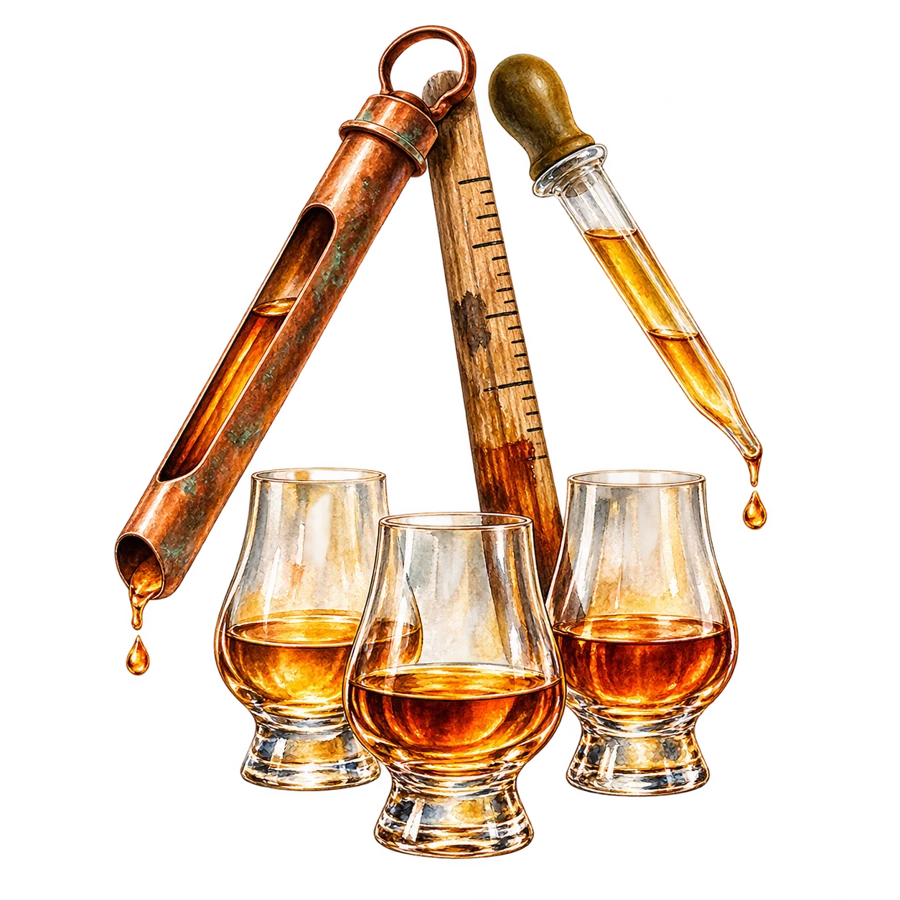
Interpretive family still life of three generations of whiskey-making tools

Lincoln Henderson

Nearly four decades in spirits gave Lincoln a deep understanding of production and flavor. His work at Brown-Forman included Woodford Reserve and Gentleman Jack; Angel’s Envy became his independent family project. He died in 2013, leaving the new brand a relatively short founding chapter and an unusually substantial body of experience behind it.[2][9]

Wes and the Henderson generations

Wes helped bring his father back to whiskey making. The 2012 Cask Strength program joined Lincoln, Wes and grandson Kyle at the barrel-selection table. That documented family collaboration is central to the early story. It describes the founding period, rather than asserting that the same people still hold every production role today.[5]

Owen Martin

Martin began as master distiller in October 2022 after serving as head distiller at Stranahan’s. Study at Heriot-Watt in Edinburgh helped shape his interest in maturation. His appointment joined American production experience with a curiosity about other whisky traditions, giving the existing finishing philosophy a new interpreter.[9]

The team behind the decisions

Distilling, blending, finishing and bottling depend on a group, even when one name appears on the release. In May 2026, Bacardi reported the production team’s global Icons of Whisky honor and Martin’s Americas craft-distiller distinction. General manager Gigi DaDan framed the recognition around shared skill and the daily work of judging a finish.[29]

02 / The illustrated history

Finishing becomes a new beginning.

Follow the Henderson family, a Louisville home and the expanding vocabulary of oak. Dates distinguish founding, launches and the distillery opening.
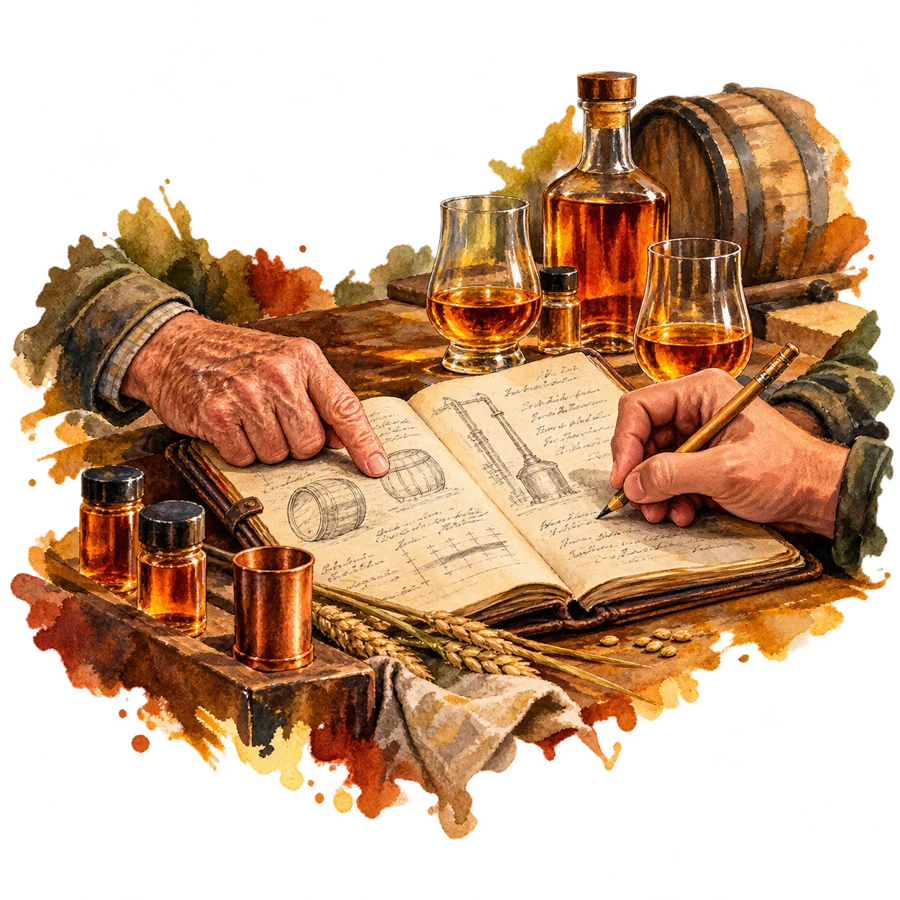
Symbolic illustration: A family project takes shape
2010

A family project takes shape

Lincoln and Wes Henderson establish Angel’s Envy around a new possibility for bourbon. The idea is to combine an experienced distiller’s knowledge with the freedom to experiment after traditional maturation.[8]
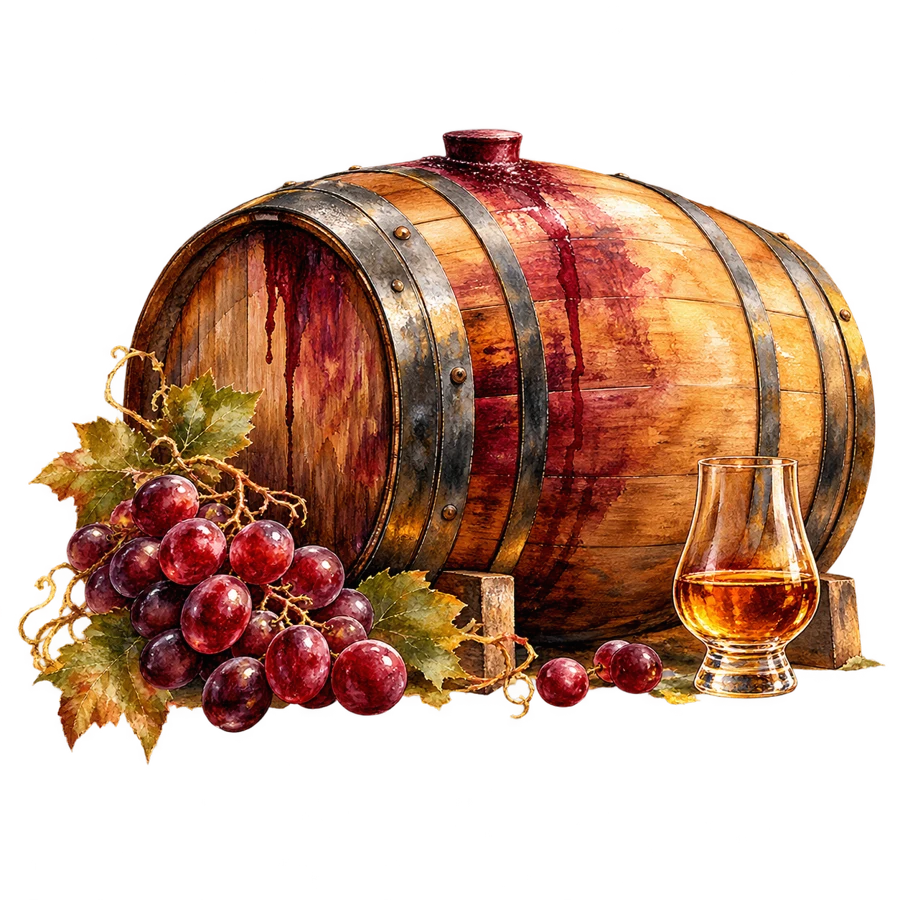
Symbolic illustration: Port becomes the signature
2011

Port becomes the signature

Kentucky straight bourbon finished in port wine barrels reaches the market. The additional cask becomes part of the brand’s everyday identity, establishing the expression that still anchors its Signature Series.[6][30]
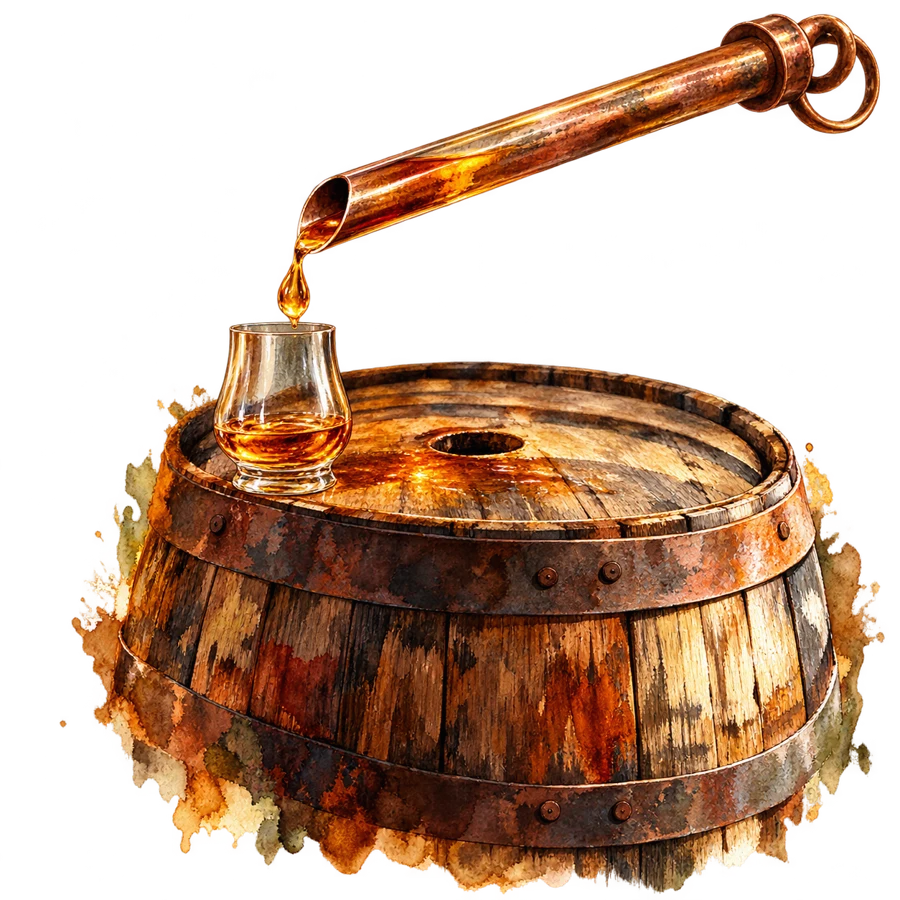
Symbolic illustration: A barrel-selection tradition begins
2012

A barrel-selection tradition begins

Lincoln, Wes and Kyle Henderson start the Cask Strength program. Exceptional barrels receive extended finishing, and the annual release becomes a way to explore variation and concentration within the original port-finished idea.[5]
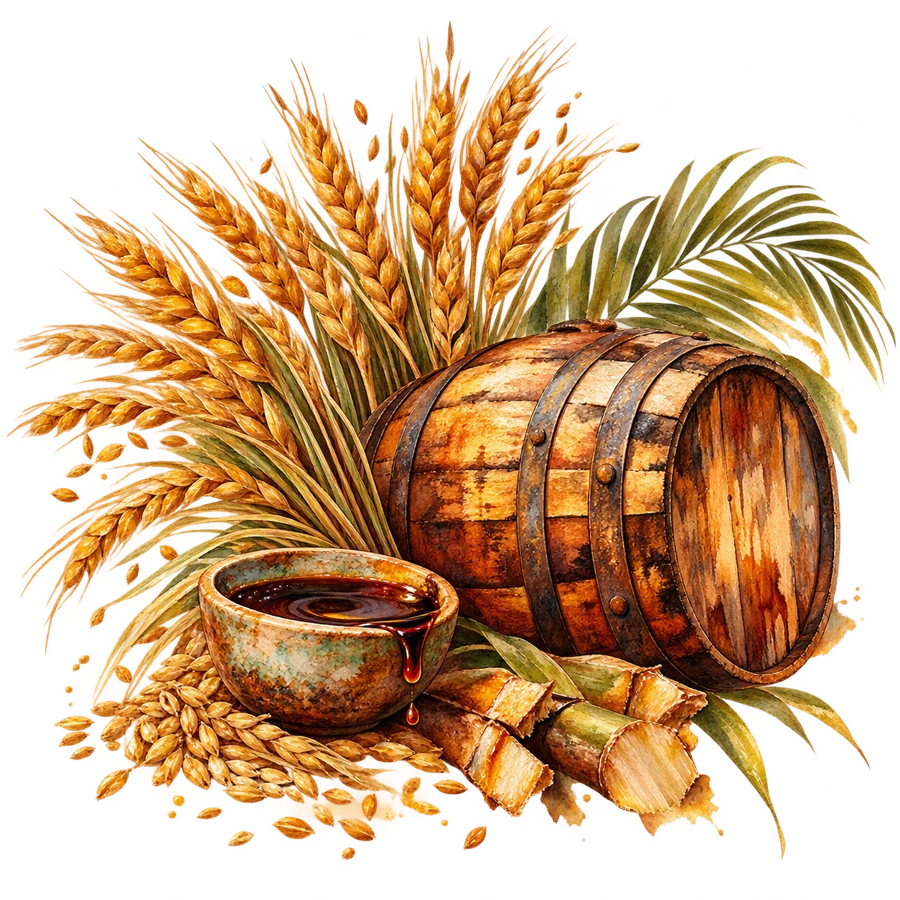
Symbolic illustration: Rye takes a Caribbean turn
2013

Rye takes a Caribbean turn

The rum-finished rye is announced, giving the young range a second foundation. Rye’s character and a Caribbean rum cask offer a different partnership from bourbon and port, widening the finishing conversation.[6]
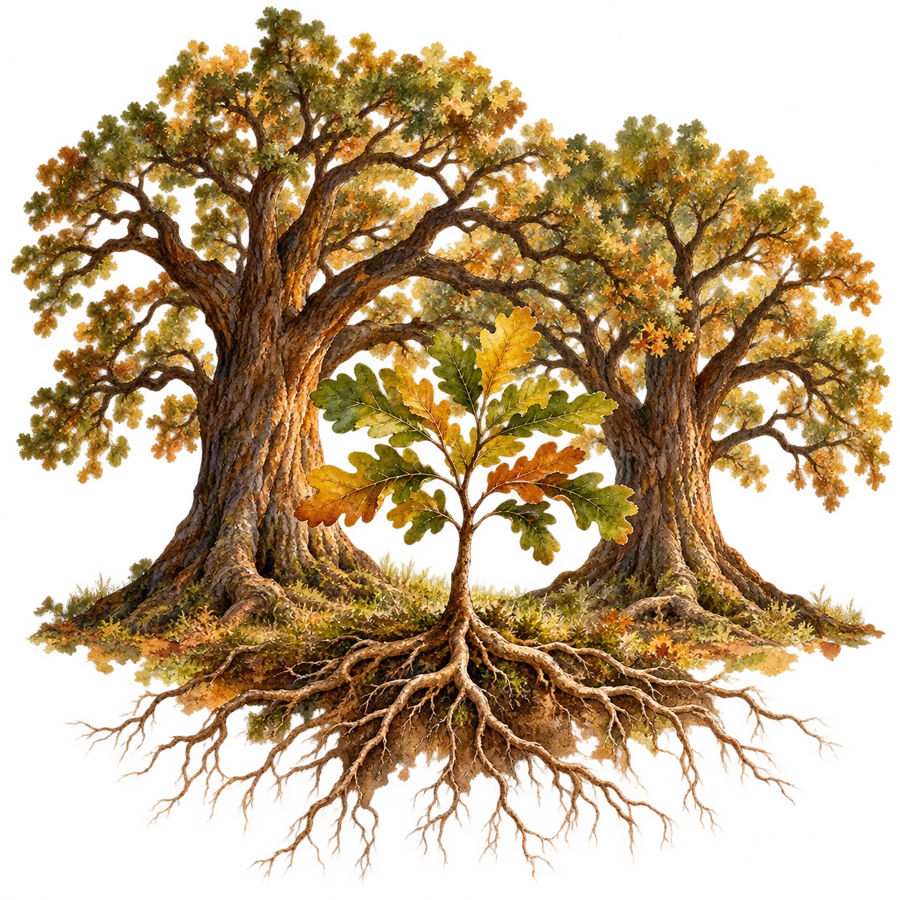
Symbolic illustration: A future for the trees
2014

A future for the trees

Toast the Trees begins with the Arbor Day Foundation. The program connects a whiskey maker’s dependence on wood with forest and community planting, adding a long-term material concern to the barrel story.[1][7]
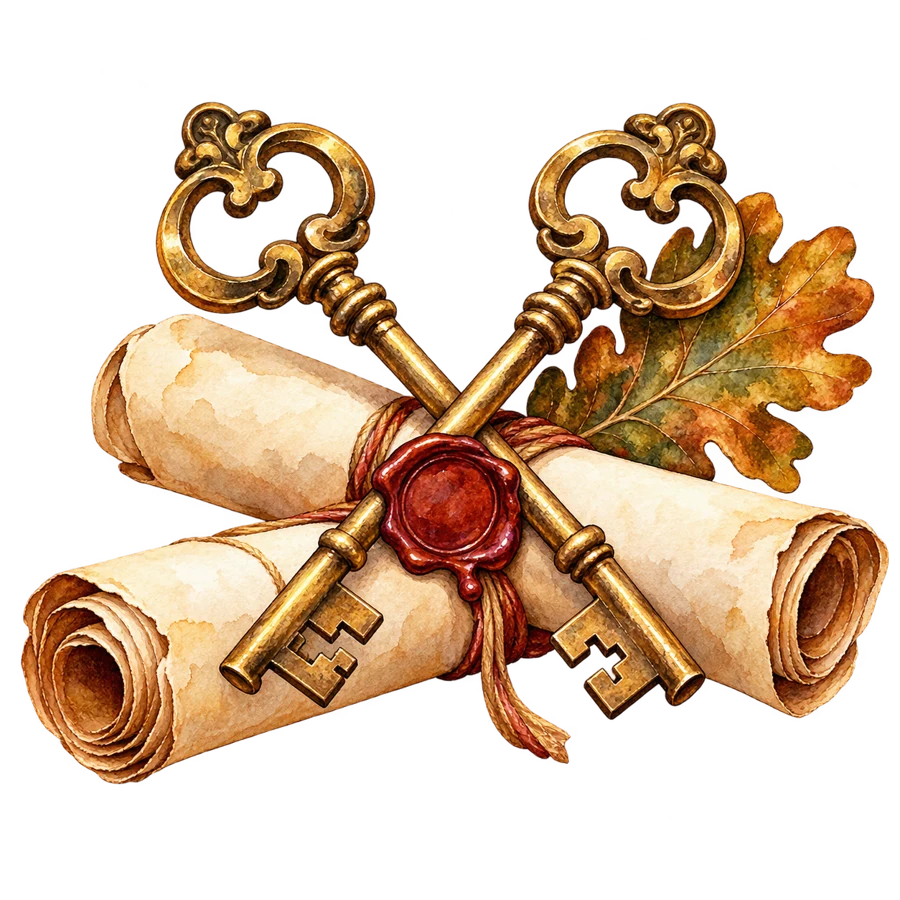
Symbolic illustration: Bacardi enters the family tree
March 2015

Bacardi enters the family tree

Bacardi completes its purchase of Angel’s Share Brands, Louisville Distilling Company and Angel’s Envy on March 27. The acquisition changes ownership while the announcement describes a continuing standalone operation and Henderson involvement.[4]
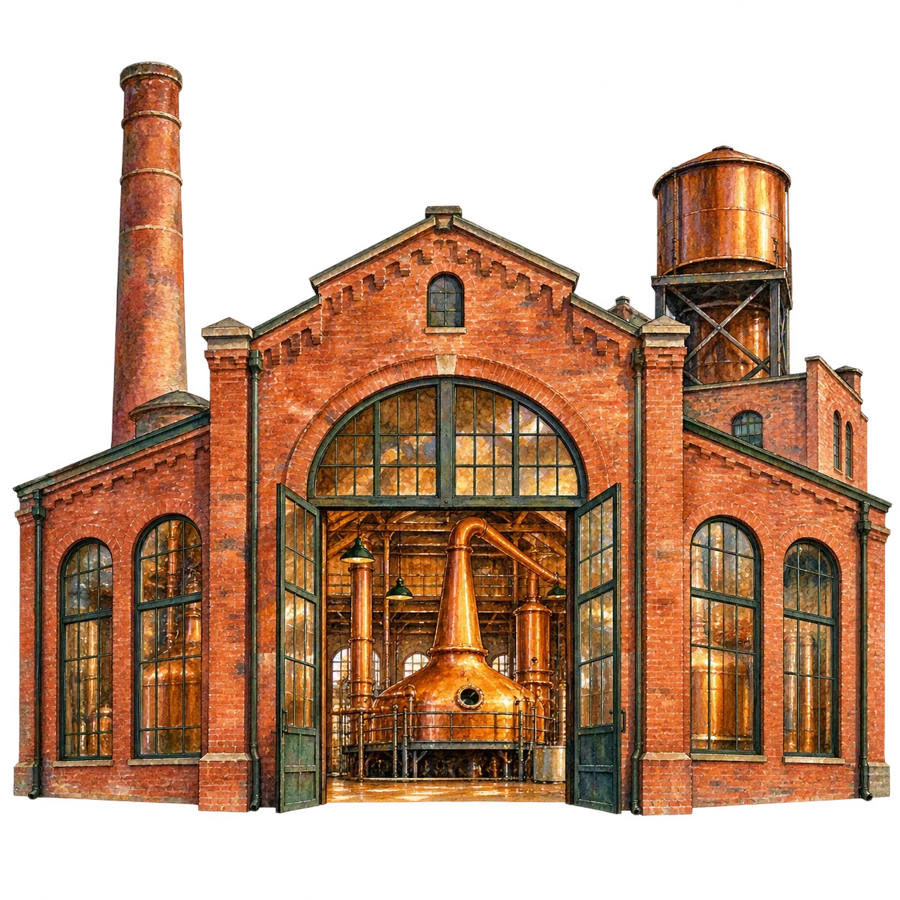
Symbolic illustration: A production home on Main Street
2016

A production home on Main Street

Angel’s Envy opens its full-production distillery at 500 East Main Street. Milling, distilling, blending and bottling give the Louisville address a working role alongside tours, rather than making it simply a showroom for the brand.[5][8]
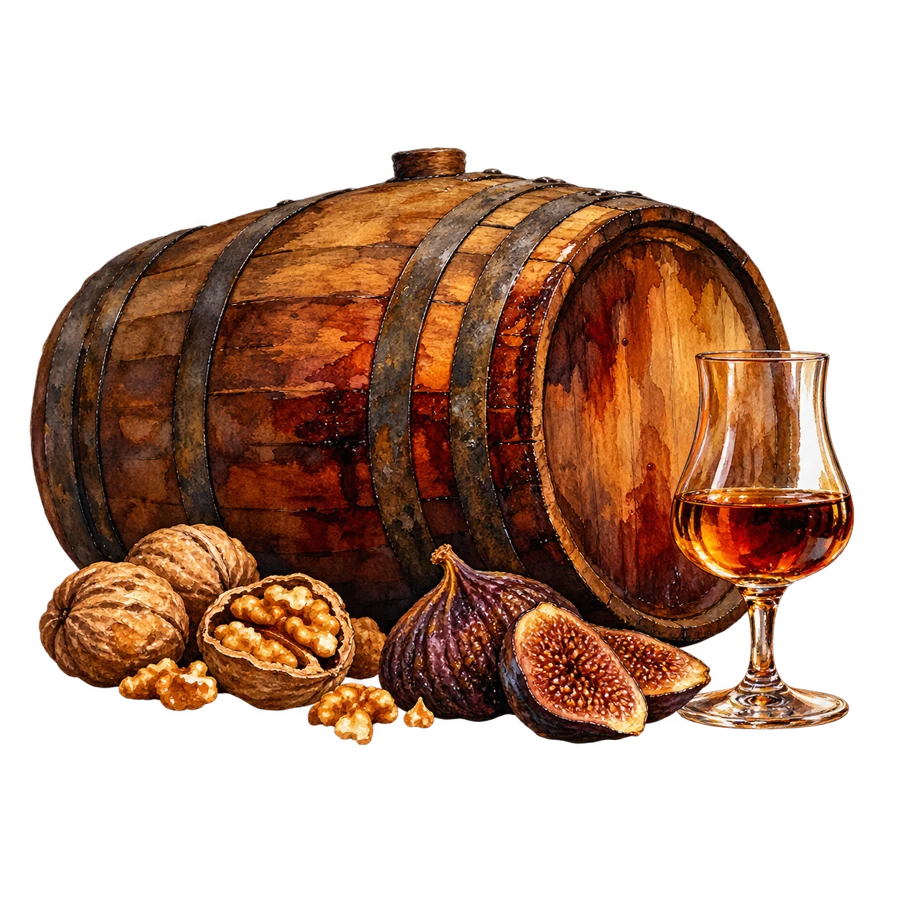
Symbolic illustration: The cellar opens with Oloroso
2019

The cellar opens with Oloroso

The first Cellar Collection release turns to Oloroso sherry casks. The brand recalls that a handful of barrels had remained quietly in the rickhouse, an unexpected pause that became an opportunity to follow the whiskey further.[10]
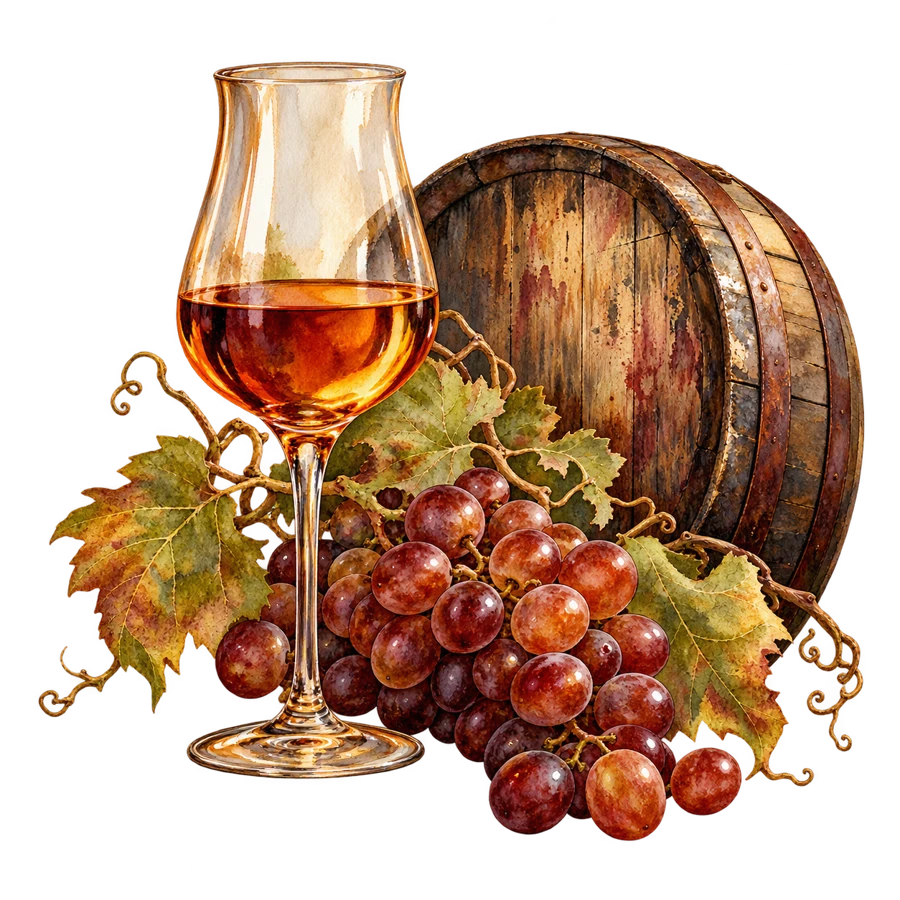
Symbolic illustration: A different shade of port
2020

A different shade of port

Tawny Port becomes the second Cellar Collection chapter. More than ten months in those finishing casks and a 111.6-proof bottling distinguish the edition from the familiar ruby-port signature.[11]
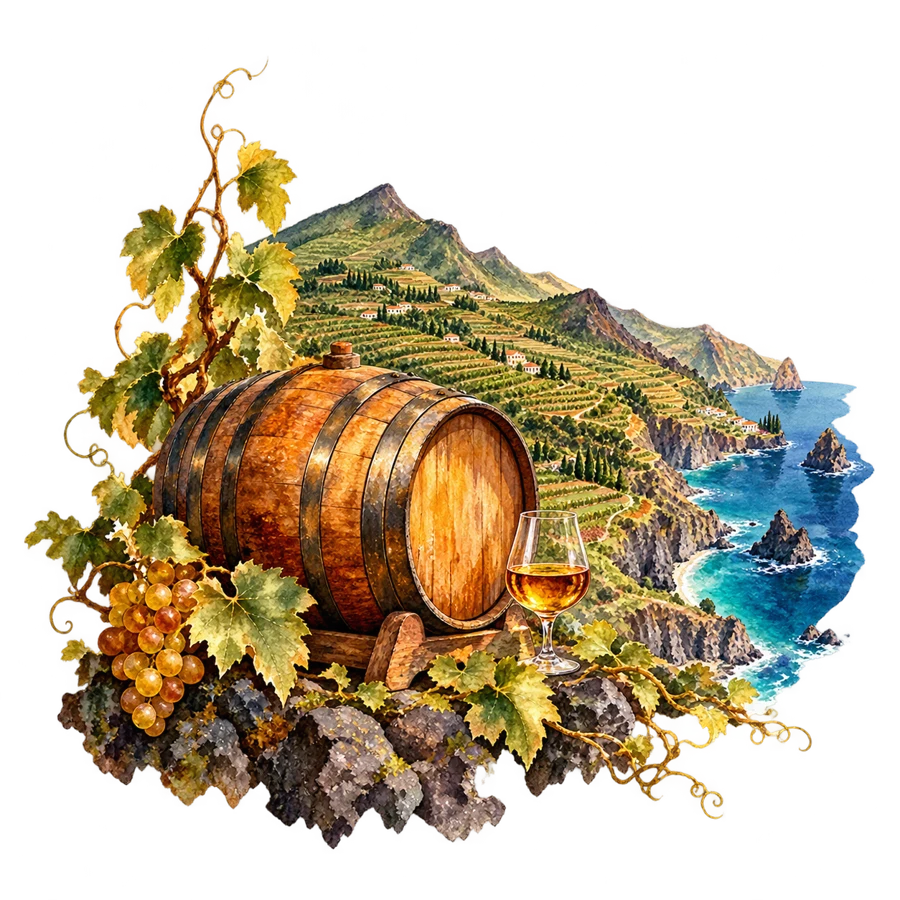
Symbolic illustration: Madeira extends the wine map
2021

Madeira extends the wine map

Madeira casks shape the third Cellar Collection release at 100 proof. The sequence of sherry, tawny port and Madeira makes the collection a record of different wine traditions interpreted through a bourbon foundation.[11]
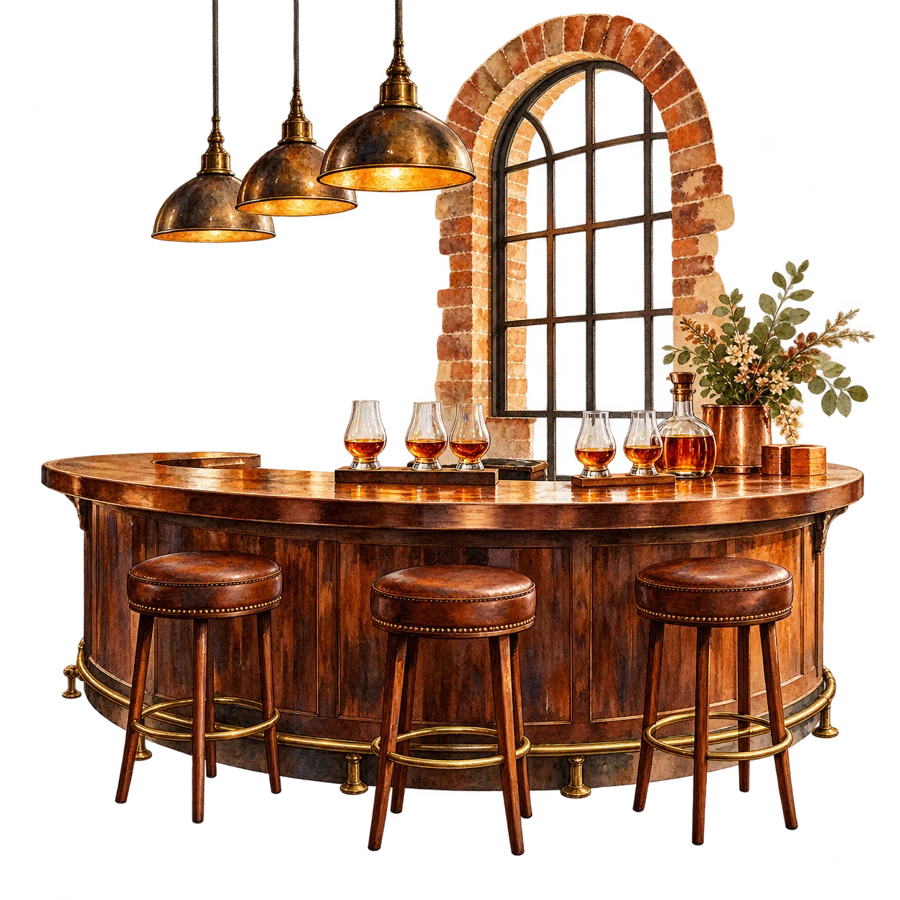
Symbolic illustration: More room to meet the whiskey
June 2022

More room to meet the whiskey

An$8.2 million expansion adds 13,000 square feet to the Louisville Brand Home. New tasting rooms, a bar, event facilities and a dedicated bottle-your-own space enlarge the ways visitors can encounter the production story.[8]
Symbolic illustration: A new master distiller takes the lead
October 2022

A new master distiller takes the lead

Owen Martin begins leading production and innovation on October 17. He is the first person appointed to the master-distiller position since Lincoln’s death, taking responsibility for core whiskeys and the developing limited-release programs.[9]
Symbolic illustration: Three oaks join the core range
2024

Three oaks join the core range

Triple Oak introduces a blend of bourbons finished in French, Hungarian and Kentucky Chinkapin oak. It is the first Signature Series addition in more than a decade, showing how wood itself can be the finishing subject.[6][14]
Symbolic illustration: The cellar visits tequila country
May 2025

The cellar visits tequila country

Cellar Collection Vol. 5 reaches its announced May 31 release. French-oak extra-añejo tequila casks selected at Hacienda Patrón meet rye whiskey, in Martin’s first Cellar project overseen from beginning to end.[15]
Symbolic illustration: Ten years reaches the label
October 2025

Ten years reaches the label

The first age-stated Angel’s Envy release arrives at 122.6 proof. Its stated ten years combines new-oak maturation and port-cask time, bringing an explicit age framework to the Cask Strength bourbon program.[17]
Symbolic illustration: Two paths share the spotlight
Spring 2026

Two paths share the spotlight

A ten-year rye and the fifteenth Cask Strength bourbon edition appear together. Extended rum maturation shapes one; a solera-inspired system of retaining bourbon between blends gives the other a connection to earlier releases.[18][31]
Symbolic illustration: Stout meets Amburana
September 2026

Stout meets Amburana

The Distillery Series pairs stout and Amburana barrel influences in a 100-proof bourbon. The official September 10 release links Martin’s experiments with Louisville’s craft-beer surroundings and the distinctive character of another finishing wood.[21]
Symbolic illustration: The cellar follows orchard fruit
October 2026

The cellar follows orchard fruit

Cellar Collection Vol. 6 brings peach-brandy and toasted-oak finishes to rye at 106.4 proof. Announced for October 9, it carries the collection’s experiments into a new combination of fruit-cask influence and wood.[22]

Original watercolor interpretations accompany the history. Buildings, objects and scenes are symbolic, not documentary reconstructions.
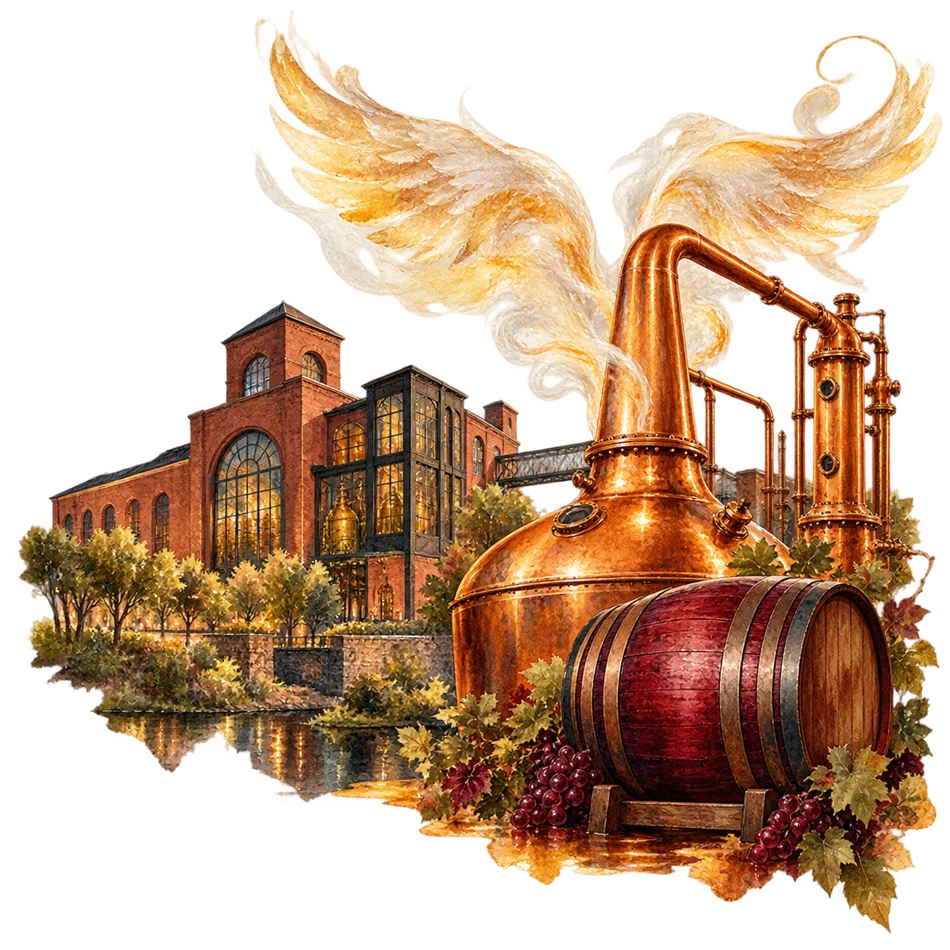
03 / Geography & roles

One name. Several places that matter.

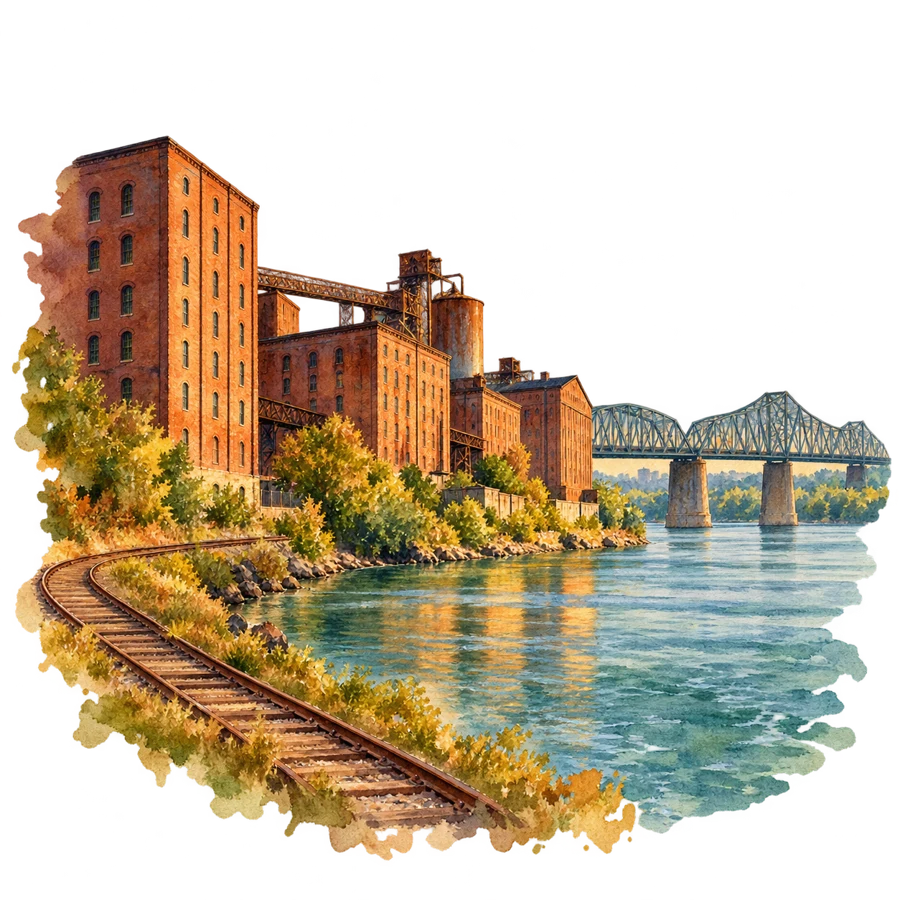
Interpretive Louisville riverfront and distillery landscape

500 East Main Street, Louisville

Production & visitor home

The current address is both production home and a place to learn. Tours, tastings and cocktail classes connect the technical work to the experience of drinking the finished whiskey. Its downtown location keeps that activity close to Louisville’s streets rather than behind the gates of a remote rural campus.[23]

Kentucky maturation

Maturation conditions

The warehouse is another instrument in the process. For its Bottled-in-Bond bourbon, Angel’s Envy describes cool, humid warehouse positions where proof falls naturally. That account makes location within a building part of the whiskey’s development, not merely the address where time passes.[25]

Lawrenceburg, Indiana

Documented historic rye source

Historical rye sourcing leads to LDI, subsequently MGP of Indiana. The producer’s 2015 statement separates that distilling role from Kentucky finishing and bottling. This is a documented early supply relationship, not a blanket claim that every current rye expression has identical provenance.[26]

Portugal and the wine-cask route

Finishing-cask origins

The Single Barrel program identifies port casks from Portugal’s Douro region. Its sherry route is different: French-oak casks seasoned with Oloroso in Jerez, Spain. These places supply finishing vessels and their histories; they are not where the Kentucky bourbon was originally distilled.[27]

Hacienda Patrón, Jalisco

Creative collaboration & cask selection

For 2025’s Cellar Collection Vol. 5, Martin traveled to Patrón’s home in Mexico to select French-oak extra-añejo tequila casks. The visit shows how a finishing project can begin with understanding another spirit’s production, then bring that knowledge back to a rye blend.[15]

04 / The whiskey family

Understand the name on the label.

Selected ownership, brand and creative relationships. A shared family name does not make every release the same whiskey.

Branching oak and unbranded bottles representing the whiskey family

Bacardi Limited

Ownership

The 2015 acquisition brought Angel’s Envy into Bacardi’s spirits portfolio. Louisville Distilling Company remains the named producer within that group in current company announcements. The Henderson origin and Bacardi ownership belong to different chapters of the same company story.[4][6]

The Henderson legacy

Founding & early development

Lincoln and Wes established the brand, and Kyle joined the early Cask Strength selection work. Their relationship explains the family language in older announcements. It should be read alongside the current production leadership rather than used to imply continuing family ownership.[5]

The Signature Series

Core expressions

Port-finished bourbon, rum-finished rye and Triple Oak form the current three-part core. Together they establish three approaches to secondary maturation: a wine cask, a spirit cask and selected oak finishes. The series is the foundation of the range, not its entire catalog.[30]

Cask Strength and Cellar Collection

Limited-release programs

Cask Strength explores selected whiskey without proofing down; Cellar Collection gives distinct finishing projects their own chapters. These are related creative programs, not interchangeable names for any high-proof or unusual bottle. The first Cask Strength rye, for example, appeared in 2023 with Sauternes and toasted-oak components.[18][28]

Patrón and David Rodriguez

Finishing collaboration

The 2025 extra-añejo project involved Patrón master distiller David Rodriguez as well as Martin. Their exchange concerned casks and compatible production ideas. The result remained an Angel’s Envy rye expression, carrying influence from tequila maturation without becoming tequila.[15]

Arbor Day Foundation

Tree-planting partner

The planting partnership gives the wood story a longer horizon. The 2016 program specifically discussed American white oak for future generations; the current brand account also includes national forests and urban communities. It is a restoration relationship, not evidence that each tree planted becomes an Angel’s Envy barrel.[7][1]

05 / Making & choosing

What happens after the first barrel.

Grain, fermentation, distillation, oak and selection each leave a mark. Age and proof claims below belong to the expressions named.

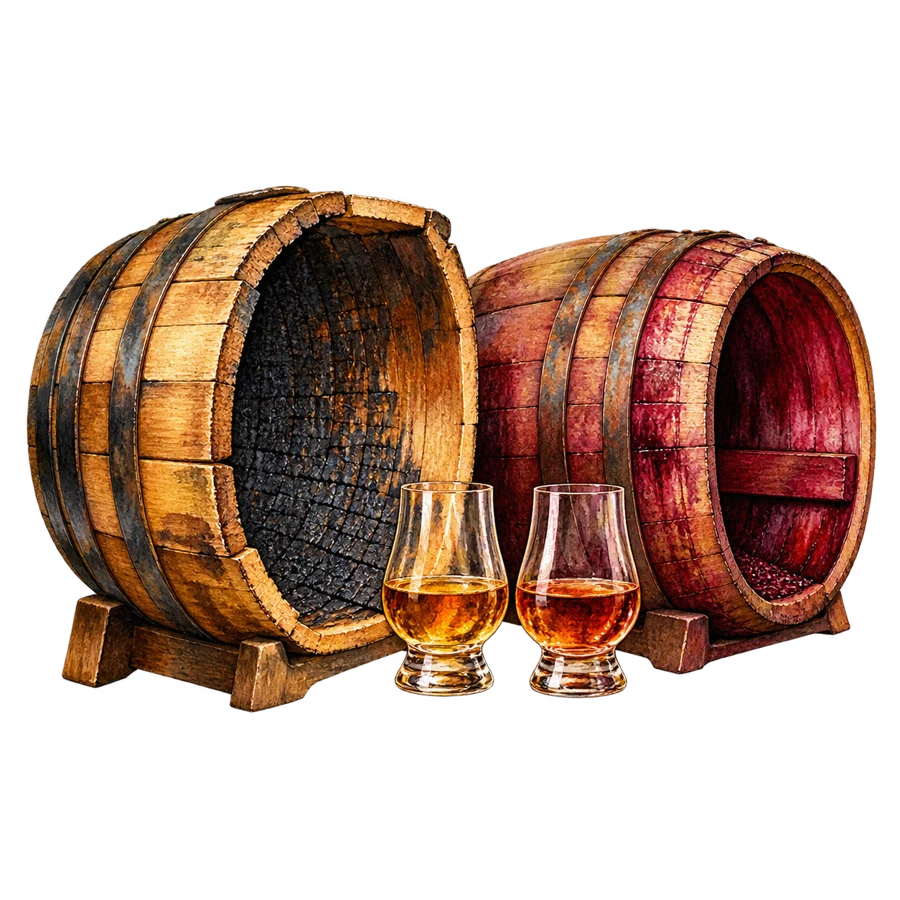
Interpretive cutaway showing new charred oak and a wine finishing cask

A finish begins with mature whiskey

Angel’s Envy’s foundational process follows new charred-oak maturation with another cask. The first stage creates the whiskey’s base; the second adds a different set of wood and previous-fill influences. Their relationship matters more than treating the final barrel as a flavor poured into otherwise anonymous spirit.[1]

Blending happens on both sides

The port-bourbon page describes blending before finishing and again afterward. That gives the team two moments to judge balance: choosing what enters the wine casks, then bringing the finished components together. Consistency is therefore an active selection process, not simply a fixed number of months on a calendar.[12]

Oak can supply the whole finishing idea

Triple Oak combines separately finished bourbons rather than requiring one liquid to travel sequentially through three finishing barrels. French, Hungarian and Kentucky Chinkapin oak each contribute a component. Martin’s work includes adjusting their proportions so the resulting bourbon feels integrated rather than like three competing demonstrations of wood.[14][6]

A single barrel can refer to the finish

The current port Single Barrel description starts with blended bourbon, then finishes it in one port cask. The individuality belongs to that finishing vessel. This is a useful distinction when comparing barrel selections: the words on the front do not automatically mean one original new-oak bourbon barrel supplied every drop.[27]

Carrying a little of the past forward

For 2026 Cask Strength bourbon, the brand describes blending roughly 120 barrels, bottling about 100 and retaining some for the next edition. This solera-inspired approach creates continuity across years. It is the producer’s adaptation of a principle, not a claim to replicate a traditional sherry cellar’s full system.[19]

Finishing is a signature, not a requirement

Cask Strength Bottled-in-Bond deliberately leaves secondary finishing aside. The current expression is bottled at 100 proof after nearly six years, using a lower entry proof and blending to reach its unusual combination. It invites attention to the bourbon itself and prevents the brand’s familiar finishing story from becoming an inaccurate rule for every release.[24]

06 / The details worth knowing

The stories behind the familiar name.

The small black book

The family biography recalls Lincoln recording ideas in a black notebook and passing it down. That image captures something central to the project: decades of experience could become a starting point for experiments still waiting to happen. The notebook is an attributed family detail, not a claim that every subsequent release follows one of its exact recipes.[2]

An appointment with patience

The 2025 ten-year announcement looks back to an intended October 2010 debut that Lincoln delayed until he was satisfied. The later October 10 launch echoes that story. Whether a release is young or mature, the anecdote places the decision to wait at the center of the brand’s self-portrait.[17]

The forgotten barrels

Angel’s Envy tells the first Oloroso release as a fortunate lapse: a few filled casks remained in the warehouse longer than intended. The anecdote gives the 2019 Cellar debut a human scale. It also illustrates why tasting the actual whiskey can matter more than following an original schedule without reconsideration.[10]

More than a hundred possibilities

The Signature rye page says the team sampled more than 100 rums while looking for a complementary cask influence. The eventual expression can spend up to 18 months finishing. The interesting part is the selection problem: a strongly flavored rye needed a partner, not simply the sweetest barrel available.[13]

What ten years means here

The 2026 rye page explicitly describes a combined ten-year maturation, including up to four years in rum casks. It identifies distillation between 2013 and 2015. Reading that explanation avoids imagining ten years in new oak followed by an additional four, a materially different whiskey journey from the one the producer describes.[20]

A counterpoint at 100 proof

The Bottled-in-Bond release combines two phrases that can sound contradictory: cask strength and 100 proof. Angel’s Envy attributes the result to its low entry proof, maturation conditions and blending. High strength is not the sole measure of intensity, and a brand known for another barrel can still find something to say without one.[24][25]

07 / Selected expressions

Different ways to follow the finish.

A curated reading of the whiskey family, selected for its role in the story. This is not an exhaustive current catalog.

Port-finished bourbon

The original concept remains a useful starting point: Kentucky straight bourbon finished in ruby-port casks, with blending before and after. The current producer describes the cask’s contribution as supporting the underlying whiskey. Its importance is historical and structural, not dependent on a particular limited-edition year.[12]

Rum-finished rye

The Signature rye brings an enduring contrast to the bourbon. Its rum-cask stage can extend to 18 months, offering a different set of maturation choices. It is the familiar rye branch of the family, while later Sauternes, tequila and peach-brandy projects show that the branch can continue to grow.[13][28][16][22]

Triple Oak

At 92 proof, this 2024 addition makes the blend of French, Hungarian and Chinkapin oak finishes part of the regular range. It demonstrates that secondary maturation need not depend on a previous wine or spirit. The identity comes from selecting and balancing wood influences.[14]

2023 Cask Strength Rye

The inaugural rye edition uses two finished components, one from Sauternes casks and the other from toasted oak, bottled at 114.4 proof. That distinction matters: the beginning of Cask Strength Rye was a blending experiment with wine and wood, rather than merely an undiluted version of the rum-finished Signature rye.[28]

2026 Cask Strength pair

The 117.8-proof bourbon uses the continuing-blend approach; the 111.6-proof rye introduces the stated ten-year framework to that side of the range. Considered together, they show different ways of building depth through time. Their proofs and maturation descriptions belong to these editions, not every bottle bearing Cask Strength.[18][19][20]

Cellar Collection Volumes 5 and 6

Vol. 5’s 104.2-proof French-oak extra-añejo rye and Vol. 6’s 106.4-proof peach-brandy/toasted-oak rye follow distinct ideas. One explores the relationship with tequila casks; the other brings orchard-fruit and oak influences together. They are successive projects, not changes to the recipe of the regular rum-finished rye.[16][22]

Distillery Series and unfinished bourbon

The 2026 stout/Amburana bourbon sits beside experiments such as a 112-proof two-grain bourbon in the current distillery lineup. Cask Strength Bottled-in-Bond adds an unfinished expression at 100 proof. These smaller branches show why the full brand story needs room for both its finishing identity and exceptions to it.[21][24]

08 / The Reserve connection

Continue from the story to the bottles.

Angel’s Envy in The Thelen Reserve

5 physical bottle records connect this story to the collection. Each keeps its own proof, barrel, batch, pick and release details.

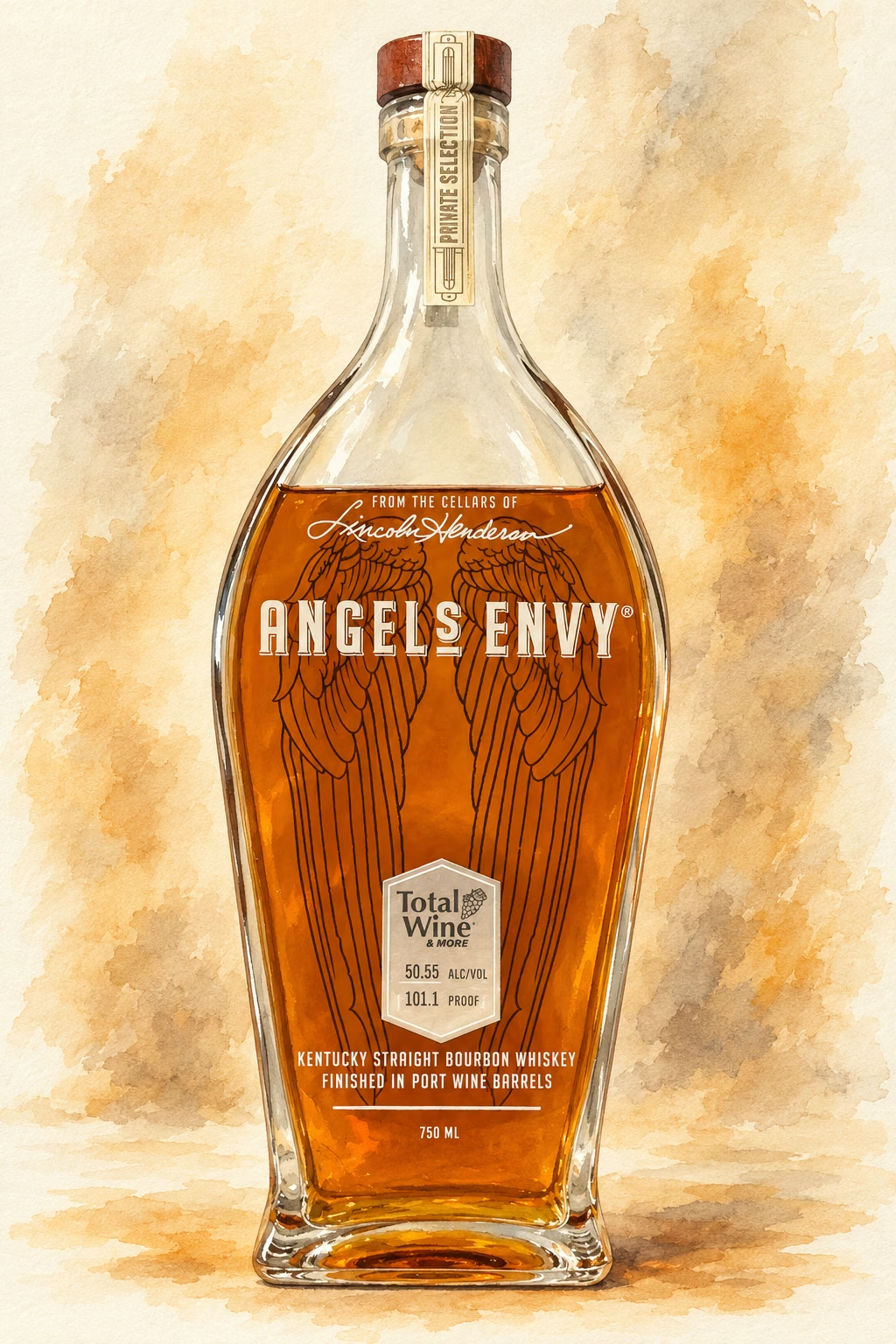
Approved watercolor of Angels Envy Bourbon Port Wine Barrels - Pick Total Wine

Angels Envy Bourbon Port Wine Barrels - Pick Total Wine

W0018 · 101.1 proof · Barrel SB-2307C · Bottle 28 · Pick Total Wine

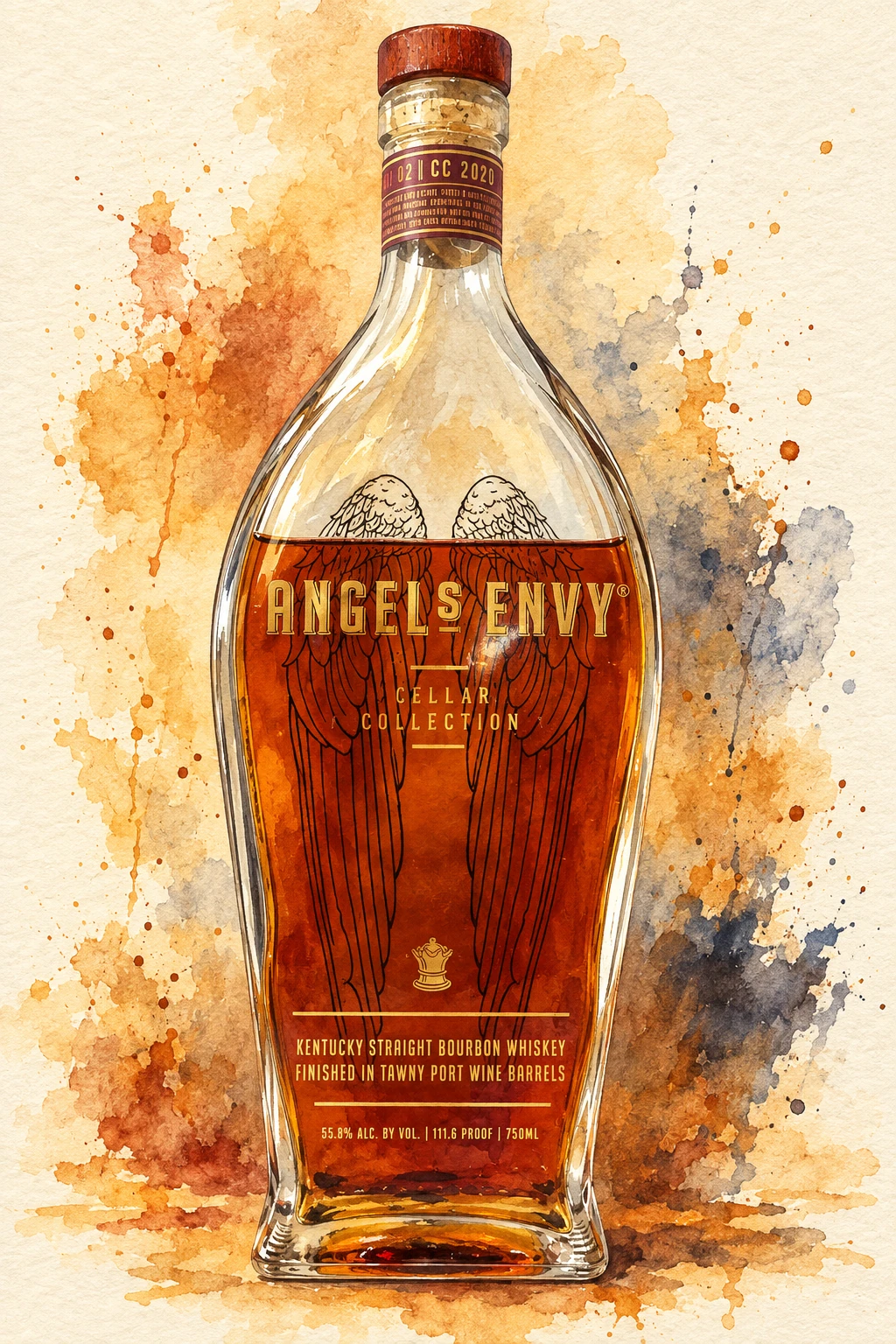
Approved watercolor of Angels Envy Cellar Collection Tawny Port Cask

Angels Envy Cellar Collection Tawny Port Cask

W0019 · 111.6 proof · Bottle 47 · Batch CC20 · Bottled / release detail 2020 release year verified on neck band No.02 | CC2020 and rear Cellar Collection 2020 Release seal. Original producer announcement dated Jan 31, 2020 states public release Feb 8, 2020; this is release timing, not this bottle's bottling date.

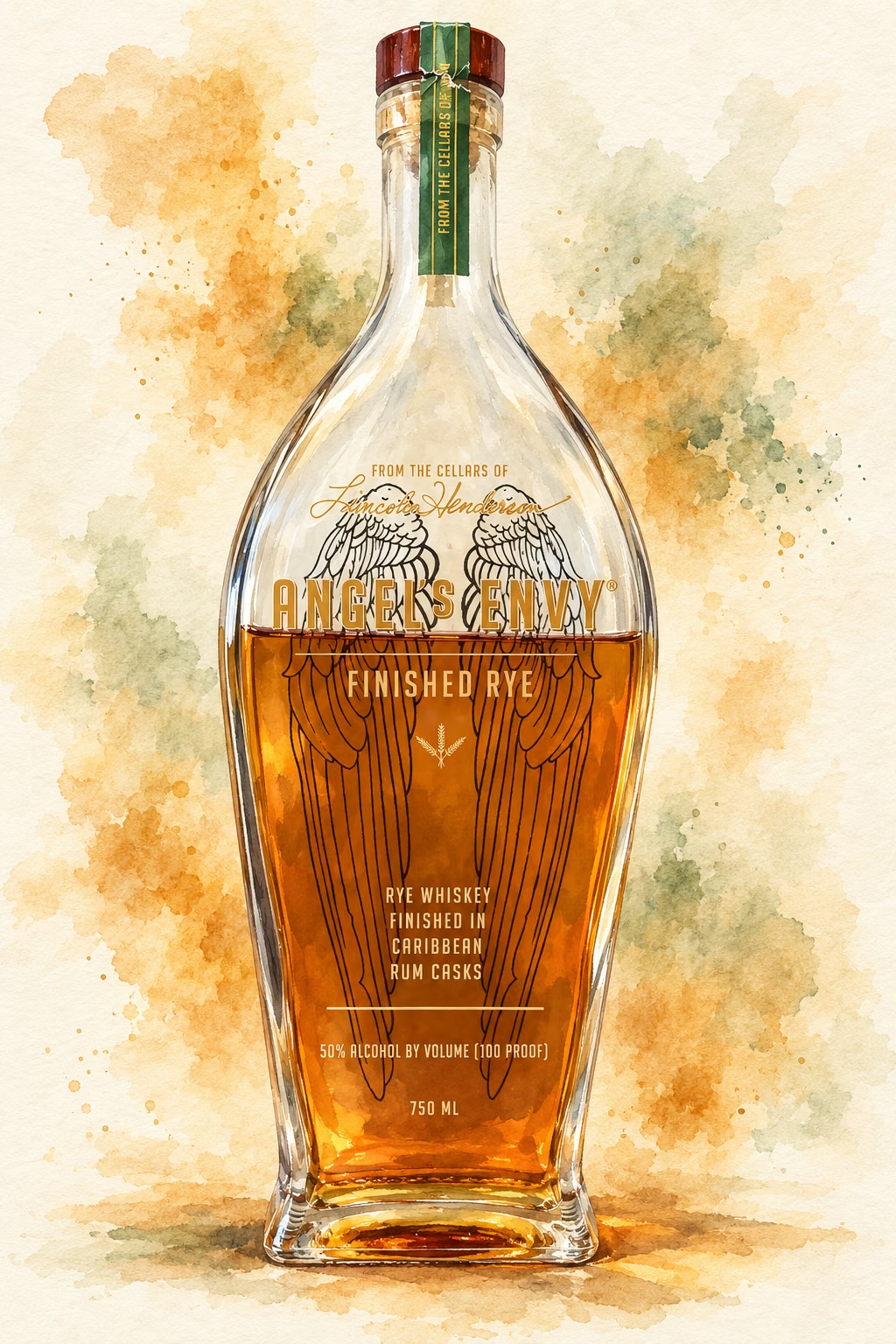
Approved watercolor of Angel's Envy Rye Finished in Caribbean Rum Casks

Angel's Envy Rye Finished in Caribbean Rum Casks

W0020 · 100 proof · Bottle 220 · Batch 11J

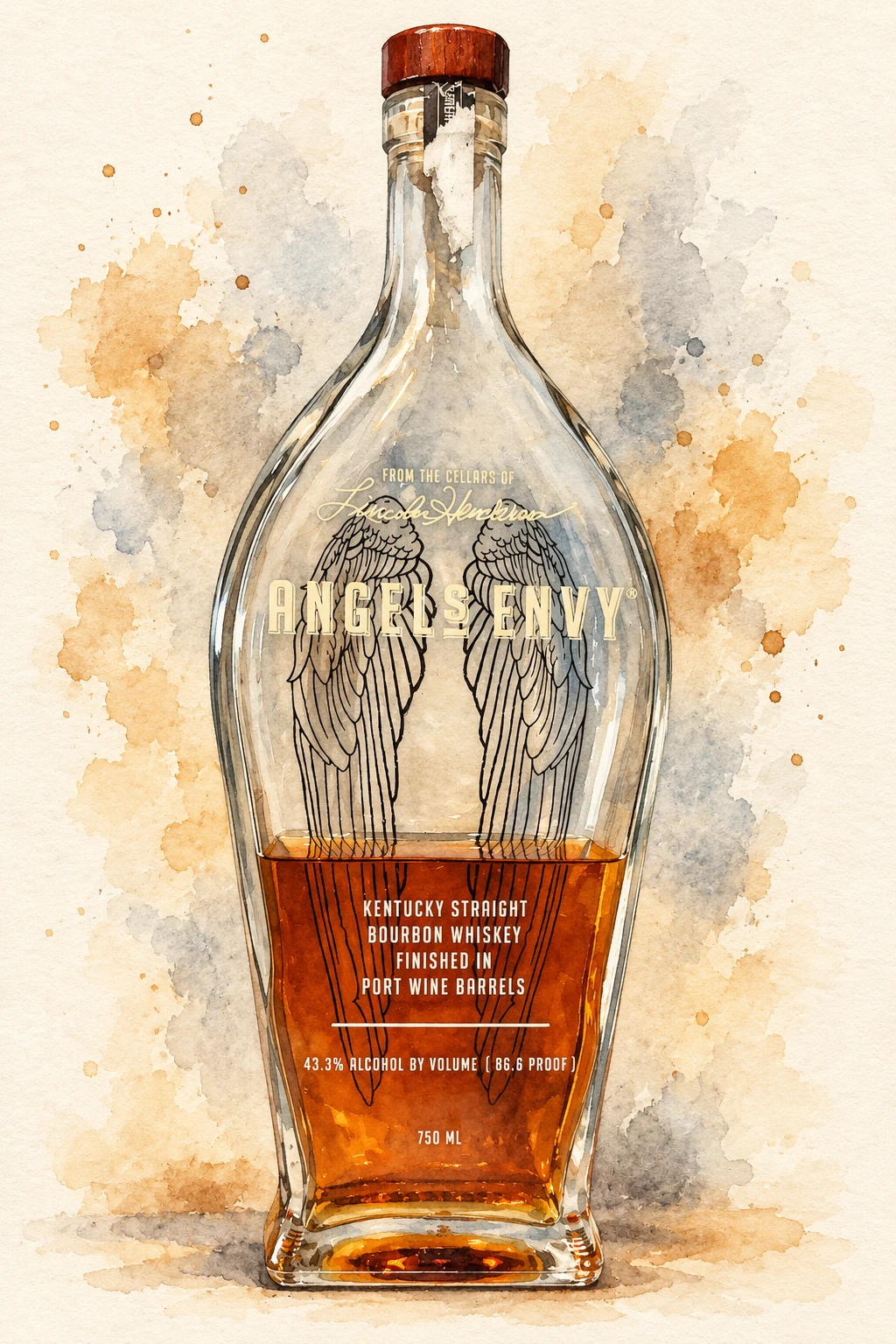
Approved watercolor of Angels Envy Kty Straight Bourbon Port Wine Barrels

Angels Envy Kty Straight Bourbon Port Wine Barrels

W0023 · 86.6 proof · Bottle 1997 · Batch 70L

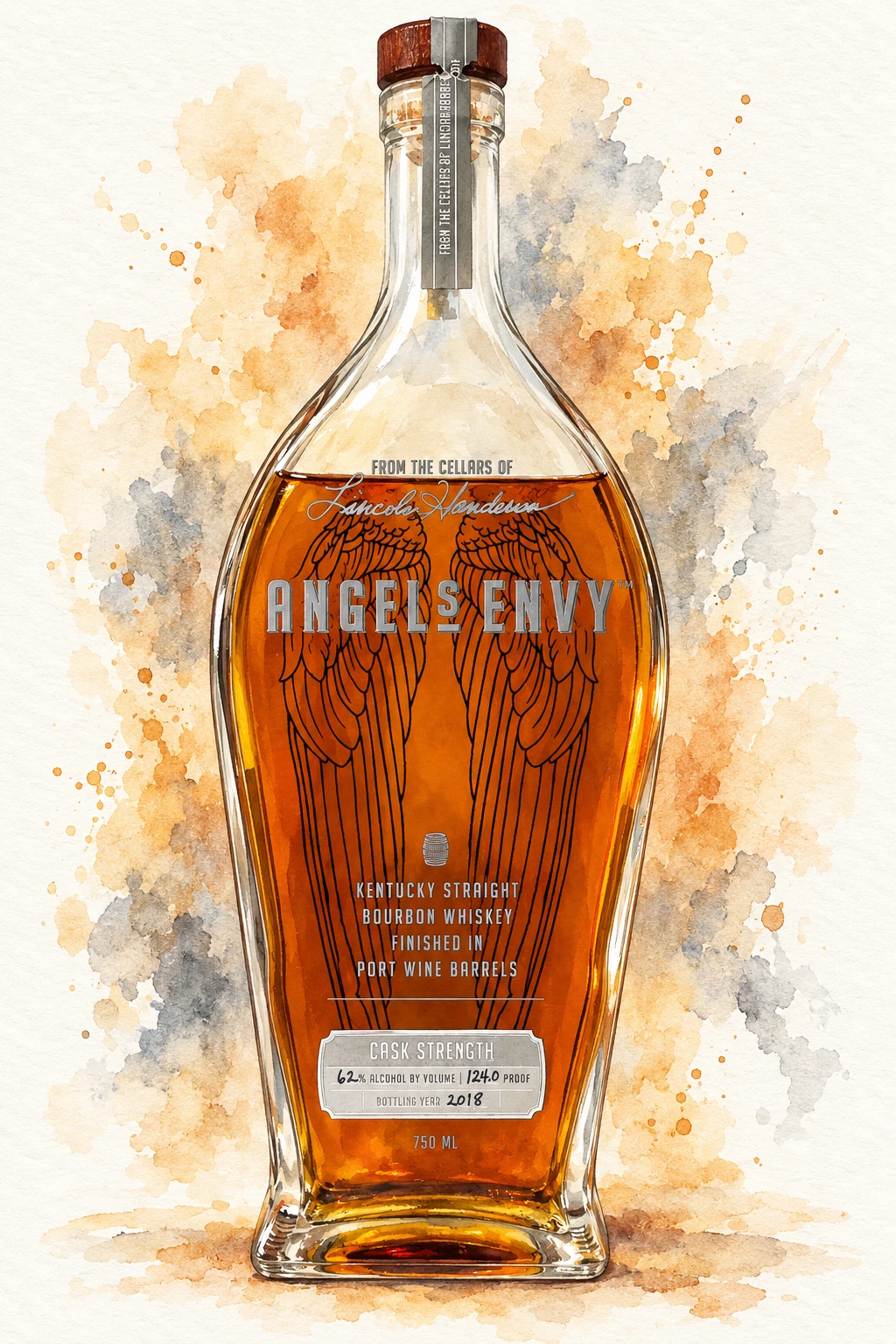
Approved watercolor of Angels Envy Port Barrel Cask Strength

Angels Envy Port Barrel Cask Strength

W0025 · 124 proof · Bottle 3595 · Batch C7 · Bottled / release detail Bottling year 2018 printed/handwritten on front cask-strength plaque; year only, no exact bottling day shown. Original producer release announcement October 1, 2018 matches 124 proof / 62% ABV. No date inferred from the blank side 'Uncorked on' field.

Collection snapshot: October 31, 2026. Approved watercolor artwork appears where an exact record or verified release match is available. Separate physical bottles and release distinctions are preserved.

Angel’s Envy three-page guide cover
The illustrated companion

Angel’s Envy, in three pages.

Origins and people, history and places, whiskey and stories. The approved illustrated companion includes linked research sources.

Sources & research notes

Researched October 14, 2026. Primary producer announcements and institutional records are used wherever available. Product specifications are release- and market-specific.

Research qualifications

  • Brand founding in 2010, market launch in 2011 and Louisville distillery opening in 2016 are separate dates. Historic whiskey predates the downtown distillery. No universal current sourcing claim is inferred.
  • Historical rye provenance is supported by Louisville Distilling Company’s public statement dated February 5, 2015, hosted by WhiskyCast. It identifies LDI/MGP of Indiana and Kentucky finishing and bottling. The statement’s litigation assertions are not adopted.
  • Bacardi announced the acquisition on March 30, 2015; the release says the transaction closed on March 27. The timeline uses the closing date. Henderson founding history does not imply current family ownership.
  • Owen Martin’s appointment announcement is dated September 12, 2022 and states an October 17 start. A duplicate media-center posting dated November 1 does not supersede the explicit start. Current 2026 sources confirm his role. An exact Wes Henderson departure date was not established from the reviewed primary sources and is omitted.
  • The 2022 expansion appears in differently dated June 7 and June 17 official releases. June 2022 is retained without selecting an exact opening day. Added visitor capacity is not distillation capacity.
  • The current portfolio includes unfinished Bottled-in-Bond and two-grain bourbon. Older boilerplate saying every expression is finished is not treated as a current universal truth.
  • The 2025 ten-year bourbon and 2026 ten-year rye describe cumulative or combined maturation including finishing. The 2025 announcement’s footer repeats Triple Oak 46% ABV boilerplate; the release body’s 122.6 proof is used.
  • The 2026 Cellar Collection Vol. 6 page describes both a double-barrel blend and sequential peach-brandy then toasted-oak finishing. Copy names the two finishes without inventing detailed component architecture. October 9 appears in the primary page’s prelaunch search description; its current body confirms the 2026 release.
  • The current Distillery Series page specifies 2026 and September 10; a search publication date of 2025 is stale. The 2023 Cask Strength Rye URL contains 12th, but the visible body identifies the first rye edition. That page’s erroneous fortified-wine description of Sauternes is omitted.
  • Older family biographies supply historical context, not current staff rosters. The namesake, black notebook, delayed launch and forgotten-barrel stories are attributed producer accounts. Illustrations are symbolic interpretations, not documentary building or person records.
  • Release proofs, ages, finishes and program details apply to specific editions. Selected expressions are editorial choices, not an exhaustive catalog. Stock, prices and bookable hours are omitted. Research checked October 14, 2026.

Full sources

  1. The brand storyNamesake, Lincoln, current Owen Martin role, 2016 opening, 2014 tree program. Note: Namesake is attributed brand lore; annual evaporation is not a universal fixed percentage.
  2. Lincoln HendersonBrown-Forman career, independent project, black notebook and professional legacy. Note: Biographical account from the brand; no current family employment inferred.
  3. Lincoln’s life and independent projectChemistry background, 2004 retirement, Wes invitation and port-finishing interest. Note: Some peripheral career dates/names appear inconsistent; only directly relevant broad career facts used.
  4. Bacardi acquisition announcementMarch 27, 2015 closing, March 30 announcement, corporate entities and standalone operation. Note: Terms and operating intentions concern 2015; not proof of current family ownership.
  5. 2019 Cask Strength announcementProducer-issued October 30, 2019 release establishes 2012 program and three Henderson generations. Note: Historical staffing and specifications are not carried forward as current.
  6. Triple Oak launch announcementSeptember 2024 announcement, 2011 bourbon and 2013 rye launches, three finishing woods. Note: Distillery sale September 14 preceded national October 1 launch.
  7. Toast the Trees, 2016Third year of Arbor Day partnership, white oak focus and historical rye specifications. Note: Historical campaign mechanism and maturation figures are not universal current claims.
  8. Brand Home expansion2010 cofounding, 2016 production opening, June 2022 expansion, 13000 square feet and visitor capacity. Note: Corporate version dated June 17; alternate brand-media version June 7. Timeline uses June only.
  9. Owen Martin appointmentSeptember 12, 2022 announcement; October 17 start; Stranahan’s and Heriot-Watt experience; Lincoln died in 2013. Note: Alternate media archive is dated November 1; dated corporate announcement and stated start preferred.
  10. First Cellar Collection2019 Oloroso release and attributed forgotten-barrel anecdote. Note: Retrospective archive; anecdote not independently corroborated.
  11. Cellar Collection chapters one to three2019 Oloroso, 2020 Tawny and 2021 Madeira chronology and release-specific proofs. Note: The 2024 box set revisits earlier chapters, not three inaugural launches in 2024.
  12. Port-finished Signature bourbonRuby port and blending before and after finishing. Note: No inference that all historic bottles were distilled at current site.
  13. Rum-finished Signature ryeUp to 18 months of rum finishing; team reports tasting more than 100 rums. Note: Up-to duration is not a fixed minimum or a current rye-source disclosure.
  14. Triple Oak production92 proof; French, Hungarian and Kentucky Chinkapin oak; blended finishing components. Note: Three finishing woods do not mean one whiskey sequentially visits all three barrels.
  15. Cellar Collection Vol. 5 announcementApril 24, 2025 announcement; May 31 release; Patrón visit, David Rodriguez and older rye blending. Note: Release-specific component ages, not an age statement for the whole bottle.
  16. Cellar Collection Vol. 5 expression2025 French-oak extra-añejo tequila finish at 104.2 proof. Note: Some headings abbreviate añejo; full expression text specifies extra añejo.
  17. 2025 ten-year Cask StrengthOctober 1 announcement, October 10 release, 122.6 proof, cumulative ten years and deferred 2010 launch. Note: Page posted October 8; press dateline October 1. Footer repeats Triple Oak 46% details; main release specification used.
  18. 2026 Cask Strength pair2026 first age-stated rye at 111.6 proof and fifteenth bourbon edition at 117.8 proof. Note: Specifications belong to these 2026 editions.
  19. 2026 Cask Strength bourbon process2014–2019 distillation, up to 3.5 years in port casks, solera-inspired blend of roughly 120 barrels with about 100 bottled. Note: Approximate barrel counts; not a conventional sherry solera or proof of one exact distillery for every component.
  20. 2026 ten-year rye2013–2015 distillation, combined ten years, up to four years in rum casks, 111.6 proof. Note: Combined duration includes secondary maturation; do not add another ten years before finishing.
  21. 2026 Distillery SeriesSeptember 10, 2026 stout/Amburana release at 100 proof; two-grain bourbon at 112 proof; notebook development. Note: Search metadata shows 2025; visible release text explicitly says 2026. Availability is time-sensitive.
  22. 2026 Cellar Collection Vol. 62026 peach-brandy/toasted-oak rye, 95% rye, 106.4 proof; prelaunch search text specifies October 9. Note: Page calls process both sequential finishing and double-barrel blend; broad two-finish description retained without asserting full component architecture.
  23. Current distillery address500 East Main Street, Louisville; production tours, tastings and classes. Note: Hours and availability omitted to keep editorial durable.
  24. Cask Strength Bottled-in-BondUnfinished bourbon, lower entry proof, nearly six years, 100 proof and first unfinished release. Note: Current page has no firm original release date; no timeline year inferred.
  25. Bottled-in-Bond maturationCool humid warehouse locations and naturally decreasing proof. Note: Producer account; no claim that all warehouses or bourbons lose proof.
  26. Historical rye provenance statementCompany public statement dated February 5, 2015 identifies LDI/MGP Indiana rye, with Kentucky finishing and bottling. Note: Primary statement hosted by WhiskyCast. Filename says February 4 while printed date is February 5. Legal allegations not repeated or adjudicated; historical provenance only.
  27. Single Barrel programSingle finishing cask after blending base bourbon; Douro port casks, Jerez-seasoned French oak and private selections. Note: Current program is not proof of specifications for any older private pick.
  28. 2023 first Cask Strength ryeFirst rye edition in 2023, 114.4 proof, blend of Sauternes and toasted-oak-finished ryes. Note: URL contains 12th but body identifies first rye edition. Erroneous fortified-wine wording omitted; Sauternes is not fortified.
  29. 2026 team recognitionMay 12, 2026: global Production Team of the Year; Owen Martin’s Americas Craft Distiller of the Year; Gigi DaDan, general manager. Note: Awards attributed to announcement; not an objective ranking of whiskey quality.
  30. Signature Series structureCurrent core group: Port-finished Bourbon, Rum-finished Rye and Triple Oak. Note: Selected core group, not exhaustive brand catalog.
  31. Spring 2026 dual releaseSpring 2026 and Derby-season dual-release plan. Note: Prelaunch wording remains; current expression pages confirm released products.
↑