Two beginnings worth keeping separate
The creek-side place and the Woodford brand have separate beginnings. The modern bourbon arrived in 1996, reopening a commercial chapter within a much older distilling landscape.[4]
Last updated Last researched
Limestone roots. A modern whiskey vocabulary.
An old Kentucky place. A modern vocabulary of flavor.
Copper and oak give Woodford Reserve a familiar visual language. The whiskey rewards looking beyond those symbols: grain choices, distilling methods and maturation each contribute to the family. An old Kentucky place supplies its setting; modern experimentation keeps opening new chapters.[24]
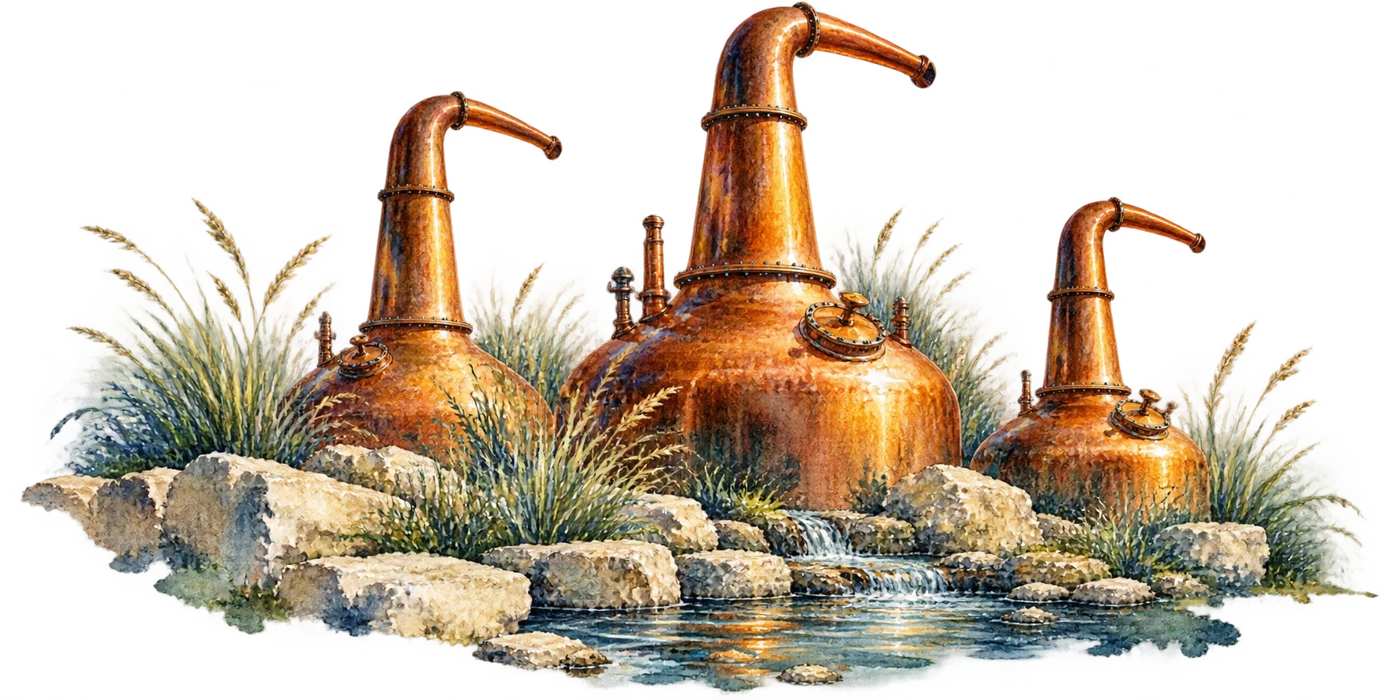
The creek-side place and the Woodford brand have separate beginnings. The modern bourbon arrived in 1996, reopening a commercial chapter within a much older distilling landscape.[4]
Elijah Pepper’s farm-distillery became Oscar Pepper’s stone works, with James Crow contributing technical expertise.[3]
Brown-Forman places the modern launch at the newly restored Labrot & Graham Distillery. Restoration linked the bourbon to a real manufacturing landscape; a contemporary team gave that place a new whiskey identity.[4]
Founding farmer-distiller
The farmer-distiller established the creek-side operation in 1812.[3]
Historic owner and distiller
Their partnership links the site to the nineteenth-century development of bourbon making; its legacy informs the modern experimental range.[2]
Inaugural modern master distiller
Woodford’s inaugural master distiller helped establish the modern brand’s identity. Chris Morris’s official biography places him as Henderson’s understudy in 1997, before Morris succeeded him in 2003. This is the start of the modern leadership succession, distinct from the Pepper-era distillers.[6]
Master distiller emeritus
Morris served as master distiller from 2003 to 2023. Now master distiller emeritus, he advises Elizabeth McCall and represents the brand through education and visitor experiences. His development work includes Double Oaked and the grain-led Rye, Malt and Wheat expressions, alongside the experimental collections.[7]
Master distiller
McCall’s route through research and sensory work shapes her present responsibilities. She joined Brown-Forman in 2009 and progressed through master taster and assistant master distiller roles before taking the lead in 2023. The current distillers page identifies quality, innovation, special releases and sensory standards as central to her work.[8][7]
The historic distillery site and the modern Woodford Reserve brand have different beginnings. Their stories meet through restoration, whiskey making and continued experimentation.
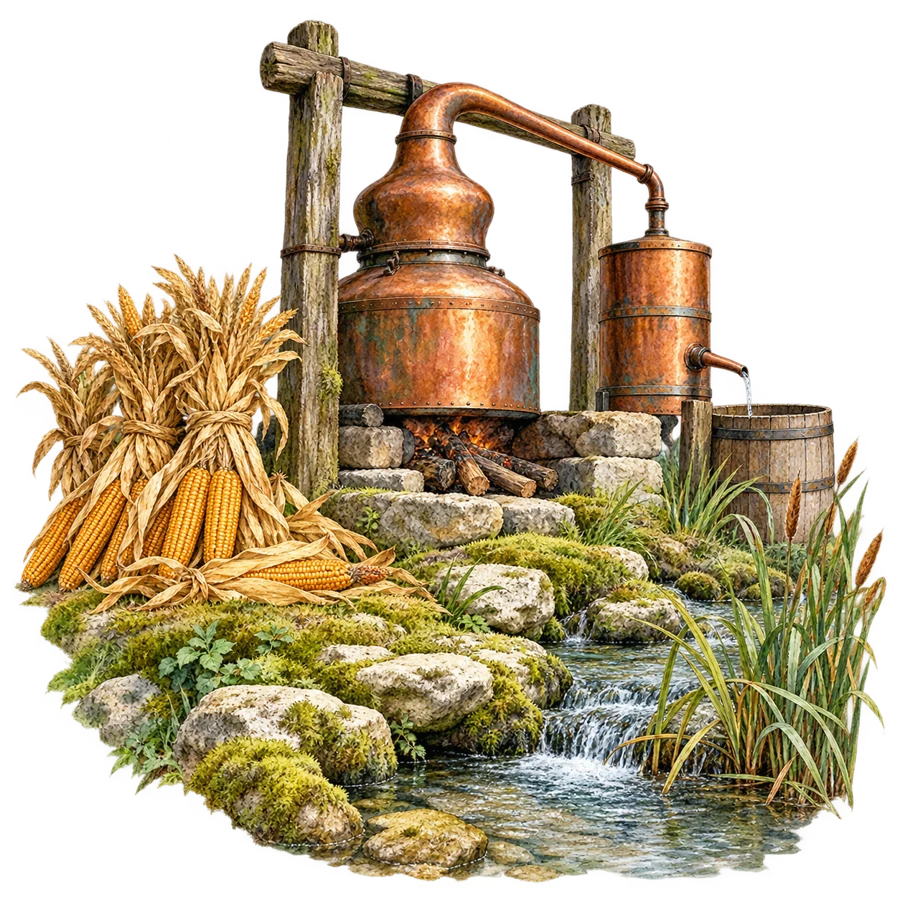
Distilling begins at the present site, a place whose water and rural setting remain central to Woodford’s identity.[2]
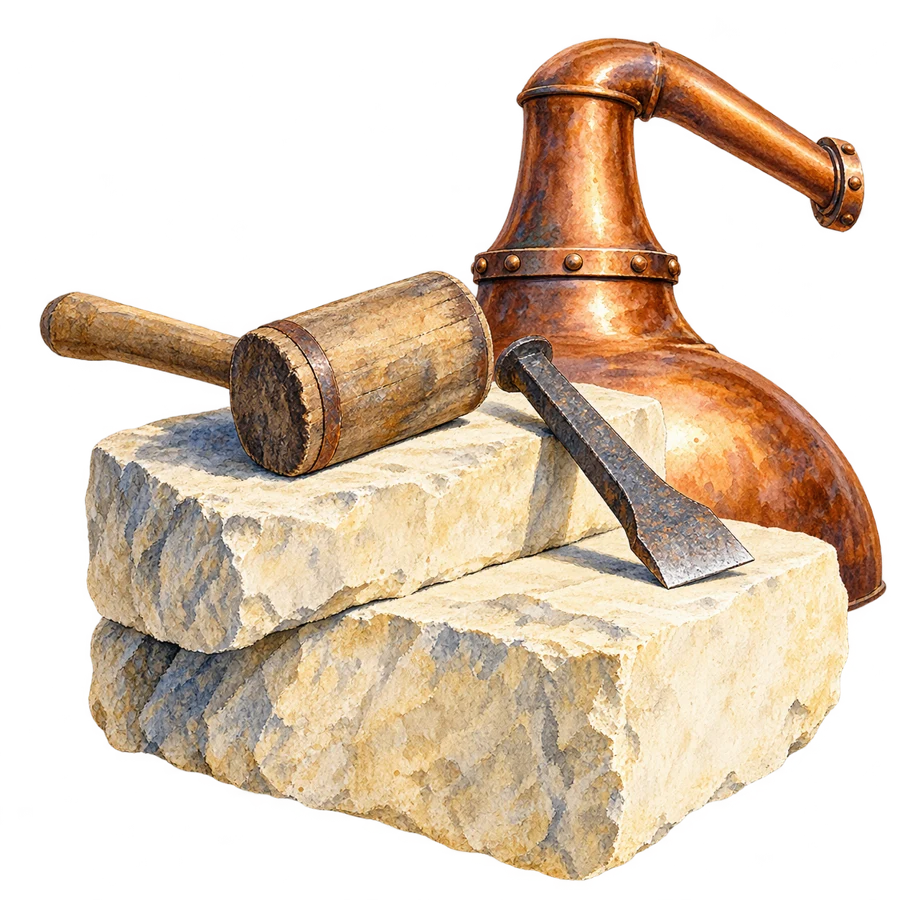
The stone stillhouse core anchors a larger complex assembled over subsequent generations.[3]
James Graham and Leopold Labrot begin the ownership chapter that gives the restored distillery its historic name.[3]

Prohibition interrupts operations; repeal brings reconstruction and new warehousing.[3]
Brown-Forman’s own corporate timeline dates its acquisition of Labrot & Graham to 1940. This first ownership chapter precedes the modern Woodford brand by decades.[4]
After production and storage had ceased, Brown-Forman sells the site for agricultural use.[3]
The National Park Service records late-1994 repurchase and rehabilitation through 1996.[3]
A new bourbon launches at the restored Labrot & Graham site. The familiar modern name begins a fresh commercial chapter within an older Kentucky setting.[4]
The current official release archive dates Four Grain and the start of the Master’s Collection to 2006. This archive attribution is retained rather than treating a disputed launch year as settled.[9]
The brand announces its first permanent extension, with a March rollout planned. A second oak barrel gives maturation a central role in the expanding family.[32]
Double Double Oaked and Sweet Mash Redux appear in the series’ official release archive. Smaller experimental expressions give distillers another way to explore their ideas.[10]
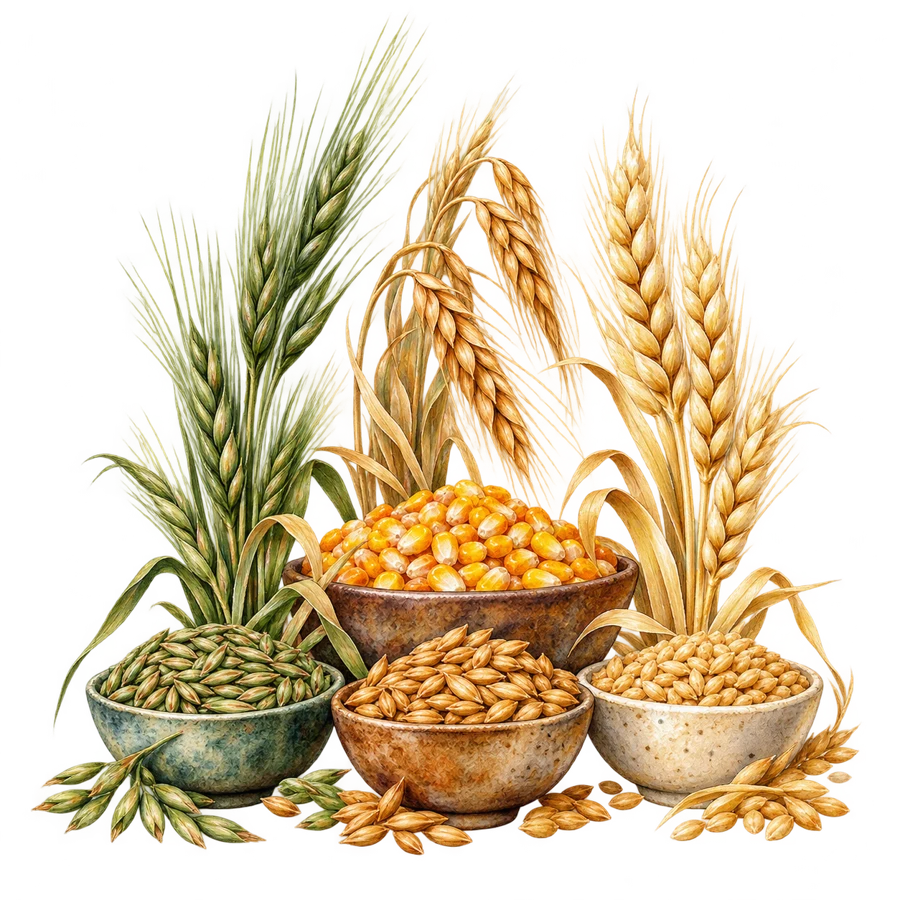
Rye is announced in January 2015. The July 2019 wheat announcement describes a permanent family spanning bourbon, rye, malt and wheat, giving each leading grain its own expression.[33][34]
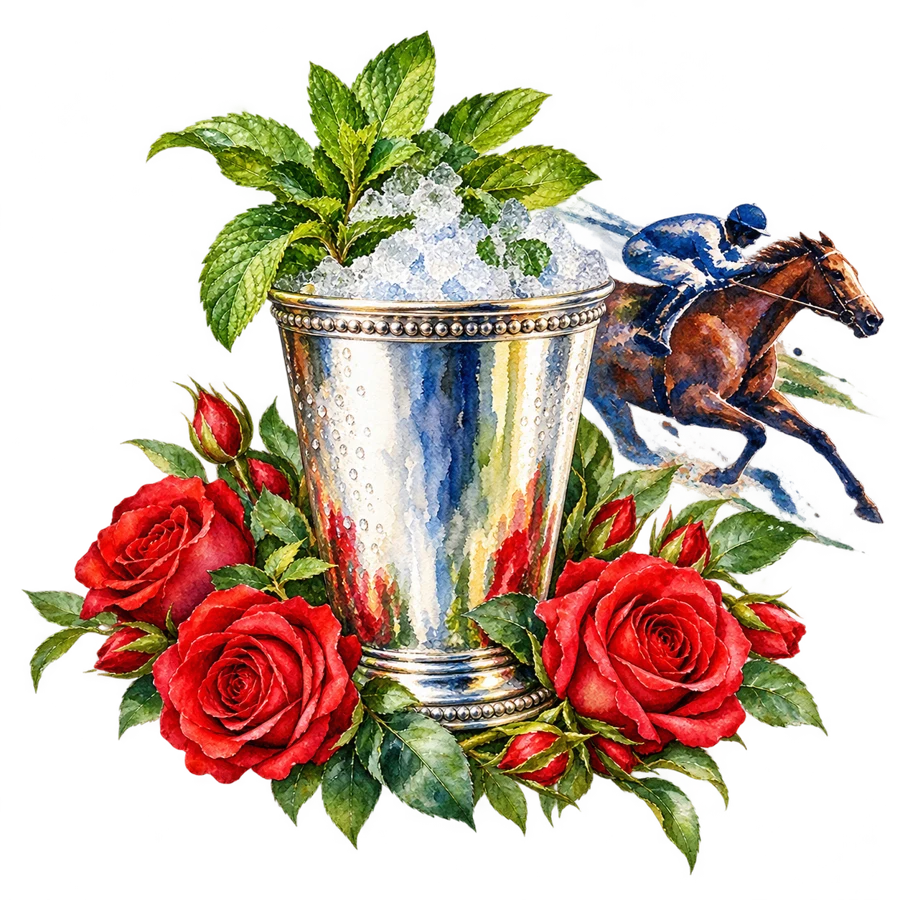
The Kentucky Derby first runs with Woodford Reserve as presenting sponsor, following an agreement announced in October 2017. The relationship connects the brand’s horse-country home with a larger sporting stage.[11]
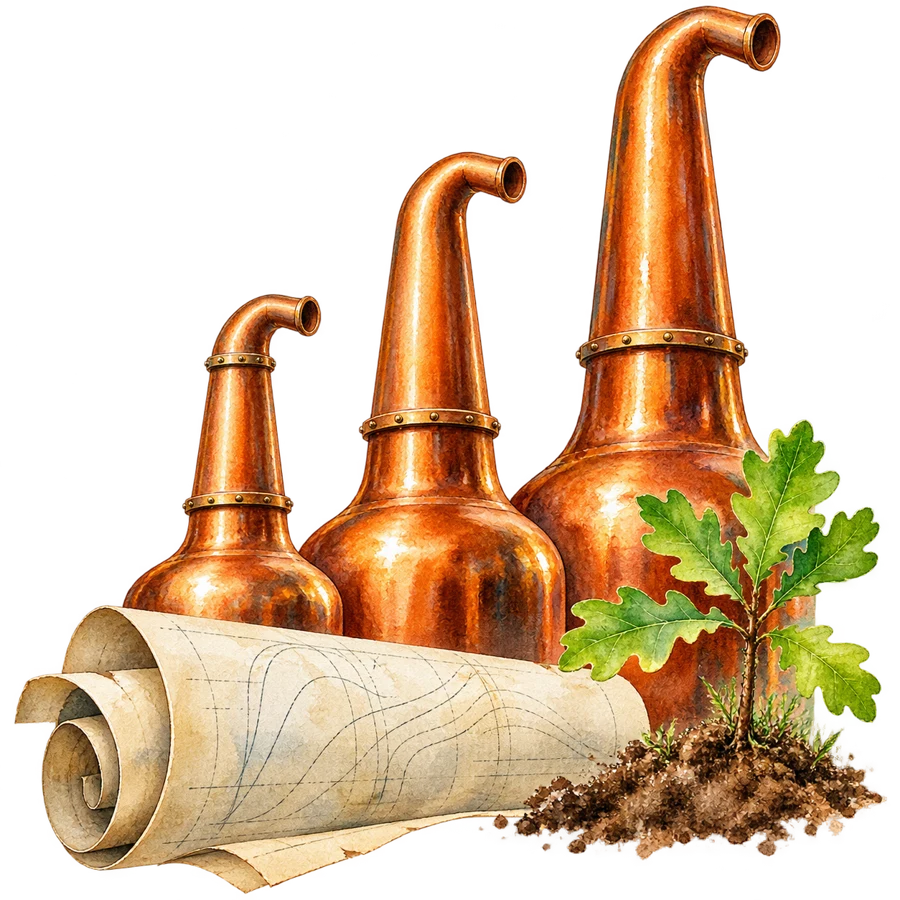
Brown-Forman reports a Kentucky capacity investment covering both its Louisville and Woodford Reserve distilleries, including plans for three additional copper pot stills at Woodford. This is an investment announcement, not a completion date.[12]
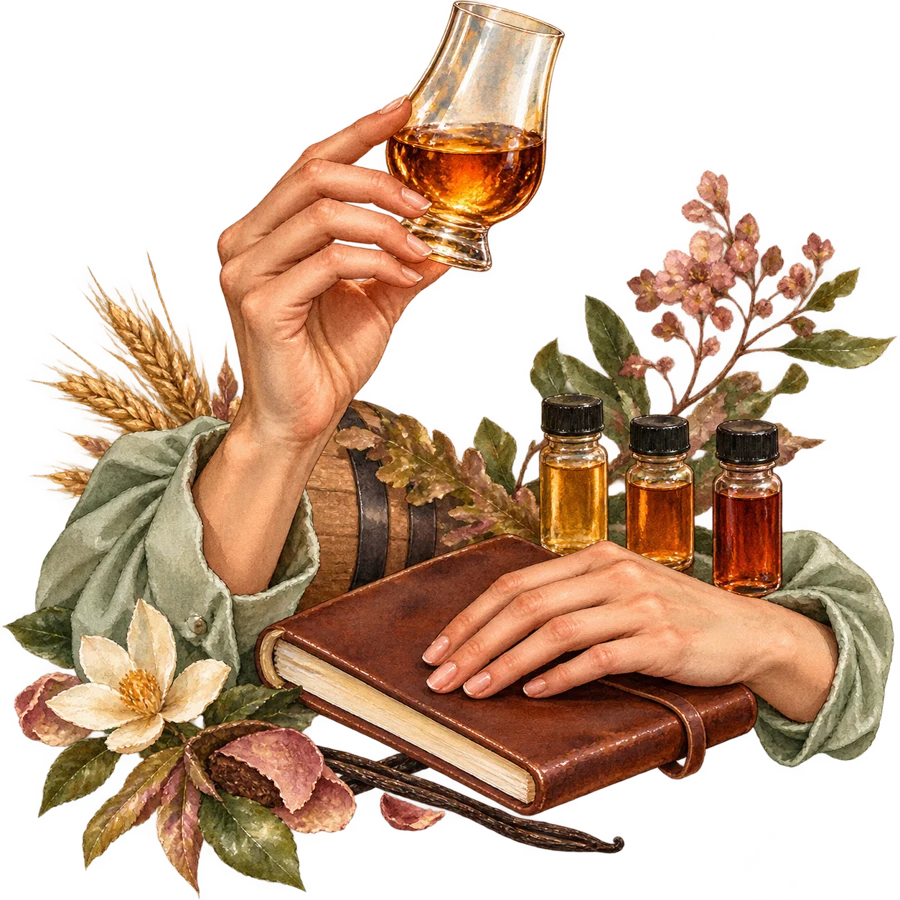
The brand names its third master distiller. Chris Morris moves into an emeritus role as McCall assumes responsibility for quality and innovation.[5]
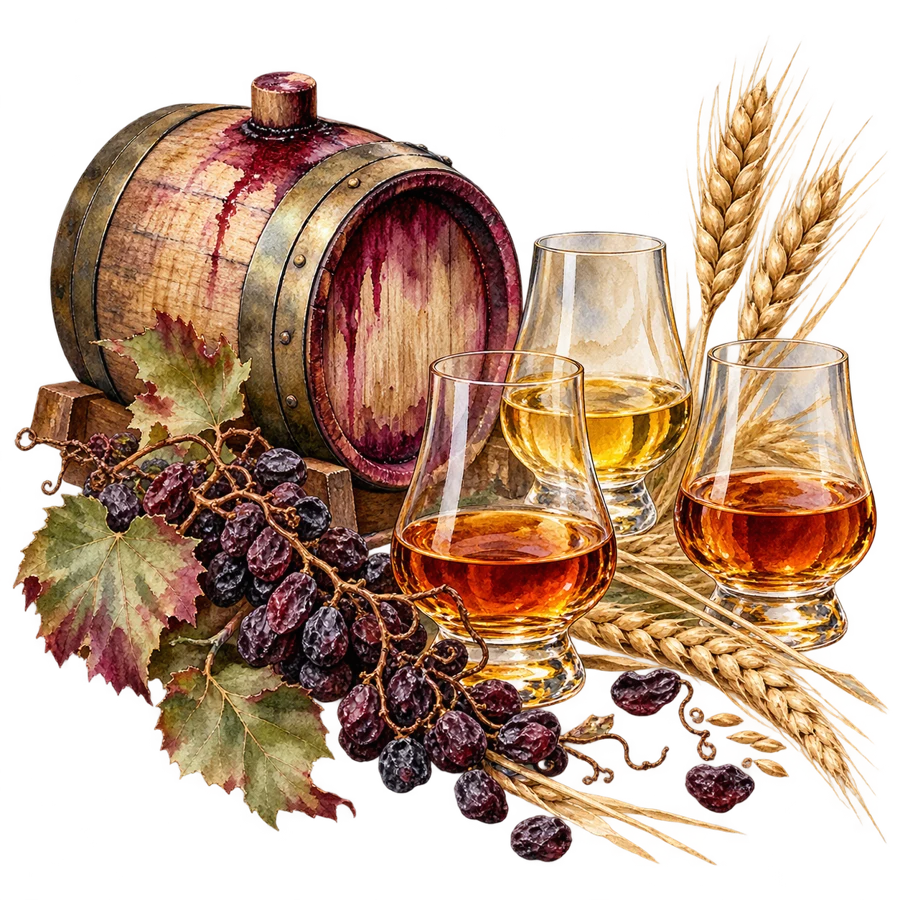
The Master’s Collection combines Madeira-finished bourbon, rye and wheat whiskeys with additional wheat whiskey. Finishing and blending work together rather than relying on one novel cask alone.[13]
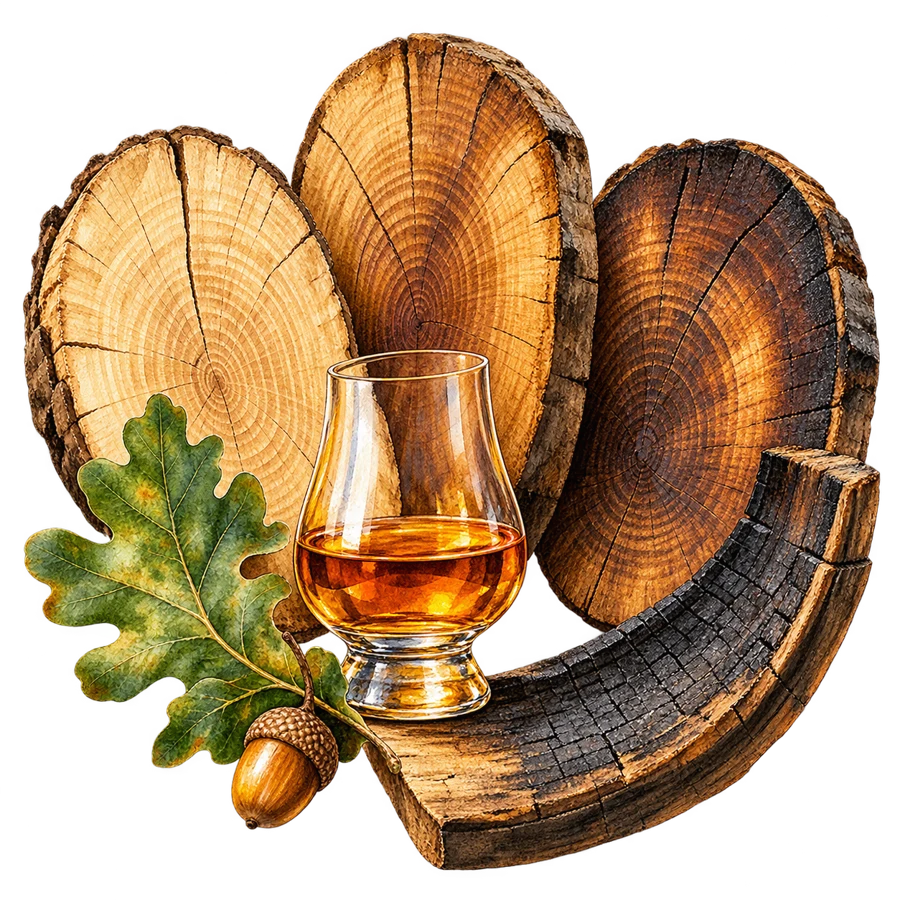
The official shop identifies Sweet Oak Bourbon as its 2025 Master’s Collection release, presented at 110.4 proof. It continues the collection’s examination of maturation.[9]
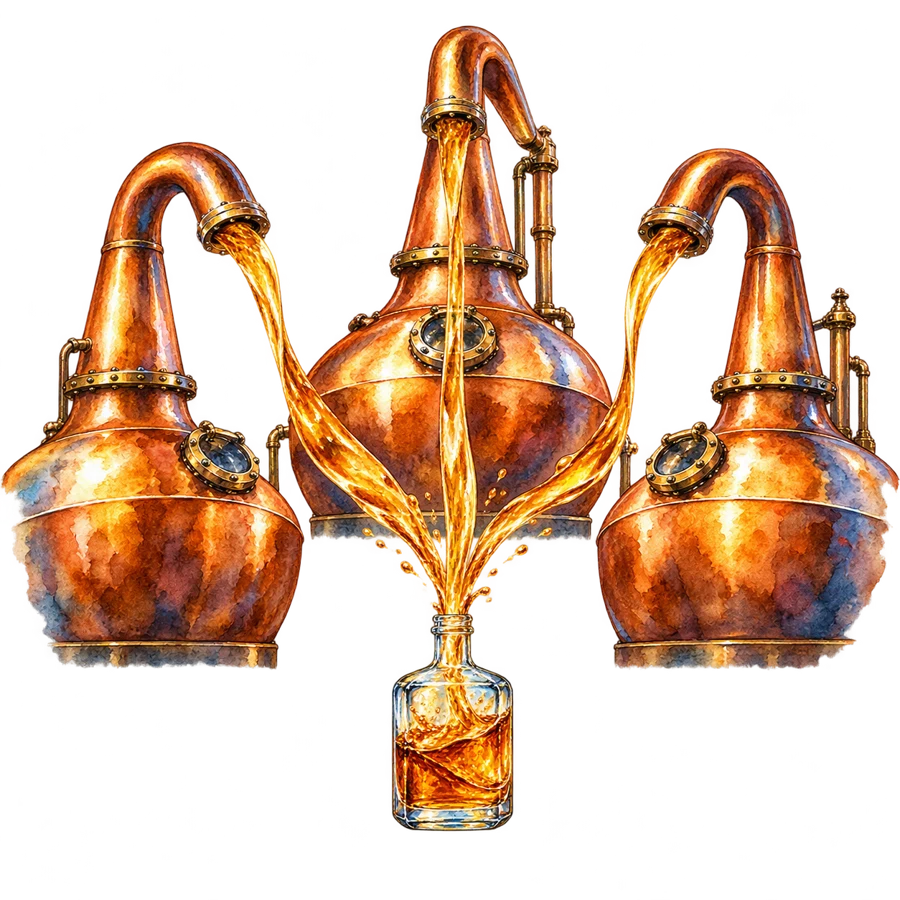
The official anniversary bottling isolates whiskey made entirely in copper pot stills at 100 proof. It offers a deliberate contrast to the brand’s usual marriage of pot- and column-distilled whiskey.[14]

Brown-Forman announces Kentucky Boy, created by Elizabeth McCall and Old Forester’s Caleb Trigo to honor Chris Morris’s fifty-year career. The one-time 100-proof release connects his influence across the company’s whiskey family.[35]
Original watercolor interpretations accompany the history. Buildings, objects and scenes are symbolic, not documentary reconstructions.
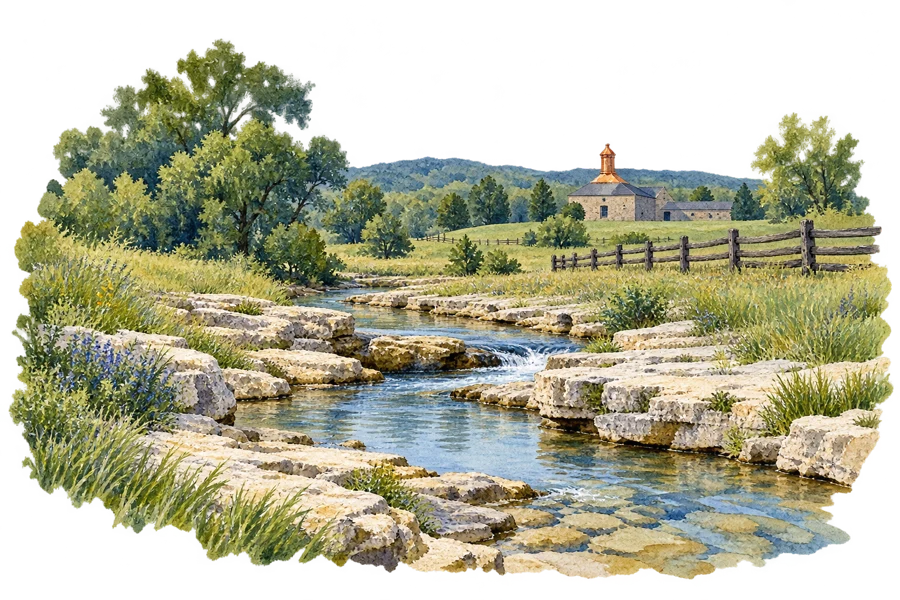
Historic rural setting
The rural Bluegrass setting is more than a backdrop. Horse farms surround a distilling landscape recognized for its place in the development of the bourbon industry. Its surviving industrial character makes the history legible: this was a working manufacturing place, repeatedly adapted, rather than a purpose-built modern historical set.[15]
Water and working landscape
Limestone springs and Glenn’s Creek tie the distillery to its valley. The NPS describes water and topography shaping the industrial site.[3]
Production and visitor home
The official historical tour walks the landmark property through Pepper and Crow’s work and the innovations of the modern team. Historic structures and a tasting of classic and experimental expressions put continuity and change into the same experience. Reservations and access details should be checked on the official booking page.[16]
Separate corporate distilling operation
Woodford’s larger corporate production context includes the Louisville-area Brown-Forman Distillery. The company’s 2021 announcement places that facility off Dixie Highway in Shively and describes column-still expansion. It is a separate operation from the historic Woodford County homeplace; a company-wide production map should show both rather than collapse their identities.[17]
Maturation system
The barrel is a designed ingredient in Woodford’s process, not a neutral container. Toast, char and warehouse treatment help shape what reaches the glass. The current brand story describes barrels made to its specifications and maturation in heat-cycled warehouses, keeping woodwork and storage inside the flavor story.[1]
The parent company, historic distillery, whiskey styles and experimental collections each have a distinct place in the family.
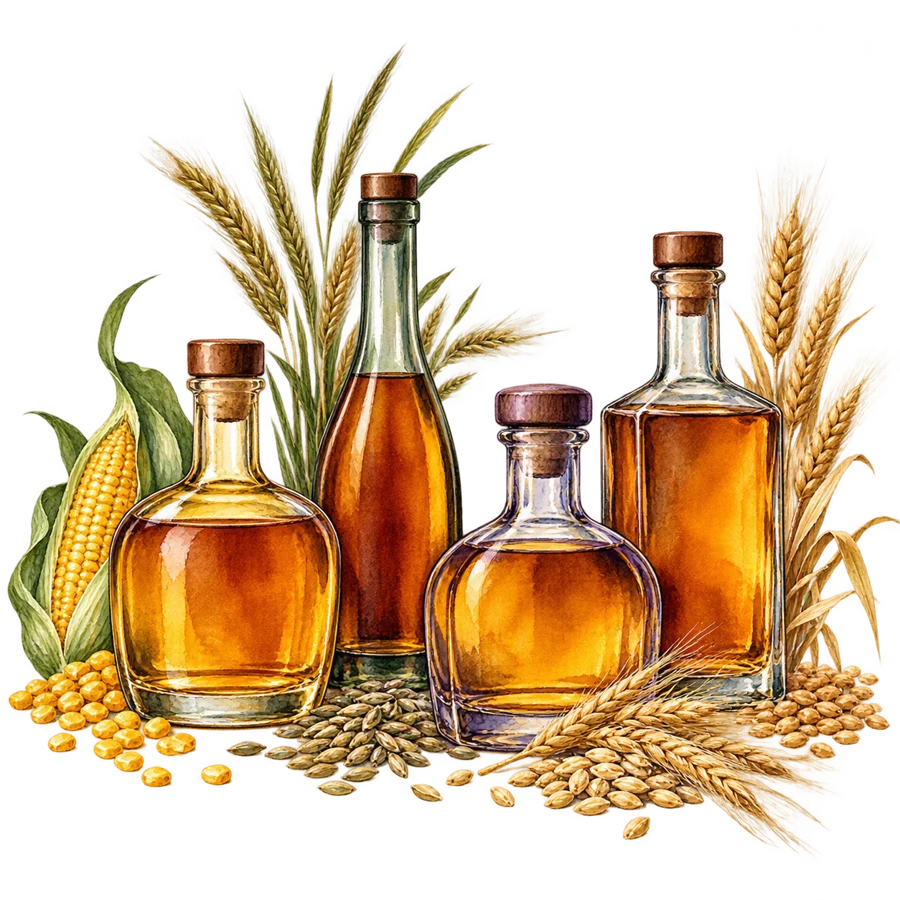
Woodford is a Brown-Forman brand. The parent’s current brand directory places bourbon, wheat, malt, Double Oaked and experimental expressions within that portfolio.[2]
The collection honors Oscar Pepper and James Crow by revisiting production choices. Their historical influence supplies inspiration for new recipes and maturation experiments, rather than an assertion that every release recreates a documented nineteenth-century bottle.[2]
The modern master-distiller succession moves from Lincoln Henderson to Chris Morris and then Elizabeth McCall. Their separate roles help explain how a brand can preserve a sensory identity while changing the person responsible for its future.[6]
The current distillers page credits Morris with Double Oaked, Rye, Malt and Wheat as well as the experimental series. The broader range therefore represents related development work, not simply unrelated labels gathered under one name.[7]
McCall leads the special releases while overseeing the brand’s quality standards. Her job connects the repeatability of the everyday bottle with the controlled differences sought in limited editions. A new experiment still belongs to a recognizable house.[5]
The presenting sponsorship began with the 2018 race. A January 2023 renewal extends the agreement through 2027. The sporting relationship gives commemorative packaging its context; it does not by itself establish a new whiskey recipe for every decorated bottle.[18]
Double Oaked changes the oak treatment by using a second new charred barrel with a deep toast and light char. It develops another expression of the bourbon family through maturation rather than changing the category to rye or wheat whiskey.[19]
The official Double Double Oaked page describes two additional years in the second barrel. The repeated word points to extended second-barrel maturation, not four sequential barrels. Time can change the balance of the same oak treatment.[20]
Batch Proof uses the core bourbon’s grain bill and production approach, then presents the assembled whiskey at its actual batch strength. It is a batch of barrels, so the name should not be silently converted into a single-barrel claim.[21]
The Baccarat expression brings XO Cognac casks into the maturation story and places the finished bourbon in a crystal decanter. The French connection concerns cask history and presentation; it does not move the original Kentucky whiskey’s distilling origin to France.[22]
The 2026 tribute brings McCall and Caleb Trigo together as Morris’s protégés. Brown-Forman describes inspiration from Double Oaked, Old Forester Birthday Bourbon and King of Kentucky; the release offers a contemporary connection across those houses without making them interchangeable brands.[35]
Grain, fermentation, distillation and oak shape the whiskey. Follow each production choice and keep specifications tied to the expression named.
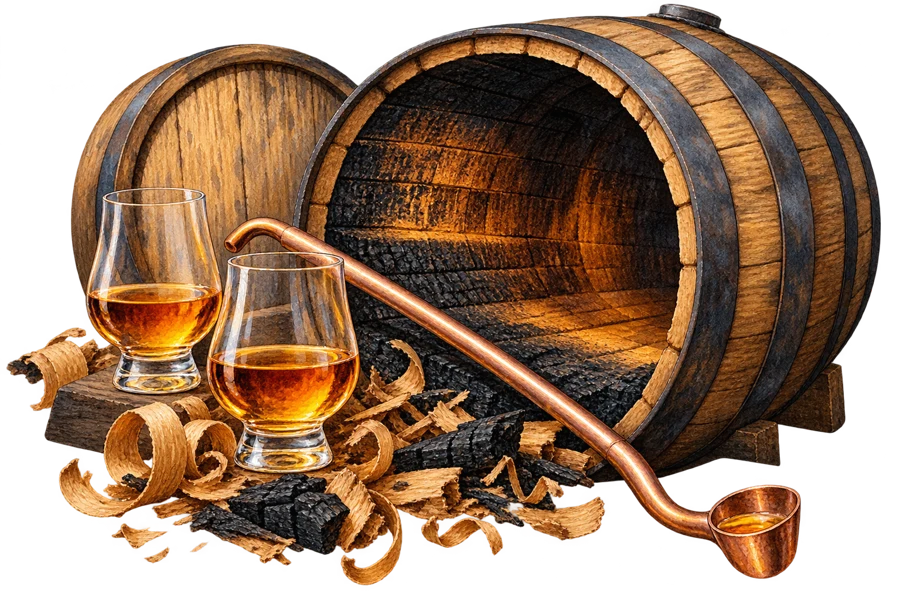
Woodford publishes a bourbon mash bill of 72% corn, 18% rye and 10% malted barley. That recipe belongs to the bourbon. It should not be copied onto every whiskey bearing the Woodford name, because the rye, malt and wheat expressions deliberately change the leading grain.[23]
Water and fermentation sit beside grain, distillation and maturation in Woodford’s flavor framework. The brand describes limestone-filtered water, its yeast and extended fermentation as contributors to character, before the spirit reaches copper or oak.[1]
The current official story explicitly describes careful batching of whiskey from pot stills and column stills. This is an important qualification to the instantly recognizable copper-pot-still imagery. The profile is assembled from complementary distillates; the visitor-facing stillhouse does not justify saying that every drop in the standard bottle is exclusively pot distilled.[1]
In Double Oaked, the second barrel is deeply toasted and lightly charred. The practical distinction is between toasting and charring, not simply more or less age. Woodford’s published notes emphasize a richer oak-led direction, offering a clear comparison with the core bourbon without claiming every taster must find identical flavors.[19]
Historic Barrel Entry, identified as the 2022 Master’s Collection, used whiskey entered into the barrel at 100 proof. That is entry proof, not necessarily the eventual bottling strength. It asks what changes during maturation when the spirit begins its time in wood at a different concentration.[25]
The 2026 Super Seasoned Oak page describes custom barrels with staves exposed outdoors for five to seven years. Those years refer to seasoning the wood before barrel construction, not the age of the bottled whiskey. The experiment extends the production story upstream, before distillate ever enters a cask.[26]
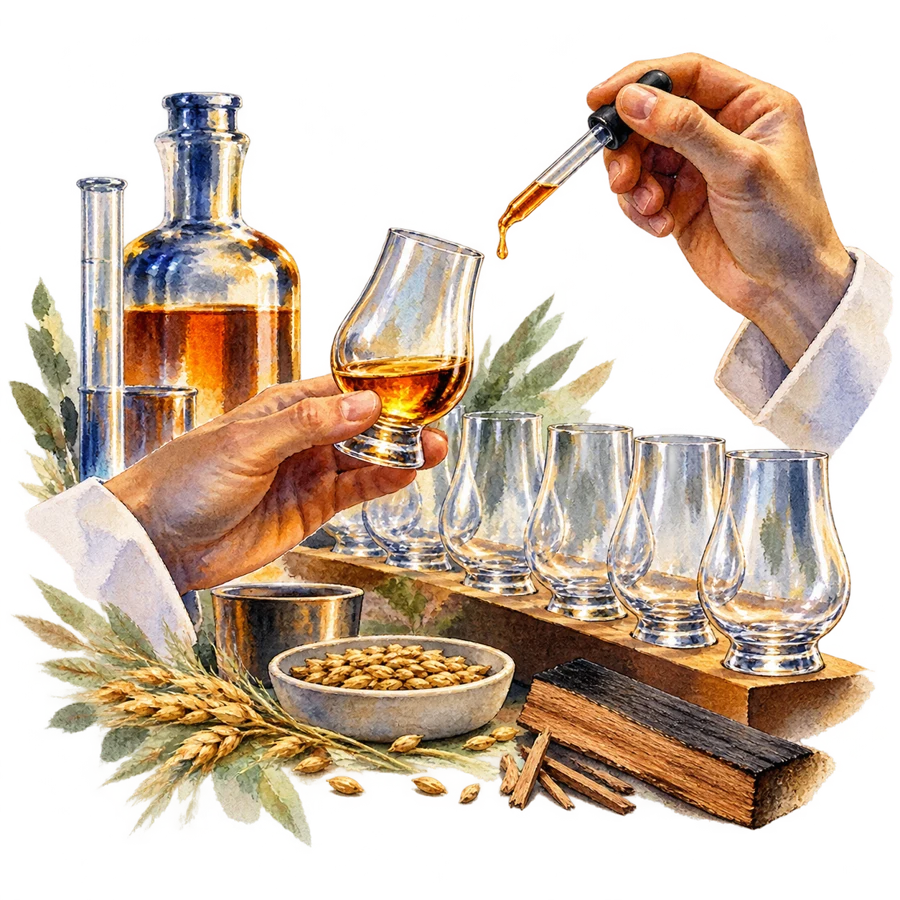
Woodford describes its bourbon through grain, wood, sweet aromatics, spice, and fruit-and-floral families. These categories offer useful prompts when comparing glasses. They remain a producer’s sensory framework, not a promise that every drinker will identify a fixed list of aromas or count the same number of notes.[27]
The rye expression uses 53% rye rather than a near-total rye mash bill. Woodford presents it as a pre-Prohibition-inspired proportion and emphasizes a balance of spice with fruit and sweetness. It offers a way to understand how a leading grain changes the family resemblance without erasing it.[28]
Woodford’s Kentucky Straight Malt Whiskey uses 51% malt and new charred oak. It is not being presented as a 100% malt recipe or as Scotch. Its published nutty and cocoa-led descriptions invite a comparison with bourbon while keeping the category and grain composition clear.[29]
The wheat whiskey combines 52% wheat with 20% malt, 20% corn and 8% rye. Four grains participate, but wheat determines the expression’s central identity. The brand’s fruit-and-floral emphasis gives another point of comparison with the corn-led bourbon and the rye expression.[30]
The current Personal Selection page offers three flavor profiles and a 110-proof presentation. That describes the program now being advertised, not every earlier private selection. A historical store pick should retain its own label proof and release evidence, even when a newer program has changed the options.[31]
A curated reading of the whiskey family, selected for its role in the story. This is not an exhaustive current catalog.
The core bourbon is presented on the current U.S. product page at 90.4 proof. It supplies the reference point for the family: compare its balance first, then ask what another expression changes in grain, strength, or maturation. Market and historical bottlings require their own label evidence.[27]
The related names invite a useful side-by-side comparison of second-barrel maturation. Double Oaked establishes the deeply toasted, lightly charred second cask; Double Double Oaked extends the time there. They are separate expressions, and neither should inherit the other’s exact maturation description merely because both names repeat oak.[20]
The Master’s Collection provides a home for experiments; Batch Proof emphasizes strength and barrel assembly within the bourbon’s familiar production approach. The July 2022 release was 118.4 proof. That dated specification belongs to that edition and does not identify every bottle with the same proof.[21]
The 2024 Master’s Collection works across bourbon, rye and wheat before assembling the finished whiskey. Its published method makes this more specific than the shorthand “bourbon finished in Madeira.” The final blend includes additional wheat whiskey, so the complete release description matters when reading the bottle’s story.[13]
The official shop identifies this as the 2026 Master’s Collection release, with 50.2% ABV and a wood-seasoning experiment. Its focus is the preparation of the barrel staves. Neither the seasoning period nor the store’s limited-quantity wording supplies an age statement for the whiskey or a guarantee of future availability.[26]
The anniversary Distillery Series bottling is presented at 100 proof and made entirely from pot-distilled whiskey. It highlights one component of the house’s normal distilling vocabulary. Read the anniversary as thirty years of the modern brand, rather than thirty years since distilling first began on the property.[14]
6 physical bottle records connect this story to the collection. Each keeps its own proof, barrel, batch and pick details.
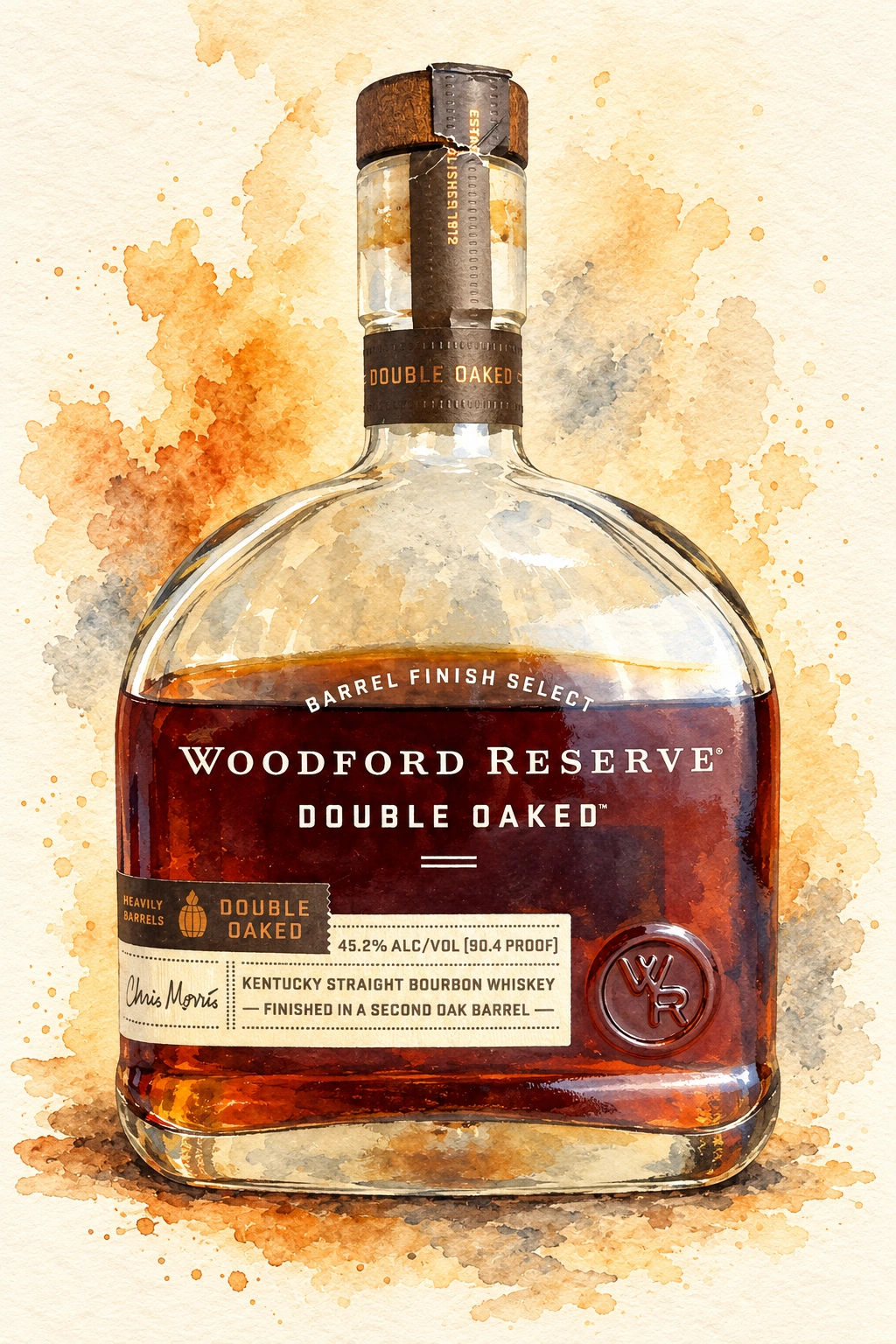
W0505 · 90.4 proof
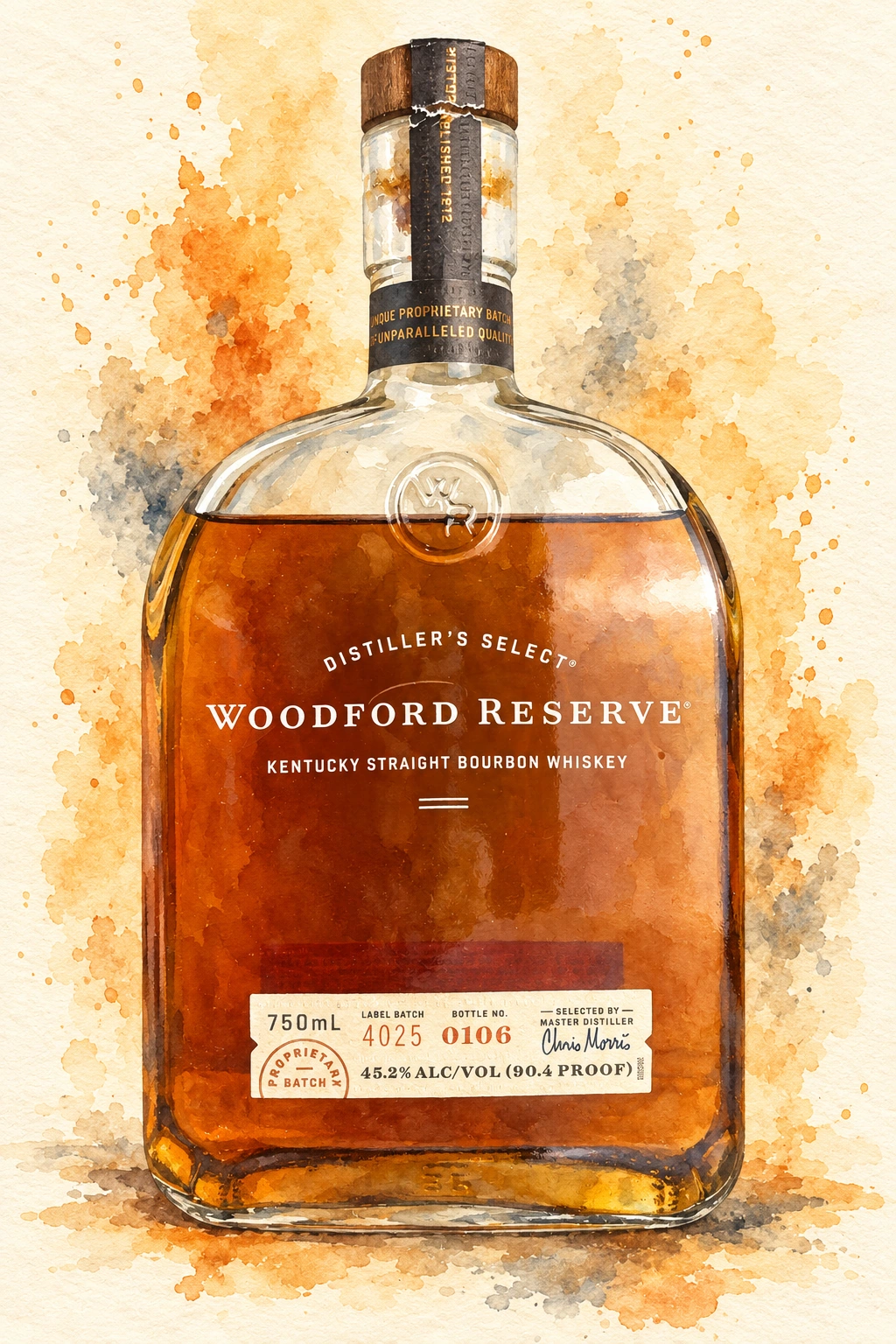
W0506 · 90.4 proof · Bottle 0106 · Batch 4025
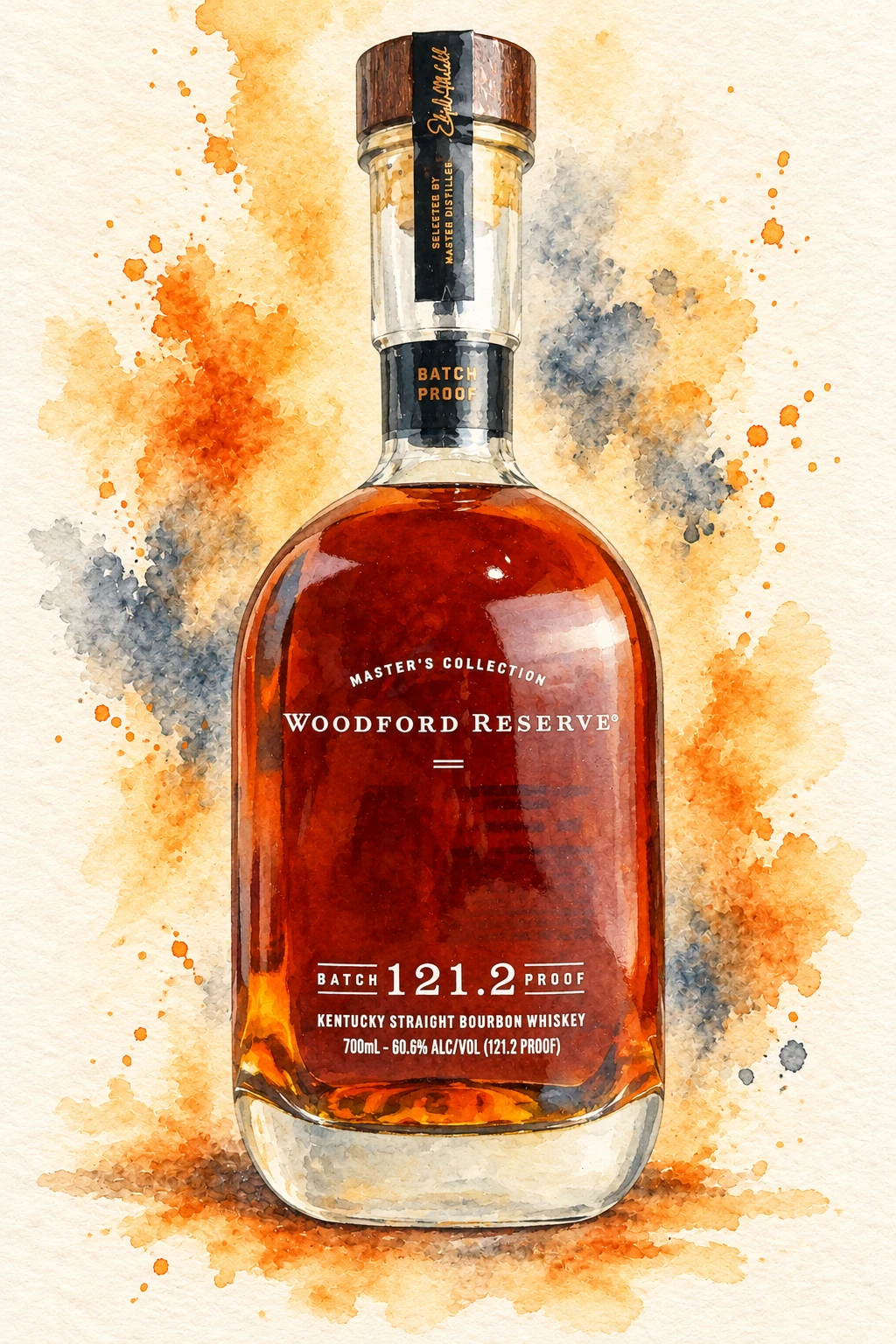
W0507 · 121.2 proof
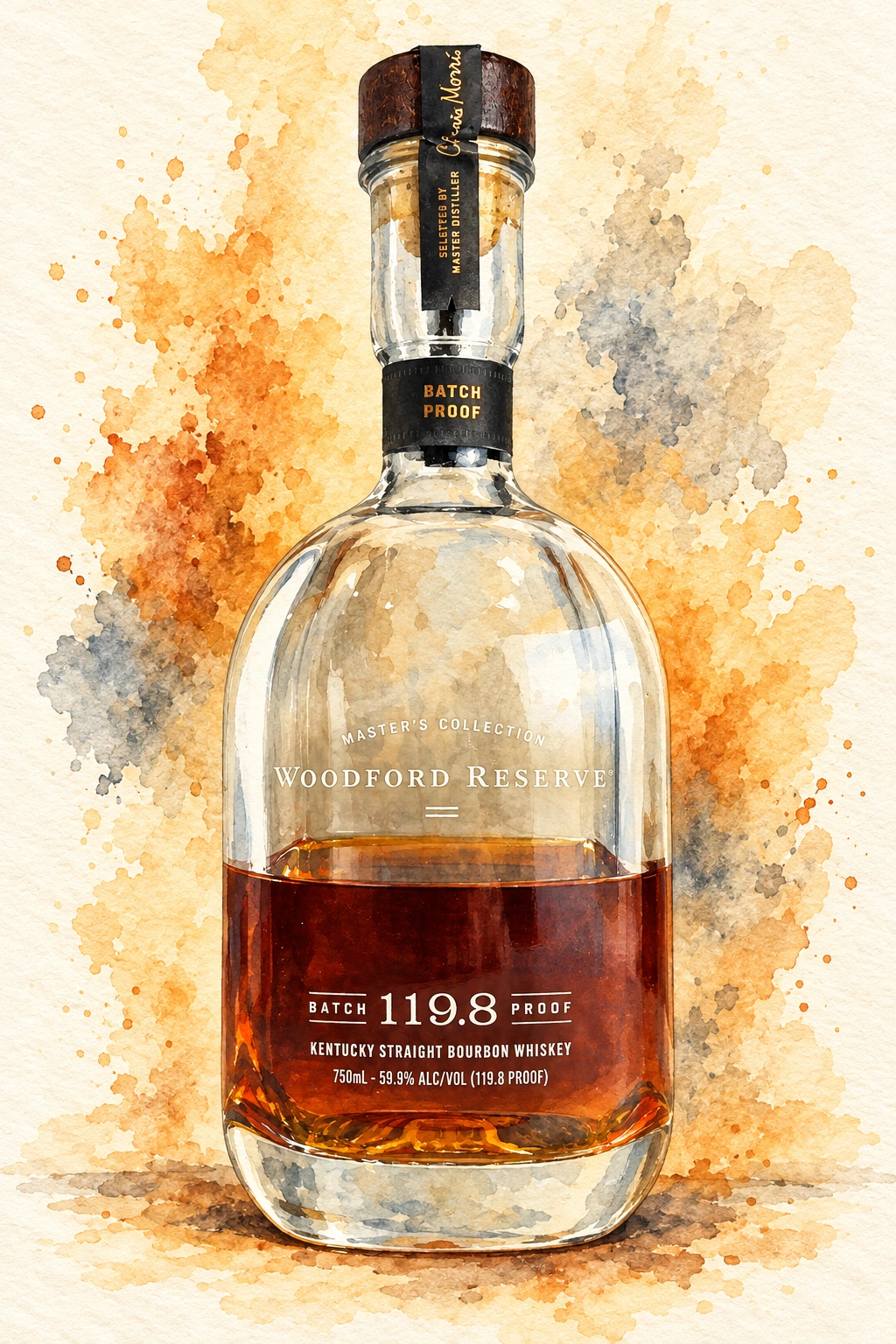
W0508 · 119.8 proof
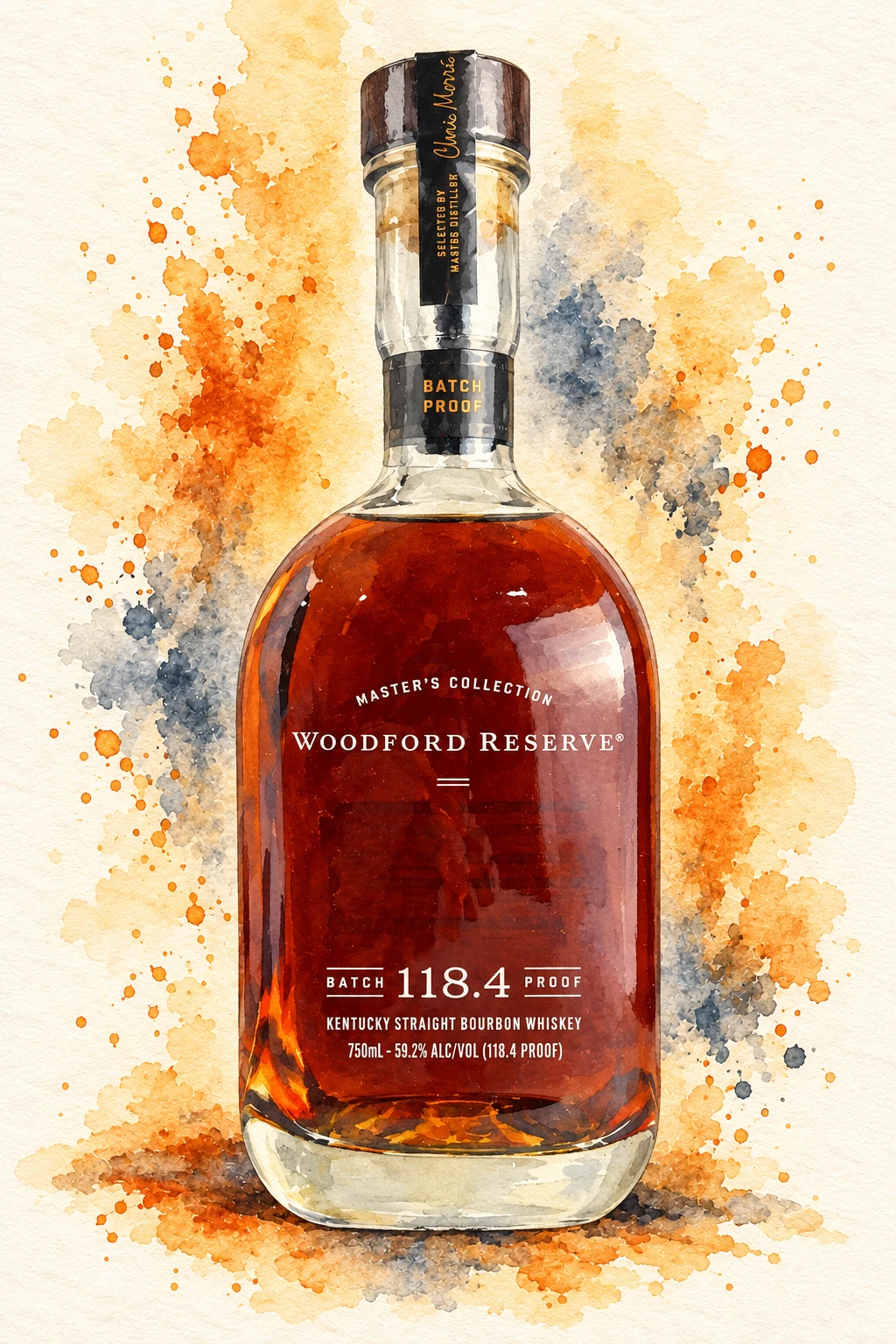
W0509 · 118.4 proof
W0510 · 118.4 proof
Collection snapshot: October 30, 2026. Approved watercolor artwork appears where an exact record or verified release match is available. Separate physical bottles and release distinctions are preserved.
Six physical bottle records connect this story to the collection: Double Oaked, Kentucky straight bourbon and four Master’s Collection records. Their proofs, batch codes and physical identities remain separate.
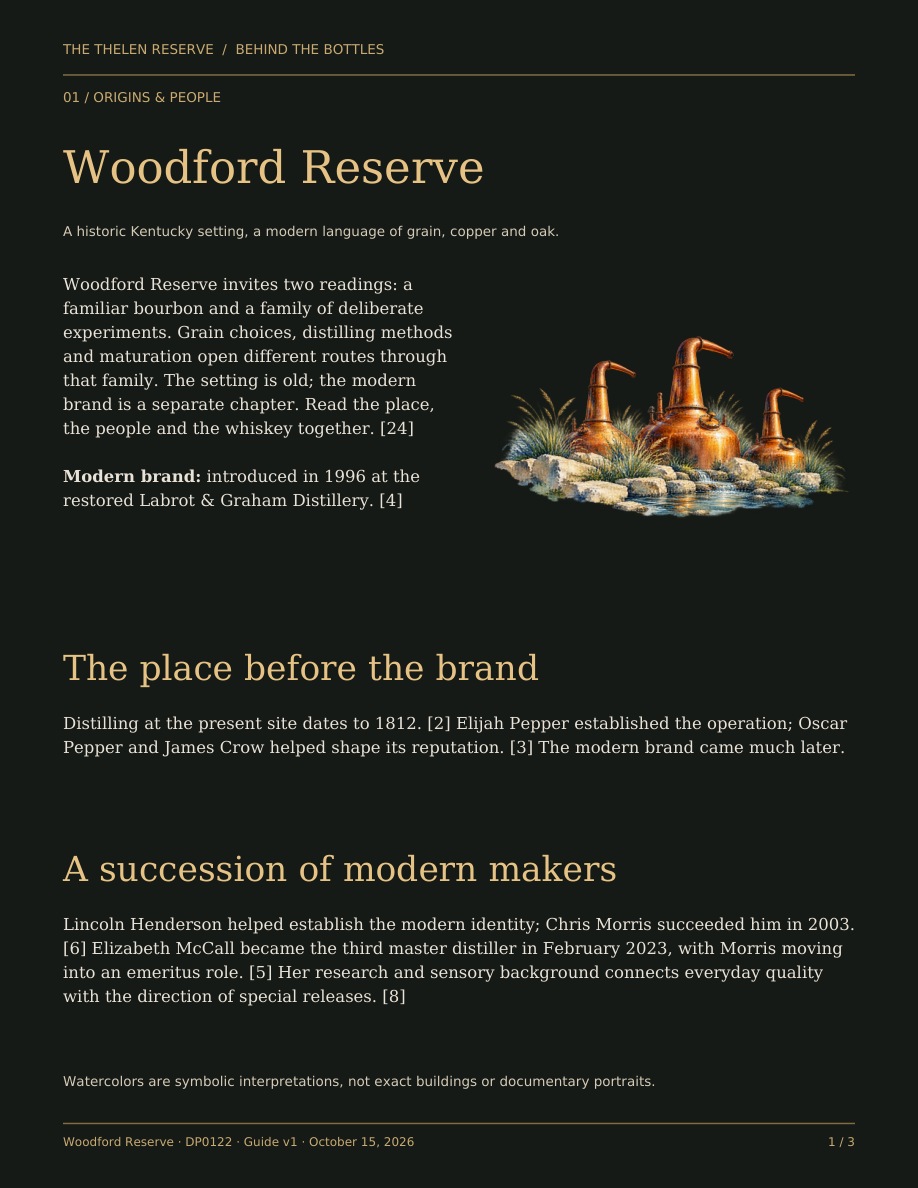
Origins and people, history and places, whiskey and stories. The approved illustrated companion includes linked research sources.
Researched October 15, 2026. Official brand and company pages, dated announcements and clearly identified supporting sources are distinguished in the research. Product specifications are release- and market-specific.