One portfolio. Several paths through Kentucky whiskey.
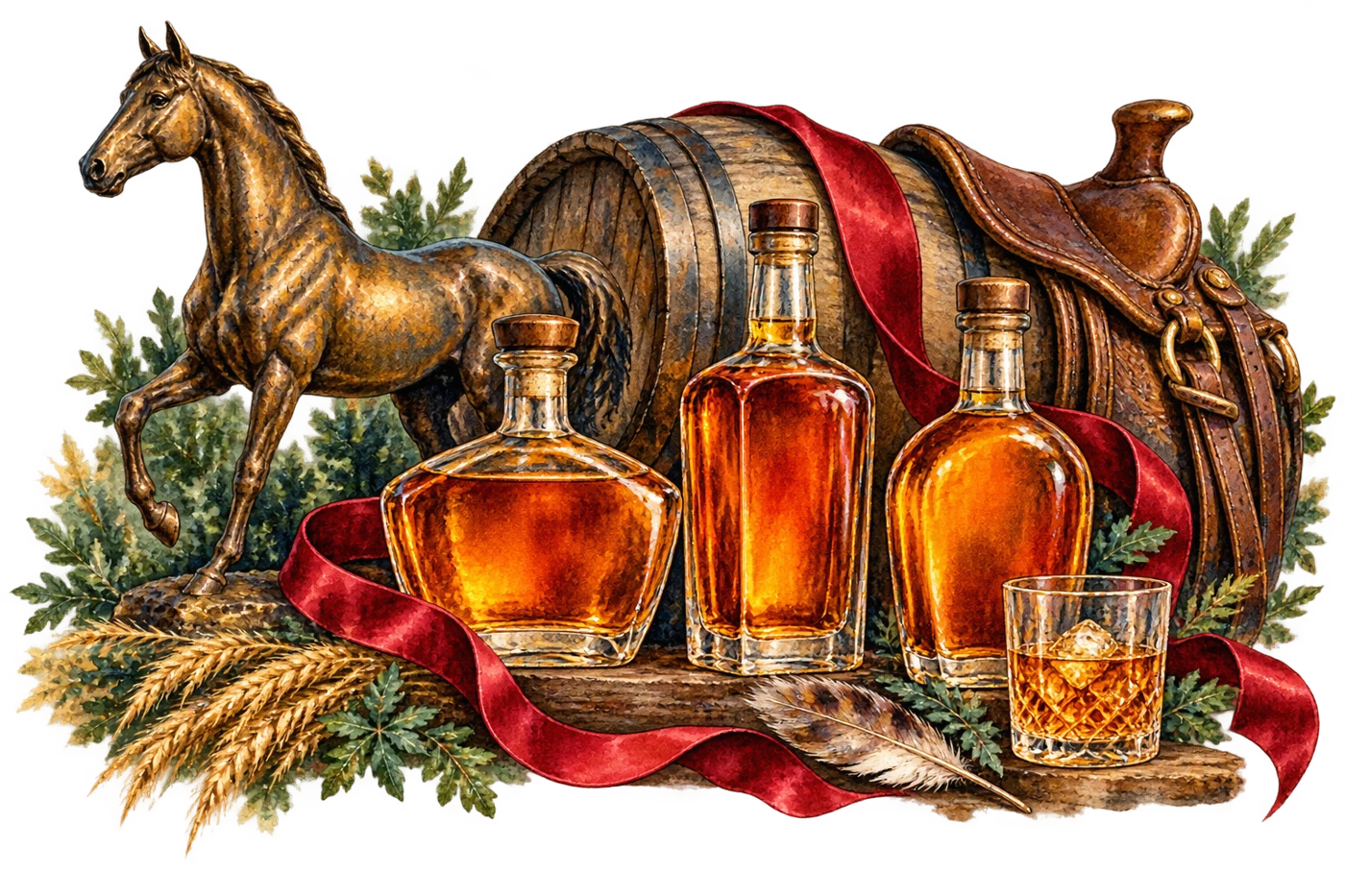
A blackberry whiskey and an eighteen-year bourbon trophy decanter might seem to occupy different worlds. Western Spirits Beverage Company brings them into one portfolio. From Bowling Green, Kentucky, it builds brands around flavor and barrel selection. Bird Dog, Calumet Farm, Sam Houston and Lexington share that family. Follow the company, the whiskey and the borrowed history separately, and their connections become much easier to understand.[1]
Identity
Kentucky spirits brand company and whiskey producer[1]
Company date
Established 2008, per its 2017 partnership announcement[3]
Reserve selection, branded releases and contracted distillation[15]
01 / Origins & people
Different labels. A shared producer.
A company built around different drinkers
Western’s identity is its portfolio rather than one visitor-facing stillhouse. Its mission emphasizes distinctive products, flavor and value. Everyday flavored whiskey and mature Kentucky bourbon perform different jobs within the same organization. A farm gate, a dog and an American statesman invite drinkers into separate stories, with individual production paths.[1]
The farm came first
Calumet Farm began in 1924 and became the racing namesake for a much younger whiskey brand. Western dates brand establishment to 2012; the bourbon history records its first release in 2013. Keeping those steps separate allows the farm’s red-and-white imagery to celebrate real sporting heritage without suggesting a century-old distillery.[4][5]
Names with a purpose
Sam Houston’s Western Spirits brand dates to 2010, while Lexington’s dates to 2012. Houston supplies a historical American namesake; Lexington draws inspiration from a celebrated Thoroughbred sire. Their identities explain the labels, but neither namesake is a whiskey maker. For understanding a bottle, the modern release information carries the production facts. The historical story gives it context rather than supplying a missing distillery identity.[7][8]
Tim Livesay
Western Spirits president, documented 2025
The April 2025 Centennial announcement identifies Livesay as Western Spirits’ president. His remarks frame the collection as an expansion into older, higher-proof bourbon and the brand’s first rye, showing how the company develops new chapters within an established label.[13]
Steve Nally
Documented distilling partner
Nally’s role in Western’s story crosses custom production and selection. The 2017 agreement names the Bourbon Hall of Fame distiller as a key partner at Bardstown Bourbon Company. The distinction matters: working with a master distiller can involve future distillate and brand development without proving that he distilled every older barrel sold under the portfolio.[3]
John Hargrove
Sam Houston curation, 2019
The May 2019 Sam Houston announcement credits Hargrove, Nally and the Bardstown Bourbon Company team with curating its second twelve-year release. That is a specific, useful contribution: judging mature barrels and building batches. It should remain a selection credit rather than being transformed into a claim that those twelve-year barrels originated at the much newer facility.[10]
Warren Wright Sr.
Calumet racing heritage
Wright helped turn the family farm toward Thoroughbred racing and made Calumet a dominant racing operation. His relevance here is the development of the farm’s sporting reputation, which the bourbon later honors. The brand is drawing on a racing legacy, not presenting him as the founder of Western Spirits.[30]
Luis Cabrera
Corporate strategy, documented 2025
Ducks Unlimited’s April 2025 renewal identifies Cabrera as Western Spirits’ executive vice president of corporate strategy. He describes Bird Dog’s outdoor identity as the connection to wetland conservation. The relationship adds a real contemporary purpose to the sporting imagery rather than leaving it solely as label decoration.[28]
02 / The illustrated history
From racing heritage to a whiskey portfolio.
The opening milestones follow Calumet Farm’s racing heritage. Western Spirits and the whiskey brands have their own later histories.
1924
The farm’s story begins
William Monroe Wright establishes Calumet Farm near Lexington. This is the beginning of the racing namesake, decades before the modern whiskey company or bourbon brand.[5]
1941
Whirlaway wins the Triple Crown
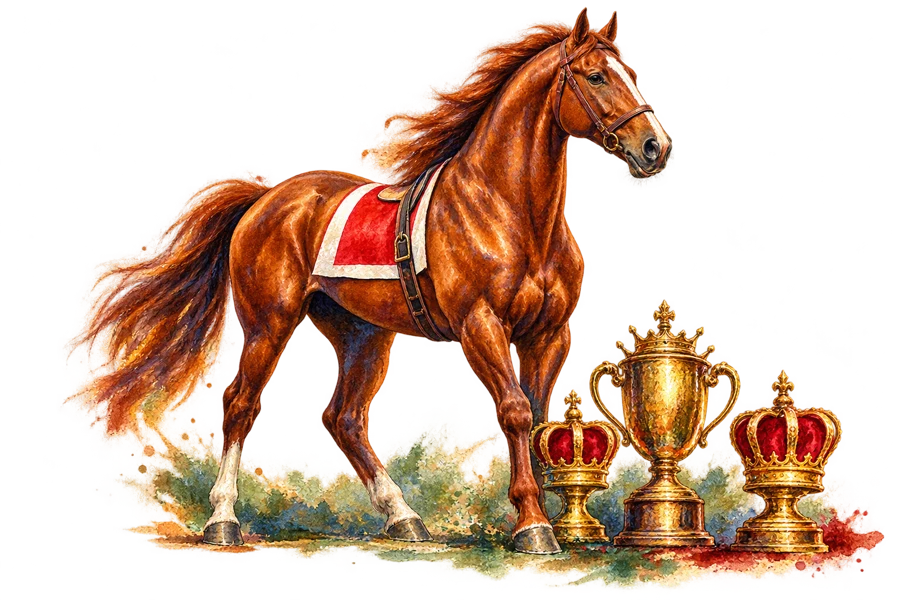
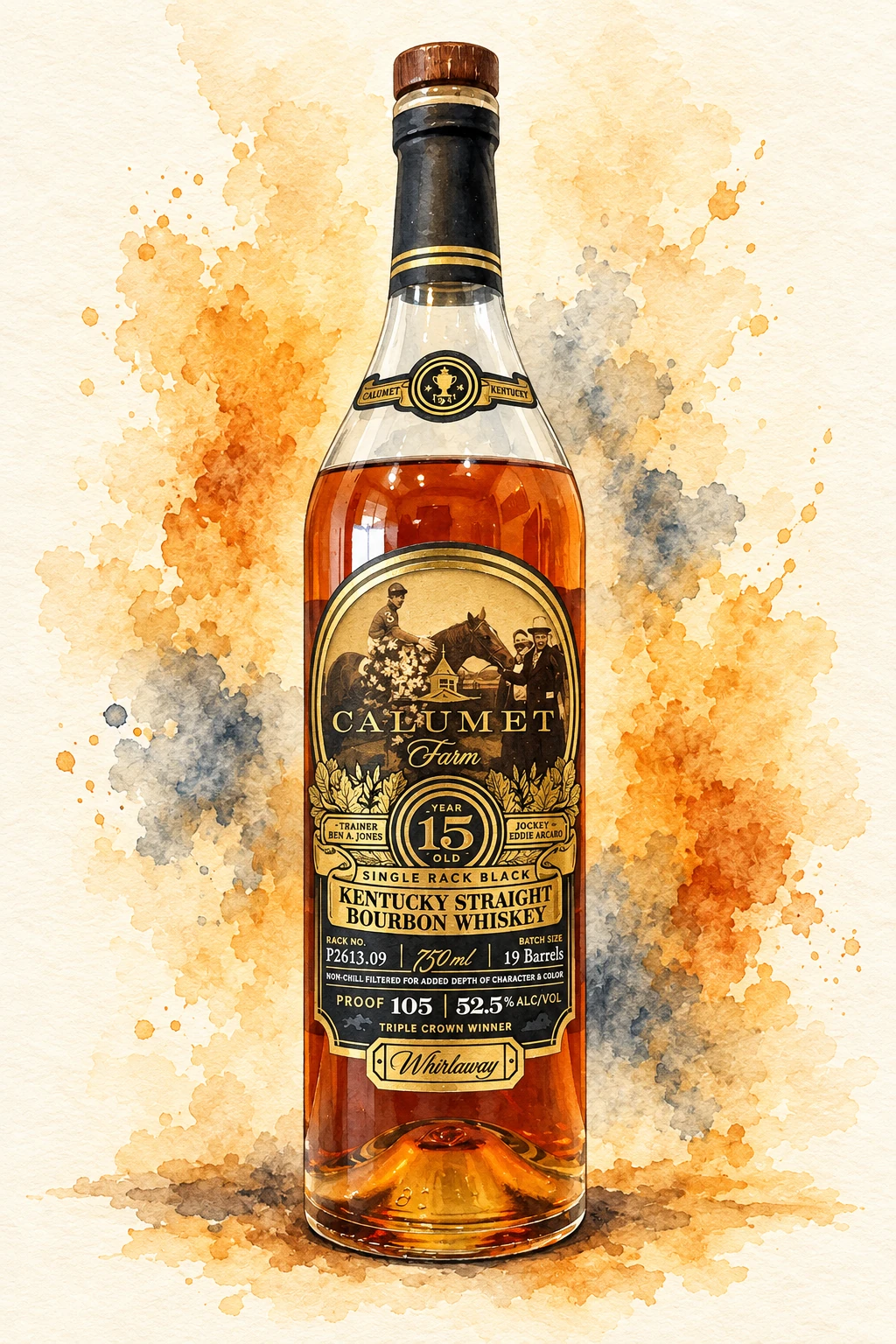
Calumet’s first Triple Crown champion becomes part of the later bourbon family’s vocabulary. The fifteen-year Whirlaway edition honors the horse rather than claiming whiskey production began that year.[18]
1948
Citation adds a second crown
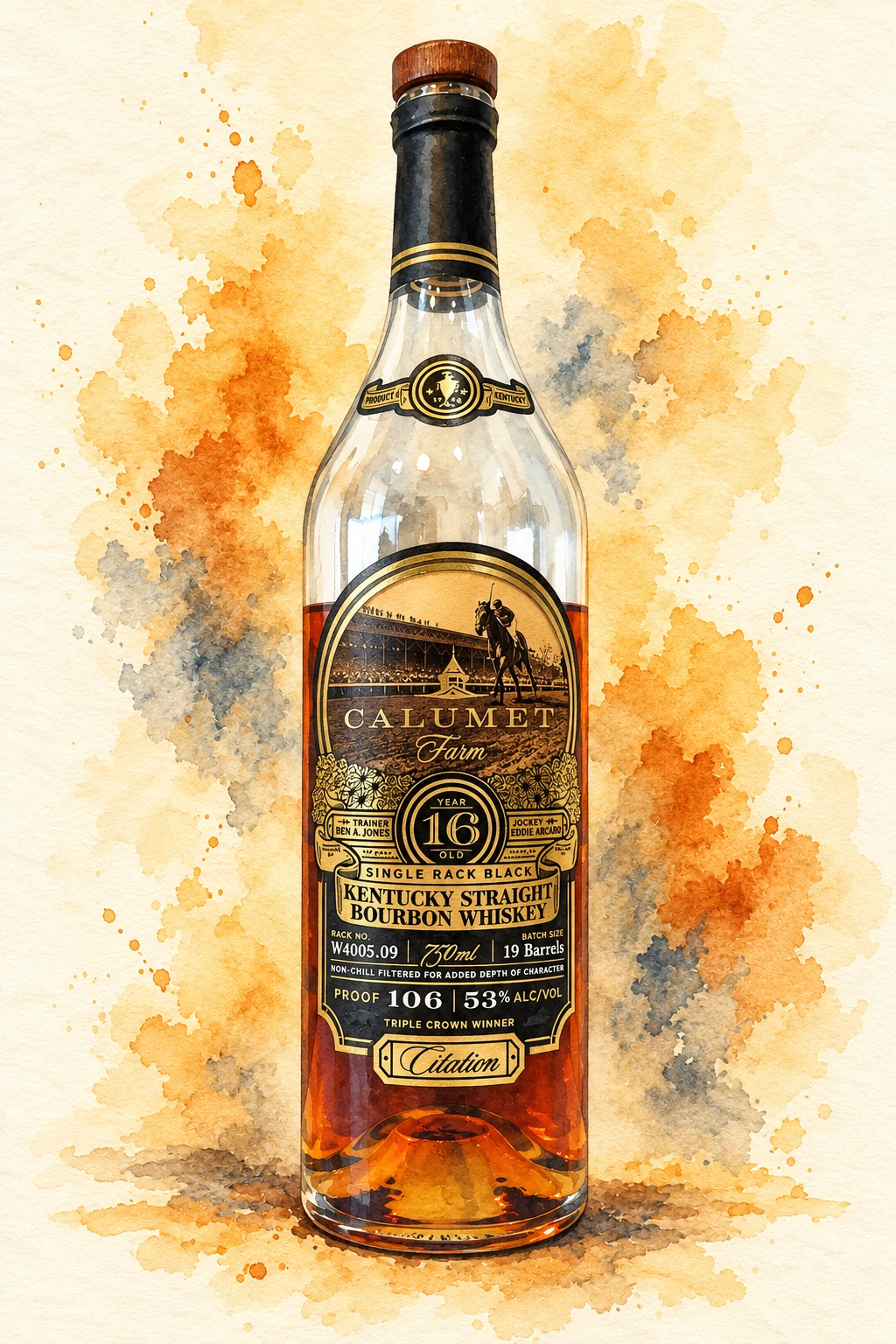
Citation wins the Triple Crown for Calumet, adding a second such champion after Whirlaway. This milestone belongs to the farm’s racing history.[29]
2008
A modern spirits business takes shape
The company’s dated 2017 partnership announcement describes Western Spirits as established in 2008. This corporate date is distinct from the much older histories carried by its labels.[3]
2010
Bird Dog opens its flavored-whiskey chapter
Bird Dog’s official history dates its beginning to 2010. Its fruit-and-whiskey approach becomes a recognizable branch of the portfolio, with flavor development continuing in subsequent years.[6]
2012
Two equine-inspired brands are established
Western’s corporate pages date both Calumet Farm Bourbon and Lexington Bourbon to 2012. Their shared horse-country imagery leads toward different branded drinking experiences.[4][8]
2013
Calumet’s first bourbon batch
The brand history records Calumet’s first small bourbon release in 2013, coinciding with Oxbow’s Preakness victory.[5]
June 20, 2016
Bird Dog already has straight-bourbon ambitions
A company press release announces an 86-proof small-batch bourbon, with nationwide availability planned by July. Bird Dog’s bourbon history therefore predates its later Select Reserve launch.[9]
January 30, 2017
Custom distillation becomes a documented partnership
Western joins Bardstown Bourbon Company’s Collaborative Distilling Program. The announcement says the partners plan their first distillation that month, establishing a forward-looking production relationship.[3]
Late 2018
Sam Houston’s twelve-year program arrives
The brand’s May 2019 announcement dates its first twelve-year release to late 2018 in Texas and Tennessee. A second release then expands the program into additional markets.[10]
2020
Sam Houston reaches fourteen years
The brand introduces fourteen-year Kentucky straight bourbon at 98 proof. Three-barrel state batches emphasize selective assembly and traceable release identity.[11]
2021
Fifteen-year editions follow
Spring Release No.6 and fall Release No.7 extend the aged-bourbon program. The announcement specifies 103 proof and unusually small two- or three-barrel state batches.[12]
April 23, 2025
A Centennial Collection broadens Calumet
The announced collection includes five bourbons and the brand’s first rye. Its centennial celebrates the farm’s 1924 roots, while the release itself belongs to the modern whiskey business.[13]
November 25, 2025
Bird Dog introduces Select Reserve
The new Select Reserve Kentucky straight bourbon arrives at 86 proof. It gives the current brand a clearly named unflavored expression alongside its established flavored whiskeys.[14]
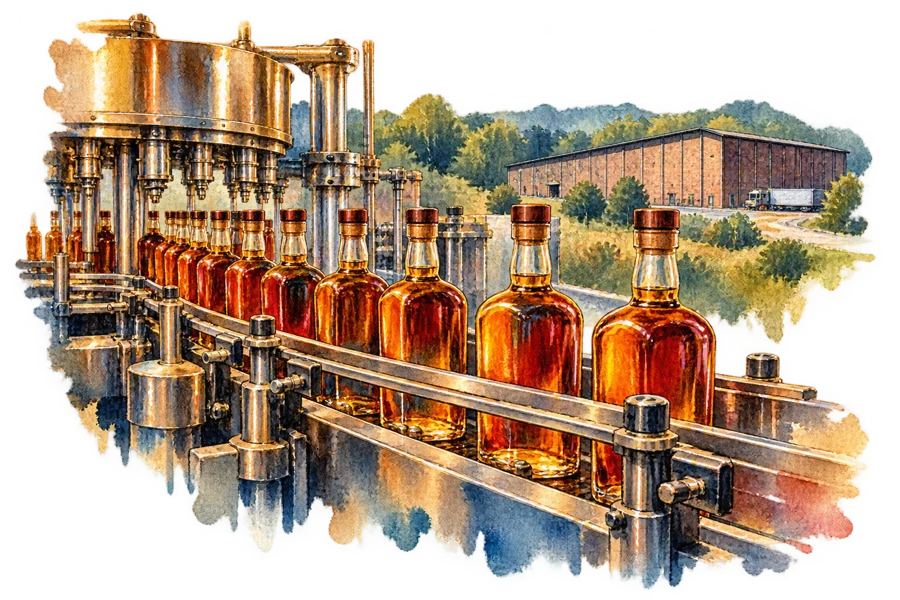
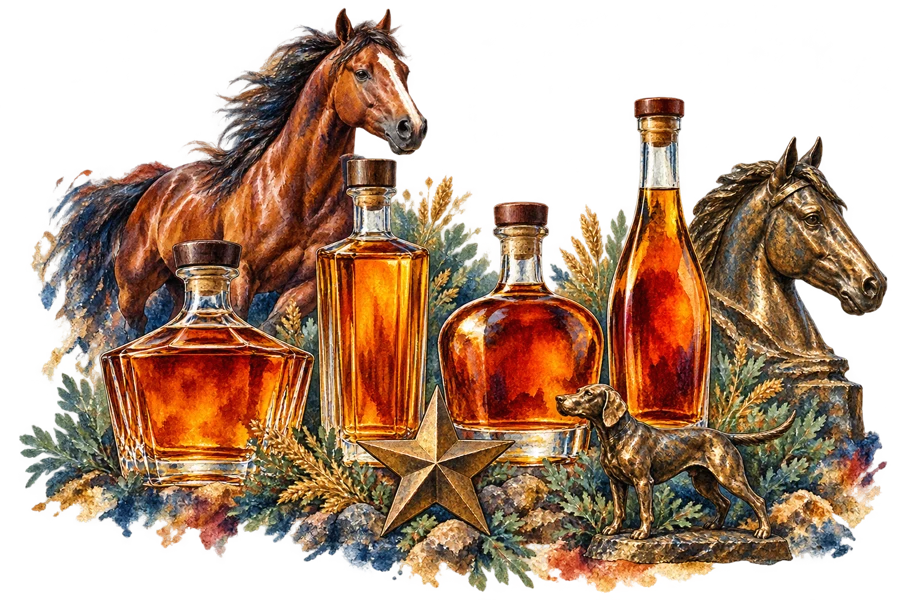
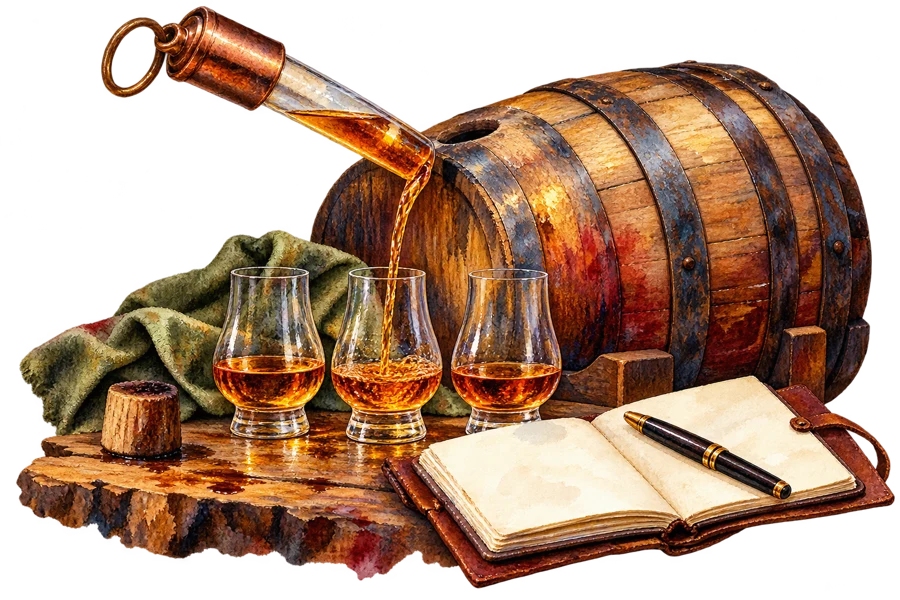
Original watercolor interpretations accompany the history. Buildings, objects and scenes are symbolic, not documentary reconstructions.
03 / Geography & roles
One name. Several places that matter.
Bowling Green, Kentucky
Company and brand home
Western Spirits identifies Bowling Green as its company home. It is the organizational anchor connecting the brands, not a shorthand proving that all their whiskey was distilled in the city.[1]
Calumet Farm, Lexington
Racing namesake
The historic horse farm provides the bourbon’s name, visual world and racing stories. Treat it as the heritage location. The brand does not establish that its whiskey was distilled in the farm’s barns.[30]
Bardstown Bourbon Company
Contract distillation
The 2017 custom-distilling agreement documents a production partner. Calumet’s FAQ separately states that this arrangement does not make BBCo the source of Calumet’s older bourbon stock. Partnership and provenance remain different questions.[15]
Bardstown’s mature bourbon stock
Disclosed origin and maturation, release-specific
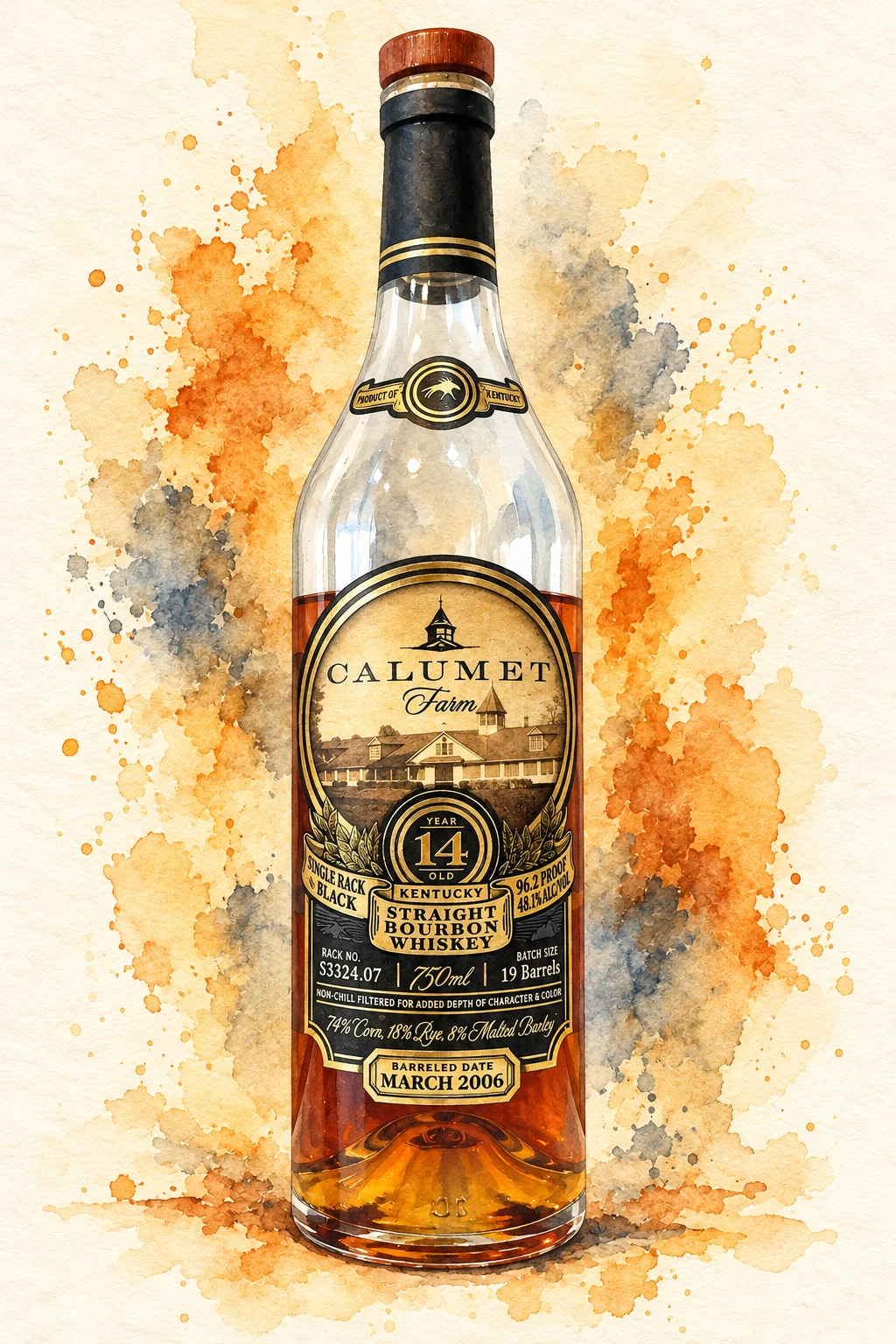
The sixteen-year page discloses March 2006 barreling and Bardstown distillation/maturation. It supplies a city, without identifying the original distillery.[17]
Three Springs Bottling, Bowling Green
Named bottling role
Calumet’s product specifications identify Three Springs as bottler. That is a documented operational role. It does not by itself establish ownership of the bottling company or mean that bottling and original distillation took place together.[17]
04 / The whiskey family
Understand the name on the label.
Selected company, brand and production relationships. The brand, its production partners and its expressions play different roles.
Western Spirits Beverage Company
Portfolio company
Western organizes a range of distinct spirits brands. The portfolio combines accessible flavored whiskey with mature bourbon and other spirit categories, allowing each label to retain its own identity.[2]
Calumet Farm Bourbon
Whiskey brand
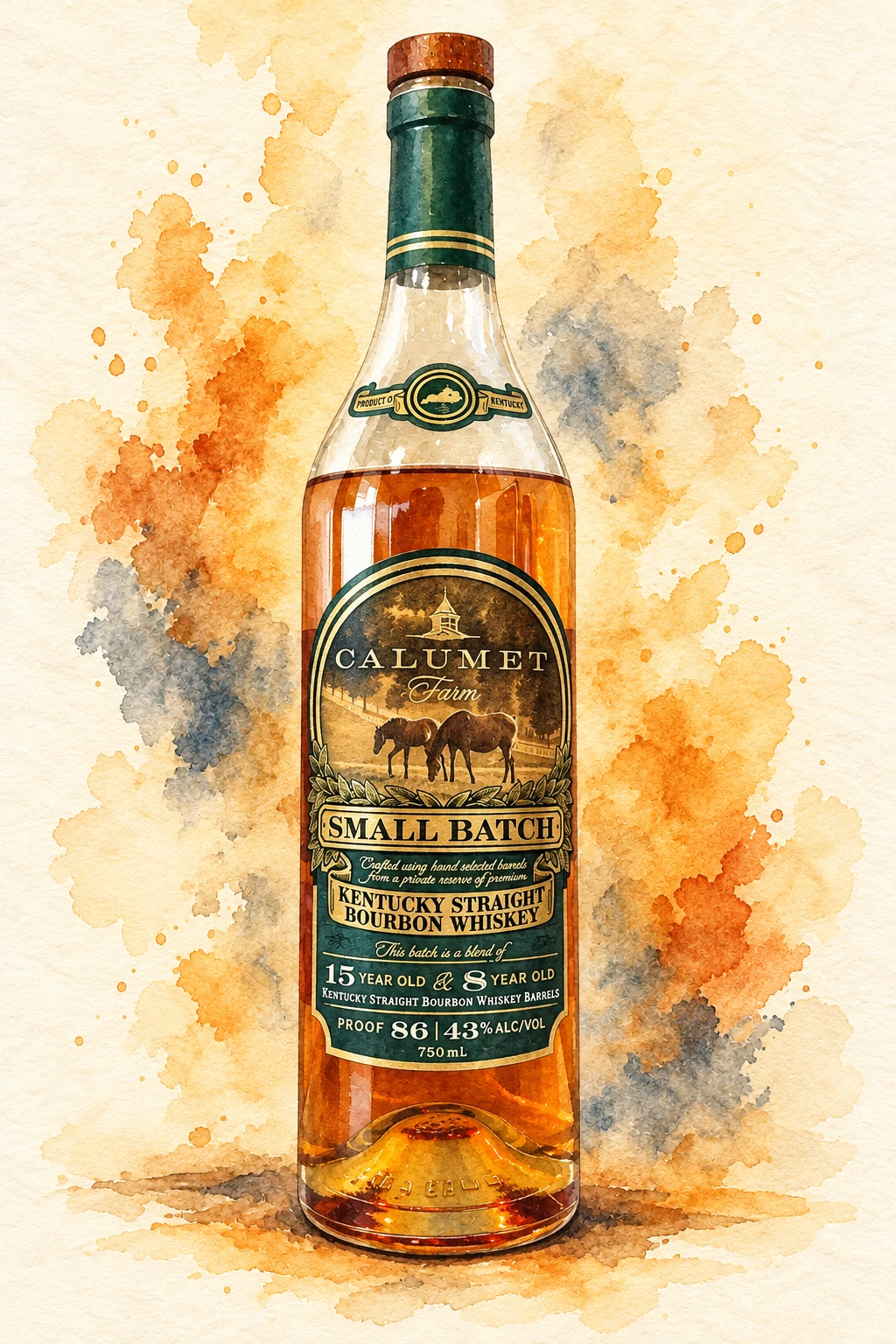
The premium bourbon family connects aged Kentucky whiskey with the farm’s racing heritage. Legacy age statements and the newer Centennial collection form related but individually specified releases.[4]
Bird Dog Whiskey
Whiskey brand
Bird Dog spans flavored whiskey and unflavored Kentucky bourbon. Its approachable social identity is different from Calumet’s aged-bourbon positioning, even though both sit within Western’s portfolio.[25]
Sam Houston Bourbon
Whiskey brand
A separate Western brand, established in 2010. Its numbered releases and batch identifiers make release-level information especially important when comparing bottles.[7]
Lexington Bourbon
Documented brand relationship
Western retains an official Lexington brand page, with a 2012 establishment date and a Thoroughbred-inspired identity. Its presence there should not be turned into a claim of a separately owned distillery.[8]
Bardstown Bourbon Company
Production and selection partner
A documented custom-distilling and curation partner. Neither a contract nor selection assistance makes it the original distiller of every mature Western Spirits release.[15]
Three Springs Bottling Company
Bottling relationship
Three Springs is the named bottler on Calumet release specifications. This documents an operational relationship without establishing corporate ownership.[17]
Calumet Farm and racing heritage
Namesake and heritage
The farm supplies racing names and imagery for the bourbon. Their shared name does not establish identical ownership structures.[5]
Ducks Unlimited
Conservation partnership
The conservation organization announced a renewed Western/Bird Dog partnership in April 2025 and recalled their original 2011 arrangement. It is a sponsorship and engagement relationship, not a spirits acquisition.[28]
The wider spirits family
Selected non-whiskey siblings
Western’s current principal brand menu also includes Twenty Grand Vodka, Marfanista Tequila and Bokeelia Rum. Those show the breadth of the company without turning this whiskey profile into an exhaustive catalog of other spirits.[2]
05 / Making & choosing
The choices behind the label.
Selection, maturation, blending and bottling give these labels distinct identities. Production origins, ages and specifications belong to the releases named.
An owned reserve, with an unnamed original distillery
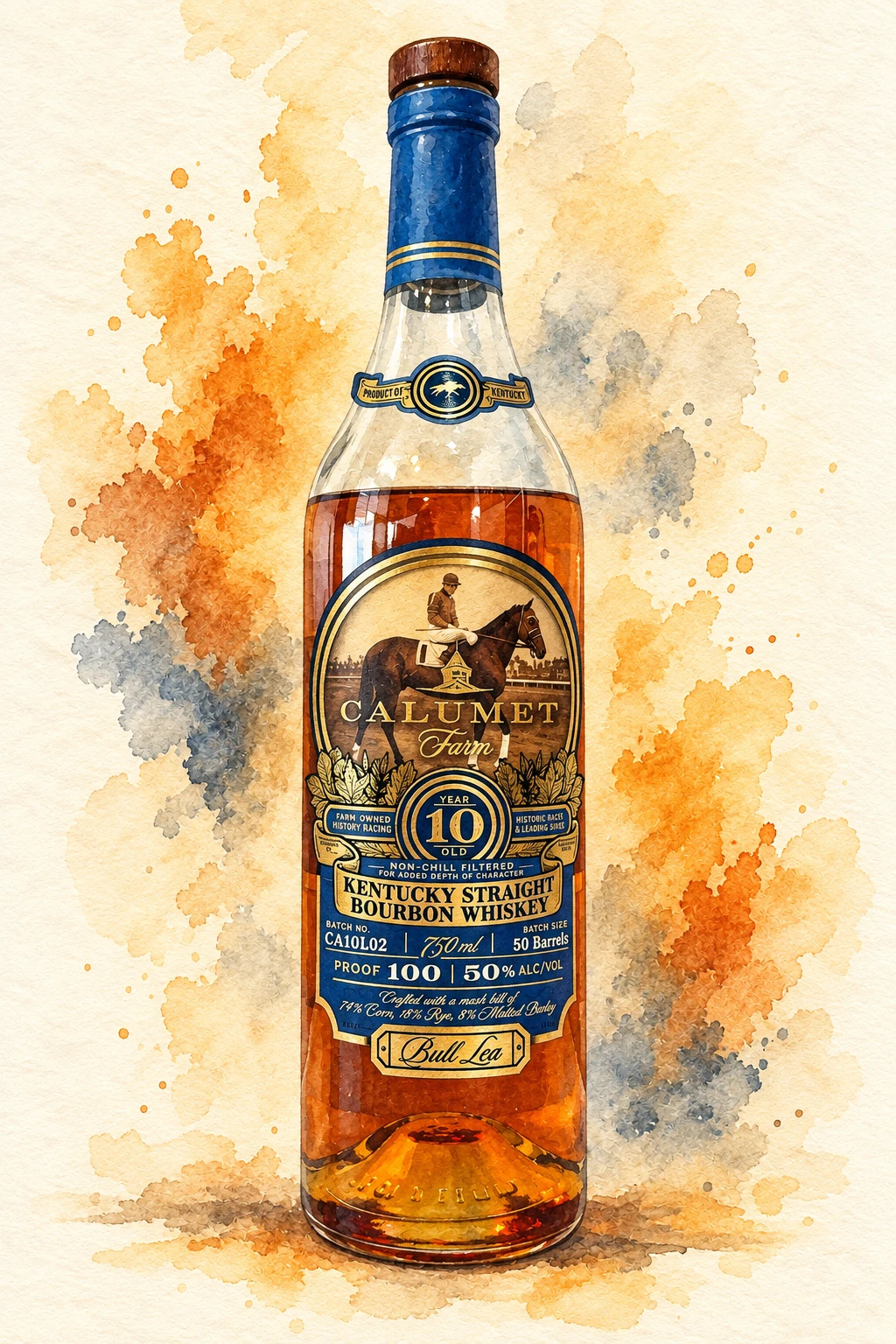
Calumet’s FAQ describes Western purchasing young Kentucky straight bourbon a few years before 2010 and caring for it in its original barrels. It explicitly calls Western an NDP. The disclosed bourbon recipe is 74% corn, 18% rye and 8% malted barley. The original Kentucky distillery remains unnamed here. Similarity to another producer’s recipe is insufficient evidence to identify it.[15]
The rack matters
Single Rack Black is organized around nineteen-barrel batches from one center-cut rack. The brand describes careful sampling and selection before barrels become a release. That makes location within maturation storage part of the production story. Comparing editions can reveal how the portfolio presents age and selection, while differences between batches prevent treating the lineup as a laboratory-controlled aging experiment.[16]
Flavoring and straight bourbon are separate branches
Western describes Bird Dog flavored whiskey as built on barrel-aged Kentucky bourbon. Flavor additions create one product family; unflavored bourbon creates another. Read the individual expression rather than borrowing the age, proof or production category from a neighboring bottle. The brand relationship explains their family resemblance without making their legal designations or recipes identical.[25]
A grain recipe can change the direction
Calumet’s Centennial rye uses 91% rye and 9% malted barley. That is a substantial change from the corn-led bourbon recipe, not simply a new age statement for the same spirit. The brand describes pepper, caramel and warm oak, but those are producer tasting notes rather than a promise that every drinker will perceive the same balance.[21]
Documentation is part of the batch
Sam Houston’s fourteen-year program sampled and ranked barrels before combining three at a time for state batches. Its fifteen-year successors used two or three barrels, with non-chill filtration and individually recorded bottle information. Those details make the release and batch essential to identification; a shared brand and age statement do not erase meaningful differences between editions.[11][12]
06 / The details worth knowing
The stories behind the familiar name.
A small equipment change becomes label lore
Calumet’s Whirlaway account tells of trainer Ben Jones cutting away a blinker before the 1941 Kentucky Derby to address the horse’s tendency to drift outward. The brand links that intervention to Whirlaway’s racing success. It is a memorable sporting story attached to a bourbon tribute, best understood as the brand’s retelling of racing history rather than an explanation of how whiskey was made.[18]
The trophy belongs to a modern release
The Centennial eighteen-year decanter makes the farm’s championship imagery physical. The brand reports a 98.5 rating and multiple Best of Show categories at the 2025 WSWA competition, alongside a Double Gold medal. Those are specific competition results. They explain the celebratory presentation more precisely than an unqualified claim that one bottle is the world’s best bourbon.[19]
Origin can mean returning to a bottle
Calumet’s Centennial Origin release returns to its original bottle presentation while using selected small batches and non-chill filtration. The significance is continuity in a modern brand’s presentation and selection approach. The word “Origin” does not establish a nineteenth-century whiskey business or move the spirits company’s founding back to the horse farm’s beginnings.[22]
An outdoor brand gains a conservation connection
Bird Dog’s sporting identity has a documented relationship beyond imagery. Ducks Unlimited’s April 2025 announcement describes a renewed partnership centered on the brand and wetland conservation. Its account references a first partnership in 2011. This dated record is more precise than treating an undated brand-history milestone as the sole chronology.[28]
07 / Selected expressions
Aged bourbon. Small batches. Different directions.
A curated reading of the whiskey family, selected for its role in the story. This is not an exhaustive current catalog.
Calumet Farm 16 Year Citation
A useful reference point for Single Rack Black: sixteen years, 106 proof, nineteen barrels and non-chill filtration. The named Citation tribute ties the whiskey to the farm’s second Triple Crown winner, while its release specifications disclose Bardstown and Three Springs without naming an original distillery.[17]
Calumet Centennial 17 and 18 Year
The Centennial pair extends the older-bourbon story into seventeen- and eighteen-year expressions. The eighteen-year trophy version is 118 proof and the seventeen-year glass decanter 117 proof in the launch announcement. Their heritage theme belongs to the farm’s anniversary; their ages describe maturation of the whiskey.[13][20]
Bird Dog Blackberry and Select Reserve
Blackberry is the brand’s foundational flavored expression, presented at 80 proof. Select Reserve is a separate 86-proof Kentucky straight bourbon. Together they make the portfolio’s branching strategy tangible: one uses a recognizable fruit flavor, while the other presents bourbon without added flavoring. Neither should be described using the other’s category.[23][24]
Sam Houston Small Batch Reserve, Series A
The current release program presents Series A as Kentucky straight bourbon, with individual batch identifiers. The site separately labels Tennessee, Texas and combined Tennessee/Texas branches as upcoming. That makes them future program plans rather than confirmed released bottles. State-oriented branding and batch destinations also should not be mistaken for proof of a distillery location.[26][27]
08 / The Reserve connection
Continue from the story to the bottles.
Western Spirits Beverage Company in The Thelen Reserve
6 physical bottle records connect this story to the collection. Each keeps its own proof, barrel, batch, pick and release details.
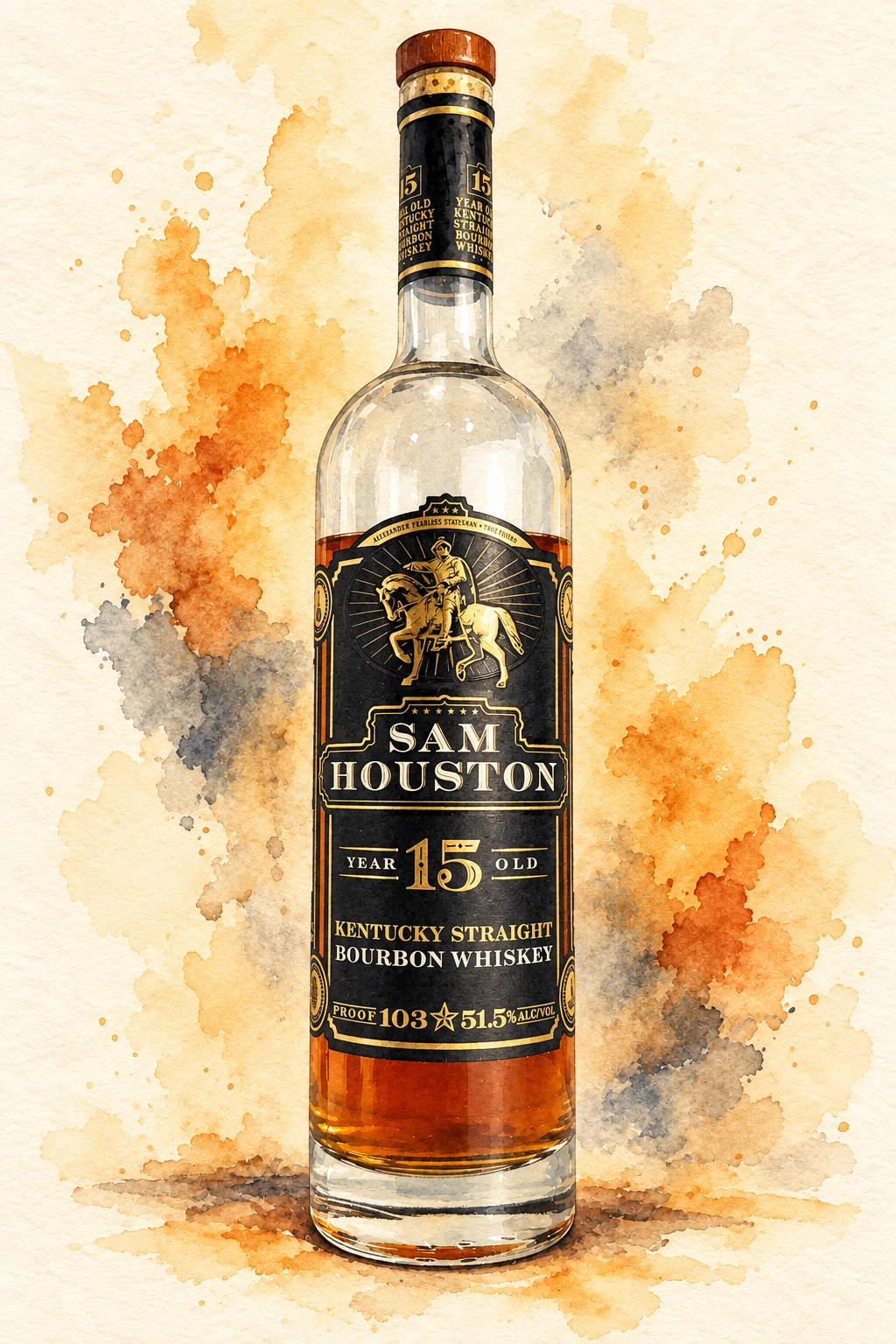
Sam Houston 15 Year Kentucky Straight Bourbon Whiskey
W0415 · 103 proof · Bottle 317 · Batch AZ-1 · Bottled / release detail Bottle317of498;batchAZ-1;3barrels;age at bottling15years00months. No exact bottlingdate printed. · Barreled detail 04/2006 (April2006,month/year only). Corrected earlier04/2016 transcription from supplied label close-up; exact day unspecified.
Collection snapshot: October 22, 2026. Approved watercolor artwork appears where an exact record or verified release match is available. Separate physical bottles and release distinctions are preserved.
Collection notes
Six physical bottle records connect this story to the collection: five Calumet Farm expressions and one Sam Houston release. Their proofs, batch codes and bottle distinctions remain separate.
The illustrated companion
Western Spirits Beverage Company, in three pages.
Origins and people, history and places, whiskey and stories. The approved illustrated companion includes linked research sources.
Researched October 15, 2026. Official brand and company pages, dated announcements and clearly identified supporting sources are distinguished in the research. Product specifications are release- and market-specific.
Research qualifications
Researched October 15, 2026. Selected portfolio coverage; historical roles retain their documented dates. Illustrations are symbolic, not exact facility records.
The dated 2017 announcement supplies the qualified 2008 company date. Secondary 2006/2009 dates were not adopted.
Farm heritage, brand establishment and first bourbon release are distinct events.
Original older-bourbon distillery and complete current ownership tree remain undisclosed in the reviewed evidence. No Barton or Three Springs ownership inference is made.
The dated April 2025 Ducks Unlimited renewal takes precedence over the brand timeline’s 2024 summary.
Legacy “most aged” descriptions are superseded by Centennial editions. Upcoming Sam Houston branches remain plans, not published releases.
Full sources
Western Spirits company homeCompany mission, Bowling Green home and portfolio context. Note: Corporate presentation does not disclose the complete current ownership structure.
Current Western Spirits brandsCurrent principal brand portfolio. Note: Selected current brands; sitemap retains additional brand pages.
2017 collaborative distilling announcementJanuary 30, 2017 agreement, first distillation planned that month, establishment in 2008. Note: Issuer announcement preserved by its communications agency; historical roles, not current executive roster.
Calumet Farm brand establishmentCalumet whiskey brand establishment in 2012. Note: Distinguish establishment from first release in 2013.
Calumet Farm history1924 farm founding and 2013 first bourbon release. Note: Horse-farm chronology is not a history of continuous whiskey production; internal succession dates conflict, so omitted.
Bird Dog brand history2010 brand founding and subsequent flavor development. Note: Its 2024 partnership label differs from DU’s dated April 2025 renewal; use dated partner account for that event.
Sam Houston brand establishmentBrand established in 2010 and numbered limited releases. Note: Not the birth year of its historical namesake.
Lexington brand2012 establishment, equine namesake and Kentucky maturation. Note: Official page remains accessible despite omission from six-brand main menu; no discontinuation assumed.
Bird Dog Small Batch announcement, 2016Issuer press release dated June 20, 2016; 86-proof bourbon and July distribution. Note: Historical product announcement, not proof current Select Reserve is an identical blend.
Sam Houston second 12-year releaseMay 2019 release, late-2018 first release, Nally and Hargrove curation. Note: Selection assistance does not establish original distillation at Bardstown Bourbon Company.
Sam Houston 14-year announcement2020 14-year release, 98 proof, three-barrel state batches. Note: Historical release; not a specification for every Sam Houston bottle.
Sam Houston Release No.7 announcement2021 spring and fall 15-year editions, 103 proof and two/three-barrel batches. Note: Historical releases; present availability varies.
2025 Centennial Collection announcementApril 23, 2025 six-expression announcement and Tim Livesay role. Note: Anniversary honors farm founded in 1924; not a century-old bourbon company.
Bird Dog Select Reserve announcementNovember 25, 2025 straight bourbon launch at 86 proof. Note: A named new release; earlier Bird Dog bourbon existed in 2016.
Calumet production FAQNDP reserve sourcing, Three Springs bottling and distinction from BBCo contract. Note: Original Kentucky distillery is unnamed; do not infer Barton from mash bill.
Calumet curation and Single Rack BlackReserve curation, 19-barrel center-rack batches and aging comparison. Note: Brand description, not a controlled experiment or independently verified flavor guarantee.
Calumet 16 Year CitationMarch 2006 barreling, Bardstown maturation/distillation, 106 proof and Three Springs. Note: Older “most aged” promotional wording is superseded by Centennial editions.
Calumet 15 Year Whirlaway15-year 105-proof bourbon and Whirlaway blinker anecdote. Note: Anecdote attributed to brand; not presented as new eyewitness reporting.
Calumet Centennial 18-year trophy18-year trophy decanter, mash bill and reported 2025 awards. Note: Competition accolades scoped to named event, not universal best-whiskey claims.
Calumet Centennial 17-year decanter17-year edition and reported 2025 WSWA recognition. Note: Farm heritage does not establish distillation on farm.
Calumet first ryeFirst rye and 91% rye / 9% malted barley recipe. Note: Rye recipe must not be generalized to Calumet bourbon.
Calumet Origin Centennial bourbonOriginal bottle presentation, small batches and non-chill filtration. Note: Origin describes brand presentation, not an older founding date.
Bird Dog BlackberryFoundational flavor, 80 proof and cocktail emphasis. Note: Brand tasting descriptions are attributed; no claim all flavored products share every specification.
Bird Dog Select Reserve current pageCurrent 86-proof Kentucky straight bourbon and sensory descriptions. Note: No disclosed exact age, source distillery or mash-bill percentages on page.
Bird Dog portfolio and processBarrel-aged Kentucky bourbon foundation and flavored versus unflavored branches. Note: Scope to whiskey products; avoid extending bourbon specifications to every cocktail/RTD.
Sam Houston current release programCurrent Series A Kentucky and upcoming Tennessee/Texas branches. Note: B, C and D explicitly upcoming; do not call them released.
Sam Houston Small Batch ReserveSeries A current batch identifiers and Kentucky straight bourbon. Note: State batch destination is not necessarily state of distillation.
Ducks Unlimited partnership renewalApril 15, 2025 renewal, original 2011 partnership and Luis Cabrera role. Note: Date preferred over undated brand timeline; partnership is conservation sponsorship, not ownership.
Citation, National Museum of RacingCitation’s 1948 Triple Crown and Calumet racing heritage. Note: Racing history, not whiskey production; full-page automated fetch intermittently failed, official search retrieval used.
Warren Wright racing biographyWarren Wright’s role in developing Calumet Thoroughbred racing. Note: Museum search retrieval supports heritage; full-page automated fetch intermittently failed.