TJ THELEN'S COLLECTION
The Thelen Reserve
Behind the Bottles / A Colorado single malt story

Stranahan’s

Last updated Last researched

One grain. A mile-high home. A wider idea of American whiskey.

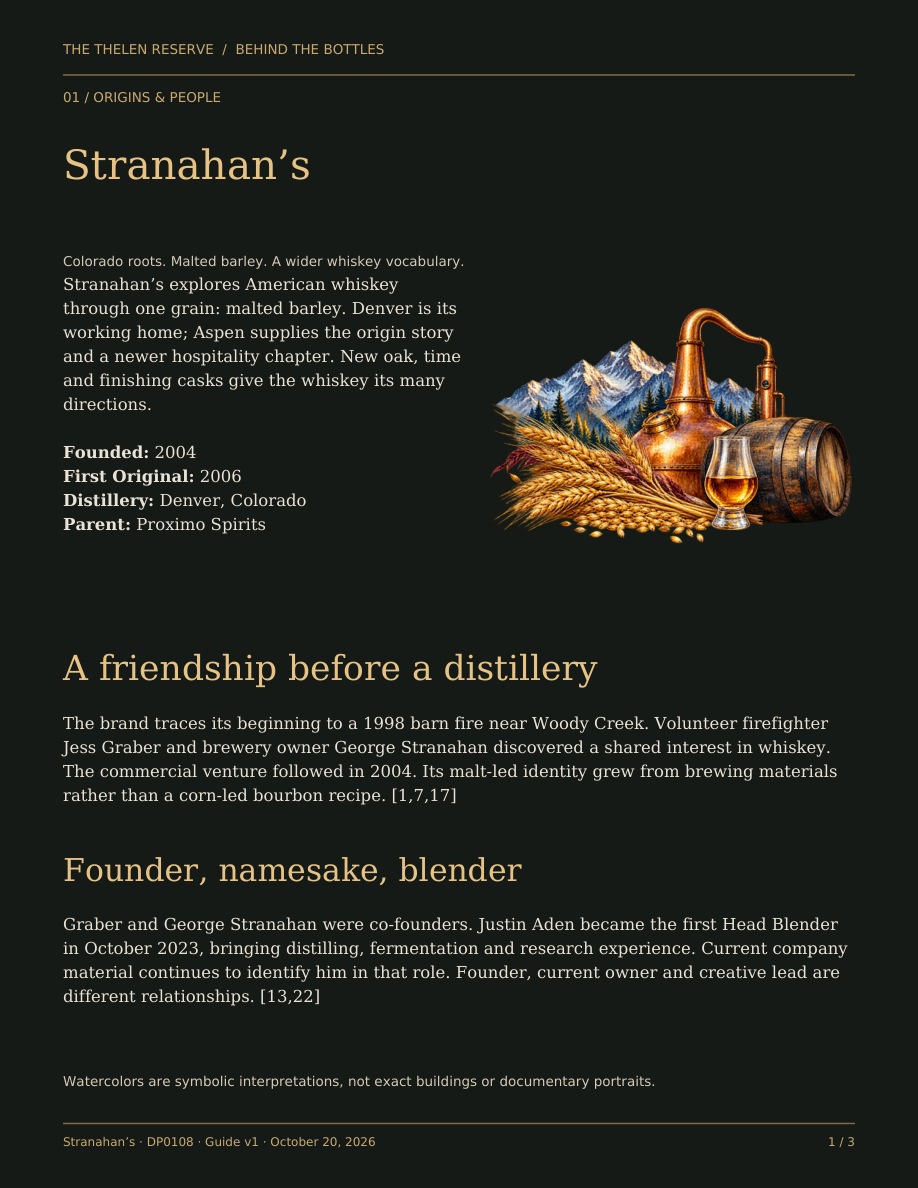
Stranahan’s tells an American whiskey story without leaning on corn. Malted barley is the starting point; Denver is the working home; new oak, long aging and a growing vocabulary of finishing casks supply the variations. A friendship near Aspen became a distillery in 2004, well before American single malt received its own federal definition. The interesting continuity is not one unchanging bottle. It is the decision to keep exploring what a Colorado-made single malt can become.[1][14][16]

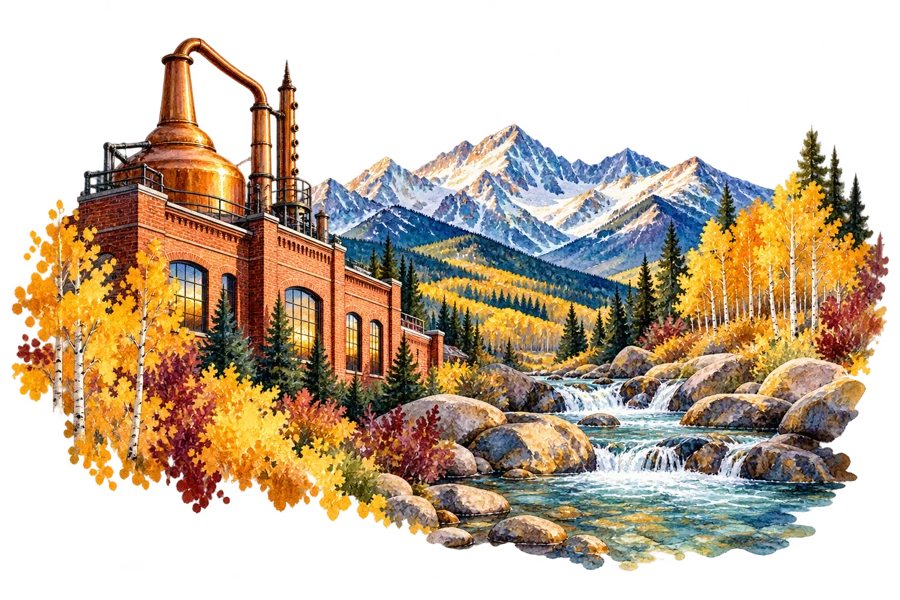
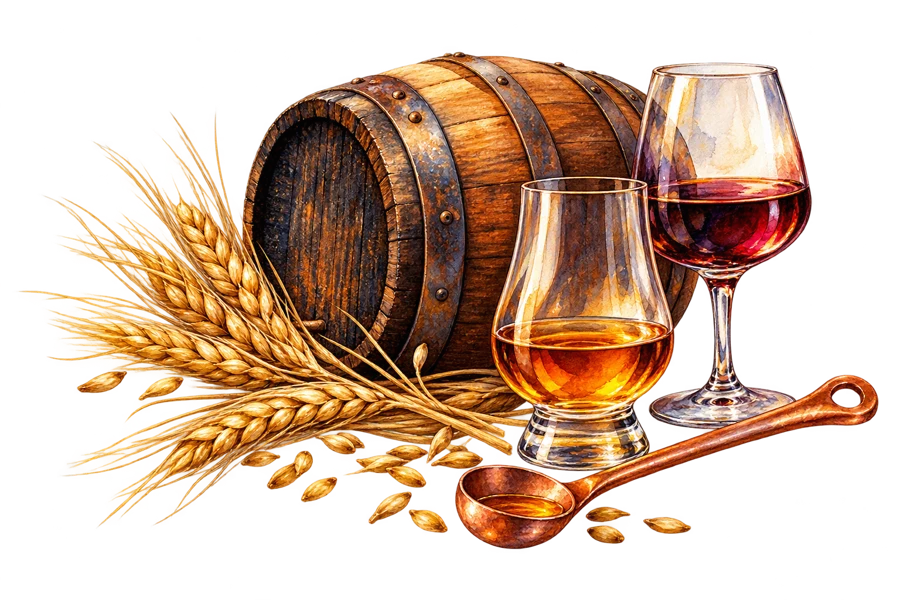
Symbolic Colorado barley, copper, oak and mountains
Founded / first release2004 / 2006[1]
DistilleryDenver, Colorado[11]
Grain100% malted barley[2]
Parent companyProximo Spirits[15][17]
01 / Origins & people

A friendship. A grain. A different direction.

A friendship before a company

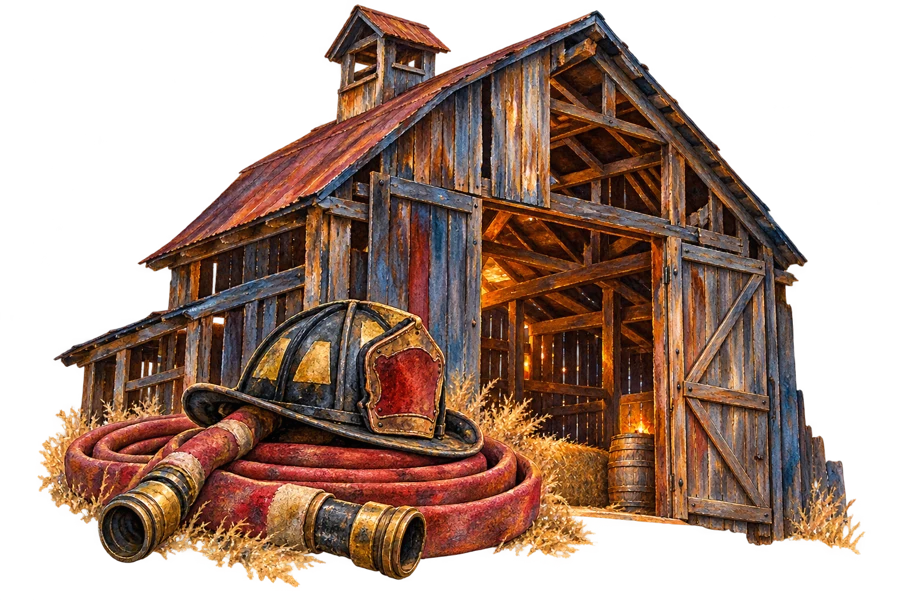
The brand traces its beginning to a 1998 barn fire near Woody Creek. Volunteer firefighter Jess Graber responded at George Stranahan’s property; the two discovered an interest in whiskey as well as the outdoors. This is the company’s origin account, not a distillery opening date. The business followed in 2004 and its first Original bottles in 2006.[1][17]

A brewer’s material, a whiskey maker’s question

George Stranahan’s brewing background matters to the identity of the whiskey. The current Diamond Peak story explicitly links Graber’s first distillation to beer mash from Flying Dog Brewery. Malt was not simply a later line extension alongside bourbon. It was the central material around which the enterprise developed. That history also explains why beer-seasoned oak can feel like a return to roots rather than a departure.[7][22]

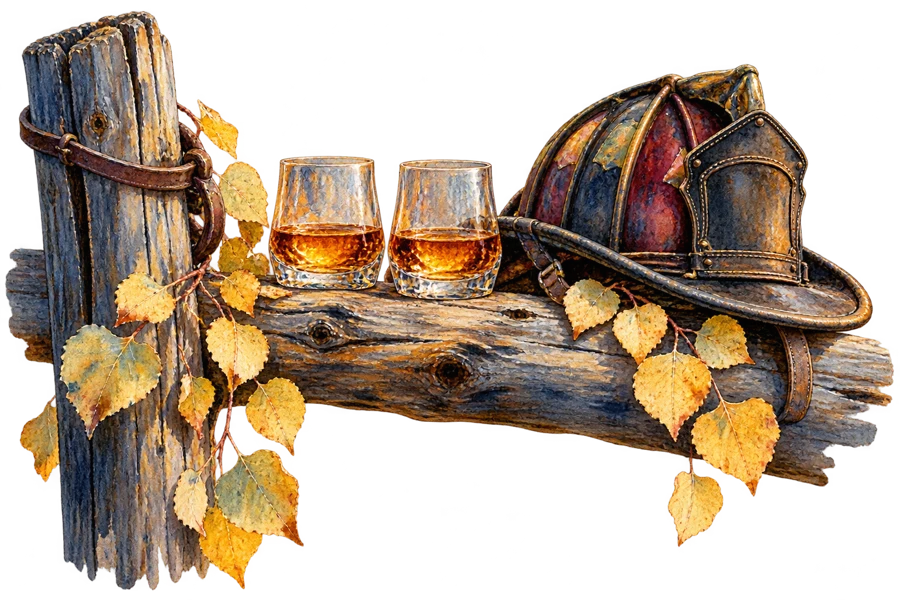
Symbolic friendship, firefighter helmet and tasting glasses

Jess Graber

Co-founder and the practical initiator of the whiskey project. The company’s early story connects his hobby distilling and volunteer firefighting to its Aspen-area origins. Later announcements still identify him as founder, including the 2025 Founder’s Release and the 2026 Colorado 150 initiative. A continuing founding role should not be confused with current independent ownership.[14][22]

George Stranahan

Co-founder, brewery owner and the person whose surname the whiskey carries. His connection to brewing helped establish the project’s malt-led direction. The current brand and Proximo histories both preserve the partnership with Graber, while the Flying Dog connection remains part of the producer’s account of its first whiskey.[1][7][17]

Justin Aden

Appointed the first Head Blender in October 2023, with responsibility spanning blending, distillation and maturation. His earlier work included Michigan State’s Artisan Distilling Program, Headframe Spirits and Valentine Distilling. Official 2026 material continues to identify him as Head Blender. The role helps explain a portfolio increasingly organized around barrel selection and finishing experiments.[13][22]

02 / The illustrated history

The story, one turning point at a time.

Symbolic illustration: A fire starts a friendship
1998

A fire starts a friendship

The brand’s history places the barn-fire encounter in 1998, near Woody Creek. Graber and Stranahan’s shared whiskey interest becomes the human starting point. It remains an attributed company account, distinct from the later commercial milestones.[1][17]
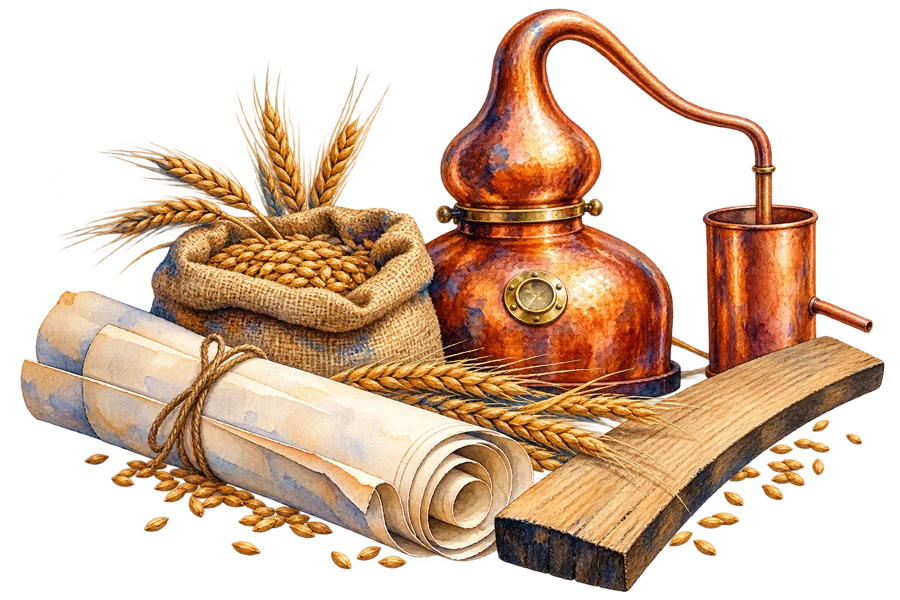
Symbolic illustration: A Colorado single malt venture
2004

A Colorado single malt venture

Stranahan’s is founded in 2004. Rather than begin with a bourbon recipe, the project commits to malted barley and a Colorado identity. Its place among early American single malt producers predates the category’s eventual federal recognition.[1][22]
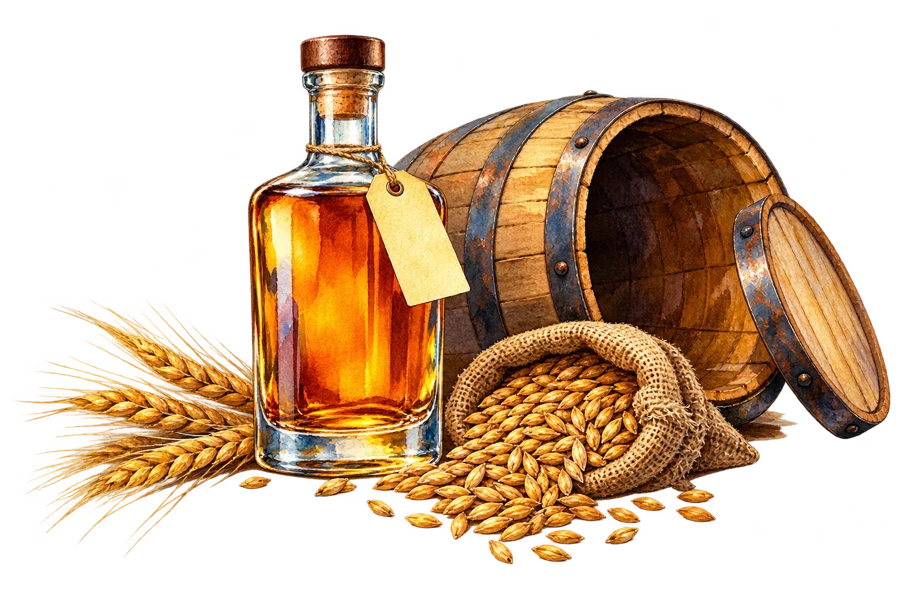
Symbolic illustration: The first Original bottles
2006

The first Original bottles

The official history dates the first Original release to 2006. This is a release milestone, not a second founding date. Those early bottles introduced the malt-centered proposition that still anchors the wider family.[1][17]
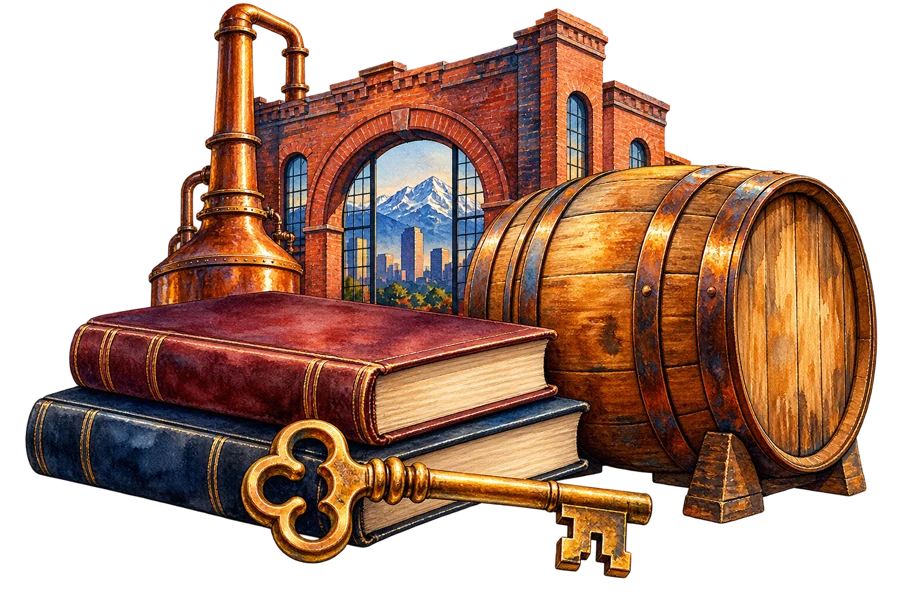
Symbolic illustration: The Proximo chapter begins
December 2010

The Proximo chapter begins

A December 2010 report reproduced Graber’s statement confirming the union with Proximo and its intended growth in production and distribution. Current company sources confirm the parent relationship. Colorado production and corporate ownership are separate questions.[18][15][17]
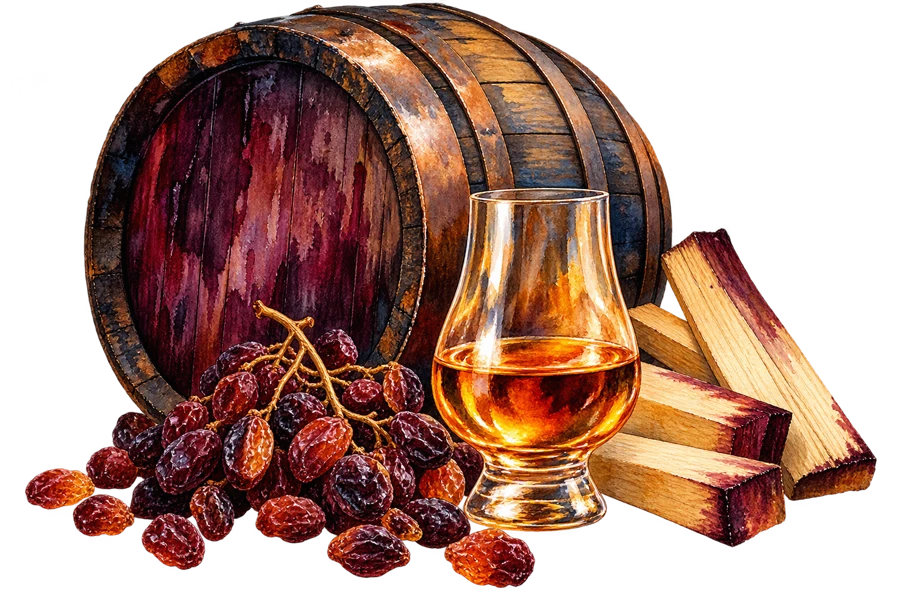
Symbolic illustration: Sherry Cask joins the range
October 2017

Sherry Cask joins the range

Contemporary October 2017 coverage documents an Oloroso-finished expression at 47% ABV. It followed tastings at the earlier Cask Thief event. This historical specification must not be replaced by today’s seven-year, PX-finished, 90-proof presentation.[19][3]
Symbolic illustration: Blue Peak adds a solera idea
October 2020

Blue Peak adds a solera idea

A dated October 2020 launch account describes four-year whiskey entering oak foeders, with a portion removed and younger mature whiskey replenishing the remainder. The 86-proof expression adds continuous mingling to the house’s new-oak vocabulary.[20][4]
Symbolic illustration: A first Head Blender
October 9, 2023

A first Head Blender

The October 9 announcement introduces Justin Aden to lead blending, distillation and maturation. His assignment includes special cask selections and Snowflake. The appointment marks a new creative chapter, not a change in the distillery’s grain identity.[13]
Symbolic illustration: Aspen gains a whiskey lodge
March 9, 2024

Aspen gains a whiskey lodge

Announced in February for a March 9 opening, the Whiskey Lodge returns the brand to its Aspen-area origins during its twentieth anniversary. The venue adds hospitality and exclusive pours; it is not presented as a replacement production distillery.[14][12]
Symbolic illustration: A category moment, marked in oak
January 2025

A category moment, marked in oak

January 2025 brings the 12-year, 120-proof Founder’s Release, using new-oak maturation followed by bourbon- and blonde-ale-cask finishing. The January 19 federal single malt standard supplies the occasion. The whiskey’s making history is older than the legal category.[15][16]
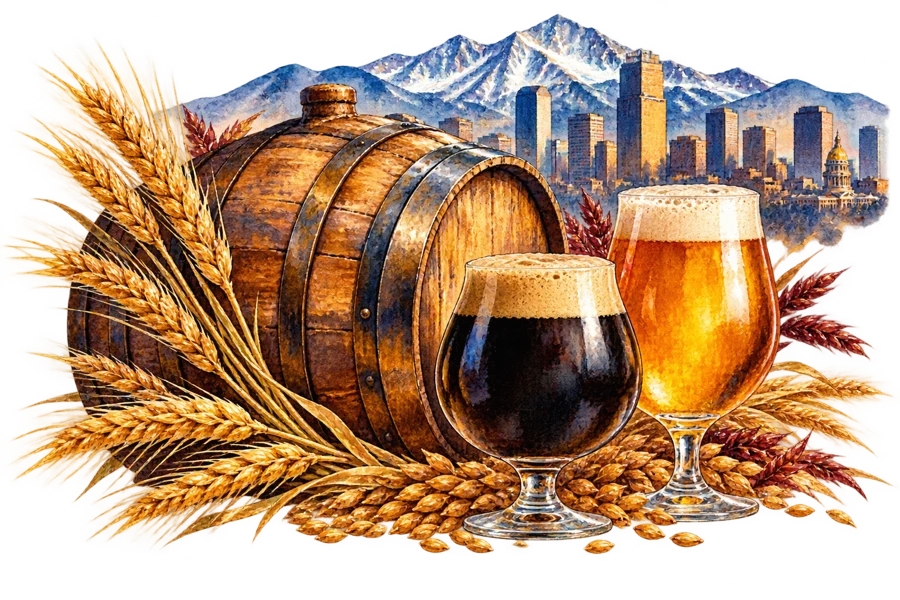
Symbolic illustration: Diamond Peak looks back to beer
2025

Diamond Peak looks back to beer

The 2025 Local Brewer’s Cask edition turns to casks associated with Colorado beers, including coffee stout, barley wine and Belgian quad styles. The release places a contemporary finishing program beside the producer’s original brewing connection.[7]
Symbolic illustration: Colorado’s pioneers take the stage
July 14, 2026

Colorado’s pioneers take the stage

The July 14 Colorado 150 initiative recognizes people in outdoor recreation, art, conservation and brewing. Jess Graber appears among the honorees. It is a state-anniversary cultural program, not a claim that every participant makes or owns the whiskey.[22]
Symbolic illustration: Eleven years, one bonded release
2026

Eleven years, one bonded release

The first Bottled-in-Bond expression is an 11-year American single malt at 100 proof. The producer identifies a January–June 2015 distilling season and new American oak with a level-three char. Its documented season and long maturation provide a different lens on the house style.[21]

Original symbolic watercolors, not documentary reconstructions of buildings or people.
03 / Geography & roles

Read each place by its role.

Symbolic Read each place by its role.

Woody Creek and the Aspen area

The origin story belongs near Aspen, where Graber and George Stranahan met. This is the geographic root of the relationship, not evidence that every later commercial batch was distilled there. Keeping that distinction makes the return to Aspen understandable without moving the distillery on paper.[1][14]

Denver’s working distillery

Production, maturation and bottling are identified with Denver. The current visitor address is 200 South Kalamath Street. A contemporary 2010 report places the move from the Ballpark neighborhood to this former Heavenly Daze site in May 2009; that move is distinct from the company’s 2004 founding.[11][18][15]

Aspen’s Whiskey Lodge

The lodge at 307 South Mill Street is a hospitality and tasting destination with special releases, food and cocktails. Current venue information includes seasonal closures. The 2024 opening announcement’s original hours should not be treated as a permanent schedule.[12][14]

Eldorado Springs

Official announcements identify Eldorado Spring water in the whiskey’s proofing story. Water source, mountain imagery and Denver production each have a different role. A spring-water reference does not by itself relocate fermentation, distillation or aging.[15][22]

04 / The whiskey family

One producer. Distinct relationships.

Symbolic One producer. Distinct relationships.

Stranahan’s and Proximo

Current parent / historical acquisition

Current Proximo brand material includes Stranahan’s, and the 2025 company release explicitly names Proximo as parent. The 2010 acquisition account supplies the historical transition. This is a corporate relationship, not evidence that every Proximo whiskey shares a mash bill or distillation site.[17][15][18]

Graber and George Stranahan

Founding relationship

The co-founders’ partnership connects practical whiskey experimentation with brewing experience. Their founding story remains meaningful after the ownership transition; origin, current control and day-to-day creative responsibility are not interchangeable roles.[1][17]

Flying Dog and Colorado brewers

Brewing roots / finishing collaborations

The Diamond Peak page credits Flying Dog beer mash in the earliest distillation and later Colorado beer casks in the 2025 edition. These are historical-material and finishing relationships, not a claim that a brewery is the present distiller of the bottled whiskey.[7]

Original, Blue Peak and Sherry Cask

Core expression families

Three routes into the house style: new-oak maturation, solera finishing and sherry-cask finishing. They belong to one producer but carry different proofs, oak histories and changing editions. A family resemblance is not release equivalence.[2][3][4]

Diamond Peak, Snowflake and Experimentals

Experimental / limited programs

These names organize limited or exploratory whiskeys. Their cask combinations and specifications change, so a program name should not be read as a single permanent recipe. The official exclusive list is a research snapshot rather than guaranteed availability.[7][8][9]

American single malt and the TTB

Category advocacy / independent regulation

Stranahan’s participated in the campaign for recognition, according to its company announcement. TTB’s separate rule supplies the actual federal date and definition. One distillery’s preferred new-oak method is narrower than the category’s permitted range of oak barrels.[15][16]

05 / Making & choosing

Malt is the starting point, not the limit.

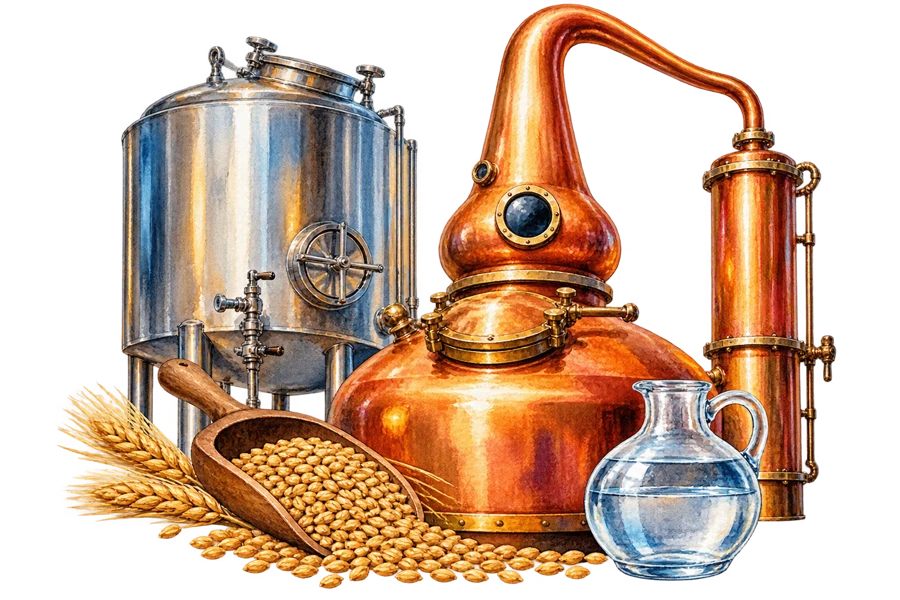
Symbolic Malt is the starting point, not the limit.

One grain is the foundation

The whiskey is distilled from 100% malted barley. That makes it a different proposition from a corn-led bourbon recipe, even when both use newly charred oak. The category’s word single concerns one distillery, not a promise that a bottle comes from one barrel or contains one age.[2][16]

Denver is more than a backdrop

The producer identifies its whiskey as mashed, fermented, distilled, aged and bottled in Denver. Its current Sherry Cask and Blue Peak pages describe double distillation. Malt, fermentation, distillation and maturation are successive parts of the flavor story, rather than mountain water being an explanation for everything.[15][3][4]

New oak first, other casks later

New American white oak is a recurring house choice. Finishing can then bring PX sherry, Port, beer, Calvados or other cask histories into selected releases. It is important to distinguish an American-made base spirit from an internationally sourced finishing vessel.[3][6][7][8]

Solera is a mingling system

Blue Peak’s launch account describes a continuing reservoir in oak foeders, drawing off only part of the contents before replenishment. This is not permission to assign the oldest component’s age to the whole mixture. The current brand presentation retains the solera identity and 86-proof strength.[20][4]

Time and evaporation have a cost

Mountain Angel highlights extended maturation and substantial evaporation. The 12-year page describes some selected barrels losing more than 80% of their contents. That is a release-specific producer claim, not a universal warehouse rate or a scientific conversion of Colorado years into Scotch years.[5][6]

A batch name is not a permanent specification

Original is now described as 94 proof with a six-to-nine-year barrel marriage. Sherry Cask’s current page instead lists 90 proof and a transition to a seven-year age statement. Older releases must be read through their own labels and contemporary evidence, especially when cask type and strength have changed.[2][3][19]

Bonded identity, documented season

The 2026 release ties 100-proof bottling and eleven years of maturation to a stated 2015 distilling season. It is a specific expression, not a change that retroactively makes the entire portfolio bottled-in-bond. Read the producer’s release details alongside the particular bottle.[21]

06 / The details worth knowing

The traditions around the liquid.

Symbolic The traditions around the liquid.

The bottling line became a community

The volunteer bottling program began as a practical answer to limited labor and equipment, according to the company. It evolved into a shared hands-on tradition: selected crews help with tasks such as corking, labeling and boxing. The emotional connection is real participation, not simply a tasting-room souvenir. Current selection rules and availability belong on the live program page.[10]

Snowflake is both whiskey and gathering

Snowflake combines unusual cask finishes with an annual winter release ritual. The current event page describes camping and first-come, in-person sales. Its logistics are time-sensitive, and different pages contain inconsistent calendar labels. The durable story is the blend and the community around its release, not an unverified promise about a future date or bottle allocation.[9][8]

Sherry Cask shows why labels matter

The 2017 launch account describes Oloroso finishing at 94 proof, while the current product page names PX, 90 proof and a seven-year transition. The expression name stayed recognizable as the specification evolved. Reading those pages together is more informative than forcing a single recipe onto every bottle with the same name.[19][3]

A lodge is a return, not a relocation

Aspen gives the founders’ origin story a public setting. Lodge-only Calvados whiskey made that return tangible through a release associated with the opening. Denver continues to carry the distilling role. The two places let a visitor explore different parts of the same brand without conflating hospitality and production.[14][12]

The rule recognized a living tradition

Federal recognition arrived in January 2025, after producers had already spent years making American single malt. Founder’s Release used mature whiskey to celebrate that moment. The lesson is a distinction between the age of a category’s legal definition and the age of the craft practiced under its name.[15][16]

07 / Selected expressions

Different routes through the same malt.

Selected for their role in the story, not as an exhaustive or guaranteed-current sales catalog. Specifications belong to the edition named.

Original

The baseline for understanding the house: malted barley, newly charred American oak and 94 proof. The current page describes barrels aged six to nine years and non-chill filtration. Those current details are useful context, not retrospective specifications for all Original batches.[2]

Blue Peak

An 86-proof, solera-finished interpretation associated with Aspen’s mountain landscape. The 2020 launch account describes four-year whiskey and continuing marriage in foeders. It makes the house’s blending method as interesting as the individual casks.[4][20]

Sherry Cask

The historical Oloroso release and current PX presentation should be distinguished. Today’s page lists 90 proof and a seven-year age statement, with older non-age-stated stock still in transition. The expression is an especially useful example of why proof, batch and label evidence matter.[3][19]

Mountain Angel 10 and 12

The longer-aged family provides another perspective on new oak and evaporation. The current ten-year page lists 90.2 proof for its displayed batches; the twelve-year page lists 94.6 proof and Port finishing. Keep the ages, batches and cask treatment separate.[5][6]

Diamond Peak / Local Brewer’s Cask

The 2025 edition uses beer-conditioned casks and is listed at 90 proof. Other Diamond Peak editions have explored different finishing materials, including rum and tequila casks. The annual program name is a creative framework, not a permanent finish.[7]

Founder’s Release / 12 Year

Announced January 17, 2025 at 120 proof, this limited release combines a twelve-year total maturation with bourbon- and blonde-ale-cask finishing after new oak. It commemorates the category milestone and is distinct from Mountain Angel 12.[15]

Bottled-in-Bond / 11 Year

The 2026 expression is the house’s first bonded release, bottled at 100 proof. Its stated January–June 2015 distilling season and eleven years in new American white oak make it a useful counterpoint to the finished expressions.[21]

Snowflake and distillery exclusives

Snowflake, Calvados, Sauternes and rotating Experimentals show the range of the cask program. Their recipes and availability vary. An edition’s name, proof and actual cask history matter more than a generic assumption that every exclusive uses the same finishing process.[8][9]

08 / The Reserve connection

Continue from the story to the bottles.

Stranahan’s in The Thelen Reserve

1 physical bottle record connects this story to the collection. Each keeps its own proof, barrel, batch, pick and release details.

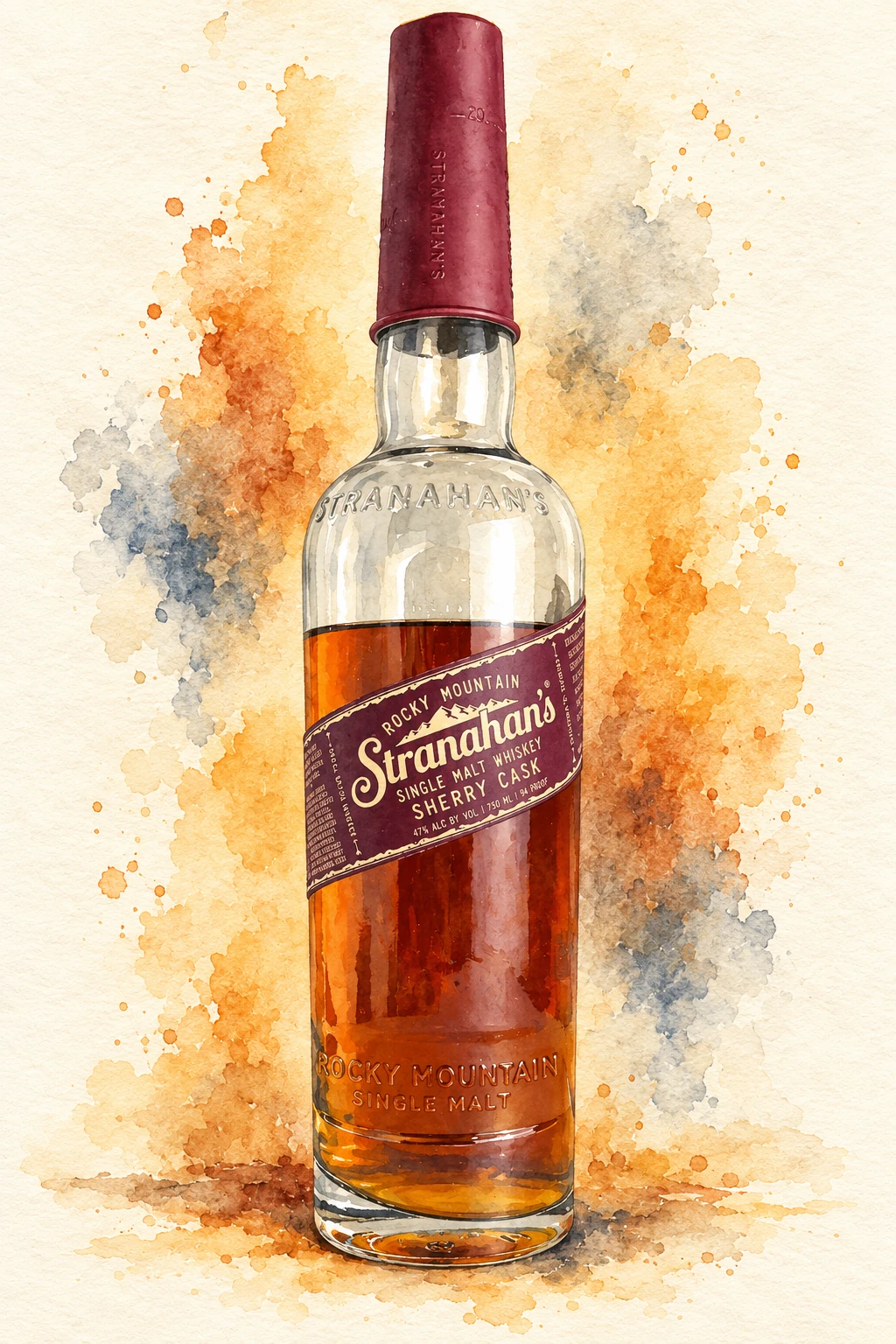
Approved watercolor of Stranahan's Single Malt Sherry Cask

Stranahan's Single Malt Sherry Cask

W0446 · 94 proof · Bottle 6299 · Batch 010

Collection snapshot: October 22, 2026. One physical record, with release identity kept separate. No price or storage details are published.

Stranahan’s three-page guide cover
The illustrated companion

Stranahan’s, in three pages.

Origins and people, history and places, whiskey and stories. An edited companion with linked research sources.

Sources & research notes

Researched October 20, 2026. Official producer and company sources, the TTB and clearly identified contemporary supporting reports. Product details are edition-specific.

Research qualifications

  • Origin fire, company founding, first bottle release and current-site move are distinct events. The barn-fire narrative is attributed to the company.[1][18]
  • Current Proximo ownership is independently confirmed by current company pages. The December2010 transition and May2009 site move use contemporary reporting, with Graber’s statement reproduced.[17][18]
  • Current Sherry Cask specifications differ from the2017 Oloroso/94proof release. Do not apply current PX/90proof/7year claims to unidentified historical editions.[3][19]
  • Diamond Peak, Snowflake, Mountain Angel and Experimentals contain release-specific specifications. Undated current-batch counters and availability notices are not timeless facts.[5][6][7][8][9]
  • Denver aging is not converted into equivalent Scotch age. Evaporation percentages and sales/award superlatives are attributed brand claims, not independently measured universal conclusions.[6][22]
  • The2010 company report,2017 Sherry report and2020 BluePeak report are supporting contemporary secondary sources; brand statements, product pages and TTB provide primary support for the current profile.[18][19][20][16]
  • Event dates and visitor hours change. Inconsistent Snowflake year/day labels are not repeated as an actionable future schedule; the lodge’s original2024 daily hours are not current operating guarantees.[9][8][12][14]

Full sources

  1. Founding and origin account1998company origin narrative;2004founding;2006first Original;100%malt andpeople Note: Primary brand history. Promotional first/leading language not treated as an independently audited superlative.
  2. Original current productCurrent94proof,6–9yearbarrel marriage,new American oak#3char,nonchill filtration Note: Undated product page/currentbatch counter cannot identify every historical batch.
  3. Sherry Cask current productCurrent90proof,PXcask finish,7yeartransition;older NASstock5–7year marriage Note: Different from the2017Oloroso94proofrelease. Specific historical bottle not inferred.
  4. Blue Peak current product86proof,4yearbase,new American oak#3char,solerafinish,peaknamesake Note: Does not independently establish precise2020launchday.
  5. Mountain Angel 10 Year10yearnew American oak;90.2proof fordisplayedbatches3/4 Note: Brand comparison toolderScotch not endorsed as age equivalence.
  6. Mountain Angel 12 Year12year,total maturation,Portfinish94.6proof;selectedbarrels>80%loss Note: Some pagewording mixesnewoakandPortroles;exactphase durations notinferred.
  7. Diamond Peak current and prior editions2025Local Brewer's Cask90proof;Flying Dogearlymashconnection;priorfinishes Note: Page gives overlapping6yearand4–6plus1.5–2wording,do notinferoneuniversal exacttotalage.
  8. Only at Stranahan’sCalvados,Sauternes,rotating Experimentals,distinctcaskandgrainapproaches Note: Availability/time-sensitive details and inconsistentSnowflakecalendarnotused asguarantee.
  9. Snowflake annual eventWintercommunityritual,onsiterelease,caskfinishing Note: Future calendar labels differ acrosspages;noactionableschedulepromised.
  10. Volunteer bottlingSmallbusinessoriginofprogram,crewline tasks,randomselection Note: No participation availability promised;live programrules govern.
  11. Denver distillery experiences200South Kalamath,Denverproduction/visitorroles Note: Hours andbookingavailabilitynot reproduced.
  12. Aspen Whiskey Lodge307SMill St,hospitalityand Calvadosrelease,seasonalclosures Note: Venueisnotassertedaseparateproductiondistillery.
  13. Justin Aden appointment, October9,2023Companyannouncementfirst Head Blender,responsibilities,MSU/Headframe/Valentinehistory Note: Historical appointment crosscheckedwith2026currenttitle.
  14. Aspen opening announcement, February20,2024March9opening,20thanniversary,Calvadoslodgeexclusive Note: Announcementandopeningdatesdistinct;originalhoursnotretainedascurrent.
  15. Founder’s Release announcement, January17,202512year120proof,newoakthenbourbon/blondealecasks,Denvergrain-to-glass,Proximoparent Note: Datedcompanyrelease;legalrecognitioncrosscheckedTTB.
  16. TTB American single malt standardFederalruleeffective January19,2025;one USdistillery,100%maltedbarley,permittedoak Note: Regulatorycontextonly,notindividualbottlecompliancecertification.
  17. Proximo’s Stranahan’s brand pageCurrentcompanyportfolio,foundingandfirstreleasehistory Note: Currentcorporaterelationship,notshared-productionproof.
  18. Contemporary ownership and site report, December28,2010Graberstatementon Proximo;May2009Kalamathmove Note: Supportingsecondaryreportcarryingafounderstatement,notprimarypurchaseagreement.
  19. Contemporary Sherry Cask launch report, October16,2017Olorosofinish,4yearbase,47%ABV;Rob Dietrichhistoricalstatement Note: Contemporarysecondaryreport;currentPX90proofeditionseparate.
  20. Blue Peak launch report, October7,2020Launch4year86proof,foederdrawandreplenishment Note: Contemporarysecondaryreport,filtrationclaimnotuniversalized.
  21. Bottled-in-Bond releaseFirstbondedrelease,11year100proof,January–June2015season,newoak#3char Note: OldestColorado andcomparativesalesclaimsnotindependentlycertified.
  22. Colorado150 company announcement, July14,2026Pioneersinitiative,Jess Graber,current Justin Adenrole,Coloradoanniversary Note: Promotionalstateprogramnotownershiporproductionrelationship;pastsummeroffersnotpromised.
↑