TJ THELEN'S COLLECTION
The Thelen Reserve
Behind the Bottles / American whiskey

Starlight Distillery

Last updated Last researched

Huber family farm / Southern Indiana

An orchard’s long memory. A whiskey maker’s open mind.

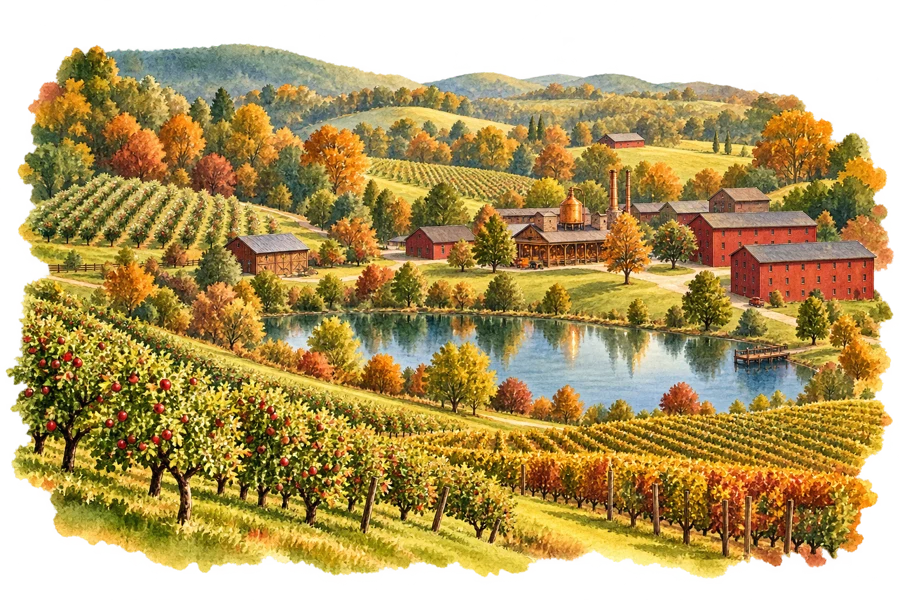
At Starlight, orchards, vineyards and grain fields explain why the Huber family first pursued fruit spirits, then built a whiskey operation. The southern Indiana farm is the setting for a modern distillery with several distinct chapters.[7]

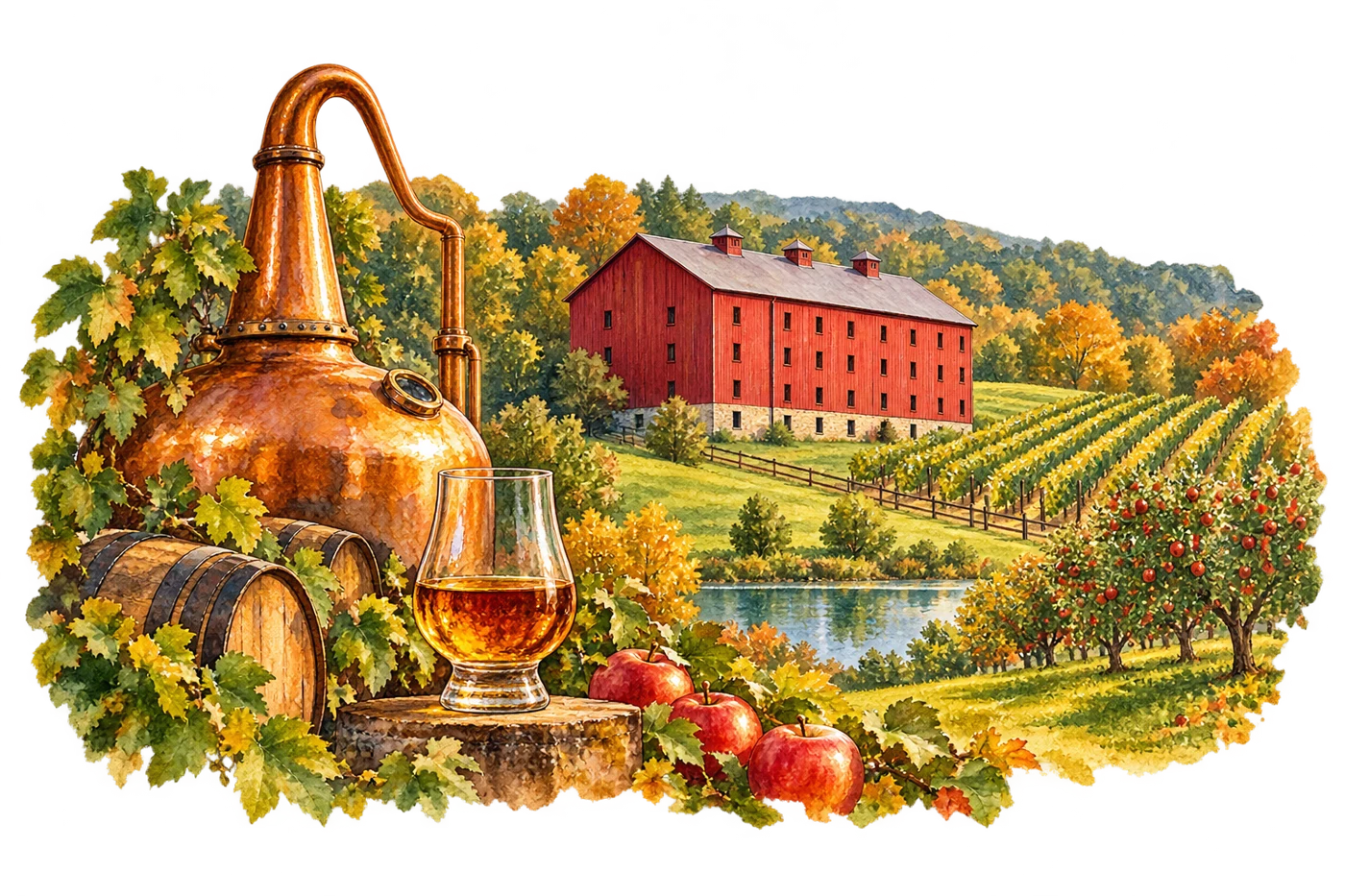
Symbolic Indiana farm, vineyards, copper still and whiskey
Home
Southern Indiana[7]
Family roots
1843 farm[2]
Modern spirits
Brandy before bourbon[20]
House approach
Sweet mash & pot stills[15]
01 / Origins & people

A family farm learns another craft.

The farm comes first

Simon Huber arrived from Germany’s Baden-Baden region in 1843 and established the family’s Indiana farm. Seven generations later, the operation combines agriculture with markets, hospitality, wine and spirits. That breadth matters: Starlight developed within a working family enterprise, with fruit and visitors already part of daily life.[2]

An agricultural route to the glass

A Purdue visit in 2019 described a diversified farm growing apples, peaches, grapes and other crops alongside its beverage businesses. The direct-to-visitor model developed over decades. Reading Starlight through that landscape makes brandy a logical beginning and whiskey an expansion of the same agricultural curiosity.[5]

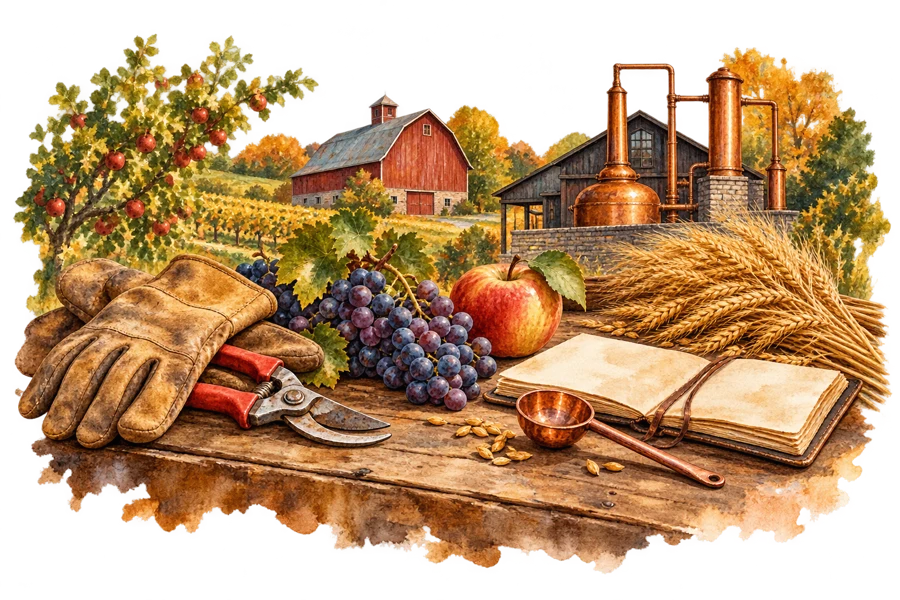
Symbolic pruning tools, fruit and a family notebook

Ted and Greg Huber

Sixth-generation leadership

DISCUS describes Ted as a master distiller and head winemaker and identifies first cousin Greg as a co-owner of the parent farm, winery and vineyard business. Their complementary agricultural and beverage responsibilities help explain why Starlight crosses categories so naturally.[4]

Christian and Blake Huber

Seventh-generation continuity

Christian returned in December 2017 after studying viticulture and enology at Niagara College. Blake’s winery connection is visible in the estate’s own account. Their work links formal training with family experience in fermentation and hospitality.[4][3]

Dana Huber

A public and industry voice

The public story extends beyond distilling. DISCUS recognized Dana and Ted together with its 2023 Dave Pickerell Memorial Craft Member of the Year award, acknowledging a partnership whose industry role reaches beyond the production floor.[12]

Carl T. Huber

Names that carry the story

Carl T. bourbon names a fourth-generation Huber family patriarch. The ancestor’s name connects the modern whiskey label with the family that established the farm.[15]

02 / The illustrated history

From fruit spirits to a whiskey estate.

Follow the family farm, brandy beginnings and modern grain operation. Farm, licensing and production dates mark different stages.
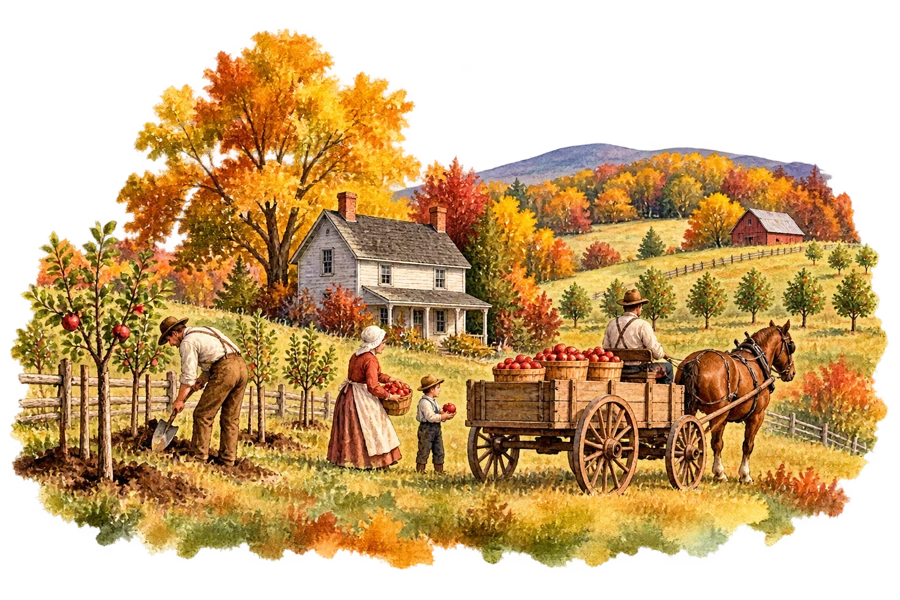
Symbolic illustration: A family farm takes root
1843

A family farm takes root

Simon Huber establishes the Indiana family farm after emigrating from Germany. This is the beginning of the agricultural lineage, not the founding date of a continuously operating whiskey distillery.[2]
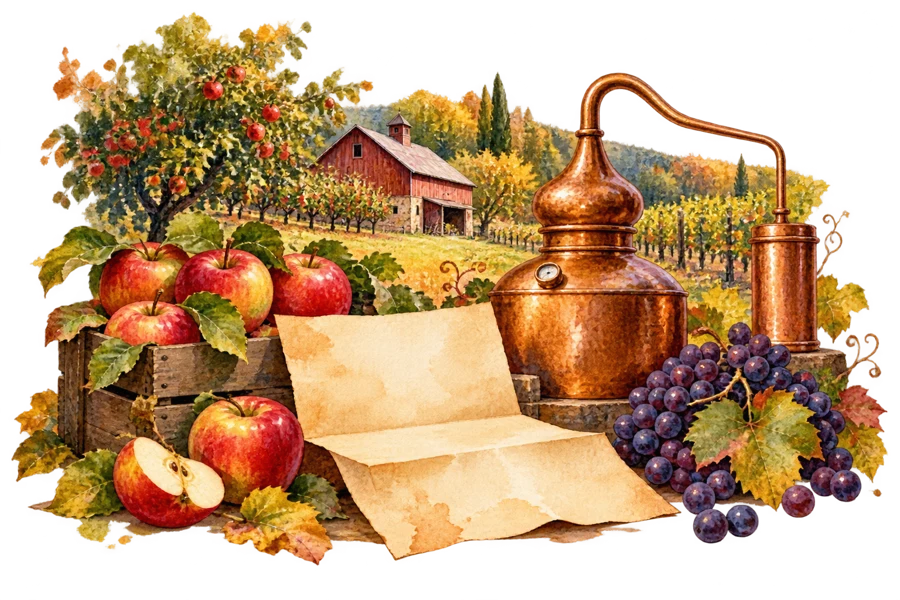
Symbolic illustration: A path toward fruit spirits
1998

A path toward fruit spirits

The family begins seeking the permissions needed for farm brandy production. The initiative grows from orchard and winemaking experience, before grain whiskey becomes part of the modern business.[1]
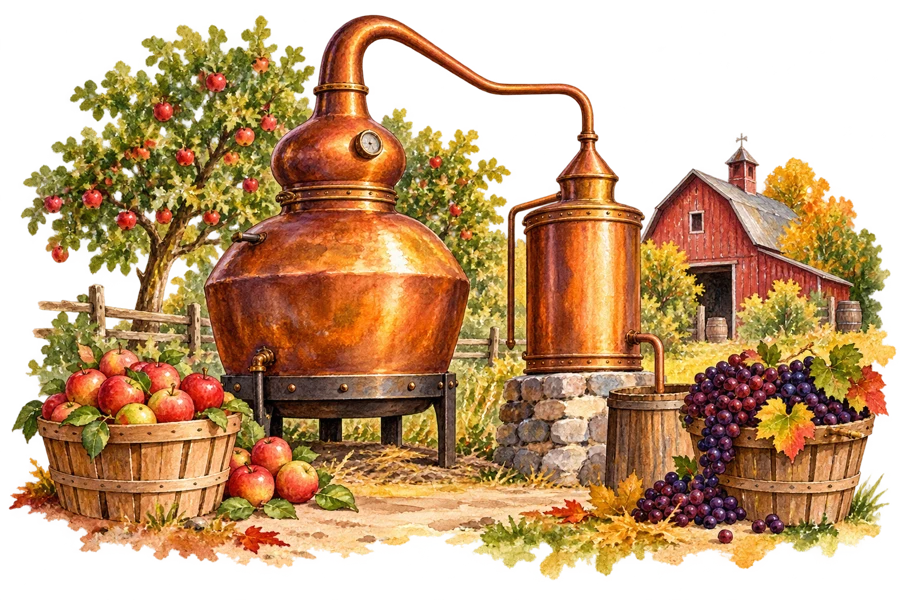
Symbolic illustration: A small copper beginning
2000

A small copper beginning

The family purchases an 80-gallon Christian Carl pot still. Its modest scale suits fruit distillation and gives the modern spirits story a tangible starting point in equipment rather than a romantic nineteenth-century whiskey claim.[1]
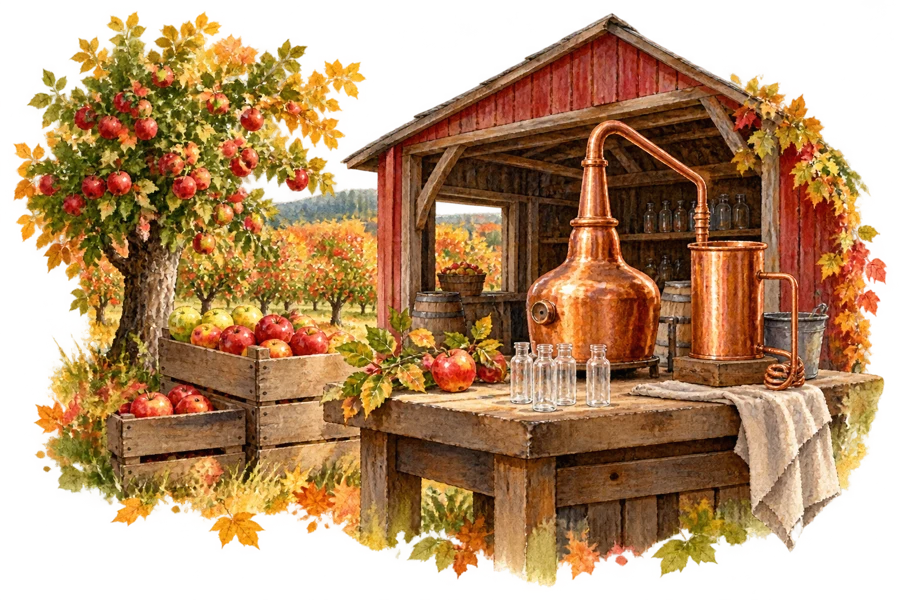
Symbolic illustration: Starlight’s licensed brandy era
2001

Starlight’s licensed brandy era

Dated anniversary reporting identifies 2001 as the licensing year for Starlight Distillery. Early production centered on fruit spirits, building a beverage business alongside Huber’s established farming and winery activities.[6]
Symbolic illustration: The first brandy reaches retail
November 2004

The first brandy reaches retail

The producer dates its first retail brandy to November 2004. Permit work, equipment purchase and first sale describe separate stages of the modern spirits operation.[1]
Symbolic illustration: Grain joins the farm’s spirits
2013–14

Grain joins the farm’s spirits

Starlight dates the grain-permit expansion to 2013; Purdue’s later account describes a 2014 distillery opening. These mark the transition into the enlarged grain operation, rather than contradictory dates for the original farm.[1][5]
Symbolic illustration: The next generation returns
December 2017

The next generation returns

Christian Huber joins the family business full time after specialized wine studies. His return connects a newer generation’s formal training with the estate’s existing knowledge of fermentation and fruit.[4]
Symbolic illustration: The farm celebrates 175 years
2018

The farm celebrates 175 years

Huber’s marks the anniversary of its 1843 roots. The celebration brings the orchard, winery and Starlight together under one family history while leaving their separate operating timelines intact.[6]
Symbolic illustration: Craft whiskey earns recognition
2022

Craft whiskey earns recognition

Starlight’s award record lists ASCOT Craft Distiller of the Year and Best Craft Bourbon honors. The recognition marks whiskey’s growing visibility within a business whose first modern spirits were brandies.[9]
Symbolic illustration: Mizunara takes the spotlight
2025

Mizunara takes the spotlight

The Tasting Alliance names Japanese Mizunara Reserve Best Overall Bourbon and Best Special Barrel Finished Bourbon at its Top Shelf awards. The result highlights one particular release and competition, not a universal ranking of the entire portfolio.[10]
Symbolic illustration: A decade in the rickhouse
2026

A decade in the rickhouse

The 10 Year Reserve brings together ten barrels of estate-grain bourbon at 114.2 proof. Its age makes patient maturation visible alongside Starlight’s better-known experiments with secondary casks.[22]
Symbolic illustration: A pink bottle with a local purpose
September 2026

A pink bottle with a local purpose

The distillery promotes its September 17 Pink Bottle event with a portion of proceeds supporting Norton Cancer Institute’s Pat Harrison Resource Center. The release connects the bottle program to a named regional beneficiary.[8]
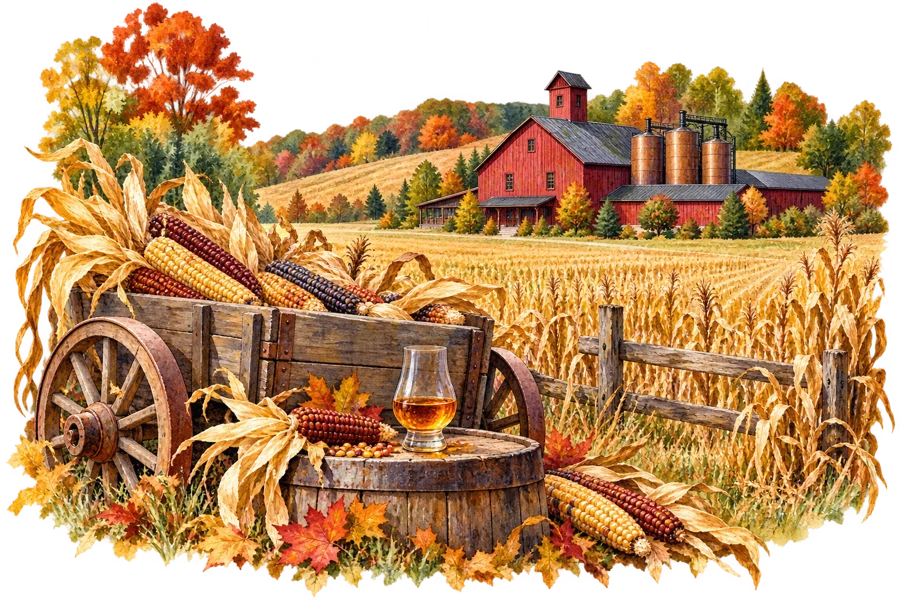
Symbolic illustration: An estate harvest becomes whiskey
October 2026

An estate harvest becomes whiskey

An October 3 announcement introduces a seven-year, 110.8-proof Estate Collection bourbon and reports that 80 percent of its grain grew on the original farm. This is a specific release claim, distinct from the ten-year Reserve.[8]

Original watercolor interpretations accompany the history. Buildings, objects and scenes are symbolic, not documentary reconstructions.
03 / Geography & roles

One name. Several places that matter.

Symbolic Indiana estate, vineyards, orchards and farm buildings

The southern Indiana farm

The visitor’s landscape contains more than rickhouses: cultivated land, a winery and family hospitality share the setting. Visit Indiana’s firsthand account is useful precisely because it approaches Huber’s as an agricultural destination rather than an isolated whiskey factory.[7]

Vineyards and winery

Huber Winery describes an estate of more than 700 acres with rolling hills and lakes. Its vineyard work and seventh-generation winemaking provide a parallel tradition in fermentation, separate from the age of Starlight’s whiskey stock.[3]

Stillhouse and warehouses

The modern whiskey facilities belong to the grain chapter. For its 2026 ten-year release, Starlight describes barrels moving from the original warehouse to Warehouse 2’s warmer west side.[22]

A postal address and a community name

Starlight uses 19816 Huber Road, Borden, Indiana, as its published address. Borden is the postal address; Starlight is the community and distillery name. A visit can connect production and barrel spaces through the producer’s tour program.[14]

04 / The whiskey family

Understand the name on the label.

Trace the producer, its expression families and the distinct roles of collaborators and historical personnel.

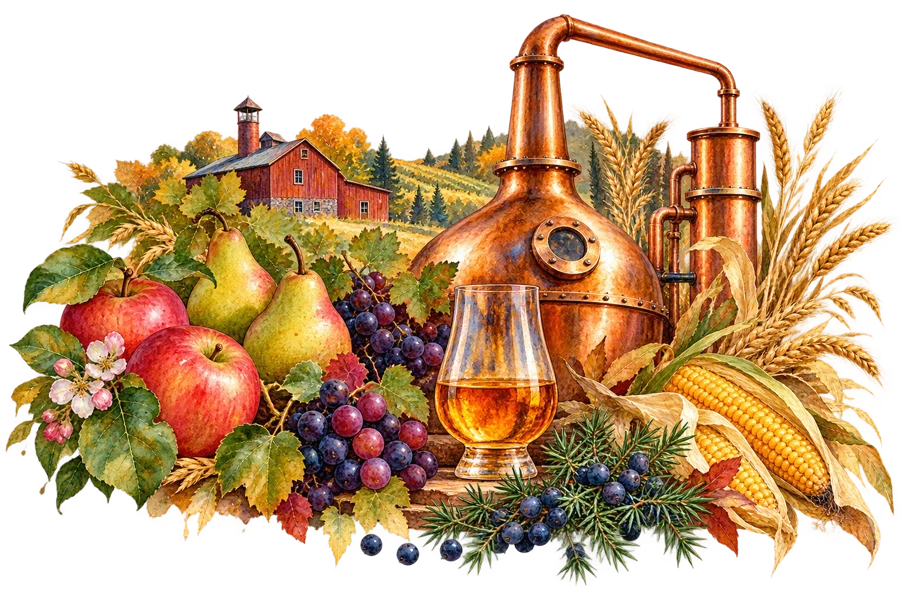
Symbolic fruit, grain and copper pot still

Huber family enterprise

Ownership and setting

The orchard, winery, vineyards and distillery are related parts of a family enterprise. Starlight is its spirits identity within that agricultural setting.[2]

Carl T. bourbon

Bourbon family

Carl T. identifies a bourbon family named for a Huber ancestor. Standard, aged and finished expressions retain their individual label specifications.[15]

Old Rickhouse rye

Rye family

Old Rickhouse names the rye line. The current standard bottling has its own proof and maturation description; double-oaked and other individual releases need their own specifications.[18]

Brandy and the wider spirits house

An enduring fruit-spirit branch

Fruit brandy remains essential to the identity, alongside grappa and apple spirits. It connects the modern operation to orchard and wine work even when whiskey receives the most attention.[20]

Finishing families

Expressions, not additional producers

Mizunara, Cigar Batch and Honey Reserve represent different secondary-cask ideas within the portfolio. Their names describe distinct release paths rather than separate ownership companies or separate distilleries.[19]

A community around selection

Membership and shared discovery

The Distiller’s Club extends the relationship through selections and experiences across whiskey and other spirits. It shows the social side of the business without changing who makes the underlying Starlight whiskey.[21]

05 / Making & choosing

The choices behind the label.

Farming, fermentation, distillation and finishing shape the whiskey. Keep every specification tied to the expression and edition named.

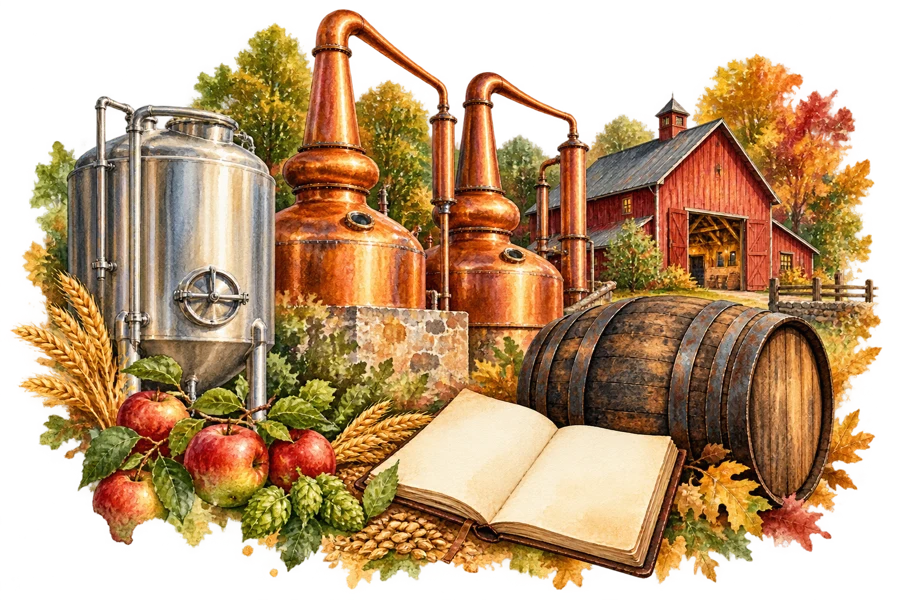
Symbolic oak finishing and copper sampling tools

Sweet mash and copper pots

Starlight describes the current Carl T. bourbon as sweet-mash whiskey distilled in copper pot stills and built from three- and four-grain bourbon components. This is the house’s published method for that expression; it is not a license to assign a fixed mash bill to every historical release.[15]

The agricultural detail

The 2026 ten-year Reserve specifically identifies estate-grown grain, heirloom corn, Indiana rye and double pot distillation on Vendome equipment. Its agricultural claims belong to that named release.[22]

A second oak chapter

The 2023 Double Oaked sell sheet describes bourbon receiving further maturation in new charred and toasted barrels. It identifies batch B2301 at 103 proof. The dated sheet is an example of process, not the specification of a different batch with a similar name.[26]

Mizunara after American oak

Mizunara Reserve starts with bourbon matured in new charred American oak, then moves into Japanese Mizunara casks. The sequence matters: the secondary wood adds another influence to already matured bourbon. The producer’s aroma descriptions are tasting claims rather than measurements.[23]

Wood beyond familiar oak

Cigar Batch uses Brazilian Amburana wood as a finishing influence on mature bourbon. The name evokes a style and occasion; it does not mean cigars are ingredients. Amburana is best identified by its own wood name rather than casually folded into American-oak terminology.[24]

The barrel as a farm connection

Honey Reserve uses barrels that previously held farm honey. The producer relates that honey to hives near the orchards and wildflowers. It is a particularly direct link between the agricultural landscape and a secondary-cask program.[25]

06 / The details worth knowing

The stories behind the familiar name.

Winemaking is part of the whiskey context

Christian’s Niagara training and Blake’s winemaking education help explain the family’s comfort with fermentation and multiple spirits categories. This is editorial context for their work.[4]

A barrel pick can start in a field

Starlight’s single-barrel program connects farm touring with warehouse selection and bottling. The producer describes blind tasting among several whiskey samples. The experience makes the path from agriculture to an individual barrel visible, rather than reducing selection to a name on a sticker.[13]

Recognition for people, too

Ted Huber appears as the 2025 Artisan Spirit of the Year recipient in the magazine’s spring issue. Paired with Dana and Ted’s 2023 DISCUS recognition, it gives the profile a human industry story alongside competition medals for individual liquids.[11][12]

A farm visit has several doors

A visitor might encounter wine, fruit, spirits and hospitality during the same trip. The producer’s tours and club build on that breadth. It is a useful way to understand Starlight: whiskey is one developed branch of an agricultural destination, with its own production history and evolving releases.[14][21]

07 / Selected expressions

Different ways into the whiskey family.

A curated reading of the whiskey family, selected for its role in the story. This is not an exhaustive current catalog.

Carl T. Bourbon

The current 92-proof bourbon introduces the core family through three- and four-grain components and minimum four-year maturation, before the variations of single barrels or finishes.[15]

Bottled-in-Bond Bourbon

The producer lists a 100-proof bourbon matured at least four years. This is a distinct presentation in the range, useful for understanding how the label communicates a particular bottling rather than merely another flavor name.[16]

Single Barrel Bourbon

The current single-barrel offering emphasizes cask strength and individual barrel character. Proof and identity belong to the selected barrel; there is no single universal number to carry across every pick.[17]

Old Rickhouse Rye

The standard current rye is listed at 92 proof, sweet-mash and copper-pot distilled, with at least four years in new American oak. It provides a baseline for reading separately specified rye variants.[18]

Mizunara Reserve

The Japanese-oak finish shows Starlight’s secondary-cask approach. Its 2025 Top Shelf awards belong to the named Japanese Mizunara Reserve entry, with the competition’s precise categories retained.[23][10]

2026 10 Year Reserve

This ten-barrel blend is bottled at 114.2 proof. It is a separate release from ten-year Mizunara and seven-year Estate Collection bottlings.[22]

08 / The Reserve connection

Continue from the story to the bottles.

Starlight Distillery in The Thelen Reserve

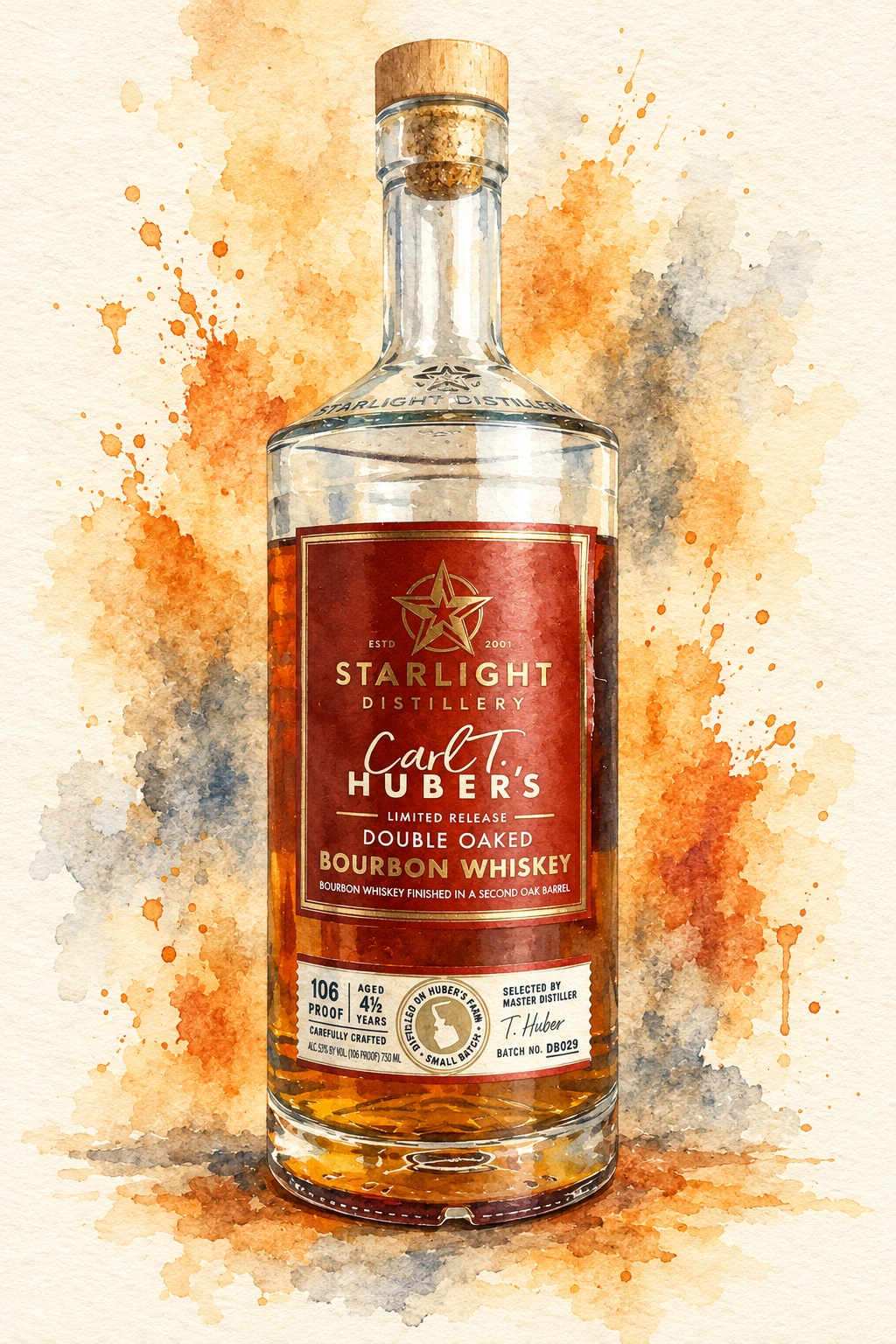
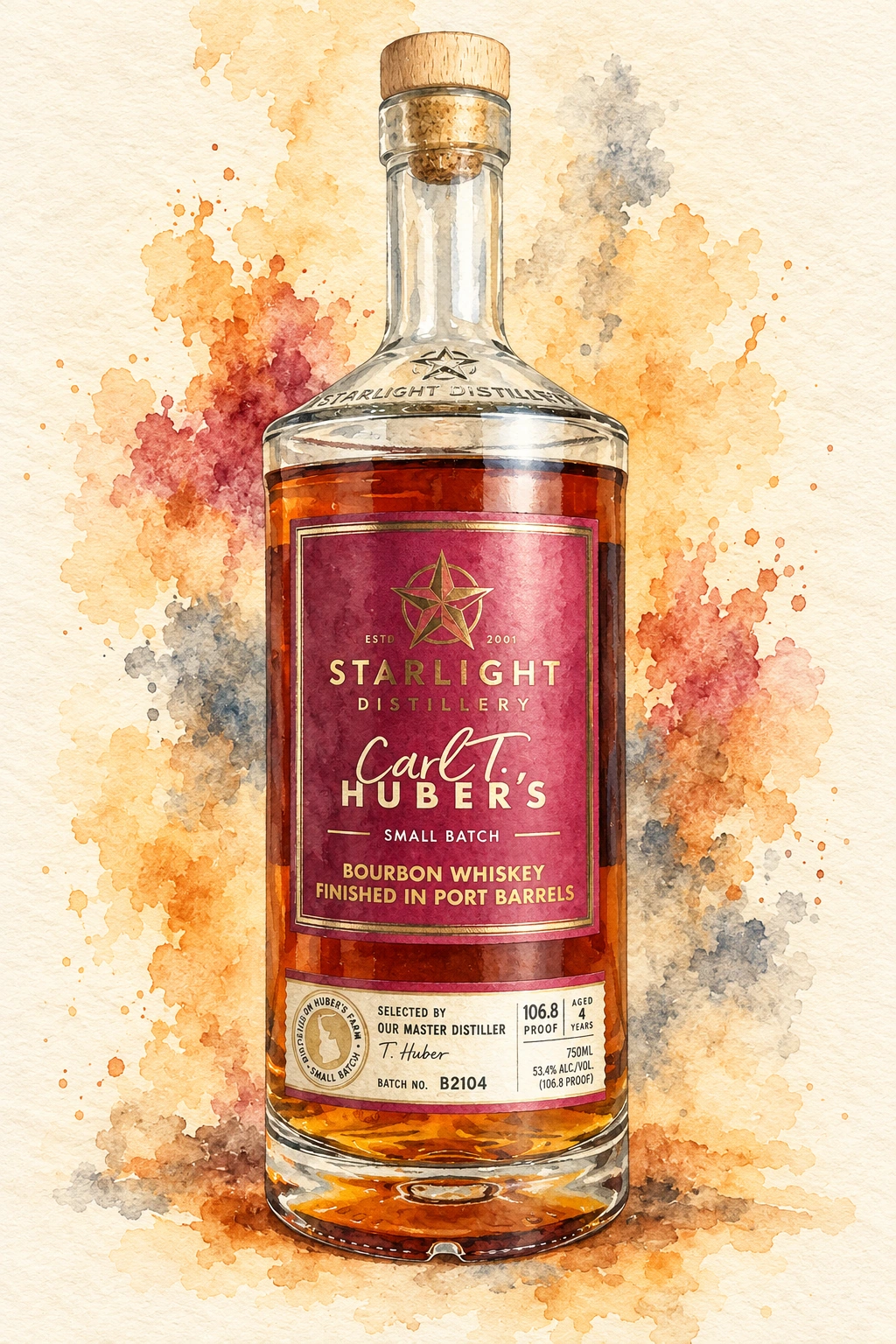
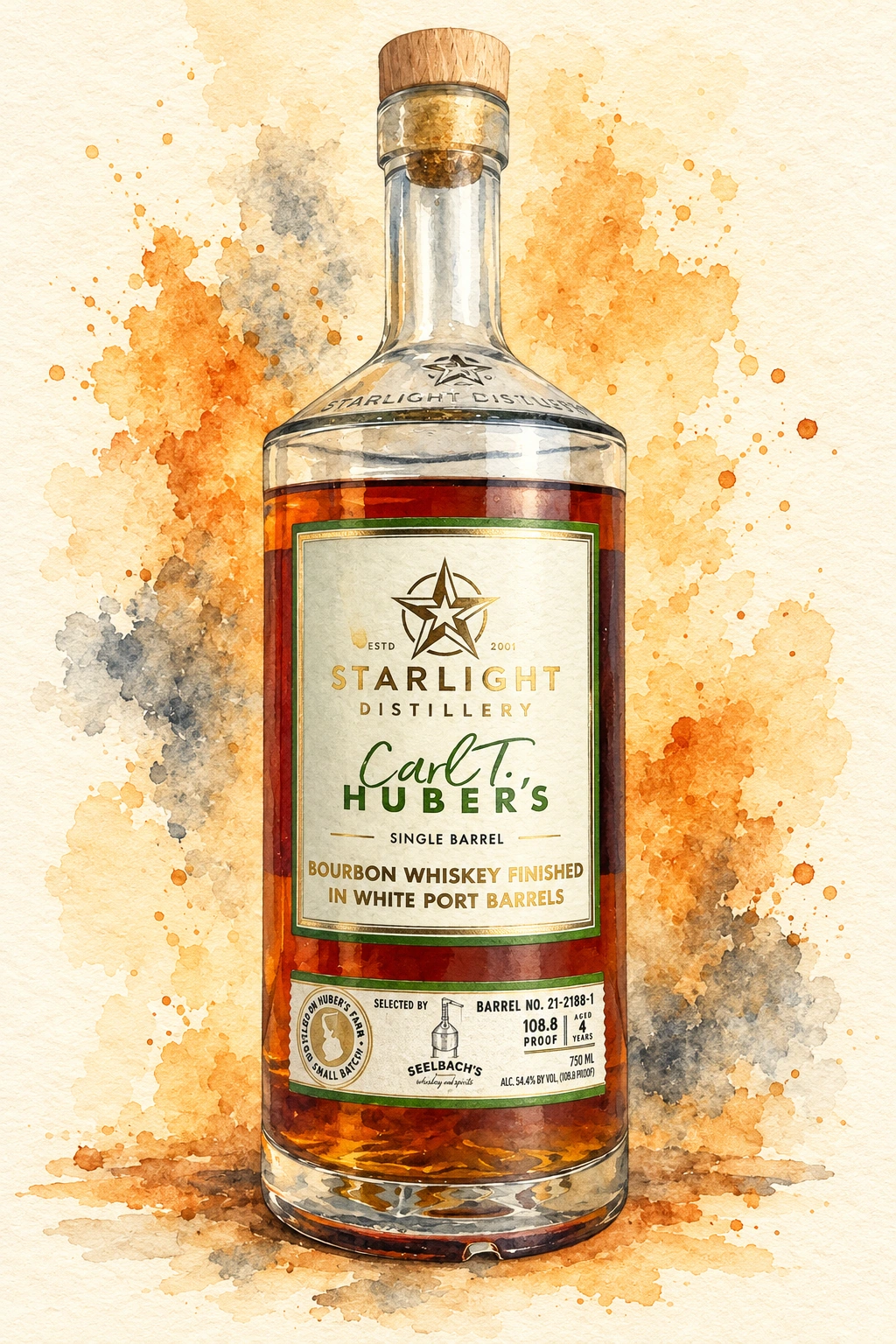
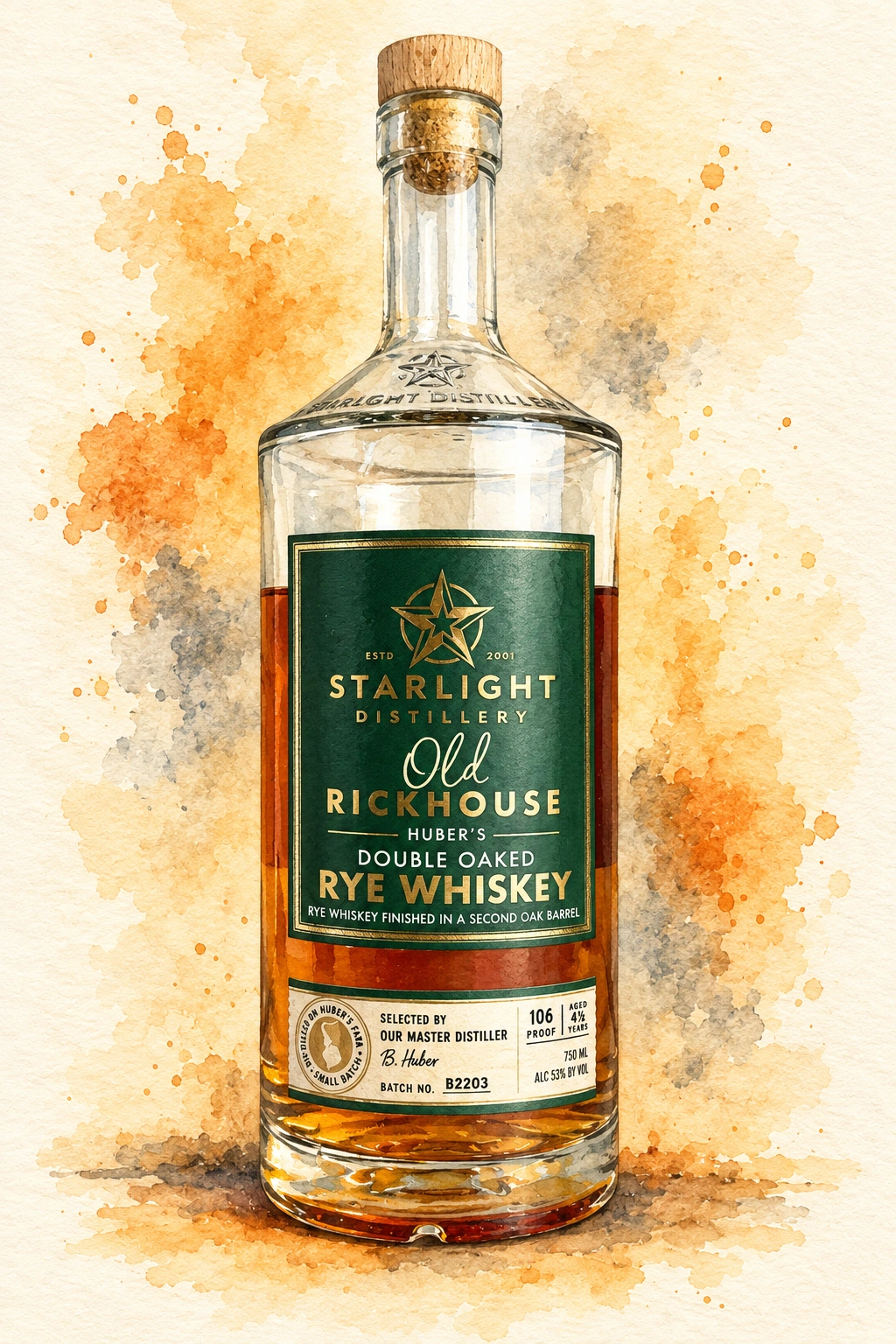
Five physical bottles connect this story to the Reserve, spanning bottled-in-bond bourbon, double oak, port, white port and double-oaked rye. Each retains its own release identity and recorded proof.

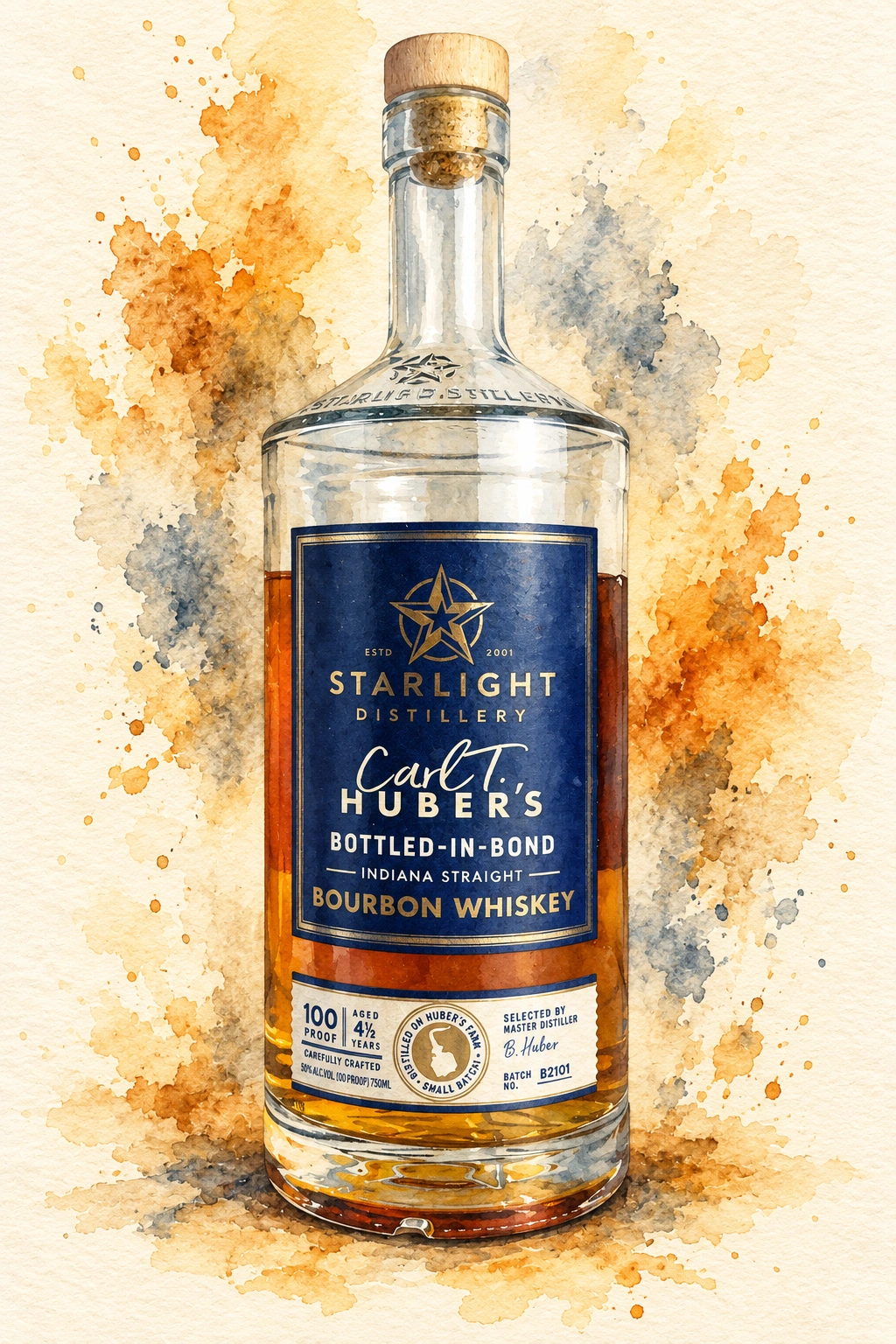
Approved watercolor of Starlight Carl T Huber BIB

Starlight Carl T Huber BIB

W0432 · 100 proof · Batch B2101

Approved watercolor of Starlight Carl T Huber Double Oaked

Starlight Carl T Huber Double Oaked

W0433 · 106 proof · Batch DB029

Approved watercolor of Starlight Carl T Huber Finished In Port Barrel

Starlight Carl T Huber Finished In Port Barrel

W0434 · 106.8 proof · Batch B2104

Approved watercolor of Starlight Carl T. Huber's Single Barrel White Port Finish - Seelbach's

Starlight Carl T. Huber's Single Barrel White Port Finish - Seelbach's

W0435 · 108.8 proof · Barrel 21-2188-1 · Pick Seelbach's · Bottled / release detail No bottling or release date visible. Barrel 21-2188-1 is an identifier, not a verified production date. · Barreled detail 4 years stated; White Port barrel finish after aging in new charred American oak. No barreled date visible.

Approved watercolor of Starlight Old Rickhouse Double Oaked Rye

Starlight Old Rickhouse Double Oaked Rye

W0436 · 106 proof · Batch B2203

Collection snapshot: October 23, 2026. These five records retain their individual proofs, batches and barrel details. Specifications from a different batch or today’s standard releases are not assigned to them.

Starlight Distillery three-page guide cover
The illustrated companion

Starlight Distillery, in three pages.

Origins and people, history and places, whiskey and stories. A concise companion to this complete profile, with linked research sources.

Sources & research notes

Researched October 16, 2026. Official brand and company pages, dated announcements and clearly identified supporting sources are distinguished in the research. Product specifications are release- and market-specific.

Research qualifications

  • Farm roots (1843), permit work (1998), still purchase (2000), licensing (2001), first brandy sale (2004) and the expanded grain operation (2013–14) describe different events.
  • The official history’s 2013 grain-permit milestone and Purdue’s 2014 opening account are retained together. A precise first whiskey distillation day is not asserted.
  • Family ownership and roles are sourced to producer and industry accounts. Historical ages in undated biographies are omitted.
  • Current product pages describe current named expressions. Proofs, mash bills, ages and cask details are not transferred to older batches, individual picks or similarly named bottles.
  • October 2026 release posts are dated producer announcements, not promises of current availability. Estate grain claims remain attached to the release that states them.
  • Awards retain the competition, category, year and named expression. Illustrations are symbolic interpretations, not photographs or documentary reconstructions.
Full sources

  1. Starlight: Our Distillery1998 permit initiative, 2000 still, brandy era, 2004 first retail brandy, 2013 grain expansion. Note: Producer history; farm origin, licensing, equipment and grain production are different milestones.
  2. Huber family farm: Our StorySimon Huber, 1843 farm roots, seven generations, farm and visitor businesses.
  3. Huber Winery: Our WineryEstate landscape, vineyards and Blake Huber’s winemaking connection.
  4. DISCUS: Ted Huber biographyFamily ownership, Ted and Greg’s roles, Christian’s December 2017 return and technical education. Note: Undated biography includes historical ages; these are not treated as current.
  5. Purdue Fruit Facts, June 2019Firsthand farm account, diversified agriculture, family roles and 2014 distillery opening. Note: Historical acreage and operational account, not a current crop census. Its 2014 opening differs from the producer’s 2013 permit milestone.
  6. Huber’s 175th anniversary, 2018Dated anniversary reporting and 2001 distillery licensing. Note: Trade reporting with family statements; 2001 licensing does not mean whiskey has been made since 1843.
  7. Visit Indiana: Huber Winery, 2016Firsthand visitor perspective on farming, winery and distillery together.
  8. Starlight: Official estate and release feedSeptember Pink Bottle charity event and October 3 Estate Collection release. Note: Dated embedded posts read October 16, 2026. Availability is not promised; October 3 year follows the current 2026 feed and Saturday date.
  9. Starlight: Awards2022 ASCOT craft recognition. Note: Producer-maintained results; award categories and years remain specific.
  10. Tasting Alliance: 2025 Top Shelf winnersJapanese Mizunara Reserve’s Best Overall Bourbon and Best Special Barrel Finished Bourbon awards.
  11. Artisan Spirit: Spring 2025Ted Huber named 2025 Artisan Spirit of the Year.
  12. DISCUS: 2023 industry award recipientsDana and Ted Huber’s Dave Pickerell Memorial Craft Member of the Year award.
  13. Starlight: Single Barrel ProgramFarm tour, barrel selection, blind tasting and bottling experience.
  14. Starlight: Book a TourVisitor experiences connecting production and barrel spaces. Note: Tour schedules and prices are intentionally omitted.
  15. Starlight: Carl T. BourbonCarl T. namesake, 92 proof, sweet mash, three- and four-grain blend and copper pot distillation. Note: Current expression specifications are not assigned to every older Carl T. release.
  16. Starlight: Bottled-in-Bond Bourbon100-proof current bourbon and minimum four-year maturation.
  17. Starlight: Single Barrel BourbonHouse mash bills, individual barrel character and cask-strength presentation.
  18. Starlight: Old Rickhouse RyeCurrent 92-proof rye, sweet mash, pot stills and new American oak. Note: Not the specification of the collection’s 106-proof double-oaked rye.
  19. Starlight: Finishing portfolioRange of finishing families and limited expressions.
  20. Starlight: BrandiesFruit spirits, grappa and the small Christian Carl pot still.
  21. Starlight: Distiller’s ClubCommunity and selections across whiskey and other spirits.
  22. Starlight: 2026 10 Year ReserveTen-barrel 2026 blend, estate grains, double pot distillation, warehouse movement and 114.2 proof. Note: Distinct from 10 Year Mizunara Reserve and seven-year Estate Collection.
  23. Starlight: Mizunara ReserveEstate bourbon’s initial American oak maturation and subsequent Japanese Mizunara finish.
  24. Starlight: Cigar BatchMature bourbon finished in Brazilian Amburana wood. Note: Amburana is described as wood here rather than botanically calling it oak.
  25. Starlight: Honey ReserveFarm honey barrels, orchard beehives and bourbon finishing.
  26. Starlight: 2023 Double Oaked sell sheetSecond new-oak maturation and batch-specific 2023 specifications. Note: B2301 at 103 proof is not DB029 at 106 proof. The sheet is used as a dated example only.
↑