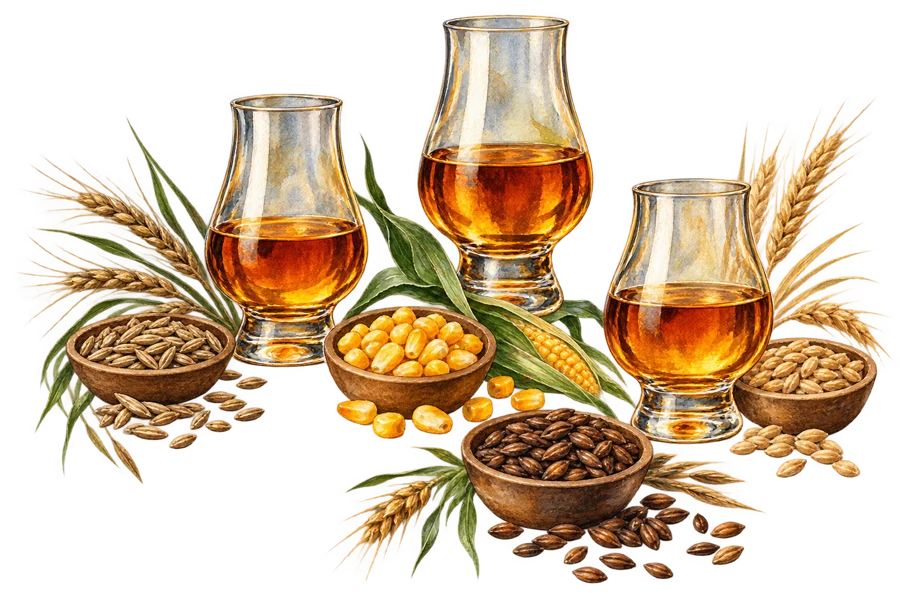
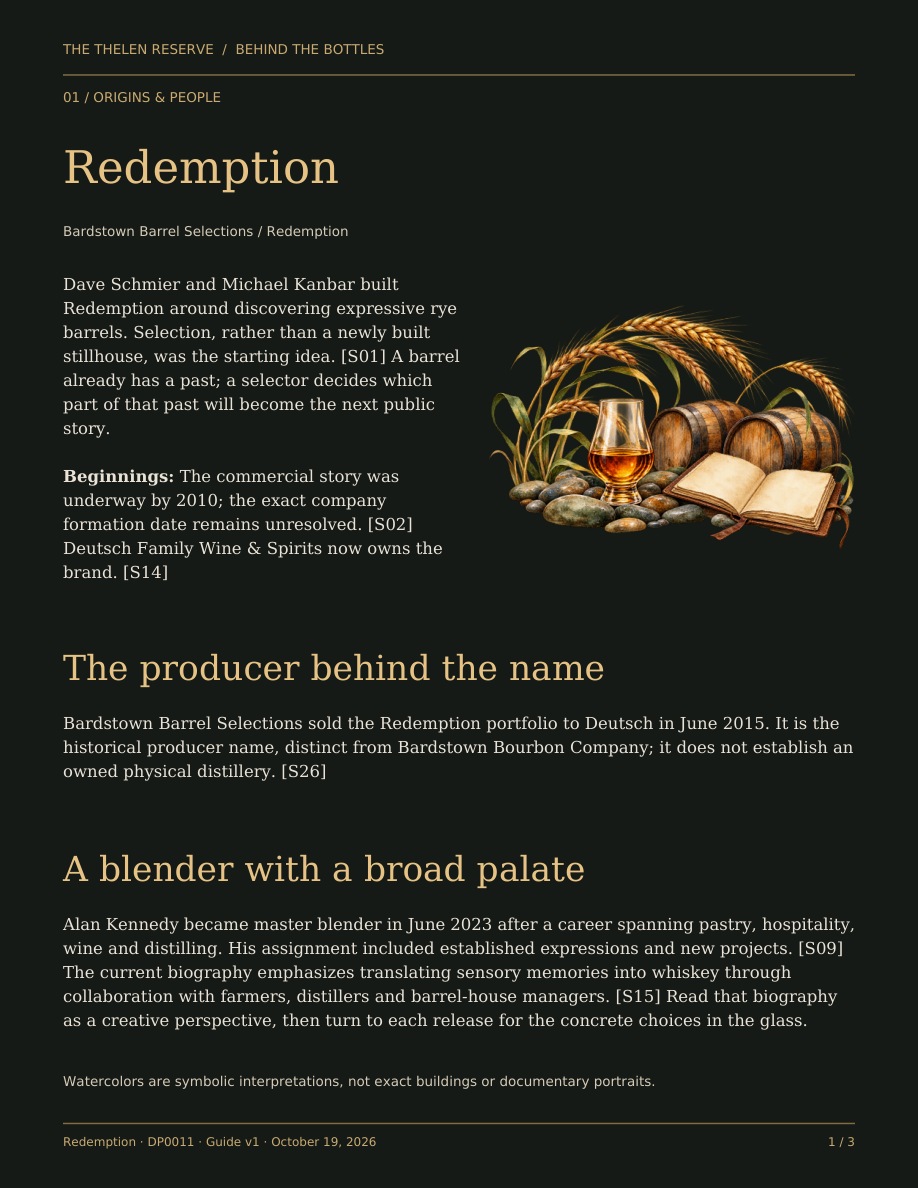
Redemption begins with a choice: recognize the character already waiting in a barrel, then give it a clear voice. Rye provides the organizing idea, but the story travels through bourbon, wheat, old stocks and unusual maturation. It is a producer and brand story built around selection and blending, with Indiana distillation and Kentucky bottling playing distinct roles.[26]
The 2015 acquisition announcement traces Redemption to Dave Schmier and Michael Kanbar discovering rye barrels they considered especially expressive. Their opportunity was to select and present an existing whiskey with conviction. The founders were responding to renewed interest in rye and the classic cocktails that gave it a natural audience.[1]
A name with a purpose
In a 2017 interview, brand ambassador Joe Riggs described the founders seeking single barrels before recognizing the potential of Indiana rye. He connected the name to restoring attention to a historic whiskey category. This is an attributed account of motivation, rather than evidence that one company single-handedly revived rye.[2]
Company, brand and stillhouse
Deal counsel identified Bardstown Barrel Selections as the portfolio’s seller in early June 2015. This establishes a historical business relationship, not an owned Bardstown distillery. The name should also remain distinct from the separately named Bardstown Bourbon Company.[25]
A wider platform
By 2019, Deutsch’s president described a core range of Bourbon, High Rye Bourbon and Rye, alongside annual mature barrel-proof offerings and substantial wheated bourbon stocks. Expansion was therefore a matter of managing different recipes and ages as well as extending distribution. The public interview describes supply at that time, not today’s inventory.[28]
Dave Schmier and Michael Kanbar
Founders
Schmier and Kanbar supplied the original barrel discovery and commercial idea. Their shared interest in rye and cocktail history became a foundation for the brand’s first identity.[1]
Wayne Donaldson
Documented 2017 blender
Riggs identified Donaldson as the post-acquisition blender in 2017, describing preservation of the established flavor profile as batches grew. This is a dated role, not today’s blending credit.[2]
Dave Carpenter
Earlier master blender
The owner’s Rum Cask account credits Carpenter with pairing its 95-percent rye whiskey with Jamaican and Barbadian rum barrels supplied through Plantation Rum. The historical credit shows the contribution of an earlier blender, even though old trade pages still use present-tense job titles.[6]
Alan Kennedy
Master blender since 2023
Redemption appointed Kennedy master blender in June 2023. His announcement describes a classically trained pastry chef whose career moved through hospitality, wine and distilling, including Town Branch. The assignment covered established expressions, single barrels, barrel-proof whiskey and innovation, making selection a creative responsibility across the portfolio.[9]
A palate trained across disciplines
Current creative approach
Kennedy’s current official biography adds sommelier and bartender experience and mentorship from Dave Pickerell. It describes collaboration with farmers, distillers and barrel-house managers, and a desire to translate sensory memories into whiskey. Those details explain the producer’s creative approach without substituting biography for a release’s technical specifications.[15]
02 / The illustrated history
From a rye revival to a broader whiskey family.
Follow the Redemption brand, its founders and the choices that shaped its whiskey. Brand ownership, distillation and bottling have distinct roles.
By 2010
Rye finds a new advocate
Riggs’s later first-person brand account places the project’s rye-led beginnings in 2010. Exact legal formation remains unresolved.[2]
June 2015
Deutsch acquires Redemption
The announced purchase moves the founder-led whiskey portfolio into Deutsch Family Wine & Spirits.[25]
2017
Wheat joins the range
Contemporary release coverage records a four-year wheated bourbon, opening a different grain direction beside the rye-led whiskeys.[3]
October 2017
Mature barrel-proof selections
Nine-year bourbon and ten-year rye and high-rye bourbon bring older Indiana whiskey into a new limited range.[4]
November 2017
The Ancients are introduced
Eighteen-year rye and thirty-six-year bourbon make selected old stocks a distinct collection.[5]
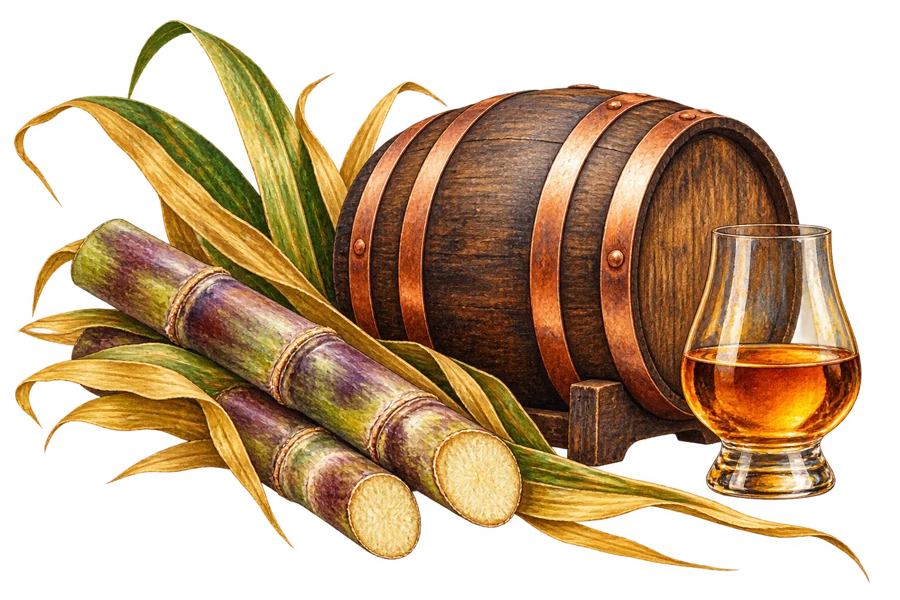
By August 2020
Rum casks enter the picture
Contemporary coverage documents Rum Cask Finish rye. This establishes availability by that date, not an exact first launch day.[31]
October 12, 2021
Ferrand casks meet bourbon
The announced Cognac collaboration adds twelve months of secondary maturation to High Rye Bourbon.[7]
September 21, 2022
Sur Lee is announced
A limited rye release introduces the producer’s winemaking-inspired backset-contact and barrel-rotation approach.[8]
June 15, 2023
Alan Kennedy takes the blending role
The appointment gives Kennedy responsibility for production and innovation across established and new expressions.[9]
August 21, 2024
Sur Lee reaches a wider audience
The specialty release receives a national rollout announcement, extending an experiment first introduced in 2022.[10]
June 5, 2025
Eighteen-year bourbon joins the Ancients
A Lawrenceburg-origin selection expands the old-stock collection.[11]
April 7, 2026
A fresh identity takes flight
New eagle packaging arrives alongside Straight Bourbon reformulated to 92 proof.[12]
August 13, 2026
A bonded single barrel begins a new chapter
The first bonded expression is announced for September distribution and the relaunch of Higher Marques.[13]
Original watercolor interpretations accompany the history. Buildings, objects and scenes are symbolic, not documentary reconstructions.
03 / Geography & roles
One name. Several places that matter.
Bardstown, Kentucky
Documented historical bottling location
The 2015 announcement separated Indiana distillation from small-batch Bardstown bottling. The Kentucky name belongs to that documented role; it does not relocate the stills or establish a permanent bottling site for every later release.[1]
Lawrenceburg, Indiana
Disclosed origin of the 2025 aged bourbon
The 2025 eighteen-year bourbon announcement identifies Lawrenceburg as the whiskey’s birthplace. Its connection is production geography: mature whiskey selected for a later branded release. An eighteen-year age statement also means the liquid’s history reaches back well before that particular product announcement.[11]
Ross & Squibb, Indiana
Explicit 2026 bonded-release distiller
The August 2026 bonded announcement explicitly names MGP’s Ross & Squibb Distillery as distiller, connecting that release to a facility through direct disclosure.[13]
Frankfort, Kentucky
Explicit 2026 bonded-release bottling location
That announcement names Redemption Barrel Selections in Frankfort as bottler, a release-specific Kentucky role distinct from Indiana distillation and the historical Bardstown account.[13]
Stamford, Connecticut
Corporate address
Deutsch’s public brand page gives a Stamford business address. It identifies corporate stewardship and the marketing organization behind Redemption. A headquarters address is a different kind of place from a distillery, maturation warehouse or visitor attraction, and should be read accordingly.[29]
04 / The whiskey family
Understand the name on the label.
The brand, its historical producer, today’s owner and the distillery identified for a particular release each have a distinct role.
Deutsch Family Wine & Spirits
Current brand owner
The current owner’s portfolio lists Redemption alongside other spirits brands. Shared stewardship supplies a commercial family, not evidence that those brands share a mash bill, distiller or maturation site. The 2015 purchase remains the meaningful ownership transition in this profile.[14]
The classic trio
Current core range
The official catalog groups Bourbon, Rye and High Rye Bourbon as Classics, all currently shown at 92 proof. This is a useful way into the range: three related expressions organized around the differing balance of corn and rye, rather than three strengths of one whiskey.[23]
Higher Marques
Current premium grouping
The current catalog places bonded single-barrel bourbon, Cognac Cask Finish and Wheated Bourbon under Higher Marques. The grouping connects distinct production ideas: barrel individuality, a secondary cask and an alternative flavor grain. It is a contemporary catalog structure rather than an unchanging historical classification.[23]
The Ancients
Historical ultra-aged collection
Eighteen-year rye and thirty-six-year bourbon introduced the Ancients collection in 2017. Contemporary launch coverage identified old Seagram’s stocks in Lawrenceburg and quoted the owner on their provenance. The collection’s heritage comes from the whiskey’s age and source, not a Redemption distillery operating in 1978.[5]
Ferrand Cognac
Documented finishing partner
The October 2021 release announcement identifies Ferrand as the Cognac-cask collaborator. The relationship belongs to a finishing project built on High Rye Bourbon, with additional maturation in former Cognac casks. It does not make the resulting whiskey Cognac or transfer the bourbon’s initial distillation to France.[7]
Proof & Wood
Separate founder connection
Schmier’s later Proof & Wood business describes sourcing, bottling and aging spirits as its core work. It is a separate enterprise associated with one founder, useful for understanding his continuing interest in curation. It is not presented here as Redemption’s owner or a current production partner.[24]
05 / Making & choosing
The choices behind the label.
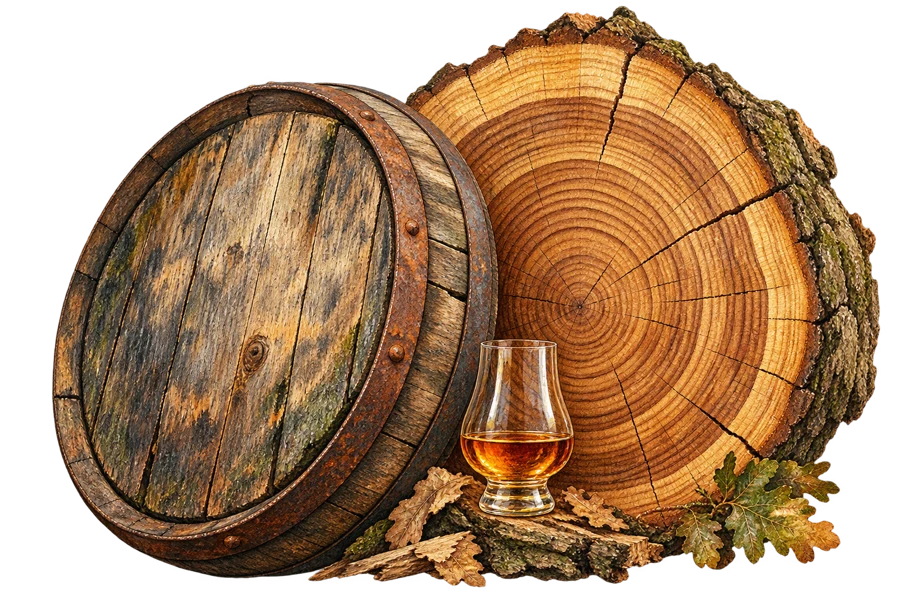
Grain, fermentation, distillation and oak shape the whiskey. Follow each production choice and keep specifications tied to the expression named.
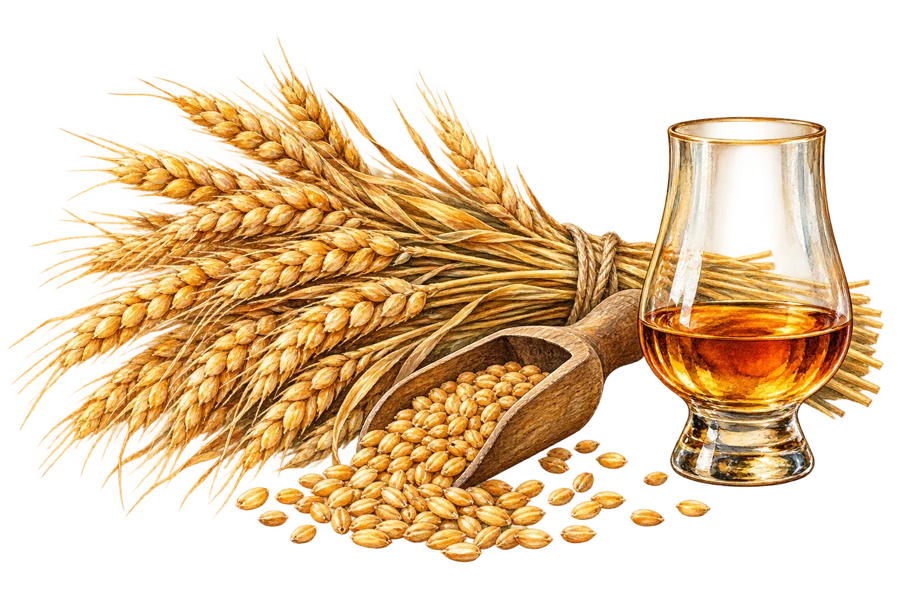
Rye as the starting point
The current straight rye uses 95 percent rye and is bottled at 92 proof. The official page specifies new charred oak and non-chill filtration. That recipe places the grain itself near the center of the spirit’s character, while oak maturation and final blending determine how that character reaches the glass.[16]
Two bourbon balances
The official homepage discloses Bourbon at 75 percent corn, 21 percent rye and four percent malted barley; High Rye Bourbon uses 60 percent corn, 36 percent rye and four percent malted barley. The contrast makes the brand’s rye emphasis measurable without treating all bourbon in the range as one recipe.[26]
Wheat changes the conversation
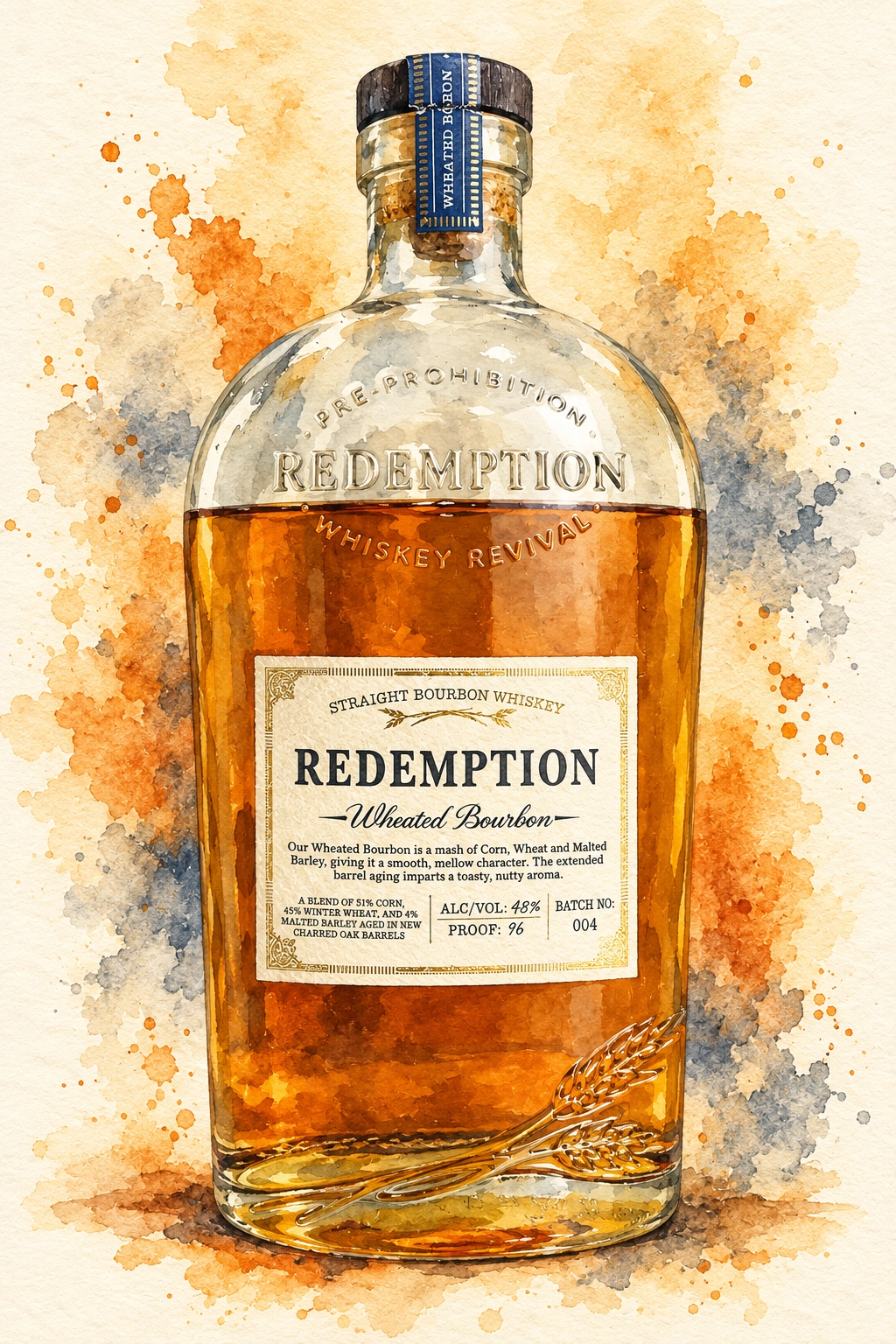
Wheated Bourbon’s official page specifies 45 percent winter wheat, 96 proof, new American oak and non-chill filtration. Wheat here is a deliberate alternative within a rye-centered portfolio. The page does not establish the precise distiller of every historical physical bottle carrying that expression’s name.[18]
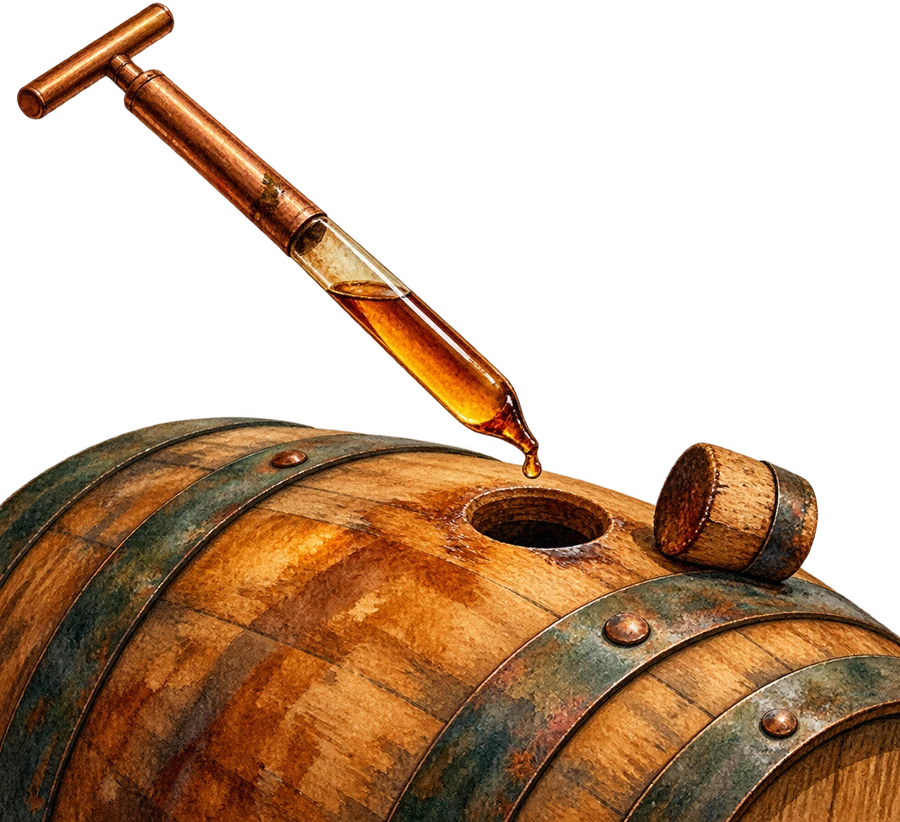
A second cask, a second stage
For the 2021 Cognac release, the issuer specified a 60-percent-corn, 36-percent-rye, four-percent-malted-barley bourbon followed by another twelve months in Cognac casks. That sequence matters: the finishing vessel follows the original new-oak maturation. The stated duration describes this announced edition.[7]
What Sur Lee actually changes
The 2022 launch describes adding distillation backset, called whiskey lees by the producer, to barrels before aging and periodically rotating them. Inspired by French sur lie winemaking, this is a maturation experiment involving contact with the added material. It is not simply a wine-cask finish, and the producer’s innovation claims remain attributed.[8]
A single barrel within a fixed standard
The current bonded product page describes individual barrel selection, one distilling season, one distiller, at least six years in a bonded warehouse and bottling at 100 proof. Barrel character can vary while those specifications remain fixed. Selection here accepts individuality instead of blending different barrels into a uniform batch.[30]
Reading proof in context
The nine-year barrel-proof bourbon page currently displays 108.2 proof and non-chill filtration. That is a named product-page specification, not a universal strength for every older bottling. Mature limited editions deserve label-specific reading because a familiar expression name does not guarantee an identical batch or proof.[20]
06 / The details worth knowing
The stories behind the familiar name.
A wheat detour arrived early
Contemporary July 2017 coverage recorded the newly released Wheated Bourbon at four years old and 96 proof, with 45 percent winter wheat. It shows that Redemption’s curiosity extended beyond rye relatively early. Those launch details remain historical; a current page is not used to silently rewrite the older edition.[3]
Time already in the barrel
The 2017 barrel-proof introductions used mature nine- and ten-year whiskey from Indiana. Their ages were substantially older than the brand’s own recent commercial history. This is one of the clearest ways to understand a selector’s contribution: the whiskey has an earlier production history, followed by a later act of curation.[4]
A penny carries a date
The official thirty-six-year bourbon page describes a 1978 penny set into the stopper, identifying the distillation year. This small packaging detail makes time tangible. The edition’s extreme scarcity belongs to that particular release; it is not an age or availability claim for the rest of the brand.[22]
A new eagle, a new strength
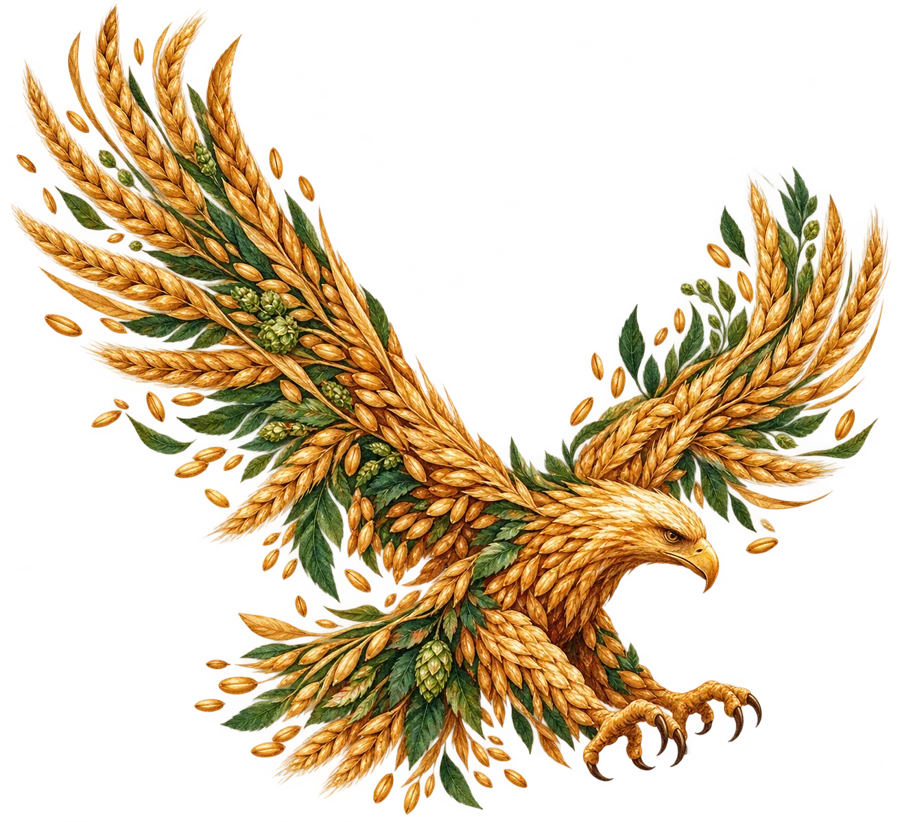
In April 2026, Redemption announced an eagle motif formed from rye and raised its Straight Bourbon to 92 proof. The issuer linked the redesign to an earlier trademark dispute. The significant consumer change was both visual and liquid: new packaging accompanied an explicitly changed bottling strength.[12]
Old pages can preserve old chapters
The eighteen-year bourbon page shows 103.4 proof; the 2026 return announcement gives 102.85. These edition-specific disclosures are retained separately rather than forced into one number.[21][13]
Rye does not require a single format
The current High Rye Bourbon page describes 36 percent rye, 92 proof, new charred oak and non-chill filtration. Its place beside straight rye makes the broader idea visible: Redemption explores rye both as the dominant grain and as a strong supporting grain in corn-led bourbon.[17]
07 / Selected expressions
Different expressions. Distinct production stories.
A curated reading of the whiskey family, selected for its role in the story. This is not an exhaustive current catalog.
Redemption Straight Rye
The current 95-percent-rye, 92-proof expression is the most direct introduction to the brand’s central grain. It is selected here for historical importance and clarity of identity, rather than rarity or a promise that every drinker will prefer its style.[16]
Redemption Wheated Bourbon
At 96 proof with 45 percent winter wheat, this expression supplies a revealing counterpoint to the rye-led range. Its significance is the change in grain emphasis. Current technical information does not resolve every older bottle’s precise distillation source.[18]
Cognac Cask Finish
The current page lists 99 proof, non-chill filtration and maturation in new American oak followed by Cognac barrels. It is selected as an accessible example of the portfolio’s finishing work. Creation credits are treated through the dated launch record rather than retroactively assigned from current biography.[19]
Sur Lee Straight Rye
The 2024 announcement brought Sur Lee into a broader national rollout at 94 proof. Its importance lies in the producer-described backset contact and barrel rotation, an approach that asks a different maturation question from merely choosing a more familiar finishing cask.[10]
The Ancients: eighteen-year bourbon
Announced in June 2025, this Lawrenceburg-origin bourbon extended the Ancients idea into another mature selection. The issuer emphasized charred American oak and non-chill filtration. It is selected for the way long maturation tests a blender’s judgment, rather than on the assumption that greater age always means better whiskey.[11]
Single Barrel Bonded Bourbon
The 2026 release combines a six-year minimum and 100 proof with individual barrel identity. It also offers unusually explicit producer disclosure. The expression is selected for that combination of barrel character, fixed specifications and transparent geography.[30]
08 / The Reserve connection
Continue from the story to the bottles.
Bardstown Barrel Selections in The Thelen Reserve
One Redemption Wheated Bourbon bottle connects this story to the collection: 96 proof, batch 4. Its recorded identity remains separate from current releases.
Collection snapshot: October 26, 2026. No front/back photos, tasting guide or exact approved bottle artwork are linked for W0386. Its card retains the verified details. The distiller of this physical release remains unverified; current Redemption specifications are not assigned to it.
The illustrated companion
Redemption, in three pages.
Origins and people, history and places, whiskey and stories. A concise companion to this complete profile, with linked research sources.
Researched October 19, 2026. Official brand and company pages, dated announcements and clearly identified supporting sources are distinguished in the research. Product specifications are release- and market-specific.
Research qualifications
Researched October 19, 2026. Dates denote announcements or documented availability unless the event is explicit.
Deal counsel implies beginnings around 2009; the brand interview says 2010. Exact legal formation remains unresolved.
Producer, owner, distiller and bottler are separate identities. No owned distillery or public visitor site is established.
Historical business naming does not establish present corporate status. No legal-capacity conclusion is made.
Specifications belong to named editions. Source disclosures cannot be applied retroactively to older physical bottles.
Current Cognac credit names Kennedy; the 2021 launch names Carpenter and predates Kennedy’s appointment.
The eighteen-year rye page’s proof and ABV conflict. No paired strength is adopted.
Eighteen-year bourbon strength differs between the product page and the 2026 return announcement. Consult the edition’s label.
Catalog inclusion does not establish local availability. Watercolors are symbolic.
Full sources
Deutsch acquisition announcementFounders; June 2015 acquisition; Indiana distillation and Bardstown bottling. Note: Then-current operations.
Joe Riggs brand-history interviewFirst-person brand account; 2010; Donaldson. Note: Interview is attributed, not a corporate registry.
Wheated launch coverage2017 release specifications and issuer statement. Note: Contemporary report, not current batch proof.
Barrel-proof launch coverageOctober 2017 range; ages; Indiana source. Note: Producer information reproduced by trade press.
Acquisition counsel’s deal accountSeller named Bardstown Barrel Selections, Inc.; early June 2015 close. Note: Historical naming; not present entity status.