TJ THELEN'S COLLECTION
The Thelen Reserve
Behind the Bottles / Kentucky & beyond

Pinhook

Last updated Last researched

The promise in a barrel.

Pinhook treats a barrel as a possibility. A new year brings a new selection, a new blend and a fresh decision about proof. Its bright bottles borrow their visual energy from horse racing, but the deeper connection is patience: recognizing promise before the finished result exists. The range offers several ways to follow that idea, from annual Kentucky vintages to a long-running maturation experiment and collaborations that invite other palates into the blending room.[2][3]

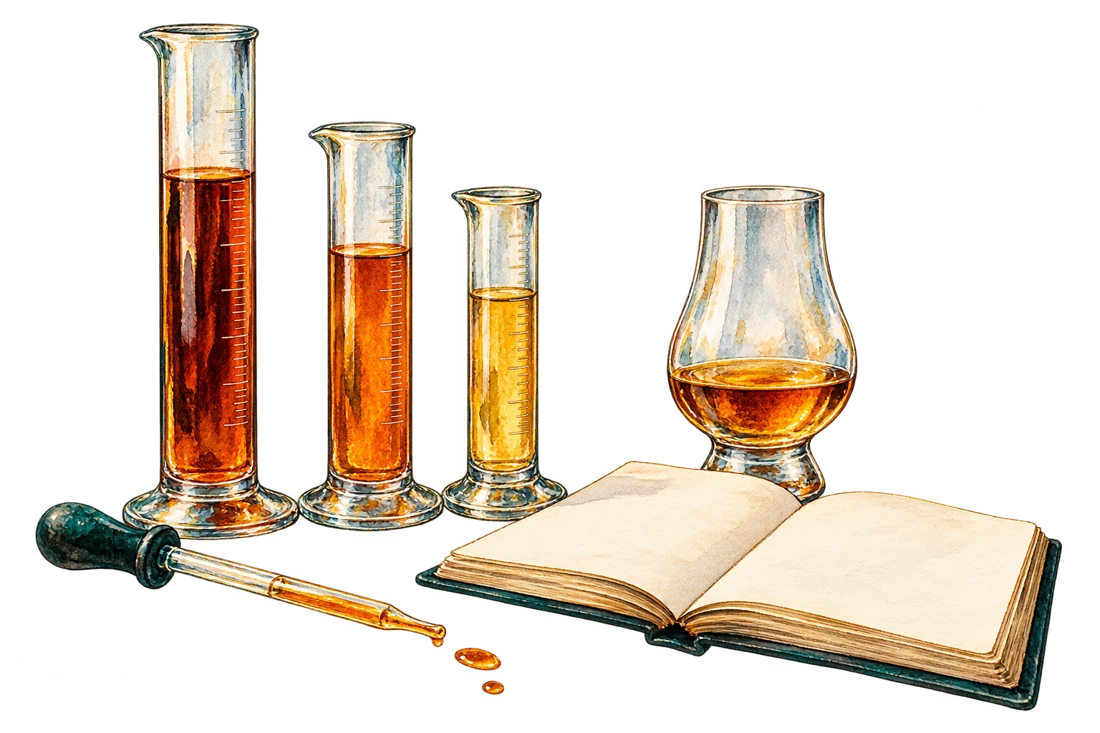
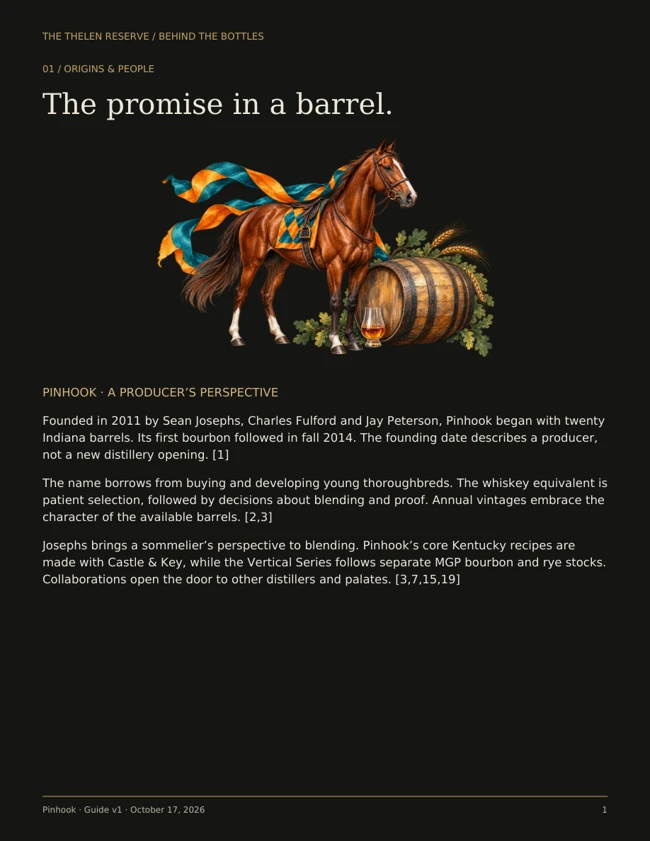
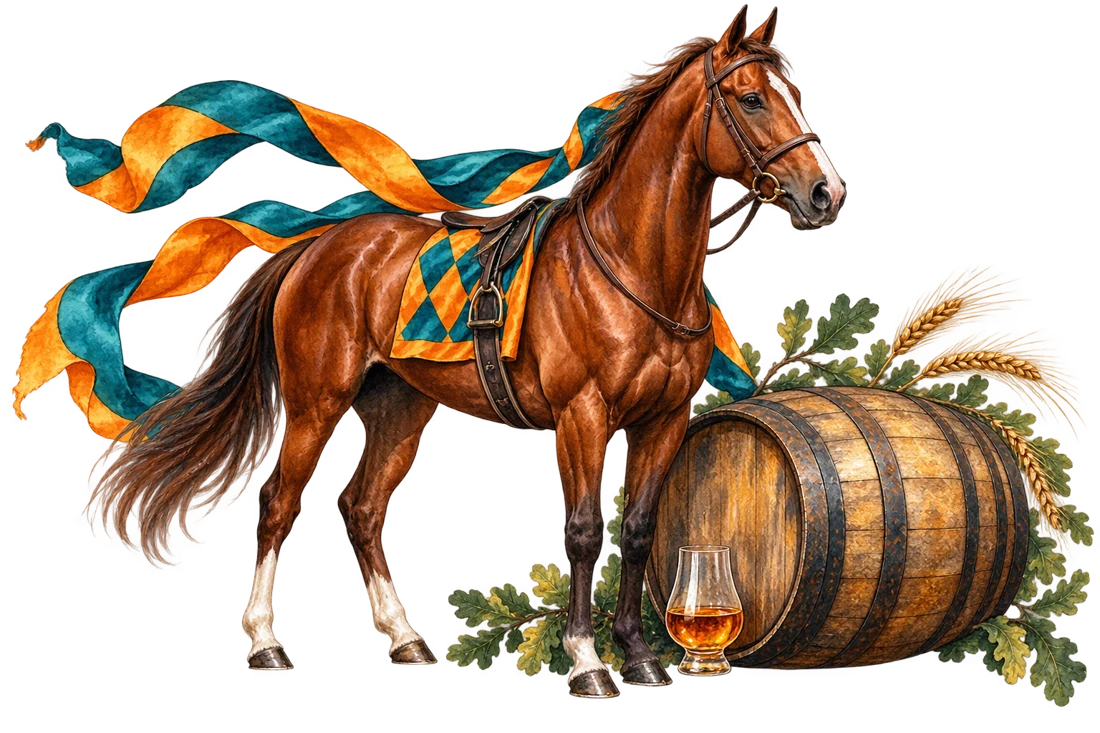
Interpretive watercolor of a thoroughbred, jockey silk ribbon and bourbon barrel
Founded 2011

First bourbon released fall 2014

Producer & blender

Partner distilleries by expression

Annual vintages

Blending and proof can change

Kentucky & beyond

Core, vertical and collaboration series

01 / Origins & people

A legacy carried by people.

Three friends, complementary skills

Sean Josephs, Charles Fulford and Jay Peterson founded Pinhook in 2011. Their backgrounds joined whiskey and hospitality, design, and business. The company began by buying barrels rather than building a distillery. Its first purchase was twenty barrels from Indiana’s Lawrenceburg Distillers, now MGP.[1]

A name about potential

In thoroughbred trading, pinhooking means buying a young horse and developing it for a later sale. Pinhook applies that patient, selective mindset to whiskey. The comparison is a philosophy, not a claim that maturation guarantees improvement or financial return.[3]

A blender’s point of view

Josephs leads blending. His sommelier background helps explain why the brand is comfortable with annual variation: each release can be judged on its own balance. The central question is what the available whiskey can become, rather than how closely it can repeat an earlier bottle.[2][6]

The people behind the label

The current official team page lists John Scarborough as CEO and Alice Peterson as Executive Chair. Josephs remains founder and Master Blender; Fulford leads brand, packaging and marketing. These are the roles listed at the October 2026 research check, not an inferred ownership structure.[1]

02 / The illustrated history

The past has more than one date.

A chronology of the brand, its experiments and its reach. Each scene is an original interpretive watercolor.
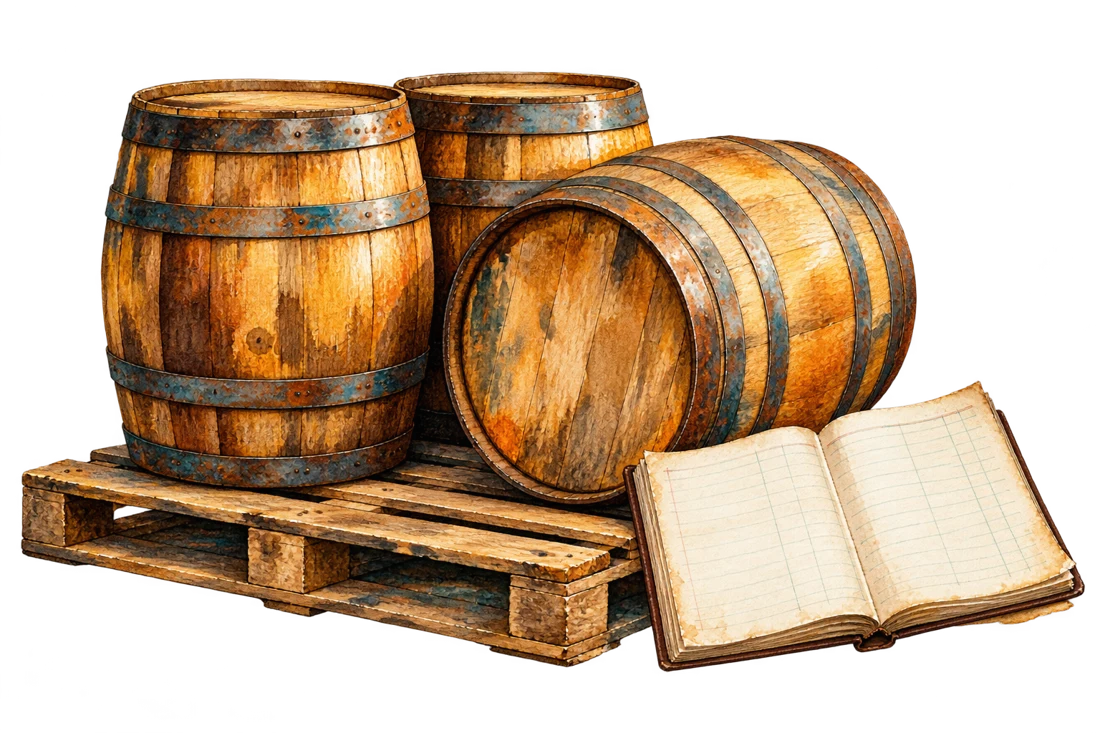
first-barrels, symbolic watercolor illustration
2011

The first barrels

Twenty Indiana barrels become the starting point for Pinhook. Founding a producer and opening a distillery are different events; the early business is built around whiskey selection and maturation.[1]
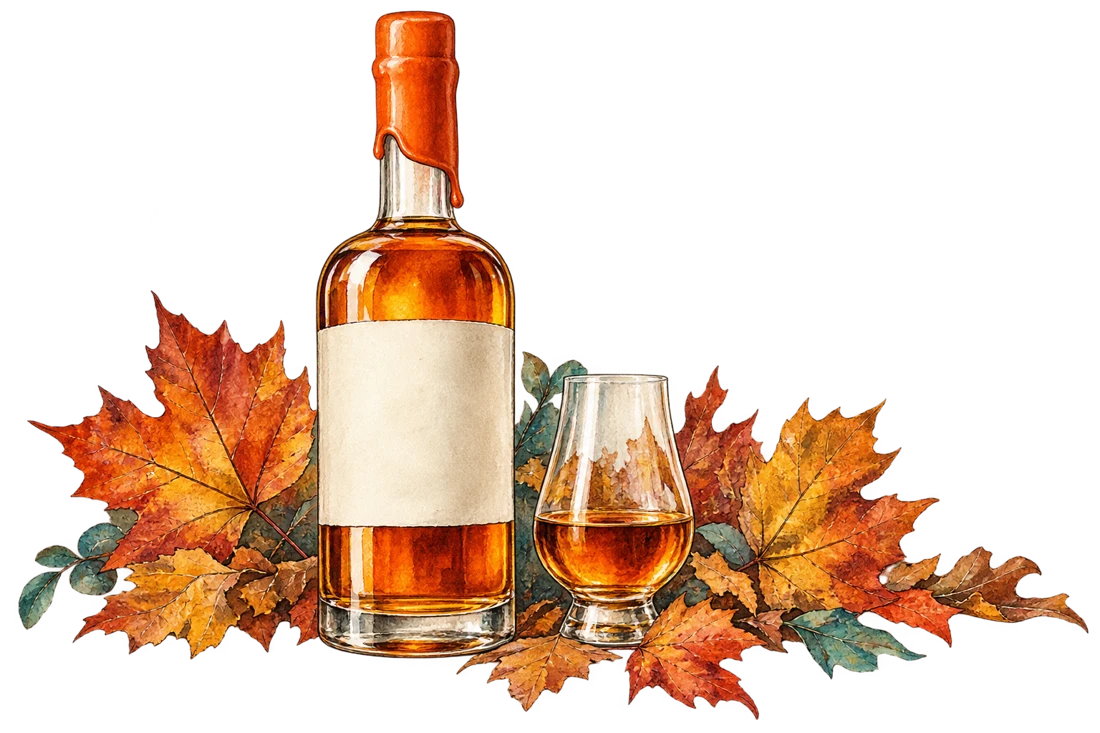
first-release, symbolic watercolor illustration
Fall 2014

The first bourbon reaches drinkers

Pinhook’s first bourbon arrives after the founders’ early barrel purchases. The brand’s story begins with a modest inventory and a willingness to let the whiskey guide the finished release.[1]
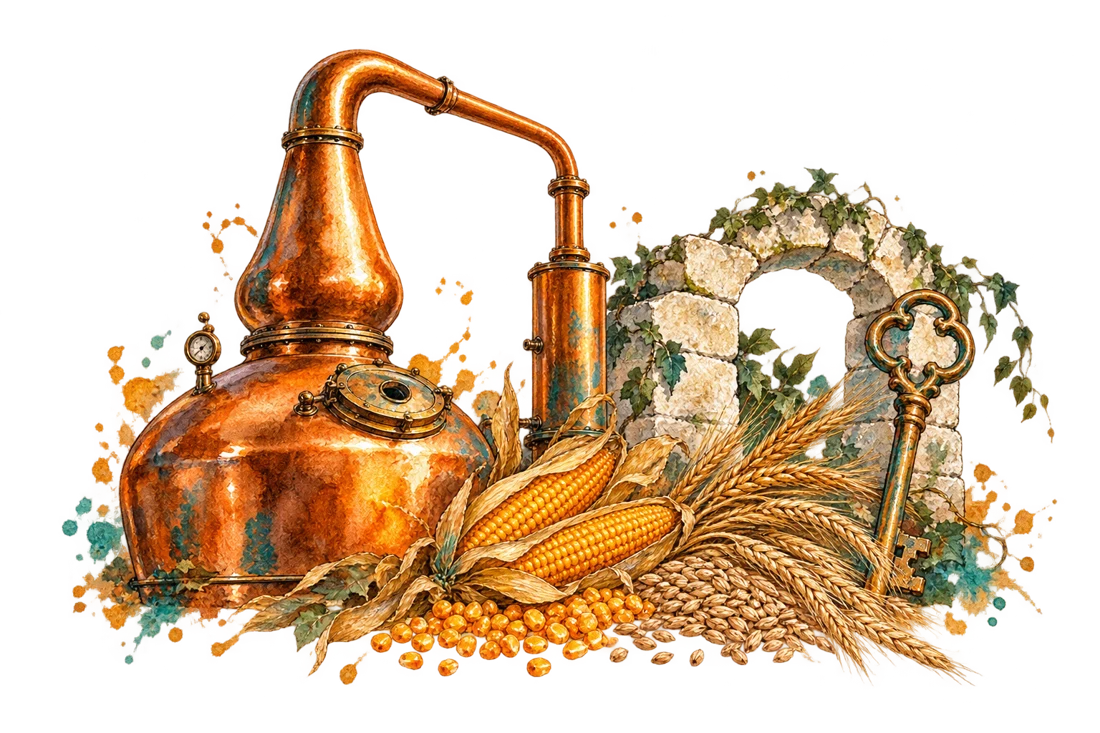
partner-still, symbolic watercolor illustration
2017

Custom recipes at Castle & Key

Pinhook dates the beginning of its own mash-bill production at Castle & Key to 2017. This becomes the foundation for its core Kentucky range, while sourced releases continue alongside it.[1][3]
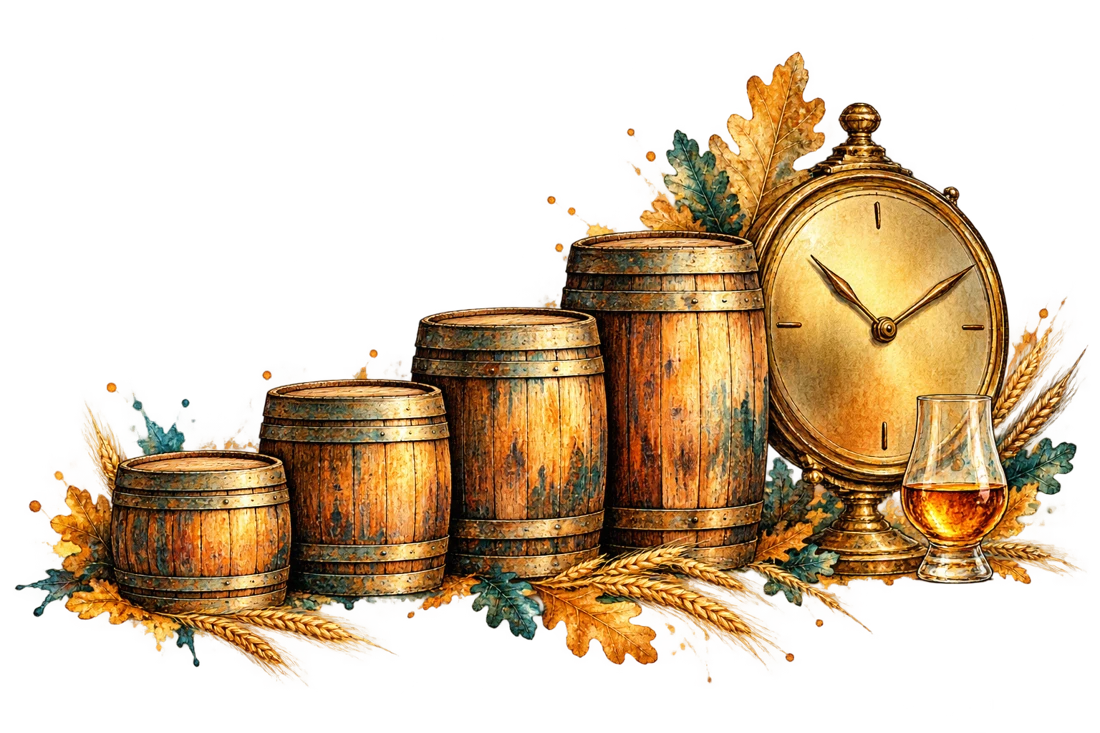
vertical, symbolic watercolor illustration
2019

A bourbon experiment begins

The first Vertical Bourbon is four years old. Its original plan follows a group of 1,350 MGP barrels through annual selections to age twelve, allowing drinkers to compare successive stages of maturation.[7]
bohemian, symbolic watercolor illustration
2020

Bohemian Bourbon marks a return

Pinhook describes this 95-proof release as the first straight bourbon from the former Old Taylor site since its closure in 1972. That claim concerns the revived site’s bourbon, not Pinhook owning the historic distillery.[8]
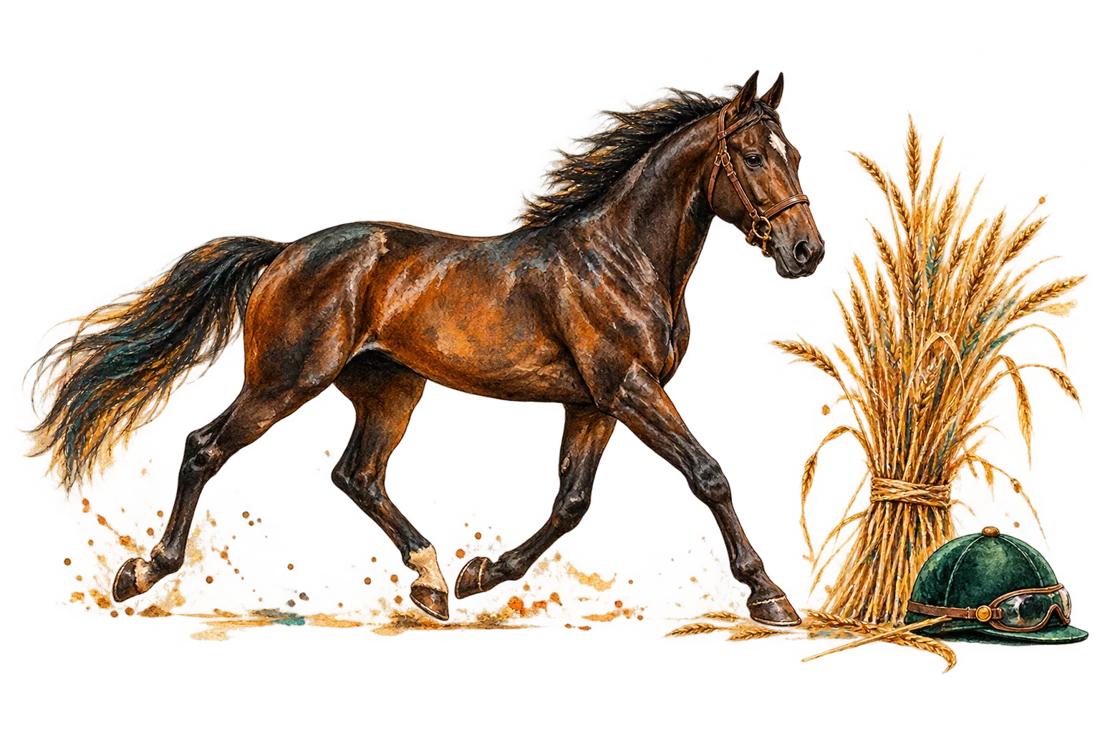
rye-time, symbolic watercolor illustration
Spring 2020

Rye joins the vertical journey

The rye series begins one year after the bourbon series. Tiz Rye Time becomes its equine identity. The parallel tracks invite comparison, but their recipes and underlying barrel groups remain distinct.[7][19][5]
single, symbolic watercolor illustration
2020

Single barrels take their own path

The True Single Barrel program highlights a barrel’s individuality at unfiltered cask strength. Its bourbon selections align with the Vertical Series, offering a different view from the annual blended release.[9]
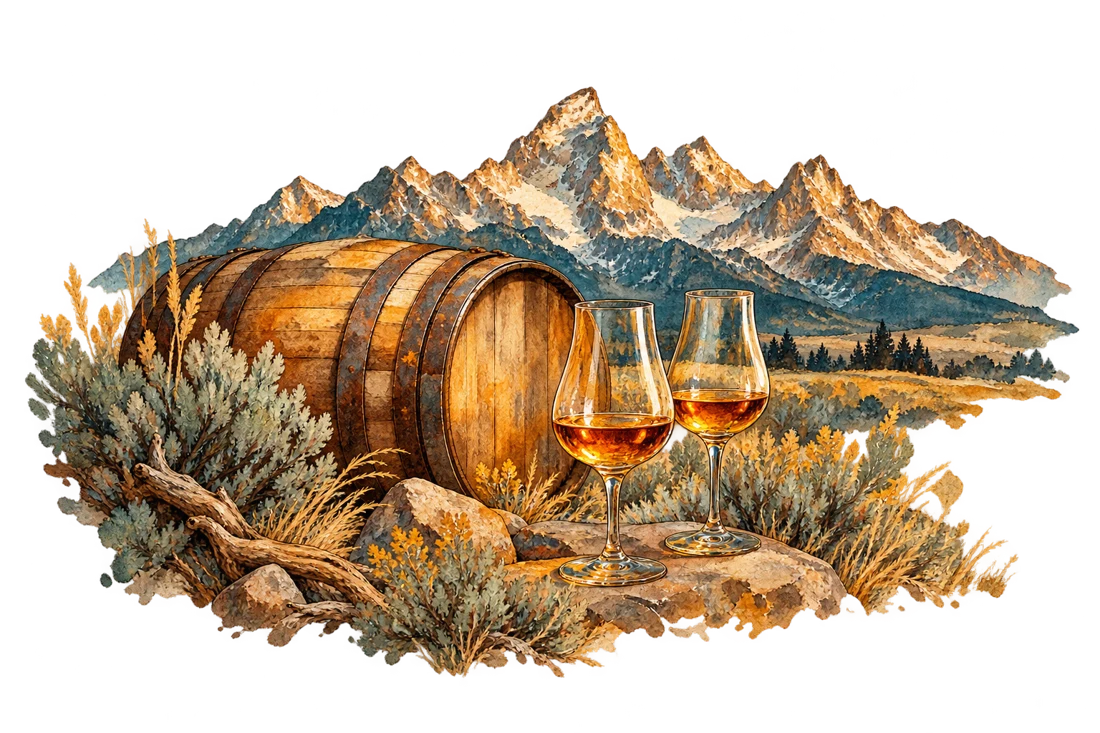
wyoming, symbolic watercolor illustration
2021

A sommelier joins the blend

Collaboration No. 1 brings André Hueston Mack into the project with ten-year Wyoming Whiskey bourbon. Two five-barrel batches make the creative exchange concrete. The official page conflicts on purchase year, so no acquisition date is assigned here.[10]
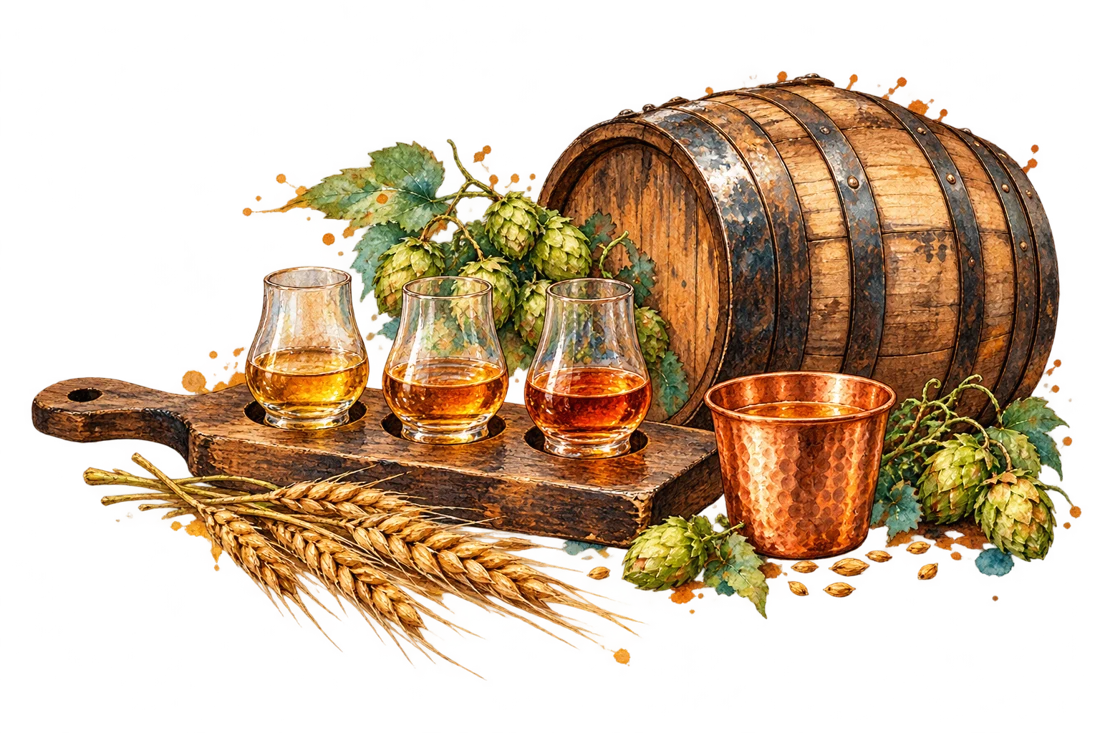
brewer, symbolic watercolor illustration
2022

A brewer brings another palate

Garrett Oliver collaborates on a four-year Still Austin bourbon selected from twenty barrels. The producer connects the release to brewing and distilling education through the Michael James Jackson Foundation.[11]
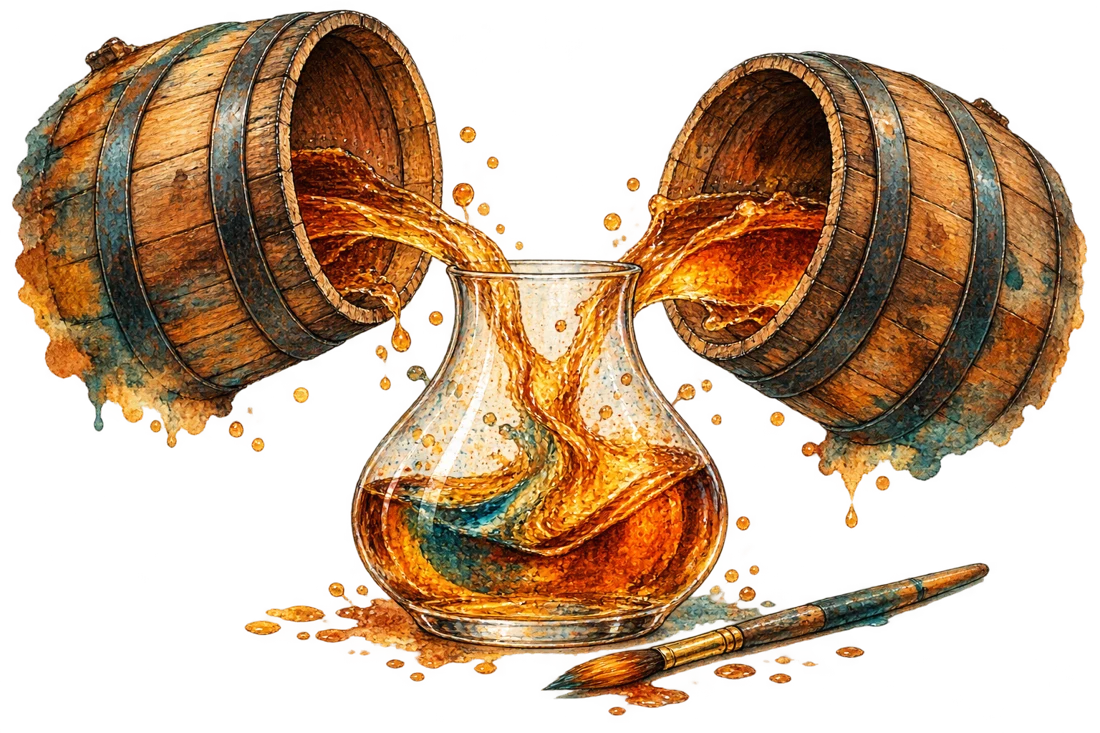
double, symbolic watercolor illustration
2023

Blending happens twice

Artist Series No. 3 explores re-barreling after blending at different proofs. Alexa Pulitzer’s commissioned label interprets the process. The experiment gives the blend another period in wood before the final bottling decision.[12]
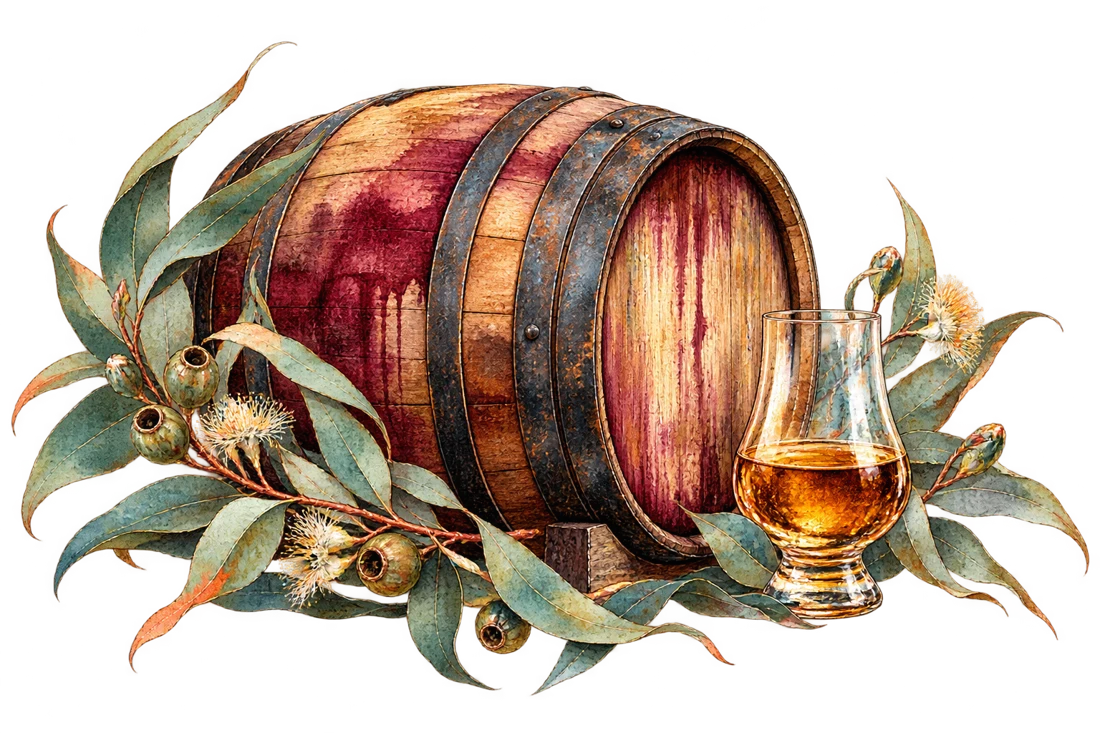
australia, symbolic watercolor illustration
2024

The series travels to Australia

Jordan Salcito and Josephs blend Starward Australian single malt from four styles matured in red-wine barrels. Collaboration No. 3 expands the geographic and stylistic range beyond American bourbon and rye.[13]
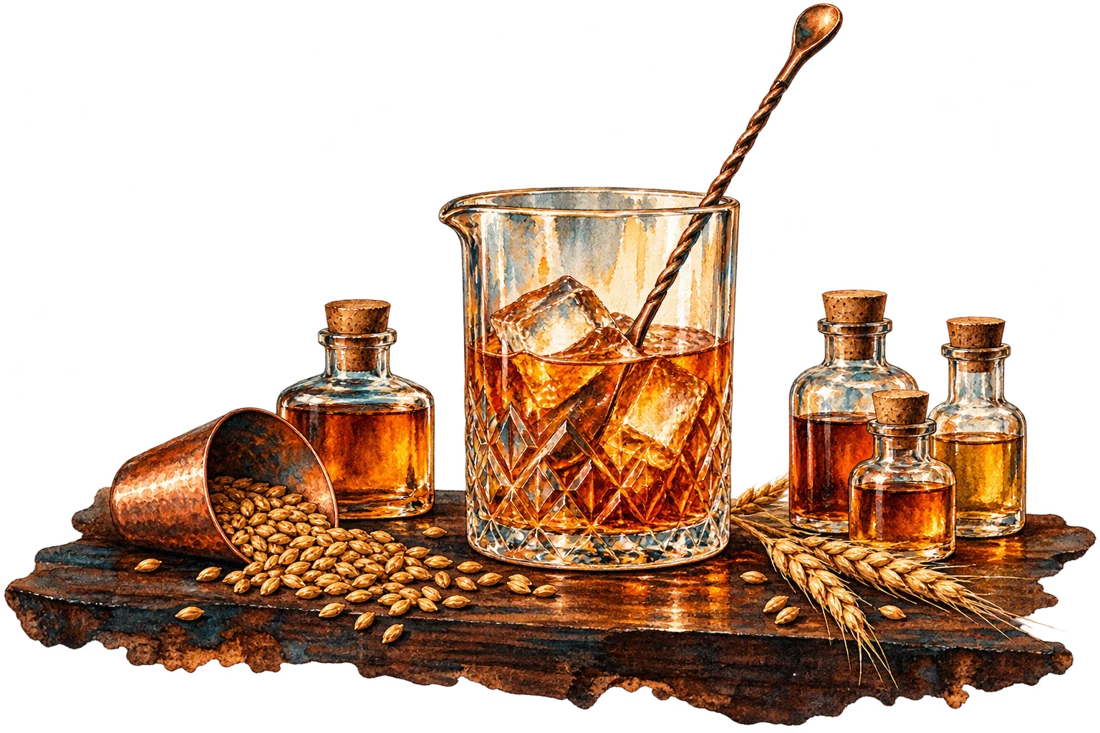
bartender, symbolic watercolor illustration
2025

A blend takes shape in public

Collaboration No. 4 is a six-year rye blended live at Tales of the Cocktail with bartender and author Neal Bodenheimer. The producer describes a limited two-thousand-bottle release.[15][14]
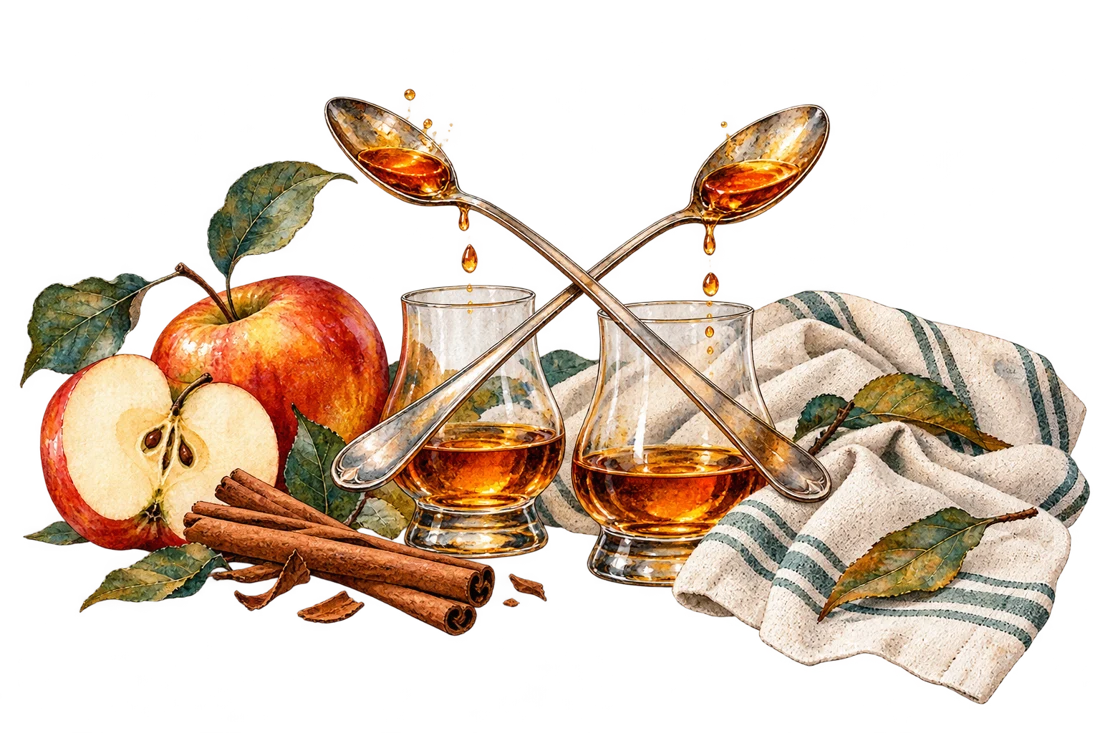
chefs, symbolic watercolor illustration
2026

Chefs explore a second barrel

Donald Link and Stephen Stryjewski join Collaboration No. 5. Its bourbon spends three years in one new charred barrel and three more in a second. The release supports their New Orleans foundation.[16]
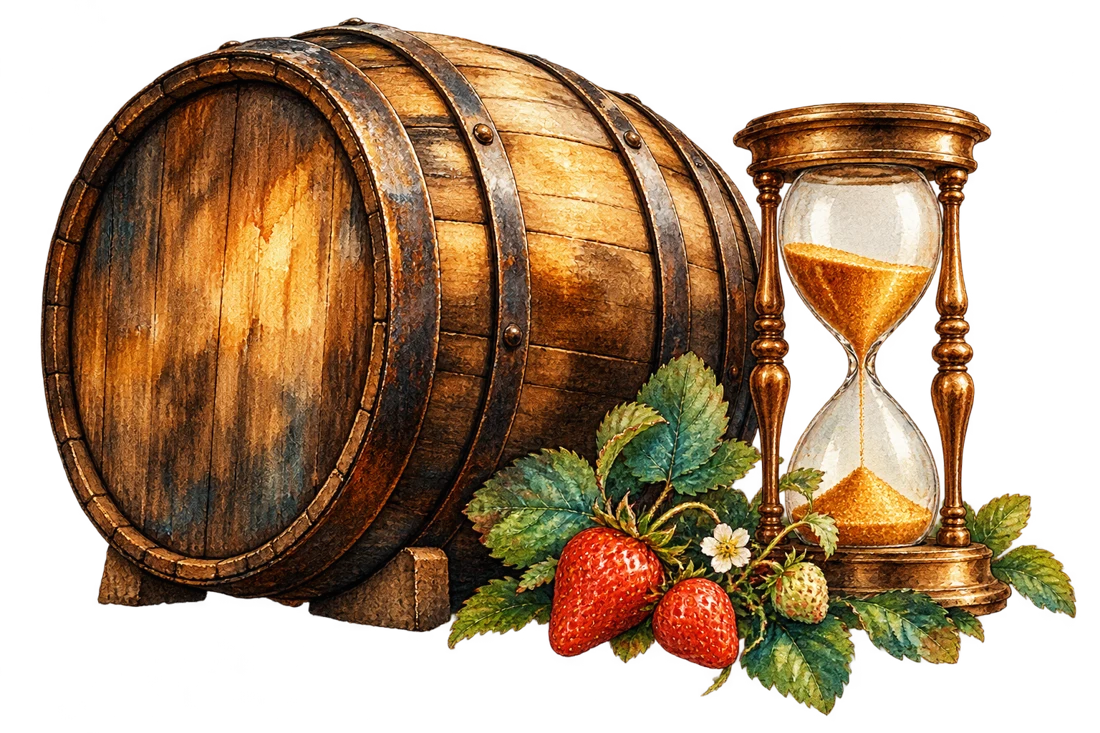
eleven, symbolic watercolor illustration
2026

Eleven years, with more ahead

The official eleven-year Bourbon page lists a 62-barrel blend at 114.4 proof and now describes the series continuing to sixteen years. The page still carries preorder language, so this profile does not assert a confirmed shipping date.[18]
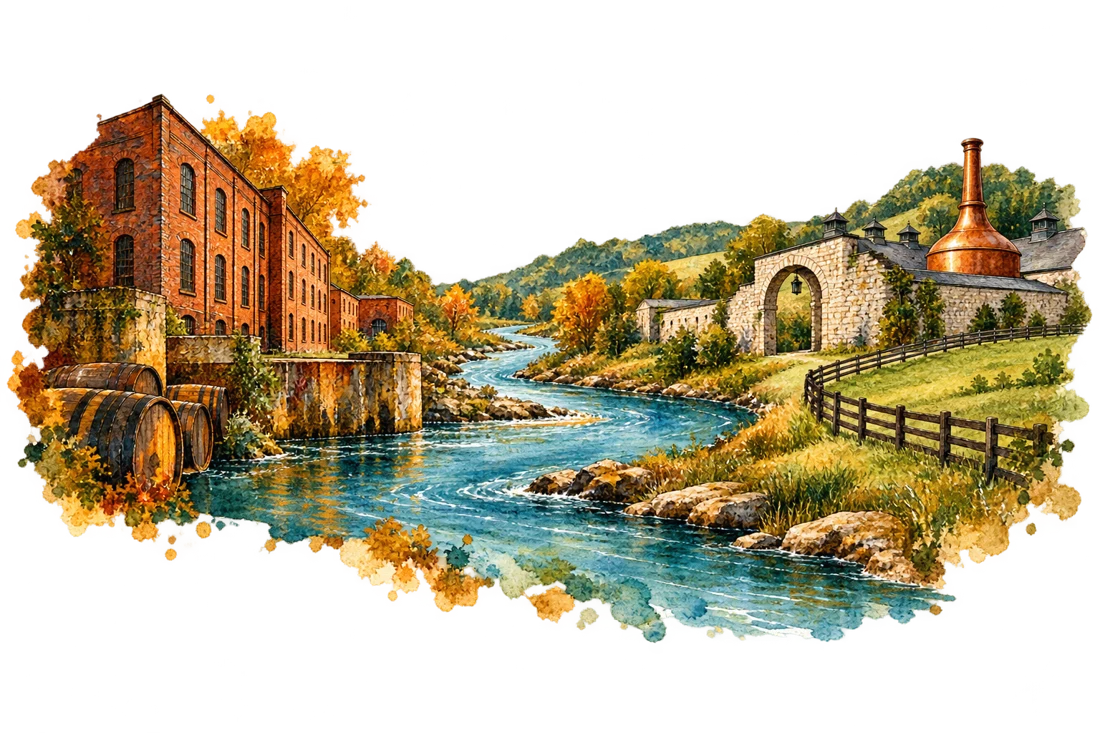
03 / Geography & roles

The places play different parts.

place, symbolic watercolor illustration

Lawrenceburg, Indiana

The original barrel purchase and the Vertical Series connect Pinhook to the distillery now known as MGP. An Indiana distilling origin remains meaningful even when whiskey later matures, blends or bottles elsewhere.[1][7]

Castle & Key, Kentucky

The restored Old Taylor property is Pinhook’s production partner for its proprietary core recipes. Its historic architecture provides context, but Pinhook is a separate producer. A visitor should distinguish the Castle & Key site from a Pinhook-owned distillery.[3][21]

Wyoming and Texas

Collaboration releases have used Wyoming Whiskey and Still Austin bourbon. These are specific partnerships attached to particular editions, not alternative names for Pinhook or evidence of common ownership.[10][11]

Melbourne, Australia

Starward’s red-wine-cask single malt supplies Collaboration No. 3. Its wine-cask maturation is part of that Australian whisky’s identity; it should not be generalized to the Kentucky flagship range.[13]

New Orleans, Louisiana

Hospitality provides another kind of geography. Tales of the Cocktail, Neal Bodenheimer and the Link Restaurant Group connect later collaborations to New Orleans through tasting and creative work, rather than a claim that the whiskey was distilled there.[15][17]

04 / The whiskey family

One producer. Several ways to explore.

Pinhook

Producer and blender

Pinhook organizes the vintages and series. Current leadership roles are identified above; a complete capitalization table is not established by the public material used here.[1]

Castle & Key

Core production partner

Custom bourbon and rye recipes are distilled at the Kentucky partner. Contract production does not transfer ownership of the distillery to the brand.[3]

MGP

Vertical Series source

The bourbon and rye experiments begin with separate groups of MGP barrels. The named horse helps carry each series’ identity through its annual releases.[7][19]

Annual vintages

Core whiskey family

Straight Bourbon, Straight Rye and higher-proof expressions offer recurring categories with vintage-specific blending and proof decisions. A product name alone does not establish the exact year or specifications.[2]

Collaboration Series

Guest perspectives

Sommeliers, a brewer, a bartender and chefs contribute sensory perspectives. The series can change distiller, whiskey style and maturation approach from one edition to the next.[15]

Artist Series

Experimental bottlings

This series pairs whiskey experiments with commissioned label art. Its identity concerns both the liquid and the creative interpretation, rather than a fixed recipe applied to every release.[12]

Bourbon Lane Stable

Horse-selection relationship

Mike McMahon and Jamie Hill help select the thoroughbreds featured on the labels. These are real horses with their own records; a horse’s birth year is not the whiskey’s distillation date.[5][4]

05 / Making & choosing

Origin, selection and the barrel.

Every vintage begins with a choice. Recipes, source distilleries, maturation and proof give each series its own identity.

blend, symbolic watercolor illustration

Vintage is a blending decision

The annual approach allows the selected whiskey to vary. That does not mean every vintage is a new mash bill. Recipe, barrel selection, maturation, blend composition and bottling proof are different variables, and the label year identifies a release rather than automatically identifying a harvest.[2][4]

Build the blend in stages

Pinhook’s published method starts with sample groups, or blending blocks, then tests combinations through multiple rounds. Its hundred-barrel example is an explanation of the method, not the size of every production batch.[6]

Choose proof by tasting

The producer evaluates blends at cask strength and then across dilution levels. A blend preferred at one strength may not be preferred at another. Proof is therefore part of the sensory composition, rather than simply the last numerical step before bottling.[6]

Keep the recipes separate

The 2026 core bourbon lists 75% corn, 15% rye and 10% malted barley. The MGP Vertical Bourbon instead lists 75% corn, 20.5% rye and 4.5% malted barley. Vertical Rye lists 95% rye and 5% malted barley. These are distinct whiskey streams.[20][18][19]

The vertical is a changing selection

Annual releases draw from a common starting lot, but each year uses a fresh selection and blend. A comparison explores maturation alongside blending and proof choices. It is not a controlled test of one identical sample at unchanged strength.[7][18]

Single barrel means a separate identity

True Single Barrel releases preserve an individual barrel’s expression at cask strength. A general product page may show one example proof; it cannot override the actual proof, pick or bottle number on another physical release.[9]

Re-barreling is release-specific

Artist Series No. 3 experiments with blending and a return to used wood. Collaboration No. 5 specifies two successive new-charred-barrel periods. Those processes should remain separate rather than being collapsed into one universal Pinhook finish.[12][16]

06 / The details worth knowing

The stories behind the specifications.

The bottle is a reading system

Wax color signals the expression, geometric motifs identify the vintage and the horse identifies a barrel lot. The design helps collectors recognize continuity while still noticing change. A quick glance provides a clue; the full label supplies the specific release details.[4]

A horse can outlast a vintage

Bourbon War and Tiz Rye Time stay associated with their respective Vertical Series. The horse is a recurring identity across aging stages, so the same equine name can appear on bottles with different ages and proofs.[5][7]

A longer horizon

Older Vertical pages describe an endpoint of twelve years. Current eleven-year Bourbon and ten-year Rye pages describe sixteen. The difference is recorded as an evolution in the published plan, not retroactively inserted into the 2019 launch story.[7][18][19]

A brewer’s collaboration supports education

The 2022 Garrett Oliver release links the whiskey project to the Michael James Jackson Foundation. Pinhook describes funding twenty scholarships for people of color in brewing and distilling. That is the producer’s stated program commitment, not an independently audited completion count.[11]

A kitchen becomes a tasting framework

The Link and Stryjewski collaboration applies a chef’s attention to balance to barrel selection. Pinhook’s account emphasizes the relationship among components, an approach that makes the collaboration more than a name added to a label.[17]

The artist interprets the process

Alexa Pulitzer’s drawing for Artist Series No. 3 reflects the cycle of blending and further aging. The artwork tells a production story. The watercolor scenes in this profile are new interpretive illustrations, not reproductions of that commissioned label.[12]

07 / Selected expressions

A tasting path through the producer.

2026 Straight Bourbon

The core Kentucky bourbon provides an accessible starting point at 100 proof, with the producer specifying more than four years of age. Its Bourbon Betty identity and annual blend distinguish it from earlier vintages such as Bohemian Bourbon.[20]

2026 Vertical Bourbon 11 Year

The latest listed bourbon stage draws from 62 barrels at 114.4 proof. It offers a mature point in the MGP experiment. The official page’s mid-October expected shipping language remains a qualification rather than proof that deliveries have occurred.[18]

2026 Vertical Rye 10 Year

This edition is listed as a 25-barrel blend at 106 proof. It uses the separate MGP rye lot and its 95/5 recipe, offering a parallel maturation story rather than a rye-flavored variation of the bourbon blend.[19]

2024 Collaboration No. 3

At 114.8 proof, the Jordan Salcito edition is Australian single malt made with Starward whisky matured in red-wine barrels. It is the clearest reminder that the Pinhook portfolio extends beyond the Kentucky categories suggested by its name.[13]

2026 Collaboration No. 5

The six-year, twice-new-barreled bourbon with Donald Link and Stephen Stryjewski is bottled at 104 proof. Its equal three-year periods in each barrel make it a useful comparison with the brand’s more familiar single-barrel maturation paths.[16]

08 / The Reserve connection

Continue from the story to the bottles.

Pinhook in The Thelen Reserve

3 physical bottle records connect this story to the collection. Each keeps its own proof, barrel, batch, pick and release details.

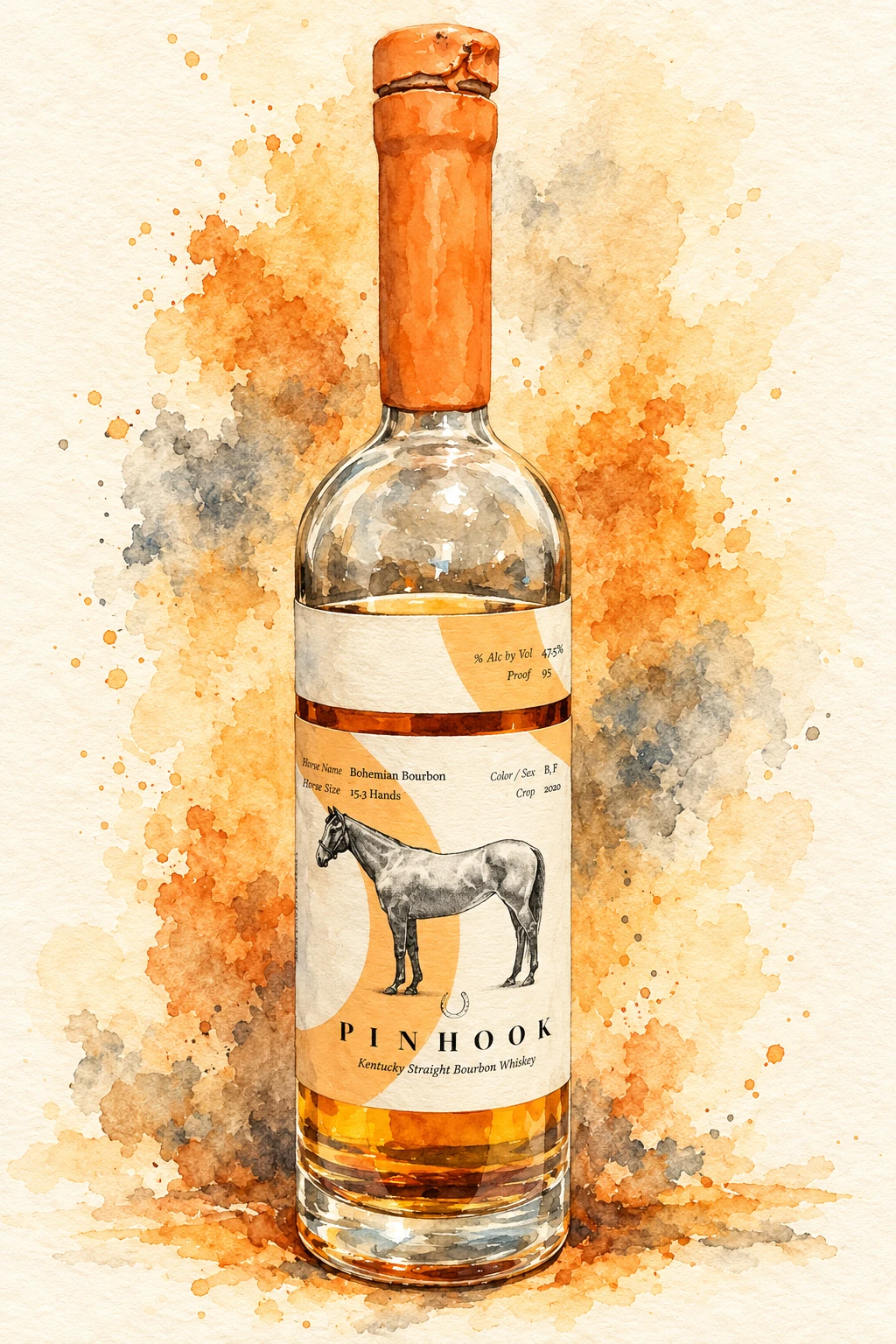
Pinhook Bohemian Bourbon · Crop 2020 approved watercolor

Pinhook Bohemian Bourbon - Crop 2020

W0371 · 95 proof · Bottled / release detail Crop 2020; inaugural Kentucky straight bourbon, 95 proof / 47.5% ABV / 750mL; non-chill filtered. Back label states aged more than 3 years. Exact bottling date not established. · Barreled detail Distilled and bottled at Castle & Key Distillery, Frankfort, Kentucky, per back label and producer. Producer's 2020 mash bill: 75% corn, 15% rye, 10% malted barley. Crop 2020 is the release vintage, not a verified distillation/barreling year; exact barreling date unknown.

2020 vintage. No barrel, batch or pick recorded.

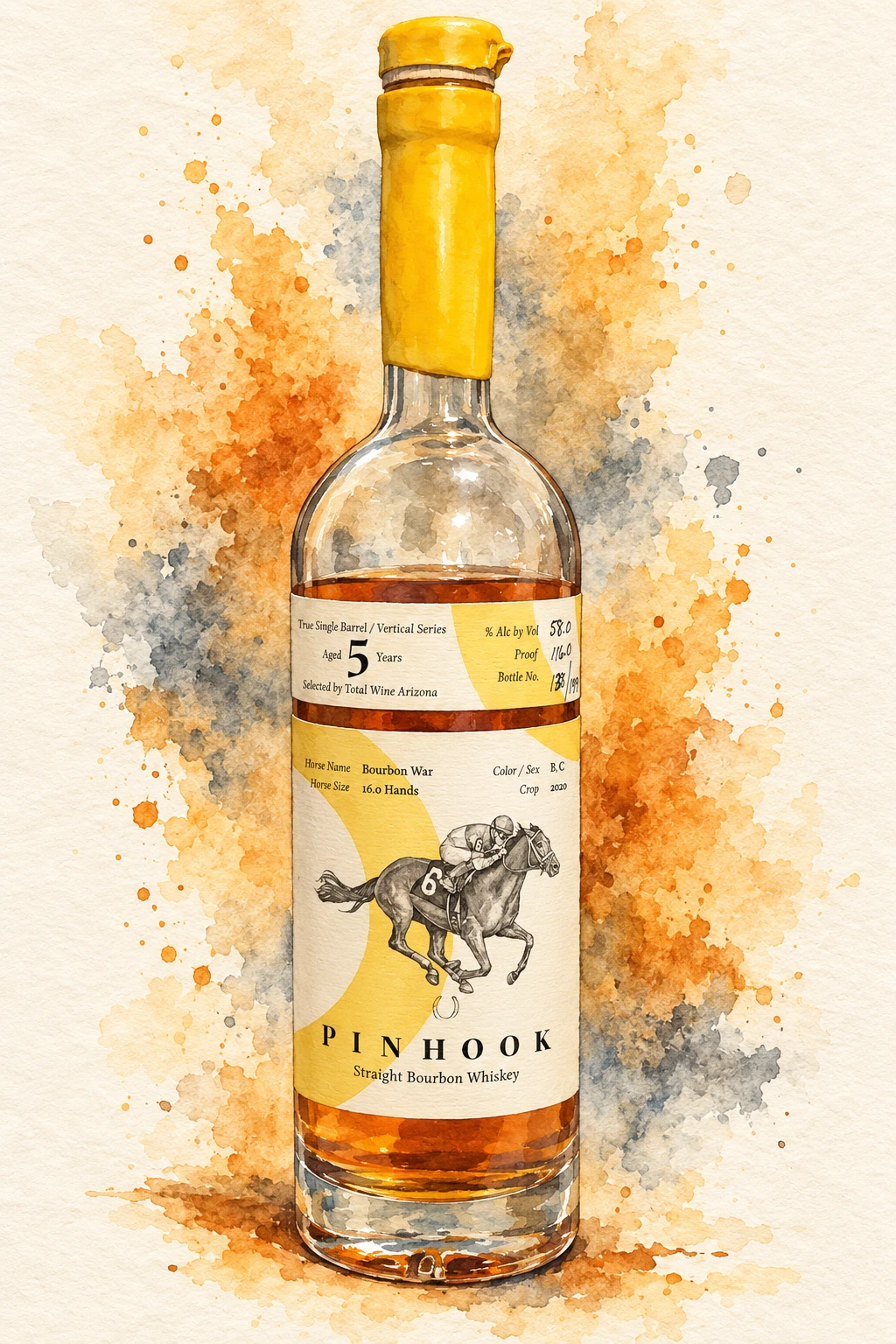
Pinhook Bourbon War · 5 Year True Single Barrel · Crop 2020 approved watercolor

Pinhook Bourbon War - 5 Year True Single Barrel - Crop 2020

W0372 · 116 proof · Bottle 138/199 · Pick Total Wine AZ · Bottled / release detail Crop 2020; True Single Barrel / Vertical Series, vintage 2 of 9; Bourbon War; aged 5 years; 116 proof / 58% ABV / 750mL; unfiltered; Total Wine Arizona selection; bottle 138 of 199. Exact bottling date and barrel number not supplied. · Barreled detail Distilled in Lawrenceburg, Indiana, per back label; bottled by Castle & Key, Frankfort, Kentucky. Producer identifies MGP barrels in the 2020 True Single Barrel / Vertical Series program, with 75% corn / 20.5% rye / 4.5% malted barley mash bill. Crop 2020 is release vintage, not a verified distillation date; exact barreling date unknown.

Bottle 138/199 · Total Wine AZ pick. Barrel number not recorded.

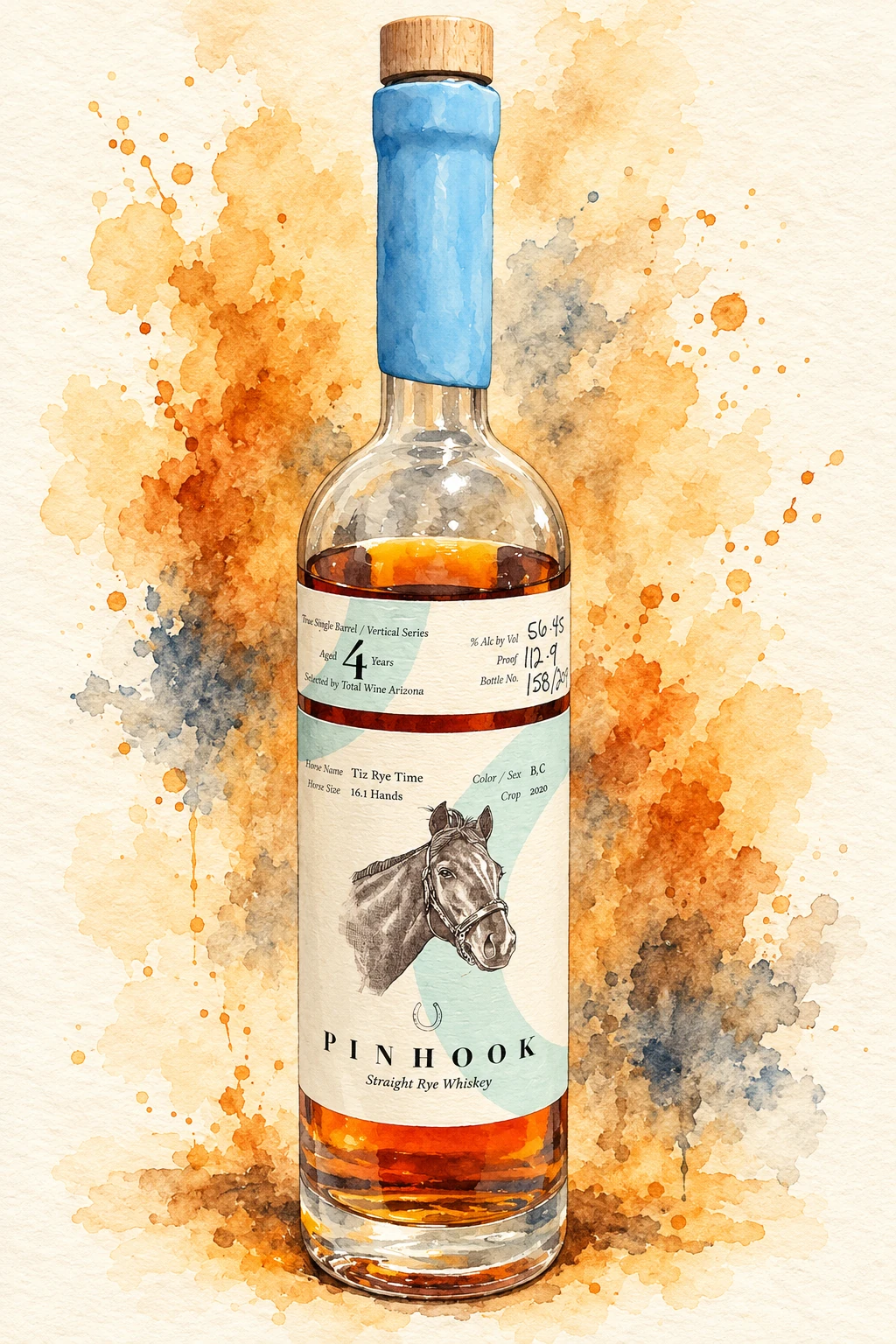
Pinhook Tiz Rye Time · 4 Year True Single Barrel Rye · Crop 2020 approved watercolor

Pinhook Tiz Rye Time 4 Year True Single Barrel Rye, Crop 2020

W0373 · 112.9 proof · Bottle 158/209 · Pick Total Wine AZ · Bottled / release detail Crop 2020; Tiz Rye Time; 4 Year True Single Barrel / Vertical Series, vintage 1 of 9; Total Wine Arizona pick; 112.9 proof / 56.45% ABV / 750 mL; bottle 158 of 209; unfiltered. Exact bottling date not provided. · Barreled detail Label: distilled in Lawrenceburg, Indiana; bottled at Castle & Key, Frankfort, Kentucky. Producer 2020 true single barrel rye program: MGP; mash bill 95% rye / 5% malted barley; cask strength. https://pinhookbourbon.com/products/tiz-rye-time-vertical-series . Exact barreling date and barrel number not provided.

Bottle 158/209 · Total Wine AZ pick. Barrel number not recorded.

Collection snapshot: October 22, 2026. All three bottles use their exact approved watercolors: W0371 / ART0529 v1, W0372 / ART0533 v1 and W0373 / ART0537 v1. Single-barrel proofs, bottle numbers and Total Wine AZ picks remain distinct.

Pinhook guide cover
The illustrated companion

Pinhook, in three pages.

Origins and people, history and places, whiskey and stories. An illustrated companion with linked research sources.

Sources & research notes

Research qualifications

  • Research checked October 17, 2026 (America/Phoenix). Website v1 and Guide v1 approved October 17, 2026.
  • Pinhook is treated as a producer and blender, not an owner of every source distillery. Brand founding, production partnership and individual release dates remain separate.
  • The official Collaboration No. 1 page gives conflicting barrel-purchase years (2012 and 2017). No acquisition year or disputed recipe is asserted for that edition.
  • Artist Series No. 3 lists grain percentages totaling 95%. The profile does not repair or repeat that incomplete recipe; the double-blending process is separately supported.
  • Vertical Series endpoint changes from twelve on older pages to sixteen on current pages. This is presented as a changed published plan. No future release is treated as completed.
  • The 2026 eleven-year bourbon page retains preorder and expected mid-October shipping language. Actual delivery is not confirmed by this research. Older horse biographies and commerce boilerplate are not treated as current status.
  • Tasting language is avoided as a substitute for personal assessment. Official sources support specifications; these illustrations are symbolic scenes, not photographs or verified reconstructions.

Full sources

  1. Pinhook: origins and current team
  2. Pinhook: the vintage approach
  3. Pinhooking: the idea behind the name
  4. Reading Pinhook bottle design
  5. Pinhook: the horses
  6. Pinhook: blending and proofing
  7. 2019 Vertical Bourbon 4 Year
  8. 2020 Bohemian Bourbon
  9. 2020 True Single Barrel Bourbon
  10. 2021 Collaboration No. 1: André Mack
  11. 2022 Collaboration No. 2: Garrett Oliver
  12. 2023 Artist Series No. 3
  13. 2024 Collaboration No. 3: Jordan Salcito
  14. 2025 Collaboration No. 4: Neal Bodenheimer
  15. Pinhook: Collaboration Series overview
  16. 2026 Collaboration No. 5: Link and Stryjewski
  17. A bourbon shaped by chefs
  18. 2026 Vertical Bourbon 11 Year
  19. 2026 Vertical Rye 10 Year
  20. 2026 Straight Bourbon
  21. Pinhook’s Kentucky: the distillery relationship
  22. 2023: Sean Josephs on the Vertical Series
↑