TJ THELEN'S COLLECTION
The Thelen Reserve
Behind the Bottles / Blending & finishing / Founded 2018

Penelope Bourbon

Last updated Last researched

A family name. A blender’s imagination.

Penelope began with an occasion worth remembering and grew through the possibilities of blending. Its story follows a family name from an approachable four-grain bourbon into French oak, wine casks, carefully selected older whiskey and unexpected collaborations. The connecting thread is a willingness to make choices after the still: which barrels belong together, what wood can contribute and when a whiskey is ready to stand on its own.

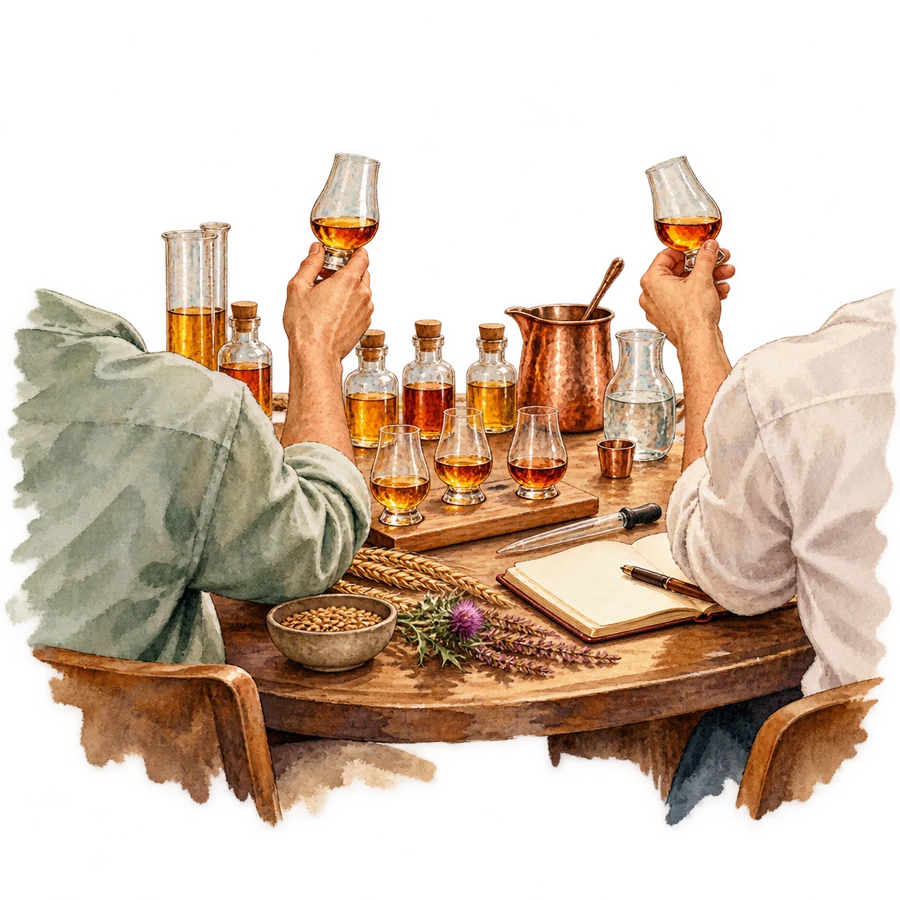
Interpretive watercolor of a blending table, four grains and a whiskey bottle
Brand founded
2018[1]
Founders
Michael Paladini · Danny Polise[1]
Creative focus
Blending & finishing[5][17]
Company family
MGP / Luxco[7]
01 / Origins & people

A family name. A shared ambition.

A celebration becomes a name

In 2018, Mike Paladini and his wife Kerry were expecting their daughter, Penelope. Mike wanted a whiskey that could carry the pleasure of that occasion into smaller celebrations too. He joined childhood friend and neighbor Danny Polise to build the brand. The name records a family beginning rather than a place or an inherited distillery.[1]

The blend came first

Early technical literature describes three MGP bourbon mash bills brought together around corn, wheat, rye and malt. At 80 proof, the original approach offered a gentle introduction to the combination. Choosing the component whiskeys was already the creative act: Penelope’s identity began at the blending table, with established distilling expertise supplying the ingredients.[2]

From customer to company family

Luxco’s 2023 account identifies Penelope as an MGP customer from its 2018 launch. Acquisition therefore brought an existing relationship inside the same corporate family. That is a useful distinction in a young brand’s history: the ownership changed, but the association with its principal whiskey supplier was already part of the story.[22]

Symbolic distillers sharing expertise beside barrels

Michael Paladini

The cofounder helped carry the original idea into a wider spirits business. By the February 2026 announcement, his role was identified as founder and MGP vice president of strategy. The dated title provides context for a brand that retained its founding voice after acquisition.[15]

Danny Polise

Penelope’s cofounder and master blender is the central figure in its barrel-selection story. The 2024 Estate project sent Polise and his team through older stocks, looking for both individual character and components that would work together. The release made selection itself the subject.[10]

Kerry Paladini and the creative team

Kerry is identified as creative director on the brand’s team page, linking the family origin with its visual identity. Jayce Chavez is listed in production: complementary roles behind the finished bottle.[1]

Matt Ward and the tasting conversation

Ward met the founders at a trade show and helped develop a tasting program built around direct conversation. During pandemic restrictions, virtual tastings kept that exchange alive. Luxco later extended the method to other brands, making Penelope’s approach to education another part of what the acquisition brought into the wider company.[21]

02 / The illustrated history

A young brand keeps changing the recipe.

Follow the founders, the blend and the expanding role of oak. Dates distinguish founding, documented releases and ownership changes.
Symbolic illustration: A family name becomes a brand
2018

A family name becomes a brand

An expected daughter gives the new whiskey its name. Michael Paladini and Danny Polise begin a business centered on an approachable bourbon and the pleasure of sharing it.[1]
Symbolic illustration: Four grains, three starting points
2018

Four grains, three starting points

The original direction is a blend, assembled from MGP bourbon recipes. Corn, wheat, rye and malted barley provide the palette; the brand’s early 80-proof technical sheet records the concept that became Four Grain.[2][22]

Symbolic illustration: Recognition beyond the first circle
2020

Recognition beyond the first circle

Penelope later reports a 2020 San Francisco Double Gold and a Platinum SIP award among its early distinctions. These awards give the young brand recognition beyond its own tastings; Australian distribution follows in 2021.[3]
Symbolic illustration: Rosé is in the record
2021

Rosé is in the record

The October 2021 Batch 03 sheet documents a 94-proof bourbon finished in French Grenache rosé casks. It places wine-cask exploration firmly in the early story without treating this batch as the first-ever Rosé release.[4]
Symbolic illustration: A blueprint in French oak
2022

A blueprint in French oak

The first-build Architect sheet, preserved in the 2022 archive, combines four-grain bourbon with two French stave styles. Radoux’s OakScan selection becomes part of Penelope’s approach to constructing a flavor profile.[5]

Symbolic illustration: A supplier becomes the parent
June 2023

A supplier becomes the parent

MGP’s subsequent filing records completion of the Penelope acquisition on June 1 through the Luxco business. The founders and their team join a larger organization, bringing an established blending brand into its supplier’s portfolio.[6][7]
Symbolic illustration: Rio pairs honey with Amburana
2023

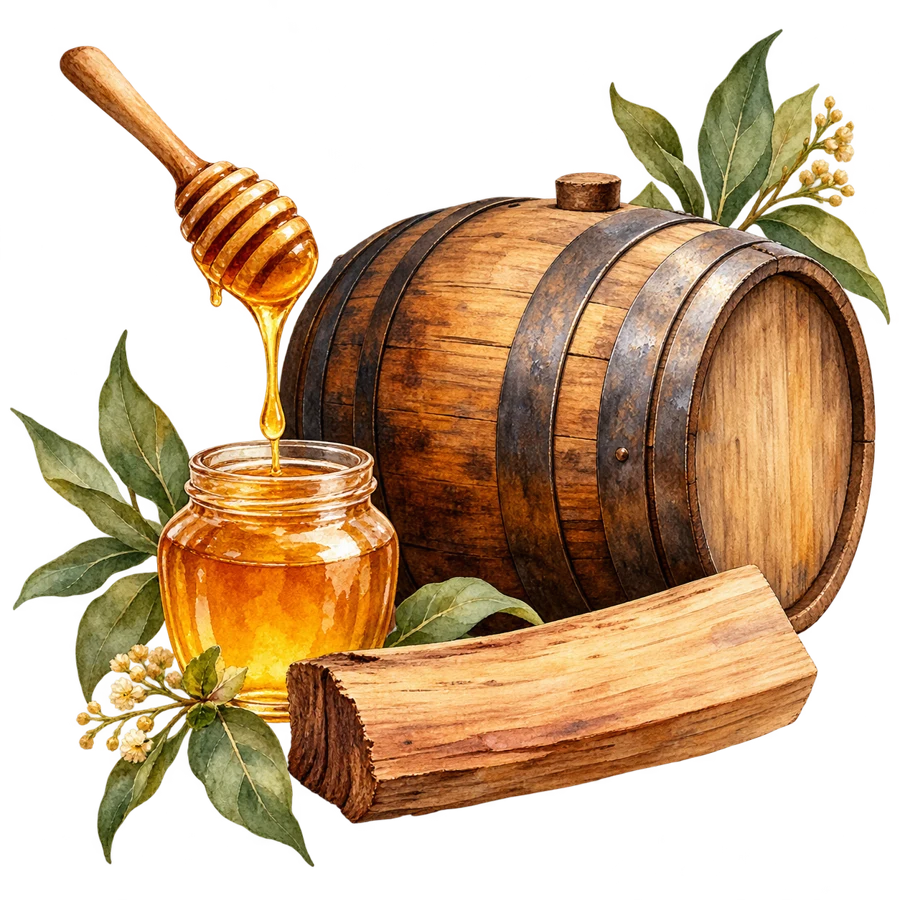
Rio pairs honey with Amburana

The following year’s official announcement confirms a 2023 Rio release. Its pairing of American honey casks and Brazilian Amburana hardwood shows how two finishing influences can become a single, distinctive concept.[8]
Symbolic illustration: Valencia makes its annual return
August 2024

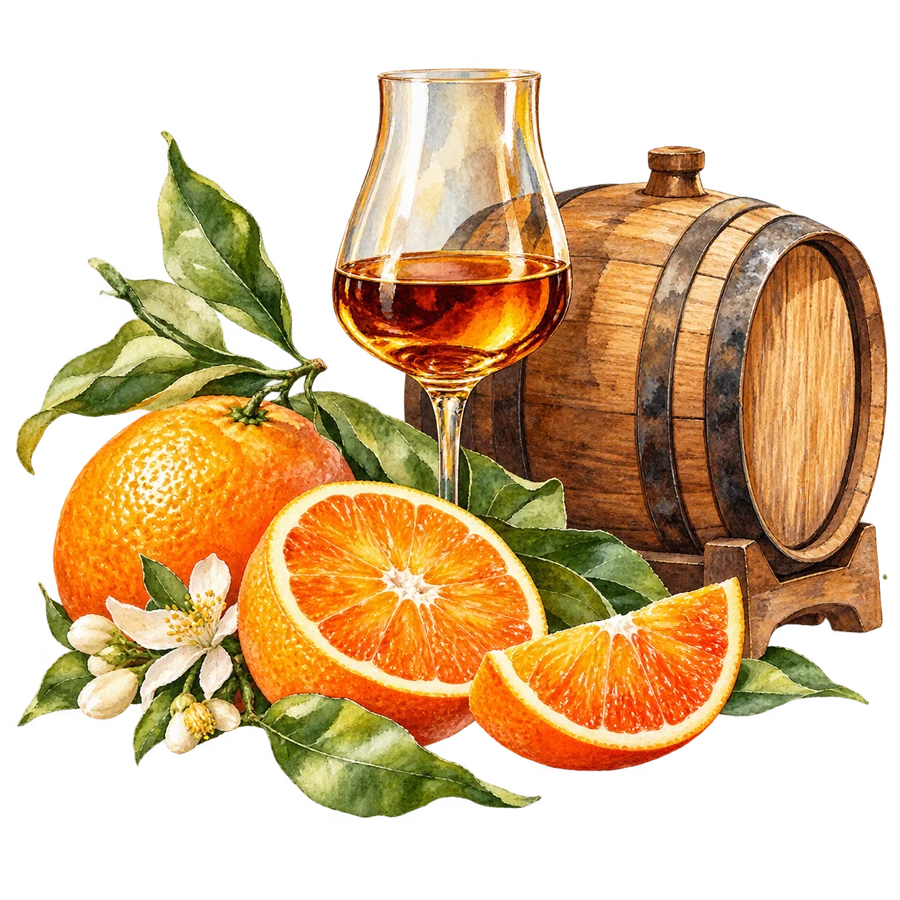
Valencia makes its annual return

The 2024 Valencia pairs Four Grain bourbon with Vino de Naranja casks from Sevilla. The announcement describes an evolving annual release, with this edition spending up to twelve months in those orange-wine casks.[9]

Symbolic illustration: Older stocks, new possibilities
September 2024

Older stocks, new possibilities

The Estate Collection arrives with Founders Reserve, Private Select and Single Barrel. Its opening releases explore wheat whiskey, blended bourbon and individual barrels, using stocks substantially older than the brand itself.[10]
Symbolic illustration: Havana gives a barrel another life
December 2024

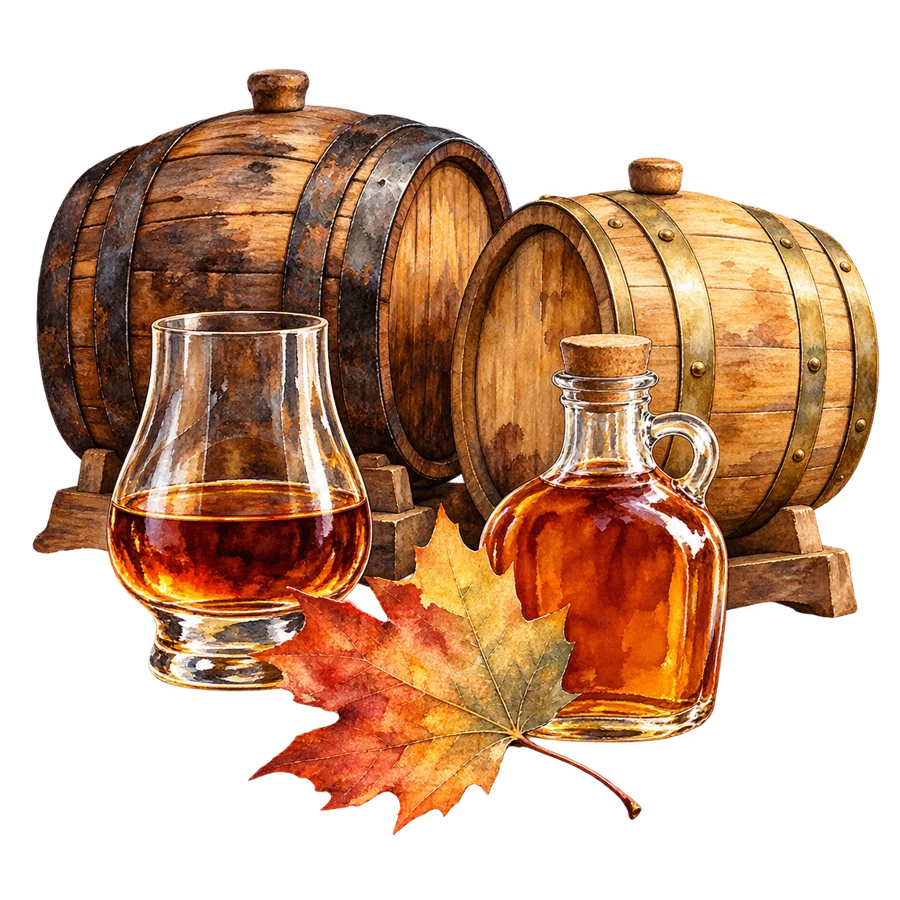
Havana gives a barrel another life

Havana is announced with Caribbean rum and maple-syrup cask finishes. For the second stage, barrels that previously held Penelope bourbon have held maple syrup before returning to whiskey service.[11]
Symbolic illustration: Wheated joins the core
January 2025

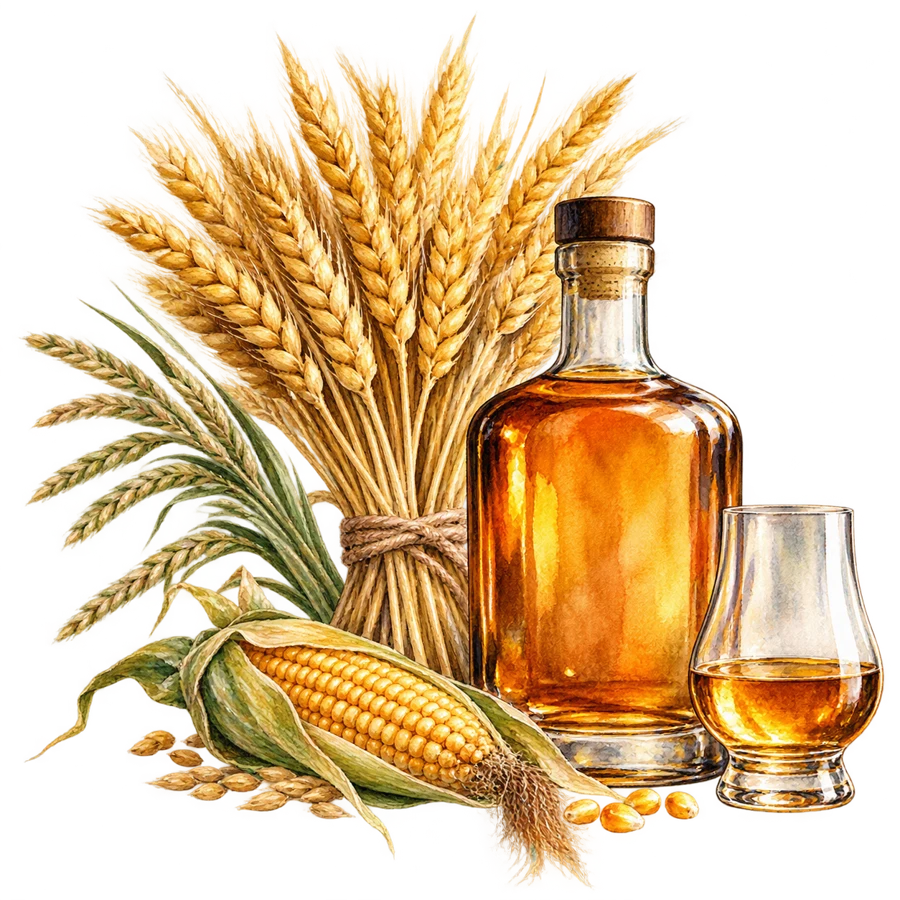
Wheated joins the core

The fifth core expression is announced at 95 proof. Its recipe emphasizes wheat but still includes rye, extending the familiar four-grain conversation with a different balance and a new place in the regular range.[12]
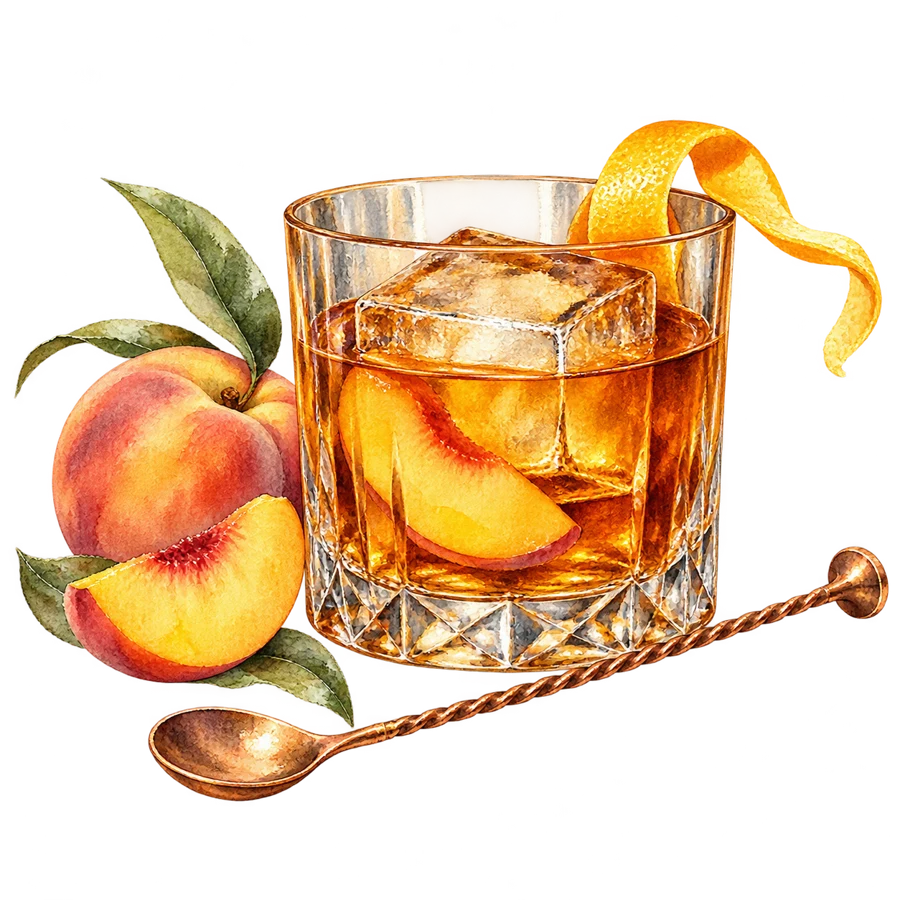
Symbolic illustration: The blend reaches the cocktail
April 2025

The blend reaches the cocktail

Peach Old Fashioned launches Penelope’s prepared-cocktail range. Bourbon and rye meet peach bitters and maple syrup in a recipe developed with Nashville cocktail creator Tim Beckner.[13]
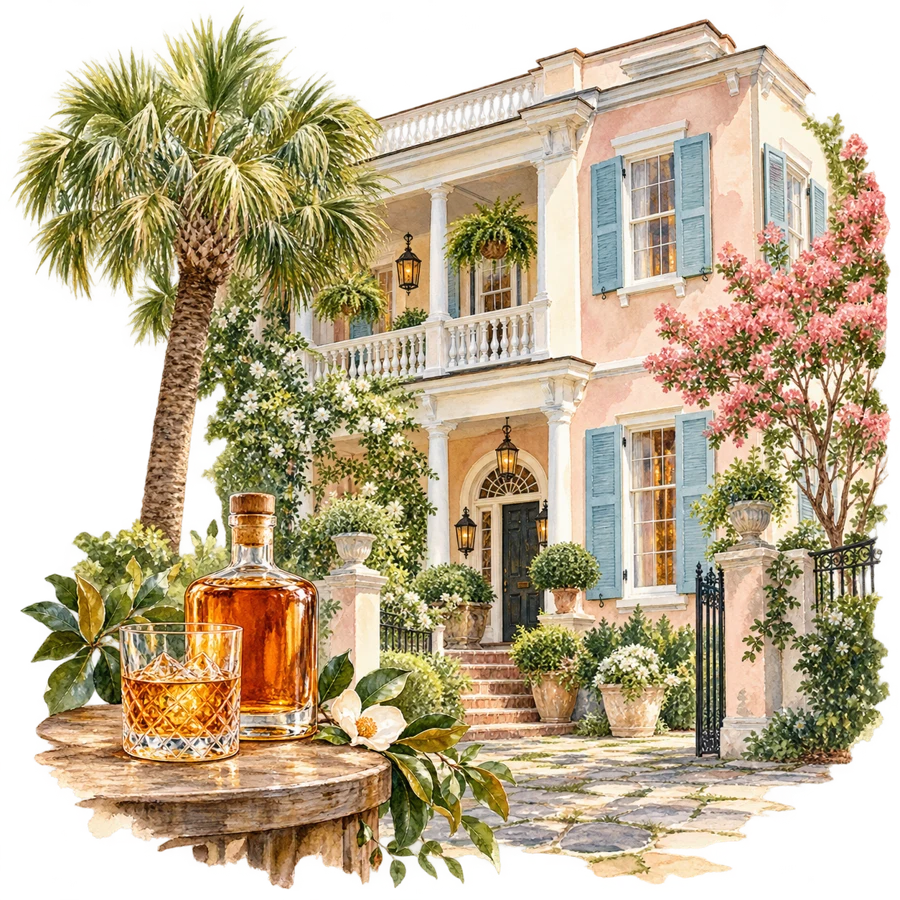
Symbolic illustration: A Charleston pattern becomes a collaboration
January 2026

A Charleston pattern becomes a collaboration

Beaufain joins Penelope with Serena & Lily. A custom 84-proof four-grain blend accompanies a bottle design inspired by a historic Charleston wallpaper pattern, bringing interior design into the brand’s collaborative story.[14]
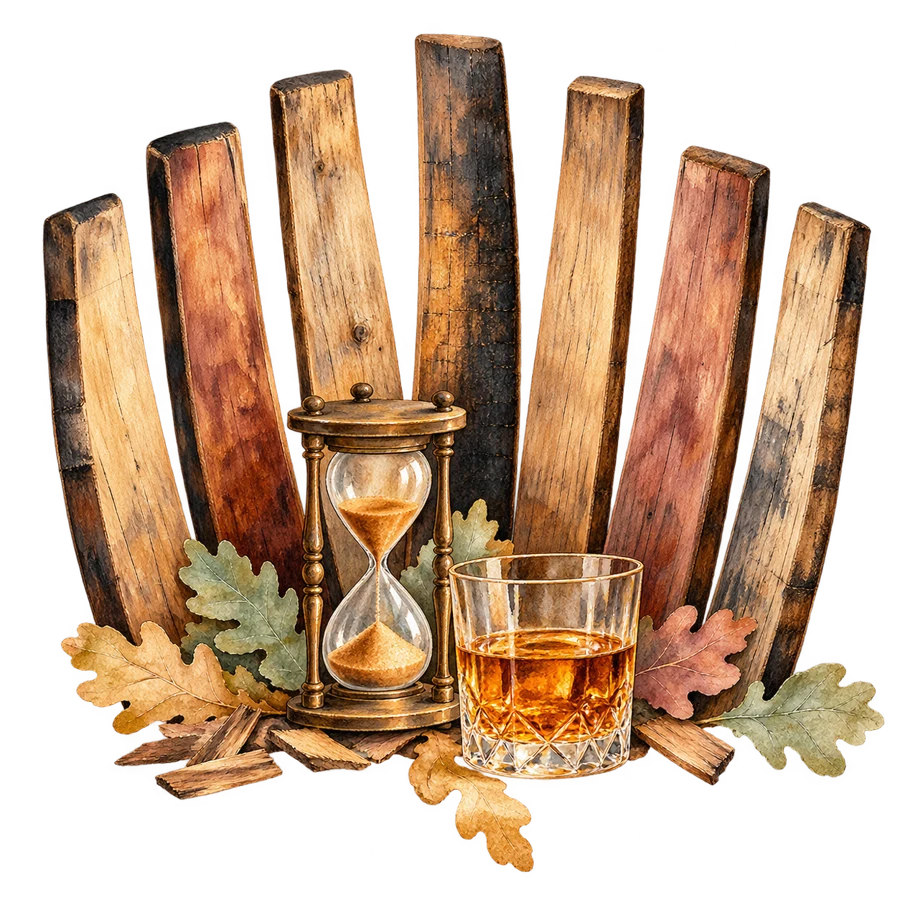
Symbolic illustration: Barrel Strength grows older
February 2026

Barrel Strength grows older

The seven-year release expands the blending framework to four straight-bourbon mash bills. Bottled uncut at 115.2 proof, it is a new formulation and age statement, not simply the original blend held longer.[15]

Original watercolor interpretations accompany the history. Buildings, objects and scenes are symbolic, not documentary reconstructions.
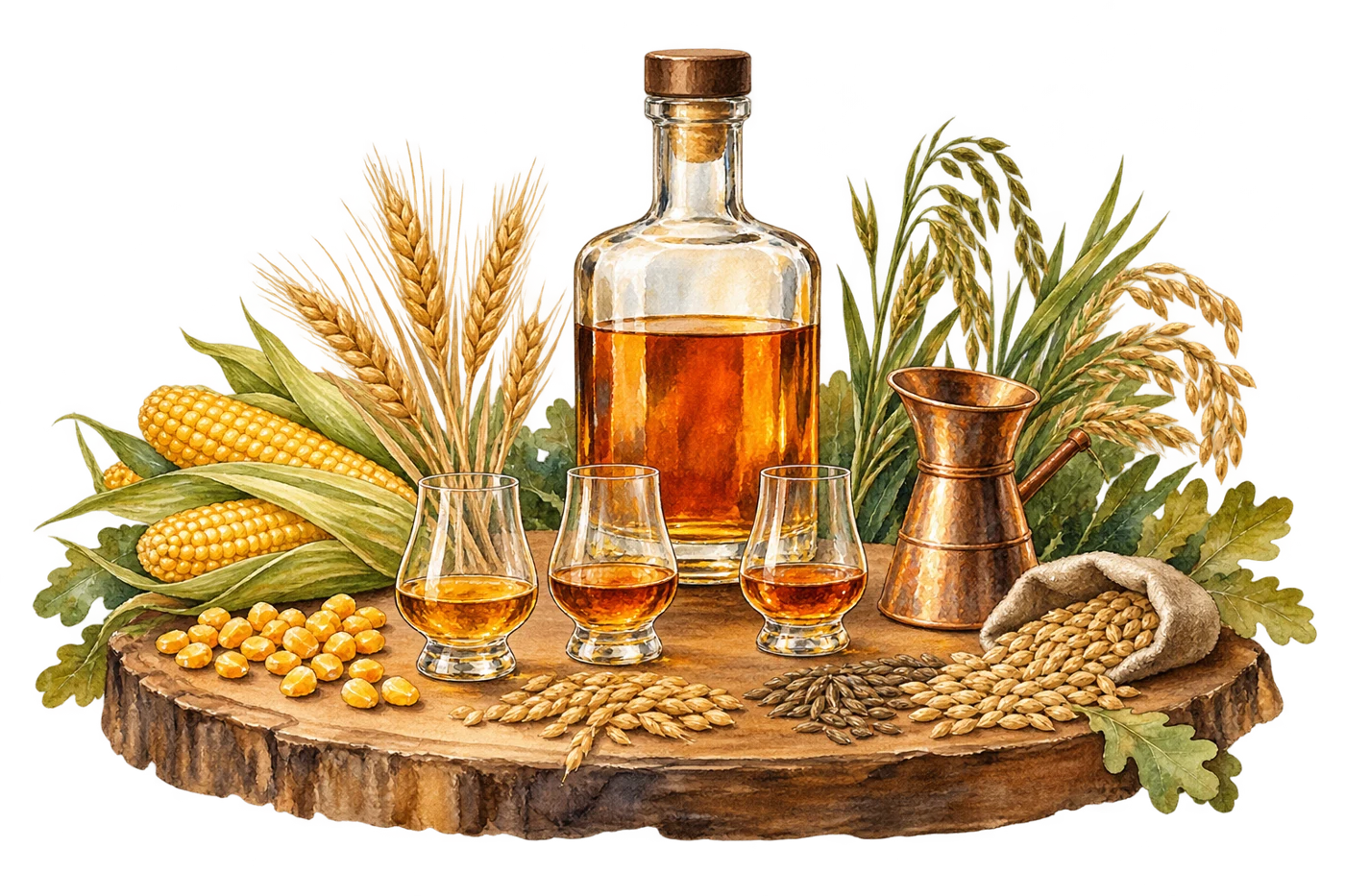
03 / Geography & roles

One name. Several places that matter.

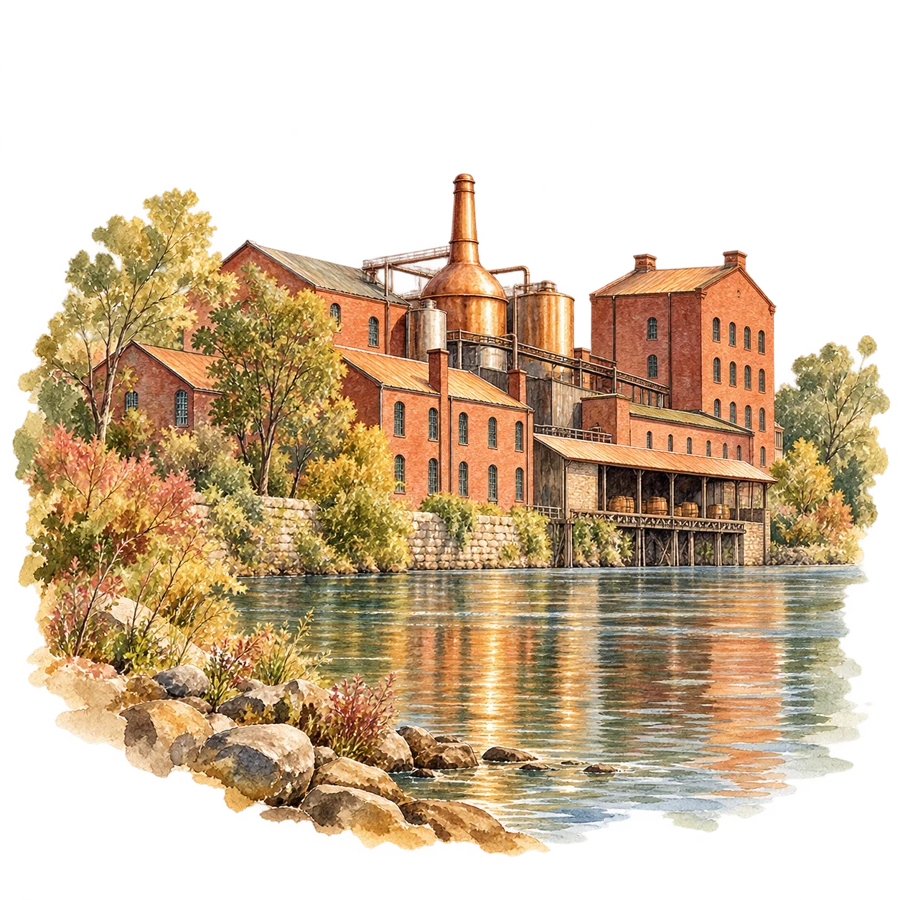
Interpretive Indiana riverfront and whiskey production landscape

Roselle, New Jersey

Early brand base

Early international-distribution announcements carry a Roselle dateline. It belongs to the brand’s commercial beginnings, while the whiskey’s distilling origin is a separate question. The geographic story starts with people and a business, not an asserted New Jersey production still.[3]

Lawrenceburg, Indiana

Documented distilling source

The historic Seagram’s site, now Ross & Squibb, supplies a tangible production connection. The 2025 American Light Whiskey announcement identifies whiskey distilled there in 2006. Its long maturation predates Penelope’s founding, illustrating how a young blender can introduce much older stocks.[20]

Kentucky

Expression-specific origin

The current Classic bourbon is explicitly Kentucky straight bourbon. Its official page supplies a recipe and proof but does not name the distillery. Kentucky is therefore a confirmed origin for that expression, while a more specific producer attribution remains unestablished in these sources.[19]

France and Sevilla

Wine-cask connections

Grenache rosé casks connect an early finish with southern France. Valencia carries a different wine tradition from Sevilla into bourbon. These are sources of finishing casks and flavor influences, not claims that the underlying American whiskey was distilled abroad.[4][9]

Bardstown, Kentucky

Named partner; scope unspecified

Bardstown Bourbon Company appears among Penelope’s named partners. The brand page does not assign a precise role to every expression, so the partnership alone does not establish a bottle’s distilling source.[1]

04 / The whiskey family

Understand the name on the label.

Selected ownership, brand and creative relationships. A shared family name does not make every release the same whiskey.

Symbolic tasting flight representing different whiskey families

MGP and Luxco

Ownership

Luxco acquired Penelope within the MGP group. The combination linked an established distilling supplier with a brand focused on blending and finishing. Penelope remains its own consumer identity inside that larger portfolio.[7]

Core Series

Regular whiskey family

Four Grain, Barrel Strength, Architect and Toasted were joined by Wheated in 2025. Together they offer contrasting routes into the house style: proof, grain balance and different encounters with oak.[12]

Cooper Series

Selected cask-finished expressions

Rosé, Rio, Valencia and Havana are selected examples of a family organized around cask exploration. The names invite a journey through wine, wood, honey, rum and maple influences while the whiskey remains American.[8][11]

Tonnellerie Radoux

Stave and oak partner

The French cooperage collaborates on Architect. Penelope uses the OakScan process to select French oak staves for the desired profile, making the choice of wood an explicit part of the blending design.[16]

Speyside Cooperage

Cask-sourcing partner

The brand identifies Speyside as a partner in sourcing distinctive oak casks for finishes. Cask procurement helps turn an idea about flavor into a practical finishing project.[1]

Estate Collection

Selected aged stocks

This named collection brings together aged selections and blends. Its 2024 Private Select combined nine-year stocks from two states, while Founders Reserve explored eleven-year wheat whiskey. The collection is broader than one recipe or one whiskey type.[10]

Serena & Lily

Creative collaboration

The furnishings company collaborated on Beaufain, with Garden & Gun connecting the partners. Design and blending developed together: a special package carried a bourbon made specifically for the occasion.[14]

Ready-to-pour cocktails

Prepared cocktails

The Peach Old Fashioned marked a separate product category. Its bourbon-and-rye base becomes a complete cocktail through bitters and maple syrup; it belongs alongside the whiskey family without being confused with straight bourbon.[13]

05 / Making & choosing

The recipe is only the beginning.

Grain, fermentation, distillation, oak and selection each leave a mark. Age and proof claims below belong to the expressions named.

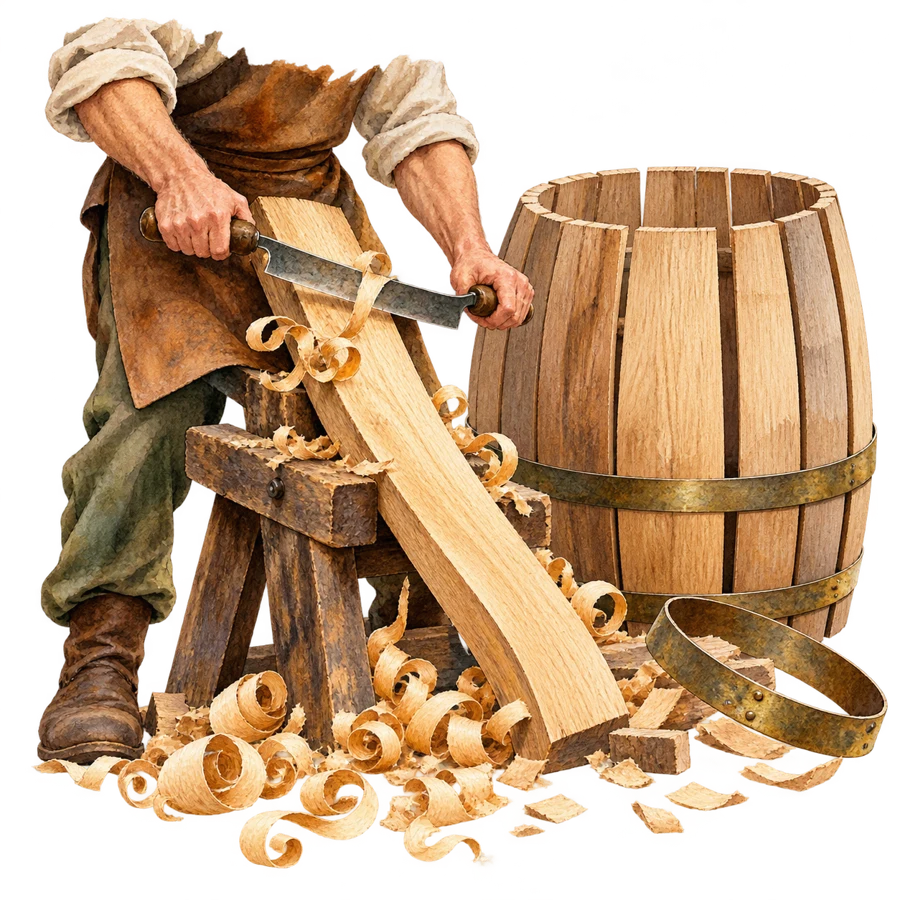
Interpretive watercolor of a cooper fitting barrel staves

Three recipes can make four grains

Four Grain combines three bourbon mash bills rather than one mash containing every grain from the beginning. The current page lists corn, wheat, rye and malted barley, four years of aging and 80 proof. Blending lets the team adjust the relationship between component whiskeys before the bottle reaches the drinker.[18]

Uncut still involves decisions

Core Barrel Strength is described as uncut and non-chill-filtered, with three bourbon recipes behind the blend. Those terms describe treatment after maturation; they do not remove the blender’s work. Choosing barrels and proportions still determines what the final batch will express.[23]

An Architect build is specific

The early Architect sheet describes delicate and intense French stave styles with a four-grain base. Today’s page lists medium-tannin staves and a 75% corn, 21% rye, 4% malted-barley recipe. The continuing idea is designed oak influence; the specification belongs to a particular build or edition.[5][16]

Toasting adds another encounter with oak

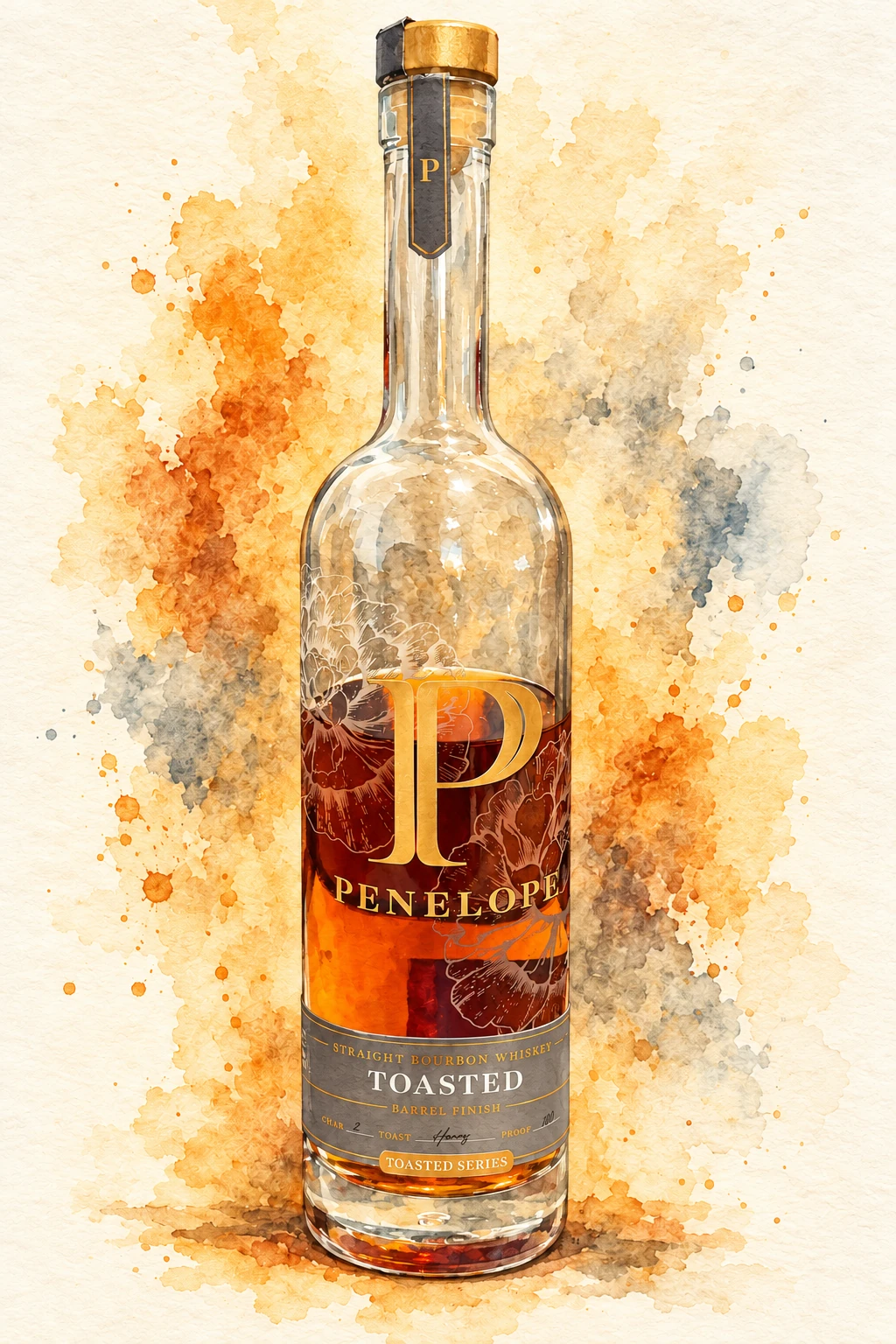
Toasted moves matured bourbon into a new hand-toasted barrel. The producer describes embracing variation among toast and char combinations. Its current standard listing gives 100 proof and heavy toast, but the broader series allows wood treatment to become an individual selection’s defining feature.[17]

Finishing can have a sequence

Havana’s announced 2024 process places four-year bourbon in Caribbean rum casks for twelve months, followed by one month in maple-syrup barrels. The order matters to its design: one cask influence is built upon by another before bottling at 93 proof.[11]

An older release can change the recipe

The 2026 seven-year blend lists 70% corn, 23% rye, 5% malted barley and 2% malted rye. Its four component mash bills therefore create a different grain structure from the familiar corn-wheat-rye-barley formula. Age is only one of the changes in this evolution.[15]

06 / The details worth knowing

The stories behind the familiar name.

The cask makes a round trip

Havana’s maple barrels have a small story of their own. They first age Penelope bourbon, then maple syrup, then return for the whiskey’s finishing stage. That cycle links two products through the same wooden vessel and gives the final finish a more specific history than a flavor name alone can convey.[11]

A wallpaper fragment travels

The Beaufain announcement traces its floral motif to wallpaper discovered in a Charleston home on Beaufain Street from 1838. The bottle translates that design history into another medium. Polise’s custom blend makes the collaboration about the liquid as well as the surface surrounding it.[14]

A tasting can become a team

Luxco recounts how some participants in Penelope’s virtual tastings went on to become tasters for the brand. The program grew through people who could explain the whiskey and listen to questions. Its later adoption across Luxco made that early habit a lasting contribution beyond Penelope itself.[21]

Light does not mean low proof

The 2025 American Light Whiskey was distilled at 189 proof and bottled at 138.8 after seventeen years in second-fill oak. Its category follows a different production path from bourbon. The name can sound delicate, but the bottle demonstrates why category and alcoholic strength need to be read separately.[20]

A golf conversation returns as a series

Penelope’s Architects of Golf campaign recalls two friends talking over eighteen holes as part of the brand’s beginning. The series turns that memory into stave-finished bourbon expressions. It is an attributed founder story about friendship and ideas, rather than a precisely dated substitute for the documented 2018 founding.[24]

The familiar range keeps moving

Current Classic Series offerings put an explicitly Kentucky bourbon beside a straight rye, both at 92 proof. Their presence widens the story beyond the early four-grain blend. Following Penelope means watching what each label says about origin and composition as well as recognizing the family name.[19]

07 / Selected expressions

Different ways to explore the blend.

A curated reading of the whiskey family, selected for its role in the story. This is not an exhaustive current catalog.

Four Grain

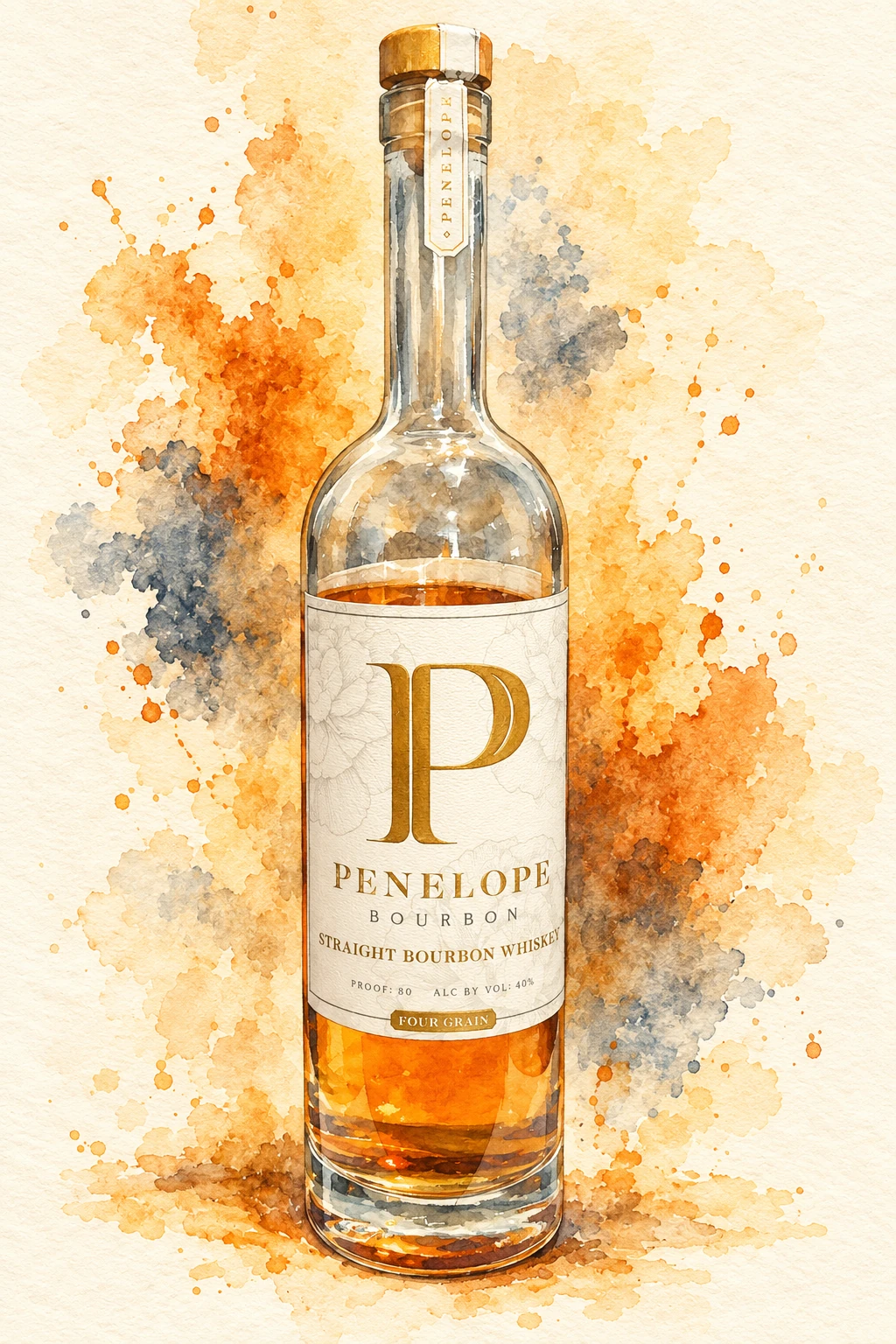
The 80-proof signature bourbon is the clearest starting point for the original blending idea. Today’s listing gives 75% corn, 15% wheat, 7% rye and 3% malted barley. Those current proportions should accompany the current expression, while older sheets remain useful records of earlier editions.[18]

Architect and Toasted

These expressions ask different questions of wood. Architect selects French staves; Toasted introduces another new barrel after maturation. Comparing the production concepts offers more insight than treating both simply as stronger or sweeter versions of the base bourbon.[16][17]

Rosé and Rio

Rosé’s early documented batch uses Grenache wine casks; Rio pairs honey-cask influence with Amburana hardwood. They demonstrate how far finishing can travel while remaining connected to a bourbon foundation. The finish name identifies the experiment, and the release’s own specifications tell the rest.[4][8]

Wheated

Introduced at 95 proof, Wheated uses 74% corn, 16% wheat, 7% rye and 3% malted barley. The name emphasizes wheat’s role without excluding rye. It gives the core range another balance of grains rather than abandoning the brand’s multigrain approach.[12]

Estate selections

The 2024 Founders Reserve highlights wheat whiskey, while Private Select explores a multistate bourbon blend and Single Barrel preserves individual barrel character. These selected releases show three different ways to treat mature stocks. Estate describes the collection; it does not establish a farm-grown production claim.[10]

Classic Kentucky Straight Bourbon

The current Classic bourbon is 92 proof with a listed recipe of 78% corn, 10% rye and 12% barley malt. Its Kentucky designation is meaningful in a portfolio strongly associated with Indiana. The official expression page does not resolve the exact Kentucky distillery.[19]

Barrel Strength 7-Year

The February 2026 release makes maturity and a revised blend explicit at 115.2 proof. It preserves the uncut, non-chill-filtered approach while changing the component framework. Read it as a distinct chapter in Barrel Strength’s development, with its own age and grain composition.[15]

08 / The Reserve connection

Continue from the story to the bottles.

Penelope Bourbon in The Thelen Reserve

9 physical bottle records connect this story to the collection. Each keeps its own proof, barrel, batch, pick and release details.

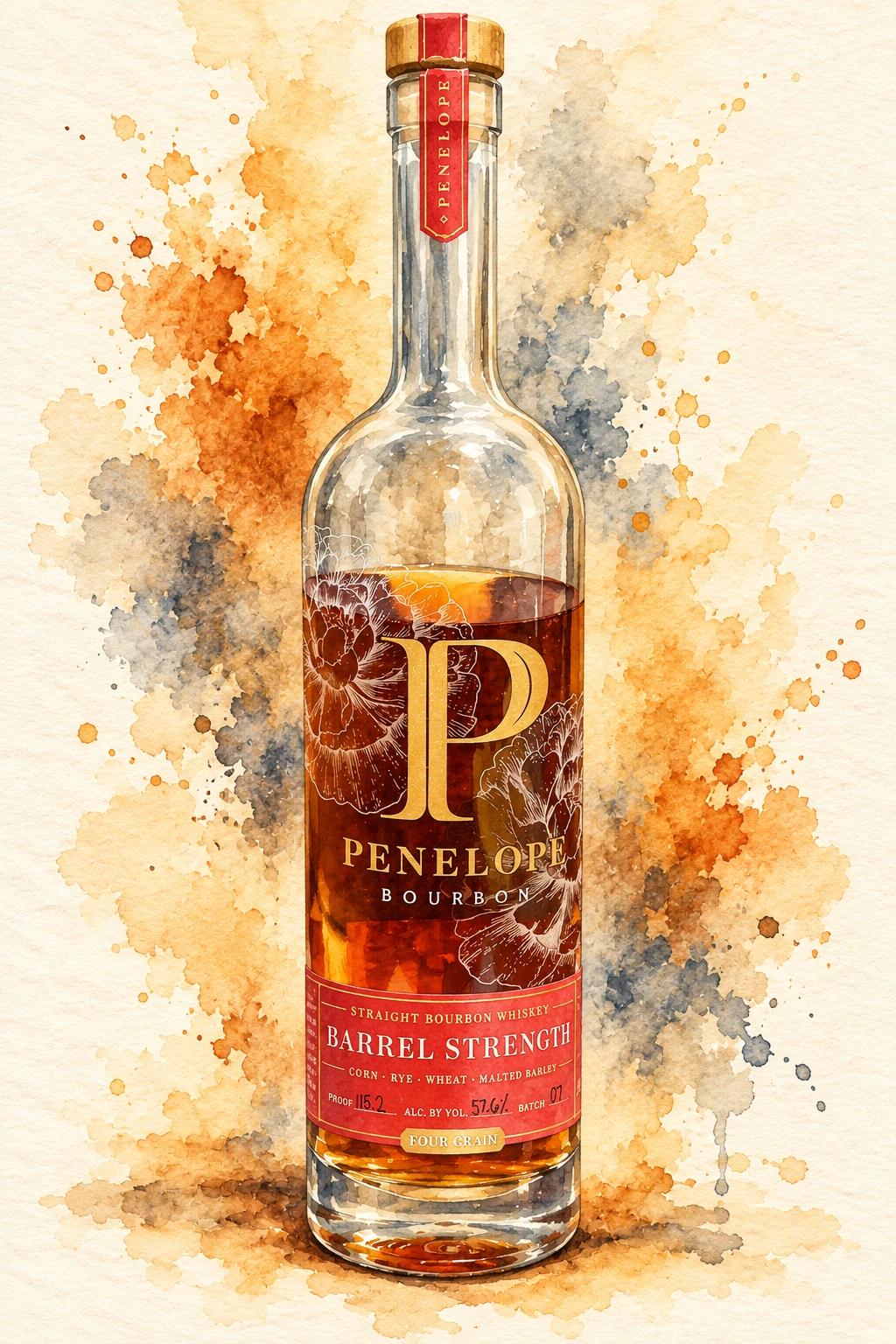
Approved watercolor of Penelope Barrel Strength Bourbon Batch 07

Penelope Barrel Strength Bourbon Batch 07

W0362 · 115.2 proof · Batch 7

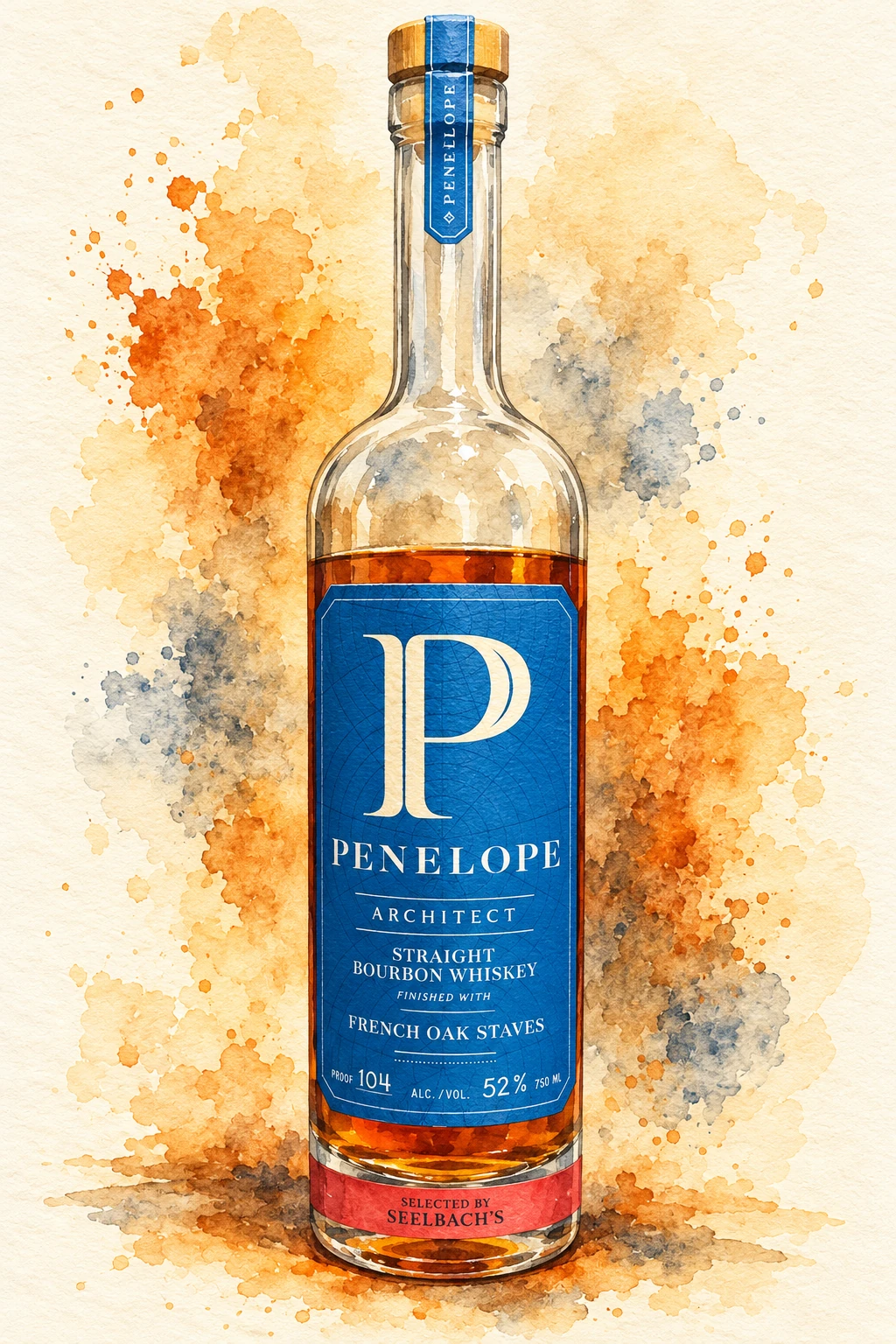
Approved watercolor of Penelope Bourbon Architect Finished French Oak Staves

Penelope Bourbon Architect Finished French Oak Staves

W0363 · 104 proof · Batch Private Build 2.2 · Pick Seelbach's

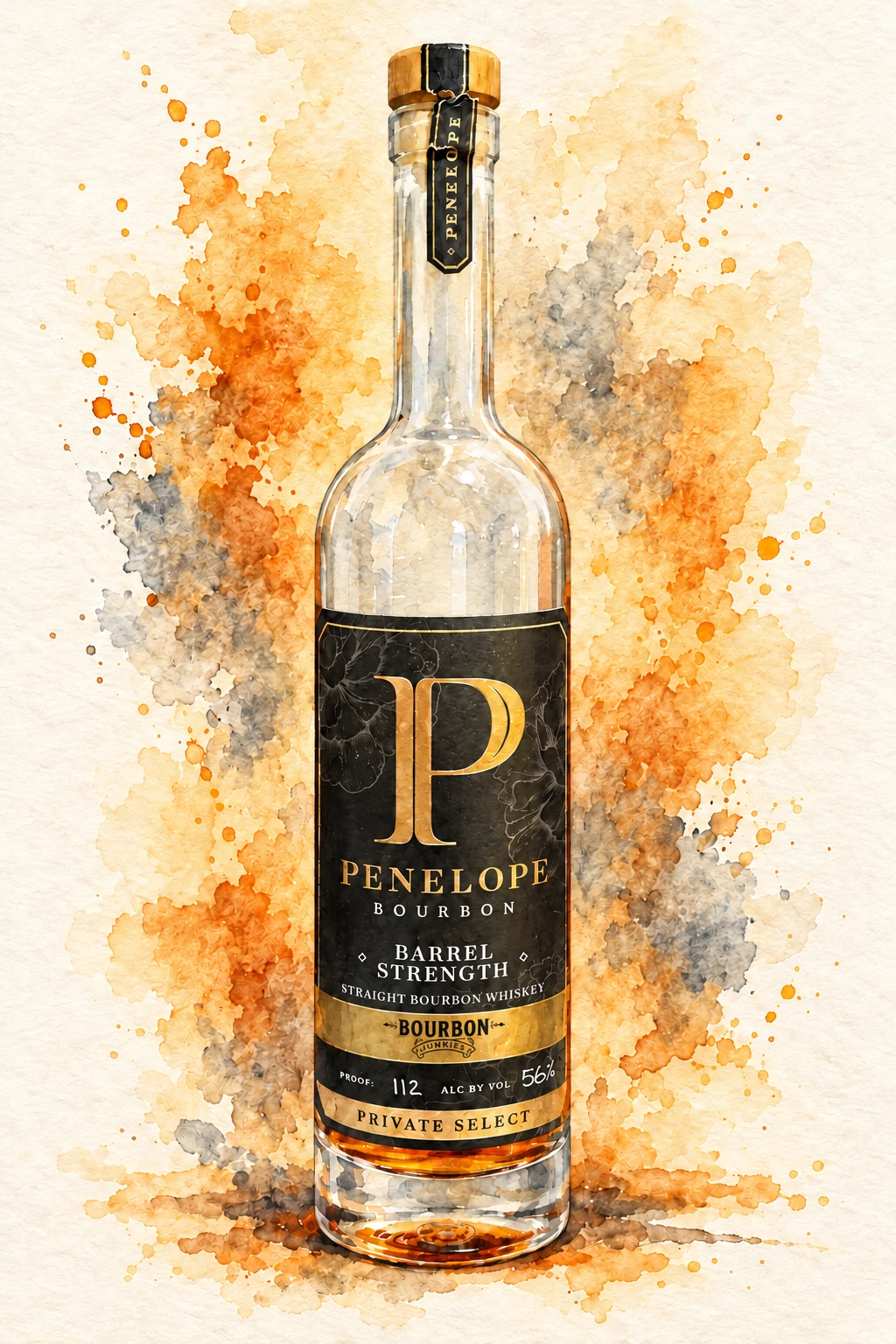
Approved watercolor of Penelope Bourbon Barrel Strength SB - BJ's

Penelope Bourbon Barrel Strength SB - BJ's

W0364 · 112 proof · Batch 8 · Pick Bourbon Junkies

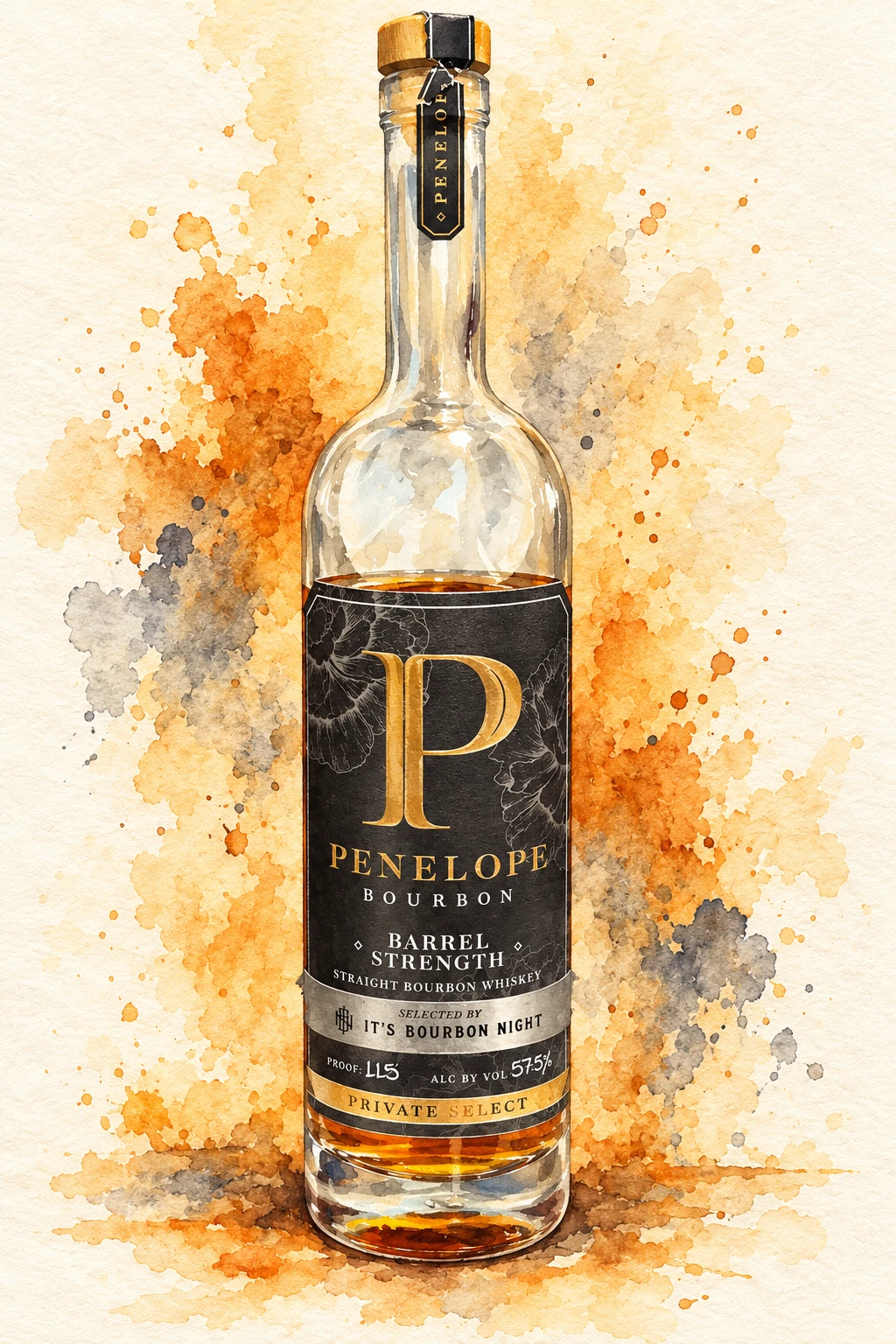
Approved watercolor of Penelope Bourbon Barrel Strength Private Select The A-Side

Penelope Bourbon Barrel Strength Private Select The A-Side

W0365 · 115 proof · Batch 20 · Pick It's Bourbon Night

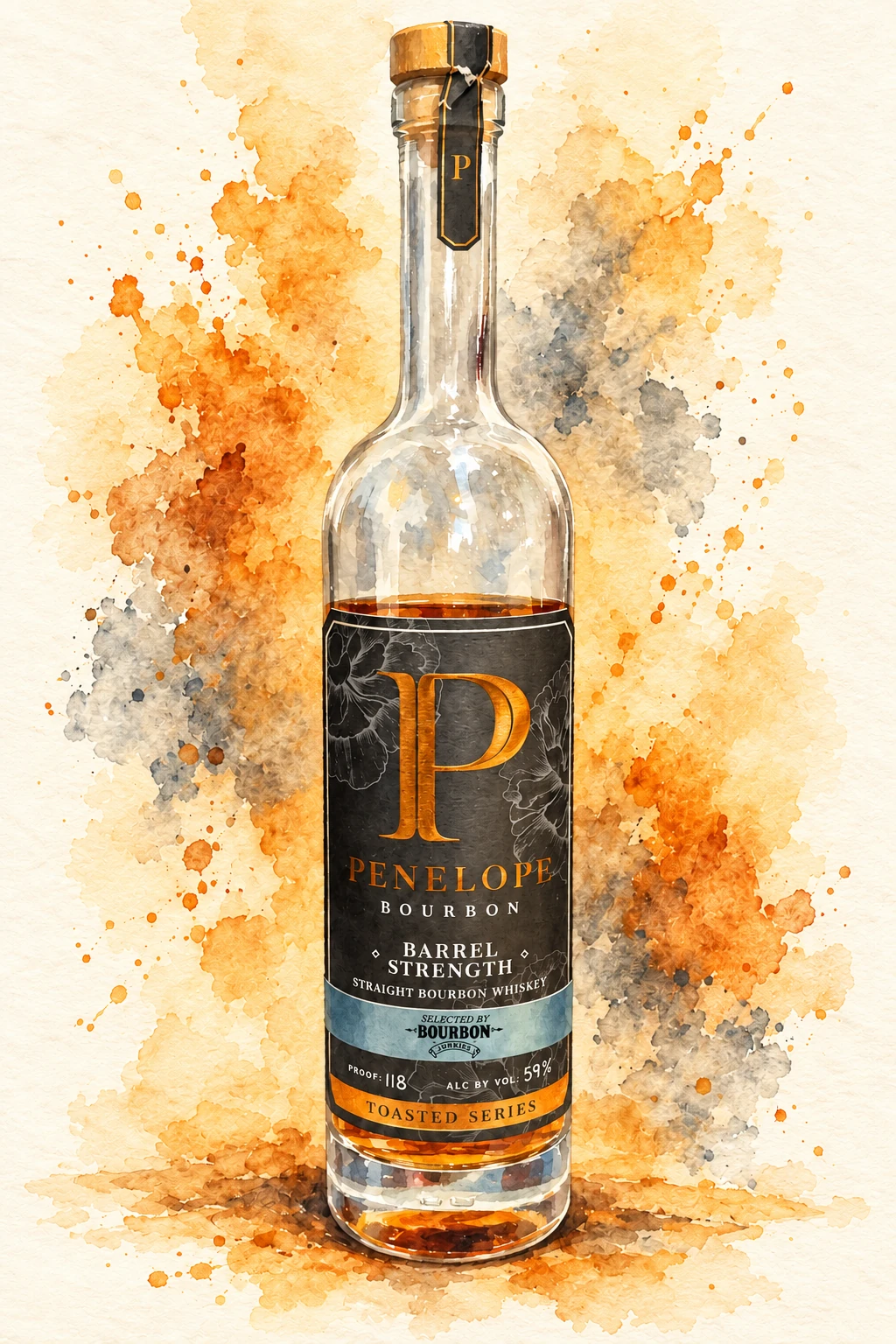
Approved watercolor of Penelope Bourbon Barrel Strength Toasted SB - BJ's

Penelope Bourbon Barrel Strength Toasted SB - BJ's

W0366 · 118 proof · Batch S38 · Pick Bourbon Junkies

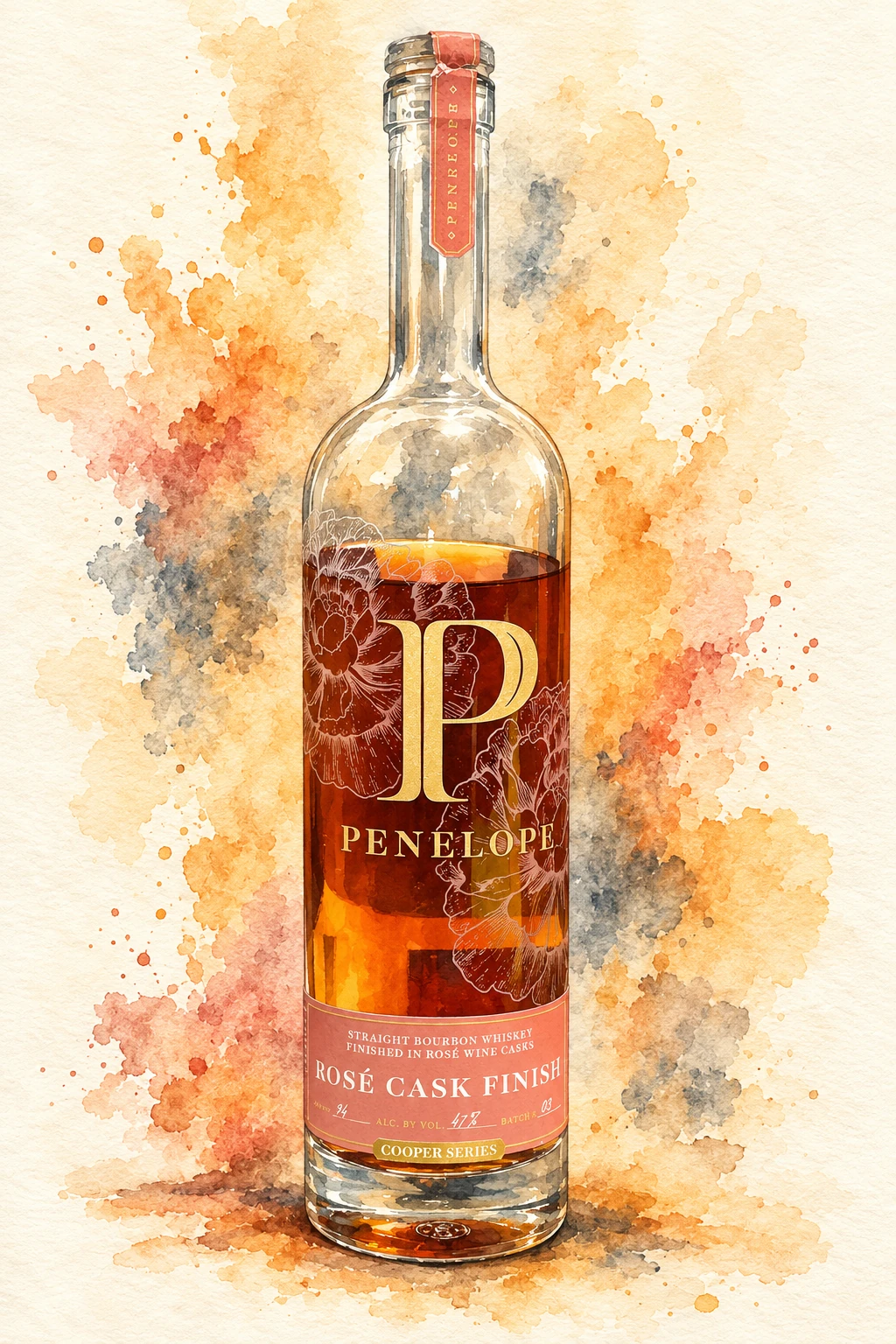
Approved watercolor of Penelope Bourbon Rose Cask Finish

Penelope Bourbon Rose Cask Finish

W0367 · 94 proof

Approved watercolor of Penelope Bourbon Toasted Series Barrel Finish Batch 23-305

Penelope Bourbon Toasted Series Barrel Finish Batch 23-305

W0368 · 100 proof · Batch 23-305

Approved watercolor of Penelope Bourbon Whiskey 4 Grain

Penelope Bourbon Whiskey 4 Grain

W0369 · 80 proof

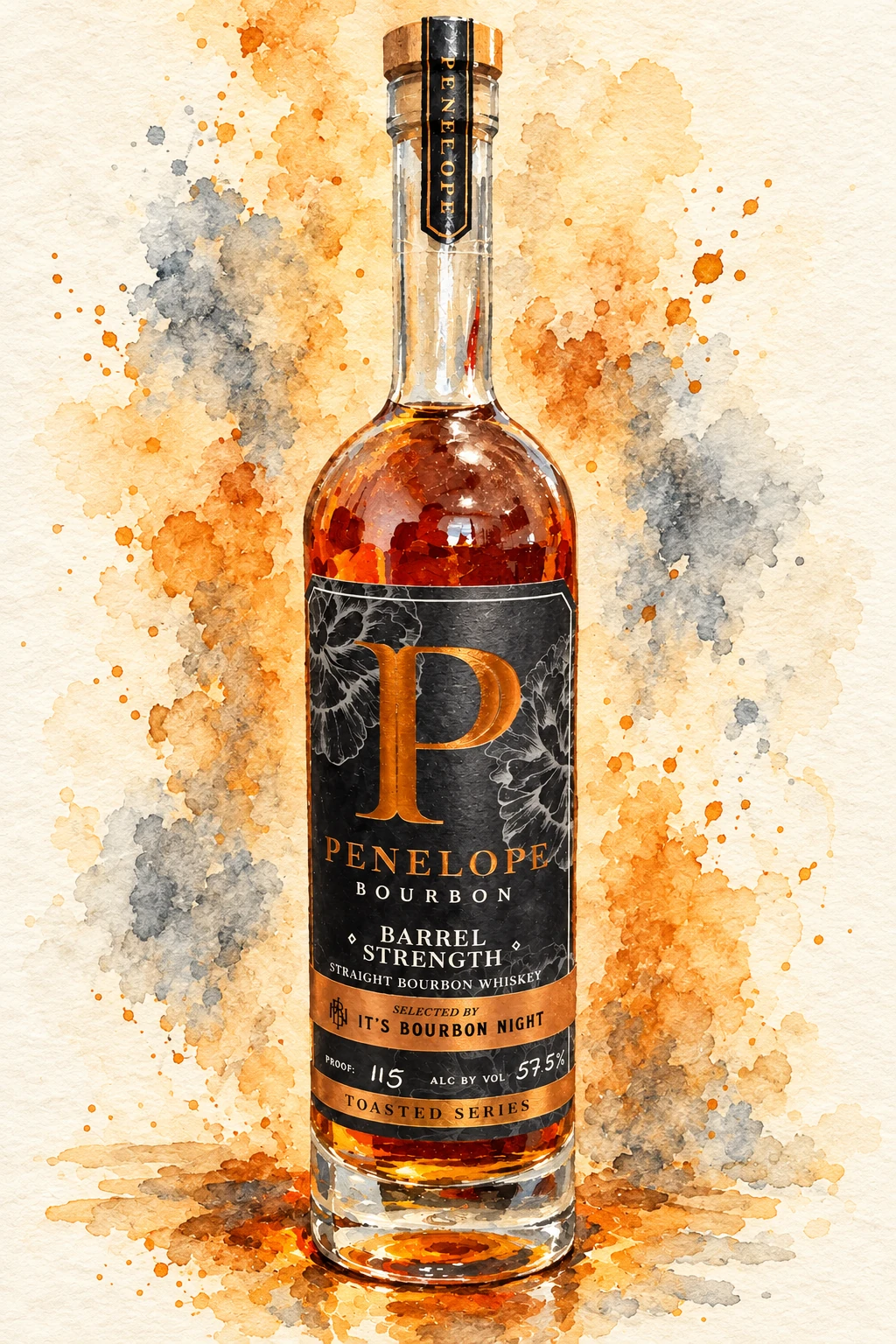
Approved watercolor of Penelope Bourbon Barrel Strength Toasted Series - It's Bourbon Night The B-Side

Penelope Bourbon Barrel Strength Toasted Series - It's Bourbon Night The B-Side

W0517 · 115 proof · Batch 1261 · Pick It's Bourbon Night · Bottled / release detail No bottled/release date legible on supplied photos. · Barreled detail No barreled date legible on supplied photos.

Collection snapshot: October 22, 2026. Approved watercolor artwork appears where an exact record or verified release match is available. Separate physical bottles and release distinctions are preserved.

Penelope Bourbon three-page guide cover
The illustrated companion

Penelope Bourbon, in three pages.

Origins and people, history and places, whiskey and stories. The approved illustrated companion includes linked research sources.

Sources & research notes

Researched October 14, 2026. Primary producer announcements and institutional records are used wherever available. Product specifications are release- and market-specific.

Research qualifications

  • Penelope is a brand and blending/finishing business founded in 2018. Historic dates for the Lawrenceburg distillery do not date the Penelope brand.
  • The June 2023 SEC filing records acquisition completion on June 1. MGP’s completion press release is dated May 31 and says completed. The timeline uses the filing-supported month and preserves this one-day discrepancy.
  • The brand’s general Our Story page associates its whiskey with Ross & Squibb, but the Classic Kentucky bourbon and the 2024 two-state Private Select require expression-specific origin treatment. No unidentified Kentucky distillery is guessed from mash-bill similarity.
  • Rosé 2021 is a documented Batch 03, not the first release. Architect 2022 is anchored to the official archive path and first-build sheet, not an established exact launch day. Valencia August 2024 is an annual return.
  • Current Four Grain, Architect and Toasted pages must not overwrite older batch, private-build or barrel-selection specifications. The 2026 seven-year Barrel Strength uses malted rye and no listed wheat; it is not the original four-grain formula.
  • The Classic Series rye page displays a three-grain graphic but lists only rye and barley malt; Architects of Golf shows two-grain graphics beside three-grain recipes. Conflicting graphic counts are omitted.
  • Current and historical staff titles differ: dated announcements identify Michael Paladini in MGP strategy and Danny Polise as master blender. The older-style CEO/COO labels on the team page are not presented as exclusive current roles.
  • All ages, proofs, finishes and quantities in dated announcements concern those releases. Historic availability, prices and distribution counts are not represented as present stock or purchase guidance.
  • Selected releases are editorial choices, not an exhaustive catalog. Tasting descriptions and founder anecdotes remain producer accounts. Original watercolor scenes are symbolic interpretations, not exact documentary portraits or architectural records.

Full sources

  1. The family origin and partners2018 founding, namesake, founders, team and named partners. Note: Broad Indiana sourcing statement is qualified by expression-specific Kentucky and multistate sources; team titles may lag dated announcements.
  2. Original Four Grain technical sheetThree MGP mash bills, four grains, 80 proof and early age range. Note: Historical sheet; not a current specification for every bottle.
  3. Early awards and Australian distributionNovember 15, 2021 announcement records 2020 awards and Australian expansion. Note: Awards are producer-reported; the generic URL hosts this dated release.
  4. Rosé Batch 03 technical sheet2021-dated batch documentation, Grenache casks and 94 proof. Note: 2021 is the documented batch, not a claim for the first Rosé launch.
  5. Architect first-build technical sheetFirst build, Radoux, two stave styles, four-grain base and 104 proof. Note: 2022 upload archive establishes period documentation, not an exact launch day.
  6. MGP acquisition filingMay 8 agreement and June 1, 2023 acquisition completion. Note: June 1 filing date is preferred to May 31 completion-release wording.
  7. MGP completion announcementLuxco acquisition, founders and established customer relationship. Note: Dated May 31, 2023, one day before completion date in subsequent SEC filing.
  8. Rio returns in 20242023 predecessor, honey/Amburana finish and 2024 specifications. Note: Historical release; Amburana is specifically described as a Brazilian hardwood.
  9. Valencia annual release, 2024August 14, 2024 annual release and Sevilla wine-cask finish. Note: An annual return, not the expression’s first launch.
  10. Estate Collection introductionSeptember 25, 2024 collection; wheat whiskey, multistate blend and single barrels. Note: Estate is a collection name, not evidence of estate-grown grain; specifications belong to 2024.
  11. Havana introductionDecember 10, 2024; rum and maple finishes and barrel reuse. Note: 93 proof and twelve-plus-one finishing months describe the announced release.
  12. Wheated introductionJanuary 29, 2025; fifth core expression, 95 proof, four-grain recipe. Note: This wheated recipe also contains rye.
  13. Peach Old Fashioned introductionApril 1, 2025 cocktail launch, Tim Beckner and ingredients. Note: A prepared cocktail, not a straight-whiskey expression.
  14. Beaufain collaborationJanuary 14, 2026; Serena & Lily, Charleston motif and custom 84-proof blend. Note: Historic wallpaper account is attributed to the collaboration announcement.
  15. Barrel Strength 7-Year introductionFebruary 17, 2026; four mash bills, seven years, 115.2 proof and grain percentages. Note: Distinct from earlier three-mash-bill Barrel Strength; contains malted rye, not wheat.
  16. Current ArchitectRadoux OakScan, medium-tannin staves, 104 proof and 75/21/4 recipe. Note: Current page differs from historical first-build sheet; do not back-apply to private builds.
  17. Current Toasted BourbonSecondary new toasted barrel; current 100-proof, heavy-toast specifications. Note: Older batches and private selections vary; no universal char or proof.
  18. Current Four Grain80 proof, four years, three component recipes and current grain proportions. Note: Current 75/15/7/3 proportions differ from older finish-release recipes.
  19. Classic SeriesKentucky bourbon and straight rye, both 92 proof, current listed mash bills. Note: No exact Kentucky distiller identified; rye graphic says three grains while listed recipe has two.
  20. American Light Whiskey, 20252006 Lawrenceburg distillation, 17-year age, second-fill oak and 138.8 proof. Note: Light describes whiskey style; date and age copied as announced without inferring bottling date.
  21. Tastings and consumer connectionsMatt Ward, pandemic virtual tastings and adoption across Luxco. Note: Its loose pandemic-origin wording does not supersede the documented 2018 founding.
  22. MGP customer since 2018July 2023 corporate account of the original sourcing relationship. Note: Corporate strategy and relationship, not batch-level provenance.
  23. Core Barrel StrengthUncut, non-chill-filtered three-mash-bill bourbon. Note: Page specifications are not universal historical batch values.
  24. Architects of GolfAttributed golf-origin story and current American-oak stave expressions. Note: Undated campaign; grain-count graphics conflict with three listed grains, so omitted.
↑