02 / The illustrated history
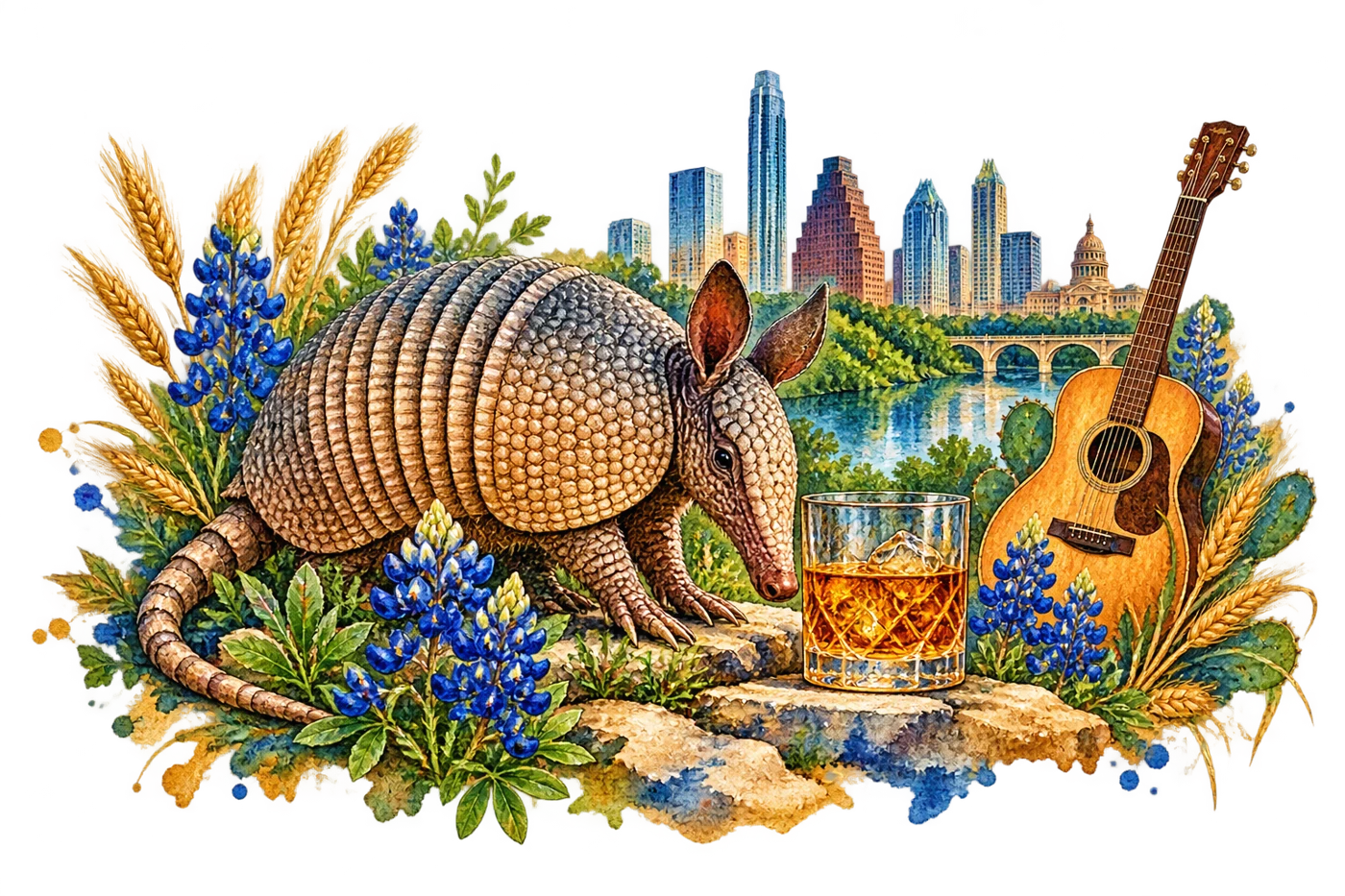
An armadillo moves through a changing whiskey world.
Follow the brand, its changing whiskey range and the plans that did and did not become reality. Dates retain their documented roles.

2015 / 2016
The Austin brand takes shape
Early company material dates founding to 2015; later producer histories use 2016. The distinction is retained rather than turned into a false single-day origin.[1][2]
November 2017
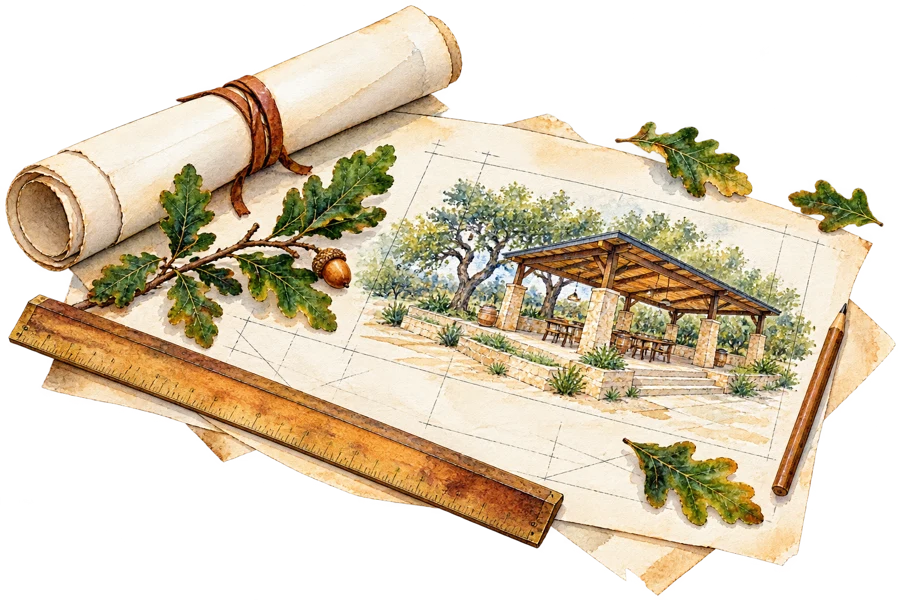
A Hill Country home is proposed
A fundraising announcement couples expansion with a planned tasting room, headquarters and bottling facility. The Fitzhugh Road proposal is a plan, not a confirmed opening.[1][11]

Late 2019
Two bourbons broaden the story
Straight Bourbon and Wheated Straight Bourbon join the range at 90 proof. Their contrasting grain recipes create two ways into the brand, after its earlier blended whiskey.[12]
2021
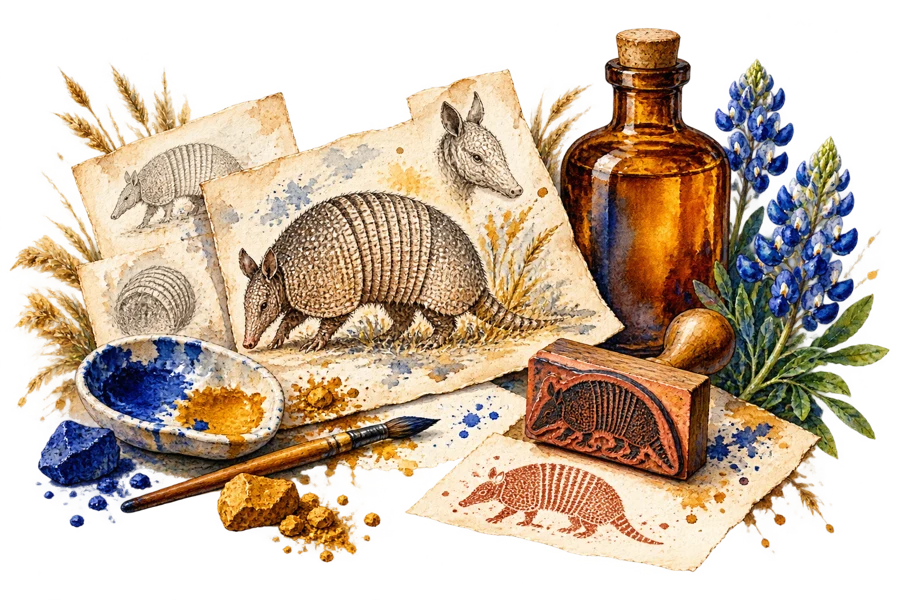
The landscape becomes a visual language
Drew Lakin’s dated design project ties packaging, print and merchandise to armadillo imagery and Hill Country color. The credited creative team includes Denton Watts, Cody Haltom and Colby Brooks.[6]

July 12, 2021
The wheated line gains strength
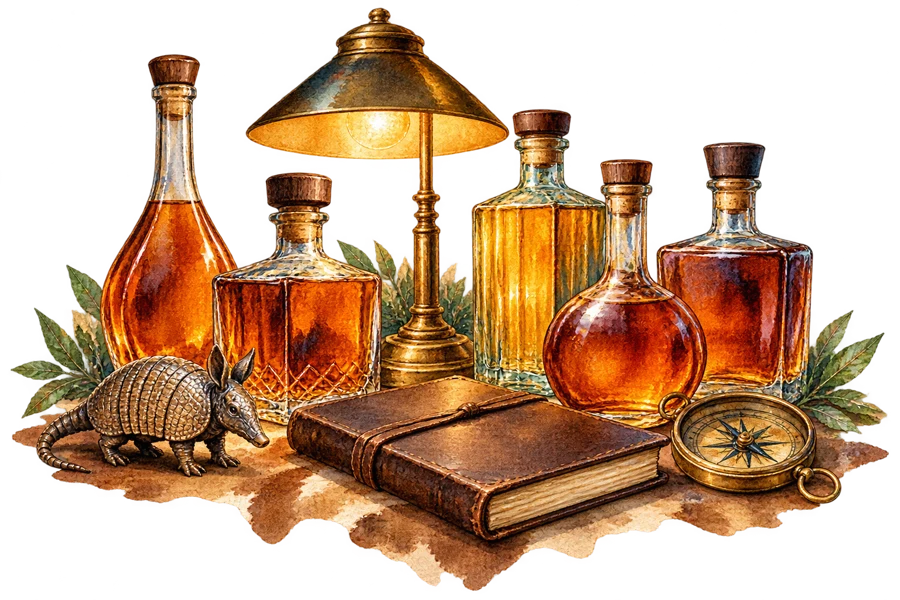
The producer introduces Cask Strength Wheated Bourbon at 115 proof, with a 51/45/4 grain recipe. Its announcement reports a San Francisco Double Gold and acknowledges a small proof-adjusting water addition.[2]
December 2023
An investor joins the table
No Sleep Beverage lists Nine Banded among its five investment partnerships. Brand coverage describes a $10 million financing round and a board role for Nick Papanicolaou.[3][15]
December 2023
The gathering-space idea returns
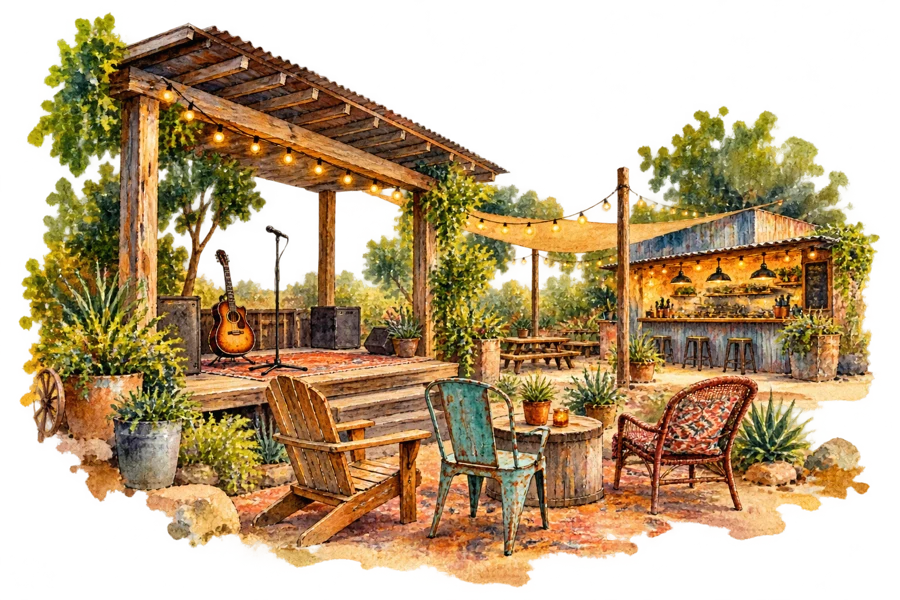
Sean Foley confirms that the earlier tasting-room plan never materialized. A renewed Austin-area concept is described with music and food, without a confirmed public opening in the evidence reviewed here.[10]
March–May 2026
Ownership and direction change
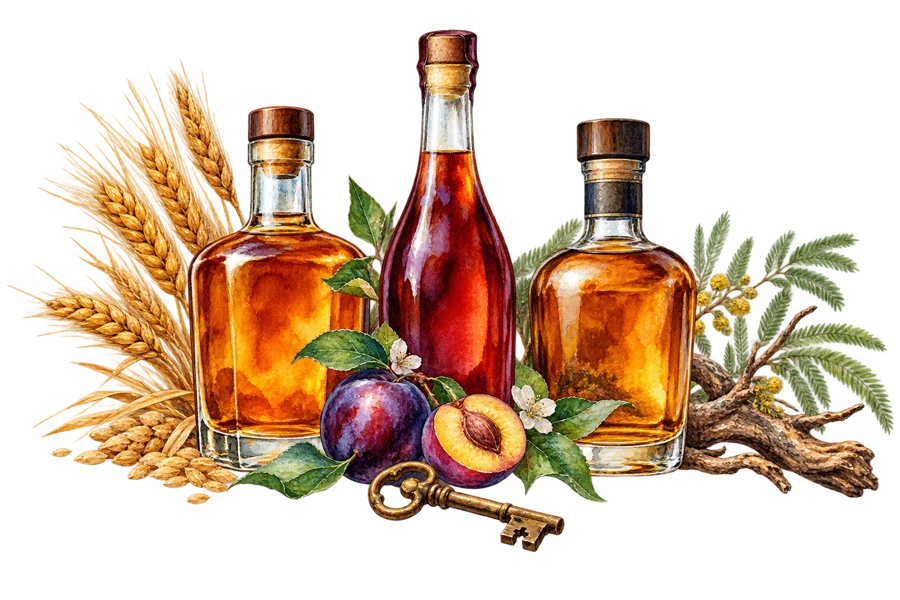
No Sleep dates its owned-brand platform to March; an April 9 announcement confirms the acquisition roll-up. A May CMO interview describes a simpler flagship and a commitment to Texas-sourced liquid.[4][5][19]
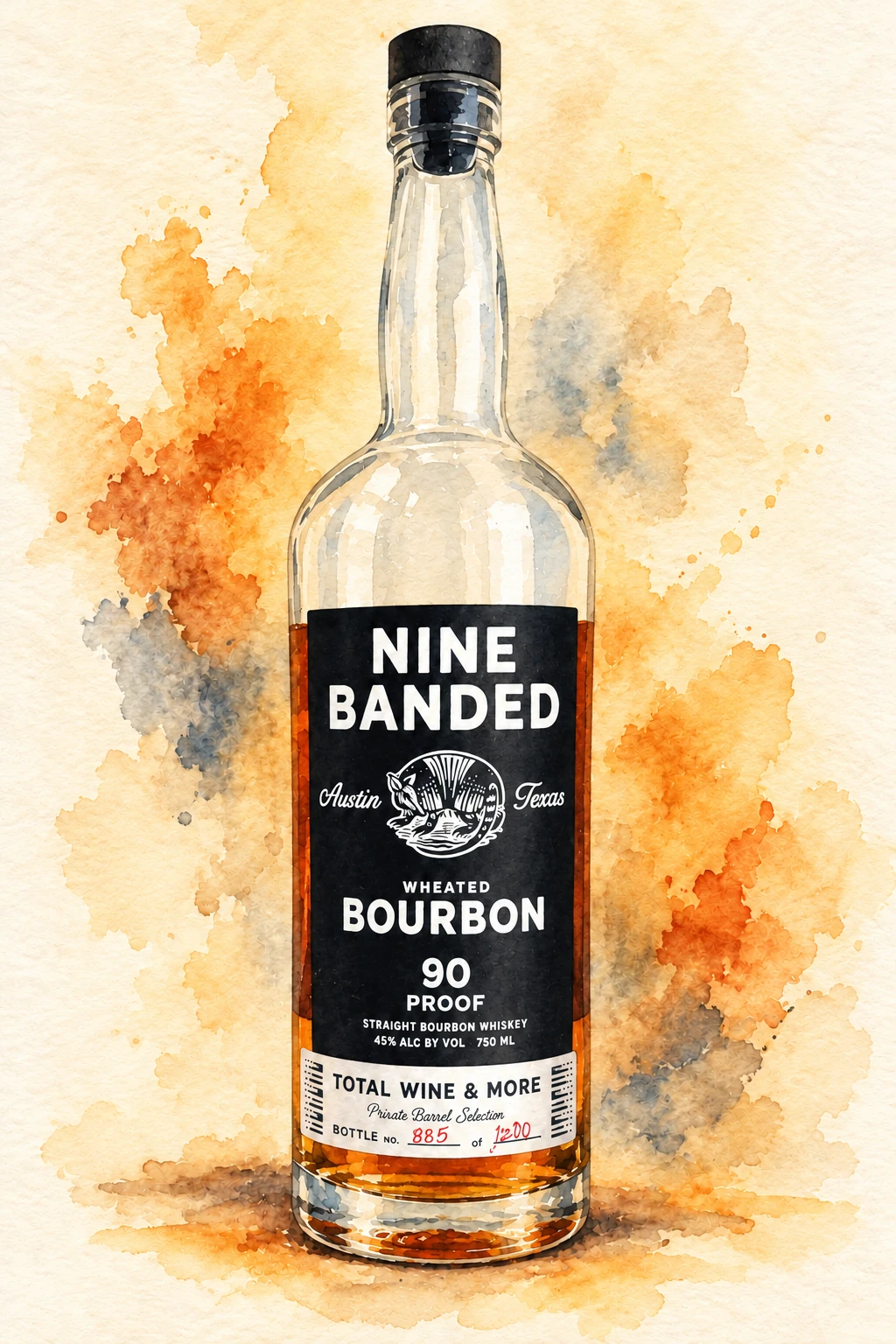
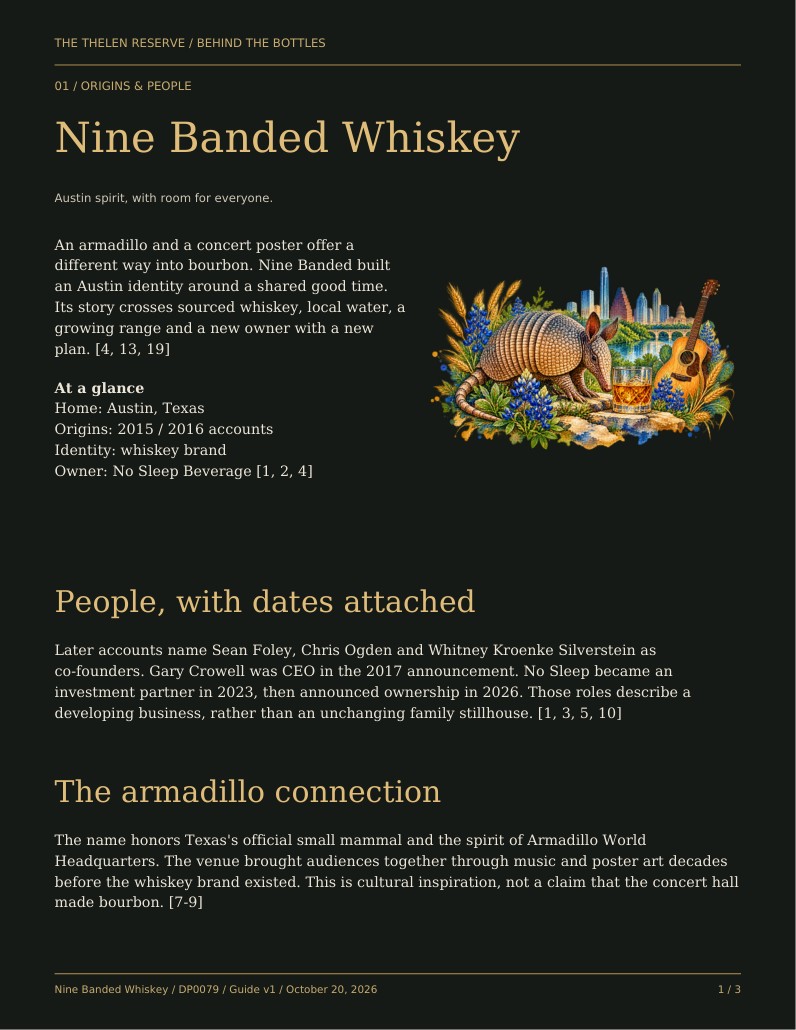
Original watercolor interpretations accompany the history. Buildings, objects and scenes are symbolic, not documentary reconstructions.