TJ THELEN'S COLLECTION
The Thelen Reserve
Behind the Bottles / Bristol, Pennsylvania

Dad’s Hat

Last updated Last researched

Pennsylvania rye, with a family signature.

A felt hat sits at the center of a story that reaches from a Monessen family tavern to a Bristol textile mill. Mountain Laurel Spirits built Dad’s Hat around a regional idea: rye whiskey should speak clearly of its grain, its makers and the place that makes it. The company is modern. The tradition it studies is older. Its most interesting work happens where those two timelines meet.[1][4][16]

Symbolic Bristol mill distillery, rye grain and family fedora
Company
Mountain Laurel Spirits[1]
Founded
2010[1]
Production home
Bristol, Pennsylvania[16]
Signature
Rye grain & malt[5]
01 / Origins & people

Two friends, and a Pennsylvania idea.

A name worn before it was bottled

Herman Mihalich grew up above his family’s tavern in Monessen. His father’s fedoras became a personal symbol of care and workmanship. The brand carries that memory into a new product; it does not claim the family bar was the same legal distillery.[1][21]

Two careers meet at the still

Mihalich brought chemical-engineering experience. College friend John Cooper brought a long sales and marketing career. Their 2010 venture paired production thinking with the practical work of finding a market for a distinctive Pennsylvania rye.[1]

A revival, rather than an unbroken inheritance

The founders set out to recover a regional whiskey vocabulary. Their heritage argument draws on Pennsylvania’s rye-making past, while the actual company and equipment belong to the twenty-first century. Treating the two as separate makes the achievement more understandable.[4][2]

Symbolic engineering and commercial workbenches

Herman C. Mihalich

Founder and distiller. The company’s account connects his technical career, family tavern and interest in Pennsylvania rye. His inherited hats supplied the brand’s most recognizable personal reference.[1]

John S. Cooper

Co-founder and commercial partner. A Bronx upbringing and decades in sales and marketing complement Mihalich’s production background; the founders describe their college friendship as the connection that brought them together.[1]

John Urbanchuk & university partners

The Delaware Valley University collaboration brings agricultural research into the story. Urbanchuk and the Roth Center appear in the documented Rosen rye work; that partnership is distinct from the company’s earlier recipe development with Michigan State.[11][12][5]

02 / The illustrated history

A regional tradition returns to work.

Follow the company, its production home and the evolving whiskey range. Each date belongs to its documented event.

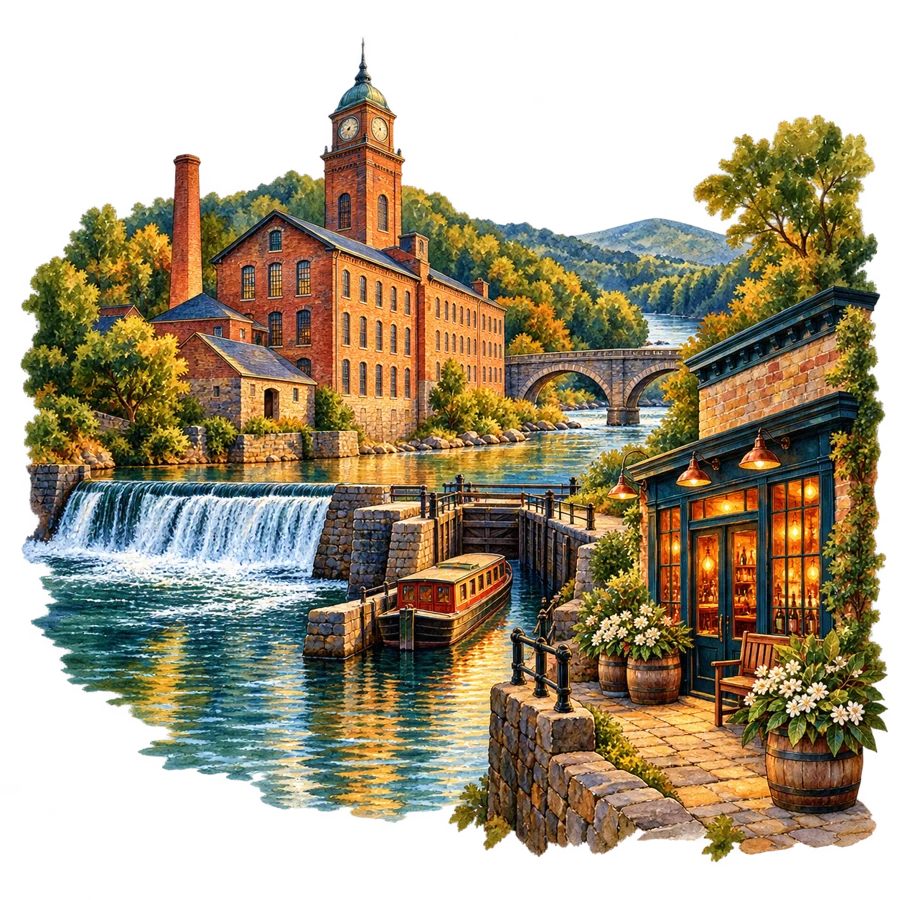
Symbolic illustration: Mountain Laurel Spirits takes shape
2010

Mountain Laurel Spirits takes shape

The founders date their company to 2010. A new Pennsylvania rye venture gives the family hat a place in its identity.[1][21]
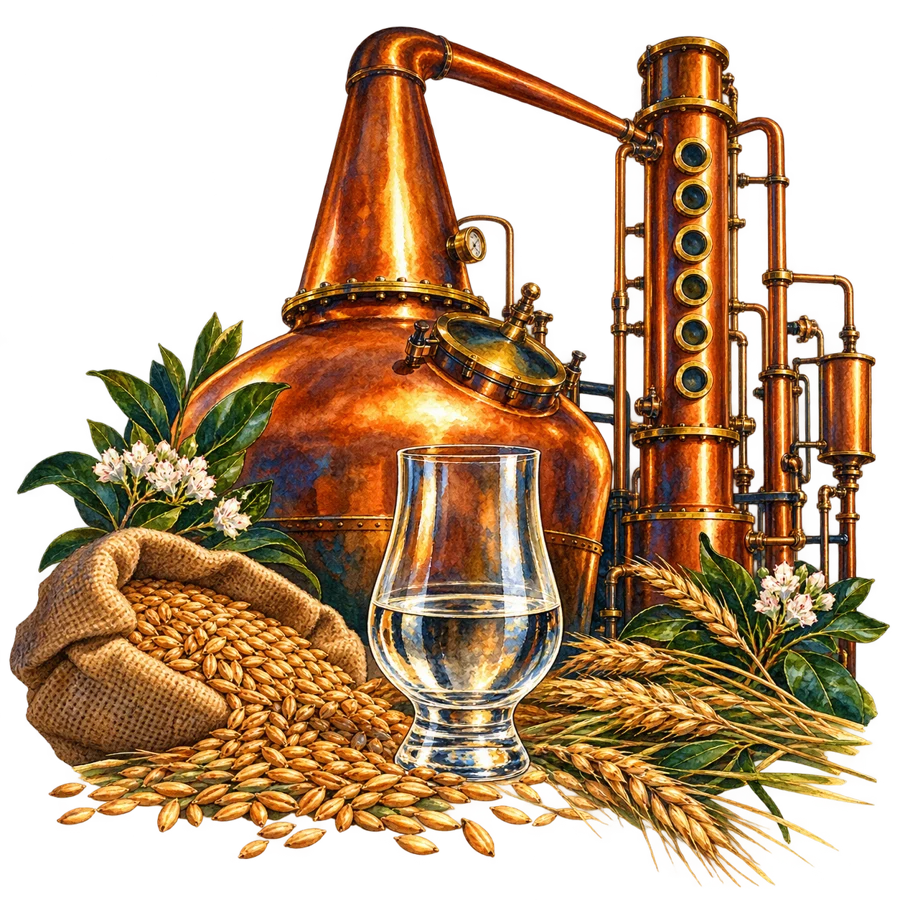
Symbolic illustration: Production is reported at Grundy Commons
September 2011

Production is reported at Grundy Commons

A contemporary company announcement says equipment installation is complete and production has begun in the reused mill space. This is a production record, separate from later brand retrospectives.[2]
Symbolic illustration: The brand locates its early rye years
2012 / recalled in 2017

The brand locates its early rye years

A March 2017 producer feature looks back to making its trademark rye in 2012. That recollection establishes an early brand-era reference; it does not erase the 2011 production announcement.[3][2]
Symbolic illustration: Early food and distilling recognition
2013

Early food and distilling recognition

The Classic Rye page records a Good Food Awards win and an American Distilling Institute silver medal. Recognition begins while the young company is still establishing its regional identity.[6]
Symbolic illustration: Craft Whiskey of the Year
2015

Craft Whiskey of the Year

The producer records Whisky Advocate’s Craft Whiskey of the Year recognition for its Pennsylvania Rye. The award belongs to that expression and year.[6]
Symbolic illustration: The bottle-making relationship gets a feature
October 9, 2017

The bottle-making relationship gets a feature

A dated film presents the founders and their work with Anchor Hocking. Packaging becomes part of the wider manufacturing story; the feature date is not asserted as the relationship’s first day.[10]
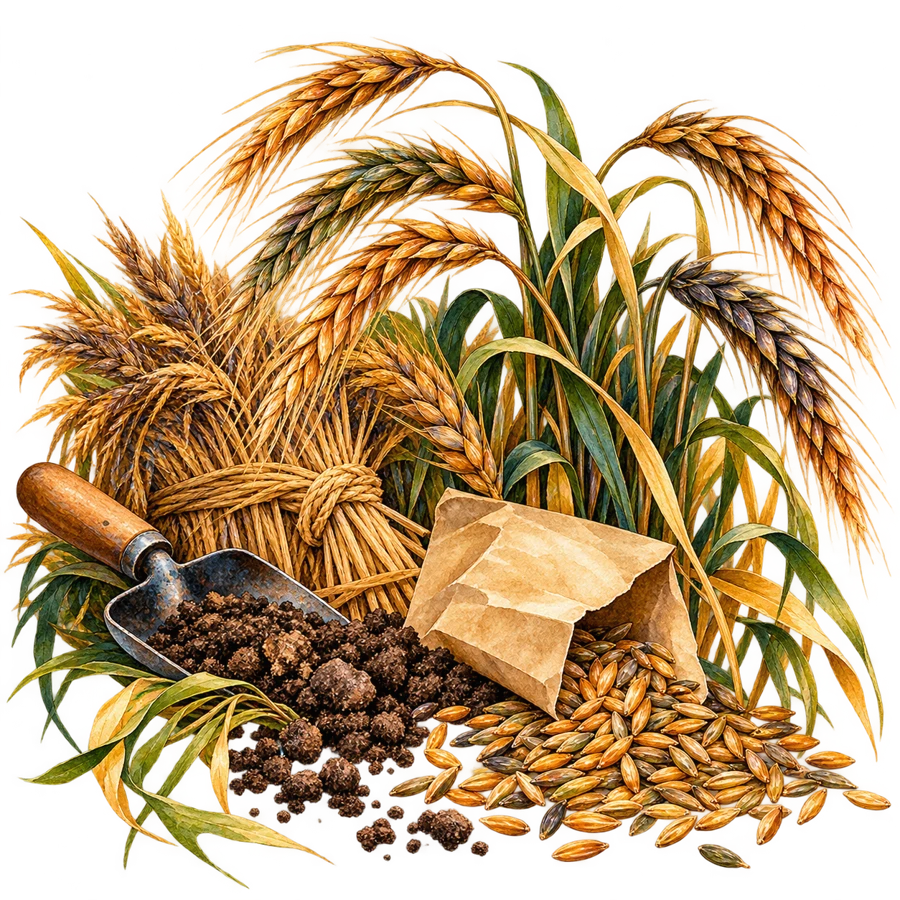
Symbolic illustration: Rosen rye reaches the harvest
July 16, 2018

Rosen rye reaches the harvest

Delaware Valley University harvests rye intended for a small test batch. The project connects grain recovery to whiskey research without proving a later commercial release date.[11]
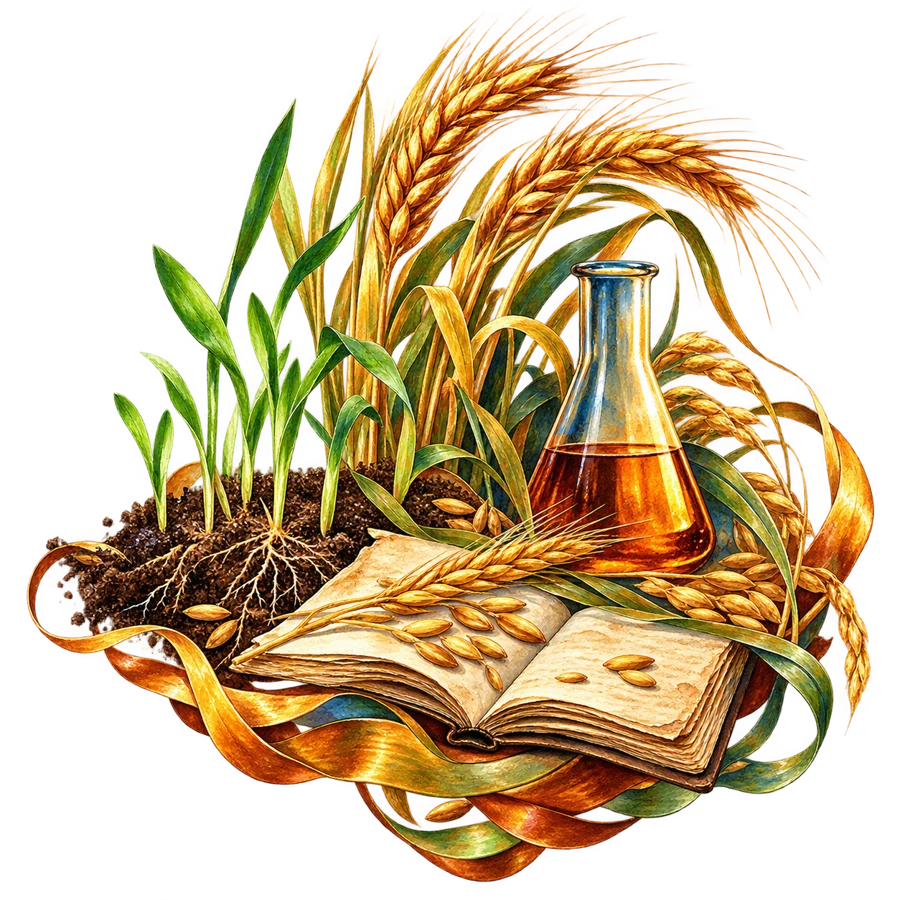
Symbolic illustration: The Rosen revival becomes an educational story
July 24, 2020

The Rosen revival becomes an educational story

A producer feature shares the university’s film from the Roth Center, with Urbanchuk and Mihalich exploring the heirloom grain. Research becomes part of the public explanation of rye.[12]
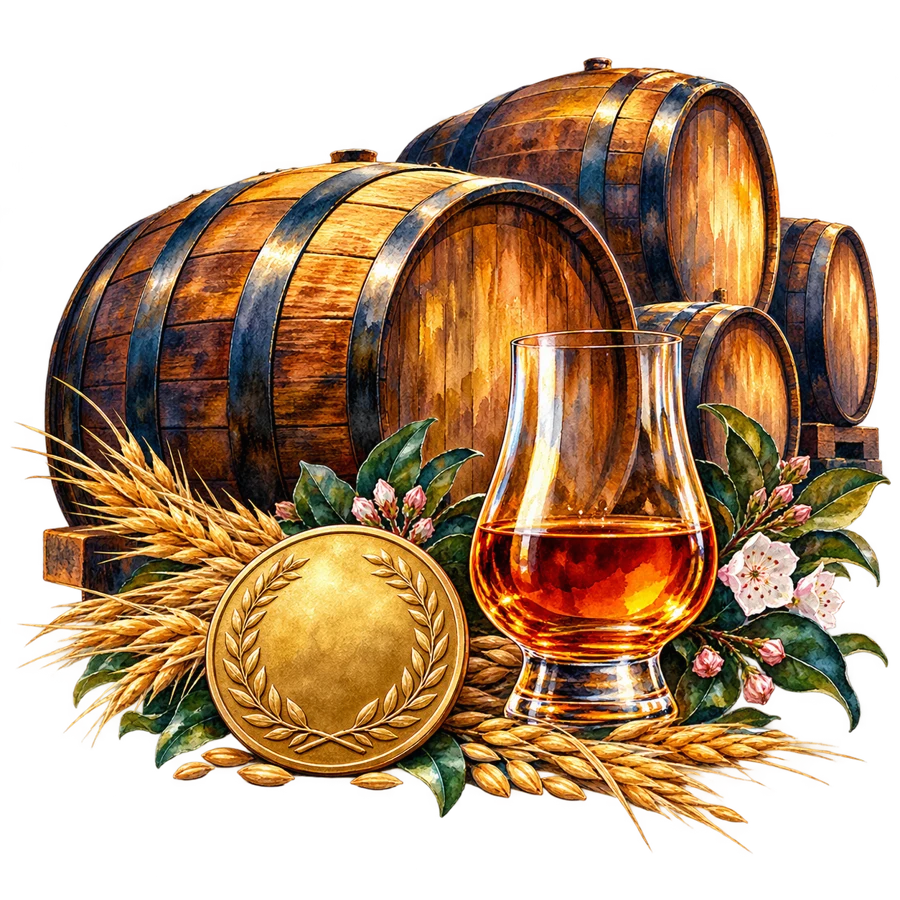
Symbolic illustration: Straight Rye earns recognition
2021

Straight Rye earns recognition

The current Straight Rye page records an ASCOT Gold award for 2021. It also describes today’s minimum four-year maturation; the two facts should not be mistaken for a dated first release.[7]
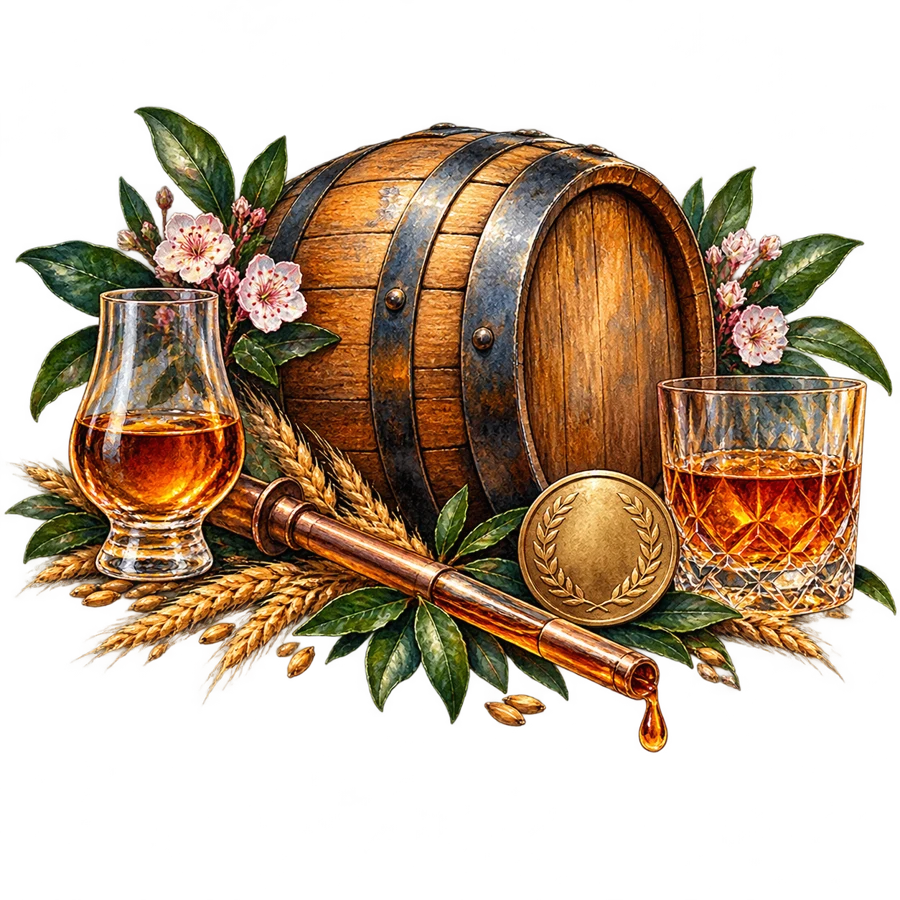
Symbolic illustration: A selected barrel wins its own competition
June 6, 2024

A selected barrel wins its own competition

Dad’s Hat reports that its PM Spirits Collab Straight Rye selection won the ASCOT Best Single Barrel Pick competition. The result is specific to a collaboration barrel.[13]
Symbolic illustration: The bonded specification reaches six years
2025 trade sheet

The bonded specification reaches six years

A producer sheet bearing 2025 in its filename specifies six years and 100 proof. The webpage still says five years, so the profile preserves the document distinction rather than assigning one age to every bottle.[9][8]

Original watercolor interpretations accompany the history. Buildings, objects and scenes are symbolic, not documentary reconstructions.
03 / Geography & roles

A working landscape, with distinct roles.

Symbolic Pennsylvania mill, canal and hospitality landscapes

Monessen / memory and naming

The western Pennsylvania tavern is the personal origin of the story. It explains the father-and-hat reference, not the address where today’s whiskey is produced.[1]

Grundy Commons / making the whiskey

At 925 Canal Street in Bristol, the former textile-mill complex supplies the working production setting. The published entrance is Building 4, Door 16. Its industrial reuse ties the brand to another part of Pennsylvania manufacturing.[16][2]

Mill Street / hospitality

The separate tasting room at 131 Mill Street presents cocktails and Pennsylvania drinks near Bristol’s waterfront. It is about a mile from the distillery. Do not substitute this hospitality address for the stillhouse.[14][15]

Doylestown / the rye research

Delaware Valley University’s Roth Center supplies a documented agricultural setting for the Rosen project. It is a research relationship, not a second Dad’s Hat distillery.[11][12]

04 / The whiskey family

Understand the name on the label.

Selected ownership, site and production relationships. Corporate links do not make every whiskey the same release.

Mountain Laurel Spirits → Dad’s Hat

Company & brand

The company identifies itself as distiller and bottler of the Dad’s Hat brand. These are related company and brand names, not two independent facilities.[16]

Michigan State University

Recipe development

The producer credits the Artisan Distilling Program with a two-year recipe-development effort. This is technical collaboration, not ownership.[5]

Delaware Valley University

Agricultural research

The Rosen rye project links the distillery with agricultural research. A trial harvest and educational film do not establish the grain bill of every retail bottle.[11][12]

Quady / Vya

Finishing casks

Former Vya Sweet Vermouth casks supply a particular finishing treatment. The winery relationship belongs to wood and prior contents, without implying shared ownership.[17]

PM Spirits

Distribution & selection

The 2024 Collab selection is a distributor-led single-barrel partnership. Its recognition remains attached to that selected whiskey.[13]

Anchor Hocking

Packaging

A 2017 feature documents the bottle-making relationship. Glass manufacturing is one part of the supply chain around the distillery.[10]

05 / Making & choosing

The recipe is only the beginning.

Grain, fermentation, distillation, oak and selection each leave a mark. Age and proof claims below belong to the expressions named.

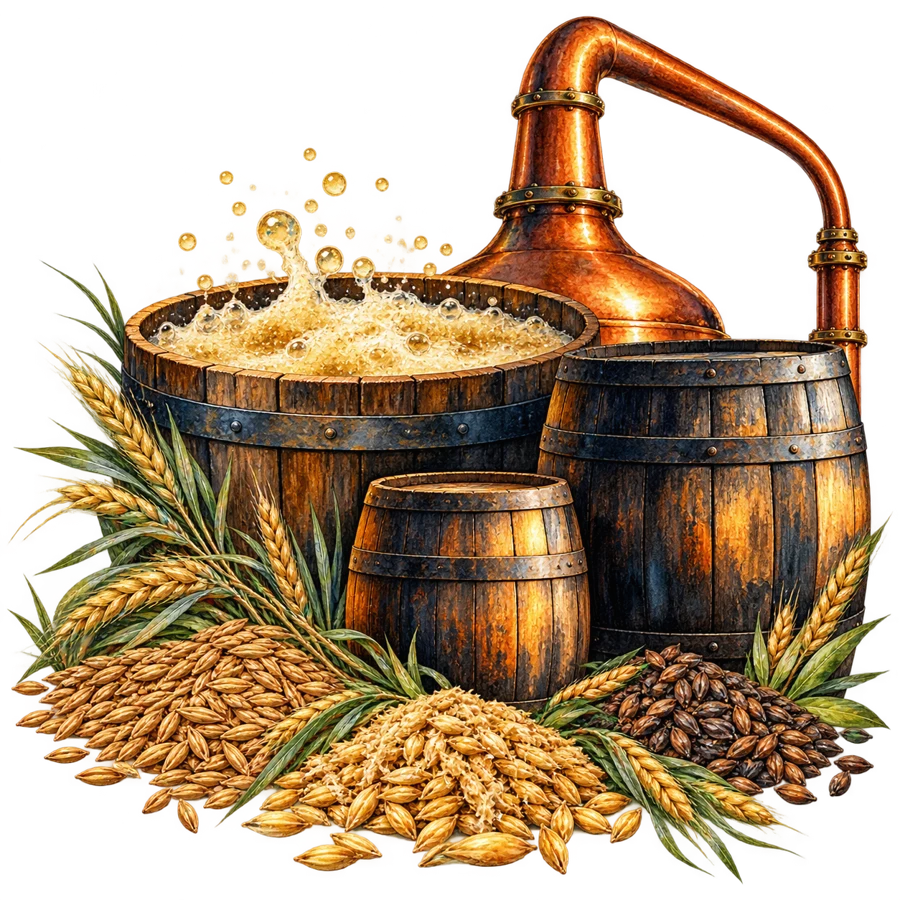
Interpretive rye, fermentation, copper and charred oak

Rye without corn

The published recipe uses 80% rye, 15% barley malt and 5% rye malt. Malt supports the grain-led profile; a high rye percentage alone does not identify every producer’s yeast, fermentation or still settings.[5]

Time before copper

The company describes a controlled fermentation lasting about a week, followed by two distillations. That is a useful part of its flavor philosophy, not a home-production formula.[5]

Pot still and side column

The published system combines a 500 gallon pot still with a side column. The producer describes using that flexibility to shape the spirit rather than relying on a name or regional claim alone.[5]

Two approaches to maturation

Classic Rye uses new charred quarter casks with a six-month minimum. The process page distinguishes the 53 gallon barrel route used for longer-maturing Straight Rye. Current Straight Rye has a minimum four-year age.[6][5][7]

Finishing is a second chapter

Vermouth Finish adds three months in former Vya Sweet Vermouth casks after the Classic base’s initial maturation. Port Wine Finish adds three months in former port casks. These are distinct products, not descriptions of every Dad’s Hat rye.[17][18]

Practical resource use

The producer reports returning spent mash to farmers for livestock feed. It also describes a tasting-room bar made from its still’s shipping crate. These concrete practices are more useful than an unverified claim of complete environmental neutrality.[5]

06 / The details worth knowing

The details that change the story.

The hat as a working standard

Mihalich describes his father’s hats as a sign of attention to quality and presentation. The editorial connection is simple: a recognizable object makes an abstract production philosophy personal.[1][21]

A revival can begin with a seed

The Rosen project treats history as agricultural work. Recovering a grain variety, harvesting it and planning a trial whiskey are separate steps; the public record should not collapse them into an invented release.[11][12]

The address tells two different stories

The reused mill is the production setting. Mill Street is a place to meet the whiskey through cocktails and hospitality. Keeping those roles distinct makes the visitor geography useful.[16][14]

A medal belongs to its entry

The 2024 award is especially easy to overstate. The producer specifies a PM Spirits Collab barrel and the Best Single Barrel Pick competition. That precise scope is more informative than calling every bottle a global champion.[13]

Five years and six years can both appear

The bonded webpage and 2025 trade sheet disagree on age. They may describe different stock or editions, but the available material does not establish a universal changeover date. Check the actual label before assigning a specification.[8][9]

07 / Selected expressions

Different methods. Distinct expressions.

A curated reading of the whiskey family, selected for its role in the story. This is not an exhaustive current catalog.

Classic Pennsylvania Rye

The quarter-cask expression provides the clearest view of the early project: rye and malt, relatively brief maturation and a grain-forward identity. Its 2015 recognition belongs to this product.[6]

Pennsylvania Straight Rye

The longer-matured expression is currently described as at least four years old. Treat it separately from Classic Rye’s smaller-cask route and from the bottled-in-bond editions.[7]

Bottled in Bond Straight Rye

A 100 proof expression described as a blend of five same-season barrels. The webpage says five years; the 2025 sheet says six. The edition and physical label control an individual bottle’s identity.[8][9]

Vermouth & Port finishes

Two different previous cask contents create two different finishing paths. Vya Sweet Vermouth is identified for one; the port page does not name a winery.[17][18]

White Rye

The unaged 100 proof spirit isolates a different part of the production story. Clear spirit from the still is not interchangeable with the color, age or barrel contribution of Straight Rye.[19]

PM Spirits Collab single barrel

A selected Straight Rye barrel illustrates the partnership side of the portfolio. The 2024 competition result does not supply proof, age or barrel details for unrelated releases.[13]

08 / The Reserve connection

Continue from the story to the bottles.

Dad’s Hat in The Thelen Reserve

No active bottles from this producer are currently recorded in The Thelen Reserve. The profile and digital guide remain available.

Collection snapshot: October 31, 2026. No active physical records.

Dad’s Hat three-page guide cover
The illustrated companion

Dad’s Hat, in three pages.

Origins and people, history and places, whiskey and stories. A concise companion to this full profile, with linked research sources.

Sources & research notes

Researched October 20, 2026. Primary producer announcements and institutional records are used wherever available. Product specifications are release- and market-specific.

Research qualifications

  • Founding 2010, production reported 2011 and retrospective 2012 brand wording are kept separate. No exact first retail sale date is invented.
  • The 2025 bonded-sheet filename supplies its document year, not a release day. Its six-year specification differs from the webpage’s five years.
  • The undated Mill Streetannouncement and live venue page confirm a distinct hospitality address; no exact opening date or future hours are promised.
  • Regional birthplace/first-in-decades claims remain producer assertions; this profile does not present an exclusive origin story as settled national history.
  • Awards are reported with expression, year and competition scope. No general best-whiskey claim is inferred.
  • All new illustrations are symbolic editorial interpretations; no exact historic floorplan or bottle label is reconstructed.

Full sources

  1. Founders and the family hat2010 company foundation; Herman Mihalich, John Cooper; Monessen tavern and inherited fedoras. Note: Producer recollection; broad founding language is not an exact production date.
  2. Contemporary distillery announcement, September 2011Company announcement reports equipment installed and production begun at Grundy Commons. Note: A contemporary announcement reproduced in an industry newsletter, distinct from later 2012 retrospective wording.
  3. Craft spirits feature archiveMarch 2017 post recalls making the trademark rye in 2012; January 2022 bonded recognition. Note: Retrospective date does not overturn the contemporary 2011 production announcement.
  4. Pennsylvania heritageRegional revival mission; Bristol and nearby Eddington historical context. Note: Claims of birthplace or primacy are producer positioning, not independently proven universal history.
  5. The production process80% rye, 15% barley malt, 5% rye malt; Michigan State development; weeklong fermentation, two distillations, 500 gallonpotstill/sidecolumn, small and 53 gallonbarrels. Note: Published process, not a claim that every special release uses an identical recipe or barrel.
  6. Classic RyeSix-month minimum quarter-cask maturation;2013 Good Food/ADI recognition and 2015 Craft Whiskey award as reported by producer. Note: Awards are attributed; Classic age is not Straight Rye age.
  7. Straight RyeCurrent minimum 4 yearage and 2021 ASCOT Gold. Note: Producer first-in 25 years assertion is not independently adopted; vintage owned bottle age not inferred.
  8. Bonded Rye product pageFive-barrel same-season blend, 5 years and 100 proof;2022/2023 ASCOT Gold. Note: Webpage five-year statement differs from six-year 2025 trade sheet; preserve both as edition-specific.
  9. Bonded Rye 2025 trade sheetSix-year, 100 proof/50% ABV;fivebarrels from one season. Note: 2025 is the document filename year, not proof of a first-release date.
  10. Anchor Hocking partnership feature, October 2017Dated producer feature about glassmaker relationship. Note: Post publication date, not asserted first contract date.
  11. Rosen rye harvest, July 2018Delaware Valley University harvest July 16;testwhiskey planned;John Urbanchuk. Note: Trial plan is not proof that every later whiskey contains Rosen.
  12. Rosen revival video, July 2020Dated education feature at Roth Center with Urbanchuk and Mihalich. Note: Feature date is not a new distillery opening or first commercial Rosen release.
  13. 2024 collaboration single-barrel awardJune 6, 2024 report of PM Spirits Collab rye winning Best Single Barrel Pick competition. Note: Award scope is that selected barrel and competition, not every bottle or allwhiskeys.
  14. Mill Street tasting-room announcementSeparate 131 Mill Street hospitalityvenue, aboutmilefromdistillery;Pennsylvania drinks. Note: Undated opening announcement; no exact opening year inferred.
  15. Current Mill Street venueConfirms 131 Mill Street location andcocktail/P Aspirits focus. Note: Hours/events may change; no old calendar date treated as current.
  16. Distillery address and mill settingGrundy Commons formertextilemill;925 Canal Street Building 4 Door 16, Bristol. Note: Interpretive illustrations do not reconstruct exact floorplan.
  17. Vermouth Finish RyeClassicrye minimum 6 months plus 3 months in Quady Vya Sweet Vermouth casks. Note: Specific finish only; Quady is a cask relationship, not ownership.
  18. Port Wine Finish RyeAdditional 3 months informerportwinebarrels. Note: Do not assign an unstated winery or vintage.
  19. White RyeUnaged rye spirit bottled 100 proof. Note: Clear unaged spirit is distinct from matured Straight Rye.
  20. Farm to Bottle producer filmProducer describes localgrain andon-sitedistilling, aging, bottling. Note: Producer process claim; no universal external sustainability certification inferred.
  21. Brand design case studyCreativepartner first-person account of 2010 branddevelopment andfedorainspiration. Note: Design collaboration, not evidence of parent ownership.
↑