Behind the Bottles / Kentucky bourbon / Cinema & craft
Lucky Seven
Last updated Last researched
Kentucky sourcing · Hollywood inspiration
Kentucky bourbon. A cinematic imagination. The art of choosing what belongs together.
Lucky Seven begins with two friends who wanted to bottle the bourbon they liked and give it a personality they recognized. Michael Lahalih and John Pals found that personality in cinema. The whiskey itself asks a different set of questions: which barrels deserve to stand alone, which become more interesting together, and what can a second cask contribute? This is a sourcing and blending story, with Ashley Barnes shaping the liquid and an evolving network of Kentucky partners doing the physical work.[23][1]
Lahalih and Pals had known one another since college. Their shared interests gave the business a recognizable voice from the beginning. The brand’s own account places bourbon and cinema at the center of that friendship. Its film-inspired presentation is an expression of the founders’ taste, while the sourcing model leaves them free to select whiskey from more than one Kentucky producer.[1]
Finding the name
In their 2021 conversation on The Bourbon Road, Lahalih remembered watching Casablanca and then reading about the studio stage associated with it. After a long search for a name, the story of Lucky Stage 7 clicked. He called Pals, who recognized the idea immediately. This is the founders’ account of their inspiration, rather than a claim that the whiskey company owns or operates a Hollywood studio.[6]
Michael Lahalih & John Pals · co-founders
The founders provide the concept and the taste priorities. Their early interview explains that they wanted a bourbon they enjoyed themselves, rather than simply maximizing proof. That preference made The Jokester’s approachable presentation a deliberate choice. They also spoke plainly about sourcing, choosing a modern cinematic identity instead of inventing an ancestral distillery story.[6]
Ashley Barnes · master blender
Barnes brings laboratory experience to sensory judgment. The Spirits Group’s biography records a biology degree with a chemistry minor, pharmaceutical analysis, quality-control work at Buffalo Trace and a subsequent role at Four Roses. Her work encompasses warehouse profiling, blending, product development and quality control. Those skills explain why a sourcing company can have a distinctive whiskey maker without owning a still.[8]
02 / The illustrated history
A new name, with a developing cast.
Follow the founders, blending partnerships and expressions that shaped Lucky Seven. Company origins, product launches and partner facilities have distinct roles in the story.
2020
The opening releases establish the range
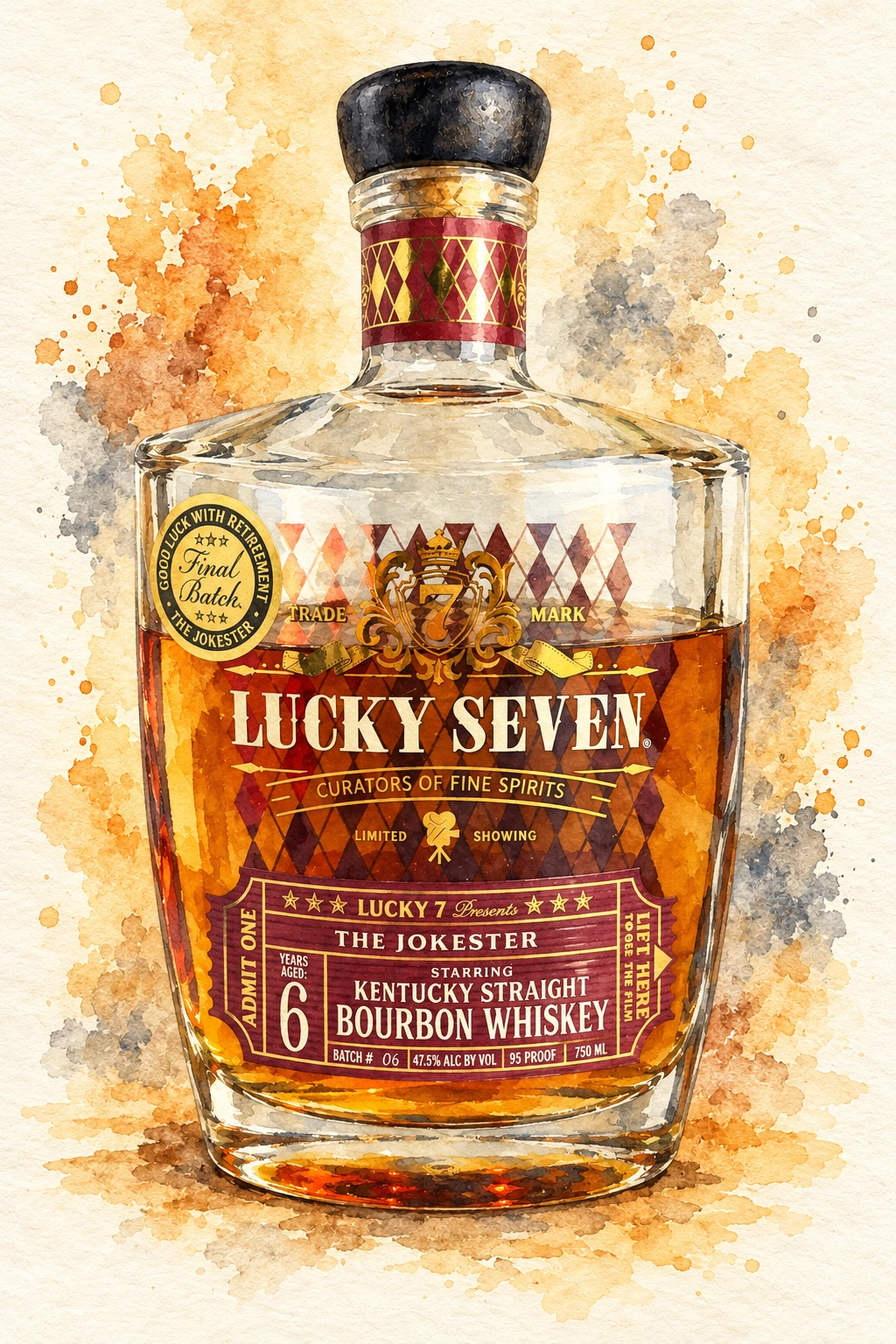
Lucky Seven launches in 2020. By May, firsthand reviews document the six-year, 95-proof Jokester and twelve-year, 100-proof Hold Up Batch 1: two different age and proof choices within one new brand.[7][13]
October 2020
The individual barrel gets its own billing
An early documented Proprietor, Barrel 9, is released at twelve years old and 115.9 proof. A contemporary February 2021 review records that October release. It demonstrates the single-barrel side of the young brand, rather than establishing the series’ first-ever launch.[15]
November 2020
A second American-oak barrel enters the story
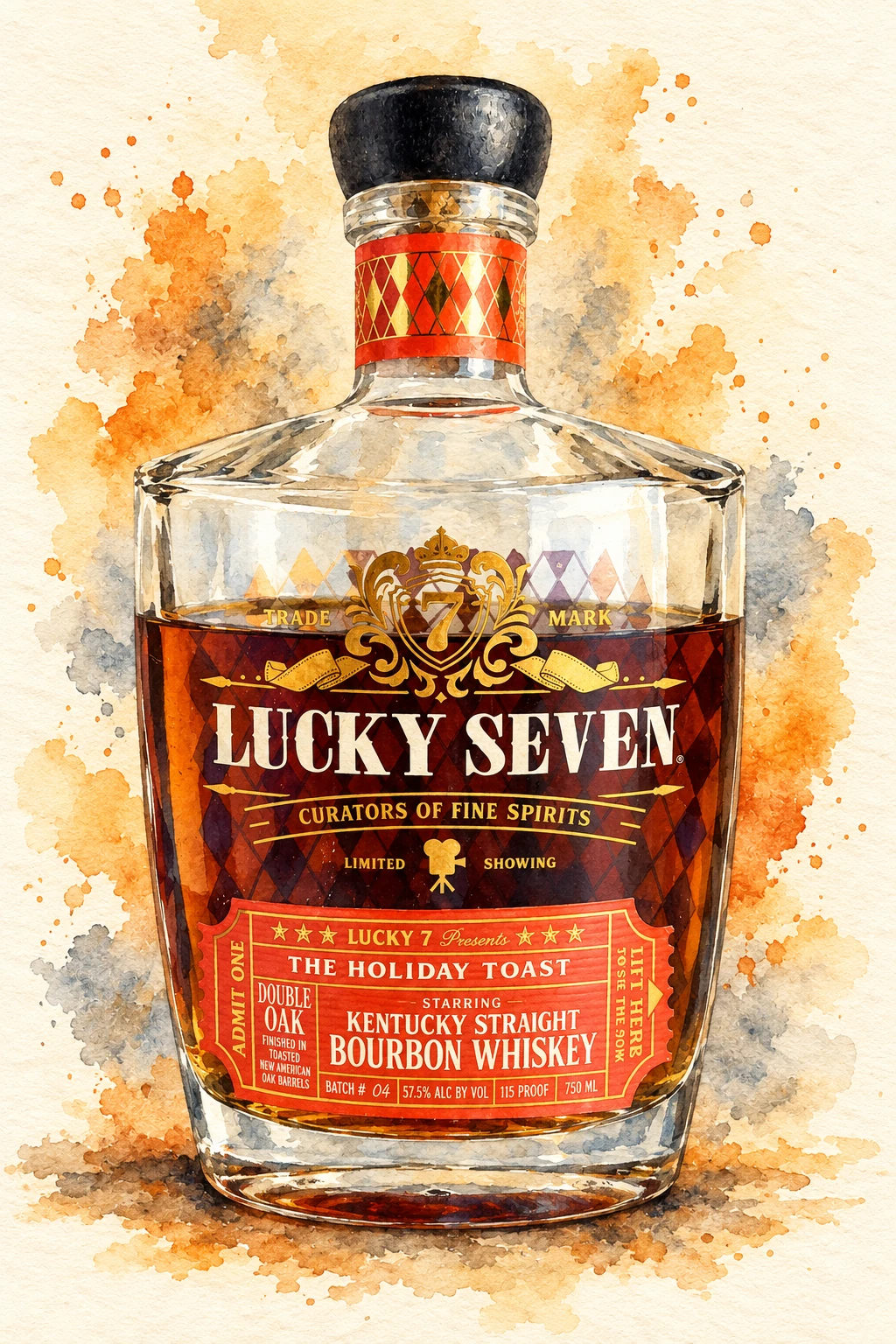
The Holiday Toast arrives in November. The documented release is 115 proof, with bourbon transferred from its first charred barrel into a new toasted-oak cask. Finishing becomes a central part of the range.[14]
July 2022
The Frenchman expands the finishing vocabulary
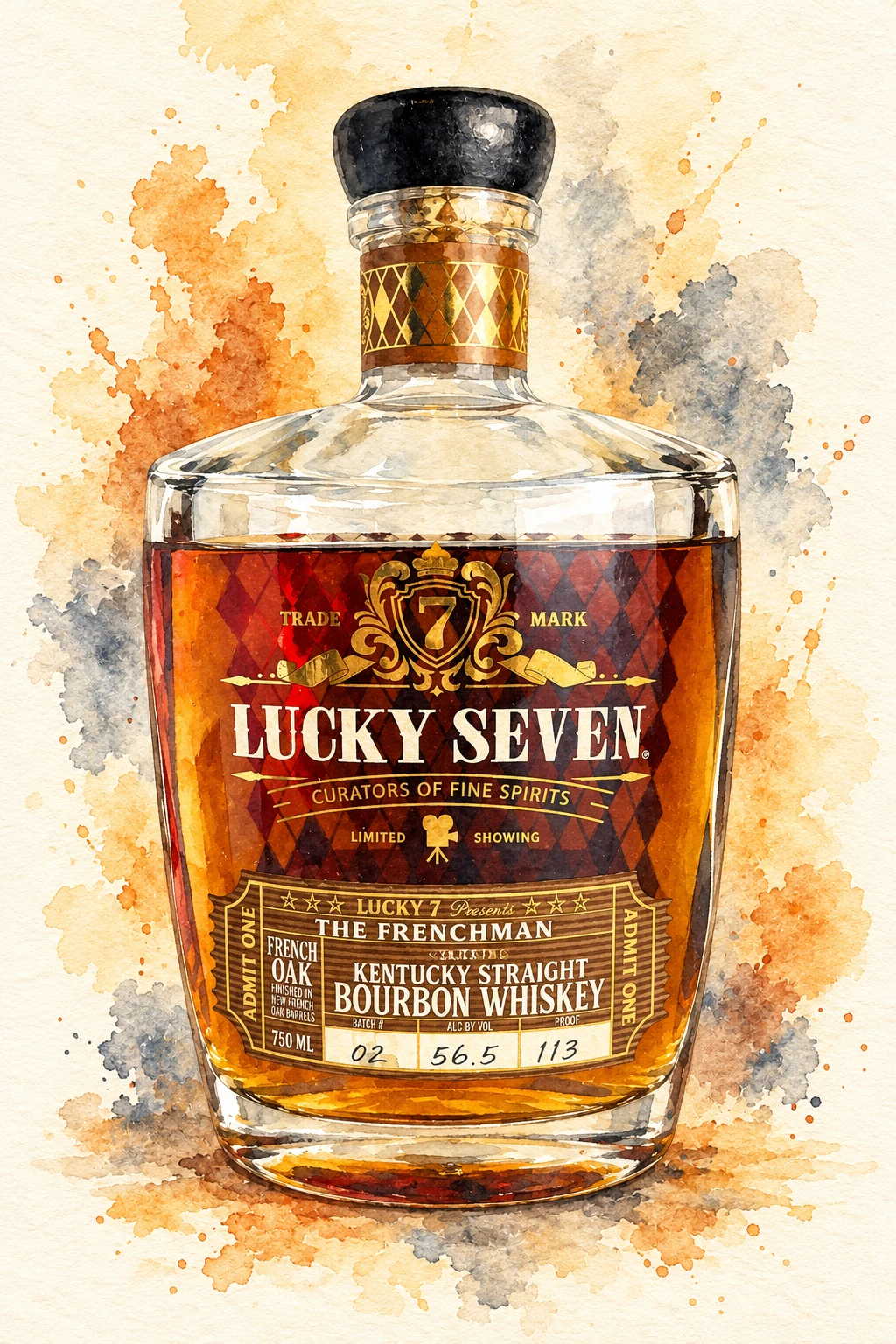
Batch 01 launches in July at 113 proof, finished in new French-oak barrels. This original edition adds a different wood treatment to the lineup; later interviews show that the cooperage approach continues to evolve.[16]
February 2023
The Workhorse takes an everyday role
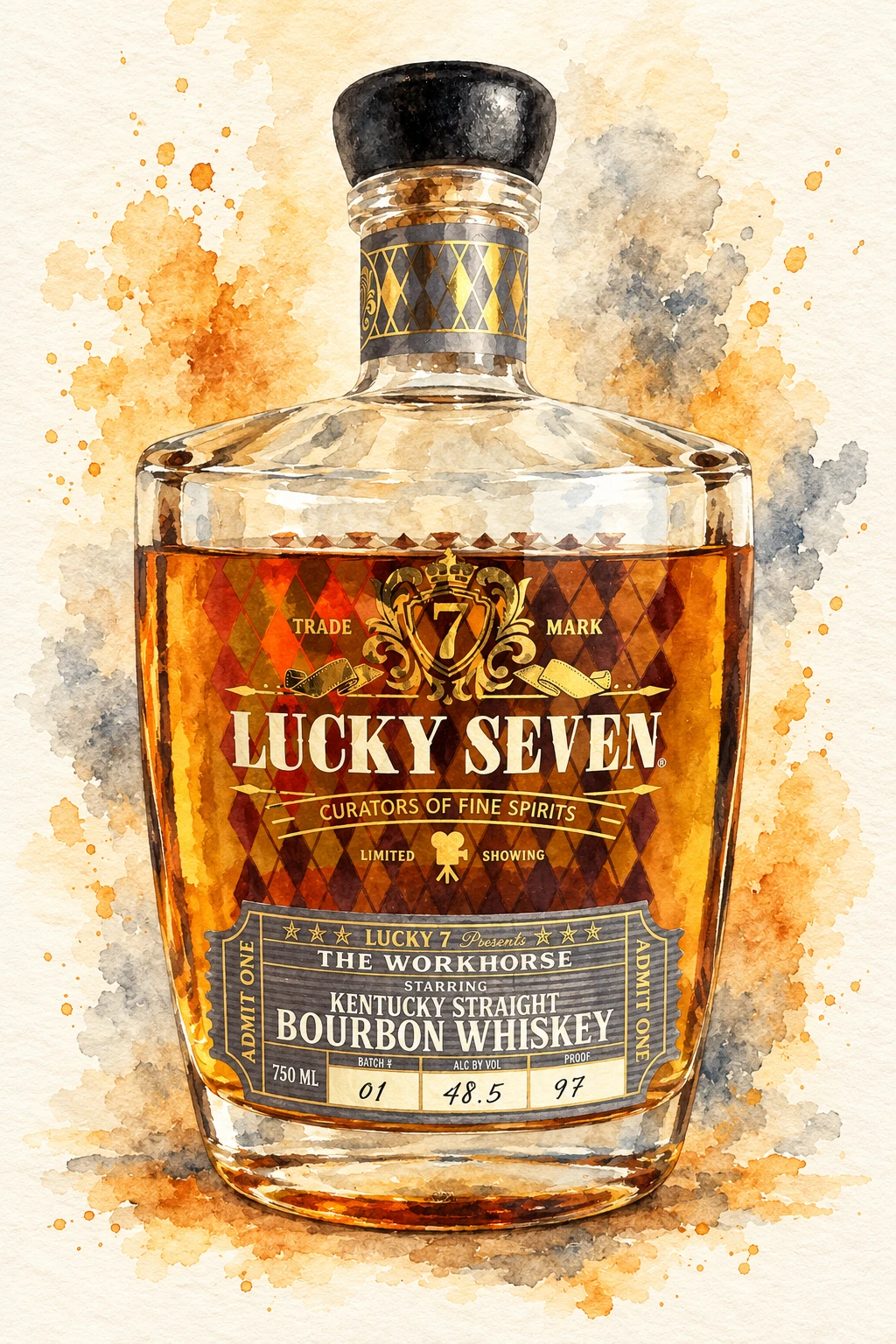
Seelbach’s introduces The Workhorse as a new offering in February. The expression supplies a regular-pour counterpart to older and limited releases, and the current brand collection lists it at 97 proof.[18][3]
October 2023
The Hold Up returns with nine years
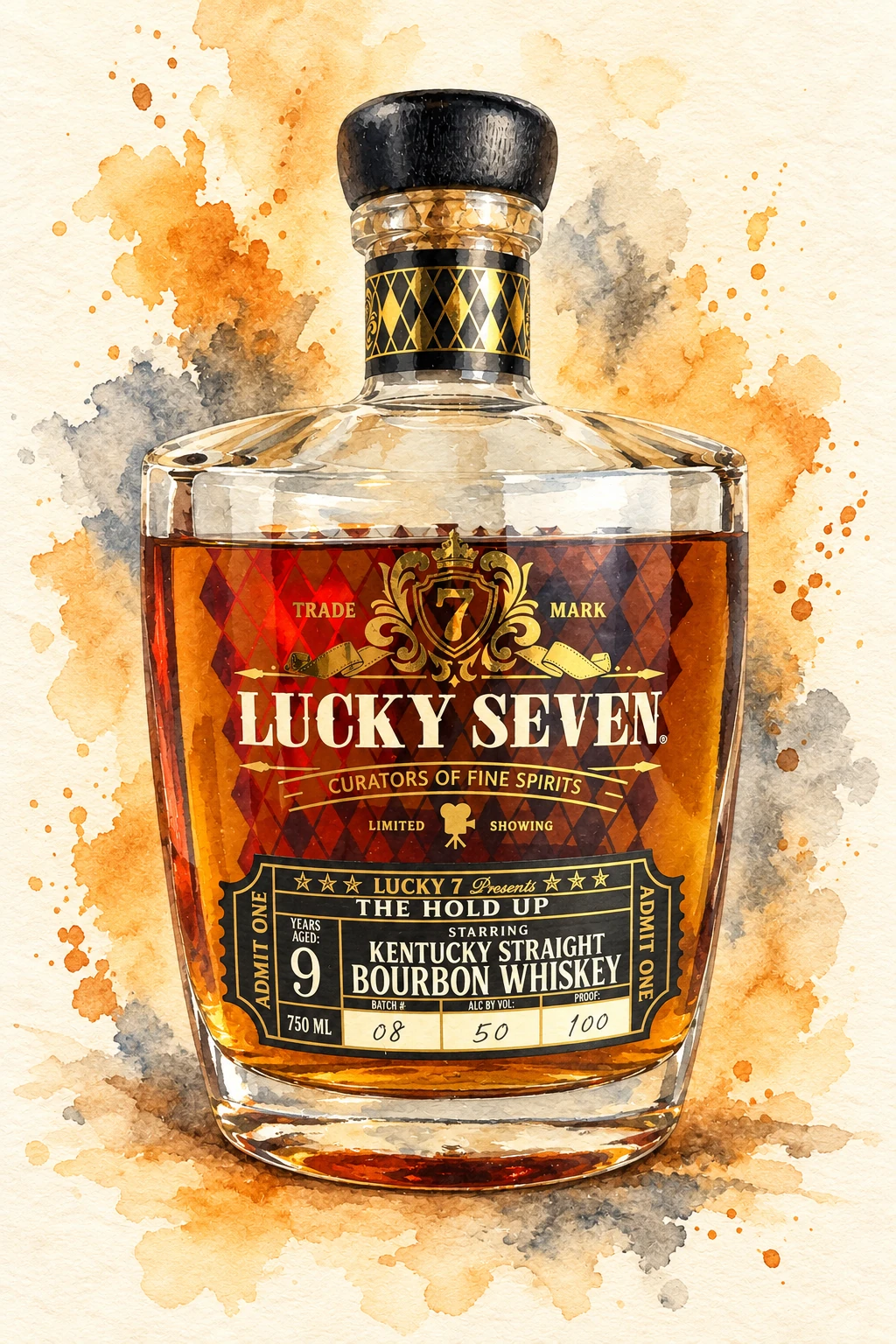
A dated retailer announcement documents the nine-year Hold Up. Its changing age statement is a reminder that an expression name is not a permanent recipe or vintage: the earlier twelve-year release and this edition remain distinct.[19][13]
November 2023
Amburana joins the cast
The New Yorker’s documented release date is November 2023. Barrel 1 is a Kentucky bourbon finished in Amburana, bottled at 117.2 proof. The aromatic wood broadens the finishing program beyond American and French oak.[3][20]
2024
The next generation starts as new fill
A July report describes planned custom production at Whiskey House. In her November interview, Barnes says a thousand barrels of Lucky Seven have just been distilled. These are future maturing stocks, separate from the older sourced whiskey already being sold.[12][7]
February 2026
A dedicated post-distillation home develops
The Blending House’s opening is announced in February. Its current site features Lucky Seven and identifies Barnes as master blender. The Shelbyville facility adds a documented partner for blending, bottling and maturation services; this is not a Lucky Seven-owned distillery opening.[10][9]
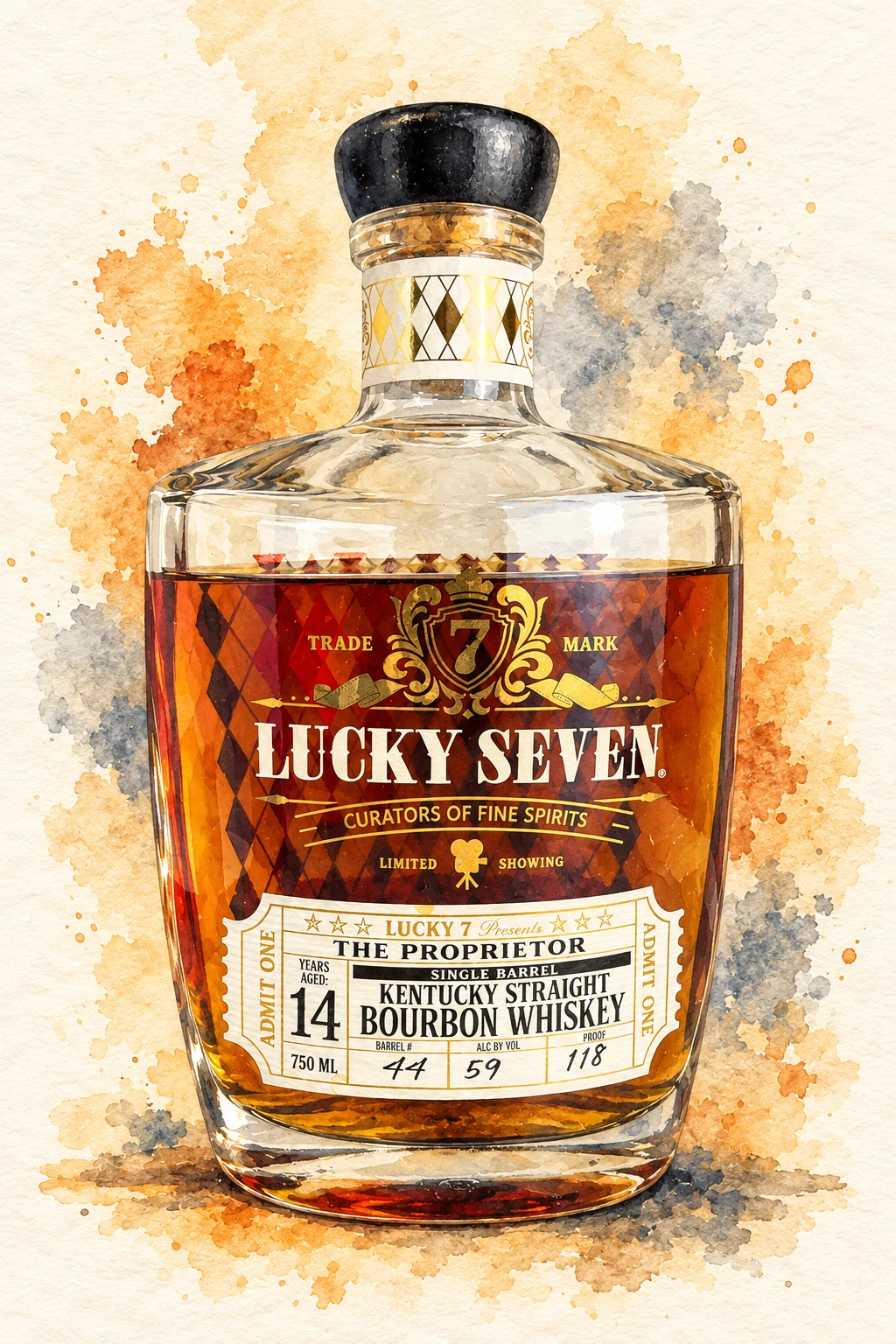
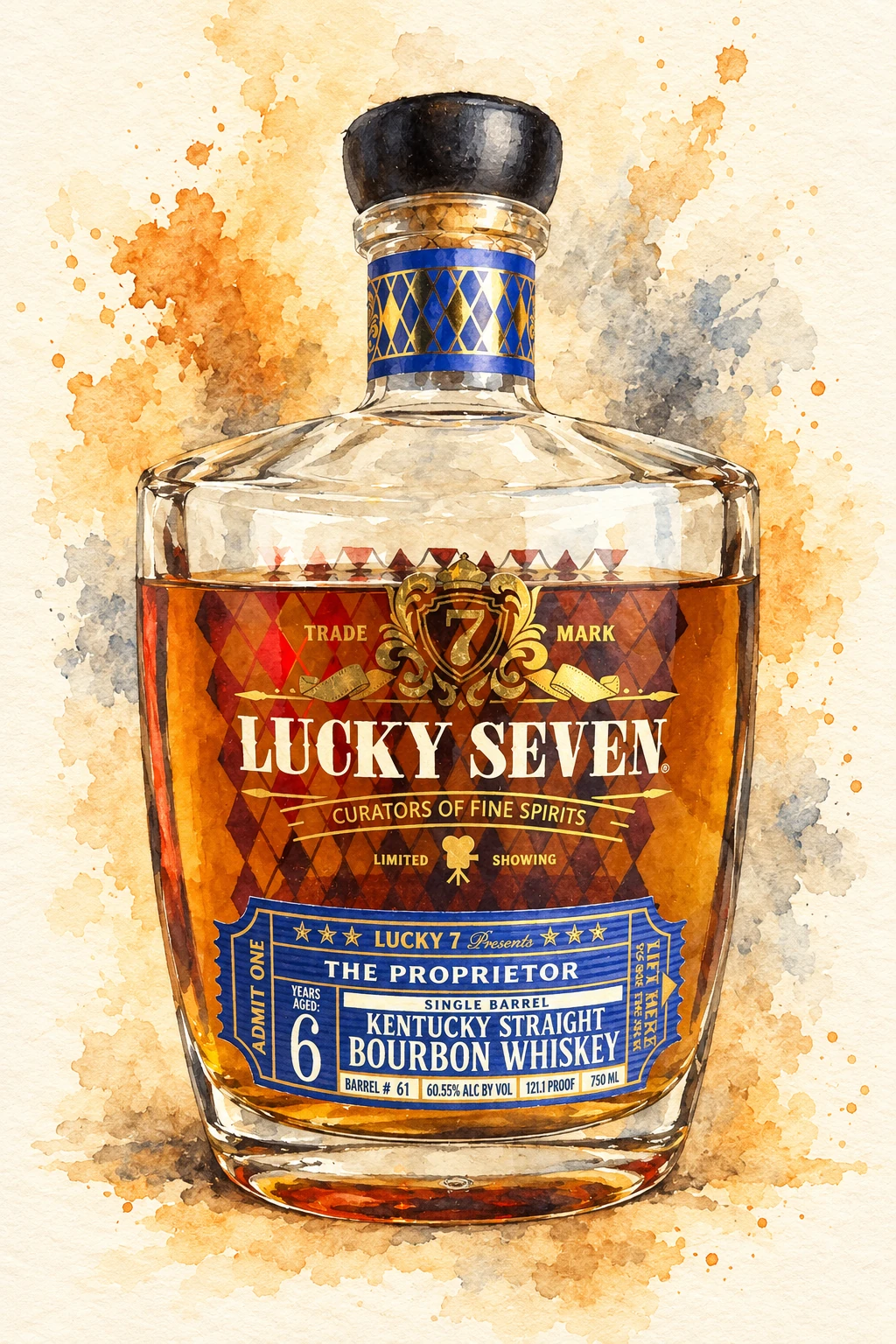
Original watercolor interpretations accompany the history. Buildings, objects and scenes are symbolic, not documentary reconstructions.
03 / Geography & roles
One name. Several places that matter.
Kentucky · the whiskey’s origin
Sourced whiskey
The producer says its sourced bourbon comes from a select group of Kentucky distilleries and explicitly excludes MGP. It does not identify the complete historic supplier list. Kentucky is therefore a supported origin; assigning every bottle to a particular famous distillery would go beyond the evidence.[2]
Bardstown · documented blending and bottling
Documented production partner
Lucky Seven’s FAQ names Bardstown Bourbon Company as its contracted blender and bottler. The examined New Yorker Barrel 1 also carries Bardstown bottling documentation. These establish a genuine production relationship, but not the distiller behind every mature barrel or an exclusive current arrangement across all releases.[2][20]
Shelbyville · The Blending House
Post-distillation partner
The current partner site describes a dedicated sensory lab, proofing, filtration, packaging and barrel storage. Lucky Seven appears among its featured brands. This is the infrastructure that supports a brand after distillation, with different functions from a stillhouse. No routine public Lucky Seven distillery tour is established by these sources.[9]
Elizabethtown · Whiskey House
Custom distillation
Whiskey House officially lists Lucky Seven among its custom-whiskey partners. This is a disclosed distilling relationship for the newer production program. It cannot retroactively identify the maker of a twelve- or fourteen-year bourbon released before this facility began operating.[11]
04 / The whiskey family
Understand the name on the label.
Selected ownership, brand and creative relationships. The brand, its production partners and its expressions play different roles.
A founder-led identity
Brand leadership
The current brand story continues to credit Lahalih and Pals as co-founders. It supplies no complete ownership register. The profile therefore follows those publicly documented roles without inventing ownership percentages or treating a supplier as a parent company.[1]
A specialist network
Technical expertise
Barnes’ consultancy background connects analytical work with blending. The Spirits Group’s published services include distillate and mature-whiskey analysis, warehouse profiling and business support. These are professional services, not evidence that every client belongs to a single whiskey group.[8]
Partner brands remain separate
Shared infrastructure
The Blending House also features Ten Runner and E.J. Curley. Their presence alongside Lucky Seven describes a shared service environment. They are not expressions within Lucky Seven’s range, and a common blending relationship does not by itself establish common ownership.[9]
05 / Making & choosing
Selection, blending and a second encounter with oak.
The work begins with mature Kentucky bourbon and continues through barrel selection, blending and carefully scoped finishes. Specifications belong to the expressions named.
Selection before the finish
In a 2022 interview, Lahalih explained that the bourbon is evaluated and blended before entering its secondary barrel. The aim is to assemble compatible flavors before wood changes them further. Finishing is therefore part of a planned composition, not a substitute for selecting the underlying bourbon.[17]
Different recipes for different stocks
The FAQ states that recipes can vary because the company buys from several Kentucky producers. A specific disclosed recipe can describe one release without becoming a house mash bill. The New Yorker Barrel 1 documentation, for example, gives 70 percent corn, 21 percent rye and 9 percent malted barley.[2][20]
French oak requires an edition
The original Frenchman review identifies new French oak. Barnes later describes refurbished former red-wine barrels, scraped, re-toasted and charred, and an intervening experiment with new oak. The undated brand pages still say new oak. The accurate account preserves that change instead of assigning one cooperage specification to every bottle.[16][7]
American oak and Amburana are different choices
Holiday Toast’s documented process adds new toasted American oak after initial maturation. The New Yorker uses toasted virgin Amburana casks, according to the retailer’s producer-supplied description. These are distinct finishing materials; Amburana should not be casually renamed a variety of American oak.[14][21]
New fill gives the blender an earlier say
The 2024 Whiskey House report attributes the custom mash bills, yeast selections and barrel specifications to Barnes. Contract production gives the team decisions to make before maturation begins, alongside the judgment already exercised over purchased mature whiskey. It does not turn a new-fill barrel into an immediately available aged release.[12]
One barrel is a specific release
The Proprietor’s age, proof and yield can differ by barrel. A selector’s March 2022 record describes one fourteen-year pick at 132.7 proof with 170 bottles. That precision is useful because it preserves the individual barrel, rather than presenting one example as a universal specification for the series.[22]
06 / The details worth knowing
The stories behind the familiar name.
The label is part of the film
The brand maintains short films titled The Hold Up, The Jokester, The Proprietor and The Holiday Toast. Early bottle coverage describes a movie-ticket label that peels back to reveal information and a QR connection. The package invites the drinker into the same cinematic world as the names, extending the founders’ interests beyond a logo.[5][14]
Blending is also deciding what to leave alone
An early Proprietor review describes selected barrels reserved for individual bottling rather than blending. The format makes the contrast within Lucky Seven visible: some whiskey becomes a composed batch, while another barrel keeps its individual character. Neither approach needs to be presented as inherently superior.[15]
Infrastructure is a story of its own
The Blending House announcement describes a 30,000-square-foot blending and bottling building on 108 acres, supported by seven rickhouses. Its importance here is practical: a specialist brand can obtain storage, processing and packaging without building its own distillery. The facility’s total capacity is not a measure of Lucky Seven’s barrel holdings.[10]
07 / Selected expressions
A cast of characters, each with a different role.
A curated reading of the whiskey family, selected for its role in the story. This is not an exhaustive current catalog.
Jokester & Hold Up · the early foundation
The Jokester was documented at six years and 95 proof in 2020. Hold Up Batch 1 was twelve years and 100 proof. The nine-year Hold Up subsequently appears in the October 2023 retail record. Reading the age statement matters more than assuming the name guarantees one unchanged liquid.[13][19]
The Proprietor · a barrel gets the spotlight
The series gives selected Kentucky bourbon a single-barrel, cask-strength presentation. Its early twelve-year Barrel 9 and the separately documented fourteen-year club pick illustrate why barrel number, age and proof belong together. The current catalogue also includes a six-year version, widening the range without erasing those differences.[15][22][3]
Holiday Toast, Frenchman & New Yorker · the finishing range
The current shop lists Holiday Toast at 115 proof and Frenchman at 113. It also offers higher-proof single-barrel versions, which should remain separate from those small batches. New Yorker brings Amburana into the group; proof varies across the site and documented bottles, so a specific label is the reliable comparison point.[4][21]
Workhorse & Gold Label · regular companions
Workhorse’s February 2023 retailer introduction positions it for everyday use. Today the official shop lists Workhorse at 97 proof and Gold Label Small Batch at 90. These offer different entry points into the producer’s blending work alongside its older, stronger and barrel-finished expressions.[18][4]
08 / The Reserve connection
Continue from the story to the bottles.
Lucky Seven Spirits in The Thelen Reserve
7 physical bottle records connect this story to the collection. Each keeps its own proof, barrel, batch, pick and release details.
Collection snapshot: October 22, 2026. Approved watercolor artwork appears where an exact record or verified release match is available. Separate physical bottles and release distinctions are preserved.
The illustrated companion
Lucky Seven Spirits, in three pages.
Origins and people, history and places, whiskey and stories. The approved illustrated companion includes linked research sources.
Researched October 14, 2026. Official brand and partner pages, first-person interviews, company announcements, retailer records and contemporary bottle reviews are distinguished in the sources. Product specifications are release- and market-specific.
Research qualifications
2020 is the documented brand launch, not an independently verified legal incorporation date. The co-founders’ college friendship is undated.
Historic sourced distilleries remain undisclosed. Whiskey House is a documented newer custom-production partner, not an inferred source for older bottles.
The brand FAQ still says all blending and bottling occur at Bardstown Bourbon Company. Newer Blending House evidence establishes an additional current relationship, but does not establish a universal transfer date or prove every bottle has moved.
The Frenchman’s cooperage differs between original new-oak descriptions and Barnes’ later refurbished-wine-cask account. Specifications are edition-scoped; neither source is silently discarded.
The New Yorker appears as 117.2 proof in Barrel 1 documentation, while the current shop displays differing figures. The Proprietor Barrel 53 listing also mismatches proof and ABV. Neither inconsistency is propagated as a universal specification.
February 2026 is the Blending House opening announcement date; operations were reported earlier. Shared facilities and consultancy do not prove shared ownership.
Source types are identified: official brand and partner pages, first-person interviews, reproduced company announcements, first-party retailer announcements and contemporary firsthand bottle reviews. Sensory claims remain attributed; no tasting was performed for this profile.
Illustrations are symbolic editorial scenes, not documentary portraits or verified historical architecture. Research checked October 14, 2026.
Full sources
The founders’ storyOfficial brand account: college friends Michael Lahalih and John Pals; cinema namesake; sourcing and blending. Note: Brand lore about Stage 7 is attributed, not independent studio history.
Producer FAQNo owned distillery; Kentucky sourcing; no MGP; variable recipes; Barnes; new-fill contracts. Note: Undated Bardstown-only and virgin-barrel wording conflicts with newer partner evidence and Barnes interview.
Current collectionCurrent expression descriptions and New Yorker November 2023 release details. Note: Different batches have different specifications; Frenchman new-oak wording needs qualification.
Current shop and formatsGold Label 90 proof; Workhorse 97; Hold Up 9-year 100; small-batch and single-barrel finishes. Note: New Yorker proof and Proprietor proof/ABV figures conflict internally; do not generalize.
Short filmsOfficial films for Hold Up, Jokester, Proprietor and Holiday Toast. Note: Film titles do not establish release dates.
Founder and blender conversation, January 2021First-person founders and Barnes: namesake discovery, palate priorities, six-year Jokester. Note: Transcript spelling errors; recollections attributed.
Ashley Barnes interview, November 8, 2024First-person Barnes: 2020 launch, new fill, blending before/after finishing, refurbished French oak. Note: Updated December 2, 2025; do not redate original interview. EJ Curley details are not Lucky Seven specifications.
The Spirits Group teamBarnes’ education, pharmaceutical work, Buffalo Trace and Four Roses career. Note: Undated team page; current employment status not assumed from historic biography.
The Blending HouseCurrent official facility, services, Barnes, Lucky Seven featured brand, Shelbyville role. Note: Featured brand does not establish ownership or exact transfer date for every bottling.
The Blending House opening announcement, February 26, 2026Company announcement reproduced with named executives: 30,000-square-foot facility, 108 acres, seven rickhouses. Note: Announcement date is not necessarily first operational date; capacity not Lucky Seven-owned stock.
Whiskey House customer partnershipsOfficial distiller lists Lucky Seven as custom-whiskey partner; Elizabethtown address. Note: Does not identify the distiller of older sourced bottles.
Whiskey House production report, July 1, 2024Monica Wolf interview describes scheduled fall Lucky Seven contract production and Barnes’ custom specifications. Note: Plans corroborated by Barnes later statement and current partner listing; historic mature barrels separate.
Early Jokester and Hold Up bottles, May 28, 2020Firsthand supplied-bottle reviews document six-year 95-proof Jokester and twelve-year 100-proof Hold Up Batch 1. Note: Secondary release documentation, firsthand bottle examination; not distillery identification.
Holiday Toast, March 15, 2021Firsthand bottle review documents November 2020 release, 115 proof, double oak, peel-back QR label. Note: November date applies documented release, no ownership implications.
Proprietor Barrel 9, February 19, 2021Firsthand supplied-bottle review: October 2020 release, 12 years, 115.9 proof. Note: Barrel-specific; used as documented early example, not first-ever Proprietor release.
Frenchman Batch 01, July 22, 2022Firsthand bottle review: July 2022 launch, new French oak, 113 proof. Note: Original batch, not universal later cooperage.
Michael Lahalih on Frenchman, October 17, 2022Direct founder explanation: evaluate and blend before second cask; monitor finish; core-range ambition. Note: New oak described in 2022, later Barnes testimony differs.
New Yorker Barrel 1, May 7, 2024Firsthand bottle: November 2023 release; 117.2 proof; 70/21/9 recipe; Bardstown bottling. Note: Barrel-specific; no supplier identity established.
New Yorker retailer introduction, June 10, 2024First-party retailer describes toasted virgin Amburana finish and Barnes. Note: June retail introduction does not override November 2023 first release.
Proprietor barrel selection, March 2022Selector’s own record: fourteen years, 132.7 proof, 170-bottle yield. Note: One specific pick; not all fourteen-year Proprietor barrels.
The producer’s current identityOfficial home page explicitly describes a Kentucky bourbon sourcing company and connects whiskey, bottle design and films. Note: Marketing description is not a distillery license or ownership register.