TJ THELEN'S COLLECTION
The Thelen Reserve
Behind the Bottles / Denver, Colorado

Leopold Bros.

Last updated Last researched

The past, put back to work.

At Leopold Bros., an old production method is a question worth testing. Can a forgotten still change the texture of rye? Can grain, fermentation and a quiet warehouse carry more of the story than an extra burst of oak? Todd and Scott Leopold built their Denver distillery around that curiosity. Its roots run through brewing; its best-known whiskey revival runs through three chambers of copper.[2][5]

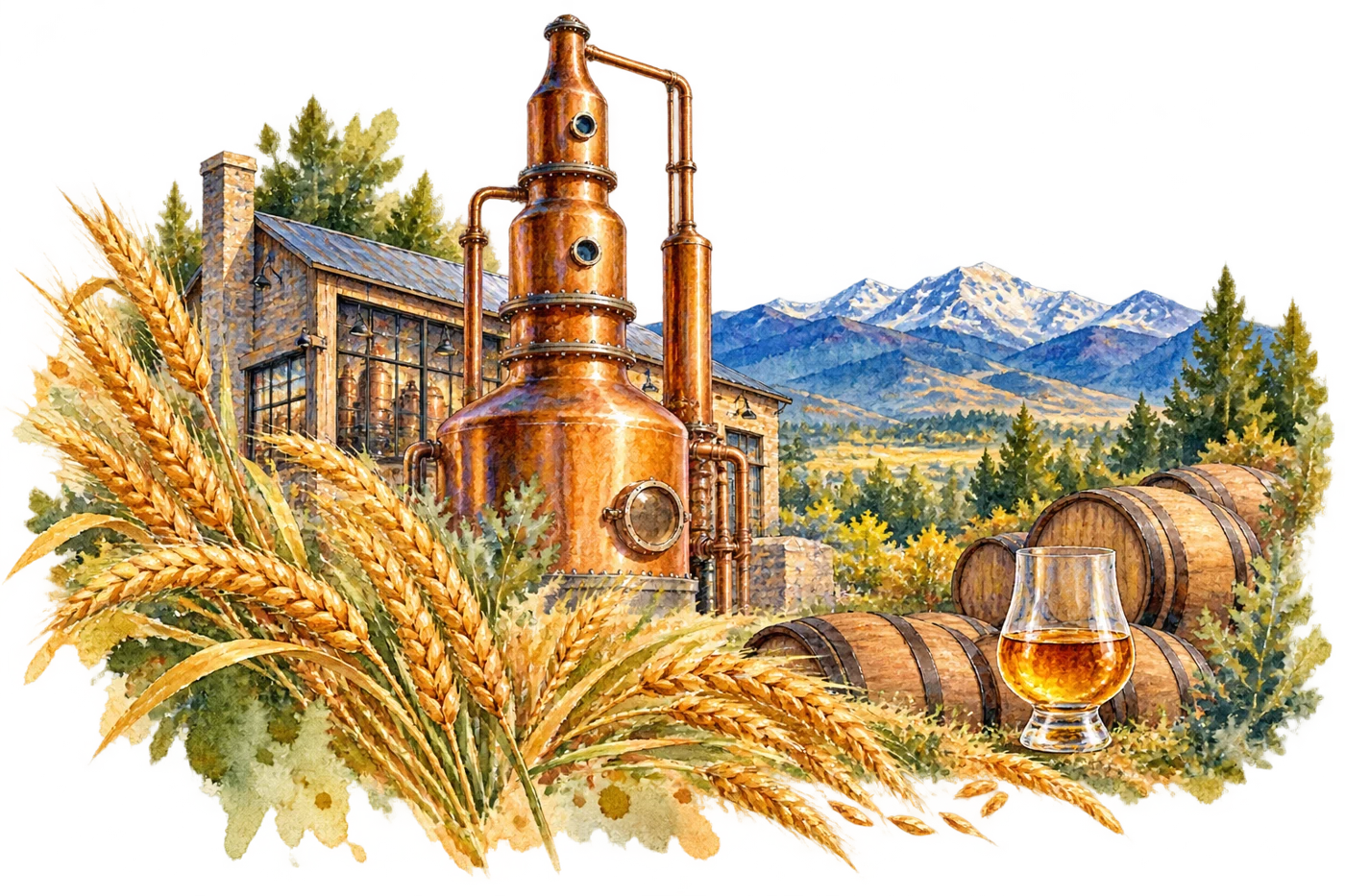
Symbolic Denver distillery, rye grain and copper still
Home
Denver, Colorado[19]
Family enterprise
Todd & Scott Leopold[23]
Business origins
Ann Arbor / 1999[2]
Present distillery
Opened 2014[1]
01 / Origins & people

Two brothers. One restless curiosity.

A brewer’s route into whiskey

The brothers opened a sustainable microbrewery in Ann Arbor in 1999. Distilling followed, and eventually displaced brewing as the focus. The surname on the door belongs to both founders. That beginning matters: whiskey starts as a fermented grain drink, and Todd’s brewing education kept the fermentation stage at the center of his thinking.[2][3]

Build the system around the spirit

Scott brought environmental and industrial engineering experience. Todd brought malting, brewing and distilling training. Their partnership joins the person asking what a spirit could taste like with the person helping design a place where it can be made. Heritage methods are part of that design, rather than scenery applied after production.[23][3]

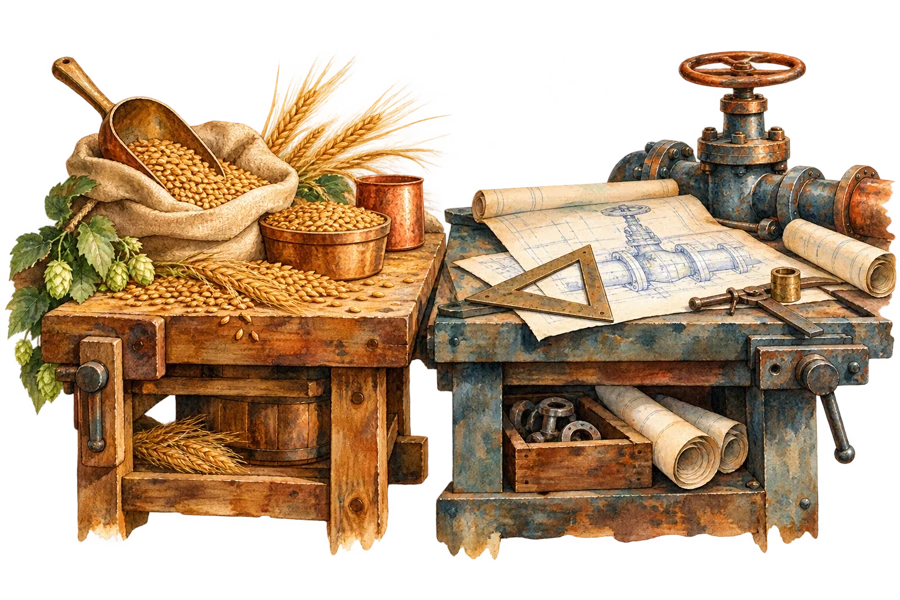
Symbolic brewing and engineering workbenches

Todd Leopold

Co-founder and distiller. His studies in Chicago and Munich preceded work with European brewers and distillers. In first-person interviews he connects yeast selection and the later stages of fermentation with spirit character. His historical research also helped drive the Three Chamber project.[3][5]

Scott Leopold

Co-founder with economics, industrial engineering and environmental engineering education. His earlier manufacturing and wastewater-system work provides a practical counterpart to the company’s conservation-minded ambitions.[23]

Collaborators, not owners

Nicole Austin joined Todd on the George Dickel rye blend; Jill and Steve Matthiasson connect Napa wine to Leopold brandies through Wermut. These are specific creative partnerships. Neither is evidence that the family distillery was acquired.[13][21]

02 / The illustrated history

An old idea finds a new life in copper.

Follow the company, its production home and the evolving whiskey range. Each date belongs to its documented event.
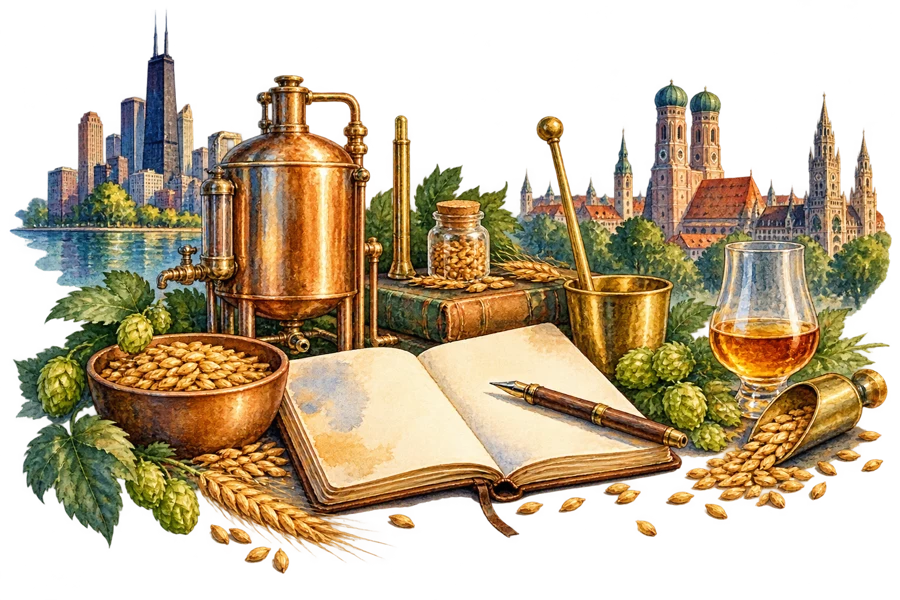
Symbolic illustration: A brewer learns his craft
1995-1996 / training

A brewer learns his craft

Todd’s account places him at Siebel in 1995 and then Munich; the official biography dates his diploma to 1996. These years describe education, not a distillery opening.[3][23]
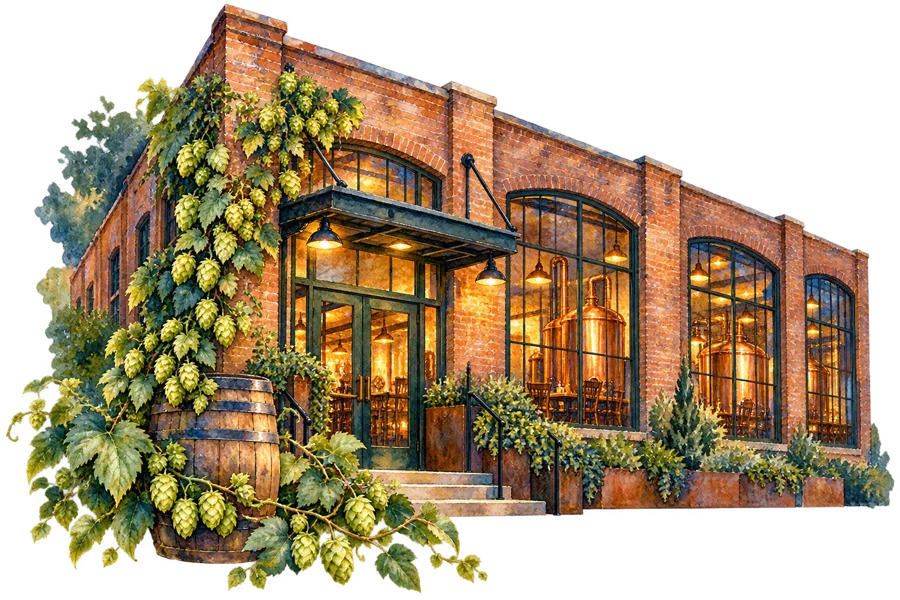
Symbolic illustration: Two brothers open a brewpub
1999

Two brothers open a brewpub

Todd and Scott establish Leopold Bros. in Ann Arbor. Their original sustainable-brewing project gives the later distillery its name and a lasting interest in fermentation.[2]
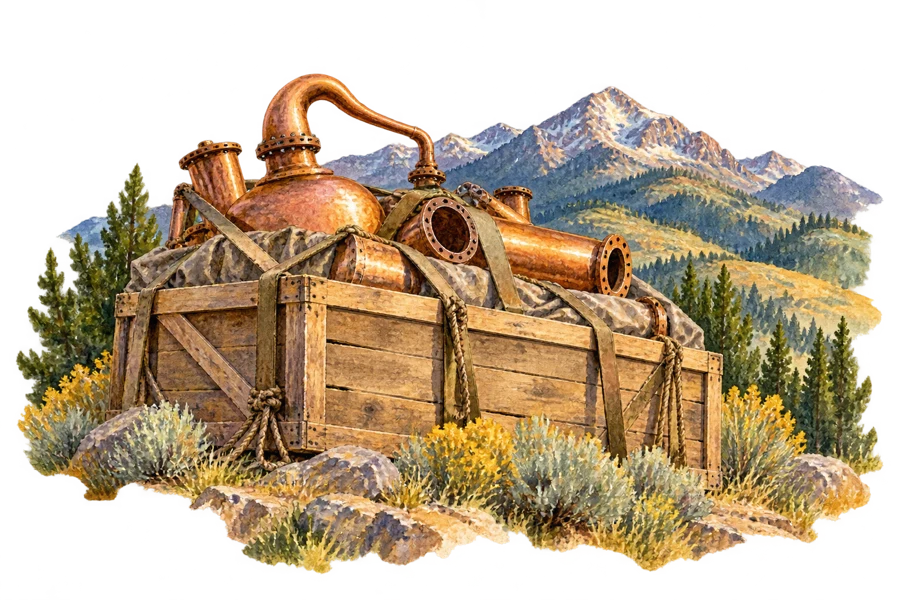
Symbolic illustration: The business returns to Colorado
2008

The business returns to Colorado

Ann Arbor’s brewpub closes in May, according to local reporting. The brothers’ Colorado chapter begins in rented industrial premises before a larger purpose-built site.[4][1]
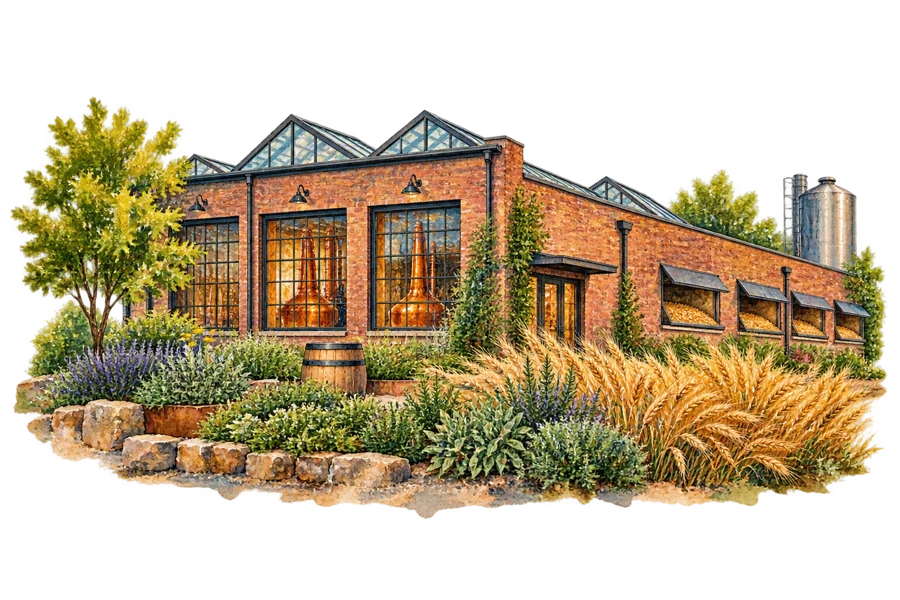
Symbolic illustration: The present Denver distillery opens
2014

The present Denver distillery opens

The new facility brings malting, distilling, maturation and visitor education into the planned site. Company origins in 1999 and this building’s opening are separate dates.[1]
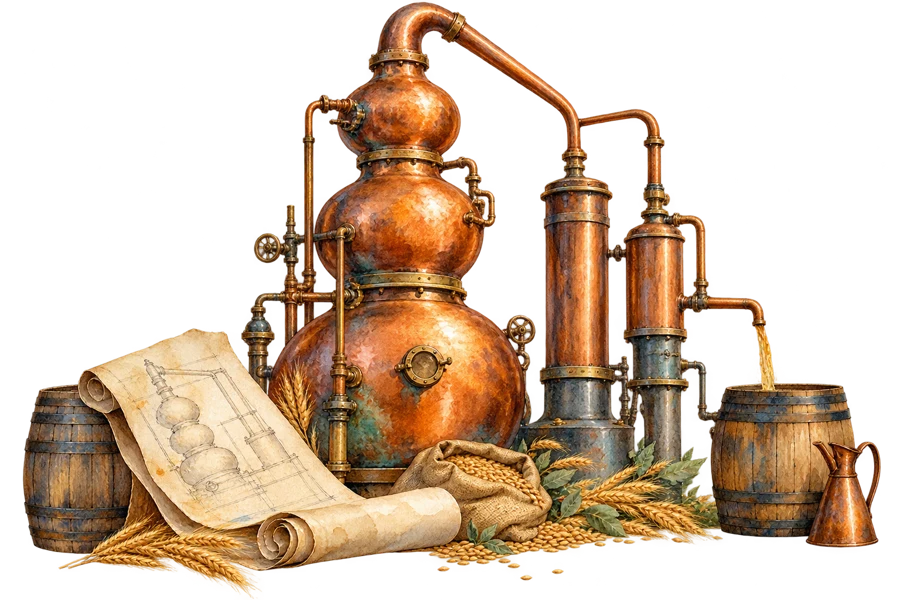
Symbolic illustration: An old still becomes a new tool
2015 / equipment milestone

An old still becomes a new tool

Dave Broom’s direct account dates the Vendome Three Chamber still to 2015. The equipment maker independently identifies Leopold’s hybrid system in Denver.[5][6]
Symbolic illustration: Five-year bonded bourbon arrives
2020 / historical release record

Five-year bonded bourbon arrives

Producer copy preserved in a May 2021 review identifies 2020 as the first release year of the five-year bonded bourbon. Its 100 proof and historic recipe belong to that edition.[9]
Symbolic illustration: Three Chamber Rye reaches the glass
2021

Three Chamber Rye reaches the glass

A contemporary release record dates the first reviewed edition to June 2021, at four years and 100 proof. A whiskey production idea finally becomes a public tasting experience.[8]
Symbolic illustration: The barrel becomes part of the identity
Summer 2022

The barrel becomes part of the identity

The producer describes a single-barrel Three Chamber rye selection from barrels at least five years old. Barrel number and fill date give each edition its own trail.[7]
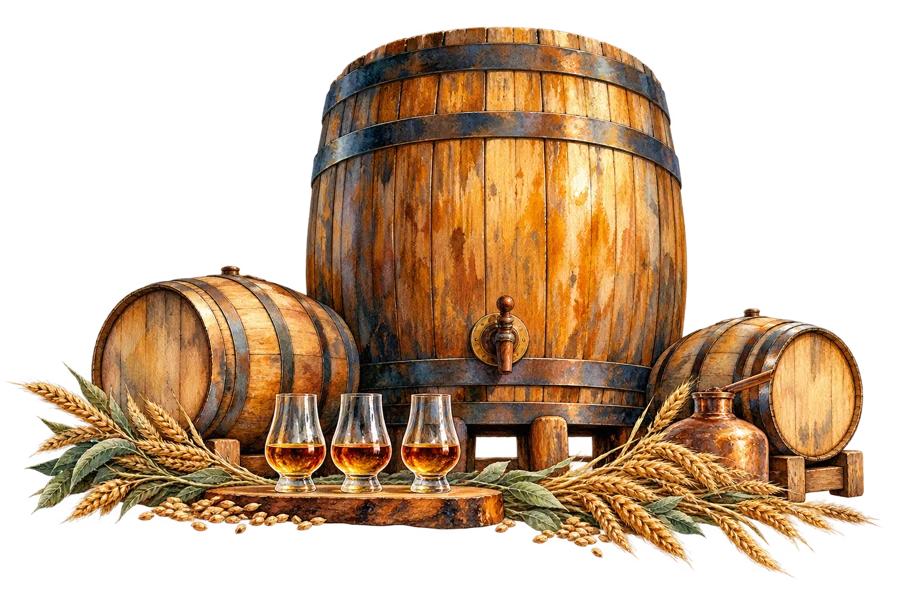
Symbolic illustration: Two rye styles meet in a foeder
2024 / 25th anniversary

Two rye styles meet in a foeder

Five-year Maryland rye and eight-year Three Chamber rye are married in a large French oak vessel. Anniversary context dates this chapter; it is not a new company founding.[11][12]
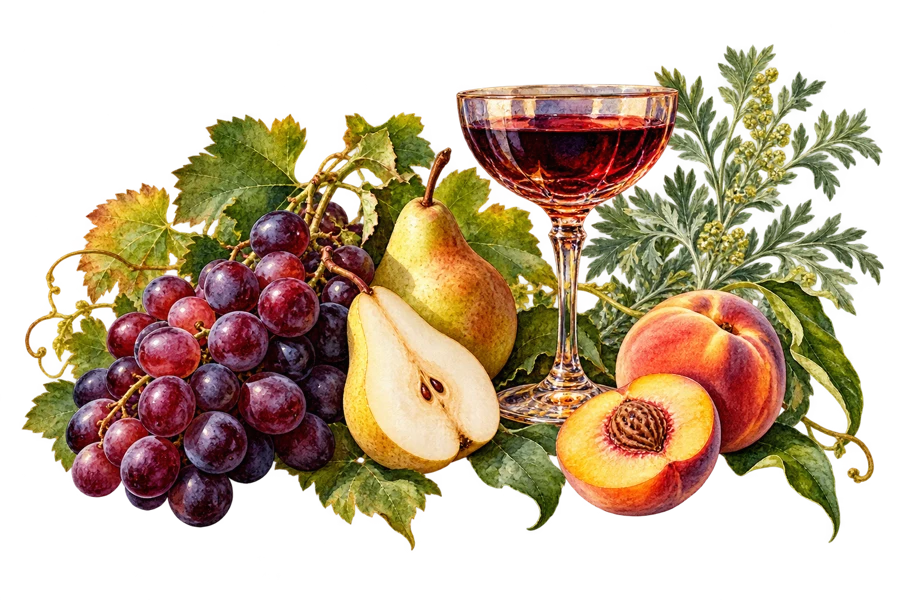
Symbolic illustration: Napa wine meets Colorado spirits
April 2025

Napa wine meets Colorado spirits

Matthiasson and Leopold announce Wermut built from Cabernet Sauvignon, pear and peach brandies, and botanicals. The partnership links different crafts without making an ownership claim.[13][24]
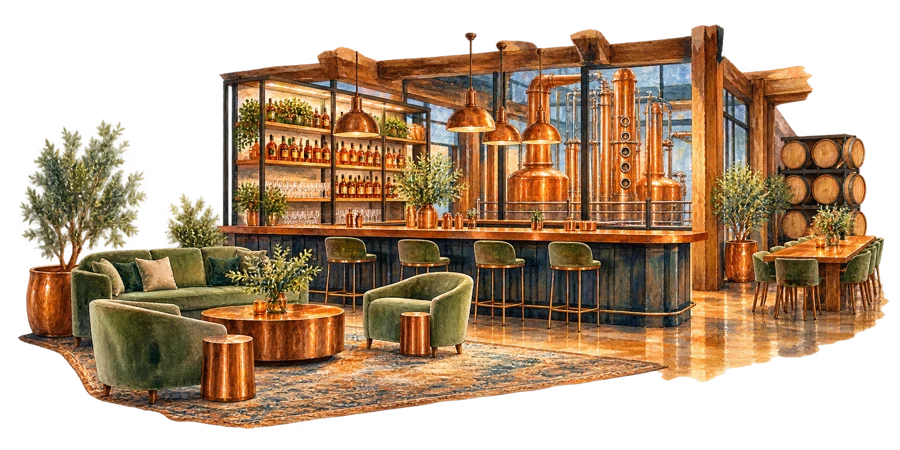
Symbolic illustration: The distillery makes room for company
November 2025

The distillery makes room for company

A nine-year Three Chamber preview accompanies the expanded lounge. The production team builds the space in-house, in an area previously used for malting and storage.[15][24]
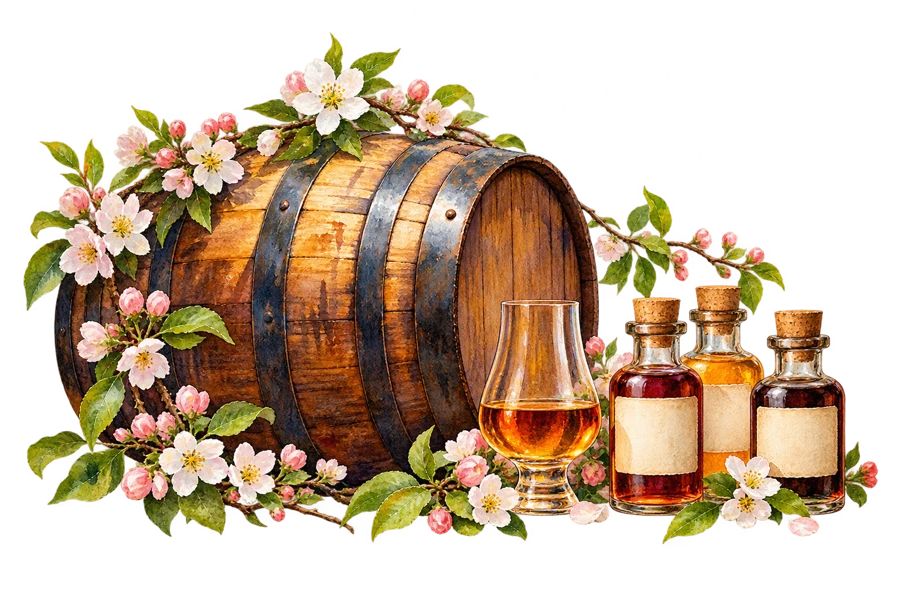
Symbolic illustration: The heritage project keeps expanding
Spring 2026

The heritage project keeps expanding

The announced April release program brings ten-year cask-strength bourbon, summer gin and culinary vinegars together. Historical inquiry continues to generate new work beyond rye.[17][18]

Original watercolor interpretations accompany the history. Buildings, objects and scenes are symbolic, not documentary reconstructions.
03 / Geography & roles

A working landscape, with distinct roles.

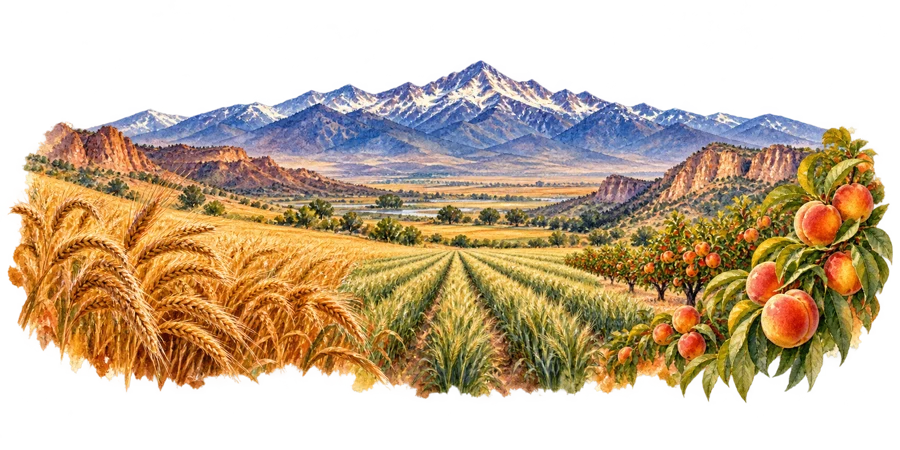
Symbolic Colorado growing landscapes

Ann Arbor, Michigan

The original brewpub chapter began in 1999. Dated local reporting places its closure in May 2008. It belongs in the company’s origin story, not in the description of today’s Denver production site.[2][4]

Northeast Denver

A rented industrial workspace preceded the purpose-built distillery. The current visitor address is 5285 Joliet Street. The producer dates the present facility to 2014, separating company formation from the building’s opening.[1][19]

Colorado’s growing regions

Producer accounts connect nearby rye fields, San Luis Valley barley and Western Slope peaches with different parts of the range. Those are ingredient relationships across a state, not evidence that every release is an estate-grown whiskey.[1]

The warehouse and visitor space

Maturation takes place in a dunnage-style barrelhouse. The visitor route explains grain through aging, while the expanded lounge unveiled in 2025 occupies space with an earlier malting and storage life. A building can change jobs without becoming a new distillery.[15][20]

04 / The whiskey family

Understand the name on the label.

Selected ownership, site and production relationships. Corporate links do not make every whiskey the same release.

An independent family producer

The official family story identifies an independently owned distillery founded by Todd and Scott. Leopold Bros. is the company and producer identity used here; the whiskey range sits inside a broader spirits business.[1]

Vendome Copper & Brass Works

Vendome’s own portfolio identifies the Three Chamber hybrid built for Leopold in Denver. The equipment relationship supports the historical-engineering story, but does not turn the manufacturer into a whiskey producer or brand owner.[6]

George Dickel / Cascade Hollow

The 2021 collaboration joined two rye production approaches: Leopold’s Three Chamber whiskey and column-distilled rye from Cascade Hollow. The announcement credits Todd and Nicole Austin. It is a blend relationship between producers.[21][22]

New Belgium Brewing

The anniversary rye project used a large French oak foeder obtained from New Belgium. This is a vessel and brewing-world connection, distinct from ownership or a claim that the whiskey was distilled at the brewery.[11]

Matthiasson

The Napa winery contributes Cabernet Sauvignon to Wermut, joined by pear and peach brandies distilled by Leopold. It broadens the family of collaborations beyond whiskey while retaining each participant’s role.[13]

MGP and CNMA

Monument Canyon Trail is an openly disclosed blend of MGP wheated bourbon and Leopold’s own bourbon, with a conservation fundraising component. That 2025 release must not be used to relabel earlier house-distilled bonded bourbon as sourced.[14]

05 / Making & choosing

The recipe is only the beginning.

Grain, fermentation, distillation, oak and selection each leave a mark. Age and proof claims below belong to the expressions named.

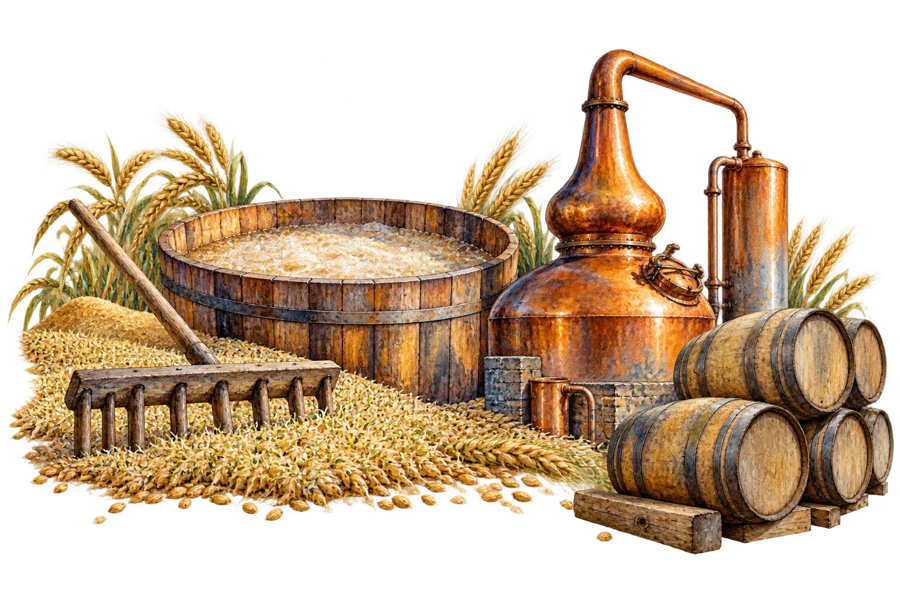
Interpretive malting, fermentation, copper and dunnage maturation

Floor malt as an ingredient

On-site floor malting makes barley preparation part of the distillery’s work. Malting is more than a picturesque room: germination and drying help determine what enters the mash. The producer presents it as an intentional return to a labor-intensive craft.[1]

Fermentation before the still

Todd’s interviews emphasize a brewer’s command of yeast, oxygen and the end of fermentation. Historical bonded-bourbon copy describes open wooden tanks with house cultures and indigenous organisms. These details belong to that documented process, not an assumption that every product uses identical fermentation.[3][9]

A different rye machine

The Three Chamber equipment revives a historically documented distillation approach. Its staged vessels and steam contact were selected to recover a fuller, oil-rich rye character. Vendome calls its system a hybrid of batch and continuous operation. The illustration is interpretive, not a technical drawing.[5][6]

Abruzzi and floor malt

The 2021 Three Chamber release was documented as 80% Abruzzi rye and 20% Leopold floor malt. The heritage grain and unusual still are parts of one project. Maryland Style Rye is a separate expression and recipe.[8]

Low entry, patient maturation

The eight-year bourbon technical sheet lists 100-proof barrel entry and dunnage warehousing. It describes proof changing with longer aging, followed by finishing in used Three Chamber rye casks. Entry proof, final proof and finish are different pieces of information.[10]

Blending is its own craft

Foeder work gives already aged whiskies time together in a large oak vessel. The anniversary rye married two house styles; Monument Canyon Trail deliberately mixed house bourbon with disclosed MGP bourbon. A foeder does not erase the origins of its components.[11][14]

06 / The details worth knowing

The details that change the story.

Whiskey archaeology with a present purpose

Todd’s Three Chamber investigation reached into historic government and industry writing. The useful question was not merely whether an old still could be rebuilt, but what flavors industrial efficiency might have left behind. Dave Broom’s 2021 account treats the rye as a whole production system, from grain to entry proof.[5]

Two rye traditions, kept distinct

Maryland Style Rye draws on a softer, fruit-oriented regional ideal, including tasting old examples. Three Chamber Rye follows a different still-led path. The anniversary blend lets the two meet without pretending that either name describes a single universal rye recipe.[10][11]

A room made by the people who make the spirits

The 2025 lounge story credits the production team with the bar, tables and shuffleboard, using learning, reused materials and outside advice. It recalls the sociable Ann Arbor origin while giving the Denver operation a new hospitality chapter.[15]

From spirit research to the kitchen

In 2026 the company applied Three Chamber historical research to vinegar. The spring program paired culinary releases with a ten-year bourbon announcement. This is a broader fermentation and distillation enterprise; whiskey is an important branch rather than the entire tree.[17][18]

07 / Selected expressions

Different methods. Distinct expressions.

A curated reading of the whiskey family, selected for its role in the story. This is not an exhaustive current catalog.

Five-Year Bottled in Bond Bourbon

Historic 2020/2021 producer copy identifies five years and 100 proof, with a 64% corn, 21% malted barley, 15% rye recipe. It anchors an earlier bourbon chapter. Later bourbon sheets use different ratios and finishing information, so those details should remain attached to their own editions.[9]

Three Chamber Rye

The first reviewed 2021 edition was four years old at 100 proof; the producer’s summer 2022 page describes selected barrels aged at least five years. The 2025 flasks move to eight-year bonded whiskey. The name persists while age, format and edition evolve.[7][8][16]

Maryland Style Rye

The producer’s technical material specifies a 65% rye, 15% corn, 20% floor-malted-barley mash, pot distillation and five-year maturation at 100 proof. It is the softer-style counterpart that later participates in the anniversary foeder blend.[10][11]

Eight-Year Bourbon / Three Chamber Finish

A later cask-strength bourbon spends additional time in freshly emptied Three Chamber rye barrels. Its published 65/20/15 recipe and finishing stage distinguish it from the historic five-year bonded release. No one proof number should be applied to every cask-strength batch.[10]

25th Anniversary Foeder Rye

A marriage of five-year Maryland rye and eight-year Three Chamber rye, roughly 85/15 according to the announcement. The oversized French oak vessel provides a common resting place. The technical sheet’s conflicting strength line is flagged rather than silently corrected.[11][12]

Monument Canyon Trail Bourbon

The 2025 release discloses six-year MGP wheated bourbon alongside four-to-six-year Leopold bourbon, married in French oak and reduced to 90 proof. It shows an independent distiller choosing a sourced component openly, for a specific blend with a conservation connection.[14]

08 / The Reserve connection

Continue from the story to the bottles.

Leopold Bros. in The Thelen Reserve

1 physical bottle record connects this story to the collection. Each keeps its own proof, barrel, batch, pick and release details.

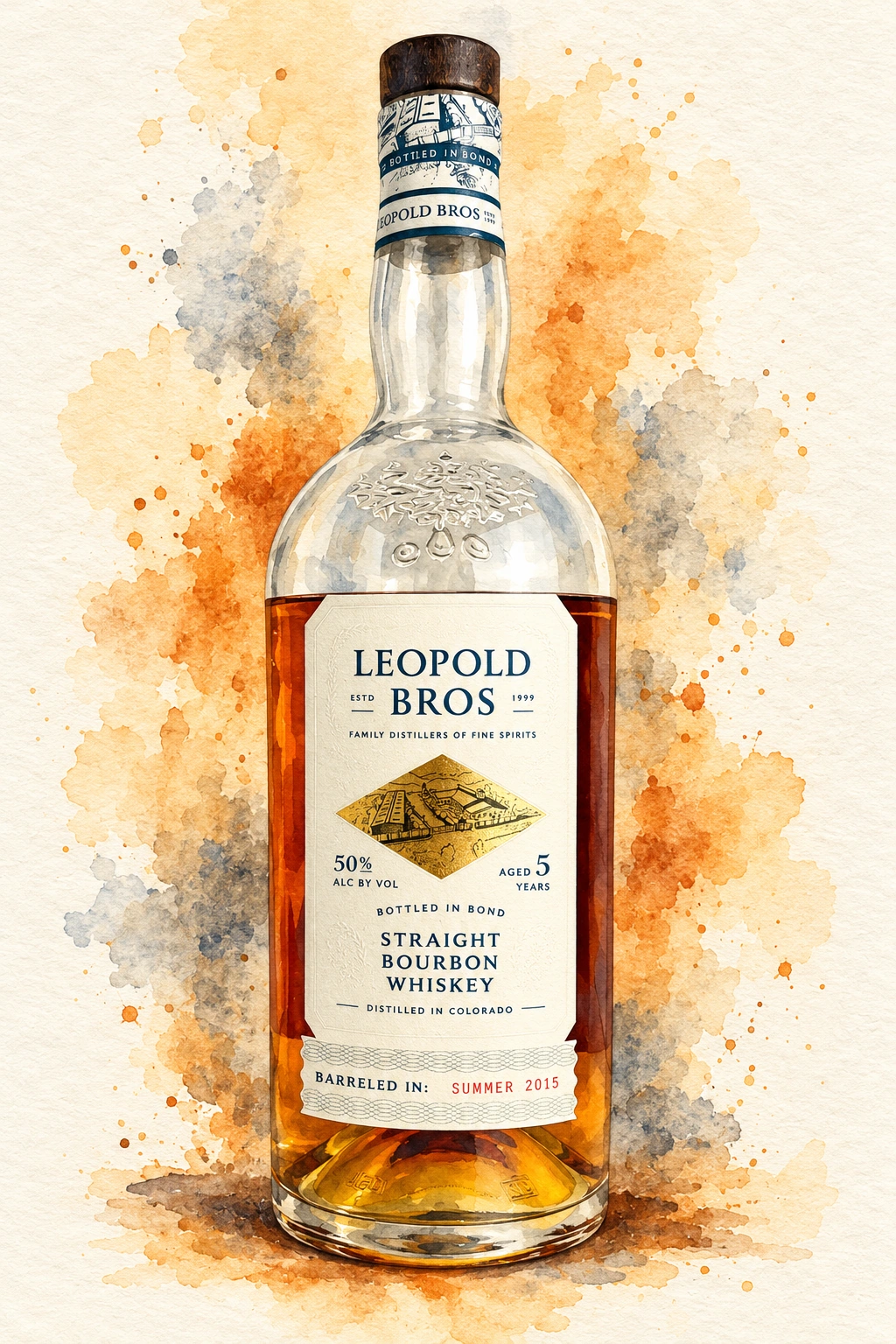
Approved watercolor of Leopold Bros. 5-Year Bottled in Bond Bourbon - Summer 2015

Leopold Bros. 5-Year Bottled in Bond Bourbon - Summer 2015

W0293 · 100 proof

Five-year bonded bourbon. Barrel, batch, bottle number and distillation season remain unverified from original photographs.

Collection snapshot: October 25, 2026. One physical record. Exact approved bottle artwork appears only when a verified match is available.

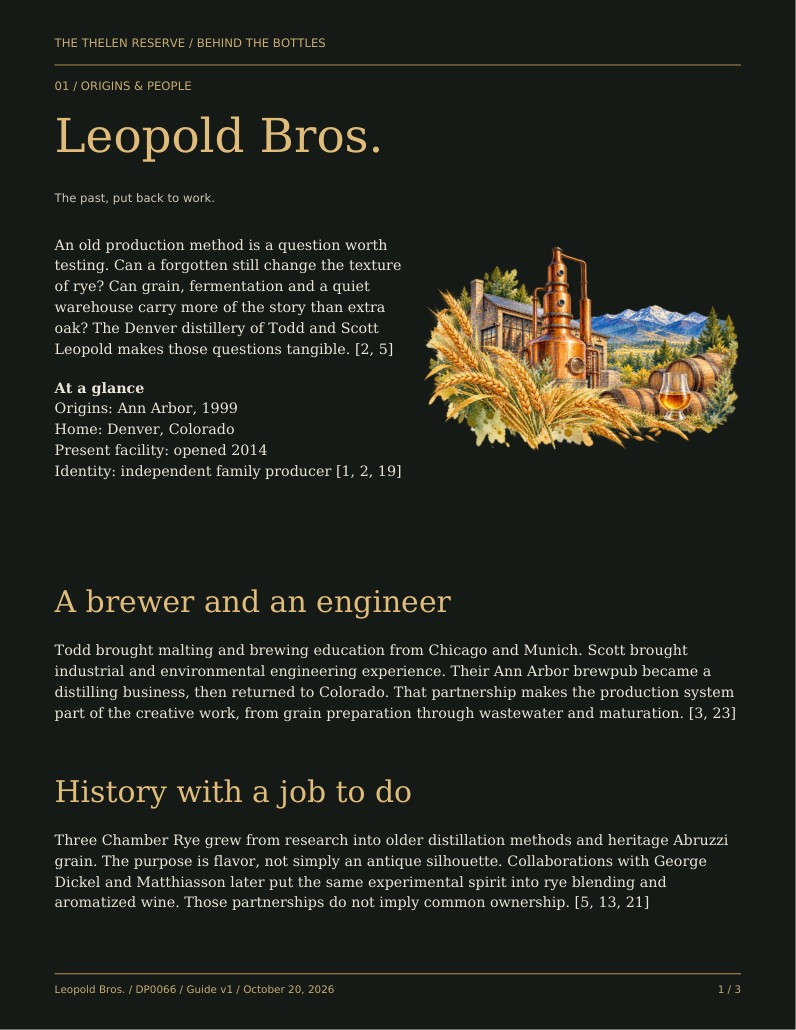
Leopold Bros. three-page guide cover
The illustrated companion

Leopold Bros., in three pages.

Origins and people, history and places, whiskey and stories. A concise companion to this full profile, with linked research sources.

Sources & research notes

Researched October 20, 2026. Primary producer announcements and institutional records are used wherever available. Product specifications are release- and market-specific.

Research qualifications

  • Researched October 20, 2026. Independent educational profile; selected releases, not an exhaustive catalog or stock list.
  • The producer’s current story uses a broad mid-2000 s relocation description; dated local reporting supports 2008 for the Ann Arbor closure. No exact Colorado start day is inferred.
  • Todd’s first-person account places school attendance in 1995; the official biography dates his diploma to 1996. These can describe different stages.
  • Vendome’s still was made in 2015 according to Dave Broom’s direct reporting. This is separate from 2014 facility opening and 2021 Three Chamber rye launch.
  • 25th-anniversary material is treated as 2024 based on the 1999 origin, dated PDF and event context. Search-engine dates on olderblog pages can be misleading.
  • The anniversary PDF prints 55% ABV and 120 proof together. These conflict; the producer store lists 55% ABV. The profile does not assign a definitive strength without exact bottle evidence.
  • Historic five-year bourbon 64/21/15 and later bourbon 65/20/15 recipes remain distinct. No batch recipe, barrel, bottling season or release date is inferred for the owned bottle without photographs.
  • The 2025 MGP sourcing disclosure applies to Monument Canyon Trail. George Dickel and Matthiasson are collaborations, not ownership links.
  • Producer environmental aspirations and exclusivity/first claims are attributed. No independent audit or blanket zero-waste certification is asserted.
  • Interpretive original watercolors are symbolic scenes, not historical photographs or exact architectural/mechanical reconstructions.

Full sources

  1. Story / family, distillery and processIndependent family ownership; people, 2014 facility, malting, grain origins and dunnage maturation. Note: Producer exclusivity and environmental claims remain attributed; no audited zero-waste certification inferred.
  2. Todd Leopold interview / Taste The Dram, March 3, 2017First-person account of 1999 brewpub, surname, fermentation, low entry proof and whiskey range. Note: Relative relocation wording conflicts with dated reporting; use 2008, not a calculated year.
  3. Todd Leopold interview / The Alchemist Cabinet, April 9, 2018First-person brewing education, 1995 school attendance, Munich study, 1999 start and fermentation perspective. Note: Training attendance and diploma dates are different milestones.
  4. Ann Arbor News / former brewpub, October 13, 2009Dated local reporting places closure of the Ann Arbor brewpub in May 2008. Note: Reports on the former property, not exact Colorado first-distillation day.
  5. Dave Broom / Enter the Three Chambers of Leopold, July 22, 2021Direct technical reporting on Vendome 2015 still, archival inspiration, Abruzzi rye and low barrel entry. Note: Interpretations of historic prevalence and flavor are attributed; not a home-distillation guide.
  6. Vendome / batch distillation portfolioEquipment maker identifies Leopold Bros. Three Chamber hybrid system in Denver. Note: Gallery establishes maker/system relationship, not a commissioning date.
  7. Leopold Bros. Three Chamber rye / producerHeritage rye project; summer 2022 single-barrel release at least five years old, barrel/date identifiers. Note: This page describes the 2022 edition, not every later release.
  8. Breaking Bourbon / Three Chamber Rye, July 19, 2021Contemporaneous June 2021 release record, four-year age, 100 proof, 80/20 recipe. Note: Independent release-specific review; not current portfolio specification.
  9. Bourbon Guy / bonded bourbon, May 25, 2021Preserves quoted producer specs:2020 first release, 5 years, 100 proof, 64/21/15 recipe. Note: Historic producer copy quoted in a secondary firsthand review; do not transfer recipe to newer bourbon.
  10. Eight-year Bourbon technical sheet / producerEight-year bourbon, Three Chamber rye-cask finishing, 100 proof entry, 65/20/15 recipe and dunnage maturation. Note: The PDF also carries Maryland rye copy. Use the bourbon panel for bourbon claims.
  11. 25th Anniversary Foeder technical sheet / producerNew Belgium French oak foeder; five-year Maryland/eight-year Three Chamber rye marriage. Note: Printed 55% ABV /120 proof line is inconsistent. No definitive bottling strength inferred from it.
  12. Three Chamber Foeder blend announcement / producer25th-anniversary blend:roughly 85% five-year Maryland rye and 15% eight-year Three Chamber, married without dilution. Note: Blog day/month alone lacks visible year; 2024 supported by 25th anniversary and dated PDF asset, not search timestamp.
  13. Sweet Wermut announcement / April 3, 2025Matthiasson Napa Cabernet plus Leopold pear/peach brandies and botanical infusion. Note: Collaboration does not imply common ownership or whiskey classification.
  14. Colorado National Monument Association collaboration / June 10, 2025Monument Canyon Trail mixes 6 year MGP wheated bourbon with 4-6 year Leopold bourbon; foeder; 45% ABV; 10% sales donation. Note: Sourcing disclosure is release-specific, not a claim about older bonded bourbon.
  15. Expanded tasting room / November 8, 2025Production team builds expanded bar/lounge in former malting/storage area; 9 year Three Chamberpreview. Note: Hospitality expansion date is distinct from 2014 distillery opening.
  16. Eight-year Three Chamber flasks / August 26, 2025200 ml bonded rye offering changes from six-year to eight-year whiskey. Note: A dated release transition, not a promise all future flasks remain eight years old.
  17. Spring 2026 release / March 26, 2026Announced April 10-11 release event includes 10 yearcask-strengthbourbon, vinegars, summer gin. Note: Announcement verifies program; does not assert present stock or ticket availability.
  18. Introducing vinegar / March 24, 2026Producer extends historical Three Chamberresearch to culinary vinegar. Note: Historicalfirst/centuryclaims attributed; vinegar is not classified as whiskey.
  19. Contact / producer5285 Joliet Street, Denver CO 80239, currentvisitorlocation. Note: Hours and booking availability can change.
  20. Visit us / producerGuided visitor route covers malting, fermentation, distillation, aging. Note: No ticketprices/hours reproduced as permanent guide data.
  21. George Dickelcollaboration / November 8, 2021 announcementAnnouncement quotes Todd Leopold/Nicole Austin; combines Leopold Three Chamberand Cascade Hollowcolumnrye. Note: Tradepublication carrying producer announcement; collaboration is not ownership.
  22. George Dickel / official storyOfficial history recognizes Nicole Austin and Leopoldcollaboration. Note: Current distillerypersonnel should not be inferred solely from historical release roles.
  23. Leopold archive / legacy producer biographyTodd 1996 malting/brewingdiploma; Scottengineeringeducation andenvironmentalmanufacturingbackground. Note: Legacy page is historicalbiography, notcurrentoperationalcatalog.
  24. Leopoldblog / dated indexExplicit 2025/2026 publicationdates establish currentannouncements and chronology. Note: Searchsnippet timestamps can misdate olderposts; prefer index and eventcontext.
  25. Spiritsstore / producerRelease-specificproductdescriptions, foederblends andseparate sourcedbourbon disclosure. Note: Volatileavailability/prices omitted; notanexhaustiveorpermanentcatalog.
↑