TJ THELEN'S COLLECTION
The Thelen Reserve
Behind the Bottles · Kentucky whiskey producer

J.W. Rutledge

Last updated Last researched

A lifetime of whiskey. Another chapter to write.

J.W. Rutledge brings a familiar Kentucky name to a different kind of whiskey story: an experienced distiller selecting mature barrels, reviving Cream of Kentucky and building blends with a purpose. The thread is judgment, developed across decades of production and carried into a company whose released whiskeys and proposed distillery must be understood separately.

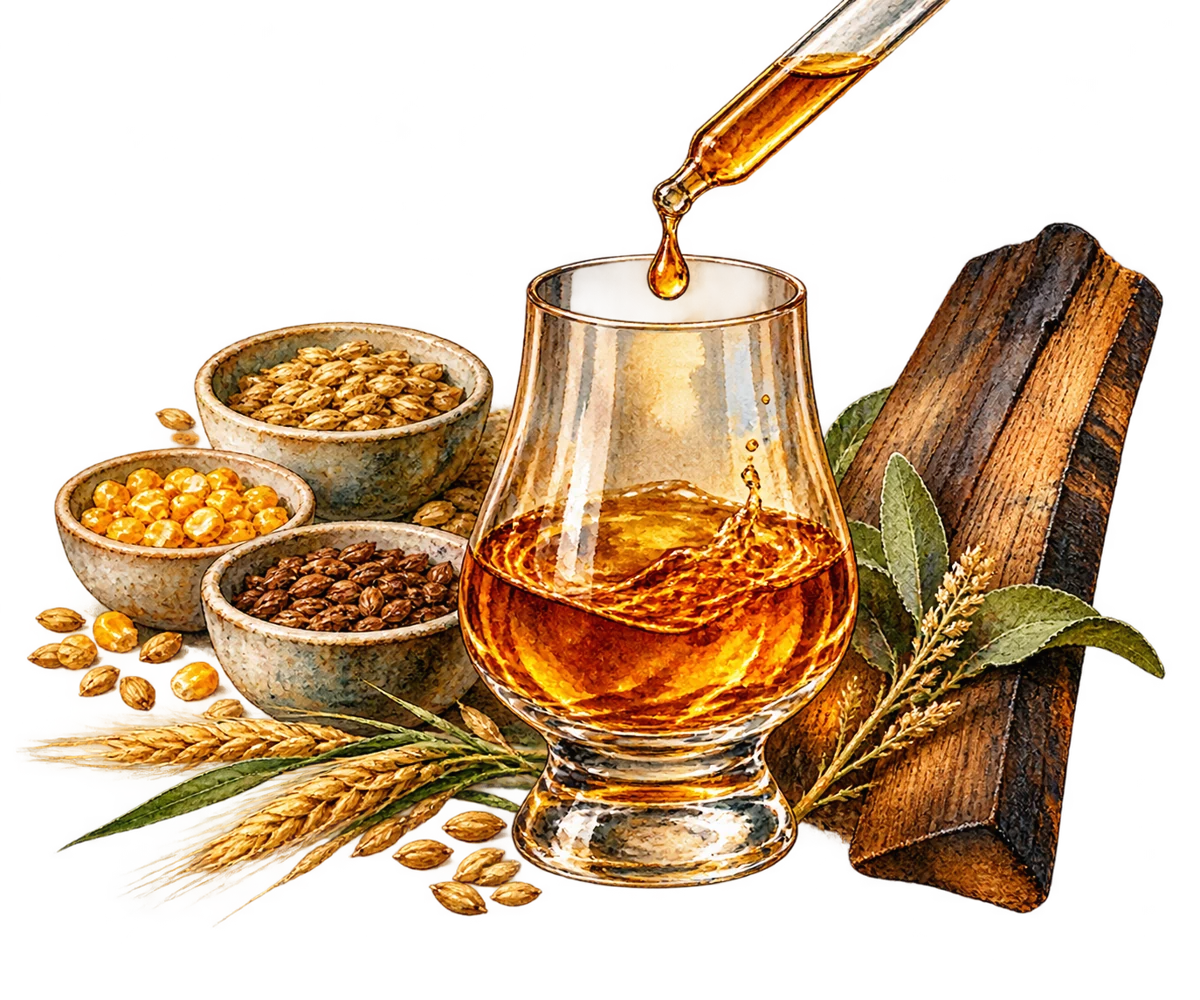
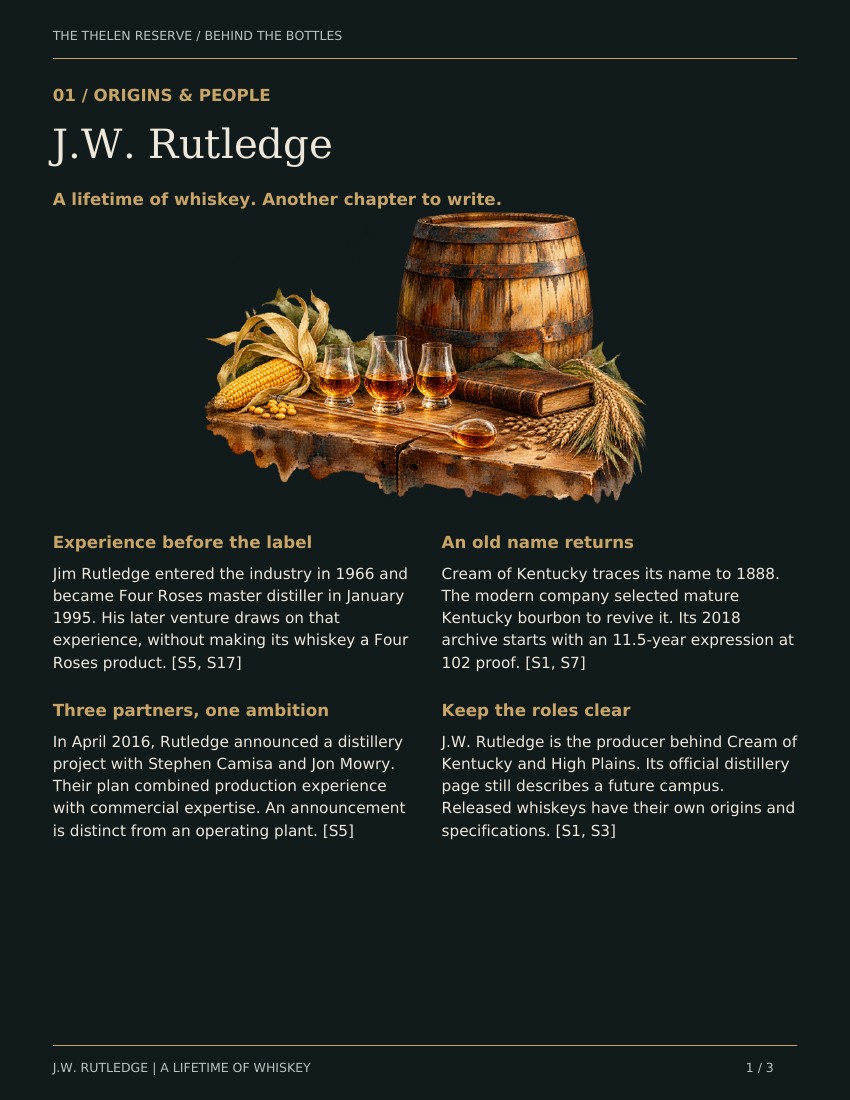
A master blender’s bench, barrel and grains, symbolic watercolor illustration
2016

Venture announced

1888

Cream of Kentucky heritage

Kentucky

Business home

Selection & blending

Released-whiskey roles

01 / Origins & people

A distiller’s experience, carried forward.

A career before a company

Jim Rutledge’s reputation was established long before the J.W. Rutledge venture. He entered the industry in 1966, working for Seagram, and eventually became Four Roses master distiller in January 1995. That experience included production management as well as research and operational work. It is the background to this producer, rather than evidence that its later bottles contain Four Roses whiskey.[5][17]

Three partners, a new ambition

In April 2016, Rutledge announced the project with Stephen Camisa and Jon Mowry. The partnership combined whiskey production experience with commercial expertise. Its ambition was a modern, efficient distillery near Louisville. The announcement marks the public beginning of the venture; it does not mark the first spirit flowing from a completed plant.[5]

A historic name returns to the glass

Cream of Kentucky gave the team a recognizable brand with a much older history. The company identifies itself as the brand’s owner and describes Rutledge’s selection of mature Kentucky bourbon for its revival. The connection is a modern stewardship of a historic label, not an uninterrupted distilling operation dating to the nineteenth century.[1]

Three founding partners represented by empty chairs, symbolic watercolor illustration
02 / The illustrated history

An old label. A continuing career.

A name begins in Cincinnati, symbolic watercolor illustration
1888

A name begins in Cincinnati

Cream of Kentucky traces its introduction to I. Trager & Company in Cincinnati. This is the heritage of the acquired brand, not the founding date of J.W. Rutledge. The distinction matters whenever a modern bottle carries an old date.[1][6]
Schenley carries the label forward, symbolic watercolor illustration
1933–1934

Schenley carries the label forward

The brand timeline places acquisition of the rights in 1933; its product histories describe reintroduction in 1934. Those are complementary events. The label went on to receive memorable advertising treatment during the Schenley era.[6][7]
A career starts with Seagram, symbolic watercolor illustration
1966

A career starts with Seagram

Rutledge begins an industry career that eventually spans research, bottling, engineering and distilling. His October 2026 interview returns to that early Louisville experience. The story begins with learning how whiskey businesses work, well before the later master-distiller title.[17]

The Four Roses responsibility, symbolic watercolor illustration
January 1995

The Four Roses responsibility

After returning to Kentucky in 1992, Rutledge becomes Kentucky area manager and Four Roses master distiller in January 1995. His subsequent work helps restore the bourbon’s reputation and domestic presence. Four Roses remains a separate company and a career chapter.[5][16]
Recognition from Kentucky, symbolic watercolor illustration
2001

Recognition from Kentucky

Rutledge joins the inaugural Kentucky Bourbon Hall of Fame class. Further honors follow, including Malt Advocate’s lifetime-achievement recognition in 2007. The honors recognize a body of work across the industry, rather than awards for the later J.W. Rutledge releases.[4]
Retirement becomes a turning point, symbolic watercolor illustration
September 2015

Retirement becomes a turning point

Four Roses announces an effective retirement date of September 1, 2015, with Brent Elliott taking the master-distiller role. Rutledge has spent nearly five decades in the business. Leaving the position opens space for another venture, rather than ending his involvement in whiskey.[4]

An independent project is announced, symbolic watercolor illustration
April 2016

An independent project is announced

Rutledge, Camisa and Mowry announce plans for a sustainable distillery near Louisville. Rye-recipe bourbon, wheated bourbon and straight rye are among their intentions. The proposed campus remains a plan in the currently accessible official material, not a verified operating visitor destination.[5][3]
Cream of Kentucky returns, symbolic watercolor illustration
2018

Cream of Kentucky returns

The brand’s own release archive identifies the modern relaunch with an 11.5-year Kentucky straight bourbon at 102 proof. Mature purchased whiskey makes the return possible without waiting for a new distillery’s first barrels to age. Heritage and contemporary selection meet in one bottle.[6][7][1]
The next mature bourbon release, symbolic watercolor illustration
2019

The next mature bourbon release

A 12.3-year expression follows in the brand’s release archive, again at 102 proof. Its unusually precise age distinguishes the edition. Age and strength belong to this release and should not be carried over to other Cream of Kentucky bottles.[8]
Two different routes into rye, symbolic watercolor illustration
2021

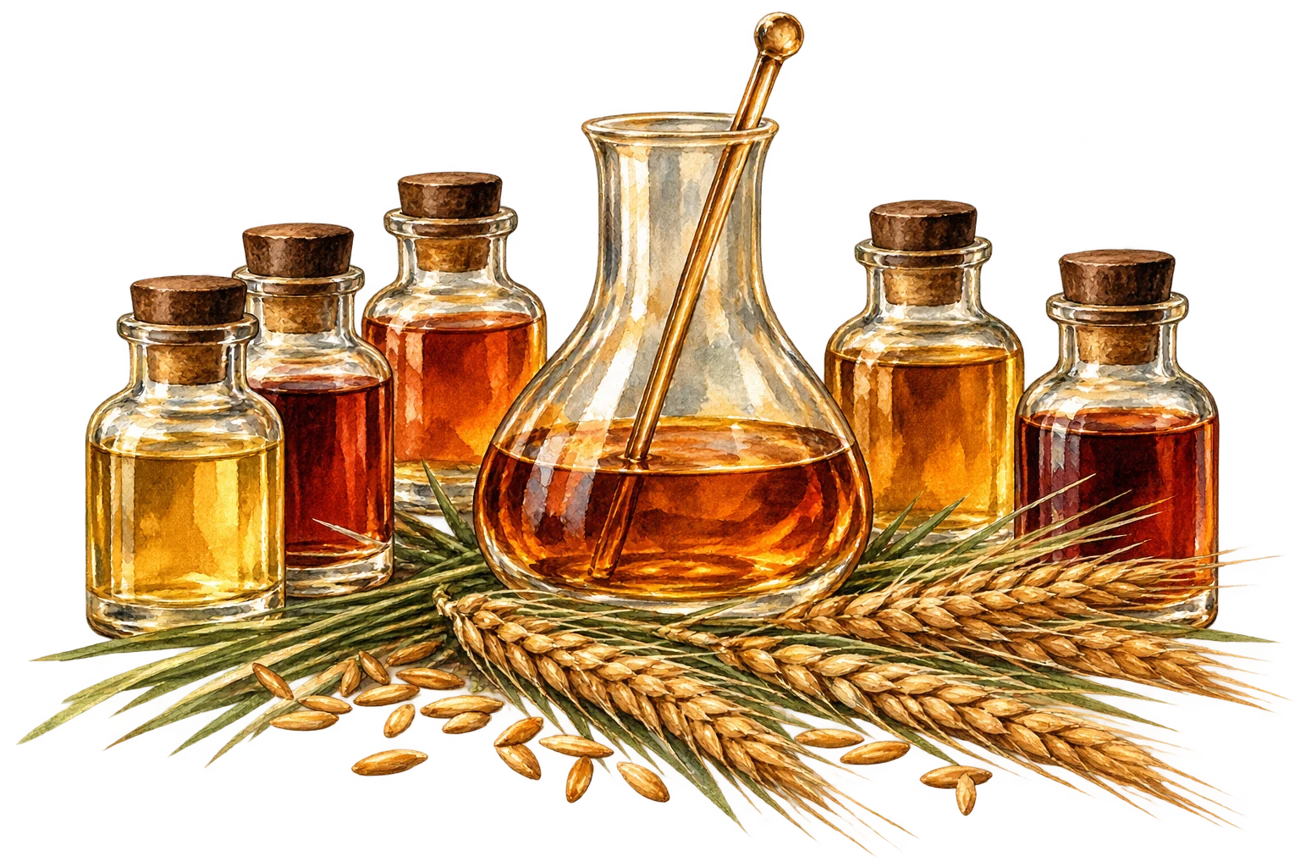
Two different routes into rye

High Plains arrives as a blend of five straight ryes from four states. Cream of Kentucky’s catalog also identifies a six-year bonded rye made at Kentucky Artisan. One is a multi-state blending project; the other has a specifically disclosed Kentucky origin.[9][10]
Bourbon and rye grow older, symbolic watercolor illustration
2023 editions

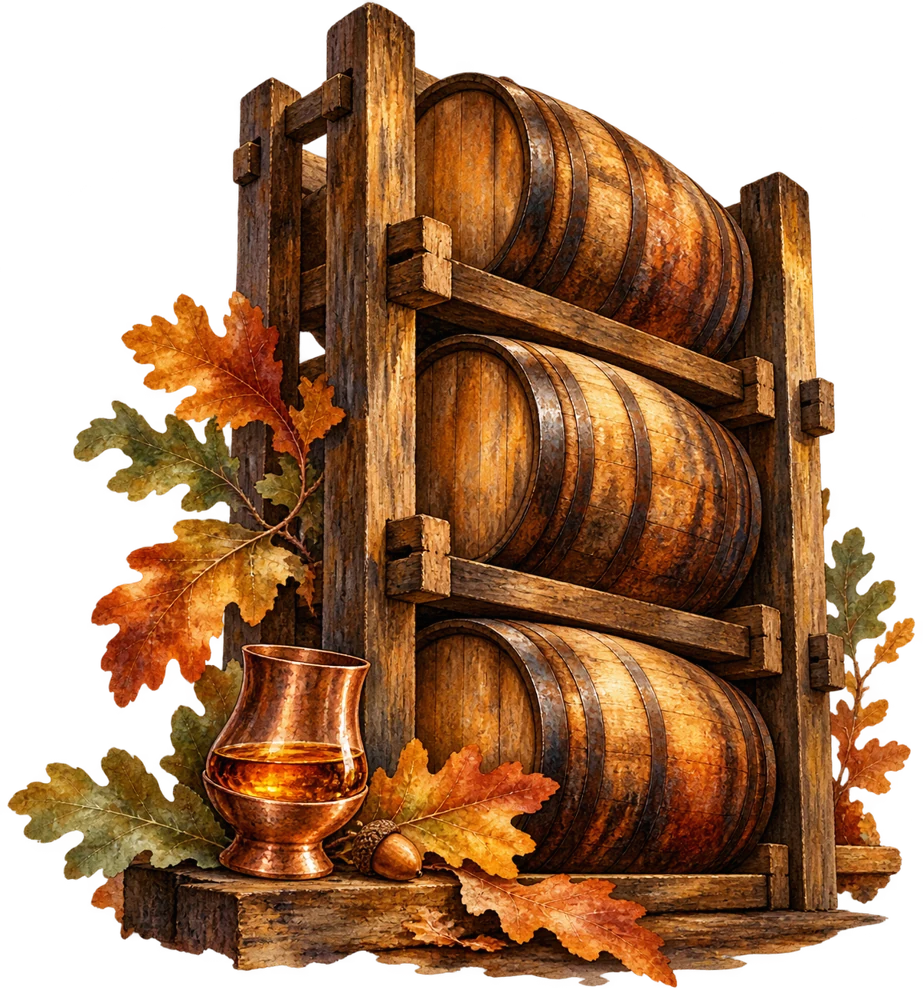
Bourbon and rye grow older

The official archive groups a 16-year bourbon at 116 proof and a 7.5-year single-barrel rye at 100 proof under 2023. They show two different ways age appears in the range. The archive year is preserved without inventing a more precise release date.[11][12]
A Small Batch chapter, symbolic watercolor illustration
Summer 2024

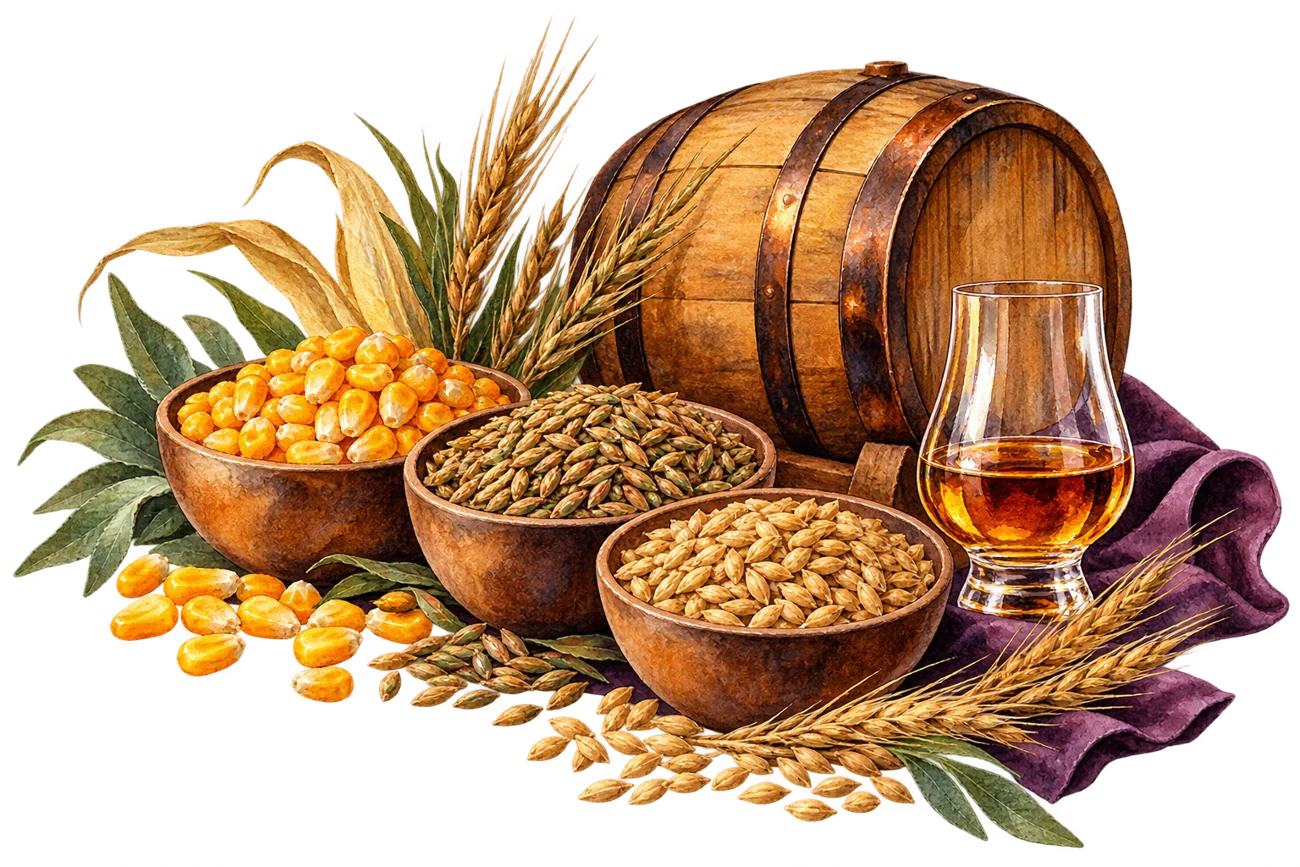
A Small Batch chapter

The official Summer 2024 sell sheet introduces a 100-proof Small Batch bourbon and describes distillation under Rutledge’s tutelage. This edition adds another expression of his involvement. The current Small Batch page carries no age statement, so an age is not supplied here.[15][13]
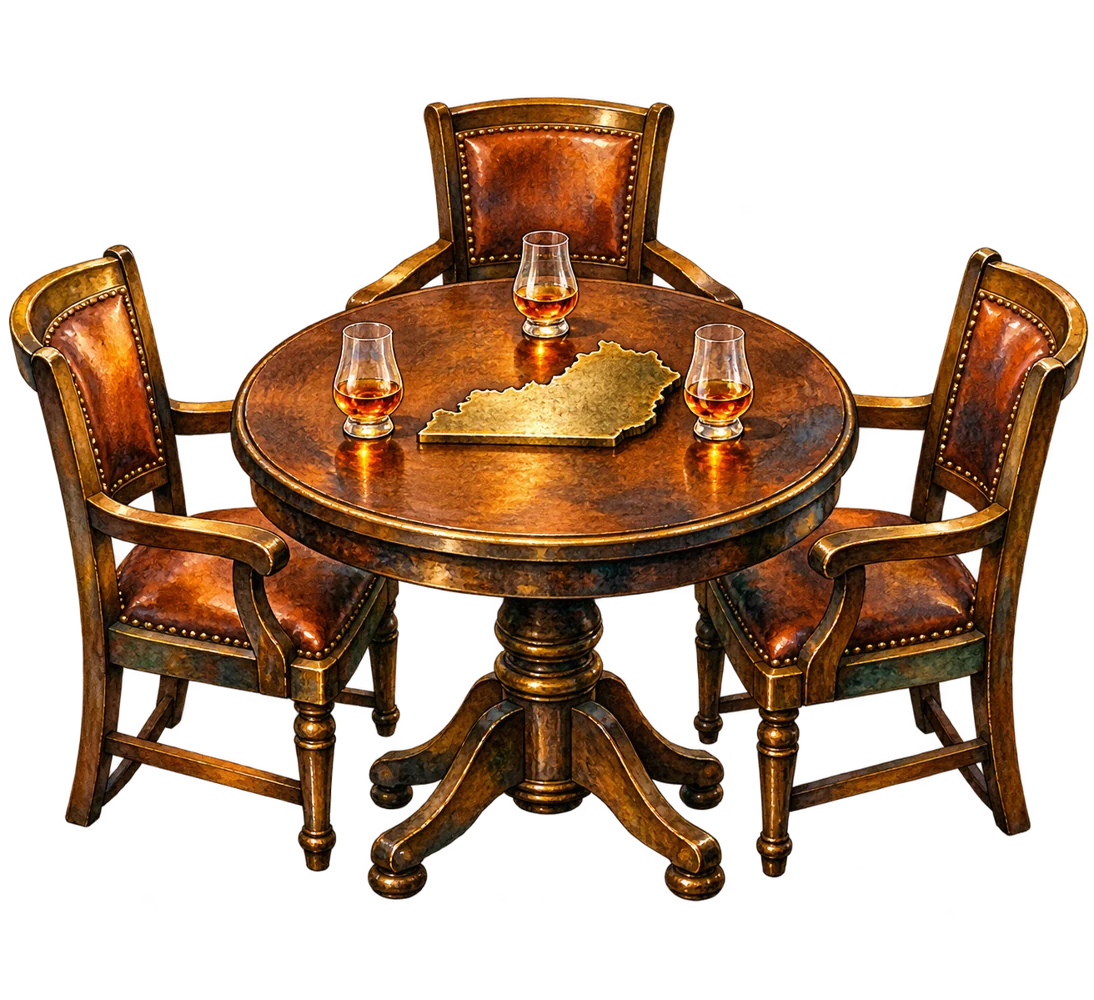
03 / Geography & roles

Different places, different roles.

Louisville: business home

Cream of Kentucky lists its headquarters at 1302 Clear Springs Trace in Louisville. A brand-office address identifies a business location. It does not establish a distillery, maturation site or publicly accessible tasting room.[20]

Crestwood: a disclosed rye origin

Kentucky Artisan Distillery in Crestwood is explicitly named for the 2021 bonded rye. The producer describes the grain growing, distillation, aging and bottling as part of that release’s estate story. This documented connection should not be generalized to every bourbon in the range.[10]

Four states: a blend’s geography

The High Plains launch names Indiana, Kentucky, Ohio and New York. A contemporary review identifies MGP, Kentucky Artisan, Middle West and New York Distilling as contributors. These are supply relationships reported for that blend, not facilities owned by J.W. Rutledge.[9][19]

Near Louisville: the proposed campus

The company’s distillery page remains headed Coming Soon. It describes production, tasting and event space, rickhouses and clean-energy ambitions. No verified opening date appears in that material. Illustrations of the project are therefore conceptual rather than portraits of a completed facility.[3]

04 / The whiskey family

The names behind the whiskey.

J.W. Rutledge → Cream of Kentucky

The company identifies Cream of Kentucky as its brand. The relationship combines a revived historic name with selected modern whiskey.[1]

J.W. Rutledge → High Plains

High Plains is a separate brand in the company portfolio. Its launch rye deliberately draws on more than one state and recipe.[1][9]

Jim Rutledge → Four Roses

Former master distiller, with an official departure in 2015. This is a professional-history connection, not evidence of current ownership or a common whiskey supply.[4]

Kentucky Artisan → a named edition

The 2021 Cream of Kentucky bonded rye has a disclosed Kentucky Artisan origin. That release-specific evidence is stronger than assumptions based on a bottler’s address.[10]

Schenley → historic stewardship

Schenley belongs to Cream of Kentucky’s earlier ownership chapter. Its role in a revived label’s history should not be mistaken for the modern company’s corporate parent.[6]

Consulting → a wider legacy

Rutledge’s October 2026 interview discusses work beyond his namesake company, including Castle & Key production and mentoring other makers. Those projects illustrate his reach; they are not automatically J.W. Rutledge brands.[17]

05 / Making & choosing

Selection is part of the craft.

Selection is consequential work

The early revival relied on Rutledge finding mature Kentucky bourbon he considered suitable for Cream of Kentucky. Choosing barrels creates a producer’s point of view even when the producer did not distill them. An undisclosed source should stay undisclosed, rather than being filled in with a familiar Kentucky distillery name.[18]

Five recipes can become one whiskey

High Plains brings five straight ryes together, with grain recipes ranging from 51% to 100% rye in the launch account. The components also use different yeasts. Blending here is an exercise in balancing distinct starting materials, rather than averaging five identical barrels.[9]

A rye with a particularly clear origin

The bonded release is described as 100% Rymin rye, six years old and 100 proof. Those details belong to the 2021 edition. They do not establish a universal recipe for the brand’s later rye releases.[10]

Separate intention from operating practice

Jim’s published message describes plans for rye and wheat as bourbon flavoring grains and an emphasis on straight whiskey. It also sets out opposition to added flavoring and used-cask finishing in the proposed range. This is a stated philosophy, not a verified technical specification for every sourced release.[2]

Read the edition before the recipe

The Summer 2024 Small Batch sell sheet gives a 72% corn, 18% rye and 10% malt recipe. That is useful evidence for the specified release. The same recipe cannot be assigned to the older 11.5-, 12.3- or 16-year bourbons without separate documentation.[15]

Whiskey blending bench, symbolic watercolor illustration
06 / The details worth knowing

The stories beyond the label.

An artist helped make a whiskey familiar

Cream of Kentucky’s history highlights Norman Rockwell’s advertising artwork during the brand’s earlier prominence. The connection explains why the label carries a visual heritage as well as a whiskey heritage. The illustrations in this profile are new symbolic interpretations, not reproductions of his advertisements.[6]

The label name shaped a sourcing decision

In a published interview, Rutledge explained the partners’ commitment to Kentucky whiskey for Cream of Kentucky. When suitable bourbon was difficult to secure, Kentucky rye offered another route. The story connects brand identity to a practical selection decision.[18]

A name can outlast a distillery plan

The proposed J.W. Rutledge campus emphasizes geothermal, solar and biomass ideas. The released brands have their own documented histories independent of that construction ambition. A bottle’s existence is therefore not proof that a namesake plant has opened.[3]

Still learning after sixty years

An October 2026 interview marked six decades since Rutledge entered the business. His recollections emphasize listening to operators and sharing knowledge with other makers. That continuing exchange provides a useful perspective on a producer whose strongest asset is accumulated experience.[17]

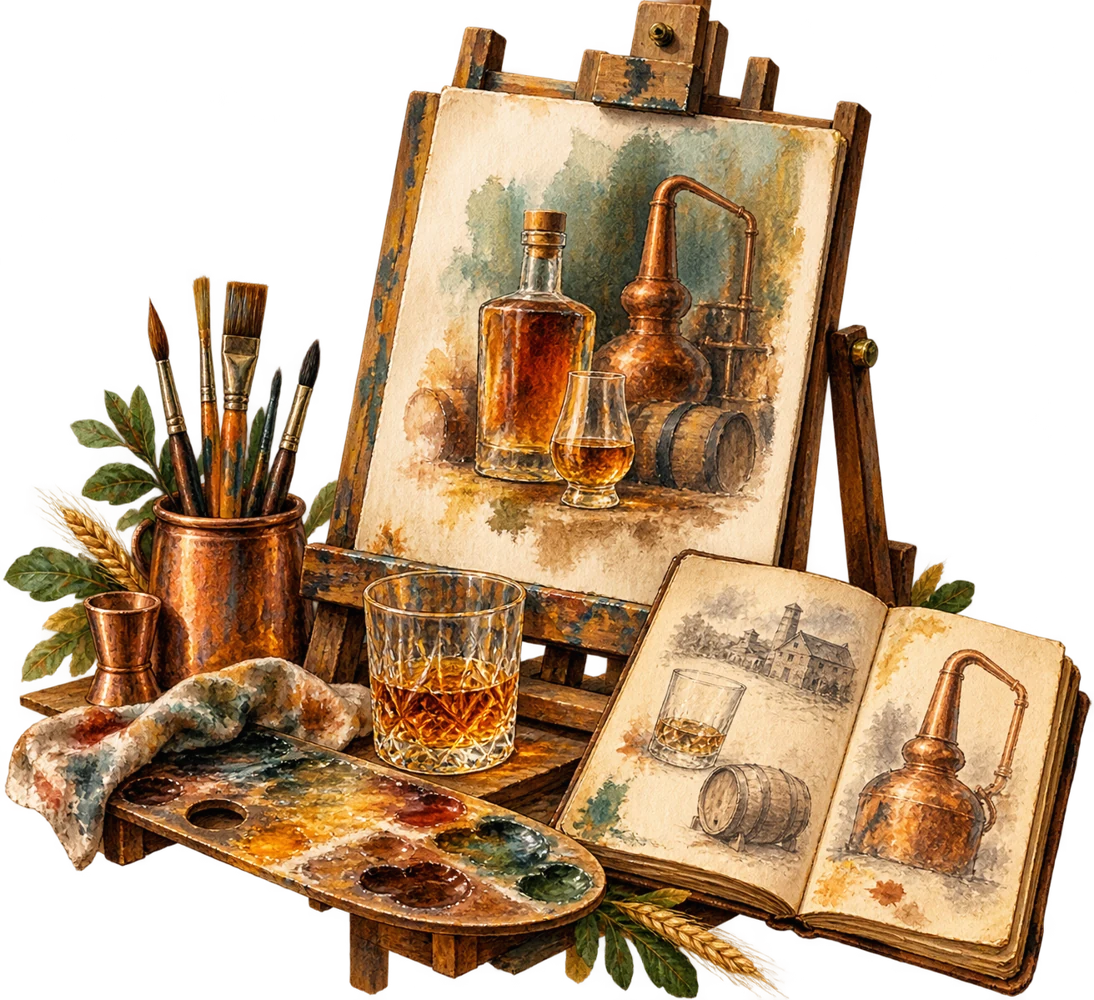
An illustrator’s easel and vintage advertising sketches, symbolic watercolor illustration
07 / Selected expressions

Different editions, distinct identities.

11.5 year bourbon • the modern return

The 2018 edition is archived as an 11.5-year single-barrel Kentucky straight bourbon at 102 proof. It anchors the revived brand’s chronology.[7]

12.3 year bourbon • a precise age

The 2019 archive specifies 12.3 years and 102 proof. It is a separate expression, not a shorthand for every older Cream of Kentucky bourbon.[8]

Bonded rye • a documented origin

The 2021 edition combines a six-year statement, 100 proof and the Kentucky Artisan estate-rye story. Its published specifications make it especially useful for understanding the producer’s sourcing relationships.[10]

High Plains rye • a broader map

The launch expression is 97 proof, or 48.5% ABV, and blends five straight ryes from four states. It offers a different structure from Cream of Kentucky’s Kentucky-specific identity.[9]

16 year bourbon • extended maturation

The brand lists this bourbon in its 2023 archive at 116 proof. The age and bottling strength identify a particular edition; they are not a permanent formula for the brand.[11]

Small Batch and Cask Strength • different choices

The current Small Batch page specifies 100 proof without an age statement. The Cask Strength page does not provide one fixed proof or age. Read each bottle’s label for the exact strength rather than assigning a number from another release.[13][14]

The useful way to follow J.W. Rutledge is to follow the work: who selected the whiskey, where a particular release was made, and what its label actually promises. A famous name opens the story. The liquid gives it substance.

08 / The Reserve connection

Continue from the story to the bottles.

J.W. Rutledge in The Thelen Reserve

2 physical bottle records connect this story to the collection. Each keeps its own proof, barrel, batch, pick and release details.

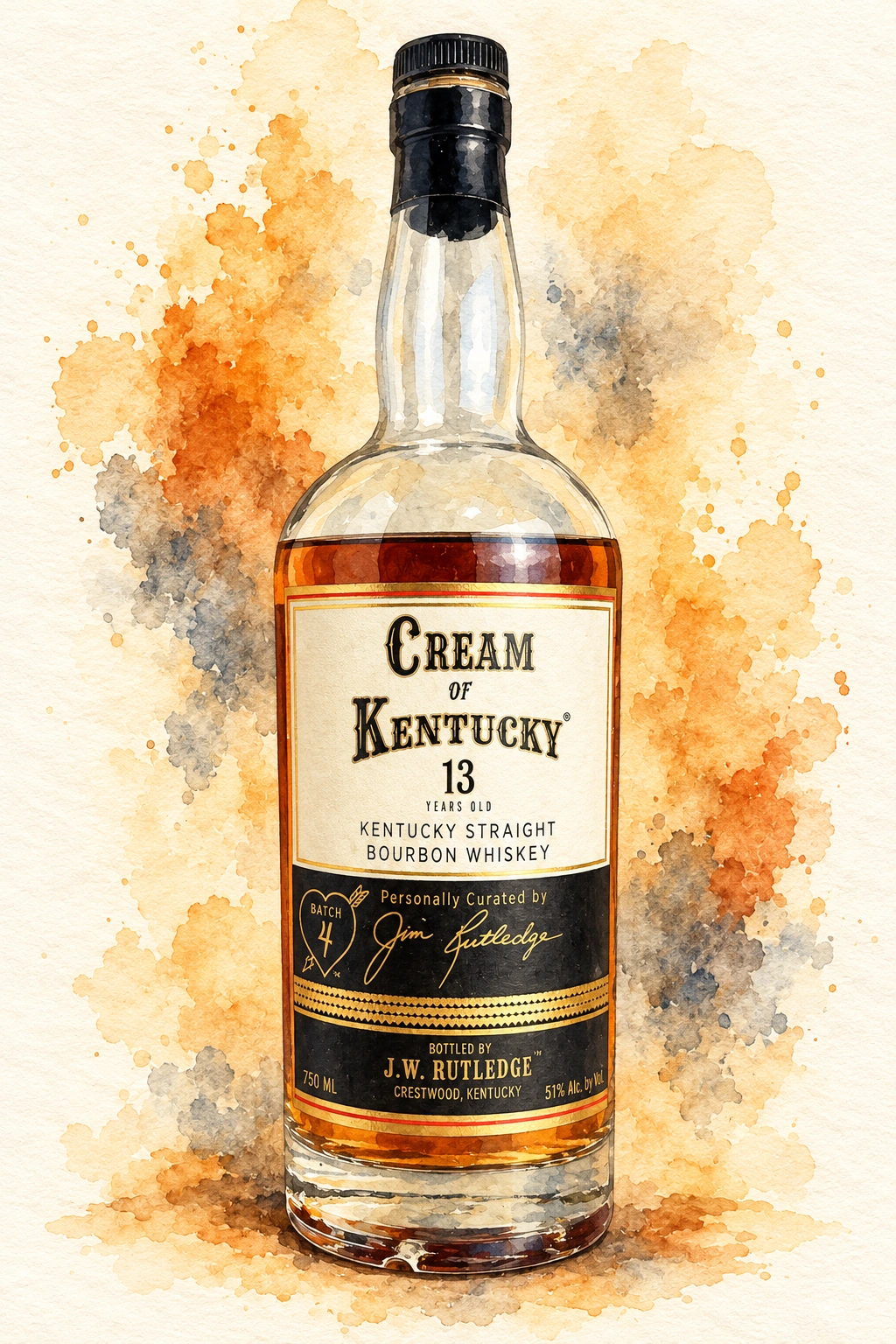
Approved watercolor of Cream Of Kentucky 13
From the collection

Cream Of Kentucky 13

W0156 · 102 proof · Batch 4

Batch 4. Inventory name and proof retained; bottle-label intake pending.

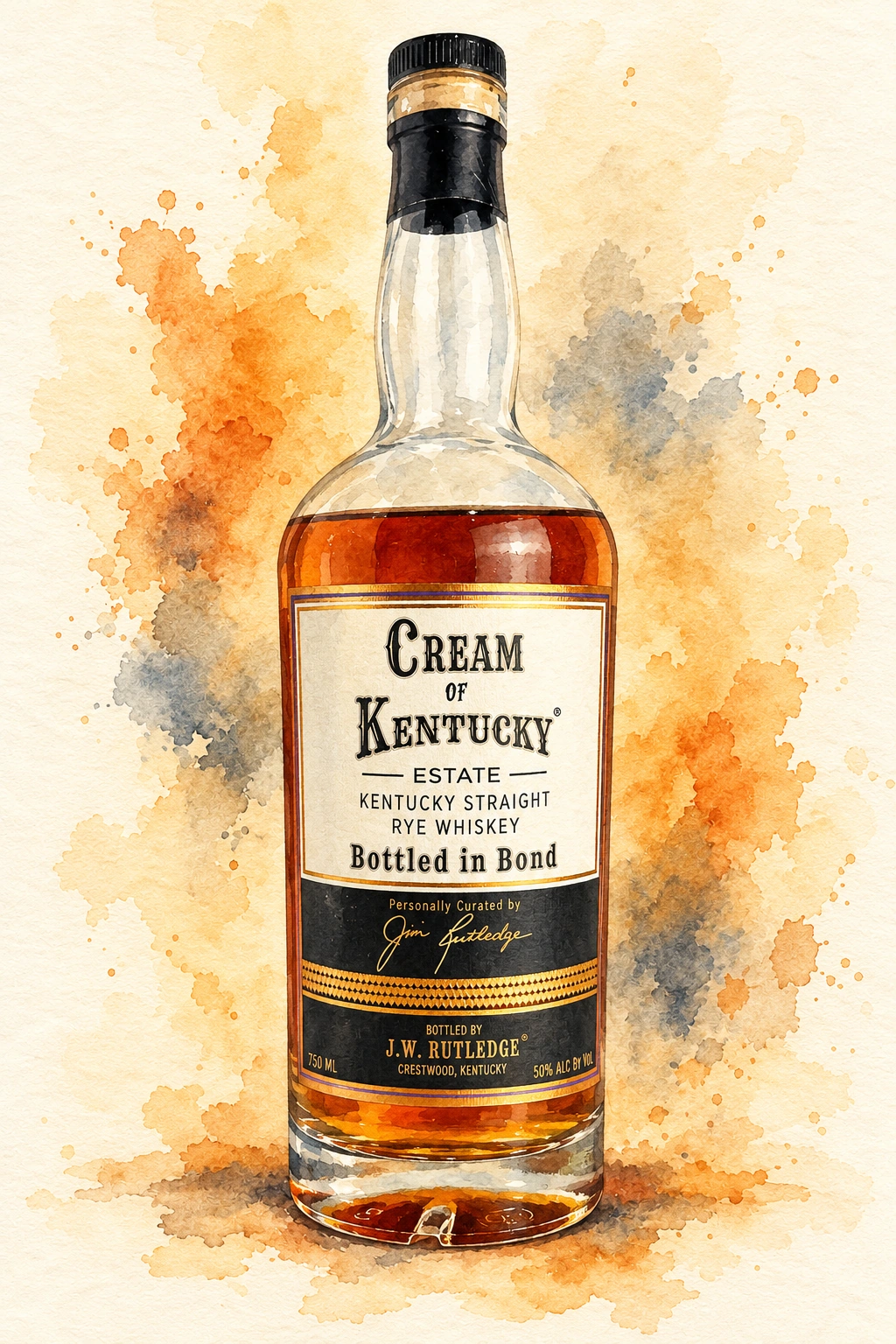
Approved watercolor of Cream of Kentucky Estate Bottled in Bond Rye
From the collection

Cream of Kentucky Estate Bottled in Bond Rye

W0157 · 100 proof

Exact edition and full label details await bottle-photo intake.

J.W. Rutledge illustrated guide cover
The illustrated companion

J.W. Rutledge, in three pages.

Origins and people, history and places, whiskey and stories. An illustrated companion with linked sources.

Sources & research notes

Research checked October 18, 2026. Brand heritage and company dates are separate. The history page has conflicting Prohibition-era prose; its 1933 rights date and product pages’ 1934 reintroduction are retained. The dated Four Roses announcement takes precedence over later August retirement summaries. Distillery opening is unverified: official page still says Coming Soon. Official release pages repeat some tasting copy, including a low-rye comment on a rye page; it is not used as recipe evidence. Product years describe the official archive, not a verified bottling date for every bottle. No Four Roses source for Cream of Kentucky is asserted. W0157’s exact rye edition awaits bottle-label intake; preserve the recorded name and proof. Neither collection record has an exact approved watercolor in Artwork A1:M1038. Website and guide approval remain pending. Illustrations are symbolic editorial interpretations, not documentary reconstructions.

  1. J.W. Rutledge: company brandsCream of Kentucky ownership, brand heritage, High Plains and proposed namesake range.
  2. Jim’s message: plans and philosophyCamisa/Mowry partnership and stated production intentions; future tense retained.
  3. The proposed distilleryComing-soon campus and proposed energy technologies; no operating date verified.
  4. Four Roses: July 2015 retirement announcementSeptember 1 effective retirement, career length, honors and succession.
  5. April 2016 announcement, reproduced by Bourbon & BanterDated company announcement; founders, career, 1995 appointment, planned facility.
  6. Cream of Kentucky: brand history1888, 1933 rights, Rockwell and 2018 revival. Narrative conflicts with its own chronology.
  7. Cream of Kentucky: 2018 11.5 year2018 edition, 11.5 years and 102 proof; 1934 reintroduction.
  8. Cream of Kentucky: 2019 12.3 year2019 edition, 12.3 years and 102 proof.
  9. High Plains: July 2021 launch announcementFive straight ryes, four states, different recipes/yeasts and 48.5% ABV; attributed launch material.
  10. Cream of Kentucky: bonded rye2021 edition, 100% Rymin, six years, 100 proof, 70 barrels, Kentucky Artisan origin.
  11. Cream of Kentucky: 16 year bourbonCataloged as 2023; 16 years and 116 proof. Not an inferred bottling date for other editions.
  12. Cream of Kentucky: 7.5 year rye2023 edition, 7.5 years, 100 proof. Tasting copy appears repeated; not used as recipe evidence.
  13. Cream of Kentucky: Small Batch100 proof, no age statement; current product page.
  14. Cream of Kentucky: Cask StrengthNo fixed proof or age stated on current page; brand reports 2025 competition recognition.
  15. Small Batch: Summer 2024 official sell sheet2024 edition, 100 proof, 72/18/10 recipe and Rutledge tutelage; visual PDF check required.
  16. Four Roses: modern chronologyKirin-era return, 2004 Single Barrel and 2006 Small Batch; former employer, not subsidiary.
  17. Rutledge reflects on sixty years: October 2026 interviewFirst-person career recollections, 1966 entry, mentorship and post-retirement consulting. Selected recollections attributed.
  18. Rye sourcing: interview with RutledgeFirst-person account of scarce bourbon stocks and Kentucky Artisan rye selection; historical account.
  19. High Plains: contemporary release reviewNames four component distilleries; secondary corroboration, not ownership evidence.
  20. Cream of Kentucky: release directoryBrand office address and current/historical range distinctions.
↑