TJ THELEN'S COLLECTION
The Thelen Reserve
Behind the Bottles / Cincinnati roots. Michigan craft.

Joseph Magnus

Last updated Last researched

An old bottle. A new blending language.

An old bottle can preserve more than whiskey. For Joseph Magnus, it became a question: could a modern blending team recover something of an earlier style? The answer grew into a house known for layered cask finishes, carefully assembled blends and unusually detailed batch stories. Its journey connects a Cincinnati merchant, a Washington revival and a Michigan production home. Those are different chapters, joined by the work of selecting and marrying whiskey.[1][4]

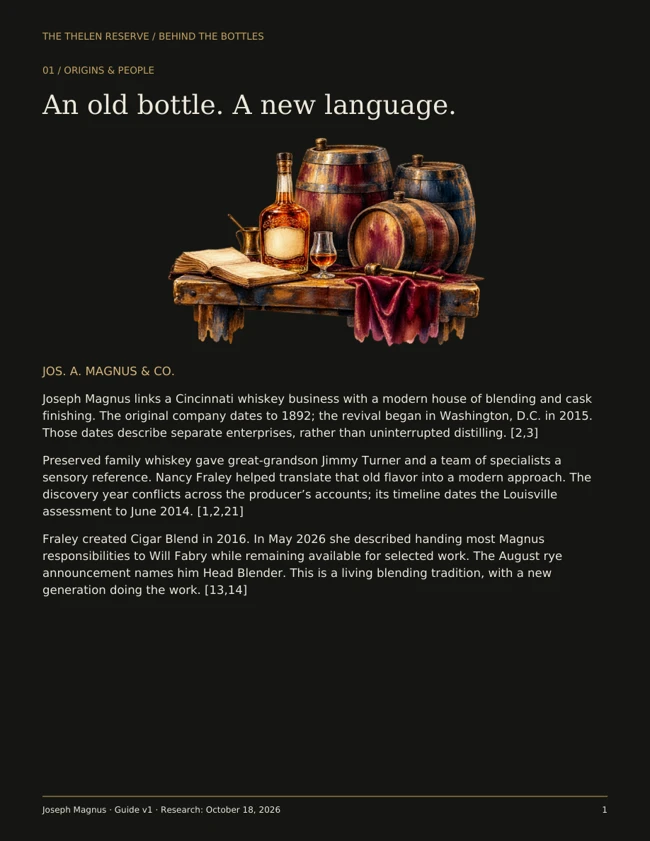
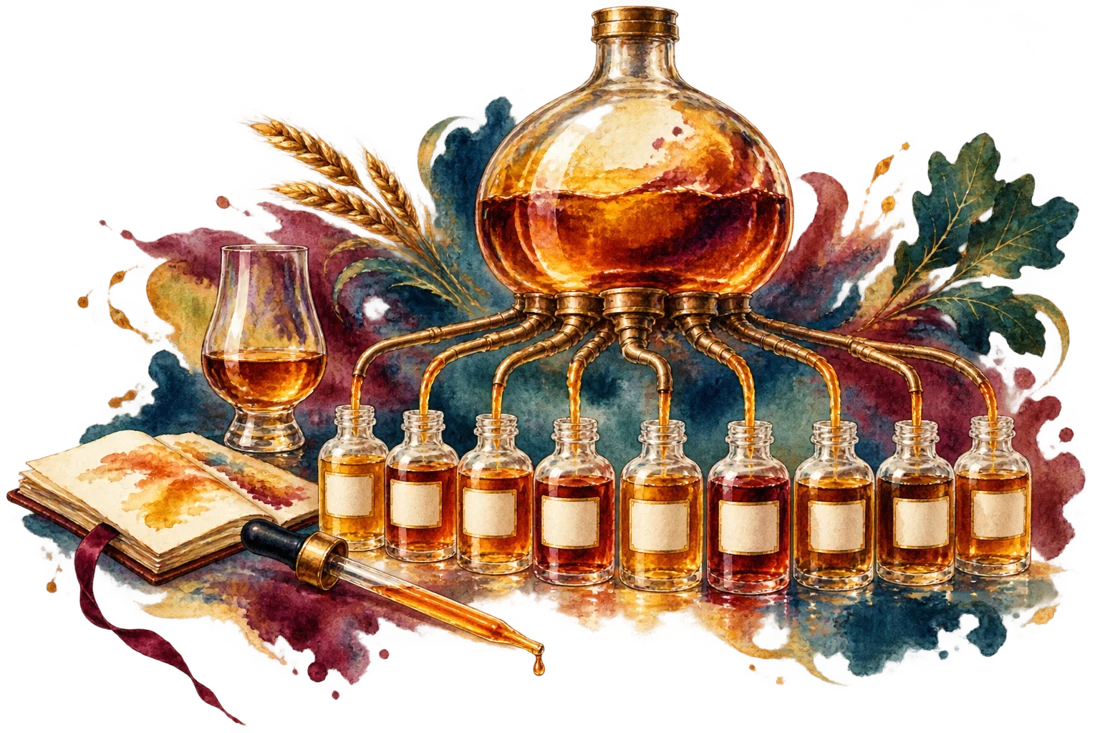
Symbolic watercolor of an antique bottle, blending bench and finishing casks
1892 / 2015

Original company / modern revival

Holland, Michigan

Current operating home

Blending & finishing

Producer identity

Researched Oct. 18, 2026

Website v1 · Guide v1

01 / Origins & people

A merchant, a rediscovery, a new generation.

The merchant behind the name

Joseph A. Magnus built his business in Cincinnati after earlier years in Georgia. The modern company honors an entrepreneur whose trade combined whiskey, distinctive bottles and energetic advertising. The historical identity is broader than a single still or mash recipe.[3]

A family artifact becomes a brief

Great-grandson Jimmy Turner helped bring preserved family whiskey to expert attention. Dave Scheurich, Nancy Fraley and Richard Wolf were among the specialists assembled to evaluate it. Their task was sensory interpretation, rather than a promise that a nineteenth-century recipe could be recovered intact.[1]

Nancy Fraley: a blending language

Fraley helped establish the modern house style and conceived Cigar Blend in 2016. Her experience with brandy gave the project a vocabulary of fruit, texture and long maturation. Bourbon Women recognized her as Master Blender of the Year in 2024.[19][13]

Will Fabry and the next chapter

The producer named Fabry CraftCo Head Distiller in April 2025 and Magnus Head Blender in its August 2026 rye announcement. In her May 2026 interview, Fraley described passing most Magnus responsibilities to him while remaining available for selected projects and advice. Older website biographies do not reflect that transition.[20][14][13]

02 / The illustrated history

A revival told in fourteen scenes.

The original business and modern revival have different dates and places. Every milestone has its own original symbolic watercolor.
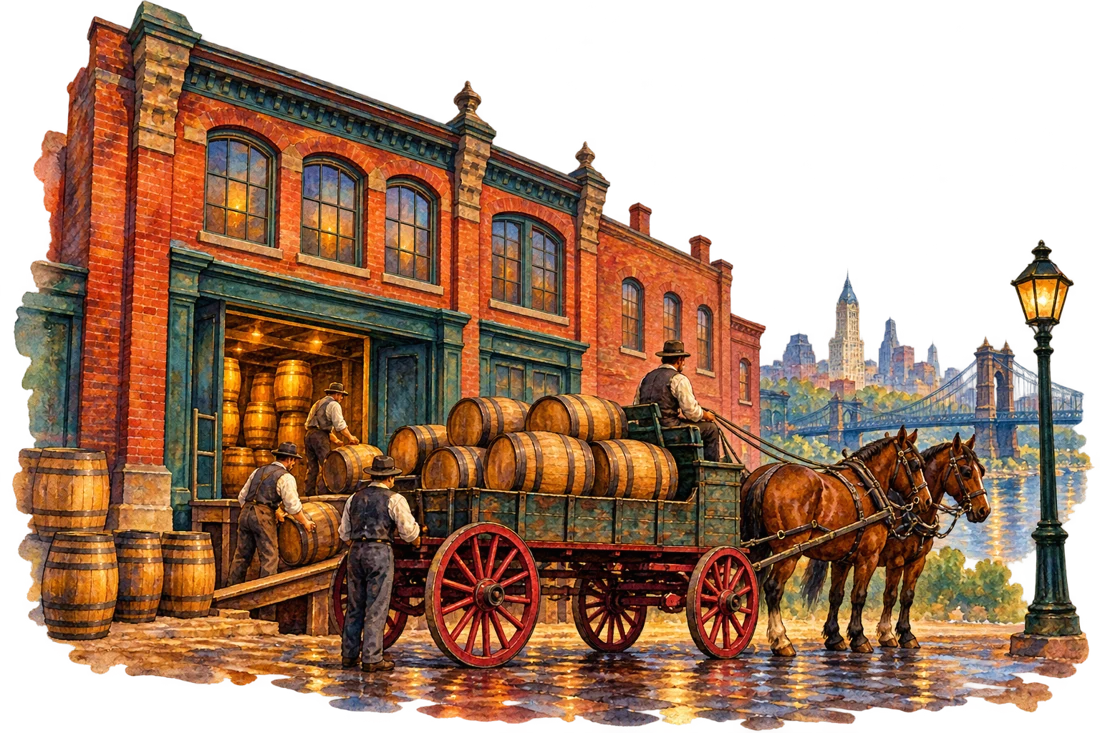
cincinnati, symbolic watercolor illustration
1892-1894

A Cincinnati business takes shape

The company dates its founding to 1892; its historical timeline separately records a Main Street liquor dealership in 1894. These describe business development, rather than a verified opening date for a particular still.[2]
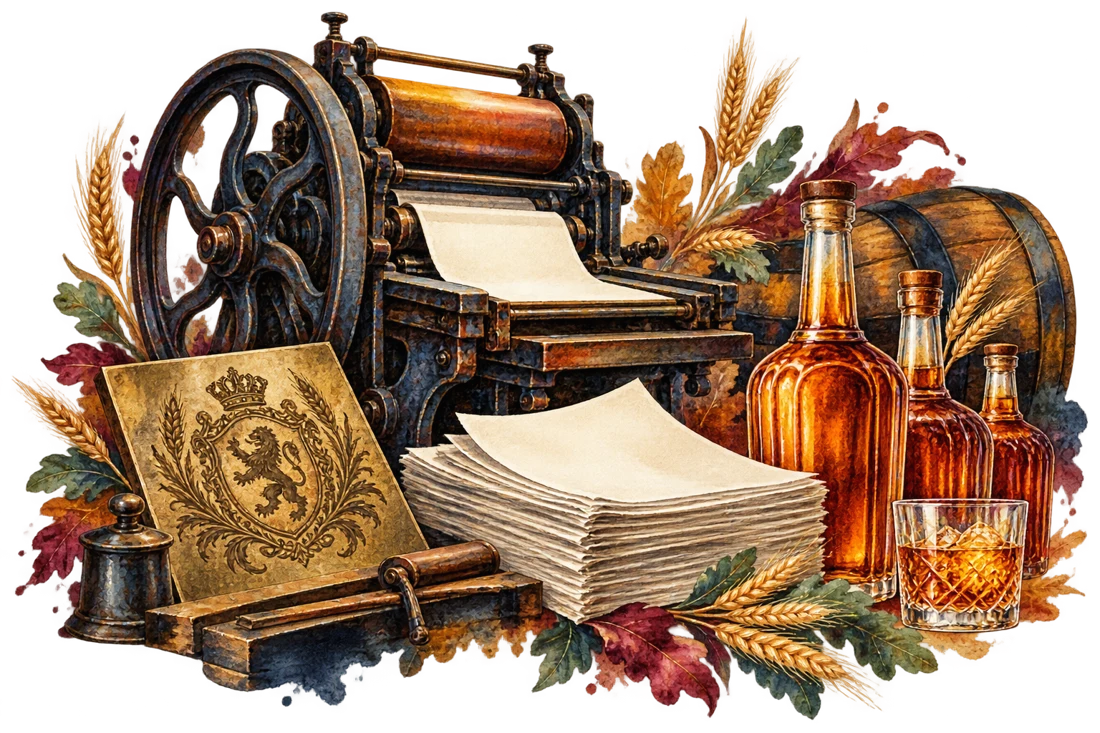
advertising, symbolic watercolor illustration
1903

Bottles become a calling card

The business moves to East Eighth Street. Embossed glass and a growing set of labels help distinguish its whiskey in a crowded trade. Murray Hill Club becomes the remembered flagship.[2]
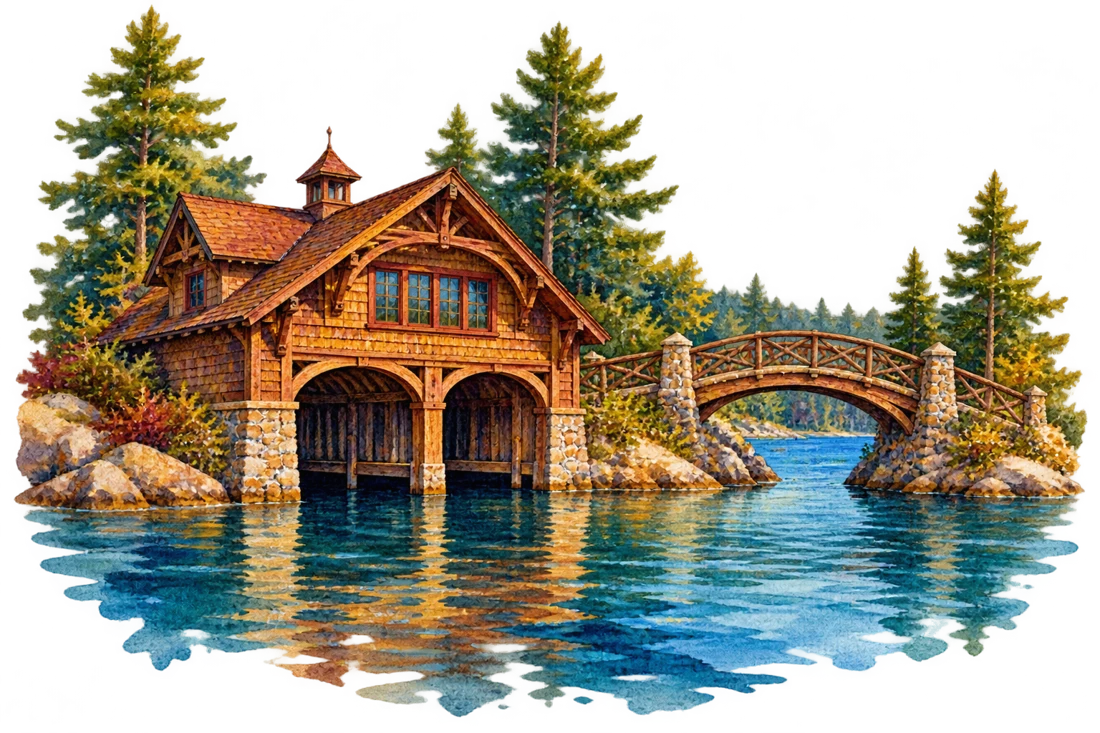
oden, symbolic watercolor illustration
1910s

A second home in Michigan

Oden becomes part of Magnus’s personal life. The producer records homes, a boathouse and a golf club, linking the whiskey merchant to northern Michigan well before the modern relocation.[3][2]
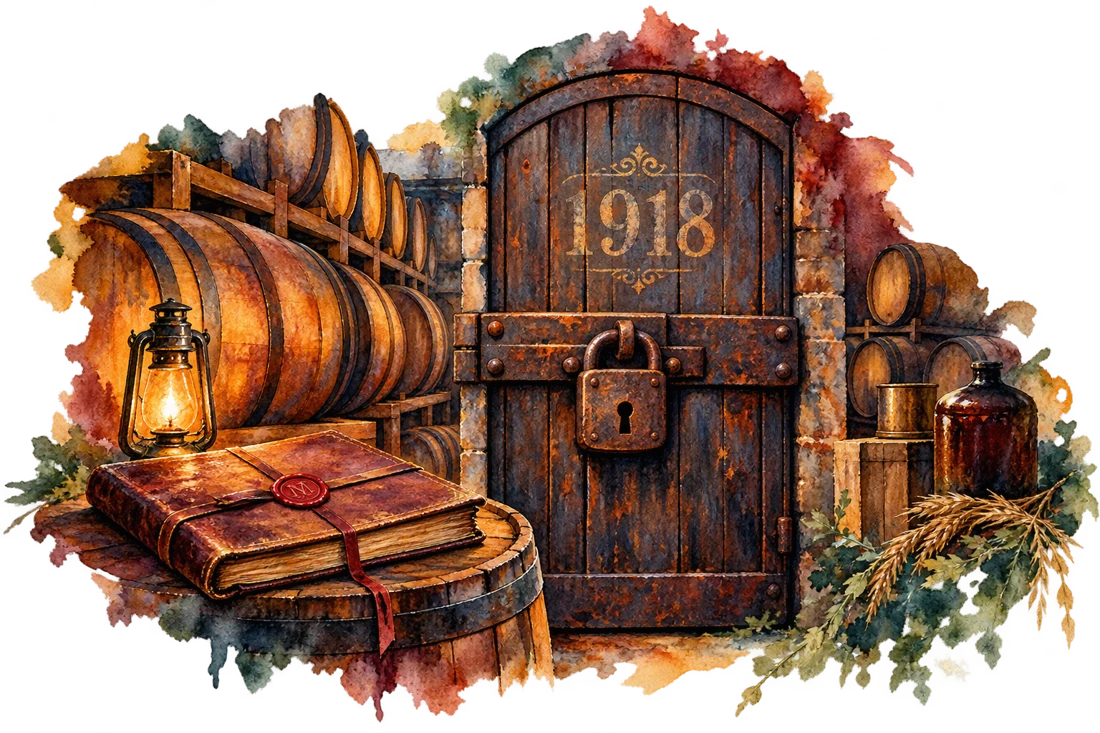
prohibition, symbolic watercolor illustration
1918

The original chapter closes

The producer dates the halt in whiskey sales to 1918, ahead of national Prohibition. The later revival is a new enterprise drawing on that legacy, rather than evidence of continuous operation.[1]
park, symbolic watercolor illustration
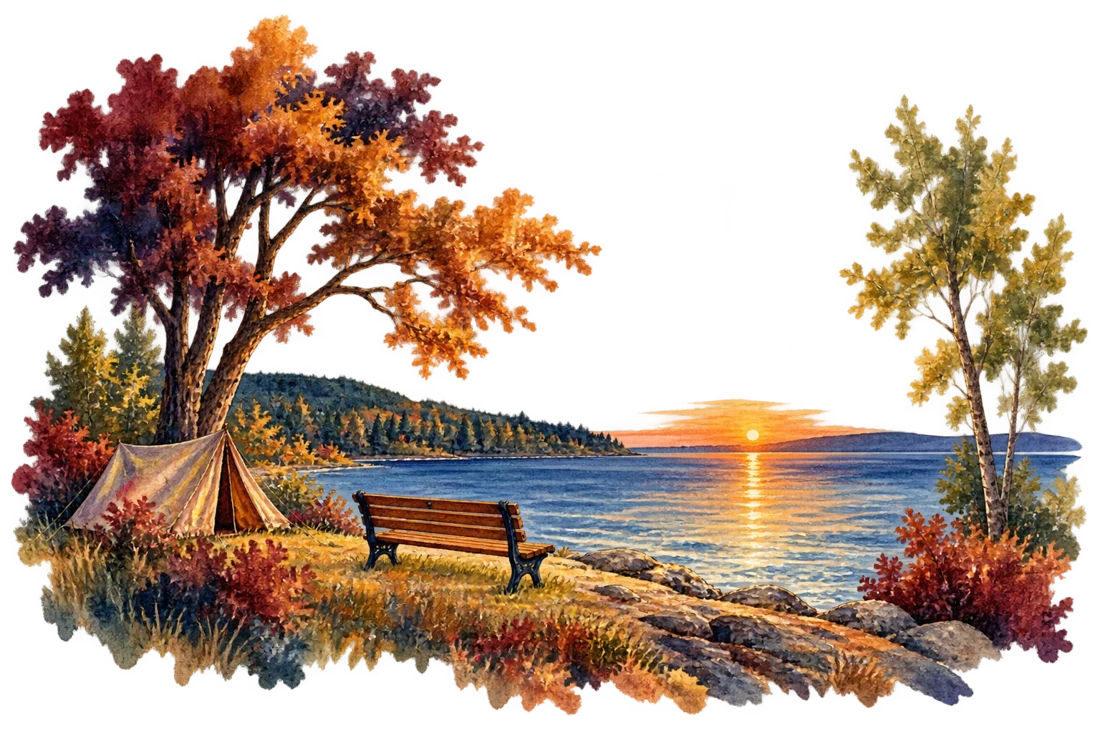
1921-1927

A legacy beyond a label

The company records a 1921 land donation for a Petoskey tourist camp. Magnus later dies in 1927. His Michigan story includes philanthropy as well as a connection useful to the revived brand.[2]
discovery, symbolic watercolor illustration
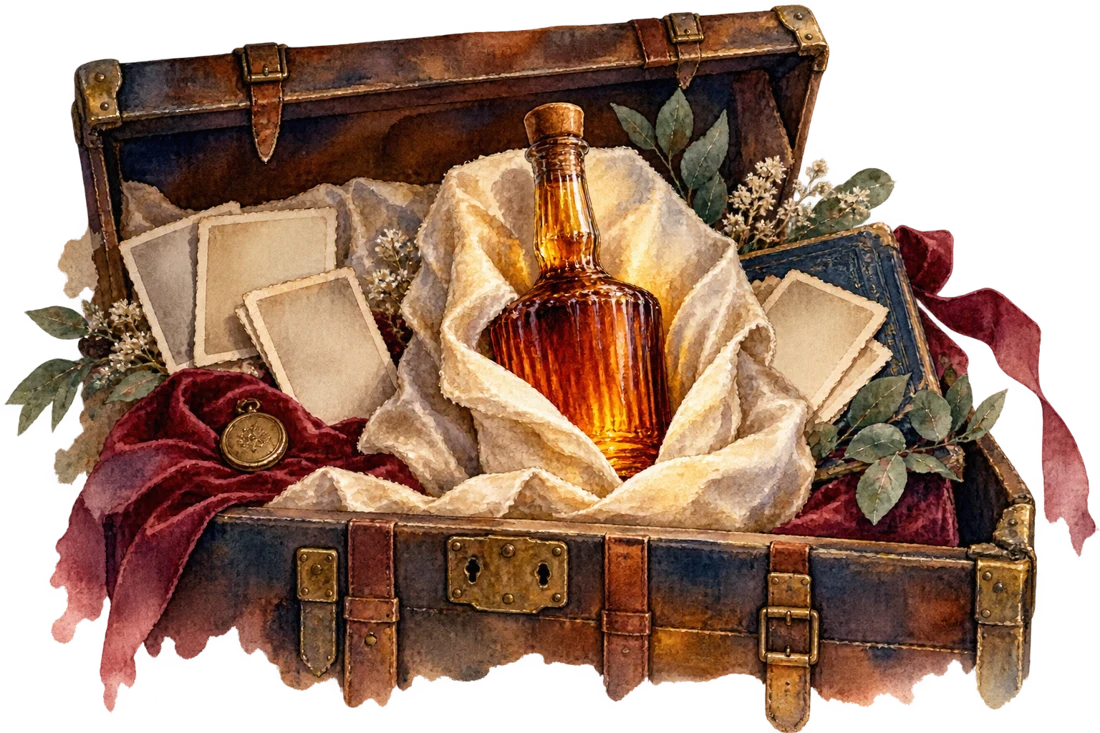
Discovery date disputed

A bottle survives in the family

The homepage says 2007; the company timeline and 2025 history say 2014. The preserved bottle is central to the revival, but the discovery year remains unresolved in these accounts.[21][3]
tasting, symbolic watercolor illustration
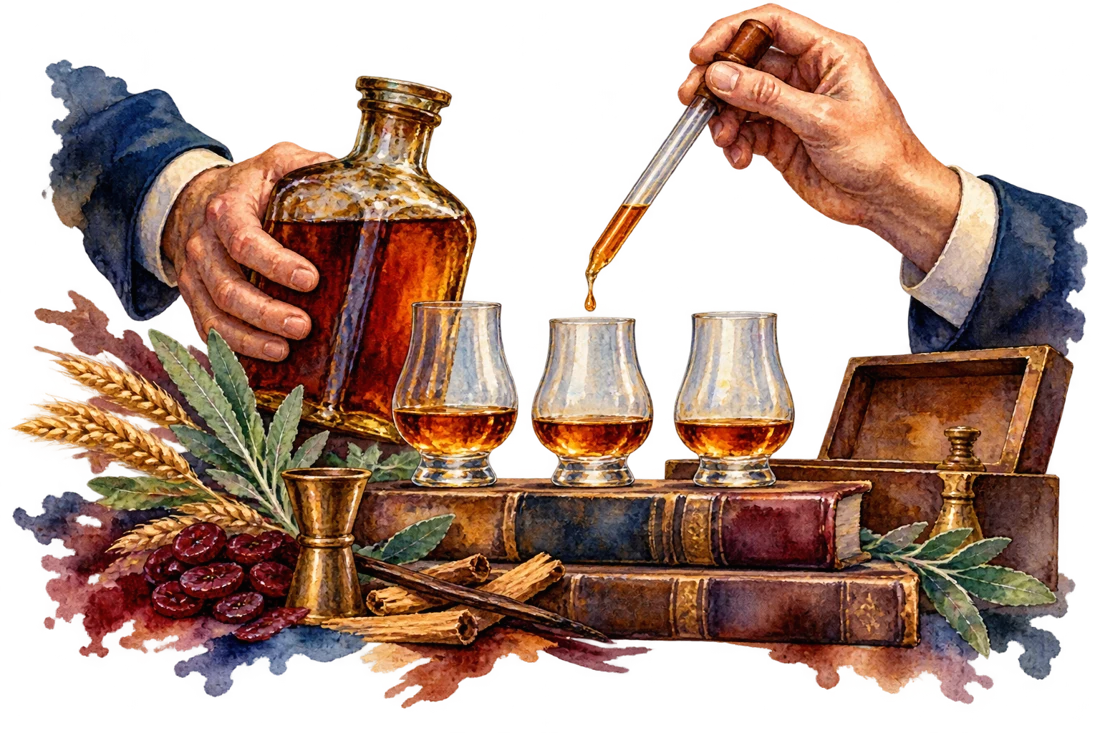
June 2014

A small sample opens a new possibility

The company timeline dates the opening and assessment of a family bottle in Louisville to June 2014. Expert evaluation gives the revival a concrete sensory reference.[2][1]
revival, symbolic watercolor illustration
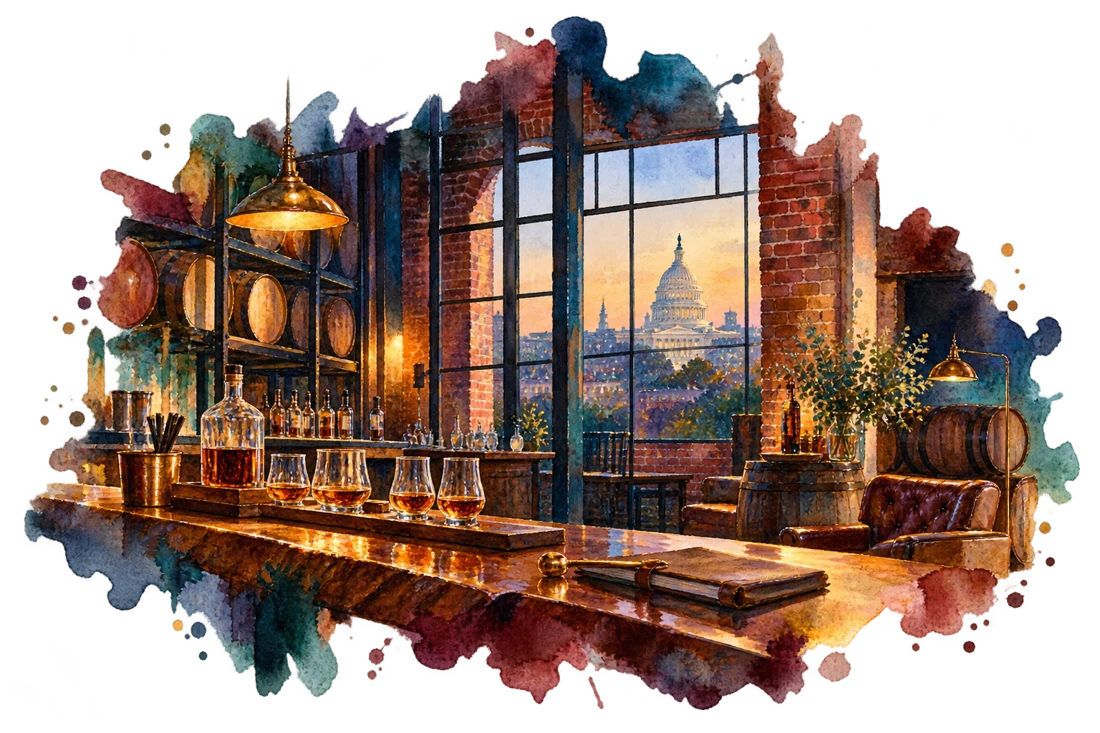
2015

Washington starts the modern story

Jos. A. Magnus & Co. is reestablished in Washington, D.C. Bourbon finishing and gin are part of the renewed business. Historical age references describe the early work, not every later bottle.[3]
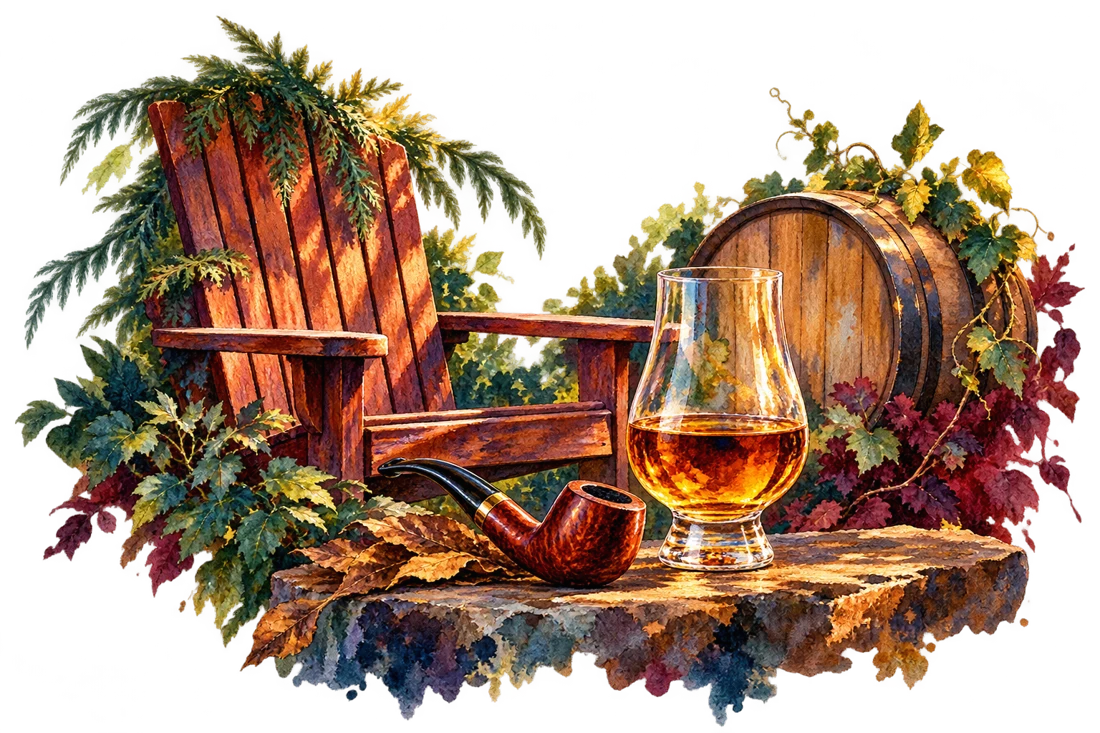
cigars, symbolic watercolor illustration
2016

Two different blending ideas emerge

Murray Hill Club returns, and Cigar Blend joins the range. The former explores bourbon blended with light whiskey; the latter builds a richer Armagnac-influenced path.[3][6][7]
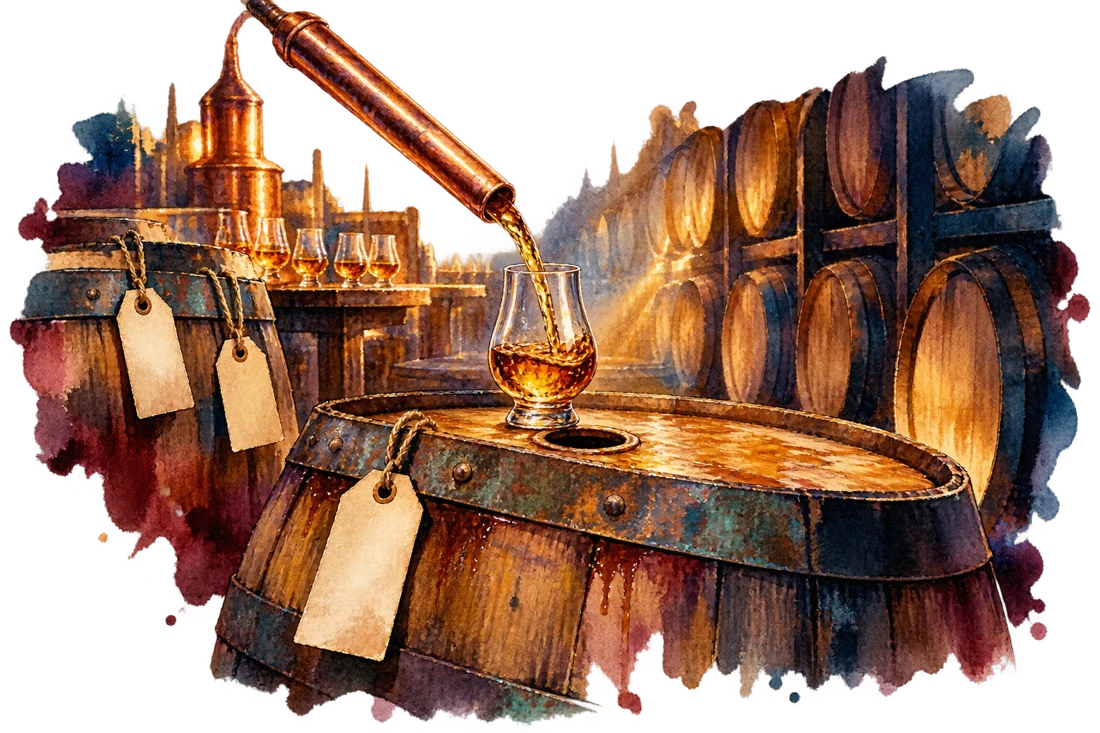
private, symbolic watercolor illustration
2017-2019

Selection reaches the barrel level

The private-barrel program starts in 2017. In 2019, the company describes nine 13-year selections for Ohio, each with its own character and proof. A brand name alone cannot identify a private release.[2][17]
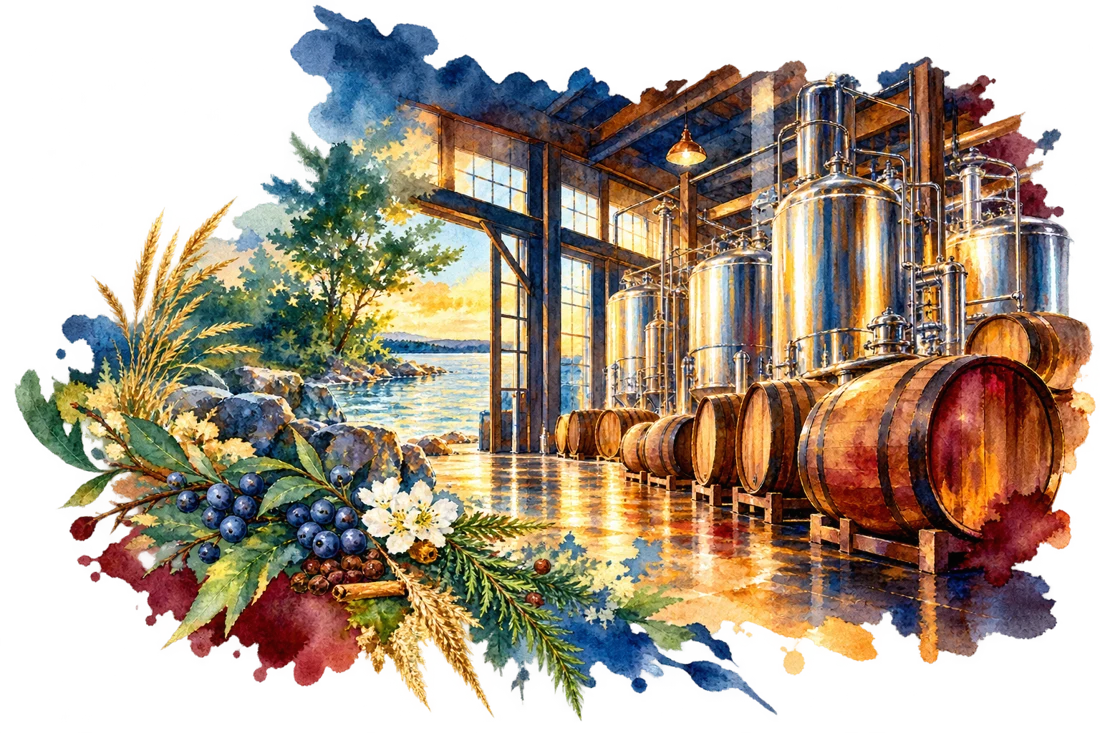
michigan, symbolic watercolor illustration
October 31, 2020

Operations move to Holland

The dated announcement makes the Michigan relocation effective October 31. The former D.C. premises pass to Bo & Ivy. It is an operational move, distinct from the original founder’s northern Michigan homes.[4]
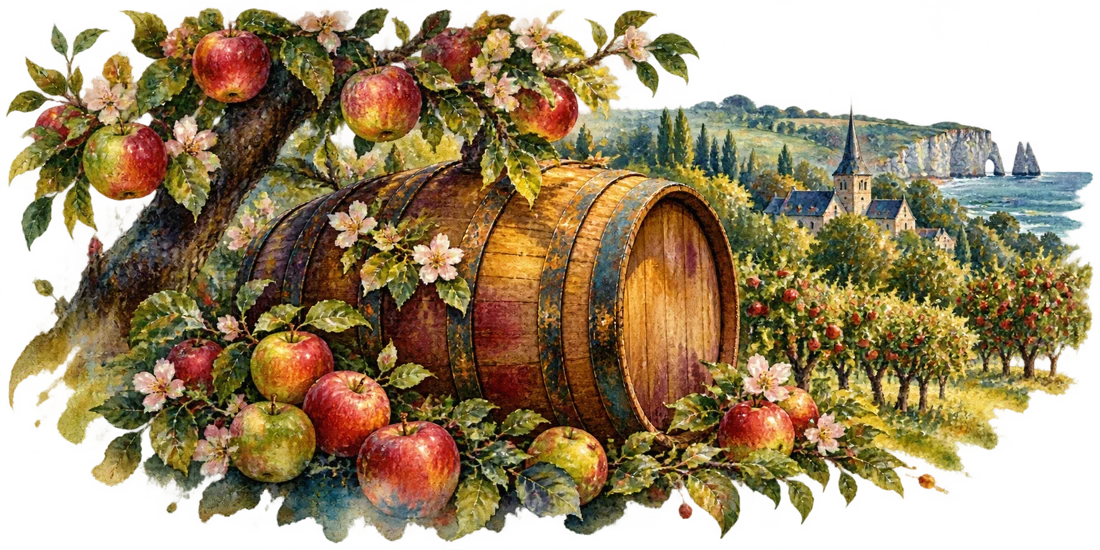
calvados, symbolic watercolor illustration
February 2024

Calvados reshapes a special release

Murray Hill Club Special Release 4 uses eight- and seventeen-year bourbons, then four months in fresh Calvados casks. Its published recipe belongs to that release, not the standard Murray Hill Club blend.[10]
mother, symbolic watercolor illustration
April 2025

The mother blend becomes the unit of notes

Fraley announces that tasting notes will cover each larger mother blend, then described as producing nine batches. Earlier six-cask groups show why one grouping size should not be imposed on every era.[11][12]
rye, symbolic watercolor illustration
August 2026

Rye returns to the portfolio

The new 95% rye release is announced at 113.44 proof and ten years, nine months old. Fabry connects it to the house’s spice-forward bourbon style. Those specifications describe the announced release.[14]
03 / Geography & roles

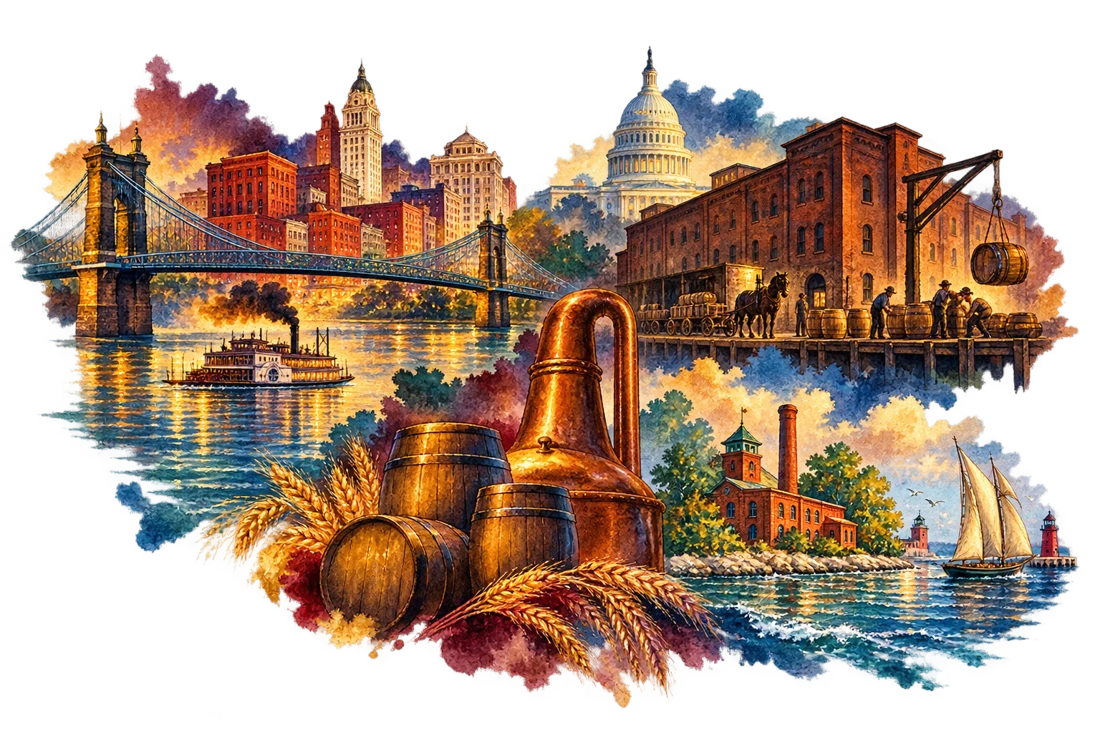
The places play different parts.

places, symbolic watercolor illustration

Cincinnati, Ohio

Historical commercial home

The original company’s trading and bottling history belongs here. The old label’s geography does not establish where a modern Magnus release was distilled.[3]

Washington, D.C.

Modern revival, 2015-2020

The city was the revived company’s first operating home. The 2020 announcement identifies the departure and replacement occupant, helping separate a remembered visitor location from today’s business.[4]

Holland, Michigan

Current production and visitor home

CraftCo Distillery & Social House at 184 120th Avenue offers the portfolio, tours and selected fill-your-own experiences. Blending, finishing and bottling are central to Magnus’s current public story; a visit here does not prove every base whiskey was distilled here.[16][21]

Oden and Petoskey, Michigan

Founder’s personal and civic history

Northern Michigan connects the original merchant to homes, recreation and a public land donation. It is a heritage relationship, geographically separate from Holland in western Michigan.[2]

Supplier distilleries

Release-specific whiskey origins

Published Cigar Blend notes identify MGP and Barton components for particular batches. Those disclosures are evidence for the named blends, not a universal source declaration for every bottle in the portfolio.[12]

04 / The whiskey family

One producer. Several ways to explore.

Jos. A. Magnus & Co.

Producer and revived brand

The permanent name links historical inspiration with the modern spirits business. The profile treats it as a producer, without presenting its entire portfolio as estate-distilled whiskey.[1][21]

CraftCo

Current portfolio

CraftCo presents Magnus with Coppercraft, Fox & Oden, Flying Ace and Thatcher’s. Shared portfolio membership is a business relationship, not proof that bottles share a recipe, distilling source or age.[15]

Joseph Magnus Bourbon

Core finished bourbon

Straight bourbon provides the foundation for a finish involving Oloroso, Pedro Ximénez and Cognac casks. The current product page specifies 100 proof.[5]

Murray Hill Club

Bourbon and light-whiskey blend

The published core recipe combines bourbon with light whiskey at 103 proof. Its Special Releases form a separate finishing series and should be read by numbered edition.[6][8]

Cigar Blend

Batch-led finished bourbon

Armagnac casks and the blend’s individual batch history shape this branch. Static product-page strengths and ages are not reliable substitutes for the actual batch’s label and notes.[7][22]

Rye and Vigilant gin

A wider spirits house

The August 2026 rye adds a distinct grain-led expression. Vigilant’s gin history shows that the revived business has never been only a bourbon label.[14][3]

05 / Making & choosing

Blending is the work. Finishing is a choice.

A sourced component, a mother blend and a finishing cask each tell a different part of the story. Follow the named release and the dated disclosure.

production, symbolic watercolor illustration

Start with the whiskey

Blending begins before finishing. Published batch notes distinguish ages, mash bills and supplier stocks. For batches 207-212, the company identifies an eighteen-barrel mother blend using MGP and Barton whiskey. That is a documented example, not a permanent house recipe.[12]

Three cask influences

The flagship’s finish uses Oloroso sherry, Pedro Ximénez sherry and Cognac casks. Different prior contents create different aromatic possibilities. The producer describes citrus, dark fruit and vanilla; these are its tasting observations, not ingredients added to the whiskey.[5]

Light whiskey has a specific role

Murray Hill Club’s published formulation combines eighteen- and eleven-year bourbon with nine-year light whiskey. Those component descriptions do not turn the entire blend into an eighteen-year whiskey, and are not retrospectively assigned to unidentified older batches.[6]

A mother blend, then finishing casks

A larger blend can be divided among individual finishing barrels. The 2024 notes describe eighteen bourbon barrels going into six 300-liter Armagnac casks. Shared parent liquid can still yield different final batches.[12]

Read the date with the process

The April 2025 letter describes nine batches per mother blend going forward. The 2022 notes discuss another grouping. Both can be true for their periods; batch numbers and dated disclosures matter more than a simplified universal diagram.[11][22]

A finish can change the whole release

Special Release 3 used malt and cider casks; number 4 used Calvados. These are separate finishing choices. The series demonstrates how a familiar name can contain materially different whiskey from one edition to another.[9][10]

06 / The details worth knowing

The stories behind the specifications.

The old bottle is a reference, not a time machine

The company presents the surviving family whiskey as inspiration for reconstructing an earlier flavor. That is a compelling creative brief. It does not establish an exact recovered mash bill or uninterrupted production since 1892.[1]

Cigar Blend began as an idea about pairing

Fraley traces the concept to a quiet evening with a pipe in her redwood garden. Her brandy background offered a way to translate that aromatic experience into whiskey. The name describes a pairing intention, not tobacco added to the bottle.[11][13]

The batch names became a conversation

Names in the 207-212 series came from a community contest. The accompanying notes tie imaginative titles to a documented shared blend, making the batch archive useful for both storytelling and technical comparison.[12]

Awards need their categories

The producer’s 2025 report separates medals from ADI category and class awards. Cigar Blend received bottled-and-blended whiskey recognition; the Calvados release also earned a specific category award. Those distinctions are more useful than calling every result an overall championship.[18]

Continuity includes a handoff

Fraley’s 2026 interview describes a planned transfer to Fabry and a lighter consulting role. That allows the profile to honor her influence while recognizing the people doing the current work. A historical title should not freeze a living company in the past.[13]

The visitor experience makes selection tangible

CraftCo’s current Social House page includes a Magnus fill-your-own expression finished through PX and Armagnac casks. Availability is a dated visitor offering, separate from the regular national range.[16]

07 / Selected expressions

A tasting path through the producer.

Joseph Magnus Bourbon

The clearest introduction to the house’s triple-cask approach: 100 proof, with Oloroso, PX and Cognac finishing. It is useful for understanding the producer’s balance of familiar bourbon and a darker fruit-led cask influence.[5]

Murray Hill Club

At 103 proof, the standard blend brings bourbon and light whiskey together. The producer’s notes emphasize honeyed sweetness, toffee, spice and a toasted finish. Keep it distinct from numbered Special Releases.[6]

Cigar Blend Bourbon

An Armagnac-finished branch with a substantial batch archive. Read the exact proof and release notes; the static page’s 100.7 proof is not a specification for every batch. Tobacco-like tasting language describes aroma, not an added ingredient.[7][22]

Murray Hill Club Special Releases

Numbers 1 and 2 used Pineau des Charentes casks. Number 3 took a malt-and-cider route; number 4 used Calvados. Follow the edition to understand the wood history and components rather than treating this as one fixed finish.[8][9][10]

10 Year Cask Strength Rye

The August 2026 announcement specifies 95% rye, 113.44 proof and ten years, nine months at bottling. This is the newest distinct whiskey direction verified for this research date, with Fabry named Head Blender.[14]

08 / The Reserve connection

Continue from the story to the bottles.

Joseph Magnus in The Thelen Reserve

2 physical bottle records connect this story to the collection. Each keeps its own proof, barrel, batch, pick and release details.

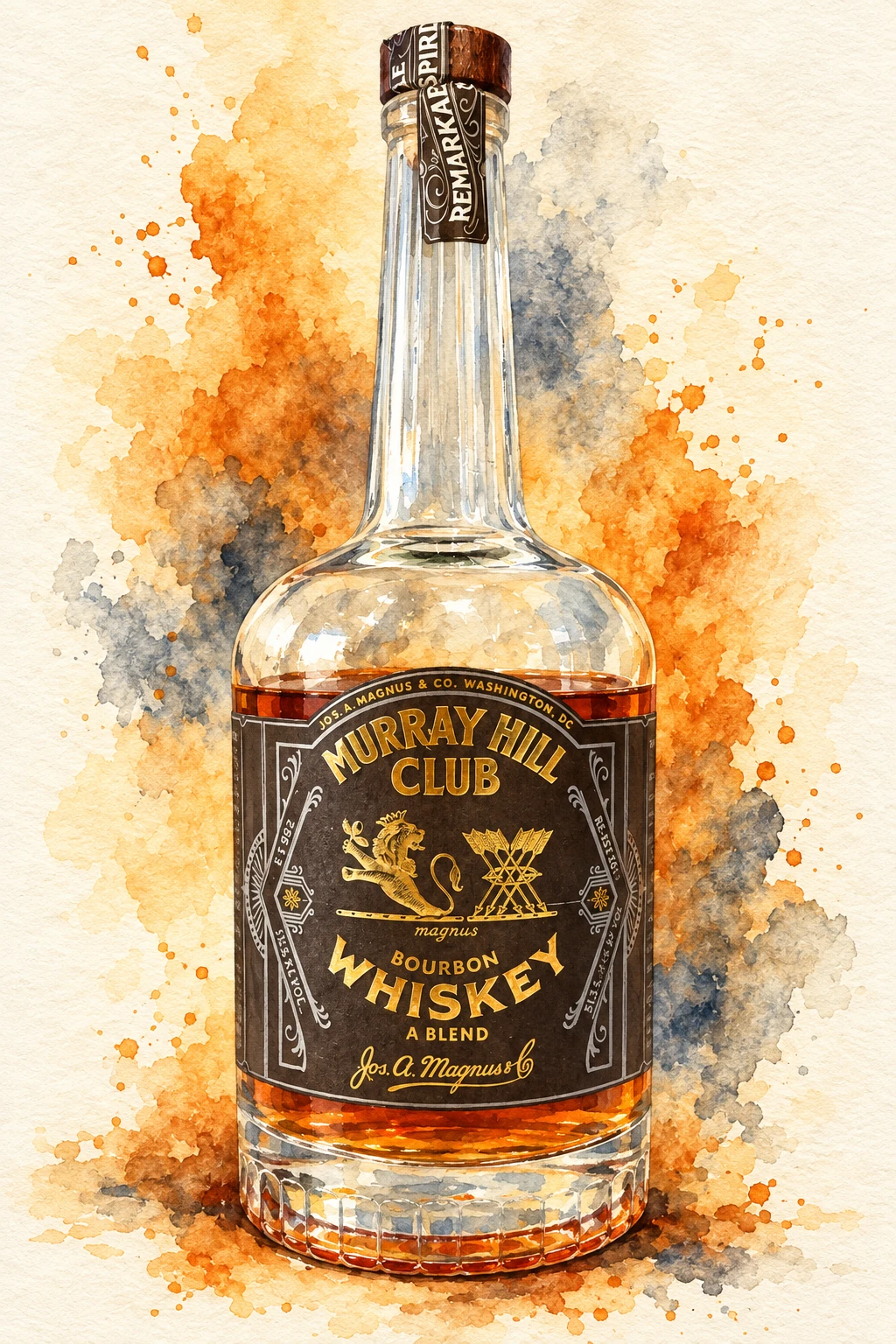
Approved watercolor of Joseph Magnus Murray Hill Club

Joseph Magnus Murray Hill Club

W0277 · 103 proof · Bottle 1636 · Batch 18

Batch 18 · Bottle 1636 · Bourbon whiskey, a blend

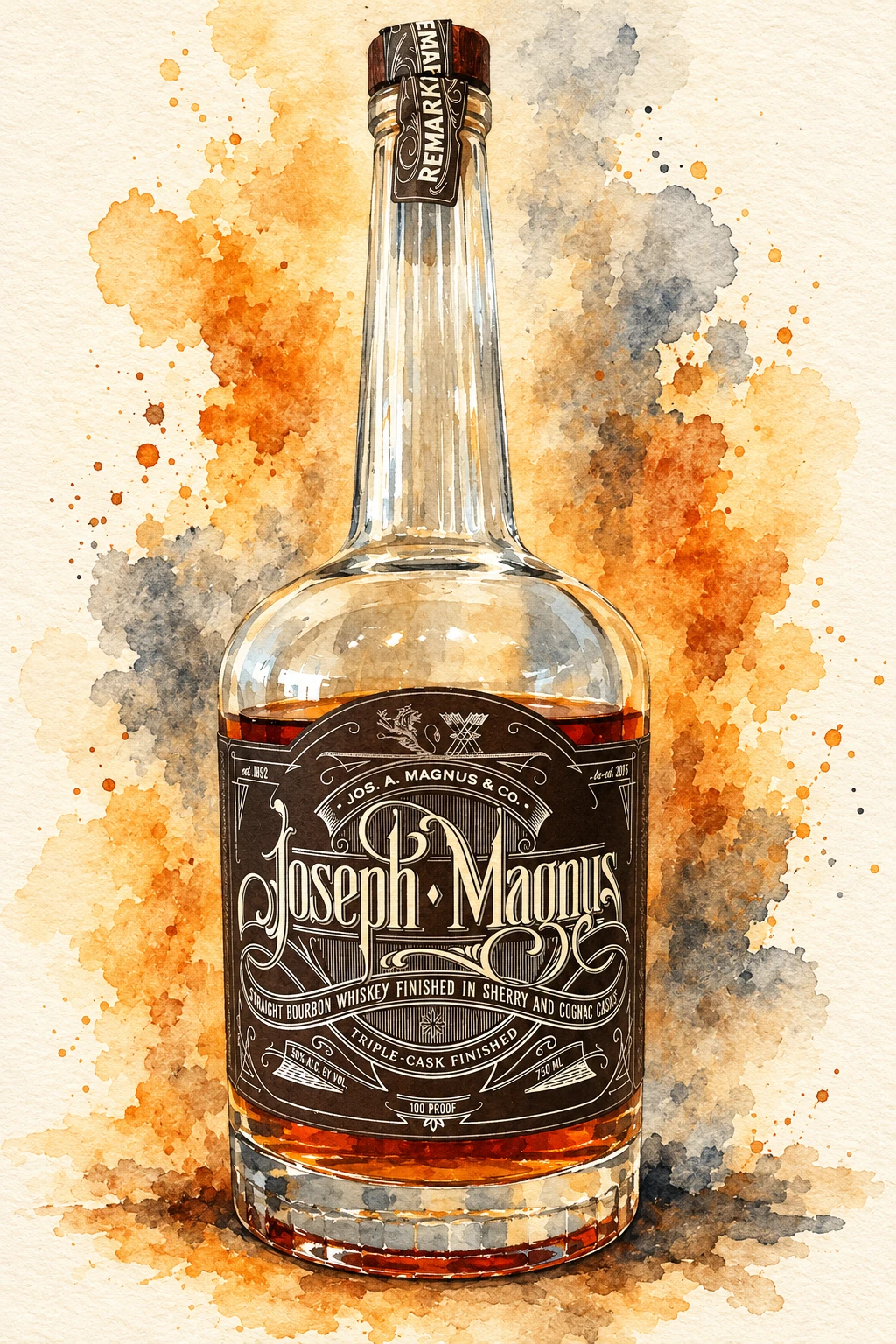
Approved watercolor of Joseph Magnus Straight Bourbon Finished in Sherry, Cognac

Joseph Magnus Straight Bourbon Finished in Sherry, Cognac

W0278 · 100 proof · Bottle 285 / 892 · Batch 112

Batch 112 · Bottle 285 / 892 · Sherry and Cognac cask finish

Collection snapshot: October 22, 2026. Both physical records use their exact approved watercolor, ART0397 v1 and ART0401 v1. Batch, proof and bottle details are preserved; no numerical age is inferred for either physical bottle.

Joseph Magnus guide cover
The illustrated companion

Joseph Magnus, in three pages.

Origins and people, history and places, whiskey and stories. An illustrated companion with linked research sources.

Sources & research notes

Research qualifications

  • Researched October 18, 2026. Historical narrative relies substantially on producer records and is attributed accordingly. All editorial watercolors are symbolic interpretations, not verified architectural reconstructions.
  • The homepage says the preserved bottle was discovered in 2007; the company timeline and January 2025 history use 2014. June 2014 is the timeline’s dated Louisville assessment. No discovery year is asserted as settled.
  • The timeline places a description of the 1900 Census under an 1892 heading. This profile does not copy that heading as the census date. The 1892 founding and 1894 dealership are reported separately.
  • The company describes a 1918 halt ahead of Prohibition. That does not mean the national constitutional ban began in 1918.
  • Older biographies still call Nancy Fraley the current Master Blender. The May 2026 firsthand interview, linked by CraftCo, describes her transition; the August 2026 official rye announcement names Will Fabry Head Blender.
  • The current Cigar Blend overview lists 100.7 proof and older component ages; dated batch releases vary. Numerical details are scoped to the named release. No present recipe or age is assigned to a historical physical bottle without label evidence.
  • CraftCo portfolio association and Holland operations are verified. This profile does not infer complete legal ownership history or an acquisition date from shared branding. Supplier identities are assigned only where a particular release disclosure names them.
  • The neutral profile and guide exclude personal collection information. Exact approved bottle art is used only in the separate Reserve section. Full collection mappings and artwork provenance are in the checkpoint.

Full sources

  1. Our Story: rediscovery and sensory team
  2. Move to Michigan: historical timeline
  3. Magnus Since Prohibition, January 2025
  4. Relocation announcement, October 2020
  5. Joseph Magnus Bourbon: triple cask finish
  6. Murray Hill Club: bourbon and light whiskey
  7. Cigar Blend Bourbon: product overview
  8. Murray Hill Club Special Releases 1 and 2
  9. Special Release 3: malt and cider casks, 2020
  10. Special Release 4: Calvados, February 2024
  11. Nancy Fraley: future of tasting notes, April 2025
  12. Cigar Blend batches 207-212, May 2024
  13. Nancy Fraley interview and transition, May 2026
  14. 10 Year Cask Strength Rye, August 2026
  15. CraftCo: portfolio and current news
  16. CraftCo Distillery & Social House
  17. Ohio private-barrel selections, October 2019
  18. 2025 competition results, May 2025
  19. Nancy Fraley: Master Blender of the Year, 2024
  20. Will Fabry: CraftCo Head Distiller, April 2025
  21. Joseph Magnus: current homepage and discovery account
  22. Cigar Blend batches 85-90 and 93-98, June 2022
↑