TJ THELEN'S COLLECTION
The Thelen Reserve
Behind the Bottles / Tennessee whiskey

Jack Daniel’s

Last updated Last researched

Lynchburg / Tennessee whiskey

Limestone water. Maple charcoal. A Tennessee original.

A square bottle opens onto a story. Water, charcoal, oak and sensory judgment connect Lynchburg to drinkers. The range stretches from a house whiskey to individual barrels, rye, older stocks and malt, each making different choices within that tradition.[9][26]

Symbolic Tennessee distillery, limestone spring, maple charcoal and oak
Brand landmark
1866, as stated by the brand[1]
Whiskey home
Lynchburg, Tennessee[9]
Signature step
Sugar-maple charcoal mellowing[12]
Parent company
Brown-Forman, since 1956[7]
01 / Origins & people

A familiar name. An unexpected journey.

The teacher belongs at the beginning

Nathan “Nearest” Green taught the young Jack Daniel to make whiskey. Enslaved when he worked as a distiller in the Dan Call farm story, Green later became a free man and the distillery’s first master distiller. His skill is foundational to the whiskey’s history, rather than a footnote to the name on the bottle.[2]

A landmark, and a historical question

The brand celebrates 1866. Researcher Drew Hannush’s examination of tax and property records instead places the Daniel and Call partnership in November 1875 and separates that operation from the later Cave Spring site. This profile preserves the familiar brand landmark while identifying the registration claim as disputed.[3]

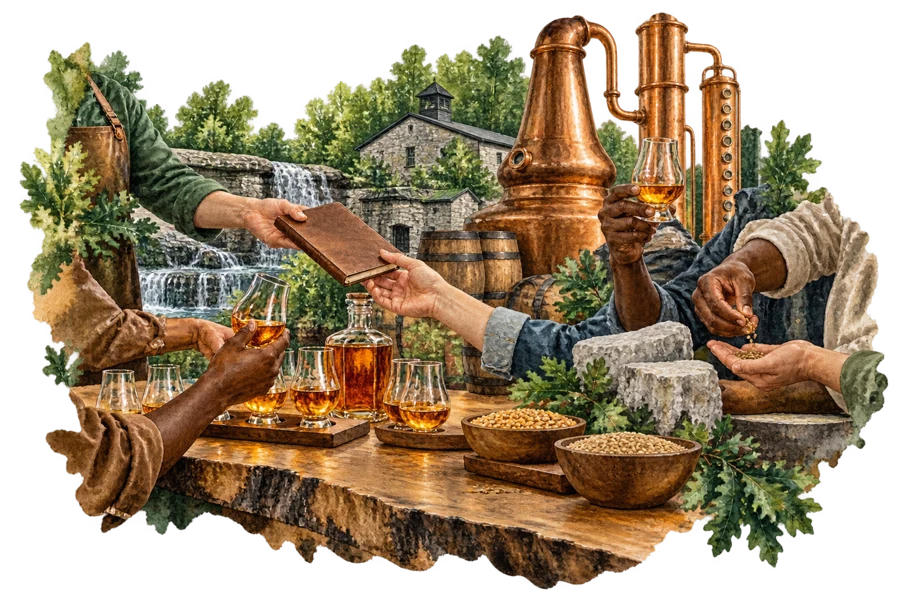
Symbolic distillery team, tasting glasses and grain

Jack Daniel

Founder and public identity

Jasper Newton Daniel built a business around whiskey and a durable public identity. The square bottle, distinctive presentation and 1904 fair recognition became part of the brand’s visual memory. His personal legends deserve different treatment from verified commercial events.[5]

Nathan “Nearest” Green

Teacher and first master distiller

Green’s teaching and early leadership connect technique to people. The foundation honoring him also traces later generations of his family in distilling. Uncle Nearest is a separate company honoring his legacy, not a Jack Daniel’s expression.[2]

Lem Motlow

Continuity through interruption

Daniel’s nephew carried the business through prolonged interruption. Historian Nelson Eddy describes Motlow keeping the company name alive through other enterprises and helping make a Lynchburg production return possible in 1938. Brand survival did not mean continuous distilling.[6]

Frank Bobo and Jeff Arnett

Modern predecessors

Different generations shaped the modern range. Bobo’s grandson Fletcher grew up around the distillery; Arnett later oversaw launches including Barrel Proof and matured rye. They belong to historical leadership, distinct from the person leading the operation today.[15][12]

Chris Fletcher

Master distiller

A chemistry graduate and former part-time tour guide, Fletcher became master distiller in October 2020 after six years as assistant. His current role spans production, quality and innovation. In 2026 the company credited him with developing its premium and experimental programs.[15][33]

Lexie Phillips and the tasting team

Production, selection and the next generation

Phillips became the first female assistant distiller in 2021 after working in quality and operations. Her later selection of an oak-finished rye illustrates how individual tasters help turn experiments into releases, alongside the wider production team.[16][19]

02 / The illustrated history

A Tennessee story, still being written.

Follow the people, the Lynchburg setting and the changing whiskey family. Brand landmarks, physical sites and historical records tell different parts of the story.
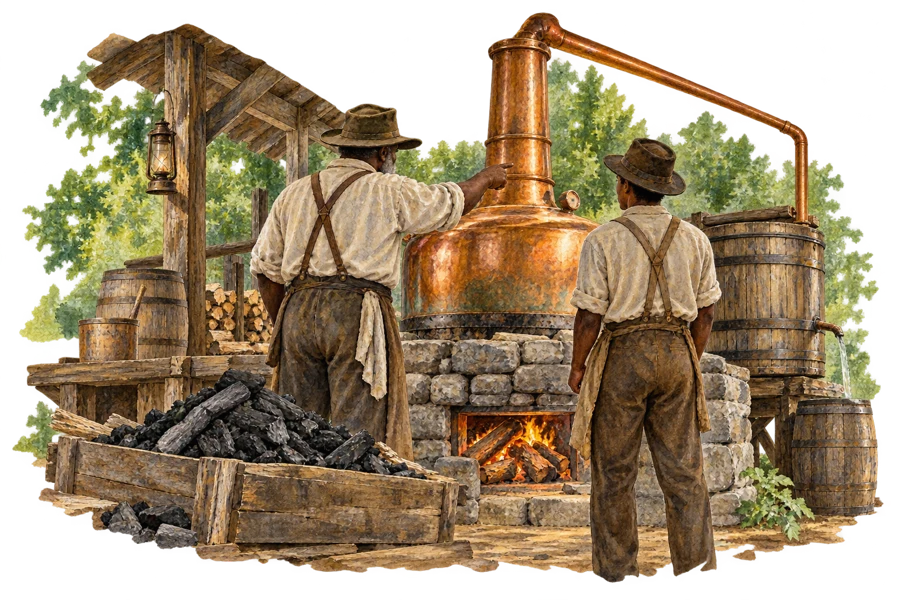
Symbolic illustration: Knowledge passes from Green to Daniel
Nineteenth century

Knowledge passes from Green to Daniel

Green teaches Daniel the craft in the farm-distilling world around Lynchburg. The relationship joins skill, labor and opportunity across the profound divide of slavery and emancipation.[2]
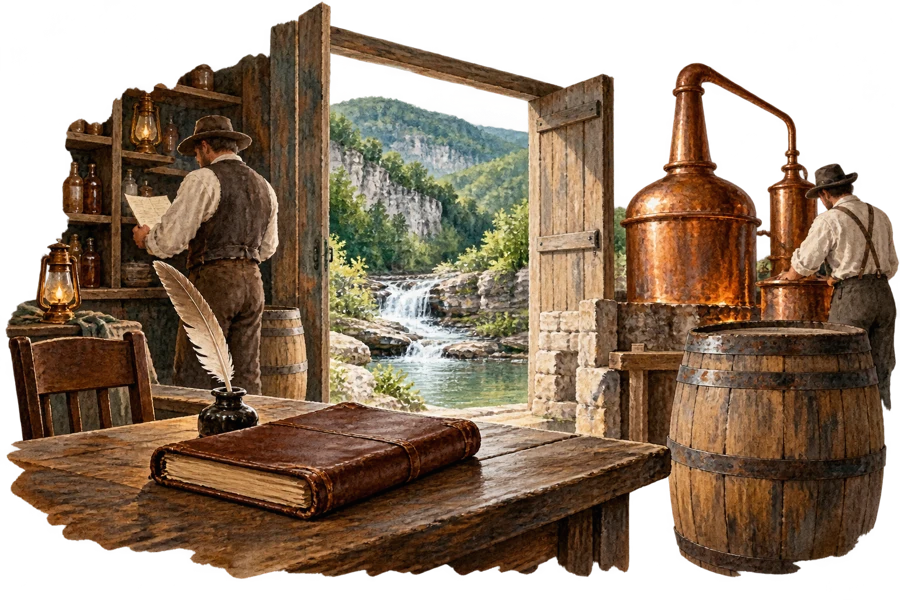
Symbolic illustration: A brand landmark meets the records
1866 / 1875

A brand landmark meets the records

The producer uses 1866 as its founding landmark. Hannush’s archival research identifies the Daniel and Call partnership in 1875, so the earliest registration story remains explicitly qualified.[1][3]
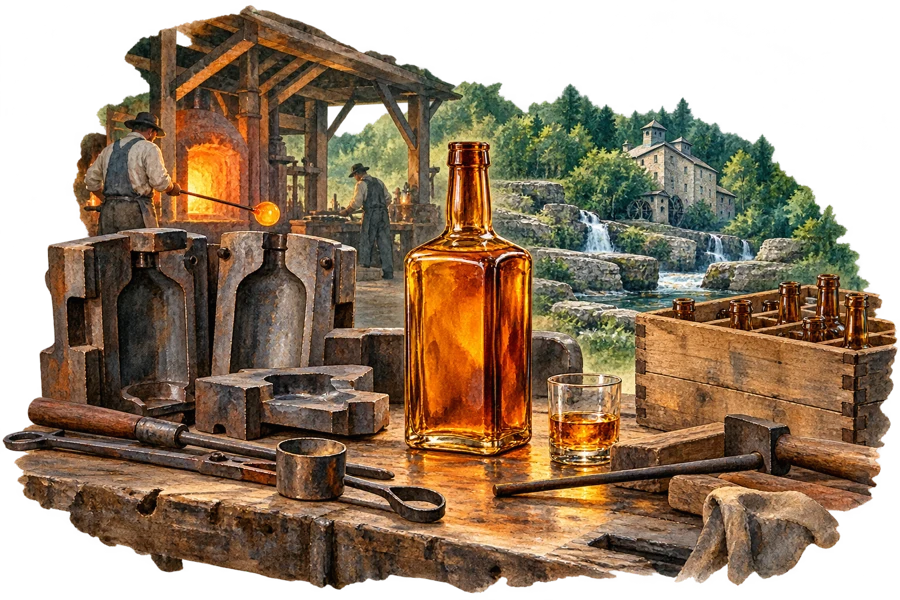
Symbolic illustration: A square bottle becomes part of the story
1895 design heritage

A square bottle becomes part of the story

The later Bonded packaging draws on the 1895 bottle design. The square form becomes a recognizable part of Jack Daniel’s identity, alongside the whiskey inside.[18]
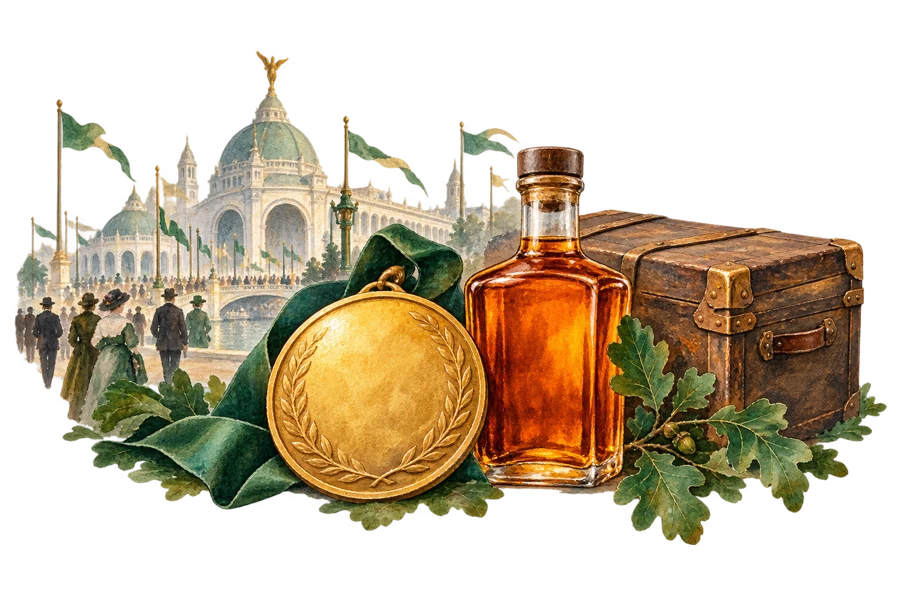
Symbolic illustration: A medal carries the name farther
1904

A medal carries the name farther

The producer recounts Daniel’s journey to the St. Louis World’s Fair and a gold medal for his whiskey. Recognition becomes a lasting part of the brand’s origin narrative.[5]
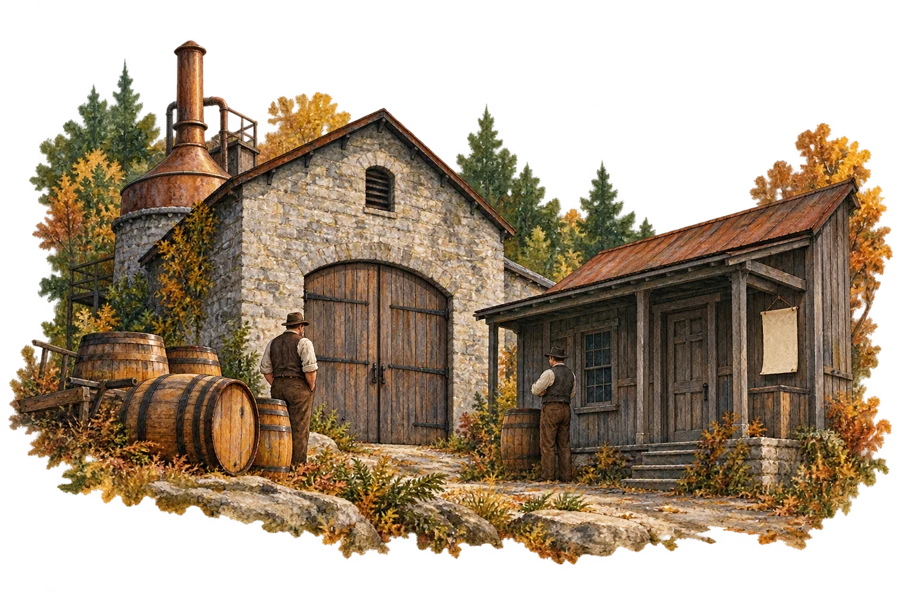
Symbolic illustration: The business survives a long interruption
Prohibition to 1938

The business survives a long interruption

Tennessee restrictions outlast national repeal. Motlow sustains the company through other work, then Lynchburg production resumes in 1938. A surviving name should not be confused with uninterrupted whiskey-making.[6]
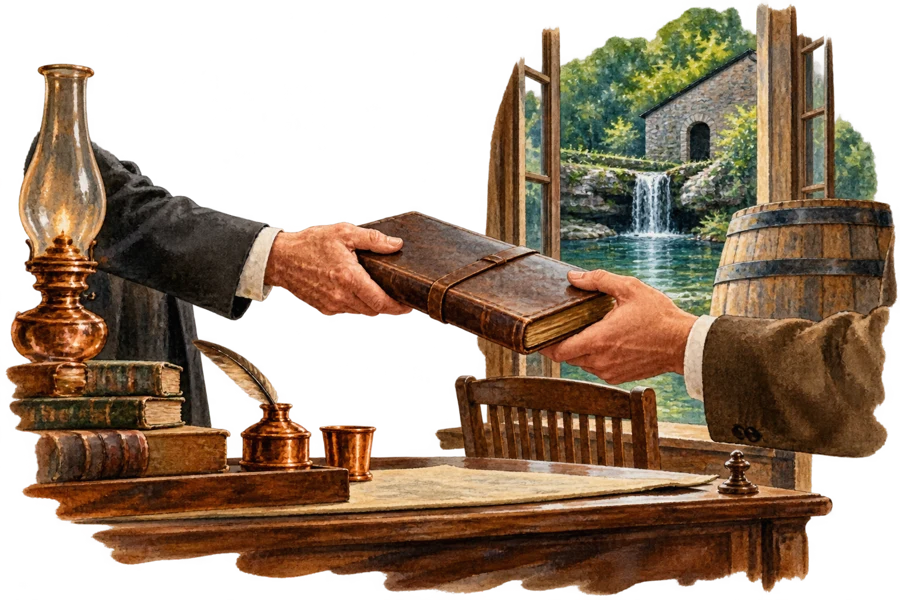
Symbolic illustration: The Motlow and Brown families’ chapters meet
1956

The Motlow and Brown families’ chapters meet

Brown-Forman purchases the Jack Daniel Distillery. The transaction changes corporate ownership while the Lynchburg whiskey identity continues under a larger family-controlled company.[7]
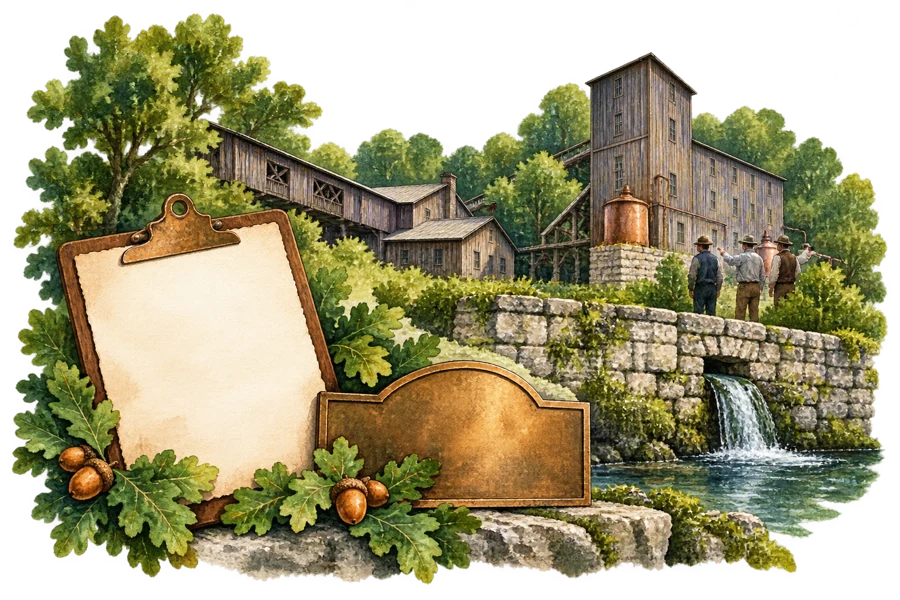
Symbolic illustration: The distillery enters the National Register
September 14, 1972

The distillery enters the National Register

The Jack Daniel Distillery is listed in the National Register of Historic Places. Historic recognition preserves an industrial story; it does not settle every claim about its earliest registration.[4]
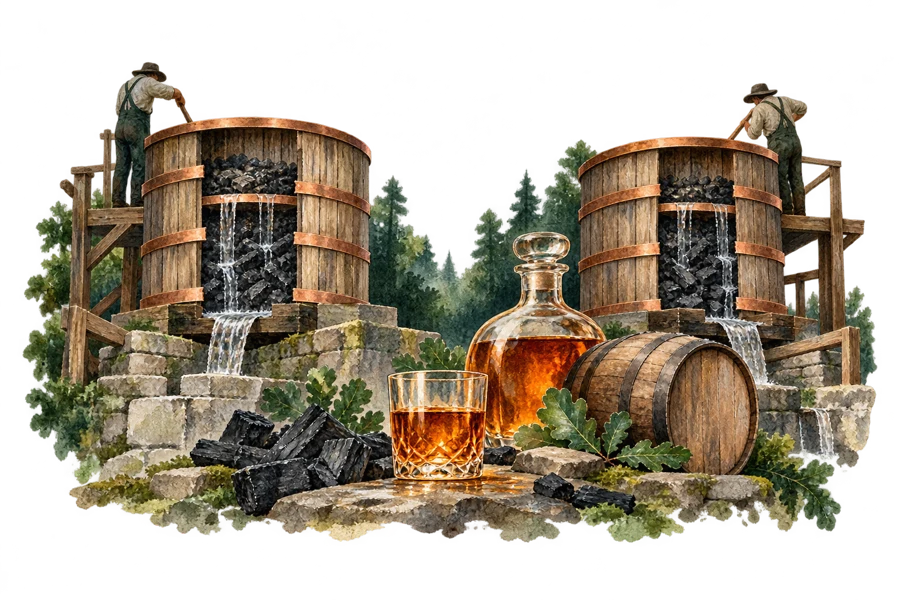
Symbolic illustration: Mellowing happens a second time
1988

Mellowing happens a second time

Gentleman Jack introduces an additional charcoal treatment after maturation. The new expression shows how a change to the process can produce another interpretation of the house whiskey.[8]
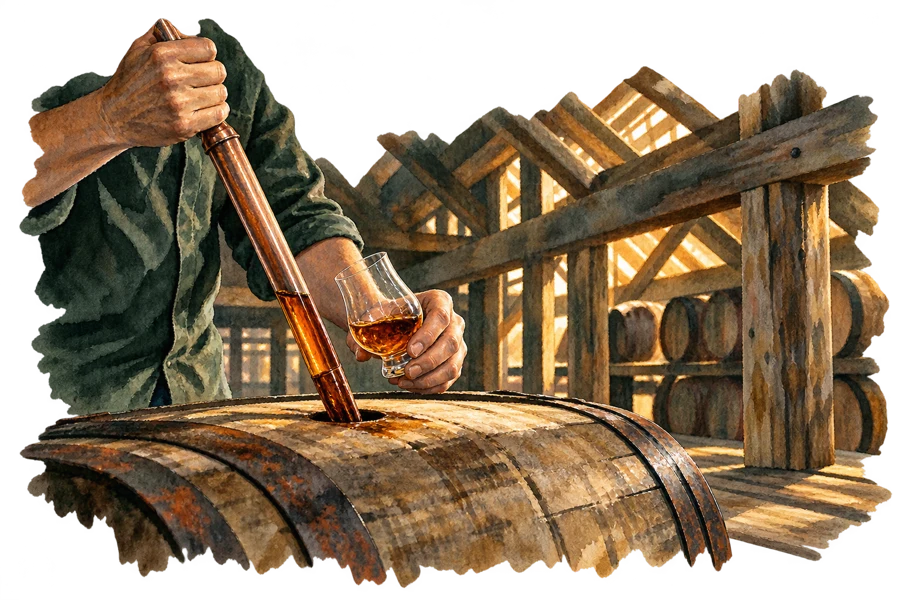
Symbolic illustration: One barrel becomes the point of focus
1997

One barrel becomes the point of focus

Single Barrel arrives for drinkers interested in differences between individual casks. In an archived brand interview, Arnett recalls its introduction and the tasting-panel work behind selecting barrels.[34]
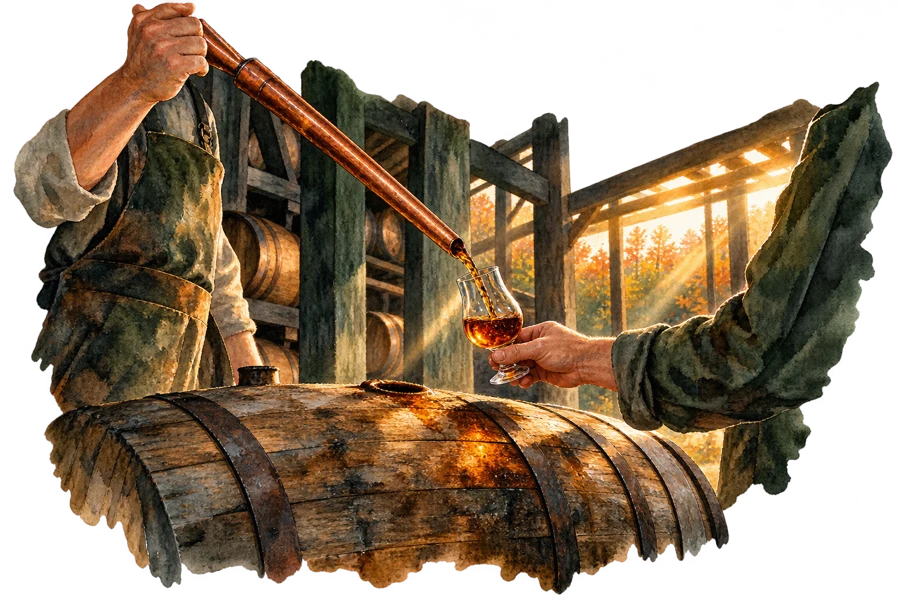
Symbolic illustration: The barrel sets the strength
July–August 2015

The barrel sets the strength

Barrel Proof is announced in July for an August U.S. launch. The first barrel-strength member of the Single Barrel Collection preserves individual barrel variation at a higher bottling strength.[12]
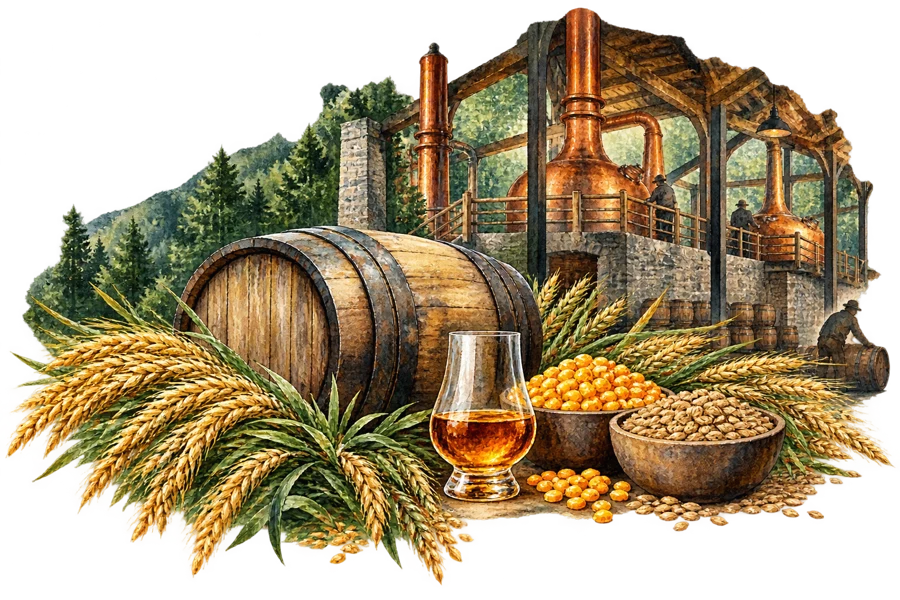
Symbolic illustration: A different grain takes its place
February 2016

A different grain takes its place

Single Barrel Rye follows unaged rye in 2012 and rested rye in 2014. The matured release brings a 70-percent rye recipe into the collection and makes grain choice part of the comparison.[13]
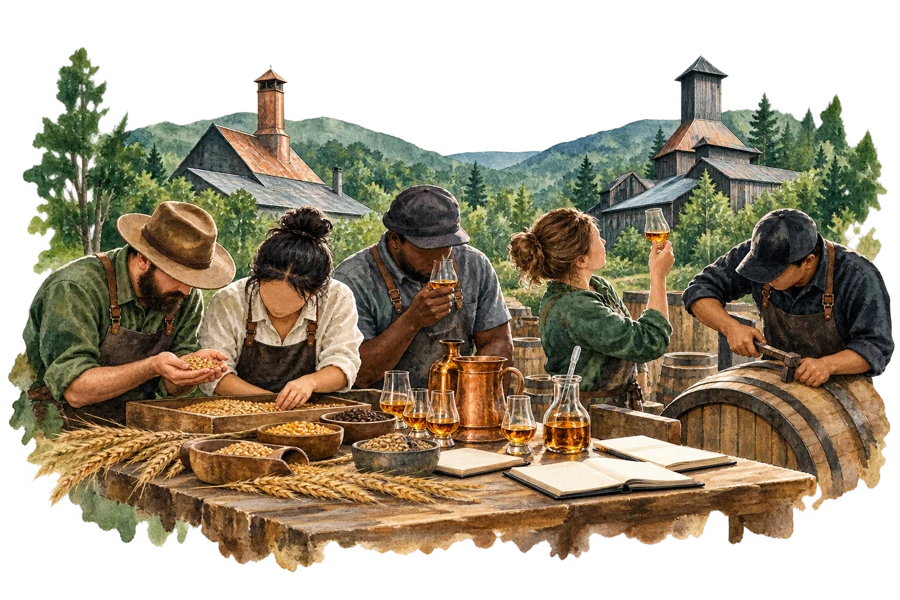
Symbolic illustration: Two names support new opportunity
June 2020

Two names support new opportunity

Jack Daniel Distillery and Nearest Green Distillery announce the Nearest & Jack Advancement Initiative. Education, leadership apprenticeships and business incubation connect a historical relationship to a new industry program.[14]
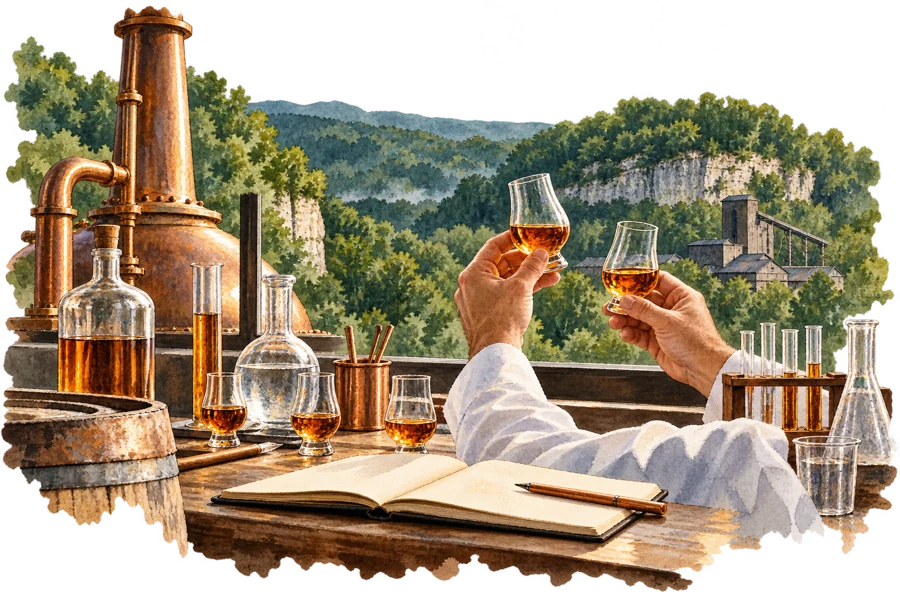
Symbolic illustration: Fletcher takes responsibility from grain to glass
October 2020

Fletcher takes responsibility from grain to glass

Chris Fletcher becomes master distiller. Chemistry, research experience and years as assistant underpin a role that combines consistent production with developing new expressions and mentoring future whiskey makers.[15]
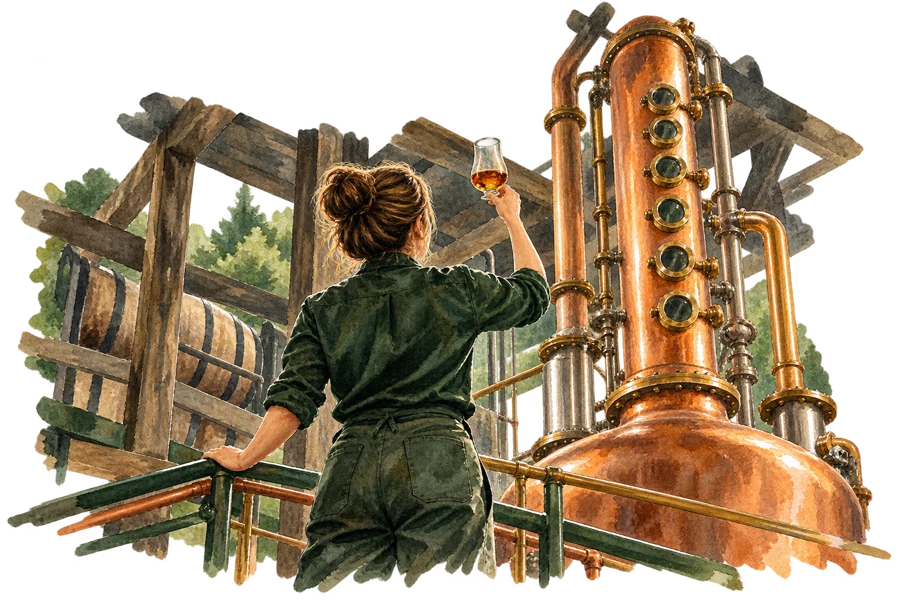
Symbolic illustration: Phillips opens another door
March 2021

Phillips opens another door

Lexie Phillips is appointed the first female assistant distiller. The announcement recognizes experience in quality control, operations and rye production, rather than presenting the title as detached from hands-on work.[16]
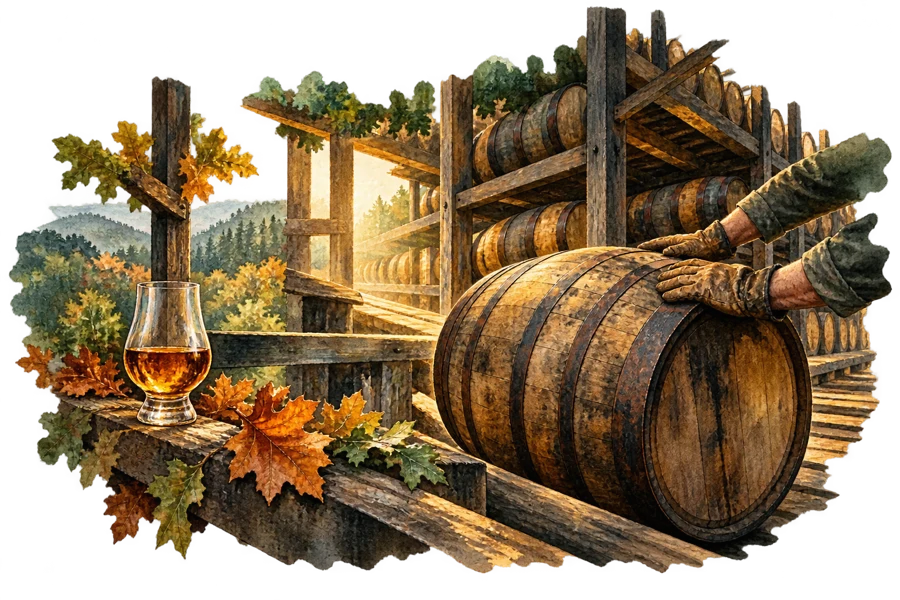
Symbolic illustration: Age statements return
August–September 2021

Age statements return

A 10-year Tennessee whiskey is announced for September. The team relocates barrels during extended maturation, bringing an older age statement back into the modern range at 97 proof.[17]
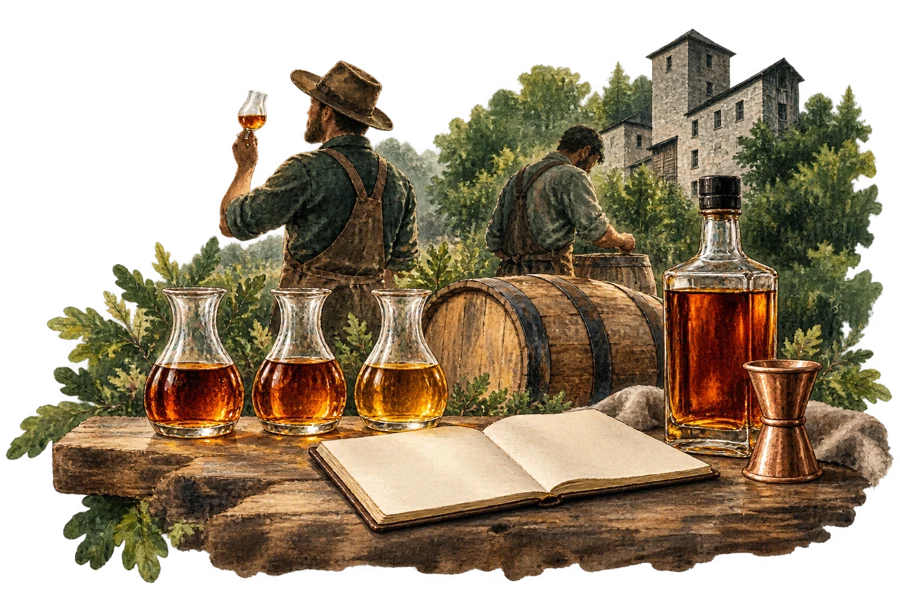
Symbolic illustration: Bonded becomes a permanent series
May 2022

Bonded becomes a permanent series

Bonded Tennessee Whiskey and Triple Mash arrive at 100 proof. One explores the familiar corn-led recipe; the other combines three different straight whiskeys from the same distilling season.[18]
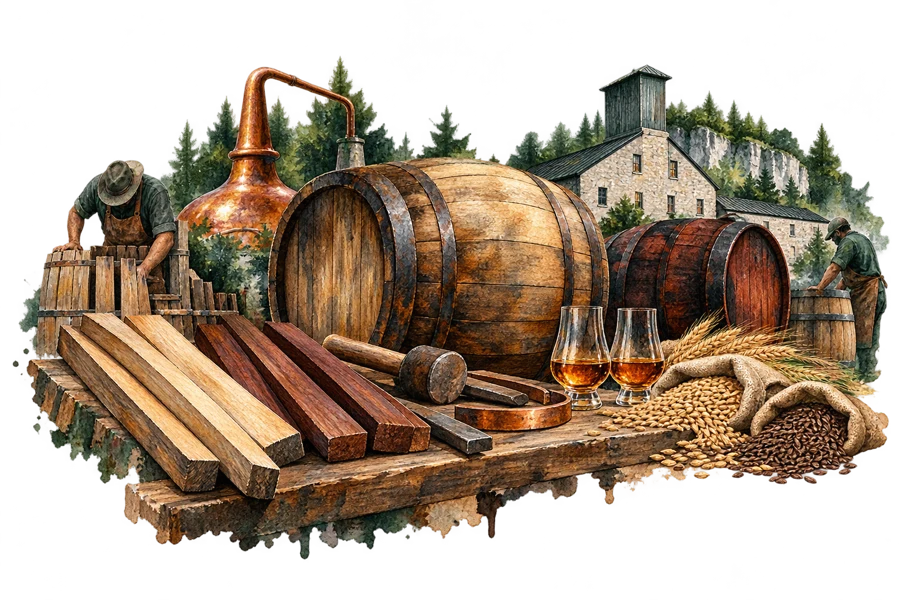
Symbolic illustration: Finishing becomes a testing ground
2022

Finishing becomes a testing ground

Distillery Series ryes explore toasted maple and toasted oak, while a Special Release introduces single malt finished in Oloroso casks. Grain and secondary wood become separately controlled variables.[19][20]
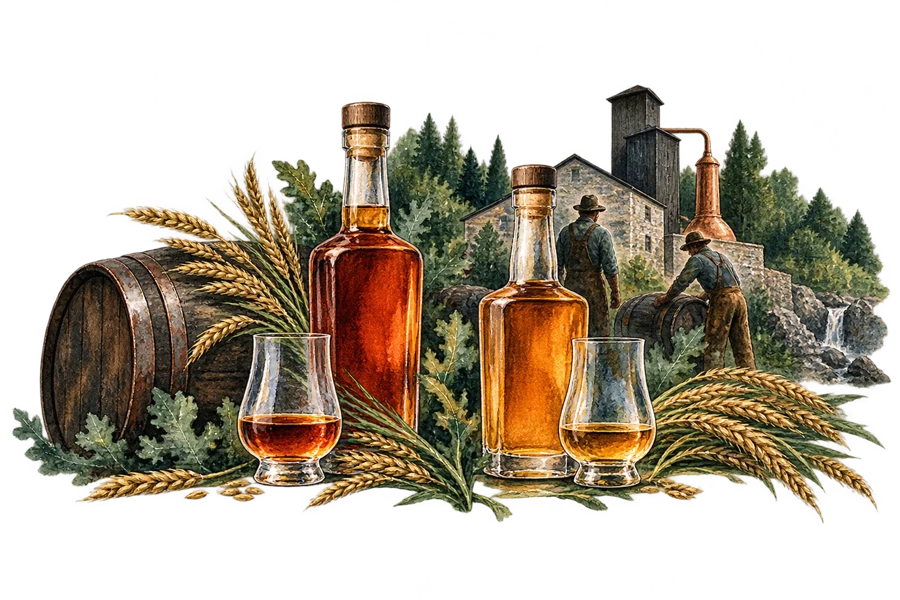
Symbolic illustration: Rye gains two more permanent forms
2023

Rye gains two more permanent forms

Barrel Proof Rye and Bonded Rye enter their respective collections. One retains barrel strength; the other is bottled at 100 proof. The shared rye recipe does not make them interchangeable expressions.[21][22]
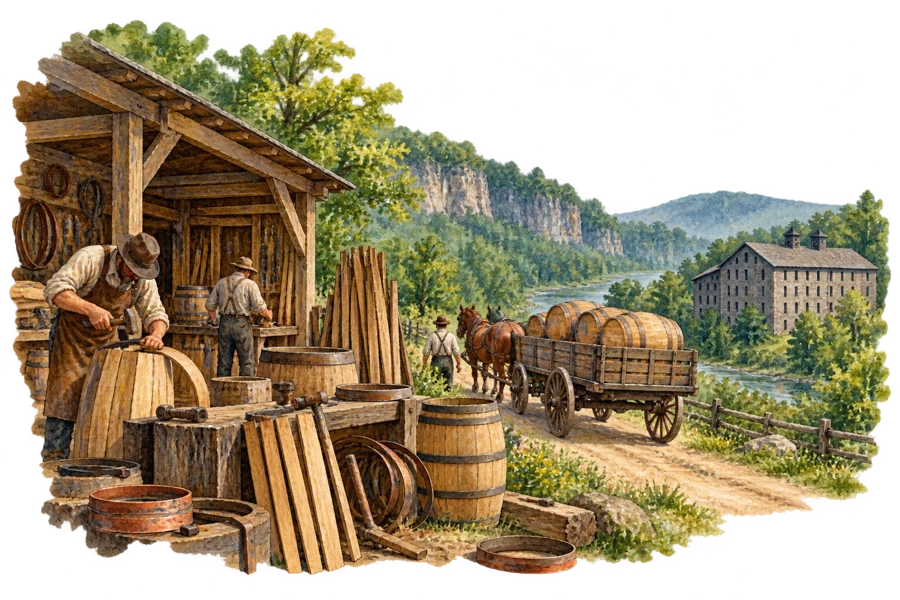
Symbolic illustration: Barrel supply changes its business model
2024–2026

Barrel supply changes its business model

Brown-Forman announces its Alabama cooperage sale, then Louisville closure and external barrel sourcing. Fiscal 2026 reporting confirms the Louisville facility sale. Historic own-cooperage claims require this later context.[28][29][30]
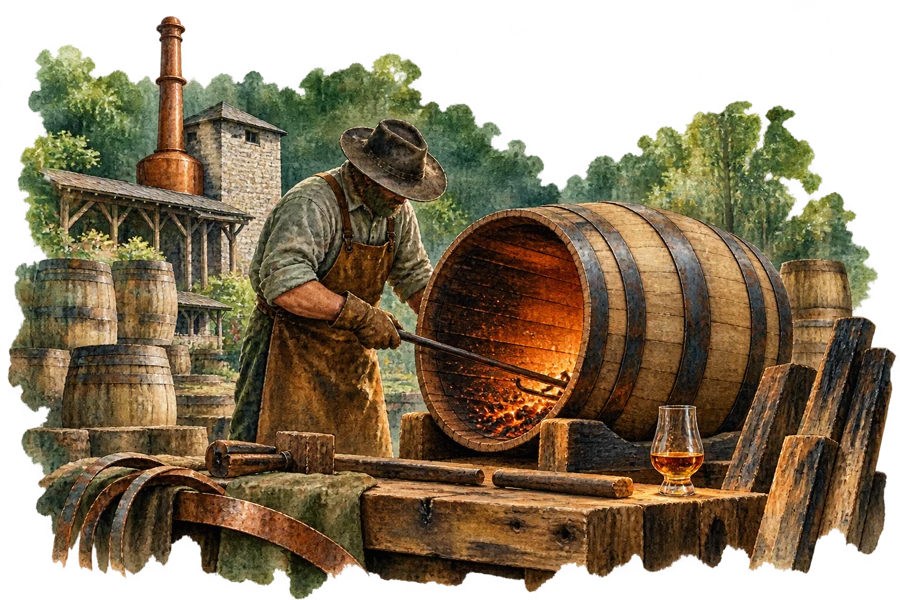
Symbolic illustration: Heritage Barrel moves into the year-round range
August 2025

Heritage Barrel moves into the year-round range

After limited 2018 and 2019 releases, Heritage Barrel becomes a permanent expression. High-toast, low-char barrels, lower entry proof and at least seven years of maturation define this version.[23]
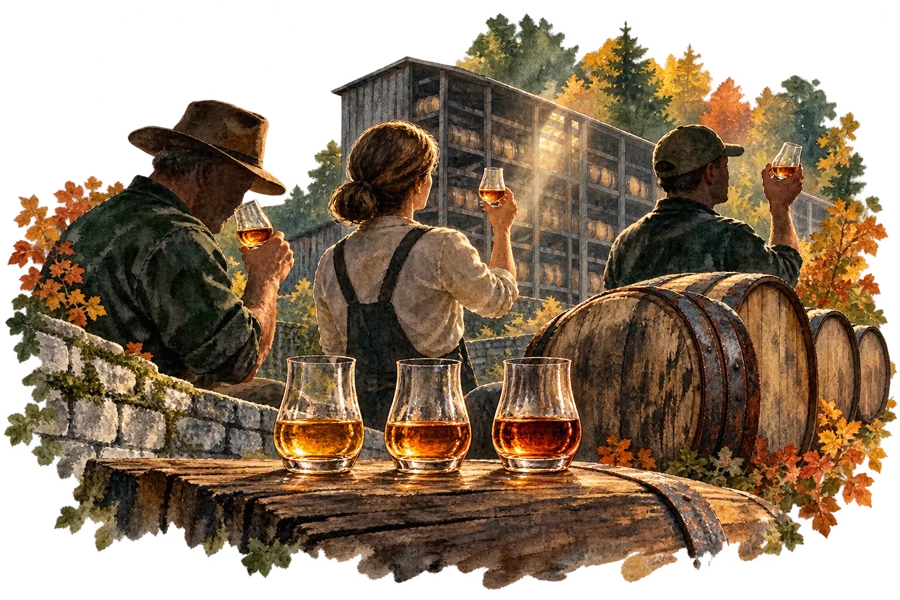
Symbolic illustration: The aged series advances by batch
March 2026

The aged series advances by batch

The annual release pairs 14 Year Batch 2, 12 Year Batch 4 and 10 Year Batch 5. Their different proofs underline why the age and exact batch both matter when comparing bottles.[25]
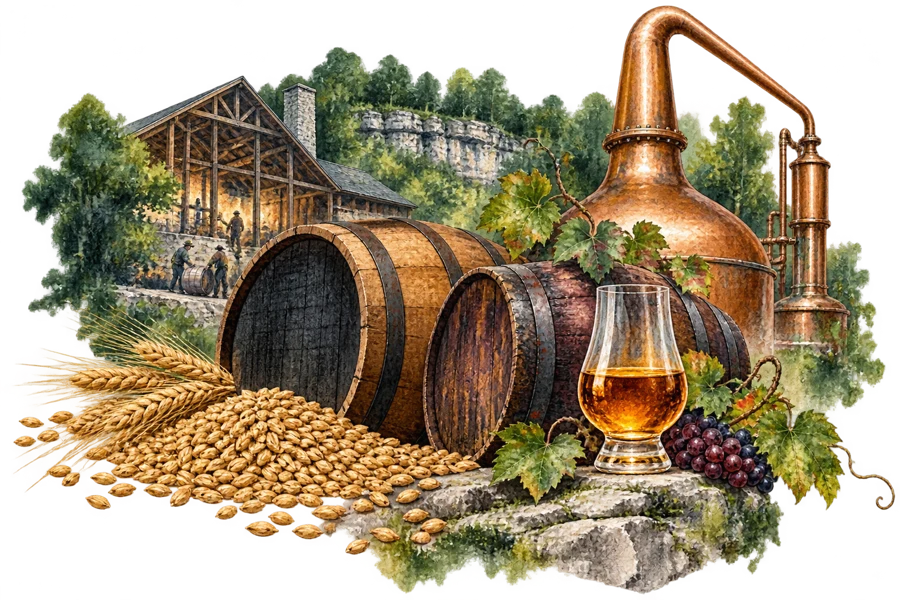
Symbolic illustration: Single malt reaches a wider U.S. audience
August 2026

Single malt reaches a wider U.S. audience

A limited annual U.S. release follows earlier duty-free availability. The 90-proof malt whiskey combines a 100-percent malted-barley recipe with new charred oak and an Oloroso finish.[26]

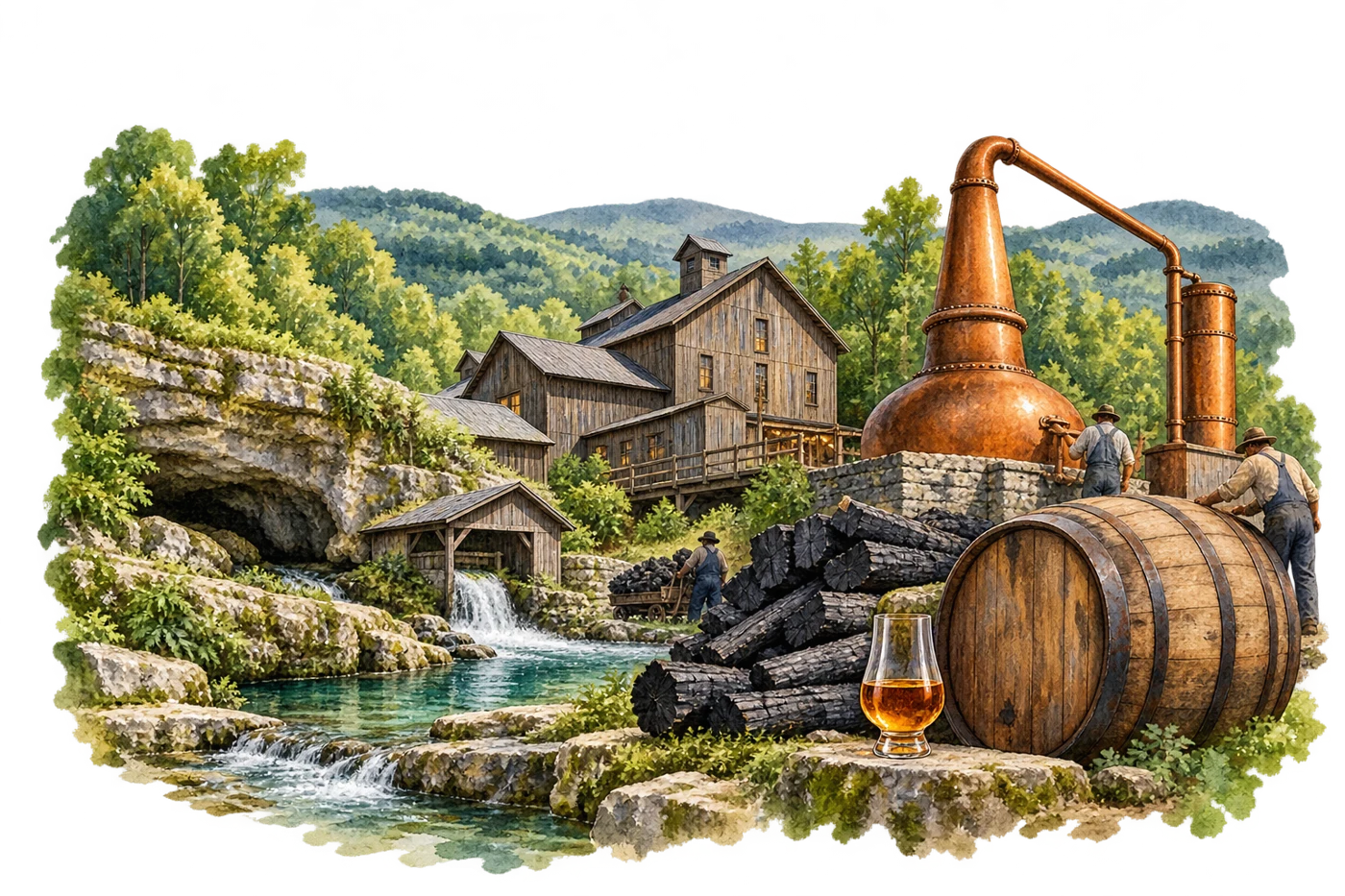
Original watercolor interpretations accompany the history. Buildings, objects and scenes are symbolic, not documentary reconstructions.
03 / Geography & roles

One name. Several places that matter.

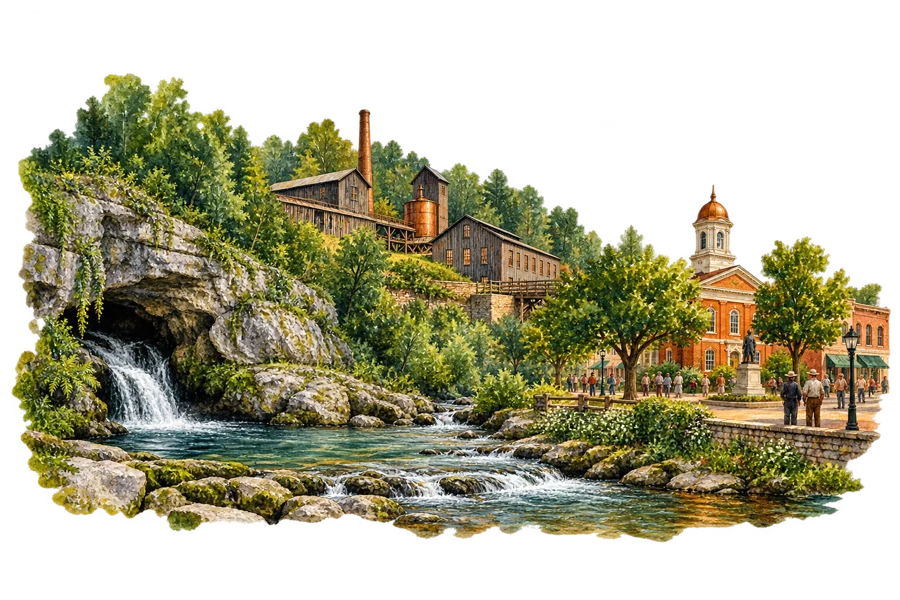
Symbolic Lynchburg cave spring, timber distillery and historic town

Cave Spring Hollow: water and identity

The limestone spring is a practical ingredient source and a visual center of the distillery story. It belongs to the current Lynchburg setting, while the earlier farm-distilling story has its own geography.[32]

The rickyard: making the charcoal

Sugar maple is burned into charcoal for the mellowing vats. The yard explains a distinct production stage before whiskey meets its aging barrel, rather than a barrel-finishing treatment.[32]

The barrelhouses: position matters

Upper-floor barrels supply the Single Barrel program. Temperature exposure and wood differences create variation, while age-stated releases add another layer of selection and, in the ten-year program, movement between locations.[11][17]

Lynchburg’s square: more than a backdrop

The historic district links agriculture, commerce and distilling. Shops and hospitality grew around that working economy, making the town part of the producer’s story without turning every local business into a production facility.[31]

White Rabbit and Miss Mary Bobo’s: hospitality

The bottle shop recalls a former saloon; the boarding house connects the distillery visit with a different tradition of local hospitality. These are visitor and community roles, distinct from where grain is fermented or whiskey aged.[32]

04 / The whiskey family

Understand the name on the label.

Trace the producer, its expression families and the distinct roles of collaborators and historical personnel.

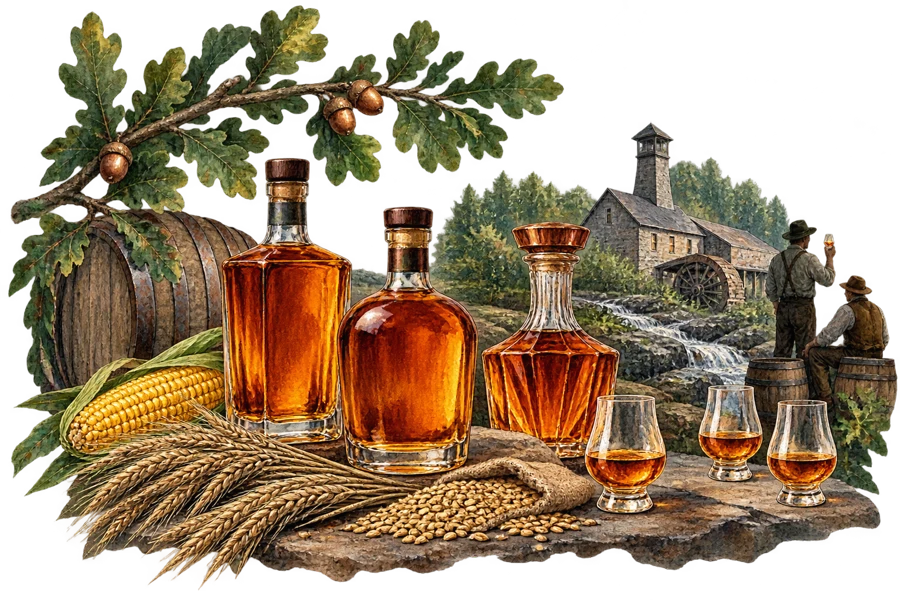
Symbolic Tennessee whiskey family with grain, charcoal and amber glasses

Jack Daniel’s / Brown-Forman

Producer and current parent

The Lynchburg producer sits within Brown-Forman’s portfolio. The parent-company relationship dates to 1956; it does not make the other corporate whiskey brands products distilled at Lynchburg.[7][30]

Old No. 7 and Gentleman Jack

Core Tennessee expressions

The familiar house whiskey and the twice-mellowed expression share a Tennessee identity but make different process choices. Their U.S. fact sheets describe 80-proof presentations.[9][10]

The Single Barrel family

Individual-barrel selection

Select, Barrel Proof and rye expressions emphasize individual casks. A shared collection name does not erase differences in grain, proof, maturation or the barrel printed on a label.[21]

The Bonded Series

Season, age and composition

Bonded Tennessee Whiskey, Triple Mash and Bonded Rye are distinct 100-proof expressions. Triple Mash is a blend of different straight whiskeys, not a new name for the corn-led Tennessee recipe.[18][22]

Aged, Special Release and Distillery Series

Different development programs

These programs investigate time, grain and wood in different ways. Some editions become permanent expressions; others remain limited experiments. Specifications belong to a named release and batch.[17][19][23]

Uncle Nearest and the Advancement Initiative

Independent collaborator

A shared historical figure and a joint program connect two separate businesses. Uncle Nearest is independently owned; the collaboration should not be mistaken for a Jack Daniel’s sub-brand or ownership relationship.[14]

Flavors and whiskey specialties

A distinct part of the portfolio

Tennessee Honey, Fire, Apple and Blackberry extend the family into flavored offerings. The 2025 Blackberry release is labeled a whiskey specialty, separate from unflavored straight whiskey expressions.[36]

McLaren: a design and whiskey collaboration

Limited-edition partner

The 2026 Halo MK 1 pairs racing-inspired packaging with 117.4-proof whiskey and extended stave seasoning. The relationship concerns a specific collaboration, not a new distillery or shared ownership.[27]

05 / Making & choosing

The choices behind the label.

Recipes, fermentation, oak and mingling shape the whiskey. Keep every specification tied to the expression and edition named.

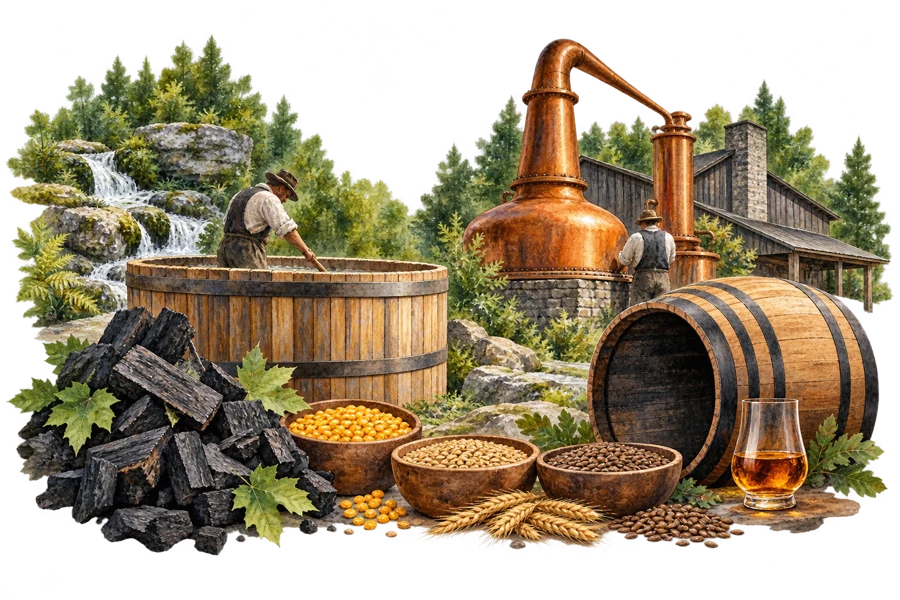
Symbolic mash bills, yeast, copper and oak

Grain changes the starting point

The familiar Tennessee recipe uses 80 percent corn, 12 percent malted barley and 8 percent rye. Rye uses 70 percent rye, 18 percent corn and 12 percent malted barley. Single malt starts with 100 percent malted barley. Compare the recipe before comparing the age or proof.[18][13][26]

Mellowing comes before the barrel

The new spirit passes through sugar-maple charcoal before maturation. That stage helps define the house’s Tennessee identity. It is separate from the char inside a barrel and from finishing mature whiskey in a second cask.[1][20]

Oak remains an ingredient

Barrel construction, toast, char and stave seasoning shape the whiskey. Heritage Barrel uses a high-toast, low-char treatment. Current corporate disclosures replace older marketing claims that all barrels are still made in company-owned cooperages.[23][29]

A house profile and a single barrel ask different questions

Old No. 7 is presented for consistency across bottles. Single Barrel deliberately preserves individual-cask differences, selected by tasting. Neither approach makes every warehouse location or every barrel equivalent.[9][11]

Proof tells you which expression you are reading

Single Barrel Select is described at 94 proof; Barrel Proof retains cask strength. Bonded bottlings are 100 proof. Higher strength is a specification, not a universal measure of quality, and each bottle’s actual label takes precedence.[11][12][22]

Extra years require active choices

The modern ten-year release involved relocating barrels to extend maturation. Later aged batches have their own proofs and sensory profiles. An age statement describes time; selection still decides what belongs in the bottle.[17][25]

Finishing and blending are different tools

A finishing cask changes whiskey after its initial maturation. Triple Mash instead combines rye, Tennessee whiskey and malt whiskey in 60/20/20 proportions. Those are blend shares, distinct from the percentages of grain in a mash bill.[19][18]

06 / The details worth knowing

The stories behind the familiar name.

A safe story is still a story

The producer recounts Daniel injuring himself by kicking an office safe. It is an enduring brand anecdote, not a medical finding reproduced here as a settled chain of cause and effect. The person and his legends deserve separate treatment.[5]

The number has several explanations

Old No. 7 has attracted many explanations. Hannush connects the number with registration history, while acknowledging the wider lore surrounding it. This profile treats that interpretation as research, not a definitive decoding printed onto every bottle.[3]

A tour guide becomes master distiller

Fletcher’s first work at the distillery was as a part-time guide in 2001. Chemistry and research followed. His career joins explaining whiskey to visitors with understanding and controlling the liquid itself.[15]

Two tasters choose two woods

The 2022 experimental ryes were selected by Josh and Lexie Phillips. One used toasted maple; the other high-toast, no-char oak. Similar proof and a shared rye base leave room for very different cask decisions.[19]

The tasting panel is part of the craft

In an archived interview, Arnett recalls joining a panel with generations of accumulated experience. Single-barrel selection depended on learning to identify a useful character in the glass, not simply choosing the oldest or strongest barrel.[34]

Time changes proof as well as flavor

The 2025 fourteen-year first batch was 126.3 proof; the 2026 second batch was 117.6. A familiar age statement therefore need not imply identical strength, composition of selected stock or drinking experience from year to year.[24][25]

An old-looking story can contain current change

The barrels still matter even when the supplier’s ownership changes. The 2024–26 cooperage announcements are a reminder to date process descriptions and distinguish a whiskey specification from the corporate ownership of its equipment or suppliers.[28][30]

07 / Selected expressions

Different ways into the whiskey family.

A curated reading of the whiskey family, selected for its role in the story. This is not an exhaustive current catalog.

Old No. 7

The 80-proof U.S. presentation is the starting point for the house’s consistent, charcoal-mellowed Tennessee whiskey identity. It provides a useful reference for understanding why other expressions change the process or selection.[9]

Gentleman Jack

Mellowed once before and once after maturation, this 80-proof expression changes the treatment rather than simply raising strength. Its 1988 introduction helped broaden the familiar house style.[10][8]

Single Barrel Select and Barrel Proof

Select is presented at 94 proof; Barrel Proof follows the individual cask’s strength. Barrel identifiers matter because a collection name describes a family, not a guarantee that two physical bottles hold the same release.[11][12]

Bonded and Triple Mash

Both arrive at 100 proof, but their composition differs. Bonded explores the corn-led Tennessee recipe; Triple Mash combines rye, Tennessee whiskey and malt whiskey. Proof alone does not explain what is in the glass.[18]

Heritage Barrel and the Aged Series

Heritage Barrel examines toast, char and lower entry proof. The aged releases explore longer maturation in named yearly batches. These are different experiments with oak and time, not interchangeable age or quality tiers.[23][25]

Rye and American Single Malt

Rye adds a different grain balance, including permanent bonded and barrel-proof forms. The 2026 single malt uses malted barley and an Oloroso finish at 90 proof. Neither should inherit specifications from the familiar corn-led bottle.[35][26]

08 / The Reserve connection

Continue from the story to the bottles.

Jack Daniel’s in The Thelen Reserve

3 physical bottle records connect this story to the collection. Each keeps its own proof, barrel, batch, pick and release details.

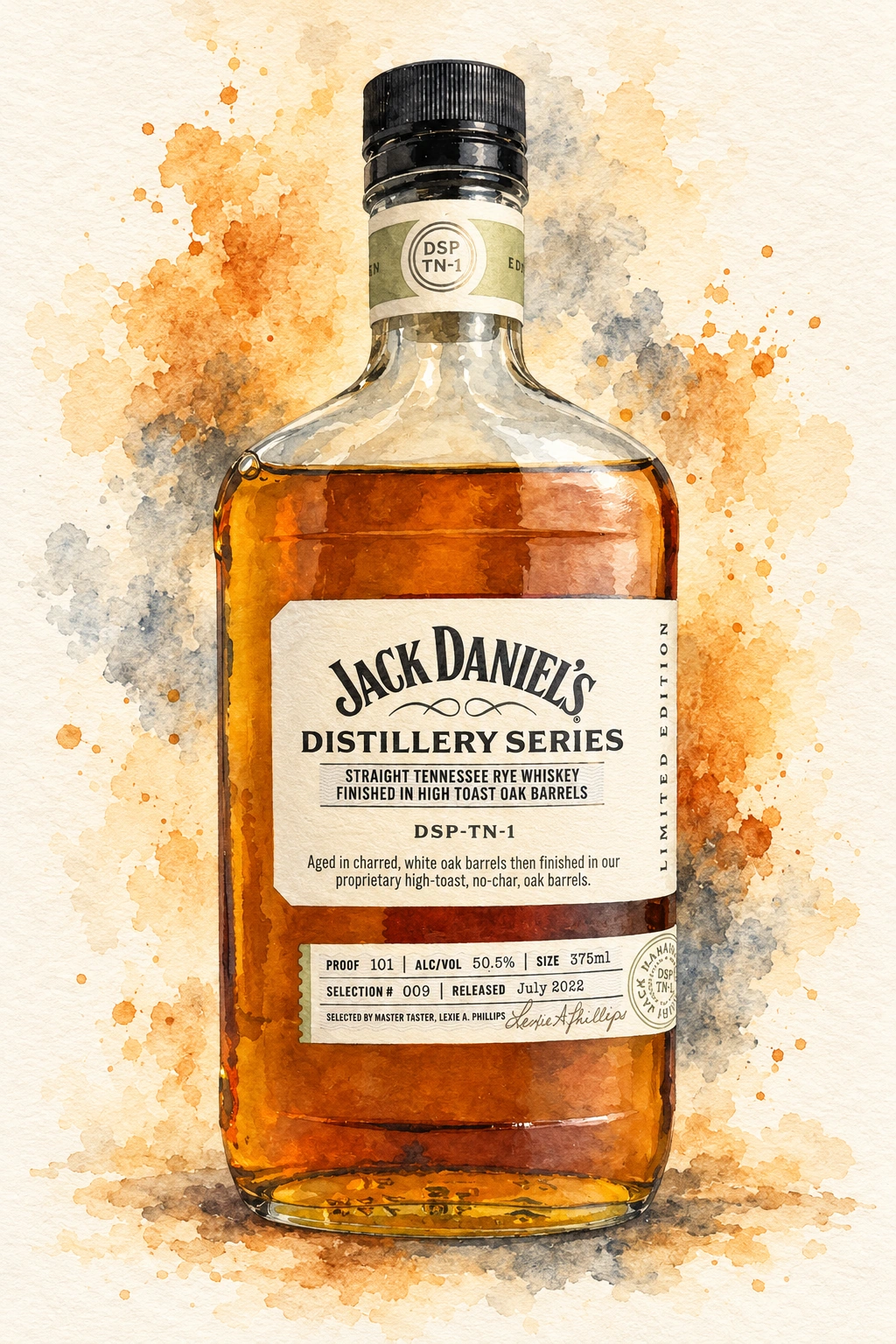
Approved watercolor of Jack Daniel's Distillery Series Selection 009 - High Toast Oak Finished Tennessee Rye

Jack Daniel's Distillery Series Selection 009 - High Toast Oak Finished Tennessee Rye

W0268 · 101 proof · Batch 9

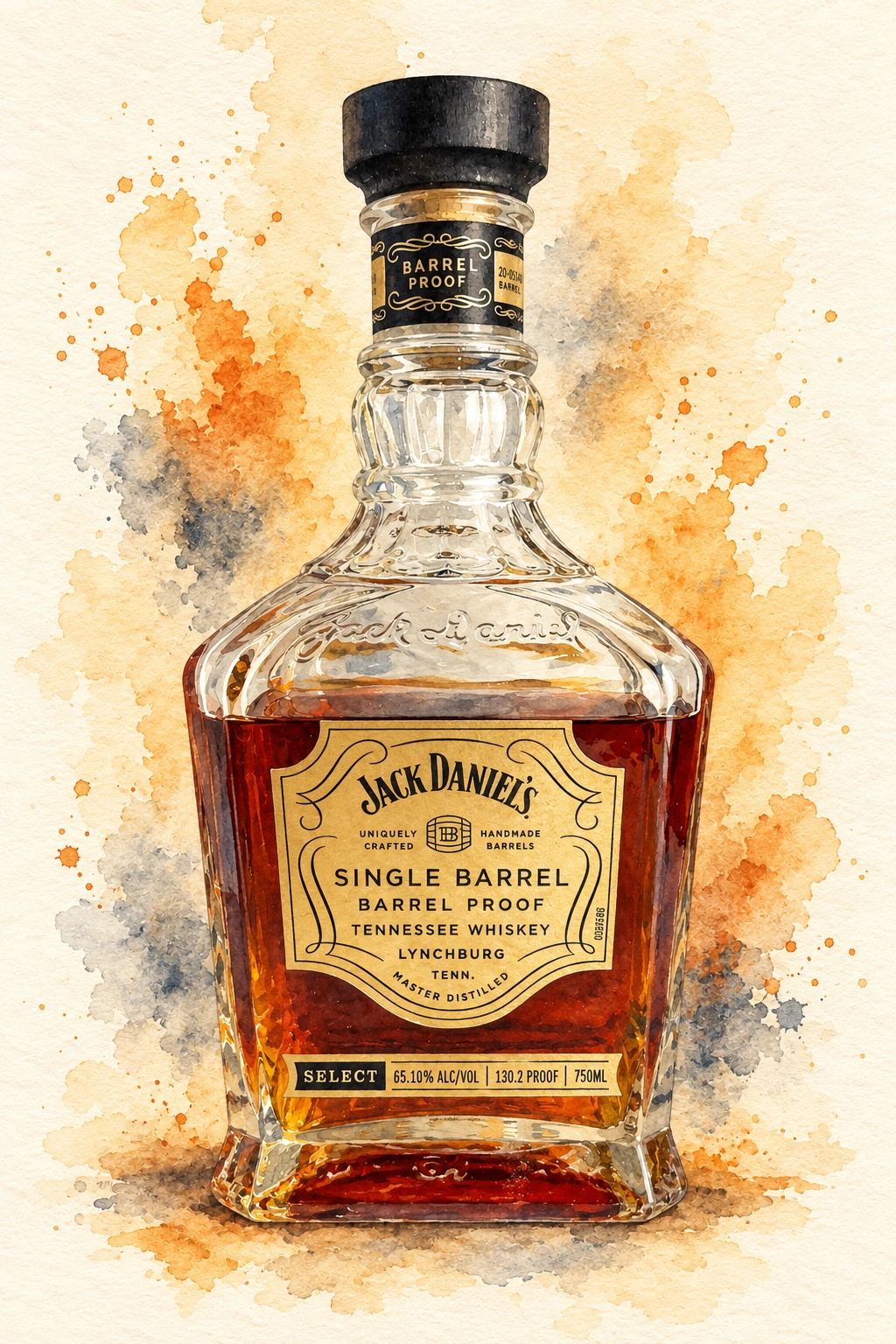
Approved watercolor of Jack Daniels Single Barrel Barrel Proof

Jack Daniels Single Barrel Barrel Proof

W0269 · 130.2 proof · Barrel 20-05149 · Bottled / release 8/20/2020

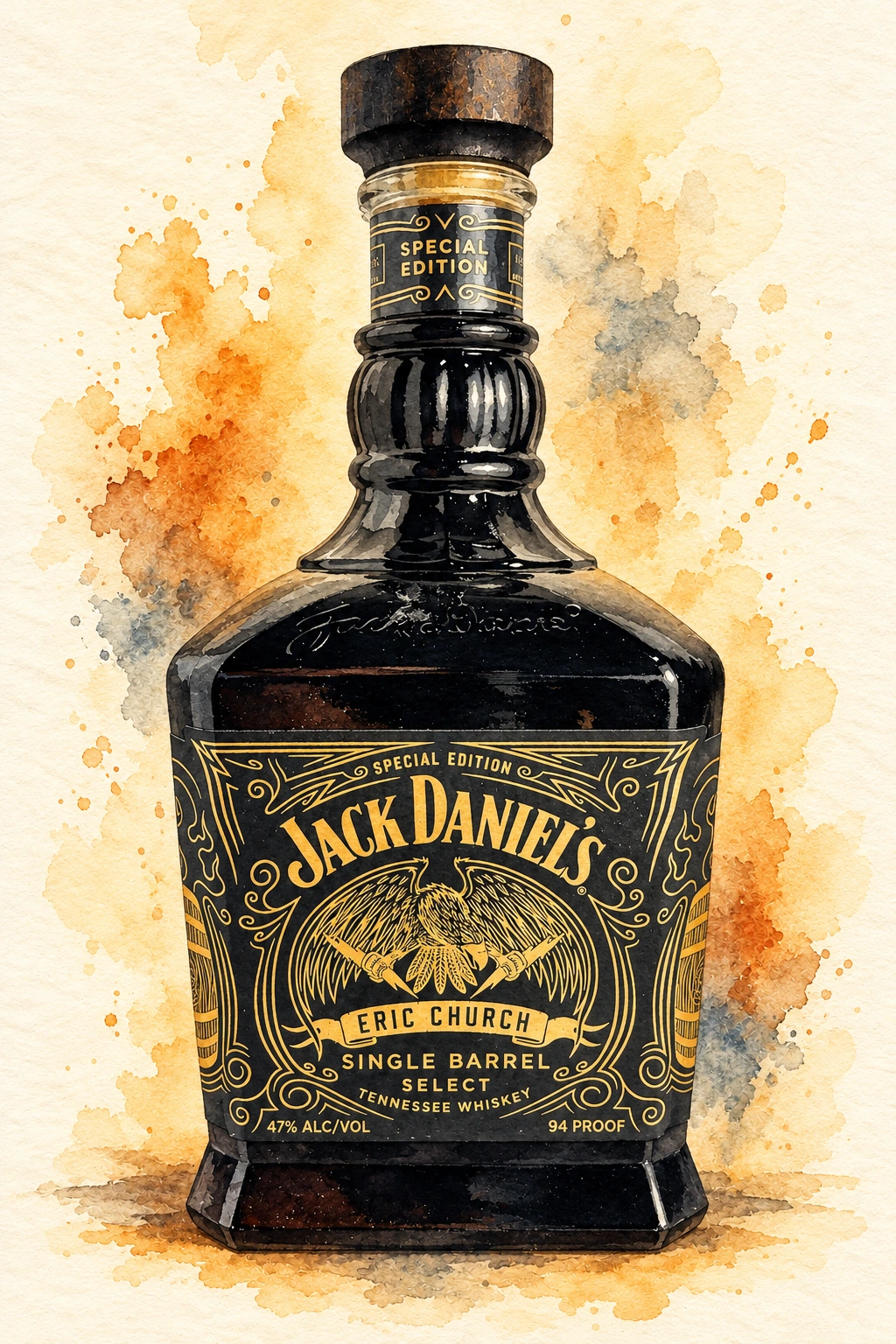
Approved watercolor of Jack Daniels Single Barrel Select Eric Church

Jack Daniels Single Barrel Select Eric Church

W0270 · 94 proof · Barrel 20-04014 · Bottled / release 7/21/2020

Collection snapshot: October 31, 2026. These four physical records remain separate. The Barrel Proof retains barrel 20-05149; the Distillery Series record retains batch 9. Release names and specifications remain tied to their individual records.

Jack Daniel’s three-page guide cover
The illustrated companion

Jack Daniel’s, in three pages.

Origins and people, history and places, whiskey and stories. A concise companion to this complete profile, with linked research sources.

Sources & research notes

Researched October 16, 2026. Official brand and company pages, dated announcements and clearly identified supporting sources are distinguished in the research. Product specifications are release- and market-specific.

Research qualifications

  • The 1866 date is the producer’s stated landmark. Independent archival researcher Drew Hannush disputes the first-registration claim and dates the Daniel and Call partnership toNovember 1875. Brand tradition, registration and the present physical site are kept distinct.
  • The Nearest Green Foundation and contemporary company acknowledgement place Green’s teaching and first-master-distiller role centrally. Some older company biographies omit him and contain inconsistent early-life dates; they are not used as a complete account.
  • No precise birth date or medical conclusion from the safe anecdote is asserted. Oral-history transcript spellings and historical job titles are treated cautiously.
  • Several press pages were posted after their release datelines. Timeline uses the dateline or a broad range where internal availability wording conflicts.
  • Archived fact sheets are expression-specific and historical. Former master distillers are not presented as current staff. No old prices, visitor totals or market counts are treated as current.
  • Brown-Forman’s 2024 Alabama sale, 2025 Louisville closure/external-supply plan and fiscal 2026 asset-sale completion supersede older own-cooperage claims. The 2024 announced Alabama supply arrangement is not a current operating-status assertion.
  • The 2026 U.S. single malt is distinct from the 2022 cask-proof Special Release. Annual aged-series batches retain their own proof and release year. Company announcements do not guarantee local retail stock.
  • Uncle Nearest and McLaren are specific collaborators, not brands owned by the Lynchburg producer. Selected expressions are a curated reading of the family, not an exhaustive current catalog.

Full sources

  1. 2016 anniversary announcementOfficial 1866 brand landmark and anniversary; charcoal process. Note: Brand chronology and oldest-registration claim are attributed, not independent proof of first registration or uninterrupted operation.
  2. Nearest Green Foundation: the teacherGreen taught Daniel; formerly enslaved master distiller; separate Uncle Nearest company. Note: Foundation narrative; dates and early-life details are not all independently settled.
  3. Drew Hannush: investigating the registration claimOriginal archival research challenges 1866 registration and identifies November 1875 Daniel and Call partnership. Note: Independent researcher’s interpretation of tax/deed records, explicitly distinguished from brand chronology.
  4. NPS: Jack Daniel Distillery listingNRIS 72001248; September 14, 1972 listing. Note: Historic designation does not independently settle all founding or federal-registration claims.
  5. Jack Daniel, CharacterSquare bottle, 1904 medal, Motlow and safe story. Note: Older promotional narrative omits Green’s central role and has disputed dates; lore attributed rather than presented as a medical or chronological finding.
  6. Nelson Eddy interview: myths and legendsFirsthand distillery historian interview; Prohibition, 1938 restart, Motlow and Sinatra. Note: Oral-history transcript contains transcription errors. Paraphrase names carefully and distinguish recollections from independently established dates.
  7. Brown-Forman historical timeline1956 purchase of Jack Daniel Distillery. Note: Corporate timeline; ownership is distinct from distillery founding.
  8. Jack Daniel’s product background1988 Gentleman Jack; selected expression roles. Note: Older undated catalog is not exhaustive. Newer dated releases supersede its range and personnel information.
  9. Old No. 7 fact sheet80 proof; grain, Cave Spring water, twice-distilled charcoal-mellowed whiskey and new charred oak. Note: Historical fact sheet; do not reuse its prices, market counts or promotional superlatives as current facts.
  10. Gentleman Jack fact sheet80 proof and mellowing before and after maturation. Note: Historical fact sheet; exclude unsupported exclusivity claims.
  11. Single Barrel fact sheet94 proof; upper-floor selection, barrel identifiers and individual variation. Note: Historical sheet names former master distiller Jeff Arnett. Current leadership comes from later dated announcements.
  12. 2015 Barrel Proof introductionJuly 2015 announcement for August; 125–140 proof at launch; warehouse and barrel variation. Note: Dated product specifications apply to the named release, not every historical bottle.
  13. 2016 Single Barrel Rye introduction2012 unaged/2014 rested rye precede 2016 mature Single Barrel Rye; 70/18/12 recipe. Note: Dated product specifications apply to the named release, not every historical bottle.
  14. Nearest & Jack Advancement InitiativeJune 11, 2020 joint initiative, combined$5 million pledge and three education/leadership/incubation arms. Note: Historical announcement; pledge and programs are not an audit of later spending or outcomes. Collaboration does not imply shared ownership.
  15. Chris Fletcher appointmentOctober 7, 2020 appointment; chemistry, tour-guide origins, Frank Bobo connection. Note: Page posted October 10; use release dateline October 7. Past family details not treated as current personal information.
  16. Lexie Phillips appointmentMarch 2021 first female assistant distiller; quality-control and production experience. Note: Historical appointment, not an assertion that all job titles remain unchanged today.
  17. 2021 return of age statements10 Year announced August 2021 for September; 97 proof; barrel relocation during extended aging. Note: Dated product specifications apply to the named release, not every historical bottle.
  18. 2022 Bonded and Triple MashMay 3 dateline; 100 proof, Bonded 80/12/8 recipe and Triple Mash 60/20/20 blend. Note: Page posted May 10; grain percentages and blend proportions describe different things.
  19. 2022 Distillery Series finished ryesSeptember 7 dateline; selections 8 maple and 9 oak; 101 proof; Lexie/Josh Phillips. Note: Page posted November 16; dateline and announced September availability used. Physical bottle identity requires label evidence.
  20. 2022 Special Release single malt100%malted barley, new oak followed by Oloroso casks; 2022 edition 105.7–107.8 proof. Note: November 9 dateline/pageNovember 16; internal availability says October. Retain broad 2022 chronology; do not claim a precise shelf date.
  21. 2023 Barrel Proof Rye permanent releaseMay 16 dateline; permanent rye 125–145 proof; 70/18/12 recipe. Note: Page posted July 24; use May dateline and expression-specific proof range.
  22. 2023 Bonded Rye introductionSeptember 6, 2023 Bonded Rye 100 proof, 70/18/12 recipe. Note: Dated product specifications apply to the named release, not every historical bottle.
  23. 2025 Heritage Barrel becomes permanentAugust 21 dateline; 2018/2019 limited predecessors; 100 proof, at least 7 years, high-toast/low-char. Note: PostedAugust 25; specifications apply to this permanent release, not all Heritage editions.
  24. 2025 first modern 14 Year releaseFebruary 24, 2025 Aged Series 14 Year Batch 1 at 126.3 proof, 12 Year Batch 3 and 10 Year Batch 4. Note: Dated product specifications apply to the named release, not every historical bottle.
  25. 2026 Aged Series company announcementMarch 24, 2026: 14 Year Batch 2 at 117.6 proof, 12 Year Batch 4 at 107, 10 Year Batch 5 at 97. Note: Company press release hosted by specialist publication; not an independent tasting or availability audit.
  26. 2026 U.S. single malt company announcementAugust 25, 2026: 90 proof 100%malted barley, new oak/Oloroso finish, limited U.S. annual release. Note: Company-posted press release; distinguish from 2022 cask-proof edition and earlier duty-free release.
  27. 2026 Halo MK 1 collaborationApril 30, 2026 McLaren collaboration 117.4 proof and extended stave seasoning. Note: Packaging collaboration is not distilling or ownership; no price/collectibility recommendation.
  28. 2024 Alabama cooperage sale announcementFebruary 2024 sale announcement to Independent Stave, with planned ongoing barrel supply. Note: Historical supply arrangement, not proof that the plant is operating today.
  29. 2025 external barrel supply announcementJanuary 14, 2025 planned Louisville cooperage closure and external barrel sourcing. Note: Dated product specifications apply to the named release, not every historical bottle.
  30. Brown-Forman fiscal 2026 resultsCurrent Jack Daniel’s portfolio ownership; completed sale of Louisville cooperage facility/assets. Note: Fiscal years differ from calendar years; do not describe historical company-owned cooperages as current operations.
  31. NPS: Lynchburg Historic DistrictPublic Square, agriculture, distilling, historic built environment and tourism. Note: 1990 s nomination; period employment/population and business counts are historical, not current statistics.
  32. Distillery background and place rolesCave Spring, rickyard, barrelhouses, White Rabbit and Miss Mary Bobo’s. Note: Undated page; visit schedules, visitor totals and historic officeholders not treated as current.
  33. 2026 Fletcher recognitionCurrent master distiller; February 12, 2026 America awards and product development. Note: Regional America ceremony distinguished from later global competition; no unsupported global award claim.
  34. Around the Barrel: Jeff Arnett on expressionsFirsthand 1997 Single Barrel launch and tasting-panel selection. Note: Archived interview with former master distiller; historical role, not current leadership.
  35. 2017 Tennessee Rye national launchSeptember 2017 announcement for October 90 proofTennesseeRye. Note: Historic owned-cooperage wording superseded by 2024–26 corporate disclosures.
  36. 2025 Tennessee Blackberry launchAugust 2025, 70 proof whiskey specialty; flavored family distinct from straight whiskey. Note: Proof and formulation apply to named expression, not all Jack Daniel’s products.
↑