TJ THELEN'S COLLECTION
The Thelen Reserve
Behind the Bottles / Missouri

Holladay Distillery

Last updated Last researched

A spring. A site. A new chapter.

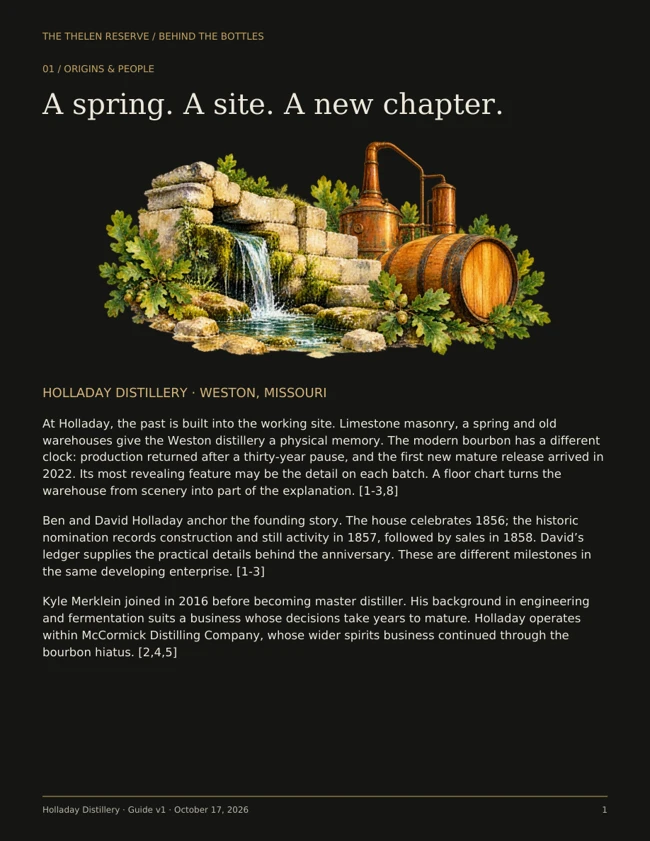
At Holladay, the past is built into the working site. Limestone masonry, a spring and old warehouses give the Weston distillery a physical memory. The modern bourbon has a different clock: production returned after a thirty-year pause, and the first new mature release arrived in 2022. Its most revealing feature may be the detail on each batch. A floor chart turns the warehouse from scenery into part of the explanation.[1][3][8]

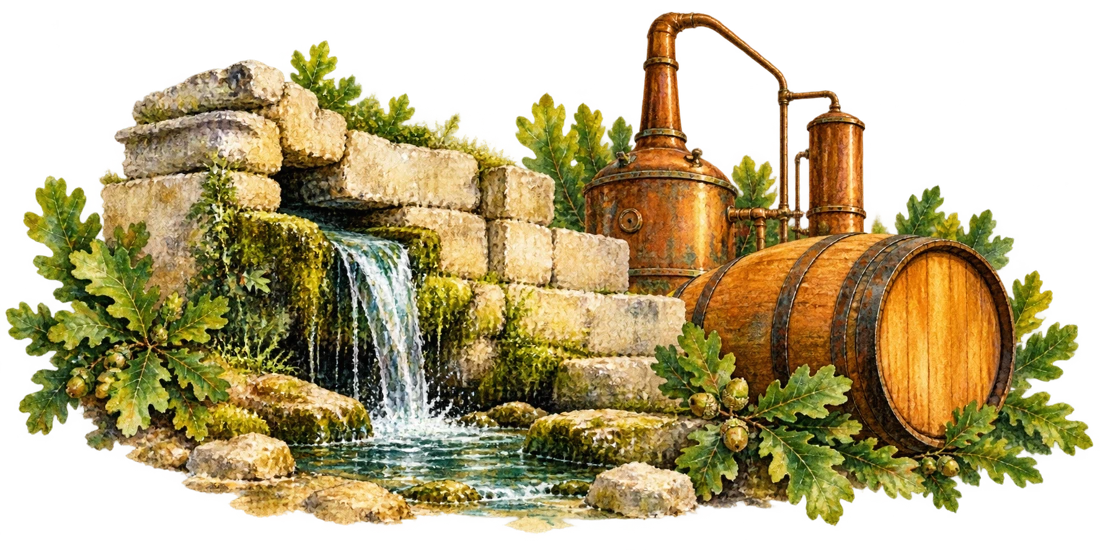
A symbolic watercolor of the Holladay spring, stonework and bourbon production
Weston, Missouri

Historic site · working bourbon distillery

1856

Founding tradition · modern bourbon returned in 2022

McCormick Distilling Company

Operating company

Rye & wheat recipes

Missouri bourbon · batch-specific selection

01 / Origins & people

Two brothers. A working inheritance.

Ben and David Holladay

The name remembers two brothers, not just the entrepreneur on the label. The producer traces its founding to Ben and Major David Holladay in 1856. The surviving historical record gives David a particularly tangible role: his ledger records payments, materials and the daily business of making whiskey. Reading those details alongside the brand story reveals an enterprise being built, not simply a date being celebrated.[1][3]

A founder with a wider horizon

Ben’s interests reached well beyond whiskey. The distillery’s account places its namesake in the stagecoach and transportation business of the American West. That background helps explain the frontier character of the brand, but the bourbon’s identity is anchored in Weston rather than every venture associated with his name. His entrepreneurial reputation and David’s operating record are complementary parts of the story.[1][3]

Kyle Merklein and the long view

Merklein joined Holladay in 2016 as Distillery/R&D Manager before becoming master distiller. His background combines engineering, fermentation research and industrial production, including earlier work at MGP in Atchison. That employment history is not a claim that the modern Holladay bourbon is sourced from MGP. The producer’s biography describes a decision-making horizon measured in years, fitting a business that has to make tomorrow’s inventory today.[4]

The institution behind the revival

Holladay Distillery operates within McCormick Distilling Company. The producer identifies Ed Pechar, Mike Griesser and private investors with the 1993 acquisition. In the modern chapter, heritage became a reason to rebuild the bourbon operation. The distinction matters: the return of bourbon did not mean the wider spirits company had disappeared during the intervening decades.[2][5]

02 / The illustrated history

The past has more than one date.

A chronology of the brand, its experiments and its reach. Each scene is an original interpretive watercolor.
foundation, symbolic watercolor illustration
1856

The founding tradition

Holladay dates the enterprise to 1856 and the brothers’ Blue Springs Distillery. This is the brand’s founding date. The surviving construction and sales record adds more specific dates for the physical operation.[1][3]
ledger, symbolic watercolor illustration
1857–1858

The ledger gives the story detail

The historic nomination records masonry work and still deliveries in 1857, then marketable spirits and quantity sales in 1858. These documentary milestones distinguish building, distilling and selling from a single anniversary date.[3]
succession, symbolic watercolor illustration
1894–1900

The family chapter gives way

After David’s death in 1893, the business continued through family successors. The nomination describes Barton’s role in the estate and the property leaving family possession in July 1900, followed by the Shawhan chapter.[3]
prohibition, symbolic watercolor illustration
1919–1933

A real interruption

The historic nomination states that the distillery closed with Prohibition and remained inactive until 1933. Its survival as a site should not be confused with uninterrupted whiskey production.[3]
identity, symbolic watercolor illustration
1930s–1950

Changing names and owners

Official brand history identifies Isadore Singer in 1936 and the McCormick name in 1942. The historic nomination records Old Holladay, Old Weston, United Distillers and the Cray family’s 1950 purchase. The accounts describe a complex transition, with naming details that do not align neatly.[1][2][3]
pause, symbolic watercolor illustration
1985

Bourbon production pauses

The company’s later account dates the start of a thirty-year bourbon-distilling hiatus to 1985. Other spirits remained part of the business. This was a change in the production program, not the end of the company’s existence.[5]
investment, symbolic watercolor illustration
1993

A new ownership chapter

Ed Pechar, Mike Griesser and a private investor group acquired the business. The producer’s history treats this as the foundation of its current ownership chapter, preceding the eventual return to bourbon.[2]
revival, symbolic watercolor illustration
2015–2016

The bourbon operation returns

The 2025 company announcement places equipment renewal and the restart in 2015. The first modern release journals identify Spring 2016 distillation. These records are kept distinct: a restart project and the dated whiskey later bottled are not interchangeable milestones.[5][8]
kyle, symbolic watercolor illustration
2016

A name returns, a maker arrives

The site resumed the Holladay name during its 160th anniversary year. Merklein joined as Distillery/R&D Manager, bringing fermentation and process expertise to the new bourbon program.[2][4]
launch, symbolic watercolor illustration
May 2022

The first mature modern chapter

The May journal records 56 barrels distilled in Spring 2016 and aged in Rickhouse C. The blend drew 79% from floor five and 21% from floor one. Six years of waiting became a release with an unusually visible blending rationale.[8]
wheat, symbolic watercolor illustration
March 2023

Soft Red Wheat takes its place

A launch event and the March batch journal establish the wheated bourbon’s arrival. The first documented batch came from Spring 2017 distillation. Replacing rye with soft red wheat created a second foundation for the range.[12][13]
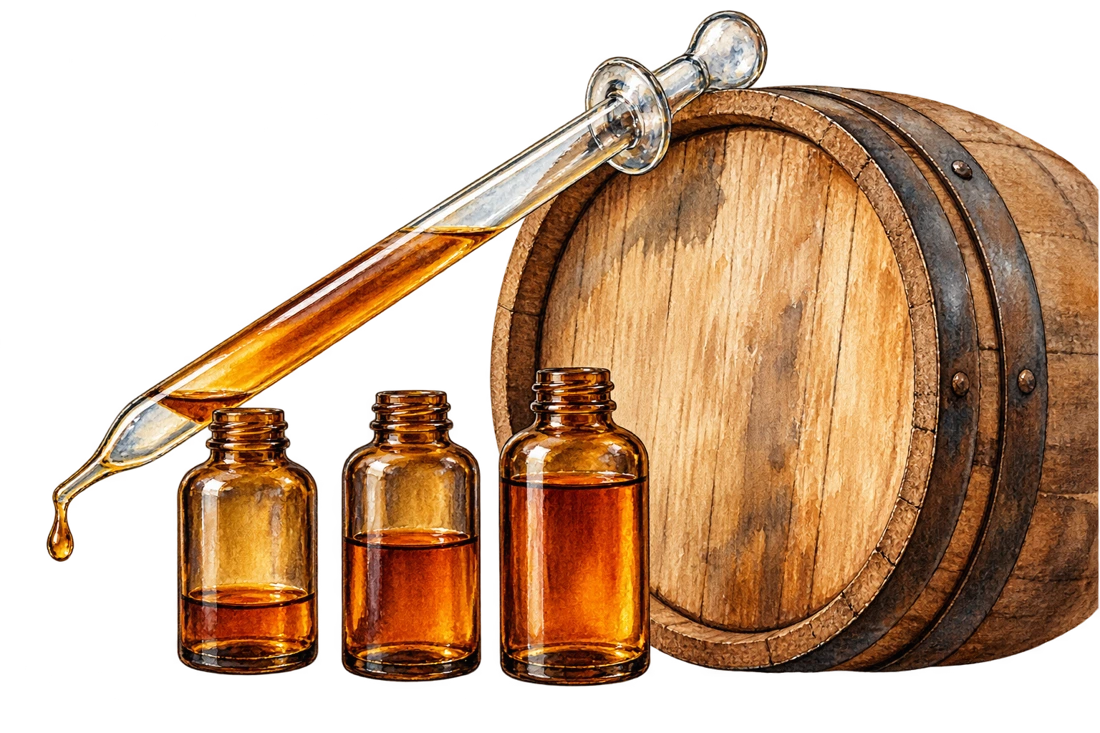
rickhouse, symbolic watercolor illustration
August 2023

Rickhouse Proof travels farther

Previously a distillery-focused offering, the higher-proof Ben Holladay release was prepared for wider distribution. The journal records 145 barrels and a final Rickhouse Proof of 120.1. The proof belongs to this batch, not the entire series.[15]
seven, symbolic watercolor illustration
November 2023

An extra year becomes an exception

Rather than stop maturation in a steel tank, the team allowed a group of Fall 2016 barrels to reach seven years. The journal calls the resulting release a one-off within the then six-year program and explains the operational complications of changing an age statement.[16]
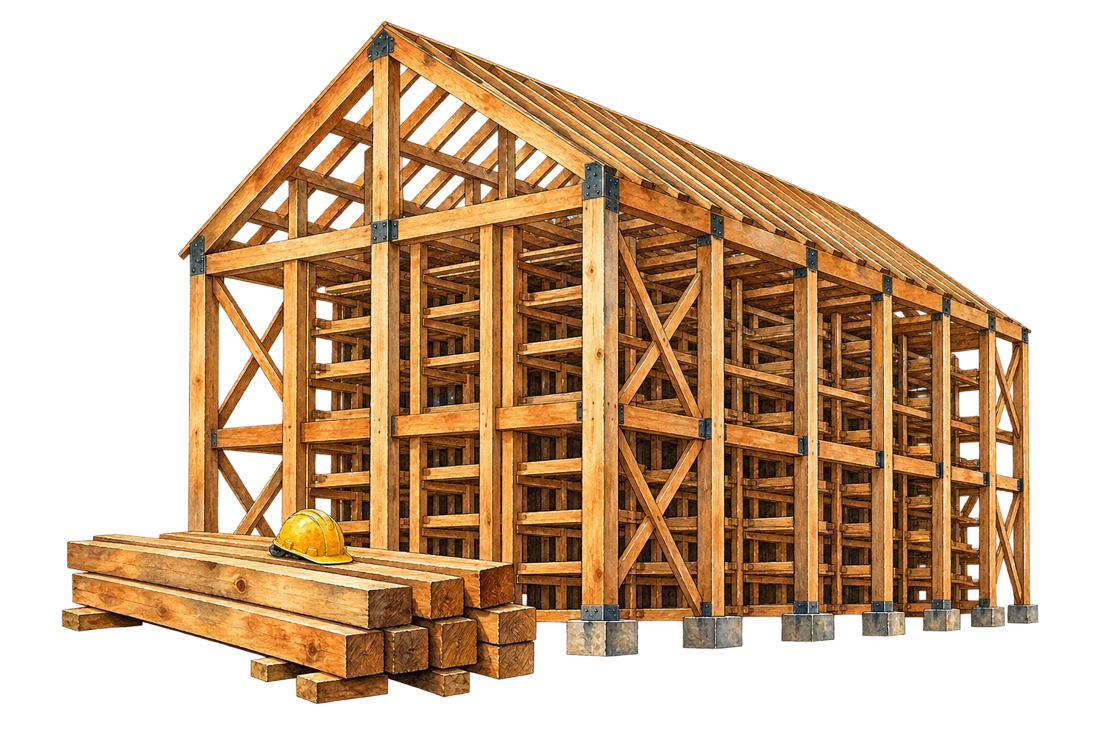
expansion, symbolic watercolor illustration
February 2025

More room for future whiskey

Holladay announced groundbreaking for Rickhouse D, planned for 11,000 barrels. The announcement describes capacity expansion, not an instantly available supply of mature bourbon. Future releases still depend on time in wood.[5]
decade, symbolic watercolor illustration
2026 snapshot

A decade of modern maturation

The producer’s 170th-anniversary presentation introduces a limited ten-year Ben Holladay expression, distilled on site and aged in ironclad rickhouses. This is a current range milestone; the retrieved page does not establish an exact first sale date.[19]
03 / Geography & roles

The places play different parts.

place, symbolic watercolor illustration

Weston, Missouri

The distillery’s home is One McCormick Lane, near the Missouri River. Its visitor experience moves through a working production property. The town provides context; the distillery’s specific buildings and storage spaces explain the whiskey. Current tour availability should be checked with the producer.[20]

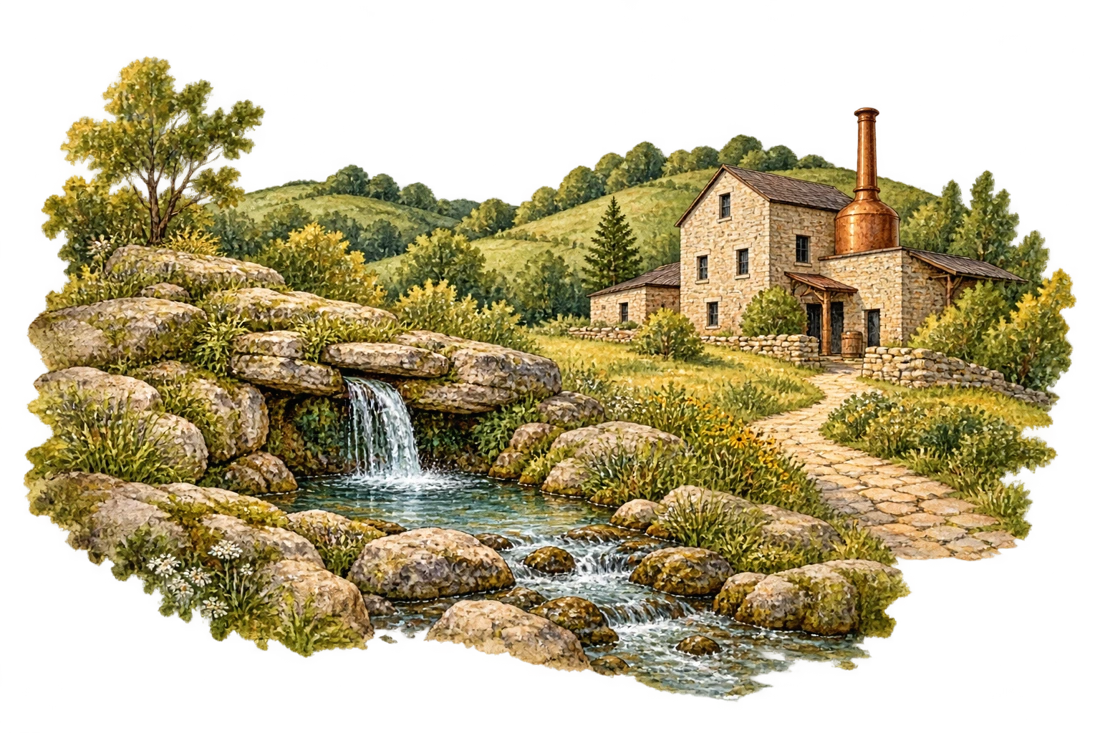
The limestone spring and stone building

The National Register nomination describes the spring, its relationship to the rock distillery building and the adaptation of the property to industrial use. Its construction evidence is more precise than a general anniversary claim. The spring is a physical resource and a historical thread, not proof that every era used identical equipment.[3]

The ironclad rickhouses

The company describes three earlier warehouses dating from the early 1900s, 1930 and 1950, followed by the Rickhouse D project. The release journals make individual floors meaningful through actual blending records. A rickhouse is an aging environment, not merely a picturesque place to store barrels.[5][9]

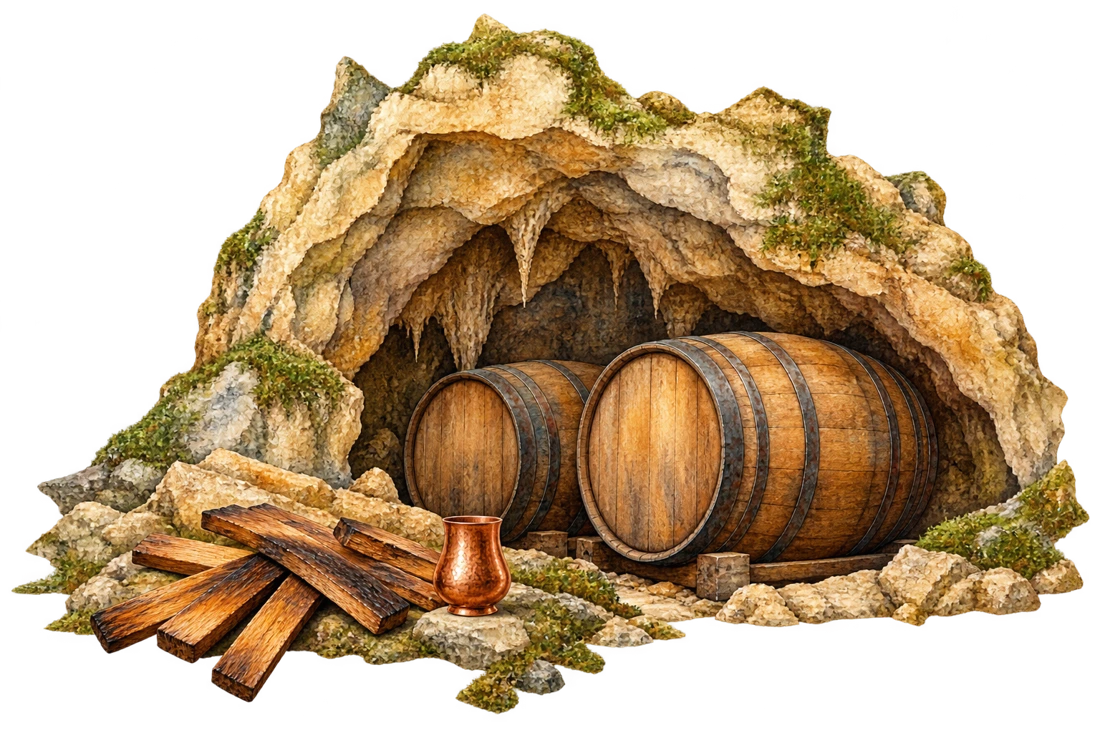
The Ancient Cave

The producer identifies the cave as an older structure reused for experimental secondary maturation. It says the space holds 72 ricks and maintains approximately 60°F. Those are producer descriptions of a controlled finishing environment, distinct from the temperature variation explored in the main rickhouses.[18]

04 / The whiskey family

One producer. Several ways to explore.

McCormick Distilling Company

Operating company

The company behind the Holladay site has a broader spirits portfolio. A corporate connection does not mean every portfolio product is distilled in Weston. Imported and differently produced brands retain their own origins.[2][21]

Holladay Distillery

Physical site and producer

The historic Missouri property and working bourbon operation. Its identity connects the modern distillate to a particular place without claiming uninterrupted production since the nineteenth century.[3][5]

Ben Holladay / 1856 Original

Rye-recipe bourbon

The core recipe is published as 73% corn, 15% rye and 12% barley. The producer describes it as the original recipe carried into modern production. That continuity claim is attributed to the house.[6]

Holladay Soft Red Wheat

Wheated sibling

The published recipe substitutes 15% wheat for rye while retaining 73% corn and 12% barley. It is a wheated bourbon, not a separate distillery and not a wheat whiskey classification.[7]

Rickhouse Proof and One Barrel

Release formats

Rickhouse Proof preserves the strength of a batch assembled from barrels. One Barrel focuses on an individual selection. A higher proof does not, by itself, establish that a release is a single barrel. Read the format and label together.[17][22]

Ancient Cave Collection

Finishing program

Selected mature bourbons enter experimental secondary barrels. This is a separate maturation choice within the Holladay family, rather than a new claim about where the original spirit was distilled.[18]

05 / Making & choosing

Grain, wood and the floor between.

Two grain recipes, years in Missouri oak and deliberate floor selection shape the core range. Secondary finishing adds a separate chapter.

production, symbolic watercolor illustration

Two recipes, one useful comparison

The core rye and wheat recipes keep corn and barley proportions constant. That makes them an accessible comparison of flavor-grain choice, although release date, barrel selection, age and proof can also differ. A side-by-side tasting should note those variables instead of attributing every difference to the grain alone.[6][7]

Fermentation belongs in the story

In the March 2023 Soft Red Wheat journal, Merklein explains that changing grain alters more than sweetness. Grain composition affects fermentation and the compounds created before the spirit enters wood. This is the producer’s explanation of its recipe development, rather than a claim that a single ingredient determines the finished flavor.[13]

Oak and time

The current Original product description specifies Missouri-grown corn, level-three-charred Missouri white oak and no chill filtration. The first modern six-year batches demonstrate the waiting period behind the revival. Later expressions should be read by their own labels rather than assigned the first batch’s age automatically.[6][8]

The floor is an ingredient in selection

September 2022 used 72% from Rickhouse C’s first floor and 28% from its fifth. Merklein described this as a deliberate reversal of the earlier balance, showing how floor selection changes a blend. It is a documented experiment, not a universal formula that warmer always means better.[9]

Strength follows the release

The house describes Rickhouse Proof as the combined barrel yield’s strength. Its May 2023 Soft Red Wheat journal records 119.9 proof after 77 barrels from six floors were combined. A batch can therefore be both a blend of barrels and unproofed to the standard 100-proof presentation.[17][14]

Finishing is a separate chapter

The Ancient Cave program begins with mature bourbon, then explores new oak types and barrel treatments. The current release archive distinguishes toast, char, smoke and stave treatments. Those details belong to specific releases; they should not be attached to the core bourbon merely because it shares the producer.[18][22]

06 / The details worth knowing

The stories behind the specifications.

A chart that invites questions

The floor percentages encourage a different kind of reading. Instead of treating a brand as a fixed recipe in a fixed warehouse, the journal reveals changes across seasons and selections. March 2023 intentionally omitted floor five, testing what the middle floors could contribute. The bottle becomes the beginning of a question about maturation.[11]

The barrel with a birthday

In the October 2022 journal, Merklein describes revisiting a barrel filled on the date his son was born. It is a small personal detail inside a technical account of floor selection. The story is attributed to his journal and does not imply that the barrel has since become a particular commercial release.[10]

Why seven years was not just a bigger number

The November 2023 note explains a choice between holding whiskey in steel and allowing it to keep aging in oak. The latter produced a seven-year release, but also required changes in sales and registration work. The episode shows how the liquid, its label and the business around it move together.[16]

An old cave, a different question

The cave’s relatively steady conditions give the finishing program another setting. Where the floor journals explore variation inside rickhouses, the cave experiments emphasize secondary wood treatment. It is a useful contrast between two ways the same producer investigates maturation.[18]

A new warehouse is a promise to wait

Rickhouse D adds space for aging, not a shortcut through it. The 2025 project is best understood as a commitment to future supply. The present ten-year expression makes the other side of that equation visible: mature whiskey reflects choices made a decade earlier.[5][19]

History with its seams visible

The historical nomination and current brand history do not tell every ownership and naming detail in the same way. Keeping the 1856 founding tradition alongside later construction records produces a stronger account than forcing all the evidence into one seamless legend. Long-lived industrial sites often carry several overlapping histories.[3][1]

07 / Selected expressions

A tasting path through the producer.

Ben Holladay Bottled-in-Bond

The 100-proof Original is the clearest starting point for the rye-based recipe. Historical six-year releases and the special November 2023 seven-year bottling should remain separate. The journal’s higher Rickhouse Proof figure is not the bottled-in-bond bottle’s proof.[6][16]

Holladay Soft Red Wheat

The wheated sibling offers the most direct recipe comparison. The March 2023 journal records the early six-year batch; current bottles should be checked for their own age and release information. The producer describes a softer profile, but this guide makes no claim of personal tasting.[7][13]

Rickhouse Proof

A route into the blending decisions at the strength produced by the selected barrels. The series spans both core recipes. Look for the bottling month and proof instead of assuming every red-label or higher-strength release is equivalent.[17][15]

Ancient Cave Collection

A place to explore secondary wood treatments after the primary maturation. Read the named finish, age and release notes individually. The program is selected experimental production, not a promise that each listed expression remains available.[22]

Ben Holladay 10 Year

The current ten-year presentation connects the 170-year anniversary story with modern stock that has spent a full decade aging on site. The retrieved producer page supports that age and provenance, but does not provide enough detail to assign an exact launch day or universal bottling proof.[19]

08 / The Reserve connection

Continue from the story to the bottles.

Holladay in The Thelen Reserve

3 physical bottle records connect this story to the collection. Each keeps its own proof, barrel, batch, pick and release details.

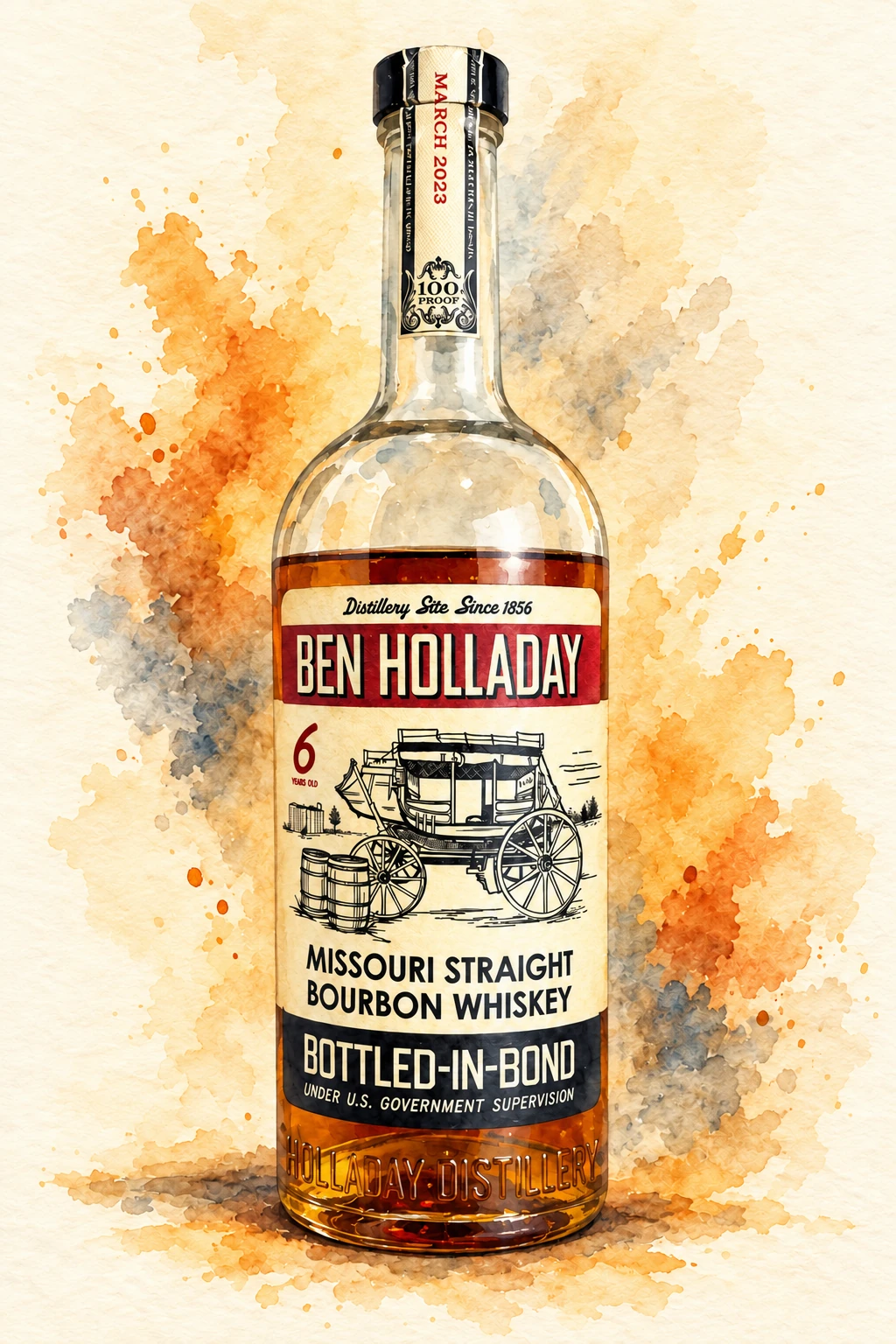
Ben Holladay Bottled-in-Bond · 6 Year approved watercolor

Ben Holladay Bottled In Bond 6 Year Old Straight Bourbon

W0058 · 100 proof · Bottled / release detail BottledMarch9,2023; neckMarch2023; six-yearMissouriStraightBourbonWhiskey,Bottled-in-Bond,100proof/50%ABV/750mL. RickhouseC, floor4=10%,floor3=68%,floor2=22%,others0%; DSP-MO-5 retained separately inMap. · Barreled detail DistilledFall2016 (season only, no precise barreled date); originalHblank preserved. · Bottled / release 3/9/2023

Bottled March 9, 2023 · Distilled Fall 2016

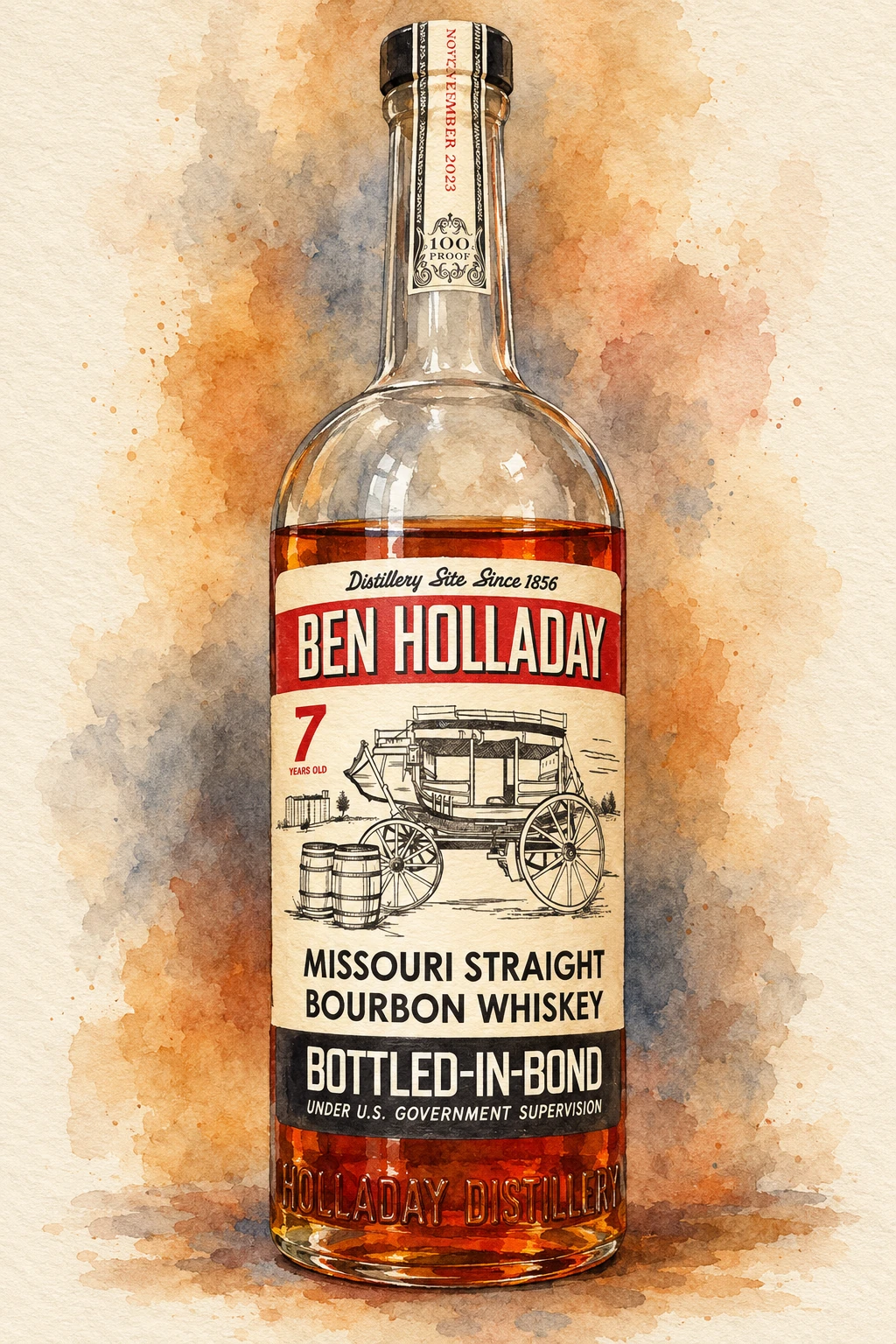
Ben Holladay Bottled-in-Bond · 7 Year approved watercolor

Ben Holladay Bottled In Bond 7 Year Old Straight Bourbon

W0059 · 100 proof · Bottled / release detail Bottled November 15, 2023, verified on saved side label; November 2023 7-year Bottled-in-Bond release. 100 proof / 50% ABV / 750 mL. Rickhouse C: 44% floor 5, 18% floor 3, 38% floor 2. · Barreled detail Fall 2016 · Bottled / release 11/15/2023

Bottled November 15, 2023 · Distilled Fall 2016

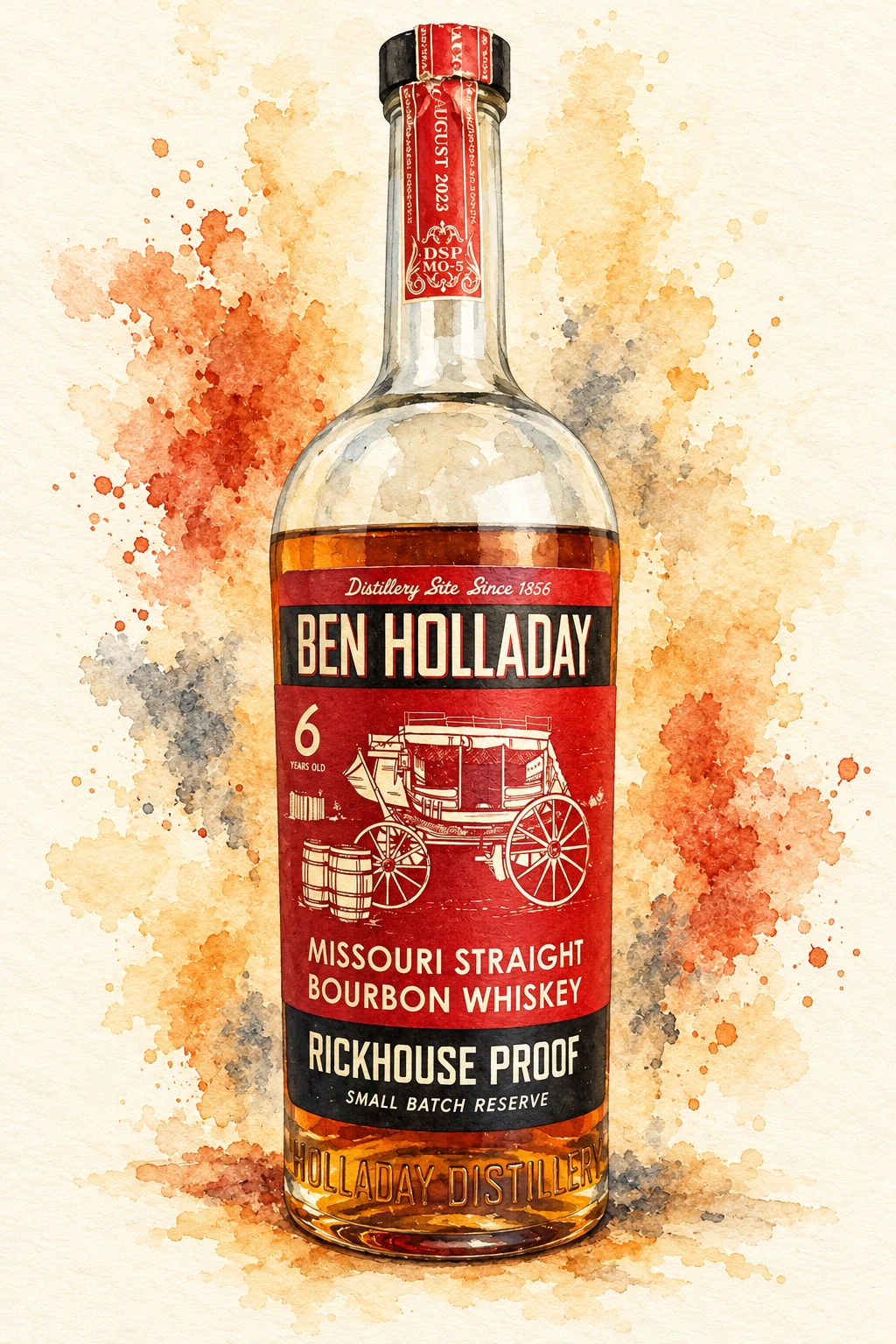
Ben Holladay Rickhouse Proof · 6 Year approved watercolor

Ben Holladay Rickhouse Proof 6 Year Old Straight Bourbon

W0060 · 120.1 proof · Bottled / release detail BottledAugust17,2023. RickhouseProofSmallBatchReserve,MissouriStraightBourbonWhiskey,6years,120.1proof/60.05%ABV,750mL. WarehouseC floor5=5%,4=22%,3=58%,2=15%,others0%. DSP-MO-5 retained separately inMap,notbatch. · Barreled detail DistilledFall2016,seasononly; exact barreled date notshown, Hblank preserved. · Bottled / release 8/17/2023

Bottled August 17, 2023 · Distilled Fall 2016

Collection snapshot: October 22, 2026. Each bottle uses its exact approved watercolor. The six-year, seven-year and Rickhouse Proof releases retain their individual dates and strengths.

Holladay Distillery guide cover
The illustrated companion

Holladay, in three pages.

Origins and people, history and places, whiskey and stories. An illustrated companion with linked research sources.

Sources & research notes

Research qualifications

  • Research checked October 17, 2026. Website v1 and Guide v1 approved October 17, 2026.
  • 1856 is the producer’s founding date. The National Register nomination documents the rock building and still activity in 1857, then sales in 1858. The profile distinguishes these milestones. The nomination is a historical record, not a current operating description.
  • The nomination records closure from 1919 to 1933. The modern company records a bourbon hiatus from 1985 to 2015. No claim of uninterrupted bourbon production is made.
  • Current brand history places the McCormick name in 1942; the nomination links the name transfer to the Cray/Waldron history after the 1950 acquisition. These accounts are disclosed without inventing a resolution.
  • The 2015 restart account and the Spring 2016 distillation dates of the first modern releases are kept distinct. The 2026 ten-year page is a current range snapshot, not evidence of an exact launch date or proof.
  • The March 2023 journal’s prose swaps floor-two and floor-four percentages compared with its chart. The chart records floor four 10%, floor three 68%, floor two 22%; the prose discrepancy remains unresolved.
  • Sensory statements are attributed producer explanations, not TJ’s or the author’s tasting notes. Illustrations are symbolic watercolor interpretations, not exact buildings, machinery, portraits or historical artifacts.
  • All three collection images are exact approved single-bottle watercolors: W0058 ART0791 v2, W0059 ART0189 v1 and W0060 ART0795 v1. Six-year, seven-year and Rickhouse Proof records remain separate.

Full sources

  1. Holladay: the founders and ownership
  2. Holladay Distillery: site history
  3. National Register nomination: McCormick Distillery
  4. Kyle Merklein: engineering and fermentation
  5. 2025 producer announcement: Rickhouse D and revival
  6. Ben Holladay: 1856 Original specifications
  7. Holladay Soft Red Wheat: recipe and identity
  8. May 2022: first modern batch
  9. September 2022: reversing the floor balance
  10. October 2022: seasons and a personal barrel
  11. March 2023: exploring the middle floors
  12. March 2023: Soft Red Wheat launch event
  13. March 2023: changing the flavor grain
  14. May 2023: six floors in one blend
  15. August 2023: Rickhouse Proof reaches beyond the gate
  16. November 2023: the seven-year exception
  17. Rickhouse Proof: strength follows the batch
  18. Ancient Cave Collection: secondary maturation
  19. Ben Holladay 10 Year: the modern decade
  20. Tours: a working Missouri distillery
  21. McCormick: wider spirits portfolio
  22. Distillery-exclusive releases: dated specifications
↑