TJ THELEN'S COLLECTION
The Thelen Reserve
Behind the Bottles / Pleasureville, Kentucky

Heaven’s Door

Last updated Last researched

American whiskey, through an artist’s gate.

An iron gate can hold unrelated objects together without erasing their shapes. Heaven’s Door takes a similar approach to whiskey: selected stocks, collaborative blends and expressive cask finishes, later joined by a Kentucky distillery home. Its history is best read as several connected stories, rather than a single recipe from a single still.[2][15][24]

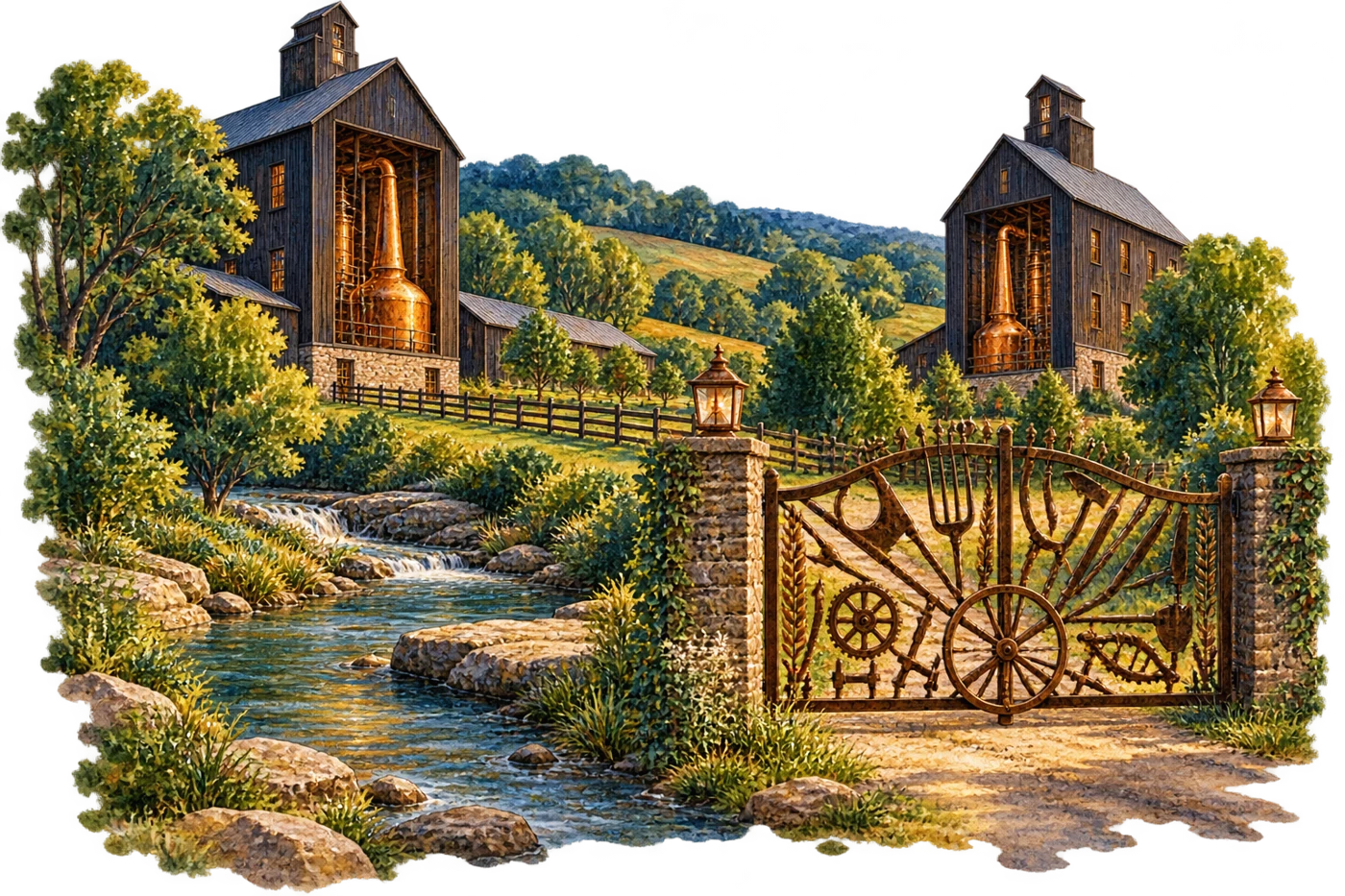
Symbolic Kentucky stillhouses, creek and found-metal gate
Public debut
2018[1]
Production home
Pleasureville, Kentucky[14]
Creative co-founder
Bob Dylan[2]
Identity
Brand, blender & distillery[15][19]
01 / Origins & people

The art of bringing different pieces together.

An idea before a launch

In the company’s account, Marc Bushala noticed Dylan’s 2015 Bootleg Whiskey trademark application and sought a conversation. The partnership developed before the public debut in April 2018. That distinction explains why company histories may use 2015 while shelves and launch announcements point to 2018.[1]

Art is part of the construction

The visual identity comes from Dylan’s welded gates, assembled at Black Buffalo Ironworks from discarded tools and other found objects. Bottles present that sculptural vocabulary; the Bootleg editions use his paintings instead. The recurring idea is transformation: existing materials can become a new composition without pretending to have a single origin.[2][15]

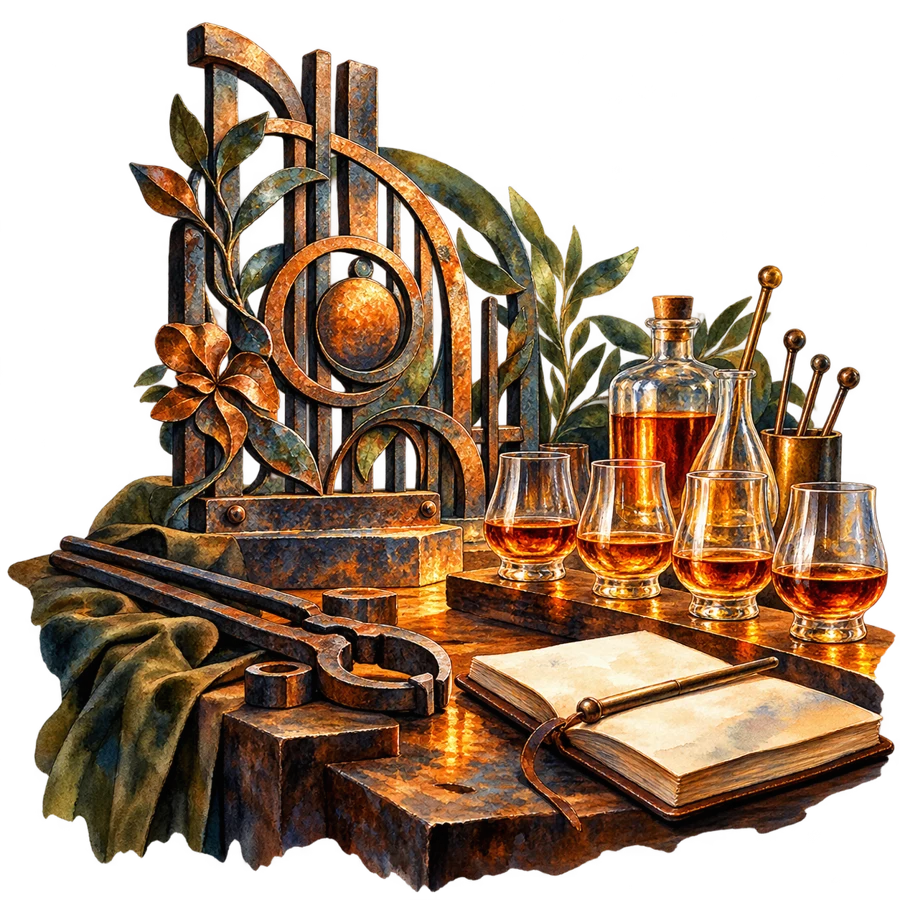
Symbolic ironwork studio and whiskey blending desk

Bob Dylan

The co-creator provides a visual and cultural thread through the collection. Gate sculptures and paintings do different jobs in the packaging; neither is evidence that the artist personally distilled an individual release.[2][15]

Marc Bushala

The spirits entrepreneur helped develop the partnership and served as CEO in the dated launch and Kentucky announcements. His role belongs to the business and creative platform, distinct from the distilling team.[1][14]

Ken Pierce

The August 2024 maker profile dates Pierce’s Six Mile Creek appointment to 2016. His earlier Barton career included chemistry, quality and distillation roles. That technical continuity matters when tracing the Kentucky facility before its Heaven’s Door identity.[3]

Ryan Perry & Alex Moore

Perry led early whiskey development and blending, including the Redbreast collaboration. Later announcements credit Moore as master blender alongside Pierce. These are dated credits, not a claim that every edition came from the same team.[10][17]

02 / The illustrated history

An idea finds its own rhythm.

Follow the brand partnership, Kentucky facility and changing whiskey portfolio. Each date belongs to its documented event.
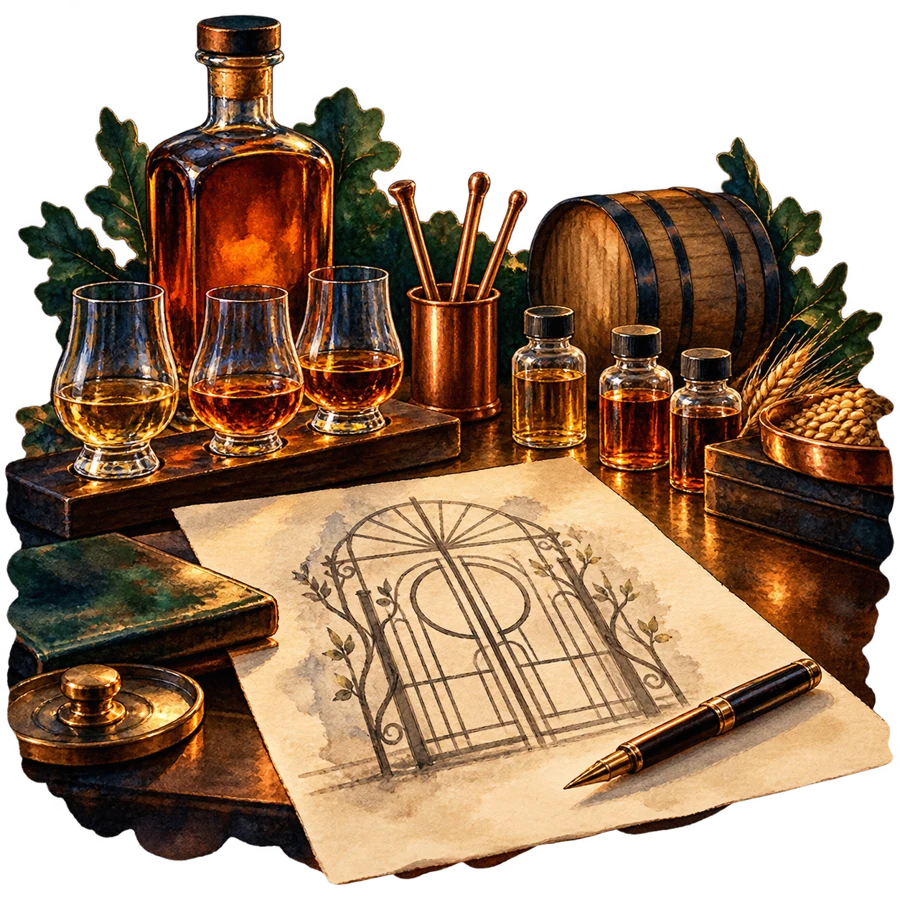
Symbolic illustration: The partnership takes shape
2015

The partnership takes shape

A trademark application prompts the meeting described in the launch account. This is the project’s genesis, three years before its public debut.[1]
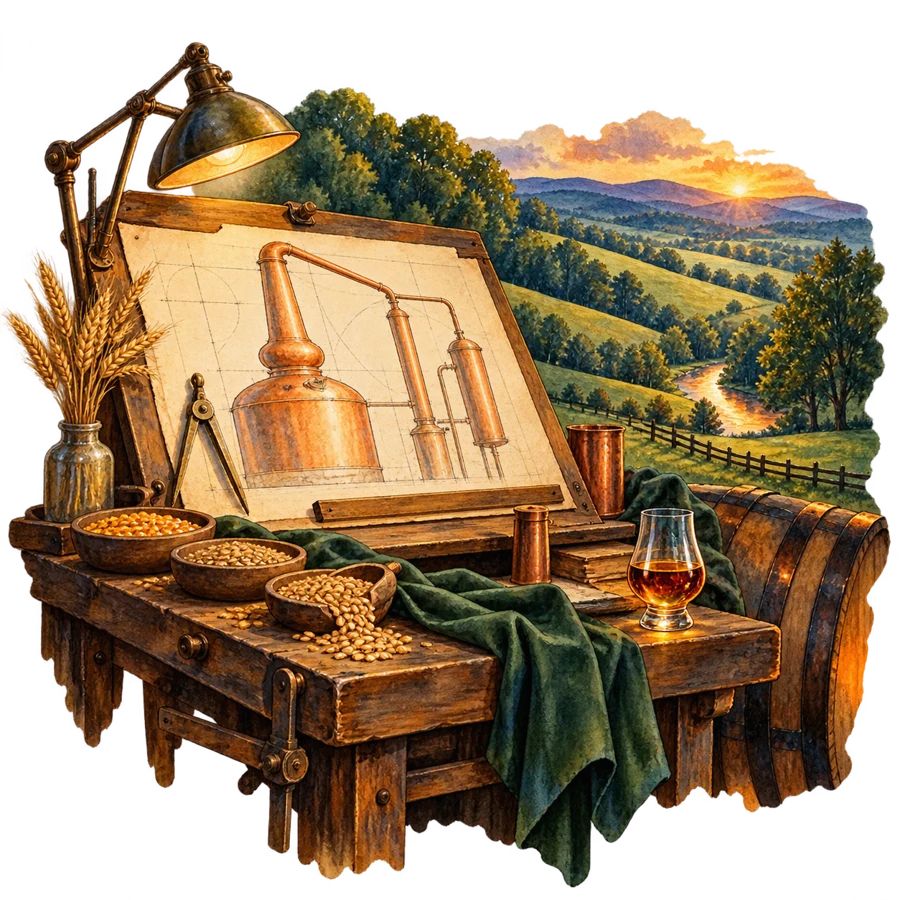
Symbolic illustration: A distiller joins Six Mile Creek
2016

A distiller joins Six Mile Creek

Pierce joins the Kentucky project. Its facility history begins before the brand announces Pleasureville as its home.[3]
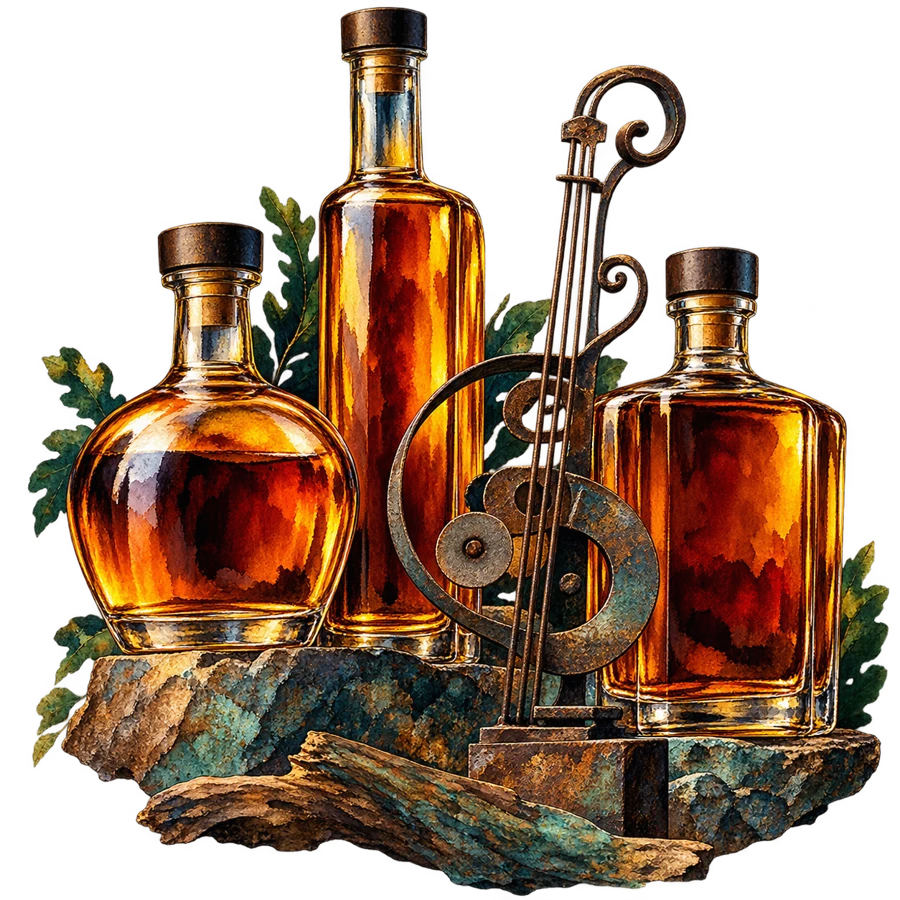
Symbolic illustration: Three expressions introduce the brand
April 30, 2018

Three expressions introduce the brand

The launch presents Tennessee bourbon, Double Barrel Whiskey and rye finished in French cigar barrels. Collaboration is built into the original concept.[1]
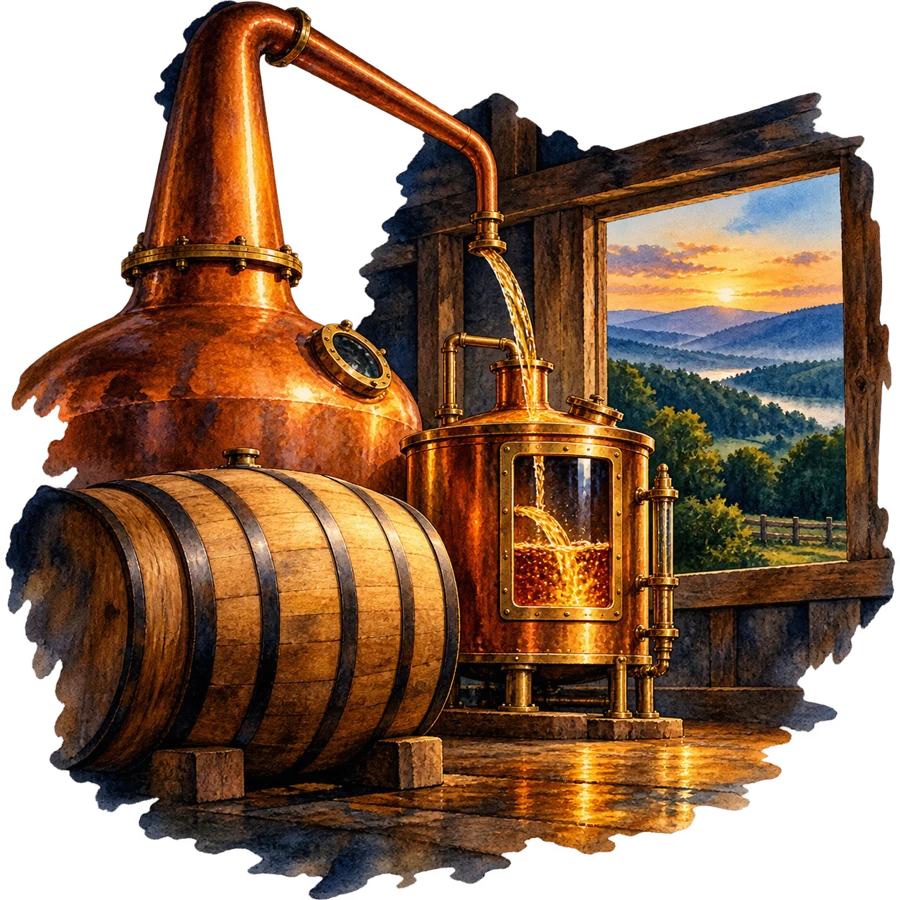
Symbolic illustration: Kentucky production begins
2018

Kentucky production begins

The later company announcement dates small-batch bourbon production on a Vendome still to this year. Distilling and public visitor access follow different clocks.[14]
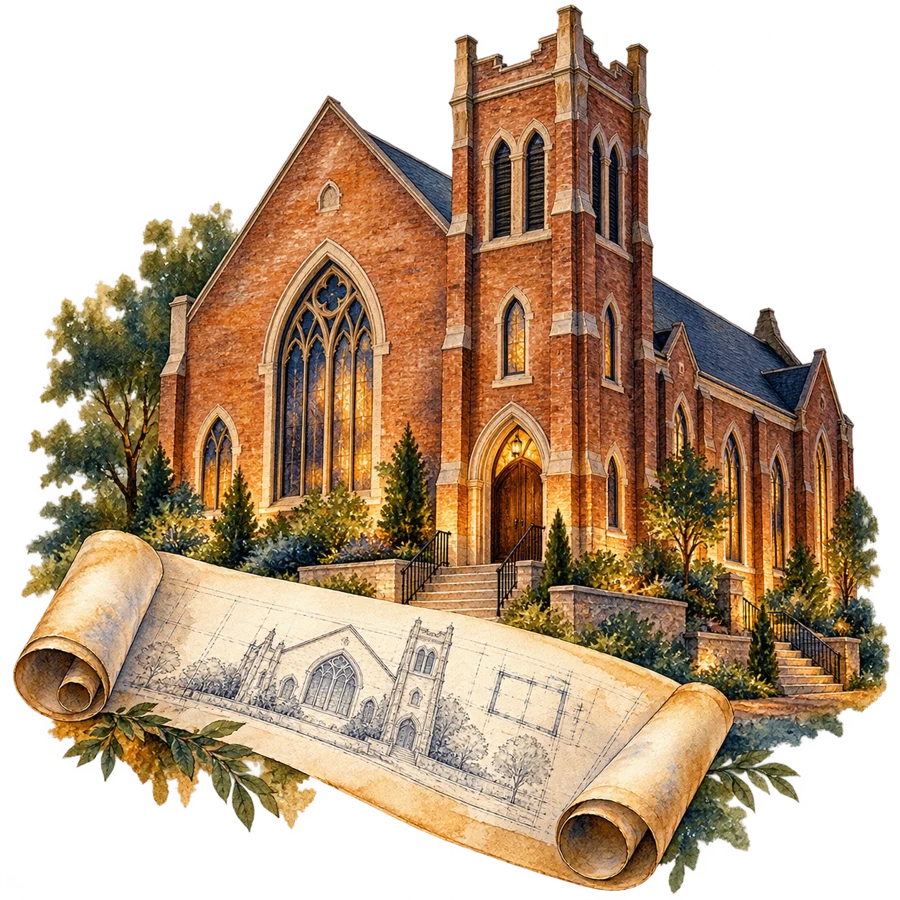
Symbolic illustration: Nashville’s arts center is proposed
April 9, 2019

Nashville’s arts center is proposed

An Elm Street Church project is announced with a planned arts venue and distillery. The announced dates are plans, not proof of an opening.[4]
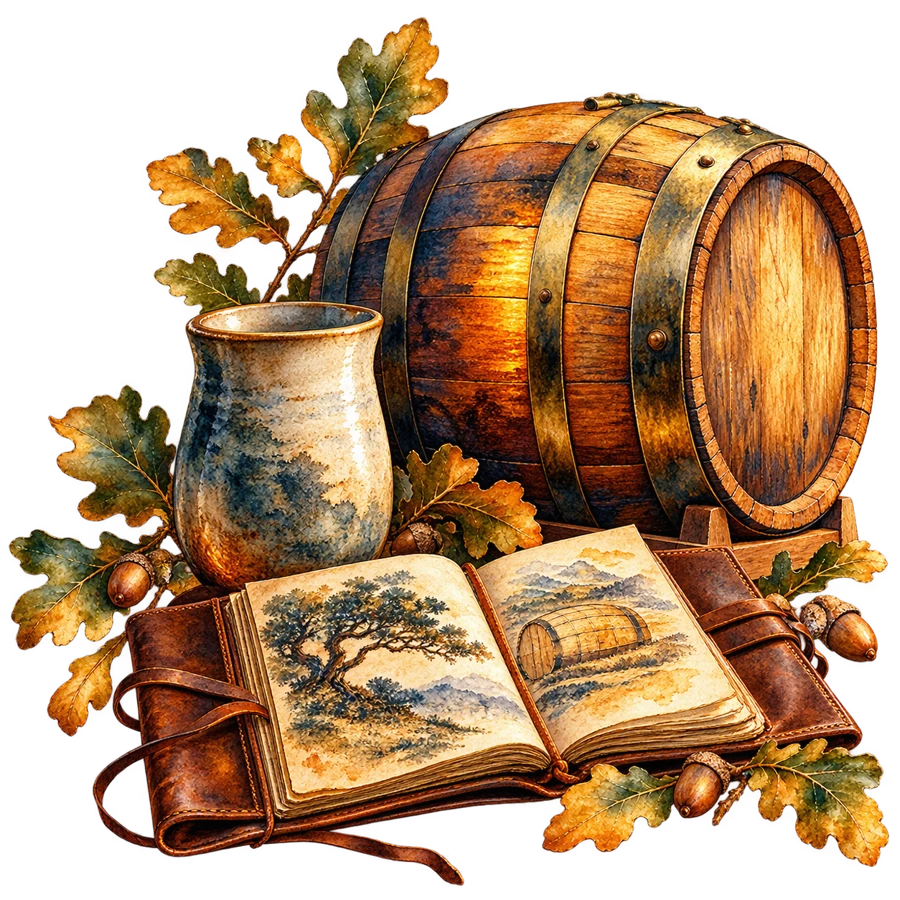
Symbolic illustration: Bootleg opens with Mizunara
November 5, 2019

Bootleg opens with Mizunara

Volume I arrives as a 26-year whisky finished in Japanese oak. Ceramic presentation and a leather journal establish the annual series’ visual rhythm.[5]
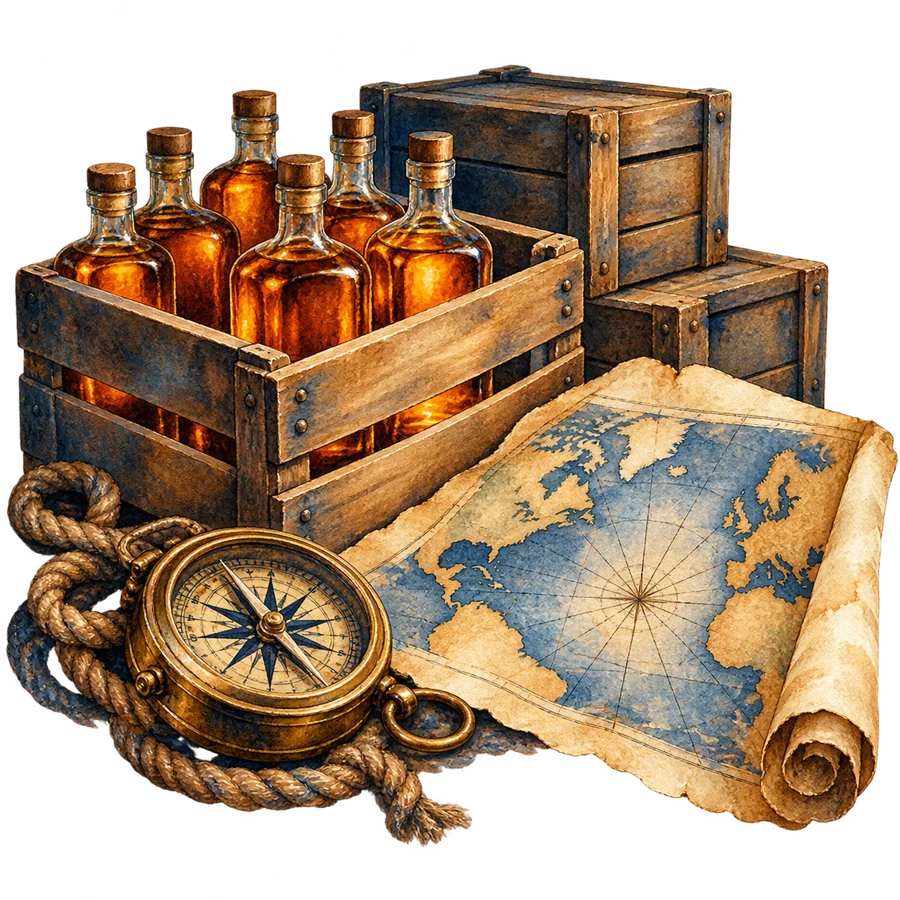
Symbolic illustration: The collection crosses the Atlantic
February 2020

The collection crosses the Atlantic

The company announces expansion into the UK and Germany. Market-specific packaging and proof make geography part of reading older labels.[7]
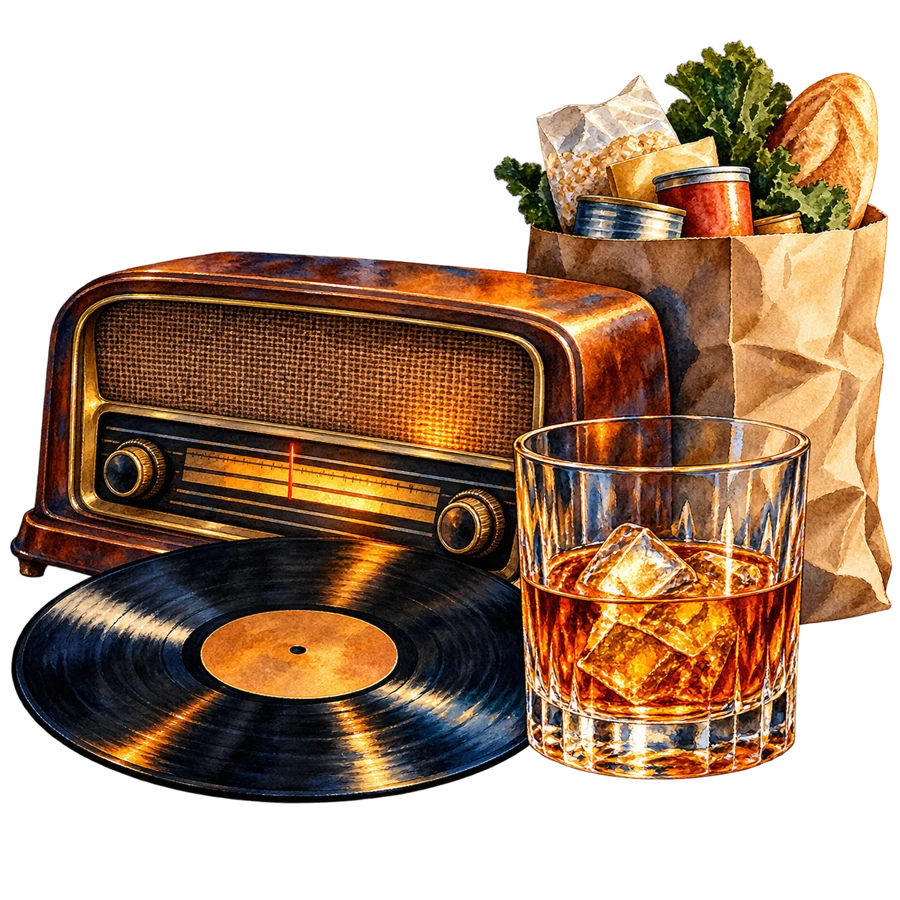
Symbolic illustration: Whiskey meets the radio hour
September 2020

Whiskey meets the radio hour

A whiskey-themed Dylan broadcast accompanies the second Serve Somebody hunger-relief initiative. Cultural storytelling extends beyond the bottle.[8]
Symbolic illustration: Rum wood changes the conversation
October 27, 2020

Rum wood changes the conversation

Bootleg II pairs 15-year bourbon with former Jamaican pot-still rum casks. The finish adds a separate chapter to already mature spirit.[9]
Symbolic illustration: A transatlantic blending partnership
May 19, 2021

A transatlantic blending partnership

Perry and Redbreast’s Billy Leighton introduce the Master Blenders’ Edition. Ten-year bourbon spends a further 15 months in former Redbreast casks.[10]
Symbolic illustration: Spanish wine casks enter Bootleg
December 7, 2021

Spanish wine casks enter Bootleg

Volume III uses 13-year Kentucky bourbon and Vino de Naranja casks. Its 121.2 proof belongs to this edition alone.[11]
Symbolic illustration: The Decade Series begins
July 12, 2022

The Decade Series begins

A 10-year high-rye Tennessee bourbon launches the range at 100 proof. The company explicitly describes it as not charcoal mellowed.[12]
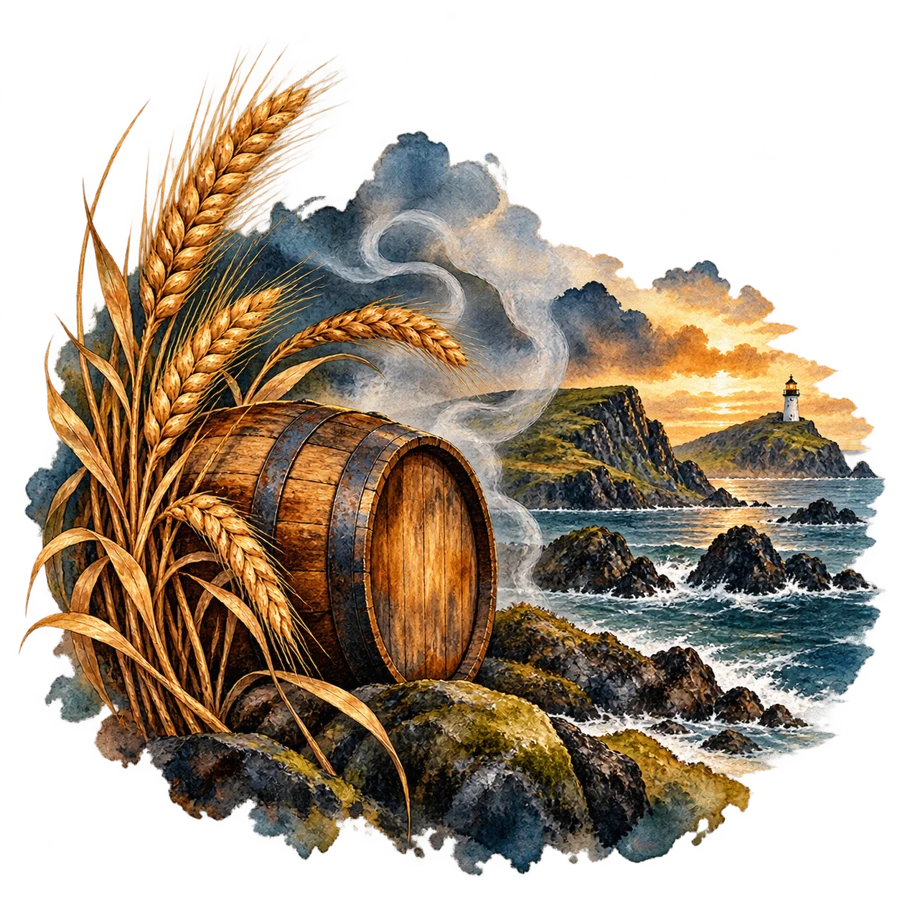
Symbolic illustration: Wheat meets an Islay finish
2022

Wheat meets an Islay finish

Bootleg IV pairs 11-year wheated bourbon with former Islay Scotch casks. The release is documented at 111 proof; the source distillery remains unidentified here.[13]
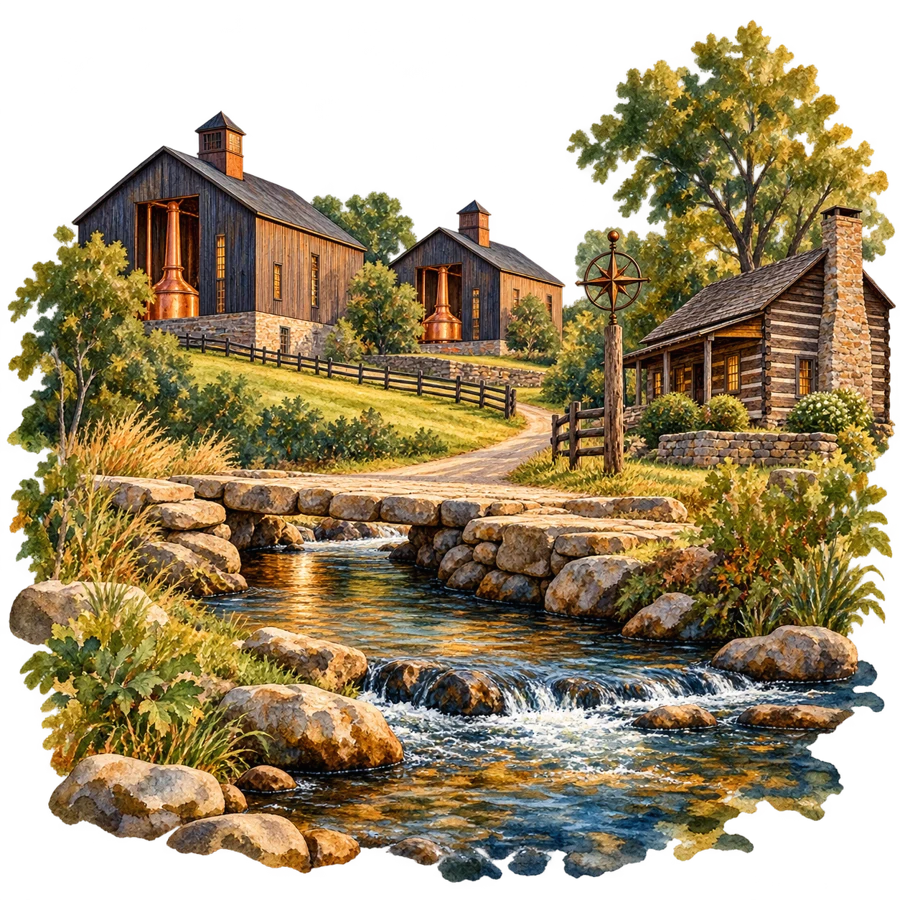
Symbolic illustration: Kentucky becomes the announced home
April 20, 2023

Kentucky becomes the announced home

Pleasureville and a Louisville brand experience are announced together. Nashville’s earlier church project is redirected in the company account.[14]
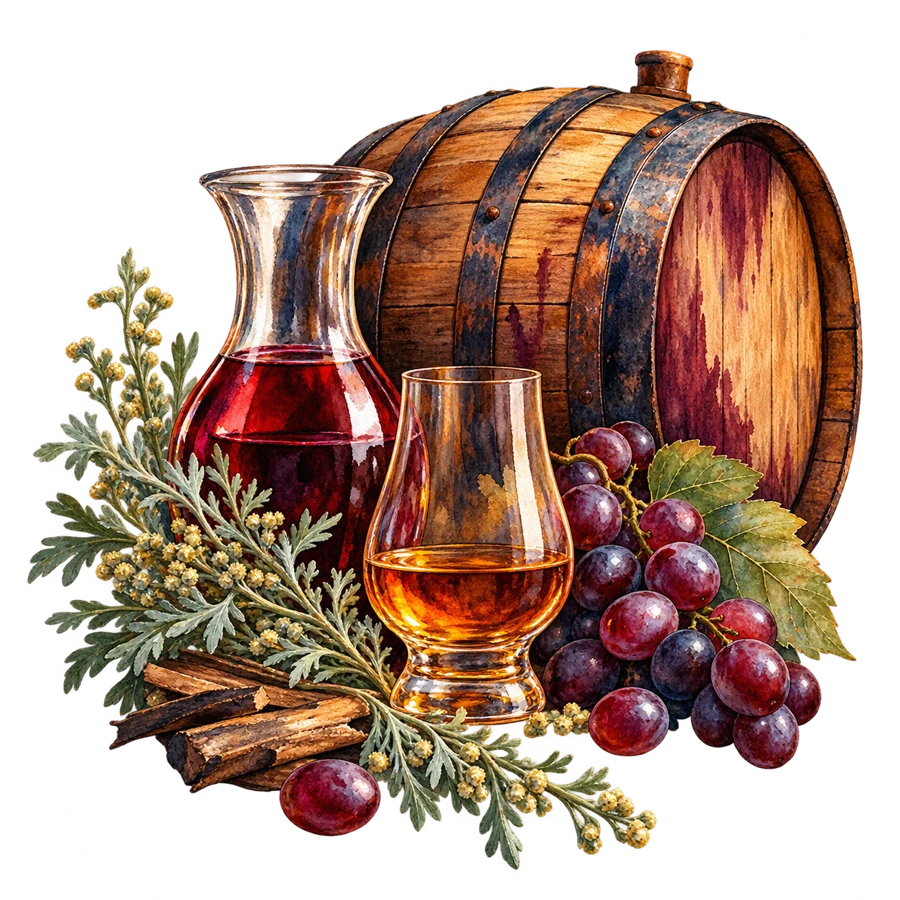
Symbolic illustration: Bootleg turns toward vermouth
November 7, 2023

Bootleg turns toward vermouth

Volume V uses 18-year bourbon finished in Spanish vermouth rouge casks. The choice connects a finishing experiment with a familiar cocktail ingredient.[16]
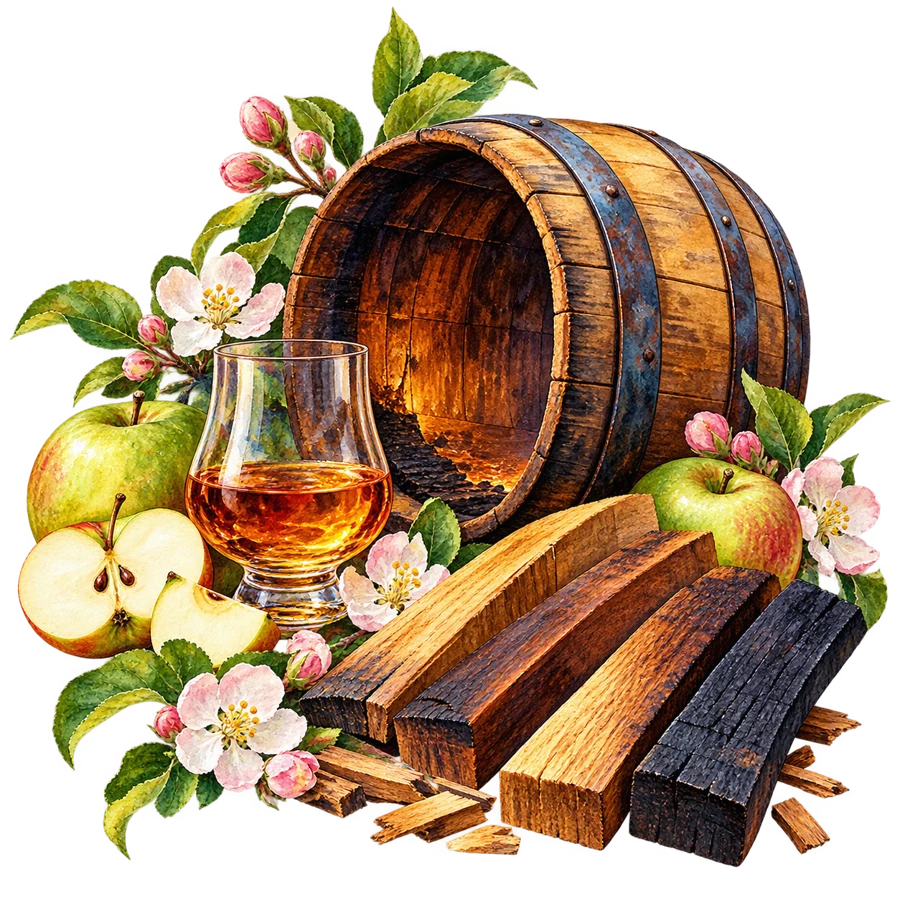
Symbolic illustration: Exploration gets its own series
February 14, 2024

Exploration gets its own series

The opening expression combines Tennessee bourbon, Calvados casks and toasted French oak staves. The stated minimum five-year age and 108 proof are edition-specific.[17]
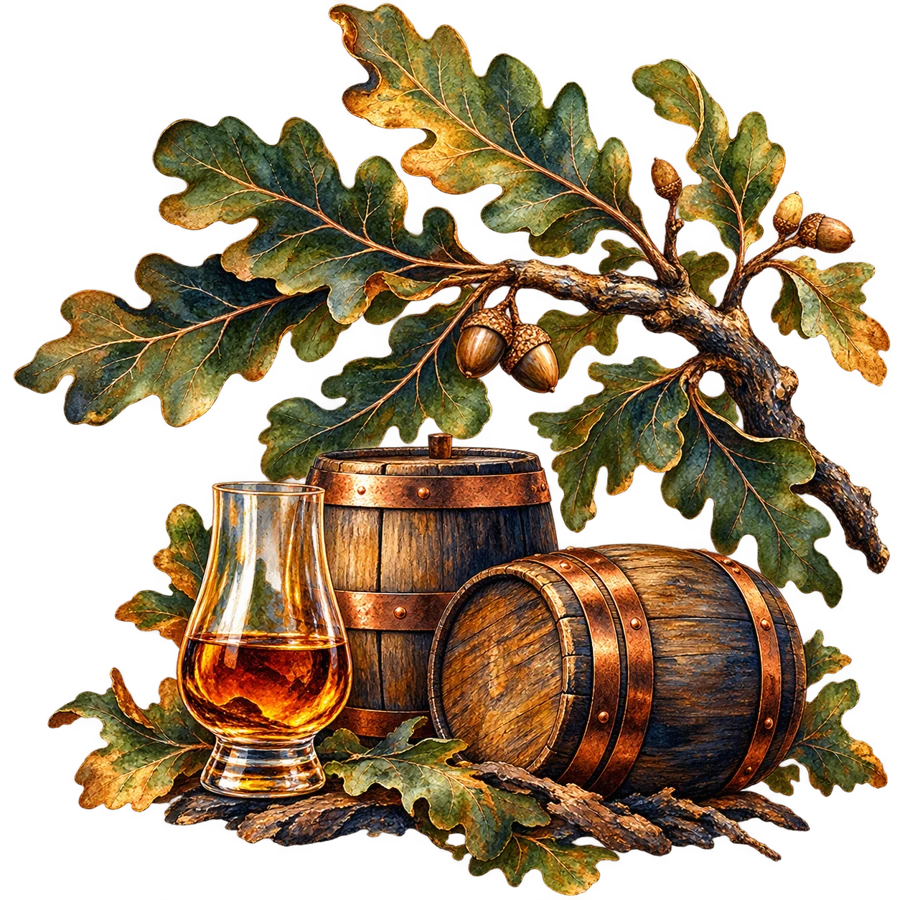
Symbolic illustration: Limousin oak shapes Bootleg VI
December 2024

Limousin oak shapes Bootleg VI

The producer dates Volume VI to December: 12-year wheated bourbon meets lightly toasted, air-dried Limousin cigar barrels.[18]
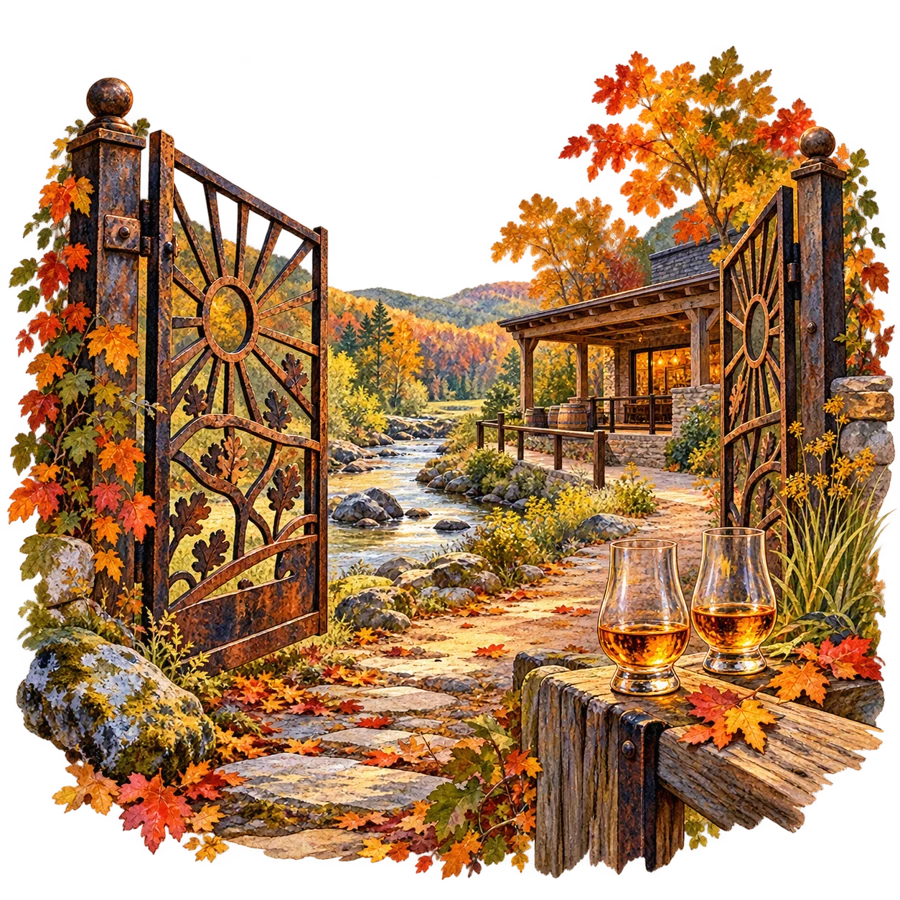
Symbolic illustration: Before the Gate welcomes previews
Fall 2025

Before the Gate welcomes previews

The current visitor page records a preview-tour season, then a seasonal closure while the full guest experience is finished. This verifies preview access, not a permanent full-opening date.[19]

Original watercolor interpretations accompany the history. Buildings, objects and scenes are symbolic, not documentary reconstructions.
03 / Geography & roles

A Kentucky home, a wider whiskey map.

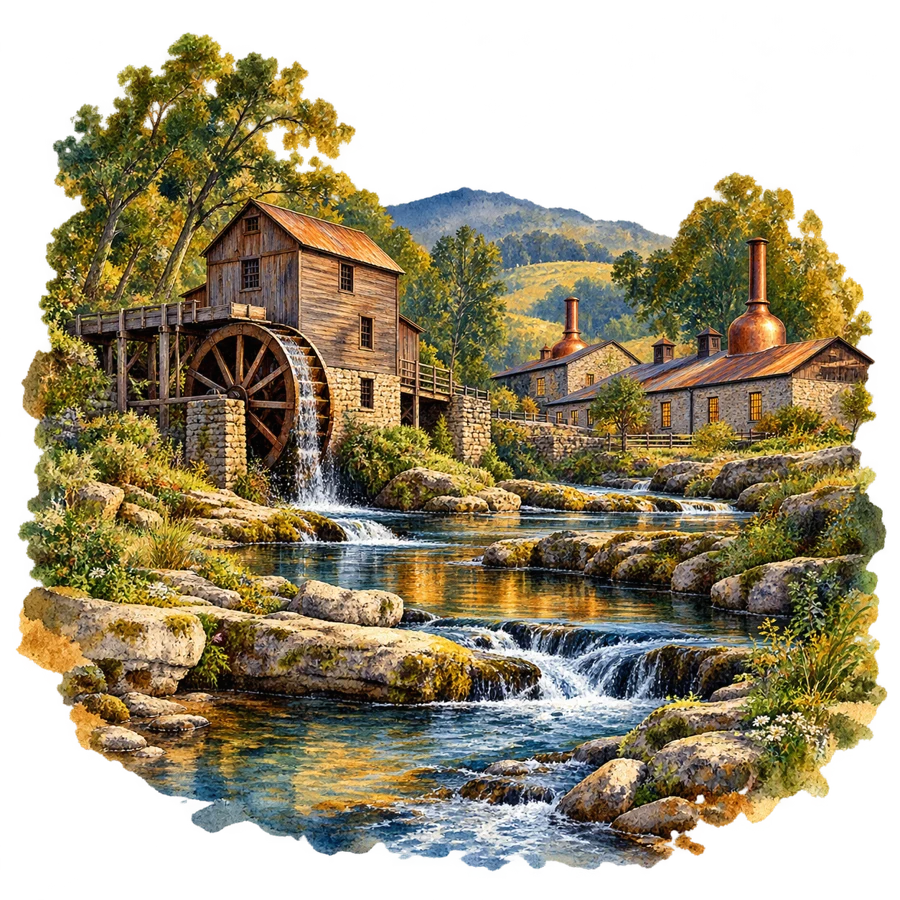
Symbolic Kentucky creek landscape and restored gristmill

Pleasureville / Six Mile Creek

The working Kentucky home combines stillhouses, farmland and a creek landscape. The producer describes restored historic structures and a production project that predates the brand’s campus announcement. The current visitor notice must be checked separately before planning a visit.[3][19]

Louisville / The Last Refuge

At 600 East Market, the former church functions as a whiskey hospitality and brand setting. Its role is meeting, tasting and cultural programming. It should not be substituted for the Pleasureville production address.[20]

Nashville / the earlier plan

The 2019 Elm Street Church proposal belongs in the history. In 2023, the company said the Nashville property would instead house its philanthropic foundation, while the Kentucky sites took the production and brand-experience roles.[4][14]

The wider sourcing map

Tennessee, Kentucky and Minnesota all appear in named releases. A portfolio can retain those distinct origins even after acquiring a distillery home. A brand address alone cannot identify the still that produced older whiskey.[12][23][25]

04 / The whiskey family

Understand the name on the label.

Selected ownership, site and production relationships. Corporate links do not make every whiskey the same release.

Heaven’s Door & Spirits Investment Partnership

Brand platform

The documented brand collaboration joins Dylan with SIP’s spirits-development team. It is a commercial and creative partnership, not a separate whiskey category.[1]

Six Mile Creek / Pleasureville

Production relationship

These names connect the facility’s earlier project identity with the current Heaven’s Door campus. Keep the site’s operating history separate from the brand launch.[3][19]

Redbreast

Release collaboration

The Master Blenders’ Edition was a specific blending and cask collaboration. It does not make Redbreast an owner or permanent distiller of the wider range.[10]

Bootleg, Decade & Exploration

Portfolio families

These are related series with different organizing ideas: rare artistic editions, extended maturity, and experimental finishes. Their labels do not imply interchangeable recipes.[12][15][26]

The Last Refuge

Hospitality & cultural home

A Louisville hospitality connection carries the brand into a broader whiskey setting. Its venue identity remains distinct from the Kentucky distillery.[20]

05 / Making & choosing

The recipe is only the beginning.

Grain, fermentation, distillation, oak and selection each leave a mark. Age and proof claims below belong to the expressions named.

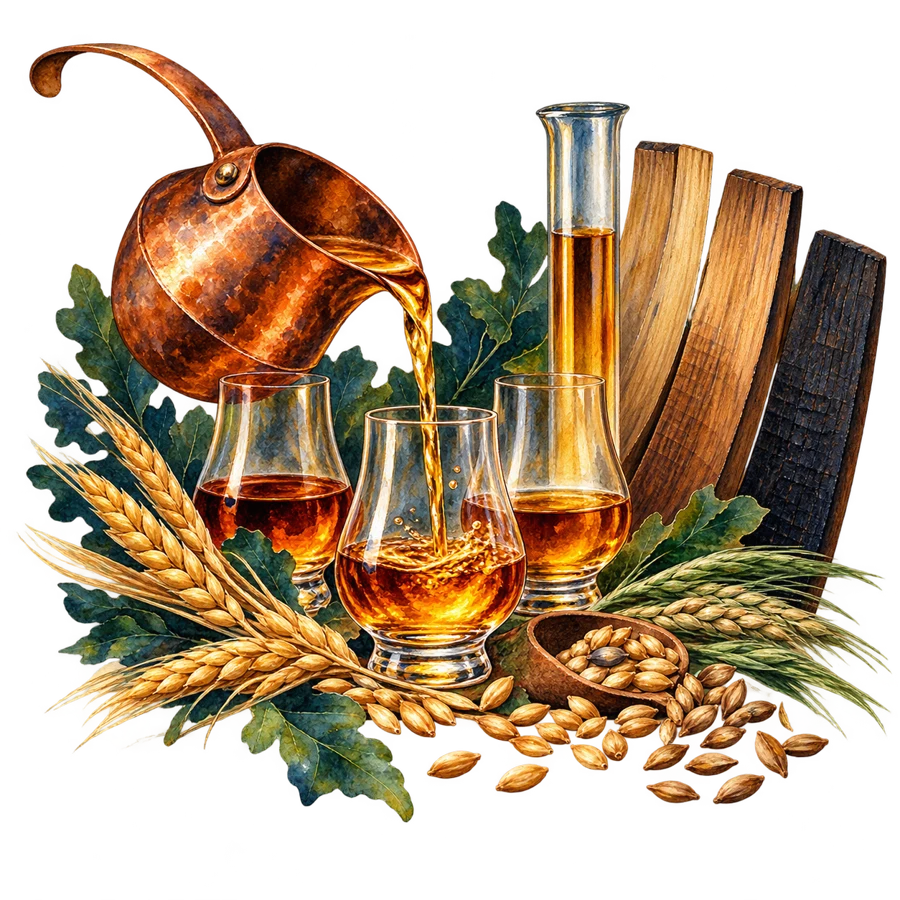
Symbolic whiskey blending and finishing bench

Selection is a production decision

The range began with multiple distillers and blenders. Choosing mature stocks, combining them and deciding whether to finish them are central parts of its authorship, even when the initial distiller is undisclosed.[1][24]

Maple mellowing is release-specific

The older 10-year Tennessee bourbon account describes sugar-maple mellowing before barreling. The Decade I announcement explicitly excludes charcoal mellowing. Neither process should be assigned to every Tennessee release.[6][12]

Secondary oak and prior contents

Bootleg II’s rum and Volume III’s Spanish wine casks illustrate two ways previous contents influence mature bourbon. The base age and finishing period remain separate facts.[9][11]

Wood species and form matter

Exploration I layers a Calvados-cask finish with toasted French oak staves. This is a particular product design, not a general description of the distillery’s standard bourbon method.[26]

The evolving core

Current pages describe Ascension as a Kentucky bourbon blend and Refuge as a six-year rye with Amontillado finishing. These descriptions differ from the original rye’s French cigar-barrel identity. Read the edition before applying a recipe.[21]

Sustainability, with attribution

Pierce describes locally contracted grain and careful cooperage procurement. The company also promotes water and energy initiatives. These are producer statements, not independent proof that it outranks every other distillery environmentally.[3]

06 / The details worth knowing

Beyond the name on the bottle.

A gate with room between the pieces

Found-object sculpture provides an unusually apt visual metaphor for a blended whiskey house. The objects remain recognizable while becoming a new whole. That is an editorial reading of the design, grounded in the documented ironwork.[2]

A project can have several opening dates

The early announcements, production history and preview tours describe different stages. Combining them into one founding or opening date would hide the most interesting part of the transition.[4][19]

The age changed before the debut

The May 2019 preview called the planned Bootleg whisky 25 years old. November’s actual release announcement specified 26. The final release record controls the edition’s description; the earlier number remains a documented planning difference.[5][6]

Tennessee and Kentucky stay distinct

The current core names make the geographic contrast visible. Revival is Tennessee bourbon; Ascension is Kentucky bourbon. The distinction invites comparison without pretending the portfolio now has one origin.[21][22]

A Minnesota chapter

Homesick Blues is described by the producer as seven-year Minnesota wheated bourbon. The northern connection broadens the cultural geography; it does not relocate Pleasureville or identify an otherwise unnamed contract distiller.[23]

07 / Selected expressions

A collection built around difference.

A curated reading of the whiskey family, selected for its role in the story. This is not an exhaustive current catalog.

Ascension & Revival

The core’s Kentucky and Tennessee bourbons offer a useful geographic starting point. Current descriptions should govern new purchases; older proof and age statements stay attached to their markets and editions.[21][22]

Revelation & Refuge

Double-barrel whiskey and sherry-finished rye show two routes through wood. Current pages disagree on Revelation’s component minimum age, so this profile avoids a universal age claim.[21][22]

Master Blenders’ Edition / 2021

Ten-year bourbon, a 15-month Redbreast-cask finish and 100 proof make this a clearly bounded collaboration. Its significance is the partnership and the cask history.[10]

Bootleg Volume IV / 2022

An 11-year wheated bourbon finished in Islay Scotch casks, documented at 111 proof. This is a historical edition; its age cannot establish production at the later-branded Kentucky campus.[13]

Bootleg Volume VI / 2024

The twelve-year wheated edition turns to Limousin cigar barrels. The accompanying painting belongs to Dylan’s Brazil Series; that artistic reference does not make the bourbon Brazilian.[18]

Exploration I

Calvados and toasted staves offer a focused example of layered finishing at 108 proof. It sits beside, rather than replaces, the core range and Bootleg editions.[17][26]

08 / The Reserve connection

Continue from the story to the bottles.

Heaven’s Door in The Thelen Reserve

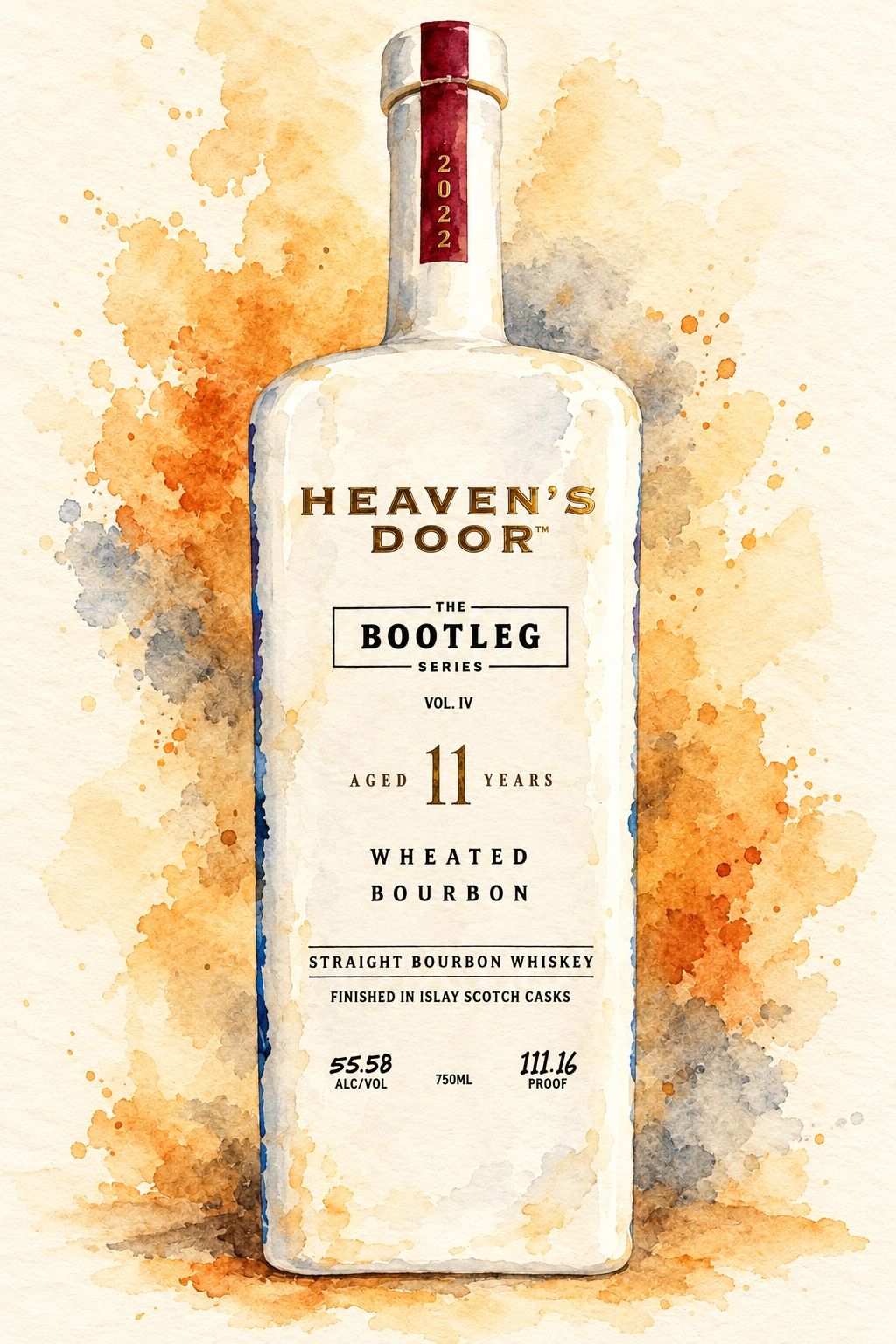
One Bootleg Volume IV record connects the brand to the collection: the 2022 wheated bourbon finished in Islay Scotch casks, recorded at 111 proof. The barrel and bottle number remain unverified from intake photos.

Approved watercolor of Heavens Door Bootleg Volume 4

Heavens Door Bootleg Volume 4

W0227 · 111.16 proof

2022 edition · 11-year wheated bourbon · Islay Scotch cask finish. Barrel and bottle number remain unverified from original photos.

Collection snapshot: October 26, 2026. One physical record. Exact approved bottle artwork appears only when a verified match is available.

Heaven’s Door three-page guide cover
The illustrated companion

Heaven’s Door, in three pages.

Origins and people, history and places, whiskey and stories. A concise companion to this full profile, with linked research sources.

Sources & research notes

Researched October 20, 2026. Primary producer announcements and institutional records are used wherever available. Product specifications are release- and market-specific.

Research qualifications

  • Brand genesis in 2015, public debut in 2018, facility production from 2018, and visitor access are separate dates.
  • Pleasureville opening targets in older announcements are not completion evidence. The live visitor page records fall 2025 previews and a seasonal closure. No full public-opening date is asserted as of this October 20, 2026 review.
  • Property descriptions vary from over 160 acres in the 2023 announcement to over 200 acres on the current visitor page. Use the dated scope rather than treating one as an error.
  • Revelation descriptions differ: the main collection page says six years plus a further year; Trilogy says at least five before the secondary barrel. No universal minimum age is assigned here.
  • Rye finishing changes across dated sources: the 2018 cigar-barrel release is distinct from the current Refuge sherry description.
  • Bootleg IV specifications rely on release-specific retail corroboration; official archive confirms the 2022 edition but does not expose full technical detail in readable text. Exact base distiller remains unverified.
  • No completion of the Nashville proposal or full operation of every announced attraction is inferred. Environmental leadership language remains attributed marketing, not independent ranking.
  • Current website snapshots are not launch dates. Homesick Blues and Cask Club are described without an invented introduction year. Pricing and private collection data are excluded from this editorial master.

Full sources

  1. 2018 launch announcement2015 idea; 2018 launch; original collaborators and three expressions.
  2. The ironwork behind the identityFound objects and Black Buffalo Ironworks; visual language.
  3. Ken Pierce, dated maker profile2016 Six Mile Creek appointment; prior Barton roles; producer sustainability statements.
  4. 2019 Nashville project announcementProposed Elm Street Church arts center, not evidence of completion.
  5. 2019 Bootleg debutFinal 26-year Mizunara release, 111.5 proof and presentation.
  6. 2019 advance release previewEarlier 25-year preview versus final 26-year announcement; Tennessee maple mellowing.
  7. 2020 European expansionUK/Germany expansion; market-specific specifications.
  8. 2020 radio and relief programWhiskey-themed broadcast and second Serve Somebody program.
  9. 2020 Bootleg Volume II15-year bourbon and Jamaican rum cask finish.
  10. 2021 Redbreast collaborationPerry/Leighton collaboration; 10-year bourbon, 15-month finish, 100 proof.
  11. 2021 Bootleg Volume III13-year Kentucky bourbon, Vino de Naranja, 121.2 proof.
  12. 2022 Decade Series launch10-year high-rye Tennessee bourbon without charcoal mellowing, 100 proof.
  13. Bootleg Volume IV release recordSecondary retail corroboration: 2022, 11-year wheated bourbon, Islay finish, 111 proof. Exact source distillery undisclosed.
  14. 2023 Pleasureville announcement2018 production; 2023 campus announcement; planned visitor dates and Nashville change. Plans are not opening evidence.
  15. Bootleg archiveSeries chronology; Ken Pierce/Alex Moore roles for Volume V; ceramic and leather presentation.
  16. 2023 Bootleg Volume V18-year bourbon and Spanish vermouth rouge finish.
  17. 2024 Exploration Series introductionFebruary launch; Tennessee bourbon, Calvados casks, French oak staves, 108 proof.
  18. Bootleg V and VI producer shop historyDecember 2024 Volume VI, 12-year wheated bourbon and lightly toasted Limousin cigar barrels.
  19. Current visitor pageFall 2025 Before the Gate preview tours; current seasonal closure notice; Pleasureville and Louisville roles. Not a verified full-opening date.
  20. The Last Refuge official siteCurrent hospitality venue at 600 East Market, Louisville; no opening year inferred.
  21. Current whiskey collectionAscension blend, Revelation secondary aging and Refuge Amontillado finish. Current web snapshot.
  22. Current Trilogy descriptionsRevival 92 proof; Revelation 100 proof; Refuge 92 proof. Revelation minimum age differs from main collection page.
  23. Homesick Blues producer product pageSeven-year Minnesota wheated bourbon; cask strength without a universal numeric proof or verified launch date.
  24. Single Barrel producer pageAccount-specific individual barrels at higher proof; no blanket age/proof.
  25. Limited-release archiveHistorical Tennessee bourbon and Master Blenders Edition; release-specific production.
  26. Current Exploration Series pageCalvados and French-oak methods; page contains unrelated Bootleg template material, excluded from technical claims.
↑