TJ THELEN'S COLLECTION
The Thelen Reserve
Behind the Bottles / Single malt Scotch whisky

Glenfiddich

Last updated Last researched

A family vision. A Speyside single malt.

A family-built Speyside malt that learned to think beyond the valley.

Glenfiddich made a familiar bottle into an invitation to explore single malt. Behind that global identity lies a working Dufftown distillery, generations of family ownership and an unusually wide vocabulary of oak, marrying and experimentation.[3][8]

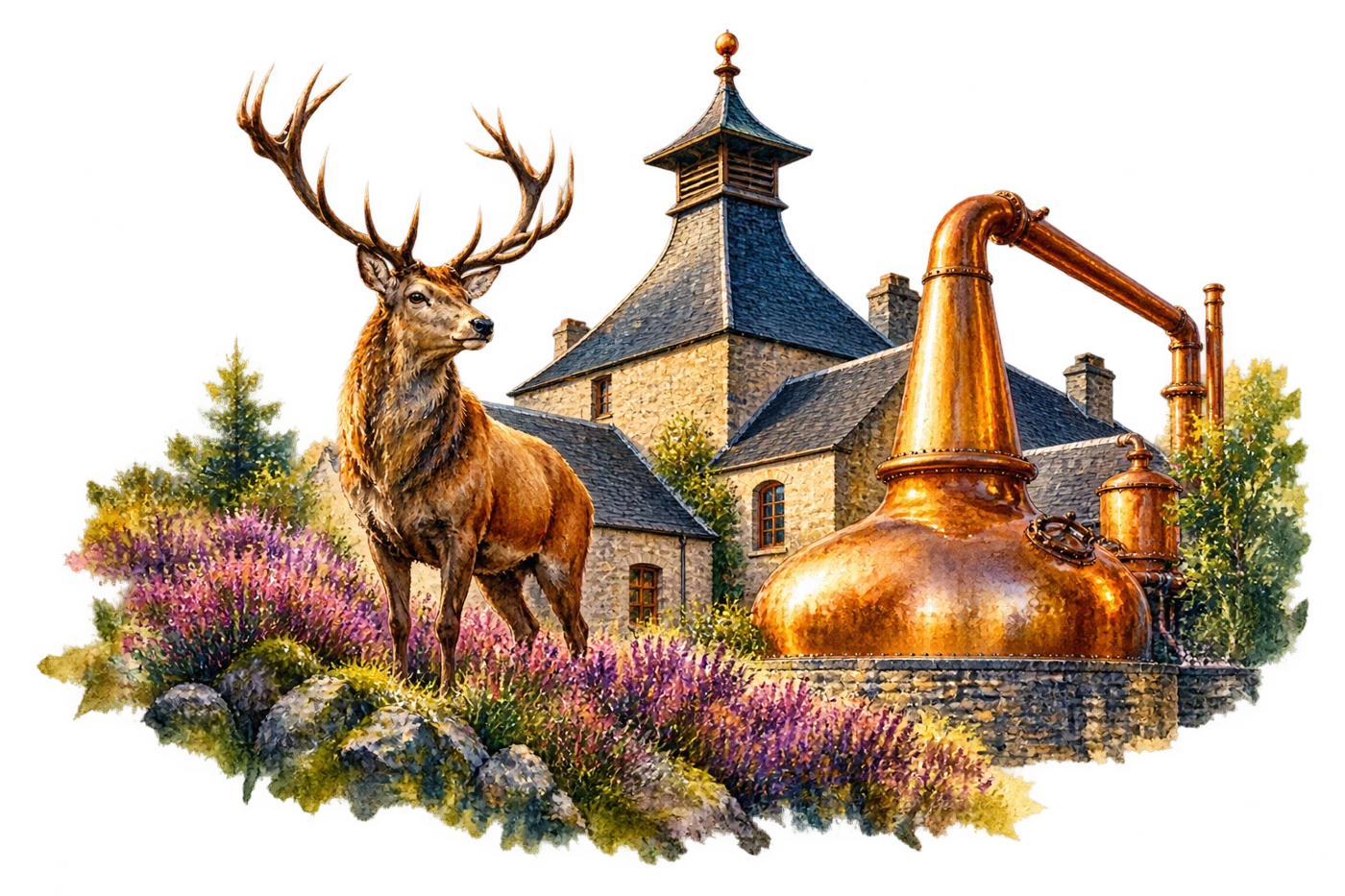
Symbolic Dufftown distillery and copper stills
First spirit
Christmas Day 1887[1]
Founder
William Grant[2]
Home
Dufftown, Speyside, Scotland[4]
Ownership
Family-owned William Grant & Sons[2]
01 / Origins & people

A family builds its own future.

The valley before the world

William Grant began building in 1886, choosing a site supplied by the Robbie Dhu spring. The name connects the distillery to its valley and deer. The first spirit arrived on Christmas Day 1887. That date marks production beginning, before the years of maturation needed to turn new spirit into whisky.[1]

A family enterprise grows outward

Grant’s nine children helped build the original distillery. The family kept making whisky during American Prohibition, preparing for repeal rather than abandoning production. The company remains family-owned, and its second distillery, The Balvenie, opened in 1892.[2]

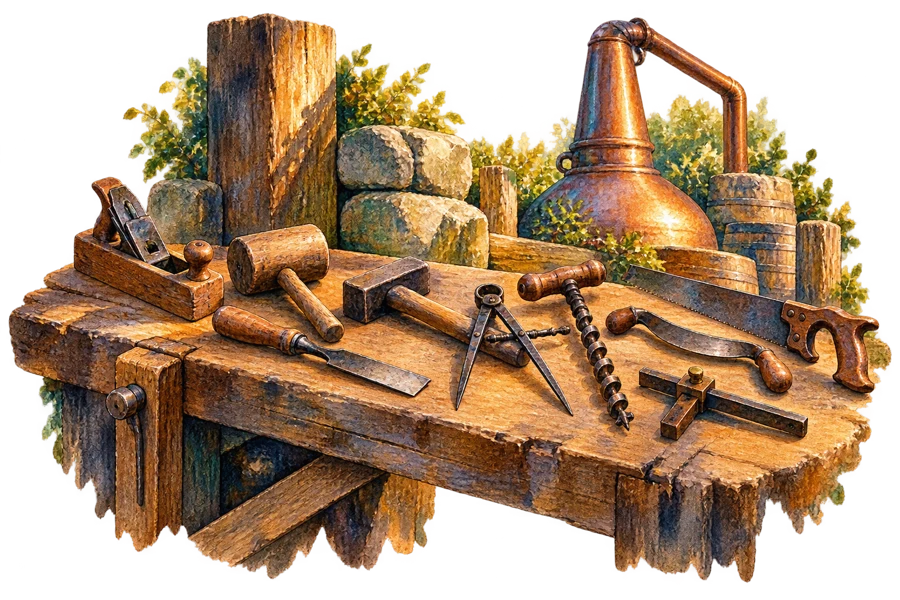
Symbolic family workbench with nine hand tools

Sandy and Charles Grant Gordon

International single-malt advocates

The brothers took the family malt to overseas audiences in the 1960s. They promoted its Scottish origin and individual character when blends dominated the conversation. The triangular bottle and advertising made the proposition recognizable: a whisky could be sought for the identity of one distillery.[3]

Brian Kinsman

Sixth Malt Master; current role verified 2026

Kinsman joined the company as a chemist in 1997 and learned blending alongside David Stewart. He became Glenfiddich Malt Master in 2009. His work bridges reliable house character and experiments that may take years to mature, a useful reminder that creating a new release starts long before its announcement.[5]

David Stewart

Historical Malt Master and Solera innovator

Stewart’s visits to Spanish sherry houses helped inspire Glenfiddich’s Solera approach. The method joins mature components while retaining part of the preceding batch, linking successive bottlings through a continuing process.[7]

02 / The illustrated history

From a Christmas first spirit to a global single malt.

Follow Glenfiddich through its family beginnings, international single malt campaign, cask experiments and contemporary collaborations. Product launches and corporate milestones retain their own context.
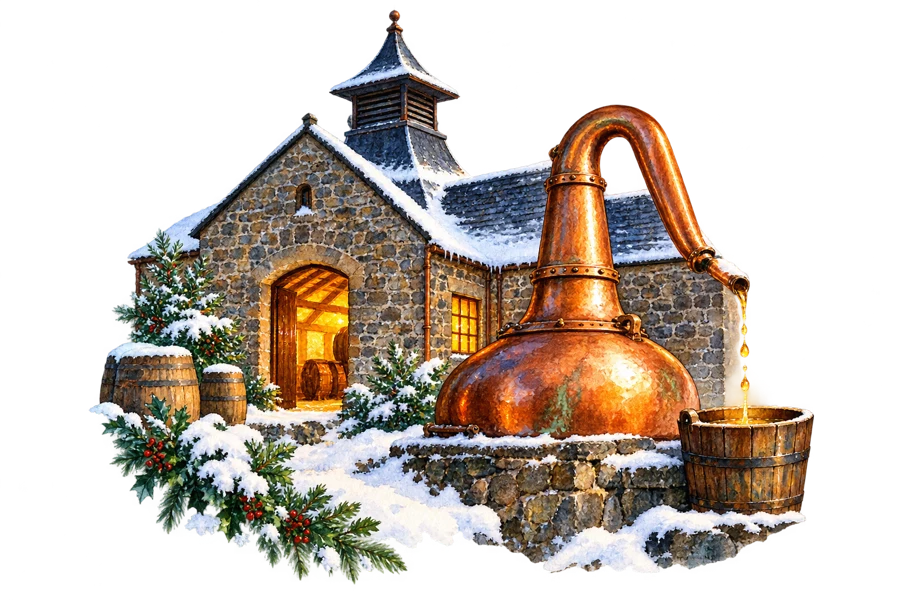
Symbolic illustration: The first spirit at Christmas
1887

The first spirit at Christmas

After construction began in 1886, William Grant’s distillery produces its first spirit on Christmas Day 1887. The working valley becomes the foundation of a much larger story.[1]
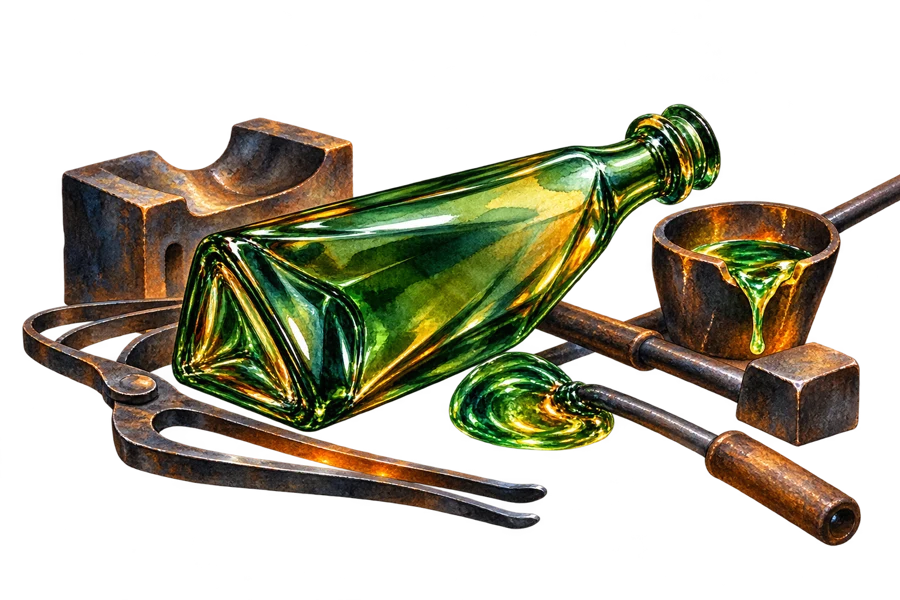
Symbolic illustration: A shape becomes a signature
1957

A shape becomes a signature

Specialist histories date Glenfiddich’s triangular bottle to 1957. Its distinctive outline becomes a visual companion to the malt’s expanding identity.[4]

Symbolic illustration: The malt reaches outward
1963

The malt reaches outward

Glenfiddich’s sustained international single-malt campaign is conventionally dated 1963. The company’s newer timeline uses 1961 for the launch; the two dates are not treated as interchangeable.[4][2]
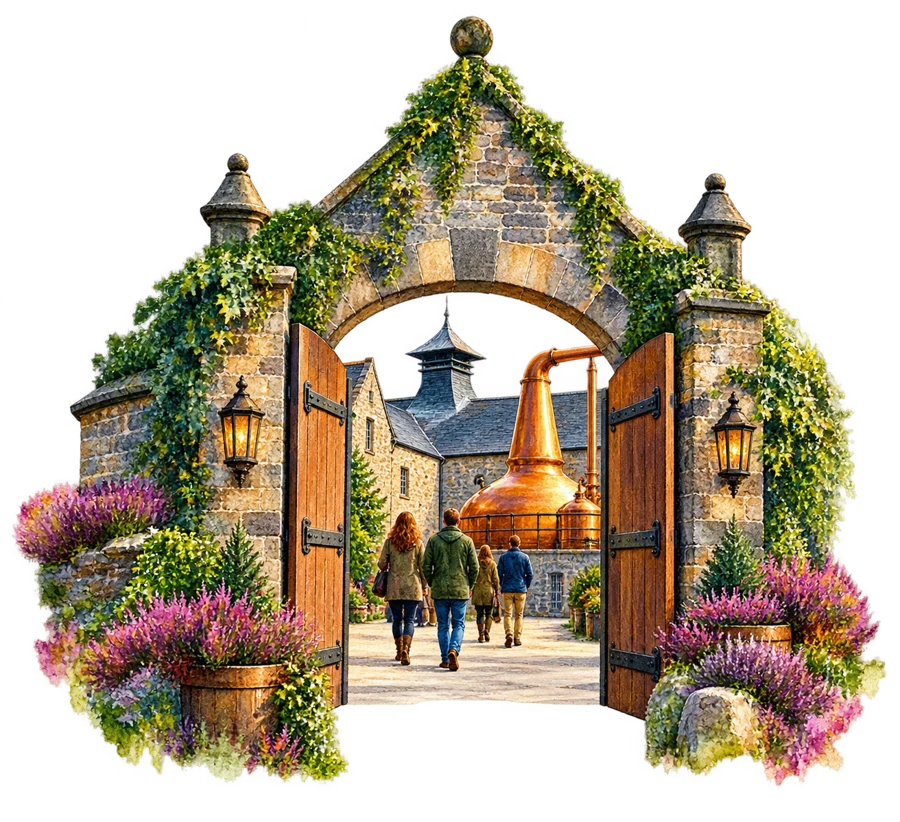
Symbolic illustration: The doors open to visitors
1969

The doors open to visitors

Glenfiddich opens its visitor centre, bringing the making of whisky into the public experience alongside the bottle itself.[4]
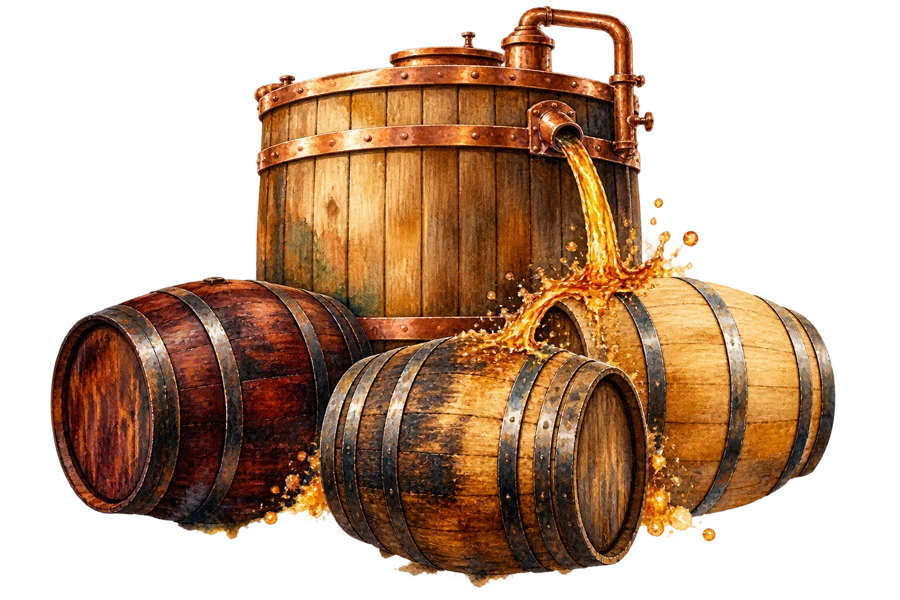
Symbolic illustration: The Solera vat enters service
1998

The Solera vat enters service

The main Solera vat is installed. Kept at least half full between draws, it connects new batches of mature Glenfiddich 15 with a retained portion of their predecessors.[7]
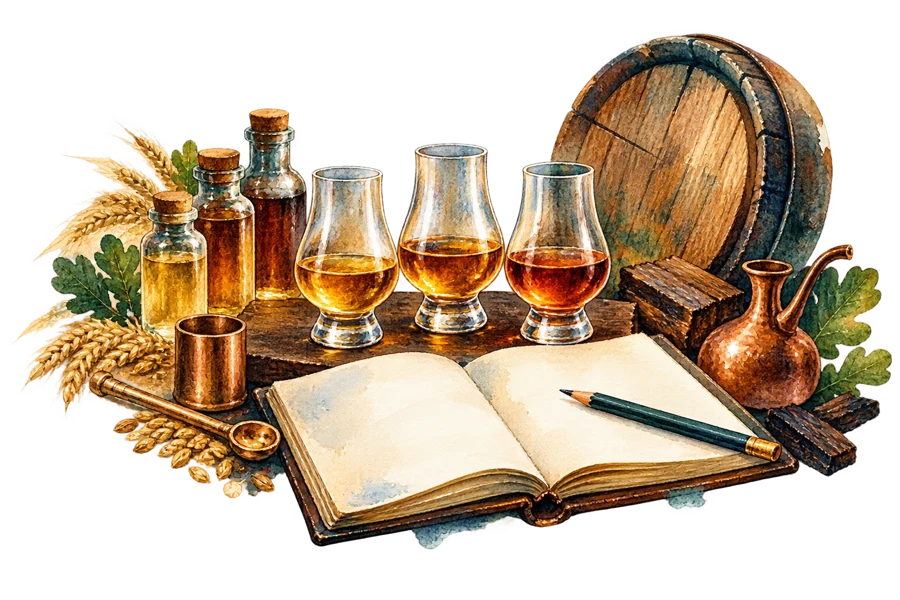
Symbolic illustration: Kinsman takes the Malt Master role
2009

Kinsman takes the Malt Master role

Following his chemistry work and training with David Stewart, Brian Kinsman becomes Glenfiddich’s sixth Malt Master and the company’s Master Blender.[5]
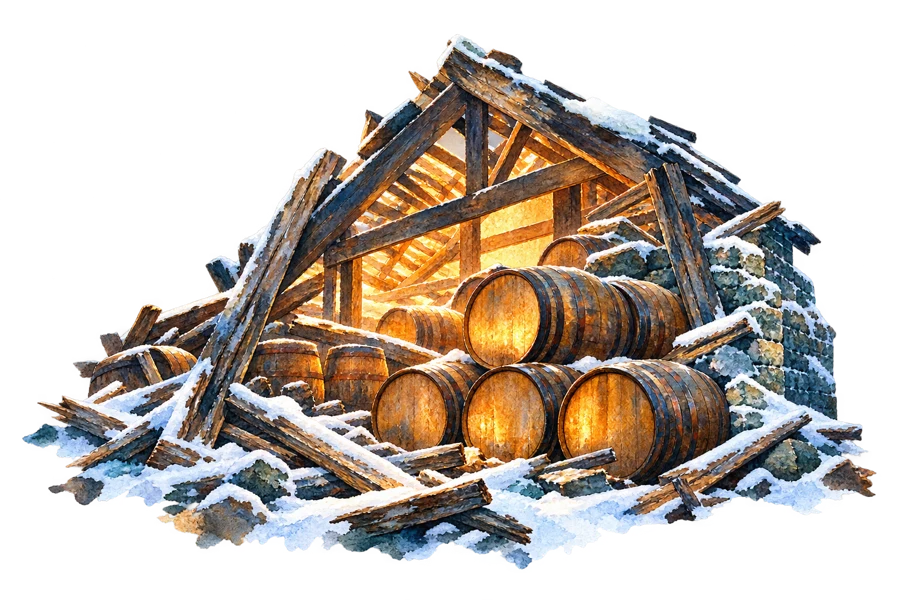
Symbolic illustration: Snow, recovery and Snow Phoenix
January 2010

Snow, recovery and Snow Phoenix

Heavy snow brings down warehouse roofs. Casks recovered after the collapse inspire Snow Phoenix, a special marriage that turns a disruption into a release with a precise local story.[26]
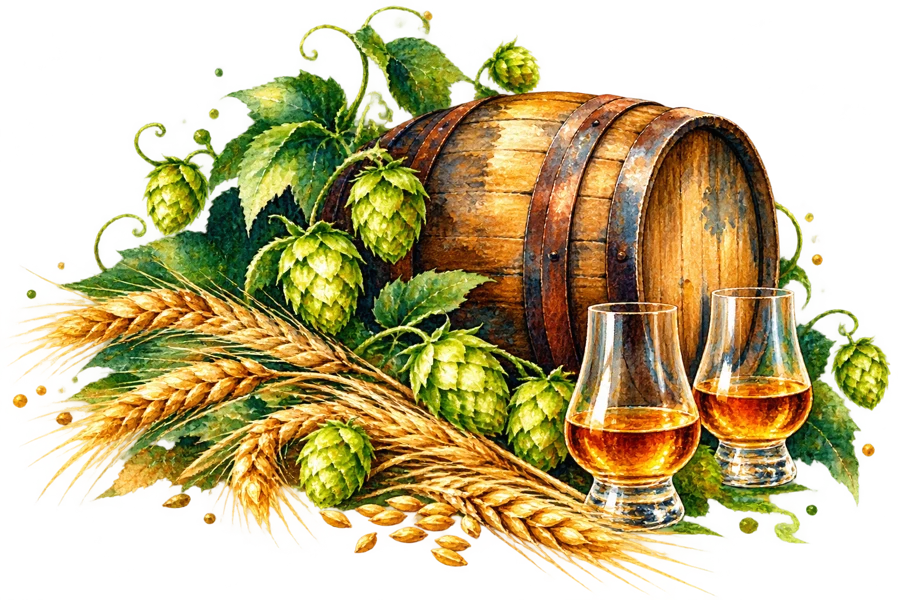
Symbolic illustration: An IPA cask experiment
September 2016

An IPA cask experiment

The Experimental Series arrives with a whisky finished in casks seasoned by a bespoke Speyside beer. Hops enter the story through the cask’s previous contents.[12]
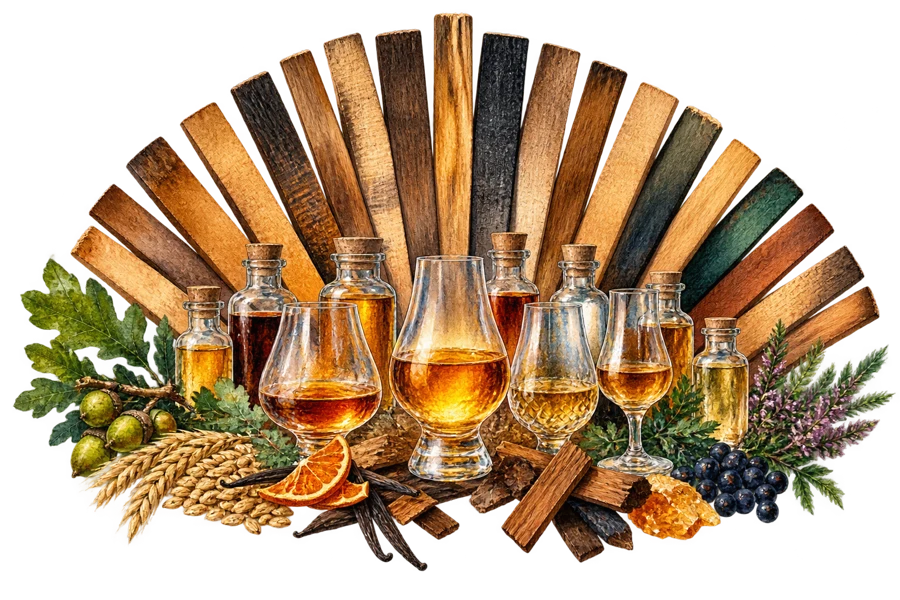
Symbolic illustration: Twenty choices become Project XX
September 2016

Twenty choices become Project XX

Twenty ambassadors each choose a favorite cask. Kinsman assembles their choices into a prototype, then recreates its character for a wider release.[13][14]
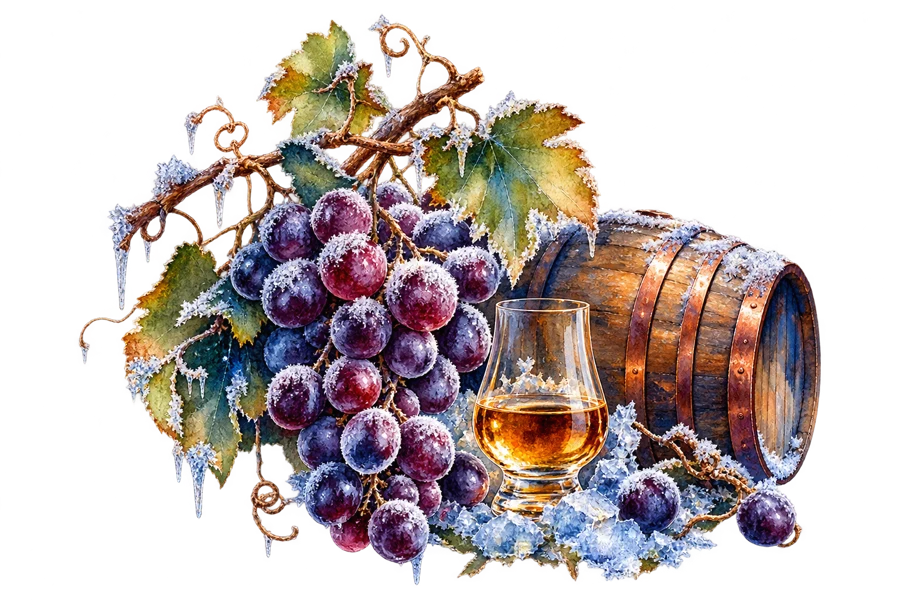
Symbolic illustration: Winter Storm crosses to Niagara
September 2017

Winter Storm crosses to Niagara

A collaboration involving Beth Havers and Peller Estates leads to 21-year-old Glenfiddich finished in Canadian icewine casks.[14]
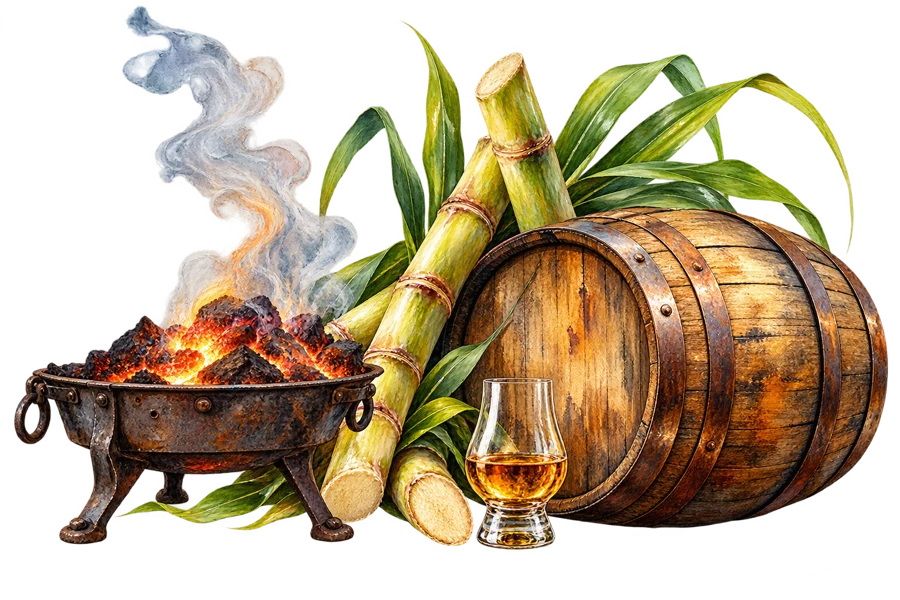
Symbolic illustration: Fire meets cane
July 2018

Fire meets cane

Fire & Cane joins the Experimental Series. Peated whisky and rum-cask finishing put smoke and sweetness into a different conversation.[15]
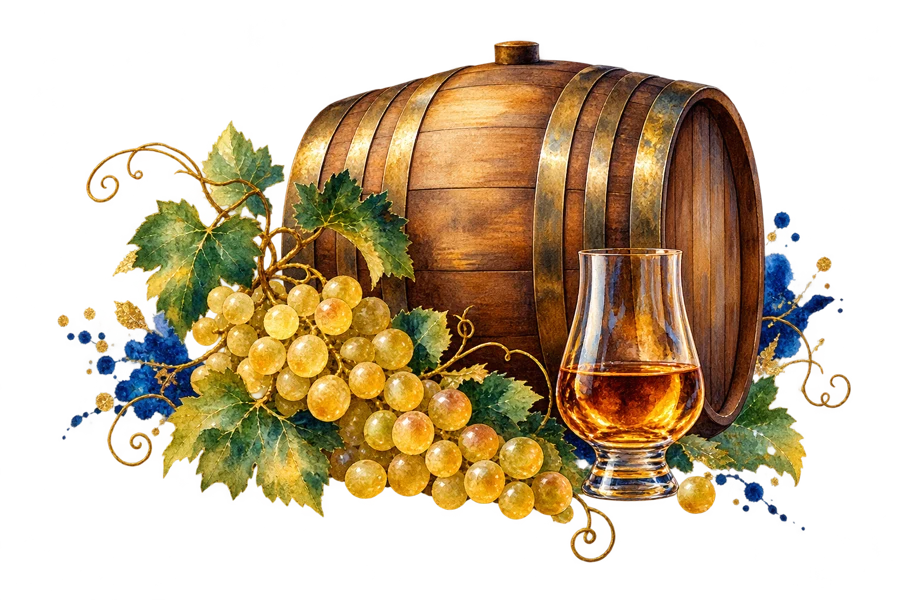
Symbolic illustration: Grand Cru opens a new chapter
2019

Grand Cru opens a new chapter

Glenfiddich launches Grand Cru, combining 23-year-old malt and French cuvée wine casks. It becomes a foundation for the Grand Series’ international cask explorations.[16]
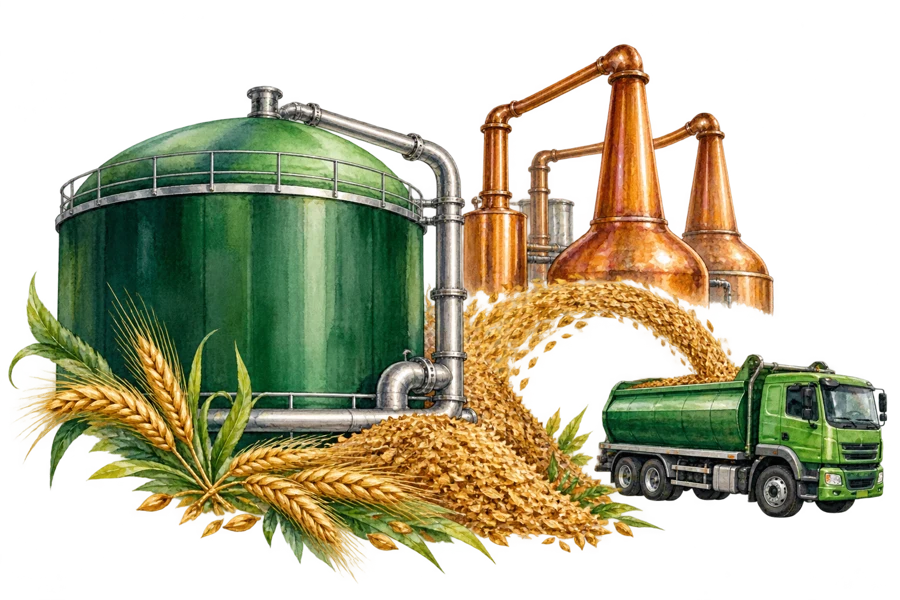
Symbolic illustration: Distillery residues become truck fuel
2021

Distillery residues become truck fuel

The Fuelled by Glenfiddich project puts biomethane from production waste into specially converted delivery trucks. Equipment partner IVECO documents three vehicles in the initial programme.[17]
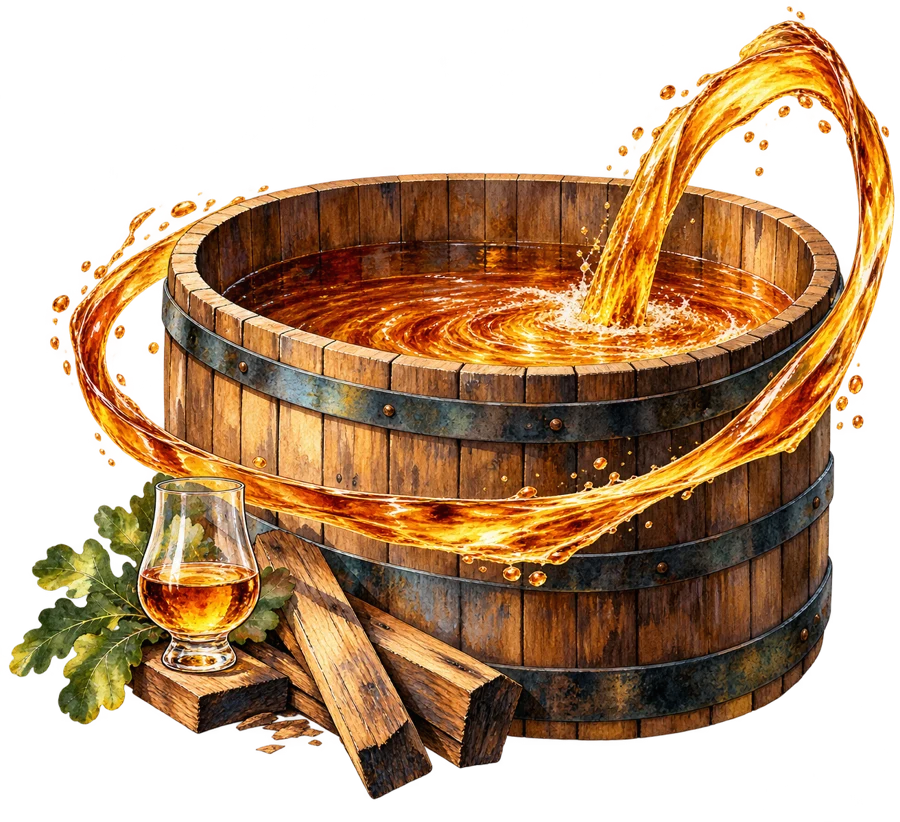
Symbolic illustration: Perpetual whisky for travellers
October 2022

Perpetual whisky for travellers

The Perpetual Collection launches for travel retail, extending the idea of continuously replenished vats into a dedicated range.[18]
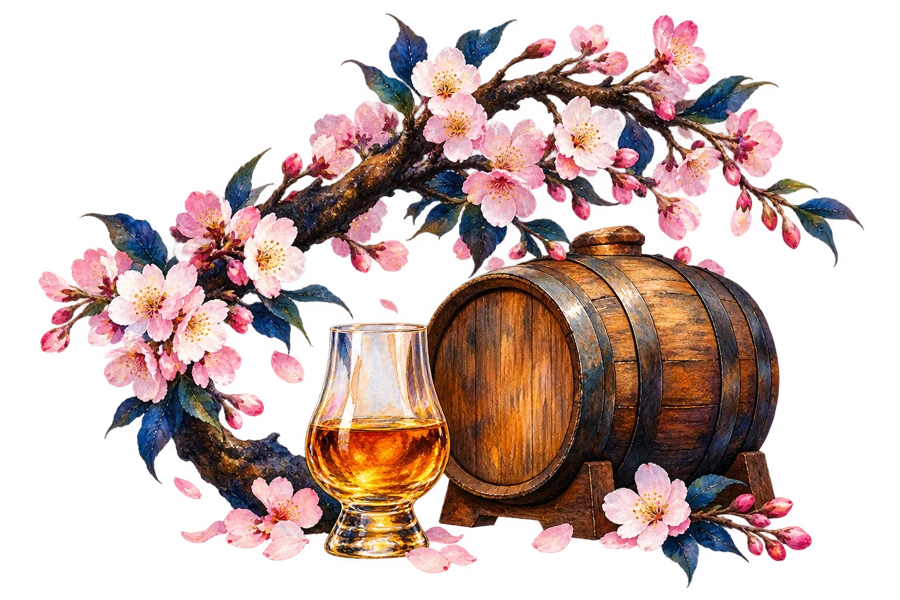
Symbolic illustration: Grand Yozakura meets Awamori
2023

Grand Yozakura meets Awamori

A 29-year-old Glenfiddich finished in rare Awamori casks draws its name from illuminated cherry blossom viewing at night.[20]
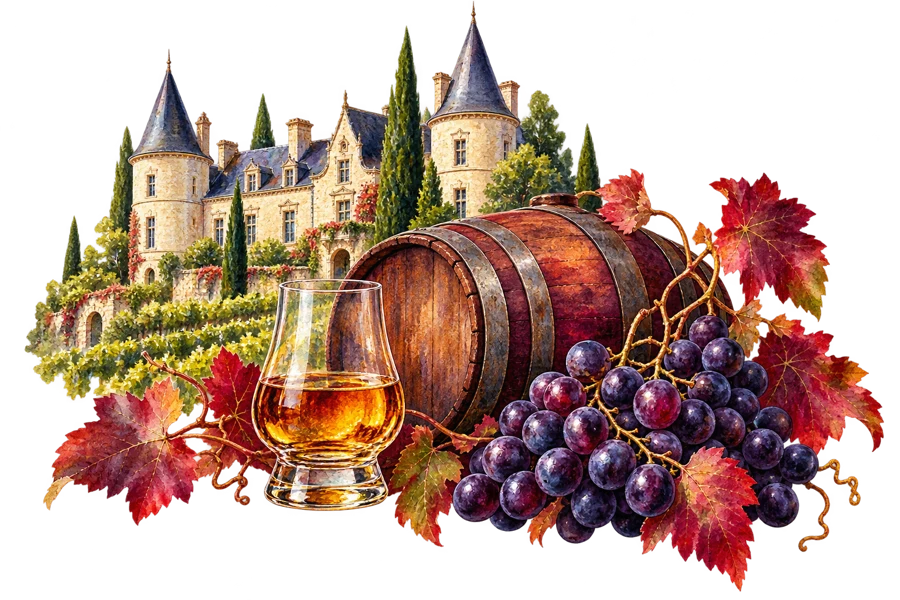
Symbolic illustration: A long Bordeaux finish
September 2024

A long Bordeaux finish

Grand Château arrives at 31 years old, including nine years finishing in Bordeaux red-wine casks. The French wine chapter becomes part of its total maturation.[21]
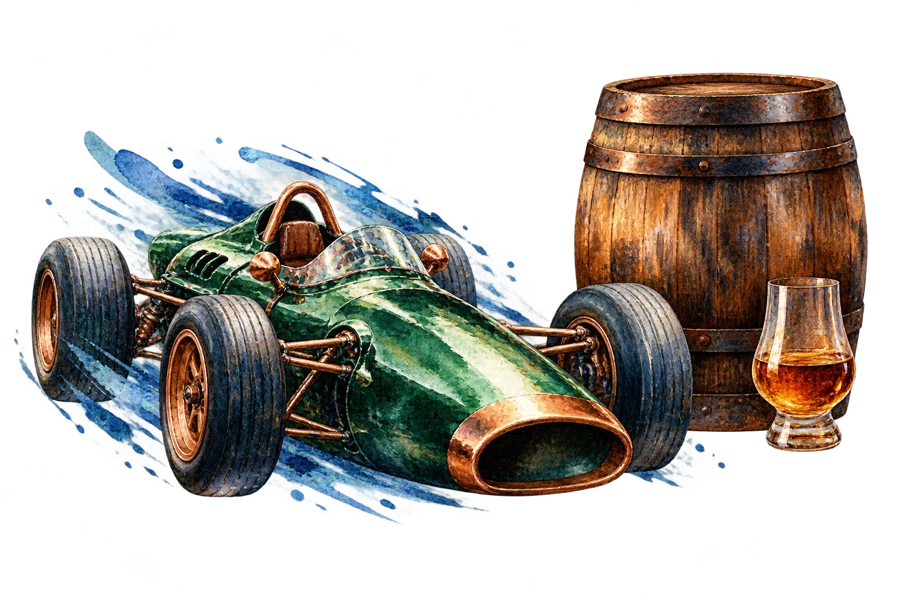
Symbolic illustration: A partnership reaches the grid
November 2024

A partnership reaches the grid

Glenfiddich and Aston Martin Formula One announce a long-term collaboration. A 1959 sherry cask pays tribute to the carmaker’s original Formula One debut.[22]
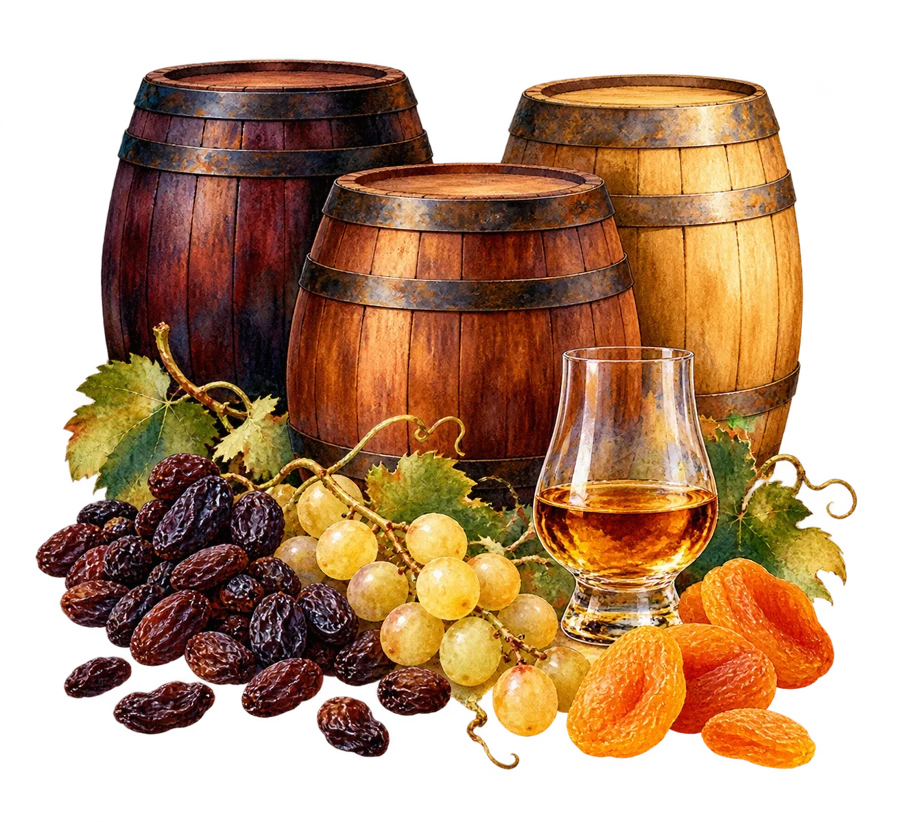
Symbolic illustration: XS begins in China
November 2025

XS begins in China

The XS collection launches first in China with 15-, 18- and 21-year-old expressions, each paired with a distinct sherry-cask finish.[23]
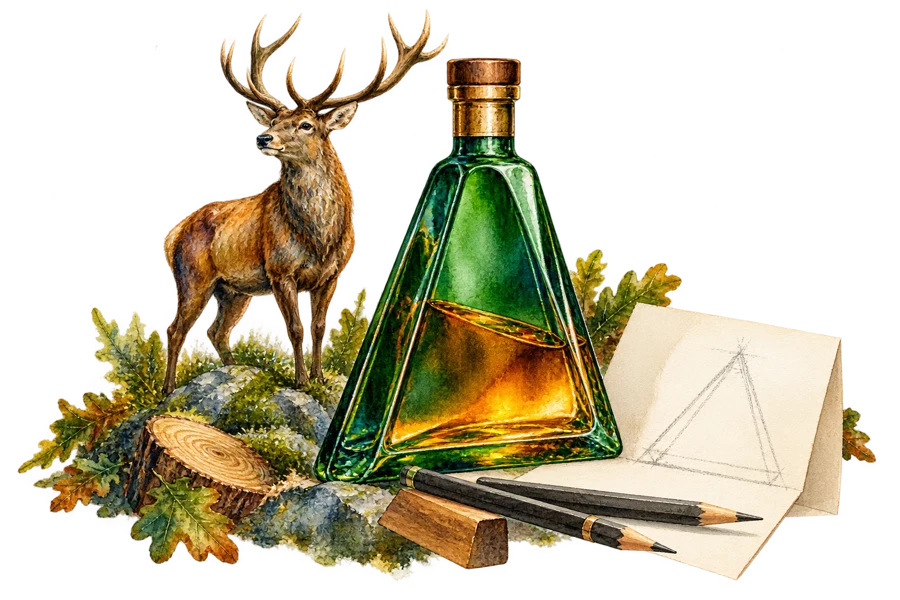
Symbolic illustration: The archive shapes a new look
February 2026

The archive shapes a new look

A refreshed identity revisits the stag, family crest and 1960s typography. A global packaging rollout is announced from April 2026.[24]
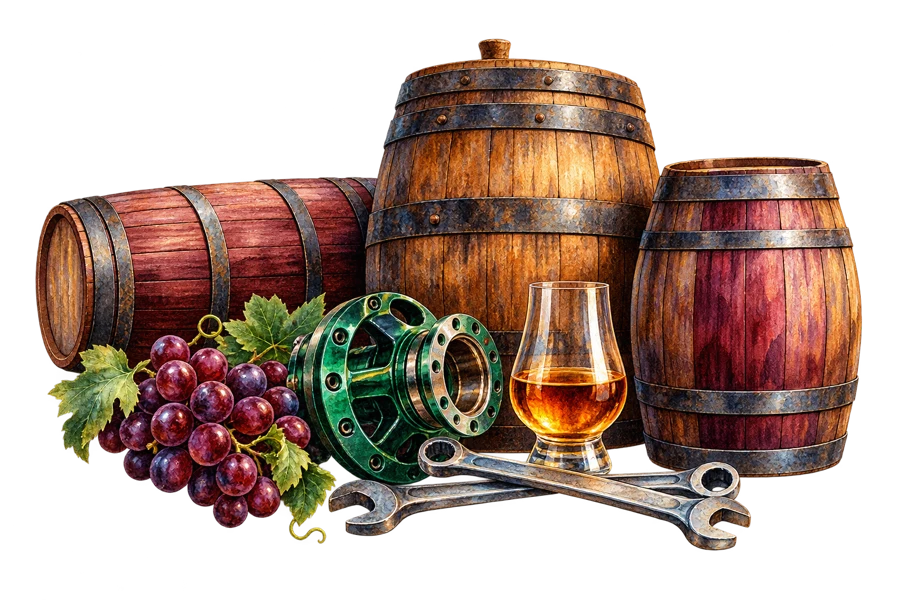
Symbolic illustration: The second racing release
August 2026

The second racing release

The partnership’s Release No. 2 pairs 16- and 19-year-old malts with different cask programmes. The 19-year-old is identified as a global travel-retail exclusive.[25]

Original watercolor interpretations accompany the history. Buildings, objects and scenes are symbolic, not documentary reconstructions.
03 / Geography & roles

One name. Several places that matter.

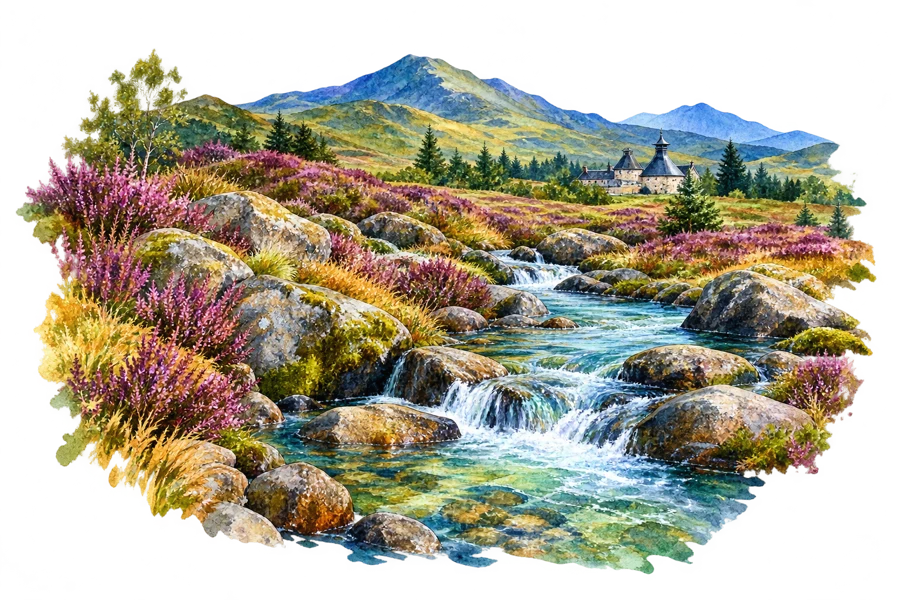
Symbolic Robbie Dhu spring and Speyside landscape, not an exact map

Dufftown, Speyside

Distillery and brand home

Glenfiddich’s place is specific: Dufftown in Moray, within Scotland’s Speyside whisky region. Its story belongs to a working distillery rather than a generic Highland landscape. Older technical descriptions are useful historical context, but changing still counts and capacity figures are not presented here as a current audit.[4]

The Robbie Dhu spring

Production water source

In his 2021 process interview, Kinsman described the Robbie Dhu supply running through whisky making and dilution before bottling. The spring connects the valley to production; its role is more concrete than a broad claim that all local scenery becomes flavor.[6]

The marrying spaces

Solera and warehouse continuity

Kinsman’s 2023 account locates the main Solera vat in Warehouse 8. Already mature components meet here; it is a marrying stage, distinct from years of aging in casks.[7]

A wider production journey

Distillery operations and transport

The 2021 transport project describes distillery residues being processed into vehicle fuel. It places Glenfiddich within a physical network of production and transport, reminding visitors that the distillery story includes what happens around the spirit as well as what happens inside its casks.[17]

04 / The whiskey family

Understand the name on the label.

Follow the family company, the single malt and neighboring distilleries while keeping their production roles distinct.

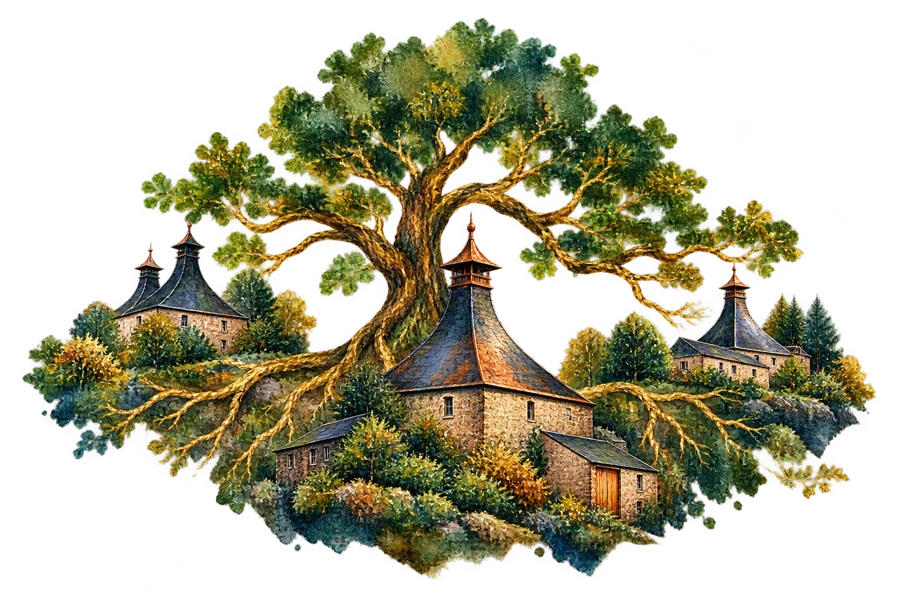
Symbolic neighboring distillery pagodas and a family oak tree

William Grant & Sons

Parent company

Family-owned William Grant & Sons is Glenfiddich’s parent company. Shared corporate stewardship connects its spirits; each distillery retains a distinct identity.[2]

The Balvenie

Sister distillery, separate single malt

The Balvenie opened in 1892. Shared ownership connects the neighboring distilleries, while their identities and single malts remain separate.[2]

Speyside Craft Brewery

Experimental cask collaborator

For IPA Experiment, the brewery developed a beer to season casks that would subsequently finish Glenfiddich. This is a collaboration through wood and liquid history, not the addition of beer to the final bottled whisky. The whisky remains a Glenfiddich expression.[12]

Peller Estates

Icewine-cask partner

Canadian icewine casks supplied a different final maturation environment for Winter Storm. The producer’s announcement connects the project to Beth Havers’ suggestion and Kinsman’s visit to Niagara. The winery’s role belongs to the finishing casks, while the underlying single malt comes from Glenfiddich.[14]

Aston Martin Formula One

Brand and release collaboration

The partnership announced in 2024 connects two brands through design, events and special releases. It is a commercial and creative association, not a change in Glenfiddich’s family ownership or its Scottish distilling location. The 1959 cask tribute links the collaboration to the carmaker’s racing history.[22]

05 / Making & choosing

The choices behind the label.

Grain, fermentation, distillation and oak shape the whiskey. Follow each production choice and keep specifications tied to the expression named.

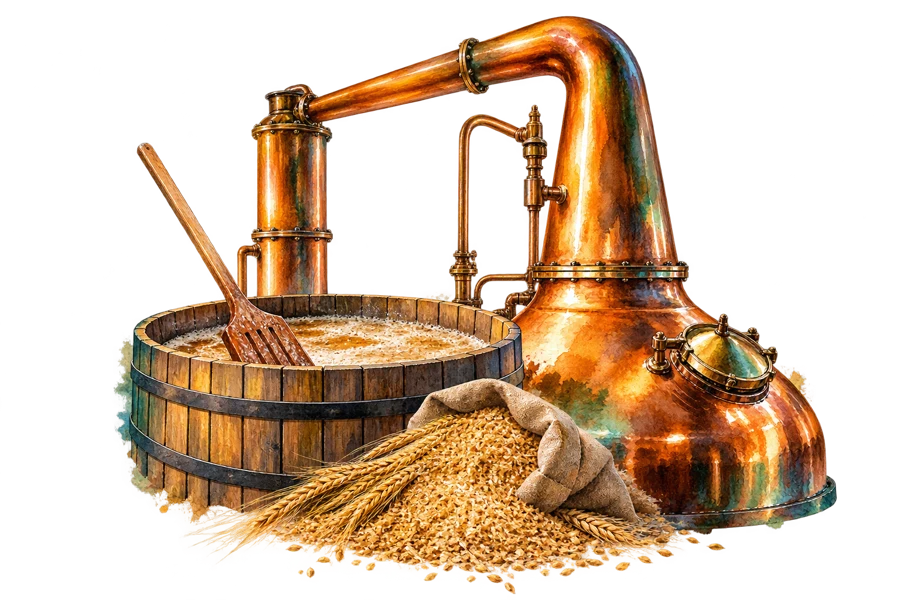
Symbolic copper stills, washback and malt

Protecting a delicate heart

Kinsman’s 2021 account describes wooden fermenters, small copper stills and a narrowly selected spirit cut. Disciplined selection protects a delicate character, even at a large distillery.[6]

Craftwork behind the casks

The same interview describes an on-site cooperage and coppersmith. Maintaining wood and copper supports continuity in a process whose results may be assessed years later.[6]

Maturation followed by marriage

The flagship 12-year-old combines bourbon- and Oloroso-sherry-cask whisky before time in oak marrying tuns. That final integration is a distinct step. The bright fruit character provides a reference against which more assertive finishes can be understood, rather than a promise that all expressions taste alike.[8]

American oak in two stages

Bourbon Barrel Reserve 14 uses ex-bourbon maturation followed by deeply charred new American oak. Previously used and newly charred wood have different jobs within the same release. It makes an approachable comparison for exploring how a second cask can alter an established single malt.[9]

Small batches, a measured range

The current US 18-year-old listing describes bourbon and Oloroso casks brought together in batches of no more than 150 casks. Small batch here has a stated producer-specific meaning. The listing’s 43% ABV belongs to that market expression, rather than being assigned to every 18-year-old bottle historically.[11]

A different finish for each XS

The 2025 XS announcement assigns Oloroso to the 15-year-old, Moscatel to the 18 and Pedro Ximénez to the 21. These are three release-specific finishing choices, not a single shared treatment. The initial China launch is also a distribution fact, not evidence that every market received the range simultaneously.[23]

06 / The details worth knowing

The stories behind the familiar name.

A category made visible

The worldwide 1960s campaign gave people a simple reason to seek a particular malt rather than only a blend. The company’s history credits Sandy and Charles Grant Gordon with that outward turn. Its significance lies in sustained recognition and distribution, without claiming that no one had bottled single malt before.[3]

Recreating an idea, not copying a recipe

Project XX participant Matthew Fergusson-Stewart remembers tasting both a literal recreation of the initial recipe and a version rebuilt by Kinsman to reproduce its aroma. The latter succeeded. His account illustrates why the finished whisky cannot be understood only as twenty unchanged original casks emptied into every bottle.[13]

Wine wood needs judgment

Grand Cru developed through months of trials, balancing mature whisky against French cuvée casks. The producer describes Kinsman selecting a 23-year-old base and a finish of up to six months. The story is one of fit and timing: a celebrated previous occupant does not make every cask suitable for every whisky.[16]

The stag changes without a new distillery

The 2026 identity revisits archival symbols and the stag’s relationship to Speyside. It is a design chapter layered onto a continuing house style. New bottles can therefore look different without the packaging announcement alone proving a changed recipe, a different distiller or a new whisky’s release date.[24]

Night blossom, Scottish malt

Grand Yozakura links its cask experiment to Hanami and cherry blossoms viewed after dark. The visual story comes from Japan, and the finishing wood previously held Awamori. Neither changes the liquid’s identity into Japanese whisky: its underlying malt was matured at Glenfiddich in Dufftown.[20]

07 / Selected expressions

Different expressions. Distinct production stories.

A curated reading of the whiskey family, selected for its role in the story. This is not an exhaustive current catalog.

Original Twelve

The flagship 12-year-old is selected for the clearest introduction to the fruit-led house style. Its current US listing specifies 40% ABV, bourbon and Oloroso casks, then oak marrying tuns. It is the reference point for this selection, not a stand-in for every historical Glenfiddich bottling.[8]

Solera Fifteen

The 15-year-old joins bourbon-, new-oak- and sherry-cask components through the Solera vat. The current US listing is 40% ABV. Rather than treating age as the only difference from the 12, it offers another way to explore how a producer assembles and harmonizes mature whisky.[10]

Fire & Cane

This 2018 Experimental Series release combines a lightly peated single malt with rum-cask finishing. It is a no-age-statement expression bottled at 43% ABV. Its interest is the meeting of smoke and richer rum wood influence, rather than an age claim inferred from an unrelated Glenfiddich release.[15]

Perpetual Vat 04

The 18-year-old travel expression uses Oloroso and bourbon casks before marriage in its continuously replenished Solera Vat 04. Its place in the Perpetual Collection separates it from the flagship 18-year-old. Shared age statements do not make the cask programme or the release identity interchangeable.[19]

Grand Château

The 31-year-old includes 22 years in American oak and a further nine finishing in Bordeaux red-wine casks. Those stages total 31 years; the finish is not nine years added after a 31-year base. It demonstrates how extended finishing can become a substantial part of a whisky’s maturation story.[21]

Aston Martin F1 Release No. 2

The 2026 16-year-old draws on bourbon, Port, Oloroso, wine and Fino casks. The 19-year-old travel-exclusive follows a separate programme using Colombian, European and American oak finishes. They belong to the same partnership, but age, cask treatment and market route distinguish the two bottlings.[25]

Grand Yozakura

A 29-year-old base followed by six months in Awamori rice-spirit casks from Okinawa takes the Grand Series in a different direction. The finishing casks connect two traditions while the whisky remains a Glenfiddich single malt.[27]

08 / The Reserve connection

Continue from the story to the bottles.

Glenfiddich in The Thelen Reserve

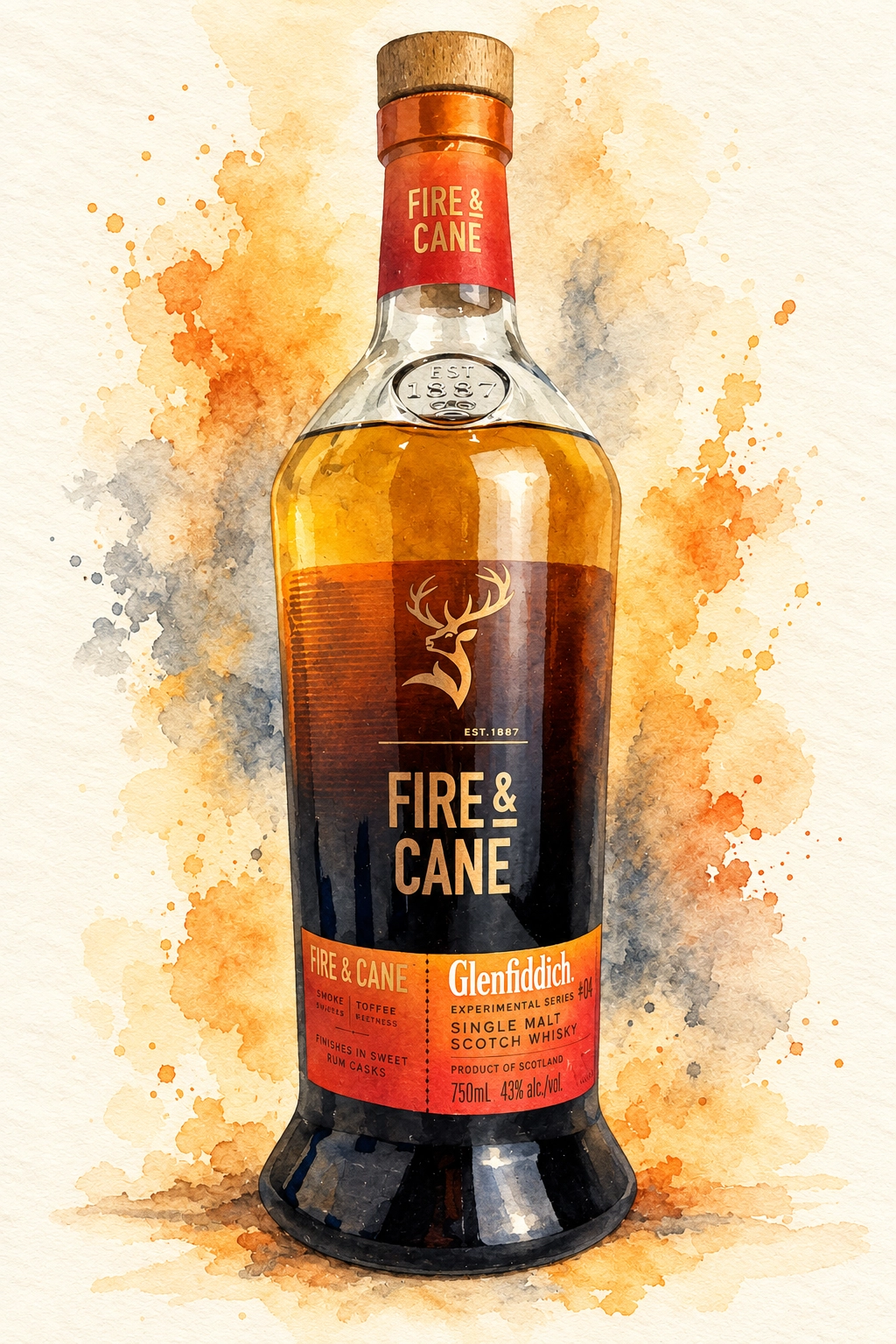
One 86-proof Glenfiddich Fire & Cane connects the Experimental Series to the collection. Its physical record remains distinct, with unrecorded batch and barrel details left open.

Approved watercolor of Glenfiddich Fire & Cane

Glenfiddich Fire & Cane

W0216 · 86 proof

Approved watercolor artwork is shown wherever an exact physical record or confirmed release match is available. Each physical bottle keeps its own verified details.

Glenfiddich three-page guide cover
The illustrated companion

Glenfiddich, in three pages.

Origins and people, history and places, whiskey and stories. A concise companion to this complete profile, with linked research sources.

Sources & research notes

Researched October 20, 2026. Official brand and company pages, dated announcements and clearly identified supporting sources are distinguished in the research. Product specifications are release- and market-specific.

Research qualifications

  • Research refreshed October 20, 2026, America/Phoenix. Selected expressions are not an exhaustive catalogue.
  • Construction began in 1886; the first spirit ran in 1887. First spirit is not the release of aged single malt.
  • Sources differ: specialist history dates the international campaign to 1963; current corporate and partner copy uses 1961 for the launch. No first-ever claim is made.
  • Grand Château’s 31 total years include nine in Bordeaux casks. The producer release takes precedence over a distributor’s 31-plus-nine wording.
  • Production interviews are dated 2021/2023; current still counts, capacity and visitor hours are omitted rather than inferred from older pages.
  • Age, strength and casks are release- and market-specific. Solera vatting does not increase the declared age statement.
  • Illustrations are symbolic watercolor interpretations, not documentary portraits, exact site plans or historical photographs.

Full sources

  1. William Grant & Sons: Glenfiddich1886 construction; 1887 spirit; name and spring. Note: Historical brand account.
  2. William Grant & Sons: familyFamily ownership; Balvenie’s 1892 opening. Note: Corporate launch timeline uses 1961.
  3. Bringing Glenfiddich to the worldGrant Gordon brothers; overseas promotion. Note: Company account dates this to the 1960s.
  4. ScotchWhisky: Glenfiddich1957 bottle; 1963 campaign; 1969 visitor centre. Note: Historical reference; current equipment counts omitted.
  5. William Grant & Sons: Brian KinsmanChemistry, mentorship and 2009 succession. Note: Undated career profile; current role separately verified.
  6. Brian Kinsman: process interviewWater, stills, washbacks and maintenance. Note: First-person testimony, June 2021.
  7. Solera’s 25th anniversary1998 vat, retained batches and maturation distinction. Note: Brian Kinsman interview, December 2023.
  8. Glenfiddich: 12 Year OldFlagship style, casks and marriage. Note: Current US product listing.
  9. Glenfiddich: 14 Year OldEx-bourbon maturation and charred new oak. Note: Current US product listing.
  10. Glenfiddich: 15 Year OldThree cask components and Solera vat. Note: Current US product listing.
  11. Glenfiddich: 18 Year OldBourbon, Oloroso and small batches. Note: Current US product listing.
  12. Experimental Series launchSeptember 2016 duo; IPA casks. Note: Contemporary specialist reporting.
  13. Project XX: a participant remembersPrototype and larger-scale recreation. Note: First-person account, Matthew Fergusson-Stewart, 2020.
  14. Winter Storm: issuer announcement2017 icewine project; 2016 predecessors. Note: Producer-issued September 2017 release.
  15. Fire & Cane launch2018 launch, peat, rum and strength. Note: Contemporary reporting with brand testimony.
  16. Crafting a Grand AmbitionGrand Cru’s 2019 launch and casks. Note: Producer account.
  17. IVECO: Glenfiddich transport project2021 biomethane and initial truck fleet. Note: Partner release; no 2026 fleet audit.
  18. Perpetual Collection launchOctober 2022 travel-retail introduction. Note: Indexed reporting; direct retrieval returned 403.
  19. Glenfiddich: Perpetual Vat 0418 years, casks and vat marriage. Note: Indexed official Canadian product listing.
  20. Grand Yozakura announcement2023 release; Awamori and Hanami. Note: Producer press release.
  21. Grand Château announcement2024 release; 31 total years including nine finishing. Note: Producer press release.
  22. Aston Martin F1 partnershipNovember 2024 collaboration; 1959 cask. Note: Producer announcement.
  23. Glenfiddich XS announcementNovember 2025 launch and separate sherry finishes. Note: China-first launch scope.
  24. Glenfiddich’s 2026 identityFebruary announcement, April rollout and archives. Note: Design announcement; no recipe change inferred.
  25. Aston Martin F1: Release No. 2August 2026 expressions and cask programmes. Note: Partner release; distinct 16 and 19 bottlings.
  26. Snow Phoenix historical recordJanuary 2010 collapse and recovered casks. Note: Retail archive; prices omitted.
  27. Glenfiddich: Grand Yozakura29 years plus six-month Awamori finish. Note: Official US product listing.
↑