TJ THELEN'S COLLECTION
The Thelen Reserve
Behind the Bottles / A modern Kentucky whiskey story

Frank August

Last updated Last researched

Kentucky / Selection, blending & finishing

Kentucky whiskey. A modern point of view.

Frank August pairs a restrained visual identity with an expanding vocabulary of American whiskey. Its core bourbon and rye provide continuity; single barrels and the Case Study series explore what selection, blending and different casks can change.[1]

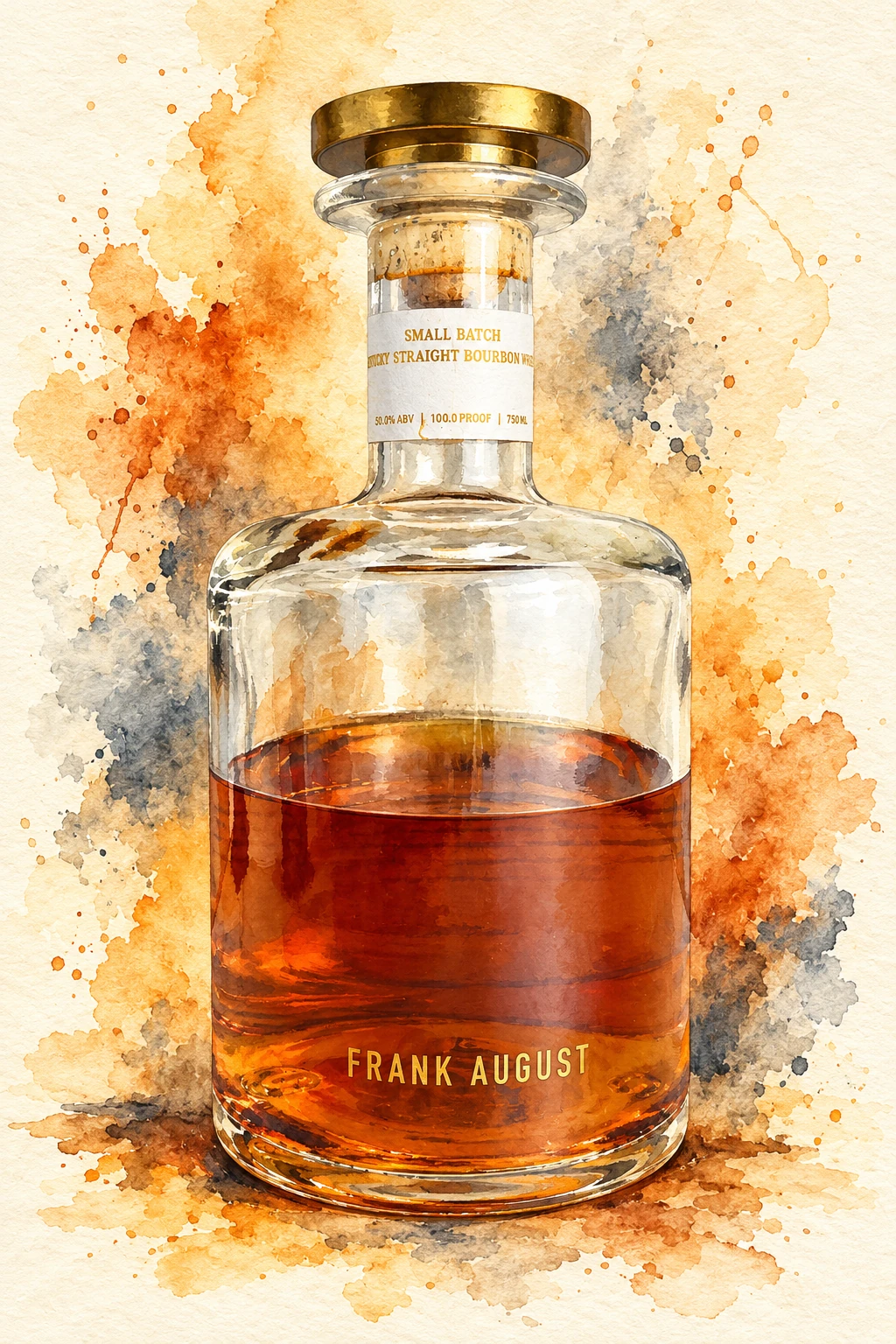
Symbolic modern whiskey decanter, oak barrels, grain and architectural forms
Brand home
Bardstown, Kentucky[19]
Market debut
2022[3]
Co-founder & CEO
Johnathan Crocker[14]
Creative approach
Selection, blending & finishing[6]
01 / Origins & people

A new name. A considered point of view.

A new story, deliberately

The official story emphasizes openness and a contemporary American identity. Rather than inventing a lost family distillery, Frank August makes its newness part of the proposition. The whiskey supplies the Kentucky connection; the presentation asks what a modern bourbon brand can look like.[1]

An idea becomes a business

Crocker told Flaunt that a long-discussed idea became a serious business project during the pandemic. That account describes development, before the later market debut.[2]

A name joins generations

Crocker says Frank was a partner’s late father and August another partner’s son’s middle name. The combined identity joins generations; it is not a historical master distiller.[2]

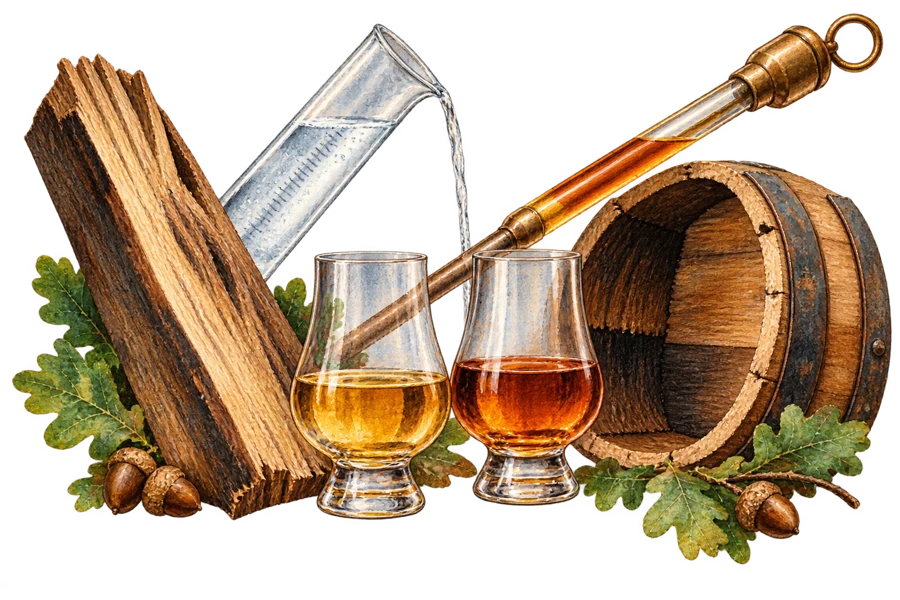
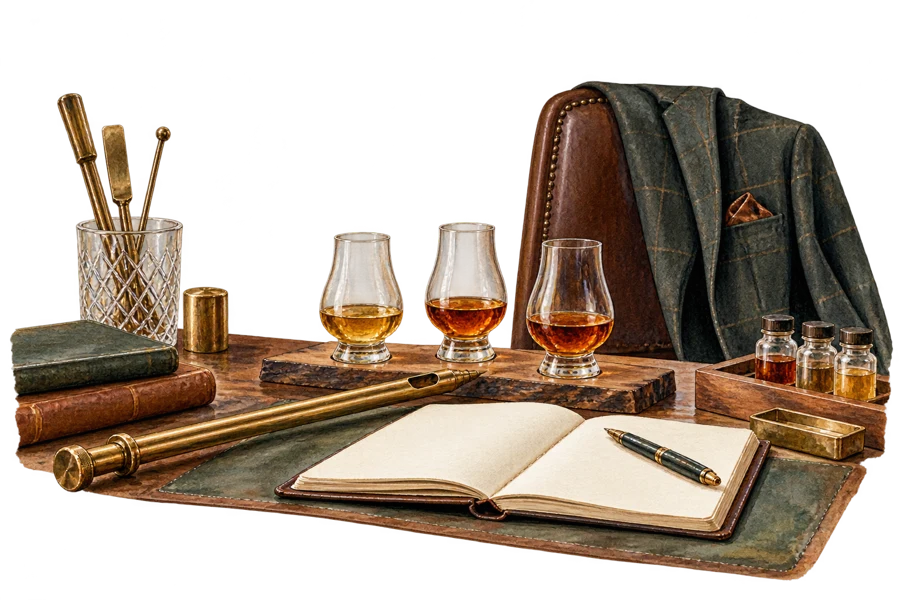
Symbolic modern blender’s desk with tasting glasses and notebook

Johnathan Crocker

Co-founder, CEO & blender

A May 2025 company announcement identifies Crocker as co-founder, CEO and blender. That combination places brand direction and sensory decisions in the same story. His role is distinct from claiming that he personally distilled every barrel in the portfolio.[14]

Jane Bowie

Collaborating whiskey maker

The June 2024 partnership account credits Bowie with selection and blending work. The documented collaboration is distinct from ownership of the brand.[9]

Denny Potter

Collaborating whiskey maker

The October 2023 announcement credits Potter and Bowie with selecting fifteen single barrels. These were mature whiskeys, with their own earlier production history. The collaborators’ later distilling plans should not be projected backward onto those barrels.[7]

Connections without invented provenance

Advice is different from distillation

Crocker described Drew Kulsveen as an early adviser who made introductions, while separating that assistance from involvement in the whiskey. Friendship does not establish barrel provenance.[2]

02 / The illustrated history

An idea, a bottle, a growing vocabulary.

Follow the people, partnerships and documented releases. Dates of reporting and partner offerings remain distinct from founding and release dates.
Symbolic illustration: An idea moves off the bar stool
2020 / founder’s account

An idea moves off the bar stool

Crocker’s interview places serious development during the pandemic, after earlier conversations with his partners.[2]
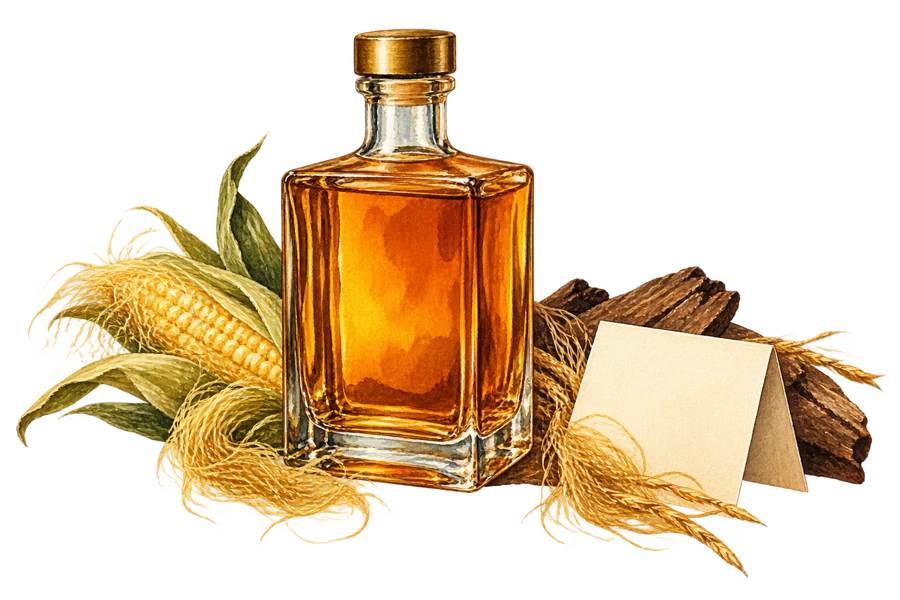
Symbolic illustration: A contemporary Kentucky bourbon arrives
2022

A contemporary Kentucky bourbon arrives

The November company announcement looks back to the flagship’s launch earlier that year.[3]
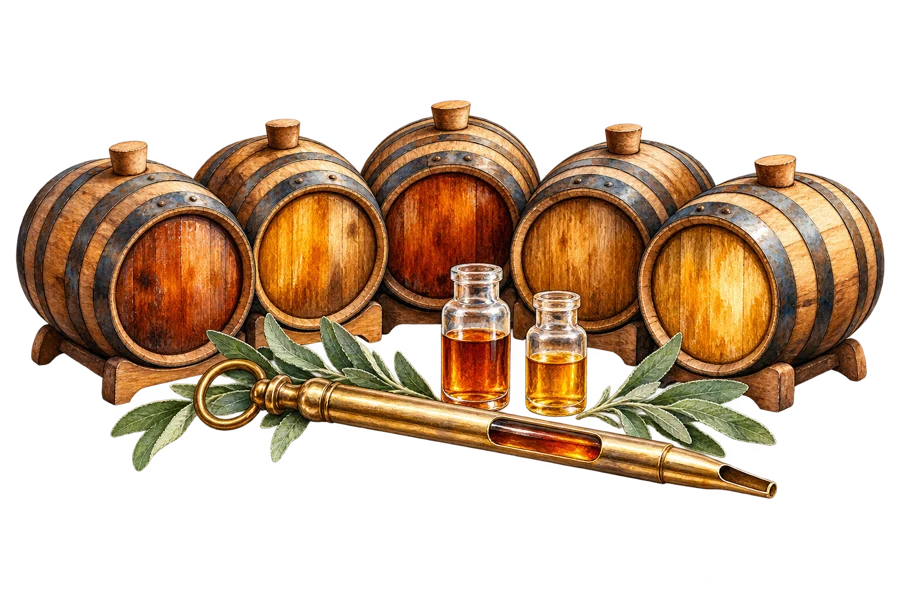
Symbolic illustration: The first single barrels are announced
November 17, 2022

The first single barrels are announced

Five cask-strength selections introduce an individual-barrel program alongside the flagship.[3]
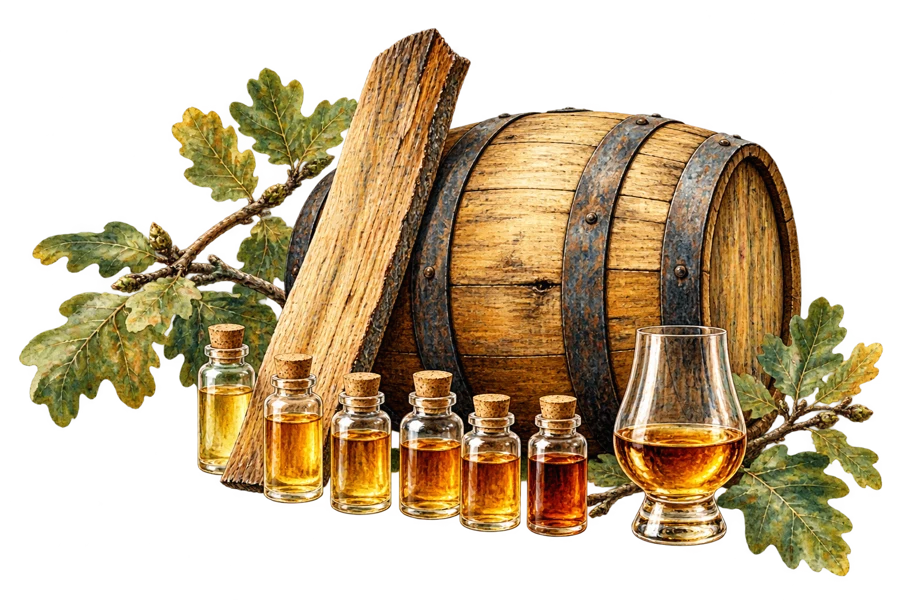
Symbolic illustration: Case Study opens with Mizunara
November 17, 2022

Case Study opens with Mizunara

The first experiment brings medium-toasted Japanese oak to selected Kentucky bourbon.[3]
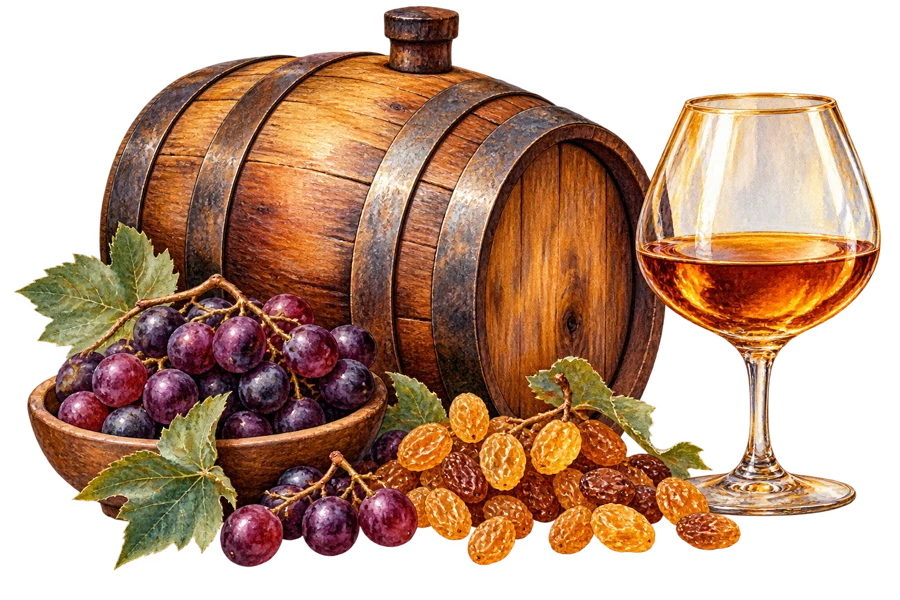
Symbolic illustration: A brandy-cask chapter follows
October 20, 2023

A brandy-cask chapter follows

A dated announcement introduces Case Study 02 and credits Bowie and Potter with the new single-barrel selections.[7]
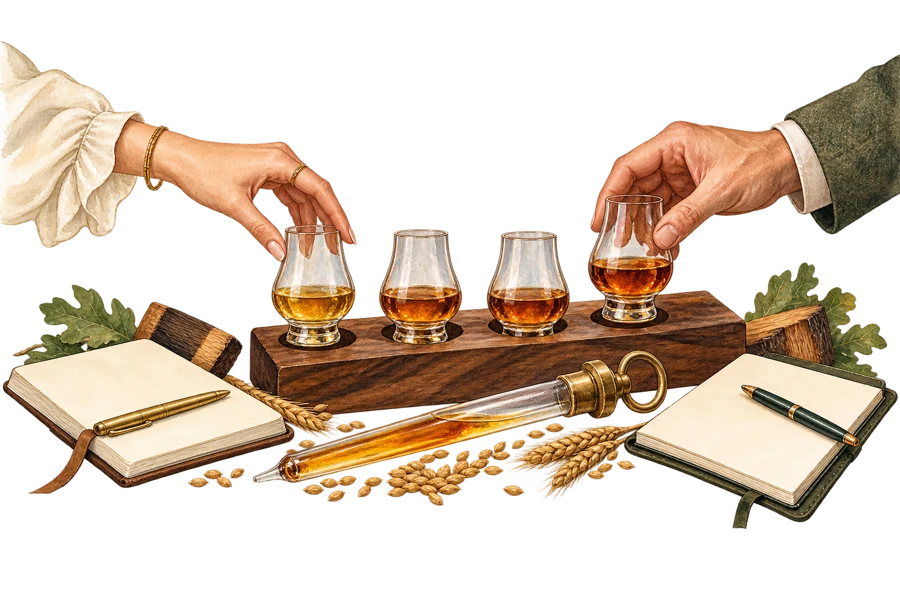
Symbolic illustration: The collaboration looks ahead
June 6, 2024

The collaboration looks ahead

The partnership account separates mature-barrel work from a distilling collaboration planned for 2025.[9]
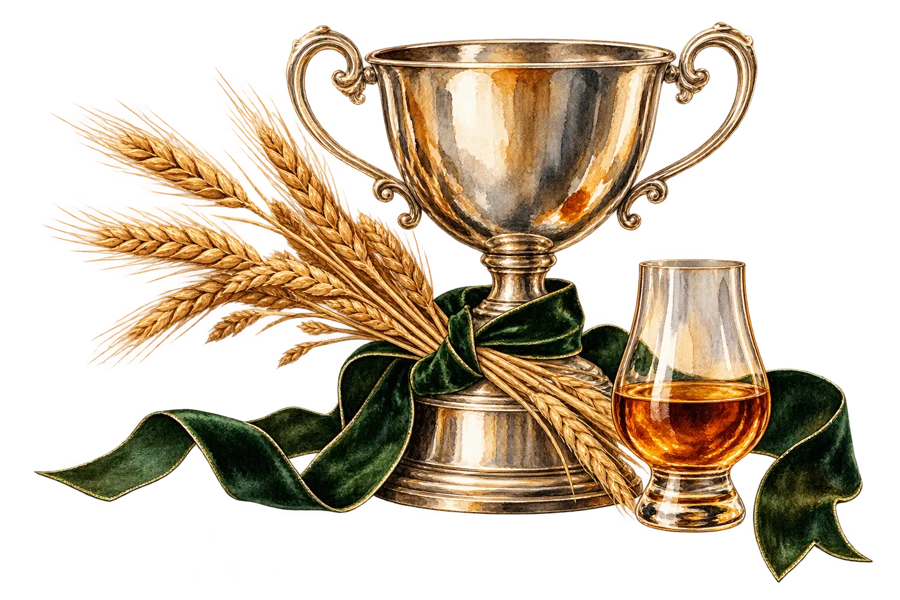
Symbolic illustration: Winter Cover Rye wins a trophy
2024 competition

Winter Cover Rye wins a trophy

The IWSC records its Rye Whiskey Trophy for Case Study 03.[11]
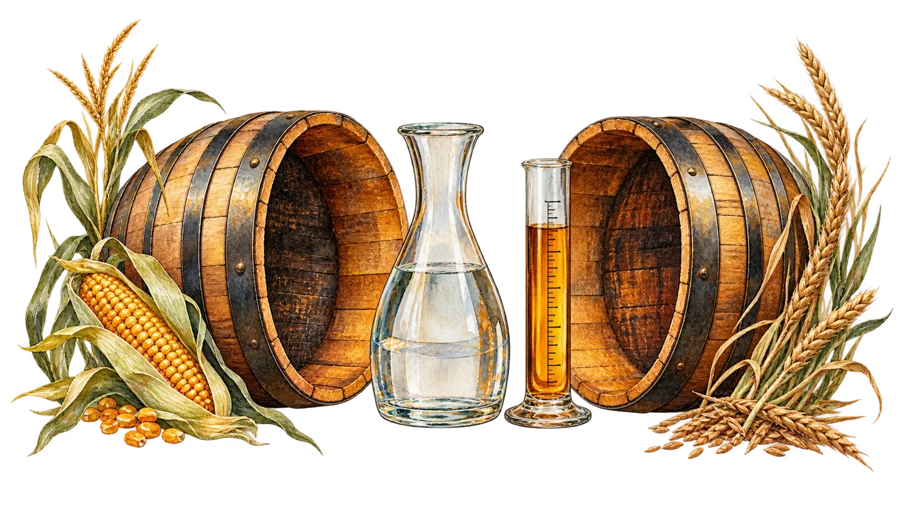
Symbolic illustration: A different approach to secondary oak
2024 release calendar

A different approach to secondary oak

The calendar records Case Study 04. Its producer description explains bourbon and rye proofed during their second oak maturation.[20][12]
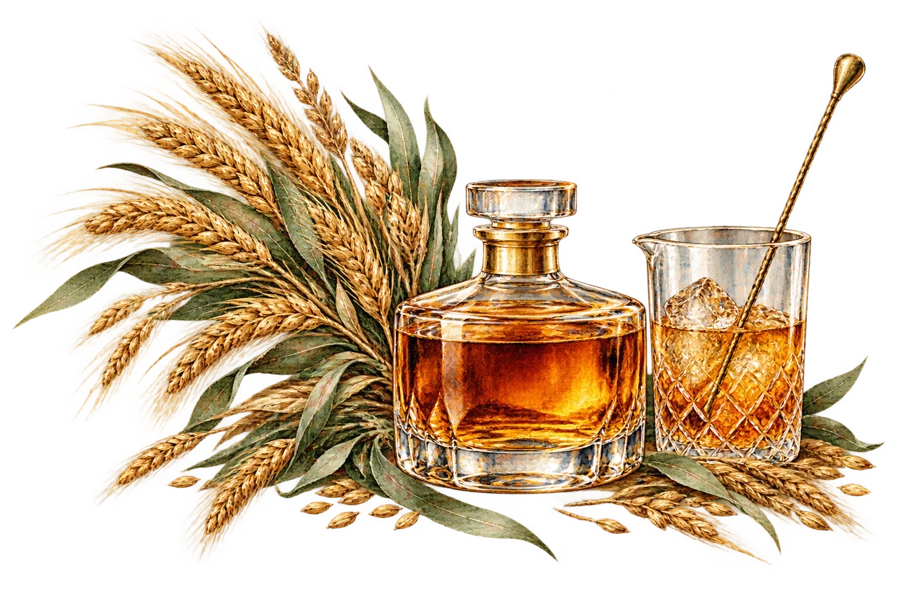
Symbolic illustration: Rye becomes a permanent expression
April–May 2025

Rye becomes a permanent expression

The product page dates the debut to April; the May 19 announcement establishes its permanent place in the range.[13][14]
Symbolic illustration: Wheated Reserve reaches a retail audience
June 30, 2025 / retailer record

Wheated Reserve reaches a retail audience

Seelbach’s documents the wheated Case Study 05 offering. This is a dated retail account, not a claimed first-ever launch day.[21]
Symbolic illustration: The flagship earns the Bourbon Trophy
2025 competition

The flagship earns the Bourbon Trophy

The IWSC’s own result identifies Small Batch Kentucky Straight Bourbon as the trophy recipient.[16]
Symbolic illustration: New studies broaden the conversation
October 17, 2026 / catalog snapshot

New studies broaden the conversation

The current catalog includes Legacy Reserve and French Connection: older Kentucky blends and international cask influences, with exact launch dates unconfirmed.[17][18]

Original watercolor interpretations accompany the history. Buildings, objects and scenes are symbolic, not documentary reconstructions.
03 / Geography & roles

One name. Several places that matter.

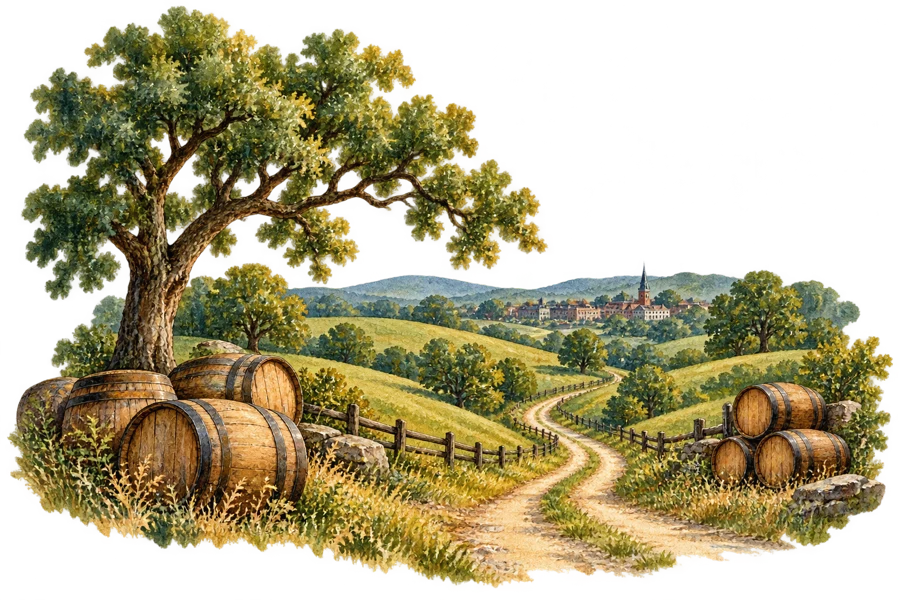
Symbolic Kentucky landscape and barrel-selection connections

Bardstown: a brand address

The current company terms identify Frank August, LLLP and a Bardstown contact address. That establishes a business contact, not a claim that the address is a distillery, warehouse or public tasting room. Visitor access should be checked directly.[19]

Kentucky: the declared whiskey origin

The flagship is described as distilled, aged and bottled in Kentucky. That identifies a state, not an exact plant; the reviewed product page leaves the original distiller unnamed.[4]

Potter Jane: a collaboration with a future horizon

The 2024 partnership account distinguishes mature-barrel work from distilling scheduled for 2025. That historical plan alone does not establish the source of any later bottle.[9]

Japan, France and the Caribbean: cask influences

Japanese oak and French and island finishing casks contribute materials and flavor influences. They do not establish foreign Frank August-owned distilleries.[18]

04 / The whiskey family

Understand the name on the label.

Trace the producer, its expression families and the distinct roles of collaborators and historical personnel.

Symbolic Frank August family of bourbon, rye and cask experiments

Frank August, LLLP

Brand and business entity

The official site identifies this entity as its operator and calls Frank August a producer and brand owner. The reviewed sources do not establish a complete current ownership table or equity percentages.[19]

Small Batch Bourbon

Core expression

The flagship is a 100-proof Kentucky straight bourbon, blended from ten to fifteen barrels.[4]

Small Batch Rye

Core expression

The rye became a permanent counterpart to the bourbon in 2025. Its ten-to-fifteen-barrel format and 100-proof presentation share a framework without making the two whiskeys interchangeable.[13]

Single Barrel

Individual selections

The current program bottles individual Kentucky bourbon barrels at cask strength. Proof and age can differ. A number attached to one selection should not become a specification for all of them.[5]

Case Study

Limited experiments

The numbered series tests finishing and blending ideas. Mizunara, rye, wheat and other cask influences give different editions distinct identities.[6][10][15]

Potter Jane Distilling Company

Named collaborating company

Bowie and Potter’s company appears in the 2024 partnership account. Collaboration is documented; an acquisition of Frank August is not. Keep producer ownership, creative advice and distilling contracts as separate relationships.[9]

05 / Making & choosing

The choices behind the label.

Recipes, fermentation, oak and mingling shape the whiskey. Keep every specification tied to the expression and edition named.

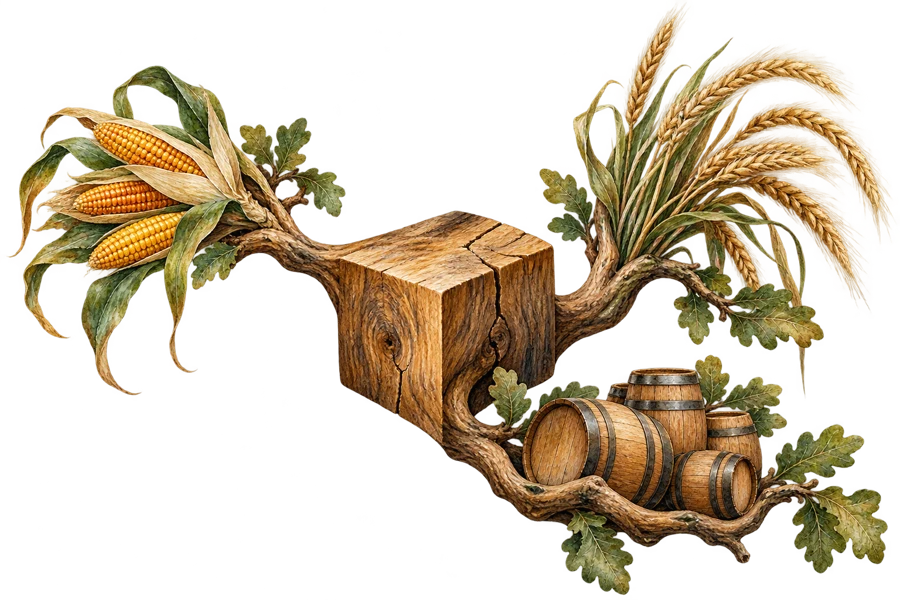
Symbolic mash bills, yeast, copper and oak

A consistent frame, a changing batch

Ten to fifteen barrels form each flagship batch at 100 proof. The product page does not disclose a precise grain recipe or name its original distiller.[4]

A barrel can be the finished selection

The current listing still describes the second release: fifteen barrels, 6.1 years old and 114.6–125.4 proof. Treat those as that selection’s specifications, rather than a live description of every subsequent barrel.[5]

Mizunara rewards close observation

Case Study 01 brought five selected bourbons into contact with Japanese oak. The producer describes checks every thirty days, with the finishing duration undisclosed.[6]

The history belongs to the finishing cask

Case Study 02 used ten 225-liter brandy casks. The producer traces their earlier contents through 1992 and an extra-old 1948 spirit. Those years describe the casks’ prior contents. They are not the age or distillation vintage of the bourbon.[8]

What 4X Oaked actually describes

Case Study 04 combines two double-oaked bourbon barrels with two double-oaked rye barrels. The brand says proofing happened at the second fill, followed by another twelve to fourteen months of maturation. Four source barrels and two oak stages should not be confused with four successive barrels for every drop.[12]

Blending older Kentucky voices

Legacy Reserve uses six-barrel batches containing eight-, nine- and ten-year bourbons. The producer describes two barrels from each of three Kentucky distilleries without naming them. The disclosed composition supports a blending story, not an inferred distillery list.[17]

06 / The details worth knowing

The stories inside the barrels.

Less ornament, more invitation

Crocker described minimalist packaging as a way to make people pause and engage, pairing contemporary presentation with Kentucky whiskey.[2]

Architecture becomes a whiskey program

The November 2022 release announcement traces the Case Study name to an American mid-century architectural project. That inspiration explains the experimental framing. Each edition asks a different question of materials and composition rather than repeating a single finishing formula.[3]

Winter is in the rye’s name

The producer connects Winter Cover Rye to rye’s role as a cover crop and to selected winter-distilled whiskey. It does not claim that every rye in the portfolio has one harvest or distillation season.[10]

An award with a specific address

The IWSC’s 2024 record awards its Rye Whiskey Trophy to Case Study 03 Winter Cover Rye. The recognition belongs to that entry and competition year. It is not a permanent ranking of every rye, or an award automatically transferred to the core expression.[11]

The flagship earns its own recognition

The IWSC’s 2025 record names Small Batch Kentucky Straight Bourbon as its Bourbon Trophy recipient and lists 50% alcohol. This is a separate accomplishment from the earlier rye award, attached to a different whiskey.[16]

An international conversation in oak

French Connection joins bourbon and rye with apple-brandy and rum-cask influences. The brand ties its 107.4 proof to July 4 as a symbolic reference.[18]

07 / Selected expressions

Different ways into the whiskey family.

A curated reading of the whiskey family, selected for its role in the story. This is not an exhaustive current catalog.

Small Batch Bourbon

The flagship is a useful starting point before the more limited experiments, with a stated Kentucky origin and 100-proof presentation.[4]

Single Barrel Cask Strength

The early 2022 announcement described five barrels at 123–125 proof and 5.1 years. That was the inaugural selection. Later barrel counts, ages and proofs changed, so these historical figures should remain tied to that release.[3]

Case Study 01 / Mizunara

A five-barrel bourbon experiment in Japanese oak, presented at 114.4 proof. The specification block gives 57.2% ABV; a conflicting percentage in the prose is explained in the research notes.[6]

Case Study 02 / 1948 XO PX Brandy

A 101-proof cask-finished bourbon whose long cask history is central to its name. The producer does not disclose how long the bourbon itself spent finishing.[8]

Case Study 03 / Winter Cover Rye

The first rye in the numbered program used nine three-barrel batches. It is a different expression from the permanent Small Batch Rye introduced afterward.[10]

Case Study 05 / Wheated Reserve

Five-barrel batches combine six-plus- and seven-plus-year wheated Kentucky bourbons. The brand reports eight batches at 104.5 proof. These are edition-specific details, not the mash bill of its flagship bourbon.[15]

Case Study 06 / Legacy Reserve

The current listing describes nine six-barrel batches at 109.24 proof. The three source distilleries remain unnamed. Older components and careful blending define this edition, rather than a secondary-cask finish.[17]

Case Study 07 / French Connection

A seven-barrel blend explores Calvados, Martinique rhum and Caribbean rum casks. Current catalog presence does not establish the exact launch date.[18]

08 / The Reserve connection

Continue from the story to the bottles.

Frank August in The Thelen Reserve

3 physical bottle records connect this story to the collection. Each keeps its own proof, barrel, batch, pick and release details.

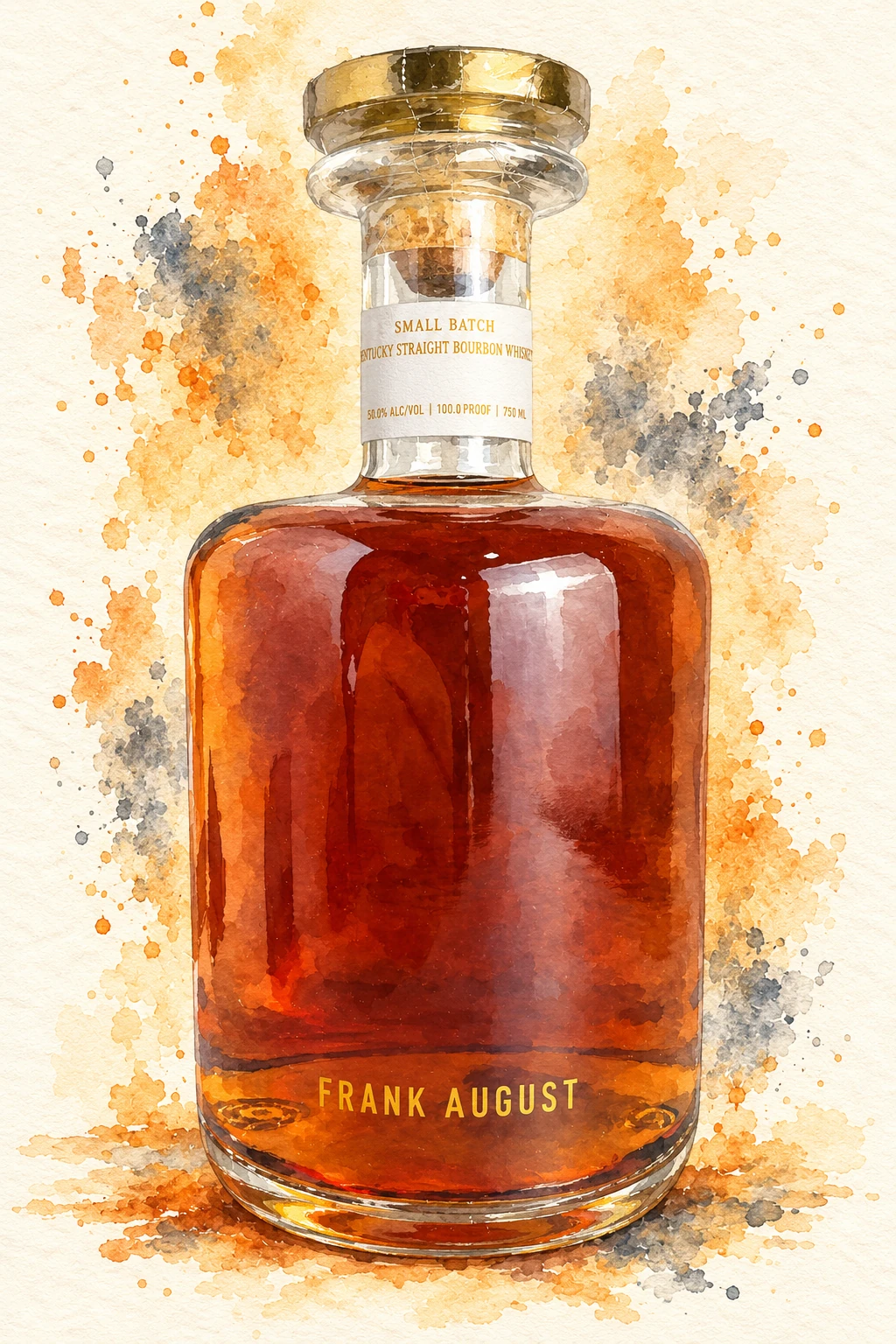
Approved watercolor of Frank August Bourbon

Frank August Bourbon

W0201 · 100 proof

Live record retained independently. Exact batch, distilling source and release identity await original labels; no copy merge approved.

Approved watercolor of Frank August Bourbon

Frank August Bourbon

W0202 · 100 proof

A separate physical record and release placeholder. Matching name and proof do not establish an identical batch; no copy merge approved.

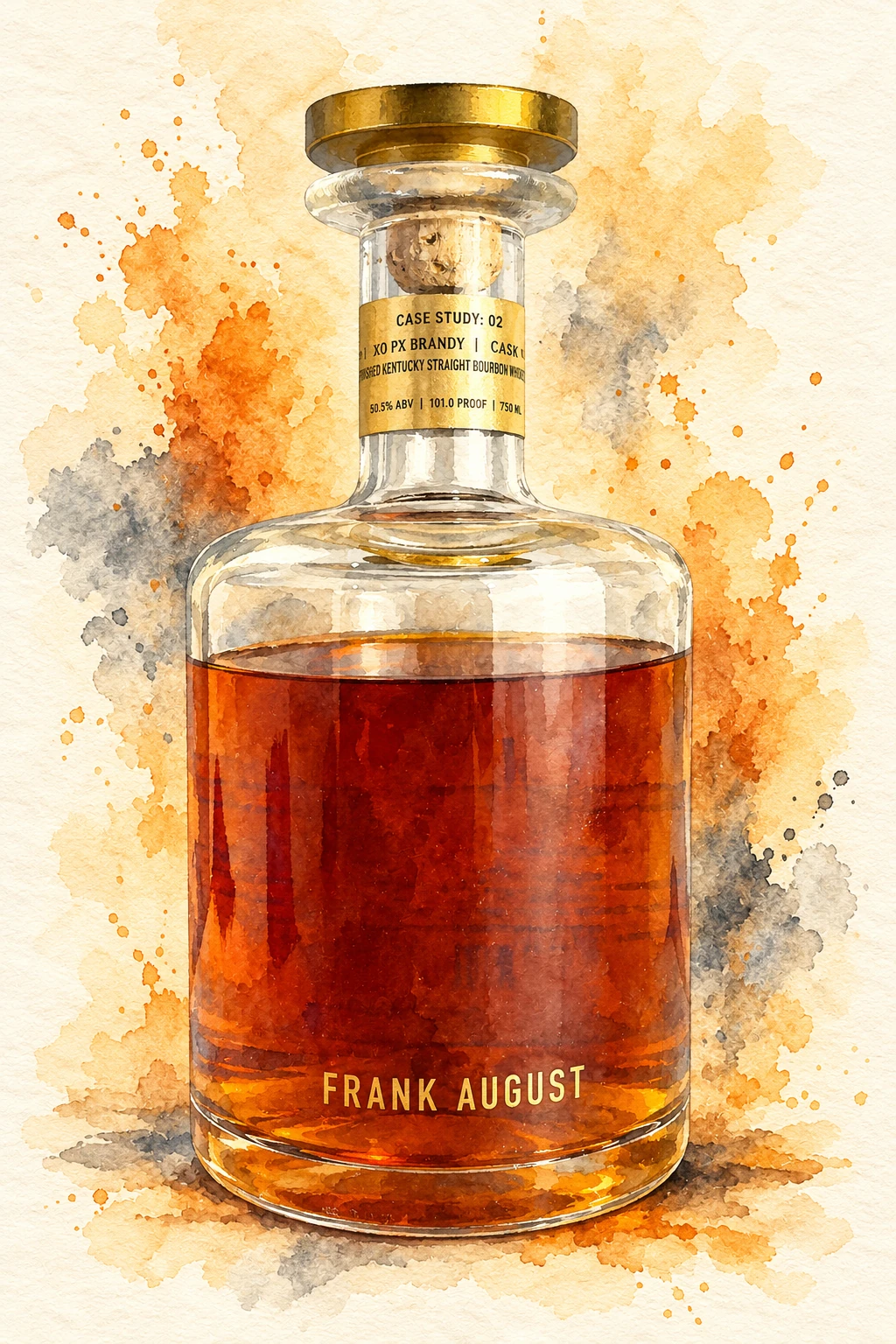
Approved watercolor of Frank August Case Study: 02 | 1948 XO PX Brandy Cask Finished Bourbon

Frank August Brandy Cask Finished Bourbon

W0203 · 101 proof

Live title and proof retained. They are consistent with Case Study 02, but the exact edition and cask identification remain unverified without original labels.

Collection snapshot: October 22, 2026. Three physical records, each linked to its own inventory entry. Batch and proof distinctions are preserved.

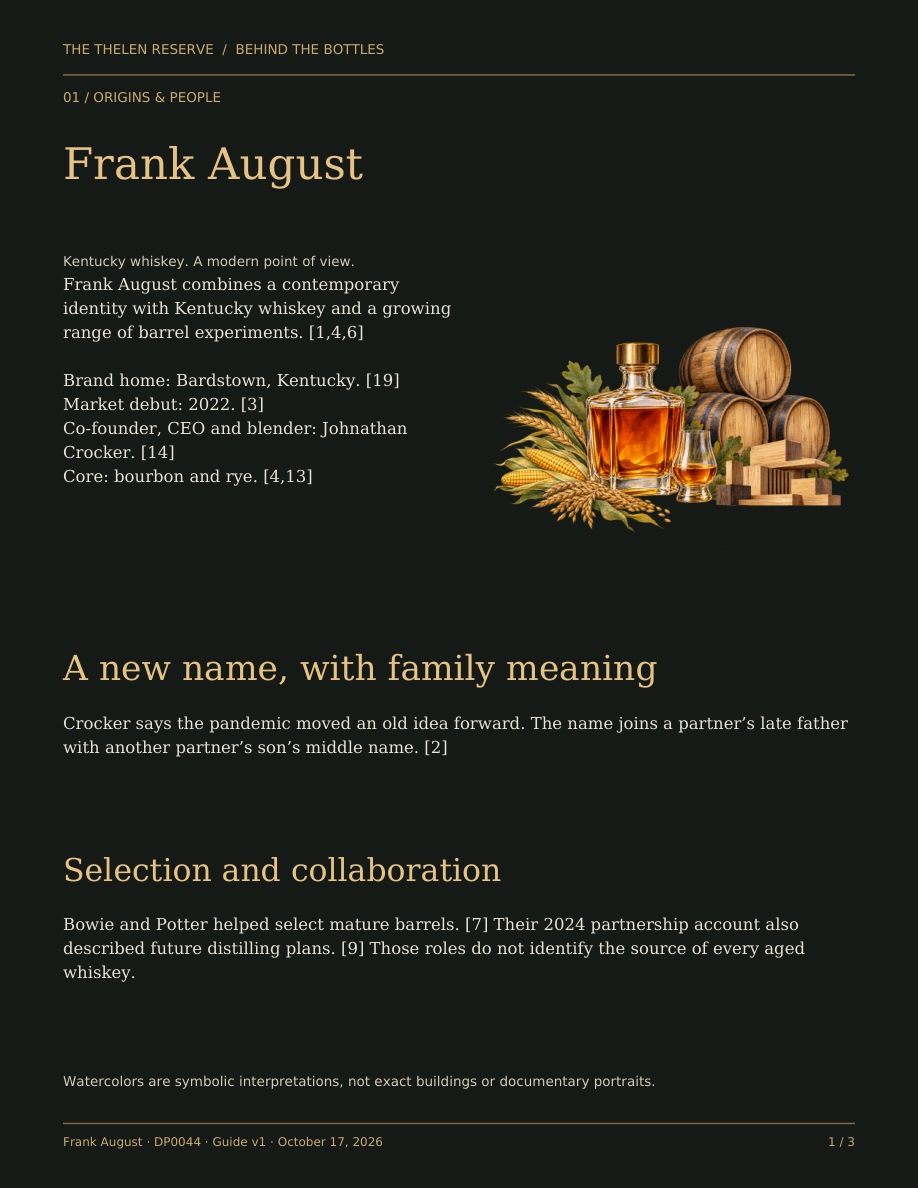
Frank August three-page guide cover
The illustrated companion

Frank August, in three pages.

Origins and people, history and places, whiskey and stories. A concise companion to this complete profile, with linked research sources.

Sources & research notes

Researched October 17, 2026. Official brand and company pages, dated announcements and clearly identified supporting sources are distinguished in the research. Product specifications are release- and market-specific.

Research qualifications

  • The 2022 announcement dates the flagship to four months earlier; this profile uses 2022 without inventing an exact launch day.[3]
  • Case Study 01 prose pairs 114.4 proof with 62.2% ABV. Its specification block gives 57.2%, the figure consistent with that proof.[6]
  • The 2024 partnership includes future distilling plans. Mature barrels selected earlier should not be relabeled as that future production.[9]
  • The current rye page says April 2025; the formal announcement is dated May 19. Both refer to the same introduction at different stages.[13][14]
  • Case Study 06 and 07 are documented in the current catalog. No precise first-sale date is inferred.[17][18]
  • Competition trophies are attached to the exact entry, category and year. Current shop availability is not a promise of stock.[11][16]

Full sources

  1. Official storyBrand philosophy. Note: Brand positioning, not a distillery history.
  2. Flaunt / Crocker interviewFounder’s account of origins, name, design and advice. Note: Attributed interview; publication date not used as a milestone.
  3. Company announcement / November 17, 2022Launch context, initial barrels and architectural inspiration. Note: Historical specifications; ABV prose error not repeated.
  4. Official / Small Batch BourbonCore bourbon and Kentucky origin. Note: No named distiller or exact mash bill.
  5. Official / Single BarrelIndividual-barrel program. Note: Current page retains historical second-release specifications.
  6. Official / Case Study 01Mizunara process and specification. Note: Prose ABV conflicts with specification block.
  7. Company announcement / October 20, 2023Case Study 02 and named barrel collaborators. Note: Dated company claims, distinct from later batches.
  8. Official / Case Study 02Cask history and 101 proof. Note: 1948 is prior contents, not bourbon age.
  9. Partnership announcement / June 6, 2024Selection work and planned distilling partnership. Note: Future timetable is not verification of every later bottling’s source.
  10. Official / Case Study 03Winter Cover Rye name and nine batches. Note: Do not transfer to core rye.
  11. IWSC / Rye Whiskey Trophy 2024Competition’s own exact entry result. Note: Category- and year-specific award.
  12. Official / Case Study 04Double oak, four-barrel blend and proofing. Note: URL slug is misleading; page title and contents identify 04.
  13. Official / Small Batch RyeCore rye, strength and April 2025. Note: The May announcement is a separate publication date.
  14. Company announcement / May 19, 2025Permanent rye and Crocker’s blender role. Note: A stray CS05 market line is excluded.
  15. Official / Case Study 05Wheated bourbon composition and batch count. Note: Edition-specific description.
  16. IWSC / Bourbon Trophy 2025Competition’s own exact entry result. Note: Separate from the American Whiskey Trophy.
  17. Official / Case Study 06Legacy Reserve blend and strength. Note: Three sources remain unnamed; no exact launch date inferred.
  18. Official / Case Study 07Finishing casks and seven-barrel blend. Note: Symbolic July 4 story is not its release date.
  19. Official / company termsEntity, producer role and contact address. Note: A business address is not visitor access or a distillery site.
  20. Breaking Bourbon / 2024 release calendarContemporary release-year corroboration for Case Study 04. Note: Secondary calendar, not exact day evidence.
  21. Seelbach’s / June 30, 2025Dated retailer offering for Wheated Reserve. Note: Publication/offering date, not first-sale claim.
↑