TJ THELEN'S COLLECTION
The Thelen Reserve
Behind the Bottles / Forney, Texas

Five Points Distilling / Lone Elm

Last updated Last researched

Texas begins with wheat.

In a glass of Lone Elm, Texas begins with wheat. Five Points Distilling built its Forney identity around a grain that is often a supporting player in American whiskey, then let local water, oak and summer heat become part of the conversation. The company’s story moves from a friends’ trip to Kentucky to a working distillery and international recognition. Following that journey reveals something more useful than a string of medals: a producer choosing a particular place, a particular grain and several different ways to show what they can do.[1][9]

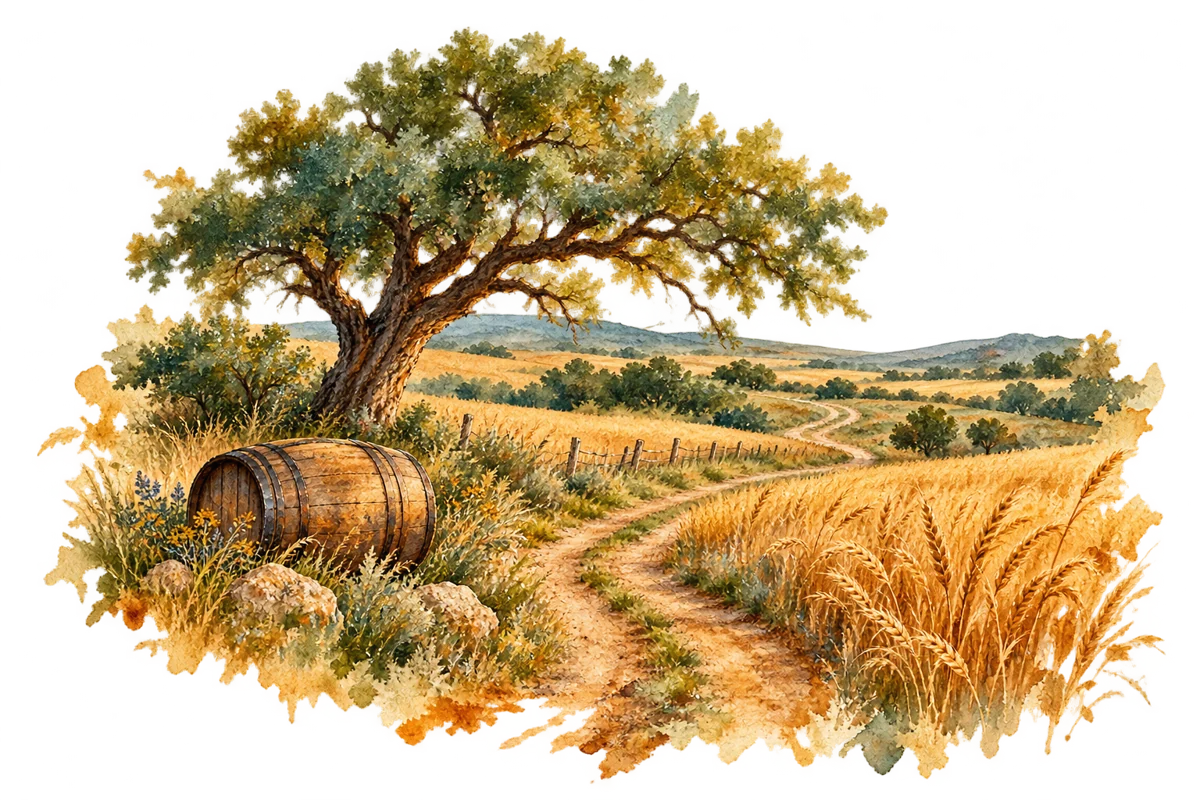
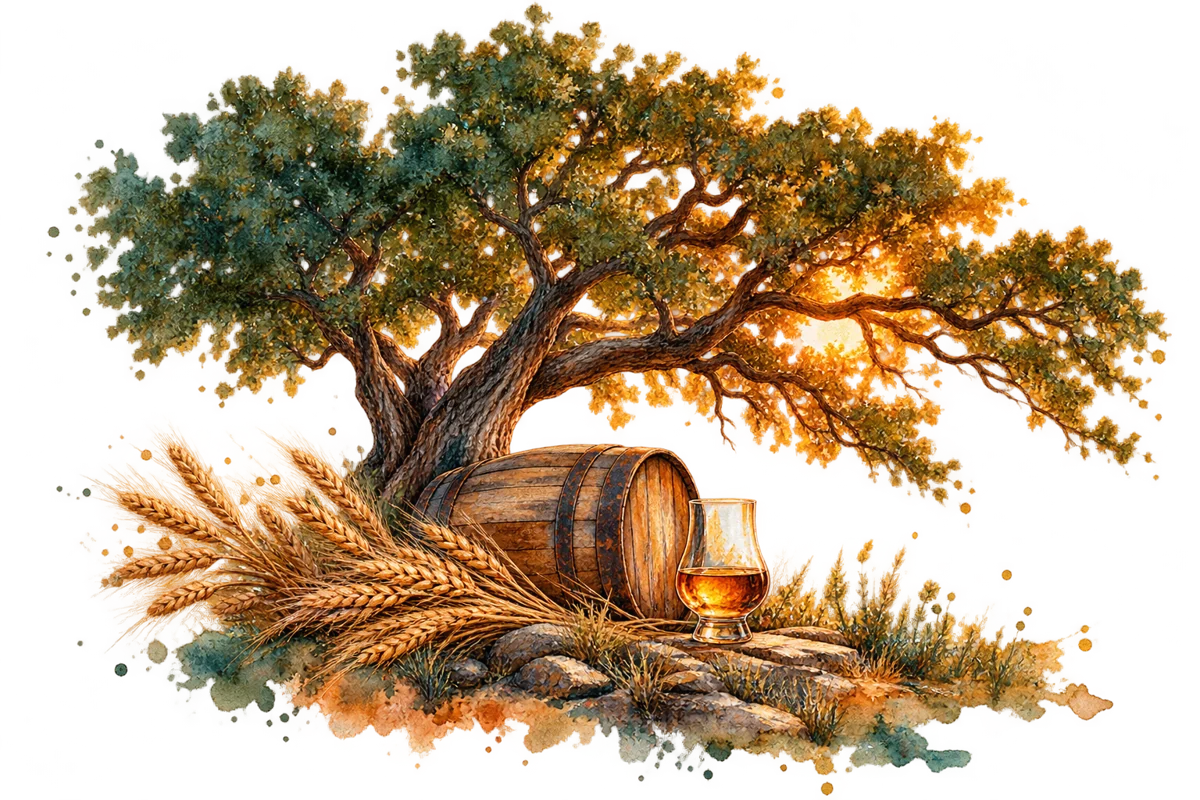
Interpretive watercolor of an elm, winter wheat, oak and amber whiskey
2012 · Construction

First whiskey followed in 2013

Forney, Texas

Five Points Distilling

A wheat identity

Local grain, rainwater and oak

Two wheat titles

World’s Best Wheat · 2023 / 2024

Research reviewed October 19, 2026 · Website v1 / Guide v1

01 / Origins & people

A challenge, a scientist and a Texas grain.

origins, symbolic watercolor illustration

The trip that became a commitment

Bill Wofford’s 2020 account begins with friends visiting Kentucky in 2011. A challenge to make their own whiskey was followed by a check and a real project. He dates construction to 2012, first whiskey to 2013 and first bottling to 2015. Those are separate stages, rather than competing definitions of a single founding day.[8]

A scientist at the still

Bourbon Real Talk identifies Wofford as a founder and the distillery’s creative force. Hook & Barrel’s interview describes his chemistry background and the decision to work with wheat. That combination makes the project especially interesting: a scientific habit of attention applied to a grain-led regional whiskey.[9][17]

Five Points makes it; Lone Elm names it

The official shop identifies Five Points Distilling as the producer behind Lone Elm. Distillery and brand are therefore related identities, rather than two unrelated makers. The whiskey and vodka product records place production in Forney, Texas.[3][7]

A company built around a local ingredient

The producer describes a distillery designed for wheat and a relationship with nearby growers. The choice gives Lone Elm a clear subject before a finishing cask or a medal enters the story. Its contemporary founder interviews provide the human account; current product pages provide the specifications for today’s named offerings.[1][17]

02 / The illustrated history

From a Kentucky idea to a Texas identity.

An early founder account, a growing barrel program and independently documented awards. Every milestone has its own original watercolor.
dare, symbolic watercolor illustration
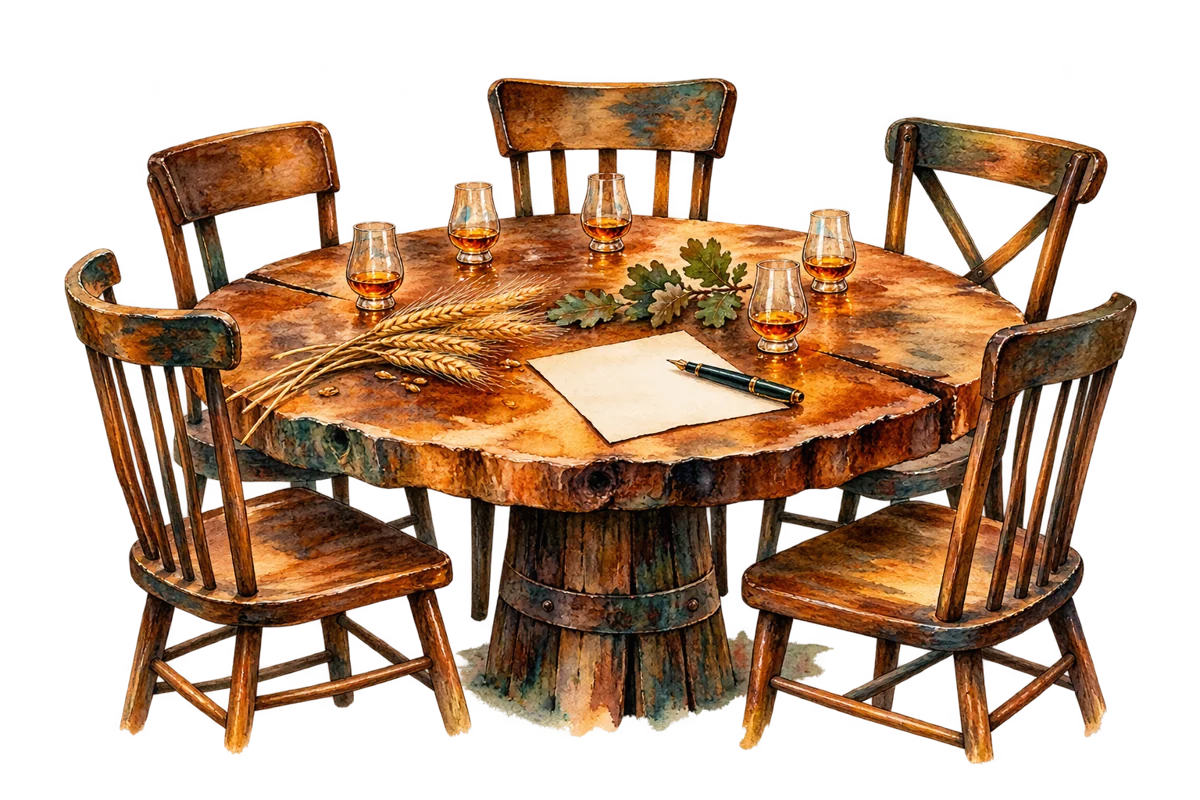
2011 / Founder’s account

A Kentucky trip plants the idea

In Wofford’s telling, friends returned from a Kentucky whiskey trip with a dare that became a commitment. This dates the idea, rather than a documented incorporation or public opening.[8]
construction, symbolic watercolor illustration
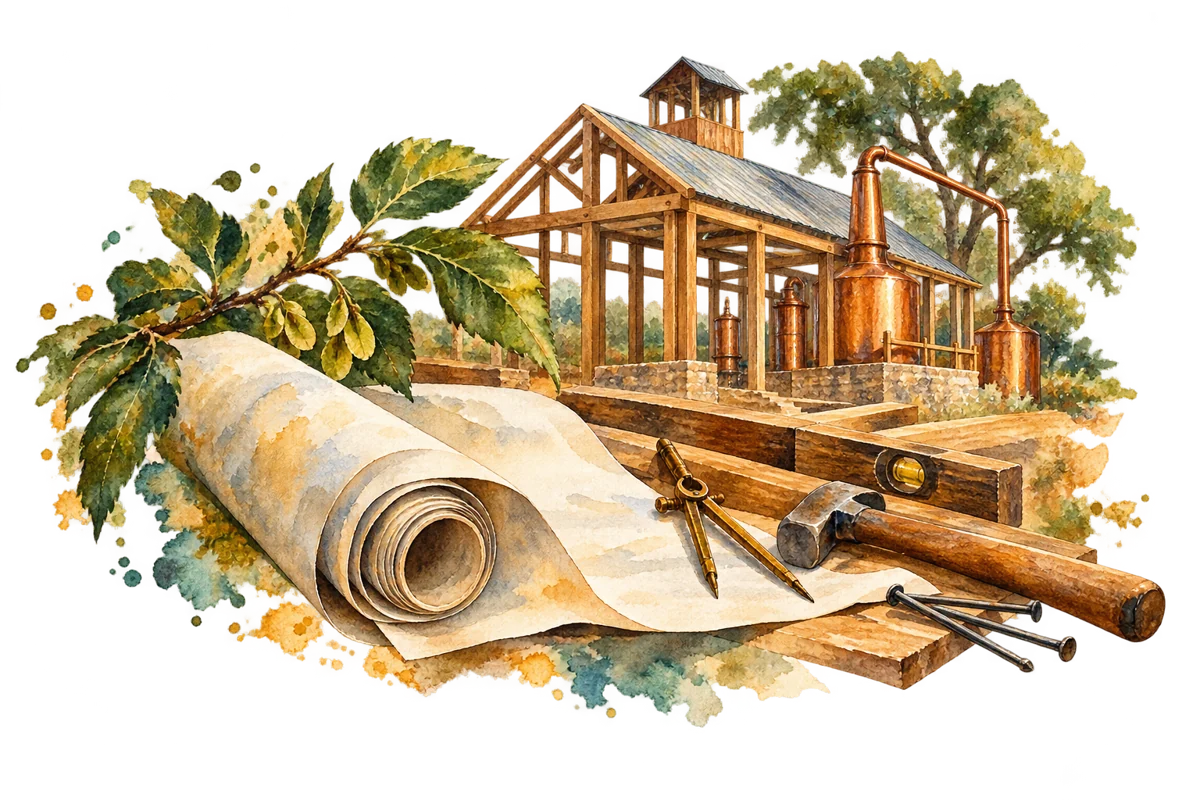
2012 / Construction

A Texas distillery takes shape

The founder dates the start of construction to 2012. Building the facility belongs between the initial idea and the first whiskey, an important distinction in a young distillery’s history.[8]
distillation, symbolic watercolor illustration
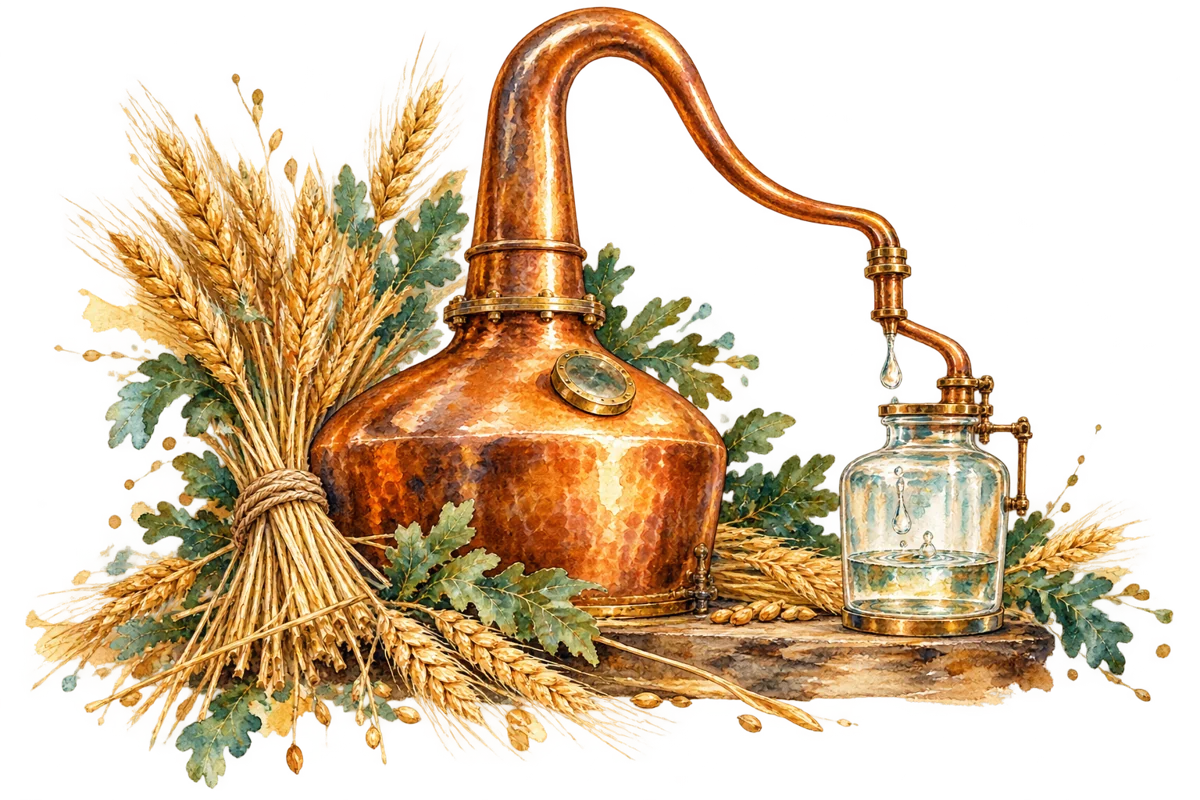
2013 / First whiskey

The project reaches the still

Wofford recalls making the first whiskey in 2013. This is the first-distillation milestone in his account; the first bottling follows later.[8]
firstbottle, symbolic watercolor illustration
2015 / Bottling and recognition

Lone Elm reaches an early benchmark

The founder dates first bottling to 2015. Independently, the Ultimate Spirits Challenge’s March results name Lone Elm Texas Wheat the American-whiskey Chairman’s Trophy winner. The category is specific, not a claim to every whiskey award.[8][10]
barrels, symbolic watercolor illustration
2017 / Barrel program

The casks grow larger

In the 2020 Bourbon Road conversation, Wofford confirms that the distillery began laying down whiskey in 53-gallon barrels in 2017. Earlier small-cask stocks and later full-size casks are different chapters.[8]
denver, symbolic watercolor illustration
2019 / Denver

Two expressions earn gold

The competition’s official results list gold medals for Five Points’ Lone Elm Small Batch Texas Wheat Whiskey and Lone Elm Single Barrel Wheat Whiskey. This records two named entries, without assigning a medal to every barrel.[11]
interview, symbolic watercolor illustration
2020 / The maker explains

The science meets the public story

Bourbon Real Talk’s October 9 episode introduces founder Bill Wofford and the distillery’s approach. Alongside the September Bourbon Road conversation, it preserves an early first-person account of how the company came together.[9][8]
award2023, symbolic watercolor illustration
2023 / World Whiskies Awards

A world wheat title

The organizer’s global results name Lone Elm 4 Years Old Single Barrel World’s Best Wheat. The result belongs to the entered expression and year, rather than every Lone Elm release.[12]
award2024, symbolic watercolor illustration
2024 / World Whiskies Awards

Single Barrel takes the wheat title again

The official winner record identifies Lone Elm Single Barrel as World’s Best Wheat and Best American Wheat. Five Points Distilling is the named company.[13]
vodka2025, symbolic watercolor illustration
2025 / World Vodka Awards

Wheat has another voice

The official Country Winner record identifies Lone Elm Vodka, made by Five Points, in Pure Neutral Vodka at 40% ABV. A country award has its own scope; it is not described here as a world title.[14]
range2026, symbolic watercolor illustration
October 2026 / Research snapshot

A wider wheat-led range

The current official catalog places Small Batch, Single Barrel, Sherry Cask Finish, Honey Barrel Finish and Wheat Vodka together. This is a dated view of the range, not a claimed launch date for the finished whiskeys.[18]
03 / Geography & roles

The places play different parts.

geography, symbolic watercolor illustration

Forney, Texas

Forney is the production location named in the official Lone Elm shop. East of Dallas, the city sits within an agricultural landscape with its own longer history. Its municipal account records the earlier community name Brooklyn and the change to Forney in 1873.[3][16]

The Trinity River Basin

The Small Batch page identifies farms in this Texas basin as the source of its red winter wheat and malted-barley grain bill. Grain origin gives the story a regional anchor that is more precise than the word Texas alone.[4]

The distillery’s water supply

Rainwater collected on site is part of the producer’s stated process. The official story describes ultraviolet treatment and reverse osmosis. This is a documented production choice, not evidence that every drop of water used in every operation has an identical history.[1]

The route through oak

The producer identifies new American oak from the Ozark region and a medium char. Its current Small Batch description specifies 53-gallon maturation barrels. Oak supply, distillation location and grain origin each contribute a different geographic role.[1][4]

04 / The whiskey family

One producer. Several ways to explore.

Five Points Distilling

Distillery and producer

The current product records connect this company to whiskey and vodka made in Forney. The profile treats it as the maker behind the brand, without inventing an acquisition, parent company or undisclosed ownership change.[3][7]

Lone Elm

The consumer-facing spirits brand

Wheat whiskey supplies the central identity, with Wheat Vodka showing a second route from the grain. The shared brand connects these products; aging and whiskey classification still distinguish them.[2]

Small Batch and Single Barrel

Two whiskey formats

Small Batch presents the house profile at a lower fixed strength. Single Barrel makes the individual cask the unit of selection and retains barrel-to-barrel variation. Their labels should be read as distinct specifications.[4][3]

Sherry and Honey Barrel Finish

The finishing branch

The current catalog offers two further cask treatments. Sherry explicitly identifies Oloroso; Honey Barrel Finish is described as whiskey with a restrained honey influence. Neither name establishes a launch date or a universal finishing duration.[5][6]

The people behind the name

Founder evidence, carefully scoped

Wofford is documented as a founder and master-distilling voice in contemporary interviews. Those interviews establish his role at the time. They do not supply a complete, current shareholder register or justify naming every person as a present owner.[9][17]

05 / Making & choosing

Wheat, water, oak and time.

Follow the grain and the cask, then check the exact release. Current catalog specifications and historical barrels tell different parts of the story.

making, symbolic watercolor illustration

Wheat takes the lead

The current Small Batch listing specifies 90% Texas red winter wheat and 10% malted barley. That is a wheat-led recipe, rather than bourbon with wheat replacing rye. Apply the published specification to the named product; an older or separately selected barrel requires its own evidence.[4]

From grain to a local spirit

The official company story links a wheat-focused distillery with local grain and the return of spent mash to farmers for fertilizer. This describes the producer’s intended cycle of material use. It is not an independently audited environmental certification.[1]

Proofing is another choice

Small Batch’s current record gives 45% ABV, or 90 proof. The Single Barrel shop describes roughly 60% ABV and explicitly says strength varies by barrel. A barrel-proof bottling therefore needs its exact label rather than the catalog’s approximate figure.[4][3]

Age must follow the bottle

The current shop lists Small Batch at three years and Single Barrel at four. Earlier interviews discuss older stocks and smaller casks. Combining an old sample’s age, a current recipe and another barrel’s proof would create a whiskey the sources never describe.[4][3][8]

Climate adds context, not a conversion formula

Texas heat forms part of the producer’s explanation of maturation. Temperature, cask size and warehouse conditions can change the experience of aging. This profile does not turn a year in Texas into a fixed number of Kentucky years or rank maturity by calendar alone.[1]

A second cask changes the question

Sherry Cask Finish is described with Oloroso seasoning and a current strength of 53% ABV. A finish is an additional stage in a whiskey’s cask history. The Honey product page contains conflicting strength fields, so its proof remains qualified until the particular label is checked.[5][6]

06 / The details worth knowing

The stories behind the specifications.

finishing, symbolic watercolor illustration

A trophy before the world titles

The 2015 Ultimate Spirits Challenge result is an early independent marker: a Chairman’s Trophy in American whiskey. It precedes the later World Whiskies Awards results by years. Reading the actual categories shows a sequence of recognition without collapsing different competitions into one claim.[10][12][13]

Two formats, one competition

Denver’s 2019 list places both Small Batch and Single Barrel among its gold medalists. The pairing offers a useful way to explore the range: a consistent lower-proof format alongside the individuality of a cask. It does not identify which later barrel resembles the competition entry.[11][4][3]

The label has a maker too

Flow Design documents its Lone Elm packaging work for Five Points. That credit adds another contributor to the bottle’s public identity. The watercolors in this profile are new interpretive scenes, rather than copies of the packaging or reconstructions of the distillery’s actual equipment.[15]

A familiar place-name deserves care

A founder’s interview links Lone Elm to local history. Forney’s own municipal history instead identifies Brooklyn as the earlier community name. The discrepancy remains in the research record; an attractive origin anecdote should not erase a city’s documented account.[8][16]

Honey finish is still a whiskey story

The producer presents Honey Barrel Finish as whiskey rather than an intensely sweet honey liqueur. Its page also disagrees with itself: the headline and description indicate 108 proof / 54% ABV, while the details table gives 53%. The exact bottle label must settle the strength.[6]

Vodka tests a different side of wheat

The official Wheat Vodka product is unaged, made from soft red winter wheat and bottled at 40% ABV. Its 2025 award record names the same company. Grain identity can connect two spirits even when one depends on years in oak and the other does not.[7][14]

07 / Selected expressions

A tasting path through the producer.

Lone Elm Small Batch

A starting point for the wheat profile: the current listing gives a 90/10 wheat-and-malted-barley recipe, three years of age and 90 proof. These are current product-record specifications, rather than a promise about every historical bottling.[4]

Lone Elm Single Barrel

A route into individual-cask variation. The current shop describes four-year-old whiskey at approximately 120 proof, varying by barrel. The 2023 and 2024 wheat-category world titles make useful historical context, but cannot identify a particular bottle’s age or strength.[3][12][13]

Lone Elm Sherry Cask Finish

The current producer page identifies Oloroso casks and 53% ABV, equivalent to 106 proof. It offers a comparison with the core wheat whiskeys in which the finishing vessel becomes part of the explanation. No unverified finish duration is supplied.[5]

Lone Elm Honey Barrel Finish

A second finishing direction, presented as whiskey with subtle honey influence. Read the exact label for proof because the official page contains inconsistent strength fields. The name does not by itself establish added sweetener, cask sequence or a universal age.[6]

Lone Elm Wheat Vodka

The unaged, 80-proof branch of the official range uses soft red winter wheat. It provides a separate view of the producer’s chosen grain. The World Vodka Awards country-level recognition belongs to the named 2025 entry.[7][14]

08 / The Reserve connection

Continue from the story to the bottles.

Five Points Distilling / Lone Elm in The Thelen Reserve

1 physical bottle record connects this story to the collection. Each keeps its own proof, barrel, batch, pick and release details.

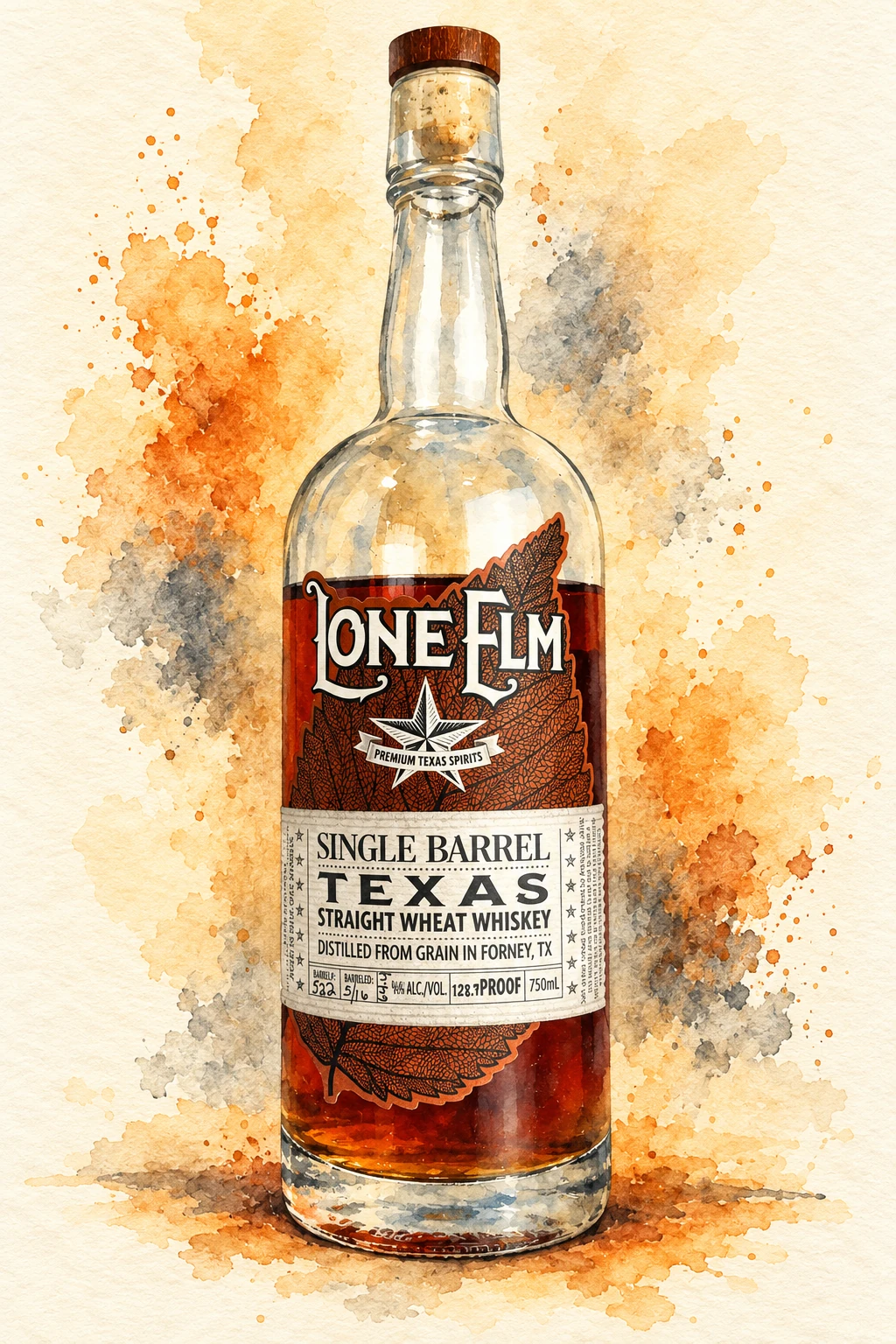
Approved watercolor of Lone Elm Single Barrel Straight Wheat Whiskey
Approved bottle artwork not yet available

Lone Elm Single Barrel Straight Wheat Whiskey

W0297 · 128.7 proof · Barrel 522 · Barreled detail 05/2016; TJ confirms May2016 from label5/16. Month precision only,no day known. Prior incorrect5/16/2020 cleared from BARRELED ON; original preserved in audit.

Barrel 522. One physical bottle mapped to Five Points Distilling / Lone Elm. Exact age and mash bill are not assigned from a current generic listing.

Approved watercolor artwork is shown wherever an exact physical record or confirmed release match is available. Each physical bottle keeps its own verified details.

Five Points Distilling / Lone Elm guide cover
The illustrated companion

Five Points Distilling / Lone Elm, in three pages.

Origins and people, history and places, whiskey and stories. An illustrated companion with linked research sources.

Sources & research notes

Research qualifications

  • Research reviewed October 19, 2026. Official current product records establish the range and specifications; first-person interviews support the early chronology. Every chronology date is qualified by its event, not treated as a single legal founding date.
  • The Bourbon Road transcript renders the founder surname Wolford. Bourbon Real Talk and the contemporary Hook & Barrel interview identify Bill Wofford; that spelling is used here. Interviews support historical roles, not an exhaustive current ownership list.
  • Hook & Barrel says whiskey reached market in 2013, while Wofford’s Bourbon Road account distinguishes first whiskey in 2013 from first bottling in 2015. This profile follows the explicit first-person distinction. The 2015 competition record independently confirms the product by that date.
  • The founder’s local name-origin anecdote conflicts with the City of Forney municipal history, which records Brooklyn as the earlier name. No definitive claim that Forney was originally called Lone Elm is made.
  • Honey Barrel Finish page is internally inconsistent: headline 108 proof and description 54% ABV; structured details 53% ABV. No definitive proof is assigned. Sherry is separately listed at 53% ABV. No launch date or finish duration is inferred for either finish.
  • Current catalog ages and approximate Single Barrel strength must not be transferred to older physical bottles. Awards attach to the named entry and year. The 2025 vodka result is Country Winner, not World’s Best Vodka.
  • Rainwater treatment, grain sourcing, oak and sustainability descriptions are producer statements. Climate-driven maturation is not expressed as a scientific conversion between Texas and Kentucky years. No blanket tasting score or independently audited environmental claim is supplied.
  • Official catalog is a dated range snapshot, not guaranteed retail availability. No current ownership change, parent company, comprehensive founder list or undocumented brand relationship is invented. Original watercolors are symbolic, not architectural or equipment records.
  • Website v1, Guide v1 and all 16 original editorial illustrations await TJ review. No main Reserve production publication is authorized by this new-profile request.

Full sources

  1. Lone Elm: official distillery story
  2. Lone Elm: official whiskey and vodka range
  3. Five Points: Lone Elm Single Barrel product record
  4. Five Points: Small Batch product record
  5. Five Points: Sherry Cask Finish product record
  6. Five Points: Honey Barrel Finish product record
  7. Five Points: Wheat Vodka product record
  8. The Bourbon Road 98: first-person founder interview, September 30, 2020
  9. Bourbon Real Talk 70: Bill Wofford interview, October 9, 2020
  10. Ultimate Spirits Challenge: March 25, 2015 organizer results
  11. Denver International Spirits Competition: 2019 official results
  12. Whisky Magazine / awards organizer: 2023 global results
  13. World Whiskies Awards: 2024 World’s Best Wheat
  14. World Vodka Awards: 2025 Country Winner, Lone Elm
  15. Flow Design: Five Points / Lone Elm packaging project
  16. City of Forney: municipal city profile and history
  17. Hook & Barrel: founder interview, August 27, 2020; updated December 3, 2024
  18. Five Points: current official Lone Elm catalog
↑