Early Times tells a Kentucky story through the survival of a name. Country distilling, medicinal whiskey, postwar cocktail culture and a modern bonded revival belong to the same long arc. Its geography and ownership have changed along the way. The pleasure of following that arc is seeing how a familiar label can carry several distinct kinds of whiskey, each with its own relationship to grain, wood and time.[24]
The official introduction dates Early Times to 1860 and credits John Henry “Jack” Beam. The name evokes a country already looking back at its beginnings. That is the brand’s established chronology, rather than a claim that a present bottle came from a nineteenth-century building.[1]
The railroad changes the scale
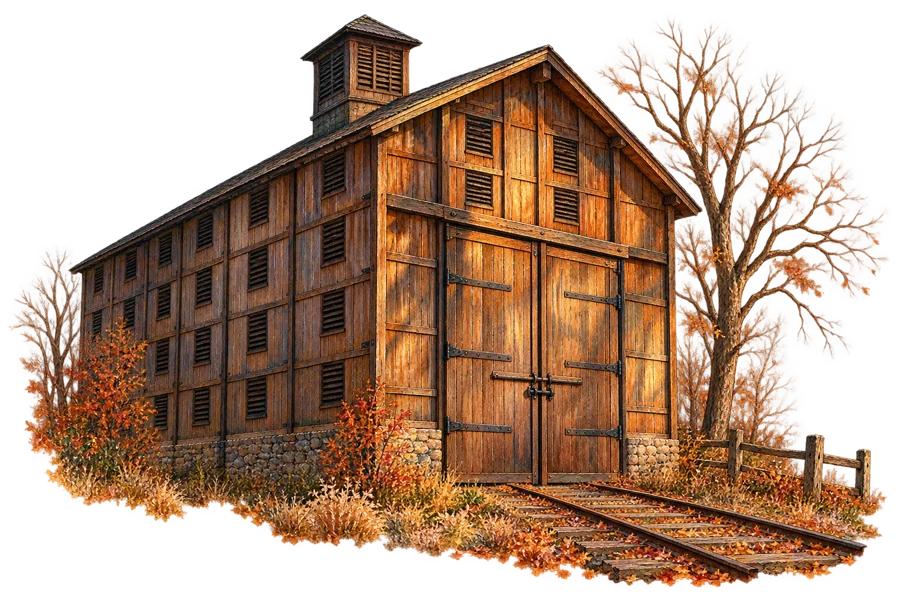
The Pre-Pro compilation places a later plant at Early Times Station beside the L&N railroad in 1866. Its insurance-record account describes an iron-clad distillery and several warehouses. Grain could arrive and whiskey could depart through a transport network larger than the surrounding farms. Brand founding, a railroad-site move and later plant enlargement are separate events.[3]
The stock outlasts the still
The 2020 producer retrospective describes mature whiskey sitting through the shutdown before Owsley Brown bought stocks in 1923. Medicinal bottling gave the stored liquid a lawful route to customers; beverage distillation at the original site had stopped.[4]
John Henry “Jack” Beam
Founder
The founder belongs to the wider Beam distilling family. The brand credits him with its 1860 beginning, but that shared surname should not merge Early Times with the separate Jim Beam brand. He originated the Early Times name and enterprise.[1]
Owsley Brown
Brown-Forman stewardship
Brown-Forman’s timeline records Owsley securing a medicinal bottling license during national Prohibition. It later obtained permission to replenish medicinal stocks. His role connects Early Times to the practical work of keeping a whiskey business alive through restricted sales, warehousing and eventual post-Repeal expansion.[5]
Chris Morris
Historical master-distiller contribution
For the 2010 commemorative release, Morris explained an attempt to recall the younger medicinal whiskey Brown-Forman bottled after the acquisition, rather than the much older surviving bottles collectors sometimes encounter. It was an exercise in historical flavor interpretation, not a claim that the commemorative contained pre-Prohibition spirit.[7]
02 / The illustrated history
The long journey of a Kentucky whiskey.
Follow the brand through rural origins, Prohibition, industrial growth and changing ownership. Founding, product changes and production plans retain their own dates.
1860
The Early Times name begins
The official chronology credits John Henry “Jack” Beam with establishing the brand in Kentucky.[1]
1918
The original plant falls quiet
The historical distillery record dates cessation of operations to the wartime prohibition period.[3]
1923
Mature stocks find a medicinal route
Brown-Forman acquires Early Times stocks and resumes sales under its medicinal permit.[4]
1940
A Shively production chapter
Brown-Forman’s timeline records its purchase of Old Kentucky Distillery.[5]
1945
Bottled in bond enters the family
The producer retrospective dates the introduction of Early Times Bottled-in-Bond Bourbon to this year.[4]
1953
A postwar market leader
Contemporary historical coverage identifies Early Times as America’s leading bourbon in that year.[24]
1983
Seasoned wood changes the designation
Brown-Forman’s later announcement dates the domestic move from bourbon to Kentucky Whisky to 1983.[2]
1987
The Derby julep chapter begins
The brand’s 2013 release looks back on 26 years as the Kentucky Derby’s official drink.[16]
April 2010
A small bottle marks 150 years
The commemorative release arrives at 100 proof in a 375-milliliter bottle with retro presentation.[7]
January 20, 2011
354 brings bourbon back
The dated announcement introduces an 80-proof bourbon alongside the existing Kentucky Whisky.[2]
July 2017
The bonded expression returns
Launch material schedules the revived Bottled-in-Bond Bourbon for six initial state markets.[8]
July 31, 2020
Ownership passes to Sazerac
Brown-Forman completes the brand sale; its public completion announcement follows on August 3.[10]
April 8, 2021
Barton plans the next season
Sazerac announces summer distillation, aging and bottling at Barton 1792 in Bardstown.[11]
2025
The bonded bourbon earns a Master
The American Whiskey Masters organizer lists Early Times Bottled in Bond among its Master winners.[20]
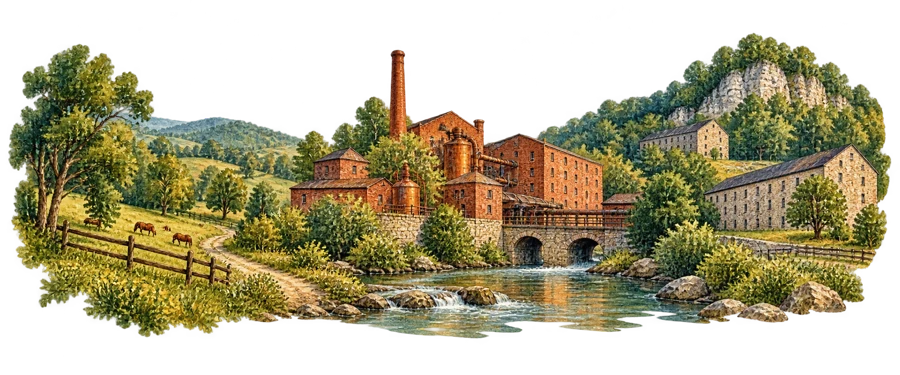
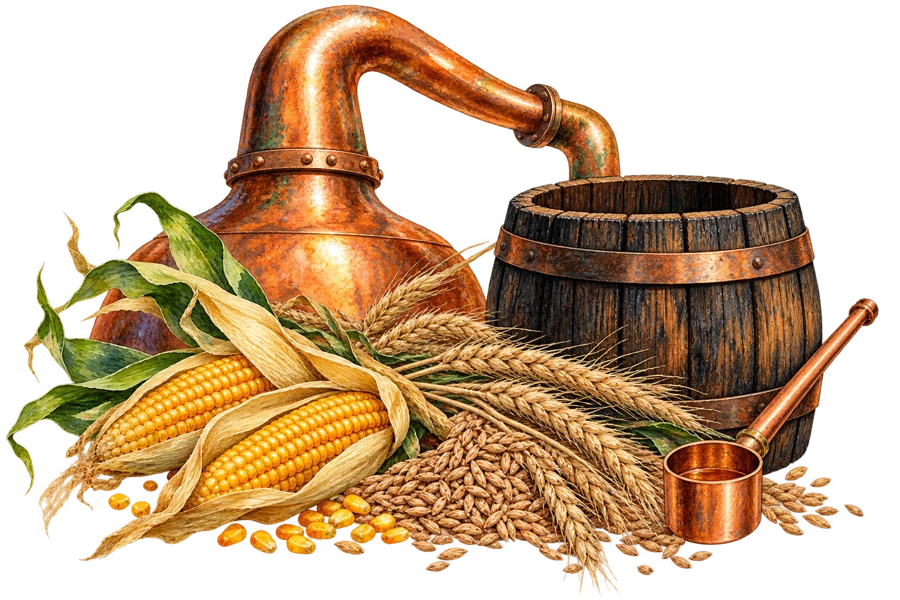
Original watercolor interpretations accompany the history. Buildings, objects and scenes are symbolic, not documentary reconstructions.
03 / Geography & roles
One name. Several places that matter.
Nelson County
Original production landscape
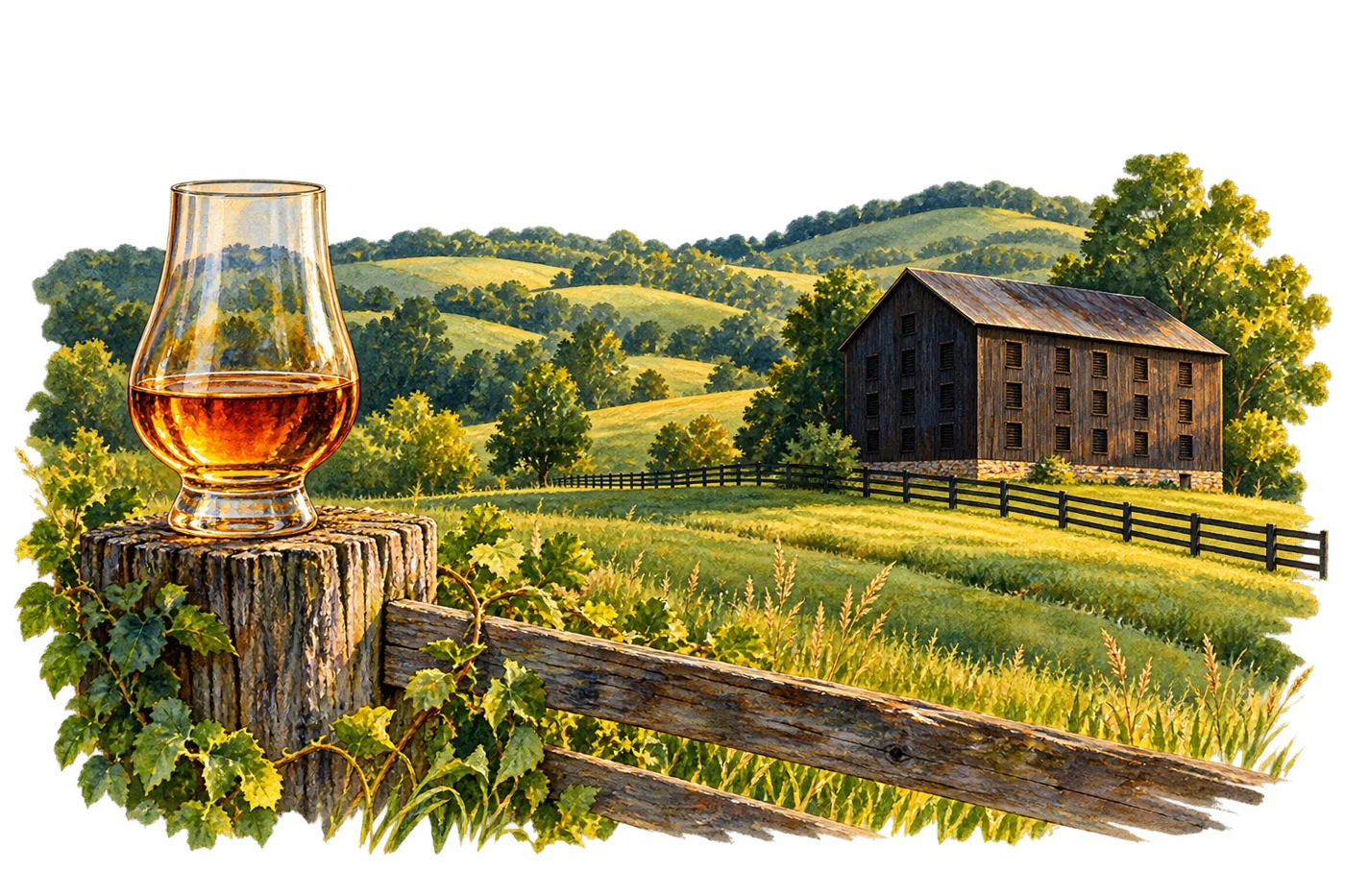
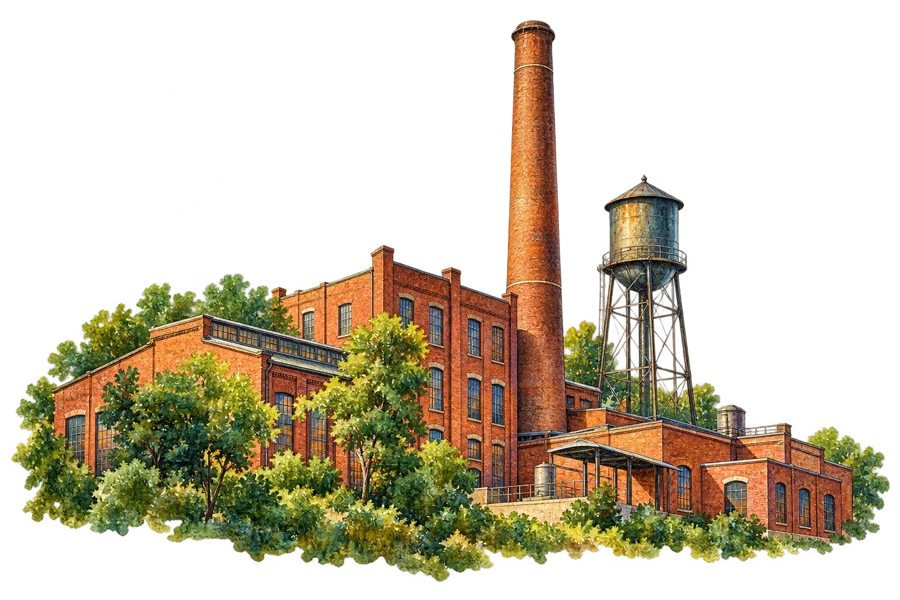
The archival record places the railroad distillery about four miles east of Bardstown. Its descriptions include warehouses, a boiler and doubler house, and a cattle shed: a working agricultural and industrial landscape. These are historical site details, not a visitor itinerary or an architectural description of today’s producer.[3]
Shively, near Louisville
Brown-Forman production era
Brown-Forman’s own corporate timeline dates its acquisition of Old Kentucky Distillery to 1940. This is the Shively chapter associated with the later Early Times and Brown-Forman distillery names. It follows the Nelson County beginning by decades; the familiar brand name on a plant should not compress those histories into a single continuous address.[5]
Bardstown and Barton 1792
Announced Sazerac production home
Sazerac’s April 2021 announcement selected Barton 1792 for future distillation, aging and bottling. It described an established plant with springs and warehouses. Early Times joined an existing distillery rather than creating a new facility dated 1860 or 2021. This was a different Nelson County plant and owner.[11]
Two roles can appear on one label
Distillation and bottling separated
The 2022 account quotes Sazerac spokeswoman Amy Preske explaining acquired whiskey produced and warehoused at DSP-KY-354 and bottled at DSP-KY-12. She also confirmed Barton was distilling and aging Early Times. A new bottler and new distillate need not arrive on shelves together.[12]
04 / The whiskey family
Understand the name on the label.
Explore the brand, its successive owners and the distinct whiskey styles associated with its name.
Brown-Forman’s first purchased brand
Historical owner and portfolio role
The June 2020 issuer announcement calls Early Times the first brand Brown-Forman purchased, in 1923. Its decision to sell came as the company emphasized premium brands. Early Times had helped build one company’s whiskey business and was now moving into another’s portfolio, with its familiar identity continuing beyond the former owner’s strategy.[9]
Sazerac, not a single distillery name
Owner since July 31, 2020
The completed transaction transferred Early Times alongside Canadian Mist and Collingwood. The closing announcement specifically names Canadian Mist production assets; it does not describe a sale of Brown-Forman’s Shively plant. A brand owner may operate multiple facilities. The Sazerac name therefore establishes corporate stewardship without making every whiskey a Buffalo Trace product.[10]
A family with several categories
Expression names retain their distinctions
Sazerac’s 2024 awards announcement separates Early Times American Blended Whiskey, Kentucky Straight Bourbon Whiskey and Bottled in Bond entries. This gives a useful view of the name’s breadth. It does not establish that every expression is offered in every market, or that an older Kentucky Whisky bottle shares the bonded bourbon’s specifications.[21]
A continuing bonded presence
Documented market listing
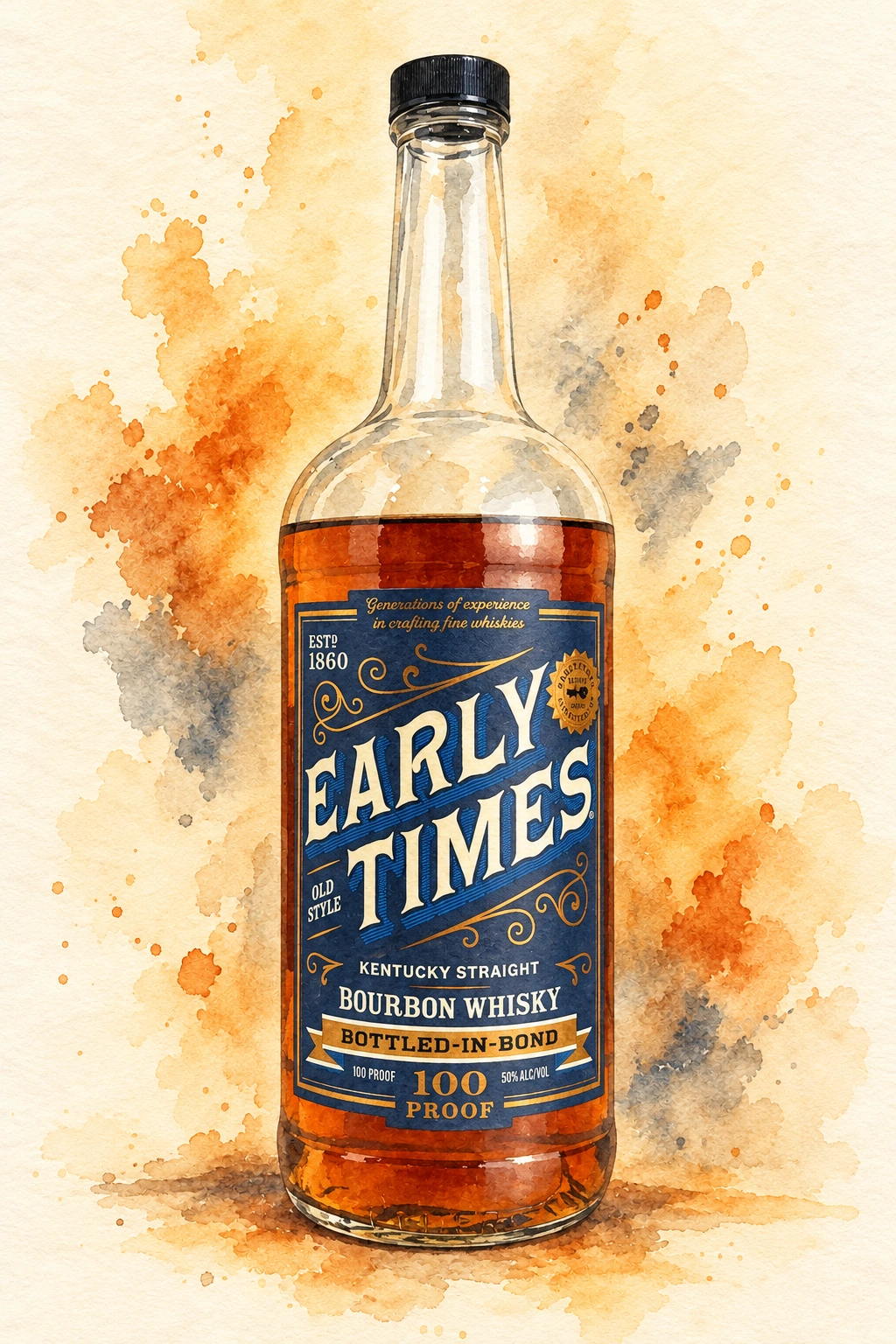
North Carolina’s November 2025 listing names Sazerac for a one-liter, 100-proof Early Times BIB. That is evidence for a specific market presentation. It should be read alongside the individual bottle and dated release information, preserving the distinction between an ongoing expression and every package sold under its name.[23]
05 / Making & choosing
The choices behind the label.
Grain, fermentation, distillation and oak shape the whiskey. Follow each production choice and keep specifications tied to the expression named.
The grain-led bonded recipe
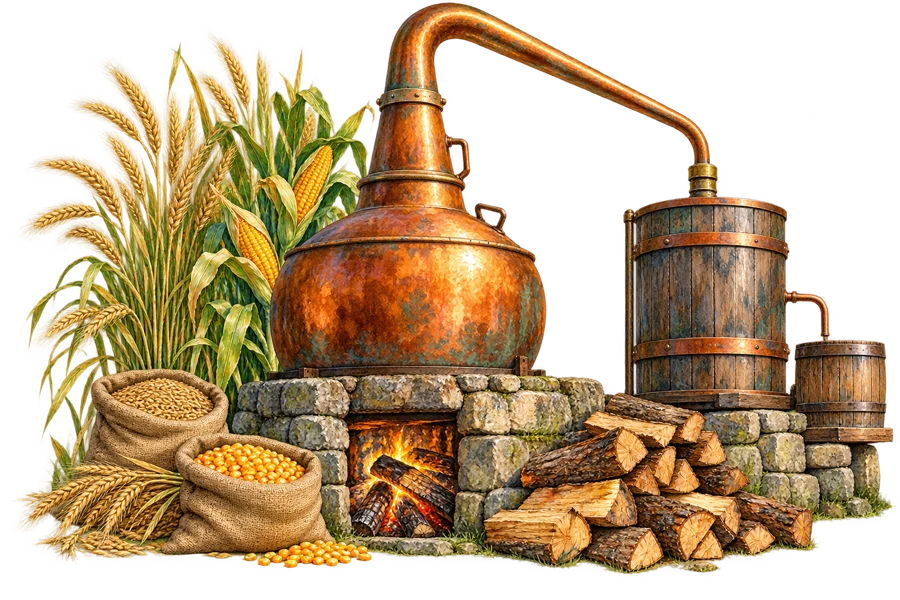
Virginia ABC currently describes 79 percent corn, eleven percent rye and ten percent malted barley for the bonded bourbon, followed by at least four years in new charred oak. The emphasis is straightforward: a corn-led base, rye for contrast and malted grain as part of the recipe. The listing supplies product specifications, not a complete account of every historical batch.[15]
Wood changes the category
Bourbon’s federal standard requires at least 51 percent corn and new charred oak storage, with specified distillation and entry-proof limits. Straight bourbon adds a two-year minimum. Those rules explain why a whiskey using seasoned barrels can carry a different designation even when its name and Kentucky identity remain familiar. Category is a production statement, rather than a ranking of pleasure or quality.[13]
What the bond actually promises
Current rules require the same distiller, distillery and distilling season, at least four years in wood, and bottling at 100 proof. Domestic labels identify the distilled-spirits plants involved in distillation and bottling. These are meaningful constraints for Early Times, whose ownership transition makes the distinction between mature stock, new production and final packaging especially important.[14]
Coopers belong in the story
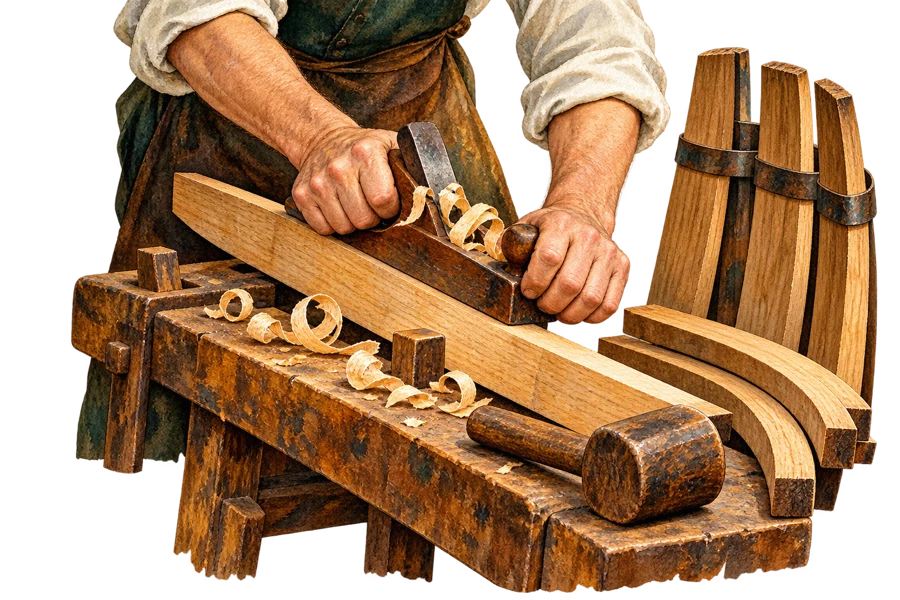
Brown-Forman’s 2016 cooperage anniversary explicitly included Early Times among the spirits using its barrels. The announcement described hundreds of workers and thousands of barrels made daily. Behind an inexpensive, familiar whiskey stood a substantial craft and manufacturing system: selecting and shaping wood was part of the historical production chain, alongside fermenting, distilling and waiting.[19]
A recipe can continue across a move
The 2021 announcement promised the original recipe and mash bill for Early Times Bottled-in-Bond at Barton, retaining 100 proof. That was a stated continuity aim. It does not establish when every retail bottle changed distillery or guarantee identical flavor.[11]
Mature stock creates an overlapping chapter
Preske’s 2022 explanation identified the then-current shelf whiskey as remaining acquired inventory while Barton-made barrels continued aging toward sensory requirements. Ownership changed quickly; whiskey required time. That overlap is central to understanding the transition and supports reading production identifiers rather than assuming a source from purchase year.[12]
06 / The details worth knowing
The stories behind the familiar name.
The postwar everyday pour
The producer retrospective dates the first bonded expression to 1945 and describes national growth after the war, with different ages and strengths. Cocktail use helped its rise; these are historical achievements, not present sales rankings.[4]
A broader definition of the familiar
Historian Michael Veach describes the 1983 move toward used cooperage and an 80-proof Kentucky whiskey, while bourbon continued in overseas markets. This helps explain why collectors encounter different categories under one name. The domestic story and the export story need their own labels and dates, even when both evoke the same brand heritage.[6]
A mint-scented racing tradition
The brand’s March 2013 announcement counted 26 years as the Derby’s official drink and presented Celeste Susany’s racing artwork. The illustrated package was a prepared Mint Julep, not simply a decorated bottle of bonded bourbon. Its place in the story comes from hospitality, sporting culture and the artists who made the annual bottle recognizable.[16]
The artist changes; the ritual continues
For 2014, Louisville native Ashley Cecil supplied artwork inspired by the presentation of the winner’s rose garland. The one-liter prepared drink was 60 proof. That partnership made an ordinary act of serving guests part of a collectible visual tradition; these are details of a dated release, without implying a current Derby sponsorship.[17]
Packaging can tell a separate story
The 2013 Hunter’s Edition put 80-proof Kentucky Whisky into a square bottle with a camouflage design. The distinction was its presentation and outdoor theme. A special package can be worth documenting without inventing a different mash bill, extra age or a separate distillery behind it.[18]
Recognition with a precise name
The 2025 American Whiskey Masters results list a Master award for Early Times Bottled in Bond under Sazerac. It is a specific competition result for a named entry. It offers evidence of continuing recognition without making every Early Times expression an award winner or turning a medal into a universal assessment of taste.[20]
Whisky and whiskey
Federal rules allow either spelling. Early Times’ familiar whisky therefore belongs comfortably within American whiskey language; the missing letter does not change the category. More consequential words on the label are bourbon, straight and bottled in bond. Those terms communicate production and maturation requirements, while the brand name supplies the cultural memory that links the different expressions.[13]
07 / Selected expressions
Different expressions. Distinct production stories.
A curated reading of the whiskey family, selected for its role in the story. This is not an exhaustive current catalog.
Kentucky Whisky
Selected for the long domestic chapter in which seasoned cooperage helped distinguish the whisky from bourbon. Veach’s account situates that change in the difficult American whiskey market of the 1980s. It explains the category’s historical significance; the particulars of a current package still belong to its label.[6]
150th Anniversary, 2010
A 375-milliliter, 100-proof commemorative used a retro label and a flavor concept inspired by early medicinal-era bottlings. Selected because it shows how history can become a new release brief. Its strength alone does not make it bottled in bond; the designation must be supported independently.[7]
Early Times 354 Bourbon
The January 2011 producer release presented an 80-proof bourbon named for the historical federal permit number. It joined Kentucky Whisky rather than erasing it. The significance is a return to the domestic bourbon category through a separate expression, with its own name and period packaging.[2]
Bottled-in-Bond, returned in 2017
Brown-Forman’s launch material described a minimum four-year bourbon, high-corn recipe and new charred American oak, initially heading to six states in July. It was a revival of a historical idea expressed through newly matured whiskey. The larger one-liter presentation became part of this release’s contemporary identity.[8]
Straight bourbon in competition
IWSC’s 2024 record lists Early Times Kentucky Straight Bourbon Whisky under Sazerac and awards it Silver. Selected to retain the distinction between a named straight-bourbon submission and the separately named bonded expression. A shared brand is not enough to collapse different entries into one bottle.[22]
08 / The Reserve connection
Continue from the story to the bottles.
Early Times in The Thelen Reserve
One 100-proof Early Times Bottled In Bond bottle connects this story to the collection. Its physical record remains distinct, with unrecorded batch and production details left open.
Approved watercolor artwork is shown wherever an exact physical record or confirmed release match is available. Each physical bottle keeps its own verified details.
The illustrated companion
Early Times, in three pages.
Origins and people, history and places, whiskey and stories. A concise companion to this complete profile, with linked research sources.
Researched October 19, 2026. Official brand and company pages, dated announcements and clearly identified supporting sources are distinguished in the research. Product specifications are release- and market-specific.
Research qualifications
Research refreshed October 19, 2026, America/Phoenix.
Official brand chronology uses 1860; Veach gives 1863. Plant founding and later railroad development should not be conflated.
For Old Kentucky’s acquisition, this profile follows Brown-Forman’s 1940 chronology; Veach gives 1936.
The 160-year release is published January 2020 but its body says 2019. Its shutdown wording is not used to date the Eighteenth Amendment.
The 2017 article’s introductory anniversary language is inconsistent; its dated launch material supplies the July release context.
The 2021 plan and 2022 production confirmation are distinguished. No cap-color rule or exact nationwide retail transition date is assigned.
Illustrations are symbolic watercolor interpretations, not documentary portraits or architectural records.
2022 production clarification from SazeracNamed spokesperson distinguishes acquired stocks and Barton production. Note: Statement concerns 2022 shelves, not every later bottle.
27 CFR 5.143: whisky categoriesCurrent bourbon, straight whisky and spelling rules. Note: Category standards do not identify a particular batch.
27 CFR 5.88: bottled in bondBond requirements and production/bottling identifiers. Note: Current regulation, not a historical label transcription.
Virginia ABC: bonded bourbonListed grain recipe, maturation and strength. Note: Listing may span packaging generations.
Early Times: 2013 Derby editionJulep relationship and Celeste Susany artwork. Note: Historical prepared cocktail, not straight bourbon.
Early Times: 2014 Derby editionAshley Cecil collaboration and 60-proof cocktail. Note: Historical release; no current partnership implied.
North Carolina ABC: Early Times BIBNovember 2025 listed 100-proof, one-liter product and Sazerac. Note: Market-specific listing, not nationwide package coverage.