A practical route into whiskey
Baker’s earlier experience began with a Van Buren County distillery in 2010. He later moved equipment north to start Cat’s Eye.[3]
Last updated Last researched
Bettendorf / Distilling, sourcing & blending
Iowa roots. A world of whiskey in the glass.
Cat’s Eye joins Iowa distilling with independent bottling. Obtainium follows selected barrels across styles and borders, with the original distiller and final producer each playing a distinct role.[5]
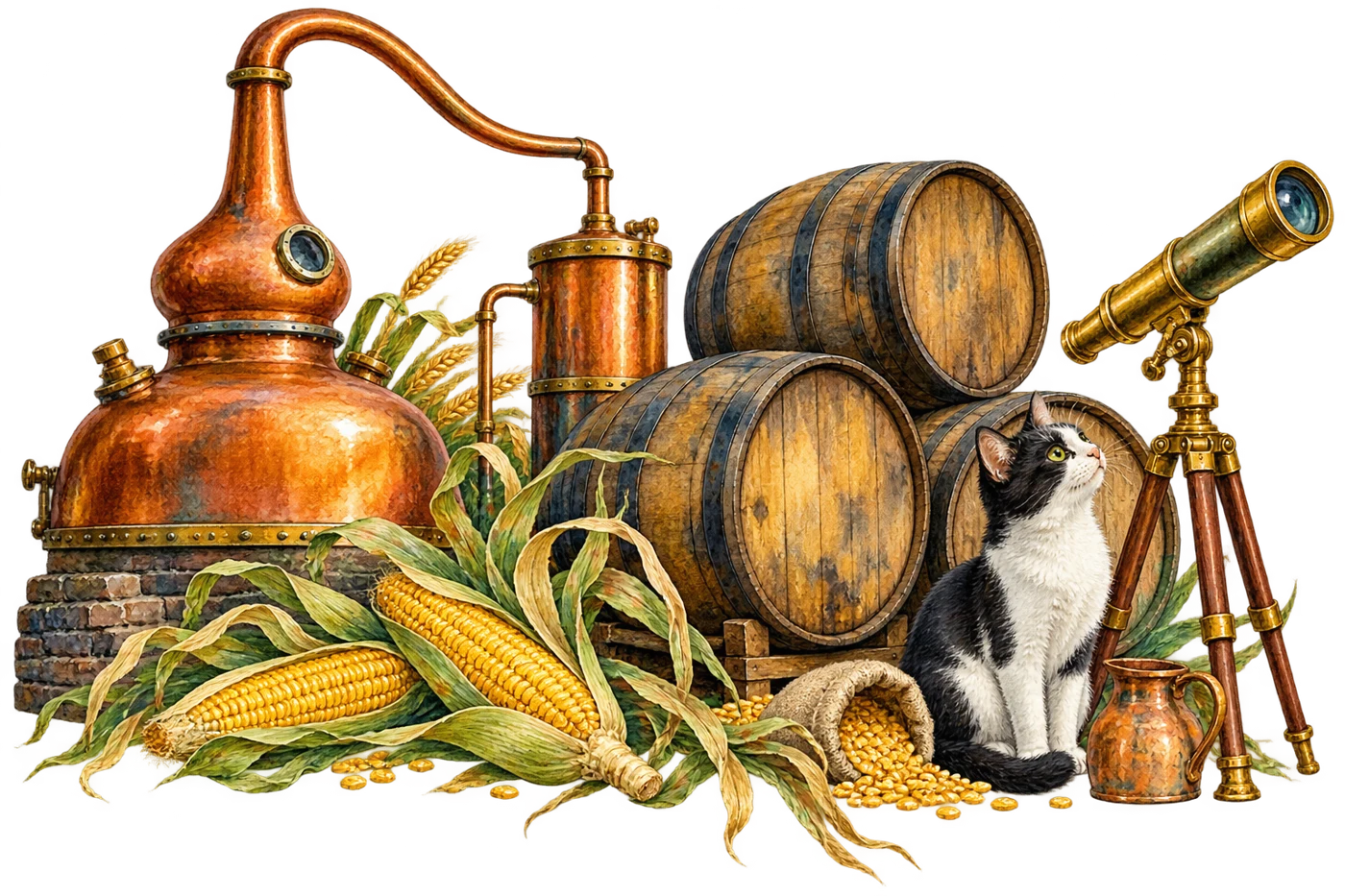
Baker’s earlier experience began with a Van Buren County distillery in 2010. He later moved equipment north to start Cat’s Eye.[3]
The producer-supplied account dates the Bettendorf business to 2016. Baker’s interest in astronomy inspired the Cat’s Eye name through a Hubble image of the nebula. His daughter’s cat supplied the more immediately recognizable label image.[2]
Nassif’s 2022 interview describes an independent-bottling idea expanding from American whiskey into international spirits. Selecting another distillery’s work became a creative role.[5]
Founder
The founder represents the original distilling side. The producer describes careful selection of spirit cuts for its house products. That work and the later sourced portfolio are complementary, with different production histories.[1]
Family business, documented 2023
The 2023 newspaper identifies Jason Baker, John’s son, as a co-owner. This records a dated role.[3]
Whiskey selector & blender
Nassif brought a selector’s curiosity to mature light whiskey. His 2019 interview describes finding value in a category whose earlier reputation had discouraged attention. The barrel itself, rather than a familiar category hierarchy, became the starting point.[4]
A dated business chapter
A 2016 whiskey-forum connection preceded Nassif joining the business in 2018. Their shared interest became a formal collaboration.[3]
Follow the people, partnerships and documented releases. Dates of reporting and partner offerings remain distinct from founding and release dates.
Baker’s first distillery involvement began in 2010, before Cat’s Eye.[3]
The producer-supplied partner account dates the Bettendorf company’s beginning to 2016, following earlier distilling experience.[2]

A whiskey-forum connection introduced the Bakers and Nassif.[3]
Nassif joined the company, bringing sourcing into its development.[3]
PUNCH interviewed Nassif about a recently released 13-year Cat’s Eye light whiskey. This contemporary evidence predates a later retailer’s 2021 debut claim.[4]
Whiskeyfellow’s dated review documents Nassif Family Reserve Batch 4 at 107 proof. The writer connects it to Nassif’s wedding the previous year.[6]
Iowa Spirits interviewed Nassif about an expanding selection of American and international spirits, some ready to bottle and others needing further aging.[5]
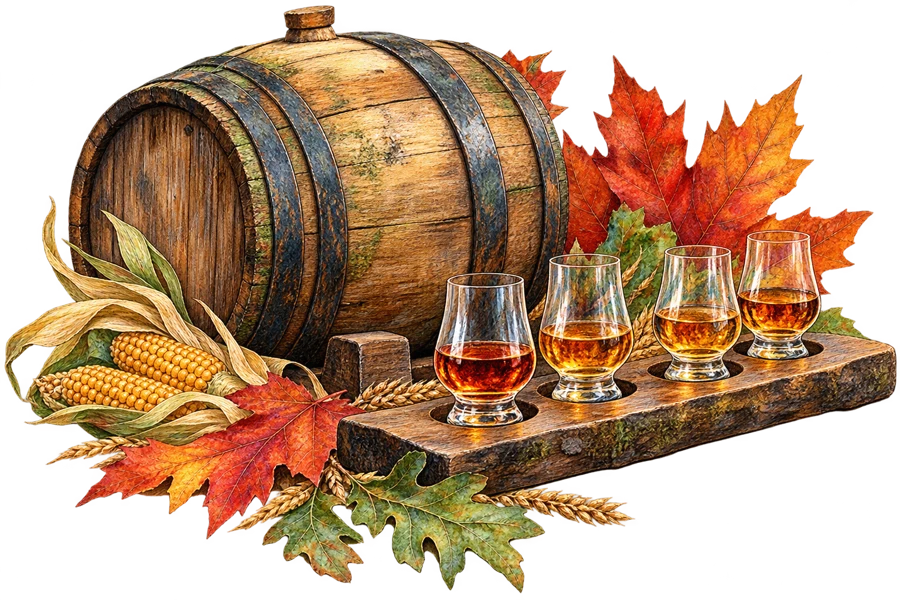
Blind Barrels featured a 26-year,151 proof Canadian corn whisky from Palliser, aged in used rye casks. These specifications belong to that selection.[2]
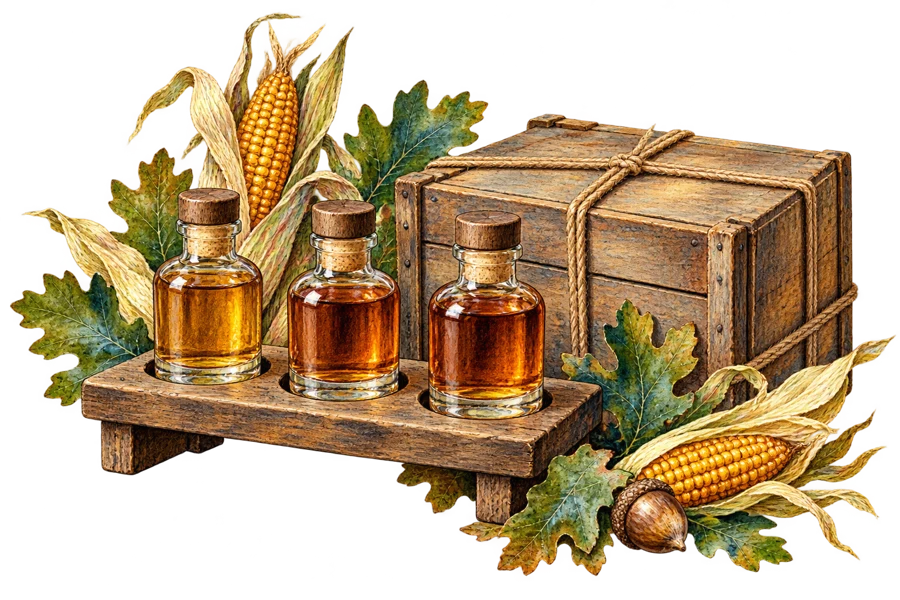
Seelbach’s announced Cat’s Eye light whiskeys and a six-year Iowa bourbon. The announcement documents that retail offering, not the first-ever light-whiskey release.[7]
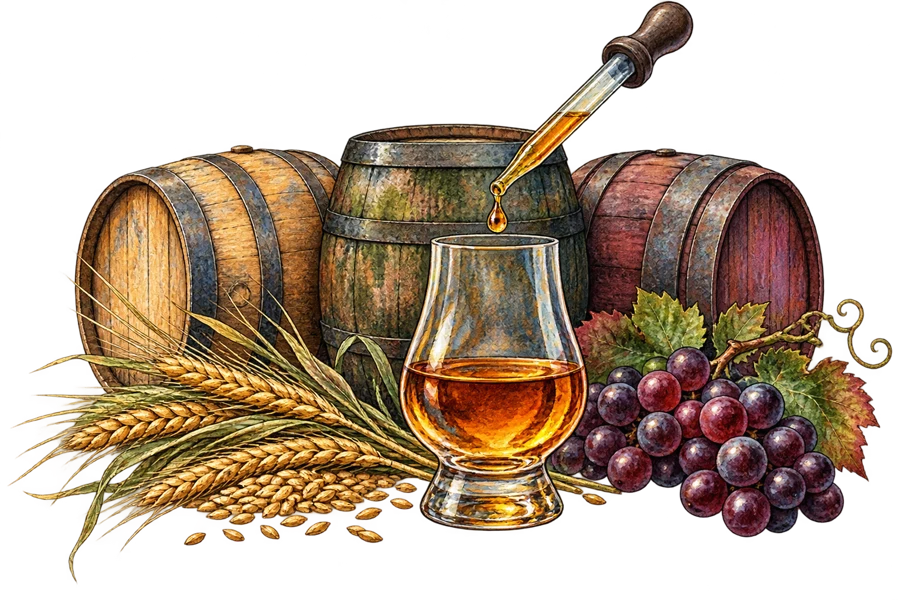
The producer’s 2023 recipe combines MGP, Polish and Palliser rye components with different ages and oak treatments. It is one edition, not a permanent house recipe.[1]
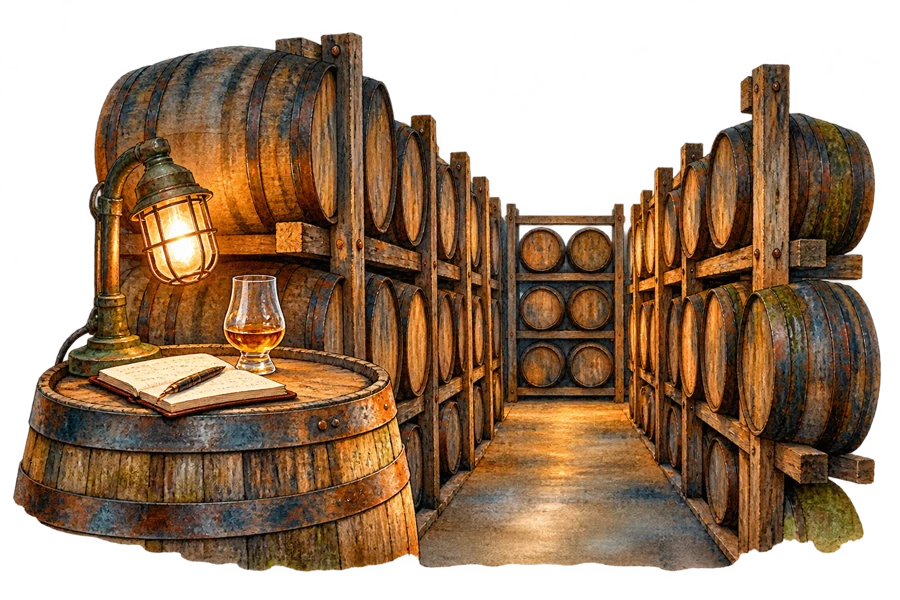
Local interviews documented the family business and its barrel-selection work.[3]
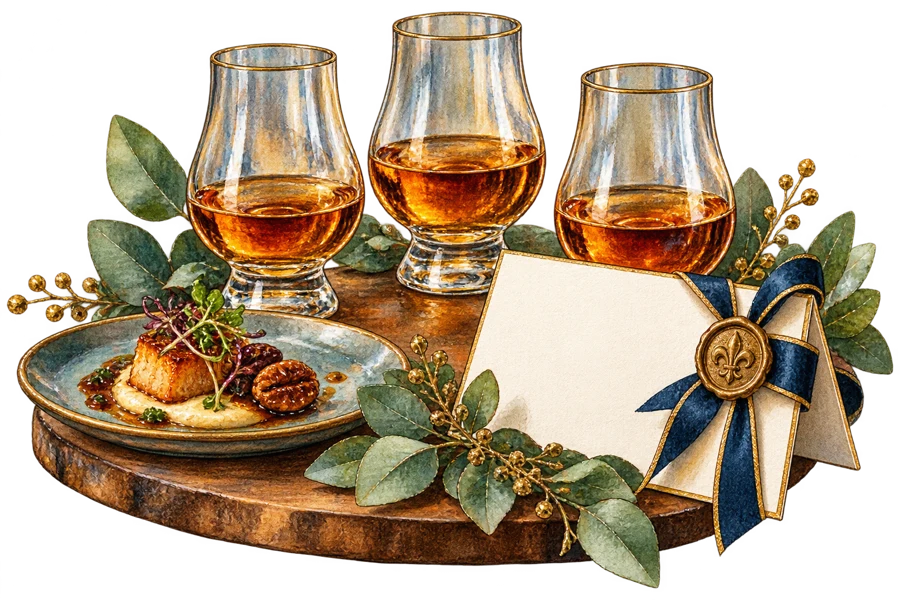
The Concours organizer announced a September 6 charity gala with an Iowa bourbon tasting hosted by Nassif. This records the announced role, not a fundraising total.[8]
Original watercolor interpretations accompany the history. Buildings, objects and scenes are symbolic, not documentary reconstructions.
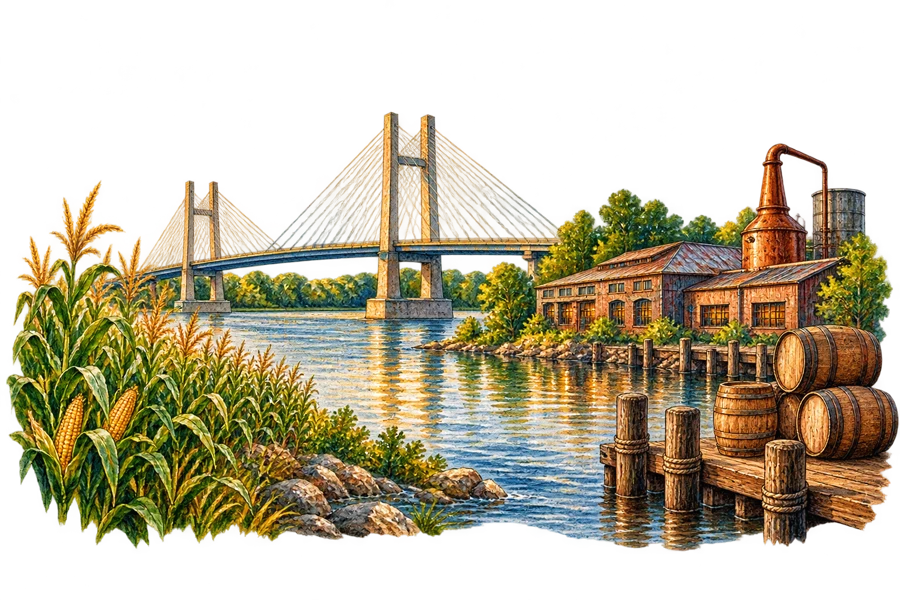
The distributor lists 3232 Bear Tooth Court in Bettendorf as the business address. This is the Iowa anchor for the producer. Contact the business directly for current visitor arrangements rather than treating a warehouse address as an open visitor center.[17]
The 17-year light-whiskey listing identifies MGP as the distilling source. Its producer account describes transport to Stitzel-Weller for barreling and aging. Distilling, maturation and final bottling can therefore refer to three different parts of one whiskey’s history.[11]
The 15-year Canadian rye listing names Valleyfield in Quebec, while its location metadata says Ontario. That inconsistency remains unresolved. It is a reason to read the actual label, not to assign one Canadian distillery to every Obtainium bottle.[12]
The 2022 interview describes Polish rye, Caribbean rum, French Armagnac and Canadian corn whisky. These are sourcing relationships, not Cat’s Eye-owned foreign distilleries.[5]
Trace the producer, its expression families and the distinct roles of collaborators and historical personnel.
Distiller & producer
The house line includes corn whiskey and Krupnik. The honey, citrus and spice liqueur is a separate spirit category.[1]
Independent bottling program
Obtainium encompasses single barrels and blends. Selection, finishing and bottling remain distinct from original distillation. Barrel variation is part of the premise.[1]
Blended whiskey family
The distributor presents a 107 proof American whiskey combining light whiskey and co-aged bourbon/rye spirit. The component ages in that description explain a recipe; they should not be assigned unchanged to every later batch or finished edition.[17]
Edition-specific blends
One named selection combines six-year MGP rye with 21-year Palliser rye and port/sherry finishing. Those details differ from the 2023 recipe and Magi No.3. The family name is shared; the composition changes.[13]
Named distilling source
Magi No.3 describes two 2012 rye components from MGP, one 51%rye and one 95%rye. These supplied whiskeys are components of a Cat’s Eye blend, not evidence that MGP owns the bottler.[10]
Named Canadian source
The Nerds & Turds Magi selection specifically names Palliser for its older Canadian rye component. That disclosure supports this release’s source, rather than a universal origin claim for all Canadian Obtainium whisky.[13]
Recipes, fermentation, oak and mingling shape the whiskey. Keep every specification tied to the expression and edition named.
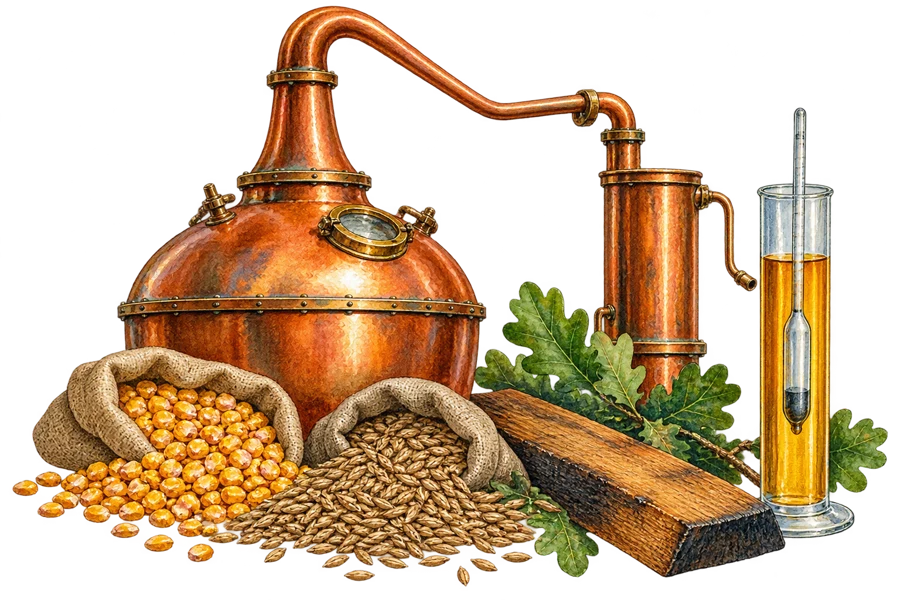
Federal standards define light whisky by distillation above 160 proof and storage in used or uncharred new oak. The name does not mean low alcohol in the bottle. Distillation proof, barrel-entry proof and bottling proof describe separate stages.[16]
In the 2019 interview, mature light whiskey attracted Nassif because age could reveal a different character from its youthful reputation. This is a selector’s assessment, not a promise that age or high proof makes every barrel successful.[4]
The producer’s Bourye account describes bourbon and rye distillates going into the same barrel before aging. That differs from combining separately matured whiskeys immediately before bottling. The story is attributed to the producer; it is not an independently audited accident.[14]
The shop’s body text describes equal shares of 14-year light whiskey and 3-year 10-month bourye at 107 proof. Its Armagnac Finish title does not supply the finishing duration or cask specification. Those missing details remain missing.[9]
Magi No.3 includes two 2012 MGP ryes plus a port-cask portion of 2023 Magi recasked for another year. The listing says two-thirds is unfinished rye. Blending can change both the whiskey mixture and how strongly a finish shapes it.[10]
The 17-year listing attributes distillation to MGP and aging to Stitzel-Weller. Its 160 proof wording is imprecise against the federal light-whisky threshold. The location narrative is retained as a producer account, without quietly rewriting the technical inconsistency.[11]
An astronomical inspiration could have produced an obscure label. The family cat made the idea approachable. The partner’s producer-supplied account preserves both parts of the name’s origin without requiring the artwork to copy the actual logo.[2]
The 2021 reviewer knew Nassif and placed the wedding in 2020. He sampled Batch 4, making this useful contemporary evidence of a personal celebration growing into a repeatable product. It is not an exact commercial-launch announcement.[6]
The ten-year pick’s description says bourbon and rye were combined as clear spirits and matured together. Its 100 proof bottling is release-specific. The lively account of obtaining the barrel is sales storytelling, not a verified legal case history.[15]
The 2019 PUNCH interview catches the light-whiskey revival while it was happening. That date matters: it shows an actual Cat’s Eye release in circulation before later retrospective descriptions of the brand’s debut.[4]
The 2024 organizer announcement placed Nassif’s Iowa bourbon experience alongside dinner at the Stine Barn. The gala supported Children’s Cancer Connection. It is a concrete community connection, with the scheduled date distinguished from a verified event outcome.[8]
The current shop spans bourbon, rye, light whiskey and Magi blends. Several listings are sold out, and some structured fields contradict their descriptions. The label and edition remain more precise guides than a generic catalog category.[18]
A curated reading of the whiskey family, selected for its role in the story. This is not an exhaustive current catalog.
Essence of Iowa corn whiskey and Krupnik represent the original house line beside the sourced portfolio.[1]
A 107 proof American blend offers a different entry point from a single high-strength barrel. The producer’s wedding story gives it a personal origin. Use the batch’s own label before applying an older published recipe to a particular bottle.[9]
The 17-year listing describes a 99%corn,1%malted-barley recipe and an MGP-to-Stitzel-Weller history. These are details for that bottling, not a specification sheet for the entire line. Other ages and barrel proofs require separate records.[11]
A 107 proof blend of MGP and Palliser ryes uses port and sherry casks. The product body describes aged components although its metadata says unaged. The narrative supports an aged blend; the contradictory field is not repeated as fact.[13]
This later recipe carries forward a recasked portion of 2023 Magi alongside two MGP rye styles. Its 107 proof presentation does not make it the same liquid as another 107 proof Magi or Nassif bottling.[10]
A producer-listed 100 proof selection illustrates co-aging of bourbon and rye distillates. It is kept separate from another shop Bourye listing at 53.5%ABV. Matching family names do not establish identical barrels or editions.[15]
3 physical bottle records connect this story to the collection. Each keeps its own proof, barrel, batch, pick and release details.
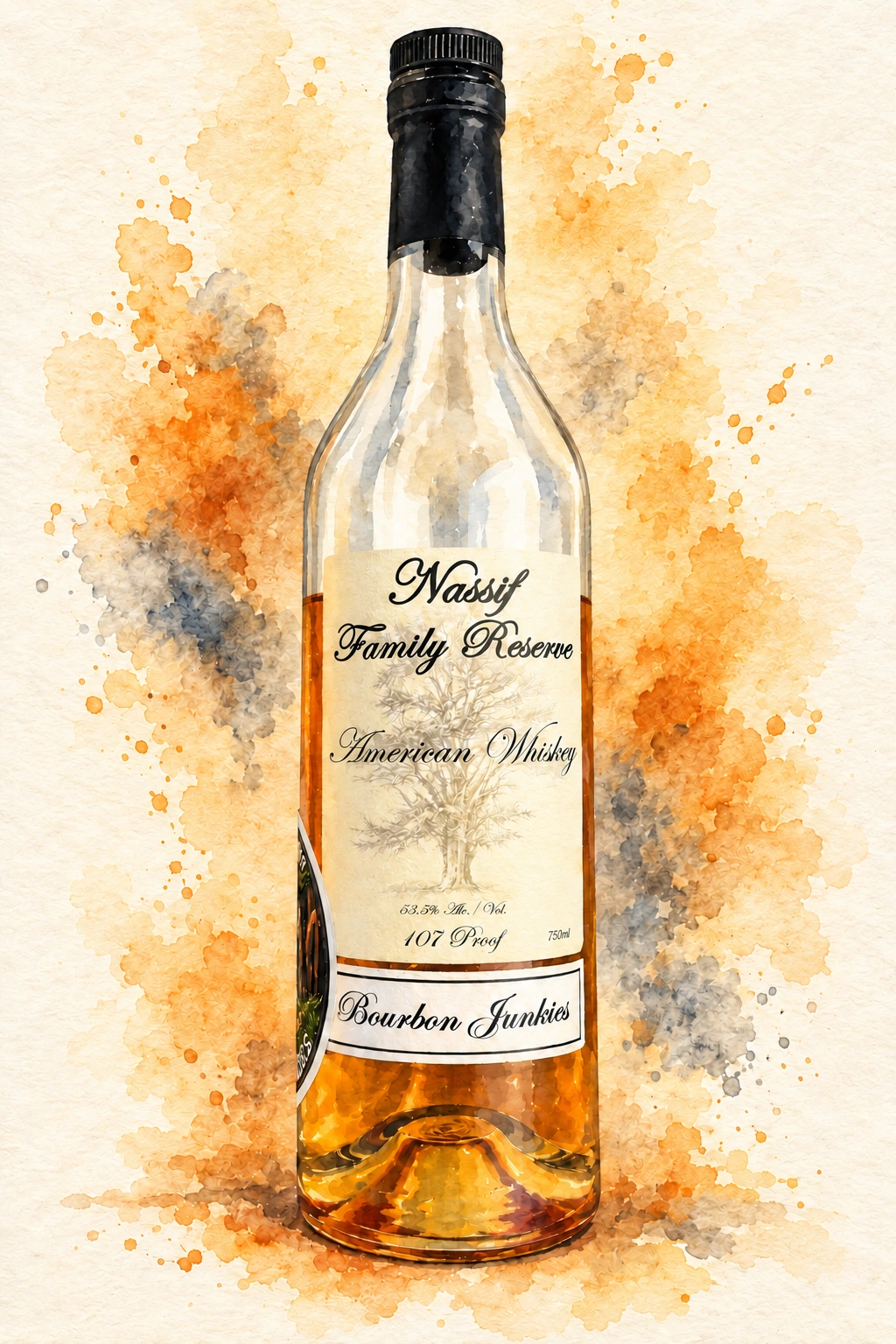
W0318 · 107 proof · Batch BJ
Inventory batch field BJ retained; BJ’s label text is not independently verified as a pick. No original label photos supplied.
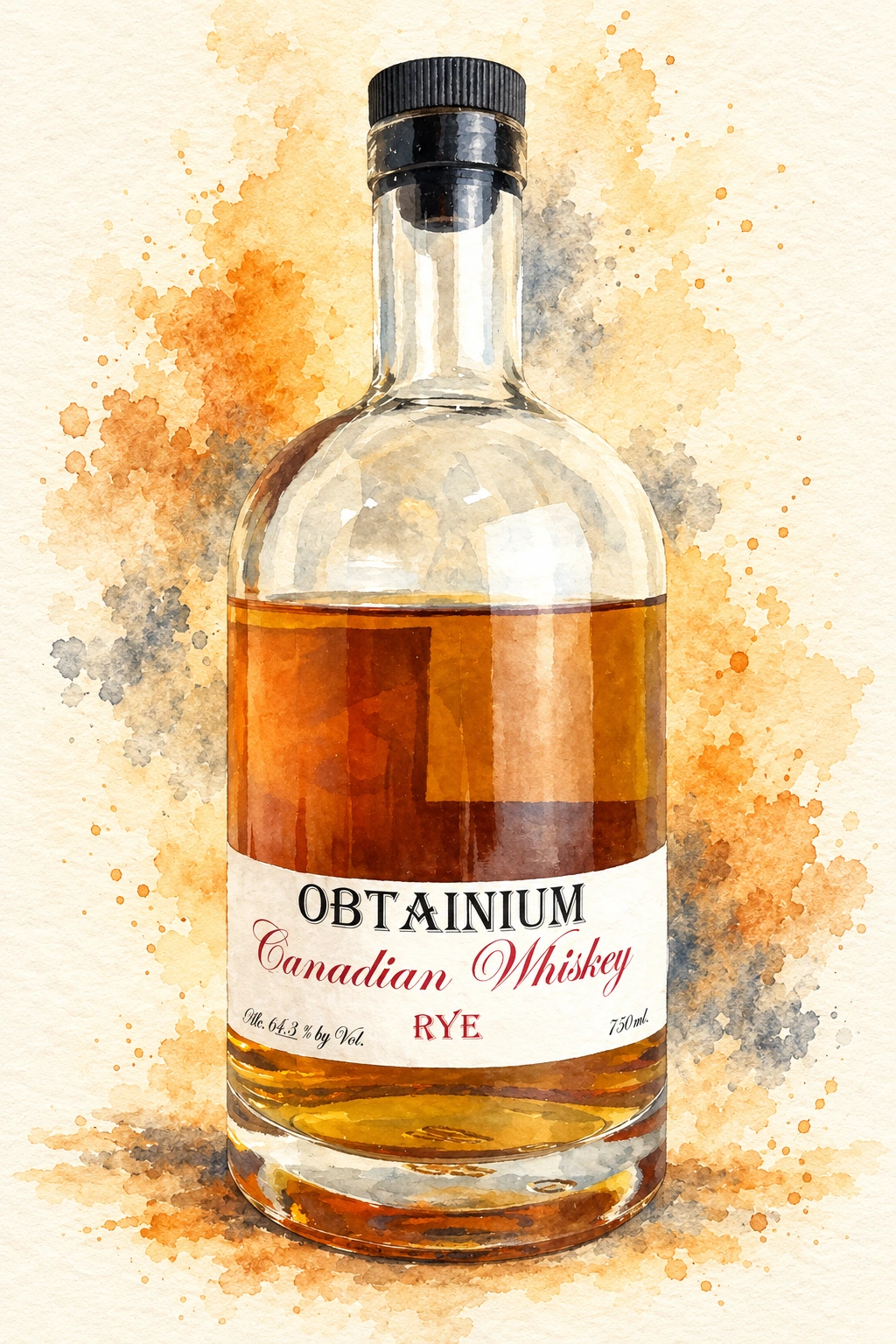
W0333 · 128.6 proof · Pick Bourbon Junkies · Bottled / release 8/23/2021
Physical label: distilled in Canada on December 19, 2005; bottled by Cat’s Eye on August 23, 2021. The distilled date is not a barreling date. No age statement or Canadian distiller is identified. Bourbon Junkies is the retained inventory pick attribution.
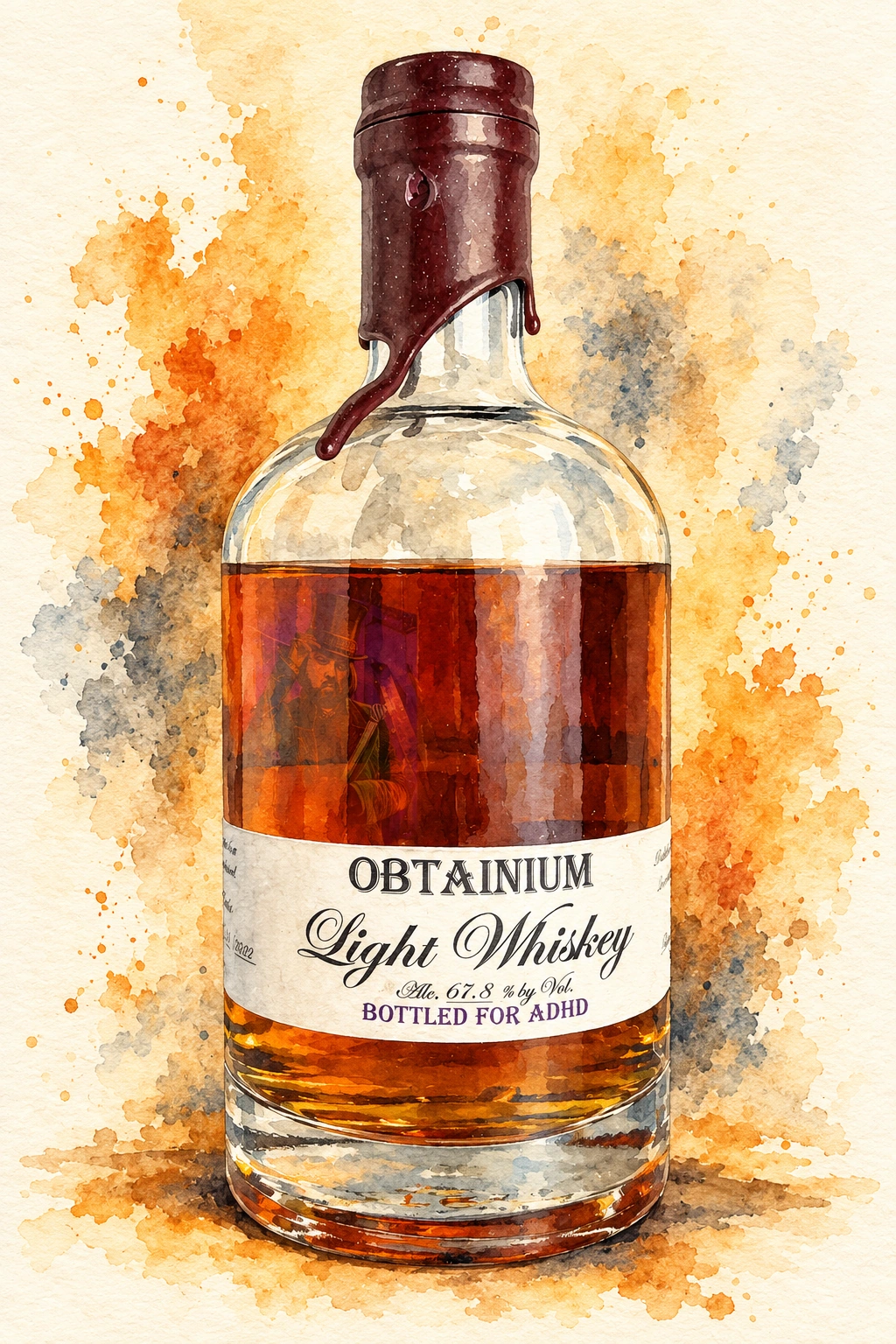
W0334 · 135.6 proof · Barrel SC-00467 · Bottle 102/156 · Pick ADHD – Fifty Shades of Grape · Bottled 08/19/2022 · Distilled 10/03/2007
The photographed labels confirm 135.6 proof / 67.8% ABV, barrel SC-00467, bottle 102 of 156, the Fifty Shades of Grape ADHD selection, 750 mL and storage for 14 years in a used charred oak barrel. The label names Lawrenceburg Distillers Indiana as distiller and records distillation on October 3, 2007 and bottling on August 19, 2022. The distillation date is not independently established as the barrel-fill date. SC-00467 is a barrel identifier, not a DSP or batch; the nickname does not establish a grape or wine finish.
Collection snapshot: October 24, 2026. Three physical records, each linked to its own inventory entry. Batch and proof distinctions are preserved.
Origins and people, history and places, whiskey and stories. A concise companion to this complete profile, with linked research sources.
Researched October 17, 2026. Official brand and company pages, dated announcements and clearly identified supporting sources are distinguished in the research. Product specifications are release- and market-specific.