TJ THELEN'S COLLECTION
The Thelen Reserve
Behind the Bottles / A Kentucky restoration

Castle & Key Distillery

Last updated Last researched

A place worth bringing back.

A castle makes an unforgettable first impression. The deeper story at Castle & Key is what happened after people decided the ruins deserved another life. On the former Old Taylor Distillery grounds in Kentucky, preservation became the foundation for a new spirits business. Its bourbon and rye belong to a modern production program, while the stonework, springhouse and gardens carry a much older idea: a working distillery can also be a place worth visiting.[1][2]

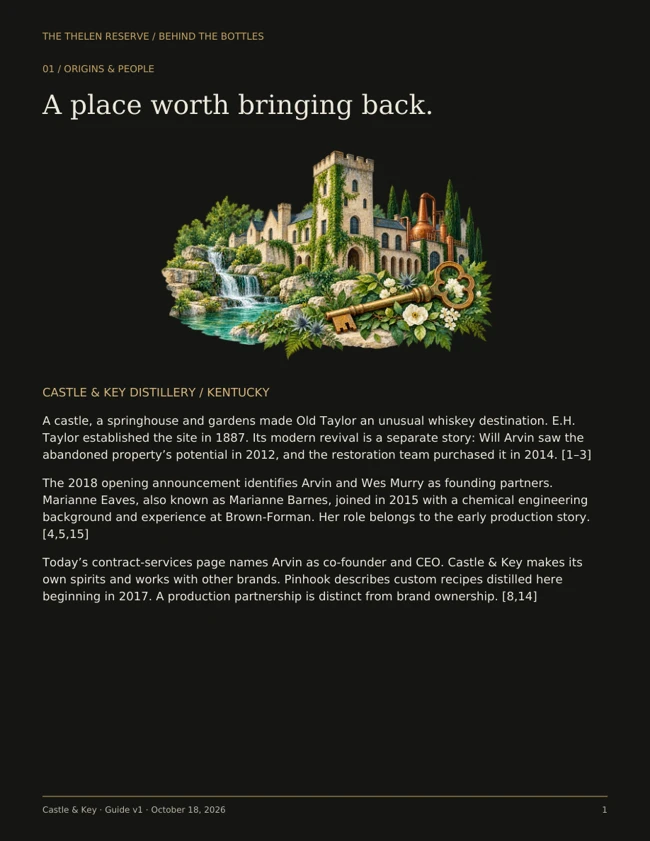
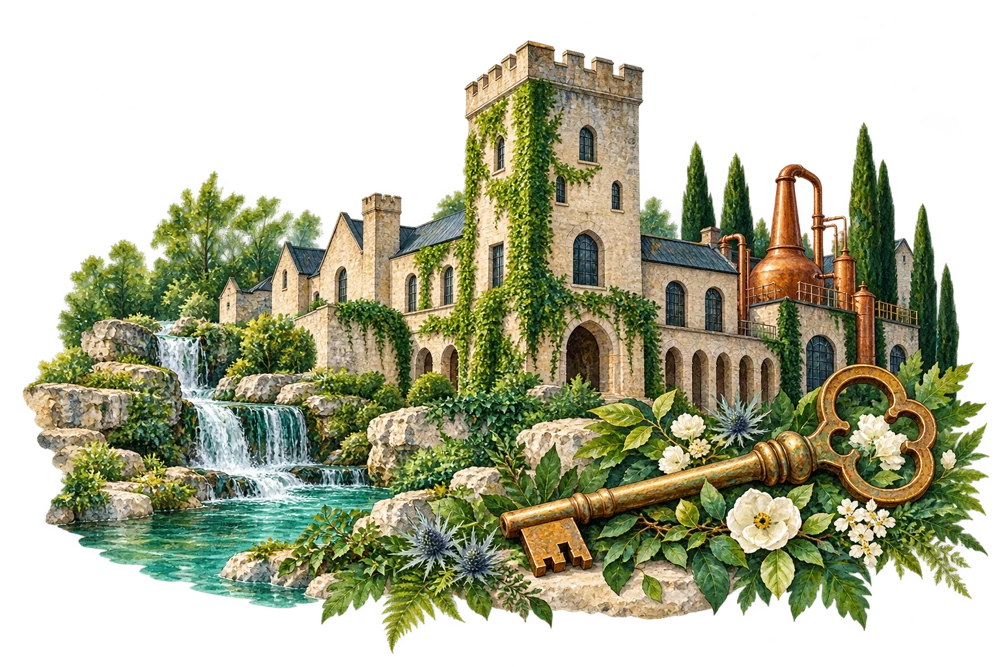
Interpretive watercolor of a limestone castle and antique key
Old Taylor · 1887

Historic site established

Restoration · 2014

Modern project begins

Production · 2016

Public opening · 2018

Kentucky-made spirits

Bourbon, rye, gin and vodka

01 / Origins & people

The people who saw possibility.

Taylor’s architectural ambition

Colonel Edmund Haynes Taylor Jr. established Old Taylor in 1887. The company’s history describes a destination shaped by European travel, with gardens, a castle and a springhouse. Hospitality was part of the design. Castle & Key calls it a birthplace of bourbon tourism; that broad claim is retained as the producer’s interpretation.[1]

Seeing a future in the ruins

Will Arvin’s account begins with photographs in 2012, followed by a visit to an overgrown property. Purchase came in 2014. Discovery and acquisition are separate moments: one explains the attraction, the other begins the practical commitment to rebuilding a business.[2]

The restoration partnership

The dated 2018 state announcement identifies Will Arvin and Wes Murry as founding partners and names Peristyle LLC as the parent company. It also identifies Marianne Eaves and Brook Smith as partners at that time. These are historical roles, not a complete present-day ownership register.[4]

Science joins the restoration

Marianne Eaves, then also known as Marianne Barnes, joined in 2015. The University of Louisville describes her chemical engineering background and move from Brown-Forman. Her early work helped turn a restored building into a functioning spirits operation. She is discussed here in that historical role, not as the current master distiller.[5][15]

Leadership and a wider team

The current contract-services page identifies Will Arvin as co-founder and CEO. Production, maturation, blending, bottling and hospitality require different kinds of expertise. The public evidence does not justify inventing a current master-distiller title or treating the early partnership list as a current capitalization table.[8]

02 / The illustrated history

A working place, remade over time.

From the Old Taylor years to a new generation of spirits. Each scene is an original interpretive watercolor.
foundation, symbolic watercolor illustration
1887

A distillery designed to welcome

Taylor establishes Old Taylor as an ambitious combination of whiskey production and visitor experience. The architecture makes hospitality part of the site’s identity.[1]
silence, symbolic watercolor illustration
Prohibition era

The first long interruption

The Filson archive dates closure to 1917; Castle & Key’s earlier chronology uses 1920. The sources agree that Prohibition interrupted the operation, but the exact closure date is not presented as settled.[3][2]
revival, symbolic watercolor illustration
Mid-1930s

Production returns under National Distillers

The Filson finding aid records National Distillers’ purchase and revitalization in 1936. Other accounts use 1935. Its surviving drawings document the industrial changes of this period.[3]
dormant, symbolic watercolor illustration
1972

Distillation stops again

The archival history identifies 1972 as the end of bourbon production under National Distillers. Later warehouse use means a production shutdown should not be mistaken for every activity ending at once.[3]
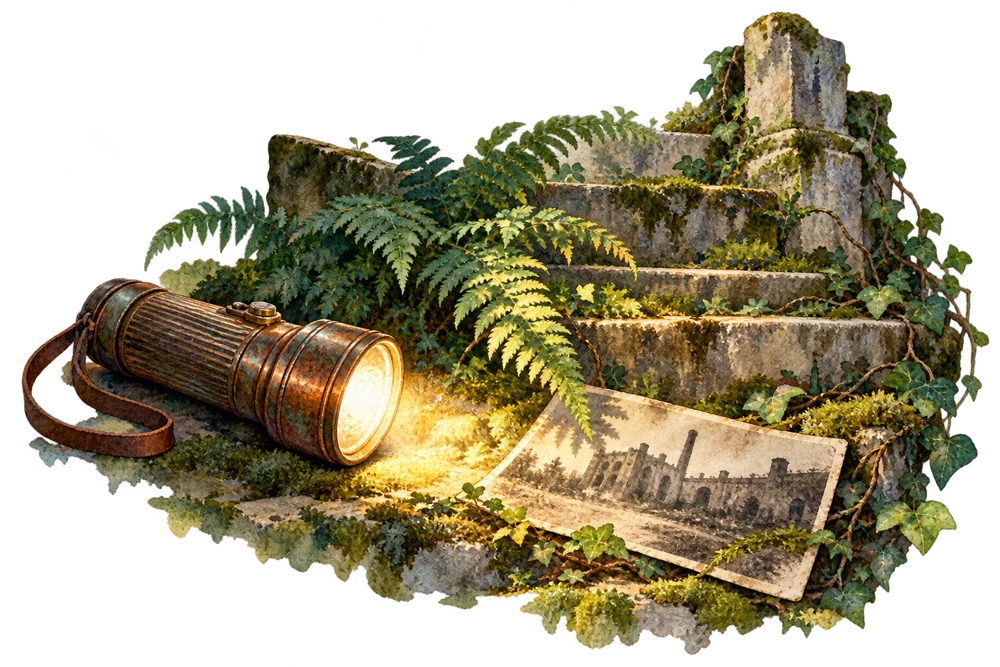
discovery, symbolic watercolor illustration
2012

A photograph becomes a possibility

Arvin sees images of the abandoned property and visits. The producer’s account describes difficult access and heavy overgrowth, but also the beginning of a restoration idea.[2]
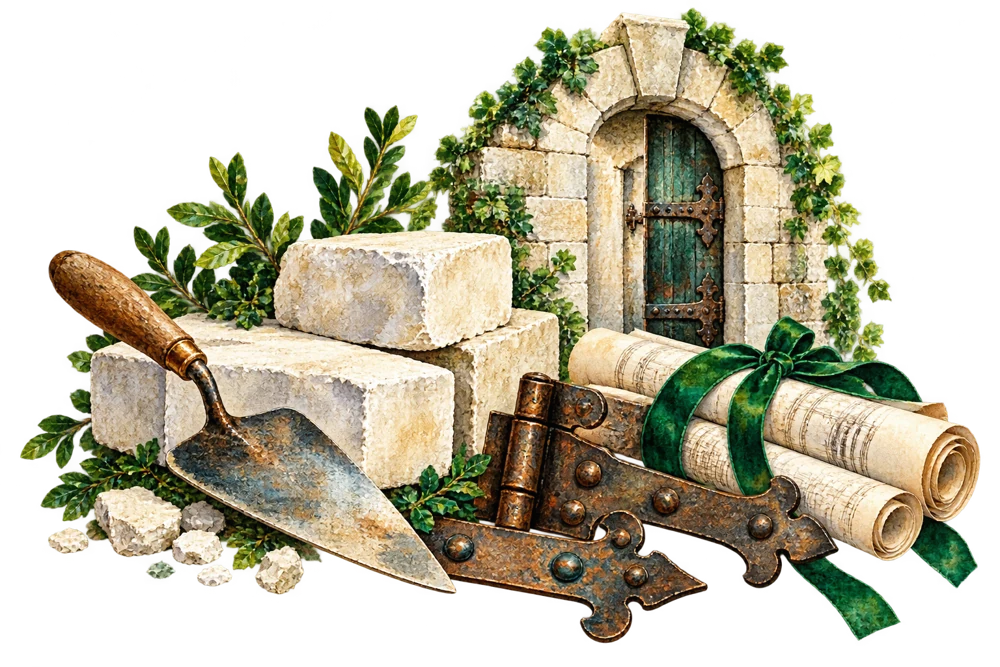
restoration, symbolic watercolor illustration
2014

The property changes hands

The restoration team buys Old Taylor. The project will have to reconcile historic structures with the needs of contemporary production and a returning public.[2][4]
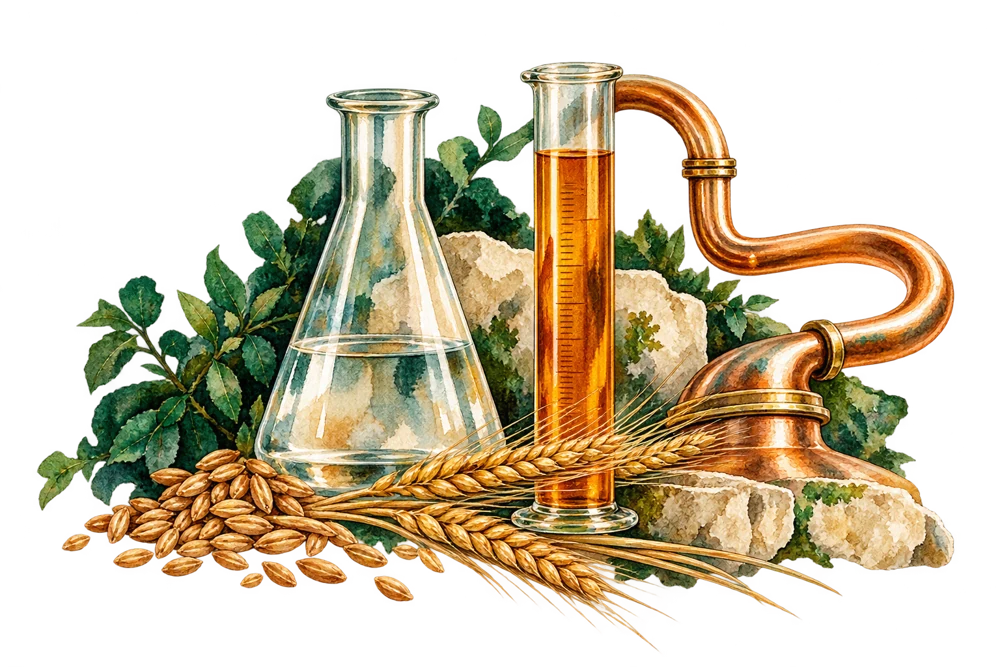
science, symbolic watercolor illustration
2015

An engineer shapes the new spirits

Marianne Barnes joins the project as master distiller. Her engineering education and tasting experience become part of the new operation’s foundation.[5]
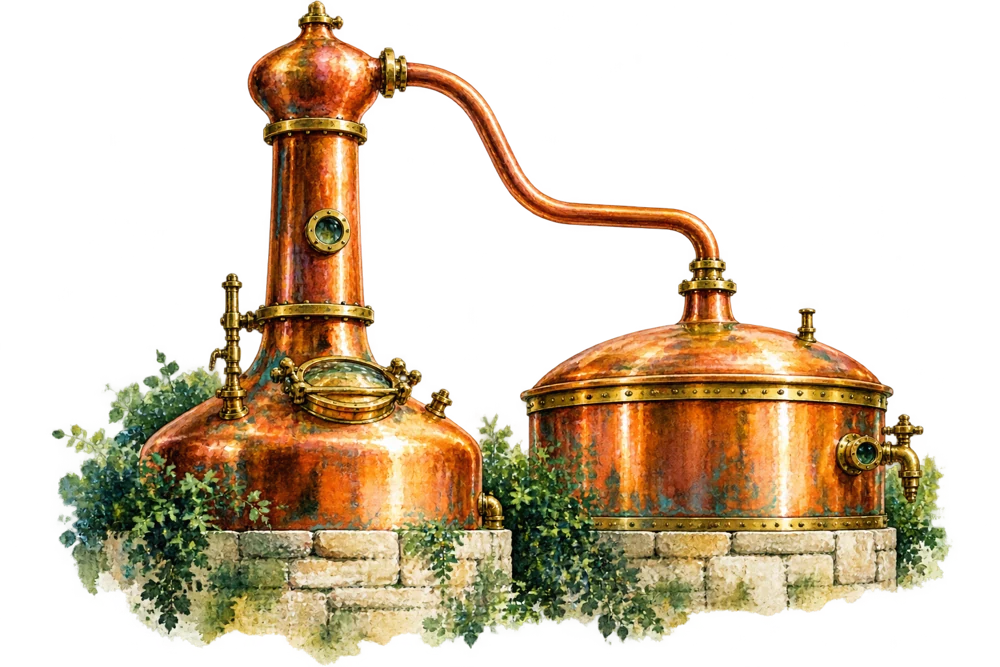
stills, symbolic watercolor illustration
2016

Spirit flows again

Kentucky’s later opening announcement dates the start of production to 2016. Whiskey must then mature, so this is a production milestone rather than the bourbon’s release date.[4]
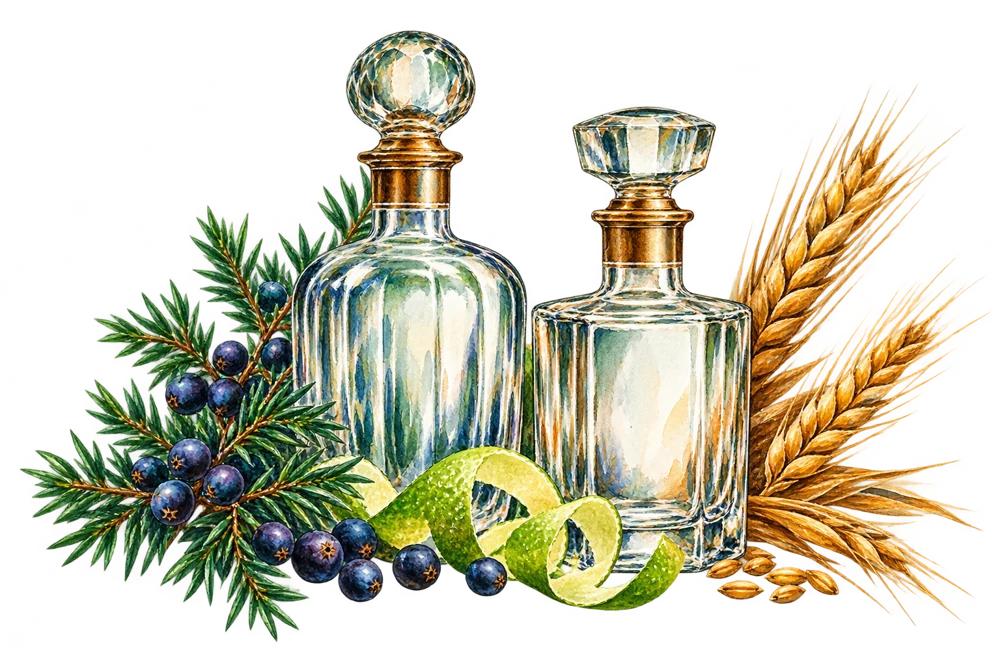
clear, symbolic watercolor illustration
April 2018

Clear spirits arrive first

The earlier official chronology dates the first clear-spirit releases to April 2018. Gin and vodka offer a first introduction while the whiskey continues aging.[2]
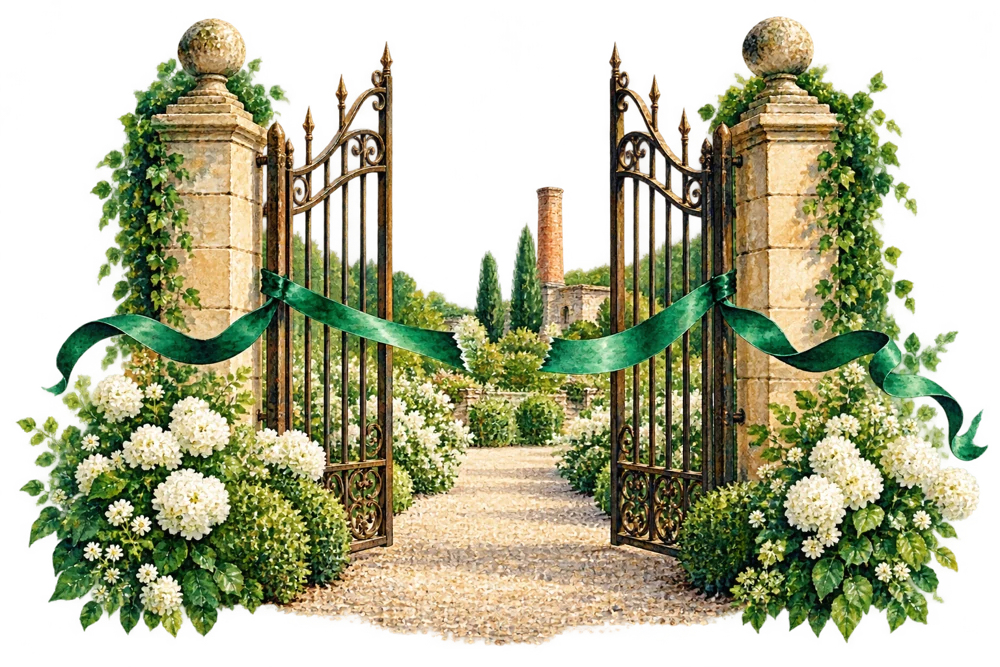
opening, symbolic watercolor illustration
September 19, 2018

The public returns

The dated state announcement marks the public opening after a restoration reported at $30 million. The reopening of the visitor destination follows the return of production.[4]
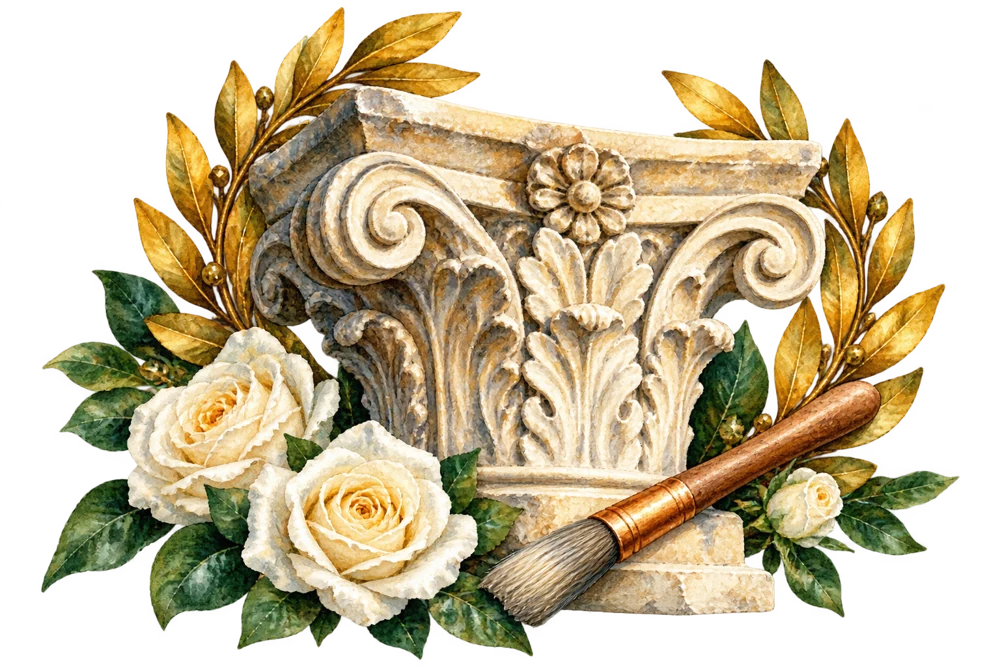
preservation, symbolic watercolor illustration
May 2019

Preservation receives recognition

The Kentucky Heritage Council records a Preservation Project Award for Castle & Key. The recognition covers rehabilitation of buildings and landscape features at the former Old Taylor property.[13]
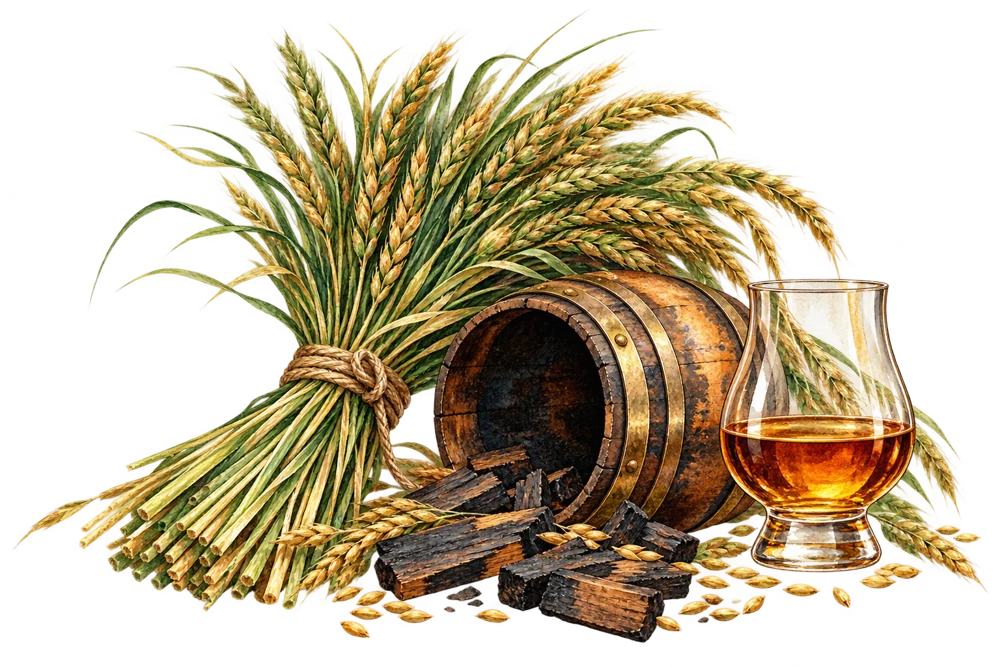
rye, symbolic watercolor illustration
December 2020

Restoration Rye makes its debut

The producer’s chronology identifies Restoration Rye as its first aged spirit. Whiskey now becomes part of the public portfolio, after the earlier gin and vodka releases.[2]
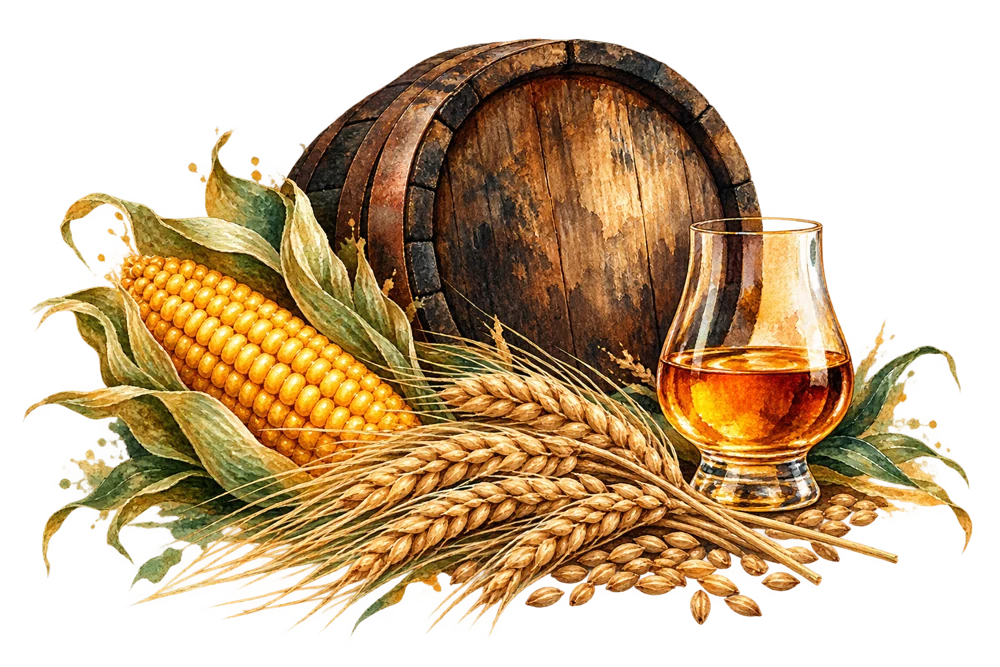
bourbon, symbolic watercolor illustration
March 2022

Castle & Key bourbon follows

Small Batch Kentucky Straight Bourbon arrives. This is the modern brand’s bourbon debut, distinct from the nineteenth-century founding of the site.[2]
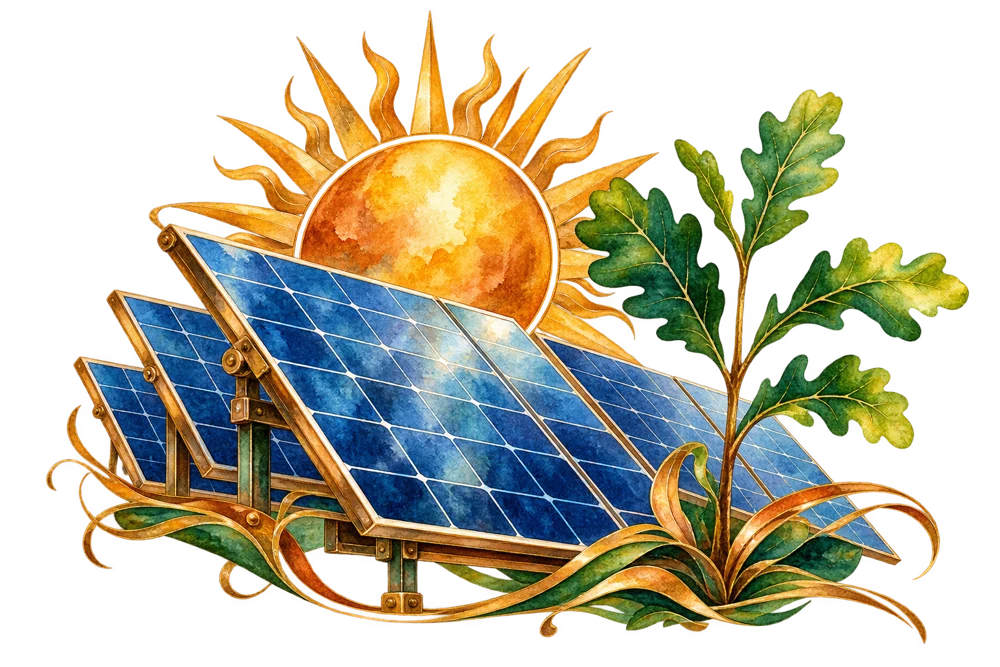
solar, symbolic watercolor illustration
2025

A new investment in the site

Castle & Key reports completing the first phase of a solar project with 754 panels. The installation adds a contemporary energy project to a property known for historic preservation.[1]
03 / Geography & roles

The places play different parts.

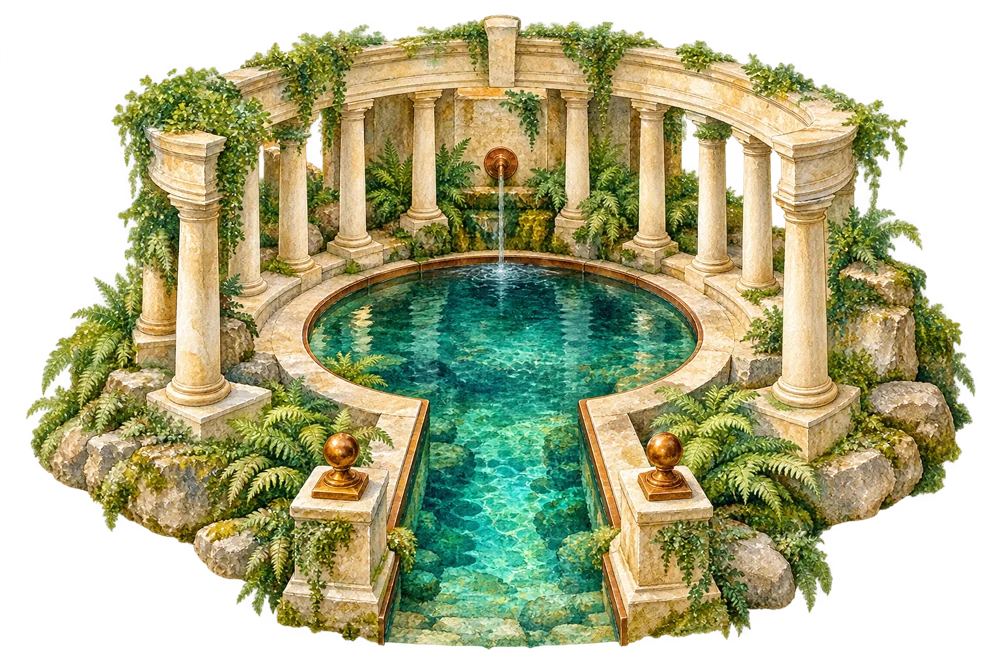
springhouse, symbolic watercolor illustration

Millville and the Frankfort address

The production and visitor home is the former Old Taylor site at 4445 McCracken Pike, with a Frankfort mailing address. Millville describes its local setting. A mailing city and a historic community name need not imply different distilleries.[4][8]

The springhouse and gardens

The keyhole-shaped springhouse helps explain the modern name. The grounds also include the Sunken Garden and botanical walking trail. Castle & Key credits landscape designer Jon Carloftis with a partnership beginning in 2015.[2][6]

Maturation beyond the castle

The current production account identifies historic warehouses and additional aging sites in Versailles and Nicholasville. The visitor address therefore does not describe the location of every aging barrel.[7]

Louisville’s Castle & Key 502

The downtown location is described as a retail and cocktail destination at 400 South Second Street. Its role is to introduce the spirits and hospitality in an urban setting; it is not presented as the main distilling plant.[12]

04 / The whiskey family

One producer. Several ways to explore.

Castle & Key

Modern distillery and spirits brand

Bourbon, wheated bourbon and Restoration Rye sit alongside gin, vodka and experimental releases. The restored property provides a common home, but each product retains its own recipe and release identity.[1][9][10][11]

Old Taylor

Historic site, separate brand history

The property’s Old Taylor past is not proof that today’s Taylor-branded bottles are made here. Kentucky’s opening account distinguishes the historic site from Taylor brands acquired by Sazerac and produced at Buffalo Trace.[4]

Pinhook

Contract distilling relationship

Pinhook says it began having its own recipes distilled at Castle & Key in 2017. Sean Josephs directs those custom mash bills and blends and proofs Pinhook vintages. This is a production relationship, not evidence that Castle & Key owns Pinhook.[14]

Partner services

Work beyond the house labels

Castle & Key offers raw-material sourcing, production, warehousing, bottling, finishing and blending. These capabilities explain how another brand can work with the distillery while keeping its own identity. They do not identify undisclosed customers.[8]

05 / Making & choosing

Grain, copper, oak and judgment.

The house recipes and partner programs carry different identities. Follow the recipe, batch and release label.

making, symbolic watercolor illustration

Recipes that distinguish the whiskeys

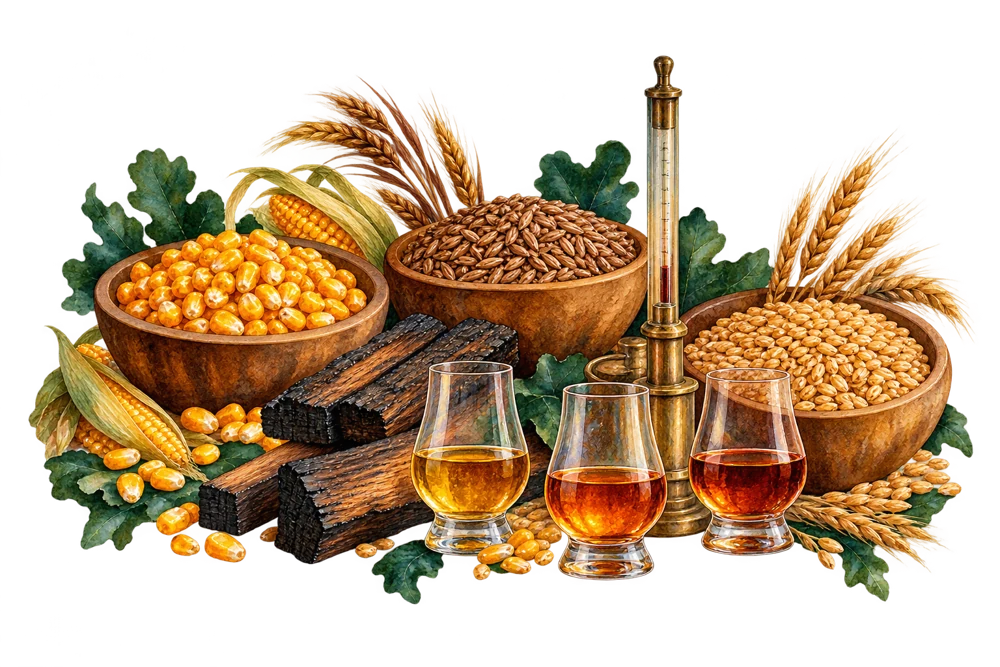
Current listings show bourbon at 73% white corn, 10% rye and 17% malted barley; the wheated recipe replaces that rye with wheat. Restoration Rye lists 63% rye, 17% yellow corn and 20% malted barley. These are product-page specifications, not a claim that every experimental or partner recipe is identical.[9][10][11]

Old equipment meets new stills

The company describes retained historic components connected to modern Vendome equipment, with Clark Mechanical assisting the integration. Preservation here includes working industrial fabric as well as attractive architecture.[7]

Barrels and more than one aging setting

Castle & Key names Speyside Cooperage and describes seasoned American white oak, toasting and charring. It uses several Kentucky aging locations. Those choices help explain why production, wood and maturation need to be considered together.[7]

Blending by the batch

The stated approach allows batches and bottling proofs to vary. The practical consequence is simple: year, batch and the actual label matter. A current product listing should not overwrite an older release’s recorded identity.[7]

Different work for different partners

Contract services span fermentation through finished packaging, with blending and finishing available separately. A service offering does not establish which steps were performed for an unspecified third-party bottle.[8]

06 / The details worth knowing

The stories behind the specifications.

The name is already on the grounds

Castle & Key points to two physical features: the castle-like distillery and the springhouse’s keyhole form. The modern name makes the setting legible without claiming to revive every old trademark associated with it.[2]

Architecture carried into glass

The producer credits Stranger & Stranger with packaging that draws on the grounds. Details include a closure inspired by the springhouse chandelier and brass elements. The bottle becomes another way of expressing the place’s design vocabulary.[6]

The landscape was part of the work

The restoration extended to gardens and walking routes. The 2019 preservation award specifically recognizes landscape features as well as buildings, making the grounds part of the accomplishment rather than decorative surroundings.[13][6]

One building, several histories

The Filson archive preserves plans and technical drawings from 1935–1958. That record interrupts a simplistic story of an 1887 building sleeping untouched until 2014. The site was repeatedly adapted before its present revival.[3]

Whiskey on its own timetable

Production began before visitors returned, and clear spirits preceded rye and bourbon. Reading those dates separately reveals the practical rhythm of starting a whiskey operation: a restored stillhouse cannot instantly supply mature whiskey.[4][2]

A living site, not a frozen exhibit

The company’s 2025 solar report shows another layer of change. It describes renewable infrastructure within a longer sustainability plan. The report is evidence of the stated installation, not proof that the entire distillery operates without emissions.[1]

07 / Selected expressions

A tasting path through the producer.

Small Batch Bourbon

The current page describes a six-year bourbon. Its proof field reads 101 while the adjacent ABV reads 51%, an inconsistency because 101 proof corresponds to 50.5%. This profile preserves that qualification rather than choosing a strength on the reader’s behalf.[9]

Small Batch Wheated Bourbon

The page body describes five years and 100 proof, with wheat in place of rye. Its URL still contains “7-year,” so the URL is not treated as an age statement. Check the actual release label before applying the current listing to an older bottle.[10]

Restoration Rye

The current listing describes five years and 100 proof. The rye-led recipe offers a useful contrast with the two bourbon recipes, but it does not supply the proof or age for every single-barrel selection bearing the Restoration name.[11]

Beyond the three whiskeys

Gin, vodka and experimental spirits broaden the distillery’s work. Their presence is part of Castle & Key’s identity from the early clear-spirit launches onward. This is a selected overview, not an exhaustive release or availability catalog.[1][2]

08 / The Reserve connection

Continue from the story to the bottles.

Castle & Key Distillery in The Thelen Reserve

2 physical bottle records connect this story to the collection. Each keeps its own proof, barrel, batch, pick and release details.

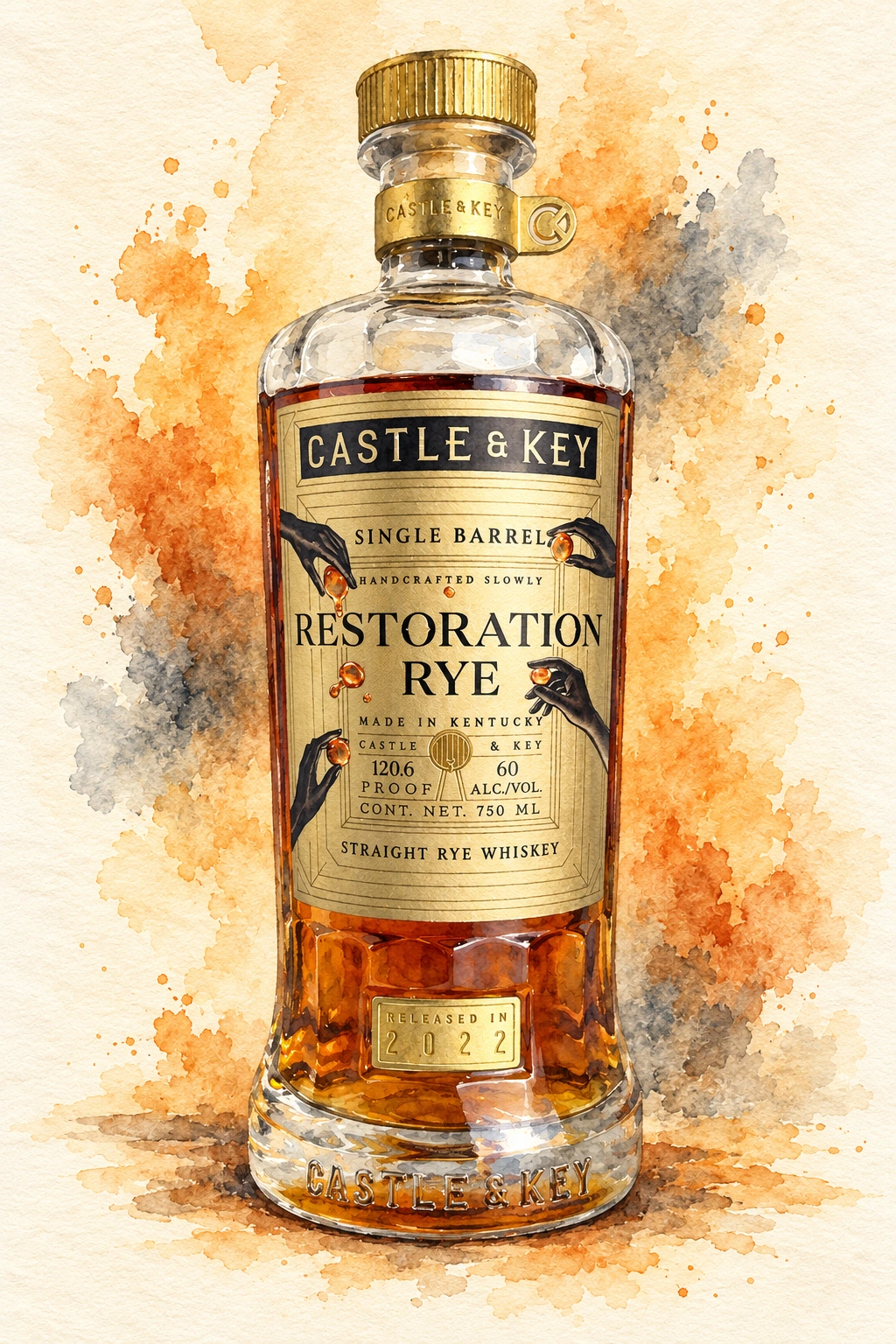
Approved watercolor of Castle & Key Single Barrel Restoration Rye - Niche

Castle & Key Single Barrel Restoration Rye - Niche

W0135 · 120.6 proof · Barrel 1677 · Bottle 77 · Pick Vin's Diesel

Physical label: selected by Vin’s Diesel; barrel1677,bottle77,aged4years;2022 release. The legacy inventory title retains “Niche.”

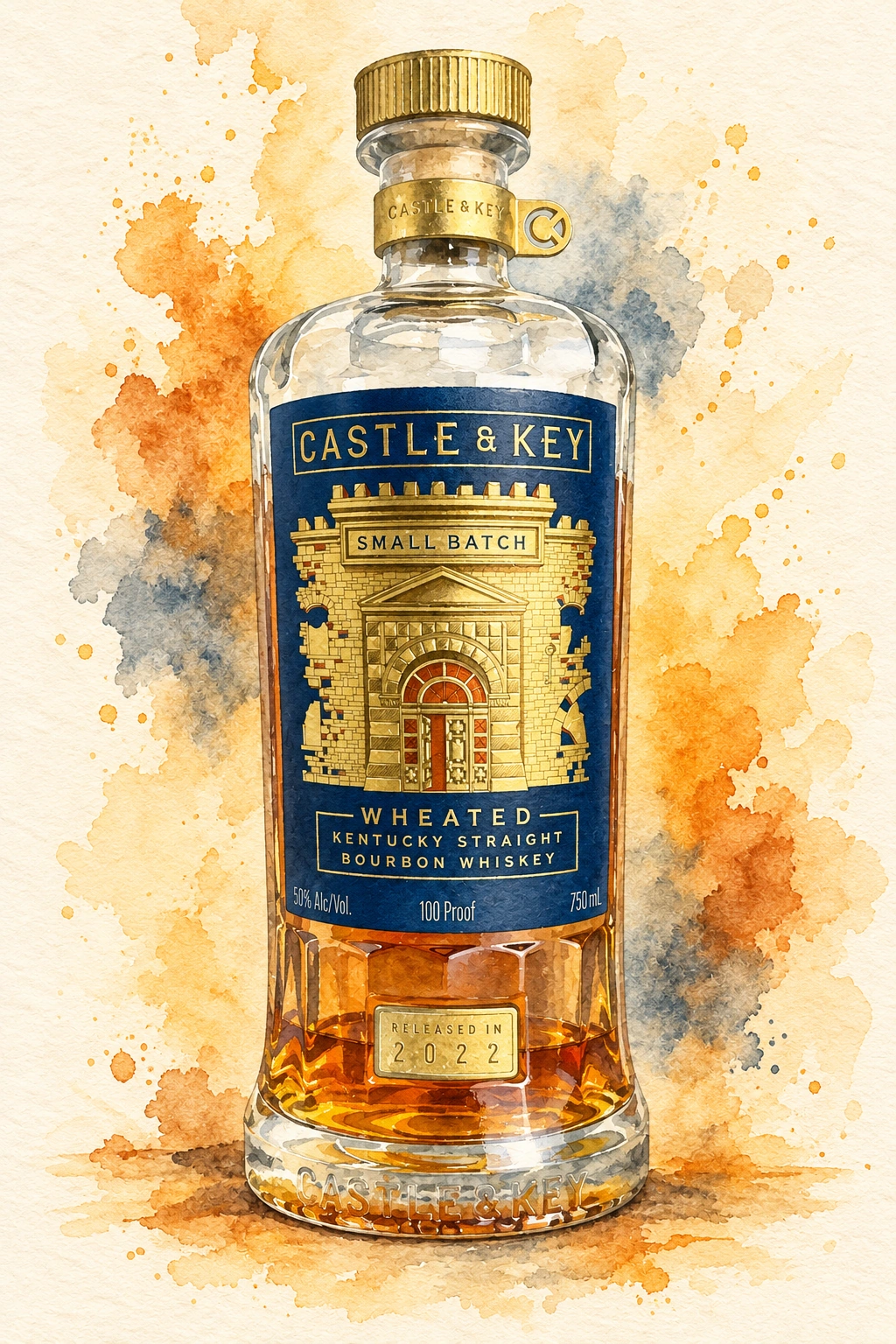
Approved watercolor of Castle & Key Wheated Kty Straight Bourbon Whiskey

Castle & Key Wheated Kty Straight Bourbon Whiskey

W0136 · 100 proof · Bottle 4120 · Batch 1

The photographed label confirms the 2022 wheated release, batch 1, bottle 04120, aged five years, 100 proof / 50% ABV and 750 mL. The exact bottling day is not stated. The inventory stores bottle 4120 numerically.

Collection snapshot: October 24, 2026. W0135 and W0136 retain text-only cards because the current approved-artwork tracker contains no exact watercolor for either record. Details remain inventory-recorded pending label photos.

Castle & Key Distillery guide cover
The illustrated companion

Castle & Key Distillery, in three pages.

Origins and people, history and places, whiskey and stories. An illustrated companion with linked research sources.

Sources & research notes

Research qualifications

  • Research checked October 18, 2026. Dates describe distinct events: 1887 historic site, 2014 purchase, 2016 production restart, September 2018 public opening, December 2020 rye and March 2022 bourbon.
  • Closure and National Distillers dates conflict: the Filson account uses 1917 and 1936; the earlier producer chronology uses 1920 for Prohibition closure, while contemporary interview accounts use 1935 for the revival. The timeline deliberately uses era labels.
  • The current history page’s “more than sixty years” silence wording is not consistent with the documented 1972–2016 production interval. The dated state account and archive are preferred; later warehouse use is distinguished from distillation.
  • Current Bourbon page lists 101 proof beside 51% ABV. Wheated page body says five years while its URL contains seven. Product listings are not assigned wholesale to historical bottles.
  • Current CEO identity comes from the live contract-services page. Founding partners are recorded historically; complete current ownership and an individual current master-distiller title were not established.
  • All illustrations are original interpretive watercolors, not photographs or exact historic reconstructions. Producer tasting descriptions are not personal tasting claims. Sources remain complete and collapsed on the website.

Full sources

  1. Castle & Key: current history
  2. Castle & Key: earlier chronology
  3. Filson: Old Taylor architectural archive
  4. Kentucky: September 2018 opening
  5. University of Louisville: Marianne Barnes
  6. Castle & Key: grounds and packaging
  7. Castle & Key: production process
  8. Castle & Key: contract services and CEO
  9. Small Batch Bourbon: current listing
  10. Wheated Bourbon: current listing
  11. Restoration Rye: current listing
  12. Castle & Key 502: Louisville role
  13. Kentucky Heritage Council: 2019 award
  14. Pinhook: custom distilling relationship
  15. Marianne Eaves: professional biography
↑