TJ THELEN'S COLLECTION
The Thelen Reserve
Behind the Bottles / Islay / Scotland / Single malt Scotch

Caol Ila Distillery

Last updated Last researched

Caol Ila Distillery

The sound, the smoke and the whisky between them.

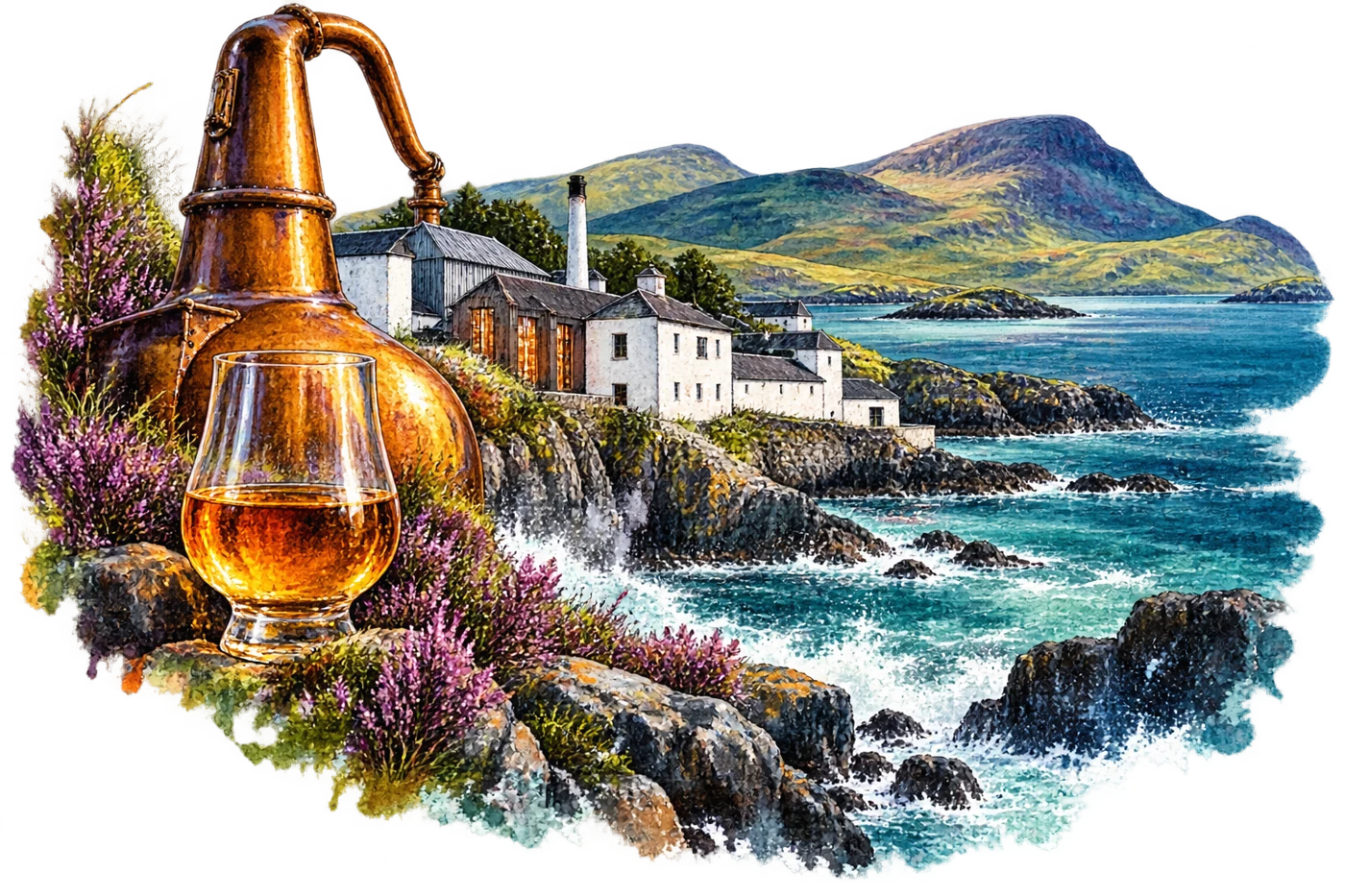
Look across the Sound of Islay and Caol Ila begins to make sense. The water was a working route before it became a celebrated view. Boats connected the distillery to supplies, markets and people; blenders carried its smoky malt far beyond the island. Its own single malts reveal another side of the same operation, where smoke can coexist with a fresh, light-footed character. Following the distillery from its nineteenth-century cove to its modern stillhouse means following several kinds of continuity: place, production, craft and the changing ways people encounter the whisky.[1][2][13]

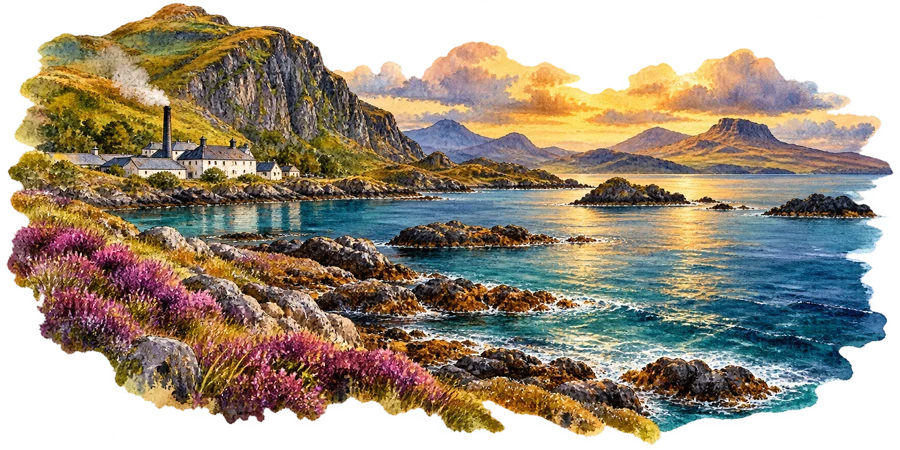
Symbolic Caol Ila coastal distillery, copper still and Jura landscape
Distillery established
1846[1][2]
Founder
Hector Henderson[2]
Home
Port Askaig, Islay[14]
Whisky family
Diageo / Johnnie Walker[12][13]
01 / Origins & people

A working cove becomes a whisky landmark.

A name taken from the water

Hector Henderson established Caol Ila in 1846 beside the narrow sea passage between Islay and Jura. The Gaelic name refers to the Sound of Islay. Fresh water and access by sea made the rocky cove a practical industrial location. The coastal setting explains how the business could operate in a place that still feels tucked out of sight on the road down from Port Askaig.[2][1]

A malt with more than one audience

Caol Ila became important to the trade in blended whisky long before its familiar 12-year-old reached a broad single-malt audience in 2002. Johnnie Walker is central to that relationship. A distillery bottling and a blend containing its malt are different products, made for different purposes. Reading both sides of the history gives Caol Ila a larger role than the phrase hidden gem suggests.[2][13][5]

The date on the story is not the age of the building

The original distillery underwent major rebuilding in the nineteenth century and again between 1972 and 1974. The later project replaced two stills with six and retained the old warehouse. The modern glass-fronted stillhouse belongs to that rebuilding era, while 1846 remains the founding date. Neither the current architecture nor the 2022 visitor project resets the origin of the distillery.[2][3]

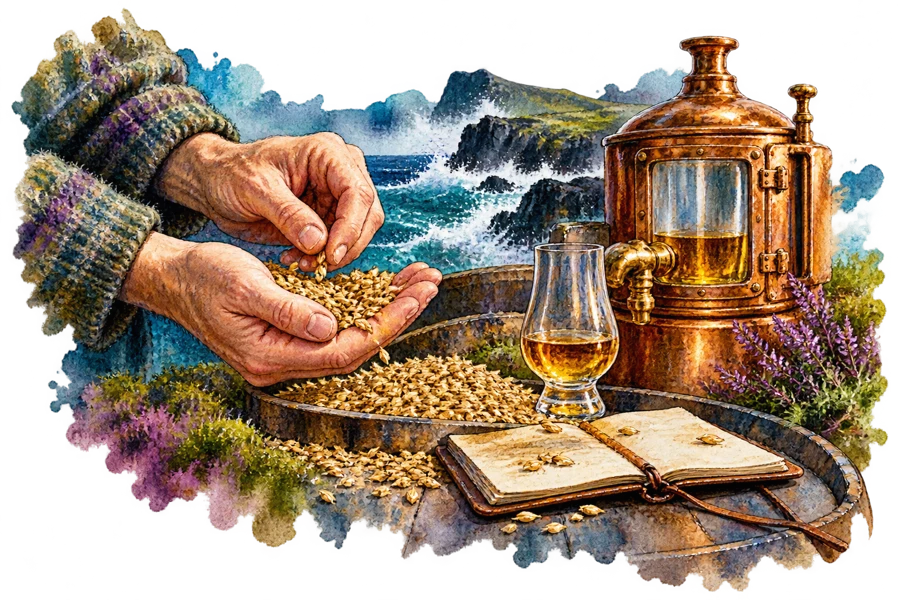
Symbolic whisky worker hands assessing barley and spirit

Hector Henderson

Founder

The Glasgow distillery owner founded the Islay venture in 1846. His decision linked a water supply, a sea route and a place suitable for production. Later ownership changes should not obscure that initial siting decision. Accounts disagree on some dates in the following two decades; the founding date and founder are consistent.[2][3]

Alan McGee

Distillation, documented in 2018

Diageo’s 2018 behind-the-scenes film introduced McGee through his work in Caol Ila distillation. The feature makes the connection between island production and the wider Johnnie Walker team tangible. It is a dated production credit, rather than a current staffing claim.[13]

Sam Hale and Eva Cumming

Dated distillery leadership

Hale explained the distillery’s spirit style during a January 2023 visit reported by Whisky Magazine. The official 2024 festival product page names Cumming as manager and describes it as her first Fèis Ìle in that role. These sources document different moments in the people story; they are not a verified October 2026 management roster.[4][9]

The island’s makers

Local craft and interpretation

Persabus artists Rosemary Fletcher and her daughters contributed the local design of Caol Ila’s Striding Man statue. Their collaboration connects a global whisky identity with island craft. The 2022 brand-home materials also credit archivists and experience designers for bringing the distillery’s working history into the visitor spaces.[16][2]

02 / The illustrated history

The sea connects every chapter.

Follow the coastal trade, rebuilding, blending role and single-malt releases. Each date belongs to its documented event.
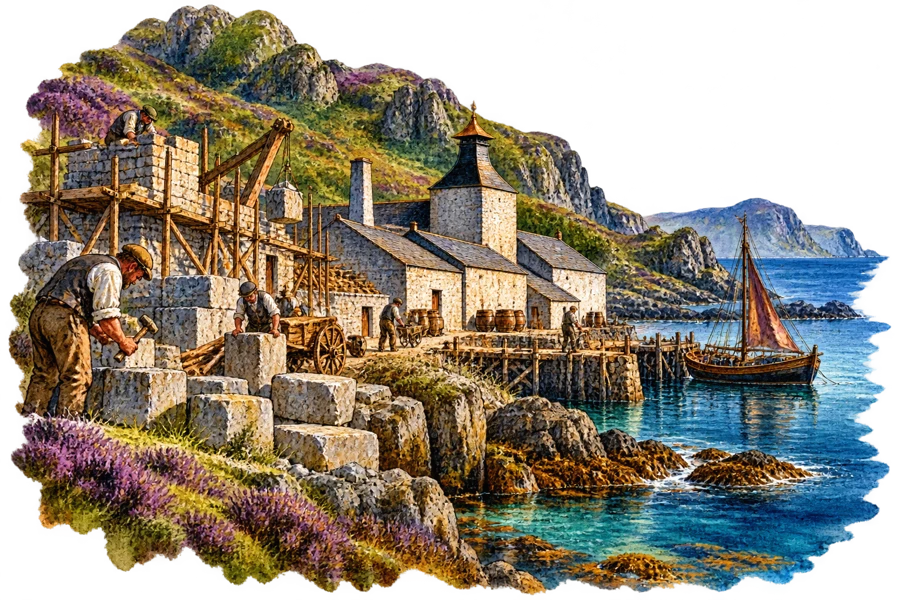
Symbolic illustration: A distillery finds its cove
1846

A distillery finds its cove

Hector Henderson establishes Caol Ila beside the Sound of Islay. Sea access and fresh water help explain the choice of this rocky shore.[2]
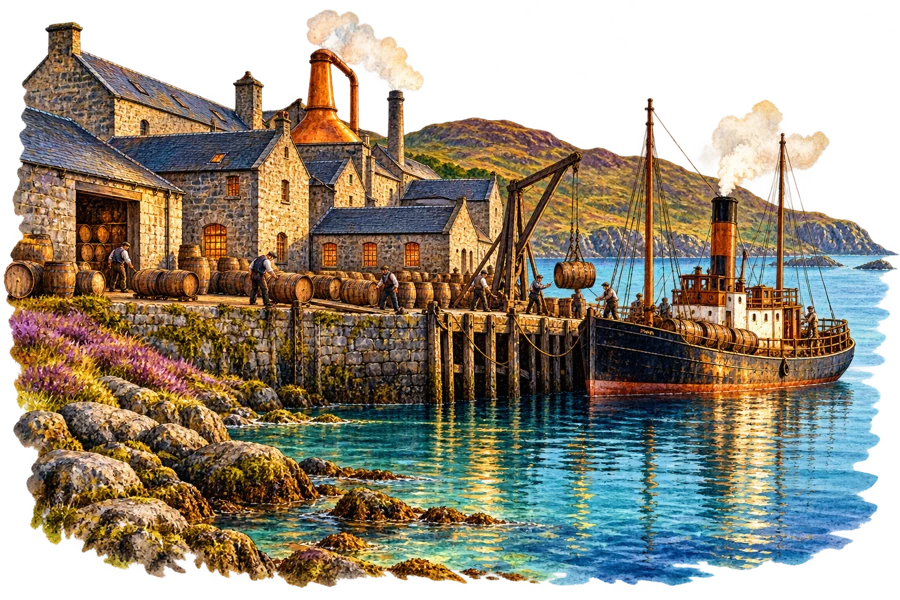
Symbolic illustration: A larger operation faces the sea
1879

A larger operation faces the sea

The nineteenth-century rebuilding and expansion culminate in a larger distillery. A substantial pier supports the movement of supplies and casks at the site.[2][4]
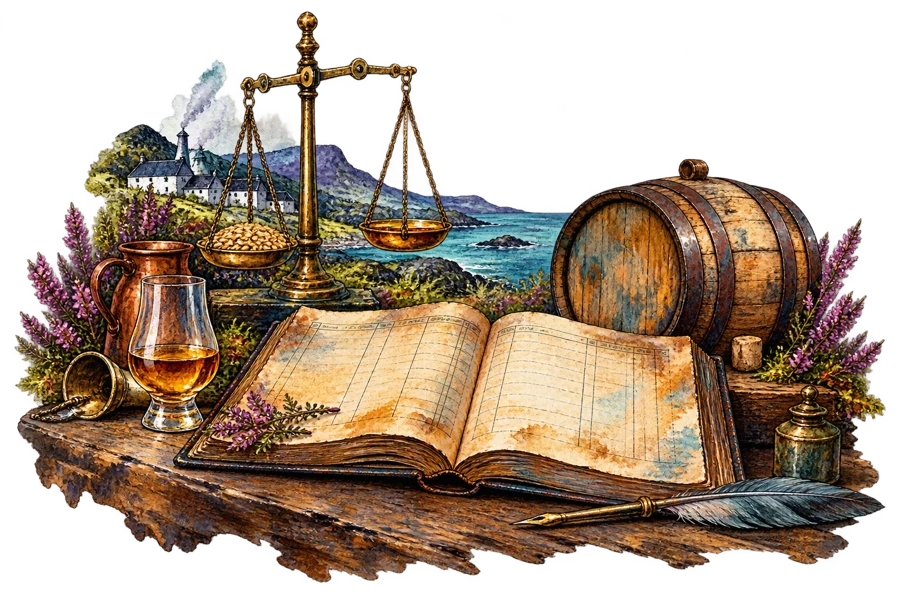
Symbolic illustration: The malt enters the Walker record
1897

The malt enters the Walker record

The company’s archive-based account identifies Caol Ila in John Walker & Sons stock books by 1897. The record documents a blending relationship already taking shape.[2]
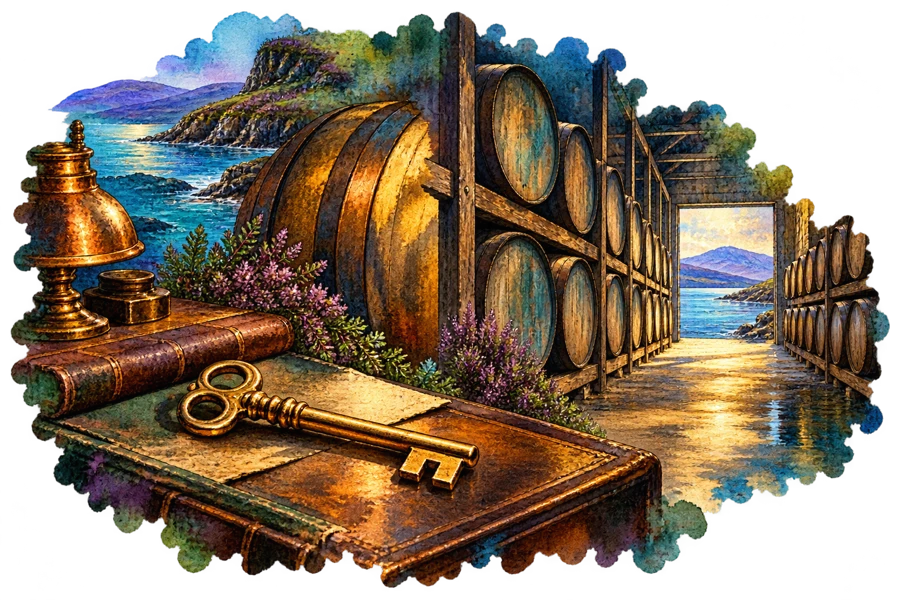
Symbolic illustration: The distillery joins a larger system
1927–1930

The distillery joins a larger system

DCL takes control in 1927; the owner’s timeline records Scottish Malt Distillers obtaining full ownership in 1930. Caol Ila becomes part of an extensive production and blending network.[3][2]
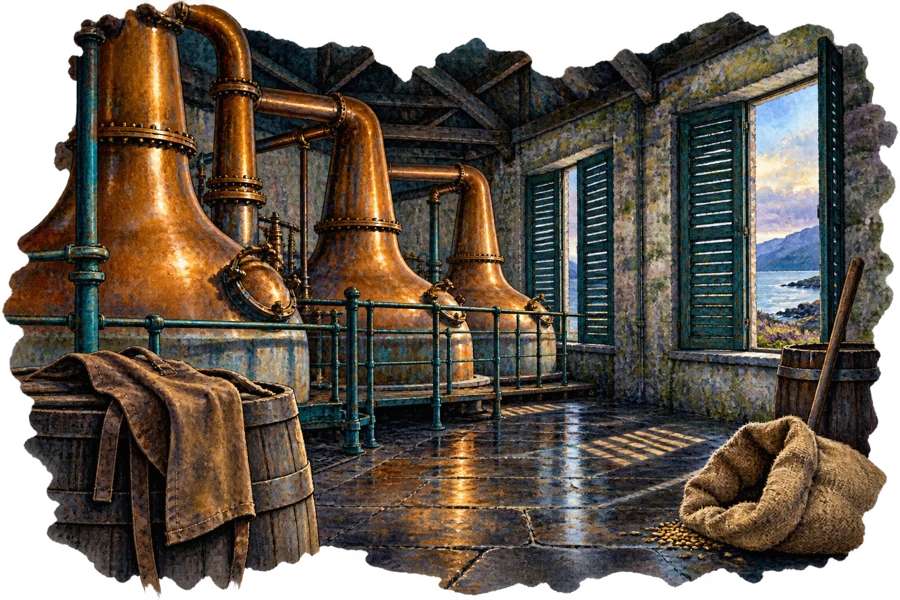
Symbolic illustration: Wartime restrictions interrupt production
1941–1945

Wartime restrictions interrupt production

The owner’s timeline dates the wartime shutdown to 1941–45, citing restrictions on labour and barley. Other histories use a different starting year, so the source and range are explicit.[2]
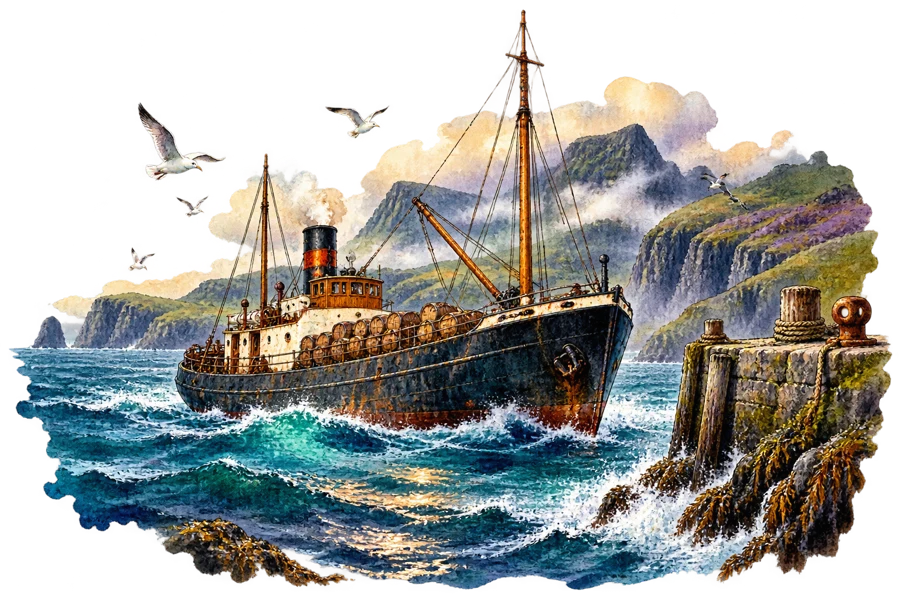
Symbolic illustration: Another Pibroch carries the trade
1956–1957

Another Pibroch carries the trade

A second Pibroch is launched in December 1956 and replaces its namesake in service. The puffer boats carry supplies, casks and the smaller necessities of island life.[2][4]
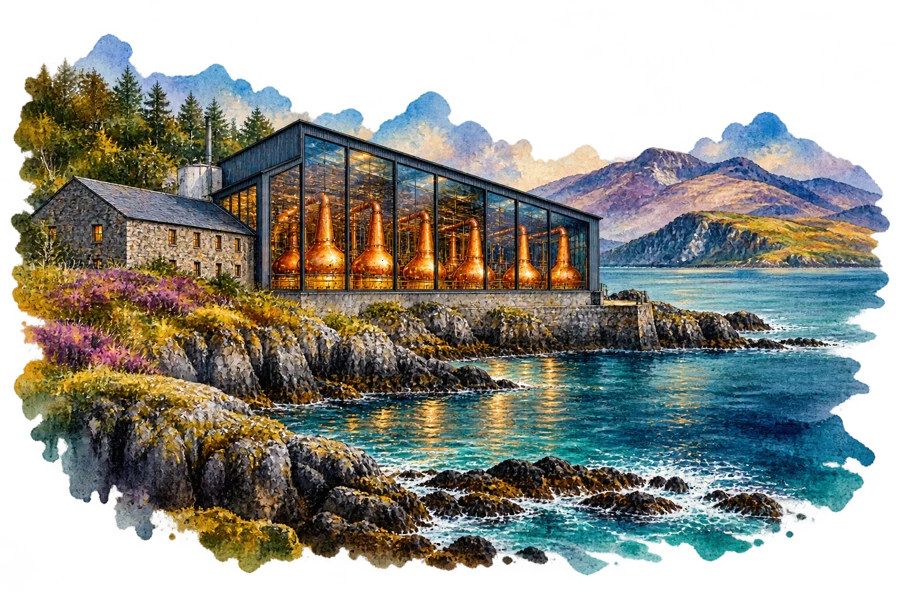
Symbolic illustration: Two stills become six
1972–1974

Two stills become six

The old production buildings are replaced, while a stone warehouse survives. Production returns in 1974 in a significantly larger distillery, with still design intended to preserve the house character.[2][1]
Symbolic illustration: Diageo becomes the parent company
1997

Diageo becomes the parent company

The merger of Guinness and Grand Metropolitan creates Diageo. Caol Ila’s earlier corporate lineage passes into the new group; this is a parent-company transition, not a new distillery founding.[12][3]
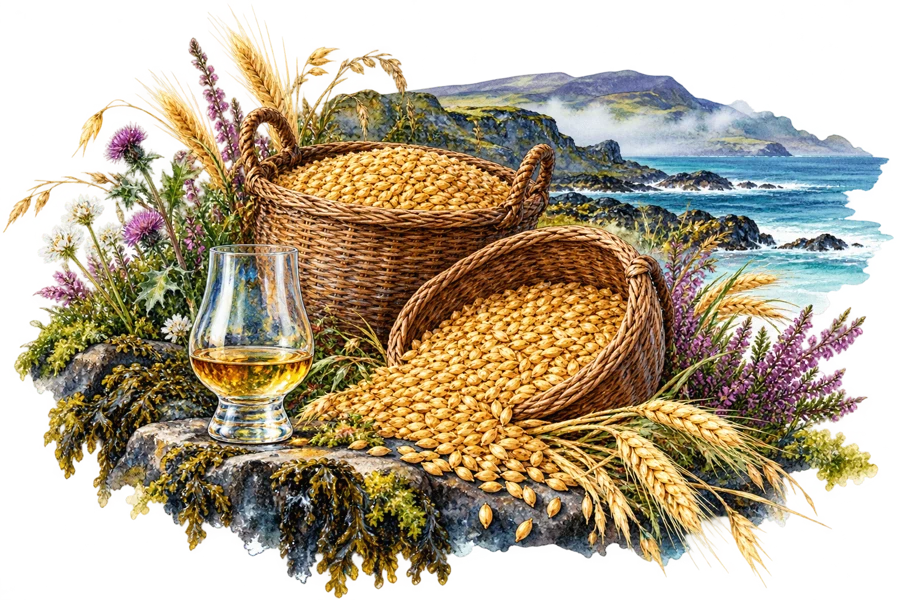
Symbolic illustration: An unpeated branch takes shape
1999

An unpeated branch takes shape

The owner’s timeline dates the start of annual unpeated production to 1999. Later releases show that the distillery can explore a different style alongside its better-known peated malt.[2][15]
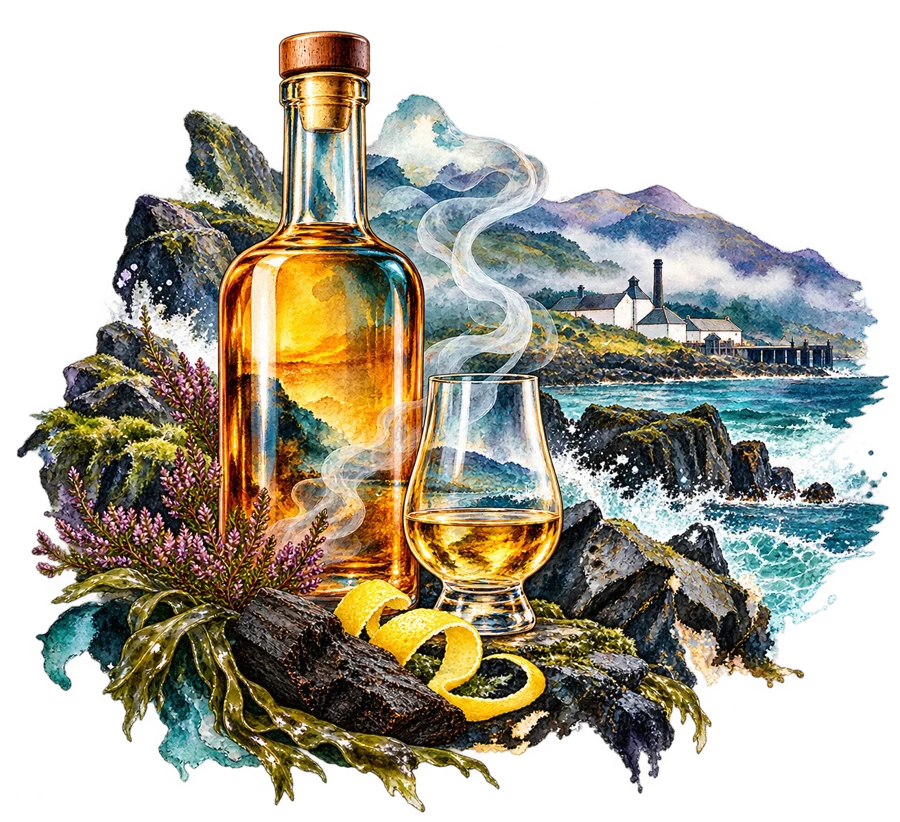
Symbolic illustration: The 12-year-old reaches a wider audience
2002

The 12-year-old reaches a wider audience

The permanent 12-year-old single malt becomes a familiar route into Caol Ila. It gives drinkers a distillery-named expression alongside the malt’s longstanding work in blends.[2][3][5]
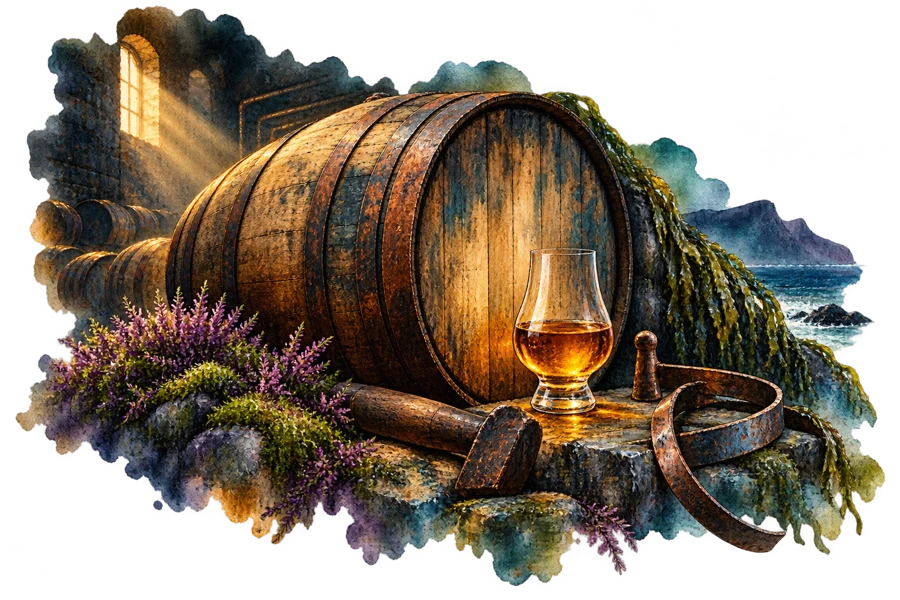
Symbolic illustration: A 25-year-old joins the official range
2010

A 25-year-old joins the official range

The official product history dates the regular 43% ABV 25-year-old to 2010, following earlier cask-strength editions. It broadens the range’s view of maturation.[7]
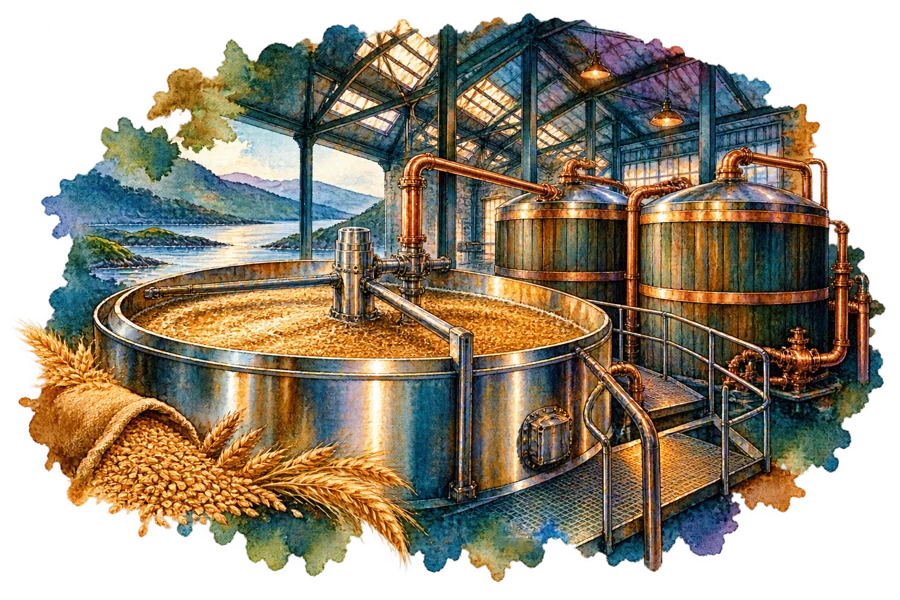
Symbolic illustration: Production capacity expands again
2011–2012

Production capacity expands again

A further investment adds a new mash tun and fermentation capacity. Contemporary accounts distinguish the announcement from the work that followed; their rounded capacity estimates vary.[3][4]
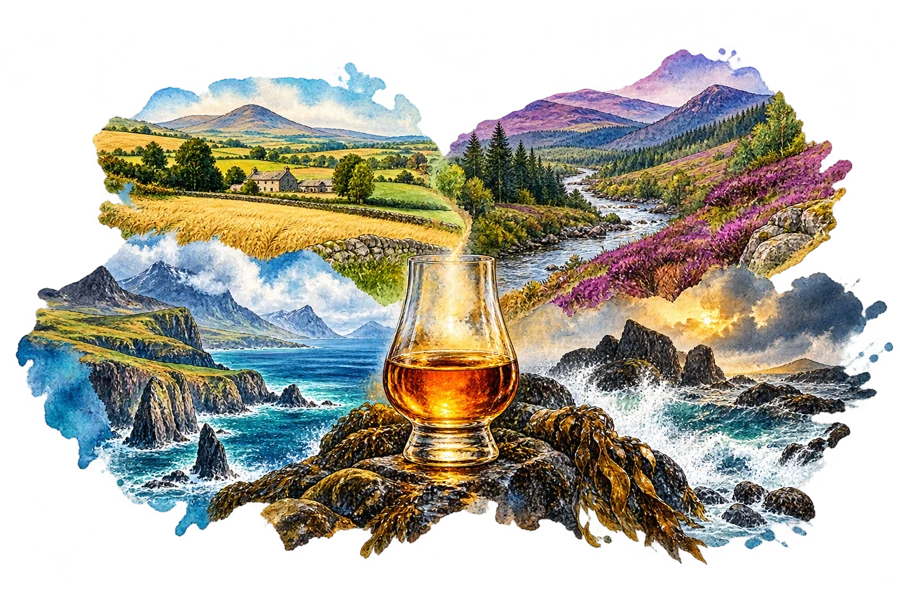
Symbolic illustration: The Four Corners project is announced
2018

The Four Corners project is announced

Diageo announces a tourism investment linking Caol Ila, Glenkinchie, Cardhu and Clynelish with a new Edinburgh Johnnie Walker experience. The production network becomes a visitor story.[13]
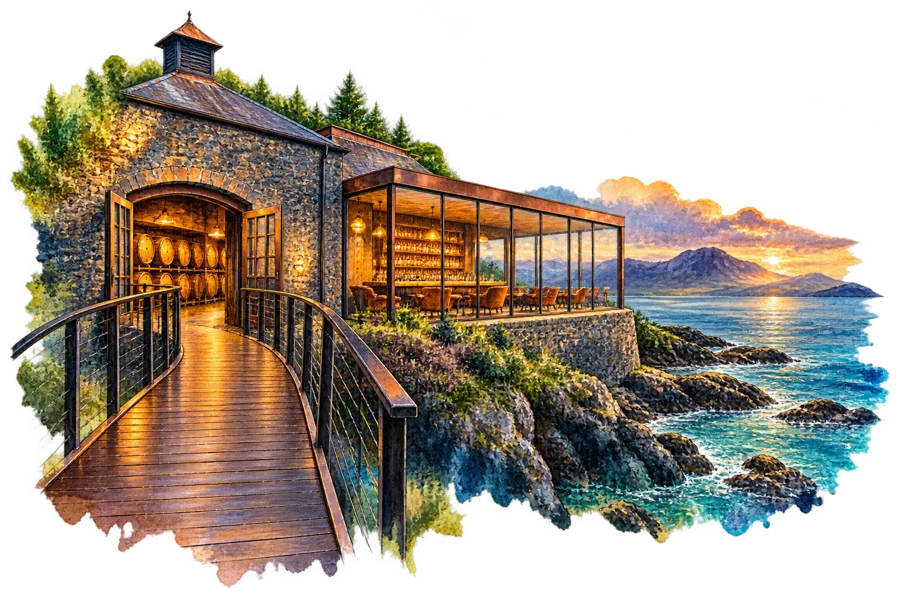
Symbolic illustration: The warehouse welcomes a new audience
August 2022

The warehouse welcomes a new audience

The transformed Caol Ila visitor experience opens, completing the four regional brand-home projects. A retained warehouse, new approach and views across the sound frame the experience.[11][14]
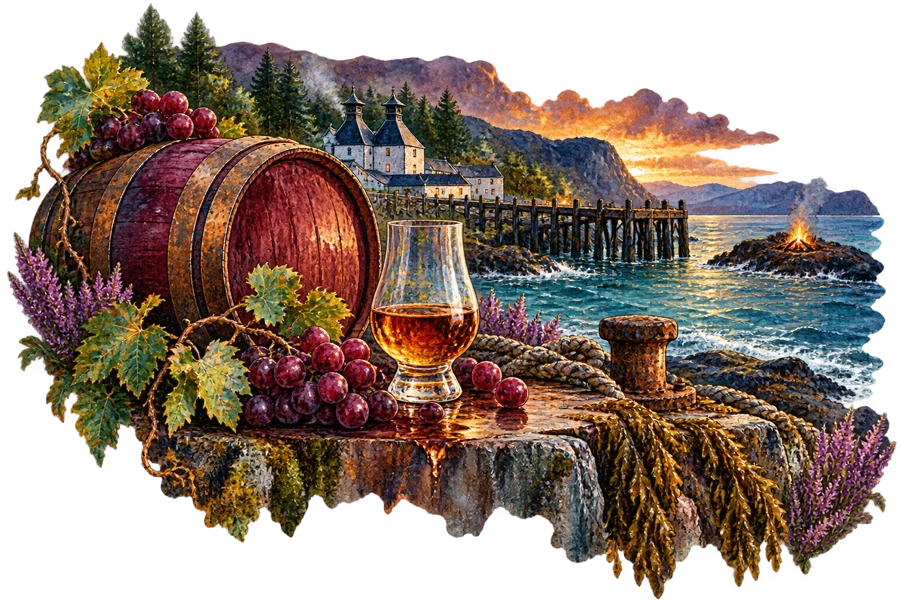
Symbolic illustration: Ruby Port meets festival smoke
2024

Ruby Port meets festival smoke

The 13-year-old Fèis Ìle release uses an ex-Ruby Port French-oak finish. The official announcement places the edition within the island festival and names Eva Cumming’s first festival as manager.[9]
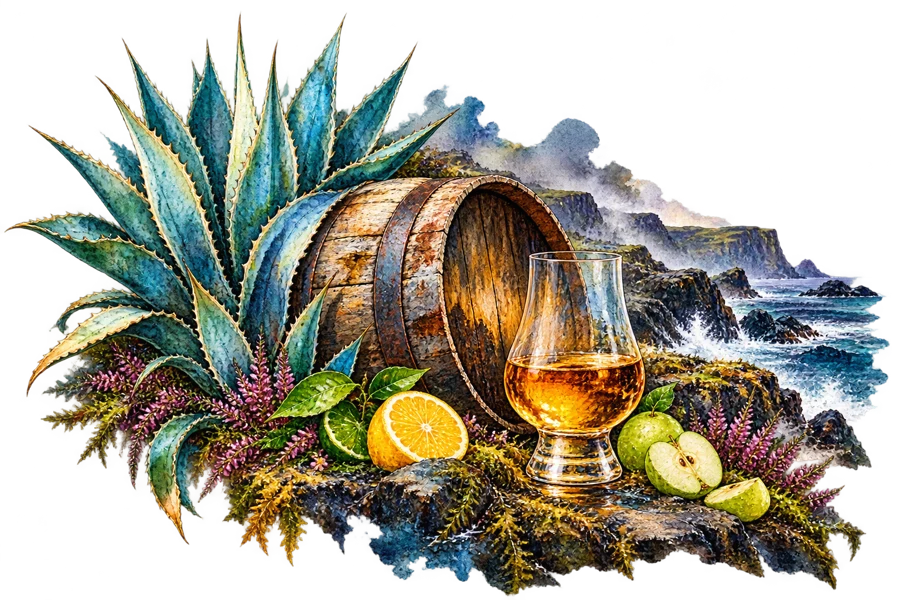
Symbolic illustration: A new cask conversation for Fèis Ìle
2026

A new cask conversation for Fèis Ìle

A May company announcement describes an 11-year-old festival edition finished in former Don Julio tequila casks. The release-specific experiment adds another branch without redefining the whole range.[10]

Original watercolor interpretations accompany the history. Buildings, objects and scenes are symbolic, not documentary reconstructions.
03 / Geography & roles

One name. Several places that matter.

Symbolic Sound of Islay between Islay and Jura

The cove near Port Askaig

Caol Ila sits on Islay’s northeastern shore, looking across to Jura. Its name and outlook belong to the narrow Sound of Islay. The official visitor page gives Port Askaig as the address and places the distillery close to the ferry terminal. This is the home of the distillery, rather than a separate brand headquarters invented from its distributor’s location.[14]

Loch nam Ban and the water supply

The official brand account identifies the fresh-water source near Loch nam Ban and the limestone through which the water rises. Different sources use Ban, Burn and an apparent Lock spelling. The profile uses Loch nam Ban and records the variation, rather than presenting them as several independent water sources.[1][4]

Port Ellen maltings

The brand identifies Port Ellen as the source of its malted barley. That supply relationship is separate from Port Ellen’s own distillery and its single malt. Sharing an island, a corporate group or a maltings connection does not make the two distilleries interchangeable.[1][20]

Stillhouse and surviving warehouse

The 1970s production buildings and the older warehouse perform different jobs in the modern story. The retained warehouse became part of the reimagined visitor experience in 2022. Its survival offers a physical link between the earlier working site and the current approach. The illustrations interpret these roles rather than reconstructing exact historic elevations.[2][11]

The wider Scotch network

Casks and whisky travelled to the mainland, and Caol Ila malt became part of blends made across a wider business. The sea-facing distillery is where this single malt is distilled; it is not evidence that every cask has spent every year in the cove. The cited sources do not establish the full storage journey of every individual release.[2][13]

04 / The whiskey family

Understand the name on the label.

Follow the distillery, its parent group, blending connections and release-specific cask histories.

Caol Ila

Distillery and single malt

A physical Islay malt whisky distillery and a single-malt identity. Its own expressions are distinct from the blended Scotch whiskies that use its malt. The same distillery can supply both routes to the drinker.[1][13]

Diageo

Parent group

The current corporate group presents Caol Ila among its Scotch whisky operations and visitor destinations. Diageo dates its formation to the 1997 Guinness and Grand Metropolitan merger. That parent history remains separate from Caol Ila’s nineteenth-century founding.[12][14]

Johnnie Walker

Blending connection

Caol Ila contributes malt to the Johnnie Walker family of blends. Diageo’s Four Corners programme explicitly links it with the whisky’s wider geography. The profile does not treat any one blend as simply Caol Ila under a different label, or assume a fixed percentage recipe.[13][11]

Glenkinchie, Cardhu and Clynelish

Sister brand-home programme

These fellow Diageo distilleries joined Caol Ila in the Four Corners visitor programme. Lowland, Speyside, Highland and Islay places make the blend’s regional connections visible. Each retains its own facility history and identity.[13]

Bulloch Lade, DCL and Scottish Malt Distillers

Historical company lineage

These names describe historical ownership and trade relationships. They explain how the island distillery became part of a larger whisky system. Early transfer dates differ across histories, so exact nineteenth-century ownership chronology is qualified rather than silently harmonised.[3][2]

Don Julio and the festival release

Edition-specific cask connection

The 2026 company announcement identifies former Don Julio tequila casks for the 11-year-old festival edition. The connection is the cask’s earlier use. The resulting release remains Scotch whisky; it is not a claim of Mexican distillation or a new corporate transaction involving Caol Ila.[10]

05 / Making & choosing

The choices behind the label.

Distillation, blending, barrel selection and brand ownership play different roles. Keep every production claim tied to its facility, expression and date.

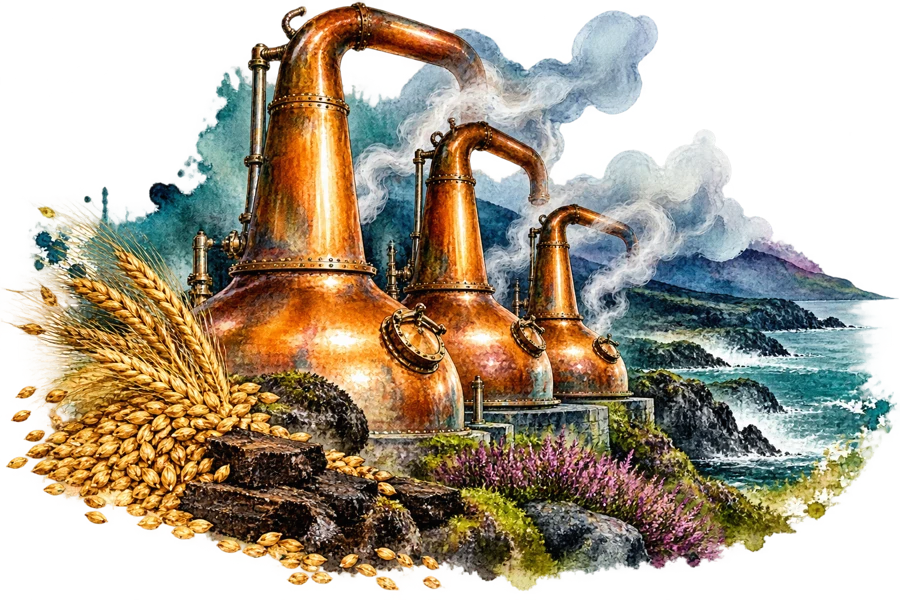
Symbolic copper pot stills and malted barley

Start with the category

Single Malt Scotch Whisky is made at one distillery from water and malted barley, using batch distillation in copper pot stills. Single describes the distillery origin, not a promise that the bottle comes from one cask. This category explains what Caol Ila’s own single malts share before their ages and cask treatments diverge.[18]

Peat belongs to the malt preparation

The smoky character associated with peated Scotch begins when peat smoke is used during drying of malt. It is not created by adding seawater or burning peat beneath a finished whisky cask. Caol Ila’s brand account pairs a peated identity with occasional unpeated releases.[19][1]

The same place can make a different style

Unpeated Caol Ila is a documented production branch, not a contradiction in a distillery on Islay. Ambrosial Feast is one official example. Geography identifies where a whisky is made; the malt specification and production choices help determine what it tastes like. A regional name alone is not a guaranteed smoke level.[15][19]

Stills, copper and the spirit cut

The 1970s enlargement increased the number of stills while seeking continuity of character. In a 2023 interview, Sam Hale described reflux and an early cut as parts of the style. These are useful explanations of production decisions, not a universal numerical recipe for every Caol Ila campaign or release.[1][4]

Maturation and finishing are separate choices

The 2022 Distillers Edition description names refill American and European oak followed by Moscatel-seasoned wood. The 2024 festival release names Ruby Port French-oak casks. Those are edition-specific paths. Neither makes wine-cask finishing a blanket description of all Caol Ila.[8][9]

Age stays with the whisky

Scotch matures in oak for at least three years, often much longer. A 12-year-old’s age statement does not continue to rise after bottling. Older expressions, unpeated releases and festival editions should be read through their own labels and announcements, rather than treating age, peat and strength as interchangeable measures of quality.[19][5][7]

06 / The details worth knowing

The stories inside the barrels.

The sea was a delivery route

The Pibroch boats made the distillery’s location commercially useful. Their cargo linked whisky production with the rhythms of island life. The owner’s archive-based account remembers small goods and services alongside barley and casks. It is a reminder that an industrial site can also be part of a community’s everyday connections.[2]

A view becomes part of the visit

The new visitor approach makes the Sound of Islay and Jura central to the experience. Looking at the water also helps explain the older business. The same outlook can be beautiful to a visitor and practical to a distiller arranging deliveries. Neither role needs a claim that sea air alone explains every flavour.[14][4]

A global emblem gets an island voice

The local artists’ account describes Rosemary Fletcher, Cairisitiona Rose Fletcher and Jessica May Fletcher working on the Caol Ila Striding Man with Diageo and BRC Imagination Arts. The collaboration gives a widely recognised figure a specifically Islay interpretation through local landscape and industrial imagery.[16]

Smoke can share the stage

The official 12-year-old notes describe a balance of fruit, sweetness and smoke. That is more revealing than treating every Islay single malt as the same heavy peat experience. These are the producer’s tasting descriptions, not a guarantee that every drinker will find the same aromas in every glass.[5]

Unpeated is part of the repertoire

The existence of unpeated releases widens the picture of the distillery. Ambrosial Feast’s official description presents a fruitier expression with a different cask combination. A release can depart from a familiar style while remaining the product of the same distillery. The difference is something to read on the specific bottle.[15]

The festival keeps the story moving

Fèis Ìle connects whisky with Islay’s community and culture. Caol Ila’s 2024 Port-finished and 2026 tequila-cask editions show the festival as a setting for particular experiments. They do not prove that every such edition is still available, or that a finish introduced for one release becomes standard production.[17][9][10]

07 / Selected expressions

Different ways into the whiskey family.

A curated reading of the whiskey family, selected for its role in the story. This is not an exhaustive current catalog.

12 Year Old

The familiar single malt is a useful introduction to Caol Ila’s balance of freshness and smoke. It is a distillery expression with its own identity alongside the malt’s use in blends. The 2002 introduction belongs to the modern range story, not the beginning of whisky production at the site.[5][2]

18 Year Old

The official description emphasises a smoky and sweet opening with salt and wood notes. This older core expression offers another view of maturation within the distillery’s range. An age statement supplies information about the whisky; it does not make the release simply a stronger or universally superior version of the 12-year-old.[6]

25 Year Old

The regular 43% ABV edition introduced in 2010 followed earlier cask-strength 25-year-old bottlings. Keeping that distinction avoids describing all bottles bearing the same age as one unchanged release. Its significance is the extended-maturation branch of the official range.[7]

Distillers Edition, 2022

The official 2022 product description identifies a second maturation with Moscatel-seasoned casks after refill American and European oak. Its relevance is a controlled variation in wood influence. Earlier vintages and later editions should retain their own labels, ages and finishing specifications.[8]

Ambrosial Feast

This unpeated Special Release demonstrates another side of Caol Ila. The official description names refill, rejuvenated and rejuvenated ex-wine American and European oak. The cask selection and unpeated identity belong to this edition, rather than a revised description of the whole distillery.[15]

Fèis Ìle 2024 and 2026

The 2024 13-year-old uses an ex-Ruby Port French-oak finish. The 2026 company announcement describes an 11-year-old finished in former Don Julio tequila casks. Read them as two specific festival editions. Their ages, casks and release contexts remain distinct.[9][10]

08 / The Reserve connection

Continue from the story to the bottles.

Caol Ila Distillery in The Thelen Reserve

One Caol Ila 12-year record connects this story to the collection, at 86 proof. Bottling date, bottle size and batch remain unverified from intake photos.

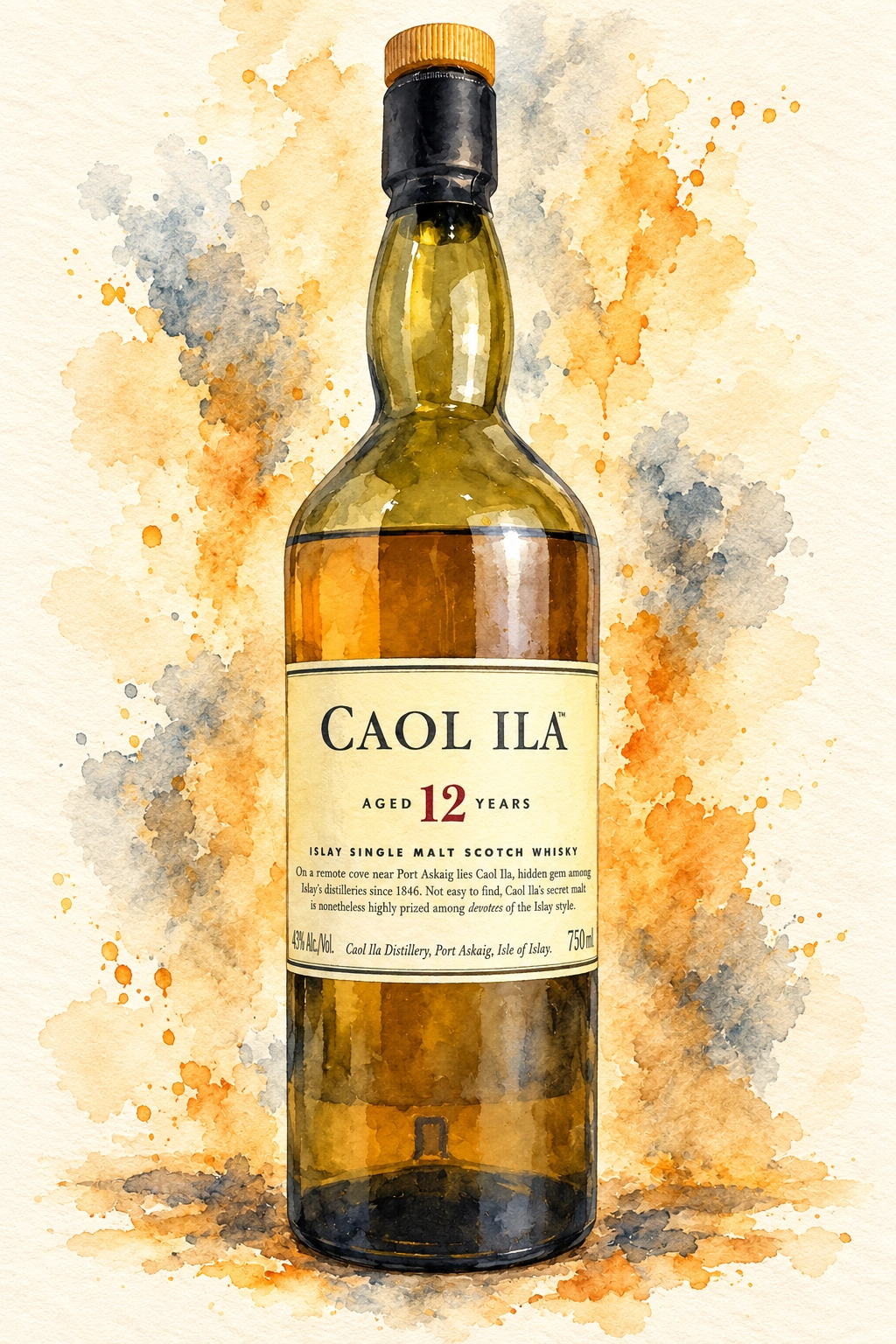
Approved watercolor of Caol Ila Islay Single Malt Scotch 12 Year

Caol Ila Islay Single Malt Scotch 12 Year

W0132 · 86 proof

A 12-year Scotch at 86 proof. Bottling date, bottle size and batch await label verification.

Collection snapshot: October 26, 2026. One physical record. Approved artwork appears only where an exact record or verified release match is available.

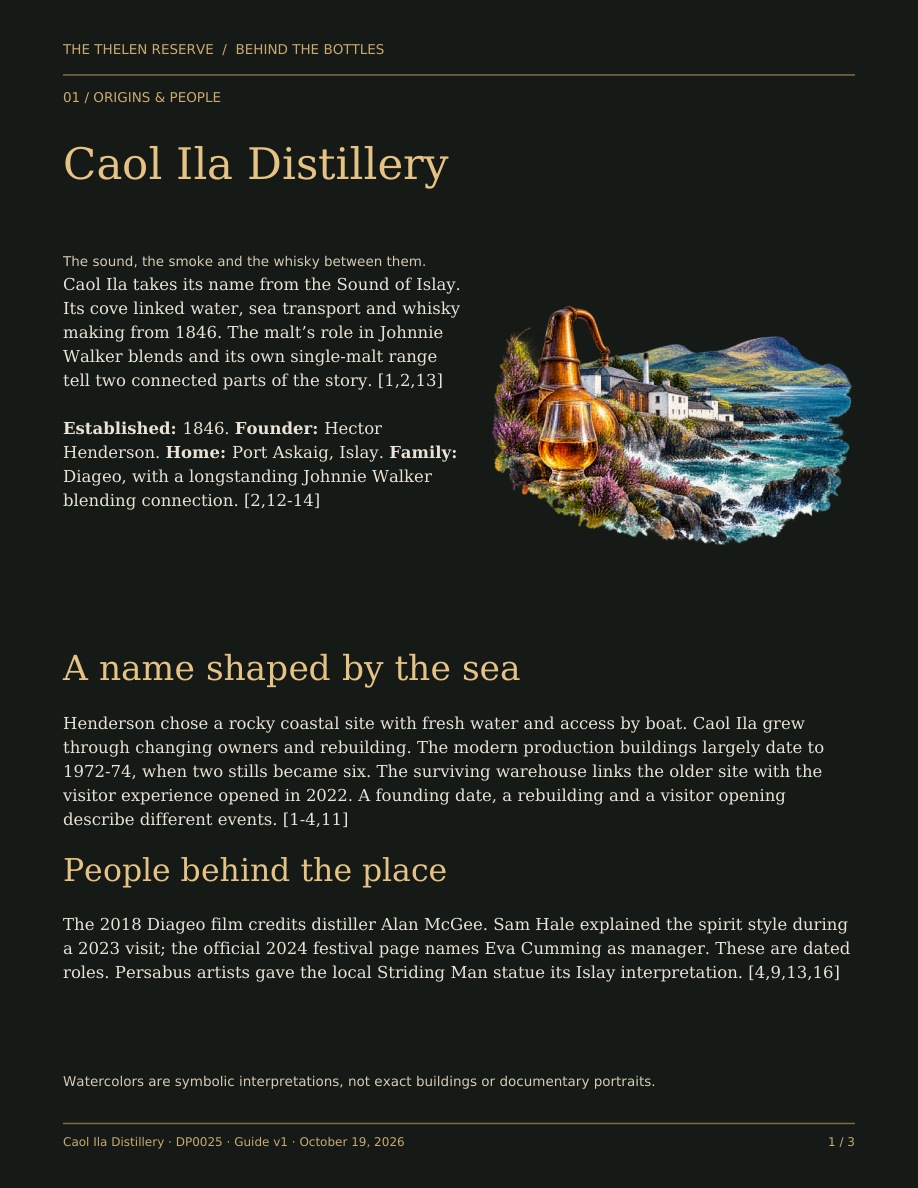
Caol Ila three-page guide cover
The illustrated companion

Caol Ila Distillery, in three pages.

Origins and people, history and places, whiskey and stories. A concise companion to this complete profile, with linked research sources.

Sources & research notes

Researched October 19, 2026. Official brand and company pages, dated announcements and clearly identified supporting sources are distinguished in the research. Product specifications are release- and market-specific.

Research qualifications

  • Research checked October 19, 2026. Official Malts pages, dated Diageo material, issued press releases and clearly identified independent histories support the profile. Product pages describe particular markets and editions; no live stock or visit-slot promise is made.[1][14][2]
  • Early ownership transfers differ across histories: sources variously give 1852 or 1854 for Buchanan and 1857 or 1863 for Bulloch Lade. The narrative retains the sequence without choosing an unsupported exact year. The owner’s 1941–45 wartime range is explicitly attributed; other histories begin the closure in 1942.[3][4][2]
  • The 2022 press pack gives 1989 for a Flora & Fauna reference and 2010 for Moch; other histories place the wider series and public availability differently. Neither date is used as a definitive launch milestone here. Annual unpeated production is dated to the owner’s 1999 account, while earlier experiments are not ruled out.[2][3]
  • The 2011–12 expansion is described as announcement and subsequent work. Published capacity figures of roughly 6.4 or 6.5 million litres are not presented as audited current output. Sam Hale’s 2023 and Eva Cumming’s 2024 credits remain dated.[3][4][9]
  • The 2026 festival specification comes from an explicitly identified company announcement reproduced by Dramface. Its text distinguishes a tequila-cask finish from the underlying Scotch; it does not establish a universal first for the industry. A stale eight-year image caption on a general festival page is not used to identify the 2026 bottle.[10][17]
  • Origins-of-distillation lore, including medieval Islay narratives, is not used to establish a proven birthplace for all Scotch. Symbolic illustrations are not photographs or exact reconstructions. Personal collection details remain outside this editorial master and guide.[2]

Full sources

  1. Official Malts: Caol IlaFounding, name, location, malt/water, six stills, peated/unpeated styles. Note: Brand account; wording and spelling variations retained in qualifications.
  2. Diageo Caol Ila press pack, August 2022Archive-based history, Pibroch, timeline, founding and 1974 reopening. Note: Company-issued PDF hosted by WhiskyExperts. Some chronology and narrative details conflict with other histories.
  3. ScotchWhisky: Caol Ila historyOwnership sequence, DCL1927, expansion, 2002 core introduction. Note: Independent historical reference. Early transfer dates and some timeline details conflict with other accounts.
  4. Whisky Magazine: Johnnie Walker’s home by the sea, Jan 2023Firsthand visit, dated Sam Hale production explanation, rebuilding and 2012 work. Note: Dated independent reporting. Not a current staff roster or capacity audit.
  5. Official Malts: Caol Ila 12 Year Old12-year expression, producer tasting description. Note: UK70cl page is not proof of the size or bottling date of a personal US bottle.
  6. Official Malts: Caol Ila 18 Year Old18-year official expression and producer sensory description. Note: Market-specific listing, not live-stock verification.
  7. Official Malts: Caol Ila 25 Year Old2010 introduction of43% edition after cask-strength2004/2005 editions. Note: Different earlier strengths remain distinct.
  8. Official Malts: 2022 Distillers EditionRefill American/European oak and Moscatel-seasoned finishing. Note: Specific2022edition; no inferred age for unlabeled editions.
  9. Official Malts: Fèis Ìle 2024 13 Year OldRuby Port French oak finish; dated Eva Cumming manager credit. Note: Historic festival release; current availability not verified.
  10. Company announcement: Fèis Ìle 2026, reproduced by DramfaceMay15,2026 announcement of11-year DonJulio tequila-cask finish. Note: Dramface explicitly identifies supplied material; distinguish issuer claims from independent tasting.
  11. Diageo/Story PR: visitor experience reopening, Aug25 2022Opening, Four Corners, retained warehouse visitor transformation. Note: Clearly labeled reproduced issuer announcement. Original corporate URL redirected during research.
  12. Diageo: Our historyFormation ofDiageo in1997; parent chronology. Note: Parent history is not distillery founding.
  13. Diageo: Scotch from Scotland to the world, 2018Four Corners announcement, JohnnieWalker connection, AlanMcGee credit. Note: Dated staff and investment statements.
  14. Official Malts: Visit Caol IlaAddress, location, current visitor offering and separate facility roles. Note: Opening hours and transport can change; consult official booking information.
  15. Official Malts: Ambrosial FeastUnpeated release and named cask categories. Note: Release-specific; no generalization to all Caol Ila.
  16. Persabus artists: Caol Ila Striding ManArtist names and collaboration withDiageo/BRC. Note: Creator’s account; retrieved search evidence, full page intermittently unavailable.
  17. Official Malts: Islay Festival 2026Festival context and cultural programme. Note: General page retains an eight-year image caption; not used as2026bottle specification.
  18. Scotch Whisky Association: Single MaltCategory ingredients, single distillery and copper pot still batch distillation. Note: Category explanation, not a particular CaolIla recipe.
  19. Scotch Whisky Association: FAQsPeat during malt drying, oak maturation and bottle-age explanation. Note: General production context, not product-specific tasting claims.
  20. ScotchWhisky: Port EllenMaltings supplying Islay sites, distinct fromPortEllen distillery. Note: Historical background; current source confirmed through officialCaolIla brand page.
↑