A maker’s and selector’s perspective
The custom barrel program invites people to explore individual casks. Choosing mature whiskey and a particular finish becomes another way to shape a Bull Run expression.[6]
Last updated Last researched
Portland, Oregon / Single malt & barrel finishing
Oregon grain. A wider world of barrels.
Bull Run tells an Oregon story through more than one kind of whiskey. A Portland single malt sits beside corn-led American whiskey, bourbon, rye and an inventive finishing program. Its character emerges from grain and water, but also from the people who choose casks and the collaborators who give those casks another life.[14][24]
The custom barrel program invites people to explore individual casks. Choosing mature whiskey and a particular finish becomes another way to shape a Bull Run expression.[6]
The single-malt account begins with beer: malted barley suggested a regional whiskey. Klamath Basin grain, new American oak and Western Oregon seasons became the producer’s framework for expressing place.[3]
Bull Run takes its name from Portland’s watershed. Water connects the brand to its home while grain, casks and selection create different expressions within the same portfolio.[2]
Founder & head distiller
The founder and head distiller previously brewed at McMenamins and helped establish House Spirits in 2004. His professional distilling experience dates to 1998.[1]
Director of operations
Joining in 2013, she brought wine-tasting-room experience, later moving into operations and the custom barrel program.[1]
Hospitality & production
Since 2018, Kadell’s role has spanned tasting rooms, events and production.[1]
Design & multimedia
Design and multimedia give the company’s whiskey stories their public visual voice.[1]
Collaborating distiller
Bull Run describes years of exchanging ideas with Stone Barn’s Degens. Their cask experiments eventually led to a blend built from two Oregon grain traditions.[23]
Follow the people, partnerships and documented releases. Dates of reporting and partner offerings remain distinct from founding and release dates.
Medoff establishes Bull Run with an ambition to make an Oregon malt whiskey. Founding the company begins a patient production story.[1]
Jennifer joins the company, bringing wine-country tasting-room experience. The way people encounter the spirits develops alongside the whiskey.[1]
A later producer retrospective credits Cana’s Feast with helping launch the first barrel-finished whiskey. A local winery relationship becomes part of Bull Run’s vocabulary.[5]
Bull Run dates its work with Seelbach’s to 2018. The partnership connects particular barrels and finishing ideas with a wider audience.[18]
A delivery announcement lists Oregon single malt, bourbon, rye, maple whiskey and American whiskey together. This records an existing range, not simultaneous launch dates.[14]
A nine-year Oregon Oak Single Malt is announced for the Oregon Whiskey Festival. Grain, water and regional wood become an explicitly Oregon-led release.[15]
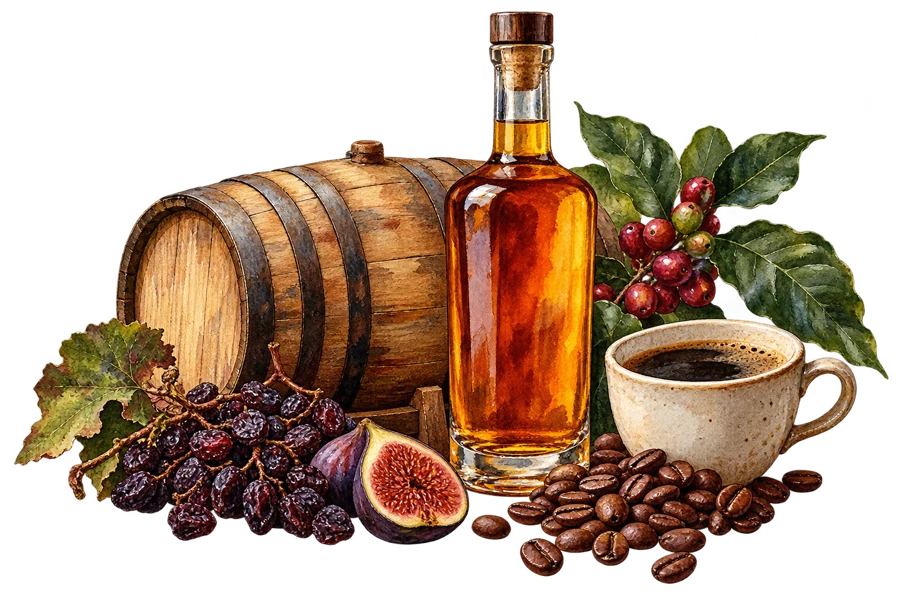
A producer post describes eight-year single malt with 32 months in Madeira casks, then a Relevant Coffee collaboration. Finishing opens conversations beyond whiskey.[16]
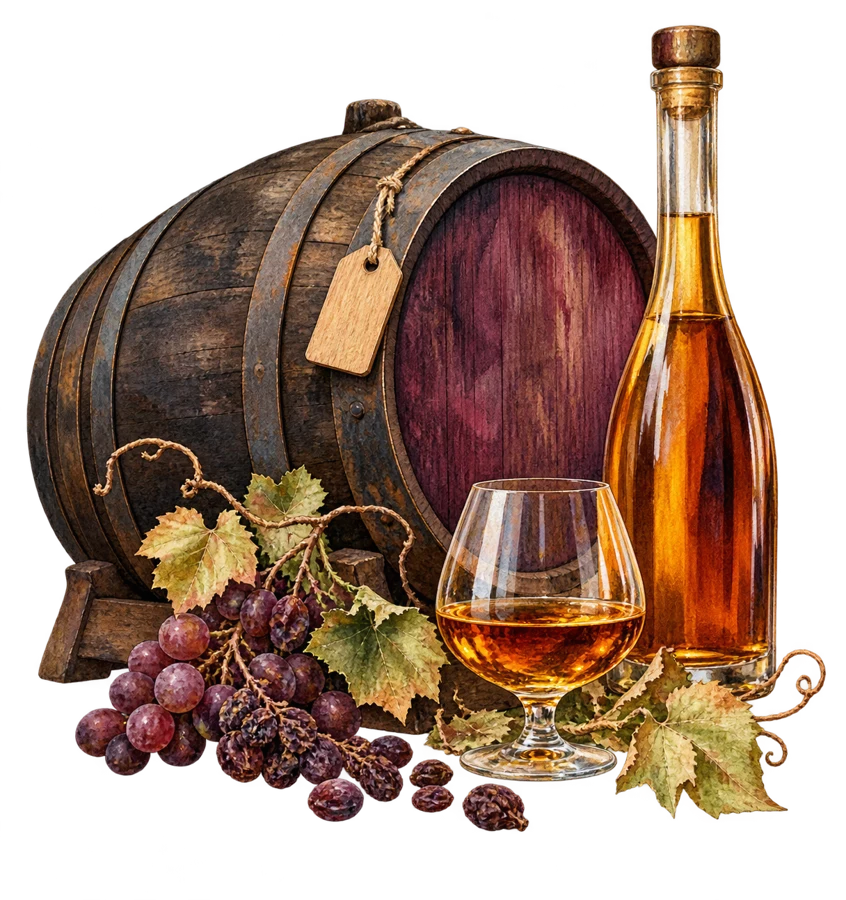
Bull Run showcases a ten-year bourbon selected by Seelbach’s after Cognac-cask finishing. A custom label and specific cask choice turn the program into a particular release.[17]
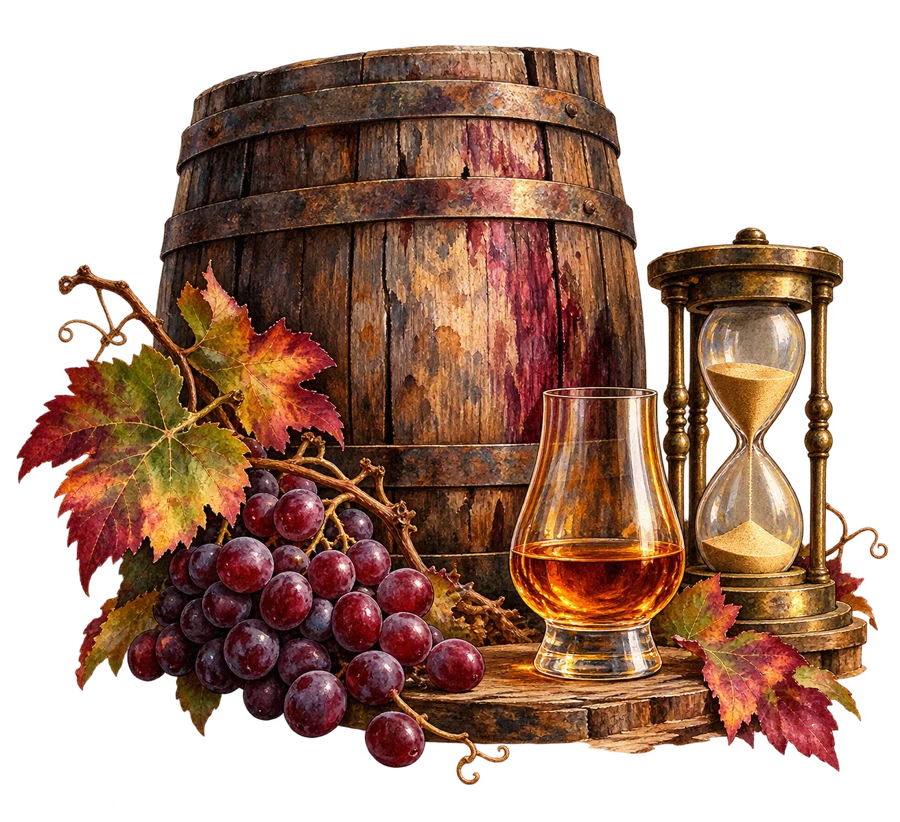
A Seelbach’s selection pairs seventeen-year American whiskey with Oregon Pinot Noir casks. The reported 120.94 proof belongs to this release.[18]
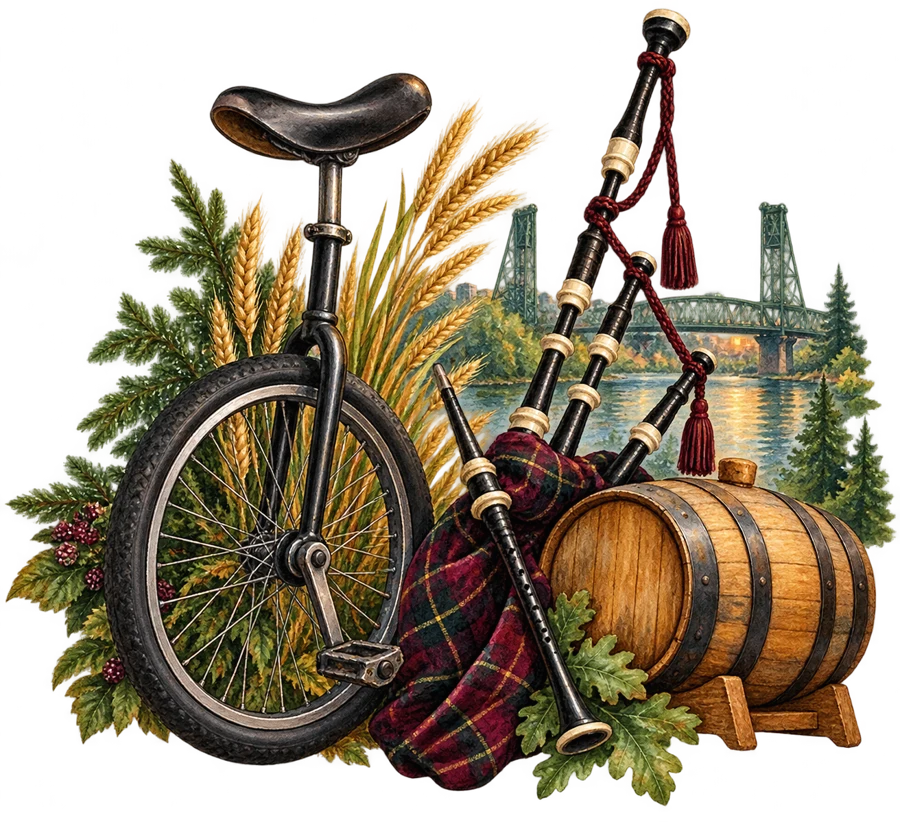
A rum-finished rye is announced for Portland Weird Fest, with a portion of bottle proceeds supporting Weird Portland United. Whiskey meets a local cultural institution.[19]
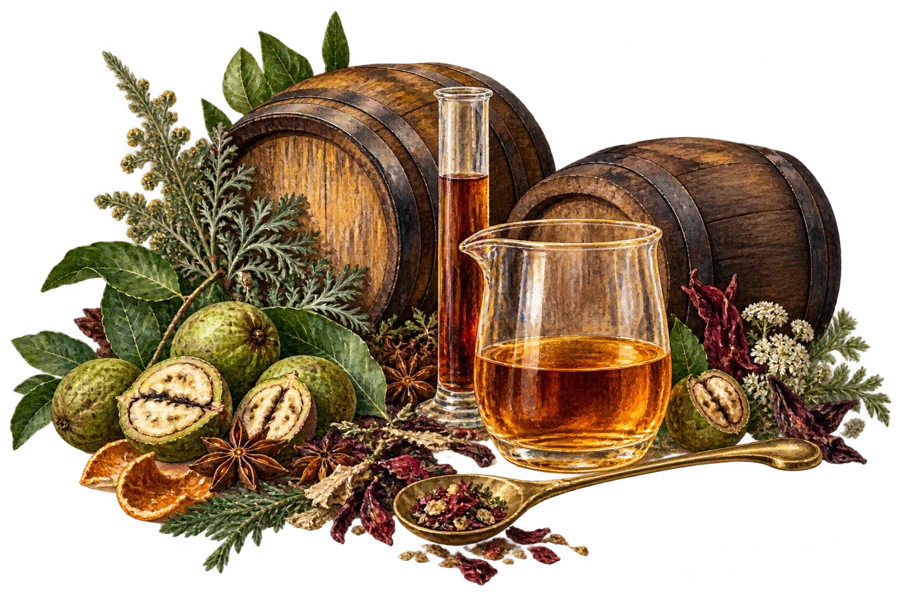
The third Stickmen collaboration combines 75% Chinato-vermouth-finished bourbon with 25% nocino-finished bourbon. Cana’s Feast and Stone Barn supply the respective casks.[20]
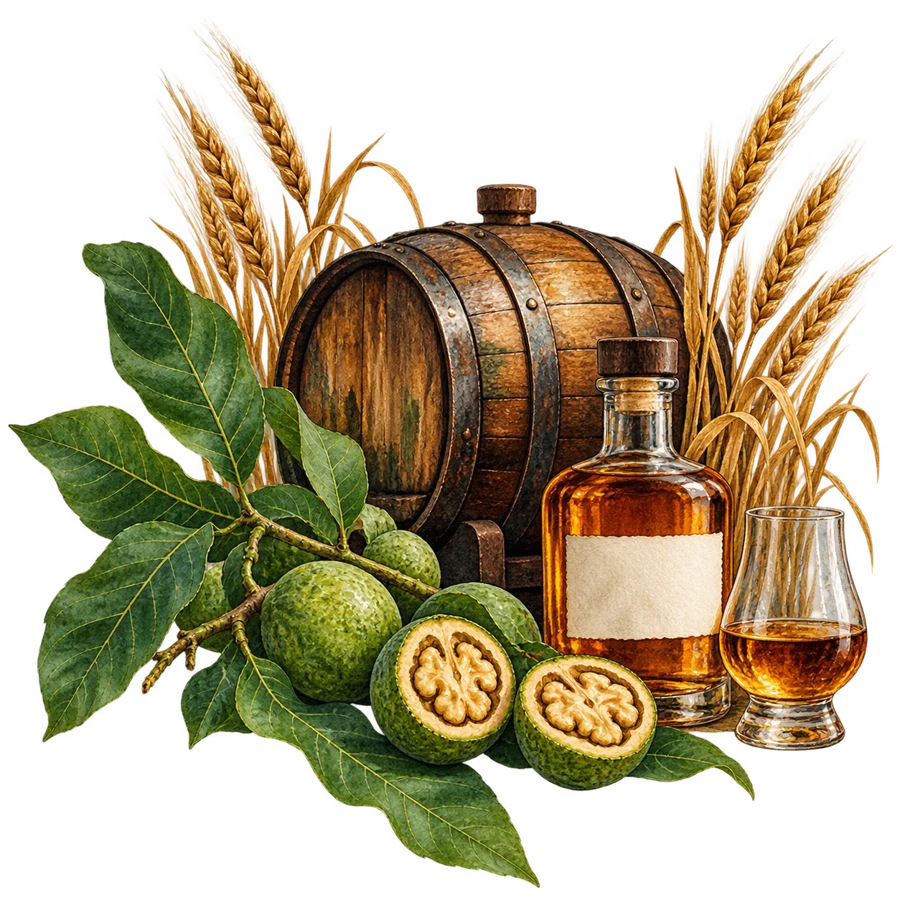
A Bitters & Bottles post features seven-year rye finished in Stone Barn nocino casks. The producer identifies it as its first nocino-finished rye.[21]
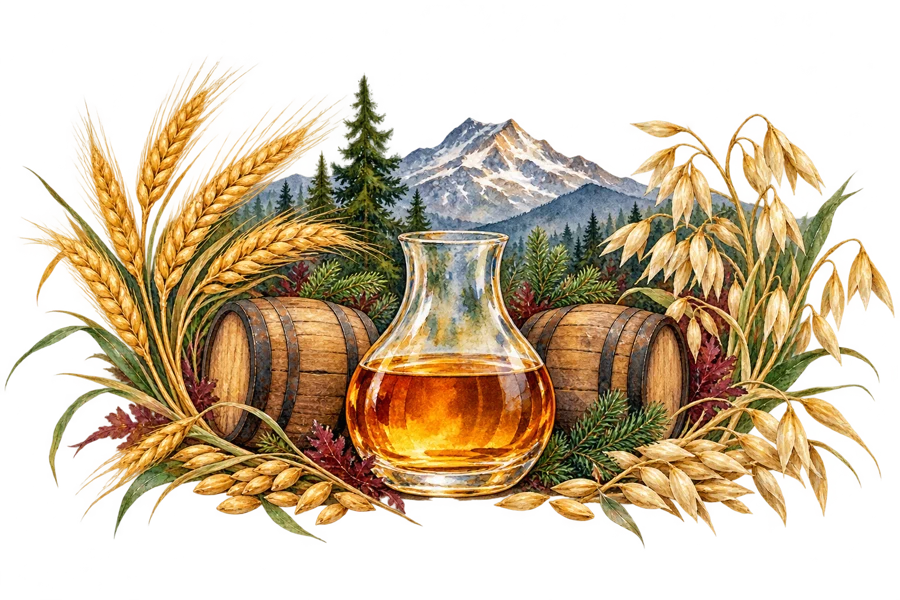
Bull Run and Stone Barn announce a single-malt-and-oat collaboration for the Oregon Whiskey Festival. Regional ingredients connect two independent distilleries in one new expression.[22]
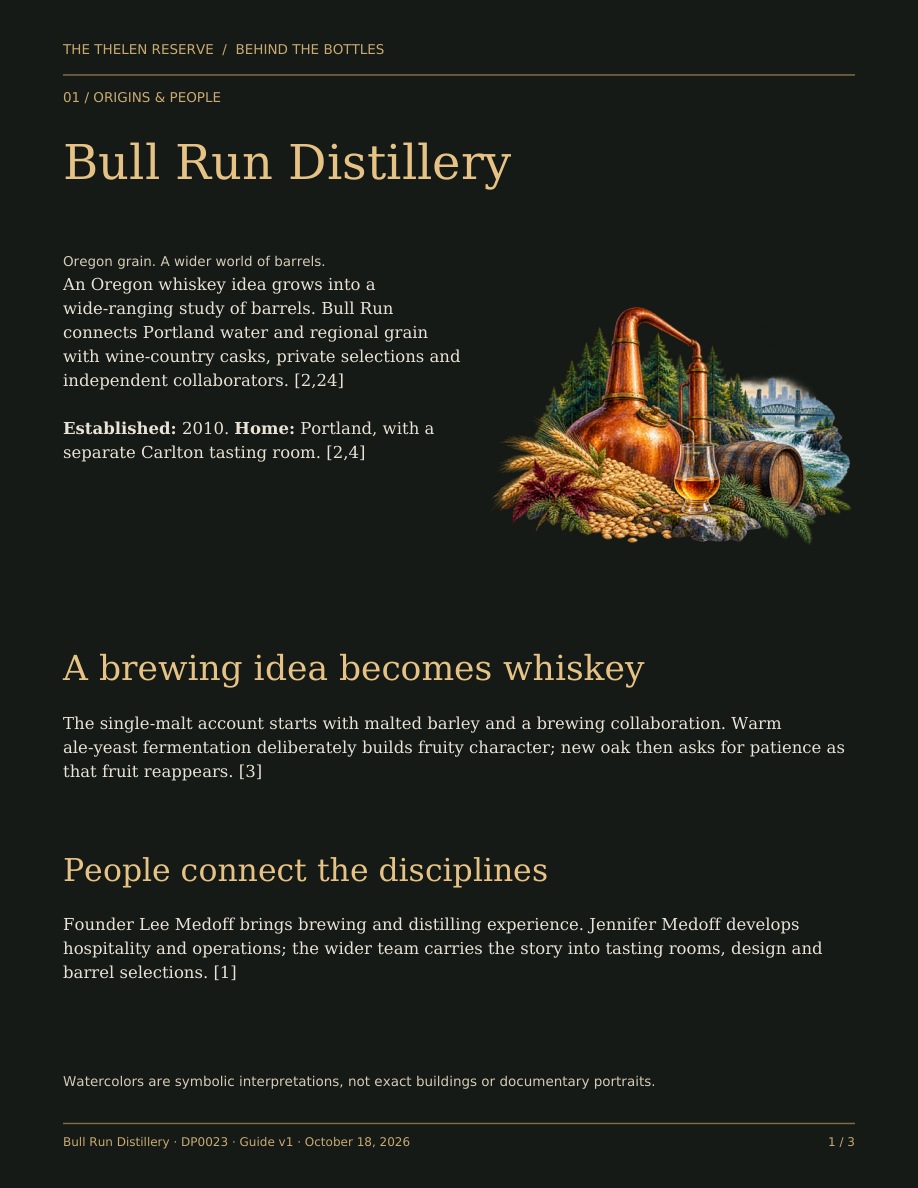
Original watercolor interpretations accompany the history. Buildings, objects and scenes are symbolic, not documentary reconstructions.
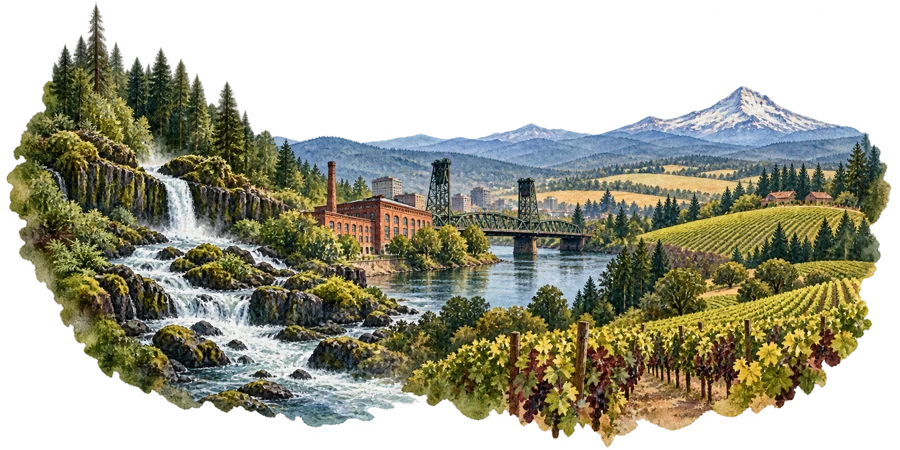
The distillery and tasting room are listed at 2259 NW Quimby Street. This is the production home; its tasting counter connects visitors with a much wider lineup than single malt alone.[4]
The second visitor location is in downtown Carlton. Bull Run explicitly distinguishes it from the Portland distillery. Its setting helps explain the ease of conversations with neighboring wine makers.[4]
Portland’s water source gives the company its name. The connection expresses a sense of place without making every whiskey’s grain or upstream distillation local.[2]
The Oregon single-malt account identifies malted barley from the Klamath Basin. That grain origin belongs to the single-malt story, rather than a universal mash bill.[22]
Stone Barn’s oat whiskey supplies the other side of Malted Oath. The collaboration links a valley crop to Bull Run’s malt-led whiskey through blending.[22]
Stone Barn describes its own regional-fruit and grain distilling operation. It is a collaborating producer with its own identity, not another Bull Run facility.[25]
Trace the producer, its expression families and the distinct roles of collaborators and historical personnel.
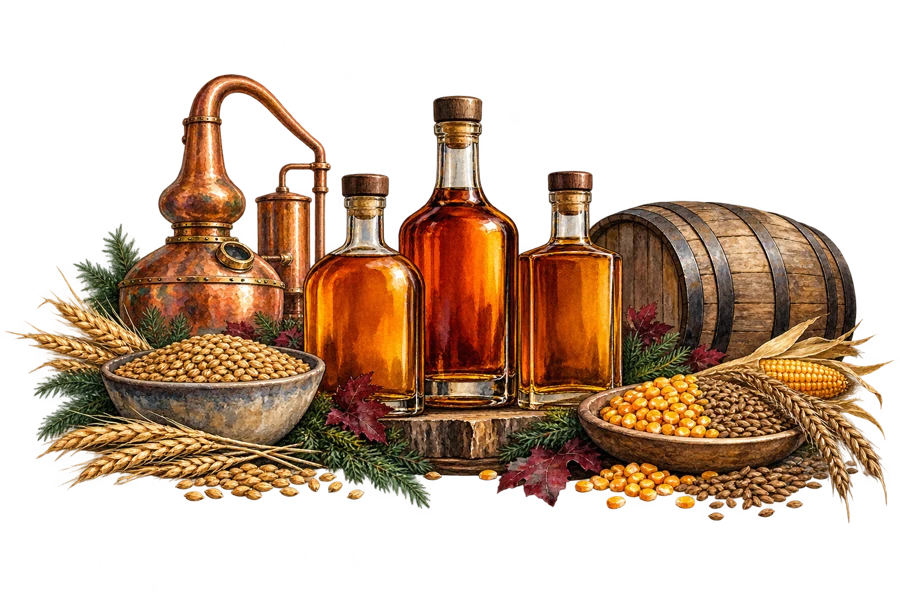
Own Oregon whiskey
The malt-led expression is the clearest route into Bull Run’s original Oregon ambition. The 2022 Oregon Oak release extends that grain-and-place idea into regional wood.[15]
Selected portfolio
These are distinct expression families. Differences in grains, casks, age and bottling strength matter; one Bull Run label does not establish one common whiskey origin.[7][9][12]
Wine-cask relationships
The producer names Cana’s Feast, Brooks, Hyland, J. C. Somers, Flâneur, Domaine Serene and Domaine Drouhin among past cask partners. This is a selected collaboration history.[24]
Selection & retail partner
The relationship centers on selecting individual releases and connecting them with customers. The 2024 Cognac-finished bourbon illustrates this role without making the retailer a distiller.[17]
Cask & grain collaborator
Nocino casks and, later, oat whiskey create two different kinds of collaboration. Cask exchange and blending are separate relationships, each with its own release context.[23]
Release collaborator
The 2026 release is described as the third collaboration. Its identity comes from blending two differently finished bourbons, rather than adding beer to whiskey.[20]
Private selections
A retailer’s barrel picks include a nocino-finished rye and a Pinot-finished American whiskey. Their specifications identify individual selections rather than permanent house recipes.[21]
Selected-barrel community
The producer presents a community around Medoff-selected barrels and invites interest in a relaunch. The page does not establish a current membership calendar.[26]
Recipes, fermentation, oak and mingling shape the whiskey. Keep every specification tied to the expression and edition named.
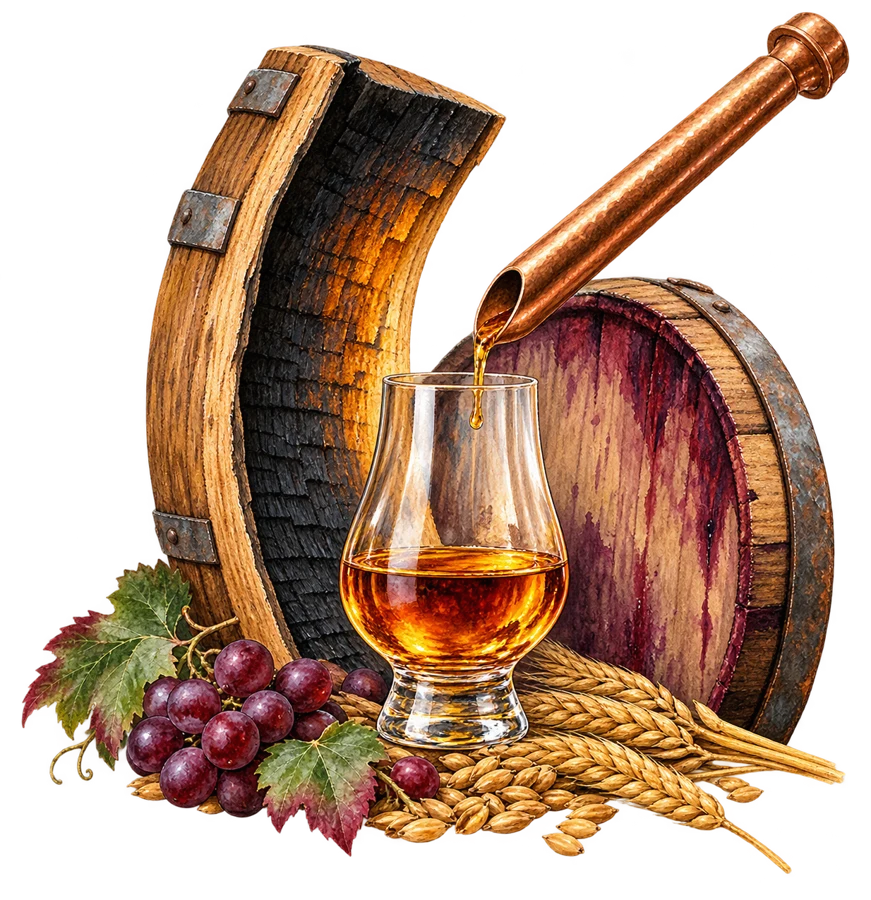
Bull Run’s historical single-malt account credits Burnside Brewing with making its wash. At the distillery, warm fermentation with ale yeast intentionally encouraged fruity esters. This is a dated process account, not proof of an unchanged supplier today.[3]
For its single malt, the producer describes waiting for fermentation-derived fruit character to reemerge through new-oak maturation. Tasting becomes a readiness decision rather than merely watching a calendar.[3]
The Barrel Strength American Whiskey page describes 96% corn and 4% barley matured in former bourbon barrels. Those figures belong to that expression and cannot replace another release’s recipe.[7]
The bourbon page lists 65% corn, 25% rye and 10% malted barley, with charred new American oak. A family recipe does not establish the batch or distilling plant of every historical bottle.[9]
The barrel-strength bourbon page describes bottling without cutting, yet shows both a header proof and a different average. The bottle or exact release record remains the place to establish strength.[10]
The generic Pinot page describes up to a year in wine casks. A 2026 retailer selection instead receives 39 months. Finishing duration must stay attached to the exact expression being discussed.[8][21]
Bull Run describes adding Vermont maple syrup that had itself rested in whiskey barrels. This is an infusion, so its identity differs from whiskey transferred only into an emptied finishing cask.[11]
The custom program gives groups and stores a route into samples and personalized selections. Choosing a cask, bottling strength and presentation can create distinct releases without changing the producer’s identity.[6]
Medoff links access to Oregon wine barrels with the development of the Pinot-finished whiskey. In his account, French oak contributes dryness that helps balance the whiskey’s sweetness.[24]
The 2023 Madeira story continues into Relevant Coffee’s whiskey-washed cold brew and a whiskey-aged-bean collaboration. A shared flavor curiosity travels between a distillery and a coffee maker.[16]
The Unipiper release ties rum-finished rye to a festival and a nonprofit that celebrates local eccentricity. Its community purpose belongs to that dated project.[19]
The 2026 Stickmen blend brings an herbal wine-cask path together with a walnut-liqueur-cask path. The release turns two separate maturation decisions into a blending decision.[20]
The 2026 Pinot Noir Brandy Finish post traces Seelbach’s collaboration to 2018 and presents an eight-year, 114.5 proof bourbon. That is a different finish from Pinot wine casks or Cognac casks.[28]
Malted Oath connects Bull Run’s Klamath barley with Stone Barn’s Willamette oats. Regional identity is expressed through named ingredients and distinct producers, not a claim that all Bull Run spirits share a source.[22]
The 2021 portfolio announcement places single malt, bourbon, rye and finished American whiskey side by side. Production, selection and finishing can coexist under one brand while remaining different kinds of work.[14]
A curated reading of the whiskey family, selected for its role in the story. This is not an exhaustive current catalog.
A malted-barley expression presented with new charred American oak. The producer’s 92.2 proof page is a snapshot, not an immutable specification for every batch.[3]
The nine-year release announced for the 2022 festival provides a focused example of Bull Run’s Oregon-grain, water and wood ambition.[15]
The current product page describes 17 year corn-led whiskey with Oregon Pinot finishing at 95.5 proof. Other private selections have different strengths and finishing periods.[8]
The official shop lists 90 proof and four-plus years, while the product page shows 86.8 proof. Treat these as different published presentations rather than silently choose one for every bottle.[13]
The producer’s ten-year Seelbach’s highlight demonstrates the custom barrel program. An individual selection supplies a specific route through the bourbon range.[17]
Named for the town of the second tasting room, this rye-led expression has different age and proof figures across the official shop and product page. Exact editions need their own evidence.[27]
A corn-led whiskey infused with barrel-aged Vermont maple syrup offers a different kind of experiment from wine- or spirit-cask finishing.[11]
The producer lists 25% thirteen-year Oregon Oak Single Malt and 75% six-year organic oat whiskey, at 100 proof. This collaboration has 276 bottles and remains distinct from either component on its own.[2]
2 physical bottle records connect this story to the collection. Each keeps its own proof, barrel, batch, pick and release details.
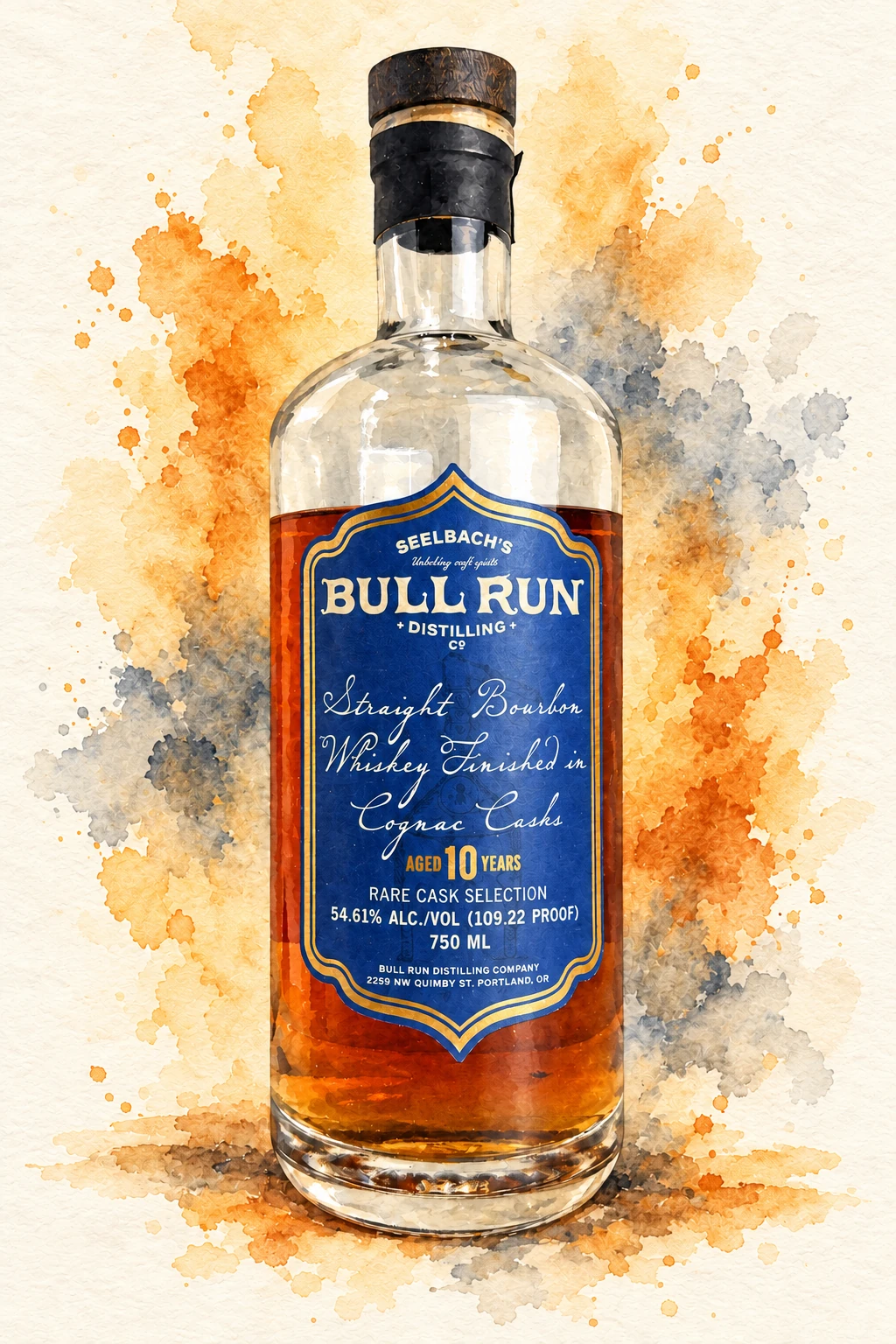
W0123 · 109.22 proof · Pick Seelbachs · Bottled / release detail 10-year age statement; Rare Cask Selection, selected by Seelbach's; 109.22 proof / 54.61% ABV / 750 mL; Cognac cask finish. Selector's exact listing reports 18 months finishing. Bottled/release day unknown.
Recorded ten-year Cognac-finished Seelbachs selection. No barrel or bottle number is recorded.
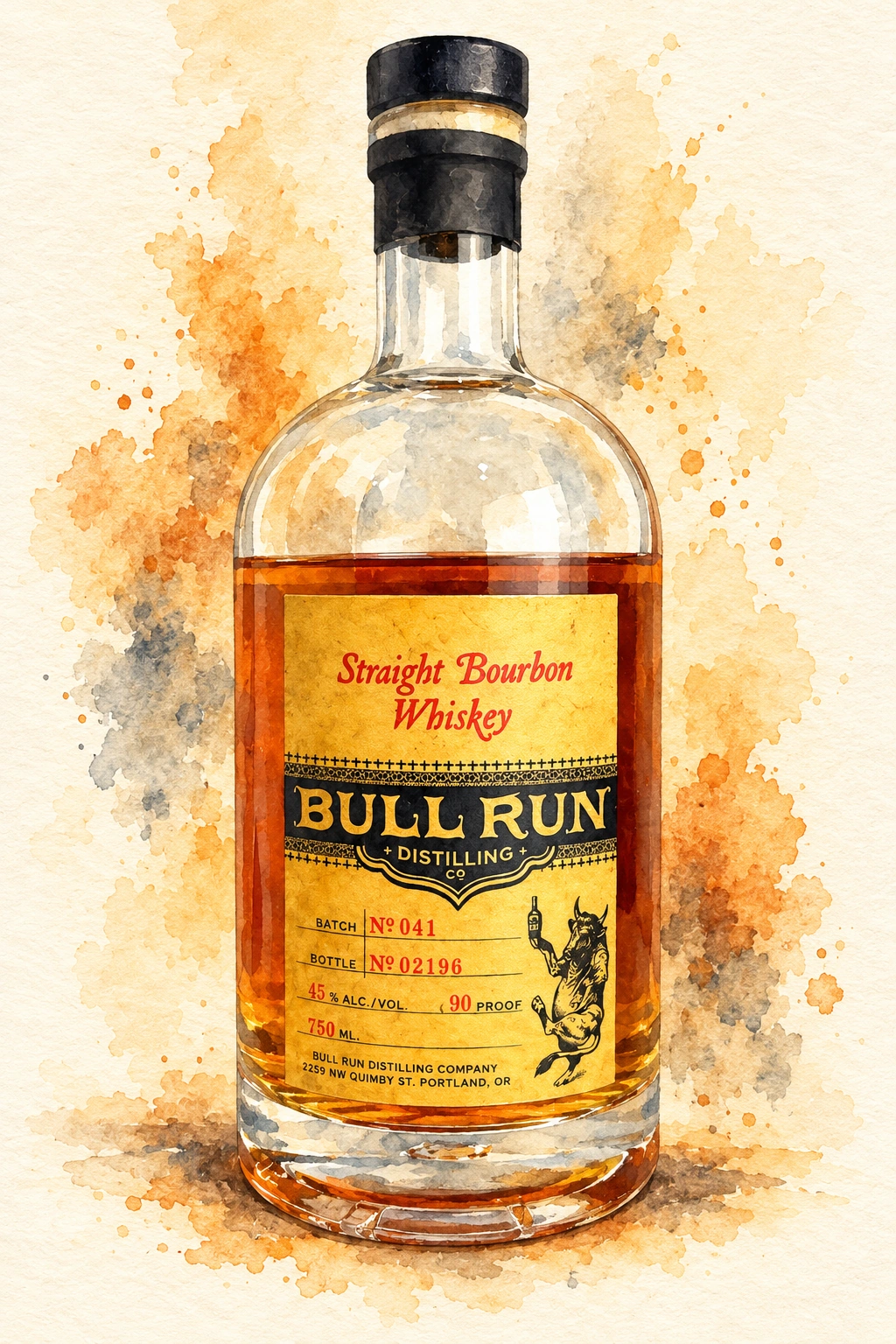
W0124 · 90 proof · Bottle 2196 · Batch 41
Labels show batch 041, bottle 02196, 90 proof / 45% ABV and a July 2019 release. The inventory stores batch 41 and bottle 2196 numerically. No barrel, age or pick is inferred.
Collection snapshot: October 23, 2026. Two physical records, each linked to its own inventory entry. Batch and proof distinctions are preserved.
Origins and people, history and places, whiskey and stories. A concise companion to this complete profile, with linked research sources.
Researched October 18, 2026. Official brand and company pages, dated announcements and clearly identified supporting sources are distinguished in the research. Product specifications are release- and market-specific.