TJ THELEN'S COLLECTION
The Thelen Reserve
Behind the Bottles · Indianapolis, Indiana

Backbone
Bourbon

Last updated Last researched

Strength of character. Built barrel by barrel.

Backbone is an Indianapolis whiskey producer whose creative work begins with the barrel: choosing mature spirit, finding a blend, and deciding when a finish adds something worth keeping. Its story follows a company learning how much character can fit inside a bottle.

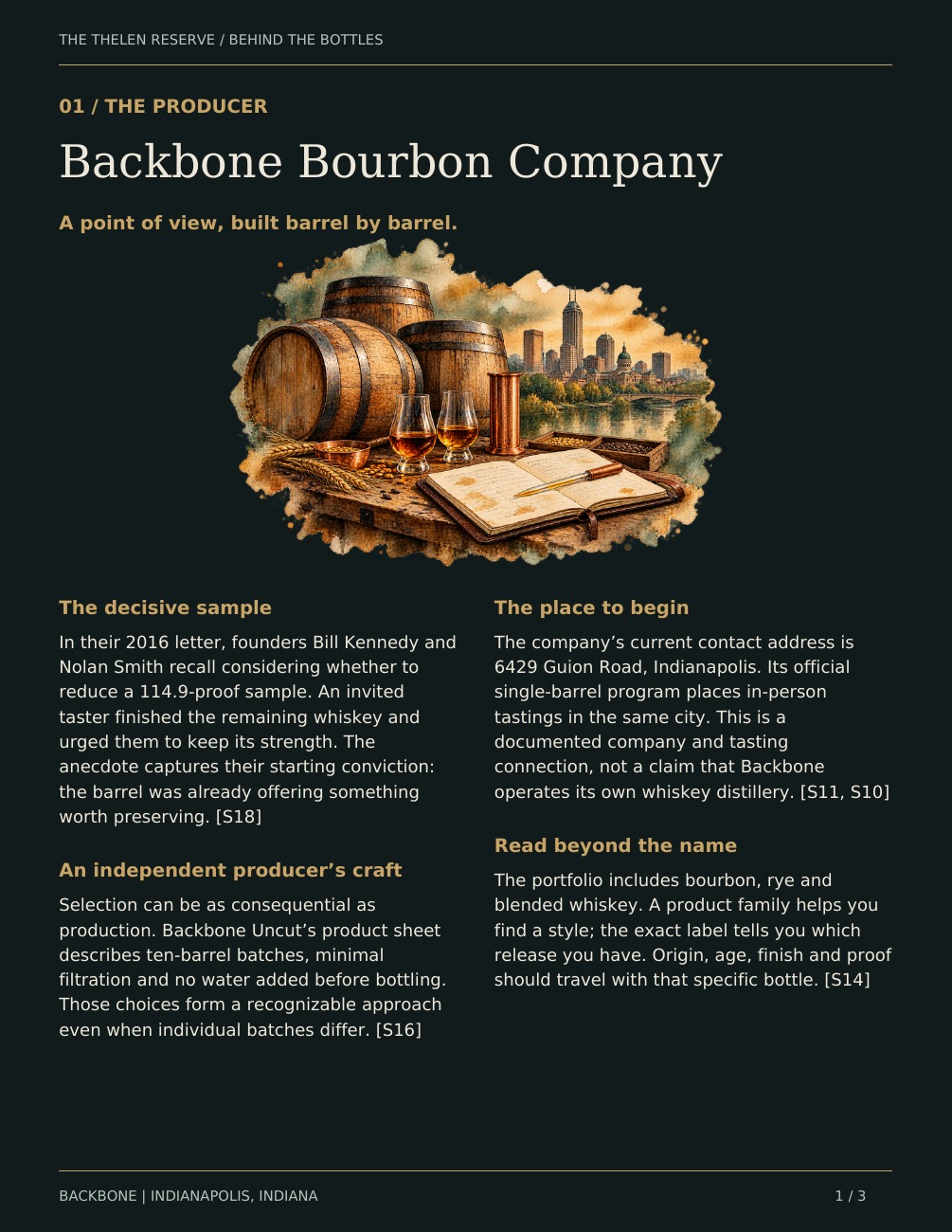
Barrel selection and Indianapolis skyline, symbolic watercolor illustration
2014

Company formed

Bill Kennedy & Nolan Smith

Cofounders

Sourcing & blending

Producer’s role

Indianapolis, Indiana

Company and tasting connection

01 / Origins & people

Conviction before convention.

A producer with a point of view

Bill Kennedy and Nolan Smith built Backbone around whiskey sourced from other distilleries. Their role is selection, blending, finishing and presentation. A bottle can express its producer’s decisions while carrying the grain recipe and distillation history of another place.[1]

Frustration becomes a name

The founders trace the name to an Indiana supplier that ended their relationship in pursuit of larger representation. They wanted more backbone from that partner. The word became their own statement of intent: stand behind the product, trust the whiskey and give it enough strength to speak clearly. Their account places early barrel investment in 2011 and the formal company in 2014.[1]

Two founders represented by empty chairs, symbolic watercolor illustration
02 / The illustrated history

Built one release at a time.

The first Uncut batch, symbolic watercolor illustration
December 2010, in the anniversary account

The first Uncut batch

Backbone’s Decade Down page dates its first Uncut release to December 2010. This is the company’s most precise first-batch claim, although other official pages place early sales in 2011 or 2012. The sensible reading is an early brand period followed by a later company formation, with the first-sale chronology still imperfectly reconciled.[2][3][1]
Bone Snapper brings the rye, symbolic watercolor illustration
2011

Bone Snapper brings the rye

The Bone Snapper product sheet dates the rye’s introduction to 2011. It describes a deliberately youthful whiskey, targeting about thirty months of maturation and bottled at 108 proof. Its 95% rye recipe gives the growing portfolio a grain-led alternative to bourbon, with enough presence for cocktails as well as sipping.[4]
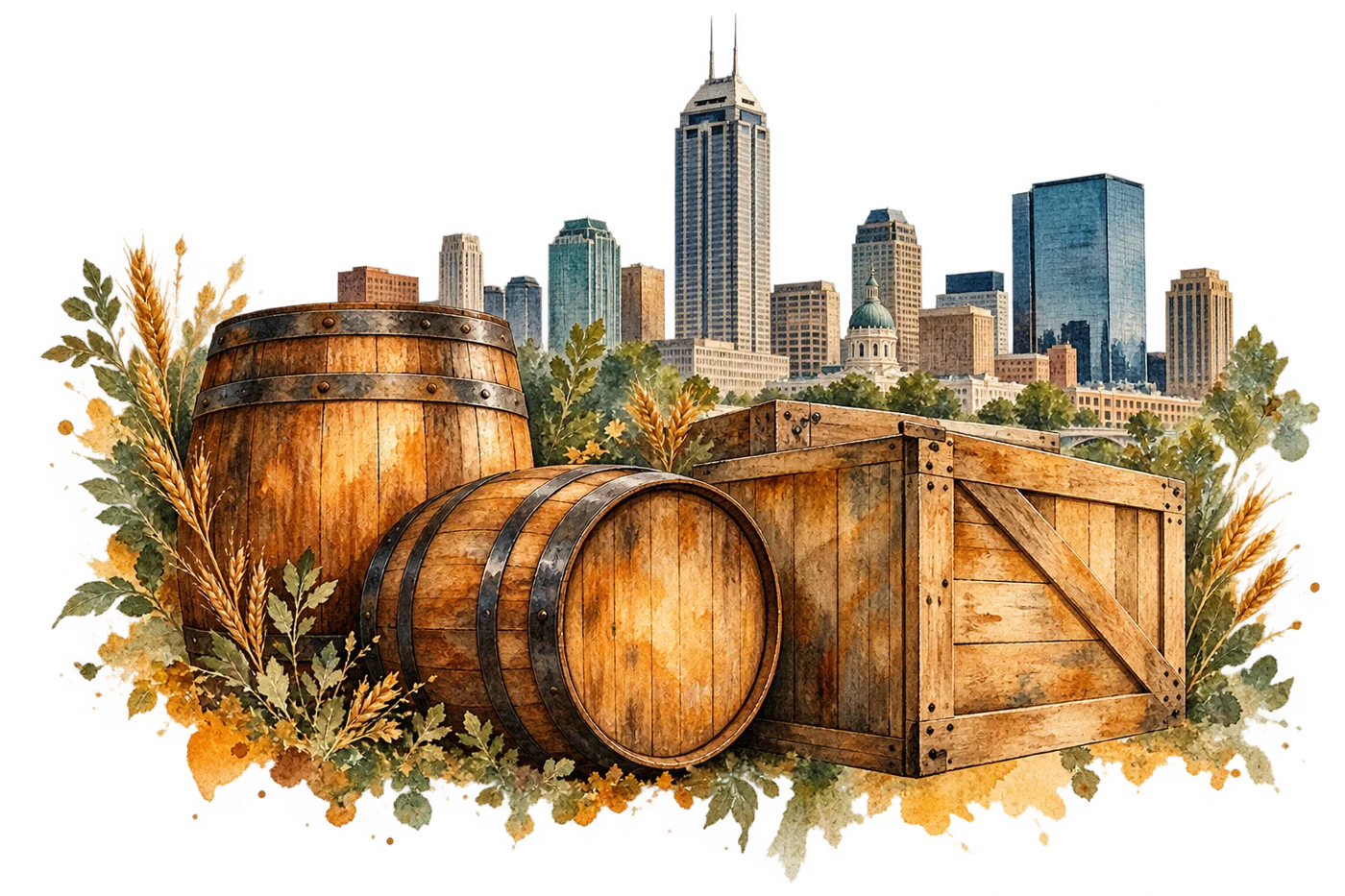
A company takes shape and reaches outward, symbolic watercolor illustration
2014

A company takes shape and reaches outward

The founders identify 2014 as the formation of Backbone Bourbon Company. In their historical account, sales had been confined to Indiana until the middle of that year, when distribution began expanding into other states. This is the firm company milestone to keep separate from the earlier bottle launches.[1]
Old Bones establishes an older tier, symbolic watercolor illustration
2016

Old Bones establishes an older tier

Backbone dates Old Bones Bourbon 10 Year Reserve to 2016. Its premise is selective release rather than a guaranteed stream of inventory: bourbon must be at least ten years old and satisfy the producer’s standards before receiving the name. Age becomes a threshold, while barrel selection remains the deciding judgment.[5]
A Scottish detour opens another door, symbolic watercolor illustration
2017

A Scottish detour opens another door

A trip to Scotland in 2017 introduced the team to single-grain Scotch that they believed would appeal to American whiskey drinkers. The resulting Auld Blow-In documentation identifies fourteen-year-old Port Dundas spirit bottled at 110 proof. This is a sourcing story across an ocean, extending the company’s curiosity beyond bourbon and rye.[6]
Reserve rye makes time visible, symbolic watercolor illustration
By autumn 2019

Reserve rye makes time visible

The official Bone Snapper X-Ray sheet reproduces an autumn 2019 review of Batch 2, establishing the reserve expression by then. The producer explains that these barrels share the original rye’s recipe but mature at least four years. It is a useful comparison: keep the grain foundation and let additional time change the result.[7]
Fifteen-year bourbon joins the story, symbolic watercolor illustration
By summer 2021

Fifteen-year bourbon joins the story

The Old Bones 15 Year sheet documents a summer 2021 review of Batch 1. The sheet’s Batch 2 specification identifies Frankfort, Kentucky distillation and 107 proof at barrel strength. That combination demonstrates why age and proof must be read separately. A mature whiskey need not carry the highest proof on the shelf to retain its barrel character.[8]
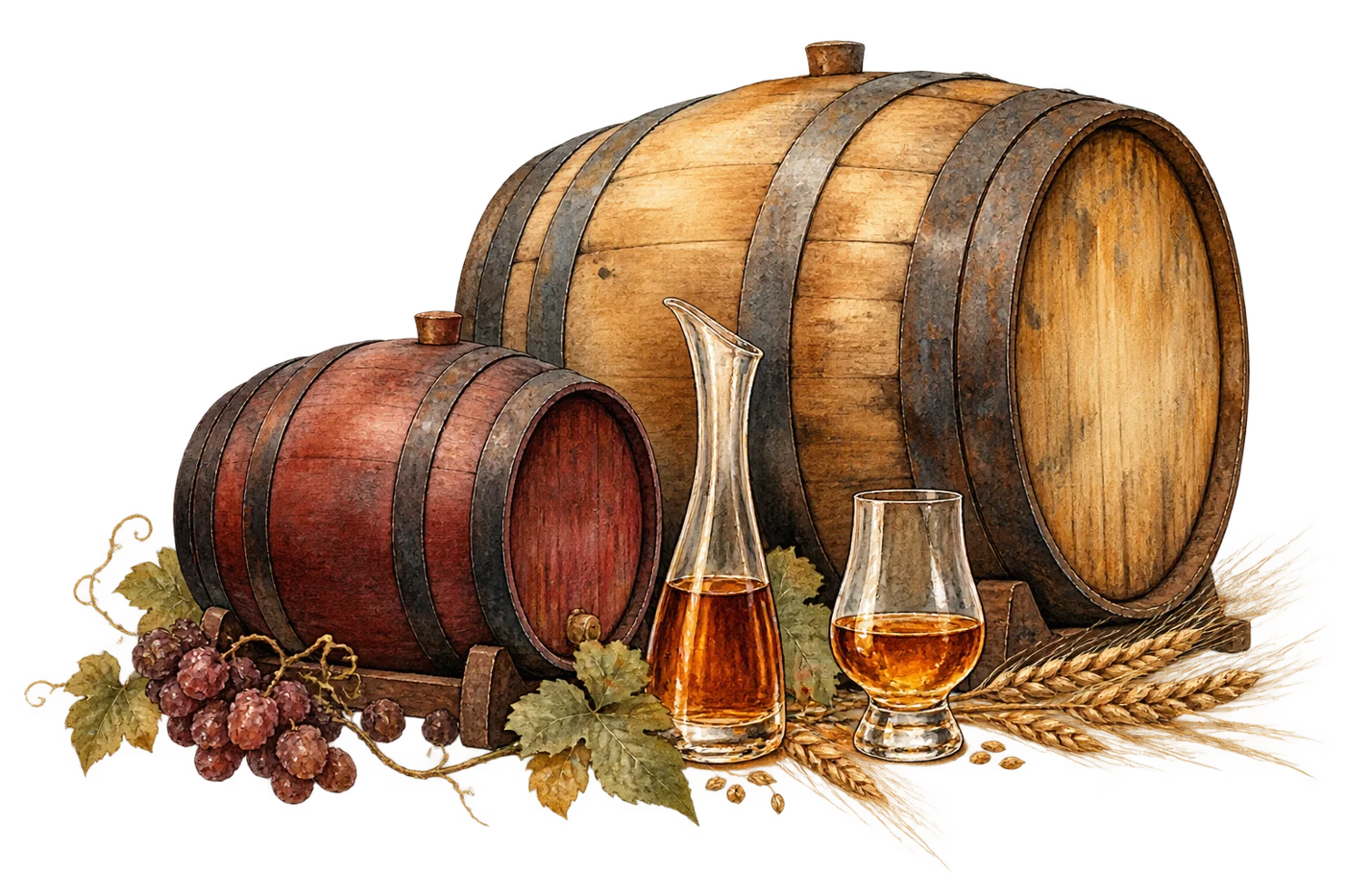
Decade Down celebrates through blending, symbolic watercolor illustration
2022 batch

Decade Down celebrates through blending

The published 2022 Decade Down specification brings together bourbon aged five to seven years. A quarter of the bourbon spent twelve months in sherry barrels, and the finished release is listed at 110 proof. The name marks the brand’s anniversary. It does not mean that the whiskey itself is ten years old.[2]
Old Bones follows barrels to Kentucky, symbolic watercolor illustration
April 2024

Old Bones follows barrels to Kentucky

An April 2024 company announcement introduces Old Bones 10 Year Reserve Batch 9K, sourced in Bardstown, Kentucky. The release makes the sourcing model particularly clear: the product family can remain recognizable even as the origin of a particular batch changes. The producer’s standards connect the editions; a single permanent distillery does not.[9]
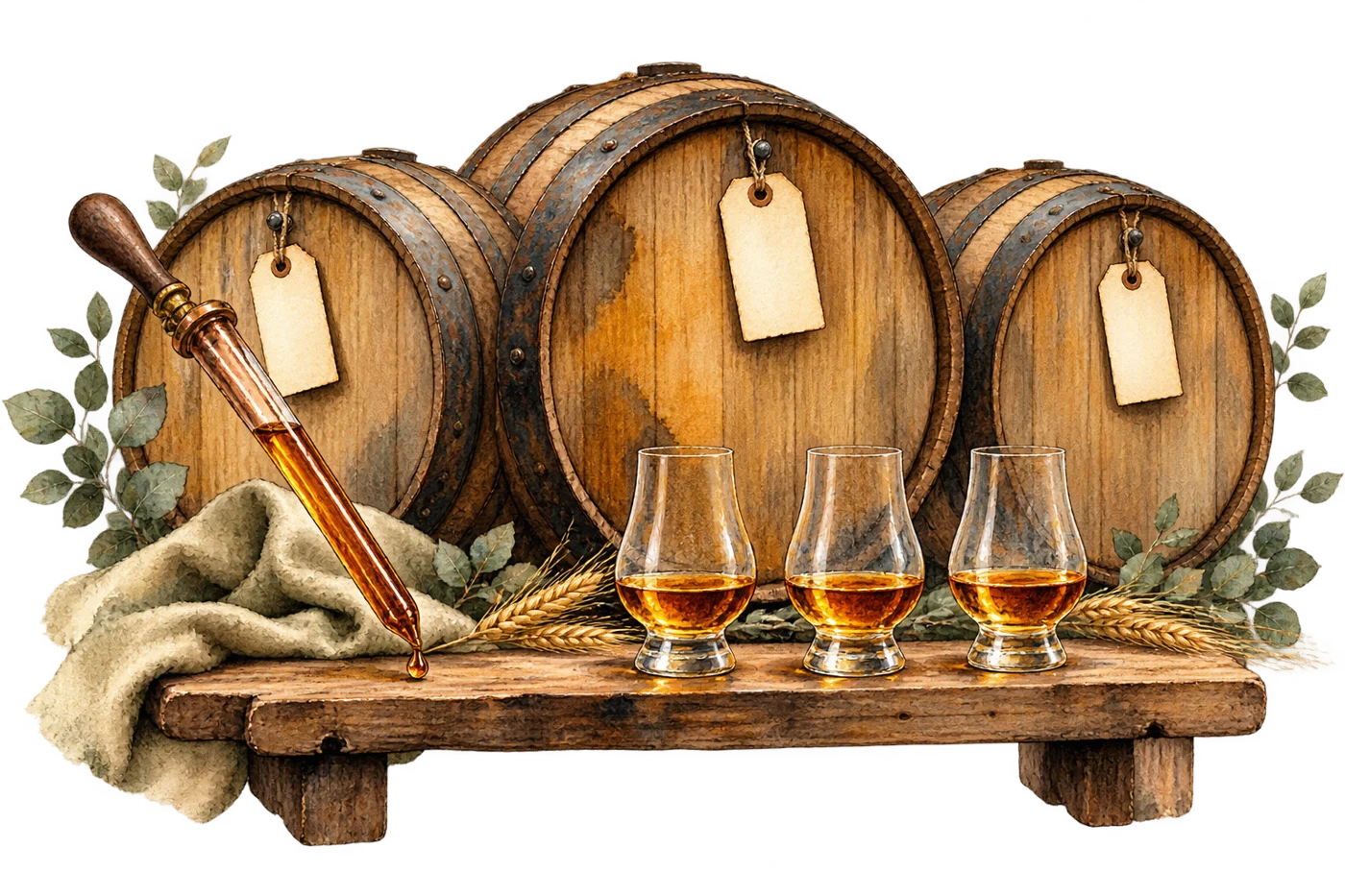
The barrel becomes a shared decision, symbolic watercolor illustration
Current program, checked October 2026

The barrel becomes a shared decision

Backbone’s single-barrel program invites retailers, distributors and private groups to discuss bourbon, rye, wheat whiskey and finishing-cask options. The company offers in-person barrel tastings in Indianapolis or samples where distribution allows. The same selection-minded approach behind its brands becomes an experience that customers can help shape.[10]
03 / Geography & roles

Follow the whiskey, barrel by barrel.

Indianapolis: the company’s present point of contact

The current official contact page lists 6429 Guion Road in Indianapolis. The single-barrel page also places its in-house tastings in the city. These are documented company and tasting connections. They should not be presented as evidence of an owned whiskey distillery or a public walk-in distillery tour.[11][10]

Lawrenceburg: a recurring whiskey origin

The official sheets for Bone Snapper, Prime and The Forge identify Lawrenceburg, Indiana as their distillation location. That recurring geography helps explain the family resemblance across very different releases. It does not establish that every Backbone bottle, every batch or every future release must have the same origin.[4][12][13]

Kentucky and Scotland: follow the exact release

Old Bones 9K points to Bardstown; the fifteen-year bourbon sheet points to Frankfort; Auld Blow-In names Port Dundas in Glasgow. These places belong to specific documented whiskeys. Taken together, they show a portfolio assembled through relationships and access to barrels, rather than one estate making a single house recipe.[5][8][6]

04 / The whiskey family

One producer. Several whiskey families.

Backbone, Bone Snapper and Old Bones

These are related product families within Backbone Bourbon Company’s published portfolio. Backbone centers the bourbon and blending identity; Bone Snapper supplies a distinct rye lane; Old Bones identifies older reserve releases. The shared company connects them without erasing the differences in category, age and batch.[14]

A sourcing relationship is not an ownership claim

The producer’s documents name distillation places for several releases, but the reviewed primary material does not establish ownership of those distilleries. In particular, a Bardstown origin should not be turned into a claim that Bardstown Bourbon Company made the whiskey. Geography and a distillery’s legal name are different pieces of evidence.[5][8][12]

Beyond whiskey: Bone Dry

The portfolio also includes Bone Dry Gin. Its official sheet describes a wheat-based spirit distilled in Los Angeles, with a juniper-led botanical mix that includes teas, spices, citrus and herbs. It is a useful reminder that the company’s name identifies its starting point, while the wider business follows a broader interest in flavor.[15]

05 / Making & choosing

Selection is a craft of its own.

Choose the barrel before choosing the proof

The Uncut sheet describes batches assembled from ten standard fifty-three-gallon barrels, minimal filtration and no added water. Its specification is a snapshot, not a universal age or proof promise for every edition. The important method is that the whiskey reaches the bottle without proof reduction, leaving the drinker to decide whether to add water.[16]

Blend for a result, not a single recipe

Prime illustrates a different tool kit. Its sheet describes straight bourbon combined with rye, wheat whiskey and a small amount of older light whiskey, with proportions changing between listed batches. At 104 proof, it is designed to work in an Old Fashioned or on its own. Reading the category and batch matters more than assuming every bottle is straight bourbon.[12]

Use mature components with intent

The Forge brings straight bourbon, straight rye and older light whiskey into a 110-proof blended bourbon. The official sheet lists three component recipes and identifies Lawrenceburg distillation. Its value as a window into Backbone is the deliberate construction: several whiskey types can contribute to one flavor profile without pretending to be one original mash bill.[13]

A finish can be one ingredient in a blend

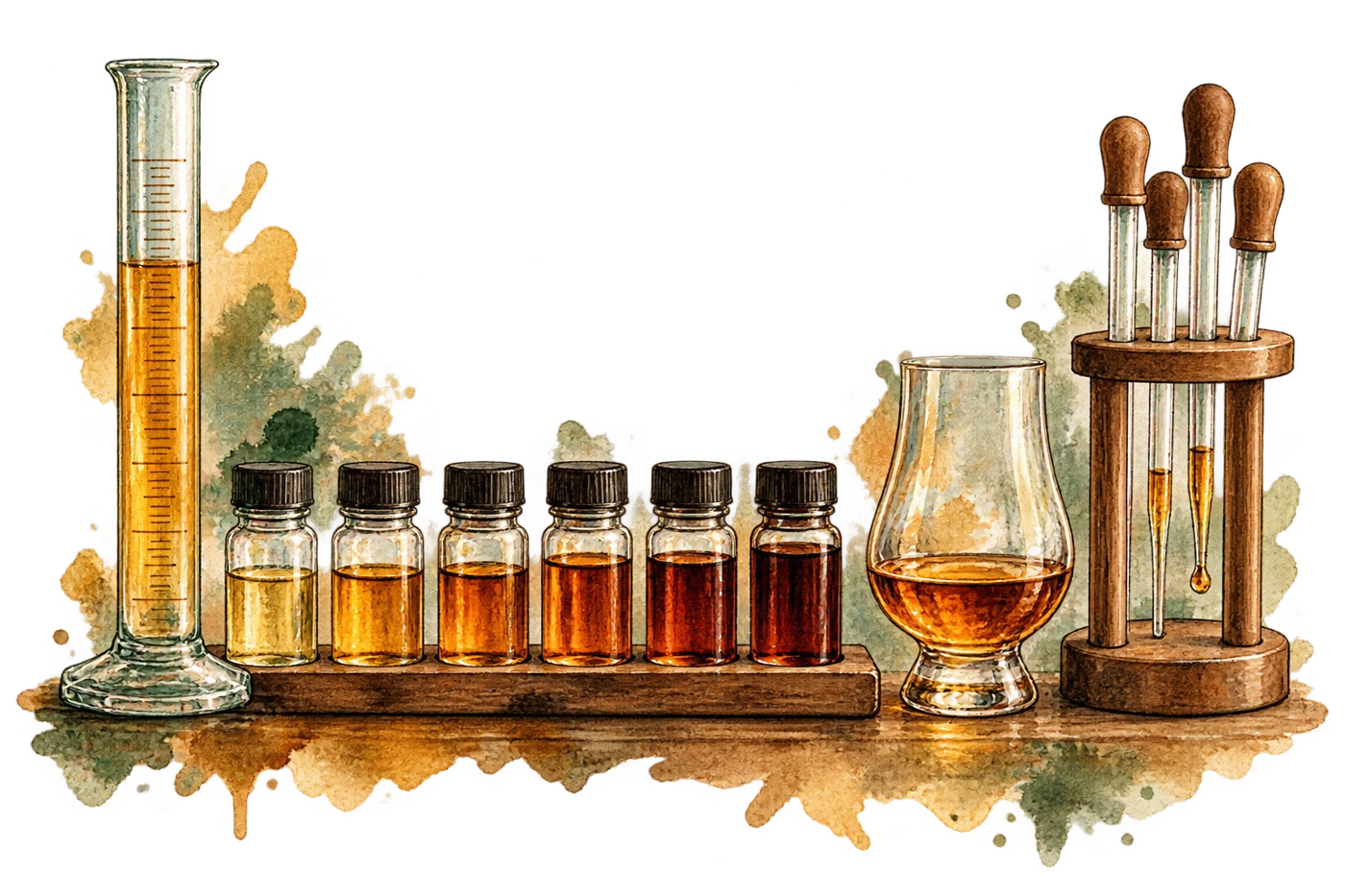
Old Bones Rye 10 Year Reserve Batch 1 uses a 95% rye recipe and is listed at 110 proof. The company says twenty percent of that batch received a short apera-cask finish. That detail matters. A partial finish gives a blender a measured contribution from a secondary barrel instead of applying the same treatment to every drop.[17]

Whiskey blending bench, symbolic watercolor illustration
06 / The details worth knowing

Small decisions. Lasting stories.

The sample that settled the argument

In a signed 2016 letter, the founders recall debating whether to reduce a 114.9-proof barrel sample toward a more conventional bottling strength. They invited an experienced taster, who finished the remaining sample and advised them not to cut it. The identity of that guest is not supplied. The story is best understood as the founders’ account of a formative decision, not independently reconstructed dialogue.[18]

Almost old enough was old enough to taste right

Almost Old Bones exists because the producer found nine-year bourbon it wanted to bottle before the usual ten-year Old Bones threshold. The documented KY-1 release came from Bardstown and was bottled at 110 proof. The playful name conveys a serious selection principle: a round number on an age statement should not be the only reason to release a whiskey.[19]

Finishing moves into the foreground

Big Bash shows how far Backbone’s blending interests extend. Its Batch 1 page says more than ninety percent of the blend spent between six months and two years in finishing barrels. The listed components include rye and two bourbon recipes. It is a statement about the producer’s evolving methods, not a claim that all Backbone products share those finishes.[20]

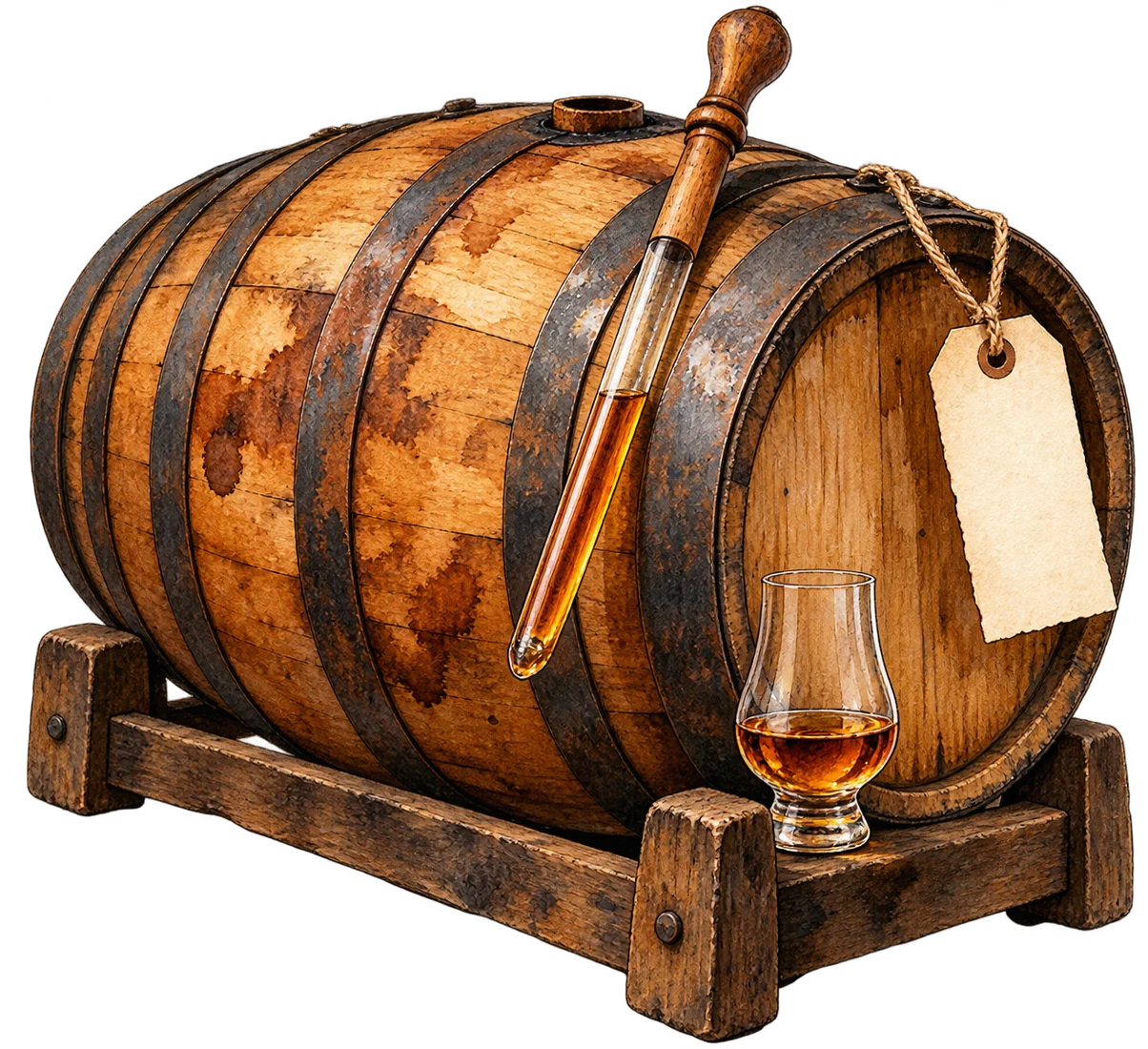
A selected barrel and whiskey thief, symbolic watercolor illustration
07 / Selected expressions

A portfolio built around choices.

A useful way to explore the range

Start by comparing different approaches: Uncut for unreduced bourbon, Prime or The Forge for blended whiskey, Bone Snapper for rye, and Old Bones for selected mature barrels. Decade Down and Big Bash bring finishing into the discussion. Check the exact bottle after choosing the family, because the batch is part of the identity.[14]

08 / The Reserve connection

Continue from the story to the bottles.

Backbone Bourbon in The Thelen Reserve

2 physical bottle records connect this story to the collection. Each keeps its own proof, barrel, batch, pick and release details.

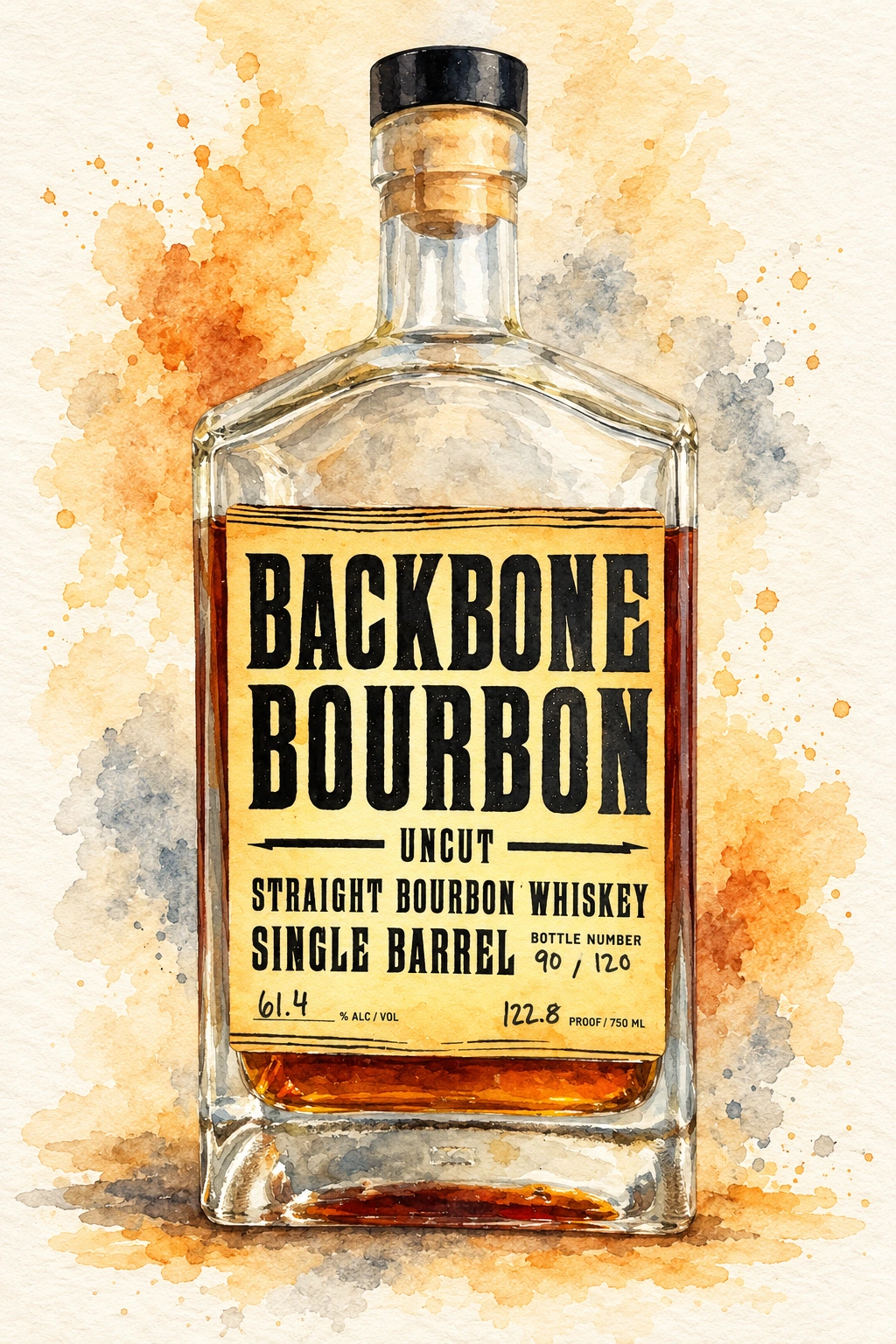
Approved watercolor of Backbone Bourbon Single Barrel - Pick ADHD
From the collection

Backbone Bourbon Single Barrel - Pick ADHD

W0028 · 122.8 proof · Bottle 90 · Pick ADHD · Bottled / release 10/1/2022

Front and back labels confirm 122.8 proof / 61.4% ABV, bottle 90 of 120, age 100 months, barreled June 2014 and bottled October 2022. The label gives month and year only. ADHD remains the recorded inventory selection; the visible labels do not independently name the pick. The guide uses the producer’s broader Uncut expression profile.

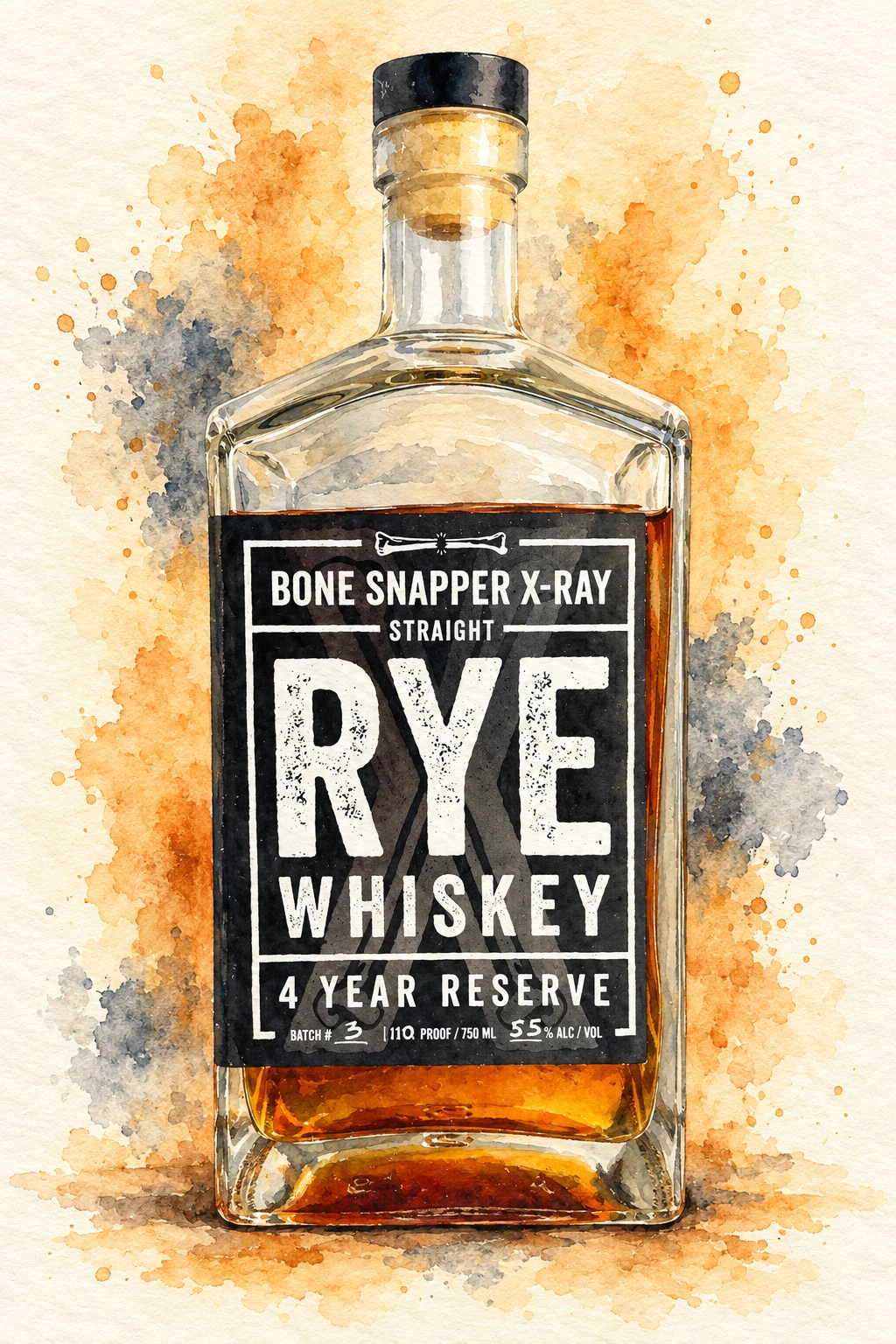
Approved watercolor of Bone Snapper X-Ray 4 Year Reserve Straight Rye
From the collection

Bone Snapper X-Ray 4 Year Reserve Straight Rye

W0101 · 110 proof · Batch 3 · Bottled / release detail 4YearReserve;batch3. No precise bottling/release date stated.

Batch 3.

Backbone Bourbon illustrated guide cover
The illustrated companion

Backbone Bourbon, in three pages.

Origins and people, history and places, whiskey and stories. An illustrated companion with linked sources.

Sources & research notes

Research checked October 18, 2026. Illustrations are symbolic editorial artwork, not documentary depictions of buildings, equipment or historical packaging. Official sources disagree on the earliest brand dates; company formation in 2014 is kept separate. “By” dates establish documented existence, not exact launch. Product specifications describe named batches. The two collection cards use text-only fallbacks because exact approved bottle watercolors were unavailable.

  1. About: founders and company historyFounders; sourcing; formation2014; Indiana expansion
  2. Decade Down UncutDecember2010 claim; 2022 batch; age and sherry component
  3. TradeConflicting first-availability date2012
  4. Bone Snapper official product sheet2011 launch; thirty-month target; recipe108proof; Lawrenceburg
  5. Old Bones Bourbon10Year Reserve2016 introduction; Bardstown9K example
  6. Auld Blow-In official product sheet2017 trip; PortDundas14year110proof
  7. Bone Snapper X-Ray official product sheetBy2019 existence; maturation comparison
  8. Old Bones15Year official product sheetBy2021 existence; Frankfort Batch2 example
  9. New Old Bones10Year batch announcementApril2024; Kentucky9K
  10. Single Barrel ProgramCurrent selection program and Indianapolis tasting
  11. ContactCurrent Indianapolis address
  12. Prime official product sheetChanging blend composition; Lawrenceburg104proof
  13. The Forge official product sheetBlend types;110proof; Lawrenceburg
  14. ProductsBrand families and expression taxonomy
  15. Bone Dry Gin official product sheetLosAngeles distillation; wheat base; botanicals
  16. Uncut official product sheet2010 claim; tenbarrel batches; minimal filtration/no water
  17. Old Bones Rye10 official product sheetApera20% component; recipe; batch1
  18. Founders letter, May16 2016First-person origin anecdote
  19. Almost Old Bones official product sheetNineyear rationale; KY1 details
  20. Big BashBatch1 finishing duration and components
↑