TJ THELEN'S COLLECTION
The Thelen Reserve
Behind the Bottles · Georgia distillery & whiskey producer

ASW Distillery

Last updated Last researched

Atlanta whiskey, with room to experiment.

A pair of copper pot stills anchors ASW’s Atlanta whiskey story. Around them, an unusually broad family has grown: malted rye, smoky double malt, single malts, an in-house bourbon and Fiddler releases shaped through sourcing, blending and wood. Following the grain and the barrel reveals how those paths connect.

Copper pot stills, Georgia oak and Atlanta skyline, symbolic watercolor illustration
2011

First brand launch

2016

Atlanta distillery opens

Distill & source

Expression-specific model

Justin Manglitz

Master distiller

01 / Origins & people

A friendship, a brewer and a new direction.

A whiskey company before a whiskey distillery

Jim Chasteen and Charlie Thompson knew one another at the University of Georgia in the late 1990s. Their shared interest became American Spirit Whiskey, first bottled in November 2011 through a Charleston production partner. The lightly aged, still-clear spirit came before Atlanta’s copper stills. The brand’s beginning and the opening of ASW’s own distillery are separate dates.[3][4]

The brewer who wanted to distill

Justin Manglitz brought years of grain experimentation and the experience of running Blockader Homebrew Supply in Athens. ASW’s own account traces the introduction to Chasteen’s sister. His interest in Irish and Scottish whiskey helped shape a method that joins batch pot distillation with grain solids retained through production.[1]

More than a single founder’s story

The 2023 UGA interviews describe Manglitz and marketer Chad Ralston joining the business during its 2015 expansion. Kelly Chasteen helped build the hospitality side. ASW’s current roster names Chasteen and Thompson as founders and Manglitz as master distiller, with Whit Hagemann and Previn Perry among its production staff. The story spans whiskey-making, design and the work of welcoming visitors.[2][3]

Athens homebrewing bench, symbolic watercolor illustration
02 / The illustrated history

From a clear spirit to a city of whiskey.

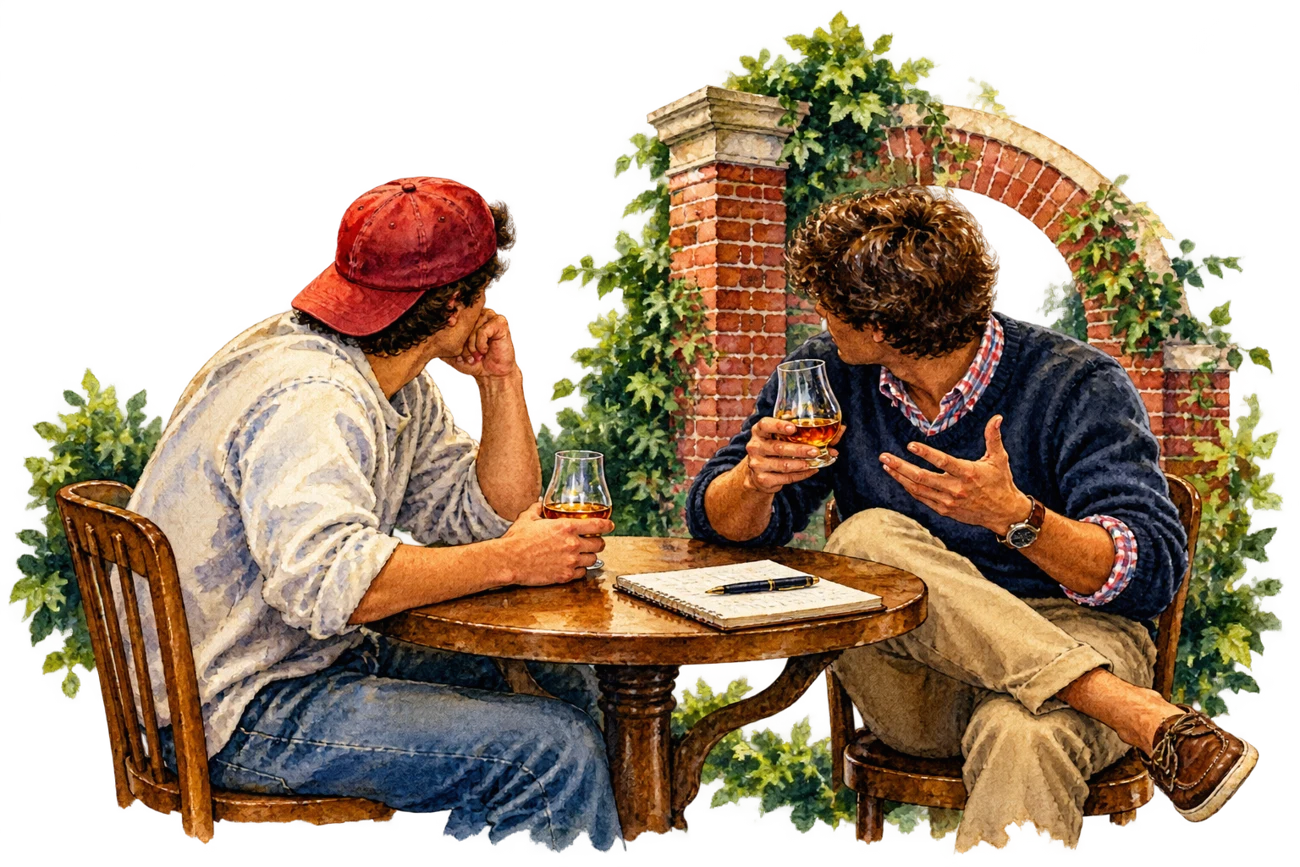
A university friendship, symbolic watercolor illustration
Late 1990s

A university friendship

Chasteen and Thompson meet as University of Georgia fraternity brothers. Their later whiskey venture grows from a friendship that continued after graduation.[3]
American Spirit Whiskey, symbolic watercolor illustration
November 2011

American Spirit Whiskey

Their first commercial spirit reaches the market, developed with a Charleston partner. The brand begins with lightly aged clear whiskey rather than mature Atlanta-made bourbon.[4]
The stills arrive, symbolic watercolor illustration
October 2015

The stills arrive

ASW’s custom Vendome equipment arrives after a long lead time. The stills’ arrival does not yet mean whiskey production has begun.[5]
Production begins, symbolic watercolor illustration
June 2016

Production begins

ASW’s contemporary still-making account places permission to run the equipment in June. This is the start of production, ahead of the public opening.[5]
Armour Drive welcomes visitors, symbolic watercolor illustration
July 2016

Armour Drive welcomes visitors

The producer’s opening announcement identifies July 21 at the American Spirit Works building. Tours introduce the copper stills and the team’s approach.[6]
A first malted-rye bottling, symbolic watercolor illustration
September 2016

A first malted-rye bottling

ASW introduces an unaged malted-rye spirit at 93 proof while retaining most of the new whiskey in oak. It offers an early view of the spirit that will develop into the Resurgens story.[7]
Duality finds its audience, symbolic watercolor illustration
2017–2018

Duality finds its audience

A 2017 announcement invites visitors to an August 5 release of Duality. The mixed-malt whiskey earns a Double Gold at the 2018 San Francisco competition, according to ASW’s award record.[8][9]
The West End expansion, symbolic watercolor illustration
April 2019

The West End expansion

ASW opens its second location at Lee + White. The Whiskey Exchange extends the company’s maturation and hospitality footprint along the BeltLine.[4][22]
Recognition for Maris Otter, symbolic watercolor illustration
2020

Recognition for Maris Otter

ASW records the San Francisco competition’s Craft Whiskey of the Year award for Maris Otter. The single-variety malt shows another direction for the distillery’s brewing-minded approach.[9]
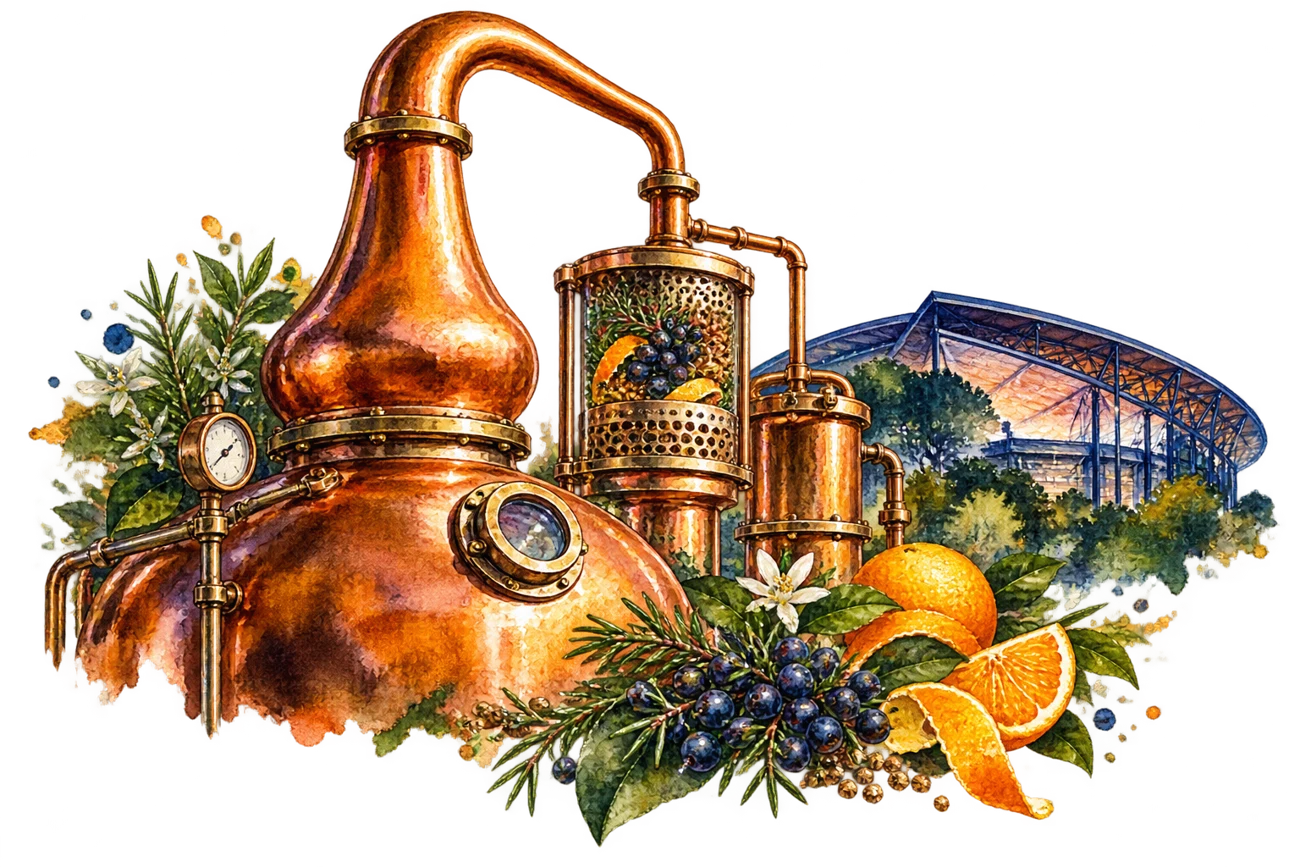
A place at The Battery, symbolic watercolor illustration
2021

A place at The Battery

ASW opens near the Braves’ ballpark. This location makes gin and vodka and provides a visitor connection distinct from Armour Drive’s whiskey production.[10]
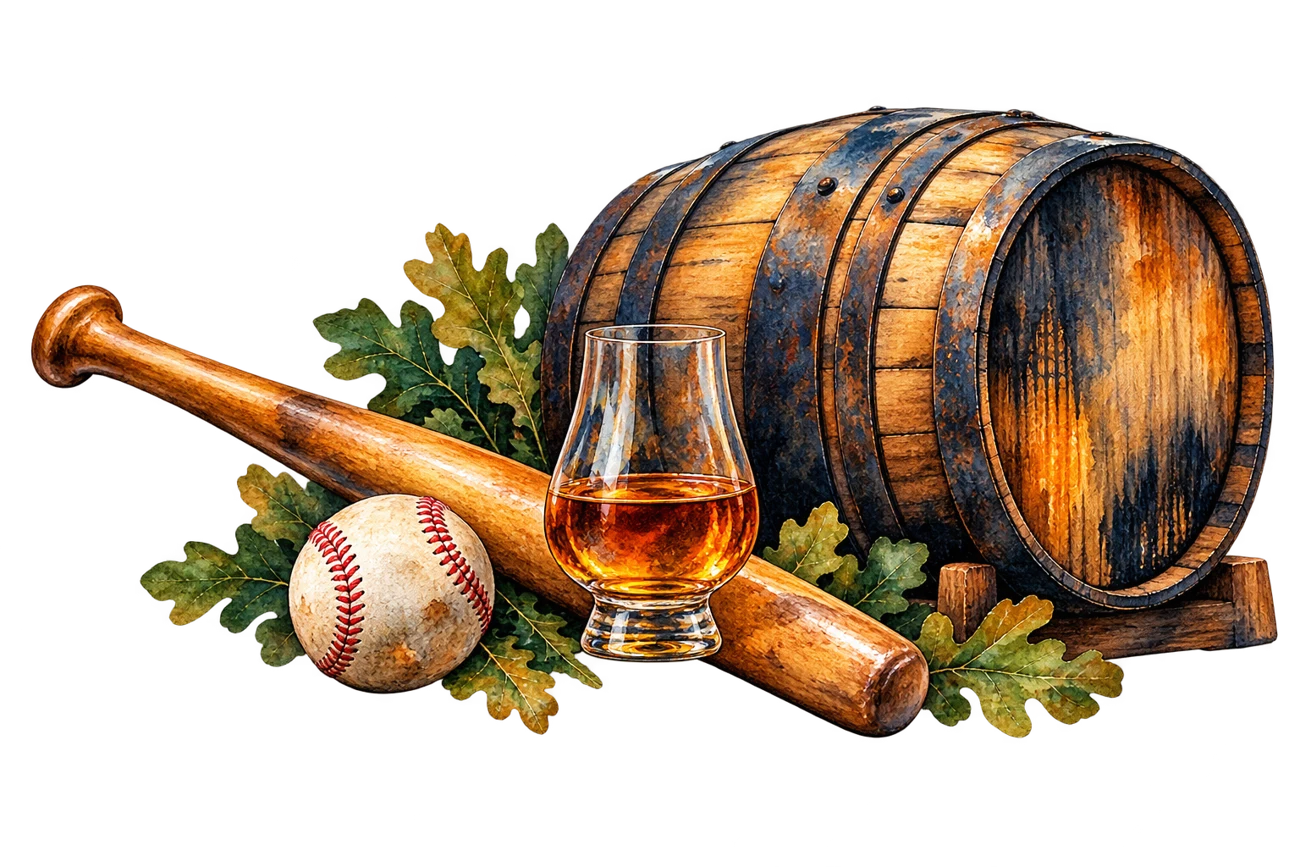
Baseball enters the barrel, symbolic watercolor illustration
June 2022

Baseball enters the barrel

A Braves World Champions bourbon release uses a maple-bat finish.[24]
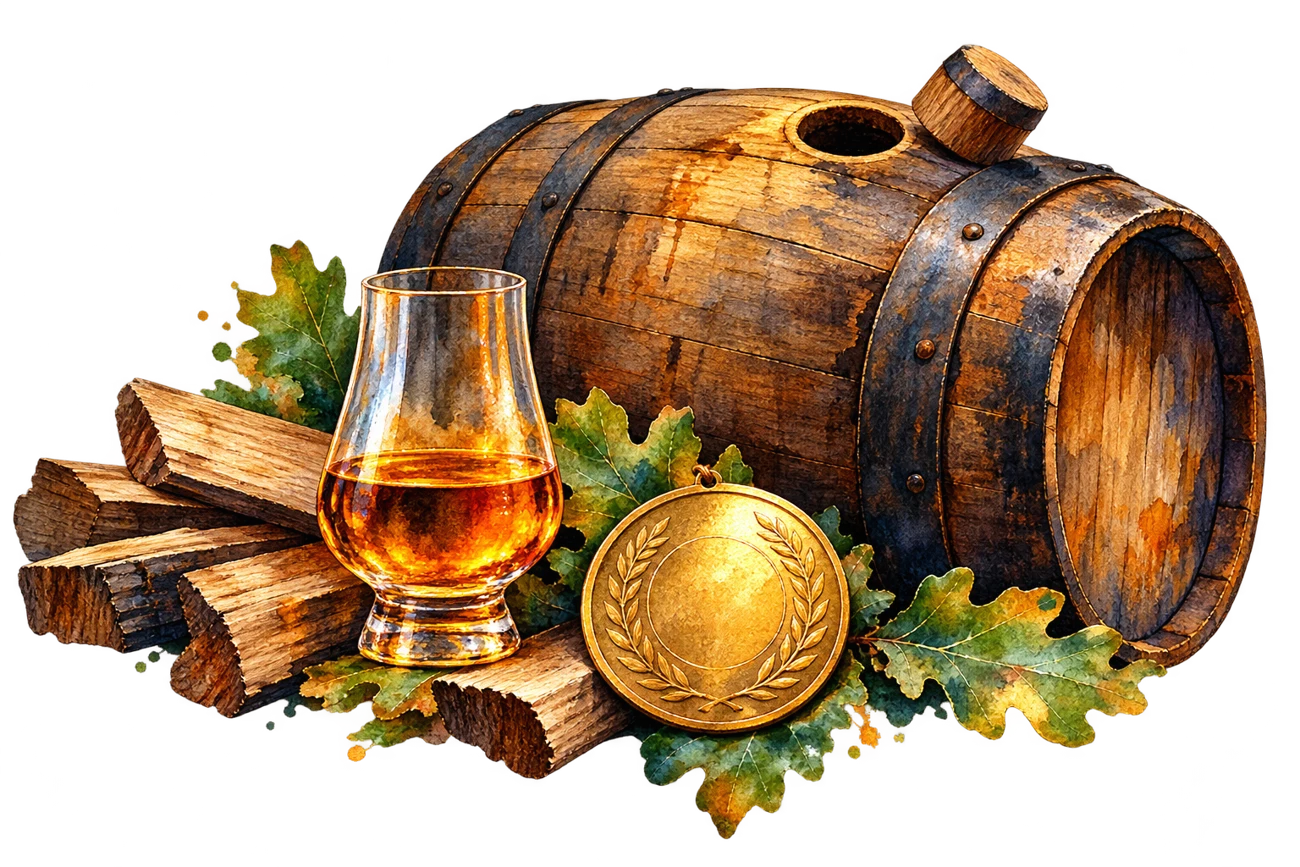
Fiddler Encore earns recognition, symbolic watercolor illustration
2025

Fiddler Encore earns recognition

ASW announces a Best Small Batch Bourbon award for an Encore expression. Its Georgia Oak bottling experience identifies Encore specifically; this is not an award for every bottle carrying the Fiddler name.[11][21]
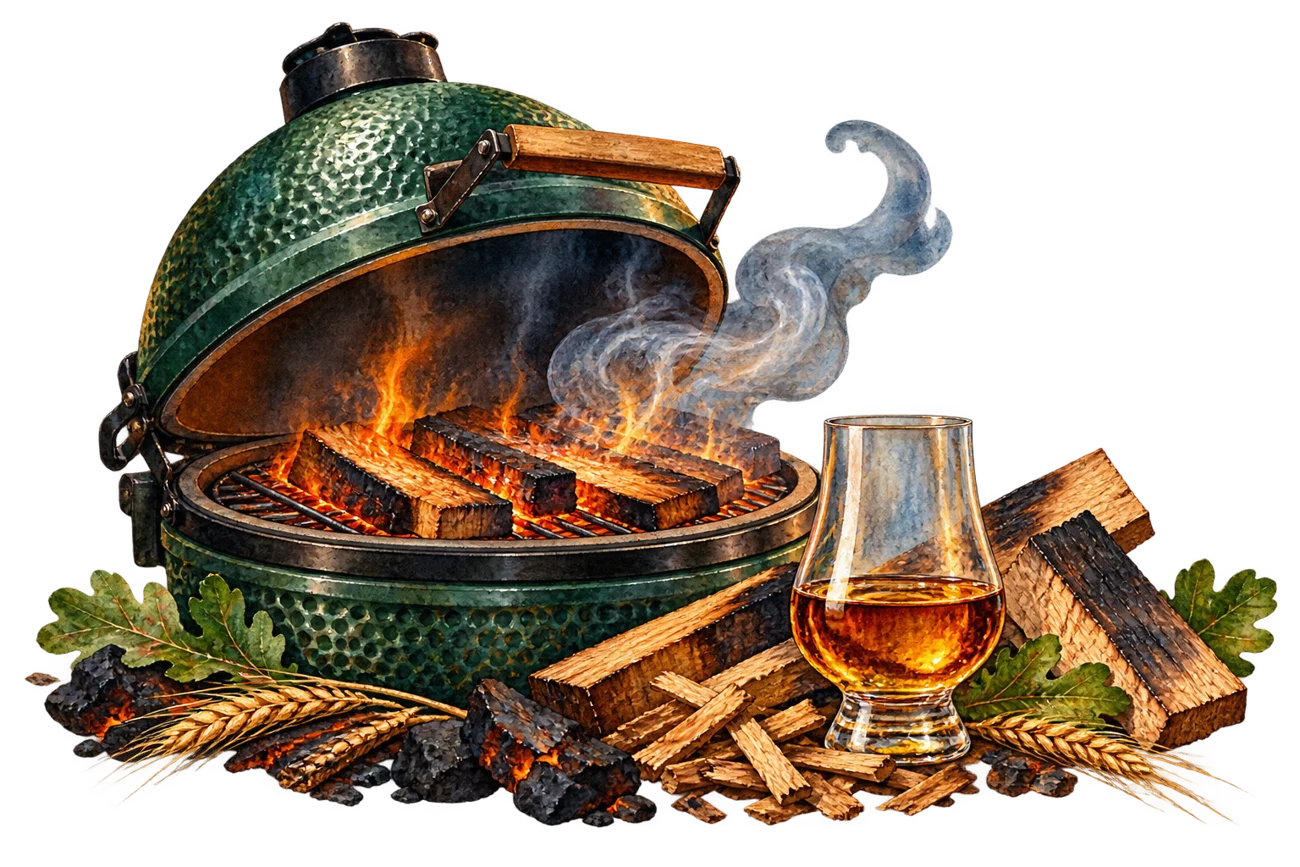
Cooking wood becomes finishing wood, symbolic watercolor illustration
April 2026

Cooking wood becomes finishing wood

After experimental releases, the Big Green Egg collaboration launches more widely on April 24. The cooker prepares the finishing staves before they enter bourbon barrels.[12][13]
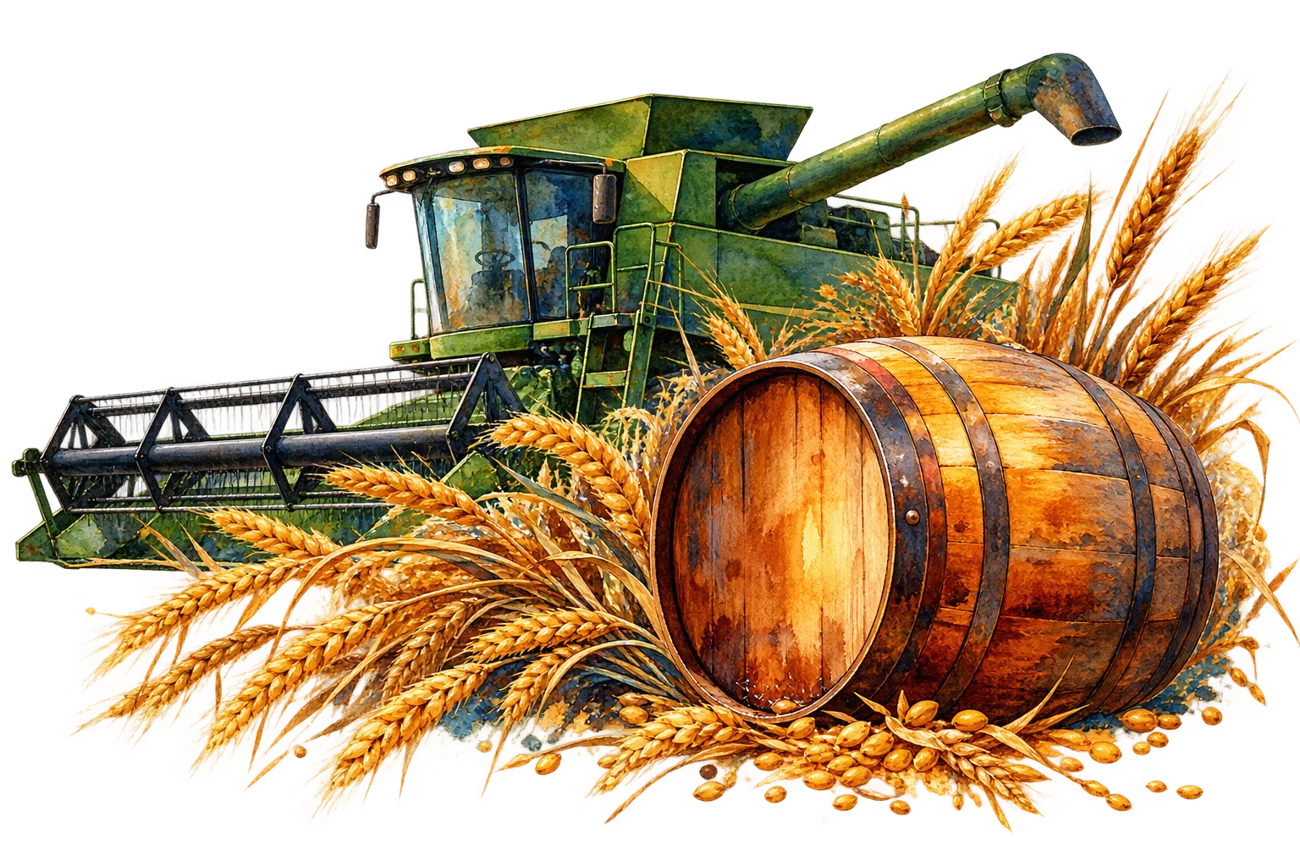
From Soil to Still, symbolic watercolor illustration
June 2026

From Soil to Still

The John Deere collaboration launches June 24, with Fiddler Combine Bourbon and Steel Plow Rye. Both are presented as eight-year, 112-proof whiskies finished with Georgia oak.[14][30]
03 / Geography & roles

Different places, different roles.

Armour Drive / whiskey production

199 Armour Drive is the original Atlanta distillery address. Its whiskey tours focus on double copper pot stills, distillation and barrel aging. American Spirit Works is the building’s name; the wider property and its other tenants are not all ASW Distillery.[6][21]

West End / maturation and hospitality

The Whiskey Exchange at 1000 White Street sits in the Lee + White development. Its rickhouse tour focuses on barrel aging, including areas without climate control. The 2019 expansion announcement and the current visitor role are distinct pieces of the location’s history.[4][22][26]

The Battery / clear spirits

At 900 Battery Avenue, ASW offers a view of hybrid column-pot equipment used for vodka and gin. Its proximity to the ballpark helps explain a different hospitality setting and the Braves connection; it does not make this the source of every ASW whiskey.[10][23][26]

Beyond the three city facilities

ASW’s 2026 announcements also identify Flights & Bites at Hartsfield-Jackson airport as a fourth location. The website’s visitor page still lists three city sites. The airport outlet is a hospitality connection, not evidence of a fourth whiskey distillery.[14][26]

Georgia, Charleston and the wider barrel map

Charleston belongs to the first American Spirit Whiskey chapter. Georgia supplies the home distillery, maturation sites and locally harvested finishing wood. Sourced Fiddler stocks introduce other distillation origins; the specific release and label determine which roles apply.[3][13][25]

04 / The whiskey family

The names behind the whiskey.

ASW / the operating producer

ASW Distillery is the Atlanta producer behind a portfolio of distinct names. Founders and partners documented by UGA should not be collapsed into a claim that one person owns everything. Current official pages retain Chasteen, Thompson and Manglitz in central roles.[2][3]

American Spirit Whiskey / the first chapter

The original clear whiskey preceded the Atlanta distillery. Its contracted Charleston origin remains part of the brand’s history, even as ASW developed its own production.[4][25]

Fiddler / several production paths

Fiddler covers sourced whiskey finished or blended by ASW as well as its own Soloist bourbon. The word “foraged” is ASW’s language for sourced stock; it does not mean grain harvested from the wild.[16][25]

Resurgens and Duality / grain-led whiskey

Resurgens centers malted rye. Duality combines rye malt and smoked barley malt. Their shared pot-still approach connects them, while different grain choices keep their identities distinct.[18][20]

Single malts / a brewing perspective

Maris Otter, Optic Promise and Red X foreground barley varieties or brewing malts. Tire Fire explores heavily peated malt. Older ASW pages group single malts under Ameireaganach; the current portfolio often leads with the individual expression names.[9][17][29]

Druid Hill / Irish-style, Georgia-made

ASW’s Irish-style whiskey uses malted and unmalted barley. The Irish-grown grain and Druid Hills namesake describe influences and ingredients, not an Irish distillery location.[28]

Braves, Big Green Egg and John Deere / collaborators

These partnerships connect whiskey with baseball, live-fire cooking and agriculture. Collaboration does not itself establish an ownership relationship. Release names and finishing methods remain specific to each partnership.[10][12][14]

Vodka and gin / a parallel branch

Bustletown and Hunker vodka and Winterville gin extend the portfolio beyond whiskey. The Battery’s clear-spirit operation gives that branch its own production setting.[17][23]

05 / Making & choosing

Grain, copper and the finishing wood.

Keep the grain in

ASW mashes grain, ferments it with the solids present and uses a wash still followed by a spirit still. This joins Scottish-style double pot distillation with a grain-in approach associated with Southern whiskey-making. That description applies to ASW’s own pot-still spirits, not automatically to sourced Fiddler whiskey.[15]

Equipment with a purpose

Vendome made ASW’s 500-gallon wash still and 300-gallon spirit still. Agitation helps keep grain from sticking and scorching. ASW also describes different condenser designs, including a glass section that allows visitors to watch vapor condense.[5]

Malt is an ingredient decision

Resurgens uses malted rye rather than treating rye as merely a spice grain in a corn recipe. Duality brings smoked barley into the same batch. Soloist’s bourbon recipe includes several malts alongside corn, so “bourbon” here need not mean a conventional three-grain recipe.[18][19][20]

Sourcing, blending and finishing are different jobs

A sourced barrel arrives with an existing distillation history. Blending combines stocks; finishing changes the wood environment. ASW’s Fiddler range uses these tools in different combinations, so a shared brand name is not enough to infer a shared distiller or identical treatment.[16][25]

Heartwood adds a local wood layer

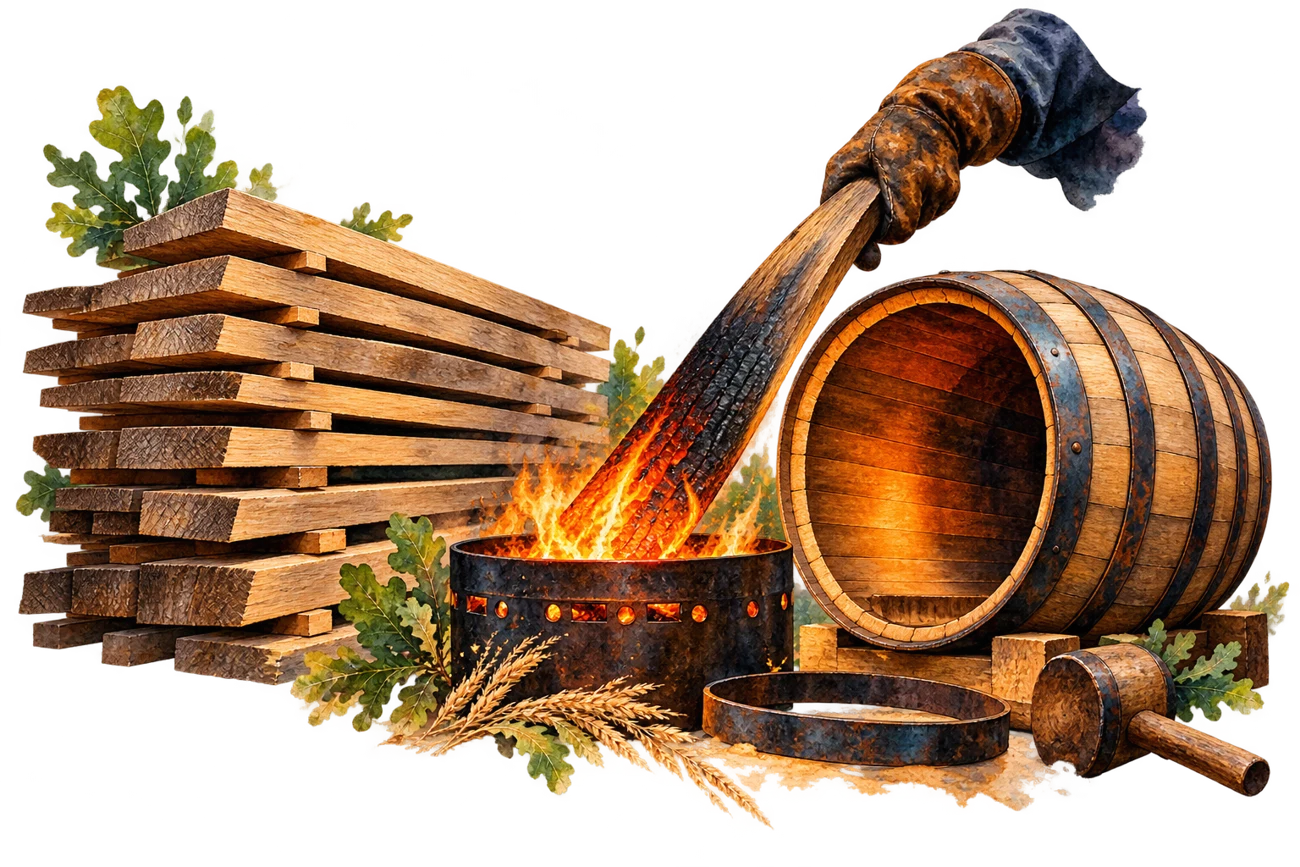
Georgia white oak is central to the Heartwood approach. ASW’s current catalog describes finishing staves in addition to earlier barrel maturation. The Big Green Egg partnership further changes how selected staves are toasted or charred. A stave finish and transfer to a second barrel should be described separately.[12][16][17]

Read the expression and the edition

Current catalog entries distinguish fixed-proof releases from cask-strength versions. Proof, mash bill, age and finish can change across the Fiddler family and special releases. Specifications on a current product page should not be projected backward onto an older single barrel.[16][17]

Georgia oak stave preparation, symbolic watercolor illustration
06 / The details worth knowing

The stories beyond the label.

A shortage becomes Duality

ASW tells the origin as an experiment prompted by insufficient malted rye for a full batch. Manglitz added malted barley, retaining both grains through production. It is the producer’s account of a practical adjustment that became an enduring expression, rather than independent proof of a worldwide first.[27]

The label plays along

Duality’s imagery follows its two-grain idea. ASW describes paired symbolism and a Scottish Gaelic rendering of Shakespeare on the label. The name is part production explanation, part visual storytelling.[8][27]

A maker who plays the fiddle

Fiddler connects two ideas: Manglitz’s music and the act of adjusting a whiskey. The name suits a family in which one release may emphasize source selection and another an unusual wood treatment. It should not erase Soloist’s separate in-house identity.[6][16][25]

Peat as a challenge

In ASW’s account, heavily peated whiskey was not initially Manglitz’s favorite style. Colleagues challenged him to make one he would enjoy, helping frame Tire Fire as a creative problem rather than a simple imitation of Scotch.[29]

Heat before the barrel

The Big Green Egg method treats the finishing wood with cooking equipment. ASW describes toasting and charring as separate steps, with a year of experimental single barrels preceding the wider release. The distinctive connection is the preparation of the stave.[12][13]

A wider city, different experiences

A production tour, rickhouse visit and Battery cocktail class tell different parts of the same business. Looking for the role of each site is more useful than treating every visitor address as interchangeable production capacity.[21][22][23]

Duality-inspired paired badger motif, symbolic watercolor illustration
07 / Selected expressions

Different editions, distinct identities.

Fiddler Heartwood / local wood, sourced bourbon

The current catalog identifies a sourced, column-distilled wheated bourbon with a 51% corn, 45% wheat and 4% malted-barley recipe. Georgia oak finishing staves distinguish Heartwood. Individual historic single barrels retain their own label details.[16][17]

Fiddler Soloist / the Atlanta bourbon

Soloist is ASW’s own double-pot-distilled bourbon. The listed six-grain recipe is 56% corn, 14% wheat malt, 10% rye malt, 10% Munich malt, 7% beechwood-smoked malt and 3% chocolate rye malt. The standard bottling is listed at 100 proof.[19]

Resurgens / malted rye

The standard rye expression focuses on malted rye and is listed at 86 proof. Its name belongs to ASW’s Atlanta identity, while the ingredient choice gives it a different starting point from the more usual unmalted-rye recipe.[18][17]

Duality / two malts in one batch

The current specification combines equal parts rye malt and cherry-smoked barley malt. The standard version is listed at 88 proof. It is one mixed-grain distillation, rather than simply a finished blend of two separately distilled single malts.[20][27]

Maris Otter / the malt variety leads

A single malt made with Maris Otter barley connects ASW’s brewing background to its whiskey portfolio. Its 2020 recognition is part of the distillery’s history; that award should not be generalized to every malt or every later bottling.[9][17]

Combine and Steel Plow / the 2026 pair

The John Deere collaboration pairs an eight-year wheated bourbon with an eight-year rye, both at 112 proof and finished with Georgia oak. They share a partnership and finishing theme while remaining different whiskey types.[14][30]

ASW’s range rewards a simple habit: follow the particular whiskey. The same Atlanta company can distill one spirit, select another and shape a third through wood. Grain, still, barrel and place each contribute a different part of the story.

08 / The Reserve connection

Continue from the story to the bottles.

ASW Distillery in The Thelen Reserve

1 physical bottle record connects this story to the collection. Each keeps its own proof, barrel, batch, pick and release details.

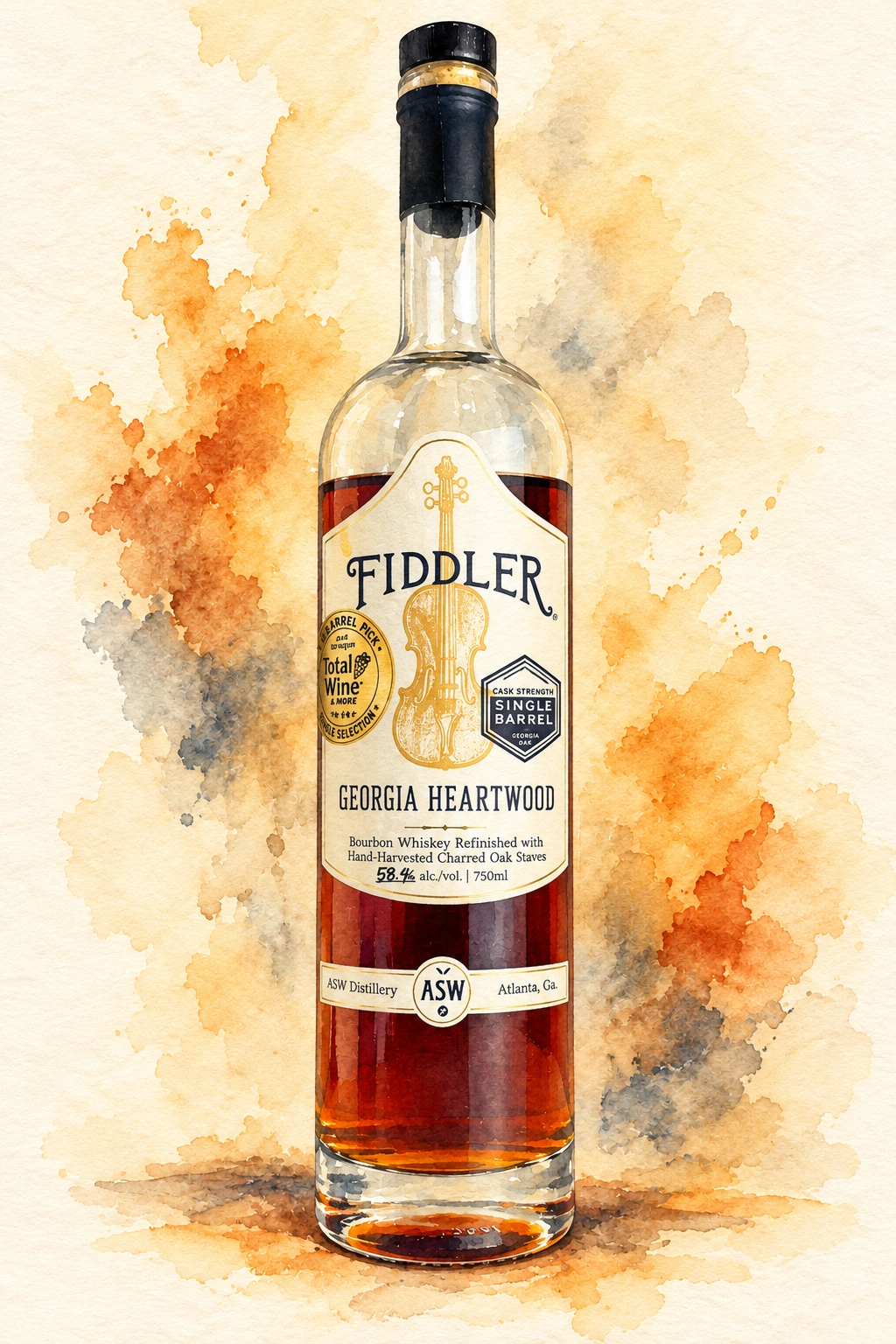
Approved watercolor of ASW Fiddler Georgia Heartwood SB CS - Pick Total Wine
From the collection

ASW Fiddler Georgia Heartwood SB CS - Pick Total Wine

W0027 · 116.8 proof · Pick Total Wine

The photographed Total Wine single-barrel selection confirms 116.8 proof / 58.4% ABV, 750 mL and bourbon refinished with hand-harvested charred oak staves. ASW in Atlanta is named as finisher and bottler; the original distiller remains unidentified. The retail sticker’s August 18, 2022 date is not established as a bottling or release date. No barrel number, batch number or numerical age is inferred.

ASW Distillery illustrated guide cover
The illustrated companion

ASW Distillery, in three pages.

Origins and people, history and places, whiskey and stories. An illustrated companion with linked sources.

Sources & research notes

Research checked October 19, 2026. Primary material includes ASW’s own pages and dated announcements, UGA interviews, the venue’s account and a distributor’s portfolio description. November 2011 is the first-brand launch; June 2016 is production and July 2016 is the Atlanta visitor opening. Some 2026 boilerplate says “founded in 2016”; this profile preserves the earlier brand history. The April 2026 Big Green Egg announcement says cask strength while the current catalog says 100 proof: no universal proof is assigned here. ASW’s three-site visitor list and its four-location 2026 announcements differ because the latter include airport hospitality. Current executive titles conflict between page layout and press boilerplate, so no CEO title is asserted. Worldwide-first claims and family-origin anecdotes are attributed or omitted. Product pages may change; current specifications do not authenticate a historic private barrel. Awards are attributed to the producer’s own records rather than independently audited competition results. Selected family and release coverage is not exhaustive. Illustrations are symbolic editorial interpretations, not documentary reconstructions.

  1. Our Story + MissionFounders, Manglitz’s homebrewing background and grain-in pot-still philosophy.
  2. Our Spirited RosterCurrent named founders and production team; page layout does not reliably pair all executive titles.
  3. The Spirits Squad — UGA, May 2023Firsthand alumni interviews; 2015 team development and early Charleston production.
  4. That’s the Spirit — Terry College, June 2019November 2011 launch, late-1990s friendship, 2016 opening and April 2019 expansion.
  5. Good Still Hunting — ASWOctober 2015 still arrival, June 2016 production, agitators and condensers.
  6. Atlanta opening announcement — ASW, July 2016Contemporaneous producer release naming July 21 opening and distinct American Spirit Works building.
  7. The First of Many Great Whiskies to Come — ASWSeptember 2016 unaged malted-rye first bottling; most spirit reserved for maturation.
  8. Four-Year Journey to Duality — ASW2017 release announcement, mixed-malt experiment and label symbolism.
  9. Awards & News — ASWProducer-reported 2018 Duality medal and 2020 Maris Otter award.
  10. ASW at The Battery — venue profileVenue’s firsthand account of 2021 opening and gin/vodka production.
  11. Fiddler Encore recognition — ASW2025 small-batch bourbon recognition; distinguish Encore from every Fiddler release.
  12. Fiddler x Big Green Egg — ASWToasted and charred stave method and experimental development.
  13. Two Atlanta Originals — ASW release, April 2026April 24 launch, two wheated recipes and Georgia wood preparation; proof wording conflicts with current catalog.
  14. Soil to Still — ASW release, July 2026June 24 launch, eight-year/112-proof releases; airport hospitality location.
  15. Our Production Process — ASWMash, fermentation, double pot distillation and maturation.
  16. Fiddler — ASWCurrent Fiddler family; sourced versus in-house descriptions.
  17. Our Spirits — ASWCurrent expression recipes, still types, proofs and wood treatment; release-specific specifications.
  18. Resurgens Rye — ASW blogProducer account of malted rye identity; current proof checked in S17.
  19. Fiddler Soloist — producer technical sheet via SkurnikIn-house bourbon, six-grain recipe and 100-proof bottling; visually inspected one-page sheet.
  20. Duality Double Malt — ASW portfolioTwo malts, 88-proof standard expression and smoky character; same catalog as S17.
  21. ASW Distillery toursArmour Drive whiskey stills and Encore Georgia Oak bottling experience.
  22. ASW Whiskey Exchange toursWest End maturation and non-climate-controlled rickhouse.
  23. ASW Battery toursHybrid clear-spirit still and visitor experiences.
  24. World Champions Release — Braves, June 2022Date and maple-bat finish only; narrowly summarized.
  25. Fiddler Whiskey — SkurnikDistributor’s firsthand distinction between sourced high-wheat and Atlanta pot-still whiskey.
  26. ASW locationsCurrent three listed city facilities and addresses.
  27. Duality origin account — ASWAttributed shortage story, grain-in method and Gaelic label detail.
  28. Druid Hill Irish-Style — ASWIrish grain source, unmalted/malted barley and Georgia namesake.
  29. Tire Fire — ASWManglitz’s reported peat challenge and Scottish malt.
  30. Fiddler Combine & Steel Plow — ASWCurrent John Deere partnership landing page.
↑