Jersey grain. Coastal character. A botanical second act.
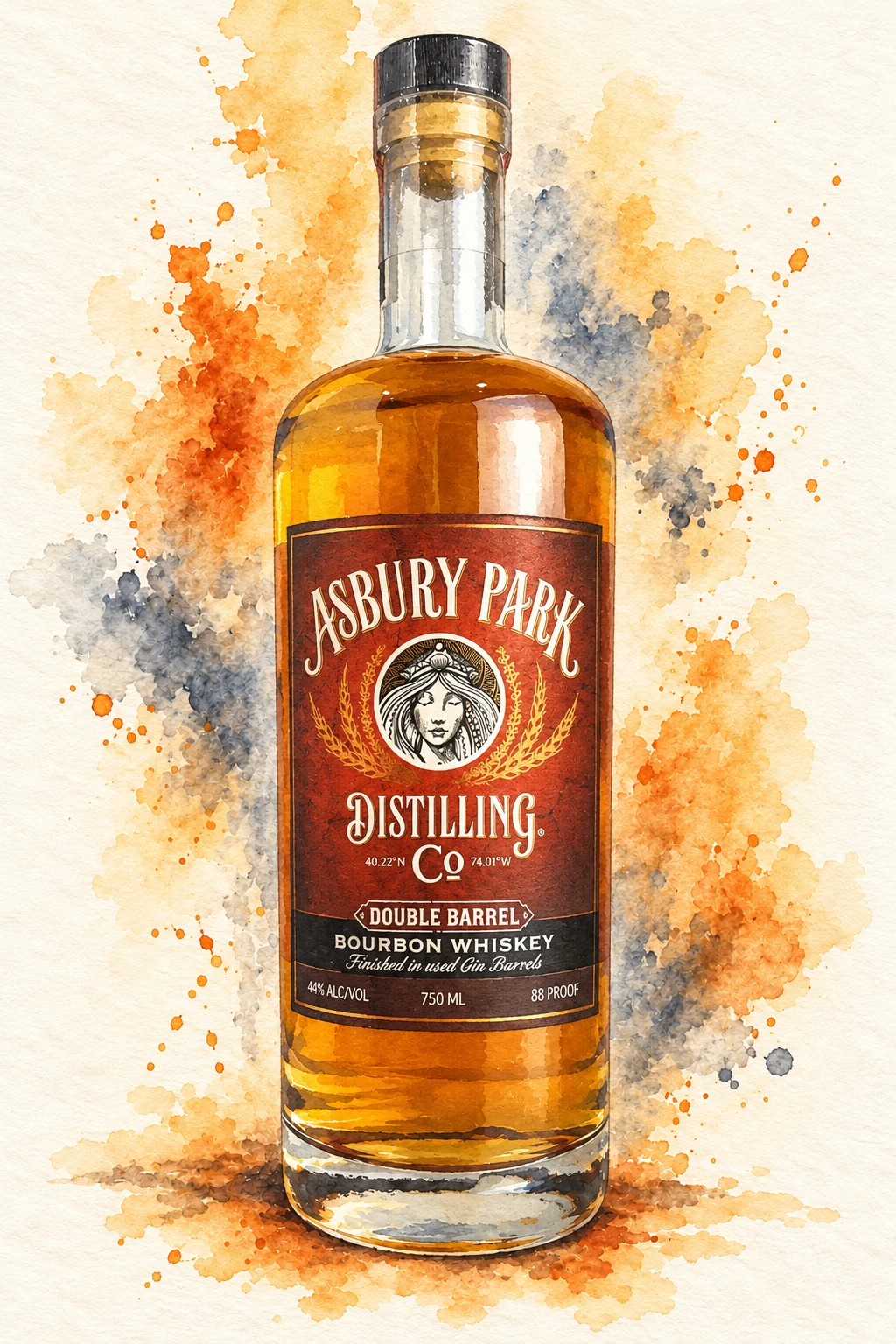
A small downtown distillery can tell more than one whiskey story. Asbury Park opened its tasting room in 2017, built a gin program, and gave sourced bourbon a second life in those gin-seasoned casks. Its separate Small Batch Bourbon follows a New Jersey grain-to-glass path. The connection is a place, a team and a cocktail-minded approach, rather than one origin for every spirit.[8][2][3]
Before there was a tasting room, there was a manufacturing question. A 2014 proposal sought to put a craft distillery at 527 Lake Avenue in a downtown district where light manufacturing was restricted. A small production business had to become a permitted part of the city before its spirits could become part of the neighborhood.[9][10]
A modern opening, not a Prohibition-era business
Andy Karas described assembling a six-partner venture after New Jersey changed its craft-distillery framework in 2013. The Lake Avenue tasting room opened on Memorial Day weekend in 2017. The company describes itself as Asbury Park’s first distillery since Prohibition. That local claim does not make it New Jersey’s first modern distillery or give it a continuous nineteenth-century history.[8][1][16]
The whiskey arrives in two forms
Early accounts anticipated a whiskey while gin and vodka were already being served. By July 2018, Double Barrel Bourbon was documented on the market. The current company description identifies it as sourced whiskey finished in former gin barrels. Small Batch is described separately as locally fermented, distilled and matured from New Jersey grain. A distillery name on both labels does not erase that difference.[8][11][2]
Andy Karas
Co-founder / planning and development
A partner and attorney who helped steer the original project through its downtown planning process. His account links the venture to a conversation with a distiller and a family recollection of bootlegging. The family story is attributed recollection, not proof of an inherited operating distillery.[8][10]
Zack Ohebshalom
Co-founder / early brand voice
A founding partner and early spokesman whose beverage-industry experience informed the business. In contemporary interviews he described distilling as an extension of Asbury Park’s creative culture and explained the symbolism behind the brand. Those accounts establish his founding role, not a complete current ownership register.[8][11]
Rob Wile
Partner / community response
A founding partner associated with the visitor and business side of the operation. In an April 2020 interview, he described the pivot to hand sanitizer, the needs of local responders and the effort to keep staff working. That episode belongs to its pandemic setting.[8][12]
Bill Tambussi
Early master distiller
The founding production chapter was led by Tambussi, a New Jersey native with postgraduate brewing and distilling training in Scotland and prior Philadelphia distilling experience. The current company biography dates his departure to 2023. Earlier sources listing him at the helm should be read historically.[8][3]
Kelly Bodnar
Current master distiller
The current team page names Bodnar as master distiller and says she joined in 2018, working with Tambussi until 2023. Her background behind the bar brings a practical question to production: how will the spirit behave in a drink? Contemporary 2018 coverage lists assistant distiller Kelly Lynch; the current company listing governs the present-day name and title used here.[3][11]
Porkchop / Michael LaVallee
Local artist / visual identity
The opening report credits the local mural artist with the mermaid identity. Juniper, rye and coastal architecture connect the design to ingredients and place. The company’s own explanation emphasizes the closed eyes as a symbol of welcome and acceptance.[8][4]
02 / The illustrated history
From a downtown idea to two bourbon paths.
Follow the documented opening, people, production and dated recognition. Planning, forecasts and release evidence keep their own dates.
2013
A new framework for craft distilling
New Jersey approves its craft-distillery legislation on August 7. The historical law takes effect December 1, helping explain why later accounts refer to a December change. This is regulatory context, not Asbury Park’s opening date.[16][17]
October–November 2014
Manufacturing finds a downtown proposal
Plans for 527 Lake Avenue enter the public record. The planning board recommends a targeted redevelopment-plan change; contemporary reporting still describes further approvals ahead. A proposal and recommendation are not a completed distillery.[9][10]
Memorial Day weekend 2017
The tasting-room doors open
The Lake Avenue operation welcomes visitors with gin, vodka and a cocktail program while whiskey plans develop. The June opening report identifies the founding partners, production leadership and a working urban facility.[8]
2018
Learning beside the still
The company dates Kelly Bodnar’s arrival to 2018. Working alongside Bill Tambussi begins a production apprenticeship that later becomes a leadership transition. Contemporary coverage names Kelly Lynch as assistant distiller.[3][11]
By July 2018
Bourbon gets a botanical second cask
Double Barrel Bourbon is documented in the range. The current producer account identifies a two-year sourced bourbon finished in ex-gin casks and bottled at 88 proof. Its finishing identity remains separate from later house-made Small Batch.[11][2]
July 2018
Early spirits earn recognition
Contemporary reporting records silver and bronze recognition for vodka, gin and aged gin at the American Distilling Institute and San Francisco competitions. These are early, product-specific results, not a blanket whiskey accolade.[11]
April 2020
Production responds to a community need
A dated interview with partner Rob Wile describes making hand sanitizer for responders and medical workers during the pandemic. The shift also helped sustain employment. It is a historical response, not a current product or health recommendation.[12][13]
2021
A significant gin result
The company records Double Gold and Best in Class for its gin at the 2021 San Francisco World Spirits Competition. This is the producer’s stated result for that year and category, not an award assigned to every spirit it makes.[2]
2022
Small Batch appears in the competition record
The organizer’s San Francisco results list Asbury Park Small Batch Bourbon with a silver medal in the up-to-five-years small-batch category. That independently dates its presence; it does not establish the exact first release day.[14]
2023
A new distilling chapter
The current company biography dates Tambussi’s departure to 2023 and identifies Bodnar as the master distiller today. The record supports a transition in production leadership without inventing an exact promotion day.[3]
2023
The broader spirits family is recognized
Bartender Spirits Awards records aquavit at 91 points and gold, and Small Batch Bourbon at 87 points and silver. The separate entries show a range extending beyond the gin-finished bourbon, with awards tied to named products.[15]
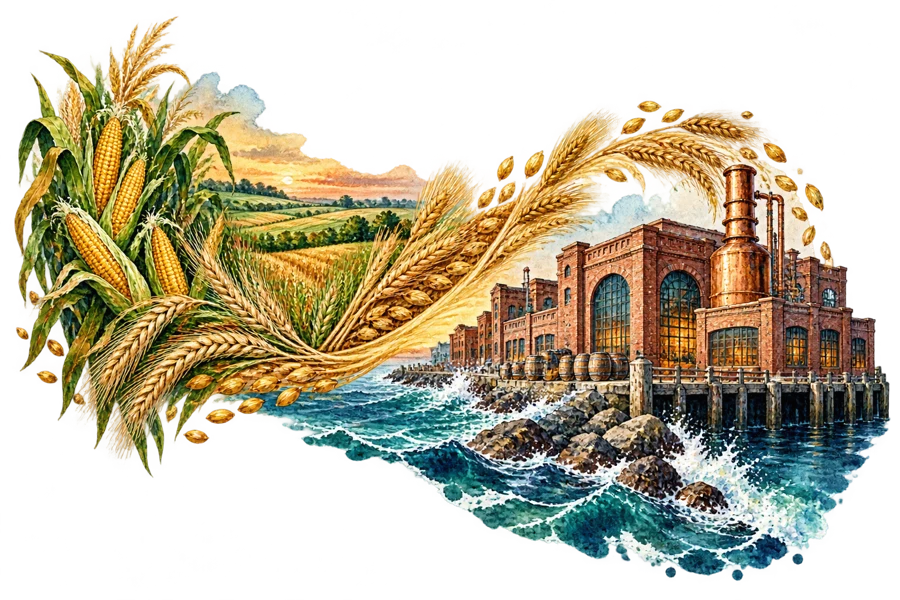
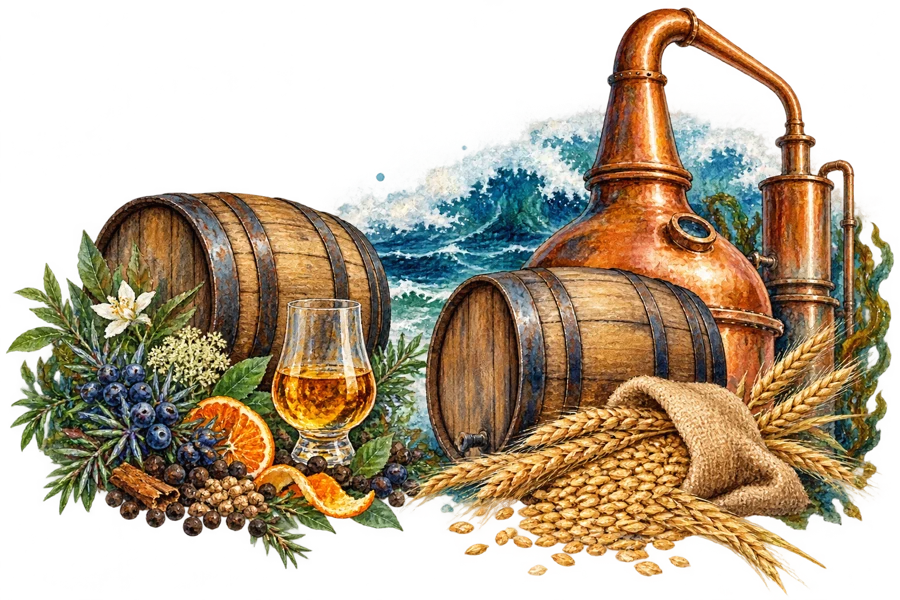
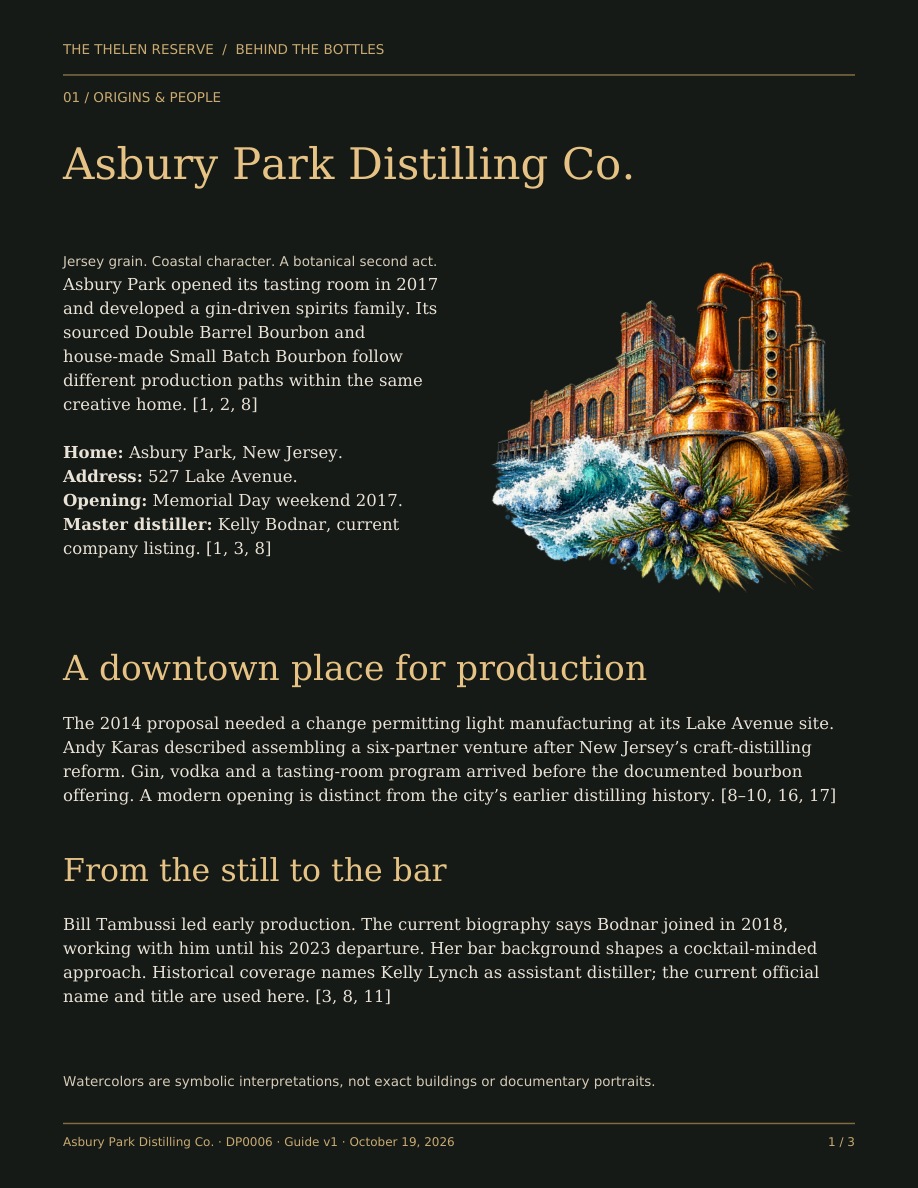
Original watercolor interpretations accompany the history. Buildings, objects and scenes are symbolic, not documentary reconstructions.
03 / Geography & roles
One name. Several places that matter.
527 Lake Avenue: production and hospitality
The downtown Asbury Park address houses the production facility and tasting room. It is an urban workshop where the visitor can encounter production rather than a distant brand office pretending to be the source of every component.[1][6]
Shiloh: the grain relationship
The company names Rabbit Hill Farms in Shiloh as the source of corn, rye and malted barley for Small Batch Bourbon. The farm is a supplier, not another name for the Asbury Park distillery. A 2021 farming feature includes the relationship and Tambussi’s account of using its grains.[2][18]
The Jersey Shore: cultural setting
The company’s identity draws on the ocean, local architecture and Asbury Park’s creative community. These are cultural and visual connections. Coastal imagery alone is not evidence of a measured maritime effect on whiskey maturation.[1][4]
The original bourbon source: undisclosed here
The official Double Barrel description calls the bourbon sourced but does not identify its original distillery. Its mash bill is not enough to assign a producer or state. Asbury Park’s finishing role is documented; the upstream distilling location remains unverified in this research.[2]
A visitor experience with its own rhythm
Tours, cocktail classes and the tasting-room program are presented by the company as parts of the experience. Specific hours, menus and availability can change, so the profile links the official information rather than treating an archived schedule as permanent.[5][6][7]
04 / The whiskey family
Understand the name on the label.
Keep the distillery, its supplier and its sourced and house-made expressions in view.
Asbury Park Distilling Co.
Distillery / producer
The producer and operating distillery behind the range. The founding record describes a partnership; no later sale or complete present-day ownership table was established in the sources reviewed.[8][1]
Double Barrel Bourbon
Sourced whiskey / local finishing
A sourced bourbon finished in former gin barrels. Keep the original whiskey maker, finishing producer and bottling specifications conceptually separate. The original distiller is not named in the company’s description.[2]
Small Batch Bourbon
House production
The company’s distinct New Jersey grain-to-glass bourbon. It describes fermentation, distillation and maturation in Asbury Park, using Rabbit Hill grain. This production claim should not be retroactively assigned to Double Barrel.[2][18]
Rabbit Hill Farms
Supplier / New Jersey grain
A Shiloh grain and malt supplier connected to Small Batch. Its agricultural role is an important part of the whiskey story without making it a bottler or distillery.[2][18]
Gin and Barrel Finished Gin
Botanical spirits / cask relationship
A botanical spirit and its oak-rested expression. Their cask history supplies the distinctive finishing connection to Double Barrel Bourbon. These are gin products, not bourbon aliases.[2]
Aquavit, vodka and liqueurs
Selected non-whiskey range
The wider company range includes aquavit, vodka, Espresso Limoncello and Pisam. A broader spirits portfolio explains the cocktail program; it does not make every product a whiskey.[2][15]
Founders and distilling leadership
People / distinct roles
Karas, Ohebshalom and Wile belong to the founding business narrative; Tambussi and Bodnar belong to the production narrative. A historical founding role or staff title is not evidence of a current ownership percentage.[8][3][12]
05 / Making & choosing
The choices behind the label.
Distillation, blending, barrel selection and brand ownership play different roles. Keep every production claim tied to its facility, expression and date.
Two bourbon specifications
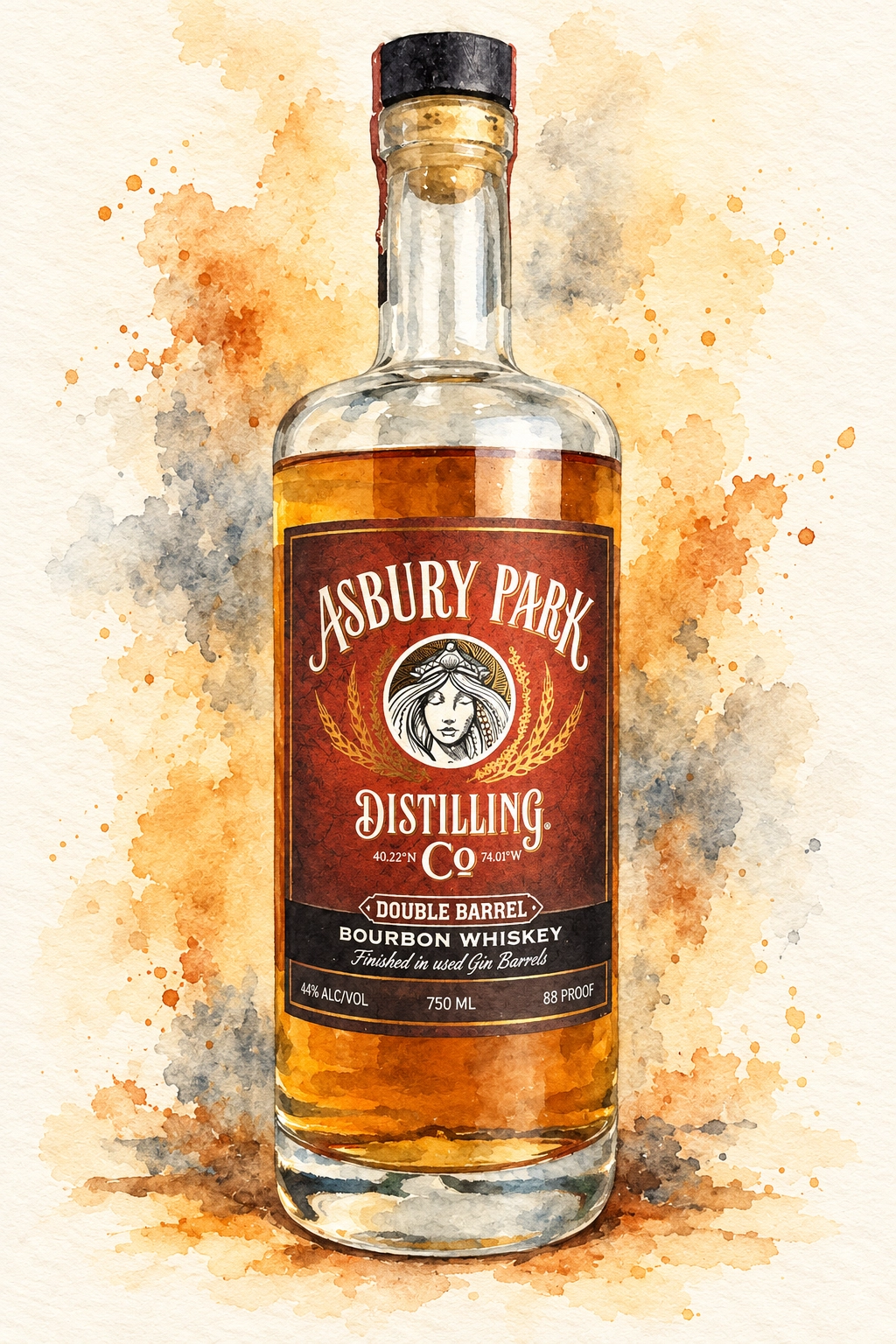
For Double Barrel, the current producer description specifies sourced two-year bourbon with 60% corn, 36% rye and 4% malted barley, then ex-gin-cask finishing and 88-proof bottling. Those figures describe that expression. Small Batch’s exact percentages are not supplied on the same page.[2]
A cask remembers its previous spirit
Barrel Finished Gin spends roughly three to four months in new American oak according to the company. Former gin casks then finish Double Barrel Bourbon. Oak and residual botanical character provide the connection, but the published description does not give a universal bourbon-finishing duration.[2][11]
New Jersey grain-to-glass
The Small Batch account names corn, rye and malted barley from Rabbit Hill, local fermentation, distillation and maturation, a minimum four years of age, and batches of six to ten selected barrels. These are the producer’s current description, not verified specifications for every historical bottle.[2][18]
A versatile distilling setup
Early firsthand coverage describes a custom Carl Artisan still and the relationship between production and the tasting room. The current vodka description distinguishes use of the column portion of the still and corn-based neutral spirit. Do not read a local redistillation claim as proof that all neutral spirit was fermented on site.[19][2]
Botanicals as a production language
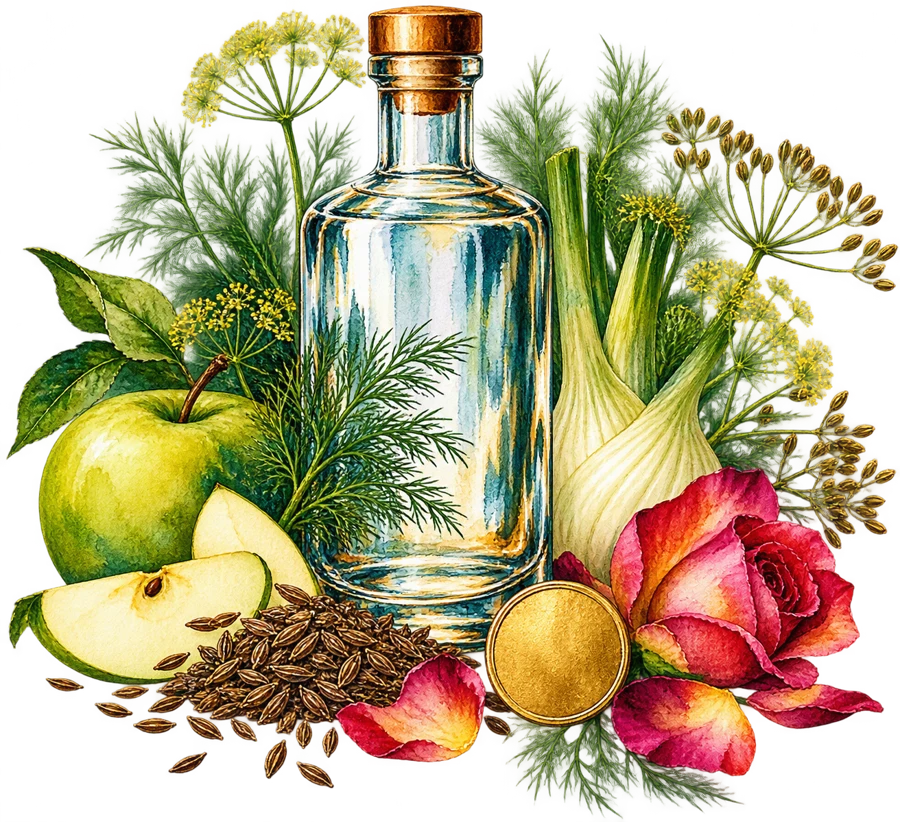
Gin brings juniper together with ingredients such as orange peel, cardamom and lemongrass. Aquavit follows a different botanical idea, including caraway and dill. Their recipes matter to the company’s identity while retaining their own categories.[2]
The cocktail perspective
Bodnar’s official biography emphasizes more than a decade of bar experience and an interest in versatile spirits. The tasting room’s house preparations make production choices tangible in the glass. A cocktail program is part of the creative process rather than an excuse to blur whiskey provenance.[3][5]
06 / The details worth knowing
The stories inside the barrels.
The cask is the bridge
The most distinctive connection is a production relationship, not a celebrity founder or a centuries-old origin claim: gin rests in oak, then bourbon meets that cask. It creates continuity across the range while leaving the sourced bourbon and house-made bourbon as distinct stories.[2]
A mermaid with a message
The company explains its mermaid through juniper, rye, shells and architectural detail. Its closed eyes express acceptance and a welcoming community. These meanings are the brand’s own explanation, not a legend that needs to be invented around the bottle.[4]
A downtown industrial exception
The early planning story shows why this location matters. Putting light manufacturing into a commercial district required a specific planning path. The distillery’s place among galleries, restaurants and music culture is rooted in that practical development story.[10][9]
Craft can mean choosing as well as making
Double Barrel makes the finishing and blending decisions visible; Small Batch emphasizes local grain and house production. Both can belong to a craft producer. Explaining the difference gives the reader more useful information than treating every label as an identical grain-to-glass claim.[2]
An emergency chapter
Wile’s 2020 account describes using available production resources to help meet a sanitizer shortage and support staff. It is a community story anchored to an unusual moment, not a reason to present a beverage as a medical product.[12]
An award is a dated observation
Gin’s producer-stated 2021 result, the organizer’s 2022 bourbon listing and the 2023 Bartender awards refer to different competitions and products. Keeping their scope visible tells a more accurate story than attaching one broad superlative to the entire distillery.[2][14][15]
07 / Selected expressions
Different ways into the whiskey family.
A curated reading of the whiskey family, selected for its role in the story. This is not an exhaustive current catalog.
Double Barrel Bourbon
The 88-proof sourced-and-finished expression is the clearest introduction to the former-gin-cask idea. Its reported recipe and two-year base whiskey belong to the company’s description of this product; no upstream distillery is inferred.[2]
Small Batch Bourbon
A separate route into the range, built around New Jersey corn, rye and malted barley, local production and selected mature barrels. The 2022 competition record establishes a dated appearance while the current company page supplies today’s production account.[2][14]
Barrel Finished Gin
The oak-rested gin connects the clear botanical spirit with bourbon’s cask world. It remains a gin expression even when the company suggests using it in cocktails normally associated with whiskey.[2]
Asbury Park Gin
The company’s botanical flagship and the subject of its stated 2021 Double Gold and Best in Class recognition. Its role helps explain why a whiskey profile here needs to talk about juniper as well as grain.[2]
Aquavit
Caraway and dill lead a different botanical expression within the range. Its 2023 gold and 91-point entry at Bartender Spirits Awards is a specific result, not a whiskey award.[2][15]
08 / The Reserve connection
Continue from the story to the bottles.
Asbury Park Distilling Co. in The Thelen Reserve
One 88-proof Double Barrel Bourbon record connects this story to the collection. Its gin-barrel finish is recorded; exact batch and barrel details remain unverified.
Collection snapshot: October 30, 2026. One physical record. Approved artwork appears only where an exact record or verified release match is available.
The illustrated companion
Asbury Park Distilling Co., in three pages.
Origins and people, history and places, whiskey and stories. A concise companion to this complete profile, with linked research sources.
Researched October 19, 2026. Official brand and company pages, dated announcements and clearly identified supporting sources are distinguished in the research. Product specifications are release- and market-specific.
Research qualifications
Double Barrel is sourced and finished; Small Batch is separately described as New Jersey grain-to-glass. No distillery is inferred from a familiar mash bill.[2][19]
Current team page names Kelly Bodnar and dates her arrival and Tambussi’s departure. Older Kelly Lynch references are dated historical listings; no personal explanation for differing surnames is inferred.[3][11]
The 2013 statute was approved August 7 and effective December 1. Proposal dates, planning recommendations, projected openings and the 2017 opening remain separate.[16][17][10]
Opening-day projections do not establish whiskey release dates. Double Barrel is documented by July 2018; Small Batch appears in official 2022 results, without a verified first-release day.[8][11][14]
Awards stay tied to product, year, competition and category. The 2021 gin result is attributed to the producer; 2022/2023 results use organizer records.[2][14][15]
Founding-partner accounts do not establish a complete current ownership register. No unsupported acquisition or ownership percentage is asserted.[8][12]
All art depicts symbolic scenes. Menus, booking availability and hours remain linked to official current information.[5][6][7]
Full sources
Asbury Park — Behind the BarrelCurrent producer identity, downtown location and locally scoped post-Prohibition claim. Note: Company account; not proof of a statewide first or continuous pre-Prohibition operation.
Asbury Park — current spirits descriptionsDouble Barrel sourcing, recipe, finish and proof; distinct Small Batch local production; broader range and producer-stated 2021 gin award. Note: Undated current product account accessed October 19, 2026. No original bourbon distillery named; no exact Small Batch mash percentages or first release date supplied.
Asbury Park — Our TeamKelly Bodnar current role; 2018 arrival; Tambussi departure in 2023; cocktail background. Note: Current listing takes precedence over older articles; no exact promotion day or personal reason for a surname change inferred.
Asbury Park — Our LogoMermaid, botanical and architectural symbolism; brand’s explanation of inclusion. Note: Brand-authored interpretation, not a historical legend.
Asbury Park — The Tasting RoomCocktail program, house preparations and current range context. Note: Menus and schedules change. Legal wording on the company page is not relied on as current legal guidance.
Asbury Park — Distillery ToursProduction-site visitor interpretation and guided tours. Note: Availability and booking details remain on official site.
Asbury Park Sun — opening report, June 15, 2017Contemporaneous reporting and direct founder/distiller interviews; Memorial Day opening, founders, equipment and artist. Note: Historical roles and plans, not current ownership percentages. Opening-day whiskey forecasts are not release dates.
Asbury Park Sun — proposal, October 6, 2014Original Lake Avenue proposal and zoning issue. Note: Proposed 4,000-square-foot plan and prospective personnel do not establish final construction or actual production staffing.
Asbury Park Sun — planning recommendation, November 13, 2014Targeted light-manufacturing recommendation and founder account. Note: Recommendation preceded additional approvals. December law wording is reconciled with approval/effective dates in primary statute/tax report.
Asbury Park Sun — early recognition, July 27, 2018Founder interview, Double Barrel presence, early awards and historical assistant role. Note: Silver/bronze reporting not converted into an exact medal for an unspecified product; award details remain bounded.
VUE — Rob Wile interview, April 17, 2020First-person partner account of pandemic response and staff support. Note: Historical response only; no medical advice or current sanitizer offer.
Asbury Park — Press archiveCompany’s retained pandemic and other coverage links. Note: A link is not independent corroboration of every claim in the linked article.
The Tasting Alliance — official 2022 resultsSmall Batch Bourbon silver in up-to-five-years category; gin result separate. Note: Competition appearance does not establish launch day; organizer abbreviations interpreted by medal context.
Bartender Spirits Awards — official 2023 company resultsAquavit gold/91; Small Batch Bourbon silver/87 and separate range entries. Note: Points and medals belong to named 2023 entries; Vintage field is not used as a release-year or age statement.
New Jersey P.L.2013, chapter 92Historical craft-distillery act approved August 7, 2013. Note: Historical legislation only; not a statement of current license rules.
New Jersey Treasury — 2014 annual reportHistorical act approval August 7 and effective date December 1, 2013. Note: Distinguishes enactment and commencement; no current legal guidance.
Edible Jersey — Rabbit Hill Farms, 2021Firsthand farmer/distiller interview, Shiloh supplier relationship and local grain. Note: Dated supplier reporting; current relationship cross-checked against producer site.
Feast In Thyme — firsthand visits, July 31, 2018Observed tasting-room/production relationship and Carl still; dated Double Barrel presence. Note: Broad all-local/in-house wording is superseded by producer’s explicit sourced Double Barrel account. Subjective tasting notes not adopted.